Technical Knowledge · Ever Power UK

Worm Gear Shaft in Roller Conveyor
Distributed Drive Systems

How micro worm gear motors (0.1–1 kW, 20–60 r/min) power zone-controlled accumulation on modern roller conveyors — a complete engineering guide for UK manufacturing and logistics professionals.

⚙ Roller Conveyor
⚙ Worm Gear Shaft
⚙ Distributed Drive
⚙ UK Manufacturing

0.1–1 kW
Motor Power
20–60
r/min Output
100:1
Max Single-Stage Ratio
50,000h
L10 Service Life
IP66
Max Protection

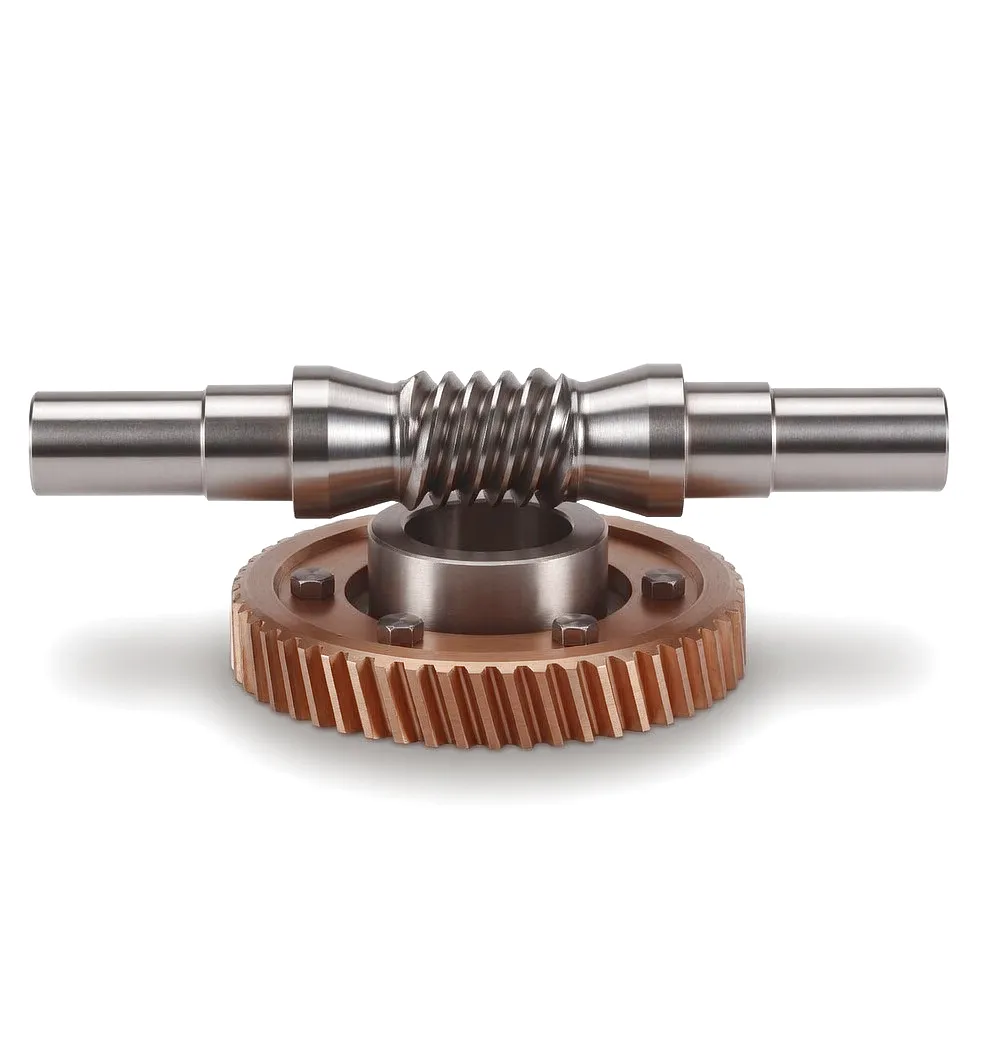
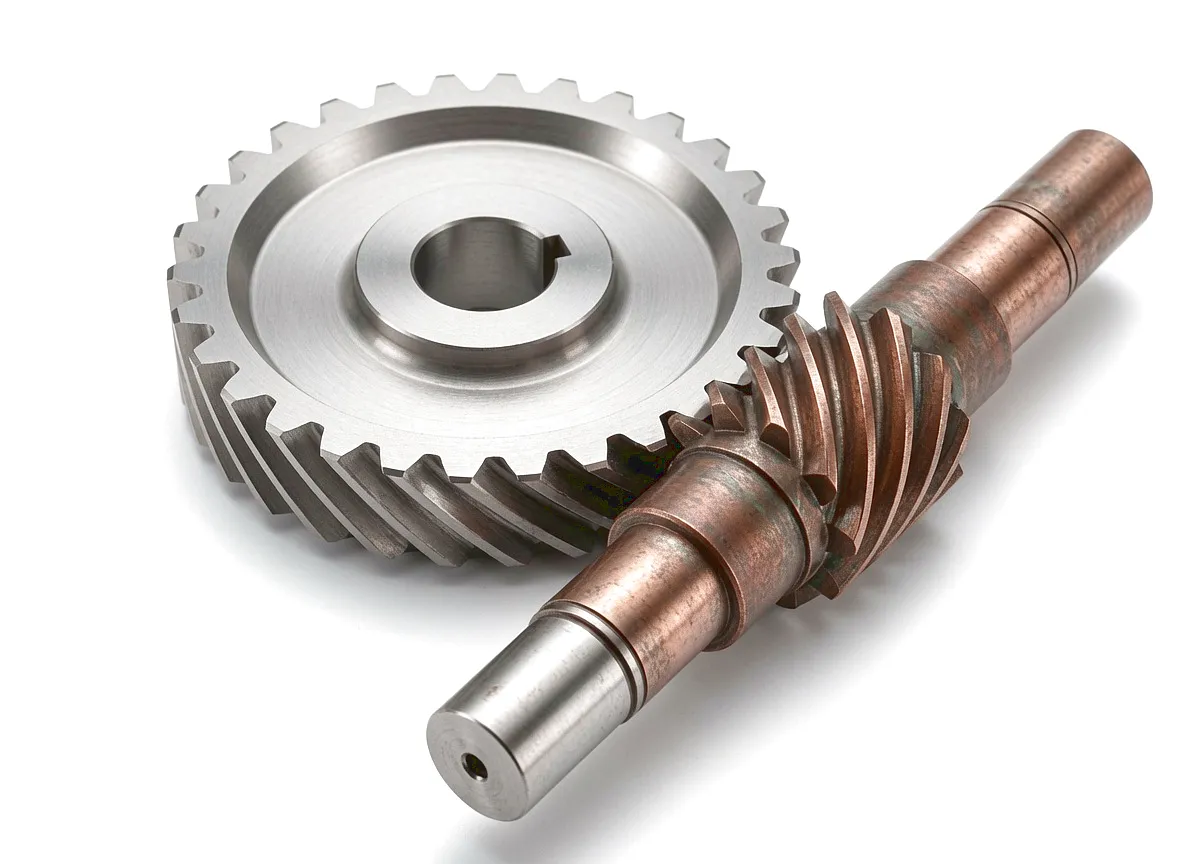
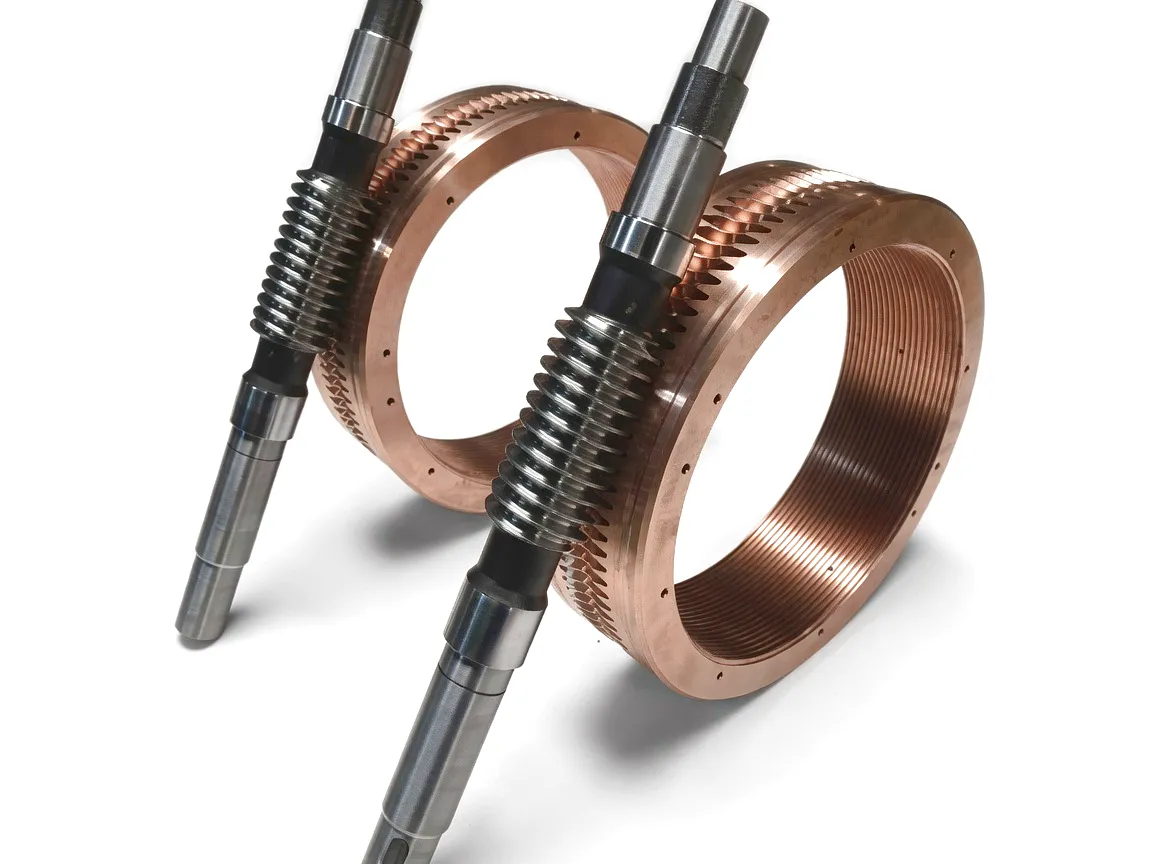
Ever Power precision worm gear shaft

Ever Power · Precision Worm Gear Shaft

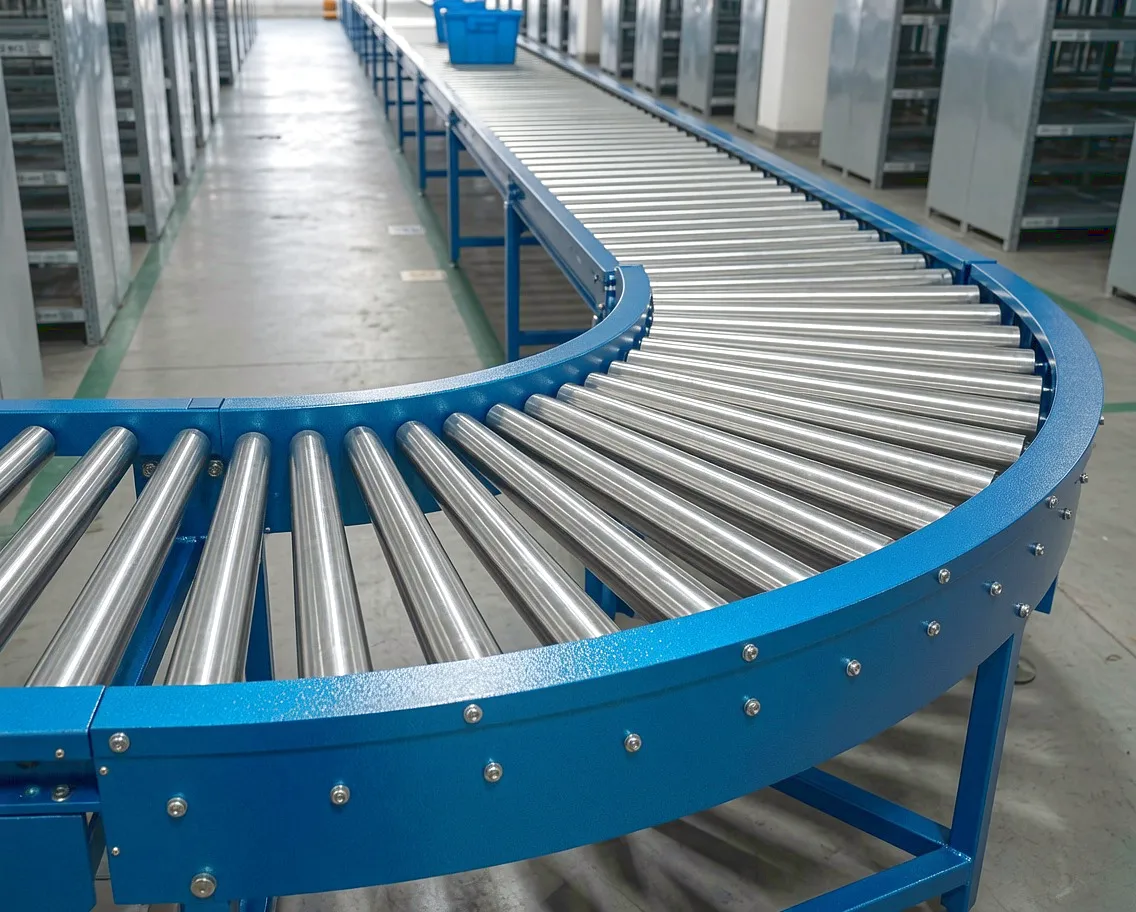
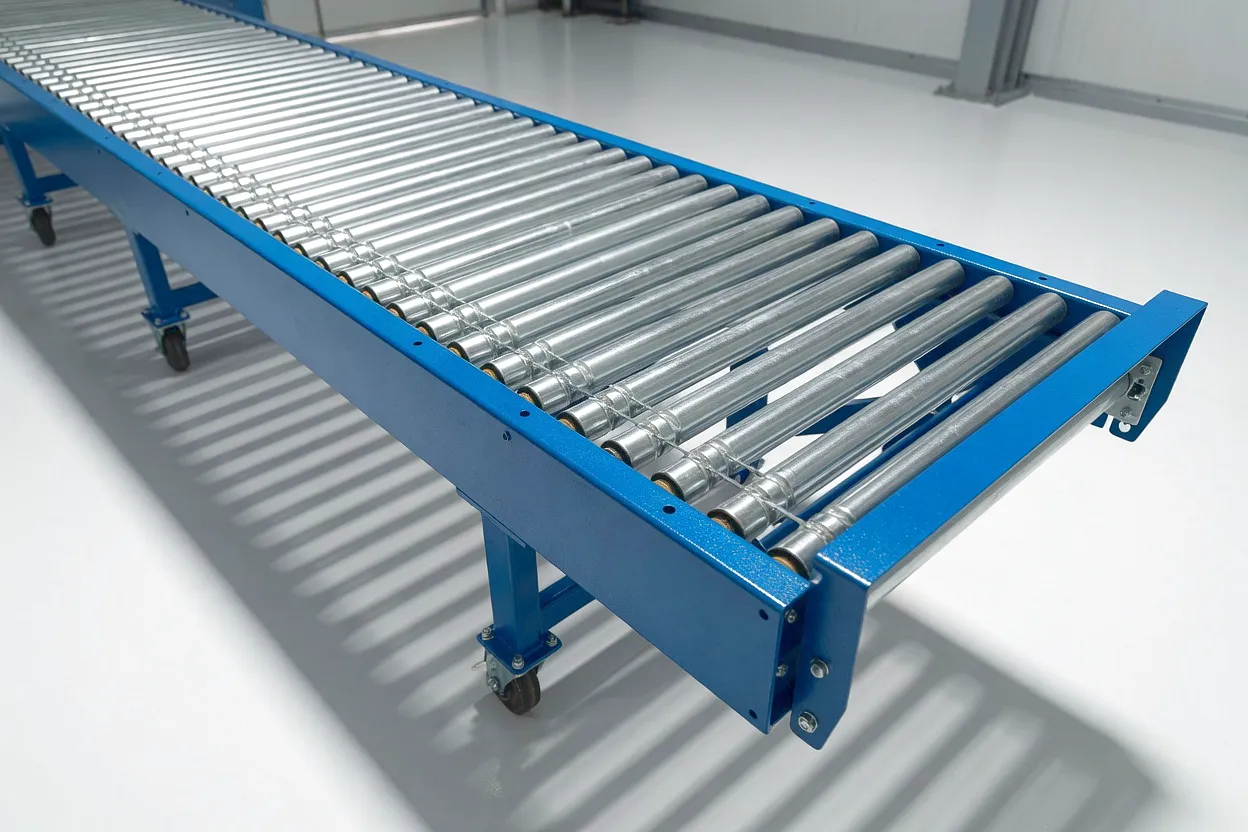
In modern automated factories across Birmingham, Coventry, and Sheffield, roller conveyor systems have quietly evolved from simple mechanical lines into sophisticated, zone-controlled logistics platforms. At the heart of this transformation sits one deceptively compact component — the worm gear shaft, integrated within a micro worm gear motor unit. Each individual drive roller on a contemporary roller conveyor is typically paired with its own dedicated micro motor, drawing just 0.1 to 1 kilowatt of power while delivering smooth output speeds between 20 and 60 revolutions per minute. This distributed drive architecture represents a fundamental departure from the older single-motor, line-shaft approach, and understanding why it has become the preferred engineering solution requires a close look at the mechanical principles, material sciences, and operational advantages that the worm gear shaft uniquely brings to conveyor design.

Across the UK’s manufacturing heartlands — from automotive supply chains in the West Midlands to food processing facilities in Yorkshire and e-commerce distribution centres along the M1 corridor — demand for compact, maintenance-friendly, and precisely controllable drive solutions has grown year on year. The worm gear shaft answers every one of these demands with mechanical elegance: inherent self-locking properties, high reduction ratios achievable in a single stage, and a physical form factor that fits between adjacent roller tube centres at pitches as tight as 75 mm. This article provides a complete technical breakdown of how these components function, the materials behind them, and why they remain indispensable across UK industry.

Ready to Specify?
Get a Custom Worm Gear Shaft Quote
Our engineers respond within one business day with a validated proposal and pricing.

✉ Get a Free Quote →

How the Worm Gear Shaft Works Inside a Roller Conveyor

⚙️
The Worm and Wheel Mesh

The worm gear shaft is a cylindrical screw-form component that meshes continuously with a helical-toothed wheel. As the worm rotates, driven by the motor, angled thread flanks push against wheel teeth in sliding contact — allowing very large speed reductions in a single stage, from 5:1 up to 100:1, without multiple gear pairs. The lead angle of the worm thread determines efficiency and self-locking behaviour. Below approximately 4.5°, the assembly becomes self-locking: the wheel cannot back-drive the worm, making it invaluable for inclined conveyor sections where loads must stay put when power is removed — a key safety feature under UK PUWER regulations.

🔩
Torque Transfer and Speed Reduction

Output torque scales inversely with speed reduction — a 40:1 ratio multiplies input torque roughly 40 times, minus transmission losses of 20–40% depending on lead angle and lubrication. For roller conveyor units running 20–60 rpm with 0.1–1 kW motors, output torques range from around 5 Nm at light duty to over 200 Nm on heavier drive rollers. The worm gear shaft packs this torque multiplication into a housing fitting between adjacent roller centres at 75–150 mm pitch — no other gearbox topology delivers this combination of compactness and ratio range in a single enclosed, pre-lubricated unit, making distributed drive economically and spatially feasible at scale.

🧩
Distributed Drive Architecture

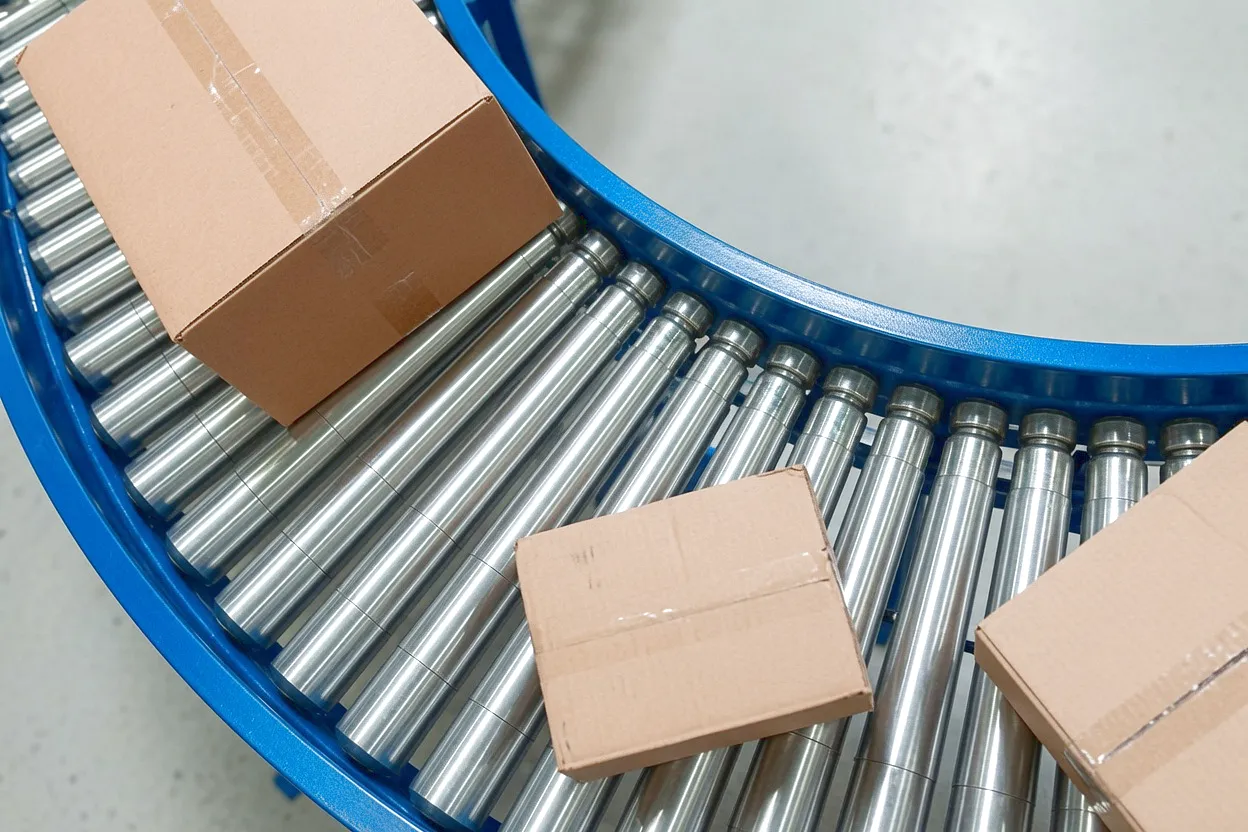
When every drive roller carries its own independent worm gear motor, the system gains zone-by-zone control that a single centralised drive cannot replicate. Zones — groups of 3 to 12 rollers — start, stop, or change speed individually via 24 V DC signals or frequency inverters. This is the mechanical foundation of the accumulation function: goods approaching a stopped zone are held back while the downstream zone clears, then released in controlled sequence. In Birmingham distribution centres or Sheffield component handling lines, this zone-level independence — enabled precisely by the worm gear shaft’s compact form — is what makes the difference between a throughput bottleneck and a fluid, fault-tolerant material flow system.

Core Materials in Worm Gear Shaft Manufacturing
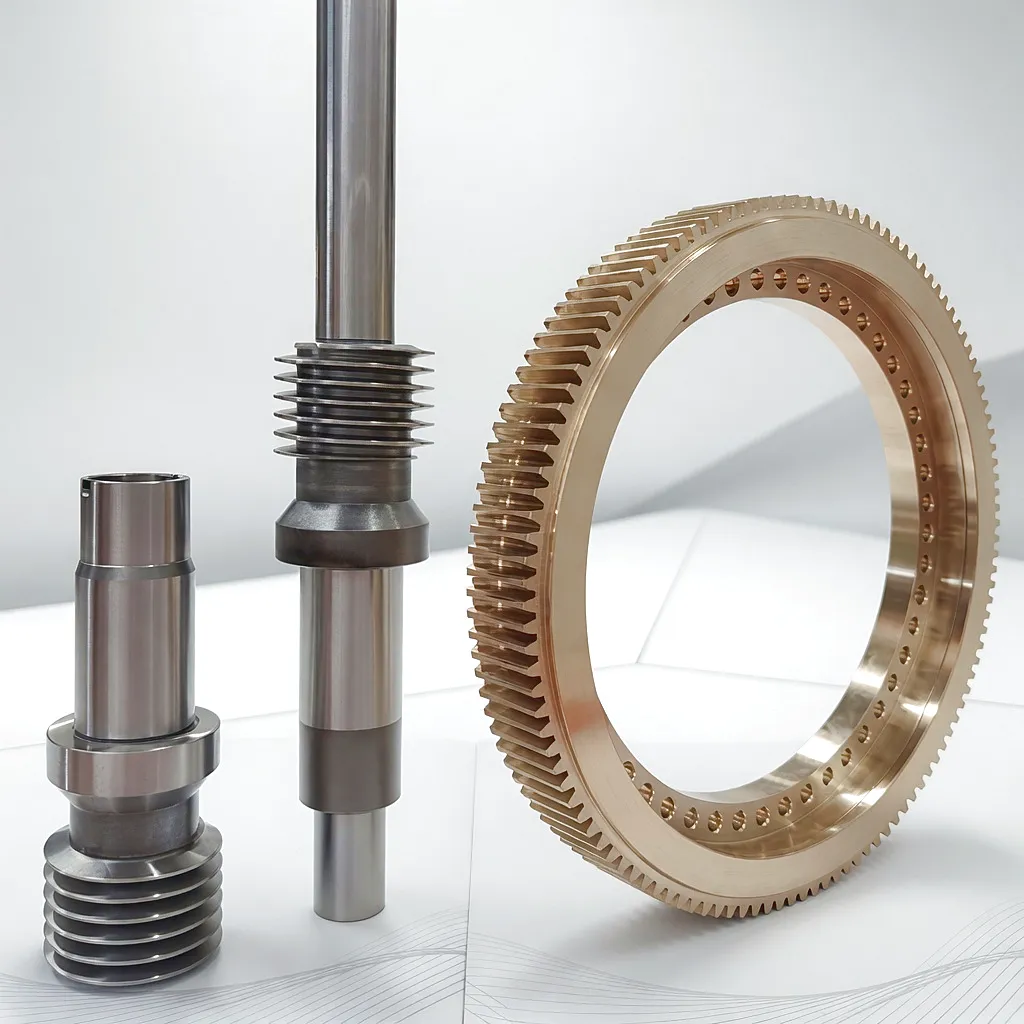
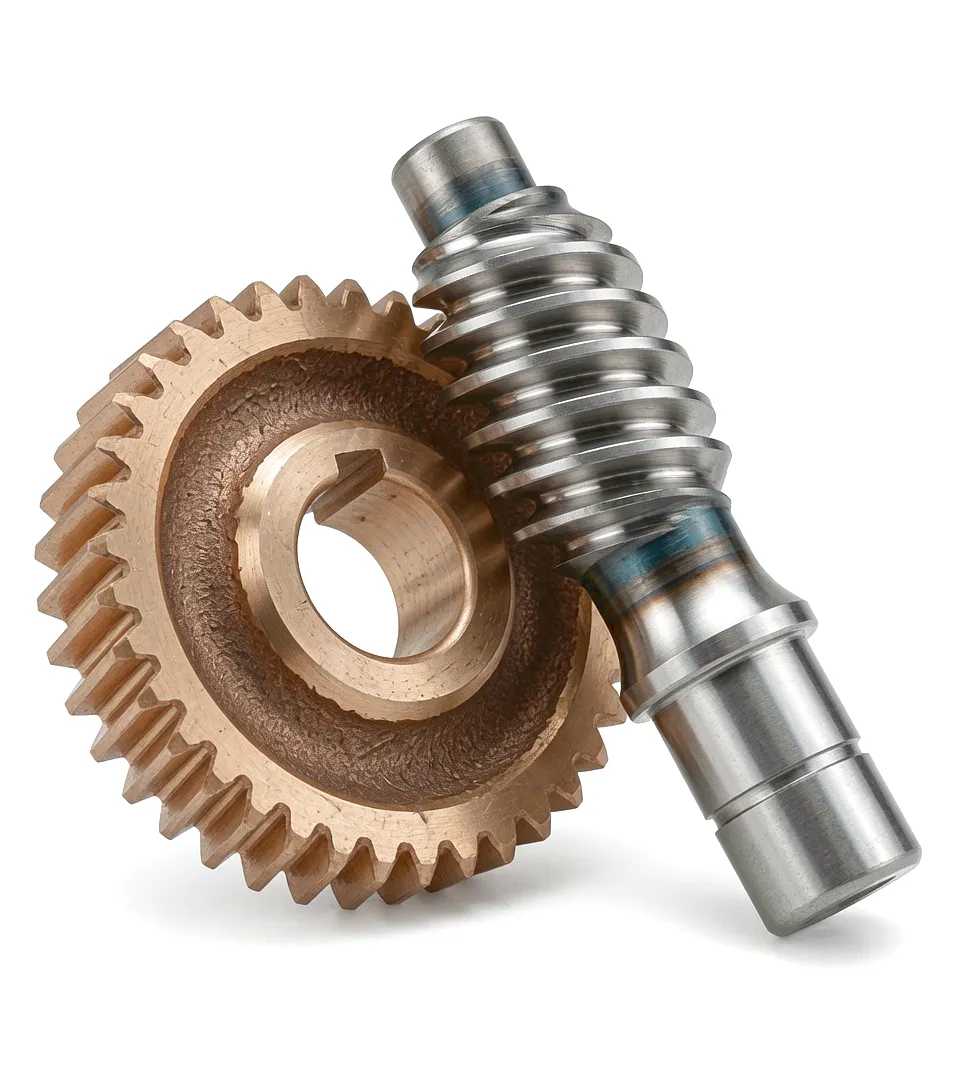
Worm gear shaft material and construction detail

Precision-Ground Worm Shaft Profile

Material selection for the worm gear shaft is central to its service life, thermal behaviour, and load capacity. The worm shaft itself — carrying the helical thread and transmitting rotational input from the motor — is predominantly manufactured from medium-carbon alloy steels such as 20CrMnTi or 42CrMo, equivalent to EN-standard grades widely stocked across UK industrial supply chains. These materials combine the core hardness needed to resist sliding abrasion with sufficient toughness to absorb dynamic loading during conveyor zone starts and stops. Manufacturing involves CNC turning of the worm profile, thread grinding to ISO accuracy class 6 or higher, then case hardening via carburising to achieve surface hardness of 58–62 HRC with a tough, impact-resistant core retained at 30–35 HRC.

The mating worm wheel demands a fundamentally different material philosophy. The continuous sliding contact generates significant heat through friction, so the wheel must dissipate heat rapidly, exhibit low friction against hardened steel, and tolerate minor misalignments present in real-world installations. Phosphor bronze alloys (C90700, C93200), centrifugally cast for uniform grain structure, fulfil all these requirements simultaneously. The bronze wheel self-lubricates through micro-porous oil retention and wears sacrificially — preferentially degrading before damaging the hardened steel worm — meaning the worm shaft can outlast several wheel replacement cycles, substantially reducing the long-term maintenance cost per conveyor zone across a facility’s working life.

20CrMnTi Alloy Steel

For worm shafts requiring deep carburising. Surface hardness 58–62 HRC after heat treatment. High fatigue strength for continuous-duty conveyor cycles across UK distribution lines.

42CrMo Steel

Through-hardened to 28–34 HRC for heavy-duty worm shafts. Excellent torsional strength. Preferred for large-frame gearboxes with output torques above 150 Nm. Widely stocked by UK steel service centres.

Phosphor Bronze C90700

Standard wheel material. Thermal conductivity 50 W/(m·K). Friction coefficient 0.03–0.06 against hardened steel. Centrifugally cast for uniform grain. Self-lubricating under oil-bath conditions.

Aluminium Alloy Housing

Die-cast ADC12 aluminium enables weight reduction essential for compact roller conveyor units. Thermal mass assists passive cooling. Anodised or powder-coated for food-grade or washdown environments.

Technical Performance and Specification Parameters

The following table summarises key technical parameters for worm gear shaft assemblies as applied to distributed roller conveyor drive systems. These values represent Ever Power’s standard production ranges; custom specifications beyond these ranges are routinely engineered on project-specific quotations for UK clients.

Parameter Standard Range Engineering Notes
Motor Power 0.1 – 1.0 kW Micro worm gear motor per drive roller zone
Output Speed 20 – 60 r/min Roller surface speeds 0.1–0.8 m/s depending on tube diameter
Gear Ratio Range 5:1 – 100:1 Single-stage reduction; common ratios 10, 20, 30, 40, 50, 60, 80:1
Output Torque 5 – 200 Nm Varies with ratio and input power; custom up to 500 Nm on request
Centre Distance 25 – 160 mm Housing centre-distance matched to roller pitch constraints
Lead Angle 3° – 28° Below ~4.5° = self-locking; above = back-driveable (higher efficiency)
Transmission Efficiency 60% – 90% Higher efficiency at wider lead angles; improved with synthetic gear oil
Shaft Material 20CrMnTi / 42CrMo Carburised + ground; surface hardness 58–62 HRC
Wheel Material Phosphor Bronze C90700 / C93200; centrifugally cast; hobbed to ISO Class 6–8
Operating Temperature -10°C – +80°C Extended to -30°C with low-temperature synthetic lubricants
Protection Class IP44 – IP66 IP65/66 for washdown food and pharmaceutical environments
Service Life (L10) 20,000 – 50,000 hrs Under rated load, with periodic oil changes per manufacturer schedule

Core Technical Advantages of Distributed Worm Gear Shaft Drive

When conveyor system designers evaluate drive technology options, several mechanical properties of the worm gear shaft configuration consistently emerge as decisive advantages over alternatives such as helical bevel or planetary reducers. These advantages compound one another in the specific context of distributed roller conveyor zones, where dozens or hundreds of drive units must coexist within a single facility, each demanding reliable performance, minimal maintenance, and compatibility with tight roller-pitch constraints.

Extreme Compactness

A right-angle worm gear unit achieves a 90-degree shaft direction change in the same envelope as a standard motor flange, allowing the motor to mount parallel to the roller axis with the output shaft driving the tube directly. This spatial efficiency is unmatched by inline helical reducers, which project far beyond the conveyor frame width.

🔒
Self-Locking Safety

The self-locking property of low-lead-angle worm gear shafts provides inherent load-holding without a separate brake. This eliminates electromechanical braking on inclined sections, reducing component count, maintenance points, and brake failure risk — a significant consideration under UK PUWER regulations for conveyor machinery safety.

📐
High Single-Stage Ratio

Achieving 40:1 or 60:1 reduction in a single stage that adds minimal axial length to the motor assembly is something only worm gear technology reliably delivers at this scale. Competing architectures require two or three stages to reach comparable ratios, adding weight, cost, and seal failure risk with each additional mesh.

🔇
Quiet, Smooth Operation

The continuous sliding mesh of a worm gear pair produces significantly less vibration and noise than the involute tooth impact characteristic of spur or helical gears at equivalent torque — a practical advantage for food processing, pharmaceutical packaging, and e-commerce fulfilment environments where noise management carries operational and regulatory weight.

💰
Low Total Installation Cost

Micro worm gear motors arrive pre-assembled, pre-lubricated, and factory-tested. Installation on a drive roller requires only mechanical fastening and electrical connection. For large installations involving dozens of drive stations, this simplicity significantly compresses commissioning time and engineering labour cost per zone.

🔀
Zone Independence

Each drive roller with its worm gear shaft motor operates independently. A fault in one zone does not halt the entire conveyor — the line continues running, and a replacement unit can be fitted while the rest of the system keeps moving, reducing downtime from production-stopping hours to minutes in UK facilities.

Industrial Application Scenarios Across the UK
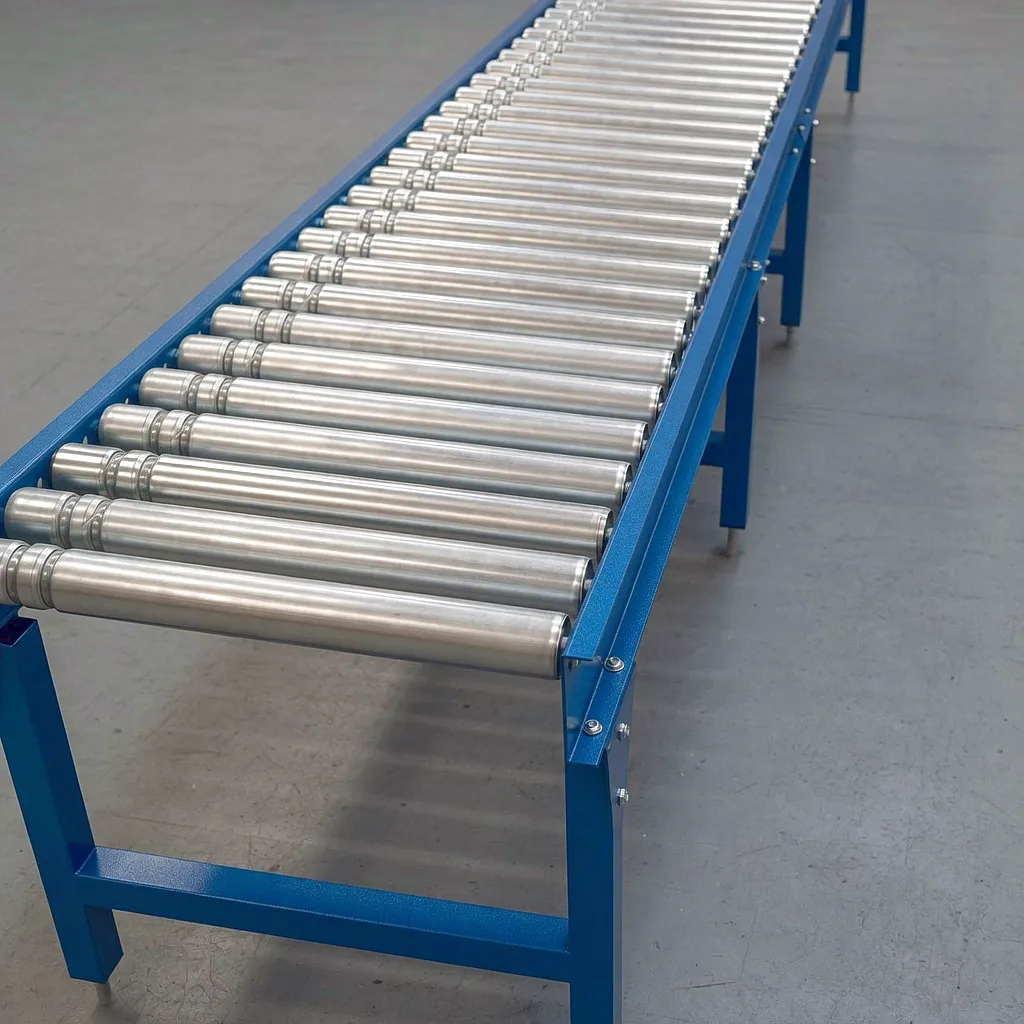
Worm gear shaft conveyor application UK

The distributed worm gear shaft roller conveyor drive model has established itself across virtually every sector of UK heavy industry and logistics. In the automotive manufacturing clusters around Coventry and the West Midlands — where firms supply body panels, seat assemblies, and powertrain components to major OEM lines — roller conveyors equipped with micro worm gear motors handle the movement of both pressed steel components and finished subassemblies through paint shops, quality inspection stations, and sequencing buffers. The ability to create precise accumulation zones means painted parts can queue gently without contact damage, waiting for downstream assembly cells to become available, while the conveyor’s control system maintains accurate part-sequencing for just-in-time delivery. The worm gear shaft’s self-locking characteristic and silent operation under light loads make it particularly well-suited to these pace-critical environments.

In Yorkshire and Humber’s food processing sector, worm gear shaft driven roller conveyors appear throughout fish processing plants, confectionery packaging lines, and meat packing facilities. IP65 or IP66-rated units are standard here, as daily washdown routines with pressurised water and cleaning agents demand complete housing integrity. The aluminium housing’s corrosion resistance, combined with stainless steel shaft extensions and food-grade synthetic gear oils, allows compliance with UK Food Safety Act requirements while maintaining the throughput specifications that high-volume food production lines demand. At output speeds between 25 and 40 rpm, these drive rollers move product at a pace compatible with hand-sorting operations — one of the most common human-conveyor integration points in modern UK food facilities.

E-commerce fulfilment roller conveyor

E-Commerce Fulfilment
Milton Keynes / Northampton

Manufacturing assembly roller conveyor

Manufacturing Assembly
Coventry / West Midlands

Heavy pallet handling roller conveyor

Heavy Pallet Handling
Sheffield / Rotherham

Industry Sector UK Locations Motor Power Key Feature
Automotive Coventry, Solihull, Sunderland 0.25–0.75 kW Zero-contact accumulation, JIT sequencing
Food & Beverage Yorkshire, Lancashire, East Anglia 0.1–0.37 kW IP65/66 washdown, food-grade lubricants
E-Commerce / 3PL Milton Keynes, Northampton, Daventry 0.1–0.55 kW 24 V DC compatibility, high-cycle endurance
Steel & Metal Sheffield, Rotherham, Scunthorpe 0.55–1.0 kW High torque, load-holding on inclined sections
Pharmaceutical Macclesfield, Cambridge, Slough 0.1–0.25 kW Low noise, SS shaft option, cleanroom-rated
Printing & Packaging London, Luton, Bristol 0.12–0.37 kW Precise speed matching, smooth accumulation

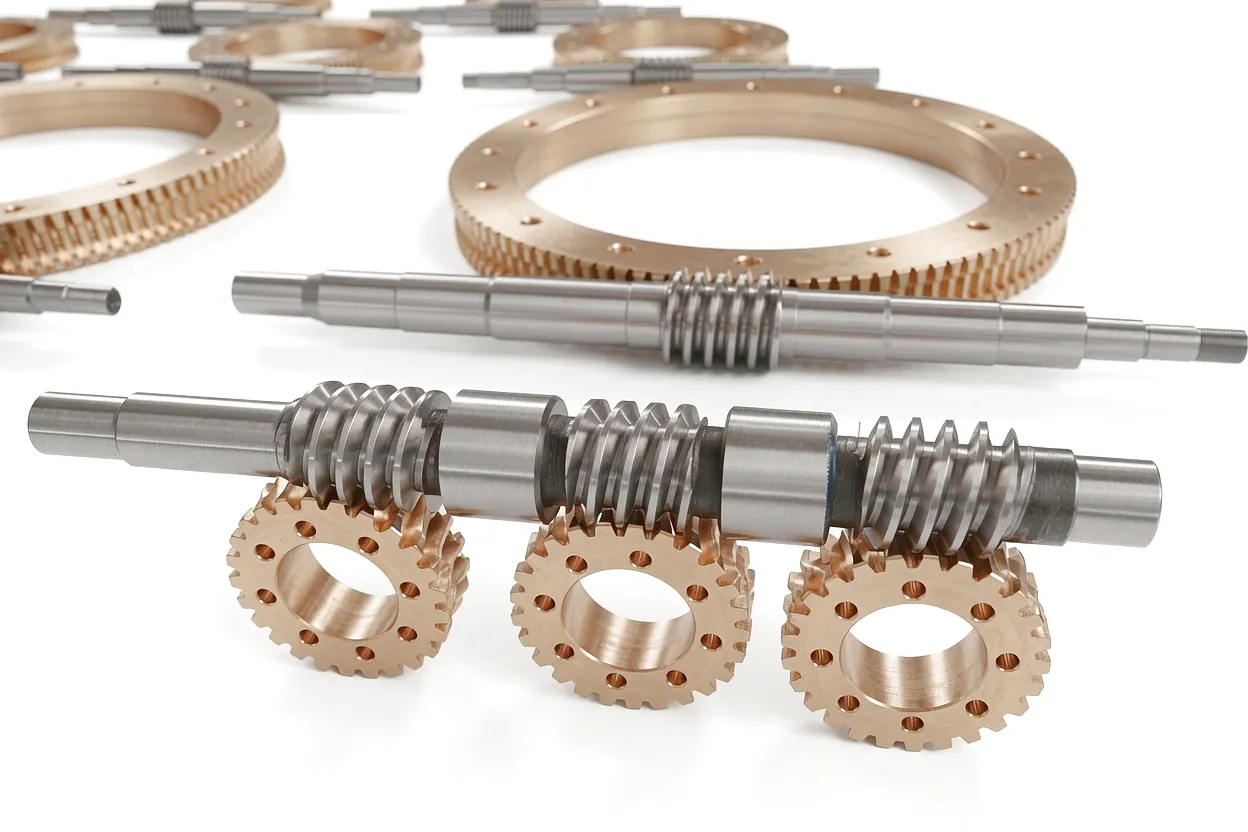
Ever Power worm gear shaft product
Worm gear shaft close-up
Worm gear shaft assembly
Worm gear shaft end profile

Manufacturing Excellence

Ever Power: Precision Worm Gear Shaft Manufacturing
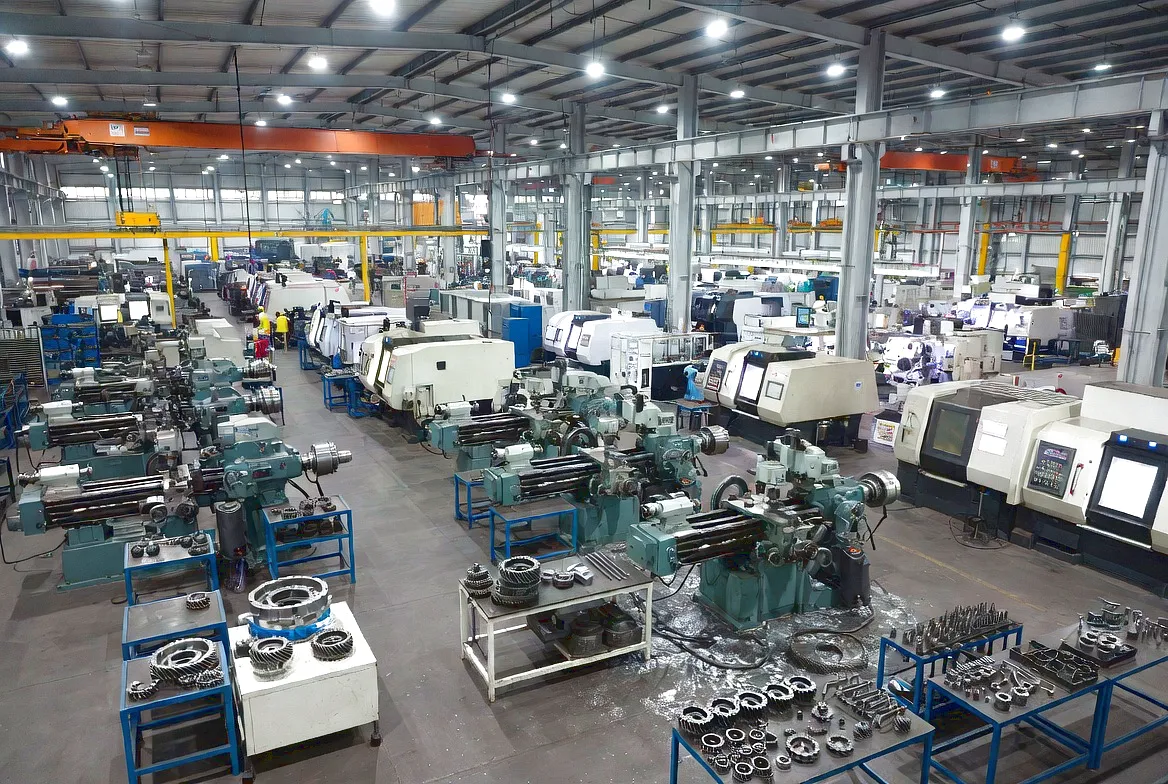
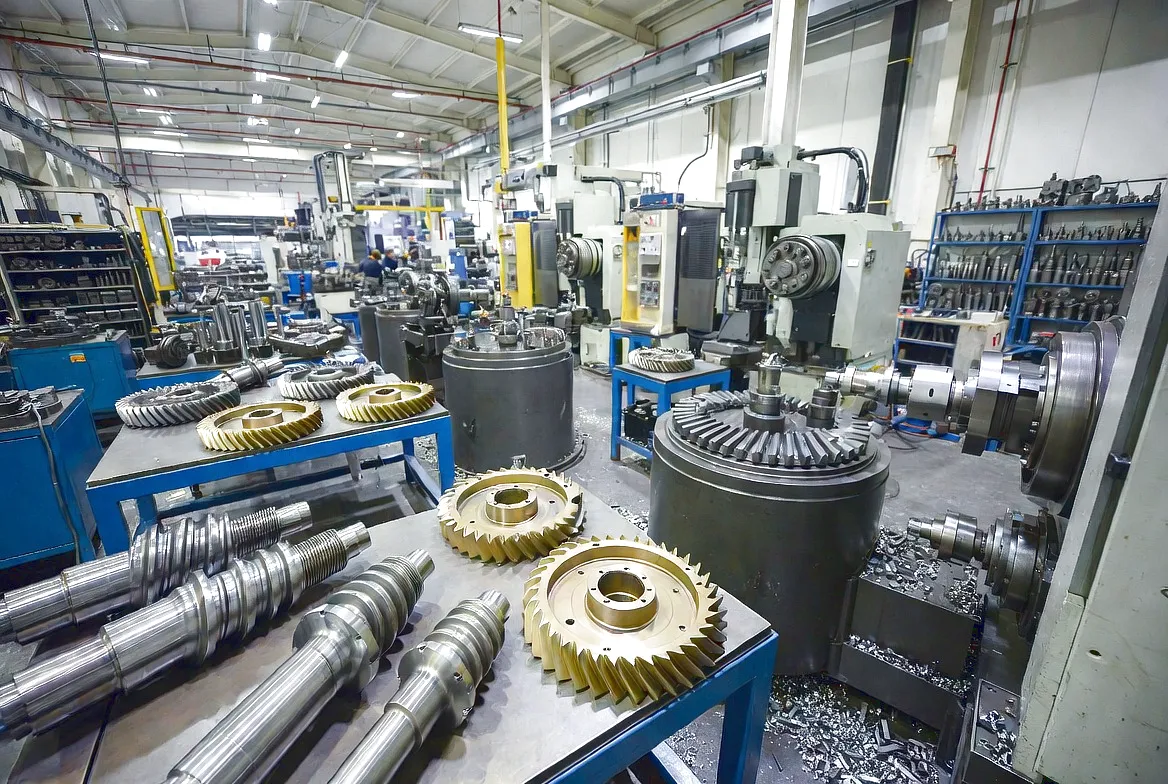
Ever Power worm gear shaft manufacturing workshop

CNC Worm Grinding Centre

Ever Power precision manufacturing facility

Precision Assembly & Inspection

Ever Power has built its reputation over two decades as a manufacturer whose worm gear shaft products consistently exceed the dimensional tolerances and material certifications required by UK and European machinery directives. Our production chain runs from alloy steel bar stock through CNC turning, thread grinding on dedicated worm grinding centres, carburising and quenching in controlled-atmosphere furnaces, and final precision grinding to thread profile accuracies of ISO class 6 as standard — class 5 on premium specification orders. Every worm gear shaft undergoes 100% dimensional inspection using coordinate measuring machines (CMM) and gear profile analysers, with full material traceability through mill certificates and heat treatment batch records, supporting customers operating under ISO 9001 quality management systems.

Ever Power’s customisation capabilities extend across every dimension of the worm gear shaft specification that a project might require. UK conveyor system integrators who approach us with non-standard roller pitch requirements, unusual centre distances, or torque specifications outside standard catalogue ranges receive validated custom designs within 5–7 working days from technical enquiry to drawing confirmation. We produce worm gear shafts with extended hollow bore configurations, non-standard output flange patterns, corrosion-resistant surface treatments including electroless nickel and zinc-phosphate coatings, and custom shaft-end profiles matched to proprietary roller tube ends. Our supply chain team maintains forward stockholding of key raw material grades and bronze wheel blanks, enabling fast repeat-order turnaround for UK customers with continuous conveyor expansion programmes.

ISO 6
Thread Accuracy
5–7
Days Custom Design
100%
CMM Inspection
20+
Years Experience

Custom Quote
Need a non-standard worm gear shaft?
Provide centre distance, torque, and motor power — we return a validated drawing and price within one day.

✉ Request Custom Quote →

Customer Success: Sheffield Steel Components Manufacturer

Location
Sheffield, UK
Sector
Steel Forging
Zones
84 Drive Zones
Savings
£180k / year

Hartsworth Precision Forgings Ltd, a Sheffield-based manufacturer of special-section steel billets and forged structural components for the UK construction and energy sectors, faced a persistent productivity bottleneck in their post-forge handling line. The existing single-motor chain conveyor transferring 80 to 320 kilogram billets from the forge press cooling zone to the finishing inspection bay was creating dangerous queue pile-ups, with components contacting one another at force and causing surface damage that required costly rework before despatch.

Working with a South Yorkshire conveyor systems integrator, Hartsworth brought the challenge to Ever Power with a clear brief: design and supply a zoned accumulation roller conveyor drive system capable of handling individual piece weights up to 320 kg on 89 mm diameter heavy-duty rollers at 200 mm pitch, across at least 84 independently controlled drive zones in a 45-metre conveyor run. Ever Power specified 0.75 kW worm gear shaft motors with a 40:1 ratio — delivering 140 Nm output torque per zone — in a custom hollow-bore configuration to allow direct mounting on the 89 mm roller tube. IP65-rated aluminium housings with stainless steel output shaft extensions were specified to resist the rust-promoting iron oxide particulate environment of the post-forge cooling area.

Eighteen months after commissioning, contact-related rework on billet surfaces had dropped from an average of 14% of throughput to under 1.5% — a saving the facility’s operations director estimated at over £180,000 per year. The worm gear shaft drive units operated continuously on two-shift patterns with only the scheduled oil-top-up at 12-month intervals, and zero unplanned failures required line stoppage in the first full year of operation.

14% → 1.5%
Rework rate reduction
£180k+
Annual cost saving
0
Unplanned failures in year 1
84
Independent drive zones

★★★★★

“The custom hollow-bore worm gear shaft configuration Ever Power engineered for our Sheffield line cut assembly time per zone dramatically. The 140 Nm output torque holds our heaviest billets absolutely dead-still in the accumulation zones — no creep, no slip. These units have been running hard for over a year without a single fault stop.”

David Hargreaves
Maintenance Manager · Hartsworth Precision Forgings, Sheffield
★★★★★

“We specified Ever Power worm gear shaft units across three conveyor projects this year — two in the West Midlands automotive supply chain and one in a Yorkshire food processing facility. The consistency of quality, speed of technical support, and price competitiveness against European catalogue suppliers have made them our go-to source.”

Rebecca Thorn
Projects Director · Midlands Conveyor Systems Ltd, Birmingham
★★★★★

“We operate a 3PL sortation facility near Northampton and expanded roller conveyor capacity by 60% last year using Ever Power worm gear shaft drives. Every non-standard motor frame size we needed was matched perfectly. The noise level on our mezzanine floor dropped noticeably compared to the old chain-drive sections.”

James Whitmore
Operations Manager · Whitmore Fulfilment Services, Northampton

Frequently Asked Questions

Q1How do I choose the right worm gear shaft gear ratio for my roller conveyor in a UK distribution centre?

Selecting the gear ratio begins with your target roller surface speed and works backwards through roller diameter to the required shaft output RPM. For a 63.5 mm tube roller moving parcels at 0.5 m/s, you need approximately 150 rpm output from the gearbox. If your motor runs at 1400 rpm (standard four-pole, 50 Hz, UK grid), a 10:1 ratio gives you 140 rpm output — close enough for this case. For accumulation zones where you want gentle deceleration and stop-start cycling, ratios of 20:1 to 40:1 bring output into the 35–70 rpm range suited to pallet conveying in UK 3PL facilities. Ever Power’s engineering team calculates this with you for free — send your roller diameter, line speed, and load weight to [email protected] for a same-day assessment.

Q2What is the typical price range for a micro worm gear shaft motor unit suitable for a UK roller conveyor zone, and where can I get a quick quote?

Pricing varies with motor power, gear ratio, protection class, and configuration. Standard 0.1–0.25 kW IP44 units carry trade prices that make them commercially viable for large-scale installations, while IP65/IP66 variants and custom hollow-bore configurations carry engineering premiums. Rather than publish list prices that may not reflect your specific volume or specification, the fastest route to an accurate current figure for your UK project is sending your specification to [email protected] — include motor power, gear ratio, quantity, any special requirements, and your delivery postcode. A costed proposal typically returns within one working day.

Q3Which worm gear shaft supplier in the UK can provide custom hollow-bore configurations for heavy-duty roller conveyor applications?

Hollow-bore worm gear shaft configurations — where the gearbox output bore slides directly over the roller tube shaft rather than coupling to it externally — require precise matching of bore size to roller tube dimensions and the conveyor frame’s shaft retention method. Ever Power manufactures hollow-bore configurations matched to standard UK roller tube diameters including 30, 40, 50, and 60 mm, as well as non-standard dimensions for legacy conveyor systems. UK engineers and conveyor integrators who have worked with Ever Power on hollow-bore projects consistently note the quality of dimensional documentation and reliability of delivery schedules. Contact [email protected] with your tube shaft diameter and project timeline to begin.

Q4How often does a worm gear shaft in a continuous-duty roller conveyor need to be serviced, and what does the maintenance schedule typically look like?

The service interval is primarily governed by lubricant condition. Synthetic polyglycol or PAO-based gear oils — which Ever Power specifies as standard fill — maintain viscosity and anti-wear additive performance for substantially longer than mineral oils, with initial oil change intervals set at 12,000 hours or five years under normal temperature conditions. Seals, bearings, and gear mesh components require no periodic adjustment under rated-load operation until the L10 bearing life threshold is approached — typically 20,000–50,000 hours under standard roller conveyor conditions. The practical UK facility routine involves annual visual inspection of seals and housing fasteners, confirmation of correct oil level, and a check that motor ventilation paths remain clear.

Q5What IP protection rating should I specify for a worm gear shaft motor in a food production roller conveyor at a Yorkshire processing facility?

For food processing environments subject to daily cleaning with water jets or chemical detergents, the minimum practical IP rating is IP65 — fully dust-tight and protected against water jets from any direction. Where cleaning involves high-pressure hose techniques above 6.3 bar or steam temperatures above 80°C, IP66 or IP67 ratings become necessary. Ever Power produces IP65 and IP66-rated worm gear shaft units with NSF H1 food-grade synthetic lubricant fills, stainless steel shaft extensions, and anodised aluminium housings as a ready-specified configuration for UK food industry clients, supplied with certification documentation suitable for BRC Global Standard or SALSA audits.

Q6When should I use a self-locking worm gear shaft on an inclined roller conveyor, and how do I work out whether my lead angle provides adequate load-holding?

Self-locking behaviour occurs when the worm lead angle falls below the mesh friction angle. For phosphor bronze wheel on hardened steel worm under oil lubrication, the friction coefficient is approximately 0.05–0.08, giving a friction angle of roughly 2.9° to 4.6°. Any worm gear shaft with a lead angle below this value will be self-locking under load. For roller conveyors carrying loads on upward slopes between 5° and 15°, a standard 10:1 or 20:1 ratio self-locking configuration typically holds without a separate brake. For slopes above 15° or where dynamic shock loads could back-drive the system during power-off conditions, consult Ever Power’s application engineers — they will review your incline angle and load data and confirm whether the standard configuration is sufficient or whether a mechanical brake should be added.

Ever Power · UK Project Enquiries
Ready to Spec Your Next Roller Conveyor Drive?

Talk to Ever Power’s worm gear shaft engineering team. Custom specifications, competitive pricing for UK projects, and next-business-day response guaranteed.

✉ Get a Free Quote: [email protected]

© Ever Power Transmission Co., Ltd · Precision Worm Gear Shaft Manufacturing · [email protected] · edit by gzl