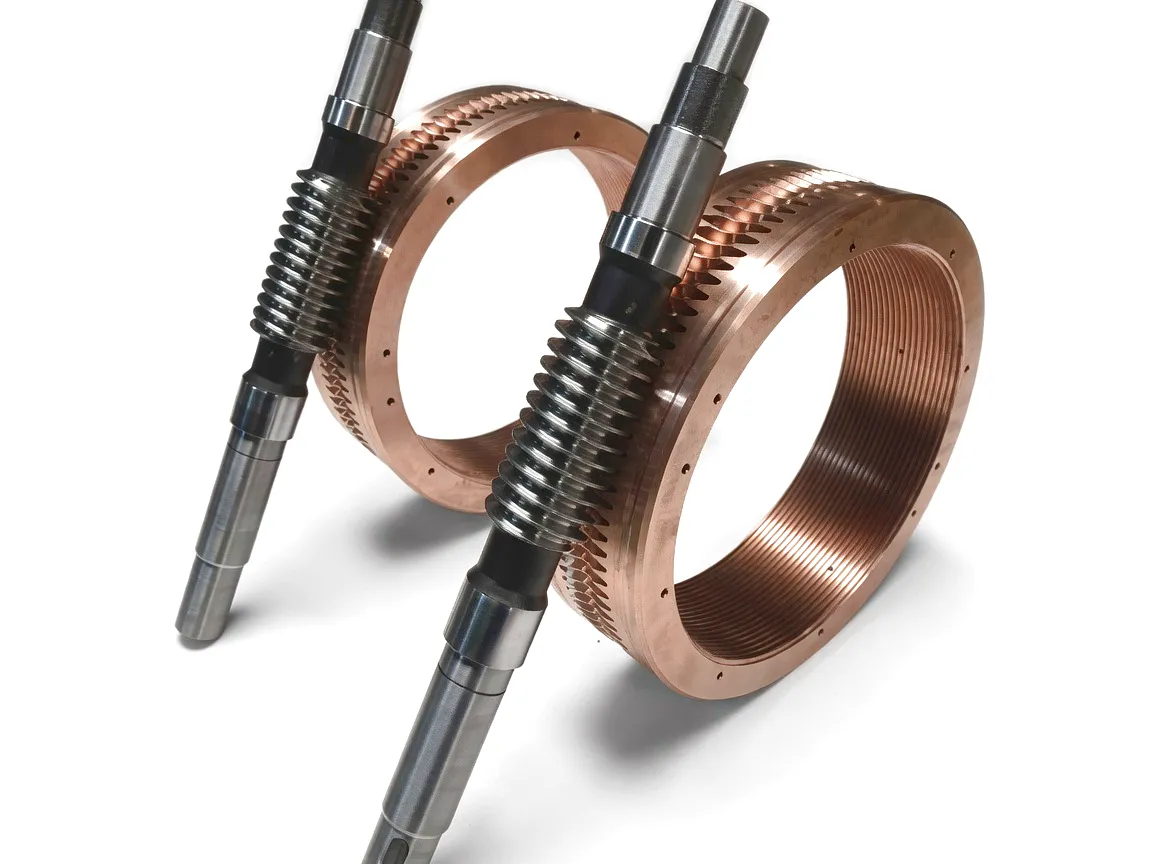
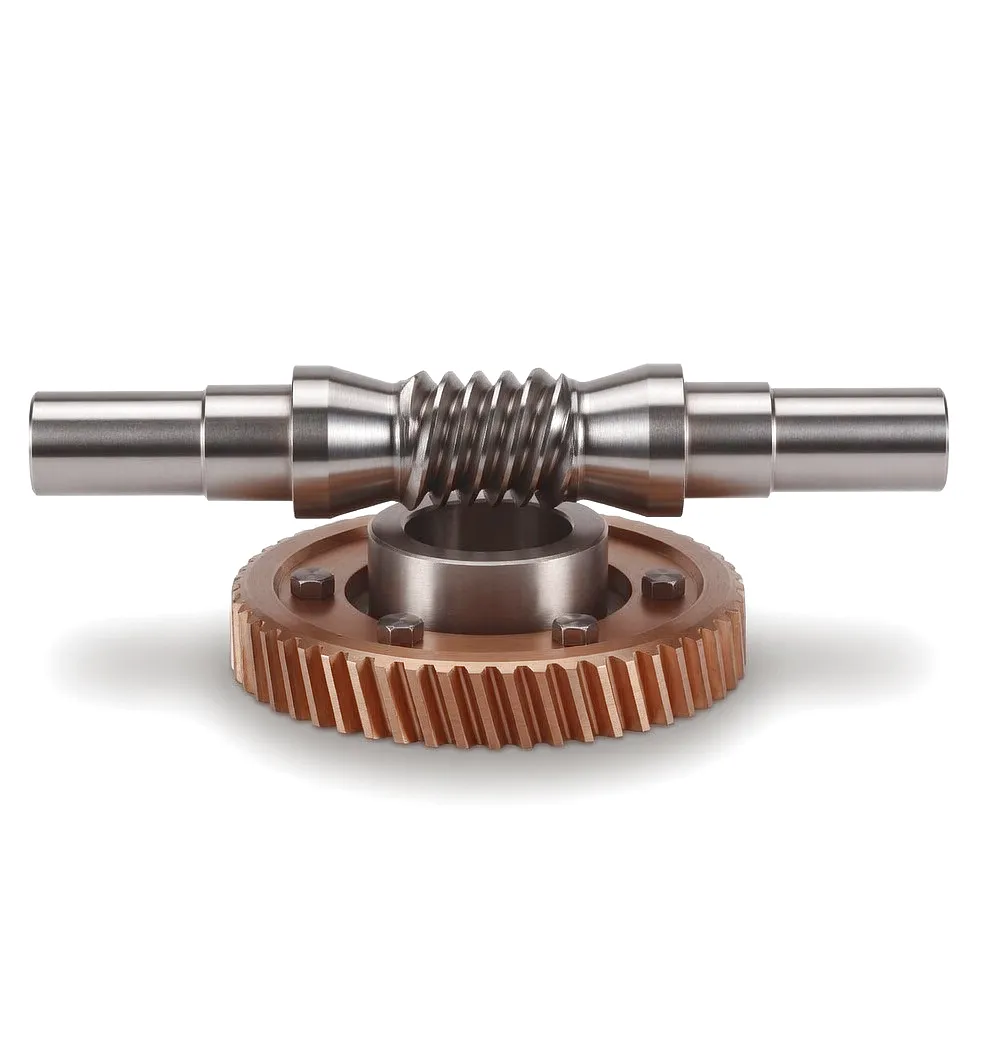
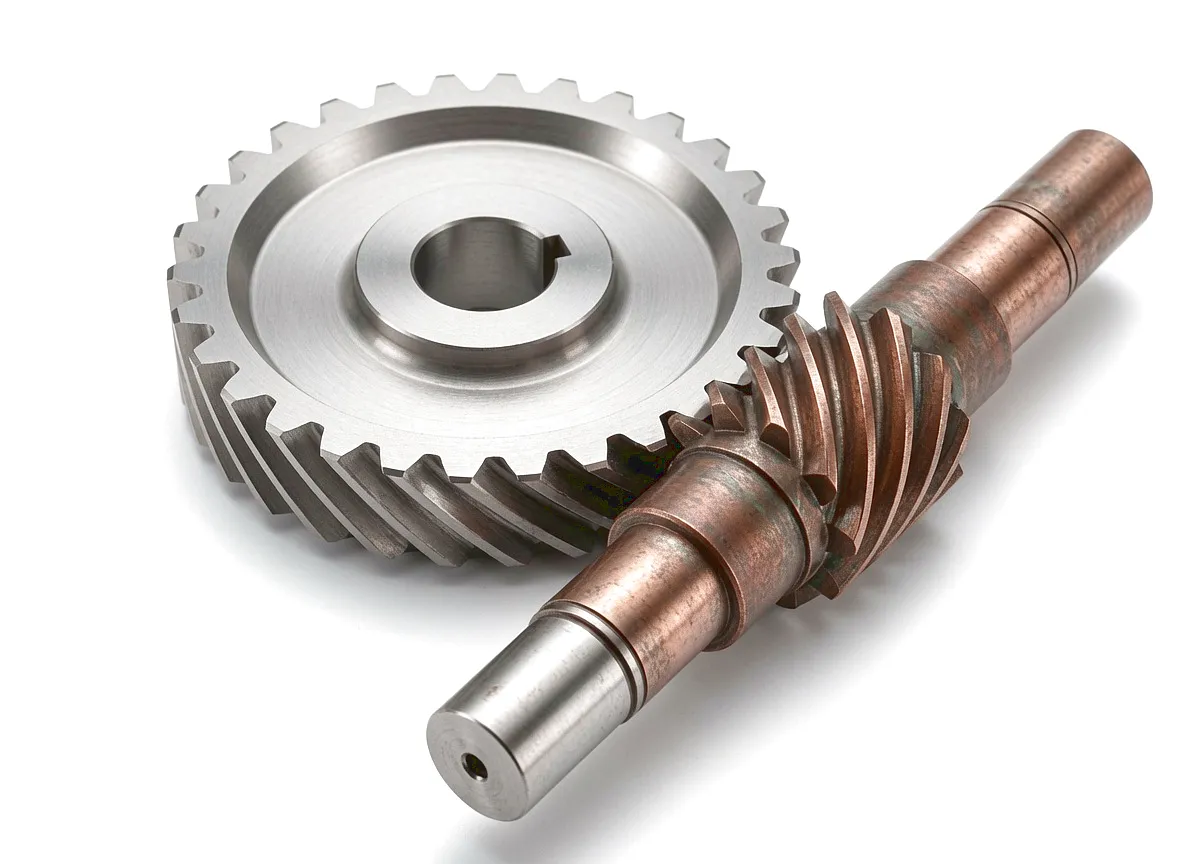
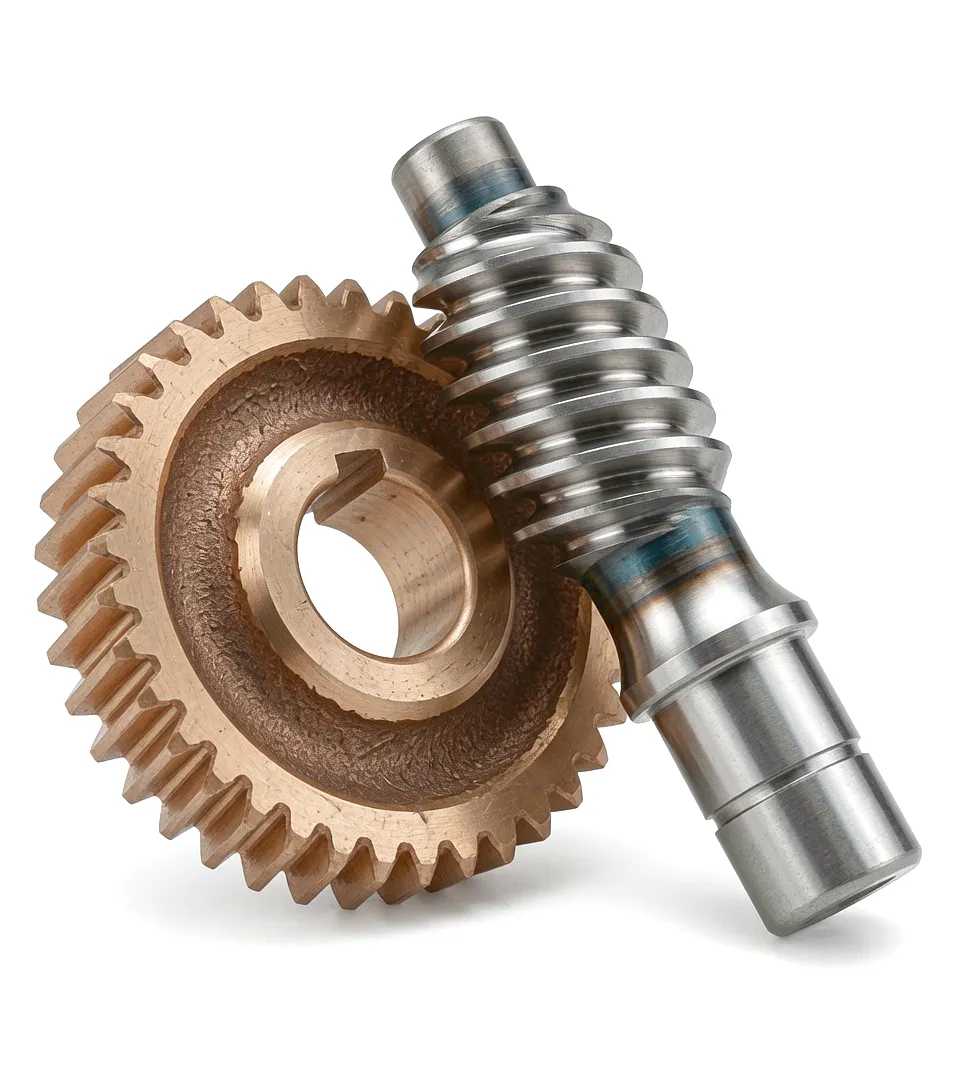
In the broad landscape of mechanical power transmission, few components carry the same combination of compactness, high reduction ratio, and inherent self-locking capability as the worm gear shaft. This component — often called the worm shaft or worm screw — forms the driven heart of any worm gear assembly. It meshes at a 90-degree angle with a mating worm wheel, converting rotational input into a dramatically reduced, high-torque output. The geometry is deceptively simple: a helical thread cut along a cylindrical or hour-glass-shaped shaft body, designed so each revolution advances the worm wheel by exactly one tooth. Yet this simplicity masks a sophisticated interplay of lead angle, tooth profile, surface finish, and material selection that determines whether a drive delivers years of reliable service or fails within months.
Across UK heavy industry — from the steel fabricators of Sheffield to the port logistics operators along the Humber Estuary — worm gear shafts are specified wherever engineers need controlled, smooth, non-backdrivable motion. The engineering conversation around these shafts has deepened considerably over the past decade, driven by stricter energy efficiency mandates, tighter positional accuracy requirements in automated production lines, and the growing demand for compact drives in robotics and materials handling. Understanding the physics, metallurgy, and application logic behind the worm gear shaft is therefore not merely academic — it is the foundation of sound procurement and engineering decision-making.
✉ Get a Quote — [email protected]
Custom worm gear shafts for UK industrial applications — fast turnaround, competitive pricing
How a Worm Gear Shaft Actually Works
The Meshing Principle
The worm gear shaft operates on a crossed-axis helical gear principle where the shaft body carries one or more helical thread starts — analogous to a screw thread — that engage tangentially with the teeth of the worm wheel. As the shaft rotates, each thread start pushes one tooth of the wheel forward, producing a velocity ratio equal to the number of wheel teeth divided by the number of thread starts on the shaft. A single-start worm shaft meshing with a 40-tooth wheel therefore delivers a 40:1 reduction in a single stage, something no spur or helical gear pair could achieve in the same spatial envelope. The contact between shaft thread and wheel tooth is theoretically a line, though in practice it becomes a contact patch shaped by elastic deformation and the oil film — a patch whose area and orientation directly determine load-carrying capacity, heat generation, and component life. The sliding nature of this contact is why lubrication quality and viscosity selection matter so much in worm drive applications.
Self-Locking: The Self-Holding Torque Phenomenon
One of the worm gear shaft’s most commercially decisive properties is its ability to be self-locking — meaning the output (worm wheel) cannot back-drive the input (worm shaft) when no motor torque is applied. This self-holding torque arises when the lead angle of the worm thread is lower than the friction angle between the mating surfaces, typically achieved when the lead angle is below 6–8 degrees. In physical terms, the friction force on the tooth flank during attempted back-drive is large enough to prevent motion. This property is critical in gantry cranes, luffing mechanisms, and lifting equipment: when power is cut, the load does not drift. It eliminates the need for external brakes in lower duty-cycle applications and provides a built-in safety margin. Engineers working with overhead cranes at ports such as Immingham or Tilbury specify worm gear shaft assemblies precisely because of this self-holding characteristic, knowing the boom or hook will remain in position even during an emergency power loss.
Gear Geometry and Thread Profiles
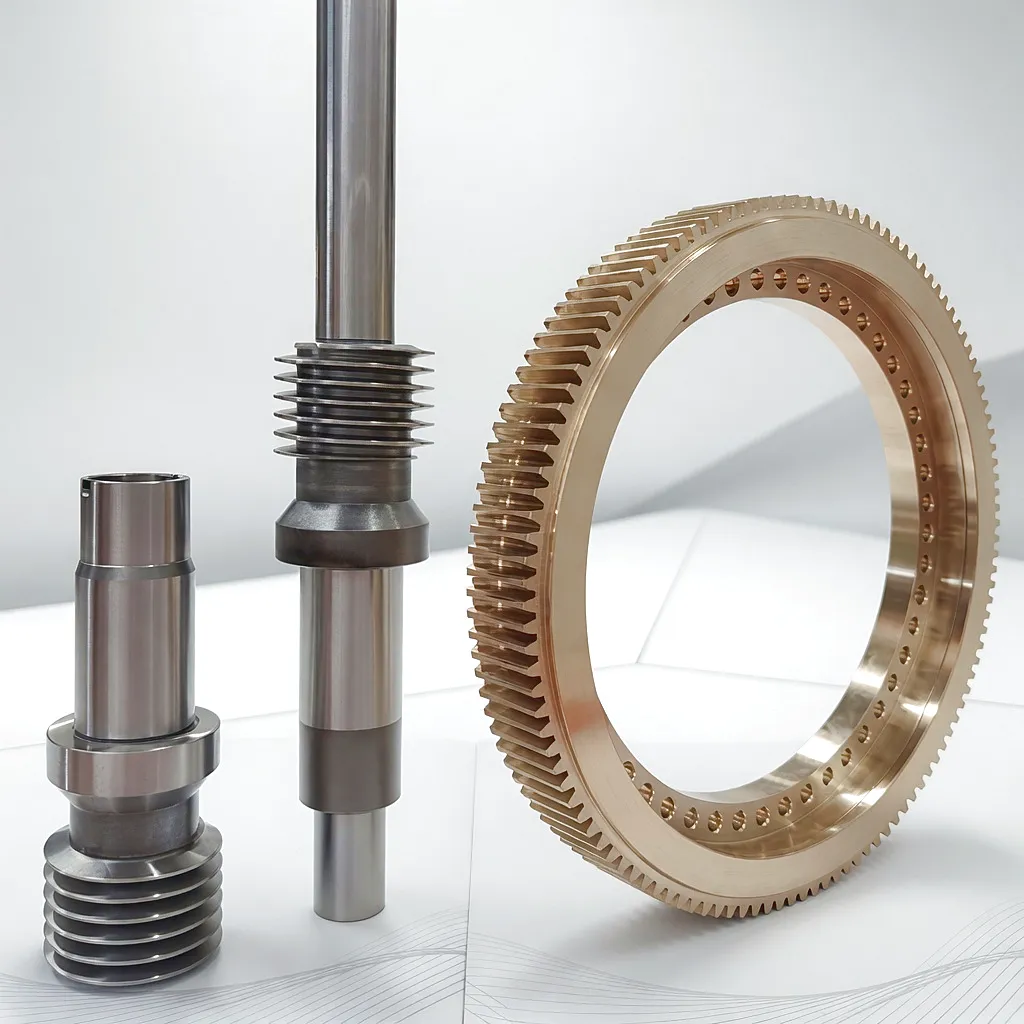
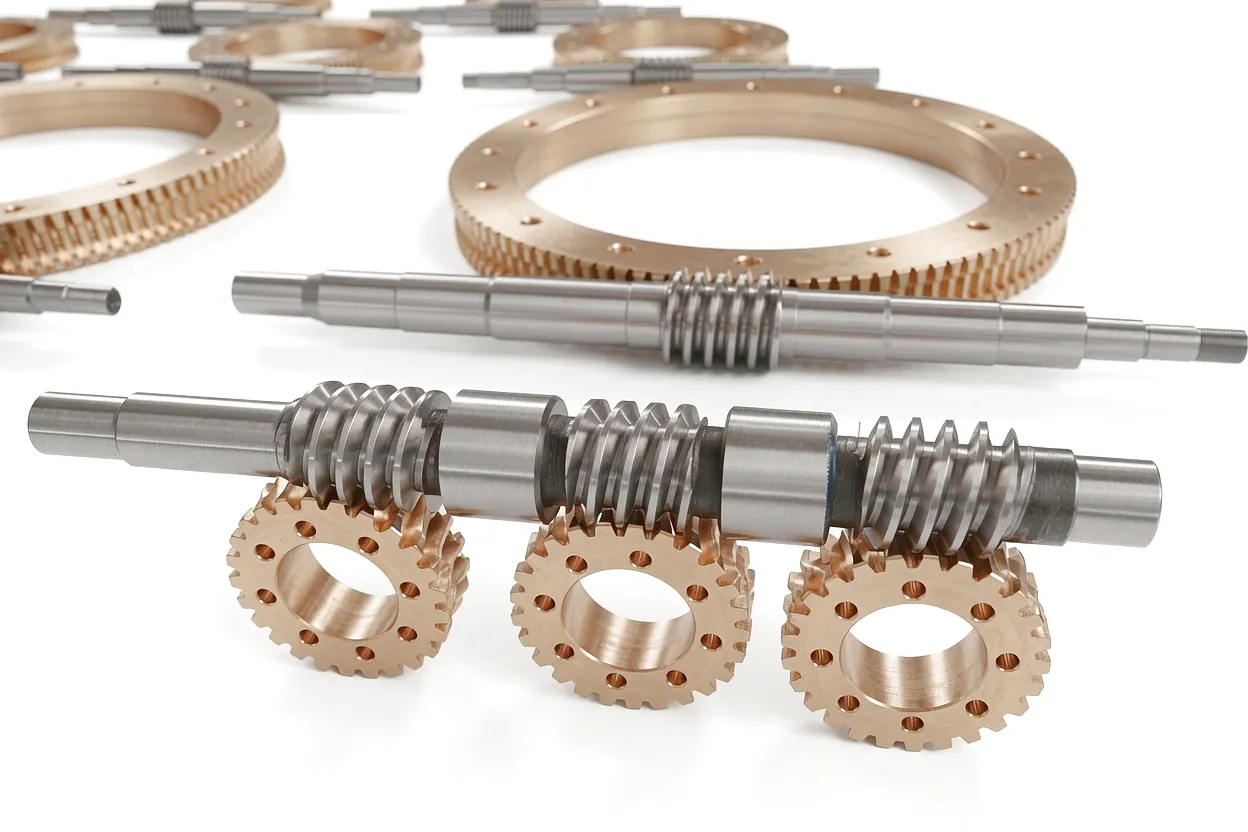
The geometry of a worm gear shaft’s thread profile has a direct bearing on performance. Three main thread forms are used in industry: the ZA (Archimedean) worm, where the axial cross-section is a straight-sided trapezoid; the ZN (normal section) worm with a straight profile perpendicular to the helix; and the ZK (convolute) worm, where the profile is straight in the tangential section. Each profile type suits different manufacturing methods — ZA worms are easily ground on a standard lathe, making them cost-effective for medium-precision applications, while ZK and enveloping (hour-glass) worms require specialized grinding and offer higher load capacity. The choice of thread starts (1, 2, 3, or 4) controls both the reduction ratio and the efficiency. Single-start worms achieve the highest ratios and strongest self-locking but have the lowest efficiency — typically 50–70%. Four-start worms sacrifice some self-locking for efficiencies above 90%, trading positional security for throughput power, a balance that production engineers in Coventry’s automotive supply chain understand intimately when specifying drives for high-cycle conveyor applications.
Core Materials in Worm Gear Shaft Manufacturing
Case-Hardening Alloy Steel
The industry workhorse for worm shafts. These low-alloy case-hardening steels are carburized to surface hardness of HRC 58–62, creating a hard, wear-resistant outer shell over a tough, impact-absorbing core. The combination delivers excellent fatigue strength under reversing bending loads and superior resistance to pitting and scuffing. After carburizing, shafts are precision ground to tolerances of IT6 or better. Widely specified in UK crane and conveyor OEM contracts.
Through-Hardening Steel
Used when uniform hardness through the shaft cross-section is required, particularly in heavy shock-load environments such as material-handling equipment in Sheffield steel works. Typically heat-treated to HRC 28–36 (HB 270–350) and induction hardened on the thread flanks. Offers superb tensile strength — up to 1000 MPa — and excellent machinability before hardening, enabling intricate keyway and spline features to be machined cleanly.
Stainless Steel
Specified for food processing, pharmaceutical, and offshore environments where corrosion resistance overrides pure load capacity. 316 grade offers broad chemical resistance for wash-down environments common in UK food factories in Yorkshire and Lincolnshire. Precipitation-hardened 17-4PH achieves higher strength while maintaining corrosion resistance, bridging the gap between performance stainless and alloy steel where both properties are non-negotiable.
The worm wheel paired with a hardened steel shaft is almost always bronze — typically phosphor bronze (CuSn10P) or nickel-aluminium bronze (CuAl10Ni). This deliberate pairing of hard steel against softer bronze is metallurgically intentional: the bronze sacrifices itself gradually under sliding contact, preventing catastrophic seizure while embedding fine debris rather than allowing it to score both surfaces. The friction coefficient between hardened steel and bronze in an oil film is approximately 0.03–0.08 — low enough to maintain acceptable efficiency while high enough to preserve self-locking at low lead angles.
Core Technical Advantages of the Worm Gear Shaft
Compact High Ratio
Ratios of 5:1 to 100:1 achievable in a single stage. No comparable gear type matches this in the same footprint, making it the go-to choice for compact machine designs where multiple gear stages would add unacceptable length and weight.
Quiet, Vibration-Free Operation
The continuous sliding tooth contact generates no tooth-mesh impulses in the way that spur gears do. This results in inherently smooth, quiet operation, a property that food processing plants and pharmaceutical manufacturers in the East Midlands actively seek to reduce noise-at-work regulatory exposure.
Inherent Self-Locking
When lead angle is below the friction angle (typically <6°), no back-driving is possible without applying a separate unlocking torque. This is why worm drives are specified for lifts, hoists, jacks, and crane slewing rings where load holding without power is a fundamental safety requirement under BS EN standards.
Right-Angle Axis Change
The 90-degree shaft angle is geometrically built into the design. No bevel gears, no universal joints, no additional housing alignment — the drive input and output naturally sit at 90 degrees, enormously simplifying machine layouts where horizontal motor drives must be converted to vertical output or vice versa.
Gantry Cranes and Luffing Mechanisms: Where Self-Holding Torque Is Non-Negotiable
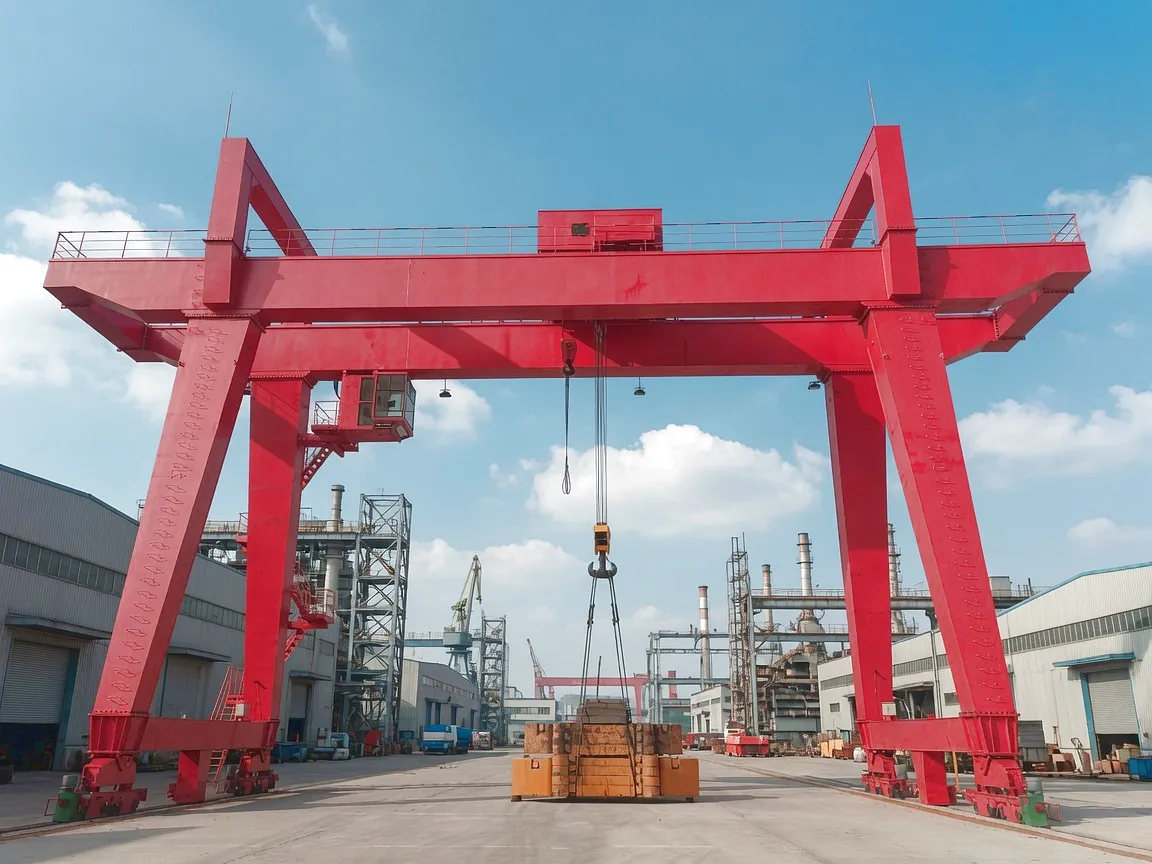
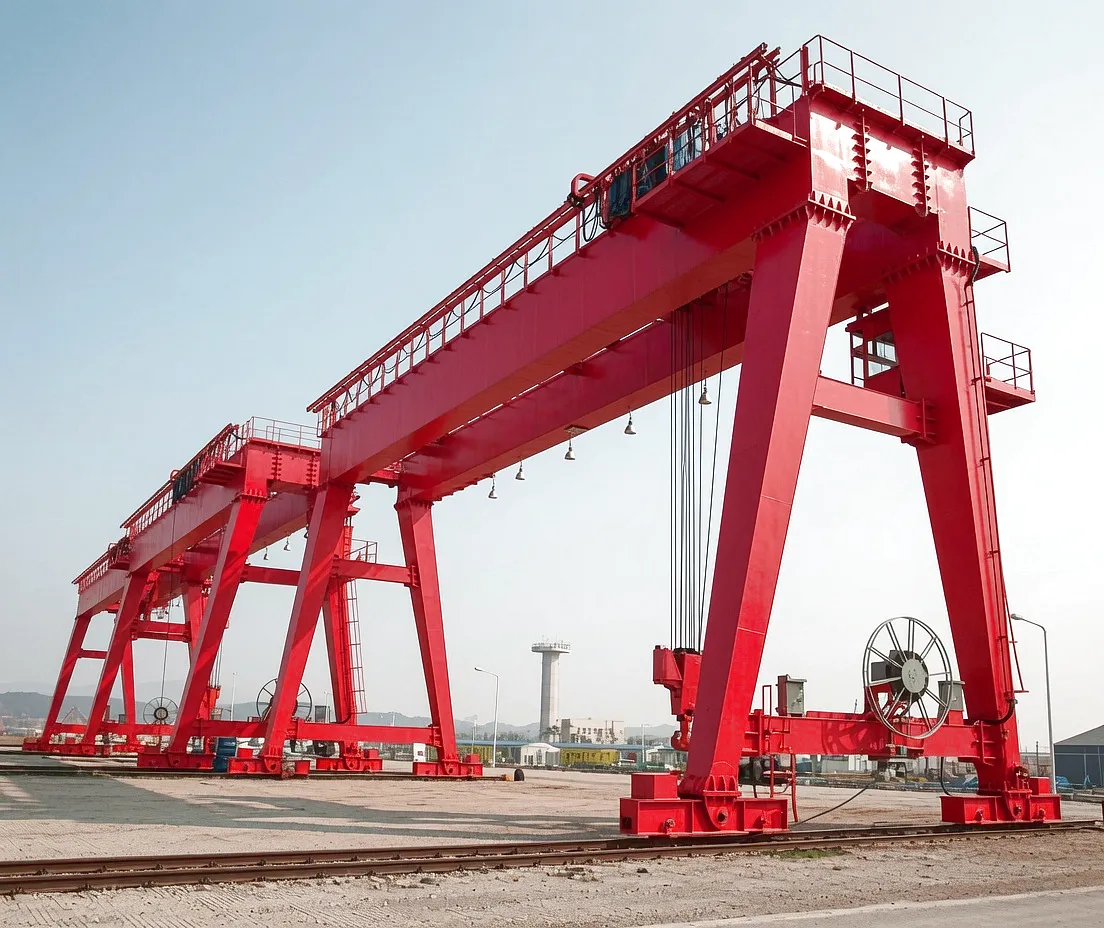
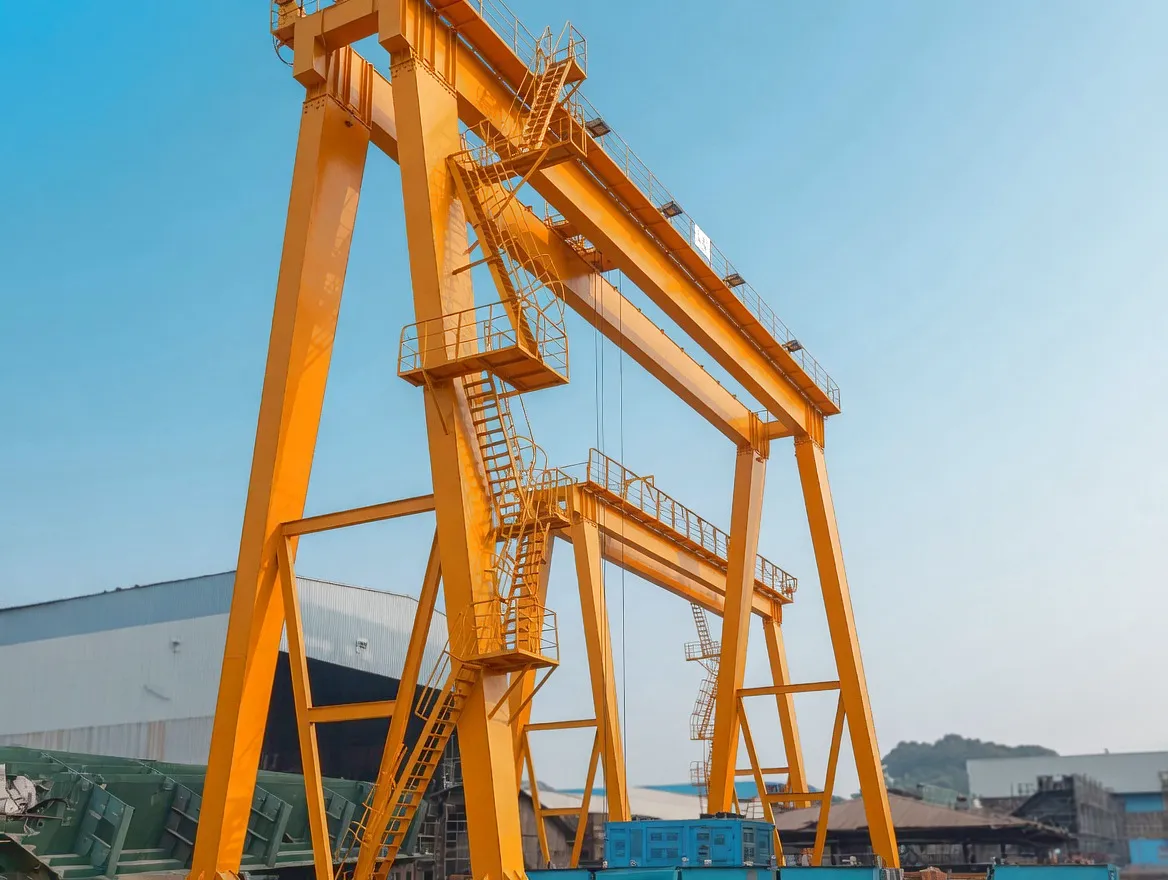
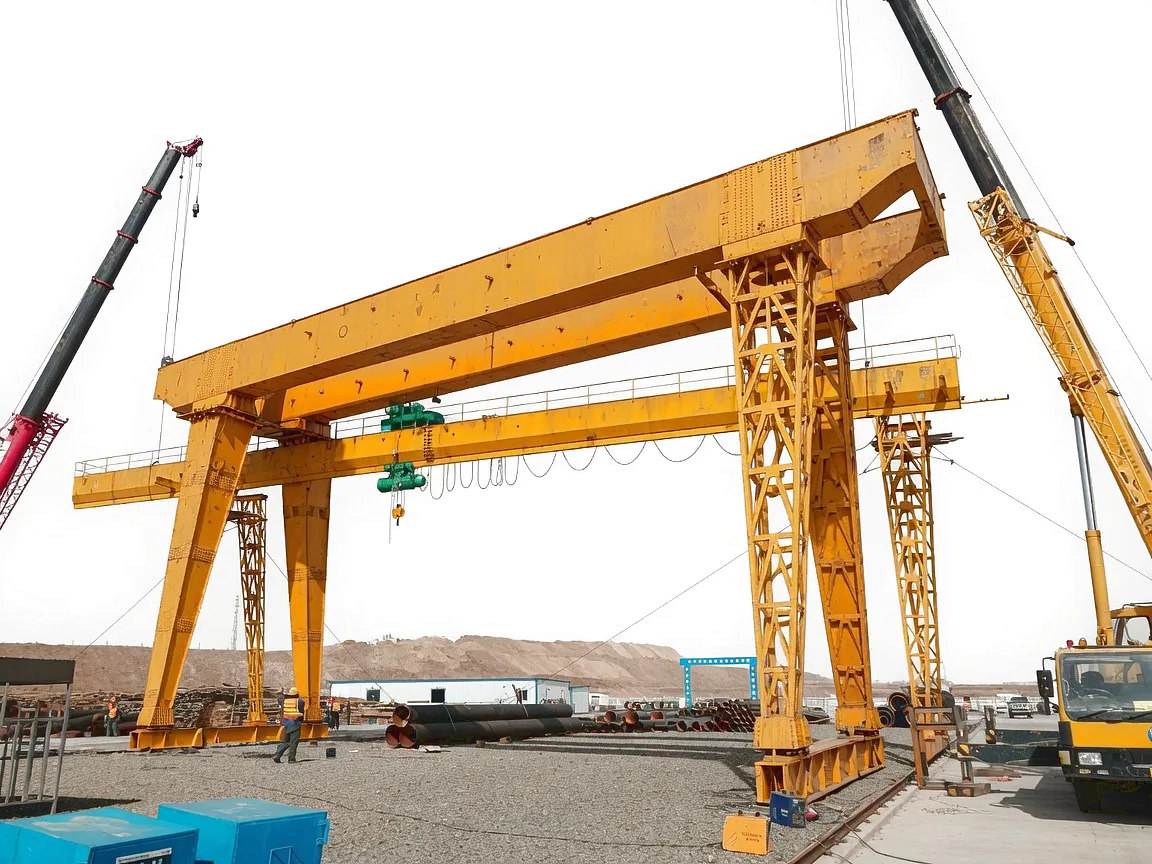
In gantry crane travel mechanisms — often called the long-travel or cross-travel drive — a worm gear shaft unit is deployed as a compact speed-reduction element operating in series with a larger planetary or helical stage. Its role here is not just torque multiplication but precisely that self-holding function: when the drive motor is switched off, the load-bearing trolley must arrest its motion without coasting or rolling. The worm gear shaft, through the inherent friction of its contact geometry, provides exactly this braking-by-design, dramatically reducing the burden placed on the mechanical disc brake fitted upstream. This dual function — reduction and passive braking — explains why gantry crane OEMs such as those operating design and manufacturing facilities in the West Midlands engineering corridor specify worm drives at this location rather than pure helical units, despite helical gears’ higher efficiency.
Port luffing cranes — those dramatic elevated structures seen at deep-water terminals such as the Port of Liverpool and Teesport — rely on a worm gear shaft drive within the luffing (jib angle) mechanism. The demand here is for self-holding torque under gravitation load from the boom assembly, which can weigh tens of tonnes. When the electrical circuit is interrupted, whether by operator command or emergency, the worm drive must hold the jib at its angle without drift. This is not a passive convenience — it is a life-safety function governed by British Standards and CE lifting directive requirements. The worm gear shaft achieves it not through braking energy dissipation but through fundamental contact mechanics, requiring zero electrical or hydraulic energy to maintain position.
Technical and Performance Specification Table
| Parameter | Standard Range | Custom Maximum | Notes |
|---|---|---|---|
| Output Torque | 5 – 5000 N·m | Up to 50,000 N·m | Dependent on module, material and centre distance |
| Reduction Ratio (Single Stage) | 5:1 – 100:1 | Up to 300:1 (dual stage) | Dual-stage units available for ultra-low output speeds |
| Crossing Angle | 90° | 60° – 90° (custom) | Non-90° versions for special spatial layouts |
| Shaft Material | 20CrMnTi / 42CrMo4 | 316 SS / 17-4PH / Duplex | Stainless for corrosive / food grade environments |
| Thread Surface Hardness | HRC 56 – 62 | HRC 62 – 65 (special) | Carburizing + case hardening + precision grinding |
| Tooth Accuracy Grade | DIN Grade 7 – 8 | DIN Grade 5 – 6 | High-precision CNC thread grinding for Grade 5 |
| Thread Profile Ra (Roughness) | Ra 0.8 – 1.6 µm | Ra ≤ 0.4 µm | Mirror-finish grinding for high-speed / low-friction units |
| Lead Angle Range | 2.5° – 30° | 1.5° – 45° | <6° for reliable self-locking in crane / hoist duty |
| Drive Efficiency | 50% – 92% | Up to 95% (multi-start, optimised lube) | Efficiency inversely related to self-locking capability |
| Input Speed | Up to 1500 RPM | Up to 3000 RPM | Higher speeds require forced lubrication and cooling |
| Operating Temperature | -20°C to +80°C | -40°C to +120°C (special seals) | Outdoor UK crane duty: -20°C capability standard |
| Shaft Diameter (Worm) | 12 – 150 mm | 8 – 400 mm | Large bore custom shafts for port / heavy lift cranes |
Industrial Application Scenarios Across UK Sectors
Other Notable Applications: Valve Actuation, Packaging, and Renewable Energy
Gate valve and butterfly valve actuators in water treatment, oil, and gas are a major application segment for worm gear shaft drives in the UK. The combination of compact quarter-turn operation, high torque output, and — critically — the positional hold under lost power makes worm-driven actuators the standard solution in BS EN 15714-2 compliant valve drive packages. North Sea oil infrastructure suppliers and Scottish hydro utility operators specify these actuators extensively.
Solar tracker drives, wind turbine blade pitch systems, and tidal energy pitch control mechanisms represent the growing renewable energy application frontier for precision worm gear shafts. In these duties, the requirement for weatherproof sealing, wide temperature range, and maintenance-free holding torque aligns perfectly with the worm drive’s capabilities. UK renewable energy OEMs, particularly those developing tidal stream and wave energy converters in Scottish waters and the Bristol Channel, are among the early adopters of these custom-specification worm shaft assemblies.
Lubrication, Thermal Management and Service Life
The sliding contact between worm thread and wheel tooth generates more heat per unit of transmitted power than any equivalent rolling-contact gear pair. Managing this heat is therefore central to achieving the rated service life of a worm gear shaft assembly. For catalogue-size worm drives running at moderate speeds, splash lubrication with an ISO VG 220 or VG 320 mineral gear oil or a synthetic polyalphaolefin (PAO) oil of equivalent viscosity is generally sufficient. Synthetic lubricants offer a significant efficiency advantage — typically 2–4% better than mineral oils at equivalent viscosity — because their lower traction coefficient reduces friction heat at the contact patch, and their superior viscosity index maintains film thickness over a wider temperature range. This matters in outdoor crane applications in the UK, where ambient temperatures swing from near -10°C in winter to +35°C during summer peak loading.
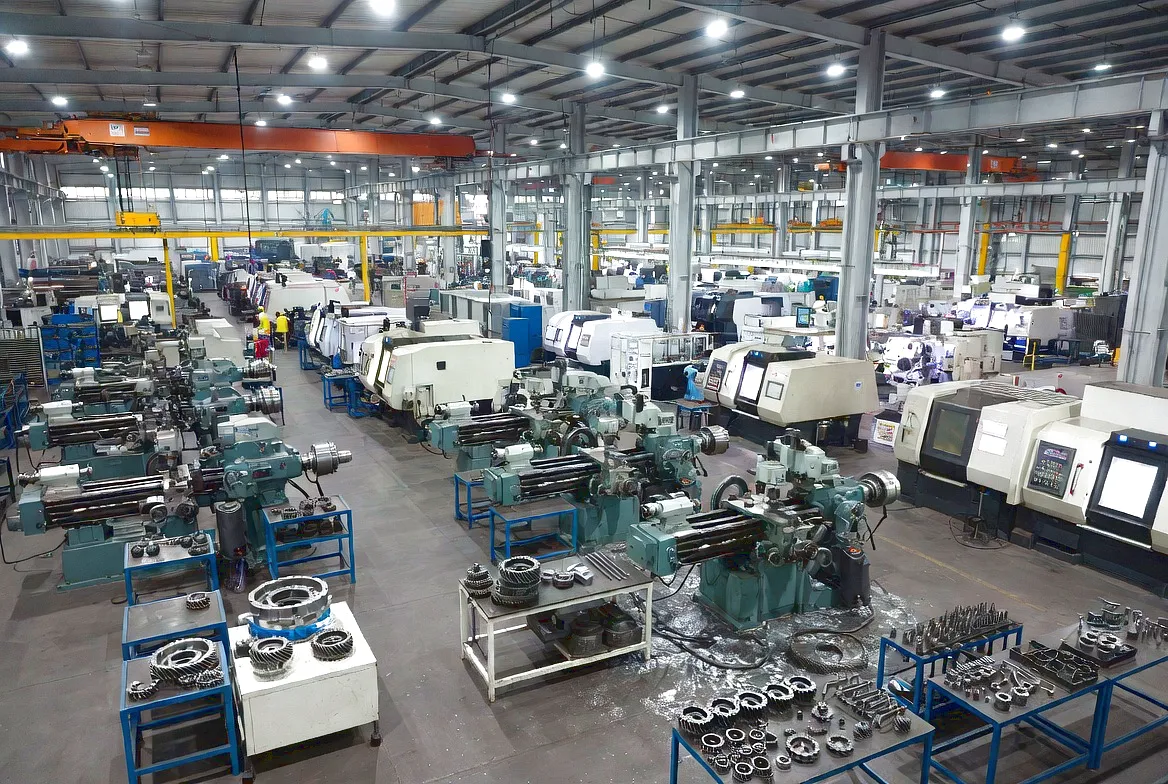
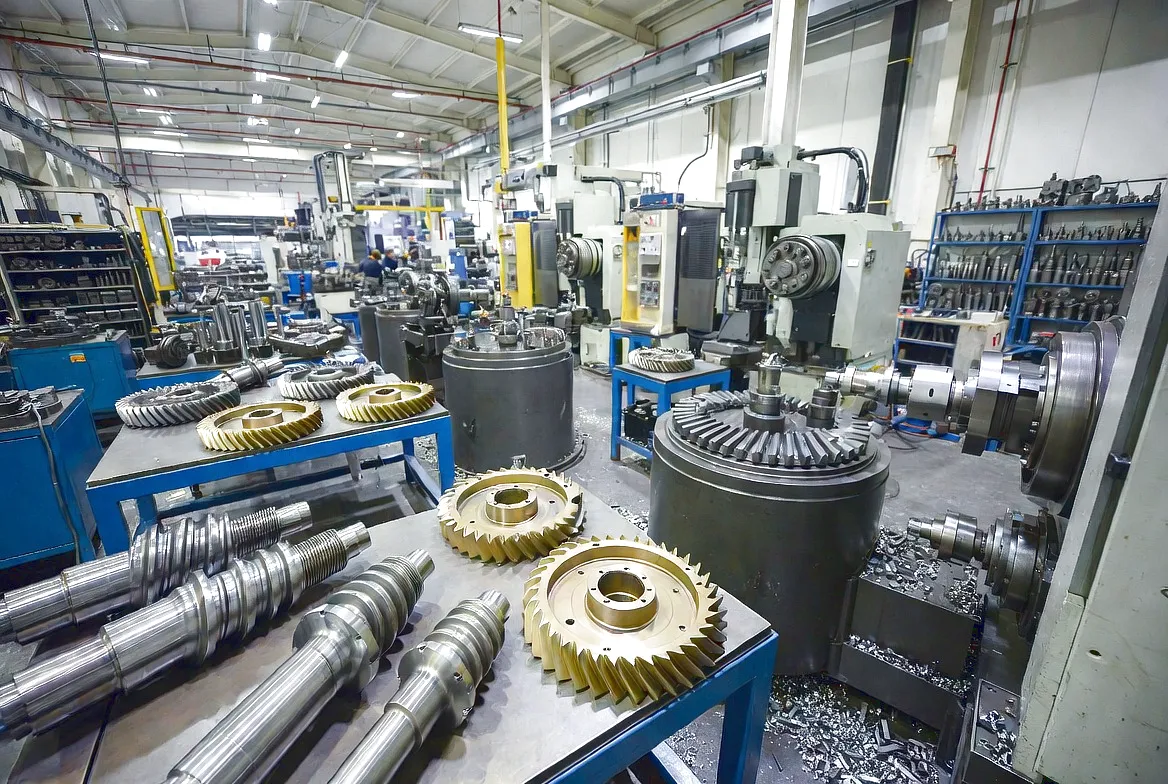
For large, heavily loaded worm gear shaft drives operating continuously — such as those in active port cranes or slewing mechanisms running 16 hours per day — forced lubrication with oil filtration, cooling coils, and temperature monitoring is often designed in. This approach brings operating temperature under control, extends the bronze wheel’s surface fatigue life, and allows the use of lower-viscosity oils that further reduce churning losses. Thermal modelling of worm drives against BS ISO 6336 and ISO 14521 thermal rating methods is a standard part of Ever Power’s engineering review process for all high-duty applications.
Customer Success Story: Sheffield Steel Fabricator — Overhead Crane Upgrade
“The custom worm gear shaft Ever Power supplied for our crane travel drive has been running without a single issue for over a year in what I would describe as genuinely difficult conditions — foundry ambient temperatures, heavy shock loading, continuous three-shift operation. The thermal performance improvement alone justified the cost. We’re now specifying the same supplier for our second crane upgrade.”
— David Ashworth, Chief Mechanical Engineer, Hallam Structural Steel Ltd., Sheffield
“What set Ever Power apart was the engineering engagement before order placement. They requested the actual duty cycle data rather than taking the peak torque figure, recalculated the thermal rating properly, and proposed a solution sized correctly for continuous operation rather than just the nameplate output. The documentation pack for our LOLER compliance file was complete and professionally prepared — something we don’t always get from standard catalogue suppliers.”
— Rachel Burnside, Procurement Manager, Northern Ports Logistics, Hull
“We operate valve actuator systems across multiple water treatment sites in the North West. The stainless steel worm gear shafts Ever Power supplied for our outdoor actuator units have now been through two British winters with zero corrosion issues and no re-lubrication requirements outside normal schedule. The self-holding torque is rock solid — no valve creep even on the larger butterfly valves under full line pressure. Lead time was 6 weeks from drawing approval to delivery, which is excellent for a custom item.”
— Marcus Fielding, Senior Engineer, AquaCivil Infrastructure Ltd., Manchester
Selecting the Right Worm Gear Shaft: A Practical Engineering Guide
Choosing a worm gear shaft for a specific application involves navigating several interdependent variables that interact in ways the manufacturer’s catalogue alone cannot fully resolve. The starting point is always the required output torque under the actual duty cycle, not the theoretical maximum load. Using peak torque without a service factor almost always leads to under-specified drives — one of the most common causes of premature failure that Ever Power’s engineers see in replacement enquiries from UK clients.
Service factors (also called application factors) must account for the type of driven machine: uniform load (pumps, fans) typically uses Ks = 1.25–1.5; moderate shock (conveyors, mixers) uses Ks = 1.5–1.75; heavy shock (crushers, hoists with sudden starts) uses Ks = 2.0–2.5. The effective design torque — the actual service torque multiplied by the service factor — is then used to select the worm shaft module and centre distance. Thermal rating must be checked independently, because worm drives generate heat in proportion to power loss, and the maximum oil sump temperature must not exceed 80°C for mineral oil or 100°C for synthetic lubricants in continuous operation, per ISO 14521.
The final check is self-locking requirement. If passive positional holding is a safety requirement (as in lifting and luffing), the lead angle must be selected below the effective friction angle. A common engineering rule for reliable self-locking in hardened steel / phosphor bronze pairs with ISO VG 220 mineral oil is to keep the lead angle below 5°, which corresponds to a single-start worm on a relatively small pitch circle diameter. Verifying this with the manufacturer is essential — Ever Power provides detailed lead angle and self-locking torque calculations with every custom quotation as a standard engineering deliverable.
Frequently Asked Questions
Ready to Source Your Next Worm Gear Shaft?
Ever Power’s engineering team is ready to review your application, calculate the correct specification, and provide a detailed quotation. Whether you need a single development shaft or a production supply contract, we deliver precision, traceability, and on-time performance.
edit by gzl