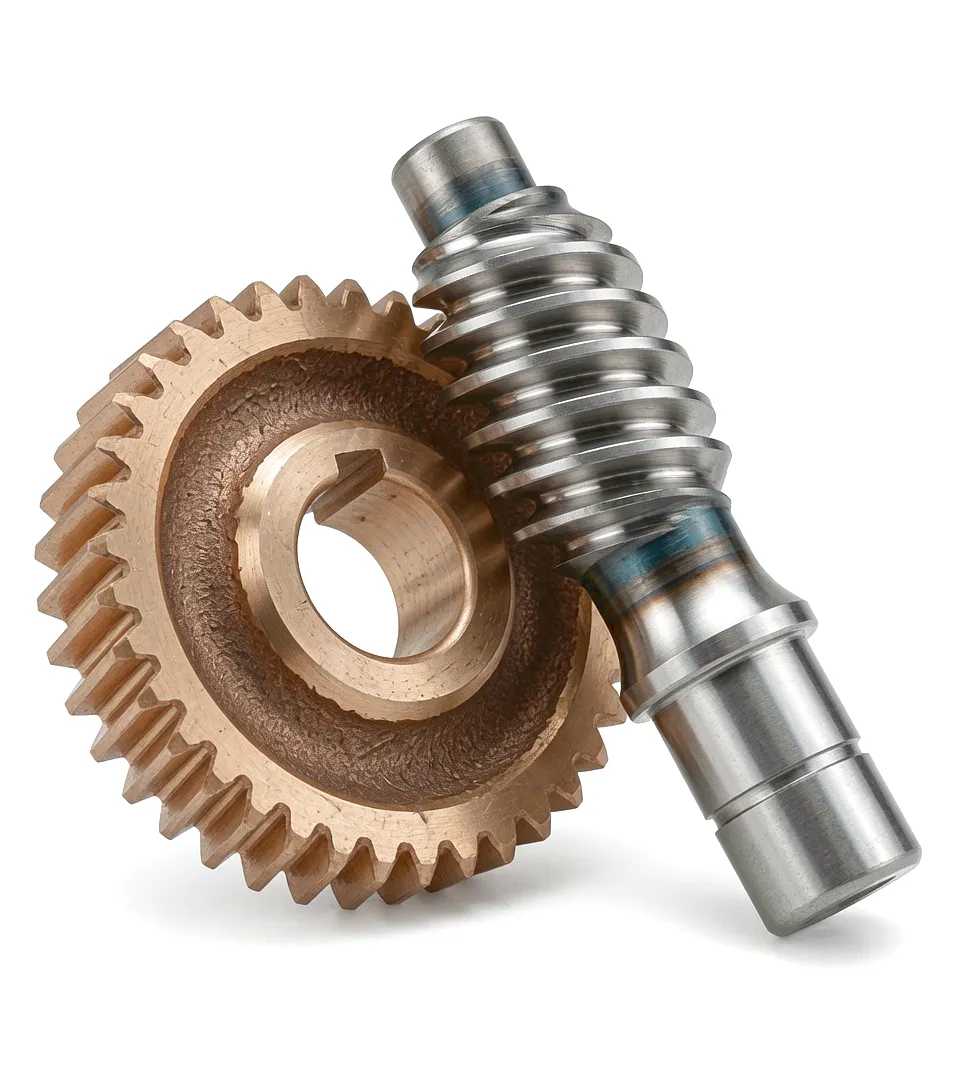
Worm Gear Shaft: Engineering Principles, Material Science, and Industrial Applications Across UK Manufacturing
Precision-engineered for demanding torque-transmission environments — from Sheffield steel plants to Birmingham automation lines.
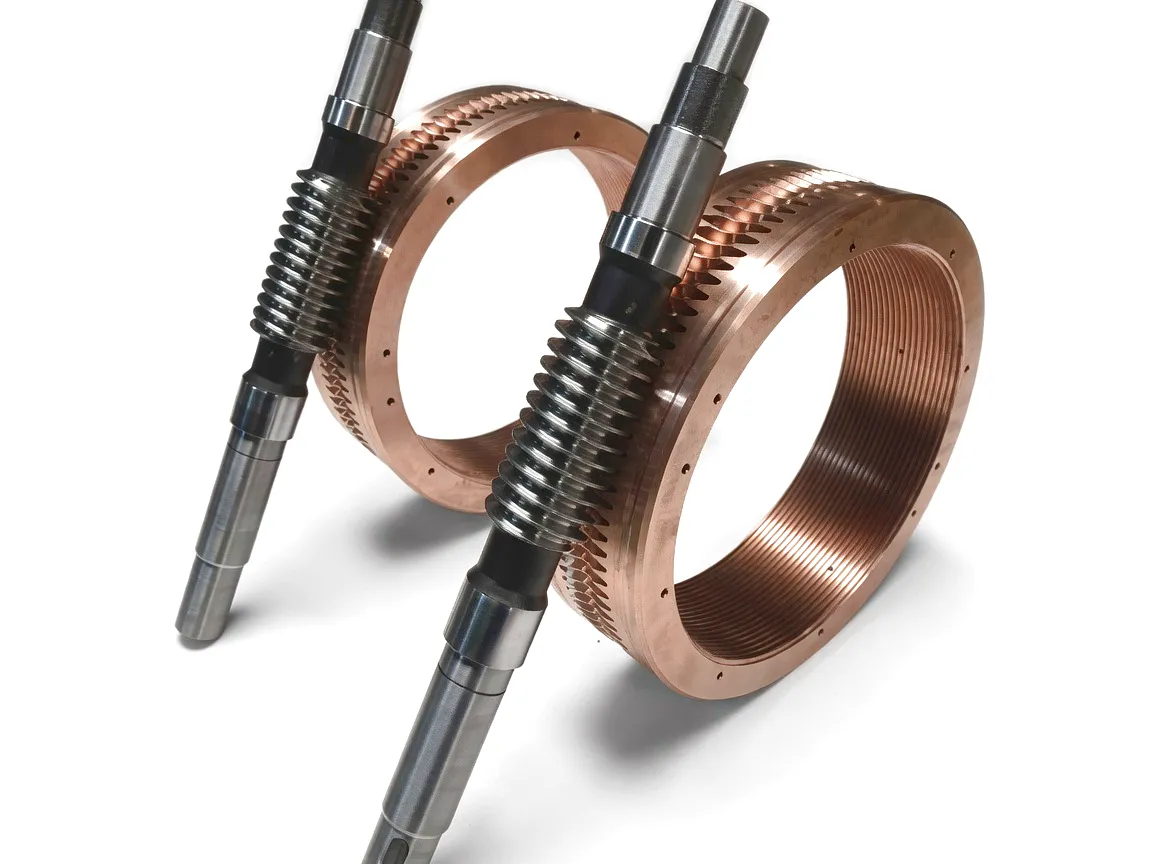
The worm gear shaft sits at the heart of some of the most mechanically demanding systems in the world. Whether it is driving a conveyor belt through a dusty aggregate plant in West Yorkshire, controlling the rotation speed of a packaging line in Coventry, or providing the self-locking hold on a lifting mechanism in a Manchester automotive facility, this single component carries an engineering responsibility that few other parts share. It converts rotational input into precisely controlled output torque, changes the axis of motion by 90 degrees, and does so with an inherently compact geometry that has made it indispensable to British industry for over a century. Yet despite this ubiquity, the worm gear shaft is frequently misunderstood, underspecified, or purchased on price alone — a decision that often leads to premature failure, unplanned downtime, and costly line stoppages. Understanding what makes a truly high-performance worm gear shaft — from the metallurgy of its core to the geometry of its thread form — is the starting point for any procurement or engineering decision that needs to hold up under real-world industrial conditions.
How a Worm Gear Shaft Actually Works
OPERATING PRINCIPLE
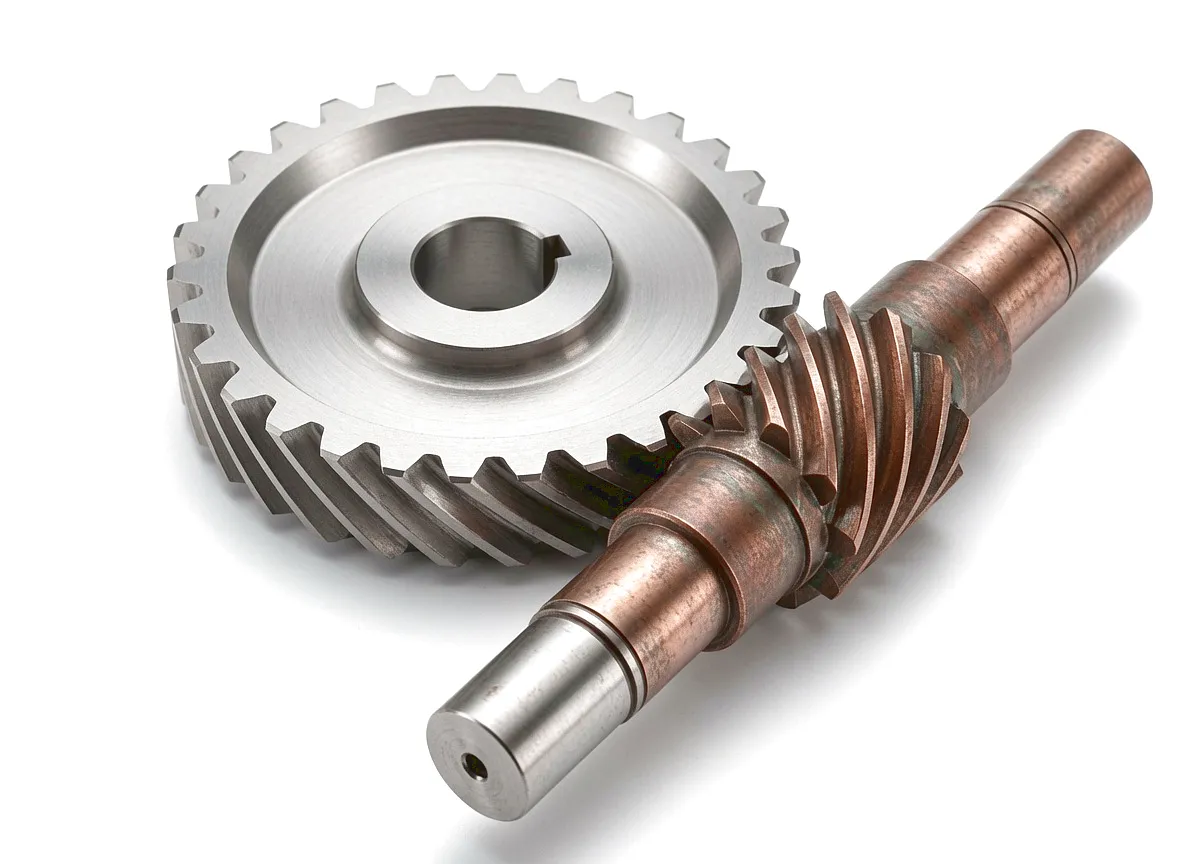
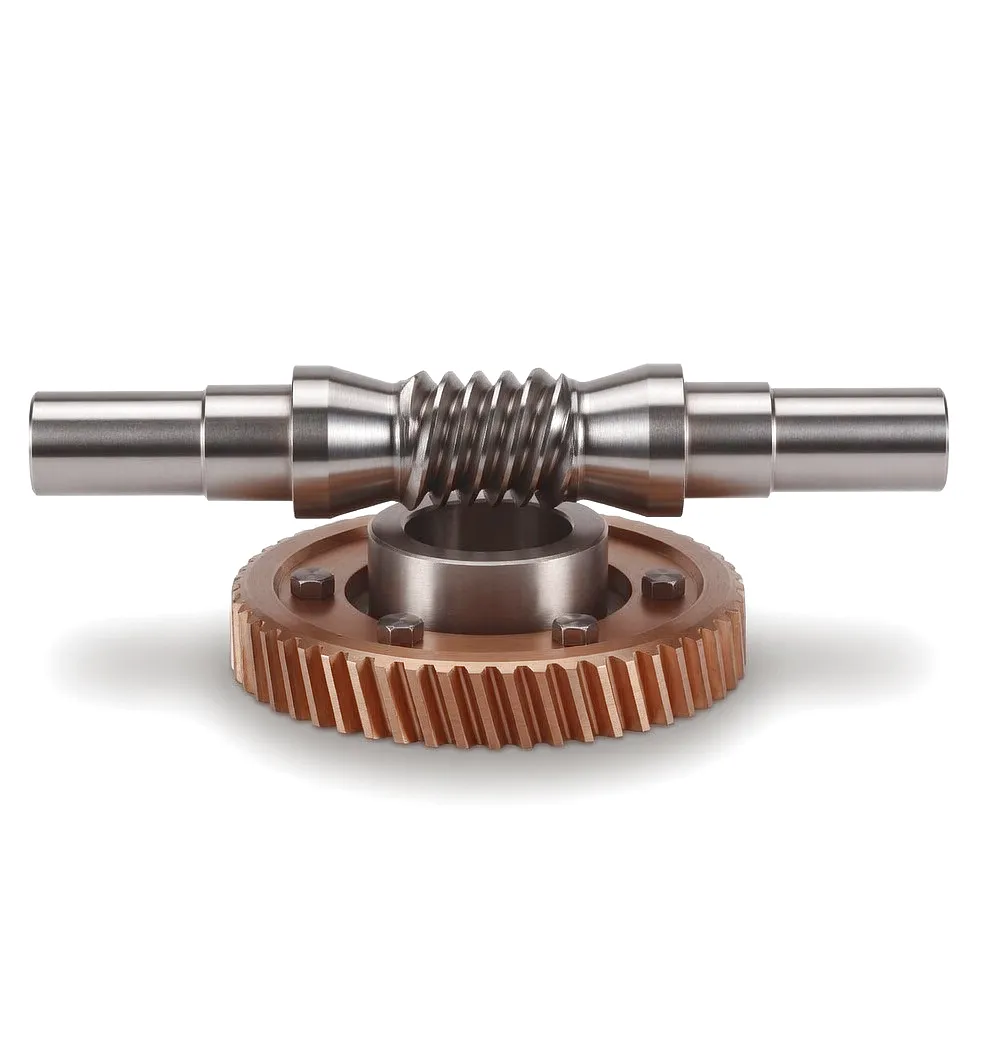
A worm gear shaft operates on the principle of a helically threaded cylindrical shaft — the worm — meshing with the teeth of a worm wheel. The shaft rotates continuously, and each revolution advances the worm wheel by only the number of teeth corresponding to the worm’s thread starts. A single-start worm advances the wheel by exactly one tooth per revolution, producing a very high gear reduction in a single stage. The angle of the worm thread helix relative to a plane perpendicular to the shaft axis is known as the lead angle. When this angle falls below the friction angle of the mating materials, the assembly becomes self-locking: the output shaft cannot back-drive the input, making the configuration intrinsically safe for holding loads without a mechanical brake. The sliding contact between the worm and wheel — as opposed to the rolling contact in spur or helical gears — is what defines the efficiency envelope of the design and also dictates the tribological demands placed on lubrication and material selection.
TORQUE & REDUCTION MECHANICS
The mechanical advantage of a worm gear shaft assembly is enormous compared to a single-stage parallel gear set. Reduction ratios from 5:1 up to 100:1 or even higher are achievable without stacking multiple gear stages. This is why the worm gear shaft is so attractive in space-constrained applications: one small shaft and wheel replace what might otherwise require a multi-stage gearbox. The output torque is a function of the input torque multiplied by the gear ratio, minus losses attributable to friction across the mesh interface. Because friction losses are proportionally higher at low lead angles, efficiency drops as reduction ratio increases. This relationship means that selecting the correct gear ratio is not simply a matter of matching speed requirements but requires a careful balance between torque output, thermal load, and mechanical efficiency — a calculation that experienced suppliers such as Ever Power routinely perform as part of the specification process for UK clients.
Material Selection: The Metallurgical Foundation of Performance
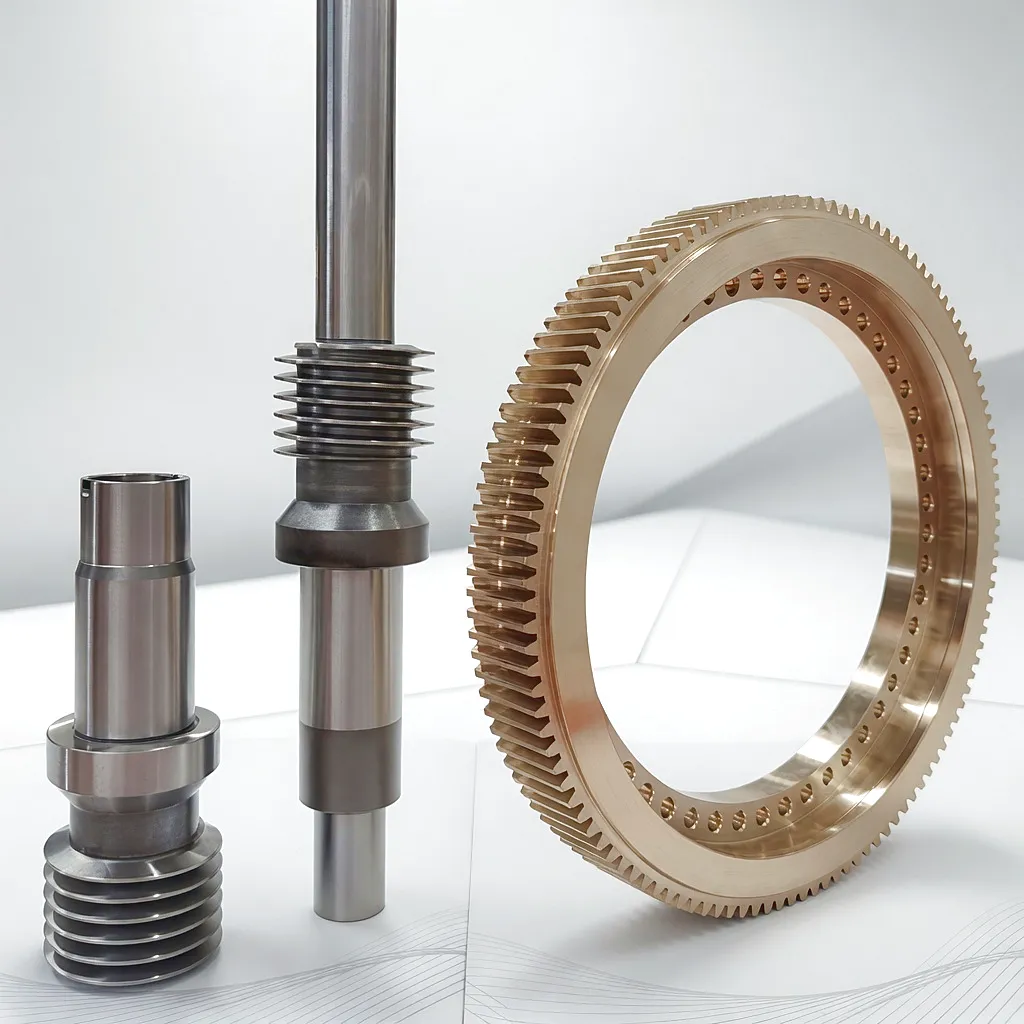
The material pairing between the worm shaft and the worm wheel is one of the most consequential decisions in the entire design process. The worm shaft itself must be hard, dimensionally stable under thermal cycling, and capable of resisting surface fatigue across millions of meshing cycles. Case-hardened low-alloy steel — typically grades such as 20CrMnTi or the EN36 equivalent commonly specified in UK industrial procurement — provides the combination of a hard, wear-resistant case (HRC 58–62 after carburising and quenching) over a tough, ductile core that absorbs shock loads without fracturing. For lower-duty applications or cost-sensitive tenders common in mid-market Birmingham manufacturing, 45# carbon steel with induction hardening offers a respectable balance of cost and performance. Stainless steel grades such as 304 or 316 are sometimes specified for food processing lines in Lincolnshire or pharmaceutical handling equipment in Cambridge, where corrosion resistance and cleanability take precedence over maximum efficiency. Nitriding of 38CrMoAl steel provides exceptional surface hardness with minimal dimensional distortion — particularly valuable for high-precision worm shafts where post-heat-treatment grinding must hold tolerances within micrometres.
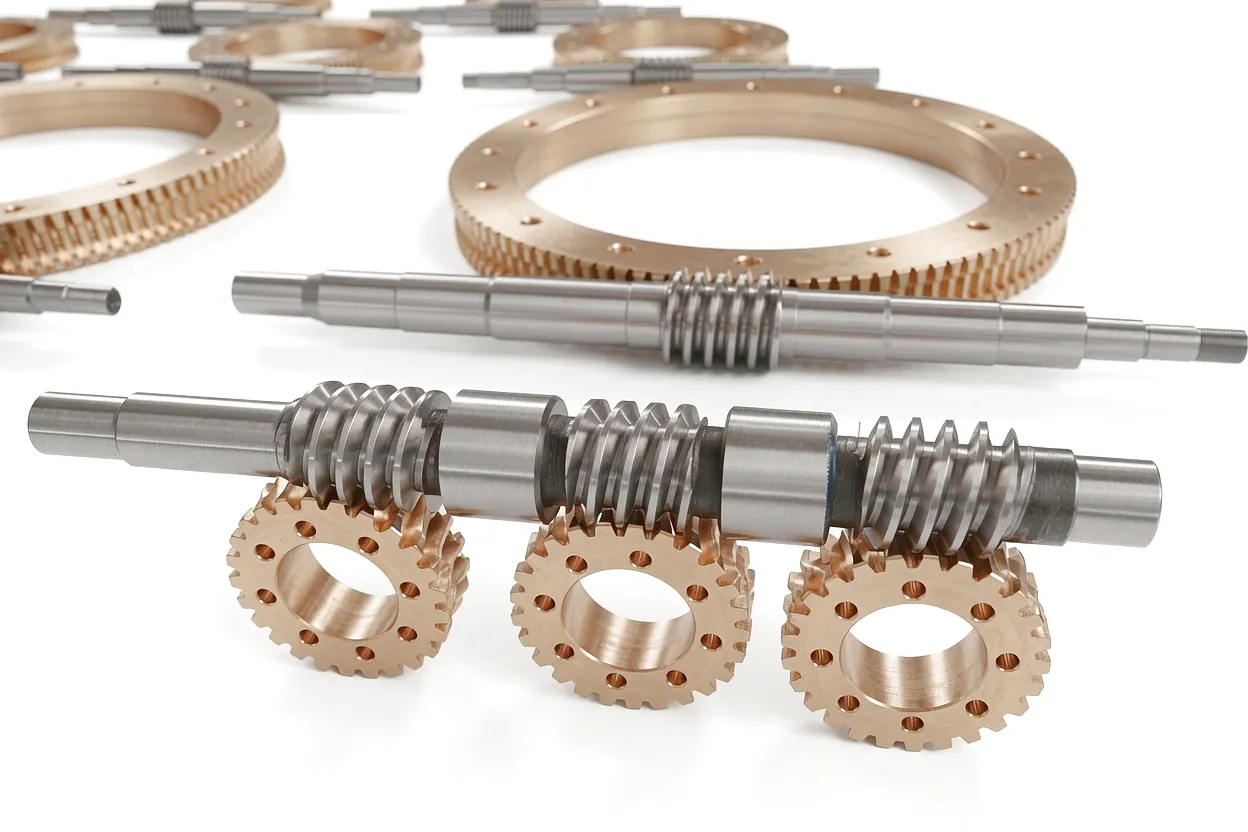
The worm wheel, which mates against the shaft, is almost always made from a bronze alloy — phosphor bronze, aluminium bronze, or centrifugally cast tin bronze depending on load duty. The deliberate softness of the bronze relative to the hardened steel shaft is not a compromise: it is intentional tribology. The bronze sacrificially conforms to the shaft geometry during the running-in period, increasing the real area of contact and distributing load more evenly than two hard surfaces would achieve. High-tin bronzes (10–12% Sn) offer excellent compatibility with steel worm shafts under heavy boundary lubrication conditions, while aluminium bronzes extend into higher-temperature service ranges encountered in energy and utilities applications. This material philosophy — hard shaft against soft wheel — is what allows the worm gear drive to survive millions of cycles without destructive adhesive wear.
Core Technical Advantages
🔒
INHERENT SELF-LOCKING
When the lead angle is below the friction angle, the worm gear shaft assembly cannot be back-driven by the output load. This eliminates the need for external holding brakes in many lifting, tilting, and positioning applications, reducing system complexity, component count, and cost while simultaneously improving safety. This is why the configuration is so prevalent in hoist mechanisms, valve actuators, and agricultural boom systems.
⚙
HIGH SINGLE-STAGE RATIO
Reduction ratios from 5:1 to 100:1 are achieved within a single compact gear stage. This dramatically reduces gearbox size and weight compared to multi-stage helical arrangements while delivering equivalent output torque multiplication. For OEMs designing equipment for cramped installation environments — a recurring challenge in UK retrofitting projects — this space efficiency is a decisive factor in favour of the worm gear shaft configuration.
🔈
QUIET, SMOOTH OPERATION
The sliding contact nature of worm gear shaft meshing produces significantly lower noise and vibration levels than equivalent spur or helical gear arrangements at comparable power levels. For food processing, packaging, and pharmaceutical line equipment — sectors with strict noise exposure regulations under UK HSE guidance — this acoustic performance is more than a comfort factor; it contributes directly to regulatory compliance and operator wellbeing.
🔧
COMPACT 90° POWER REDIRECT
The 90-degree axis change between input and output shafts is achieved intrinsically — no bevel gears or universal joints required. This makes worm gear shaft assemblies particularly elegant in conveyor drive stations, rotary indexing tables, and any system where the motor axis cannot be aligned with the driven axis. Engineers in Sheffield’s fabrication sector frequently cite this geometry as the primary reason for specifying a worm gear shaft over alternative reduction solutions.
🏗
ROBUST SHOCK TOLERANCE
The sliding mesh contact that governs worm gear shaft operation also provides a degree of natural shock absorption that parallel gear sets lack. In aggregate handling, mining conveyors, and heavy press-feed applications — all present in UK operations from the North East coalfield derivatives industry to Derbyshire quarrying — sudden load spikes are common. A correctly specified worm gear shaft assembly dampens these transients far more effectively than a rigid helical gear train, protecting both the drive motor and the downstream process machinery.
Product Technical & Performance Parameters
| Parameter | Specification Range | Notes / UK Application Context |
|---|
| Module (m) | 1 – 20 mm | Standard metric modules; BS 721 Pt.1 compliant on request for UK OEM customers |
| Centre Distance | 40 – 500 mm | Custom centre distances available for retrofit to legacy UK gearbox housings |
| Gear Ratio (i) | 5:1 – 100:1 | Single-stage; non-standard ratios available for specific conveying and indexing duties |
| Output Torque | Up to 50,000 N·m | High-torque variants engineered for heavy industrial drives in mining, quarrying, and steel processing |
| Shaft Material | 20CrMnTi / 45# / EN36 / 304SS / 316SS | EN36 specified per BS 970 on request; SS grades for food-grade and pharma applications |
| Surface Hardness (case) | HRC 56–62 (carburised) / HRC 52–58 (induction) | Verified by Rockwell testing; hardness certificates issued on request for quality audits |
| Thread Starts | 1, 2, 4 | Single-start for self-locking; multi-start for higher efficiency in high-cycle duty |
| Lead Angle | 3° – 28° | Below ~6° achieves self-locking with steel/bronze pairing; higher angles for efficiency-critical drives |
| Surface Finish (Ra) | Ra 0.4 – 0.8 µm | Ground and superfinished thread flanks; critical for bearing load capacity and lubrication film maintenance |
| Efficiency Range | 45% – 90% | Efficiency increases with multi-start threads, higher lead angles, and optimised lubrication viscosity |
| Operating Temperature | -20°C to +120°C | Extended range with specialist lubricants; relevant to outdoor UK applications subject to freeze-thaw cycles |
| Shaft Diameter | 14 – 200 mm | Custom bore and keyway configurations per DIN 6885 or customer drawing |
Industrial Application Scenarios Across the UK
CONVEYOR & MATERIAL HANDLING
 Bulk material handling operations throughout the UK’s industrial heartlands — from the port-side grain handling terminals in Hull to the aggregate conveyor networks servicing building projects across Greater London — rely on worm gear shaft drives at nearly every transfer point. The combination of high torque at low speed, compact drive head geometry, and the inherent ability to hold a loaded belt stationary during emergency stops makes the worm gear shaft the preferred drive solution for conveyor head and tail drums. In applications where the belt must not creep backwards under a loaded incline, the self-locking characteristic provides a passive safety function that no external brake can match for simplicity and fail-safe reliability. Maintenance teams across Yorkshire and Lancashire regularly report that properly specified worm gear shaft gearboxes outlast two or three generations of motor replacements on the same conveyor line, demonstrating the value of precision manufacturing over budget procurement.
SELF-PROPELLED AGRICULTURAL BOOM SPRAYERS
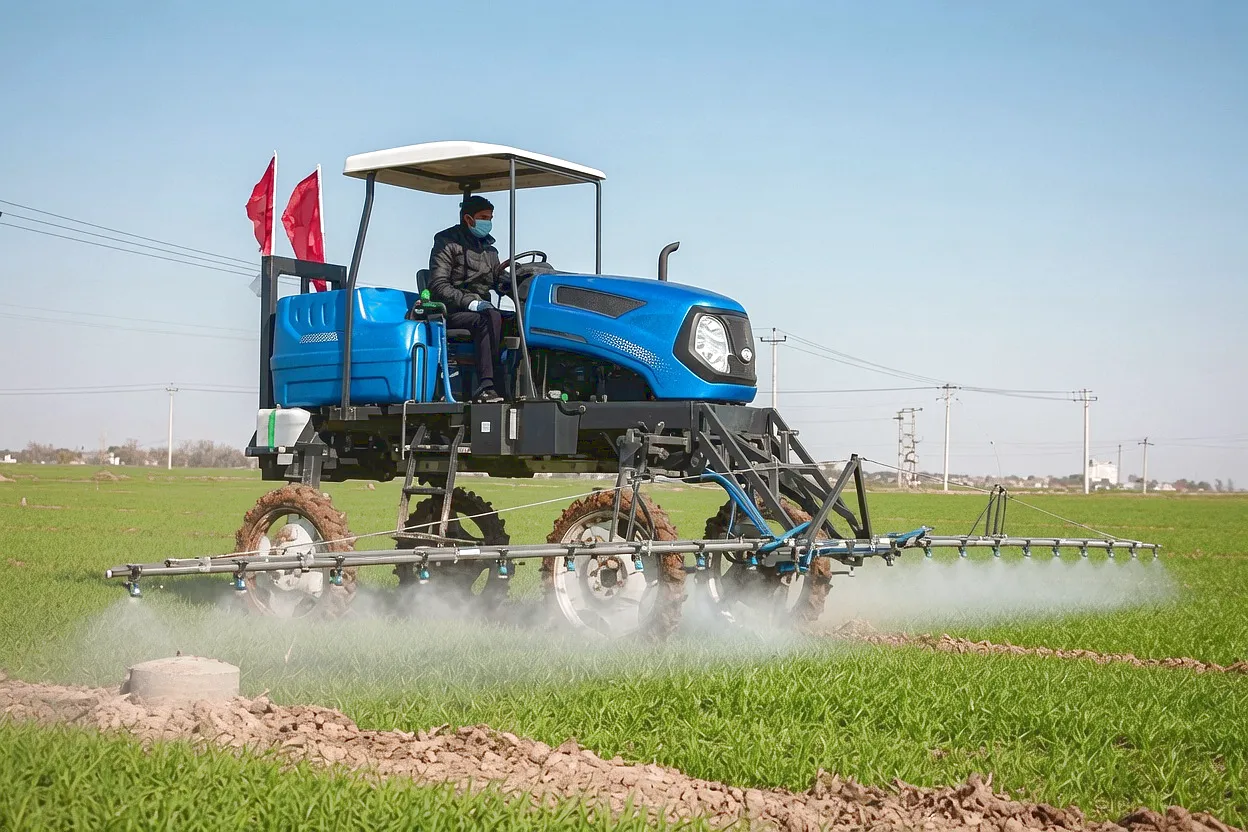 Modern self-propelled sprayers operating across the arable fields of Cambridgeshire, Lincolnshire, and Norfolk now routinely carry boom spans of 44 metres or more. The folding and unfolding mechanism for these immense structures demands a drive solution that is simultaneously powerful, controllable, and absolutely safe during unexpected hydraulic power loss. The answer, consistently, is a worm gear shaft combined with a hydraulic motor in a hybrid actuation system. During field operation, the boom extends from its folded transport position in a smooth, controlled arc; the worm gear shaft provides the controlled speed reduction necessary to make this a safe, predictable movement rather than an uncontrolled drop. Critically, when the machine encounters an unexpected power interruption — a burst hydraulic line, an engine stall, or an emergency stop — the self-locking characteristic of the worm gear shaft holds the boom at precisely its current angle. A 44-metre boom weighing several tonnes falling from a raised position would cause catastrophic damage to the machine and potentially injure operators in the vicinity. The worm gear shaft prevents this without any additional holding mechanism, demonstrating how its self-locking property translates directly into field safety. The assembly must also resist constant vibration from uneven ground and operate reliably across the temperature range of a British growing season, making material and seal specification as important as gear geometry.
PACKAGING & FOOD PROCESSING LINES
 The UK food and beverage manufacturing sector — with major clusters in Northamptonshire, Humberside, and the Scottish Central Belt — places extraordinary demands on gearbox reliability, hygiene, and acoustic performance simultaneously. Worm gear shaft assemblies in stainless steel housings with food-grade lubrication and IP69K-rated seals have become the standard specification for drives on filling carousel stations, conveyor junctions, and rotary capping heads. The low noise profile of the worm drive is particularly valued on open production lines where operators work in close proximity to running machinery throughout an eight-hour shift, and where elevated noise levels would trigger both compliance reporting under the Control of Noise at Work Regulations 2005 and long-term hearing risk claims. The smooth, vibration-reduced output also protects delicate packaging — glass containers, foil-sealed trays, and filled cartons — from the micro-impacts that can cause seal failures and product loss rates that erode already tight margins.
LIFTING, VALVE ACTUATION & PROCESS CONTROL
 Gate valves, butterfly valves, and sluice gates in water treatment facilities from the Thames Water infrastructure to Scottish Water’s Highland network are routinely actuated by worm gear shaft assemblies. The rationale is straightforward: a valve that fails closed — or fails open — under uncontrolled back-pressure from the pipeline would be an operational disaster. The self-locking property of the worm gear shaft ensures that the valve stays precisely where it was positioned until a deliberate actuating signal is applied, regardless of what happens to the power supply or the hydraulic circuit in the interim. For theatre stage machinery in venues across London’s West End, the same principle applies: counterweighted flying rigs, revolving stages, and orchestra pit lifts all use worm gear shaft drives to hold positions statically under load between cues. In every case, the defining characteristic is not speed or efficiency — it is the absolute mechanical certainty that the position set is the position held.
Ever Power: Precision Manufacturing & Custom Worm Gear Shaft Solutions
Engineered to specification. Delivered with full certification. Supported from first enquiry to final installation.
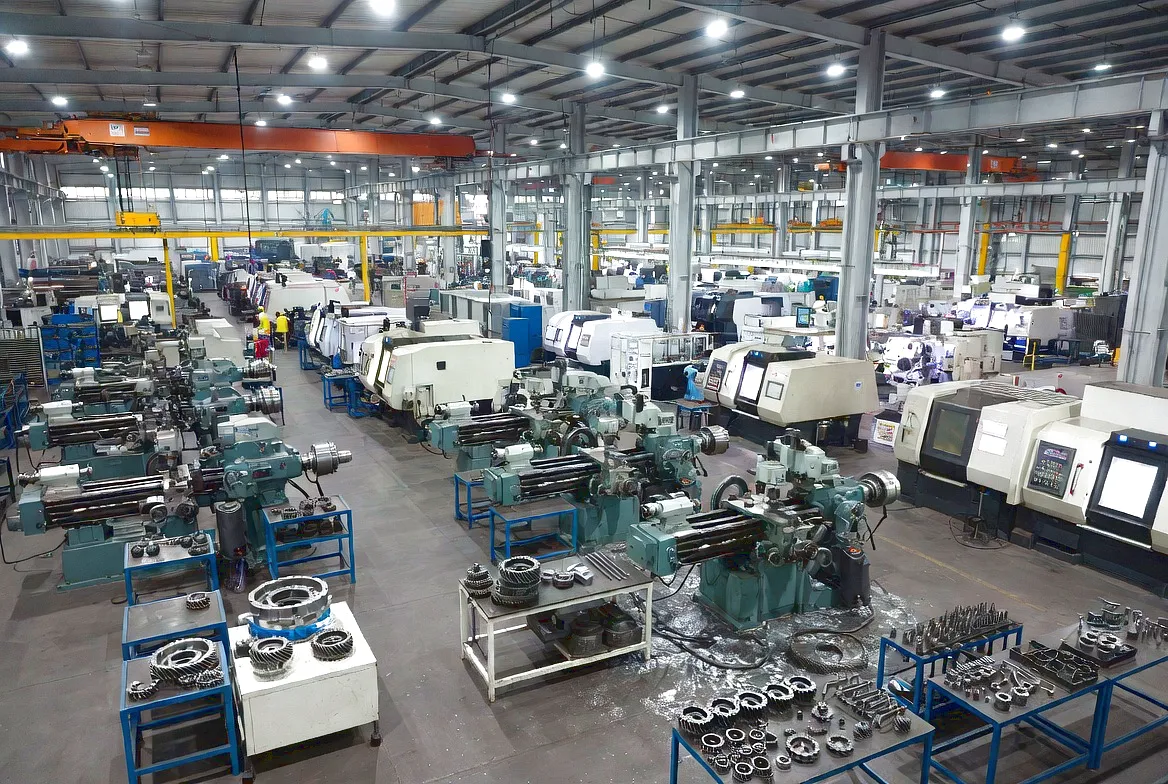
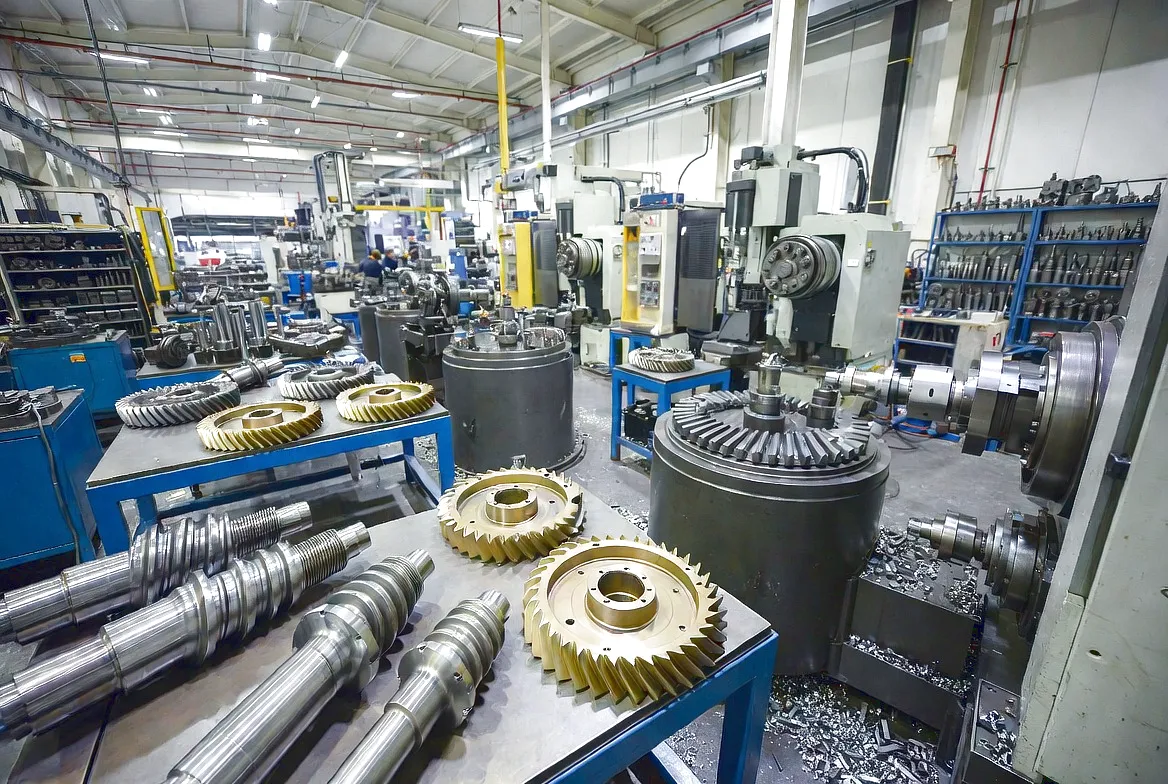
Ever Power operates dedicated precision manufacturing lines for worm gear shafts at multiple production facilities, each equipped with CNC thread grinding machines capable of holding gear accuracy to DIN 6 or better across the full production range. The manufacturing philosophy at Ever Power is centred on the understanding that a worm gear shaft is not a commodity component — it is a precision-engineered element whose performance directly determines the reliability of the system it drives. Thread forms are generated and verified with CMM inspection routines on a 100% sampling basis for critical supply contracts, with Cp/Cpk process capability data provided as standard on ISO 9001-certified supply runs. For UK clients with legacy gearbox housings that cannot accommodate standard centre-distance variants, Ever Power’s engineering team works from customer drawings or physical samples to produce reverse-engineered replacements that match the original geometry exactly — a service that has rescued multiple long-running production lines in the British food, chemical, and utilities sectors from the threat of obsolescence-driven shutdown.
Customisation at Ever Power is not a premium add-on; it is the default mode of engagement. Thread start count, module, centre distance, shaft material and heat treatment route, surface coating, bore and keyway configuration, and sealing arrangement are all defined collaboratively between the Ever Power engineering team and the client’s designers. For UK OEMs supplying to the food sector, Ever Power provides full material certification traceability to melt batch, hardness test certificates, and dimensional inspection reports in the format required by UK retailer supply chain audits. Export documentation, packing specifications for UK road freight standards, and DDP delivery terms to mainland UK addresses are all available as standard service options — ensuring that procurement teams in Birmingham, Sheffield, Leeds, and beyond receive a seamless supply experience comparable to dealing with a domestic UK manufacturer, backed by the manufacturing scale and cost structure of a world-class industrial supplier.
Customer Success Story: Sheffield Aggregate Processing Plant
A heavy aggregate processing operation on the outskirts of Sheffield — supplying crushed limestone and sand products to construction projects across South Yorkshire and Derbyshire — had been experiencing repeated gearbox failures on three of its primary conveyor head drum drives. The drives, using generic worm gear shaft assemblies sourced from a domestic distributor, were failing at intervals of eight to fourteen months under the combined effects of vibration, airborne silica contamination, and thermal cycling from the exposed outdoor installation environment.
The maintenance manager contacted Ever Power with a detailed failure analysis brief and dimensional data from the failed units. Ever Power’s engineers identified three root causes: insufficient case depth on the worm shaft threads leading to early surface fatigue, inadequate radial lip seal specification allowing silica-laden moisture ingress, and a lubricant grade inappropriate for the winter low-temperature operating cycle. The replacement worm gear shaft assemblies supplied by Ever Power specified 20CrMnTi case-hardened shafts with a minimum case depth of 0.9 mm at pitch line, upgraded V-ring seals in addition to the standard radial seal, and ISO VG 320 synthetic gear oil pre-filled at the factory. The gearboxes were supplied with DDP delivery to the Sheffield site within eleven working days of order confirmation.
Eighteen months after installation, all three drives remain in continuous service with no unplanned intervention. The annual conveyor downtime attributable to gearbox failure on these drives has reduced from an average of 47 hours per year to zero. At the plant’s throughput rate, the avoidance of unplanned stoppages represents a revenue protection value well in excess of £120,000 per year. The site has since standardised on Ever Power worm gear shaft assemblies for all twelve of its conveyor drives across the facility.
★★★★★
“The case depth specification Ever Power provided on these worm shafts is visibly different to what we had been running before — when you cut one open after the running-in period the gear contact pattern is full-width and even. We have had zero thread fatigue issues in eighteen months of continuous three-shift operation. Their engineering team understood exactly what we needed and specified accordingly.”
— Maintenance Manager, Aggregate Processing, Sheffield
★★★★★
“What impressed us was the turnaround time. We submitted our bore drawing and centre-distance requirement on a Tuesday morning and had DDP delivery to our Birmingham facility eleven days later, fully pre-filled and with a dimensional report. The customisation service is genuinely fast — it is not a ‘custom means twelve weeks’ situation. Pricing was competitive with off-the-shelf catalogue product from our previous supplier.”
— Procurement Lead, Industrial Automation OEM, Birmingham
★★★★★
“We run 316 stainless worm gear shaft units supplied by Ever Power on our salmon processing lines in Fraserburgh — full IP69K washdown environment, chlorinated water, low ambient temperatures. The material certification they provided satisfied our retailer supply chain audit without any queries. More importantly, after two years of daily high-pressure cleaning cycles, we have seen no corrosion on any shaft surface and no seal degradation. That is exceptional performance in this environment.”
— Engineering Director, Seafood Processing Facility, Fraserburgh, Scotland
EVER POWER — PRECISION WORM GEAR SHAFT PRODUCT RANGE
Frequently Asked Questions
Conversational answers to the questions UK engineers and procurement teams ask most.
How does the self-locking property of a worm gear shaft work, and when is it not reliable enough to replace a mechanical brake in UK industrial applications?+
Self-locking occurs when the friction between the worm thread and wheel tooth flanks exceeds the tangential force component trying to drive the input shaft from the output side. In practice, a worm gear shaft with a lead angle below approximately 5–6 degrees and a friction coefficient typical of a steel/bronze pairing with standard gear oil will reliably self-lock under static conditions. The critical caveat is that self-locking is a static phenomenon: under dynamic conditions — vibration, shock, or thermal cycling of the lubricant — there is a risk of slow drift, particularly in life-safety applications. For applications where failure to hold position would endanger personnel, UK HSE guidance recommends that the self-locking property be backed up by an independent holding brake, with the worm gear shaft providing the primary resistance and the brake serving as a secondary safety device. For non-safety-critical positioning applications, the worm gear shaft self-lock alone is widely accepted.
What is the typical price range for a custom worm gear shaft made to specific UK OEM dimensions, and how quickly can Ever Power supply?+
Pricing for custom worm gear shafts depends on module, centre distance, material grade, heat treatment route, and volume. For most standard-range custom variants in 20CrMnTi or 45# steel, unit costs for small-batch orders are highly competitive when sourced through Ever Power compared to European alternatives, with full DDP delivery to UK mainland addresses. Lead times for custom-dimensioned shafts are typically eight to fourteen working days from drawing approval, with expedited production available for urgent retrofitting requirements. To get an accurate quote for your specific dimensions and annual volume, the most direct route is to contact the Ever Power sales team at
[email protected] with your drawing or key parameters.
Which worm gear shaft material grade should I specify for a food-processing conveyor drive in a UK factory with daily high-pressure washdown cycles?+
For high-pressure washdown environments in UK food processing — common in poultry, seafood, and ready-meals production — the recommended specification is 316L stainless steel for the worm shaft body, with a nitrided surface where load and cycle count demand higher hardness. The mating wheel should be in phosphor bronze. Sealing should be upgraded to dual-lip seals with stainless retaining hardware, and the entire assembly should carry IP69K certification. Food-grade USDA H1-rated synthetic lubricant pre-fill ensures compliance with UK retail supply chain audits. Ever Power routinely supplies this specification to UK food manufacturers and holds full material traceability documentation for each batch.
Where in the UK can I find a reliable worm gear shaft supplier that offers both standard catalogue stock and fully custom-engineered dimensions?+
Ever Power supplies worm gear shafts to UK industrial customers from Birmingham and Sheffield to Edinburgh and Cardiff, offering both catalogue range components for rapid standard replacements and fully custom-engineered variants built to customer drawings. All supply is delivered DDP to UK mainland addresses, with documentation packages appropriate for UK procurement quality systems. Requesting a quote is straightforward — email
[email protected] with your requirements, and the team will respond with a specification proposal and commercial terms within one business day.
How do I calculate the correct gear ratio for a worm gear shaft drive on a Birmingham packaging line running at 1,450 rpm motor speed?+
The gear ratio is simply the motor input speed divided by the required output shaft speed. For a 1,450 rpm motor driving an output shaft at 29 rpm, the required ratio is 1,450 ÷ 29 = 50:1 — achievable in a single worm gear shaft stage. For output speed of 72.5 rpm you would need 20:1. It is equally important to verify that the output torque at the chosen ratio — input torque multiplied by ratio multiplied by efficiency — meets the driven load requirement with a service factor appropriate for the shock characteristics of the application. Ever Power’s engineering team performs this calculation as part of the quotation process at no additional cost, including thermal load modelling to confirm that the selected assembly will not overheat in continuous duty at your stated ambient temperature.
When should I choose a multi-start worm gear shaft instead of a single-start design for a high-cycle application in Leeds?+
A multi-start worm gear shaft — with two or four thread starts — produces a higher lead angle at the same centre distance and module as a single-start design, which directly increases mechanical efficiency. If your application requires the drive to run for many hours per day at a moderate gear ratio, and you can accept that the assembly will not be inherently self-locking (as is typical of multi-start configurations), the efficiency gain — potentially 15 to 25 percentage points over a single-start at the same ratio — translates into lower motor energy consumption, lower heat generation, and extended lubricant life. For high-cycle conveyors, rotary tables, and packaging lines in Leeds and across the Yorkshire industrial corridor, this energy saving is increasingly prioritised as part of operational carbon reduction programmes. Ever Power can supply both single and multi-start variants in a matched range and advise on the trade-off for your specific duty cycle.