Ever Power · Precision Mechanical Transmission
Worm Gear Shaft: Engineering Principles, Materials & Industrial Applications Across the UK
A comprehensive technical guide for engineers, procurement specialists and maintenance managers — from Sheffield steel mills to Birmingham automotive plants and beyond.
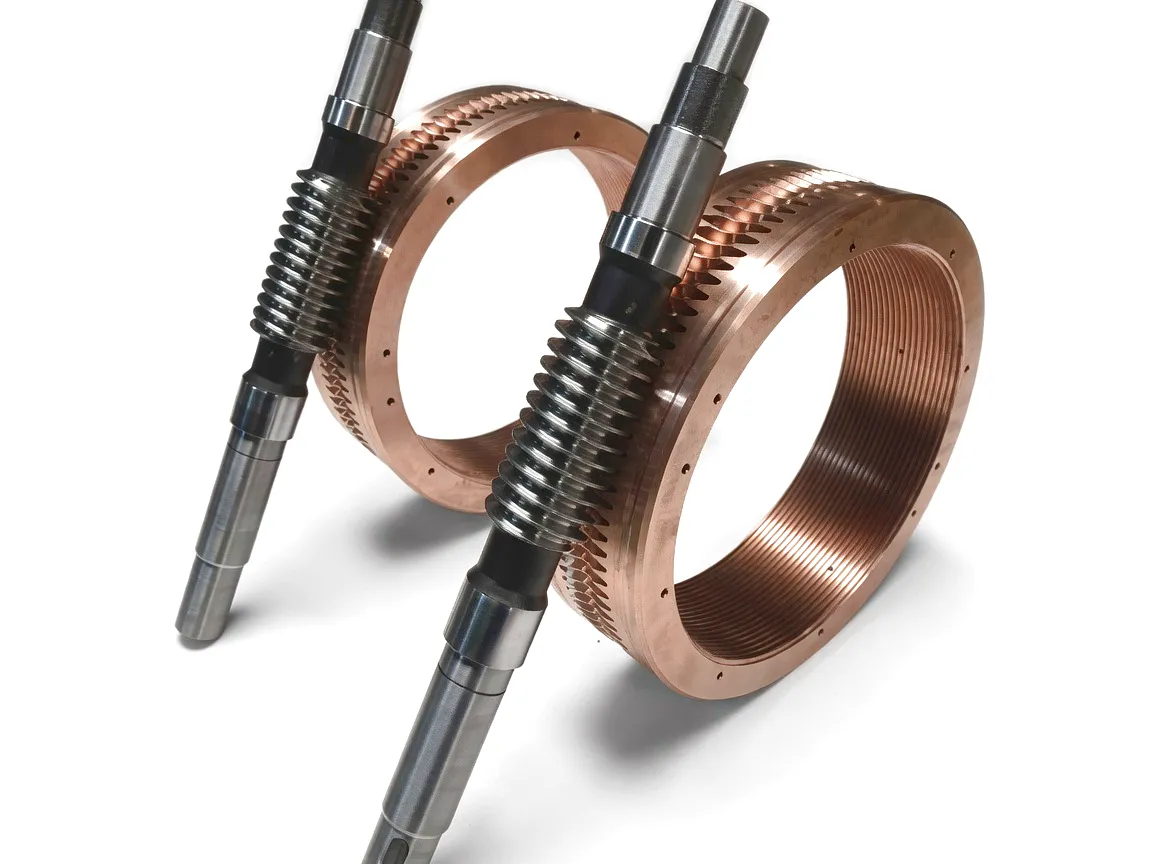
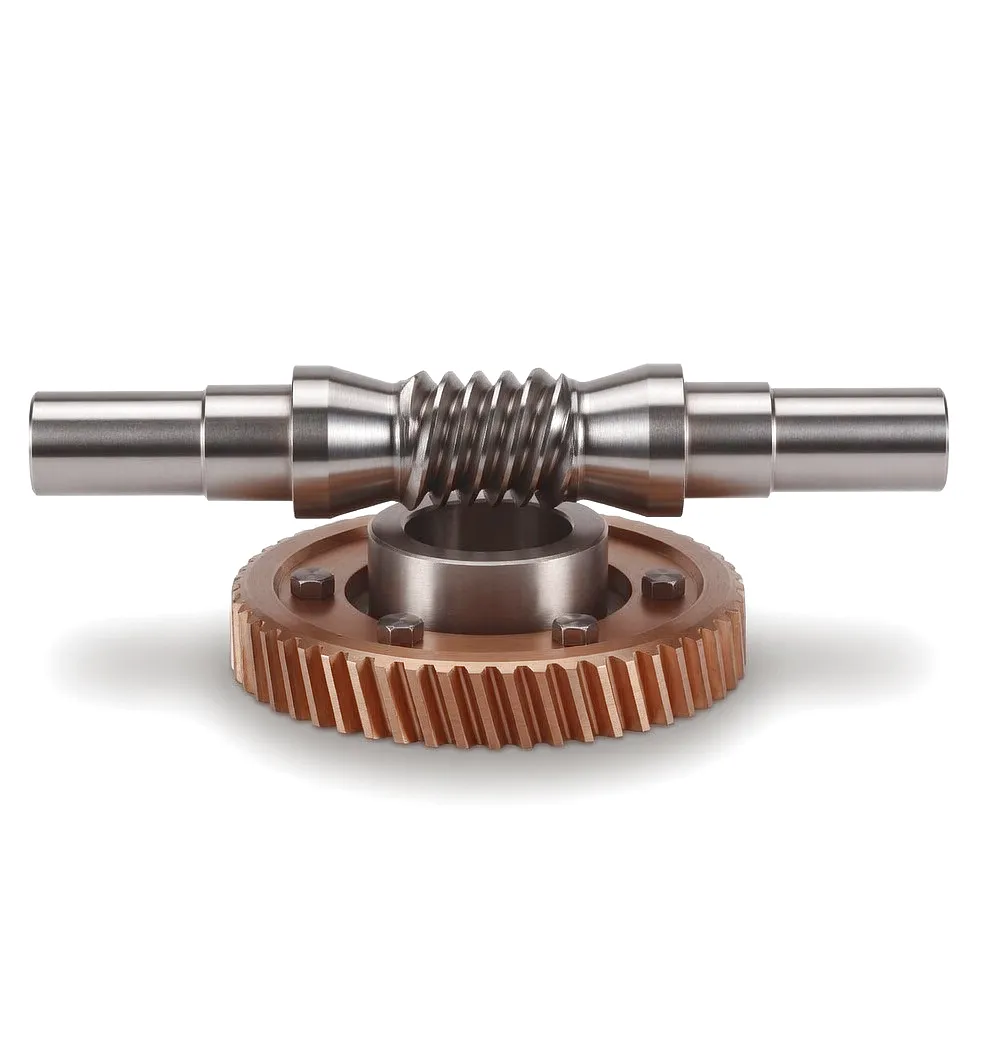
The worm gear shaft sits at the heart of some of the most demanding power transmission systems ever engineered. Whether it is regulating the precise yaw angle of a multi-megawatt wind turbine on the windswept moors of Yorkshire, controlling conveyor feed rates in a Birmingham pressing facility, or driving the steering column of agricultural machinery across the flat farmlands of Lincolnshire, this deceptively compact component quietly governs speed, torque and directional change in machinery that underpins the UK’s industrial output. Its defining characteristic — a helical thread wrapped continuously around a cylindrical shaft — allows it to transmit rotational motion between non-parallel, non-intersecting axes, typically at a 90-degree angle, with a degree of mechanical advantage that few other gear types can match. That inherent ratio capability, combined with the self-locking property that prevents back-driven motion under load, makes the worm gear shaft an irreplaceable solution in applications where safety and positional holding are as important as raw efficiency. This article examines every dimension of the component: how it works at a mechanical level, what it is made from, the performance parameters that govern selection, and the industrial environments across the United Kingdom where it delivers the greatest value.
How a Worm Gear Shaft Works: The Mechanical Principle
⚙️
Thread Engagement & Sliding Contact
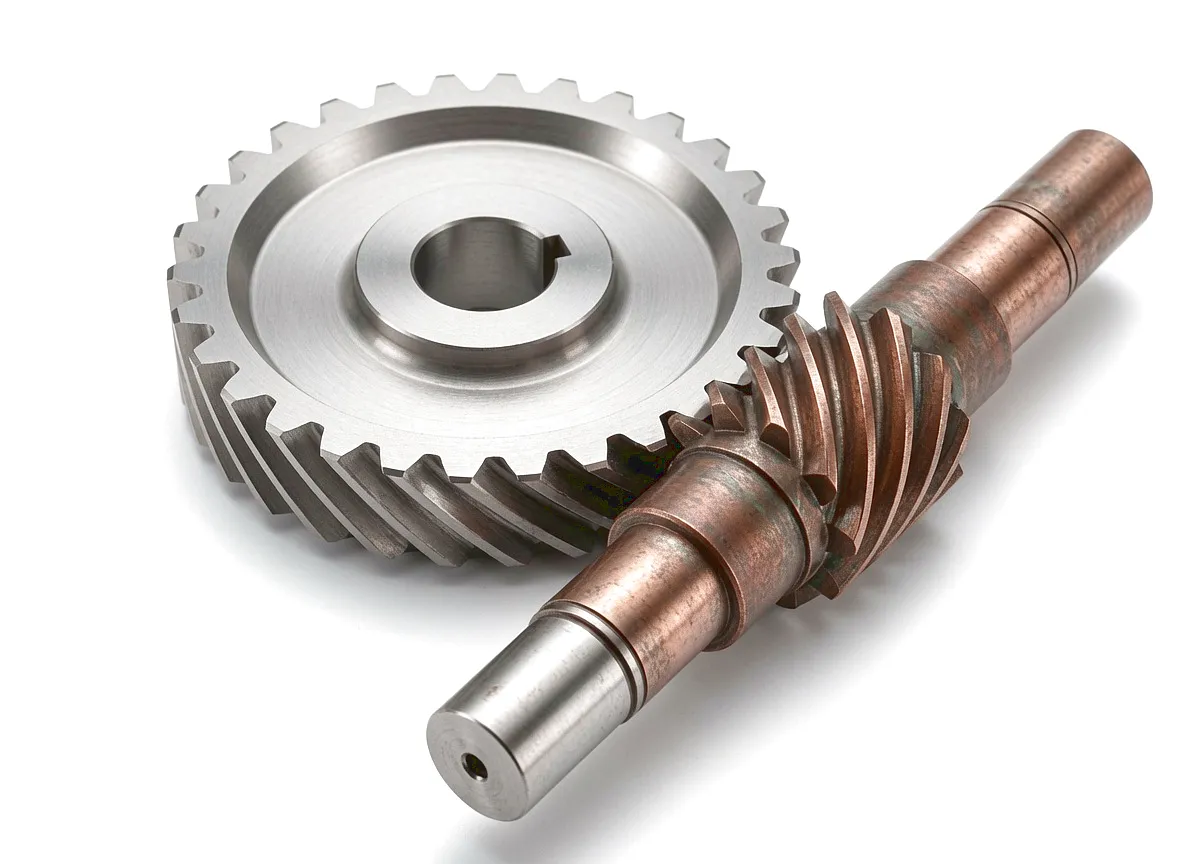
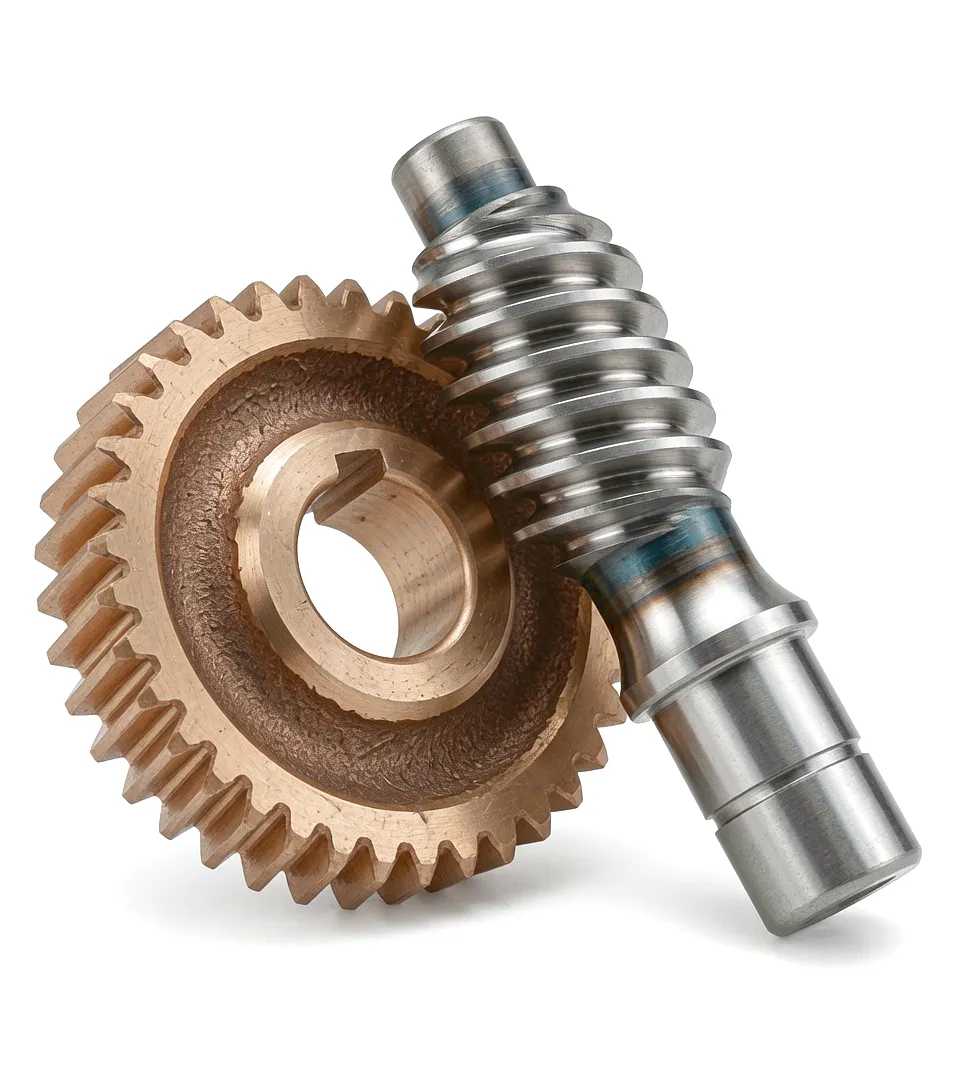
The worm gear shaft — commonly called simply the worm — carries a continuous helical thread that meshes with the teeth of the worm wheel (also termed the worm gear). As the worm shaft rotates, each thread land slides across the wheel tooth face in a continuous wiping motion. This sliding contact is fundamentally different from the rolling contact seen in spur or helical gears. The worm shaft drives; the wheel is driven. Because multiple thread leads are in mesh at any one moment, the load is distributed across several tooth contacts simultaneously, which has a profound positive effect on the component’s load-carrying capacity relative to its envelope size.
🔁
Gear Ratio & Speed Reduction
The speed ratio of a worm drive is determined by the number of thread starts on the worm shaft divided into the number of teeth on the worm wheel. A single-start worm meshing with a 40-tooth wheel produces a ratio of 40:1 in a single compact stage — a ratio that would normally require a multi-stage spur gear train occupying three to four times the axial length. This is why worm gear shafts are the default selection for elevator hoist mechanisms, where a single gearbox must reduce a motor running at 1,450 rpm to an output shaft turning at just 35 rpm, all within the confined machine room of a UK apartment block.
🔒
Self-Locking Characteristic
When the lead angle of the worm shaft thread is less than the friction angle between the mating surfaces (typically below approximately 6 degrees for standard phosphor bronze wheel materials), the drive becomes self-locking. This means that torque applied from the wheel side cannot back-drive the worm shaft. For hoist platforms, stage lighting rigs in West End theatres, and automated gate systems across rural Herefordshire, this characteristic removes the need for a separate holding brake, simplifying the overall system design and reducing the risk of uncontrolled load drop during a power interruption.
Core Materials Used in Worm Gear Shaft Manufacturing
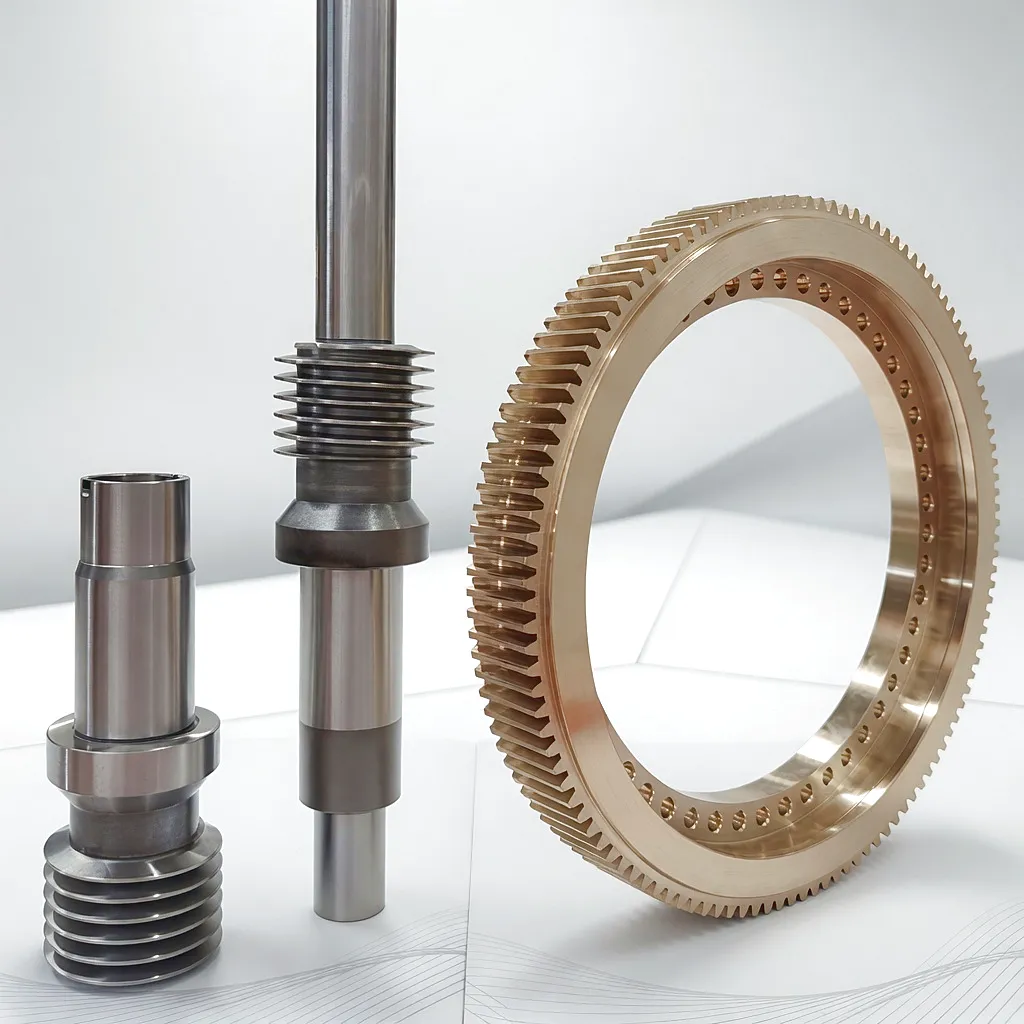
Material selection for the worm shaft is arguably the single most consequential design decision in the entire gearbox. The worm shaft operates under continuous sliding contact, generating frictional heat that must be dissipated without thermally distorting the thread geometry or inducing surface fatigue. Carbon steel grades such as C45 (equivalent to EN8 in the British Standard classification still widely referenced by UK specifiers) offer a good balance of machinability and core toughness when heat-treated to the HRC 56–62 range. However, for higher duty cycles — such as the continuous 24-hour operation seen in the conveyor drives of automated distribution centres in Coventry or Stoke-on-Trent — alloy steels like 20CrMnTi and 42CrMo are preferred. These grades carburise or nitride exceptionally well, allowing the thread flanks to achieve surface hardness levels that dramatically extend the fatigue life of the worm shaft under cyclic bending and contact stress.
Stainless steel variants — most commonly 304 and 316L — are specified for food-processing conveyors in Lincolnshire’s agricultural processing sector and pharmaceutical manufacturing lines where wash-down with aggressive cleaning agents is a daily occurrence. Although stainless grades are somewhat softer than carburised carbon steel, the combination of corrosion resistance, hygiene compliance under UK Food Standards Agency regulations, and adequate strength makes them the correct material choice for these demanding environments. At the premium end, case-hardened 20Cr2Ni4A delivers the deepest carburised case depths and is typically reserved for aerospace ground-support equipment and defence sector applications in which mean time between failures is measured in decades rather than years.
🔩
C45 / EN8
General-purpose carbon steel; HRC 56–62 after induction hardening; cost-effective for moderate loads
⚡
42CrMo
Chromium-molybdenum alloy; nitrided to HRC 60+; excellent fatigue resistance for high-duty-cycle drives
🌿
304 / 316L SS
Stainless steel; corrosion-resistant; food-grade compliant; ideal for wet or chemical environments
🏆
20Cr2Ni4A
Deep-carburised premium alloy; for defence, aerospace support and extreme-cycle industrial drives
Product Advantages That Set the Worm Gear Shaft Apart
High Reduction Ratios in One Stage
Ratios from 5:1 to 100:1 are achievable in a single worm gear shaft and wheel pairing, eliminating the mass, cost and alignment complexity of multi-stage gearbox configurations. This compactness is invaluable in confined machinery envelopes such as scissor-lift platforms used extensively in UK warehousing and logistics operations.
Quiet, Smooth Power Transmission
Because the worm and wheel engage progressively and the contact pattern distributes load continuously along the tooth face, noise levels are dramatically lower than those of equivalent spur gear arrangements. Noise standards under the UK Machinery Directive are stringent, and worm gear shaft systems routinely meet the requirements of BS EN ISO 3746 acoustic power assessments without additional silencing enclosures.
Right-Angle Output Without Additional Bevel Sets
The worm gear shaft transmits motion through 90 degrees as a fundamental geometric property, unlike bevel gears that require precise backlash adjustment. Machine tool turrets in Sheffield’s precision engineering sector and robotic welding positioners across the Midlands rely on this right-angle transmission for axis orientation without requiring any supplementary directional components.
Overload Tolerance & Shock Absorption
The sliding contact that defines worm gear shaft engagement also acts as a natural shock absorber. When a conveyor hits an unexpected load spike — a common event on aggregate processing lines in Yorkshire quarries — the momentary increase in sliding friction dissipates the shock energy rather than transmitting it as an impulsive load into the motor shaft bearings. This protective cushioning extends motor bearing life in variable-load applications.
Broad Customisation Potential
Thread lead angle, number of starts, shaft diameter, keyway configuration, thread form profile (involute or Archimedes) and surface finish specification are all independent variables that can be adjusted to match a specific application duty. This is not academic — for a custom worm gear shaft being designed into a tidal turbine pitch control system off the coast of Orkney, every one of those variables must be optimised to survive 25 years of continuous submersion and cyclical loading.
Worm Gear Shaft — Technical & Performance Parameters
| Parameter | Standard Range | Custom / Extended | Notes |
|---|
| Shaft Diameter | 10 mm – 120 mm | Up to 300 mm | Tolerance to h6/k6 per BS EN ISO 286 |
| Gear Ratio | 5:1 – 60:1 | Up to 100:1 single stage | Multi-start worms for higher efficiency at lower ratios |
| Output Torque | 10 N·m – 2,000 N·m | Up to 15,000 N·m | Dependent on shaft diameter, material grade and heat treatment |
| Thread Starts | 1 – 4 | Up to 6 | More starts = higher efficiency, lower self-locking tendency |
| Lead Angle | 3° – 25° | Up to 35° | Self-locking below approximately 6° (material dependent) |
| Surface Hardness (Worm) | HRC 56 – 62 | HRC 60 – 64 (nitrided) | Case depth 0.8 – 1.8 mm for carburised grades |
| Thread Profile | Involute / ZI, Archimedes / ZA | ZK, ZN (convoloid) | ZI preferred for high-speed, high-efficiency applications |
| Efficiency | 50% – 85% | Up to 92% (multi-start, ground finish) | Higher ratios inherently reduce efficiency; lubrication critical |
| Operating Temperature | -20°C to +80°C | -40°C to +120°C | Synthetic lubrication required for extended temperature ranges |
| Surface Finish (Ra) | Ra 0.4 – 0.8 µm | Ra 0.1 – 0.2 µm (precision ground) | Finer finish reduces friction coefficient and wear rate |
Industrial Application Scenarios Across the United Kingdom

Wind Energy: Yaw and Pitch Control in Multi-Megawatt Turbines
Wind energy now represents a transformative share of the UK’s electricity generation capacity, with the British Isles hosting some of the world’s largest offshore installations. Within these multi-megawatt machines, the worm gear shaft is central to two safety-critical drive trains: yaw control, which continuously rotates the entire nacelle to face the wind at its optimal angle, and pitch control, which adjusts individual rotor blade angles to manage aerodynamic loading and prevent turbine overspeed in storm conditions. Both systems demand exceptionally high gear ratios — typically between 60:1 and 100:1 — combined with genuine self-locking behaviour to hold the nacelle or blade in position during a grid fault when power to the motor is interrupted. The worm gear shaft in a pitch system must also survive the relentless cyclic stress of blade loading that changes with each rotation, placing extraordinary demands on the fatigue properties of the thread flanks. Carburised and ground 20CrMnTi worm shafts, triple-coated against marine corrosion, are the standard solution for North Sea installations where salt-laden gales accelerate surface degradation on components that cannot be easily reached for maintenance.

Conveyor & Logistics Infrastructure: Birmingham, Coventry and the East Midlands
The golden logistics triangle formed by Birmingham, Coventry and the East Midlands distribution hubs houses a significant proportion of the UK’s automated warehousing infrastructure. These facilities run conveyor systems — sorters, incline belts, accumulation rollers — continuously for three shifts a day, 365 days a year. Worm gear shaft-based inline reducers are the backbone of this infrastructure, fitted by the hundred in a single major distribution centre build. Their compact right-angle output allows motor and gearbox to be integrated directly into the conveyor frame without any additional bevel stage, reducing the installation height of the entire conveyor run. The self-locking property is equally important on inclined sections: should a VFD fault halt the motor mid-incline, a loaded belt segment must not run backwards. Correctly specified worm gear shafts with lead angles of 4 to 6 degrees provide this holding function without any supplementary braking hardware. For a facility handling pharmaceutical cold-chain goods at around 4°C, stainless-shafted variants with food-grade lubrication maintain the hygienic standards required under UK Medicines and Healthcare products Regulatory Agency guidelines.

Agricultural Machinery: Lincolnshire, Yorkshire and the Scottish Borders
UK agricultural machinery manufacturers and service workshops consume substantial quantities of worm gear shaft assemblies each season. Root-crop harvesting equipment — sugar beet harvesters, potato extractors, and brassica cutters — relies on worm gear shaft drives for the slow, high-torque rotary movements of the gathering web, the lateral table feed, and the elevator incline. The worm shaft’s ability to deliver large torques from a compact drive package makes it the natural selection for machinery that must fit within the tight envelope dictated by standard field-width regulations. Across the arable plains of Lincolnshire and the East Riding of Yorkshire, machinery dealers report that corrosion resistance is the primary cause of premature worm shaft failure, as components are frequently exposed to wet soil, fertiliser residue and crop acids. Specifying a sealed housing, a ground worm shaft with zinc-nickel plated surfaces, and a synthetic ISO VG 680 gear oil extends service intervals from a typical one-season replacement to three-plus seasons, transforming the total cost of ownership for the farm contractor.

Lifting Hoists, Elevators & Stage Machinery: Holding Under Load
The Lifting Operations and Lifting Equipment Regulations 1998 (LOLER) impose a strict duty of care on equipment designers and users operating within the United Kingdom. For suspended load applications — electric chain hoists in fabrication shops across South Wales, goods-only lifts in NHS hospital blocks, fly-bar automation systems in the rebuilt theatres of London’s West End — the worm gear shaft is often the approved solution specifically because its self-locking characteristic is accepted as a secondary anti-lowering device under the BS EN 14492-2 standard for power-driven winches. Engineers specifying worm gear shaft-based hoist drives must verify the static efficiency to confirm true irreversibility, and leading manufacturers publish verified lead-angle data to support the compliance documentation. For counterweighted fly systems in performing arts venues, where a sudden load release could be lethal, the combination of motor brake and self-locking worm gear shaft provides the redundant safety margin demanded by the Association of British Theatre Technicians.
Ever Power: Precision Manufacturing & Customisation Capability
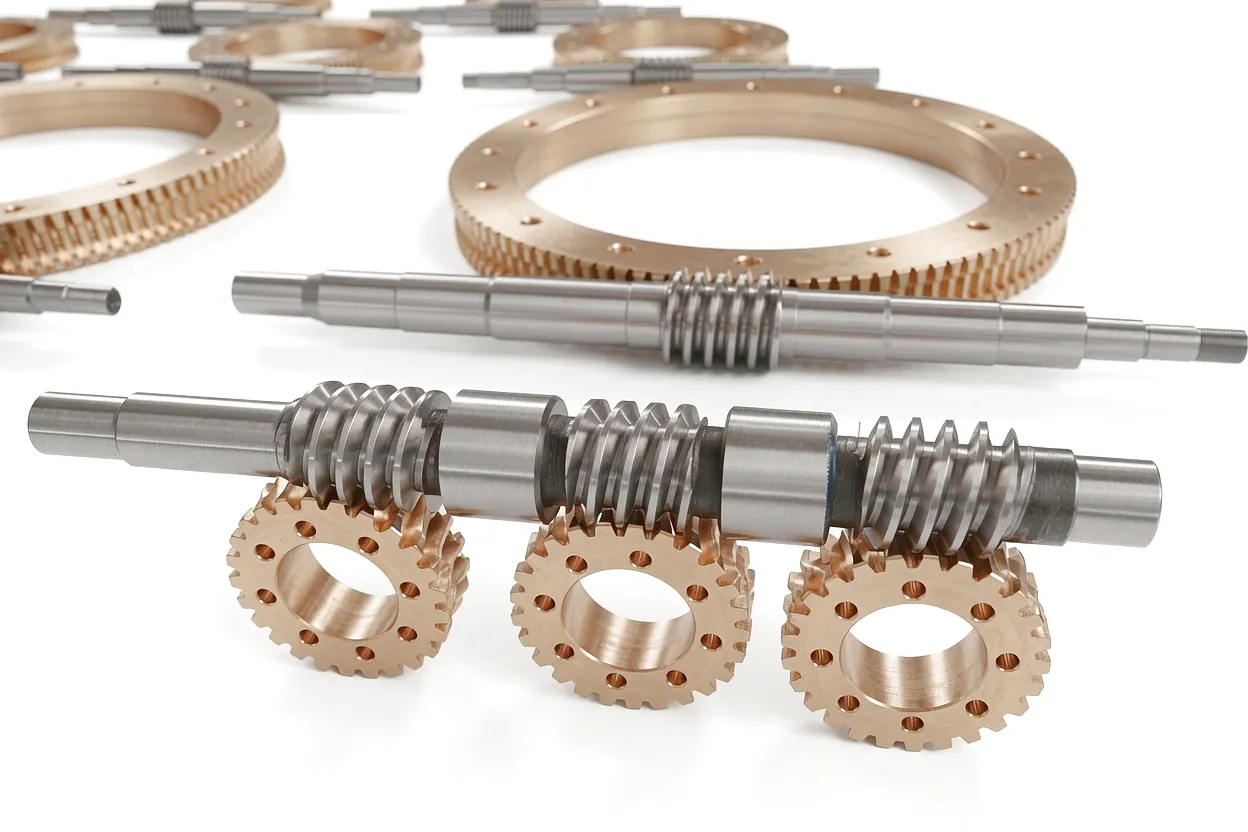
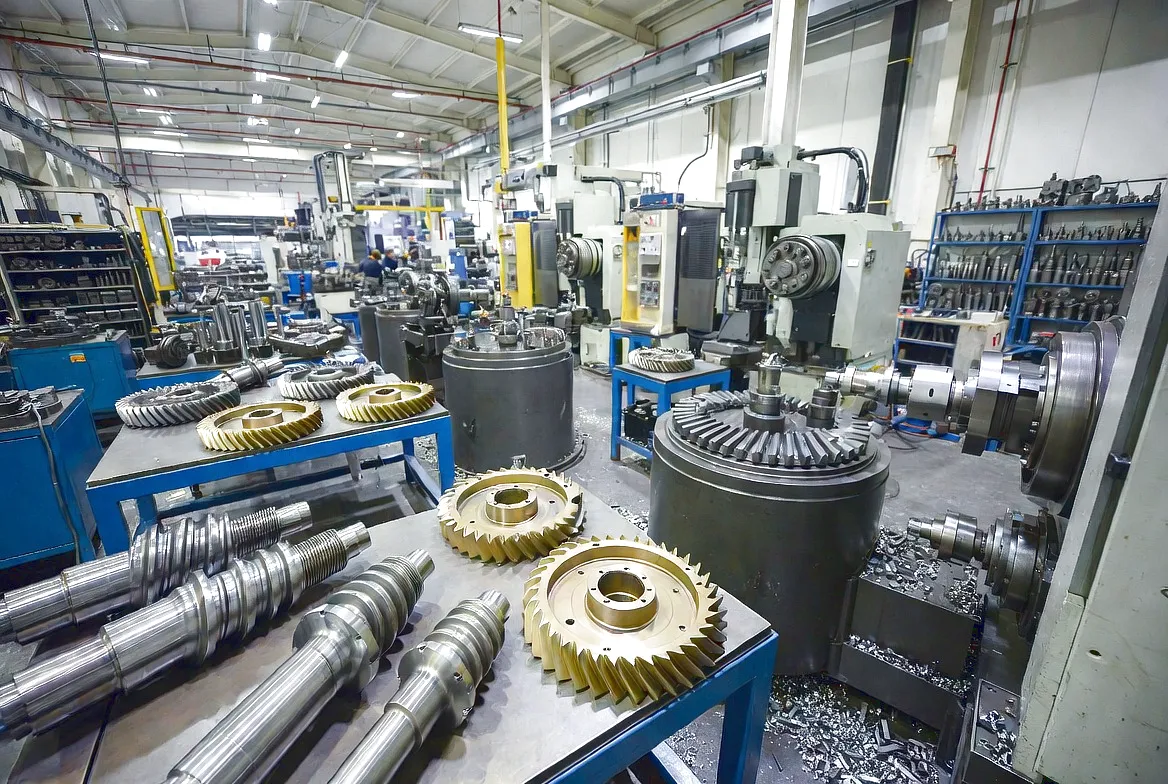 Ever Power operates a dedicated precision shaft manufacturing facility with over 60 CNC turning centres, 12 CNC gear hobbing machines and 8 high-precision thread grinding stations capable of achieving Ra 0.1 µm surface finishes on worm shafts up to 300 mm in diameter. The facility is certified to ISO 9001:2015 and holds DIN 3974 accuracy class Q6 capability — a standard that satisfies the tolerance requirements of the majority of UK industrial gearbox rebuilders and OEM drive system integrators. Heat treatment is performed in-house through controlled atmosphere carburising furnaces and a gas nitriding line, ensuring metallurgical traceability from raw billet through to finished component without reliance on third-party sub-contractors.
Customisation at Ever Power extends far beyond choosing a diameter from a catalogue. The engineering team works from customer-supplied 2D drawings, CAD models or even worn-out original components — a common starting point for gearbox rebuilders supplying the UK aftermarket. Thread profile modifications, non-standard lead angles for specific self-locking requirements, blind keyway pockets, threaded shaft-end adaptors, and integrated flange mounting features are all within standard production capability. For UK customers, Ever Power maintains a dedicated export logistics arrangement with UKCA documentation support and access to UK-bonded warehouse stock for frequently ordered standard series, allowing next-business-day despatch of non-custom sizes from a Midlands distribution point.
🏭
60+
CNC Machining Centres
✅
ISO 9001
Quality Management Certified
🎯
DIN Q6
Thread Grinding Accuracy Class
🚢
UK Stock
Midlands Distribution Point
Customer Success Story: Sheffield Steel Processor Extends Drive Life by 3× with Custom Worm Shaft
S
Meadowbrook Precision Profiles Ltd
Cold-rolled steel section processing, Sheffield, South Yorkshire
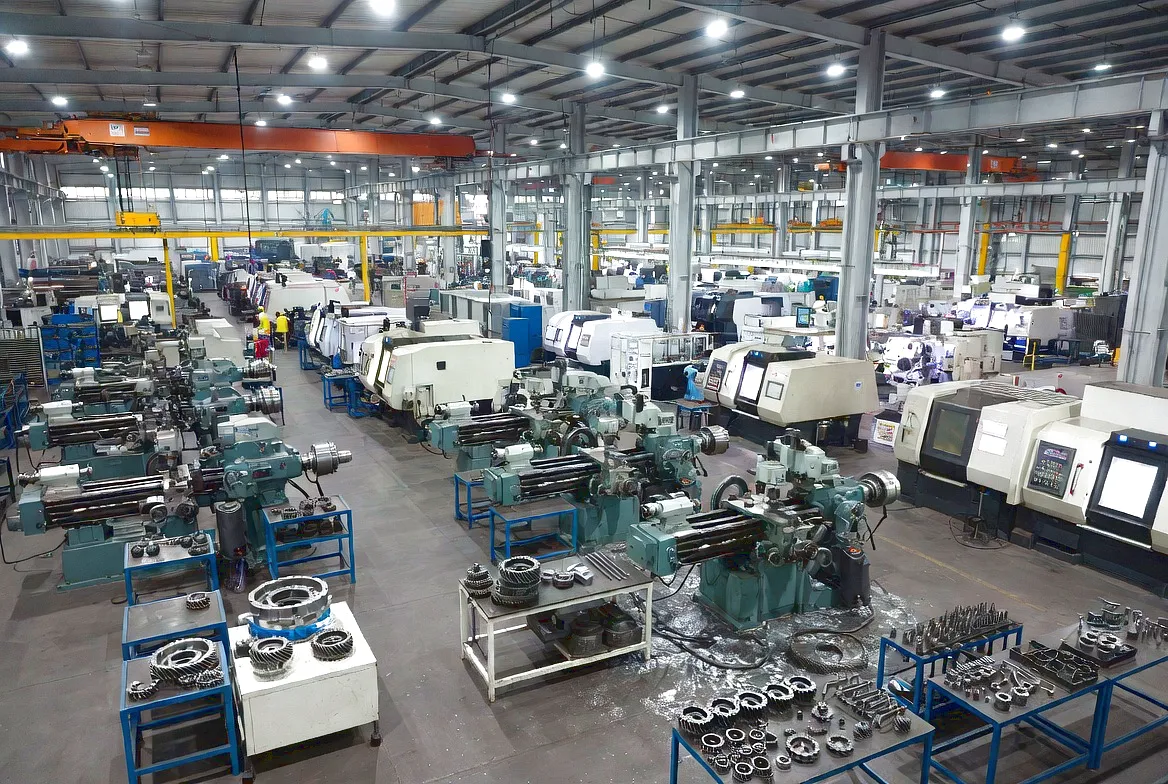 Meadowbrook Precision Profiles Ltd operates three cold-rolling lines in Sheffield’s Lower Don Valley, producing architectural steel sections for the UK construction and bridge-building sectors. Their feed table drives — each requiring a worm gear shaft assembly to deliver a 40:1 speed reduction and hold position during strip-feed indexing — had historically been sourced from a European supplier with a standard 18-week lead time. The drives were failing at approximately 8,000 operating hours due to thread flank pitting, and the prolonged supply lead time meant Meadowbrook kept expensive buffer stock on their cramped workshop floor.
Their maintenance engineer, having encountered Ever Power through an industry supplier directory, requested a technical review. After analysing the failed shafts, Ever Power identified that the original design used a single-start Archimedes thread in C45 steel without a controlled case depth — a cost-optimised choice that was entirely unsuitable for the high-frequency, high-slip duty of an indexing drive. Ever Power proposed a replacement in 42CrMo with a ZI involute profile, gas nitrided to a case depth of 1.2 mm and finished to Ra 0.2 µm. The lead angle was adjusted from 5.8° to 5.1° to guarantee irreversible self-locking at the static friction coefficient of the phosphor bronze wheel material actually in service, rather than a theoretical value.
The first batch of replacement shafts, delivered to Sheffield within 6 weeks of drawing approval, entered service in October. By the following year’s scheduled maintenance window, all three lines reported zero shaft failures. Meadowbrook’s engineering manager confirmed that the revised worm gear shaft assembly had surpassed 26,000 operating hours on the original drive — more than three times the service life of the previous supply — with thread flank wear well within acceptable limits. The company subsequently placed a standing order for annual buffer stock of the new specification, held at Ever Power’s UK distribution partner in Coventry, ensuring next-business-day availability without the capital tied up in on-site storage.
What UK Engineers Say About Ever Power Worm Gear Shafts
★★★★★
“The thread grinding accuracy on the replacement shafts was immediately obvious when we measured them against the original — the involute profile was night-and-day. We have not had a single failure in two years of continuous operation, and the reduction in oil temperature tells me the surface finish is doing exactly what the Ever Power application team said it would.”
— D. Hartley, Maintenance Engineering Manager, Meadowbrook Precision Profiles Ltd, Sheffield
★★★★★
“We specified a non-standard 75 mm shaft with a blind keyway on both ends and a custom 28:1 ratio for a tidal energy test rig off the Cornish coast. Ever Power had DXF drawings reviewed and quoted within 48 hours, and the finished parts arrived with a CMM inspection report attached. The dimensional accuracy was within the tolerances we asked for — which were quite tight for the bearing interface.”
— R. Edmonds, Chief Mechanical Engineer, Penarrow Marine Technologies, Falmouth, Cornwall
★★★★★
“Price was competitive against what we were paying our previous UK stockholder, and the delivery into our Birmingham depot was faster than I expected for a custom specification. The 316L stainless shafts for our pharmaceutical conveyor rebuild passed our hygiene audit without any issue. What really set Ever Power apart was the material certificate and heat treatment traceability — our QA team would not have accepted the job without it.”
— S. Patel, Procurement Lead, Kingsford Process Engineering, Birmingham
Frequently Asked Questions About Worm Gear Shafts
Q
What is the typical price range for a custom worm gear shaft from a UK supplier, and how does ordering from Ever Power compare in terms of cost and lead time?
Custom worm gear shaft pricing in the UK market varies substantially depending on diameter, material grade, heat treatment process and required accuracy class. As a general guide, standard series carbon steel shafts in the 20–50 mm diameter range are typically priced between £45 and £180 per piece at moderate quantities. Alloy steel shafts requiring case hardening and precision grinding to DIN Q6 accuracy will command a premium, often falling in the £180–£650 range per piece. Stainless steel grades carry an additional material surcharge of 30–50% over carbon steel equivalents. Ever Power’s pricing is structured to be competitive with European OEM supply chains while offering significantly shorter lead times — typically 4–8 weeks for custom specifications — backed by full material certifications and inspection documentation that UK quality managers increasingly require as standard.
Q
How do I know whether a worm gear shaft will be truly self-locking in my lifting application, and where in the UK can I get independent verification?
Self-locking occurs when the lead angle of the worm shaft thread is less than the effective friction angle between the worm and wheel materials. The exact threshold depends on the specific pair of materials, lubrication viscosity and temperature. As a working rule, a lead angle of 5.5° or below with a phosphor bronze wheel running in ISO VG 460 oil will provide reliable irreversibility at ambient UK operating temperatures. For safety-critical lifting equipment subject to LOLER 1998, independent verification is required. Several UK accredited test houses — including those operating under UKAS accreditation — can perform static efficiency tests to BS EN 14492-2. Ever Power provides verified lead-angle data on request, which can substantially simplify the compliance process for your machinery safety file.
Q
Which worm gear shaft material is best suited for a food production conveyor in a UK factory that requires daily washdown with caustic cleaning solutions?
For UK food production environments where daily caustic or chlorinated wash-down cycles are standard — as required under UK Food Standards Agency hygiene regulations — 316L stainless steel is the recommended material for the worm gear shaft. The molybdenum content in 316L provides significantly better resistance to chloride-induced pitting than standard 304 stainless. The shaft should be sealed within a housing with IP67 or higher ingress protection, filled with an NSF H1-registered food-grade gear oil. Ever Power can supply 316L worm shafts with fully electropolished thread flanks that reduce surface roughness below Ra 0.4 µm, eliminating micro-pits where bacterial biofilm might otherwise accumulate.
Q
How quickly can I get a replacement worm gear shaft delivered to a Birmingham facility if our original shaft fails unexpectedly during production?
For standard series worm gear shaft dimensions, Ever Power maintains buffer stock at a UK-bonded distribution point in the Midlands, enabling next-business-day despatch to Birmingham and surrounding areas. If your shaft is a non-standard specification, Ever Power’s UK account team can assess whether an emergency production slot is feasible, with some custom diameters achievable within 10–15 working days depending on material availability. For critical machinery, we strongly recommend discussing a consignment stock arrangement with your account manager — a small on-site buffer of your most critical specification worm shaft dimensions eliminates unplanned downtime risk entirely. Contact
[email protected] with your shaft drawing or a photograph of the failed component to start the identification process.
Q
What is the difference between an Archimedes and an involute worm gear shaft thread profile, and which should I specify for a high-speed industrial gearbox application in Sheffield?
The Archimedes (ZA) thread profile is a straight-sided cross-section cut by a planar tool. It is simple and economical to manufacture, but the contact conditions are geometrically impure — the effective tooth form varies across the face width, which limits the contact ratio and reduces load capacity. The involute (ZI) profile is generated by a hob with involute geometry, producing a theoretically correct conjugate action with the wheel tooth, much like a rack and pinion. This results in a higher contact ratio, lower sliding velocity at the tooth tip, and crucially, a surface that can be finish-ground after heat treatment — the only way to achieve the sub-micron surface finishes that are critical for efficiency and longevity in a high-speed industrial gearbox. For any Sheffield or UK application running at input speeds above 750 rpm or output torques above 500 N·m, the involute ZI profile with ground finish should be the standard specification rather than an optional upgrade.
Q
Where can I find a reliable UK-based worm gear shaft supplier who can supply material certifications and quality documentation for my ISO-audited manufacturing facility?
Ever Power is a worm gear shaft manufacturer supplying UK industrial facilities with full material certification (mill test reports to EN 10204 3.1), heat treatment records, dimensional inspection reports and hardness test certificates as standard on every custom order. For ISO-audited manufacturing environments, all documentation is issued with the shipment and stored on our quality management system for a minimum of ten years for traceability. Our products are manufactured under ISO 9001:2015 certification, and UKCA declarations of conformity are available where required under UK Machinery Regulations. To request a quotation with documentation scope included, email
[email protected] with your shaft specification or drawing reference.
Ready to Specify Your Next Worm Gear Shaft?
Send your drawing, specification or failed shaft sample to the Ever Power engineering team. We will review it and return a detailed technical proposal within 48 hours.
✉ Get a Worm Gear Shaft Quote Now
[email protected] | Ever Power Precision Transmission
edit by gzl