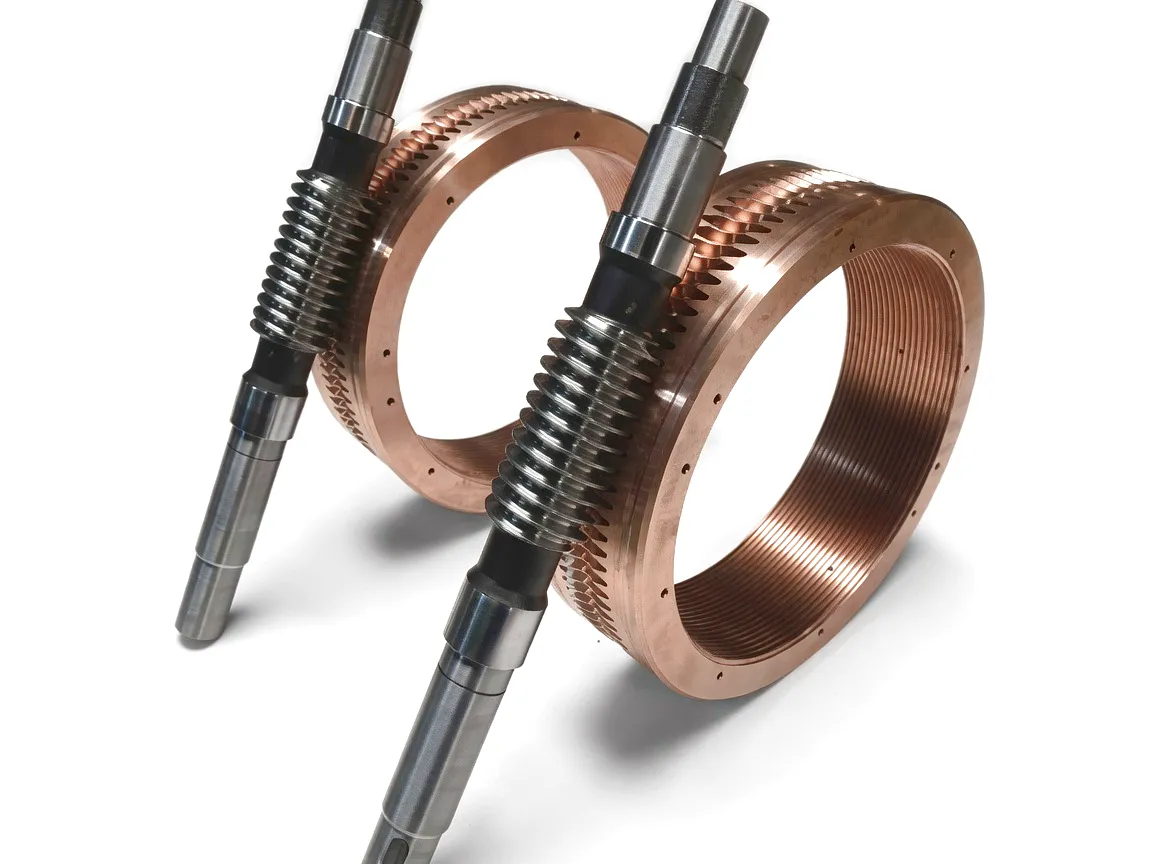
Working Principle
How a Worm Gear Shaft Transfers Power
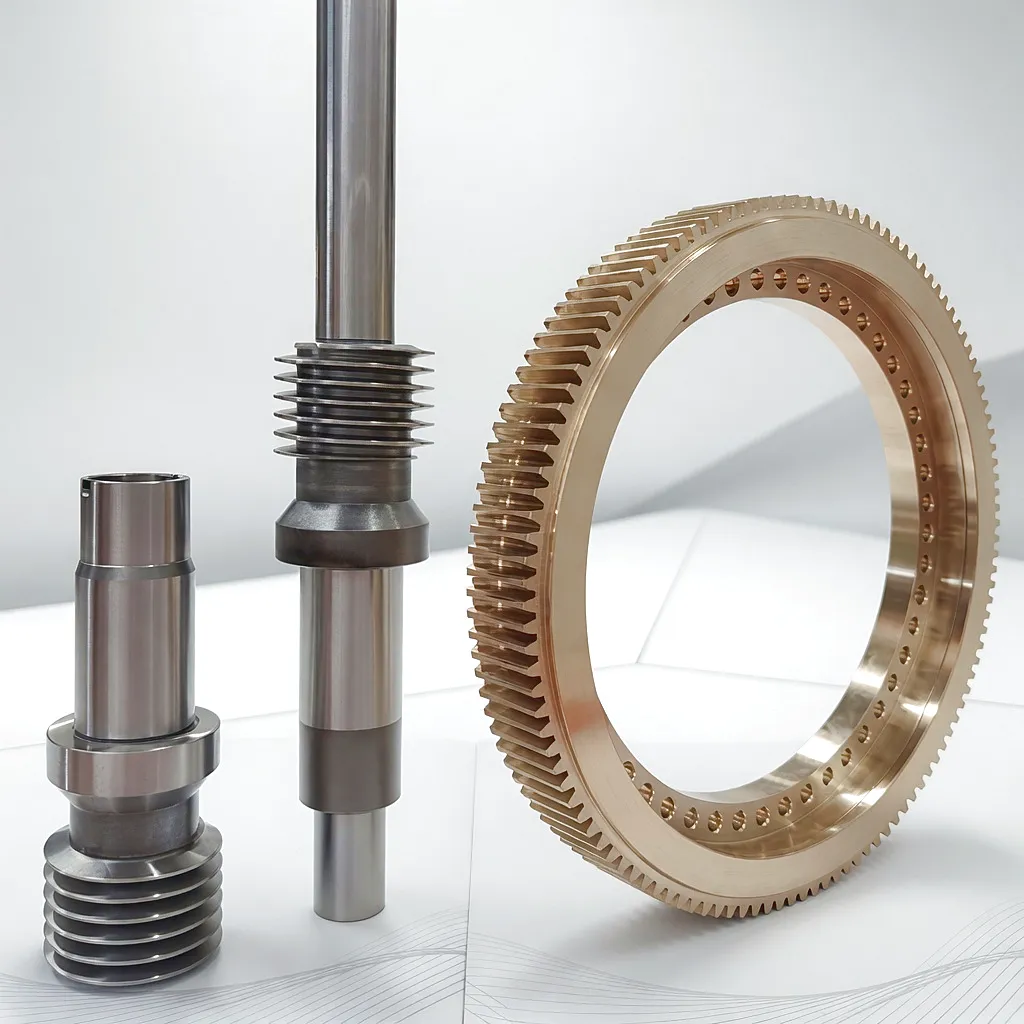
Core Materials
Material Selection for Worm Gear Shaft Components
The dominant material for high-duty worm gear shafts in UK industrial equipment. Low-carbon alloy grades are machined to near-net shape before carburising to produce a case depth of 0.8–1.6 mm, followed by hardening to HRC 58–62 on the thread flanks. This combination of a tough, fatigue-resistant core and an extremely hard, wear-resistant surface suits the sliding-contact conditions of worm gear engagement. The alloy content — typically chromium, manganese, and in some grades molybdenum — ensures hardenability through the case depth even in larger shaft diameters where plain carbon steels would show insufficient core strength.
For worm gear shafts that must operate continuously at elevated temperatures or in environments where distortion after heat treatment is critical, nitriding steels offer a compelling option. The nitriding process — carried out at 500–520 degrees Celsius in an ammonia atmosphere for extended cycles of 20–80 hours — produces a compound layer of 10–30 micrometres overlying a diffusion zone of up to 0.5 mm. Because the process temperature is well below the transformation range, dimensional changes are minimal and parts with thread profiles already ground to tolerance can be nitrided without post-process regrinding in most cases. The resulting surface hardness of HV 900–1100 provides excellent scuffing resistance under the high sliding velocities of fast-running worm shafts.
Where the operating environment demands corrosion resistance — food and beverage processing lines in counties such as Lincolnshire and Herefordshire, pharmaceutical handling equipment, or marine-adjacent installations in coastal facilities — stainless-steel worm gear shafts are the appropriate specification. Grade 316L provides adequate corrosion resistance in chloride-containing cleaning agents. Precipitation-hardened grades such as 17-4PH allow higher surface hardness after ageing treatment, partially compensating for the inherently lower tribological performance of stainless steel relative to carburised alloy grades. Surface treatment with electroless nickel or hard chrome plating can further improve the wear performance of stainless worm shafts when operating against phosphor bronze worm wheels.
Medium-carbon grades with surface hardening applied selectively to the thread zone are frequently used where through-hardening would be impractical on larger shaft diameters or where delivery lead time is a constraint. Induction hardening offers tight control of case depth and pattern, leaving shaft journal diameters in a machinable condition for bearing fitting. The process can be applied as a final operation on pre-ground thread profiles, though the risk of surface cracking in the root radii of the worm thread requires careful process control and NDT inspection on safety-critical parts. This approach is commercially attractive for large-diameter, slow-speed worm shafts in heavy lifting equipment and materials-handling systems.
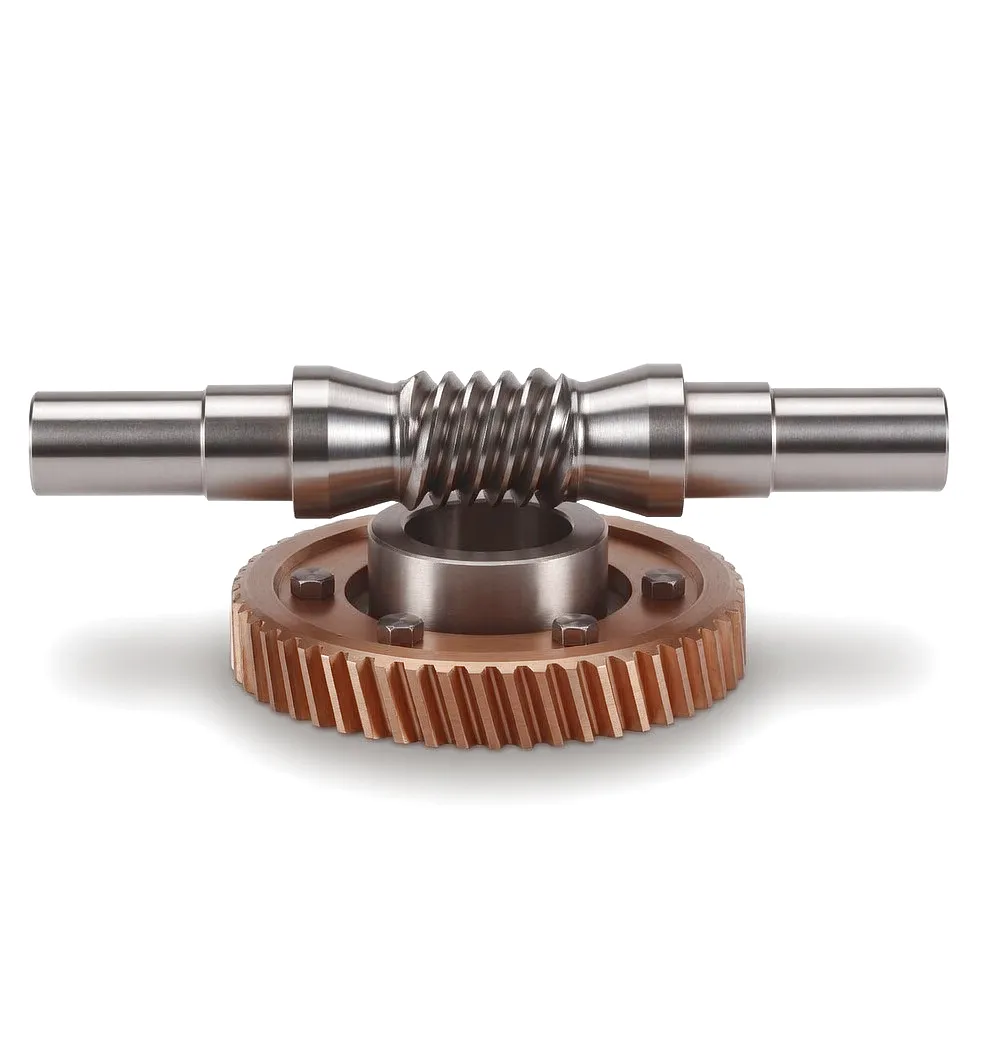
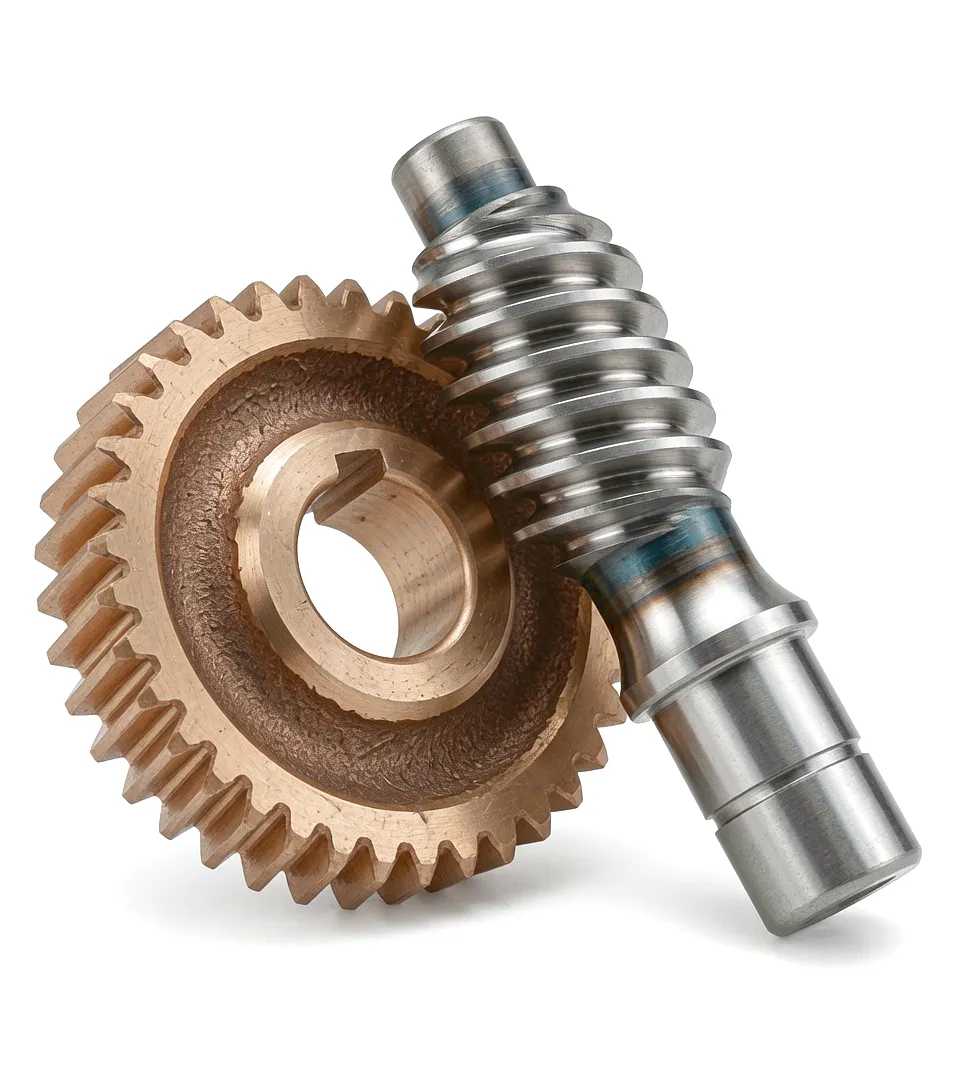
Technical Specifications
Worm Gear Shaft Performance & Parameter Reference Table
| Parameter | Light Duty | Medium Duty | Heavy Duty | Ultra-Heavy |
|---|---|---|---|---|
| Centre Distance (mm) | 25 – 63 | 80 – 160 | 200 – 400 | 500 – 1000+ |
| Output Torque (Nm) | Up to 500 | 500 – 5,000 | 5,000 – 50,000 | 50,000 – 500,000 |
| Gear Ratio Range | 5:1 – 20:1 | 10:1 – 60:1 | 20:1 – 80:1 | 40:1 – 100:1 |
| Shaft Material | C45 (flame/induction) | 20CrMo / 42CrMo4 | 20CrMnTi (case) | 20CrMnTi / 18CrNiMo |
| Thread Surface Hardness | HRC 50 – 55 | HRC 55 – 60 | HRC 58 – 62 | HRC 60 – 63 |
| Thread Profile | ZA or ZN | ZI or ZK | ZK or ZN | Custom ZI/ZK |
| Thread Surface Finish (Ra) | Ra 0.8 µm | Ra 0.4 µm | Ra 0.2 µm | Ra 0.1 µm |
| Typical Efficiency | 70 – 80 % | 75 – 85 % | 80 – 90 % | 85 – 92 % |
| Input Speed (rpm, max) | Up to 3,000 | Up to 2,500 | Up to 1,500 | Up to 1,000 |
| Shaft Axis Angle | 90 degrees (std) | 90 degrees (std) | 90 degrees (std) | Custom offset |
| Applicable Standard | BS 721 / ISO 6336 | BS 721 / DIN 3975 | DIN 3975 / AGMA 6034 | Custom / AGMA 6034 |
Product Advantages
Why Engineers Choose a Worm Gear Shaft Drive
A worm gear shaft delivers gear ratios of up to 100:1 in a single stage within a housing envelope dramatically smaller than an equivalent multi-stage helical gearbox. For machine builders working within stringent space budgets — common in the UK’s retrofit industrial upgrade market — this compactness can be the deciding engineering factor. The perpendicular shaft arrangement also provides layout flexibility that a parallel-axis gearbox simply cannot match.
Below a lead angle of approximately 4 to 5 degrees, the worm gear shaft geometry creates a self-locking effect that prevents the load from back-driving the worm. This characteristic is exploited in traction lifts, gate valve actuators, and architectural façade positioning systems — all areas where the UK built-environment sector demands demonstrable proof of load-holding capability in the product’s mechanical design, independent of electrical or hydraulic braking systems.
The sliding contact nature of worm gear mesh, when properly lubricated and manufactured to appropriate accuracy grades, generates less dynamic tooth load excitation than helical or bevel gears of comparable ratio. The result is smoother, quieter operation — a significant advantage in building services applications, food-handling conveyors in clean environments, and any setting where noise nuisance is subject to assessment under UK occupational noise regulations (Control of Noise at Work Regulations 2005).
Where load application is intermittent or impulsive — such as in metal press feeds, baling machines in the UK recycling industry, or aggregate screening equipment in quarry operations across Wales and Northern England — the inherent damping characteristic of the worm mesh distributes impact loads across a larger contact area than point-contact gear forms, reducing the risk of tooth fracture and extending the service interval of the worm wheel.
The worm gear shaft can be manufactured in single-start or multi-start thread configurations, giving the design engineer control over the efficiency–ratio trade-off. A four-start worm at a given module provides four times the thread lead of a single-start equivalent, increasing efficiency substantially at the cost of reduced ratio per stage. This flexibility allows a worm gear shaft solution to be tailored far more precisely to application requirements than the discrete ratio steps available from catalogue helical or bevel units.
With correct specification, installation, and lubrication management, a high-quality worm gear shaft in a properly housed worm drive unit will routinely deliver service lives exceeding 20,000 operational hours in continuous-duty applications. The maintenance requirements are straightforward — primarily periodic oil analysis and top-up, with worm wheel replacement as the only routine wear component in most standard designs — making total lifecycle maintenance costs competitive with alternatives of nominally higher efficiency.
Application Scenarios
Industrial Applications Across UK Sectors
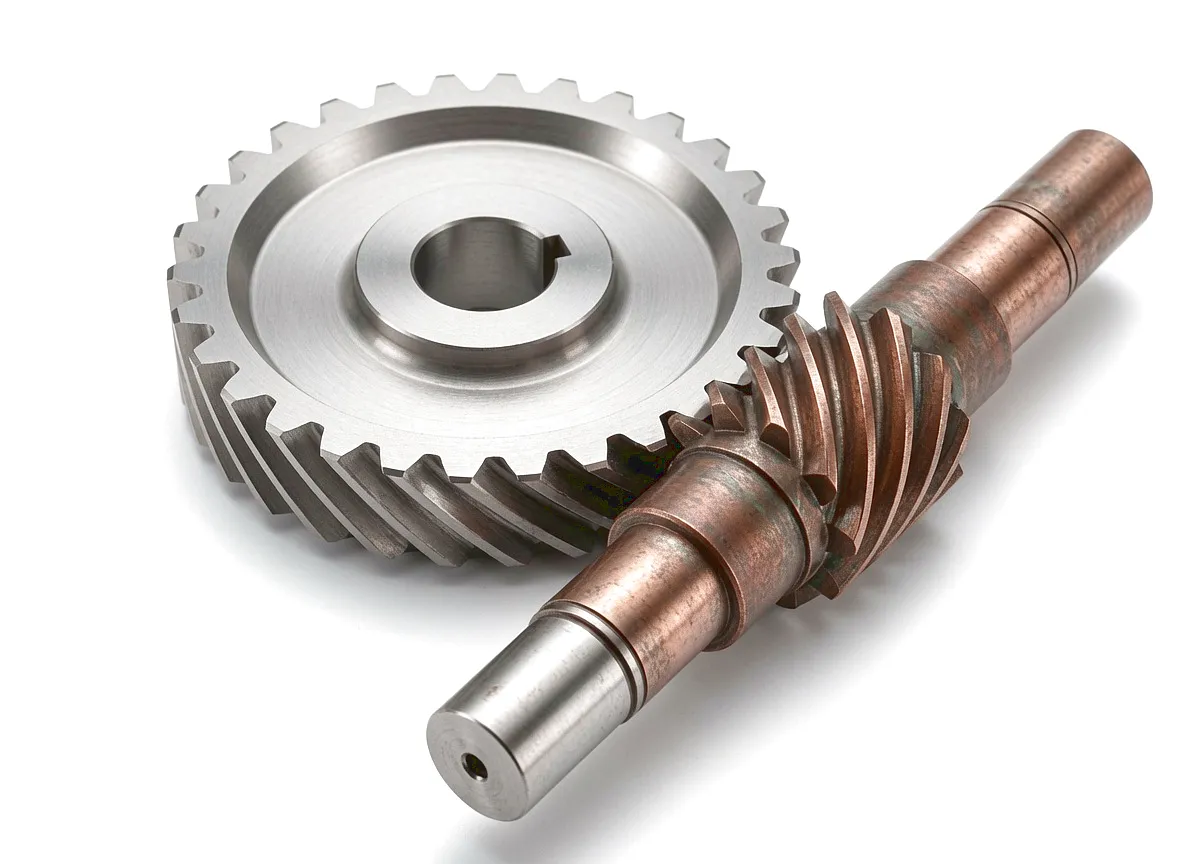 Beyond these primary sectors, worm gear shafts serve in gate and weir actuators for water treatment infrastructure maintained by utilities across the Welsh valleys and Scottish lowlands, in solar-panel tracking arrays installed across UK roof and ground-mount sites where precise angular positioning is repeated thousands of times annually, in agricultural machinery including seed drill drives and potato harvester conveyors common to East Anglian arable operations, and in marine deck equipment aboard fishing vessels and workboats registered at ports from Hull to Aberdeen. The thread geometry and material specification chosen for each of these applications differs significantly: a solar tracker shaft operating outdoors in a saline coastal atmosphere calls for entirely different surface protection than a food-grade mixer shaft cleaned daily with hot caustic wash-down systems.
Across all these sectors, the UK’s commitment to maintaining domestic manufacturing capability — reflected in initiatives such as the Made in Britain certification scheme and the government’s Levelling Up industrial strategy — has increased demand for worm gear shaft components that can be specified, delivered, and supported without dependence on extended overseas lead times. Suppliers with robust global manufacturing capacity combined with responsive UK-based technical and commercial support are increasingly preferred by procurement teams navigating both quality assurance requirements and supply-chain resilience objectives.
Manufacturer Profile
Ever Power: Precision Worm Gear Shaft Manufacturing for Global Industry
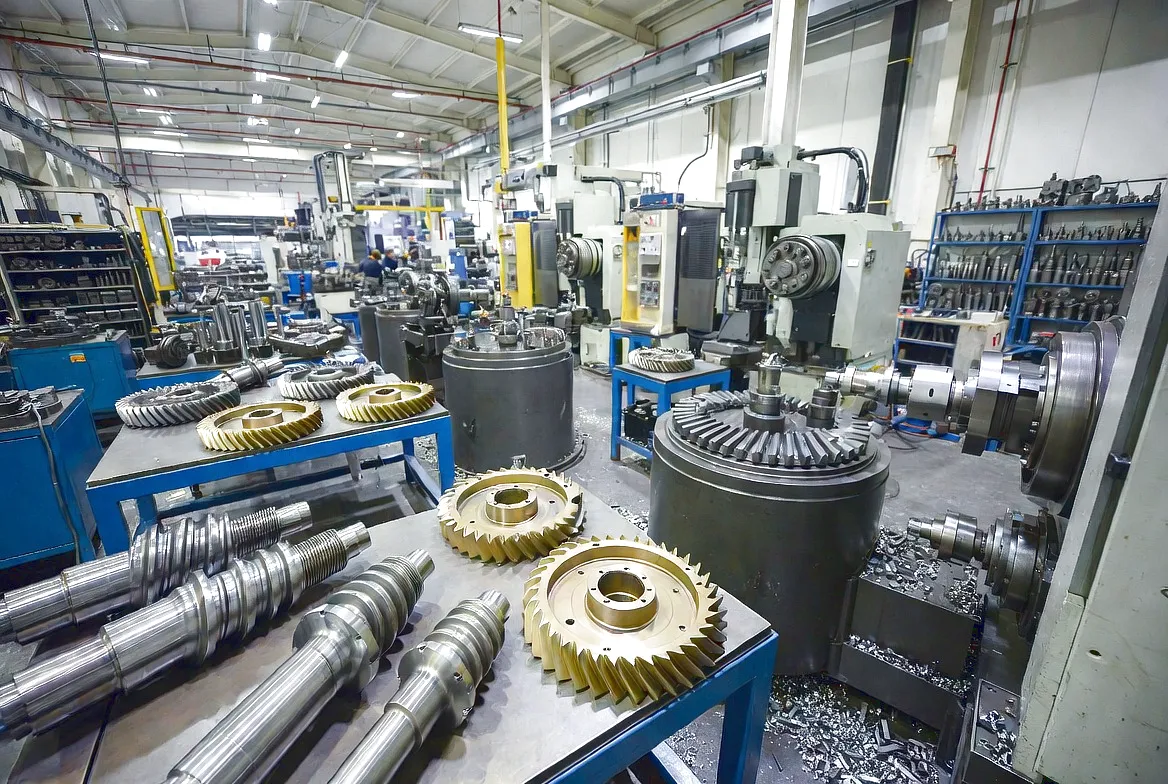
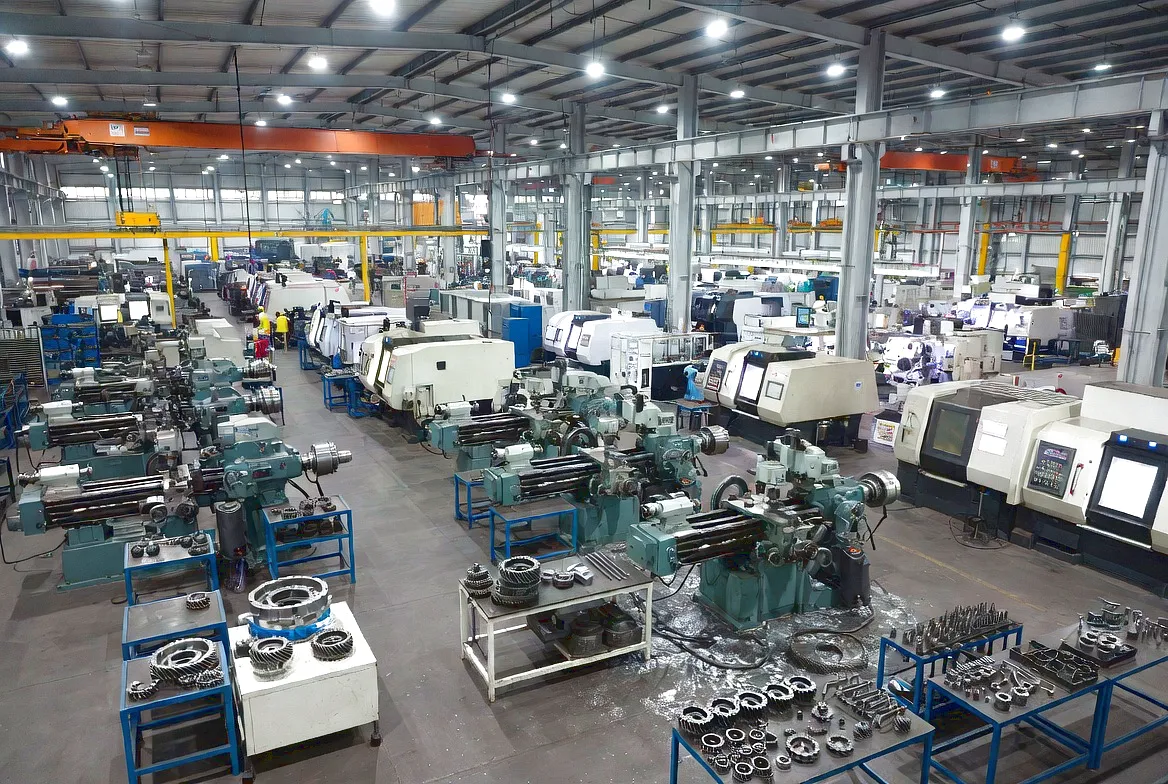
Ever Power has built its reputation as a supplier of choice for precision worm gear shaft components through sustained investment in manufacturing technology and process capability rather than through catalogue breadth alone. The company’s production facility is equipped with CNC worm thread grinding centres capable of achieving thread flank surface finishes to Ra 0.1 µm and profile accuracy within DIN 3975 Class 5 across shaft diameters from 16 mm to 500 mm. This manufacturing precision is not incidental — it is the foundation on which the long service lives and low noise levels reported by Ever Power’s global customer base are built. For UK buyers, this means worm gear shaft components that arrive dimensionally consistent and ready for installation, supported by inspection records traceable to calibrated reference standards.
Ever Power’s customisation capability sets it apart from distributors re-labelling catalogue goods. The engineering team collaborates with UK OEM customers from the initial concept phase, providing FEA-assisted shaft design review, material selection guidance based on the specific tribological conditions of each application, and prototype delivery within agreed project schedules. Whether the requirement is a metric DIN standard worm shaft for a direct gearbox replacement, an inch-dimensioned AGMA shaft for equipment operating on legacy imperial tooling, or a fully bespoke thread profile to match an existing proprietary worm wheel, Ever Power’s process development team can design and validate the solution. All customised worm gear shaft designs are subject to failure mode analysis and first-article inspection before serial production commences.
The company’s supply chain infrastructure supports UK buyers with competitive lead times. Standard worm gear shaft range items are held in warehouse stock for same-week despatch, while customised specials are manufactured to agreed project schedules with formal order acknowledgements and delivery status updates throughout the production cycle. Ever Power’s documentation package — including material certificates to BS EN 10204 Type 3.1, dimensional inspection reports, and heat treatment records — meets the requirements of UK customers operating under ISO 9001 quality management systems and supports traceability obligations under UK PSSR and PED regulatory frameworks.
Customer Success Story
Hardwick Steel Solutions, Sheffield: Overhead Crane Drive Overhaul
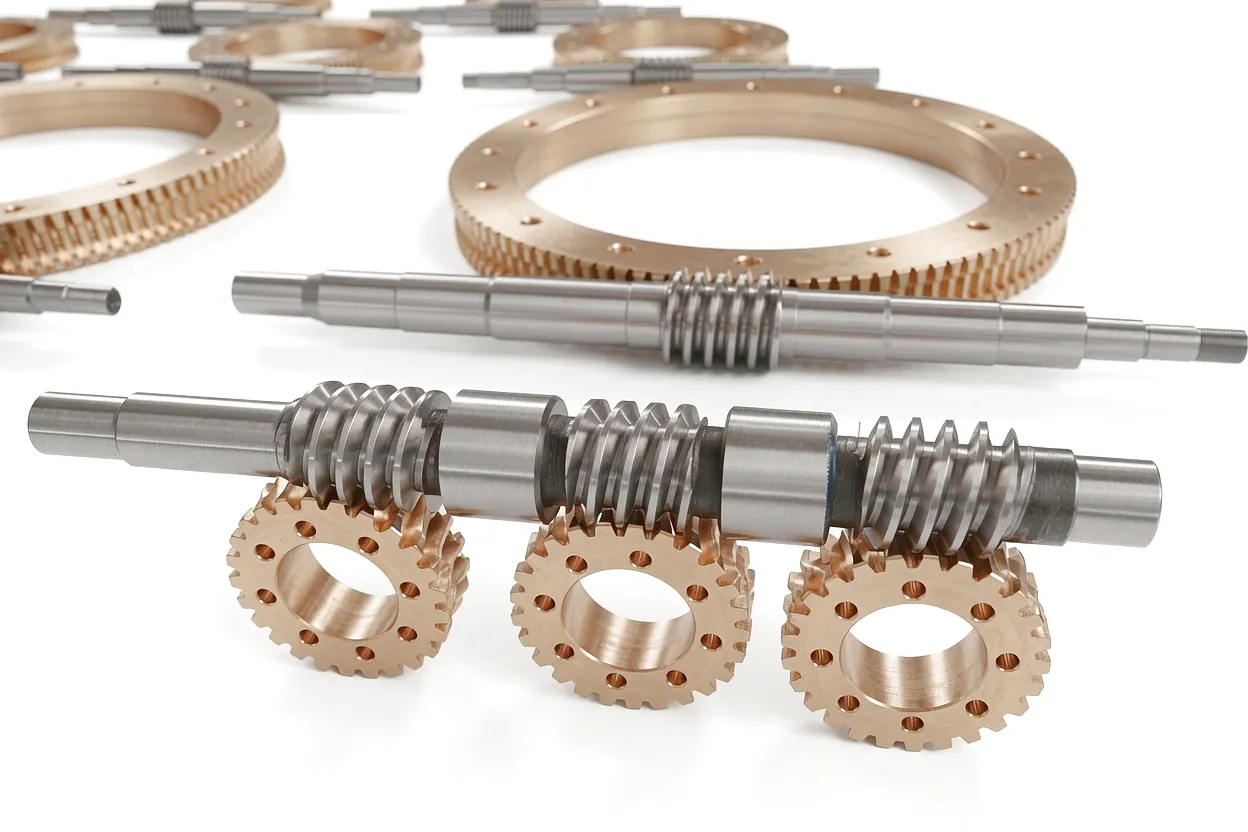
Hardwick Steel Solutions operates a long-bay structural steel fabrication facility on the outskirts of Sheffield, producing heavy rolled sections for infrastructure and commercial construction projects across Yorkshire and the Humber. In late 2023 the company’s maintenance engineering team identified accelerated wear on the worm gear shaft assemblies in three of the facility’s overhead bridge crane travel drives — components that had operated for approximately 14 years beyond their originally planned service life following a period of deferred capital replacement. The worn shafts were displaying measurable flank erosion on the thread profile, generating increased backlash and introducing a degree of positional inaccuracy in crane travel that was beginning to affect the precision placement of structural sections during assembly.
The maintenance manager contacted Ever Power through the company’s UK technical enquiries channel, providing worn shaft samples and original drawing references from the crane OEM. Ever Power’s engineering team conducted a dimensional reverse-engineering exercise to generate manufacturing drawings for the replacement shafts, incorporating an upgrade of the thread surface specification from the original Ra 0.4 µm to Ra 0.2 µm and a material change from C45 induction-hardened steel to 20CrMnTi case-carburised and profile-ground — a specification change that Ever Power’s application engineers estimated would at least double the projected wear life under the plant’s documented crane duty cycle data.
Six replacement worm gear shafts were delivered to the Sheffield facility within the agreed eight-week production lead time, complete with full material certificates, heat treatment records, and CMM inspection reports. All three cranes were returned to service following planned weekend maintenance windows with no unplanned production interruptions. In the twelve months following the refurbishment, Hardwick Steel Solutions reported zero maintenance interventions on the affected crane drives and a measurable improvement in crane travel smoothness as assessed by the facility’s vibration monitoring system.
“The surface finish quality on the replacement shafts was visibly superior to the originals. We installed them, topped up the oil, and the crane just ran. No bedding-in chatter, no initial wear-in period of concern. The CMM report matched the actual dimensions perfectly — that kind of documentation integrity matters when our quality team needs traceability records for the crane’s maintenance log.”
“We had gone to two other suppliers first and neither could offer the material upgrade we needed within a sensible timeline. Ever Power not only matched our specification request but proposed a better one, backed up with wear-life data. The eight-week delivery on six custom shafts was genuinely impressive given the complexity of the reverse-engineering involved. We are now using them as our standard supplier for all worm shaft replacements.”
“Twelve months in and all three cranes are still running without a single gearbox intervention. For a steel fabrication environment — significant dust, temperature cycling, heavy shock loading — that is an outstanding result. The decision to upgrade the thread surface specification as Ever Power suggested has clearly paid off. We will be specifying the same material standard when we refurbish the remaining cranes on the opposite bay next year.”
Frequently Asked Questions
Common Questions from UK Engineers and Procurement Teams
Share your drawing, sample dimensions, or application description with the Ever Power engineering team. We respond within 2 working days with a technical assessment and indicative pricing.
📧 Get a Quote: [email protected]