Technical Knowledge Series

Worm Gear Shaft: Engineering Principles, Material Science & Industrial Applications

A comprehensive technical guide for mechanical engineers, procurement managers and industrial buyers across the UK manufacturing sector.

By Ever Power Engineering
UK & Global B2B
3,000+ words

What Is a Worm Gear Shaft and Why Does It Matter?
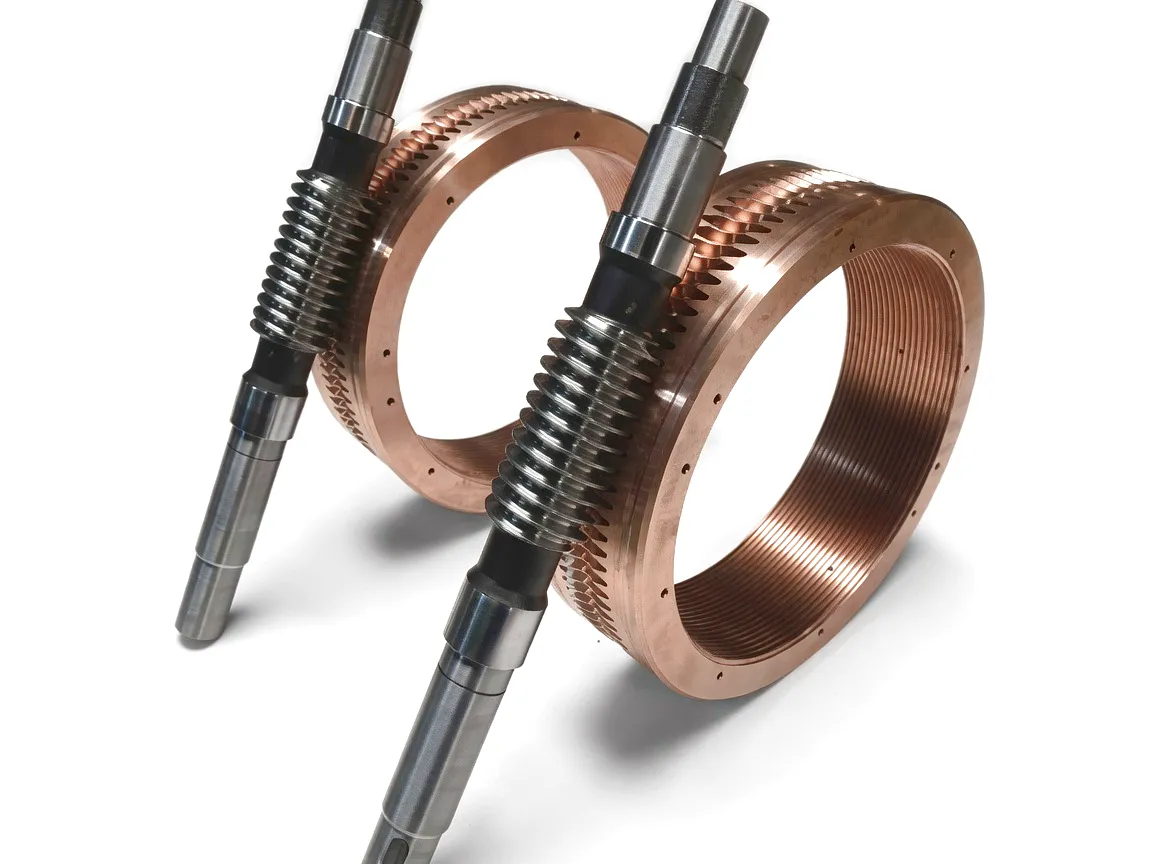
Worm gear shaft product by Ever Power

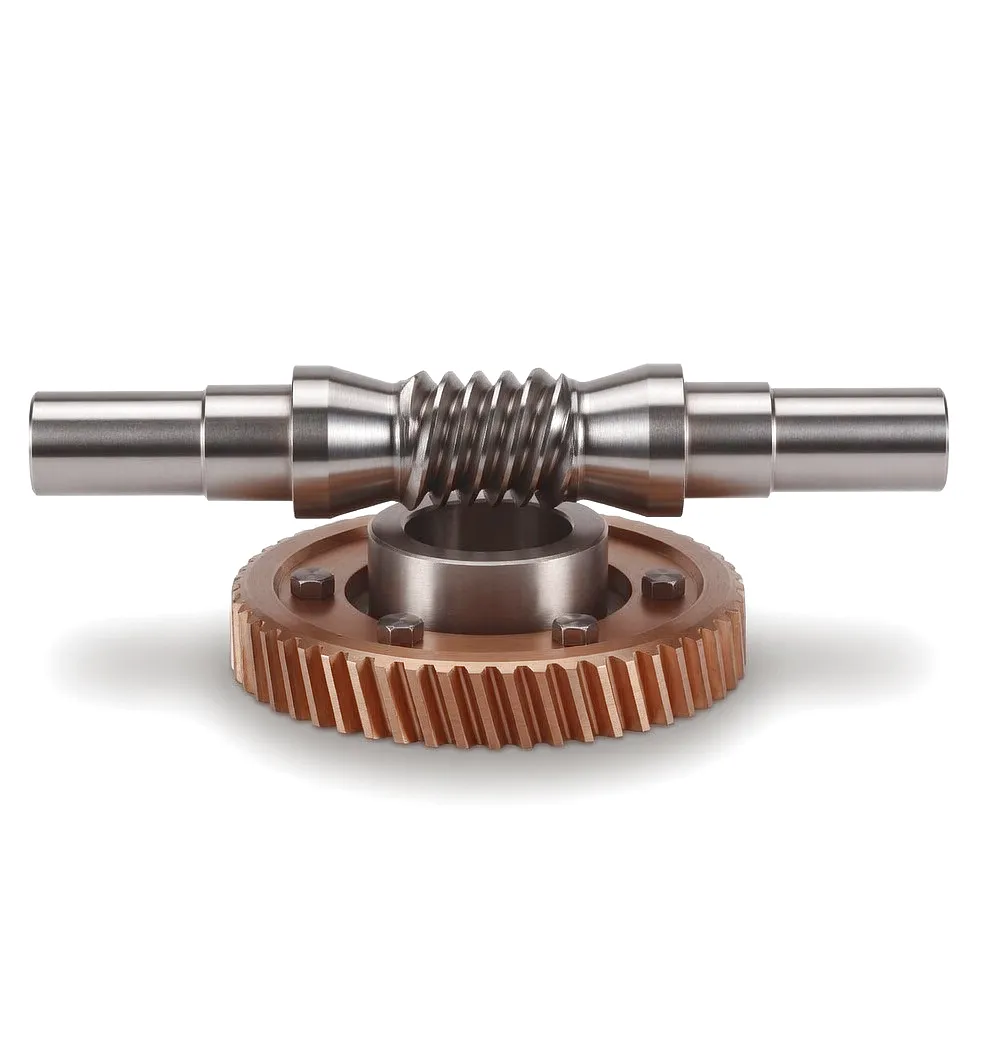
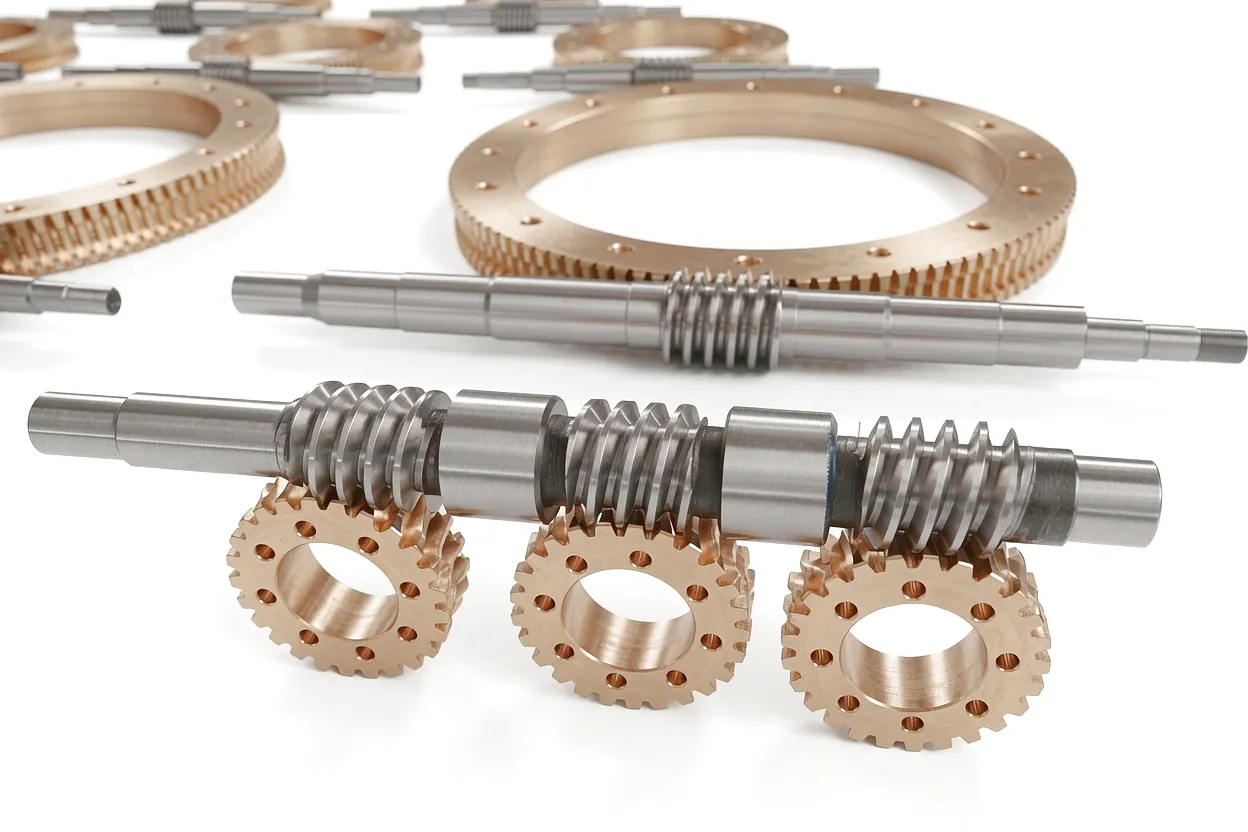
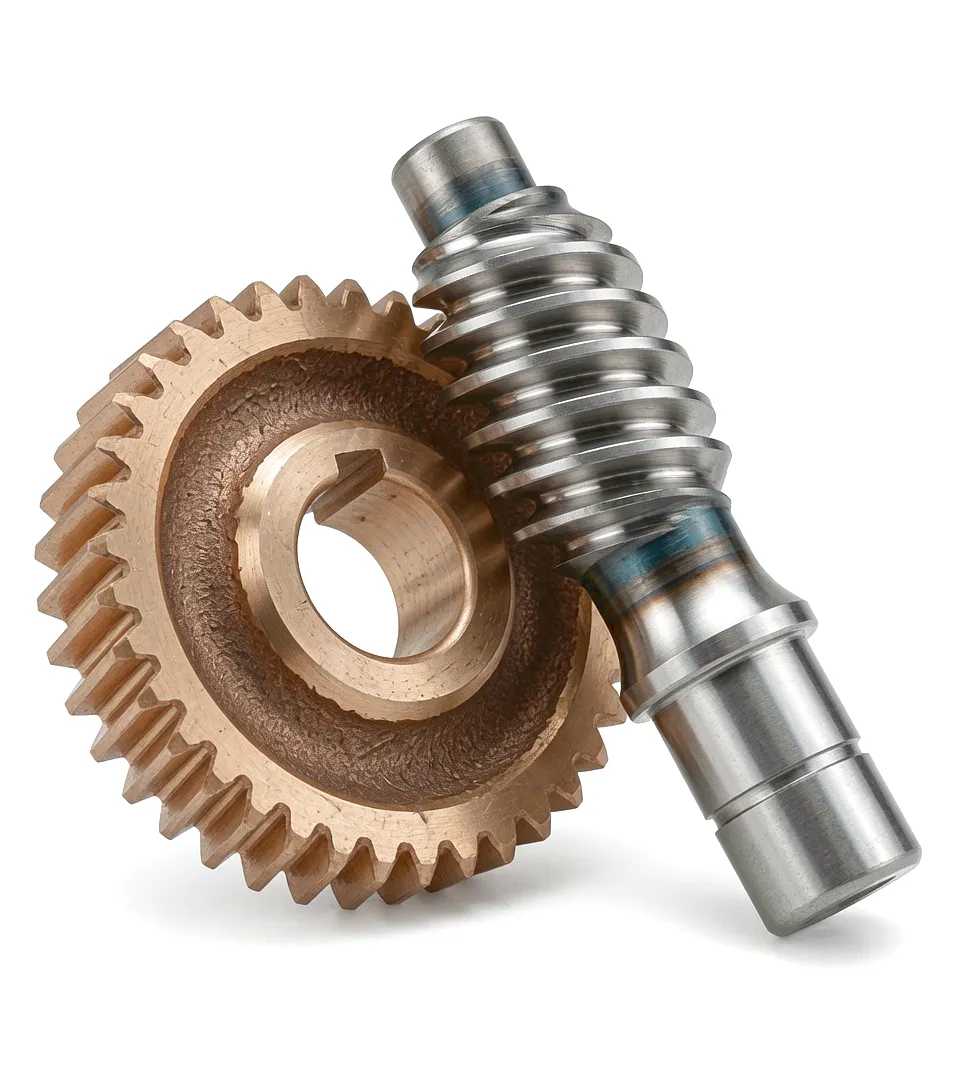
Within the broader family of power transmission components, the worm gear shaft occupies a uniquely important position. It is the rotating input element that meshes with a worm wheel to translate rotational motion through a perpendicular axis, and it does so with a level of compactness that few other gear configurations can match. At its most fundamental level, the worm gear shaft is a cylindrical rod machined with helical threads — a geometry closely analogous to a screw — that engages with the teeth of a mating worm wheel. As the shaft rotates, those helical threads push the worm wheel forward in a continuous, smooth sliding action rather than the intermittent tooth-to-tooth impact seen in spur or bevel gears. The result is quiet, vibration-dampened torque transfer that has made worm drives indispensable wherever space is tight, noise matters, or large speed-reduction ratios are required in a single stage.

Across British manufacturing — from the precision engineering workshops of Sheffield to the heavy-equipment assembly lines of Birmingham and the automotive suppliers scattered through the West Midlands — the demand for reliable, accurately specified worm gear shafts has never been more pressing. The renewed focus on reshoring critical components, coupled with stricter performance standards under BS EN ISO 6336 and its associated gear geometry guidelines, means that sourcing engineers must now evaluate shaft material, thread form, lead angle, hardness depth and surface finish with far greater rigour than was previously common practice. This article sets out to address each of those technical dimensions, giving procurement and engineering teams the detailed foundation they need to specify, evaluate and procure the correct worm gear shaft the first time.

Need a Custom Worm Gear Shaft for Your Application?

Our engineers respond within 24 hours with technical drawings and pricing.

✉ Get a Quote Now

How a Worm Gear Shaft Transmits Power: The Mechanics Explained
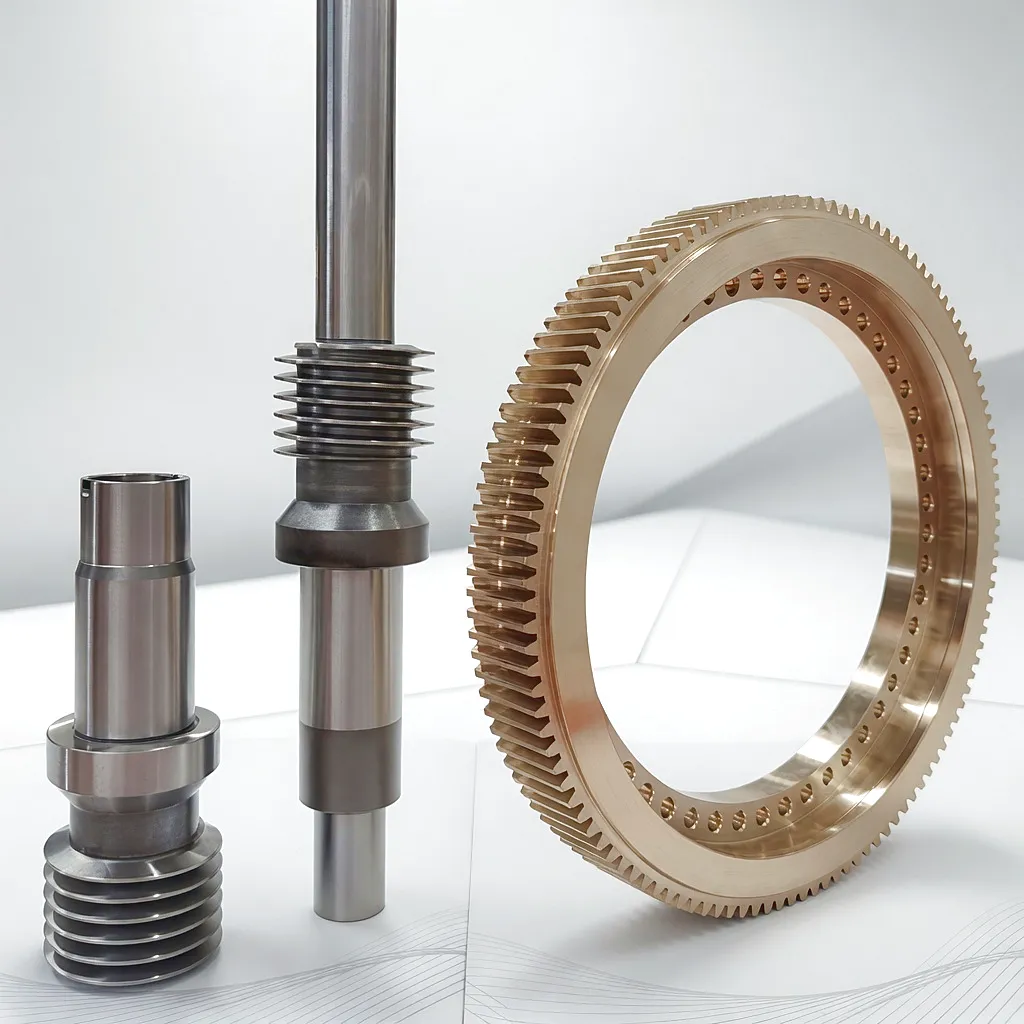
Worm gear shaft precision machining detail

The operating principle of a worm gear shaft rests on a specific geometric relationship between the shaft’s helix angle, the worm wheel’s pressure angle, and the centre-distance between the two mating parts. When the worm shaft rotates about its own longitudinal axis, each helical tooth ridge — referred to technically as the thread — sweeps across the face of the bronze or steel worm wheel tooth. Because the thread advances axially as the shaft turns, the wheel is driven circumferentially at a rate governed entirely by the lead and the number of starts on the worm. A single-start worm advances the wheel by exactly one tooth pitch for every full revolution of the shaft; a four-start worm advances it by four tooth pitches. This relationship directly sets the gear ratio and is why worm drives can achieve reductions of 5:1 up to 100:1 — or even higher in specialised designs — within a single mesh.

The nature of the sliding contact between a worm gear shaft and its mating wheel is fundamentally different from the rolling contact seen in helical or spur gears. In a correctly designed worm drive, the contact patch is a curved ellipse that moves progressively across the tooth face as the shaft rotates, distributing heat generation and wear across a wider area. The lead angle — the angle between the helix and a plane perpendicular to the shaft axis — has a profound influence on efficiency: lead angles below approximately 5 degrees produce self-locking behaviour, meaning the worm wheel cannot back-drive the shaft. This property is exploited deliberately in hoisting equipment, valve actuators and safety-critical positioning systems where unintended reverse motion must be prevented without a separate brake. Conversely, higher lead angles improve mechanical efficiency but sacrifice self-locking capability, so the correct lead angle must be matched to the specific duty cycle and safety requirements of the application.

⚙ Helical Thread Geometry

The worm shaft thread form — typically ZA, ZN, ZK or ZI — determines the ease of grinding, the contact ratio and the load distribution across the tooth flank. ZI (involute) worm geometry is widely preferred in British precision engineering because the flank can be finished by conventional cylindrical grinding machines.

📈 Speed Ratio Control

Gear ratio = (Number of worm wheel teeth) / (Number of starts on worm shaft). A 40-tooth wheel paired with a single-start worm shaft gives a 40:1 ratio, delivering massive torque multiplication from a compact housing — a capability that makes the worm gear shaft a cornerstone of conveyor and lifting system design.

🔒 Self-Locking Behaviour

When the lead angle is low and the coefficient of friction sufficiently high, the worm gear shaft becomes inherently self-locking. This eliminates the need for an external brake in many elevator, stairlift and press applications — a significant cost and complexity saving recognised by British machinery safety standards under BS EN ISO 13849.

Core Materials Used in Worm Gear Shaft Manufacturing

The material selection for a worm gear shaft is not an academic exercise — it is the single most consequential decision in the entire design chain. A shaft that transmits 500 Nm of torque at 1,450 rpm while subjected to shock loading from an upstream conveyor drive demands a steel grade with a yield strength substantially above the working stress, adequate surface hardenability to resist pitting and scoring against the worm wheel, and toughness sufficient to absorb the occasional impact overload without brittle fracture. British manufacturers sourcing from long-established supply chains in the Midlands and North East have historically favoured a short list of proven materials, and these remain the dominant choices in contemporary worm gear shaft production.

20CrMnTi / 20CrMo

Case-hardening alloy steels. After carburising and quenching, surface hardness reaches HRC 58–62 while the core remains tough (HRC 28–35). These grades are the backbone of high-load worm gear shaft production, providing the fatigue resistance needed for 24-hour continuous duty cycles in automotive transfer lines.

42CrMo4 / 4140

Through-hardening chromium-molybdenum steel. Commonly induction-hardened at the thread flanks to HRC 52–58 after pre-machining, then finish-ground. This approach gives a superior surface-to-core hardness gradient and is particularly suited to medium-ratio worm gear shafts in food processing and packaging machinery where dimensional repeatability is paramount.

C45 / 1045 Carbon Steel

Medium-carbon steel, often used in lighter-duty or budget-constrained applications where impact loads are modest and surface hardness requirements can be met with flame hardening. Widely stocked by UK steel service centres and straightforward to machine, making it attractive for short-lead-time replacement shafts in legacy equipment.

Stainless Steel 316 / 440C

Selected for corrosion-hostile environments such as wastewater treatment, marine deck machinery and pharmaceutical processing. Grade 316 offers outstanding resistance to chloride pitting; 440C provides higher surface hardness after heat treatment at the cost of slightly reduced toughness, making it the preferred worm gear shaft material in hygienic-design applications across the UK food and beverage sector.

The choice of steel grade must always be evaluated in conjunction with the heat treatment route. A 42CrMo4 worm gear shaft that has been through-hardened to an excessively high bulk hardness may achieve excellent flank wear resistance but will be susceptible to case spalling under shock loads. Conversely, a shaft with insufficient surface hardness — a common outcome when induction hardening depth is under-specified — will exhibit accelerated pitting within the first few thousand hours of operation, particularly when paired with a hardened steel worm wheel rather than the more conforming phosphor bronze. The ideal pairing remains a hard steel worm gear shaft (HRC 58+) against a softer, self-polishing bronze wheel, a combination that has been standard practice in British gear manufacture for well over a century and which continues to offer the best balance of efficiency, quiet operation and service life in the majority of industrial applications.

Core Technical Advantages of the Worm Gear Shaft

High Reduction Ratios in a Single Stage

Worm gear shafts routinely deliver speed reductions of 10:1 to 100:1 within a single mesh — a feat that would require two or three stages of spur or helical gearing to achieve. This compactness translates directly into smaller gearbox housings, lower installation costs and reduced structural support requirements on machine frames.

🔇

Exceptionally Quiet, Low-Vibration Operation

Because the worm gear shaft engages the worm wheel in a sliding rather than an impact contact, noise levels are significantly lower than those of equivalent spur gear drives. This makes worm drives the preferred choice in passenger lift mechanisms, hospital equipment and precision laboratory instruments where noise standards are strictly enforced under the UK Noise at Work Regulations.

🔒

Inherent Self-Locking Safety

At low lead angles, the worm gear shaft cannot be back-driven by the output load. This passive safety feature eliminates the need for external holding brakes in many lifting and positioning applications, reducing system complexity and the risk of brake failure — a consideration that frequently appears in CE marking risk assessments for UK machinery directive compliance.

Right-Angle Drive in Minimal Space

The standard 90-degree shaft crossing angle allows machine designers to redirect drive shafts through right angles without additional bevel gear stages or costly universal joints. This geometry is used extensively in British-built agricultural machinery, packaging lines and retail escalator drives where spatial constraints demand creative power routing.

🔄

Smooth, Shock-Absorbing Torque Delivery

The distributed sliding contact of the worm gear shaft inherently absorbs minor shock loads and torsional vibrations before they reach downstream components. Production machinery driven through worm gears typically shows lower bearing wear rates on output shafts compared with equivalent spur gear drives, reducing maintenance frequency and unscheduled downtime.

🔧

Wide Customisation Latitude

Thread profiles, shaft diameter steps, keyway positions, spline forms and shaft end configurations can all be tailored to match legacy gearbox housings or new OEM designs. This flexibility makes the worm gear shaft one of the most adaptable components in the power transmission catalogue, and it is a key reason why UK plant engineers continue to prefer bespoke machined shafts over catalogue-only supply.

Worm Gear Shaft: Technical & Performance Parameter Table

The parameters below represent the standard specification ranges offered by Ever Power. Custom configurations outside these ranges are available on application — contact our engineering team with your torque, ratio and dimensional requirements for a dedicated design review.

ParameterStandard RangeCustom / ExtendedNotes
Shaft Diameter20 mm – 120 mmUp to 280 mmTo h6 / h7 tolerance per ISO 286
Centre Distance40 mm – 400 mmUp to 800 mmAs per BS EN ISO 9085
Gear Ratio5:1 – 80:1Up to 100:1Single-stage; multi-stage on request
Output Torque50 Nm – 15,000 NmUp to 50,000 NmVerified by FEA simulation
Input Speed750 rpm – 1,450 rpmUp to 3,000 rpmBalanced for speeds over 1,500 rpm
Lead Angle3° – 30°Custom<6° = self-locking; >15° = high efficiency
Thread Starts1, 2, 46 startsMore starts = higher efficiency
Shaft Material20CrMnTi / 42CrMo4 / C45316SS / 440C / NitridedMatched to load and environment
Surface Hardness (Thread)HRC 56–62To HRC 64Carburised or induction hardened
Thread Surface Finish (Ra)Ra 0.8 µmRa 0.4 µm (precision ground)CNC thread grinding; CMM verified
Thread Accuracy GradeGrade 7–8 (ISO 1328)Grade 5–6Inspection report provided
Mechanical Efficiency50% – 90%Optimised per duty cycleDepends on lead angle and lubrication
Shaft Keyway / SplineDIN 6885 keywaysDIN 5480 splines / customBroached or hobbed to drawing

Industrial Application Scenarios for Worm Gear Shafts

Worm gear shaft in conveyor system application

▶ Conveyor & Material Handling Systems

Across the UK’s logistics and warehousing sector — a market that has grown dramatically since the rapid expansion of e-commerce fulfilment centres in the East Midlands and greater London — worm gear shafts are the default drive solution for belt conveyors, roller conveyor drives and chain drives. The combination of high reduction ratio, compact geometry and inherent self-locking makes them uniquely well-suited to inclined conveyors that must hold position when the drive motor is de-energised. Typical operating conditions involve continuous duty at 1,450 rpm input, with output torques ranging from 200 Nm to 3,000 Nm depending on belt width and product weight. The worm gear shaft in this context is invariably paired with a phosphor bronze worm wheel and oil-bath lubrication, providing service lives well in excess of 20,000 hours between overhauls.

Worm gear shaft wind turbine yaw pitch application

△ Wind Power Generation: Yaw & Pitch Drives

Wind turbine installed capacity has become a defining component of global renewable energy infrastructure, and within the multi-megawatt turbines deployed across UK offshore wind farms — from the Hornsea complex in the North Sea to the Dogger Bank arrays — worm gear shafts perform two absolutely critical functions in the turbine’s drivetrain. The yaw system, which rotates the entire nacelle to face into the wind, relies on a ring of worm gear drives arranged radially around the tower top. Each worm gear shaft in this assembly must deliver sustained torque output against the wind-induced overturning moment while remaining positively self-locking between correction events. Simultaneously, the blade pitch control system uses individual worm drive actuators at each blade root to vary the blade angle in real time, modulating power output and protecting the turbine from overspeed during storms.

The demand cycle in wind turbine yaw and pitch drives is among the harshest faced by any worm gear shaft application. Temperature excursions from -25°C in winter operation to +60°C within a sun-heated nacelle, combined with sea-salt aerosol ingress and the constant reversal of load direction during gusting conditions, place extraordinary demands on shaft material, seal design and lubricant selection. Ever Power’s wind turbine worm gear shafts are manufactured from low-temperature impact-tested alloy steel, surface-treated with anti-corrosion phosphating, and supplied with certification to IEC 61400 wind turbine standards, making them a credible choice for the expanding UK offshore wind supply chain.

Worm gear shaft in lifting and hoisting equipment

🛤 Lifting & Hoisting Equipment

From electric chain hoists used in Birmingham automotive body shops to heavy overhead cranes serving Sheffield steel fabricators, the worm gear shaft drives the drum or sprocket that lifts the load. The self-locking property is not merely convenient here — it is a mandatory safety requirement under BS EN 14492, the European standard for powered winches and hoists. Shaft diameters in crane duty applications typically range from 60 mm to 150 mm with hardened threads, and the gearbox housing must be designed to withstand proof loads of 1.25 times the safe working load without permanent deformation of shaft or housing.

Worm gear shaft food and pharmaceutical processing

⚒ Food, Beverage & Pharmaceutical Processing

The UK food and drink manufacturing sector, centred in part on the Yorkshire and Humber region, demands worm gear shafts manufactured from food-grade stainless steel and assembled with NSF-certified lubricants. Hygienically designed worm drives with smooth external surfaces, no external hardware and IP67-rated seals are specified for bottling lines, fill-seal machines and automated packaging cells where CIP (clean-in-place) wash-down is performed daily. Ever Power’s stainless worm gear shaft range is produced to EN 1672 hygienic design guidelines.

Elevator & Escalator Drives

Passenger lifts and stairlifts across UK commercial buildings rely on compact worm drive units for smooth, self-locking, low-noise vertical transport.

Agricultural Machinery

Balers, spreaders and field robots using worm gear shafts for compact right-angle drives. UK farm equipment makers in Lincolnshire and East Anglia are a key end market.

Valve & Gate Actuators

Water utilities across Wales and Northern England use worm gear shaft actuators to open and close large-diameter sluice gates, relying on self-locking to hold gate position without hydraulic pressure.

Printing & Packaging Machinery

Register adjustment drives and tension-control roller systems in UK printing and packaging plants use precision worm gear shafts for ultra-fine position control and quiet high-speed operation.

Robotics & CNC Positioning

Precision CNC rotary axes and robot shoulder joints use low-backlash worm gear shafts machined to Grade 5 ISO 1328 accuracy, enabling sub-arc-minute positioning repeatability in automated manufacturing cells.

Marine & Offshore Equipment

Deck windlasses, anchor winches and subsea valve actuators use stainless or duplex steel worm gear shafts with ATEX-rated housings for safe deployment in offshore North Sea installations.
Manufacturer Profile

Ever Power: Precision Manufacturing & Custom Worm Gear Shaft Solutions

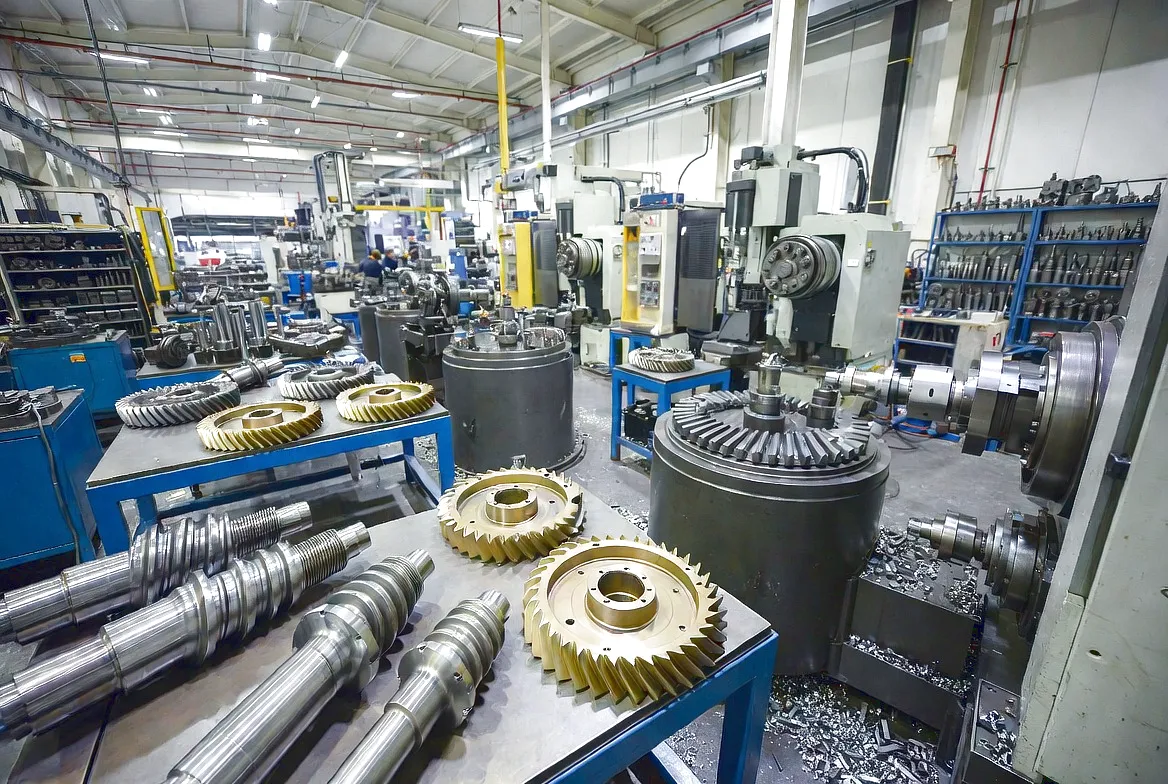
Ever Power worm gear shaft manufacturing workshop

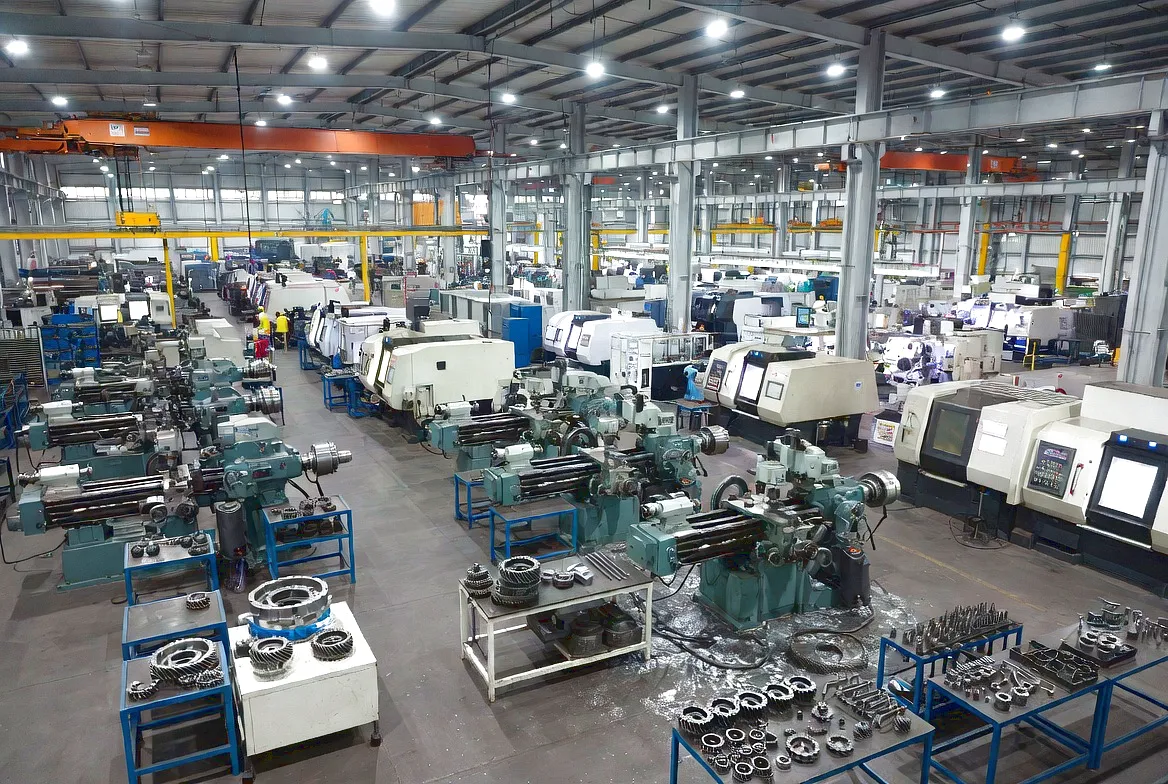
Ever Power operates dedicated worm gear shaft manufacturing lines equipped with CNC thread grinding centres capable of achieving ISO 1328 Grade 5 accuracy on shafts up to 280 mm in diameter. The production process begins with incoming material verification — every steel bar is certified to the relevant EN or ASTM material standard and checked by portable spectrographic analysis before entering the cutting area. Turning, milling, gear hobbing and preliminary grinding are all performed on computer-controlled lathes and multi-axis machining centres, with in-process dimensional verification at each stage to prevent defects from propagating to the next operation.

What distinguishes Ever Power from catalogue-only suppliers is the breadth of the customisation capability. UK customers routinely specify non-standard shaft lengths, non-DIN keyway positions, tapped shaft ends for direct coupling attachment, and thread profile modifications to match obsolete legacy gearbox housings for which no OEM replacement is available. Our engineering team works directly from customer drawings or — where no drawing exists — from physical measurements of the worn shaft taken by our field service engineers. Reverse engineering from sample, prototyping in 7–14 days, and series production with full first-article inspection reports are all standard service offerings. For OEM customers building equipment for export, Ever Power can supply worm gear shafts with third-party inspection certificates from Lloyd’s Register, Bureau Veritas or SGS, ensuring smooth customs and conformity assessment processes in target markets.

280mm

Max shaft diameter

Grade 5

ISO 1328 thread accuracy

7–14

Day prototype turnaround

50,000

Nm max output torque

Ra 0.4

µm precision surface finish

100:1

Max single-stage ratio

Request a Technical Quotation from Ever Power

Share your shaft drawing, sample, or duty-cycle data — we’ll respond with a full technical proposal within 24 hours.

[email protected]

Customer Success Story: Sheffield Heavy Engineering
Sheffield, South Yorkshire
Steel Rolling Mill Upgrades
2024 Project

A mid-size special steel processor based in the Lower Don Valley, Sheffield, contacted Ever Power following a series of premature failures in the worm gear shaft drives powering their coil upender tables. The existing shafts — sourced from a European catalogue supplier — were failing at the thread root after approximately 8,000 hours of service, well short of the 25,000-hour design life specified in the original machine build. The failure mode was fatigue cracking initiating at the thread root radius, a classic sign of under-specified case hardening depth relative to the applied bending moment at maximum coil weight.

Ever Power’s engineering team conducted a full load analysis using the plant’s process data, recalculating the peak bending moment under the worst-case 22-tonne coil loads and including the dynamic overload factor associated with the hydraulic tipping motion. The result was a revised worm gear shaft specification using 20CrMnTi case-hardening steel with a case depth increased from 1.0 mm to 1.8 mm, a thread root radius enlarged from 0.4 mm to 0.8 mm to reduce stress concentration, and a polished thread flank surface finish of Ra 0.6 µm. Prototypes were delivered to the Sheffield site within 11 working days of drawing sign-off, and a first-article inspection report confirming dimensional compliance was provided with the shipment.

After 18 months of continuous two-shift operation, the Ever Power worm gear shafts installed on all four upender tables showed no measurable thread flank wear on inspection, and no shafts have required replacement. The plant engineering manager estimated the reduction in unplanned downtime at approximately 340 hours per year across the four tables, translating to a production cost saving of over £85,000 annually at the plant’s stated downtime cost rate. The Sheffield plant has since placed blanket orders for Ever Power worm gear shafts across eleven additional drive positions in their cold drawing and finishing lines.

Ever Power precision CNC worm shaft grinding line

What Our Customers Say

We’ve run the Ever Power worm gear shaft on our coil upenders for 18 months without a single failure. The case depth upgrade they recommended was exactly the right engineering call — something our previous supplier never thought to question. Technical response times and documentation quality are genuinely impressive for a supply partner at this price level.

R

Richard A., Plant Engineering Manager

Special Steel Processor, Sheffield

Getting a custom worm gear shaft made to a non-standard left-hand thread specification with a non-DIN keyway and specific shaft end chamfer was something I expected to take months with most suppliers. Ever Power turned around a prototype in 12 days and the dimensions were spot-on with the legacy housing. The price was competitive and the inspection report saved us two weeks on our own in-house verification process.

S

Sarah K., Mechanical Design Engineer

Automated Packaging OEM, Birmingham

We specified stainless worm gear shafts from Ever Power for our hygienic-design filling line rebuild. The 316 stainless material certification, NSF lubricant compatibility confirmation, and EN 1672 compliance documentation were all provided without needing to chase. After six months of daily caustic wash-down, the shafts show zero corrosion and the surface finish on the threads is still measurably within the original Ra 0.8 specification. Exactly what we needed for our BRC audit compliance.

D

David M., Maintenance Engineering Lead

Food & Beverage Manufacturer, Yorkshire

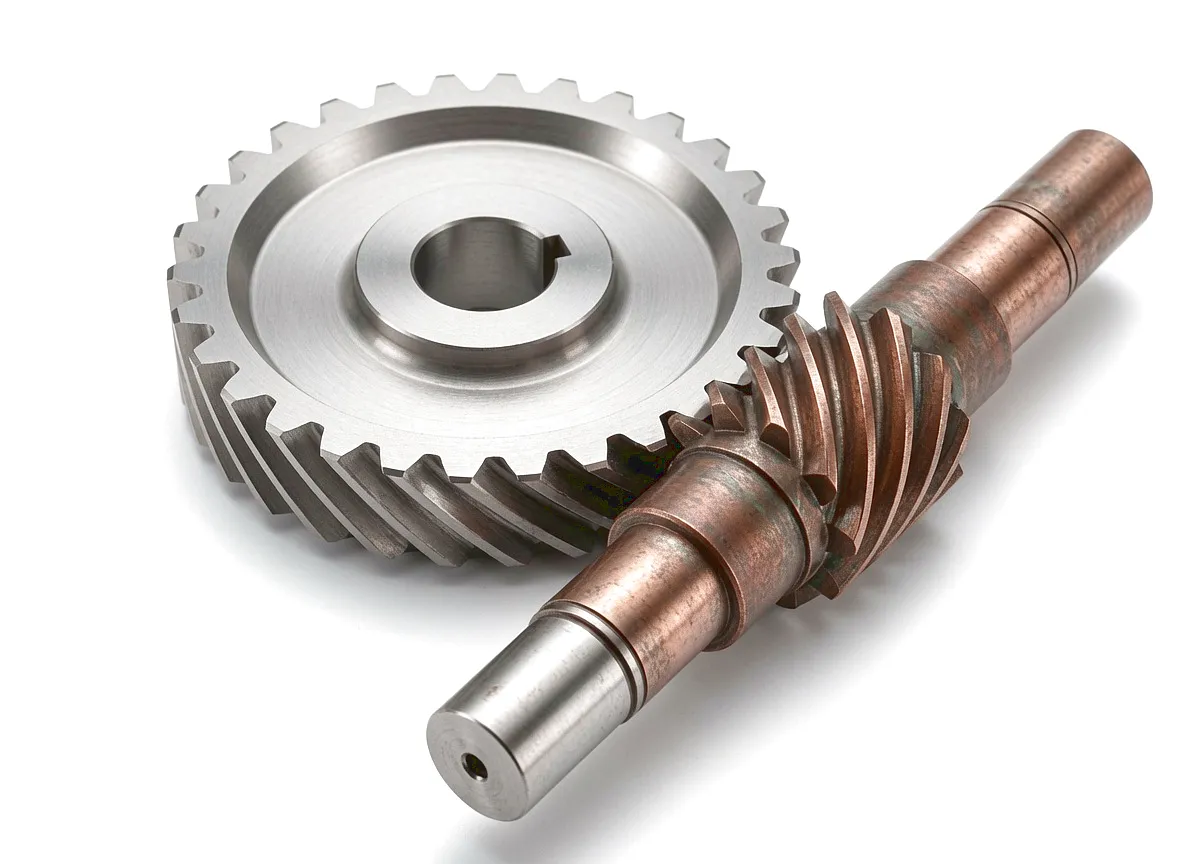
Ever Power Worm Gear Shaft — Product Gallery
Worm gear shaft product 1
Worm gear shaft product 2
Worm gear shaft product 5
Worm gear shaft product 6

Frequently Asked Questions About Worm Gear Shafts

Q
How much does a custom worm gear shaft typically cost for a heavy industrial conveyor drive in the UK, and what factors affect the price?
Pricing for a custom worm gear shaft in heavy industrial conveyor applications depends primarily on shaft diameter, length, material grade, heat treatment depth, thread accuracy class and the complexity of shaft end features such as splines or flanges. For a typical 60–80 mm diameter case-hardened alloy steel shaft in the 500–2,000 Nm torque range, unit prices for small-to-medium batch orders generally fall between £150 and £550 per shaft ex-works. Stainless steel grades carry a 30–60% premium over alloy steel. Contact Ever Power at [email protected] with your drawing or specification for a firm quotation with no obligation.
Q
Which worm gear shaft material is best suited for food processing machinery in a UK factory that requires daily wash-down?
For food processing environments requiring daily CIP or wash-down, grade 316 austenitic stainless steel is the standard choice for a worm gear shaft, as it combines excellent resistance to chloride-bearing cleaning agents with sufficient mechanical strength for the majority of conveyor and filling line duties. Where higher hardness is needed at the thread flanks, 440C stainless — which can be heat-treated to HRC 56–58 — is specified, although its corrosion resistance is marginally lower than 316. The shaft should be paired with an NSF H1 certified lubricant and housed in an IP67-rated enclosure to fully comply with BS EN 1672 hygienic machine design requirements.
Q
Where can I find a reliable worm gear shaft supplier in the UK who can manufacture to custom drawings with short lead times?
Ever Power supplies custom worm gear shafts to UK customers from its precision manufacturing facility with typical prototype lead times of 7–14 working days from approved drawing. Series production for larger batches is generally quoted at 3–6 weeks depending on material procurement lead times. Delivery to all UK mainland locations including Birmingham, Sheffield, Manchester, Leeds and London is available via tracked express courier. To get a quote, email your drawing or sample specification to [email protected] and our engineering team will respond within 24 hours.
Q
What is the correct way to calculate the gear ratio for a worm gear shaft when I know the number of worm wheel teeth and worm starts?
The gear ratio of a worm drive is calculated as: Ratio = Number of worm wheel teeth / Number of starts on the worm gear shaft. For example, a worm wheel with 48 teeth paired with a 2-start worm shaft gives a gear ratio of 48 / 2 = 24:1. This means the output shaft completes one revolution for every 24 revolutions of the worm shaft. Increasing the number of starts raises the mechanical efficiency but reduces the gear ratio for a given wheel tooth count. The lead angle also increases with more starts, reducing the likelihood of self-locking.
Q
How does the self-locking property of a worm gear shaft affect its use in hoist and lifting equipment certified under UK safety standards?
Self-locking in a worm gear shaft occurs when the lead angle is low enough (typically below 5–6 degrees) and the coefficient of friction between shaft thread and worm wheel is sufficient to prevent the output load from back-driving the input shaft. In hoist and lifting applications certified under BS EN 14492 and the UK Lifting Operations and Lifting Equipment Regulations 1998 (LOLER), this passive self-locking is recognised as a secondary safety measure, but it does not fully replace a mechanical load brake. UK-certified hoist designs must still incorporate a dedicated safety brake unless a risk assessment demonstrates that the self-locking worm drive provides adequate protection against uncontrolled load descent under all foreseeable failure modes.
Q
What surface finish and accuracy grade should I specify when ordering a precision worm gear shaft for a CNC rotary axis in a Birmingham machining centre?
For a CNC rotary axis where positional accuracy and minimal backlash are critical, specify the worm gear shaft to ISO 1328 Grade 5 or better, with a thread flank surface finish of Ra 0.4 µm achieved by precision CNC thread grinding rather than milling or hobbing alone. Shaft journal diameters should be held to h5 tolerance per ISO 286 to ensure consistent bearing fits. It is also worth specifying a maximum accumulated pitch error and tooth-to-tooth pitch variation as separate acceptance criteria, as these directly determine the angular positioning repeatability of the rotary axis. Ever Power can supply worm gear shafts with a full CMM inspection report covering these parameters on request.
Q
When should I choose a worm gear shaft drive over a helical or planetary gearbox for a new industrial machine being designed in Manchester?
A worm gear shaft drive is the right choice when you need a large speed reduction ratio (above 10:1) in a single stage, when space constraints make a multi-stage helical gearbox impractical, when self-locking without an external brake is desirable for safety, or when the 90-degree shaft crossing angle simplifies the machine layout. Planetary gearboxes are preferred when efficiency above 97% is required or when input-to-output collinearity is needed. Helical gears are better for high-speed, high-efficiency applications. For moderate-speed drives requiring quiet operation, high reduction ratio and compact installation — conditions that characterise many material handling, food processing and building services applications across greater Manchester’s manufacturing sector — the worm gear shaft remains the most cost-effective solution.
Q
How quickly can Ever Power supply a replacement worm gear shaft for an urgent breakdown repair at a UK plant, and what information do I need to provide?
For urgent breakdown situations, Ever Power operates an expedited manufacturing track for worm gear shafts that can significantly compress standard lead times when stock material is available. Providing a detailed dimensional sketch or photograph of the worn shaft, including thread pitch, number of starts, lead angle (if known), shaft diameter, shaft length, keyway dimensions and overall length, allows our engineering team to generate a production drawing within hours. If you can courier the failed shaft to us, our reverse engineering process using CMM measurement typically produces a verified drawing within one working day. Contact [email protected] immediately with the details and mark your message as URGENT BREAKDOWN for priority handling.

Ready to Source Your Next Worm Gear Shaft?

Send your technical drawing, specification or breakdown sample to our engineering team. Custom worm gear shaft solutions for every UK industry — from Sheffield steel to Yorkshire food processing.

✉ Get a Quote — [email protected]

Response within 24 hours • Custom designs welcome • UK delivery nationwide

© Ever Power Transmission | worm-shaft.com | edit by gzl