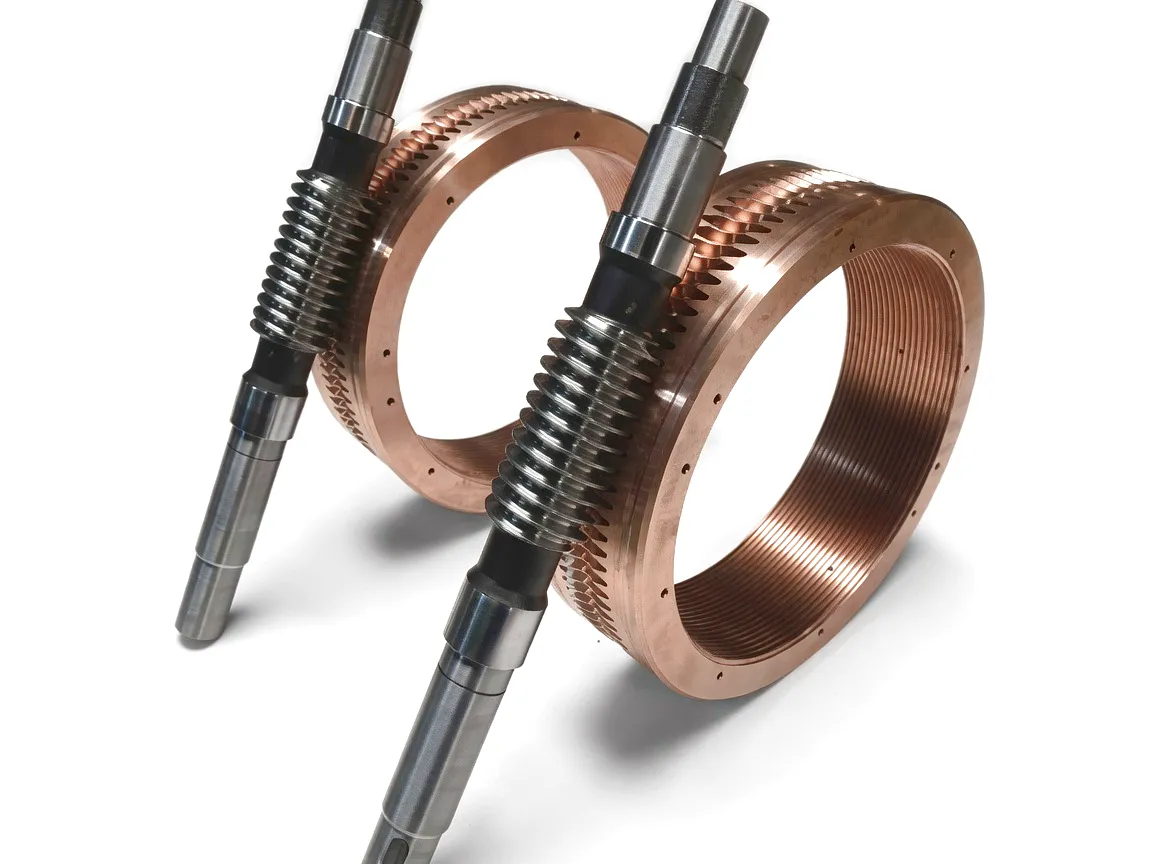
How a Worm Gear Shaft Works: Engineering Principles
The worm gear shaft carries one or more helical threads that wrap continuously around a cylindrical body. As the shaft rotates about its own axis, each thread pushes the meshing teeth of the worm wheel forward in the perpendicular plane. The number of thread starts on the worm gear shaft determines how many teeth advance per shaft revolution, directly setting the gear ratio. A single-start worm gear shaft meshing with a 40-tooth wheel gives a 40:1 ratio; a four-start shaft reduces this to 10:1 — allowing engineers to fine-tune the drive to match motor speed and output torque requirements. The contact between the worm thread flank and wheel tooth is a combination of rolling and sliding, with sliding velocity dominant, which is why lubrication quality and surface finish on the worm gear shaft threads are so critical to efficiency and service longevity.
One of the most operationally significant characteristics of the worm gear shaft is its capacity for self-locking. When the lead angle of the worm thread is less than the equivalent friction angle at the mesh interface, the back-driving force generated by the load on the worm wheel is insufficient to reverse-rotate the worm gear shaft. This mechanical self-locking makes the worm gear shaft indispensable in conveyor systems, valve actuators, and lifting equipment where a load must remain stationary when motor power is removed — eliminating a separate electromechanical brake and reducing system complexity. The friction angle itself is a function of tooth surface finish, lubricant viscosity, and sliding velocity, so the degree of self-locking can shift over the machine service life as surfaces wear; specifying the correct hardness and finish on the worm gear shaft thread profile is therefore not merely an efficiency matter but a safety-critical consideration.
The dominant sliding motion at the worm gear shaft tooth contact generates more frictional heat than comparable rolling-contact transmissions such as helical gearboxes. Efficiency values for a worm gear shaft drive typically range from 50% to 90%, depending on lead angle, number of starts, surface finish quality, and lubricant type. High-lead-angle designs with multiple thread starts achieve efficiencies approaching those of helical gear stages, while self-locking single-start configurations sit at the lower end of the efficiency range. Thermal management is therefore an inherent part of specifying a worm gear shaft drive: the housing must dissipate heat continuously during sustained operation, and in high-duty-cycle applications, supplementary cooling — from fan-assisted housings to external oil-to-water heat exchangers — is incorporated into the system design to prevent lubricant degradation and premature wear of the worm gear shaft surface.
Core Materials Used in Worm Gear Shaft Manufacturing
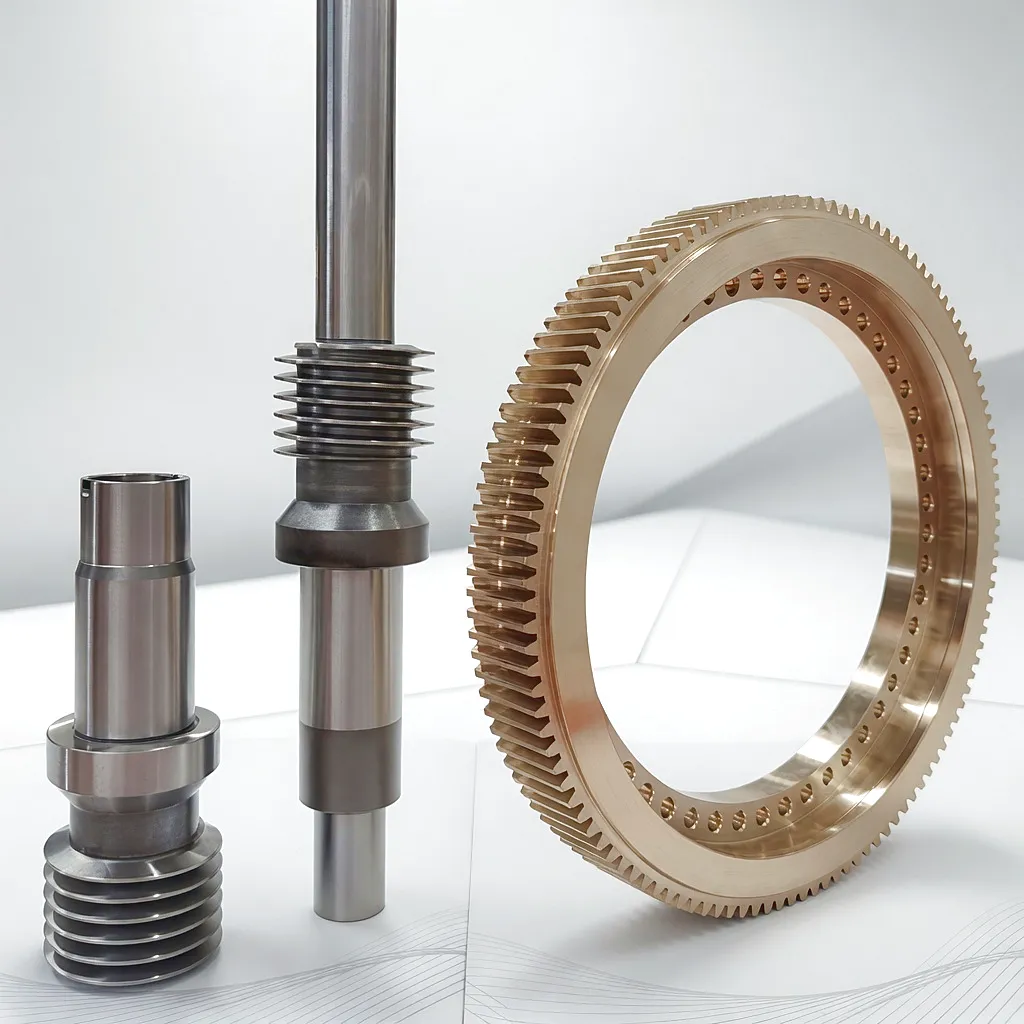
The most widely used material for the worm gear shaft itself. Carburising and case hardening bring surface hardness to HRC 58–62 while retaining a tough, ductile core. This combination allows the worm gear shaft to absorb shock loads — critical in start-stop duty cycles common in UK automated warehouse conveyor systems — while the hard surface resists micropitting and scoring over extended service. After hardening, the shaft thread flanks are ground to Ra 0.4–0.8 µm to minimise friction at the mesh contact zone.
For medium-duty worm gear shaft applications requiring a uniform hardness profile throughout the section, 42CrMo4 (equivalent to EN19 in British standards) is through-hardened to HB 270–320. It offers excellent fatigue resistance and high tensile strength, making it well-suited to agricultural equipment and industrial door operators in rural Lincolnshire or Yorkshire where maintenance access is infrequent and drive reliability must be maximised between scheduled service intervals.
Corrosive environments — chemical process plants along Teesside, food and beverage facilities in Cheshire, and pharmaceutical manufacturing in Hertfordshire — mandate stainless steel worm gear shafts. 316L offers excellent pitting corrosion resistance in chloride-rich environments, while 17-4PH precipitation-hardened stainless provides superior mechanical properties when both corrosion resistance and load capacity are required. Passivation treatment following machining is standard practice for food-grade applications.
For cost-sensitive, lighter-duty worm gear shaft applications, induction-hardened C45 (EN8) steel delivers a surface hardness of HRC 45–55 at lower material cost than alloy grades. The induction hardening process is applied selectively to the thread flanks and shaft journals, leaving the core relatively ductile. This material choice is common in packaging machinery, material handling equipment, and domestic gate automation products manufactured or distributed through Birmingham and its extensive engineering supply chain network.
Worm Gear Shaft — Product Technical & Performance Parameter Table
| Parameter | Standard Range | High-Performance Range | Notes |
|---|---|---|---|
| Transmission Ratio | 5:1 to 60:1 | 60:1 to 100:1 (single stage) | Multi-stage up to 3600:1 |
| Output Torque | 5 N·m to 2,000 N·m | 2,000 N·m to 50,000 N·m | Depends on shaft diameter and material grade |
| Shaft Diameter | 10 mm to 80 mm | 80 mm to 250 mm | Custom diameters available on request |
| Thread Starts | 1 to 4 | 4 to 6 | More starts = higher efficiency, lower ratio |
| Lead Angle | 3° to 15° | 15° to 30° | Greater angle improves efficiency; reduces self-lock |
| Surface Hardness (Shaft) | HRC 45 to 55 | HRC 58 to 62 | Case-hardened alloy steel for premium grades |
| Thread Flank Finish (Ra) | 0.8 to 1.6 µm | 0.2 to 0.4 µm | CNC ground finish for high-load duty |
| Mechanical Efficiency | 50% to 75% | 75% to 92% | Multi-start + ground finish achieves upper range |
| Operating Shaft Angle | 90° (standard) | Non-90° skew-axis (special) | Specify crossing angle at enquiry stage |
| Input Speed (max) | 1,500 rpm | up to 3,000 rpm | Higher speeds require balanced shaft and precision bearings |
| Worm Shaft Material Options | C45, 42CrMo4, 20CrMnTi | 316L SS, 17-4PH, Custom Alloys | Food-grade and marine grades available |
| Operating Temperature | -20°C to +80°C | -40°C to +120°C | Dependent on lubricant and seal specification |
Core Technical Advantages of the Worm Gear Shaft Drive
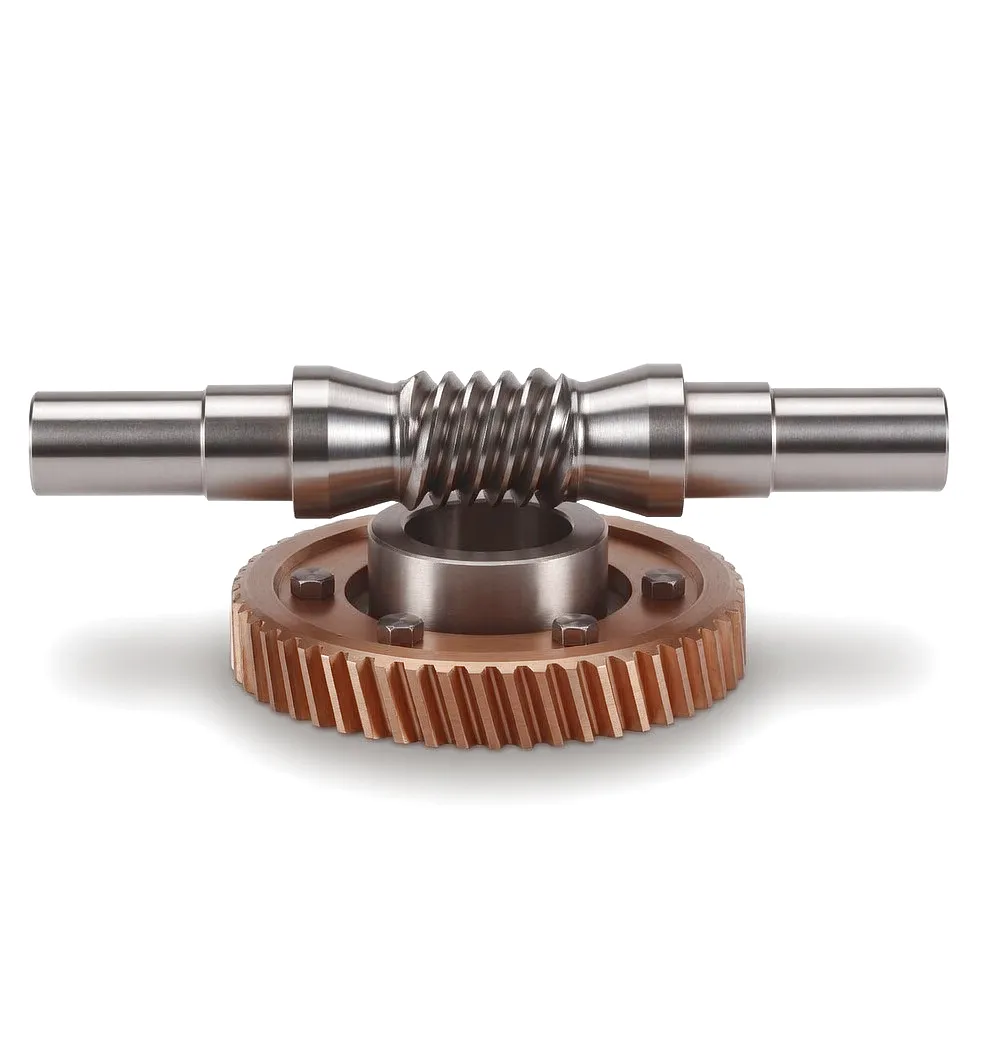
Achieving a 60:1 reduction in a single meshing stage is impossible with spur or helical gears without cascading multiple stages — multiplying cost, weight, and housing volume. The worm gear shaft delivers this ratio from a single shaft-and-wheel pairing, dramatically simplifying gearbox architecture and reducing the mechanical component count in the powertrain. For machine designers working within tight installation envelopes — a common constraint in retrofitting older Sheffield steel works buildings originally designed around pre-metric machinery — this single-stage ratio capability directly translates into design freedom.
In any application where load must be held at rest without continuous power input — stair lifts, theatre fly systems, architectural facade panels driven by actuators — the self-locking characteristic of the worm gear shaft provides a passive mechanical safety function. This behaviour derives directly from the lead angle of the thread and requires no additional brake mechanism, reducing component count, maintenance obligations, and potential failure modes. UK machinery safety regulations under PSSR 2000 and LOLER 1998 favour drive arrangements with intrinsic load-holding capability, making the worm gear shaft a compliance-friendly choice for lifting and positioning applications.
The continuous sliding contact at the worm gear shaft mesh results in inherently smooth, low-noise power transmission compared with spur gears, which produce periodic impulses at each tooth-engagement event. For UK food manufacturers operating in acoustic-sensitive environments or where worker noise exposure must comply with the Control of Noise at Work Regulations 2005, worm gear shaft gearboxes offer a genuine operational advantage. The absence of dynamic tooth-impact loading also reduces transmitted vibration to machine frames and connected structures, extending the service life of adjacent bearings, seals, and fasteners.
Delivering a 90-degree change in drive direction in a single, integrated housing is a layout problem that the worm gear shaft solves more compactly than bevel gear arrangements for the same ratio range. This is practically significant in plant engineering where pipe runs, cable trays, and structural steelwork constrain available space around drive locations. Worm gear shaft units are available in right-angle configurations with hollow output shafts, foot-mount, flange-mount, or torque-arm mounting arrangements, giving mechanical and project engineers in the UK process industries a flexible and spatially efficient drive solution that slots into existing plant layouts with minimal civil or structural modification.
Industrial Application Scenarios for Worm Gear Shafts

The UK logistics and distribution sector — concentrated in hubs such as Daventry, Lutterworth, and the East Midlands Gateway — relies heavily on worm gear shaft drives to regulate conveyor belt speed across automated sortation systems, pallet conveyors, and accumulation tables. The worm gear shaft continuous rating capability, self-locking under static load, and tolerance of frequent start-stop cycles make it the default drive choice for belt conveyor head drums, screw conveyor drives, and chain-driven live roller systems. In cold-store facilities operating at -20°C, low-temperature grease-lubricated worm gear shaft units maintain reliable torque transmission and preserve self-locking margin, ensuring loaded pallets stay securely positioned during system shutdowns without any auxiliary braking system.

Solar tracker azimuth drive mechanisms represent one of the most technically demanding applications for the worm gear shaft. The tracker must rotate photovoltaic panels continuously throughout the day to maintain the optimal incidence angle against the sun, improving energy yield by 15% to 25% compared with fixed-tilt installations. The azimuth drive worm gear shaft operates at transmission ratios of 300:1 to 1000:1, pairing with low-speed motors to deliver output speeds of just 0.1 to 1 r/min — a rotation of approximately 160 degrees spread across an entire day. Power consumption is minimal. The overriding performance requirement is wind-load resistance: at gust speeds up to 18 m/s, the worm gear shaft self-locking geometry must hold panel orientation without any active braking. This combination of extreme ratio, ultra-low speed, and passive load-holding defines the worm gear shaft as the functional component of choice for solar tracker installations across utility-scale solar farms in the South West of England and Scotland.

Large-bore gate valves, butterfly valves, and dampers in water treatment plants, gas distribution networks, and chemical process facilities across Teesside and the Humber industrial cluster routinely use worm gear shaft actuators to translate quarter-turn or multi-turn motor outputs into the precise angular positioning required for flow control. The worm gear shaft actuator provides three operationally critical functions simultaneously: gear reduction to allow a small motor to generate the substantial torque needed to seat or unseat a large valve, position accuracy through the inherently backlash-controllable geometry of a precision-ground shaft, and load retention through self-locking when the actuating motor is de-energised — a requirement of the pressure-safety integrity levels mandated under UK PSSR 2000 regulations for pressurised systems.

Hygienic worm gear shaft units built from 316L stainless steel with NSF-H1 food-grade lubrication are widely deployed in UK food manufacturing — from biscuit production lines in the Blackpool area to dairy processing plants in Somerset. The worm gear shaft drives mixers, filling heads, portioning conveyors, and packaging carousel systems where product contamination risk must be eliminated and wash-down with high-pressure hot water or cleaning agents occurs multiple times per shift. The sealed, ingress-protected housing of a properly specified stainless worm gear shaft unit provides IP65 to IP69K protection levels, meeting the hygiene requirements of BRC Global Standard for Food Safety and the specific guidance issued by the UK Food Standards Agency for equipment design in food production environments.
Ever Power: Precision Manufacturing & Custom Worm Gear Shaft Solutions
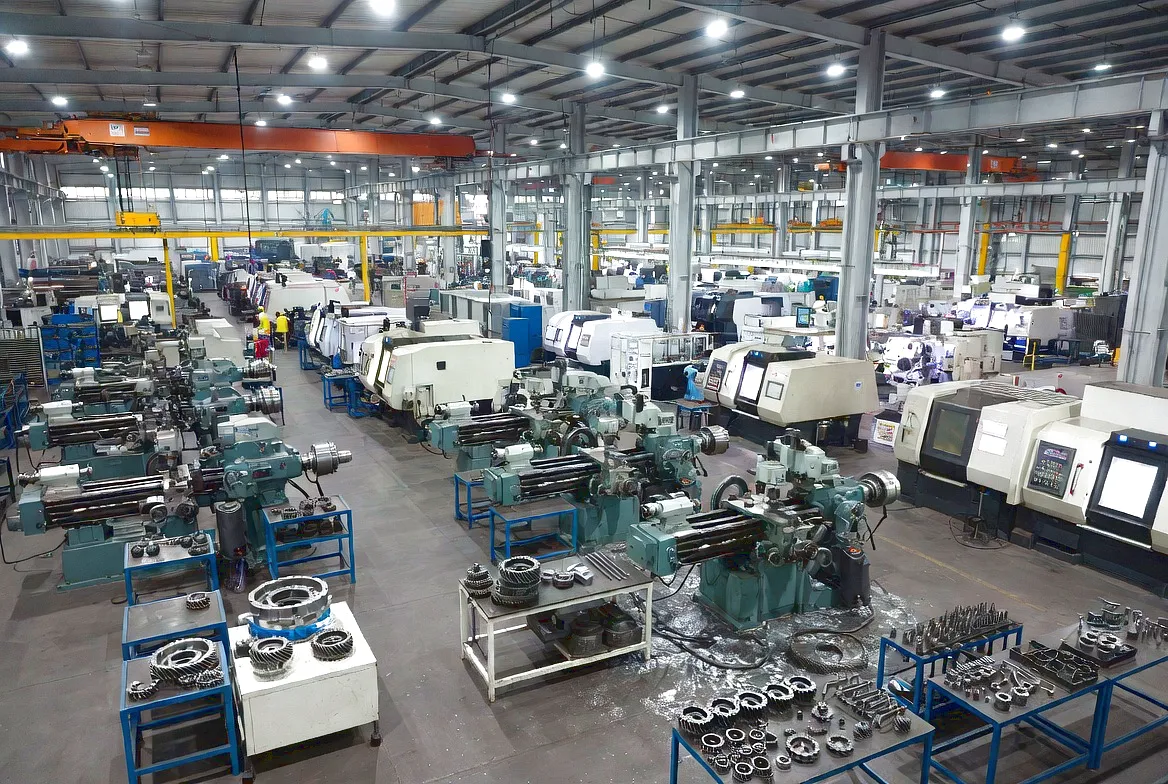
Ever Power has built its reputation as a precision manufacturer of worm gear shaft components and integrated worm drive assemblies through a relentless focus on dimensional accuracy, material traceability, and application-specific customisation. The Ever Power production facility operates a full suite of CNC turning centres, thread-grinding machines, and coordinate measuring equipment to maintain manufacturing tolerances on worm gear shaft thread profiles within ISO grade 6 or better — critical for achieving rated transmission efficiency and predicted service life in demanding industrial applications. Every worm gear shaft leaving the Ever Power facility is accompanied by a material certificate and dimensional inspection report, providing UK procurement engineers and quality managers with the complete documentation trail expected under ISO 9001:2015 quality management requirements.
The Ever Power engineering team works directly with UK clients from feasibility through to production, supporting non-standard shaft diameter requirements, special thread geometry for ultra-high-ratio applications, surface coating specifications for aggressive environments — including hard chrome, electroless nickel, and DLC (diamond-like carbon) coatings — and the integration of encoder coupling features or keyway profiles machined to BS 4235 standards for UK market compatibility. Lead times for standard worm gear shaft stock items are typically two to four weeks to UK ports, with air freight options available for urgent replacement requirements in maintenance-critical applications.
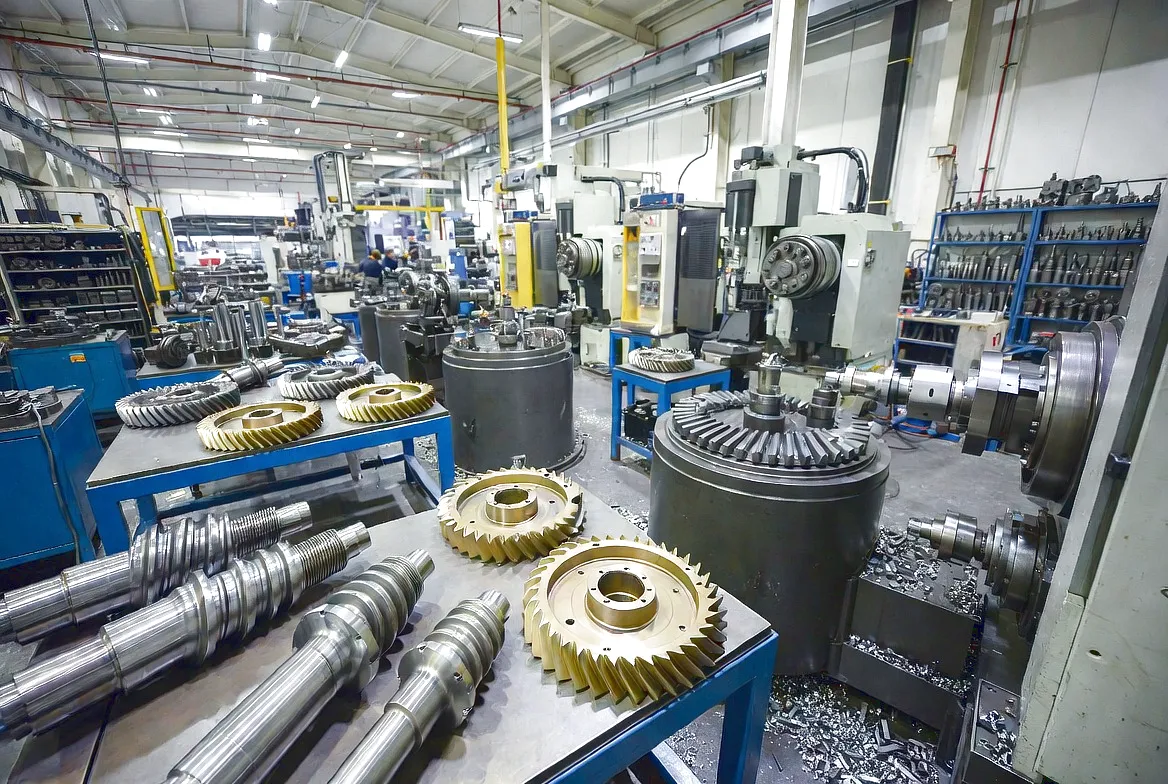
Thread module, lead angle, hand of thread, journal diameter, shaft length and keyway profile all specified to customer drawings. DXF and STP file formats accepted.
Carbon steel, alloy steel, stainless, and exotic alloys. Heat treatment processes (carburising, induction, nitriding, through-harden) to customer specification with certified hardness testing.
Full material traceability, CMM inspection reports, hardness certificates and surface roughness data supplied as standard. PPAP documentation available for automotive supply chain requirements.
Regular sea freight consolidations to Felixstowe and Southampton ports. Express courier service available for urgent worm gear shaft replacements. DAP and DDP Incoterms quoted for UK importers.
Send Ever Power your drawing, application data sheet, or simply describe your torque, ratio, and environmental requirements. Our engineering team will respond with a technical proposal and price within 24 hours.
Customer Success Story: Heavy-Duty Conveyor Drive Upgrade in Sheffield
Hadfield Components Ltd, a steel bar and sections distributor operating from a 12,000 m² facility near Tinsley, Sheffield, had been running a legacy conveyor system driving cut-to-length steel bar through a multi-stage spur gear arrangement that had been in service since the late 1990s. The drive train was experiencing increasing noise levels, quarterly gearbox failures requiring emergency shutdowns, and an inability to maintain the self-locking safety position when bar bundles were staged on the inclined feed ramp awaiting transfer to the loading bay. The maintenance team frequency of callout was rising year-on-year, and the plant manager had concerns about compliance with current machinery safety standards in the post-2015 operating environment.
After a detailed application review, Ever Power proposed a direct replacement with a flanged-mount worm gear shaft assembly rated at 1,800 N·m output torque, incorporating a 40:1 transmission ratio using a dual-start 20CrMnTi case-hardened worm gear shaft running against a phosphor-bronze worm wheel. The shaft diameter was matched precisely to the existing conveyor drum bore — 60 mm — using a custom machined extension shaft, eliminating any requirement to modify the conveyor structure. The worm gear shaft unit was ground to ISO grade 6, providing a thread flank roughness of Ra 0.4 µm for improved efficiency and reduced operating temperature compared with the original drive. The self-locking lead angle was specified at 5.2 degrees — comfortably below the friction angle margin — to provide passive load-holding on the 12-degree inclined feed ramp under all foreseeable load conditions.
Installation was completed over a single weekend shutdown. Following commissioning, Hadfield Components recorded a 62% reduction in gearbox-related maintenance callouts in the twelve months following installation, operating temperature at the drive housing fell from a measured 87°C to 68°C — extending lubricant service intervals from three to nine months — and noise levels at the operator station adjacent to the drive assembly dropped from 84 dB(A) to 76 dB(A), bringing the machine into compliance with the Control of Noise at Work Regulations 2005 without any additional acoustic enclosure. The plant manager reported an estimated annual maintenance cost saving of over £18,000 compared with the previous three-year average, with the worm gear shaft assembly still in service and performing within specification as of the most recent annual inspection.
What UK Engineers Say About Ever Power Worm Gear Shafts
“The ground thread finish on the Ever Power worm gear shaft made a measurable difference to our gearbox operating temperature — we went from needing an external cooling fan on the housing to running passive-cooled at full rated torque. The dimensional accuracy against our drawings was exact, and the material certificate came through within 24 hours of our purchase order.”
“We specified a stainless 316L worm gear shaft for our wash-down conveyor application in a wet fish processing environment near Grimsby. Ever Power supplied the shaft with passivation treatment as standard, and the sea-air corrosion resistance over two full operating seasons has been excellent — no surface staining, no pitting, and the self-locking margin has remained within spec. The price per unit was highly competitive against UK distributor quotes.”
“As a project engineer specifying drives for valve actuators across a large Teesside chemical complex, I need worm gear shaft suppliers who can respond quickly to non-standard geometry requests and provide full documentation for our ATEX safety case submission. Ever Power turned around a custom dual-start alloy steel shaft to our drawing within three weeks, with all required certs. That turnaround is genuinely rare at this level of customisation.”
Frequently Asked Questions about Worm Gear Shafts
Send your technical requirements to the Ever Power engineering team today.