Ever Power · Precision Drive Solutions
Worm Gear Shaft in Bucket Elevator Systems:
Engineering the Self-Locking Drive
How a precisely engineered worm gear shaft transforms vertical bulk material handling — eliminating backflow risk, reducing mechanical complexity, and delivering decades of reliable service in demanding UK industrial environments.
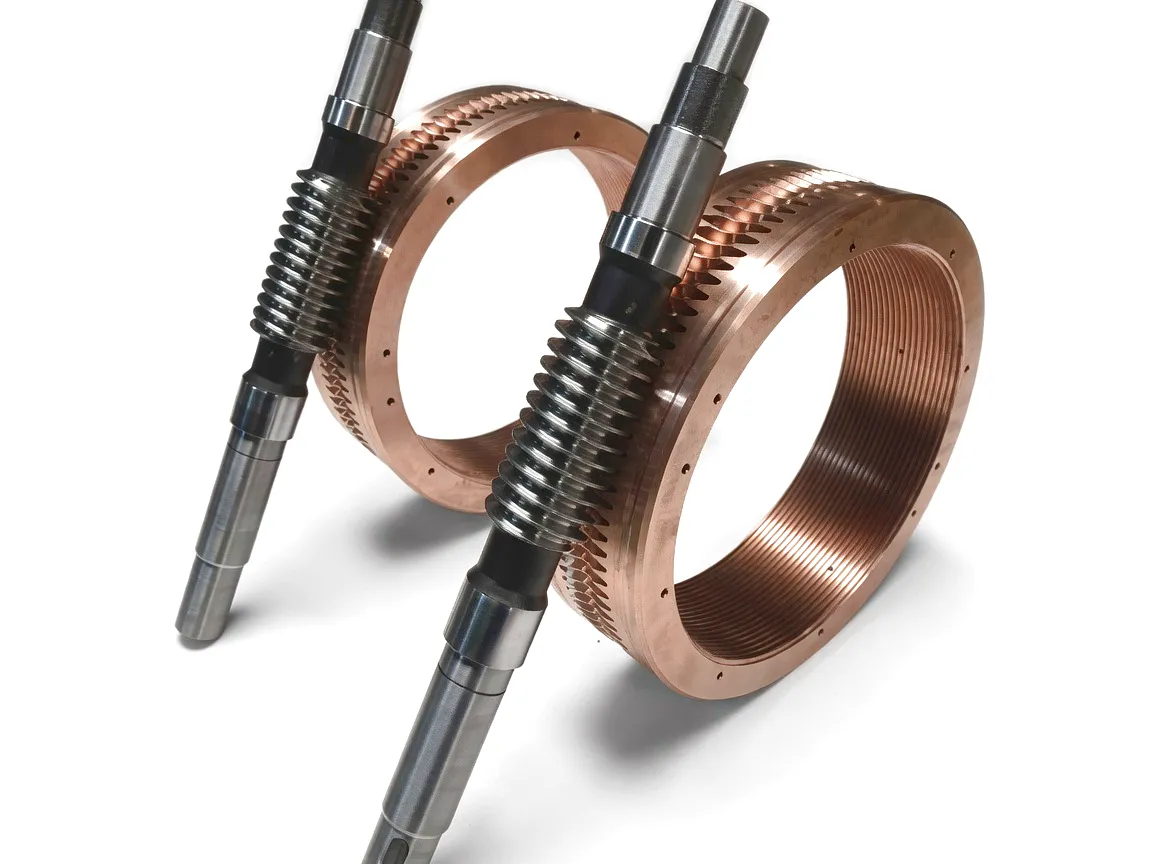
Bucket elevators stand as one of the most space-efficient solutions for moving bulk materials vertically — grain, fertiliser, mineral powder, cement clinker — in continuous, high-volume flows. The mechanical heart of a bucket elevator’s drive head is the worm gear reducer, and within that reducer, the worm gear shaft is the component that determines whether the entire installation performs reliably for a decade or demands constant maintenance from the first month. Understanding how this shaft works, what materials and geometries define its performance, and why self-locking behaviour matters so profoundly in elevator applications is essential knowledge for plant engineers, procurement specialists, and OEM designers across the UK’s extensive bulk-handling industry.
The case for worm drive technology in bucket elevators goes beyond simple gear reduction. A worm gear shaft transmits power through a helical thread that meshes with a worm wheel, converting the high-speed rotation of an electric motor into the controlled, torque-rich rotation needed to drive a head pulley or sprocket at bucket-chain speeds typically between 1 m/s and 2 m/s. More critically, when the drive power is cut — whether by a planned shutdown or an unexpected trip — the irreversible geometry of the worm mesh holds the load in position. This self-locking characteristic is not a secondary feature; in fully laden bucket elevator applications it is a fundamental safety and engineering requirement.
How the Worm Gear Shaft Works Inside a Bucket Elevator Drive
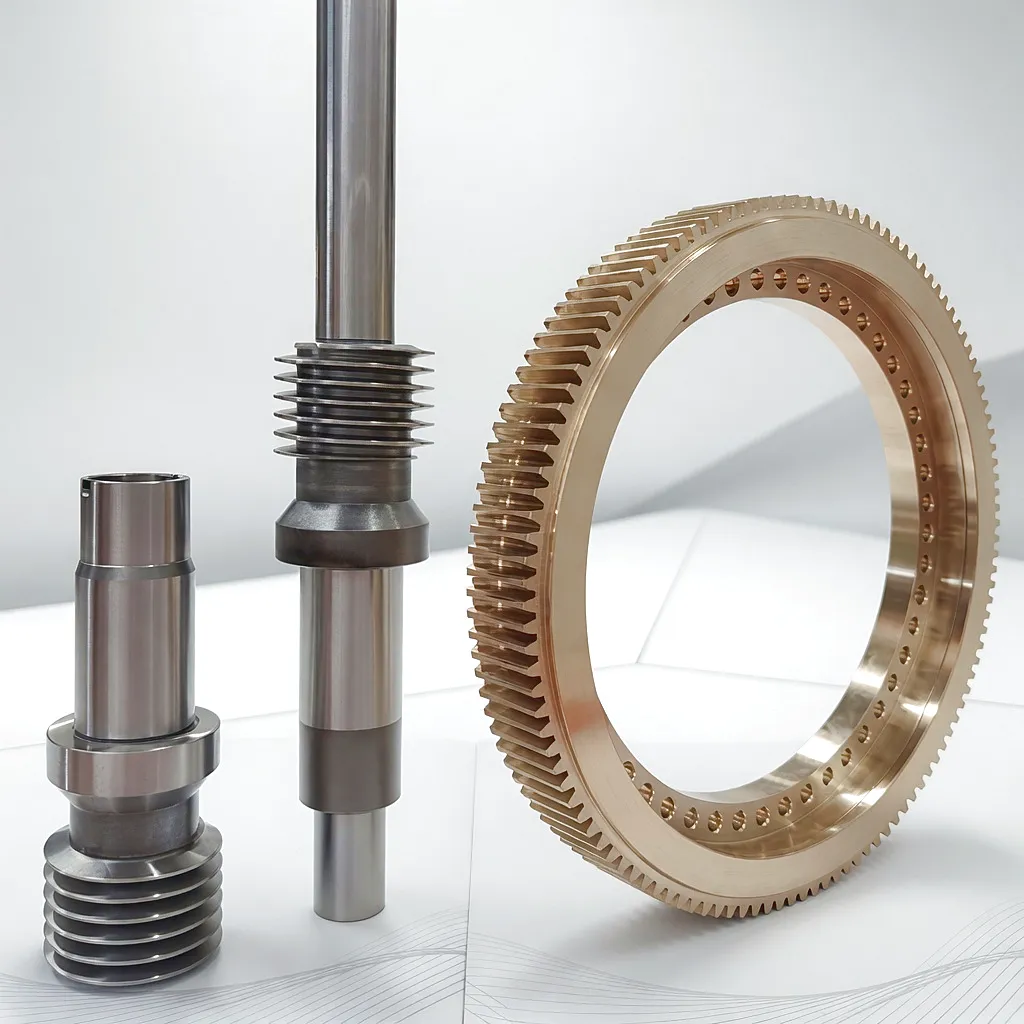
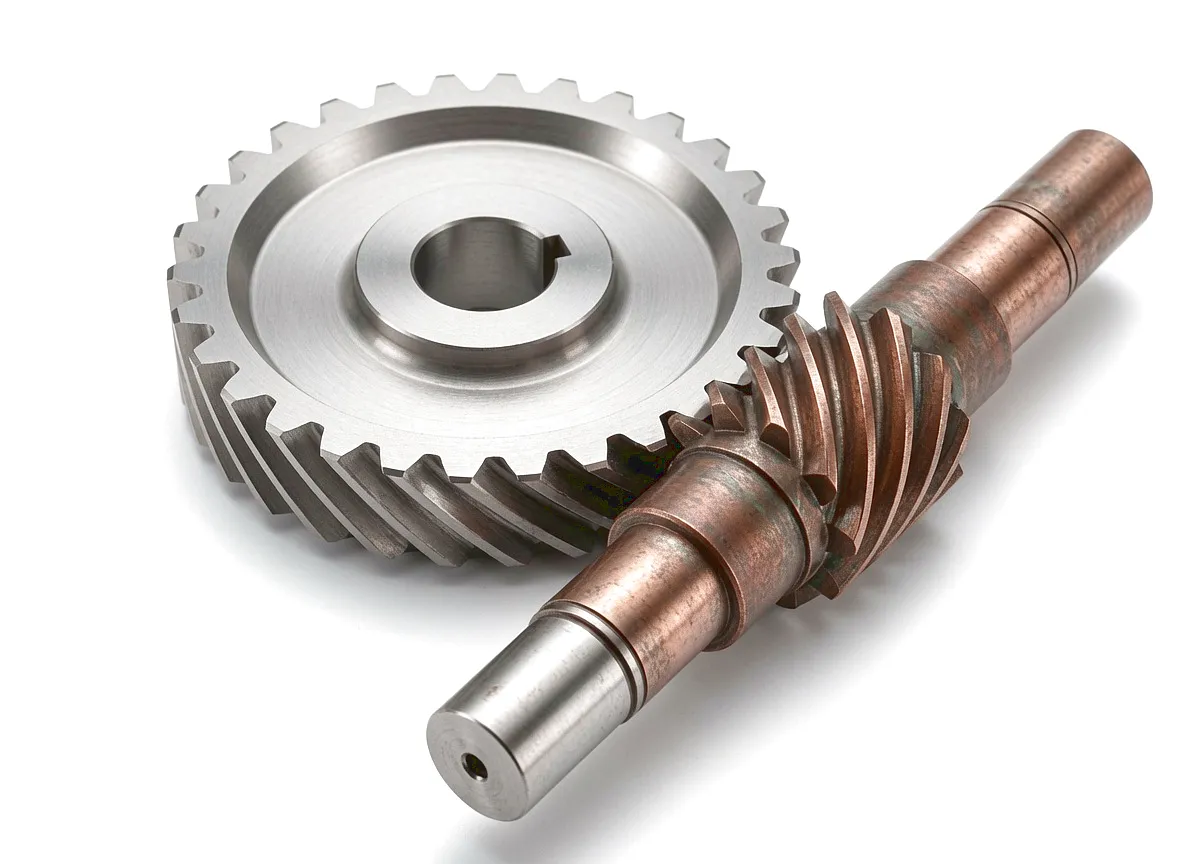
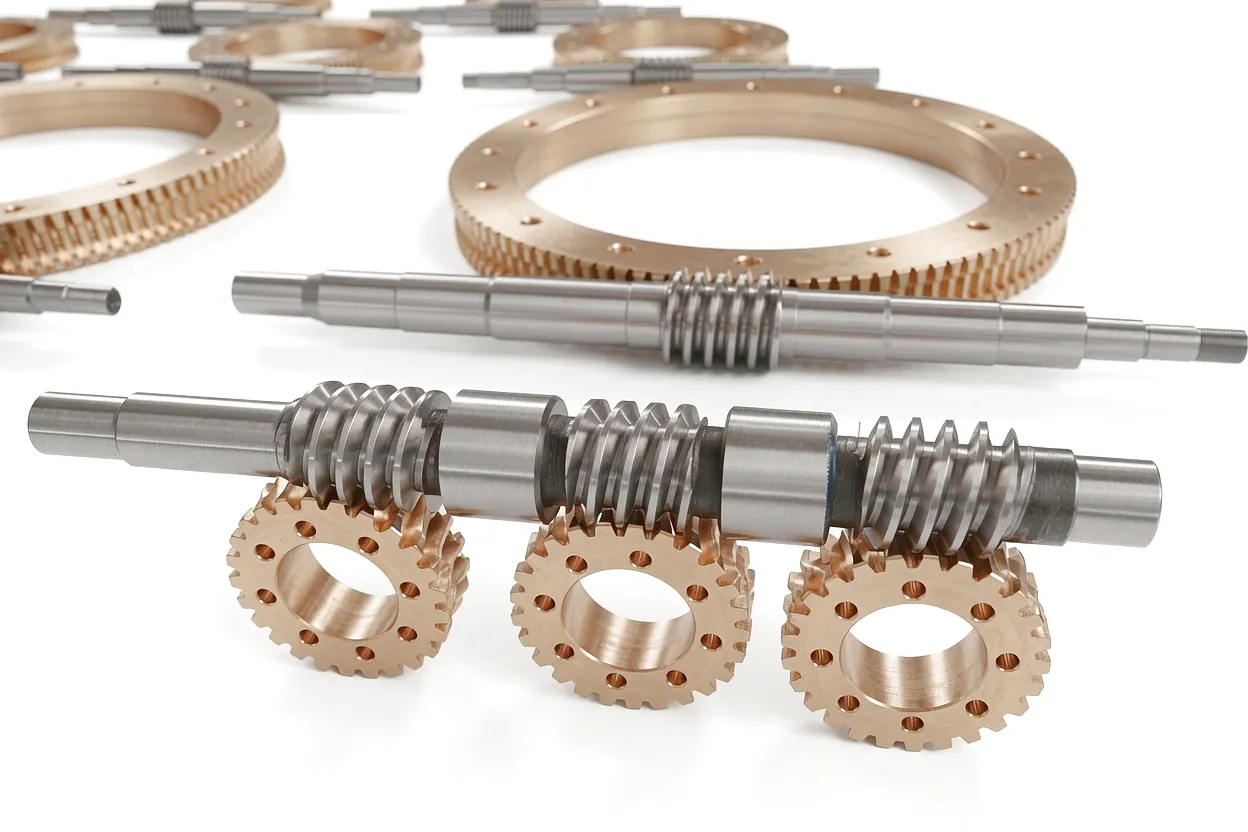
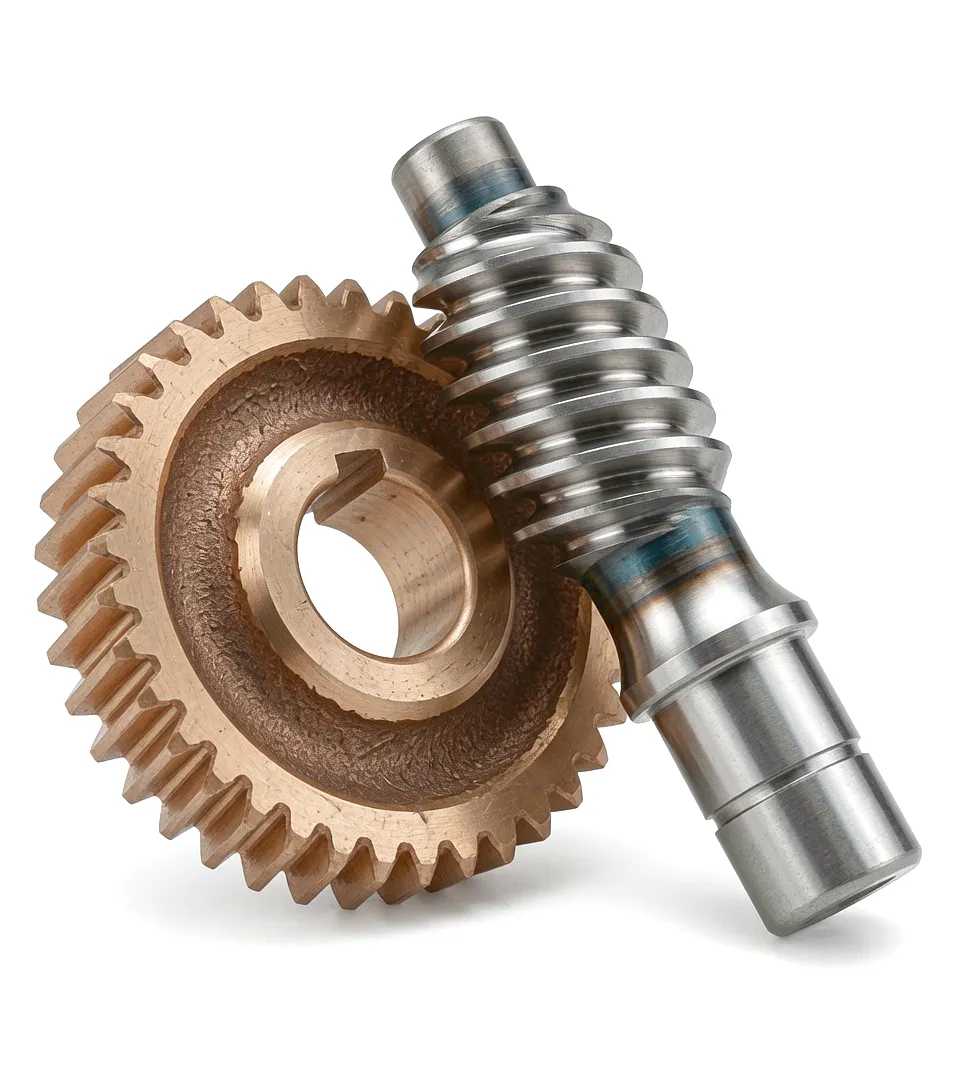
The worm gear shaft is the primary driven member in a worm gear reducer. Machined from high-grade steel with a precisely cut helical thread — the worm — along its body, the shaft rotates within the housing on heavy-duty anti-friction bearings. The worm thread engages the teeth of the worm wheel at a controlled lead angle, typically between 5° and 25° depending on the gear ratio required. Power enters through the shaft’s motor-end coupling and exits as torque through the wheel’s output shaft, which is connected directly to the elevator’s head drum or chain sprocket. The gear ratio in bucket elevator applications typically ranges from 10:1 to 60:1, translating motor shaft speeds of 1,400 to 1,500 rpm down to output speeds of 25 to 150 rpm. This single-stage reduction in a compact envelope is one of the worm drive’s principal commercial advantages over multi-stage spur or helical gear trains that would require significantly more axial length and housing volume.
The self-locking property arises from the lead angle relationship. When the lead angle of the worm thread is smaller than the friction angle of the meshing surfaces — a condition deliberately engineered into worm sets intended for elevator service — the system becomes mechanically irreversible. No amount of torque applied to the worm wheel output can back-drive the worm shaft. In a bucket elevator loaded with, say, 80 tonnes of grain between the boot section and the head, a conventional gear drive would require a backstop or hydraulic retarder to prevent the buckets from cascading downward on power failure. The worm gear reducer with its correctly specified worm gear shaft eliminates this auxiliary system entirely. For installations in Sheffield’s steel-processing plants or Birmingham’s aggregate handling facilities, this simplification reduces capital cost, eliminates a maintenance-intensive component, and shrinks the drive package footprint — all meaningful advantages in the often space-constrained environments typical of UK industrial plant.
The lubrication regime inside the reducer is equally important to understand. The worm and wheel mesh is a sliding contact rather than the rolling contact characteristic of parallel-axis gears. As the worm rotates, its thread slides across the face of the worm wheel teeth. This generates more frictional heat than equivalent-capacity helical gears, which is why the efficiency of a worm drive — typically 70% to 92% depending on lead angle and ratio — is lower than other gear types. However, for bucket elevator service this characteristic matters far less than it does in continuous-duty pump or fan drives, because the thermal load is manageable with appropriate oil viscosity selection, oil volume, and, in high-duty cycles, optional cooling provisions.
Core Materials That Define Worm Gear Shaft Performance
Worm Shaft — Carbon & Alloy Steel
The worm shaft body is machined from medium-carbon alloy steels such as 20CrMnTi, 40Cr, or 42CrMo4. These grades are selected specifically because they respond to case-hardening treatment, achieving surface hardness values of 58–62 HRC on the thread flanks while the core retains a toughness that resists shock loading. The hardened surface resists abrasive wear from the sliding mesh contact, while the tough core absorbs the bending and torsional stresses imposed by heavy bucket chains under full load. In more demanding food-grade or pharmaceutical material handling applications — which are common in Yorkshire and Lincolnshire’s agricultural processing sector — stainless steel variants (17-4PH or 316L) are available, though these introduce trade-offs in attainable hardness and require modified lubrication protocols.
Worm Wheel — Bronze Alloys
The mating worm wheel is almost universally manufactured from phosphor bronze (CuSn10P), tin bronze (CuSn12), or — for higher-load, lower-speed applications — aluminium bronze (CuAl10Fe3). The rationale is tribological: the soft bronze yields slightly against the hard worm thread flanks, allowing micro-conformity that distributes contact stress more evenly and dramatically reduces scoring risk during run-in and under shock loads. Phosphor bronze in particular offers an excellent combination of tensile strength (280–350 MPa), a low coefficient of friction against hardened steel, and excellent resistance to the corrosive effects of water-contaminated gear oils — a real-world concern in the outdoor or semi-outdoor environments common in UK port facilities and aggregate quarries.
Housing & Bearing Selection
The reducer housing containing the worm gear shaft is typically cast from grey cast iron (GG25 or GG30) for standard applications, offering excellent damping of vibration and thermal mass to absorb heat generated by the sliding mesh. Ductile iron or fabricated steel housings are specified where shock loading is severe. The worm shaft itself runs in heavy-duty taper roller bearings or angular contact ball bearings that are pre-loaded to eliminate axial play — critical because any axial movement of the worm alters the engagement depth with the wheel and can lead to accelerated tooth wear or catastrophic tooth failure. Bearing selection is a key element of any worm gear shaft specification, and Ever Power’s engineering team treats it as integral to the shaft assembly rather than an afterthought.
Core Technical Advantages of Worm Gear Shaft Drives in Elevator Applications
Inherent Self-Locking Safety
A worm gear reducer with a correctly specified lead angle below the friction angle will hold any load indefinitely after power removal, requiring no additional backstops, brakes, or retarder devices. This eliminates a separate mechanical safety system that would otherwise require its own maintenance schedule and failure modes. For bucket elevators serving 24/7 operations — such as grain terminal facilities in Hull or Immingham — this reduction in auxiliary equipment translates directly into higher overall plant availability and lower whole-life cost.
High Reduction Ratio in a Single Stage
Ratio ranges of 10:1 to 80:1 are achievable in a single worm stage — a reduction that would require two or three stages of helical or spur gearing. The compact envelope that results is particularly valuable in new installations where head-room above the elevator’s drive pulley is limited, or in retrofits where an existing structural frame constrains the available space for drive equipment. UK engineering contractors specifying bulk handling systems for constrained sites such as malt houses in Edinburgh or chemical plants along the Humber Estuary find this compactness a decisive procurement criterion.
Quiet, Low-Vibration Operation
The sliding-contact mesh of a worm gear set is inherently smoother than the impact-and-release cycle of spur or bevel gears. Worm drives produce significantly lower noise levels — typically 60–70 dB(A) compared with 75–85 dB(A) for equivalent-capacity helical drives — a growing compliance requirement under UK noise-at-work regulations in enclosed processing buildings. The low-vibration characteristic also reduces dynamic stress in the elevator frame and buckets themselves, extending service life of all downstream components and reducing structural maintenance costs.
Right-Angle Shaft Arrangement
The 90° spatial relationship between the worm shaft and the worm wheel output shaft gives system designers enormous layout flexibility. A motor mounted horizontally can drive a vertically oriented head shaft without the need for bevel gears, spiral bevel stages, or shaft-mounted gear units. This arrangement simplifies motor mounting, facilitates direct-mount configurations, and reduces the number of couplings and alignment points in the drive train. For bucket elevator installations in the food processing zones of Norfolk or the logistics hubs of the East Midlands, this simplicity reduces both installation labour and ongoing alignment maintenance.
Worm Gear Shaft — Technical & Performance Parameters
The following reference table presents the principal specification ranges for worm gear shaft assemblies as applied to bucket elevator drives. Actual values for any given project depend on elevator height, bucket chain weight, material density, duty cycle, and site conditions. Ever Power provides full application engineering support to confirm the optimum specification for each enquiry.
| Parameter | Typical Range / Value | Notes & Context |
|---|
| Output Torque | 50 Nm – 50,000 Nm | Covers light grain elevators to heavy mineral handling |
| Gear Ratio Range | 10:1 – 80:1 (single stage) | Standard; extended ratios available via compound stages |
| Input Speed | 750 – 1,500 rpm | Matched to 2-pole or 4-pole IEC frame motors |
| Output Speed | 10 – 150 rpm | Bucket chain speed 1–2 m/s at typical drum diameters |
| Worm Shaft Material | 20CrMnTi / 40Cr / 42CrMo4 | Case-hardened to 58–62 HRC thread surface |
| Worm Wheel Material | Phosphor bronze (CuSn10P), Tin bronze (CuSn12) | Aluminium bronze for high-load, slower-speed duty |
| Lead Angle (Self-Locking) | 4.5° – 8° (for confirmed self-lock) | Must be below material friction angle (typically 9–12°) |
| Drive Efficiency | 70% – 92% | Higher ratio = lower efficiency; consider thermal duty cycle |
| Elevator Lift Height | Up to 30 – 50 m | Higher heads possible with two-drive arrangements |
| Throughput Capacity | 5 t/h – 500+ t/h | Function of bucket size, spacing, chain speed, and density |
| Housing Material | Grey cast iron GG25 / Ductile iron / Steel | Steel housings for high-shock or outdoor exposure |
| Shaft Cross-section | 90° (standard right-angle output) | Custom angles available on request |
| Operating Temperature | -20°C – +80°C (standard oil) | Synthetic lubricants extend range; Arctic versions available |
| IP / Protection Rating | IP54 – IP66 (standard to enhanced) | IP66 standard for outdoor UK installations |
Industrial Application Scenarios Across UK Sectors
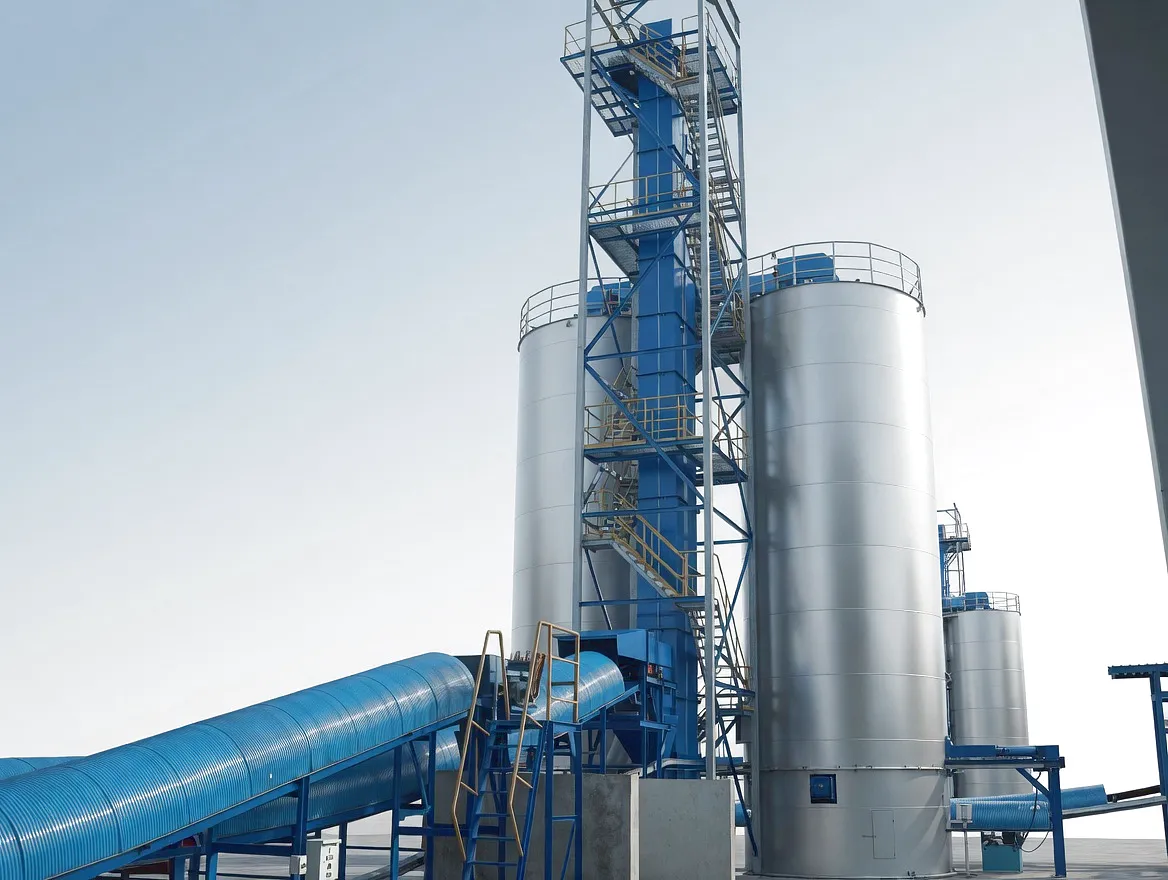
Grain & Oilseed Processing
Grain port terminals and inland silos in Lincolnshire, East Yorkshire, and Suffolk rely on bucket elevators as their primary vertical conveying equipment, handling wheat, barley, oilseed rape, and maize at rates from 50 to 500 tonnes per hour. The self-locking worm gear shaft drive is the preferred choice for head drives on elevators serving storage silos precisely because the anti-rollback characteristic is guaranteed by mechanics rather than auxiliary devices. During the grain harvest season — when elevators may run continuously for weeks — the reliability of the worm gear shaft assembly is tested to its design limits, and properly specified shafts with the correct surface hardness and oil volume consistently deliver service intervals measured in years rather than months.
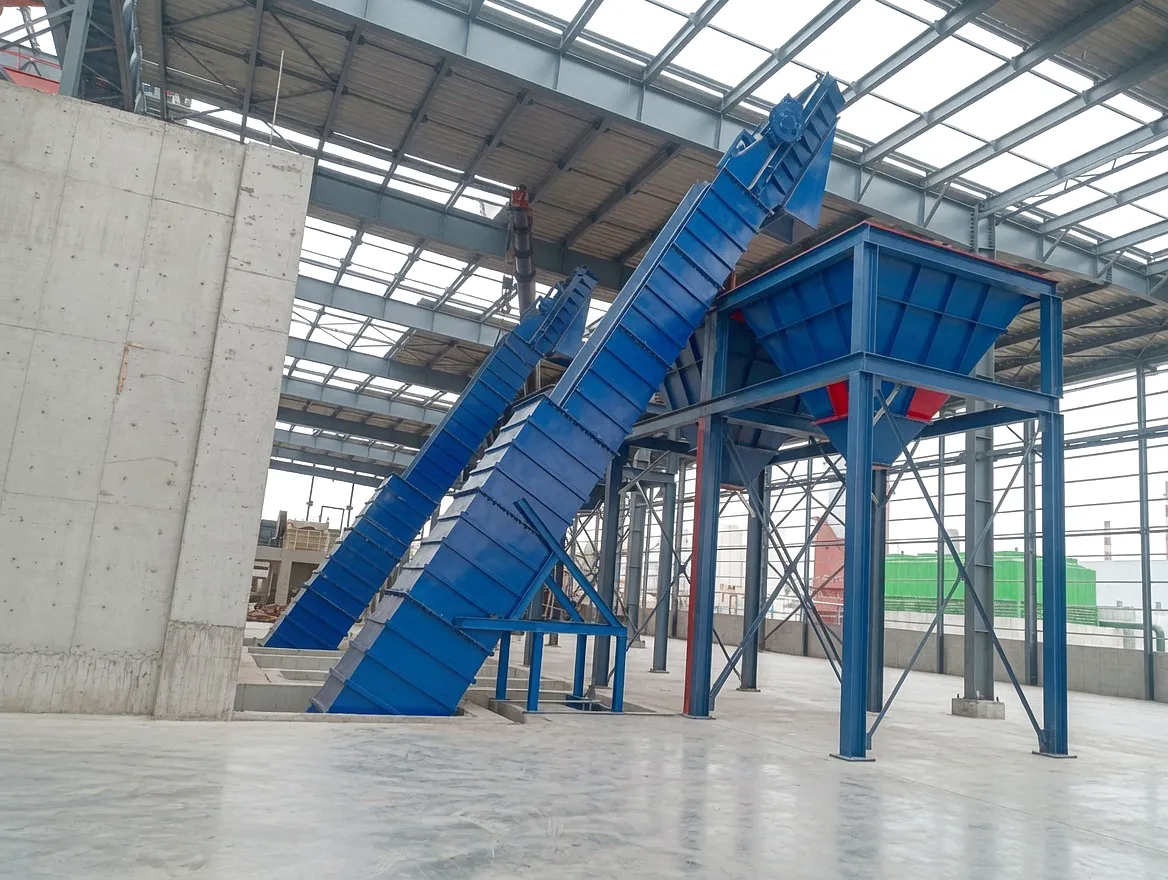
Cement & Building Materials
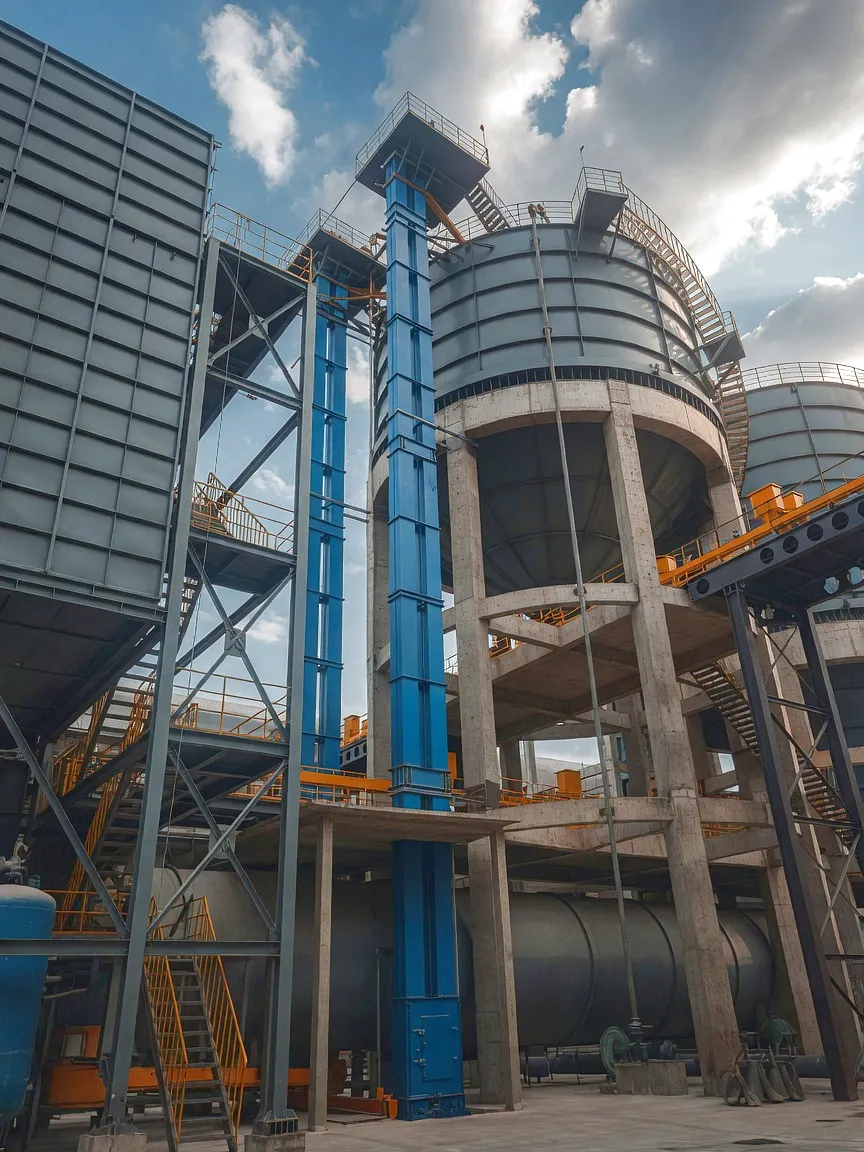
The UK cement and building materials industry — concentrated around areas such as Rugby, Hope Valley in Derbyshire, and the Medway in Kent — operates bucket elevators to lift clinker, limestone powder, and fly ash to blending towers and silo tops at heights reaching 40–50 m. These applications impose demanding conditions on the worm gear shaft: abrasive dusts penetrate seals, thermal cycling from cold starts to operating temperature occurs multiple times per shift, and emergency stops under full load are a routine maintenance scenario. Shaft material selection, seal specification, and bearing preload are all critical parameters that Ever Power addresses in its application-specific design process, ensuring that the reducer’s worm gear shaft delivers the published service life in this aggressive environment.
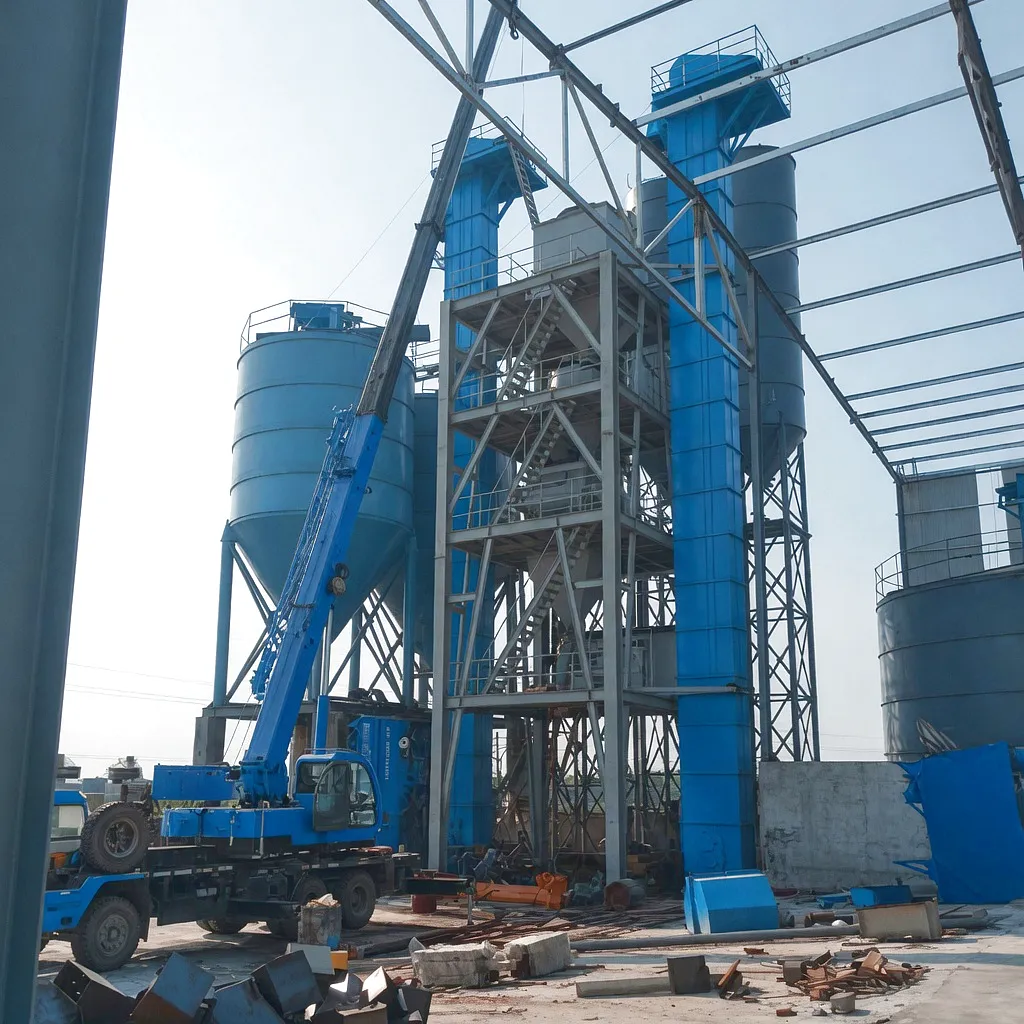
Fertiliser & Agrochemical Plants
Fertiliser production and blending facilities — including the large compound fertiliser plants operating in Teesside and on the Humber — use bucket elevators to handle ammonium nitrate prills, potassium chloride granules, and NPK blends. The corrosive nature of these materials makes sealing quality and housing coating specification a priority in worm gear shaft assembly selection. The self-locking property is especially valued here: because emergency shutdown procedures in fertiliser plants prioritise stopping the process as rapidly and safely as possible, the ability to hold a fully loaded elevator column stationary without powered braking provides an additional layer of operational safety that procurement and HSEQ teams in these facilities actively require in their equipment specifications.
Mining & Mineral Processing
Mining operations in Wales, Northern England, and Scotland handle ore concentrates, mineral powders, and processed aggregates that place extreme demands on bucket elevator drives due to material density, abrasiveness, and irregular loading patterns. In these applications, the worm gear shaft must handle significant shock loads — when a large lump drops into a bucket that is mid-travel, the impulse travels through the chain to the drive drum and directly loads the worm shaft in a combined torsional and bending event. Steel alloy worm shafts manufactured to close tolerances, with correctly rated keyways or splined connections, and supported in heavy-duty taper roller bearings are the norm in this sector. Ever Power’s engineering team routinely specifies and tests shafts for mining-duty elevator applications, supplying customers from our UK distribution hub with rapid lead times.
Ever Power: Precision Manufacturing & Customisation Capabilities
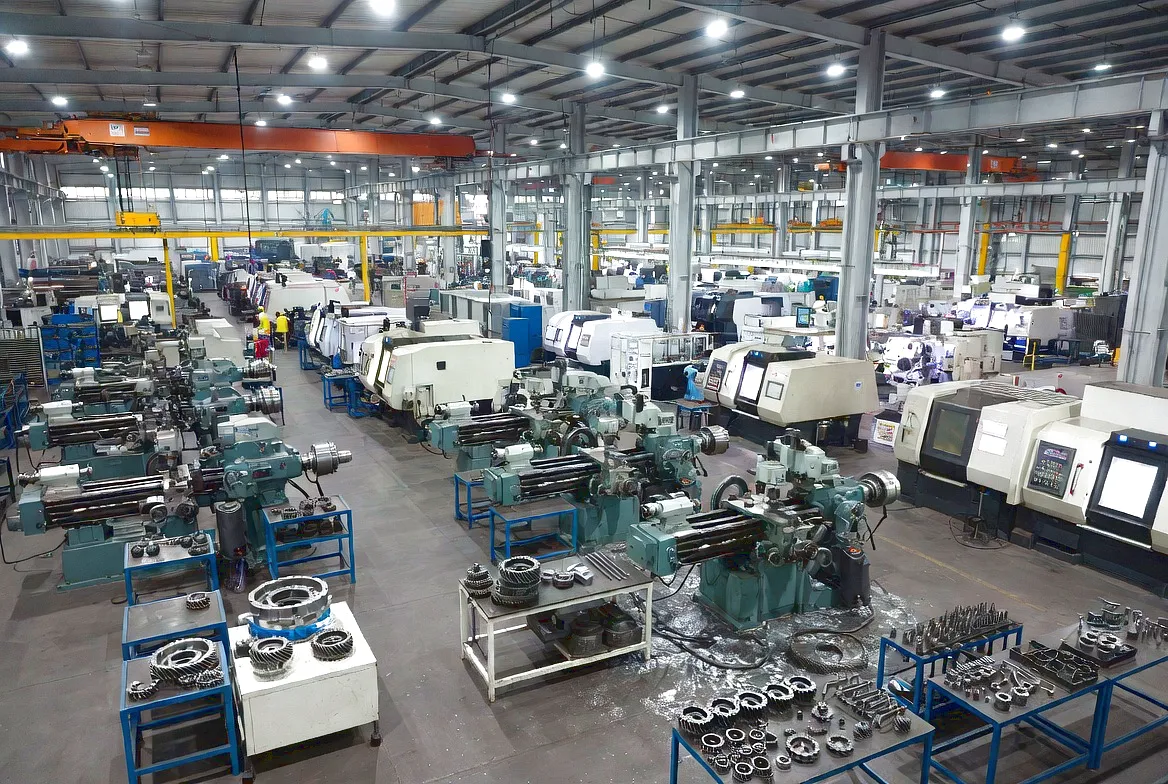
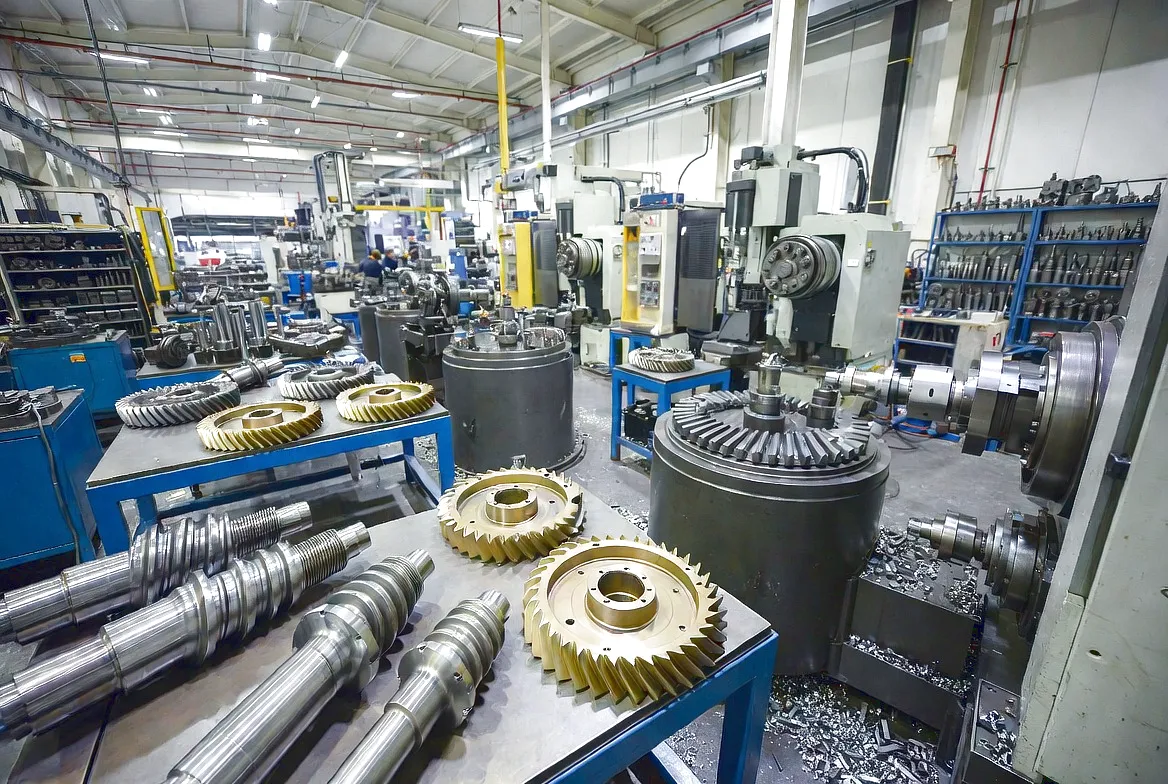
Ever Power has developed over decades a deep specialism in the manufacture of worm gear shafts and complete worm gear reducer assemblies for bulk material handling applications. Our manufacturing facility operates CNC turning centres, gear grinding machines, and dedicated heat treatment lines configured specifically for worm shaft production. Thread grinding is performed after case hardening to eliminate distortion introduced during the thermal treatment process, ensuring that the thread profile is held to its nominal geometry rather than the compromised form that grinding-before-hardening produces. This process sequence — roughing, hardening, finish grinding — is fundamental to the service life of the worm gear shaft in service, and it is a capability that distinguishes Ever Power from lower-tier suppliers who skip the post-hardening grind to reduce cost and cycle time.
Customisation at Ever Power extends well beyond producing a shaft to a customer’s drawing. Our engineering team actively collaborates with UK OEM designers and plant operators to optimise shaft design for specific application conditions. This includes FEA modelling of shaft deflection under worst-case load combinations, specifying the optimum thread geometry for confirmed self-locking at a given ratio, selecting the correct bearing arrangement and preload level, and advising on oil volume, viscosity grade, and change interval for the specific duty cycle. For UK customers requiring full traceability documentation — material certificates, heat treatment records, dimensional inspection reports — Ever Power provides a complete quality package as standard for all export orders.
Lead times for standard worm gear shaft assemblies are typically 3–6 weeks from order, with expedited production possible for urgent requirements. UK customers benefit from our established relationships with freight forwarding partners who provide regular consolidated shipments from our factory to UK distribution points, ensuring that customs clearance and delivery to site locations such as Birmingham, Sheffield, Leeds, or Glasgow proceed without unnecessary delay. Stock arrangements for high-running frame sizes can be negotiated for customers with recurring requirements.
Worm Gear Shaft Product Gallery
Customer Success Story: Sheffield Steel Processing Facility
Case Study: Upgrading a Worn Elevator Drive in a Sheffield Scrap Steel Processing Plant
 A medium-scale steel scrap processing operation in Sheffield was experiencing repeated failures of its primary bucket elevator drive — a unit responsible for elevating crushed steel scrap granules from a vibratory screen to a storage hopper at a lift height of 28 metres. The existing drive, sourced from a general mechanical supplier, used a conventional parallel-shaft helical reducer equipped with an externally mounted backstop device. Over three years of operation, the backstop had required replacement twice, and the most recent failure had resulted in an uncontrolled reversal of the bucket chain under full load, causing significant damage to the boot section and creating a four-day unplanned shutdown at a direct cost of over £38,000 in lost production, emergency labour, and component replacement.
The plant’s mechanical engineering manager contacted Ever Power following a recommendation from a bulk handling equipment specialist in the West Midlands. After reviewing the elevator’s drive parameters — 37 kW installed motor power, 1,460 rpm motor speed, required head shaft speed of 42 rpm, maximum bucket chain tension under full load — Ever Power’s team specified a custom worm gear reducer centred on an 80 mm centre distance worm gear shaft in 42CrMo4 steel, case-hardened to 60 HRC, with a 35:1 ratio worm set providing confirmed self-locking at the specified lead angle of 6.2°. The phosphor bronze worm wheel was produced with a full-face tooth width to maximise contact ratio and distribute the shock loading from steel scrap lumps entering the buckets.
Installation was completed over a planned weekend maintenance window. The worm gear reducer dropped into the existing drive mounting arrangement with minor adaptor fabrication, eliminating the separate backstop device entirely. In the eighteen months following commissioning, the elevator has run without a single drive-related stoppage. The reduction in scheduled maintenance time alone — previously the backstop inspection required a four-hour shift per month — represents a saving of 72 maintenance hours, and the Sheffield plant has subsequently placed orders with Ever Power for worm gear shaft assemblies on two further bucket elevator installations at adjacent facilities.
What Our Customers Say
★★★★★
“The worm gear shaft assembly Ever Power supplied for our grain elevator at the Boston terminal has now completed two full harvest seasons without any maintenance intervention other than routine oil checks. The self-locking behaviour on power-down is exactly as specified — the chain holds position immediately, with no perceptible travel. This is precisely what we needed to remove our old ratchet backstop from the maintenance schedule.”
— Operations Director, Grain Terminal Operator, Lincolnshire
★★★★★
“We specified a custom worm gear shaft from Ever Power for a high-lift fertiliser elevator at our Teesside plant. The engineering support during the specification stage was genuinely impressive — they identified a bearing preload issue in our original design that would have caused early failure, and the revised assembly has performed perfectly since installation. Lead time from order to delivery was 4 weeks, which met our outage window comfortably.”
— Senior Mechanical Engineer, Agrochemical Plant, Teesside
★★★★★
“After three different suppliers gave us standard catalogue units that failed within 18 months on our cement clinker elevator in Derbyshire, Ever Power did the application engineering properly. They specified the worm gear shaft material and thread geometry correctly for our shock loading profile and the reducer has now run for over two years in demanding outdoor conditions. The full traceability documentation they provided was also critical for our quality audit requirements.”
— Plant Engineer, Cement Manufacturer, Derbyshire
Frequently Asked Questions
How does a worm gear shaft prevent a bucket elevator from running backwards when the motor is switched off?
The self-locking property arises from the relationship between the worm thread’s lead angle and the friction angle of the worm-wheel mesh. When the lead angle is deliberately kept below the friction angle — typically achieved with lead angles of less than 8° in elevator-specific designs — any attempt by the load to back-drive the system through the wheel and into the shaft results in the friction forces exceeding the tangential forces, making reverse rotation mechanically impossible. The load is held stationary by the geometry of the gear mesh itself, with no braking device required.
What is the typical price range for a custom worm gear shaft for a bucket elevator drive in the UK, and how do I request a quote from a supplier?
The cost of a custom worm gear shaft for bucket elevator service varies considerably depending on centre distance, ratio, material specification, and surface treatment requirements. Standard shaft assemblies for smaller elevators typically begin in the range of £400–£800, while heavy-duty custom shafts for high-lift mineral handling applications with full traceability documentation can reach several thousand pounds. To request a quote from Ever Power, you can email
[email protected] with your motor power, required gear ratio, output speed requirement, and any drawing or existing reducer nameplate data. Our team responds with a technical and commercial proposal typically within two working days.
Which worm gear shaft material is most suitable for a grain elevator operating continuously during harvest season in Lincolnshire?
For continuous-duty grain elevator service, 42CrMo4 alloy steel case-hardened to 58–62 HRC on the thread flanks is the preferred worm shaft material. This provides the combination of surface wear resistance needed for extended operation without re-hardening and the core toughness needed to absorb shock loads from irregular bucket loading during peak harvest throughput. The mating worm wheel should be phosphor bronze (CuSn10P) for its low running friction and excellent compatibility with standard gear oil. Food-grade mineral oil or approved synthetic lubricant should be used if the installation is within a grain handling environment with incidental food contact risk.
Where can I find a reliable worm gear shaft supplier in the UK who can deliver custom elevator reducer components within four to six weeks?
Ever Power operates as a specialist precision manufacturer of worm gear shafts and worm gear reducer assemblies with established export logistics to UK customers. Standard specification worm gear shafts are typically delivered within three to six weeks from order confirmation, and expedited production can reduce this for urgent maintenance replacement scenarios. Ever Power provides full documentation packages including material certificates, inspection reports, and heat treatment records — requirements that UK plant operators and their quality systems typically mandate. Contact the team directly at
[email protected] with your technical requirements to receive a specific lead time confirmation alongside your price quotation.
How do I calculate the correct gear ratio for a worm gear shaft to drive a bucket elevator at the right chain speed in my Birmingham processing plant?
The gear ratio is calculated from the target output shaft speed, which itself derives from the required chain speed and head drum diameter. If the target chain speed is 1.5 m/s and the head drum has a pitch diameter of 0.45 m, the required output shaft speed is 1.5 / (3.14159 × 0.45) × 60 = approximately 64 rpm. If the motor runs at 1,460 rpm, the required gear ratio is 1,460 / 64 = approximately 22.8:1. A ratio of 25:1 from the standard range would give a chain speed of 1.44 m/s, which is typically acceptable. Ever Power’s engineering team carries out this calculation as part of the standard quotation process, cross-checking against motor power, efficiency at the selected ratio, and shaft torque capacity.
What causes premature wear on a worm gear shaft in a cement plant elevator, and how can I avoid this when specifying a replacement?
The most common causes of premature worm gear shaft wear in cement elevator applications are insufficient surface hardness on the thread flanks (allowing abrasive wear from the bronze wheel), incorrect lubricant viscosity (causing oil film breakdown at operating temperature), and inadequate shaft-to-housing clearance at the thread root (leading to overheating under heavy load). Specifying a shaft in 42CrMo4 with post-hardening thread grinding to 60 HRC, using ISO VG 220 or VG 320 synthetic gear oil rather than mineral oil, and confirming that the bearing preload is set correctly for the axial thrust level at operating ratio are the three most effective preventive measures. Ever Power’s material and process specifications address all three of these factors as standard practice.
When is it better to use a worm gear reducer rather than a helical bevel reducer for driving a bucket elevator head in a UK food processing facility?
A worm gear reducer is the better choice for bucket elevator head drives in food processing facilities when the elevator is designed without an independent backstop device, when the installation space is constrained and a single-stage 90° drive in a compact envelope is required, or when noise levels within the processing facility are a compliance concern. Helical bevel reducers offer higher efficiency at comparable ratios, but they are not inherently self-locking and therefore always require an additional anti-rollback device when used on loaded elevators. In food processing plants where additional mechanical devices mean additional hygiene risks and maintenance points, the simplicity of the worm gear reducer’s self-locking worm gear shaft becomes a significant operational advantage.
Ever Power — Precision Worm Gear Shaft Solutions
From initial application review through to manufactured component delivery, Ever Power provides UK bulk handling engineers with the technical depth and manufacturing precision that demanding elevator drive applications require.
CONTACT EVER POWER — [email protected]
edit by gzl