How a Worm Gear Shaft Works: The Mechanics of Crossed-Axis Power Transmission
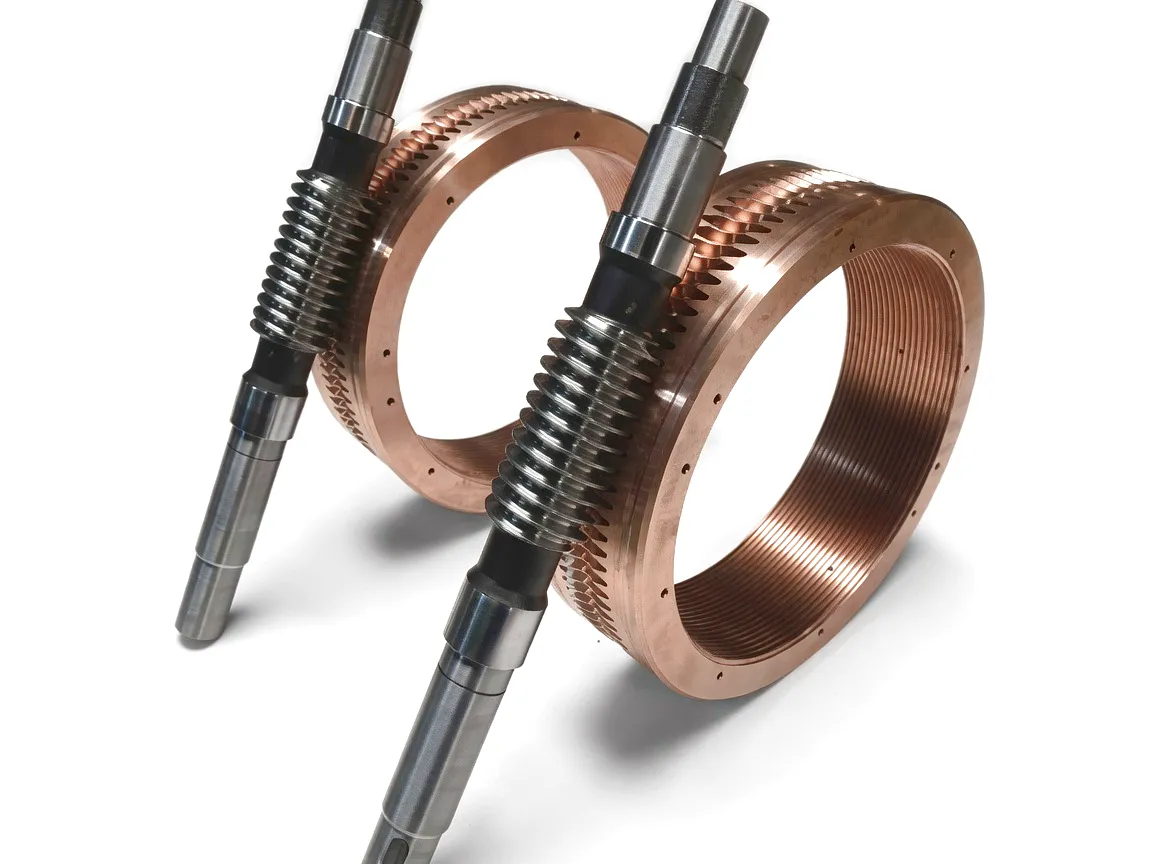
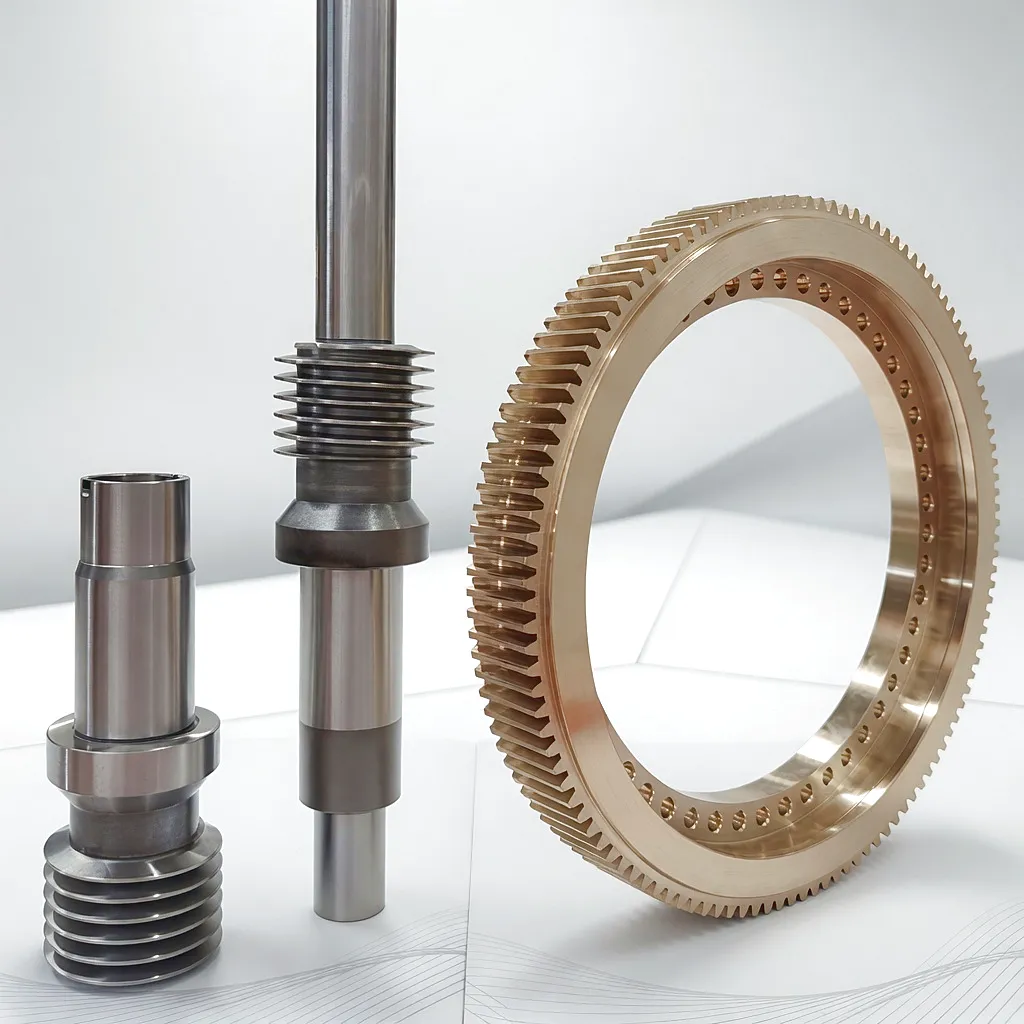
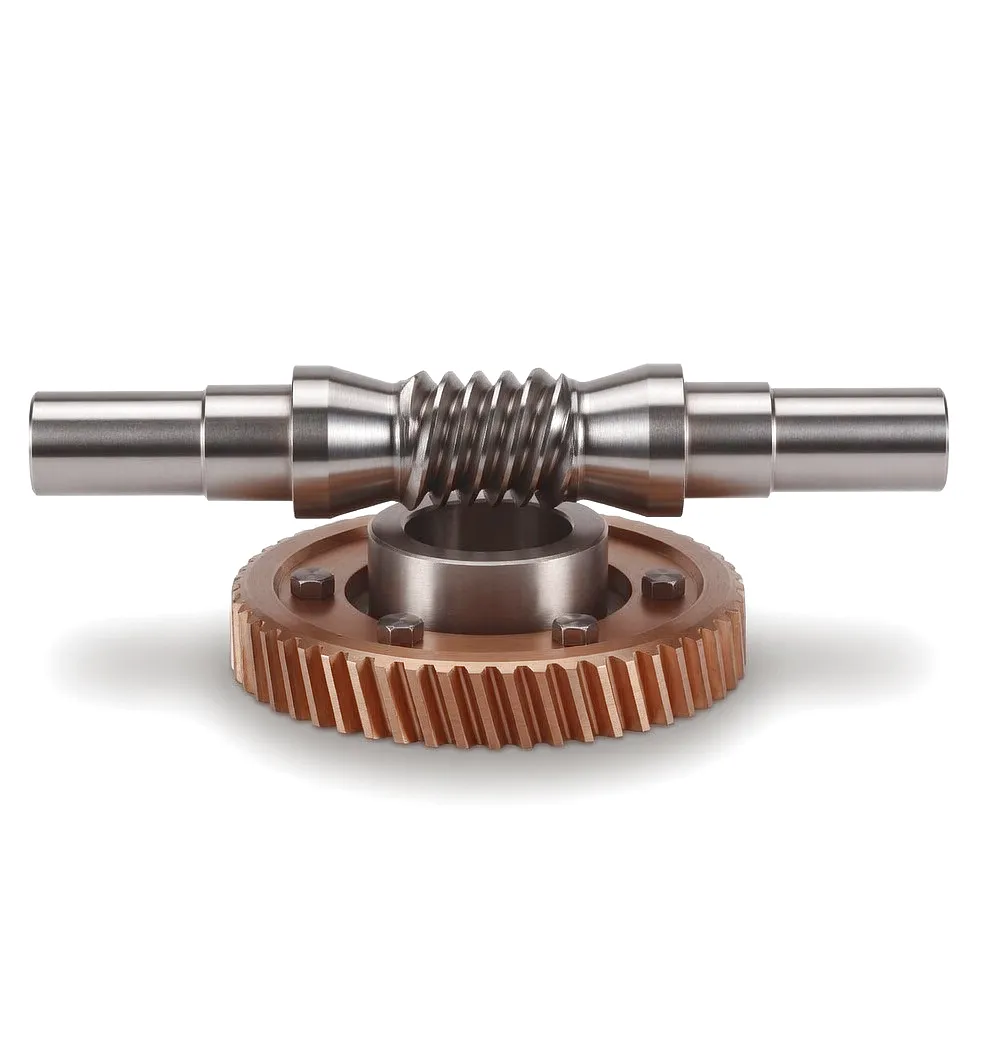
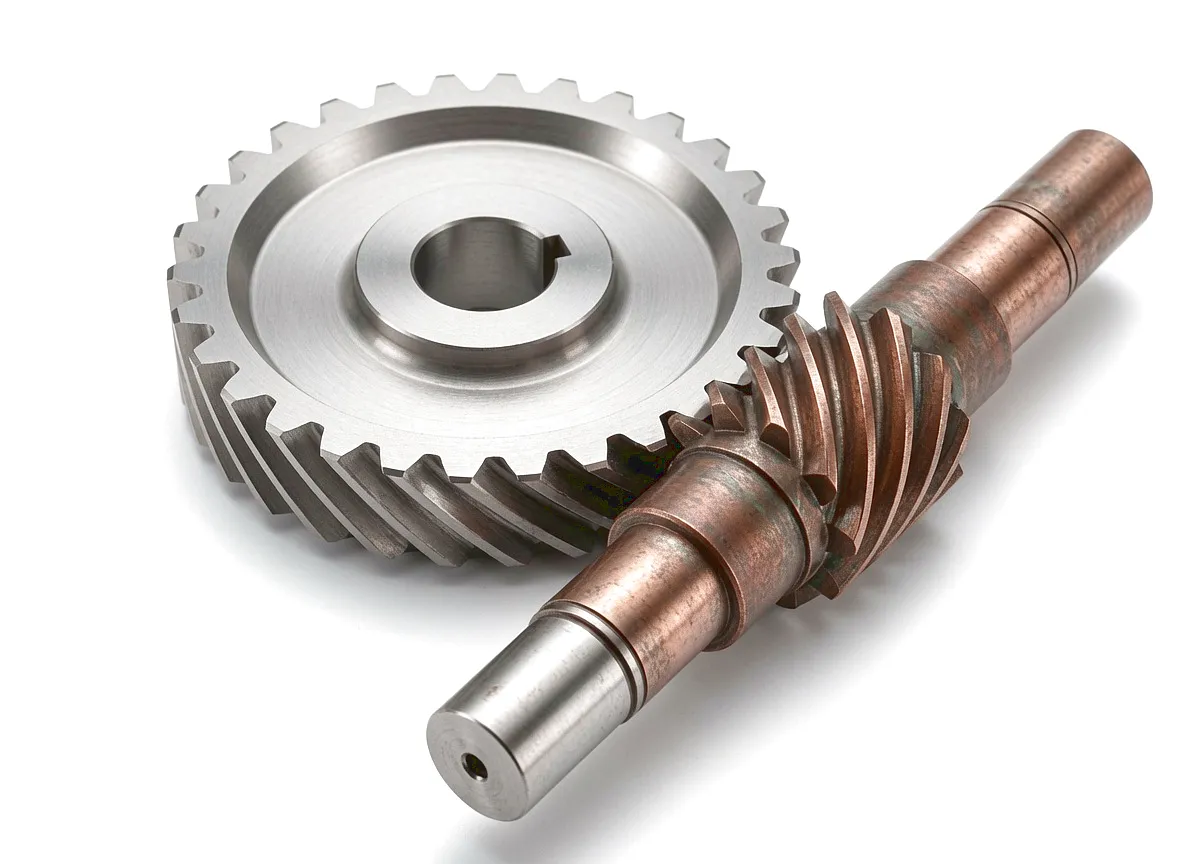
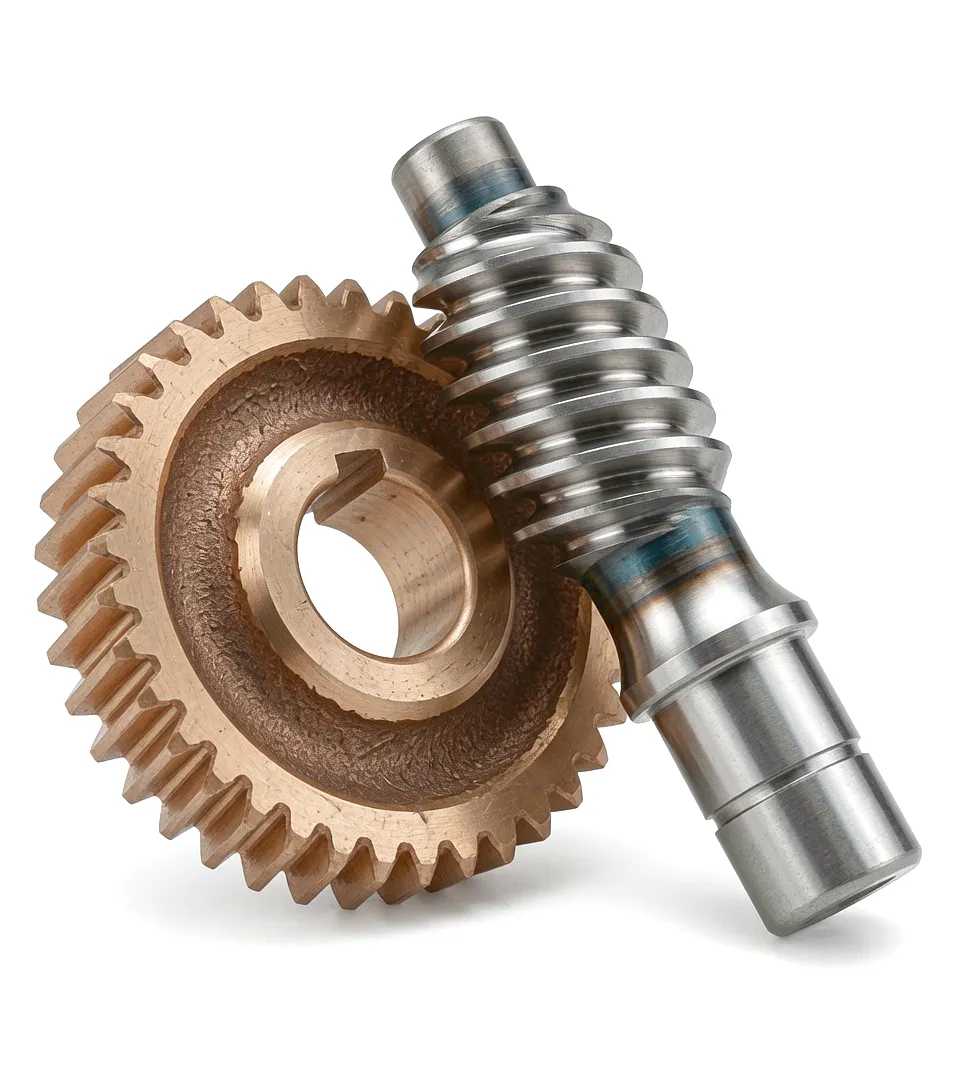
A worm gear shaft — referred to in British standards documentation as the worm, or worm screw — operates on a principle analogous to a power screw. A single helical thread, wound around a cylindrical shaft at a defined lead angle, meshes with the teeth of a mating worm wheel. The axes of the shaft and wheel are oriented at 90 degrees to each other, which is the defining geometric characteristic of all worm gear arrangements. As the worm gear shaft rotates, each thread pitch advances the wheel by exactly one tooth, producing a mechanical advantage that is directly proportional to the number of wheel teeth divided by the number of thread starts on the shaft. A single-start worm with a 60-tooth wheel delivers a gear ratio of 60:1 in a single stage — a reduction that would require several gear pairs in a conventional spur or helical arrangement. The contact between worm and wheel is a sliding action rather than the rolling contact found in spur gears, which has important consequences for both lubrication strategy and material selection. This sliding contact generates heat under continuous load, yet it also imparts the mechanism’s most commercially valuable attribute: self-locking. When the lead angle of the worm gear shaft falls below the friction angle of the material pair, back-driving the output shaft becomes mechanically impossible without an external torque input. That characteristic — holding a load in position without brake hardware or electrical holding current — is irreplaceable in hoist, lifting, and positioning applications across British industry.
The geometry of the worm gear shaft thread is defined by several interrelated parameters. The axial module determines the pitch circle diameter and sets the scale of the gear set. The lead angle — the helix angle measured from the shaft’s transverse plane — governs efficiency and self-locking tendency. Shallow lead angles (below roughly 6 degrees) deliver reliable self-locking but at the cost of lower efficiency, typically in the 30–50% range. Steeper lead angles (15–25 degrees and above) improve efficiency significantly, sometimes reaching 90% or beyond in multi-start designs, but relinquish the self-locking property. The pitch of the thread, measured axially, multiplied by the number of thread starts equals the lead — the axial advance per full revolution of the worm gear shaft. Thread profile geometry — Archimedes (ZA), involute helicoid (ZI), or convolute (ZN) — affects contact pattern, load distribution across the mesh width, and manufacturing process selection. Involute helicoid worms are the most common in modern precision gearboxes because they can be ground to tight tolerances using standard gear-grinding machinery, producing consistent tooth contact over the full face width of the worm wheel. All of these geometric variables must be optimised together, which is why competent specification of a worm gear shaft demands engineering knowledge that goes beyond simply selecting a stock catalogue component.
Core Technical Advantages of Precision Worm Gear Shafts
High Gear Ratio in Single Stage
Ratios from 5:1 to 100:1 (and beyond in non-standard configurations) achieved in a single mesh stage, eliminating the multi-stage complexity of helical or bevel gear trains. This compresses gearbox envelope dimensions significantly — critical in Sheffield’s machine tool sector where floor space is at a premium.
Inherent Self-Locking Capability
At lead angles below the friction angle of the shaft–wheel material pair (typically below 6–8 degrees), back-driving is physically impossible. The worm gear shaft acts as a mechanical brake without additional hardware, simplifying actuator design in hoisting machinery, theatre rigging, and stairlifts across the United Kingdom.
Quiet, Smooth Transmission
The continuous sliding engagement of a correctly lubricated worm gear shaft produces lower impact noise than spur gears operating at equivalent pitch-line velocity. Ground thread profiles reduce surface roughness to Ra 0.4 µm or below, further attenuating mesh noise — an important parameter for medical device actuators and noise-sensitive packaging lines.
High Output Torque Density
The mechanical advantage conferred by high gear ratios allows a compact, low-power motor to deliver substantial output torque at the worm gear shaft’s mating wheel. Output torques exceeding 20,000 Nm are achievable from gearboxes with external dimensions no larger than a medium suitcase, which is why worm-driven slewing rings appear on compact construction plant across the UK.
Compact 90-Degree Drive Layout
The perpendicular input–output axis arrangement enabled by the worm gear shaft is a genuine design advantage in space-constrained machinery envelopes. Conveyor systems, rotary indexers, and mixing drives all exploit this geometry to simplify machine framing and reduce the number of shafting bends needed to deliver power to awkwardly located work points.
Durability Under Sustained Load
Case-hardened worm gear shafts ground to DIN 3974 or BS 721 tolerances can sustain continuous duty cycles in excess of 30,000 operating hours when correctly lubricated. The conforming contact geometry distributes load across a wider tooth flank area than point-contact bevel gears, reducing Hertzian contact stress and extending fatigue life at sustained high-torque operating points.
Worm Gear Shaft — Technical & Performance Parameters
The following reference data covers Ever Power’s standard and custom worm gear shaft production range. Parameters can be adjusted across the full range for bespoke orders; the values below represent the most commonly procured specifications by UK industrial buyers. Contact our engineering team for configurations outside these bands or for special material, coating, or tolerancing requirements that your application demands.
Industrial Application Scenarios: Where Worm Gear Shafts Deliver Critical Value
Conveyor and Material Handling Systems
 Automated conveyor lines running through distribution centres across the East Midlands and the logistics hubs of the M1 corridor rely heavily on worm gear shaft gearboxes to drive roller beds, chain conveyors, and live-gravity sections. The ability to mount the motor at 90 degrees to the conveyor axis simplifies the structural framing considerably, while the self-locking property ensures inclined conveyors hold their load position during emergency stops without a separate backstop device. Ever Power supplies matched worm gear shaft and wheel assemblies sized for continuous-duty conveyor drives, with centre distances from 50 mm to 400 mm and output torque ratings engineered to the specific belt width, load, and inclination angle of each installation. Units destined for refrigerated warehouse environments are built with low-temperature grease pockets and shaft seal specifications suited to sustained operation below -10°C, matching the demands of UK cold-chain logistics facilities.
Self-Propelled Sprayer: Boom Folding Drive System
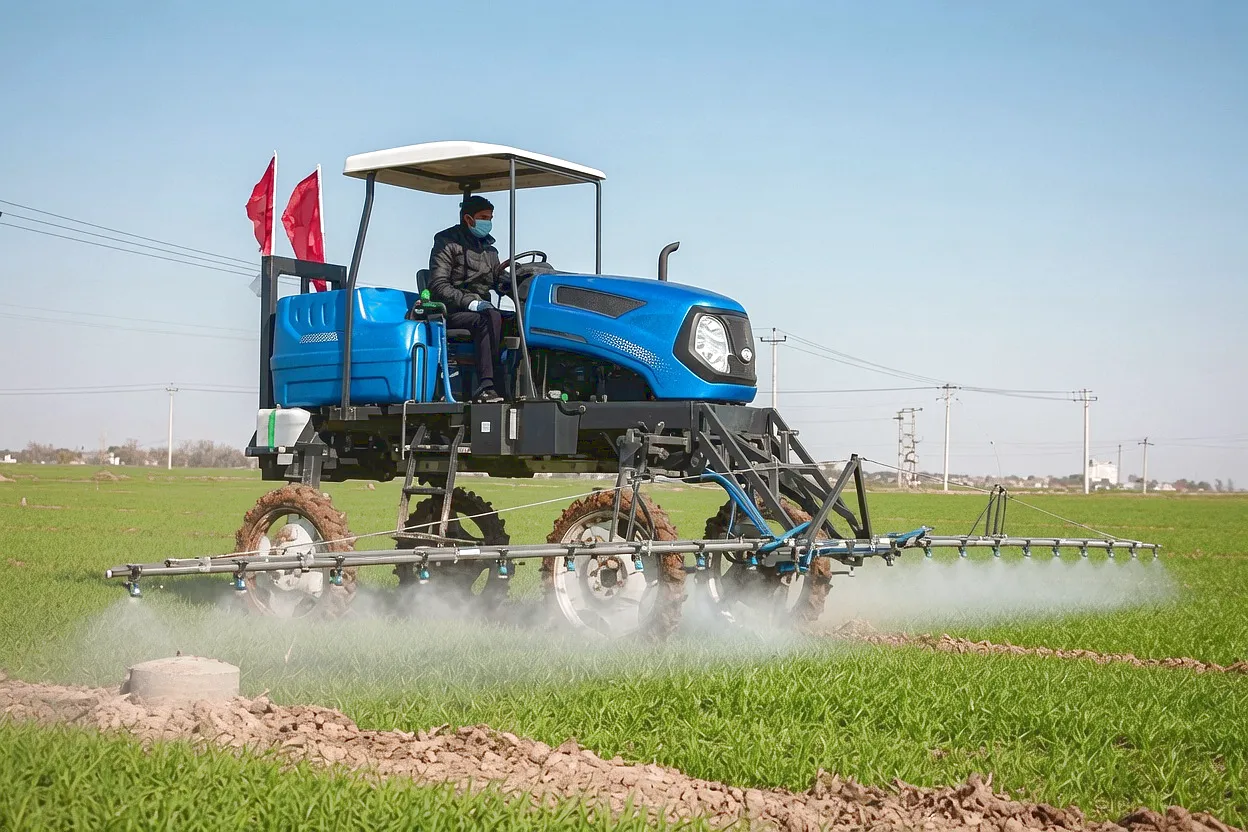 Modern self-propelled crop sprayers operating across the arable farmland of Lincolnshire and the Yorkshire Wolds carry folding spray booms spanning up to 44 metres in working width. Deploying and retracting these structures at the headland is managed by a hydraulic–worm gear shaft combination drive system mounted at each boom section hinge point. When the operator commands boom extension, the worm gear shaft rotates against a matching worm wheel to unfold each section in a controlled, damped arc. Once the boom reaches its full working position, the worm gear shaft’s inherent self-locking characteristic engages instantly — the boom is mechanically held at exactly the extended angle without any hydraulic line pressure being required to maintain position. This matters enormously in the field: if the hydraulic system suffers a sudden pressure loss from a broken hose or a pump failure while the sprayer is moving, the 22-metre half-boom does not collapse freely. It stays in position until the operator can safely retract it. The same self-locking action operates during transport: the folded boom is held securely by the worm gear shaft mechanism, preventing accidental deployment on road transitions between fields. In a machine that may cover 400 hectares per day across the rolling contours of East Anglian farmland, this combination of controlled deployment, reliable self-locking, and tolerance of intermittent hydraulic disconnection is not a convenience — it is a safety-critical design requirement. Worm gear shaft assemblies for this application must also withstand high vibration levels from boom resonance at typical road transport speeds of 25–40 km/h, making robust shaft bearing arrangement and correct preload adjustment essential engineering considerations.
Hoisting, Lifting, and Stage Engineering
 The entertainment industry in London’s West End and the heavy-lift sector serving oil-field equipment manufacturers in Aberdeen share a common dependence on self-locking worm gear shaft actuators to support suspended loads safely. In theatre fly systems, worm gear shaft gearboxes lower and raise scenic flown pieces with fine positional resolution while the self-locking mechanism holds the load stationary between moves without any electrical signal. In industrial jacking and lifting columns used in assembly workshops, sets of synchronised worm gear shaft jacks raise large structures in precise unison — the non-back-driving characteristic of each individual jack prevents differential settling if one unit momentarily loses drive power. The BS EN 81 series for lift safety and the Stage Technologies industry guidelines both acknowledge worm-based drive solutions as compliant for holding loads in position, reflecting decades of reliable service across the United Kingdom’s lifting and rigging sector.
Food Processing, Packaging, and Pharmaceutical Lines
 The food manufacturing clusters of the Humber Estuary and the pharmaceutical contract manufacturers of Cheshire run hygiene-critical production lines where the drive components in contact zones must comply with BRCGS packaging standards and, in many cases, FDA 21 CFR 178.3570 for incidental food contact lubrication. Stainless-steel worm gear shafts in 316L or 17-4PH grade — with electropolished thread surfaces, IP69K-rated sealed housings, and H1-classified lubricant fill — satisfy these requirements while delivering the precise indexing and controlled stop functionality that high-speed filling, labelling, and cartoning machinery demands. The low-noise characteristic of a well-specified worm gear shaft assembly also benefits open-plan production environments where machinery noise is subject to occupational health assessment under the Control of Noise at Work Regulations 2005.
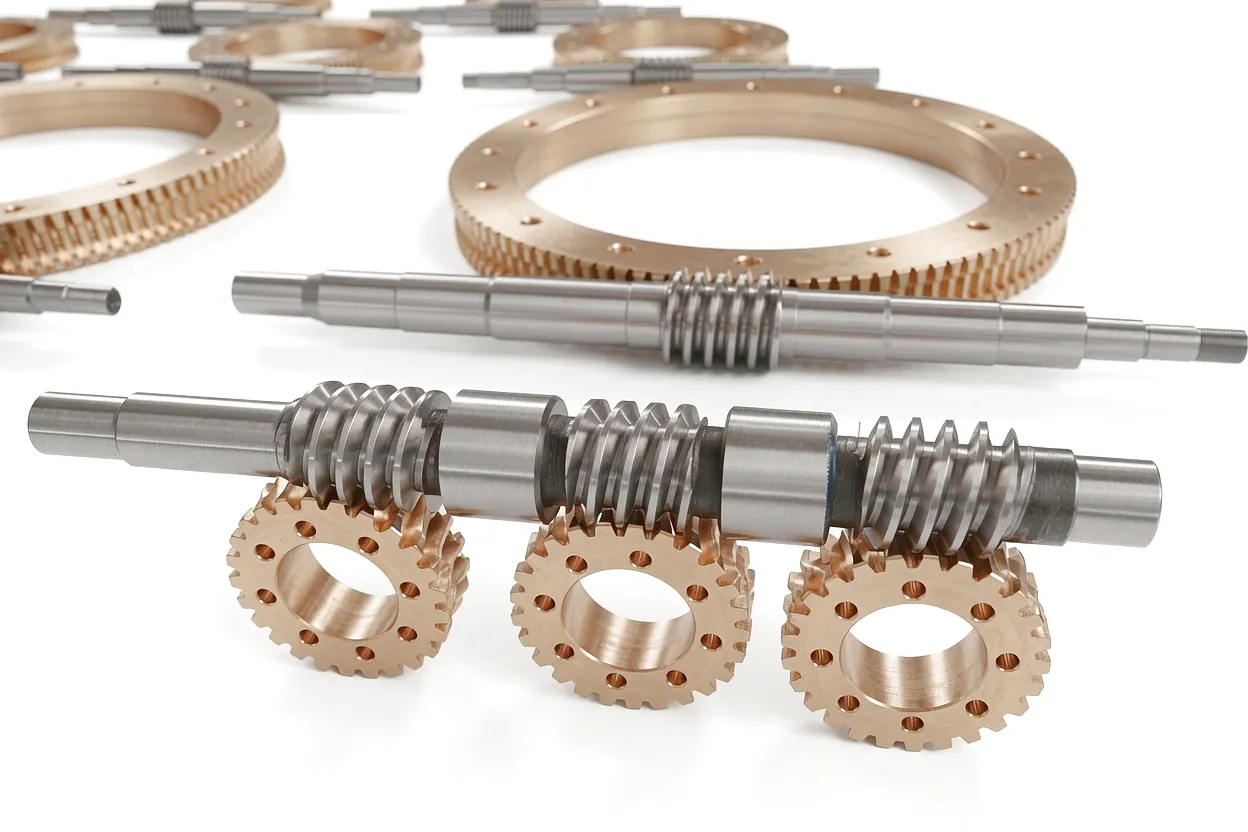
Ever Power Worm Gear Shaft Product Range
Customer Success Story: Sheffield Special Steels Processing Plant
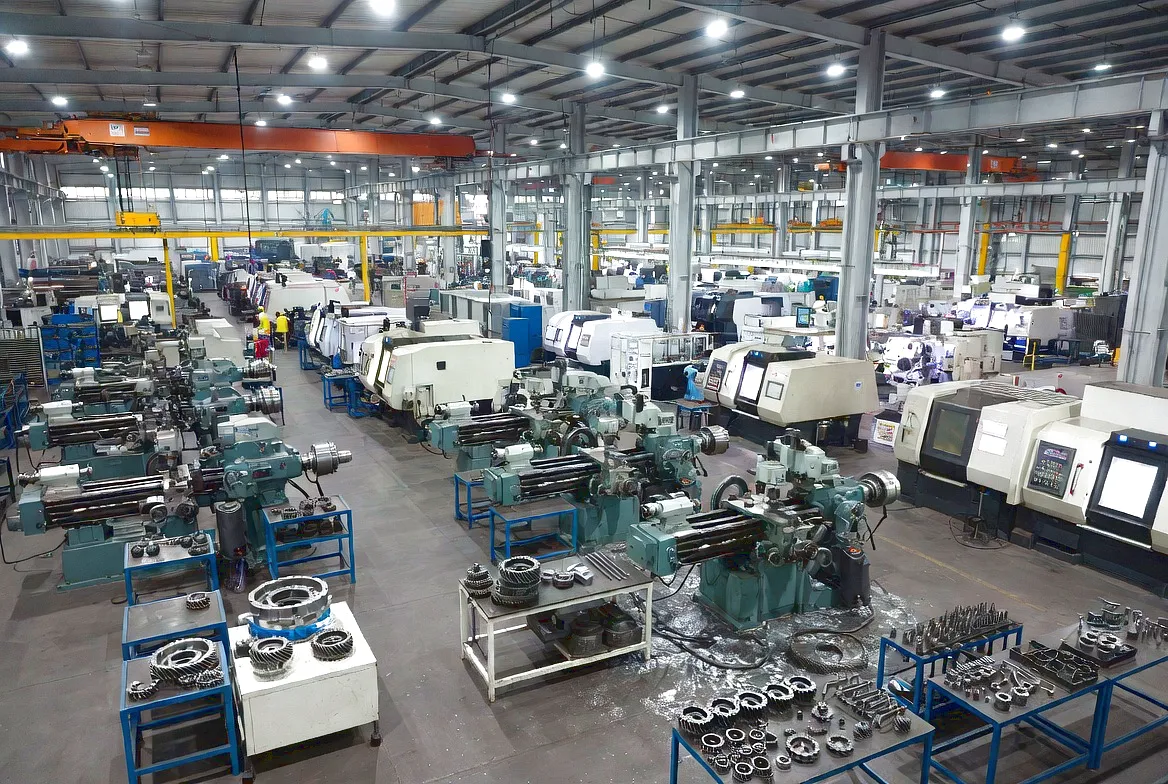 A Sheffield-based special steels processing company operating a cold-rolling and inspection line for high-alloy round bar stock came to Ever Power in late 2023 with a persistent reliability problem. Their existing worm gear shaft sets — sourced from a European catalogue supplier — were experiencing premature tooth surface fatigue on the worm wheels at intervals of 7,000–9,000 operating hours, well below the 25,000-hour design target for the gearbox application. The root cause, identified through detailed metallurgical examination of returned worm gear shafts, was inadequate case depth on the shaft thread flanks: the case hardness dropped below 50 HRC at a depth of just 0.4 mm, whereas the contact stress profile for this particular mesh geometry required effective hardness to be maintained to at least 0.8 mm depth.
Ever Power’s engineering team reviewed the application loading data — a 30 kW input motor running at 1,450 rpm through a 40:1 worm gear shaft assembly driving a rolling mill feed roller — and proposed a fully reworked specification. The replacement worm gear shaft was manufactured from 17CrNiMo6 steel, carburised to a case depth of 1.0–1.2 mm, quenched, tempered, and then precision-ground to achieve a thread surface Ra of 0.4 µm and an axial pitch tolerance within DIN 3974 Class 5. Thread root radius was increased fractionally to reduce stress concentration, and the shaft journal diameters were sized to accept a higher-capacity bearing arrangement that the gearbox housing could accommodate without modification. First articles were delivered to Sheffield within 28 days, passing dimensional verification at the customer’s incoming inspection facility.
The reworked worm gear shaft installation has now accumulated over 14,000 operating hours across two production shifts without any sign of progressive wear on the wheel tooth flanks. The customer has standardised Ever Power’s specification as their preferred replacement part and placed a blanket purchase order covering 18 months of forecasted demand, with call-off deliveries shipped on a two-week lead time. The cost per operating hour of the drive system has decreased by 38% compared to the previous supplier relationship when replacement interval, engineering rework, and production downtime costs are factored into the calculation.
What UK Customers Say About Ever Power Worm Gear Shafts
“
The case depth and surface hardness on these worm gear shafts are genuinely consistent batch to batch. We’ve had zero thread spalling issues since switching to Ever Power, and the DIN 3974 Class 5 tolerance is confirmed on every inspection report that comes with the shipment. For a precision-critical component in our rolling mill, that documentation trail is as important as the physical performance.
— Procurement Manager, Special Steels Processing, Sheffield
“
We needed a stainless-steel worm gear shaft with an involute spline on the input end, an electropolished thread zone, and H1-grade lubrication pre-filled. Not a standard catalogue item by any stretch. Ever Power came back with a DFM review within 48 hours, a competitive price, and delivered first articles in 30 days. The IP69K wash-down test passed first time. Highly recommended to any UK food machinery builder.
— Design Engineer, Food Processing Machinery OEM, Lincolnshire
“
We supply worm gear shaft gearboxes into theatre rigging installations across London and the major regional venues. The self-locking consistency from Ever Power’s shafts is what matters most to us — it has to be predictable every single time, because a flown scenic piece that moves unexpectedly is a safety incident. The dimensional reproducibility between batches means we don’t have to re-test every incoming unit, which saves our assembly team significant time.
— Technical Director, Stage Engineering Systems Integrator, London
Frequently Asked Questions About Worm Gear Shafts
Ready to source a precision worm gear shaft for your UK application?
Send your drawing, dimensional specification, or application brief to Ever Power’s engineering team. Standard and custom worm gear shaft configurations available. Delivery to Birmingham, Sheffield, London, Aberdeen, and all UK addresses.
✉ Get Your Quote Now — [email protected]
edit by gzl