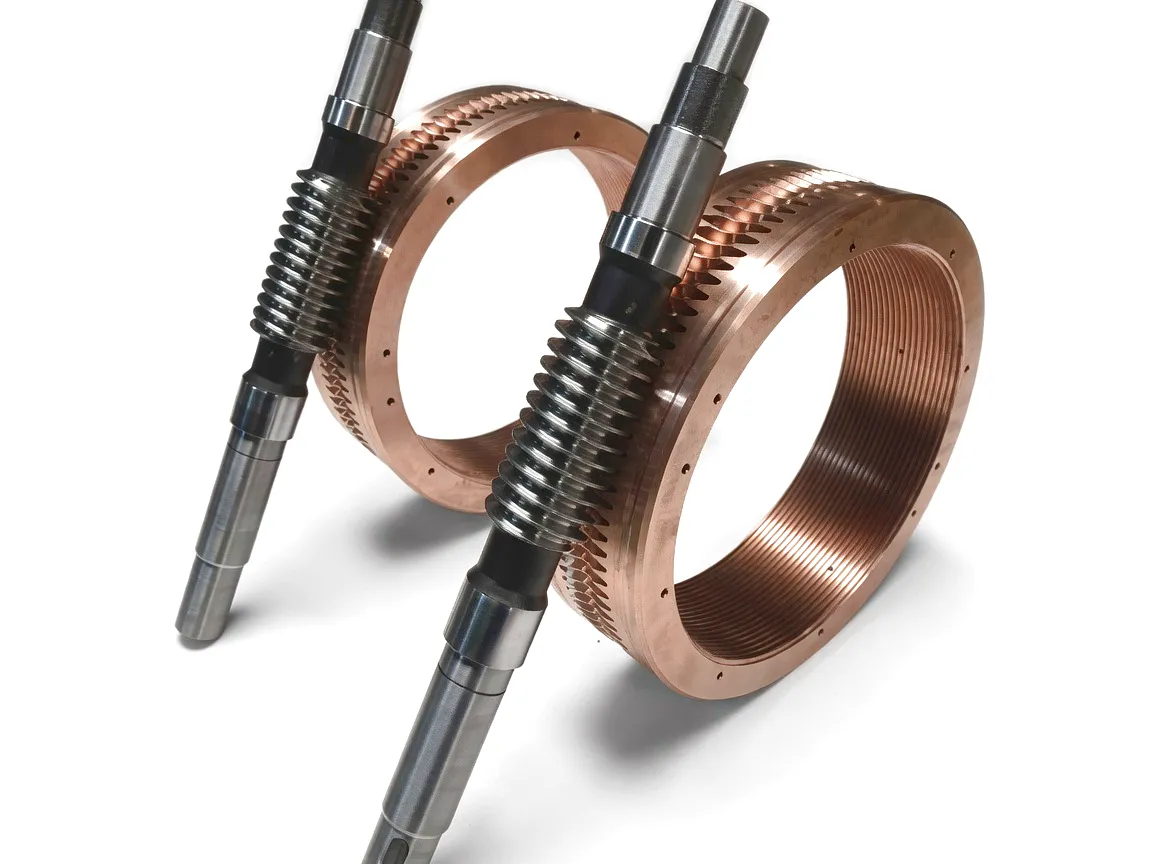
How the Worm Gear Shaft Works in a Crane Hoist
Operating Principle & Self-Locking Mechanics
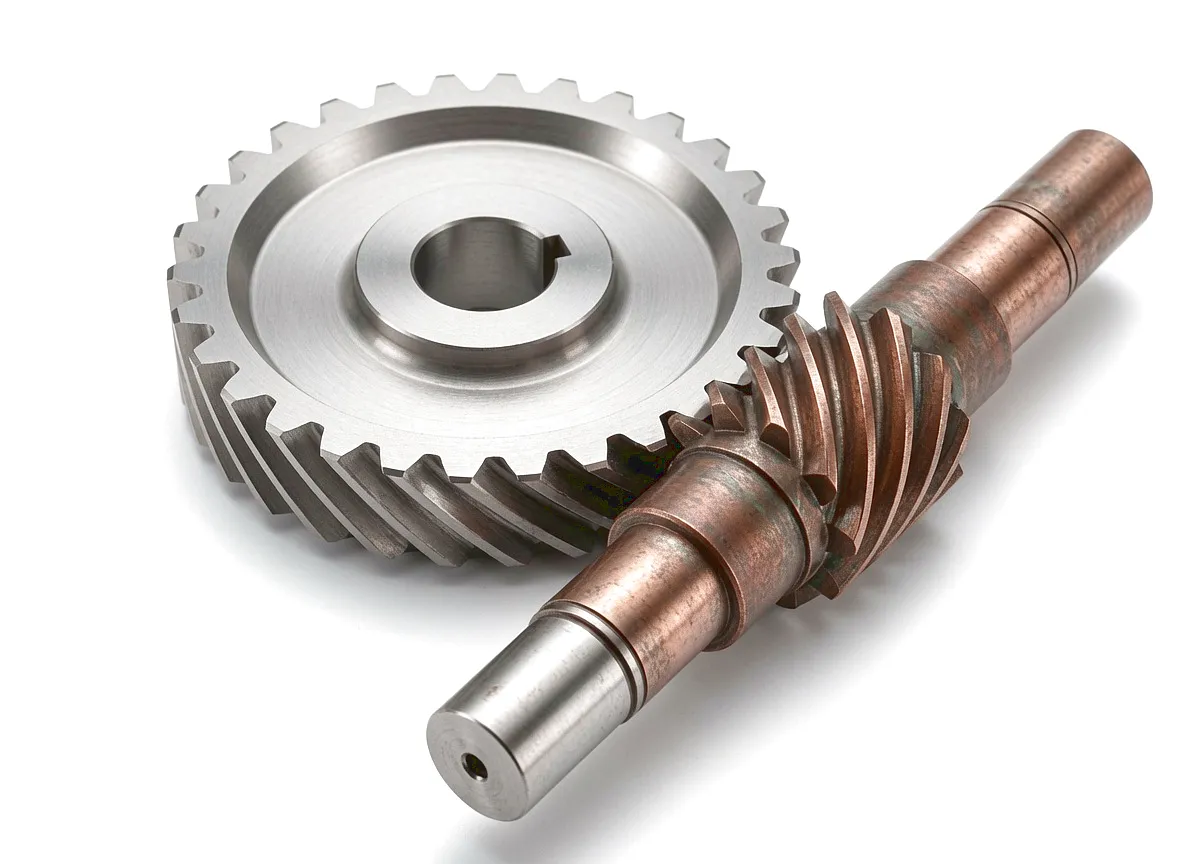
Core Materials in Worm Gear Shaft Manufacturing
Metallurgy That Determines Performance Under Load
वर्म शाफ्ट
Case-Hardened Alloy Steel
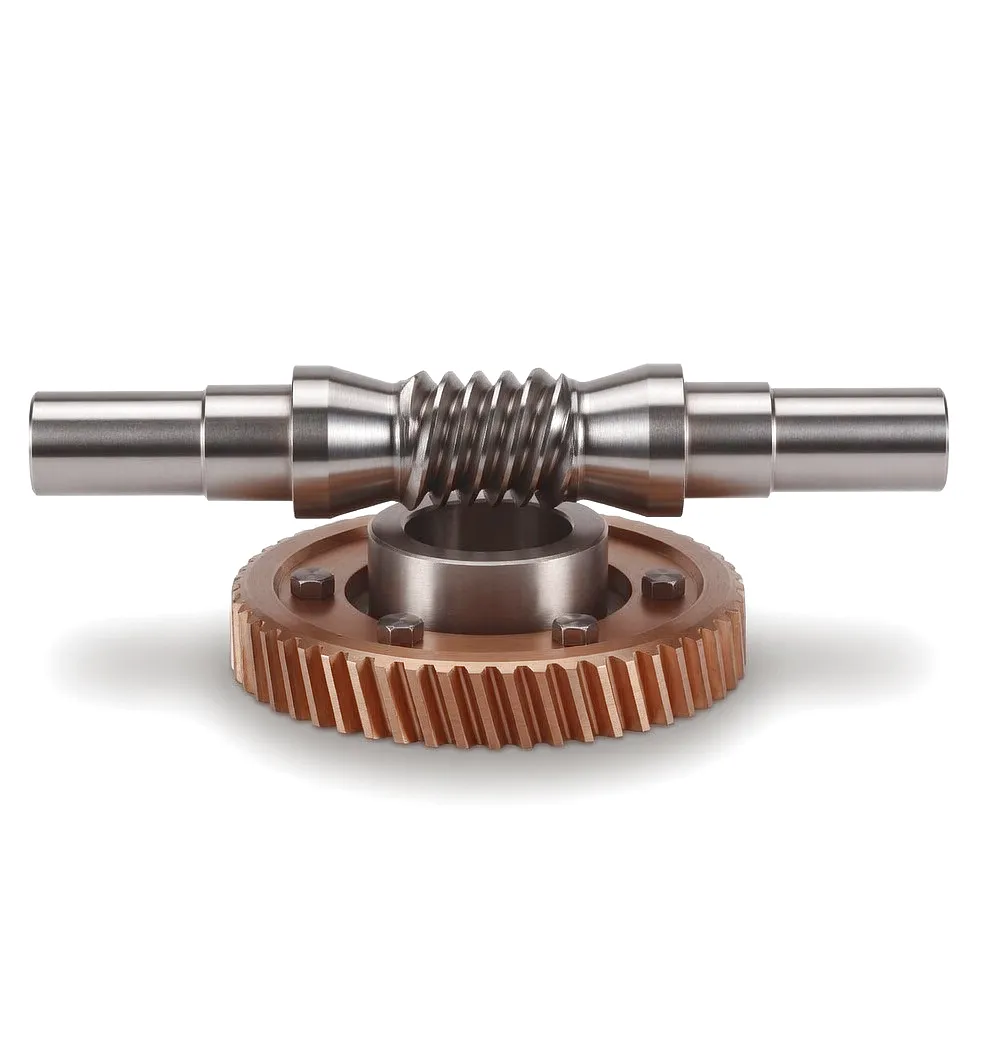
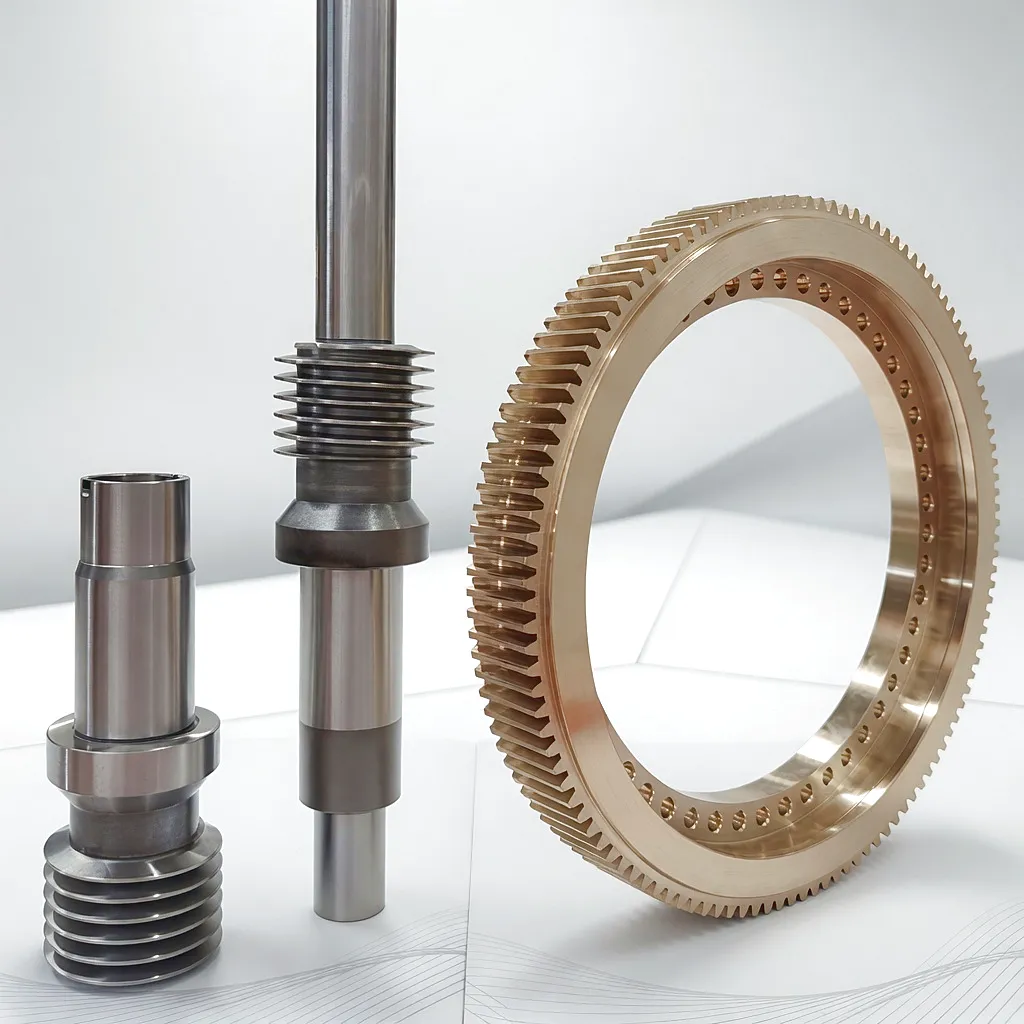
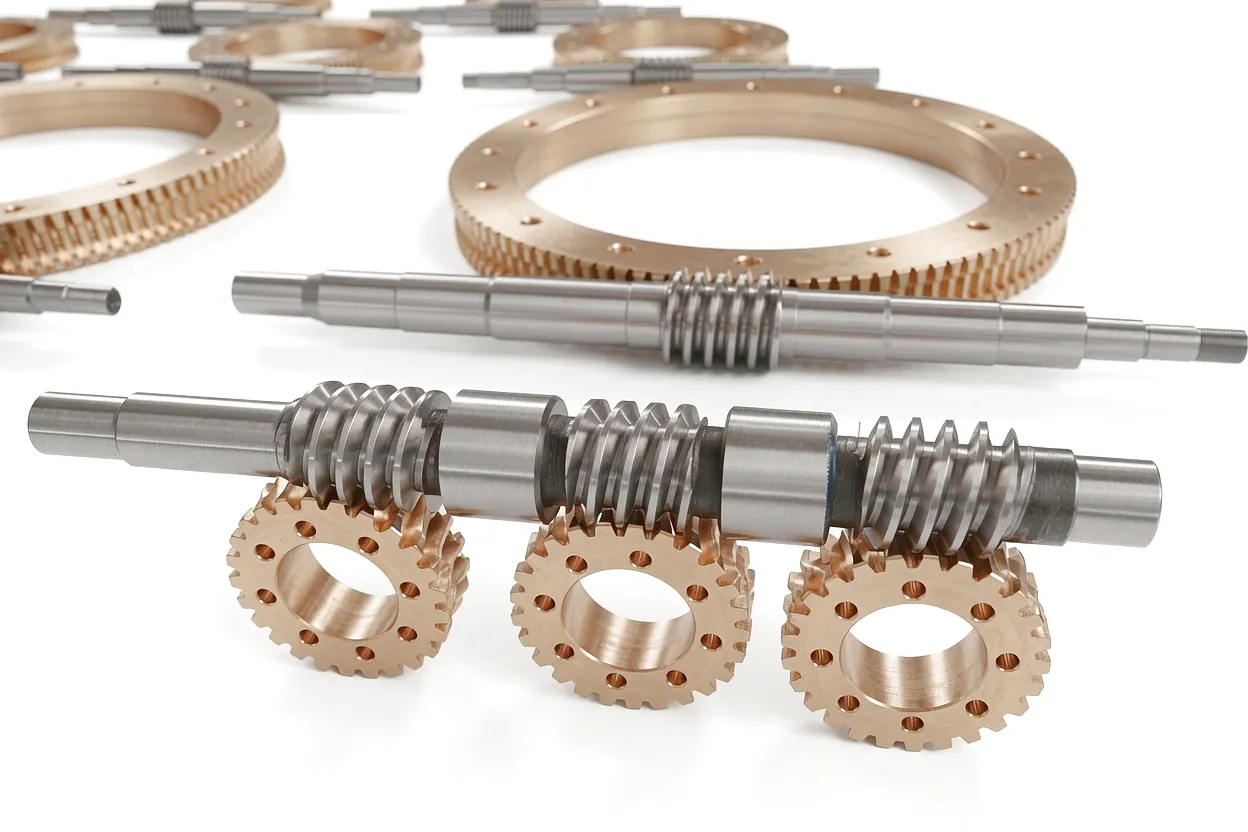
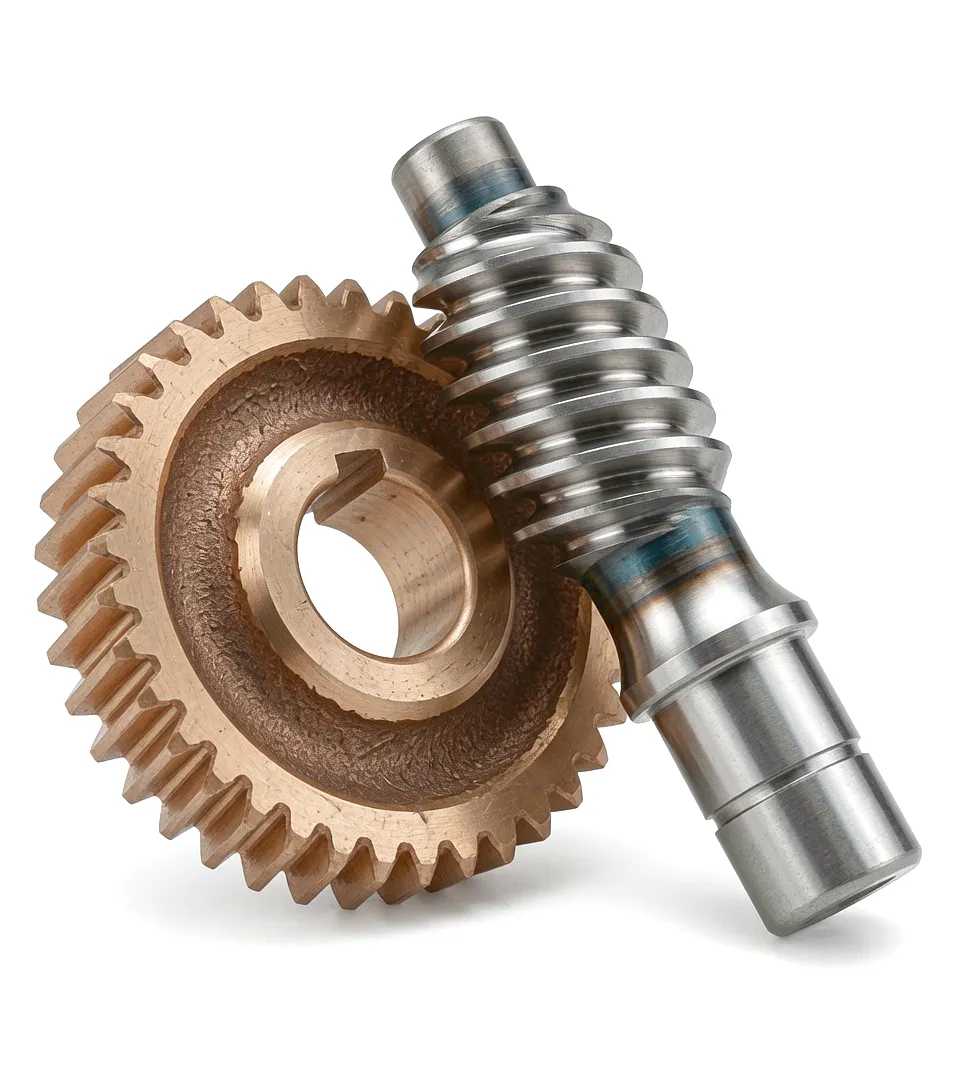
The worm gear shaft itself is predominantly machined from medium-carbon or low-alloy steels such as 20CrMnTi, 40Cr, or equivalent EN36/EN39 grades favoured in British precision engineering workshops. These steels are carburised to case depths of 0.8–1.6 mm and then hardened to surface values of 58–62 HRC. The high surface hardness minimises pitting and wear under the extreme Hertzian contact stresses generated at the worm-wheel tooth interface, while the tough core absorbs torsional shock loads without fracture. Thread profiles are precision-ground post-hardening to achieve flank surface roughness below Ra 0.4 µm, which directly reduces running friction and thermal generation during sustained lifting cycles. Lead-angle accuracy must meet AGMA 6135 or DIN 3996 tolerances to ensure genuine self-locking performance rather than relying on manufacturing scatter.
Worm Wheel
Centrifugally Cast Phosphor Bronze
The mating worm wheel is almost universally specified in phosphor bronze — typically PB1 (CuSn10P) or tin bronze (CuSn12) — centrifugally cast to eliminate porosity in the tooth-mesh zone. This combination delivers the dissimilar metal pairing essential to prevent scuffing and adhesive wear at contact pressures that would destroy two steel surfaces in service. Phosphor bronze offers a tensile strength of 280–340 MPa, adequate for moderate-duty crane wheels, while high-tensile aluminium bronze (CuAl10Fe5Ni5) is substituted for wheel rims in high-cycle, heavy-duty applications found in steelworks and automotive body-pressing plants across the West Midlands and South Yorkshire. Cast iron (GG25 or GGG40) wheels are reserved for low-speed, light-duty auxiliary hoists where cost constraints outweigh longevity.
Shaft Bearings & Housing
Tapered Roller in GJL-250 Cast Iron
Worm gear shaft ends are supported by tapered roller bearings or angular-contact ball bearings, both capable of resisting the substantial axial thrust forces generated by helical thread engagement. The housing material is typically grey cast iron GJL-250 or ductile iron GJS-400-18 for enhanced vibration damping — a material preference shared by many crane OEMs supplying the aerospace and rail sectors clustered around Bristol and Derby. Housing bores are bored to H7 tolerance to allow precise bearing seating without distortion. Lip seals or labyrinth configurations retain gear oil and exclude ambient steel dust, which is a persistent contamination risk in foundry and rolling-mill crane environments. Proper housing rigidity prevents shaft deflection under load, which would otherwise alter the lead angle at the tooth mesh and inadvertently reduce the self-locking margin.
Key Technical Advantages of Worm Gear Shaft Assemblies
Why crane engineers keep specifying worm drives as their safety lock of choice
Inherent Self-Locking
With lead angles below 6°, the worm gear shaft pair cannot be back-driven by the load. No electrical power, spring force, or friction disc is required to maintain a stationary suspended load. This passive, fail-safe characteristic is irreplaceable in LOLER-compliant hoist design and is the primary reason worm gear shaft units are mandated in many UK crane safety specifications.
High Reduction Ratio in One Stage
A single worm gear shaft stage can deliver ratios from 5:1 up to 100:1 within a housing envelope far smaller than an equivalent multi-stage helical gearbox. For crane hoist designs where headroom is restricted — a common constraint in automotive body-pressing plants and in the tightly packed bays of Sheffield’s specialty steel processing shops — this compactness allows engineers to meet rope-drum speed requirements without adding gearbox length to the travelling bridge.
Quiet, Smooth Operation
The sliding tooth contact characteristic of worm gear shaft engagement naturally dampens impact and vibration, producing significantly lower noise levels than comparable spur or helical gears at the same power and speed. This is particularly valued in assembly facilities and precision machining shops where ambient noise management is subject to the Control of Noise at Work Regulations 2005, making a worm gear shaft drive an operational benefit as well as a structural one in UK factory environments.
Right-Angle Drive Geometry
The worm gear shaft arrangement natively provides a 90-degree shaft crossing angle between input and output, a geometric characteristic that simplifies crane hoist design. The rope drum axis can be oriented at right angles to the motor/reducer output shaft without secondary bevel stages, reducing part count, eliminating an additional potential failure point, and shortening the drive-train assembly time on the production floor — all of which translate directly into lower crane OEM manufacturing costs passed on to end-user buyers.
Long Service Life with Correct Lubrication
A properly designed and lubricated worm gear shaft unit typically achieves 20,000 to 40,000 hours of service life in moderate crane duty cycles, exceeding many alternative reduction technologies at equivalent load ratings. The key maintenance requirement is maintaining ISO VG 220 or VG 320 gear oil at correct sump level; sliding tooth contact generates heat that must be carried away by the lubricant or by housing surface radiation. Synthetic polyalphaolefin (PAO) or polyglycol (PG) oils further extend service intervals and are preferred for enclosed industrial environments where oil change accessibility is difficult.
Shock Load Absorption
The sliding contact between worm gear shaft thread flanks and worm wheel teeth inherently absorbs shock and vibrational energy through elastic deformation and controlled micro-slip at the bronze tooth surface. This is distinctly advantageous in crane hoists handling scrap metal bundles, ingots, or heavy casting moulds where load-swing and impact are unavoidable. The worm gear shaft pair acts as a natural damper in the drive train, protecting the upstream motor and gearbox from torque spikes that would otherwise cause fatigue cracking in gear teeth or bearing failures within a few thousand operating cycles.
Product Technical & Performance Specifications
Reference data for crane hoist worm gear shaft specification and procurement
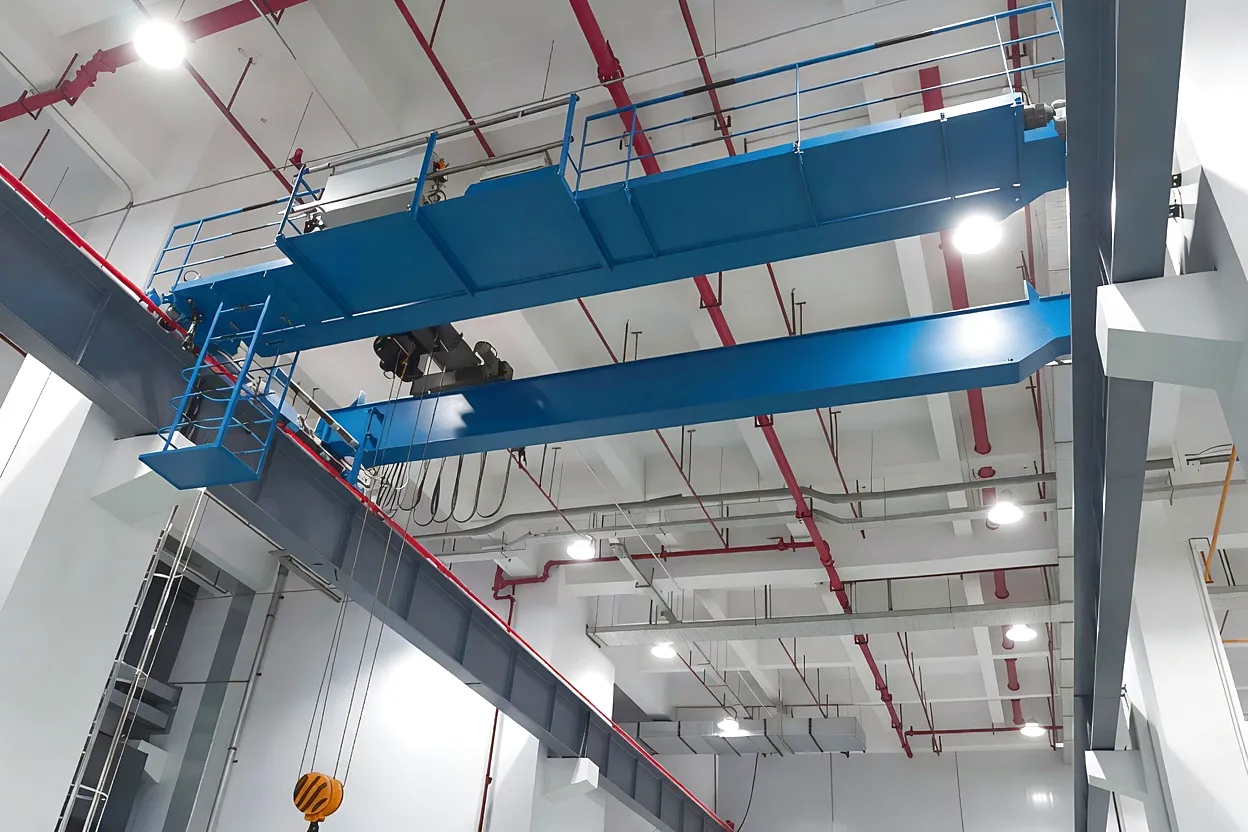
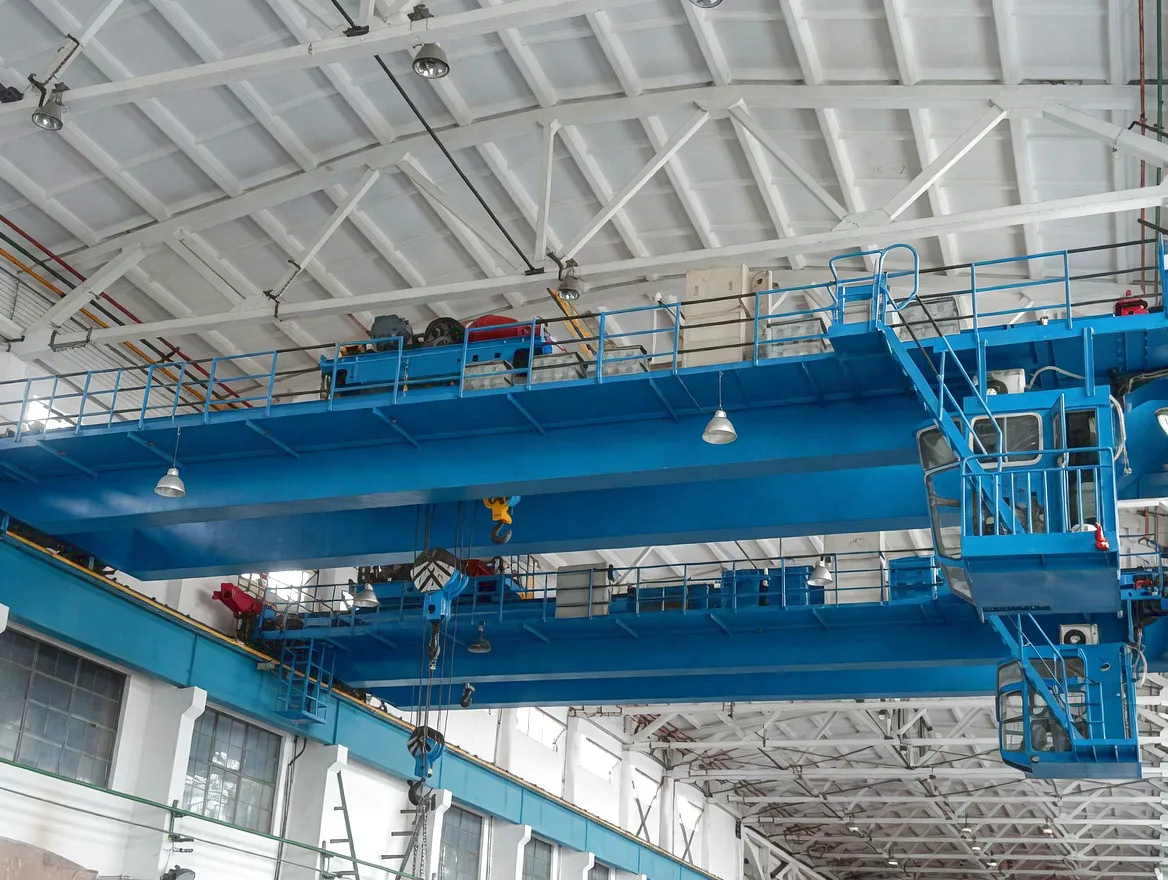
Industrial Application Scenarios for Worm Gear Shaft Units
Where self-locking transmission saves lives and production throughput
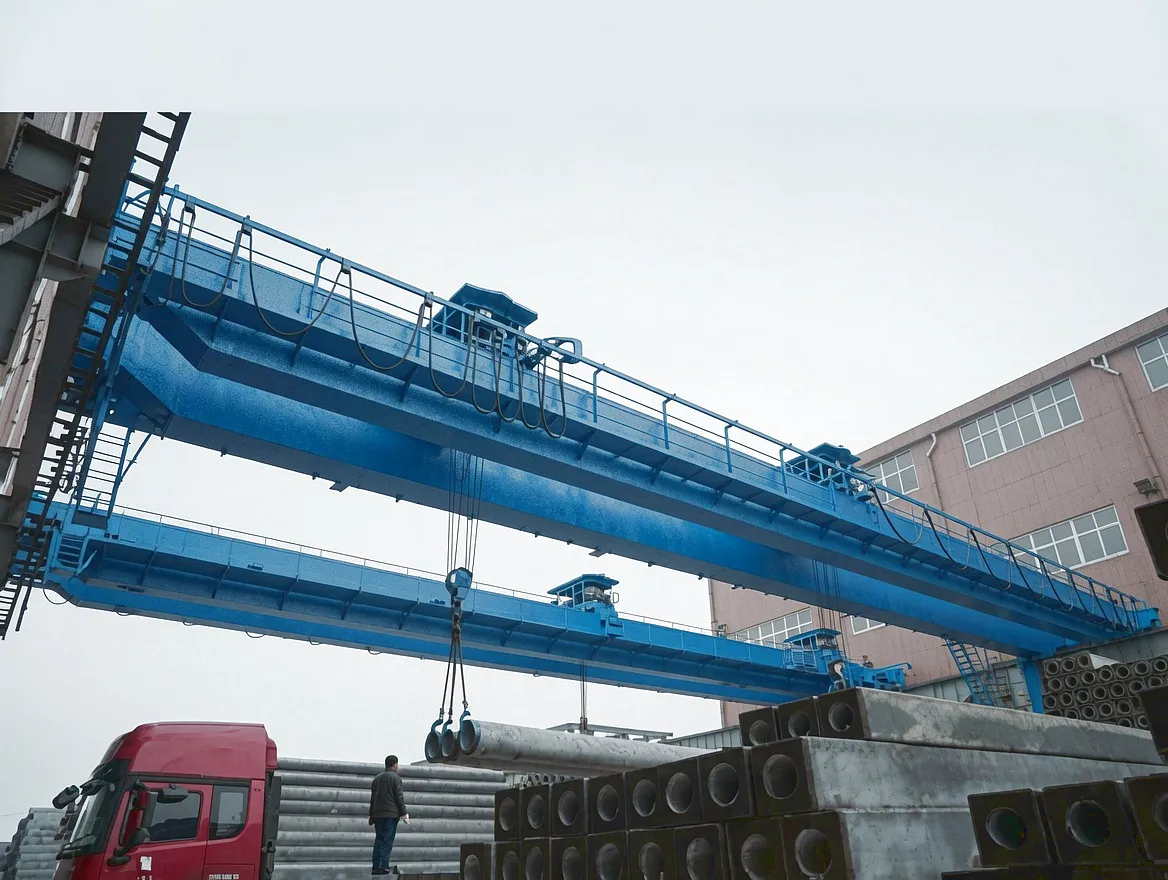
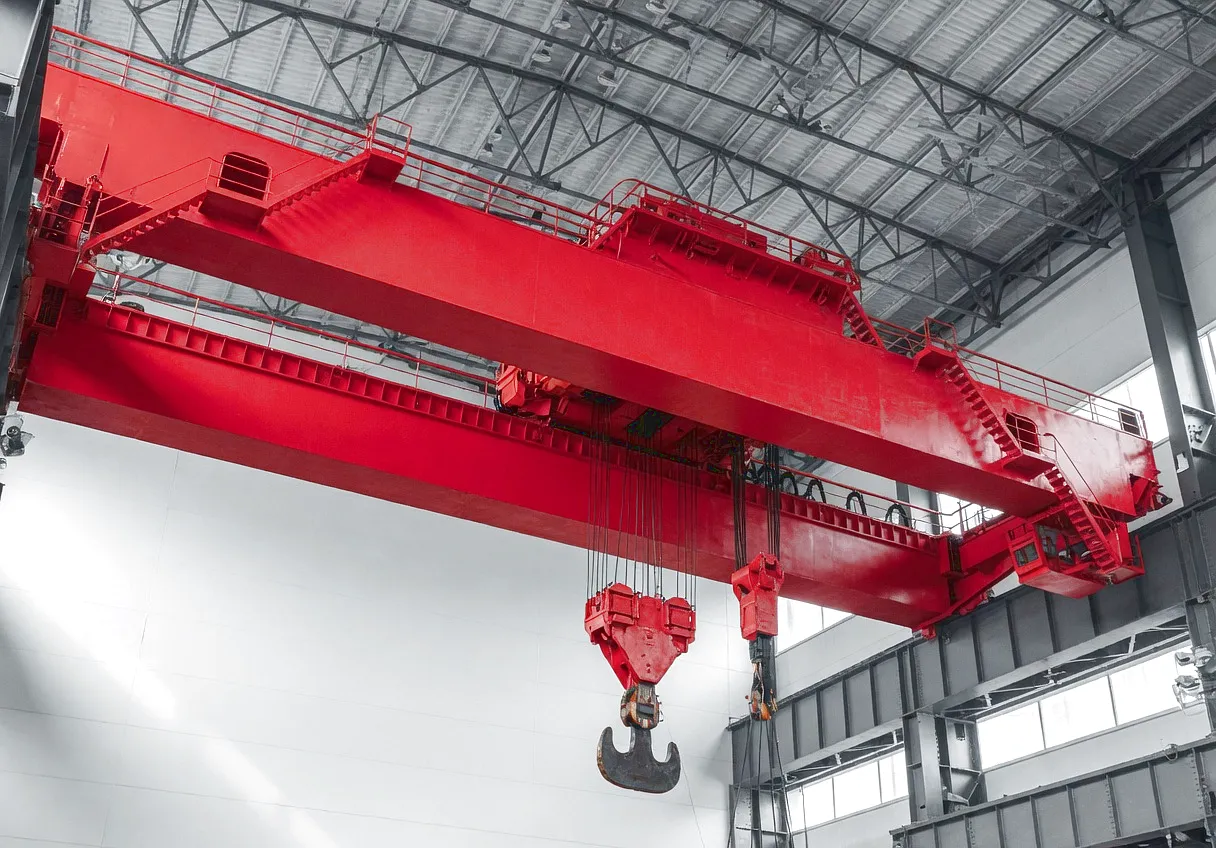
Ever Power — Precision Worm Gear Shaft Manufacturing & Custom Engineering
From concept to delivery: engineering-led customisation for global crane and lifting equipment OEMs
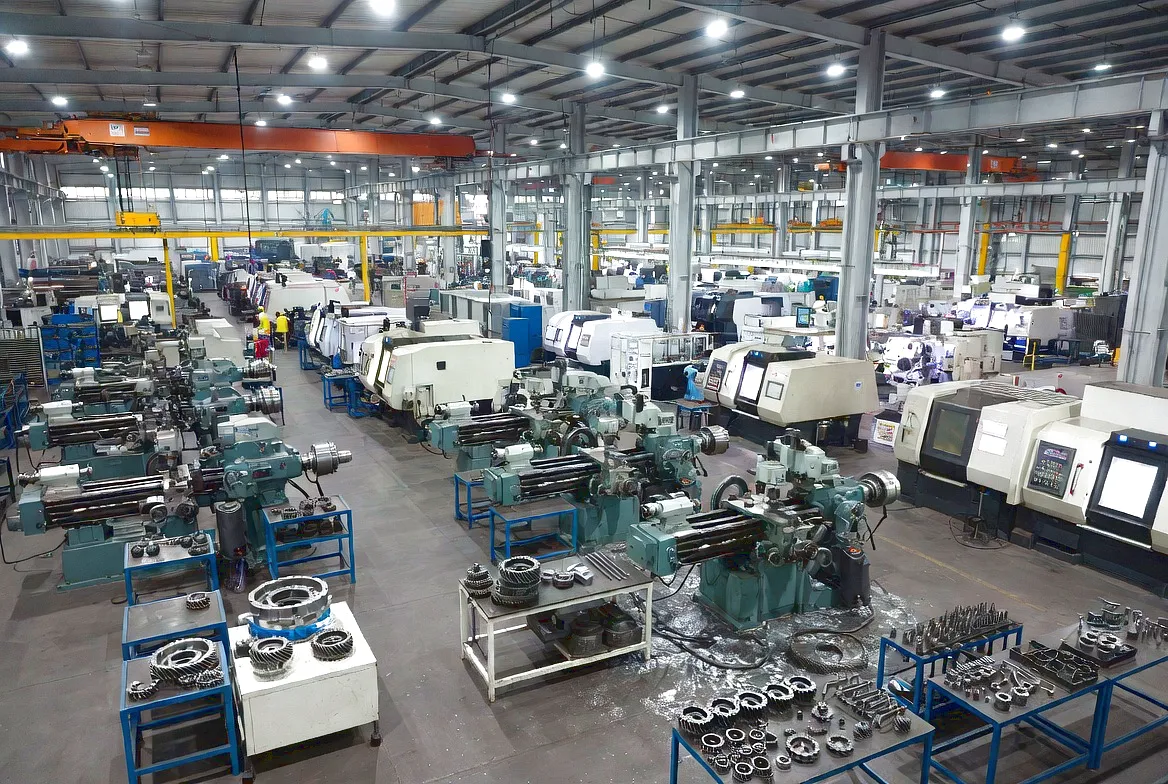
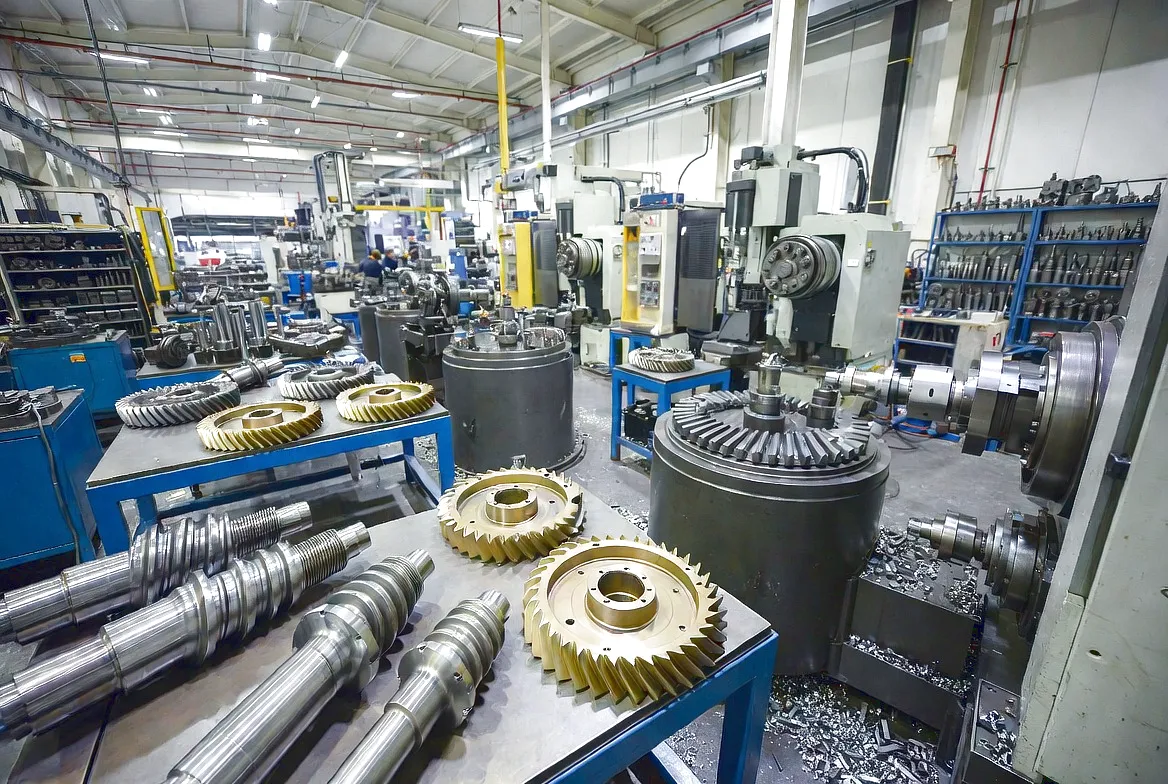
Ever Power has spent over two decades refining the craft of worm gear shaft production, building manufacturing capability that stretches from raw billet to final tested assembly within a single vertically integrated supply chain. The factory operates German-sourced CNC thread grinding centres capable of producing worm profiles to AGMA Q11 and DIN quality grade 5 tolerances, with surface finish verification using Mahr profilometers at post-process inspection. Every worm gear shaft undergoes case depth verification by Vickers microhardness traverse testing, profile accuracy checked on a Zeiss coordinate measuring machine, and functional torque and back-drive testing on an in-house back-to-back test rig before despatch.
🏭 Customisation Capability
Ever Power’s engineering team accepts non-standard worm gear shaft geometries as routine work. Centre distances, shaft diameters, thread starts, lead angles, flange mounting configurations, shaft-end keyway and spline profiles, housing mounting face patterns, and output shaft orientation are all parameters the technical team adjusts on a per-project basis. Drawing review and DFM feedback are provided within five working days, with prototype samples typically deliverable in four to six weeks from confirmed order. This rapid-prototyping capability is particularly valued by UK crane OEMs facing tight project schedules for bespoke lifting equipment destined for pharmaceutical cleanrooms, nuclear facilities, or specialist offshore structures.
🔬 Precision Manufacturing Process
Worm shafts are rough-turned, carburised in sealed-atmosphere batch furnaces, hardened and tempered, then finish-ground on the thread flanks using CNC programmable grinding wheels dressed to the precise ZA, ZN, ZI, or ZK profile specified in the customer’s design. Worm wheels are centrifugally cast in the alloy specified, gear-hobbed and shaved, then matched individually with their corresponding worm gear shaft on the test rig. Assembly is carried out by technicians trained to Japanese 5S standards, with torque-verified fastening and a final oil-fill check before boxing. Export packaging for sea freight — common for deliveries to UK-based clients sourcing from Ever Power’s facility — is engineered to withstand marine container transit without corrosion or mechanical damage.
📦 Supply Chain & Lead Time
Ever Power maintains a warehouse of standard-range worm gear shaft assemblies covering centre distances from 50 mm to 400 mm, reducing lead times for off-the-shelf requirements to 3–7 working days from confirmed order and payment. For custom projects, the supply chain team works directly with material certifying mills to provide 3.1 material test certificates against EN 10204 for all metallic components — a documentation requirement frequently specified by UK oil and gas, nuclear, and defence procurement teams. DHL Express and specialist freight forwarding partnerships ensure door-to-door delivery to any UK mainland address within five working days of despatch.
Ready to specify your next worm gear shaft project?
Ever Power’s engineering team is ready to review your crane hoist torque requirements, duty cycle, and self-locking specification. Send your drawings or application brief to receive a detailed technical quotation within 24 hours.
Customer Success Story
Sheffield, South Yorkshire — Specialty Steel Plate Processing
What Our Customers Say
★★★★★
“The self-locking torque figures Ever Power provided in their pre-sale calculations matched the as-installed test results within 4%. That kind of engineering rigour is exactly what we need for LOLER-compliant retrofits. We cleared our HSE notice ahead of deadline and haven’t had a single issue in eighteen months of production operation.”
— J. Hargreaves, Maintenance Director, Sheffield, South Yorkshire
Specialty Steel Plate Processing, 40t EOT Crane Hoist Retrofit
★★★★★
“We run four-tonne capacity jib cranes across our Birmingham pressing shop and specified Ever Power worm gear shaft units on the new installations last year. The units are noticeably quieter than the previous gearboxes, and the machining quality is genuinely impressive — the ground thread finish is consistent and clean. Lead times for our non-standard centre distance were better than any UK-sourced alternative we quoted.”
— M. Okafor, Head of Plant Engineering, Birmingham, West Midlands
Automotive Component Pressing, Custom Jib Crane Drive
★★★★★
“Port operations demand gear units that tolerate salt air, heavy shock, and irregular maintenance intervals. Ever Power supplied us with worm gear shaft assemblies for our quayside crane refurbishment project at Humber that included upgraded Viton seals, epoxy housing treatment, and stainless fixings as standard — all at a very competitive price compared to European alternatives. The 3.1 mill certs they provided were exactly what our structural surveyor required. Highly recommended for any marine lifting application.”
— S. Thornton, Senior Mechanical Engineer, Humber, East Yorkshire
Port Handling & Marine Lifting Equipment, Quayside Crane
Worm Gear Shaft Product Gallery
Frequently Asked Questions
Common questions from crane engineers, procurement teams, and plant managers across the UK
Ever Power — Worm Gear Shaft Specialists
Specify with Confidence. Deliver on Time.
From LOLER-compliant retrofit kits for Sheffield steel plants to marine-grade worm gear shaft assemblies for Humber port cranes — Ever Power engineers the right solution for your application.
✉ Get a Quote Now — [email protected]
Response within 24 hours · Technical calculations included · EN 10204 3.1 certs available
edit by gzl