Worm Gear Shaft: The Complete Technical Guide for UK Industrial Applications
From precision engineering principles to high-torque industrial deployment — everything British manufacturers need to know about specifying, sourcing, and customising worm gear shafts.
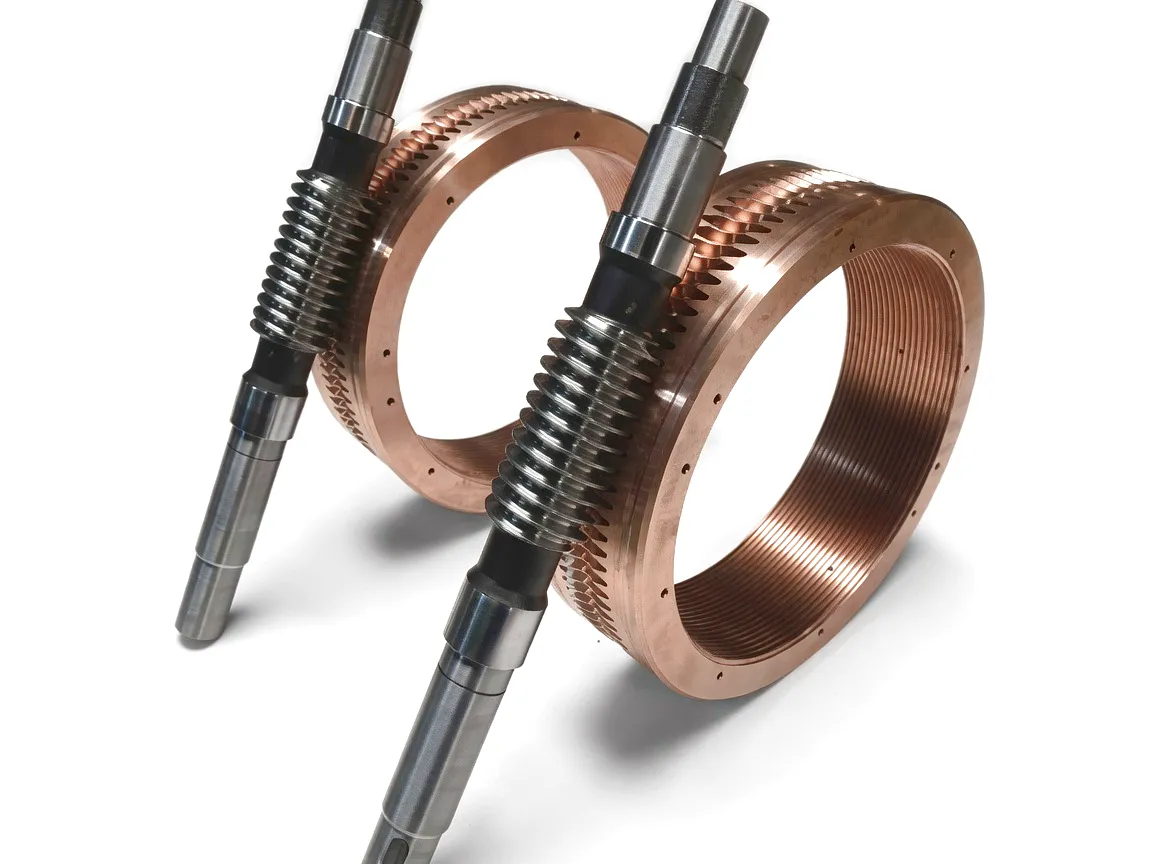
In the world of mechanical power transmission, few components achieve the same balance of compactness, torque multiplication, and positional control as the worm gear shaft. Whether it is driving a packaging conveyor in a Birmingham factory or positioning a heavy-duty valve actuator on a Sheffield refinery, the worm gear shaft sits at the intersection of precision engineering and reliable industrial performance. Its helical thread engages a mating worm wheel at a 90-degree axis offset, allowing enormous speed reductions in a single stage — a characteristic that continues to make it irreplaceable across dozens of manufacturing sectors throughout the United Kingdom. The geometry of the worm shaft, specifically its lead angle, number of starts, and pitch diameter, defines the entire output behaviour of the gearbox, meaning that even small deviations in manufacture translate directly into efficiency losses or premature wear. Understanding these principles is essential for any plant engineer or procurement manager responsible for specifying power transmission components. This guide examines the engineering fundamentals, material science, performance data, and real-world UK applications that define the modern worm gear shaft — and explains why precision sourcing matters more than ever in todays demanding operating environments.
How a Worm Gear Shaft Works: The Engineering Principle
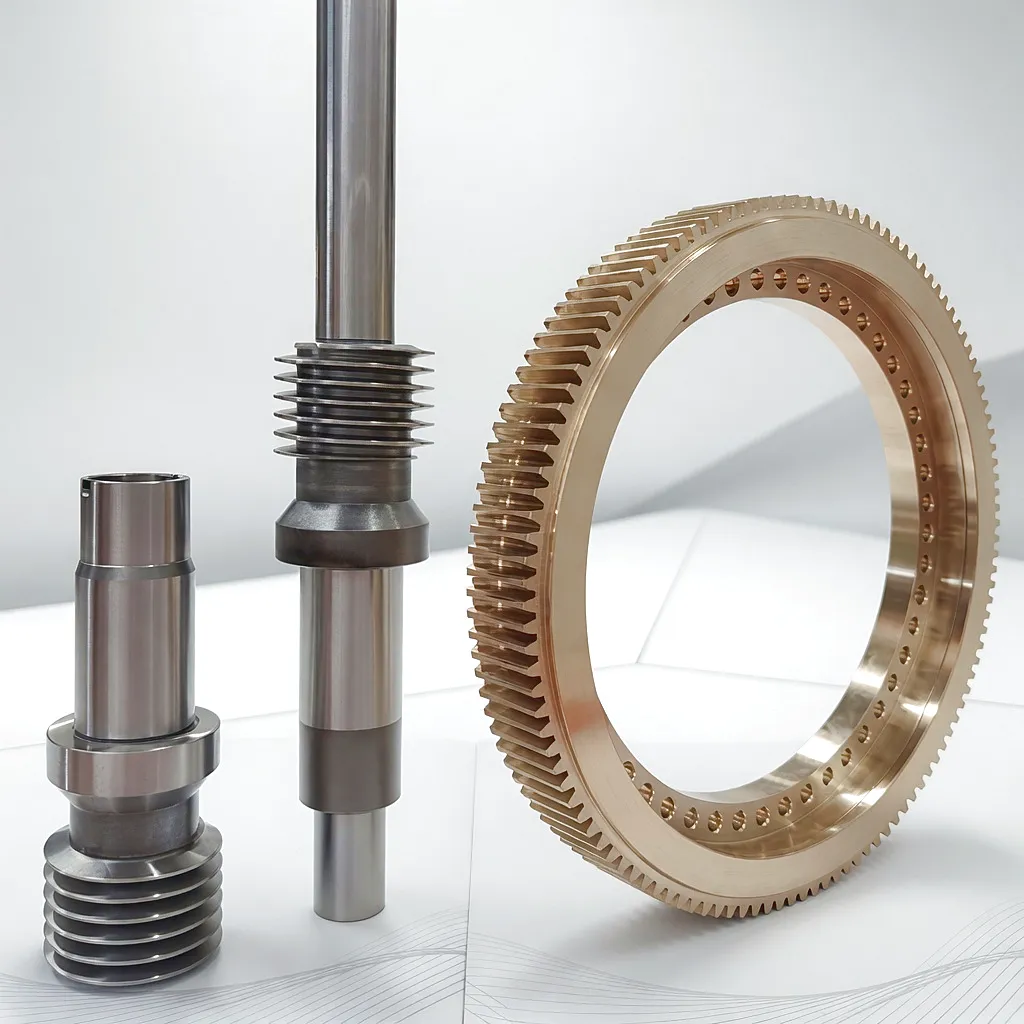
The operating principle of a worm gear shaft is elegant in its simplicity yet demanding in its precision requirements. The shaft itself carries a continuous helical thread — the worm — that meshes with the teeth of a worm wheel at a right angle to the shaft axis. As the worm shaft rotates, its thread advances across the wheel teeth, producing rotation in the wheel at a dramatically reduced speed. The gear ratio is determined by dividing the number of worm wheel teeth by the number of thread starts on the worm shaft: a single-start worm engaging a 40-tooth wheel delivers a 40:1 reduction, while a four-start worm on the same wheel achieves only 10:1. This single-pass reduction ratio capability, often ranging from 5:1 up to 100:1, is one of the principal reasons worm gear shafts remain the preferred solution when designers need maximum torque amplification within a restricted envelope.
The contact mechanics between the worm shaft and worm wheel involve sliding rather than pure rolling, which is a defining characteristic. The lead angle of the thread — the helix angle measured along the pitch cylinder — governs not only the efficiency of power transmission but also whether the assembly self-locks when the driving motor is stopped. Lead angles below approximately 6 degrees produce self-locking behaviour because back-driving requires overcoming greater friction than the available torque at the wheel can supply. This property is exploited extensively in UK lifting equipment, adjustable platforms, and valve actuators, where the load must be held in position without any additional braking hardware. Higher lead angles reduce friction losses and improve efficiency, which is why multi-start worm shafts with efficiencies approaching 90% are preferred in high-cycle conveyor drives where energy costs must be managed carefully. The interaction between lead angle, friction coefficient, and lubricant viscosity represents one of the most nuanced aspects of worm shaft specification, and it is an area where the precision of the shaft geometry directly translates into predictable field performance.
Material Science Behind Worm Gear Shaft Manufacturing
20CrMnTi and 42CrMo4 alloys are carburised to surface hardness of 58–62 HRC while maintaining a tough, ductile core. This combination resists pitting fatigue under heavy shock loads — the dominant failure mode in heavy industry applications around Manchester and the West Midlands. Tooth profile accuracy is maintained to DIN 6 tolerance after grinding.
Food-grade and pharmaceutical production lines increasingly demand worm shafts manufactured from austenitic stainless steel. Grade 316 with its molybdenum content provides superior resistance to chloride-induced corrosion, which is particularly relevant for coastal processing facilities in Scotland and the North East. Surface finish Ra values of 0.4 microns or better are achievable with precision cylindrical grinding.
Medium-carbon C45 steel is widely used for standard-duty worm shafts where surface induction hardening to 50–55 HRC provides an adequate balance of wear resistance and cost efficiency. Many UK agricultural equipment manufacturers and general-purpose conveyor builders specify C45 shafts for predictable performance in low-to-medium speed drives where replacement intervals are managed as part of routine maintenance schedules.
While phosphor bronze is the material of the mating worm wheel rather than the shaft itself, its compatibility with the shaft steel determines overall system life. The tin-phosphor bronze alloy (typically 10–12% tin) provides excellent conformability during run-in, embedding surface asperities and rapidly achieving a conformal contact patch that distributes load evenly. This pairing remains the global gold standard for precision worm drive systems.
The heat treatment sequence for alloy steel worm shafts is as important as the alloy selection itself. Carburising is performed at temperatures between 900°C and 950°C for periods of 6–12 hours depending on the desired case depth, which for heavy-duty shafts typically falls in the range 0.8–1.4 mm. After quenching and tempering, the shaft undergoes precision thread grinding on CNC worm grinding machines capable of maintaining profile tolerances within 2–3 micrometres. This level of dimensional control ensures consistent load distribution across the full tooth contact length, which is the primary determinant of both efficiency and noise behaviour in service. Phosphate coating or specialised anti-corrosion treatments are applied as standard for shafts destined for outdoor or wash-down environments common in UK food processing and agricultural sectors.
Core Technical Advantages
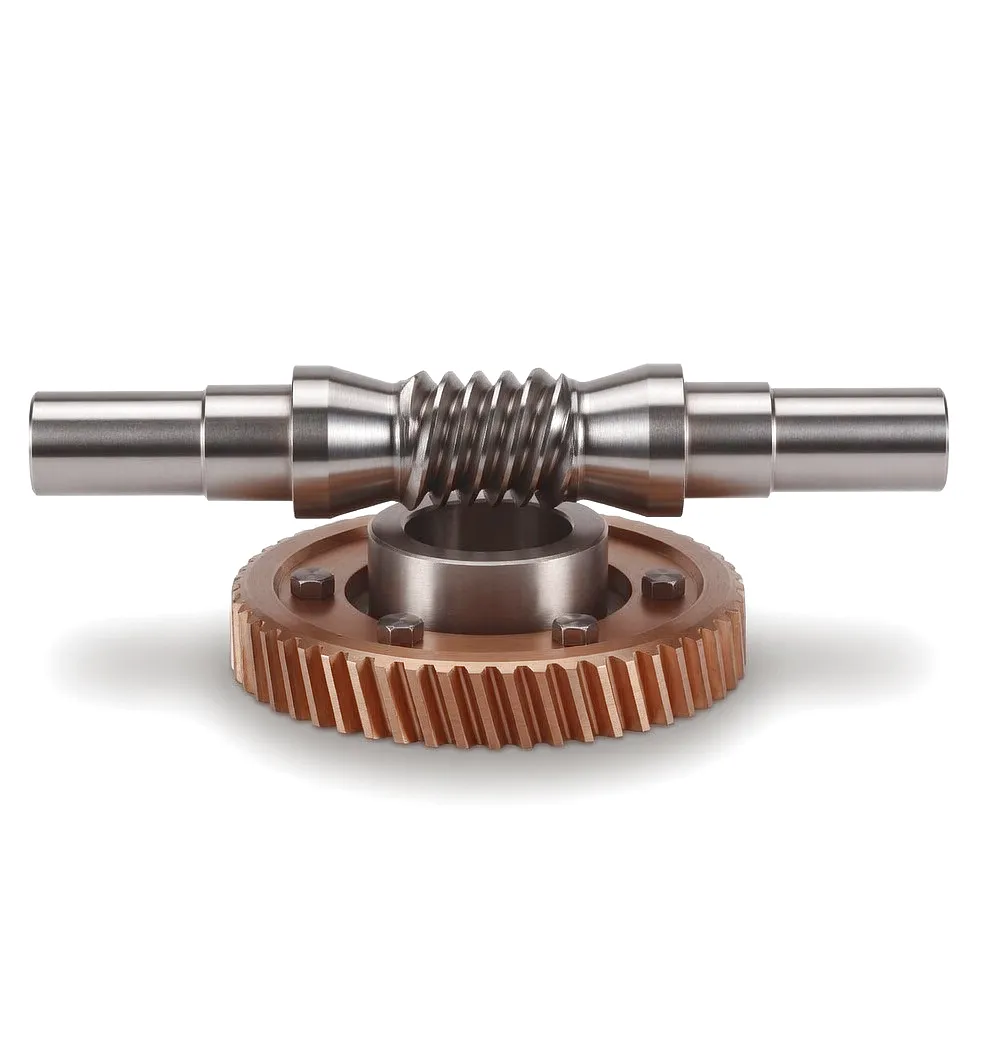
The practical advantages of specifying a worm gear shaft over alternative reduction technologies — bevel gears, planetary units, or multi-stage spur arrangements — come down to a specific set of engineering characteristics that are difficult to replicate with any other configuration. The most immediately apparent advantage is the ability to deliver large speed-reduction ratios within a single, compact stage. Where a planetary gearbox requires multiple stages to reach ratios beyond 50:1, a well-designed worm shaft can achieve 100:1 within a housing footprint that often represents a 30–40% saving in mounting space. For plant engineers retrofitting drives into legacy Sheffield steel-processing lines or Birmingham automotive body shops, this compactness is frequently the deciding specification criterion.
A worm gear shaft transmits output torques up to several thousand newton-metres within a housing that a comparable helical stage cannot approach. This torque density makes it particularly valuable in crane hoists and heavy-lift systems throughout industrial Scotland and the North of England.
At lead angles below 6 degrees, the worm shaft geometry prevents back-driving under load. This built-in safety characteristic eliminates the need for external braking devices in many vertical lifting and positioning applications, reducing overall system cost and mechanical complexity considerably.
The continuous sliding contact between worm shaft thread and wheel teeth produces lower noise levels compared with equivalent helical or bevel stages. This characteristic is valued in food processing, pharmaceutical packaging, and any UK production environment where occupational noise legislation applies under COSHH and the Noise at Work Regulations.
The right-angle input-to-output configuration enables machine designs that would be impossible or excessively complex with parallel-axis gearing. Many UK packaging machine OEMs and conveyor system integrators rely on this geometric flexibility to route power around structural obstacles within tight machine frames.
Shaft diameter, thread module, number of starts, lead angle, journal configuration, and key dimensions can all be customised to meet OEM requirements. This flexibility supports the unique demands of UK defence supply chains, offshore energy equipment, and specialised agricultural machinery manufacturers who cannot accept standard catalogue sizes.
Technical Performance Parameters
| Parameter | Specification Range | Standard / Notes | Typical Application |
|---|---|---|---|
| Shaft Diameter | 8 mm – 200 mm | ISO 286 h6/h7 tolerance | All industry sectors |
| Gear Ratio | 5:1 – 100:1 (single stage) | 1–4 thread starts | Conveyors, lifts, actuators |
| Output Torque | Up to 50,000 N·m | Depending on module and material | Heavy-duty industrial drives |
| Transmission Efficiency | 45% – 92% | Higher with multi-start worm | High-cycle drives prefer 4-start |
| Thread Module (m) | 1 – 20 | ISO 1347 preferred series | All sizes |
| Surface Hardness | 50–62 HRC (case-hardened) | Carburised or induction-hardened | High-load, long-life demands |
| Input Speed (max) | Up to 3,000 rpm | Bearing-design dependent | Direct motor coupling |
| Lead Angle | 3° – 35° | Below 6° self-locking | Lifting = low; conveyor = high |
| Profile Accuracy | DIN Class 5–7 | Measured by CMM / gear tester | Precision positioning systems |
| Operating Temperature | -20°C to +120°C | Seal and lubricant dependent | Outdoor and process environments |
Industrial Application Scenarios
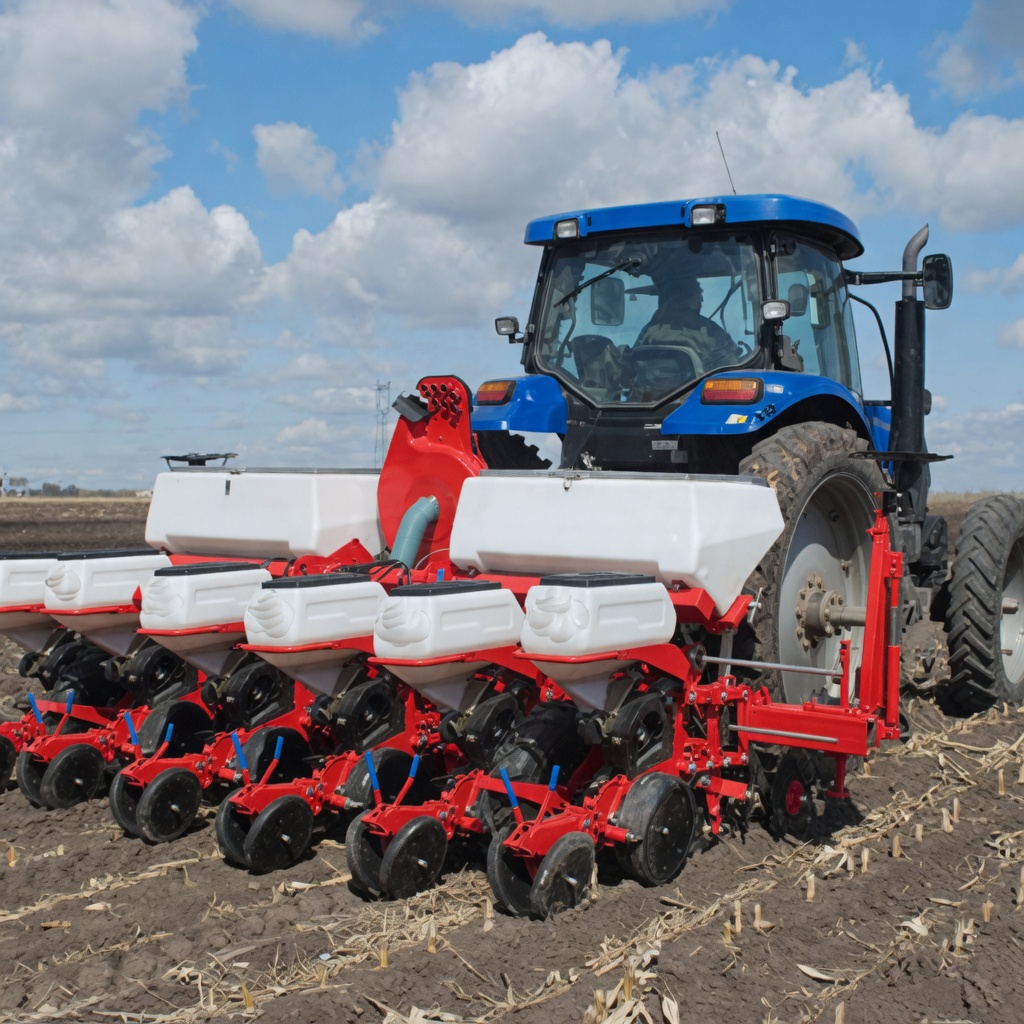
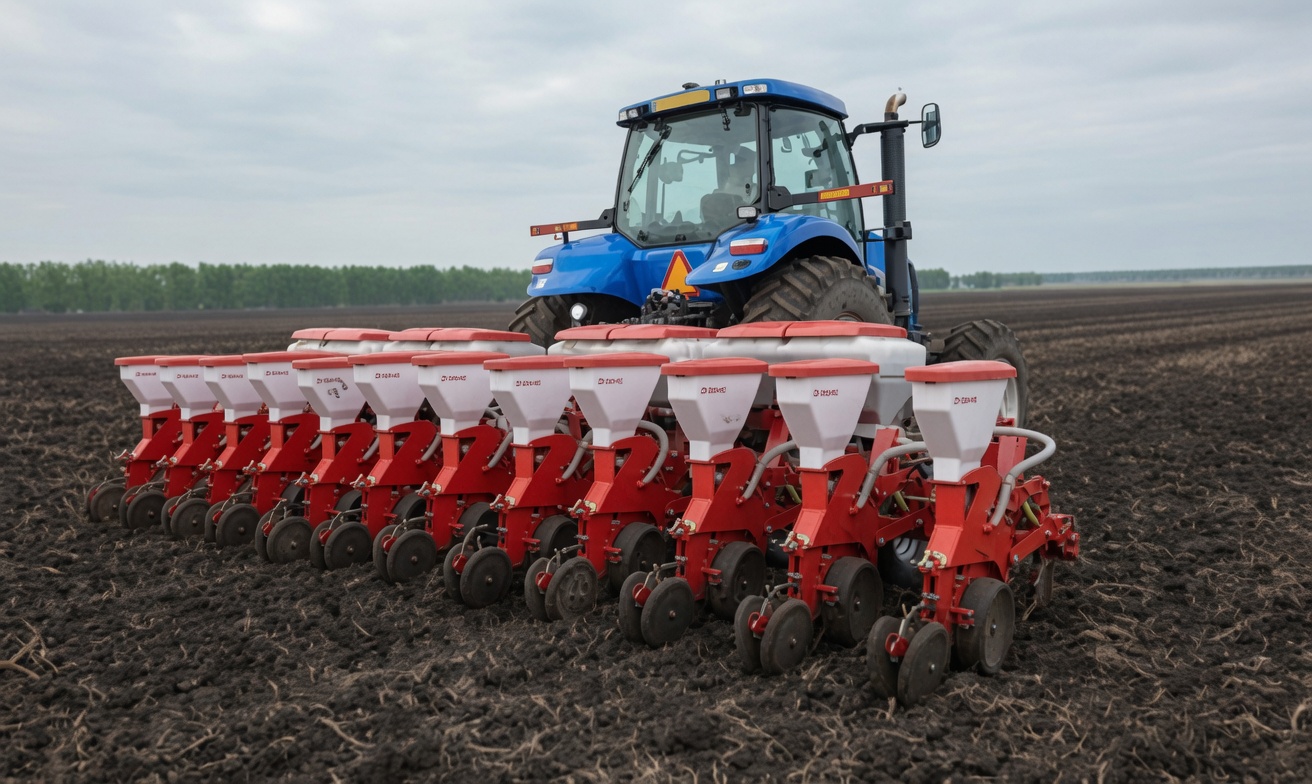
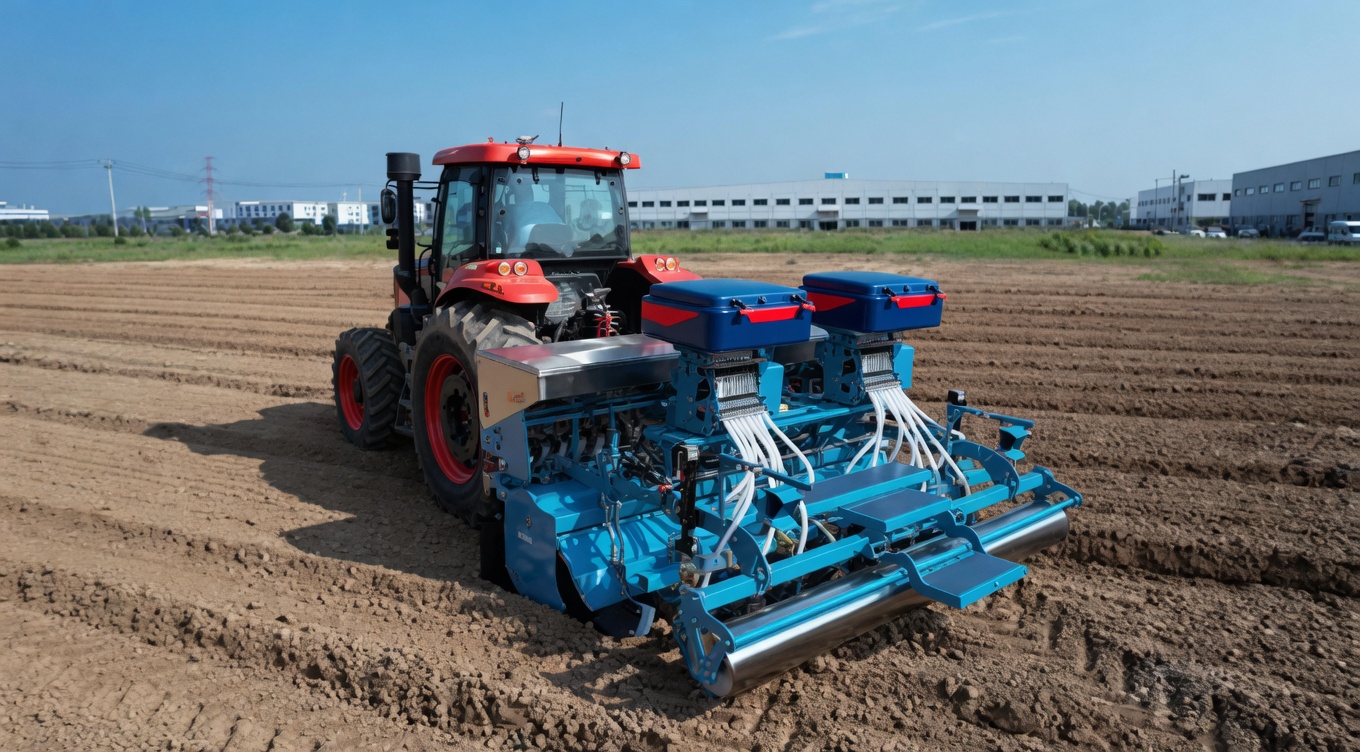 In precision seeders — including single-kernel planters for maize and soya — the worm gear shaft is the core of the seed meter drive mechanism. The ground wheel (which rotates as the machine travels forward) transmits its rotation through the worm gear shaft into the seed disc, achieving a precisely controlled angular output for every metre of forward travel. Typical gear ratios fall in the range 20:1 to 30:1, ensuring the disc delivers exactly one seed per cell across operating speeds of 4–8 km/h. The self-locking characteristic of the low-lead-angle worm shaft is critically important here: the instant the machine stops, the worm thread locks the seed disc in position, preventing the ground wheel inertia from advancing the disc by a fraction of a tooth and causing a double-seed delivery. This behaviour cannot easily be replicated with other gear types at the same cost and compactness. On UK farms in Lincolnshire and East Anglia where seed placement accuracy directly influences yield mapping outcomes, this level of positional certainty is commercially significant.
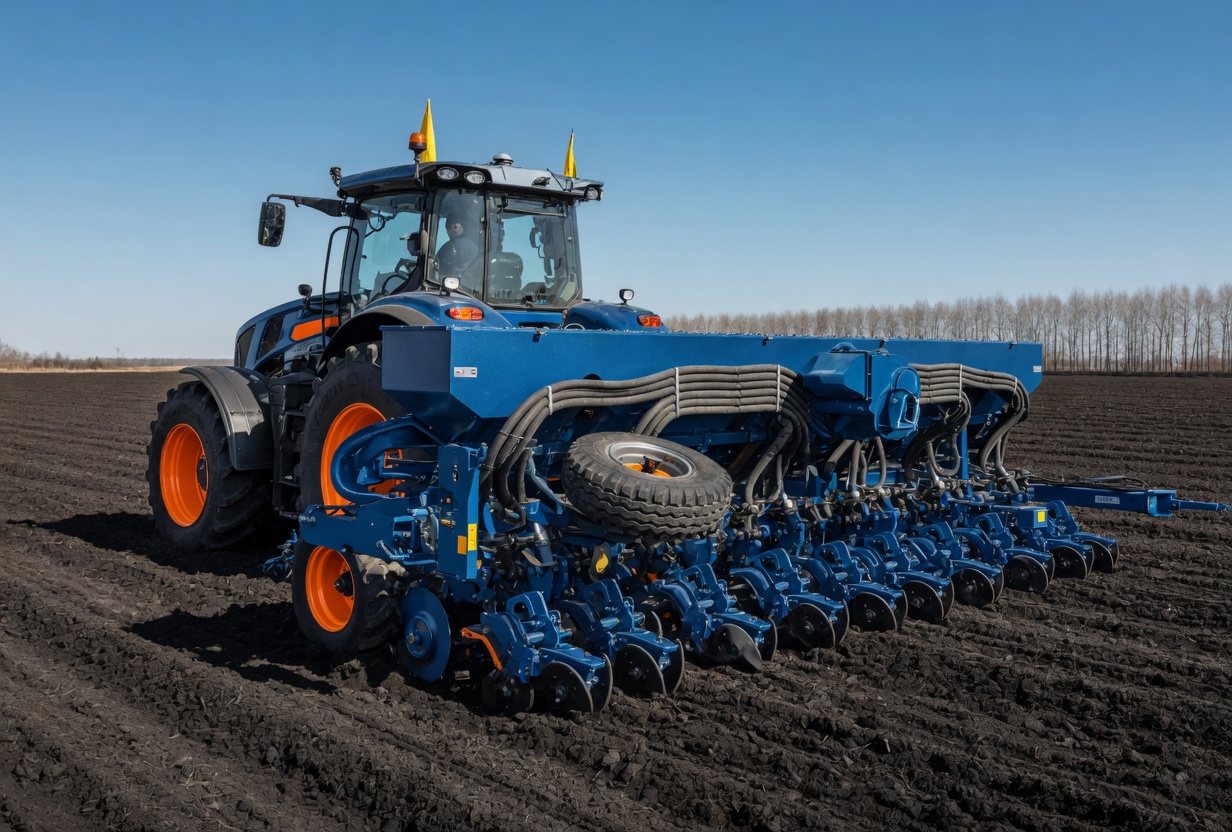
 Across the West Midlands automotive supply chain, in packaging halls from Leicester to Leeds, and in distribution warehouses operated by major UK retailers, conveyor systems rely on worm gear shaft assemblies to drive accumulation tables, inclined belt sections, and gravity-discharge rollers. The worm shaft combination of right-angle drive geometry, single-stage high ratio, and the ability to mount the motor directly above or to the side of the driven head shaft makes it the standard solution for narrow conveyor frames where parallel-axis drives simply cannot fit. Worm-drive units on conveyor lines typically run continuously, making multi-start worm shafts with efficiencies of 80–88% the preferred choice to minimise energy consumption and motor heating. Many UK conveyor OEMs integrate energy monitoring instrumentation alongside their worm gear drives to comply with the Energy Savings Opportunity Scheme (ESOS) reporting requirements that apply across large UK enterprises.
On North Sea offshore platforms and in onshore refineries along the Humber estuary, worm gear shaft assemblies drive the stem of gate valves, ball valves, and butterfly valves ranging from 150 mm to 1,200 mm bore diameter. The inherent self-locking property ensures that any valve position is mechanically maintained even under differential pressure, without any external braking or position-locking mechanism. Shafts are typically manufactured from 316L stainless or duplex steel and sealed to IP67 or better to withstand saltwater spray and high-pressure wash-down cleaning cycles.
From the biscuit lines of Manchester to the pharmaceutical filling halls of Cambridge, worm gear shafts drive the dosing heads, indexing turntables, and cap-tightening mechanisms that define production throughput. Smooth, low-noise operation matters here as much as hygiene compliance — the continuous thread engagement that characterises a worm shaft produces minimal vibration, protecting delicate product containers and reducing rejection rates from misaligned fills or damaged packaging.
The construction sector, building services engineering, and lifting equipment industries also represent major UK markets for worm gear shafts. Scissor lifts, column lifts, dock levellers, and stage automation systems in theatres and arenas across London, Edinburgh, and Glasgow routinely specify worm gear shaft assemblies for their load-holding capability and smooth positioning behaviour. The power transmission industry serving these markets has evolved to the point where specialised shaft configurations — hollow bore, flanged end, extended journal, or with integrated keyway and circlip grooves — are routinely produced as customised items for OEM supply agreements rather than relying on catalogue dimensions. This trend towards OEM-specific worm shaft designs is one of the most significant structural changes in UK power transmission sourcing over the past decade.
Ever Power: Precision Manufacturing and Custom Worm Shaft Solutions
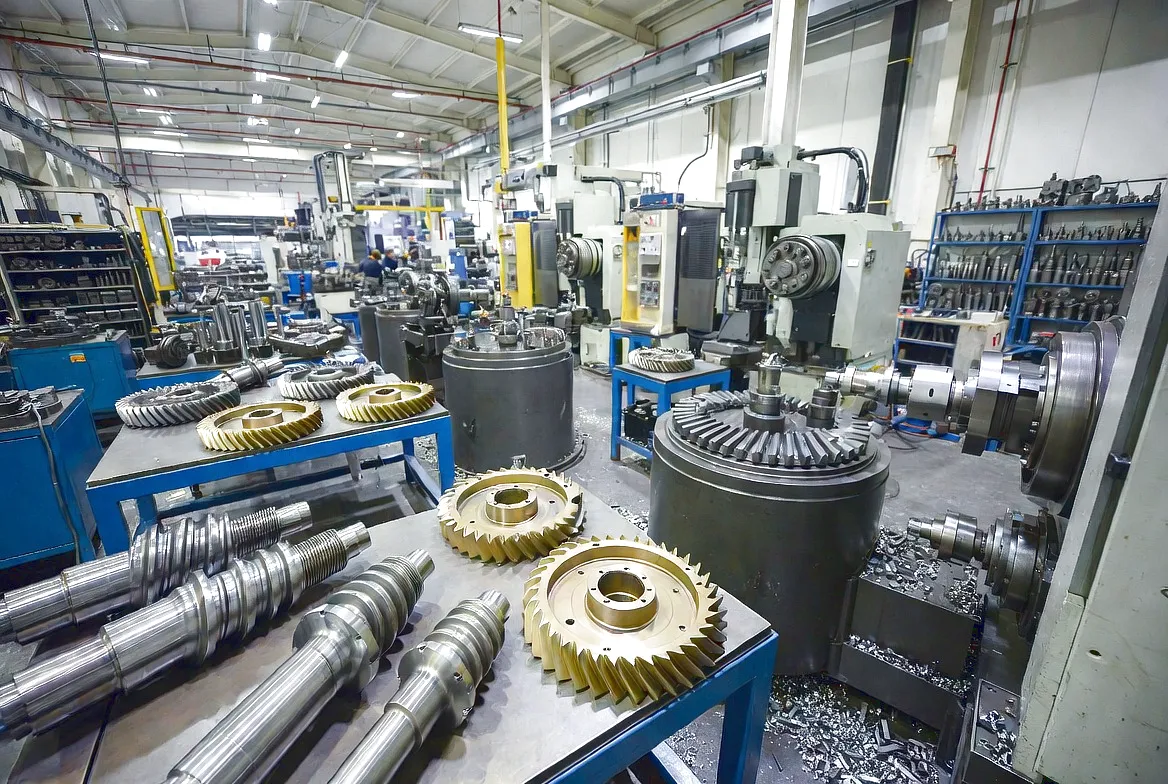
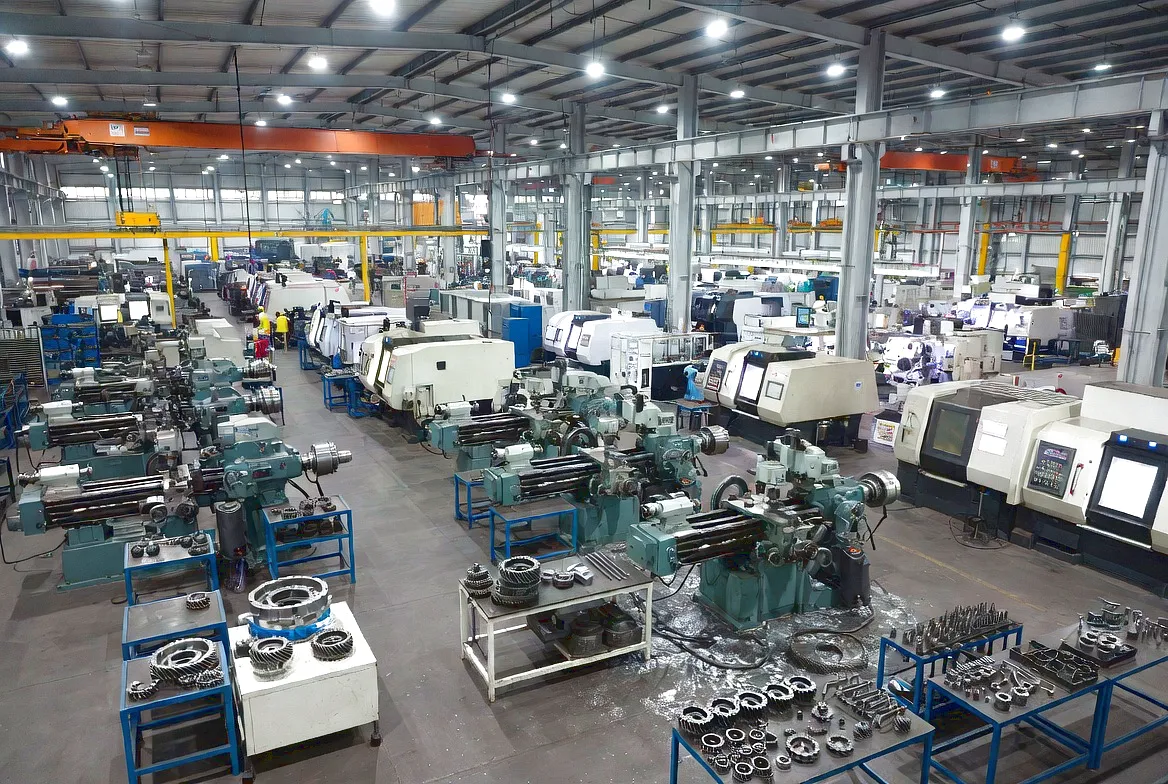
Ever Power operates as a dedicated precision manufacturer of worm gear shafts and worm gear assemblies, serving B2B customers across the United Kingdom, Europe, and global industrial markets. The manufacturing facility houses CNC worm grinding machines capable of achieving DIN Class 5 accuracy, with a full suite of heat treatment equipment — carburising furnaces, induction hardening stations, and cryogenic post-treatment baths — that ensure metallurgical consistency across every production batch. Quality is verified on coordinate measuring machines and gear testing instruments calibrated to national metrology standards, with full dimensional inspection reports available as standard for OEM supply contracts.
The customisation capability at Ever Power extends across every geometrical and material parameter of the worm gear shaft. UK customers regularly request non-standard shaft diameters, custom lead angles, specific journal configurations to fit proprietary bearing housings, or particular surface coating requirements for aggressive operating environments. Ever Power engineering team provides DFM (Design for Manufacture) consultation as part of the quotation process, ensuring that custom shaft designs can be produced repeatably within the required tolerance grades and with the shortest possible lead times. For UK customers requiring rapid prototyping ahead of a full production run, prototype batches of five to ten units are available with full inspection documentation and CMM reports, enabling confident design sign-off before committing to volume tooling.
Supply chain reliability is a genuine concern for UK plant operators who have faced extended lead times and quality inconsistencies from multiple suppliers in recent years. Ever Power vertically integrated manufacturing approach — from raw material procurement and heat treatment through to precision grinding, inspection, and export packing — means that customers receive a single point of accountability for every worm gear shaft they order. Dedicated UK account management ensures that technical queries, drawing reviews, and delivery scheduling are handled with the responsiveness that British industry demands. Standard items ship from managed inventory, with express delivery available to any UK mainland address within 48 hours of order confirmation.
📧 Request a Custom Worm Gear Shaft Quote
Email: [email protected] — response within one business day
Customer Success Story: Sheffield Hydraulics Case Study
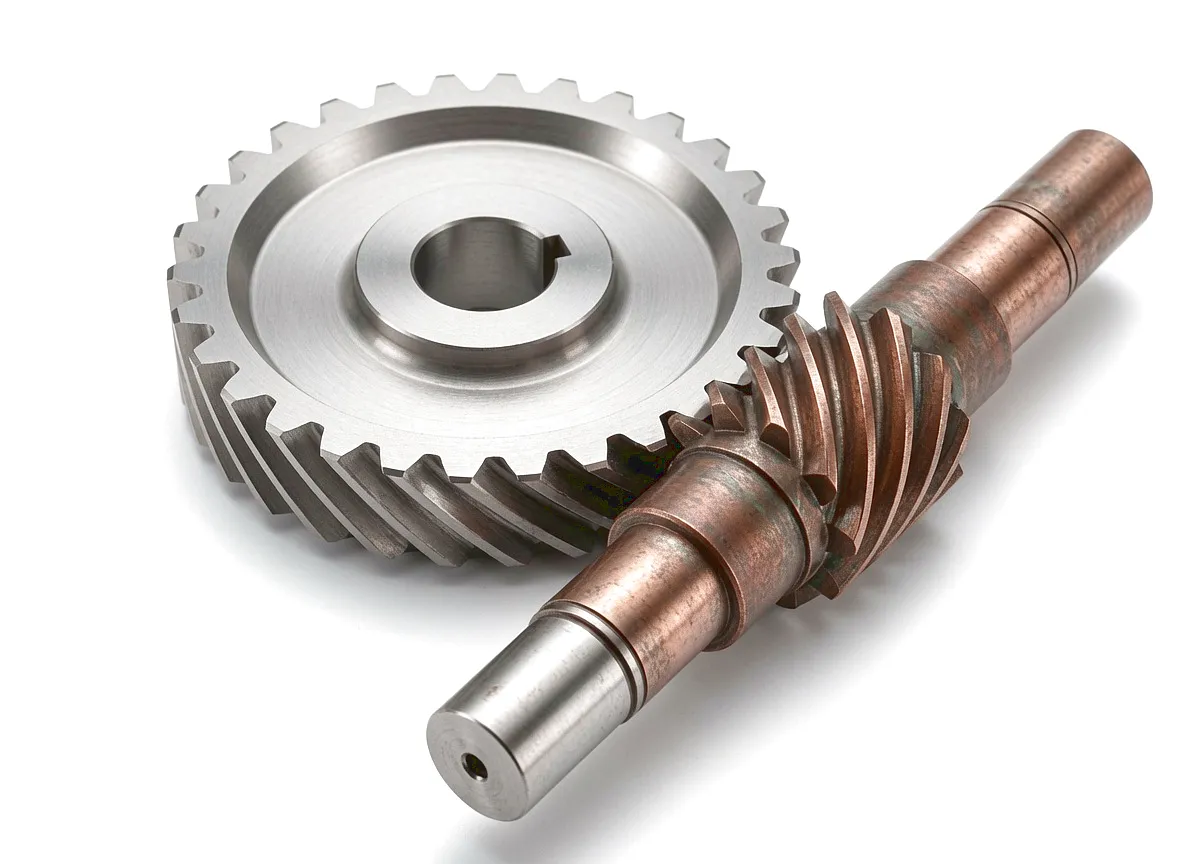
Meridian Hydraulics Limited, a specialist manufacturer of hydraulic power units and valve manifold assemblies based in Sheffield, was facing a persistent reliability problem with the worm gear shaft assemblies driving the position actuators on their bespoke gate valve series. The original shafts, sourced from a European catalogue supplier, were manufactured from C45 steel with induction hardening to 52 HRC. Under the peak shock loading conditions generated when these valves were operated on high-pressure water and slurry systems — pressures up to 120 bar with rapid cycling frequencies of up to 15 operations per hour — the journal bearing seats on the original shafts showed fretting wear within 4,000 operating hours, well short of the 10,000-hour design life specified by their end customers in the UK water utility sector.
Meridian Hydraulics approached Ever Power with a detailed failure analysis report and a request for a redesigned worm gear shaft that could meet the 10,000-hour life target without increasing the overall gearbox envelope. Ever Power engineering team reviewed the operating conditions and proposed a shift to 20CrMnTi case-hardened alloy steel with a carburised case depth of 1.1–1.3 mm and surface hardness of 60–62 HRC, along with an uprated journal geometry featuring a larger diameter bearing seat to reduce Hertzian contact stress. The shaft threads were ground to DIN Class 6 accuracy on an NILES ZE 400 worm grinding machine, and the bearing seat surfaces were finished to Ra 0.4 microns. A phosphate anti-fretting coating was applied to the journal areas prior to final assembly.
The redesigned shafts were validated over six months of accelerated endurance testing at Meridian Sheffield facility. At the end of the test programme, covering the equivalent of 11,800 operating hours under simulated field conditions, the Ever Power shafts showed no measurable wear on the journal bearing seats and less than 0.008 mm of thread flank wear — well within the acceptable limits for continued service. Meridian Hydraulics subsequently placed a framework supply agreement covering 240 worm gear shafts per year across four shaft sizes, with delivery in batches of 60 units on a six-week call-off cycle. The transition from catalogue sourcing to a custom Ever Power supply agreement reduced Meridian warranty return rate on the affected valve series by 94% over the subsequent twelve months of field operation.
“The custom shaft solution Ever Power provided completely solved the fretting wear issue we had been fighting for two years. The metallurgical documentation and CMM inspection reports that came with the first batch gave our QA team exactly what they needed to approve the parts without additional in-house testing. The six-week call-off arrangement fits our production schedule perfectly.”
“We redesigned our conveyor head shaft configuration last year and needed worm shafts with a non-catalogue bore profile and an extended journal for our specific bearing housing. Ever Power turned around the first prototype batch in 28 days from drawing approval. Dimensional accuracy was exceptional — every shaft measured within 4 micrometres of nominal on all critical diameters. We have now moved all our worm shaft procurement to them.”
“Our valve actuator application demanded 316L stainless worm shafts with a specific sealing groove geometry that no off-the-shelf supplier could match. Ever Power technical team reviewed our assembly drawing within 24 hours and came back with a feasible manufacturing proposal at a competitive price point. Delivery of the first production batch to our facility on Teesside arrived on schedule and every unit passed our incoming inspection without a single rejection.”
Product Gallery
Frequently Asked Questions
The price of a custom worm gear shaft depends on the shaft diameter, material grade, heat treatment specification, quantity, and dimensional tolerances required. For UK buyers, small batch orders of 5–50 units are entirely feasible with precision manufacturers like Ever Power. Contact [email protected] with your drawing or specification and you can receive a detailed quote within one business day. Volume pricing is available for annual framework agreements, and prototype pricing is separately available for pre-production development batches.
A single-start worm shaft has one continuous helical thread and achieves the highest gear ratios (up to 100:1) with the lowest efficiency, typically 45–65%. A multi-start shaft — with two, three, or four thread starts — achieves lower ratios but significantly higher efficiency (75–92%). For a Birmingham conveyor drive running continuously, a two- or four-start worm shaft is the better choice: the higher efficiency reduces motor energy consumption and heat generation, extending lubricant and seal life. Reserve single-start configurations for low-duty, self-locking applications where positional holding under power-off conditions is the primary requirement.
For food processing environments in the UK subject to regular wash-down with hot water or sanitising chemicals, stainless steel 316L is the preferred material for worm gear shafts. Its elevated molybdenum content improves resistance to chloride corrosion compared with standard grade 304. The shaft should be finished to a surface roughness of Ra 0.8 microns or better on external surfaces to prevent bacterial accumulation in surface micro-crevices, in compliance with UK Food Safety Act requirements and BFBPA hygiene guidelines. Lip seal groove dimensions should be sized for FDA-compliant elastomer seals.
While several general-purpose engineering component distributors operate across Sheffield and the Yorkshire region, finding a supplier with true precision manufacturing capability for bespoke worm gear shafts requires looking at specialist producers. Ever Power maintains UK-dedicated stock of common shaft sizes and can dispatch standard items within 48 hours to any Yorkshire or UK mainland address. For urgent custom replacement shafts, the express prototype service targets 10–15 working days from drawing approval to delivery, which covers most unplanned maintenance scenarios on plant that cannot sustain extended downtime.
Output torque (T_out) equals input torque (T_in) multiplied by the gear ratio and the transmission efficiency: T_out = T_in × ratio × efficiency. For a motor producing 20 N·m at 1,450 rpm driving through a 40:1 worm gear shaft at 80% efficiency, the output torque is 20 × 40 × 0.80 = 640 N·m. Always apply a service factor of 1.5–2.5 depending on shock loading conditions, starting frequency, and duty cycle. UK lifting equipment applications governed by LOLER (Lifting Operations and Lifting Equipment Regulations 1998) require documented load calculations, and these service factor requirements should be verified with a qualified mechanical engineer before final specification.
Replacement is generally more cost-effective than refurbishment once the thread flank wear depth exceeds 0.15 mm, when pitting or spalling covers more than 20% of the active tooth face, or when the journal bearing seats show ovality exceeding 0.02 mm. Typical early-warning signs visible during UK planned preventive maintenance (PPM) inspections include increased gearbox operating temperature, elevated noise (a shift from smooth hum to intermittent clicking or roughness), oil discolouration from metallic particulate content, and visible backlash increase at the output shaft. Vibration analysis through a condition-monitoring service can provide quantitative trend data to support replacement timing decisions.
Send your drawing, dimensional requirements, or technical specification to Ever Power engineering team. UK customers receive a detailed technical and commercial proposal within one business day.
📧 [email protected] — Get Your Quote
edit by gzl