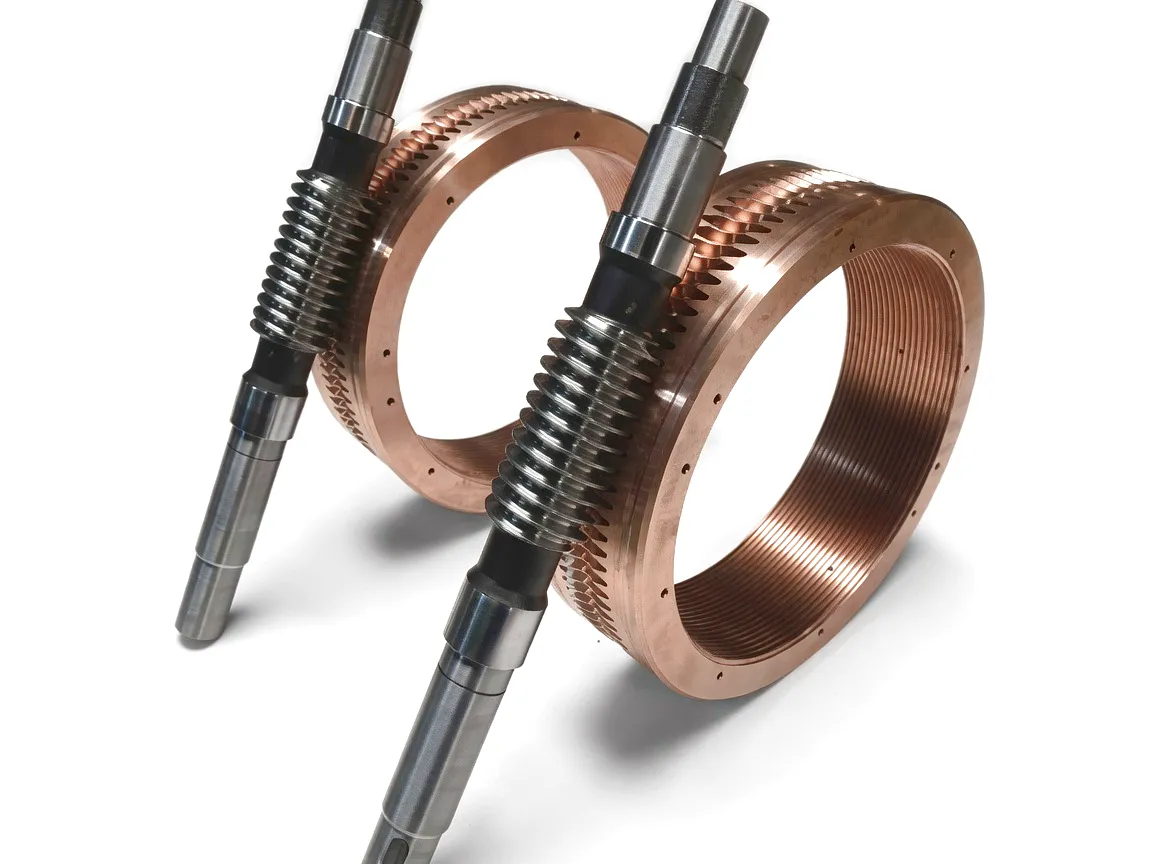
Working Principle of the Worm Gear Shaft
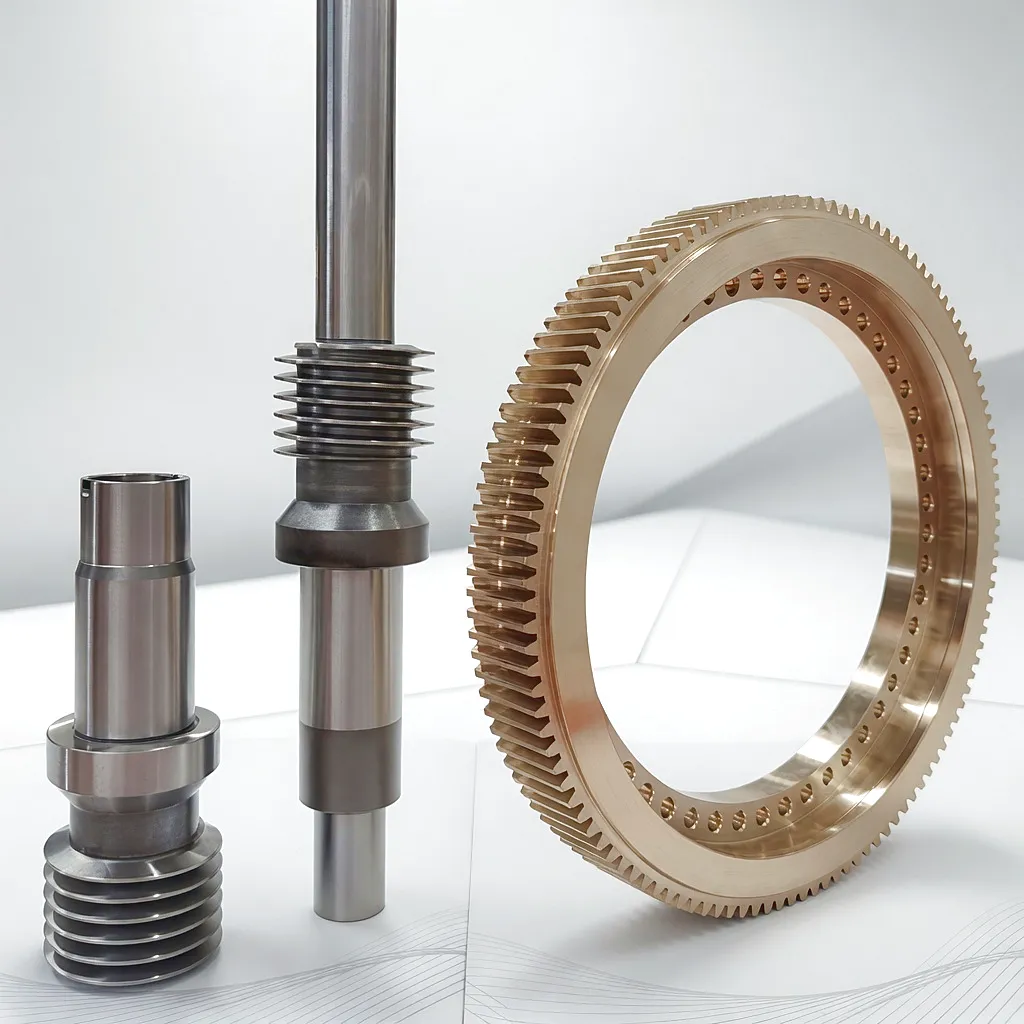
Self-Locking MechanismWhen the lead angle of the worm is below approximately 5–6°, the friction coefficient is high enough that reverse torque applied at the output wheel cannot back-drive the worm. This self-locking behaviour acts as an inherent brake, essential for inclined conveyor sections, lifting stages, and vertical transfer units found throughout UK distribution centres.
High Reduction RatiosSingle-stage worm gear shafts routinely achieve ratios from 5:1 to 100:1, and double-stage arrangements extend this to 3600:1 without multiple gearbox housings. For a 1450 r/min motor driving a 30 r/min output roller, a single 48:1 worm stage delivers the exact output with none of the axial stacking required by planetary or helical-bevel solutions.
Quiet, Smooth Power TransferThe helical engagement of the worm thread produces a rolling-plus-sliding contact that, when properly lubricated, is considerably quieter than spur gears of equivalent ratio. This is particularly valued on food production lines, clean-room logistics systems, and any application in the UK where noise at work regulations impose strict db(A) ceilings on machinery in continuous operation.
Compact 90° Power TransmissionThe orthogonal shaft arrangement — input and output at right angles — is a spatial advantage no other gear type can match without a bevel stage. In under-roller drive configurations, the motor mounts flush beneath the conveyor frame, cutting the overall profile height and enabling conveyor decks to sit closer to floor level, a key ergonomic requirement in many modern UK warehousing fit-outs.
Core Materials in Worm Gear Shaft Manufacturing
Material selection is not a secondary consideration in worm gear shaft engineering — it is where the performance envelope is ultimately set. The worm and the wheel are made from deliberately mismatched materials: a hard steel worm runs against a softer bronze or cast-iron wheel. This intentional hardness differential means that wear concentrates in the replaceable wheel rather than in the shaft, extending the service life of the more expensive precision-machined component while keeping replacement costs manageable over the product’s working life, which in UK industrial deployments commonly spans 10–15 years of three-shift operation.
Case-hardened to HRC 58–62 through carburising and quenching, this Chinese-standard alloy (equivalent to DIN 16MnCr5) provides a wear-resistant case depth of 0.8–1.5 mm over a tough, ductile core. The hardened surface resists the micro-pitting and abrasive wear inherent in sliding worm contact, while the tough core absorbs shock loads without brittleness — a combination that suits the start-stop duty cycles of accumulation conveyor zones.
Where input torque exceeds 500 N·m or duty cycles are particularly severe — rolling mill auxiliaries, heavy press transfer lines — 40Cr or 42CrMo steel is specified. Induction-hardened to HRC 45–55 with a deep transition zone, these materials offer superior fatigue resistance under cyclic torsional loading. Their elevated tensile strength (up to 1080 MPa for 42CrMo in QT condition) permits smaller shaft diameters for a given torque, a worthwhile advantage in tight roller-centre applications.
The industry standard wheel material, phosphor bronze offers an outstanding combination of low friction coefficient against hardened steel (typically 0.04–0.07 with oil lubrication), good conformability that allows the wheel to run-in against the worm without scoring, and adequate yield strength (~280 MPa) to resist tooth deformation. Its natural corrosion resistance also makes it suitable for light wash-down environments, such as food conveyor applications in Sheffield’s food processing sector.
For conveyor-mounted units where weight is a critical parameter, die-cast aluminium alloy housings reduce the total drive weight by 60% compared with grey iron equivalents. The superior thermal conductivity of aluminium (roughly 160 W/m·K versus 50 W/m·K for iron) also aids heat dissipation from the gear mesh, extending oil life and allowing higher continuous duty ratings — a practical benefit for 24/7 e-commerce fulfilment centres operating at locations such as Daventry and Lutterworth.
Technical & Performance Specification Table
The table below consolidates the principal engineering parameters that define the performance envelope of a worm gear shaft in industrial roller conveyor applications. These figures are indicative of the standard product range; custom values beyond these ranges are available on request from Ever Power’s engineering team.
| Parameter | Standard Range | Custom / Max | Unit / Notes |
|---|---|---|---|
| Input Power | 0.1 – 1.0 | Up to 200 | kW |
| Output Speed | 20 – 60 | 5 – 200 | r/min |
| Gear Ratio | 10:1 – 60:1 | 5:1 – 100:1 (single stage) | — |
| Output Torque | 10 – 500 | Up to 8,000 | N·m |
| Shaft Angle | 90° | 90° (standard); non-90° on request | degrees |
| Mechanical Efficiency | 55 – 75% | Up to 82% (multi-start worm) | % |
| Worm Shaft Material | 20CrMnTi (HRC 58–62) | 42CrMo, stainless 316L | Case-hardened / induction HT |
| Worm Wheel Material | ZCuSn10P1 phosphor bronze | Aluminium bronze, ductile iron | — |
| Bearing Configuration | Tapered roller (input + output) | Angular contact, spherical roller | — |
| Housing Material | Die-cast aluminium ADC12 | Grey iron GG25, ductile iron | — |
| Operating Temperature | -20°C to +80°C | -40°C to +120°C (special seal + lubricant) | °C |
| IP Protection | IP54 | IP65, IP67 | IEC 60529 |
| Mounting Positions | 6 standard (B3/B5/B6…) | Any orientation by design | — |
| Lubrication | ISO VG 220 mineral gear oil | Synthetic PAO, food-grade H1 | Splash or forced circulation |
Core Technical Advantages
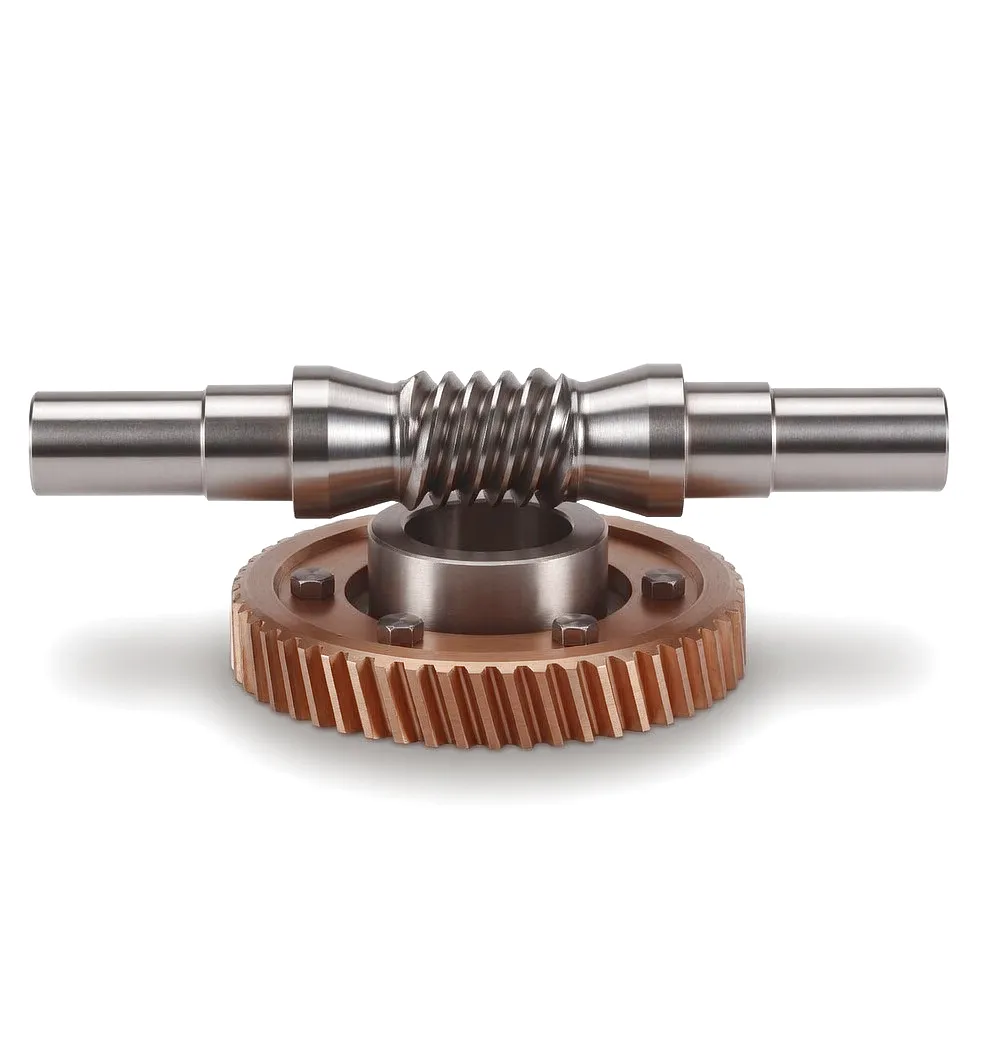
A worm gearbox achieves a 90° axis change and high reduction ratio within a housing volume 30–60% smaller than a comparable spiral bevel or helical-bevel arrangement. This footprint reduction directly translates to shorter conveyor frame heights, narrower aisle clearances, and greater design flexibility in retrofitting existing factory layouts — a benefit acutely valued in Birmingham’s dense Tyseley industrial estates, where floor space is premium.
Self-locking worm gear shafts hold their output position without powered brakes or external mechanical locking devices. This simplifies the electrical control architecture, removes a potential failure mode (brake wear, coil burnout), and reduces the bill of materials cost per drive station. For a 200-roller accumulation conveyor, eliminating independent brakes on each zone represents a non-trivial saving in both initial capital and ongoing maintenance, particularly relevant to the UK manufacturing sector’s cost-efficiency pressures.
The sliding contact geometry of a worm pair dissipates peak impact energy more effectively than the rolling contact of spur or helical gears. When a heavy pallet is inducted onto a conveyor zone, the brief torque spike that occurs is absorbed without the tooth chipping or fatigue cracking that can afflict helical gear trains in the same scenario. This inherent shock tolerance makes the worm gear shaft a dependable choice for pallet entry stations, right-angle transfers, and pop-up transfer units across UK logistics parks such as those in the East Midlands Gateway.
Because each worm thread tooth meshes progressively and continuously rather than in discrete clicks, vibration levels are markedly lower than with equivalent spur gear stages. In a high-density conveyor network that may incorporate hundreds of drive units in a single facility, cumulative vibration transferred through the structure can accelerate frame fatigue and create unacceptable noise environments. Deploying worm gear shaft drives throughout such a system substantially mitigates this risk, contributing to compliance with the UK Control of Vibration at Work Regulations 2005.
At input powers below 2 kW — precisely the range where roller conveyor drives cluster — worm gear shafts are consistently the most economical solution on a cost-per-unit-torque basis. The simplicity of the gear set, the die-castable aluminium housing, and the minimal number of rotating parts (two gears, four bearings, two shaft seals) keep manufacturing cost low without sacrificing precision. This economic advantage compounds across a 500-roller conveyor system where every penny saved per drive station translates to significant project-level savings, supporting the UK manufacturing industry’s drive toward leaner capital investment.
Modern worm gear shaft units are available in flange-mount (B5), foot-mount (B3), shaft-mount (hollow bore), and rail-mount configurations, covering virtually every mechanical integration scenario found in conveyor design. Hollow bore versions allow the roller shaft to pass directly through the gearbox, eliminating couplings and reducing alignment sensitivity — a practical advantage that shortens installation time significantly, which matters in the tight commissioning schedules typical of UK logistics centre fit-outs during peak pre-Christmas build programmes.
Industrial Application Scenarios
The worm gear shaft’s blend of compact geometry, self-locking behaviour, and smooth torque delivery has earned it a role in virtually every corner of material handling and process machinery. The following scenarios represent the most frequent and demanding deployments encountered by UK industrial customers, from Scotland’s offshore supply chain right down to the channel ports of Kent and Essex.
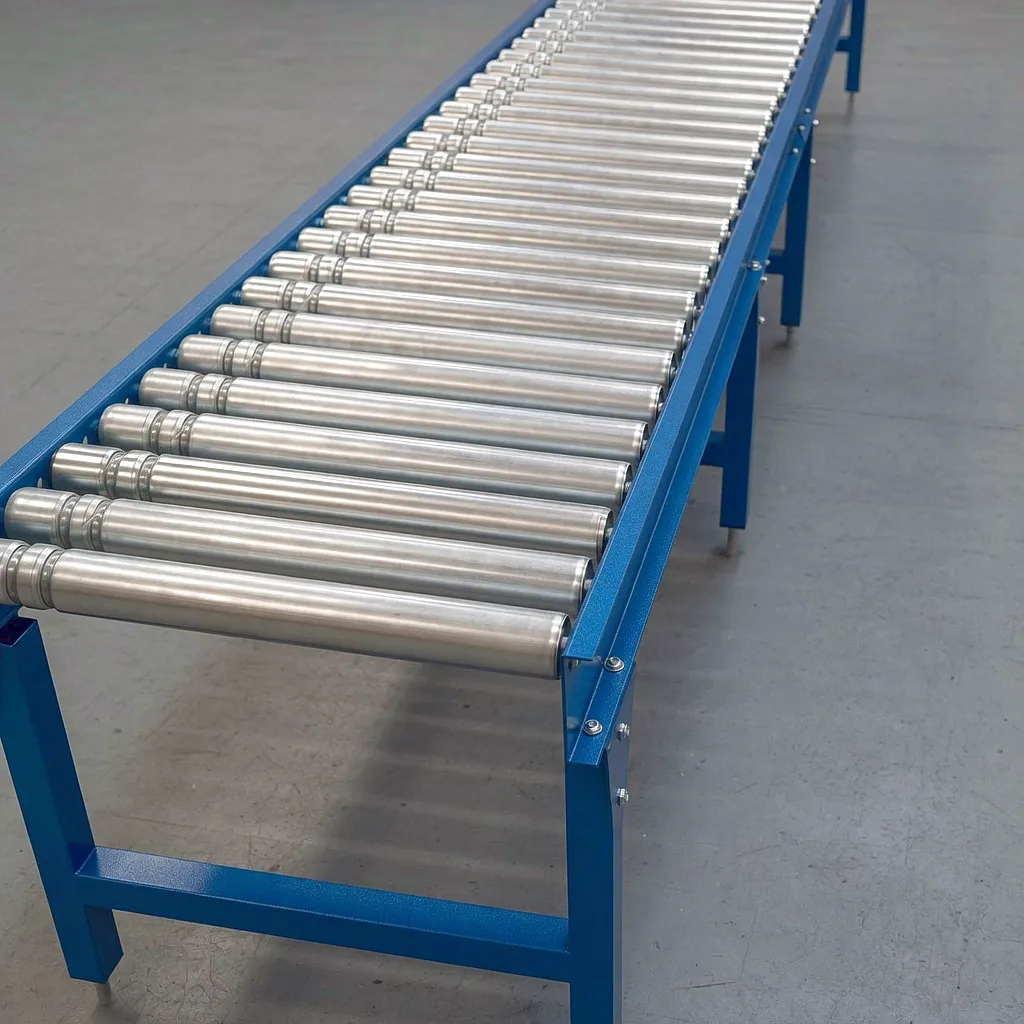
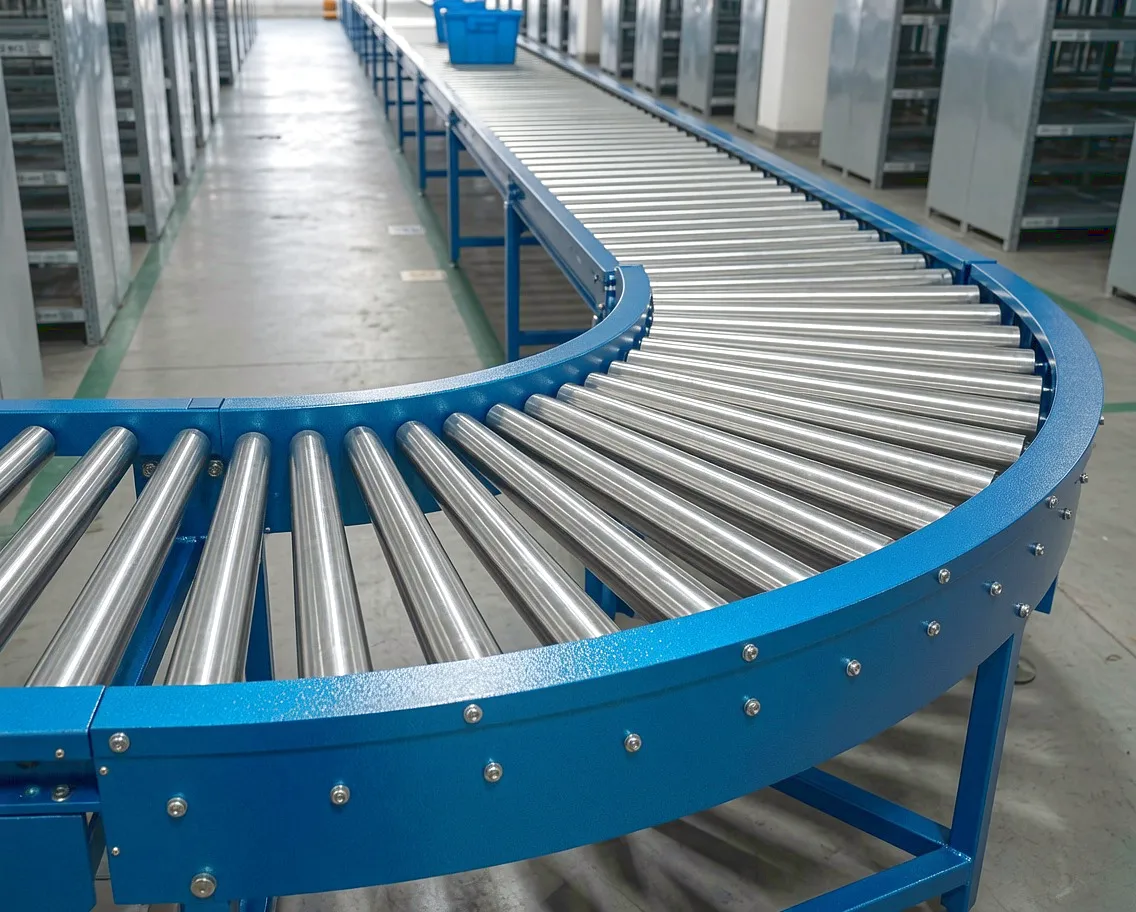
Birmingham’s automotive supply chain — spanning component manufacturers in the Black Country right through to Jaguar Land Rover’s Solihull assembly campus — relies extensively on worm gear shaft drives for skid transfer conveyors, engine dress conveyors, and underbody inspection lines. The constant low speed (typically 10–25 r/min), high torque requirement of moving vehicle bodies weighing 500–1500 kg precisely matches the output profile of a properly sized worm gear shaft unit. The right-angle layout also allows the motor to be tucked completely inside the conveyor frame, maintaining the flat upper surface needed for body support skids to slide without obstruction.
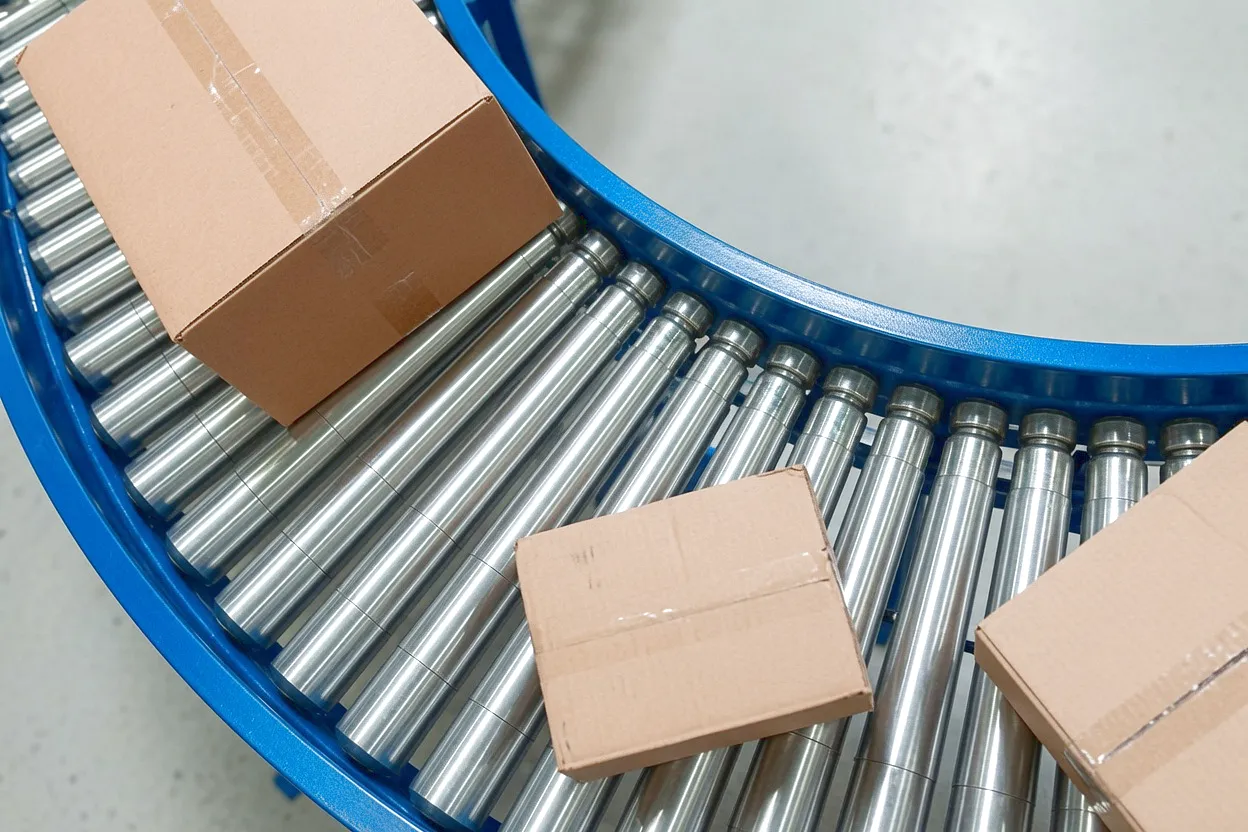
Yorkshire’s food processing sector — from large-scale ready-meal production in Bradford to specialist confectionery in Halifax — demands drives that tolerate daily wash-down routines, occasional condensation, and the strict hygiene standards imposed by the Food Standards Agency. Stainless steel shaft options, IP65/IP67 sealed housings, and food-grade H1 lubricants combine to make the worm gear shaft the preferred drive for tunnel conveyor ovens, tray-handling systems, blast chiller infeed lines, and multi-lane packing tables. The smooth, vibration-free operation also minimises disturbance to delicate products during high-speed weighing and portioning operations upstream of packing.
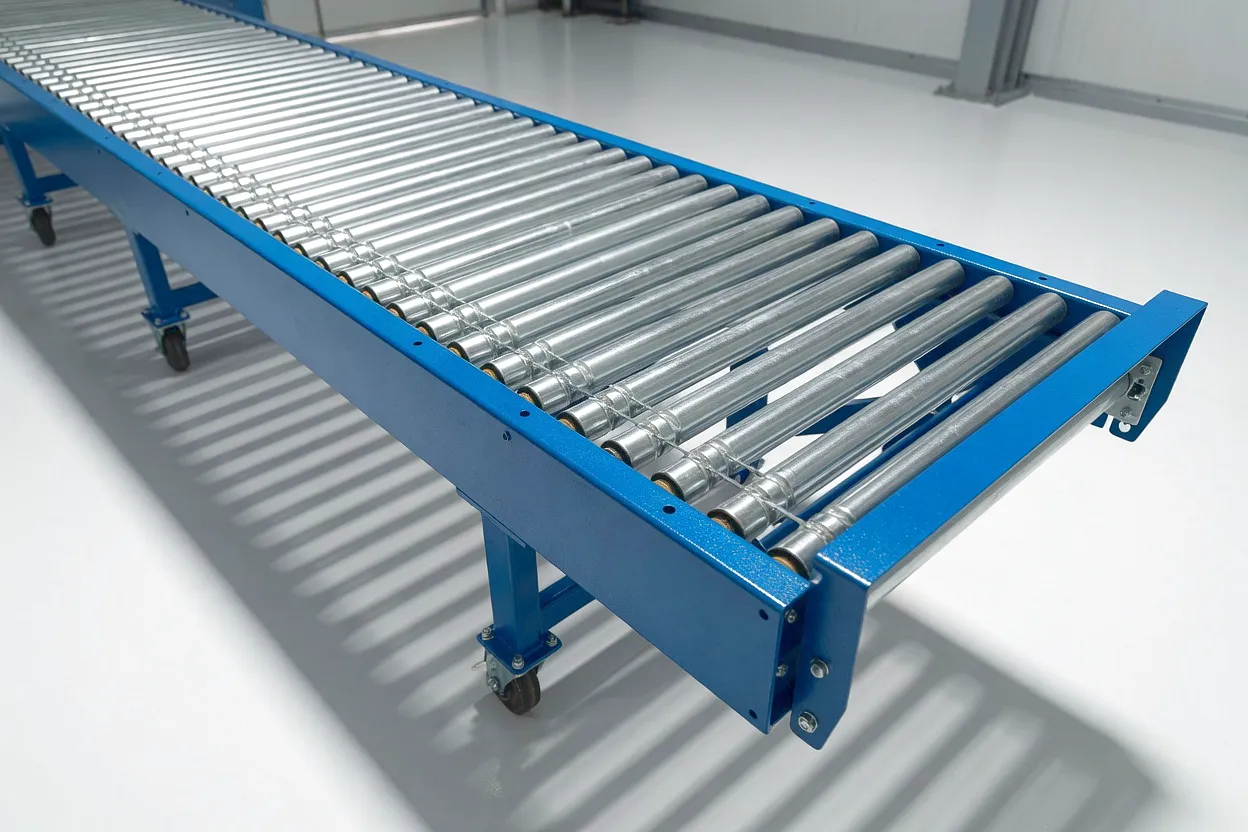
Sheffield’s world-renowned special steels industry continues to operate some of the most demanding roller conveyor environments anywhere in UK manufacturing: high-temperature billet transfer lines where ambient temperatures exceed 60°C, scale-contaminated environments that would destroy inadequately sealed drives, and shock loads from multi-tonne steel sections that test the torsional limits of any gearbox. In these conditions, heavy-duty worm gear shaft units specified with grey iron housings, high-temperature synthetic lubricants, labyrinth seals, and 42CrMo shafts perform reliably where lighter solutions fail. The worm pair’s inherent shock absorption is a particularly critical property here, where a 2-tonne billet arriving at a transfer roller can generate an instantaneous torque spike five to ten times the running torque.
Beyond these headline sectors, worm gear shaft drives serve pharmaceutical tablet press conveyors in Cheshire, paper reel handling systems in Wales, port container terminal roller tables in the Port of Felixstowe, and automated parcel sorting at Royal Mail’s national processing centres. The through-line connecting all these applications is consistent: a requirement for reliable low-speed high-torque output, compact installation, and predictable, trouble-free service over multi-year cycles. The worm gear shaft delivers on all three fronts, which is why it remains the first-choice drive technology for engineers who have worked with roller conveyor systems long enough to appreciate the value of simplicity done precisely.
Ever Power: Precision Manufacturing & Custom Worm Gear Shaft Solutions
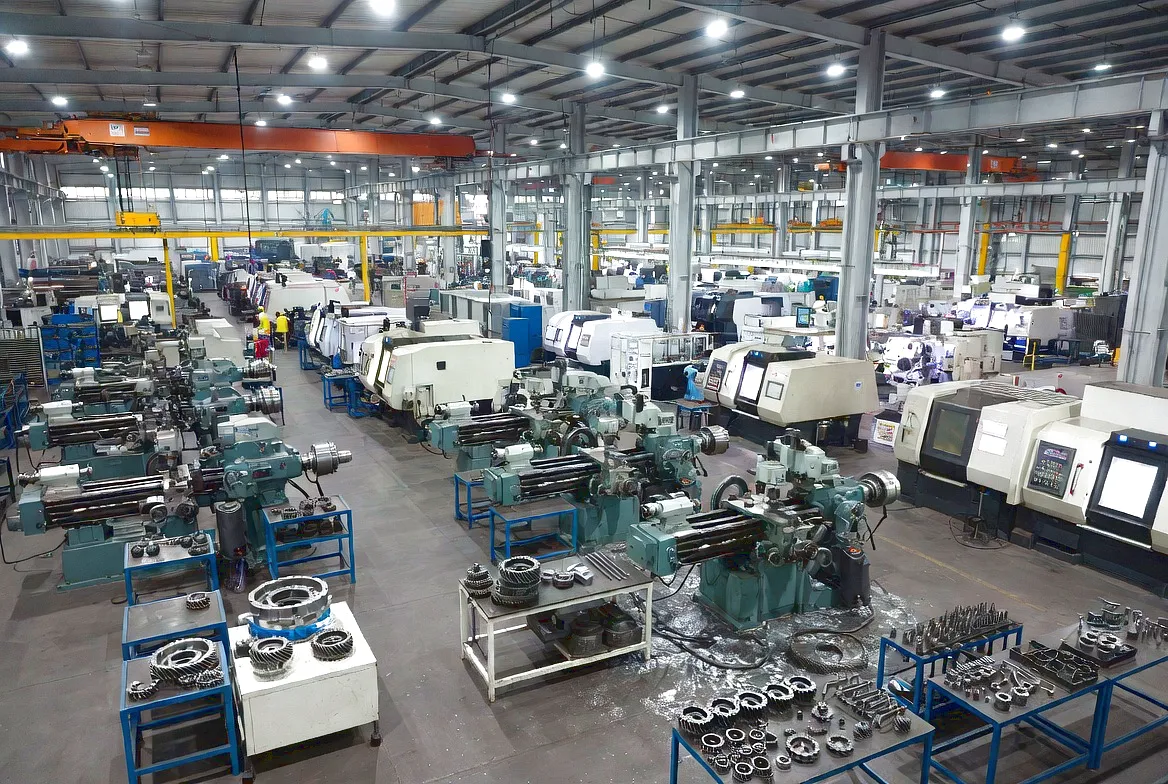
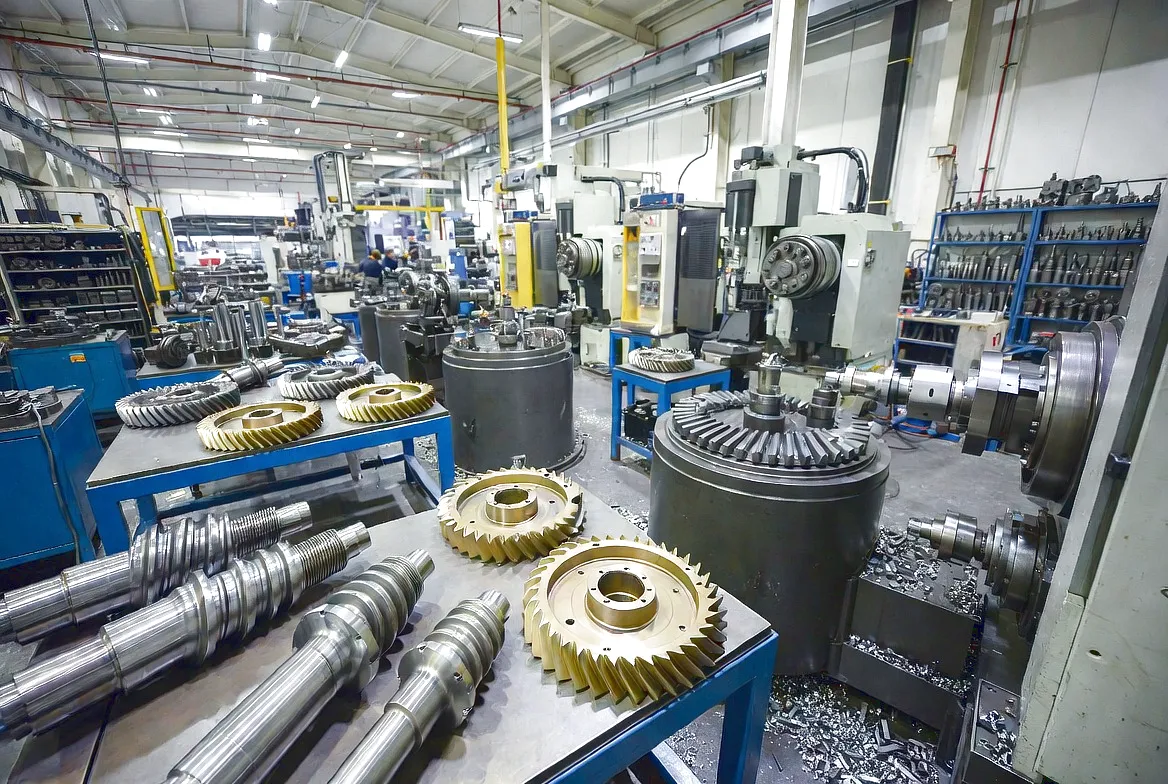
From concept sketch to production-ready DXF in as little as 5 working days. Proprietary gear design software validates tooth profile, contact ratio, safety factor, and thermal rating before a single chip is cut.
Send Ever Power a worn-out or obsolete worm gear shaft and receive a dimensionally matched, material-improved replacement. Ideal for maintaining legacy conveyor lines where original supplier documentation no longer exists.
Black oxide, zinc phosphate, electroless nickel, hard chrome, and physical vapour deposition (PVD) coatings are available on worm shaft surfaces to extend wear life and corrosion resistance in demanding environments.
Ever Power supplies complete gearmotors — worm gear shaft unit pre-mated with IE2/IE3 motor, terminal box, and encoder if required — tested as an assembly before despatch, reducing site commissioning time and eliminating flange-fit surprises on the factory floor.
Ready to discuss your custom worm gear shaft requirements?
Our engineering team responds to technical enquiries within 24 hours, with detailed proposals including gear calculations, material recommendations, and indicative pricing within 48 hours.
Customer Success Story: Midlands Automotive Tier-2 Supplier
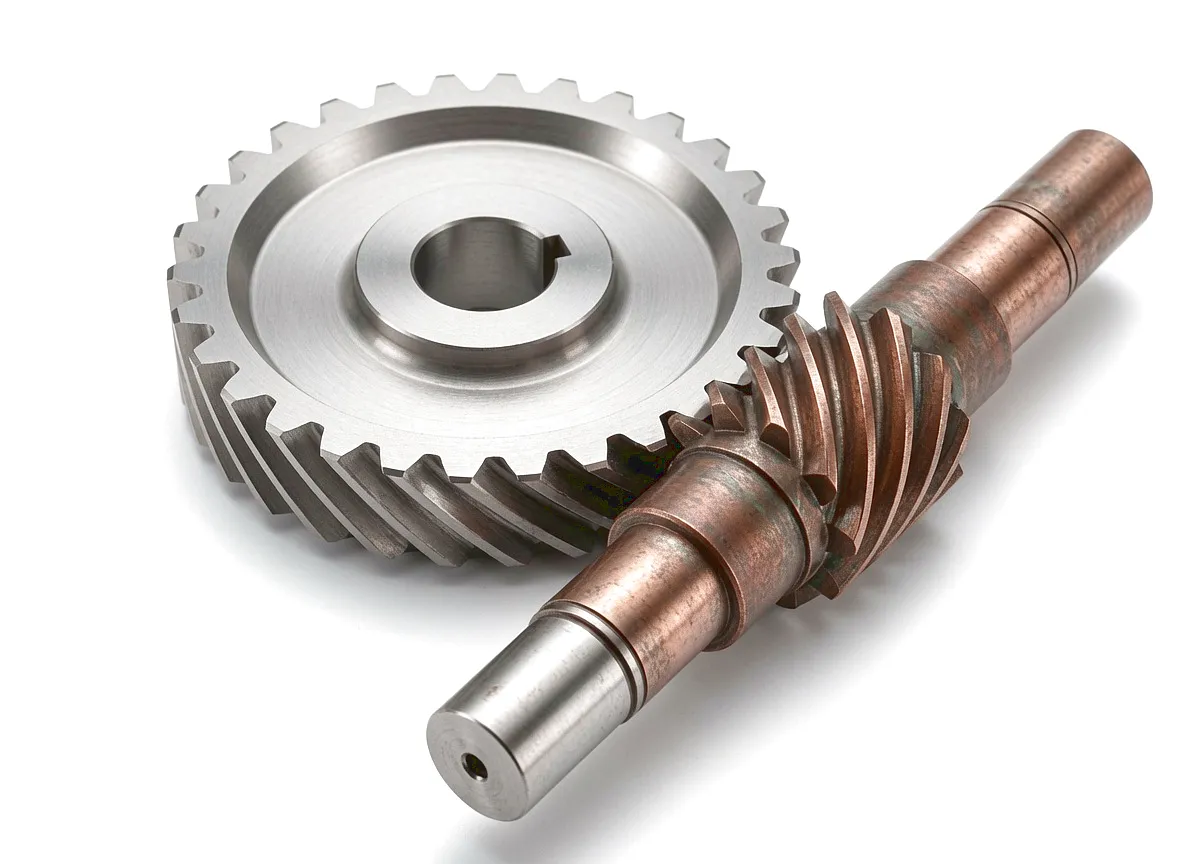
Challenge & Solution: The heat treatment bay presents a harsh drive environment: ambient temperatures reaching 55°C near the oven exit, scale and quench fluid contamination, and high-shock induction of heavy steel baskets weighing up to 80 kg. Standard catalogue worm gear shaft units rated for normal industrial duty were inadequate. Working with the Walsall team’s mechanical engineer, Ever Power’s applications team specified a custom series of 18 worm gear shaft units, each rated at 0.55 kW with a 40:1 ratio giving 36 r/min output, featuring 42CrMo induction-hardened shafts, IP65 rated cast-iron housings, high-temperature synthetic gear oil (rated to 120°C continuous), and double-lip shaft seals with a grease-purge channel to exclude contamination. The units were supplied pre-mounted on custom roller brackets to simplify site installation and reduce the mechanical contractor’s on-site labour time. The total project, from initial enquiry to commissioned and running line, took 11 weeks — well within the customer’s planned summer maintenance shutdown window.
Results: Following commissioning, the heat treatment line achieved an immediate 23% increase in throughput by eliminating the forced stops caused by centralised drive maintenance. The accumulation zones between the quench tank and tempering oven allowed components to queue automatically, smoothing the flow and reducing scrap caused by over-tempering during previous manual handling delays. Eighteen months after commissioning, zero worm gear shaft failures have been recorded across all 18 drive units, and the engineering team has since specified the same Ever Power units for a second line in the cold forming section of the same facility.
What Our UK Customers Say
“The custom 42CrMo shaft option was the detail that made this project viable. Our heat treatment bay runs at temperatures that destroy standard drives, but these units have been faultless for over a year. Ever Power’s applications team understood the thermal environment immediately and specified correctly first time — no protracted back-and-forth.”
“We needed a non-standard hollow bore diameter to mate with our existing roller shaft design, and Ever Power turned this around in under three weeks. The dimensional accuracy when we installed the units was excellent — every one fitted without any adjustment. Their packing for sea freight was also very thorough; nothing arrived damaged despite a challenging shipment.”
“We’ve been specifying worm gear shaft drives from Ever Power for our food-grade conveyor projects for two years now. The IP65 sealed units with food-grade lubricant have passed every BRC audit without comment. Pricing is consistently competitive with European suppliers, and the lead times have never let us down. I’d recommend them without hesitation to any UK food sector integrator.”
Frequently Asked Questions
The ratio selection begins with your target output speed — typically 20–60 r/min for standard roller conveyors. Divide your motor’s synchronous speed (1450 r/min for a 4-pole 50 Hz motor in the UK) by your required output speed to get the target ratio. Add 10–15% to account for motor slip, then round to the nearest standard ratio. For accumulation zones specifically, also verify that the selected ratio gives a worm lead angle below 5° to ensure reliable self-locking without external brakes. Ever Power’s engineering team can run this calculation for you based on your specific product weight, roller diameter, and line speed — simply email your parameters to [email protected].
Standard catalogue worm gear shaft units in the 0.1–1 kW range are typically priced between £40 and £180 per unit depending on ratio, size, and specification, with ex-works lead times of 3–7 working days. Custom-specified units — non-standard bore, special material, or modified output shaft — typically carry a lead time of 3–5 weeks from approved drawings and are priced on application. Sea freight to UK ports, combined with customs clearance, typically adds 3–5 weeks to ex-works lead times, so we recommend building a small buffer stock or arranging scheduled shipments. Request a formal quote at [email protected] with your technical requirements and delivery address.
For BRC-audited food processing environments, specify an IP65 or IP67 sealed worm gearbox with a stainless steel 316L output shaft, an EPDM shaft seal capable of tolerating daily wash-down with alkaline detergents, and an NSF H1-certified food-grade lubricant. The housing can be either stainless steel or electroless-nickel-plated aluminium; avoid bare cast iron, which can corrode and potentially contaminate product contact surfaces. Ever Power offers a dedicated food-grade worm gear shaft range that has been supplied to multiple Yorkshire food processors and has consistently passed third-party hygiene audits without the need for additional protective measures.
For low-speed high-ratio applications below 2 kW, the worm gear shaft generally wins on cost (30–50% cheaper per unit at equivalent torque), compactness (smaller housing volume), and self-locking ability. The helical-bevel unit offers higher efficiency (90–95% versus 55–75% for the worm) and longer bronze wheel service life under continuous high-duty cycle loading. In automotive assembly, where conveyors typically run 18–20 hours per day, a thermal calculation is essential: at 0.55 kW input with 70% worm efficiency, approximately 165 W is dissipated as heat per drive unit. At 200+ drive stations, this thermal load is a real consideration, and either a high-efficiency worm design (multi-start worm, ground flanks) or a helical-bevel alternative should be evaluated if total cost of ownership over 10 years is the primary criterion.
Ever Power ships worm gear shaft units to all UK regions, including major East Midlands logistics hubs at Northampton, Daventry, and Corby. For standard specification units, we can typically offer sea freight delivery to an East Midlands distribution address within 5–8 weeks of order confirmation, or air freight within 2–3 weeks for urgent requirements. We strongly recommend requesting a detailed technical quote at [email protected], including your required ratio, output torque, bore size, mounting configuration, and monthly quantity estimate. This allows our team to confirm pricing, stock availability from our bonded warehouse programme, and the most appropriate freight option for your scheduling requirements.
For worm gear shaft units operating in high-cycle conveyor applications — more than 10 start-stop events per minute — we recommend an initial oil change at 500 operating hours to flush running-in debris, followed by oil analysis at 2,000-hour intervals. Check shaft seal condition visually at each scheduled PM; the first sign of oil mist on the housing exterior indicates a seal requiring replacement before contamination of the gear mesh occurs. Bearing end-play should be verified annually using a dial indicator; an increase beyond 0.05 mm warrants bearing inspection. In the UK’s variable climate, pay particular attention to condensation ingress in outdoor or unheated environments: upgrading from standard mineral oil to synthetic ISO VG 220 PAO halves the low-temperature viscosity and significantly extends cold-start bearing life in unheated Scottish distribution sheds or exposed Yorkshire loading docks.
For production orders of 500 units and above, Ever Power’s OEM sales team offers dedicated account management, volume-tiered pricing, scheduled release orders to smooth your cash flow, and a consignment stock arrangement for frequently ordered part numbers. The fastest way to initiate this process is to email your technical specification and annual volume forecast to [email protected], clearly marked as a production enquiry. Our team will arrange a video call within 48 hours to discuss your timeline, quality requirements, and any tooling or approval samples you may need before placing the initial production order. We have an established track record supplying UK conveyor OEMs and system builders, and can provide references on request.
Start Your Worm Gear Shaft Project Today
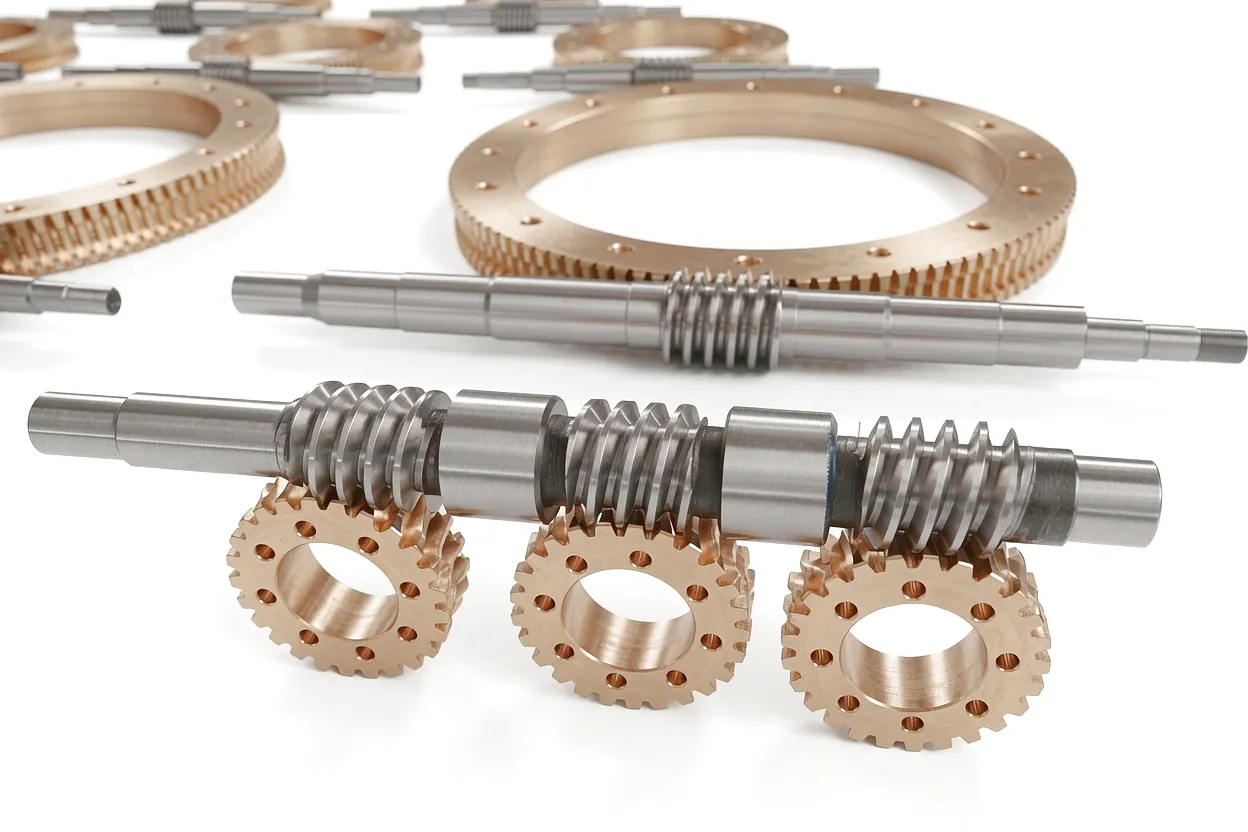
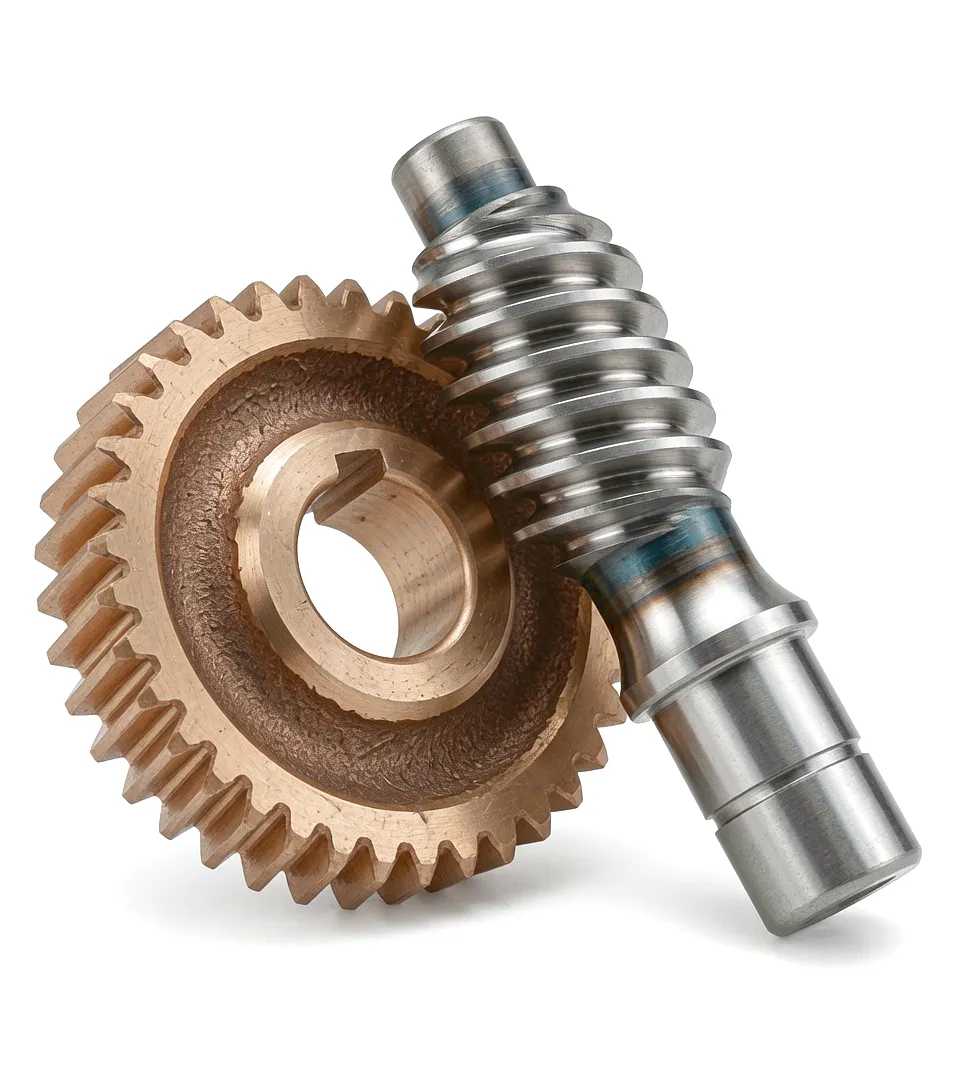
Whether you’re designing a new roller conveyor, upgrading a legacy line, or seeking a reliable long-term supply partner for UK distribution, Ever Power delivers precision worm gear shaft solutions that keep your operation running.