Worm Gear Shaft: Engineering Principles, Material Science and Industrial Performance
Deep technical insight for engineers, procurement specialists and OEM partners across the UK and global markets
How the Worm Gear Shaft Actually Works
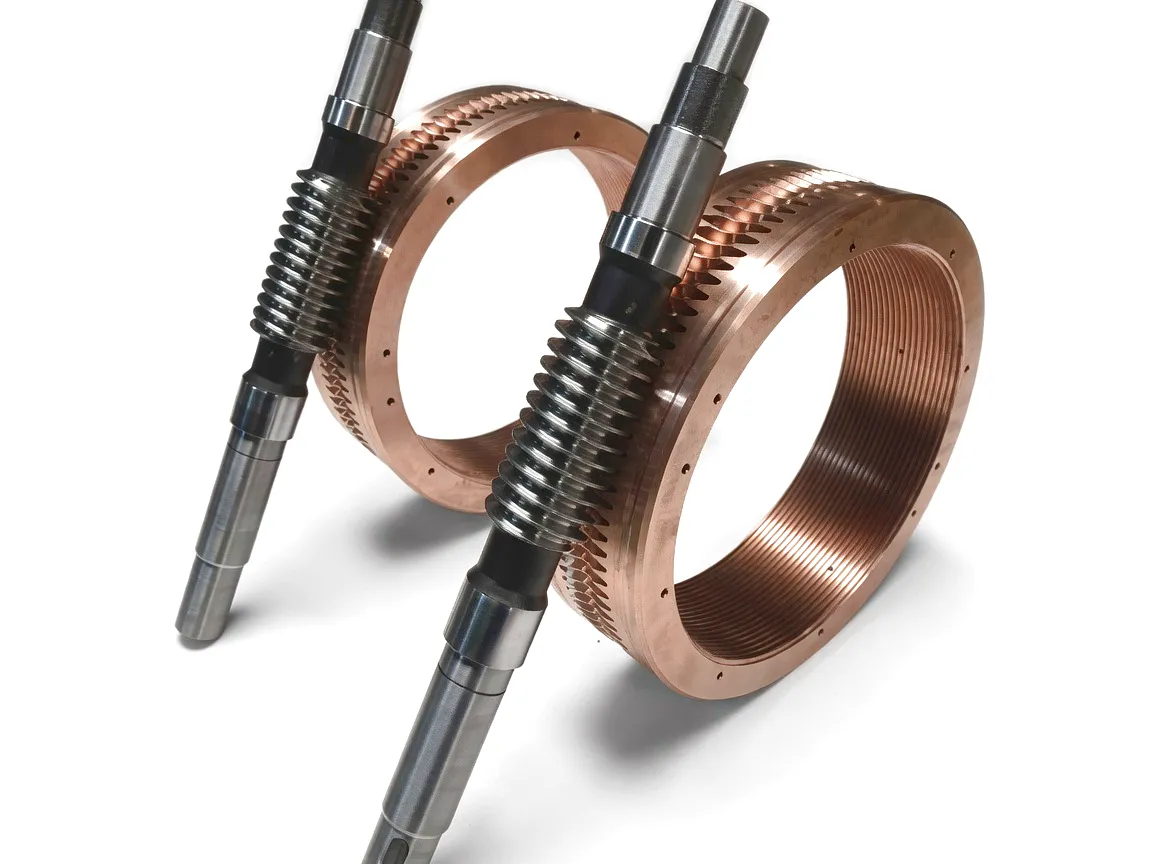
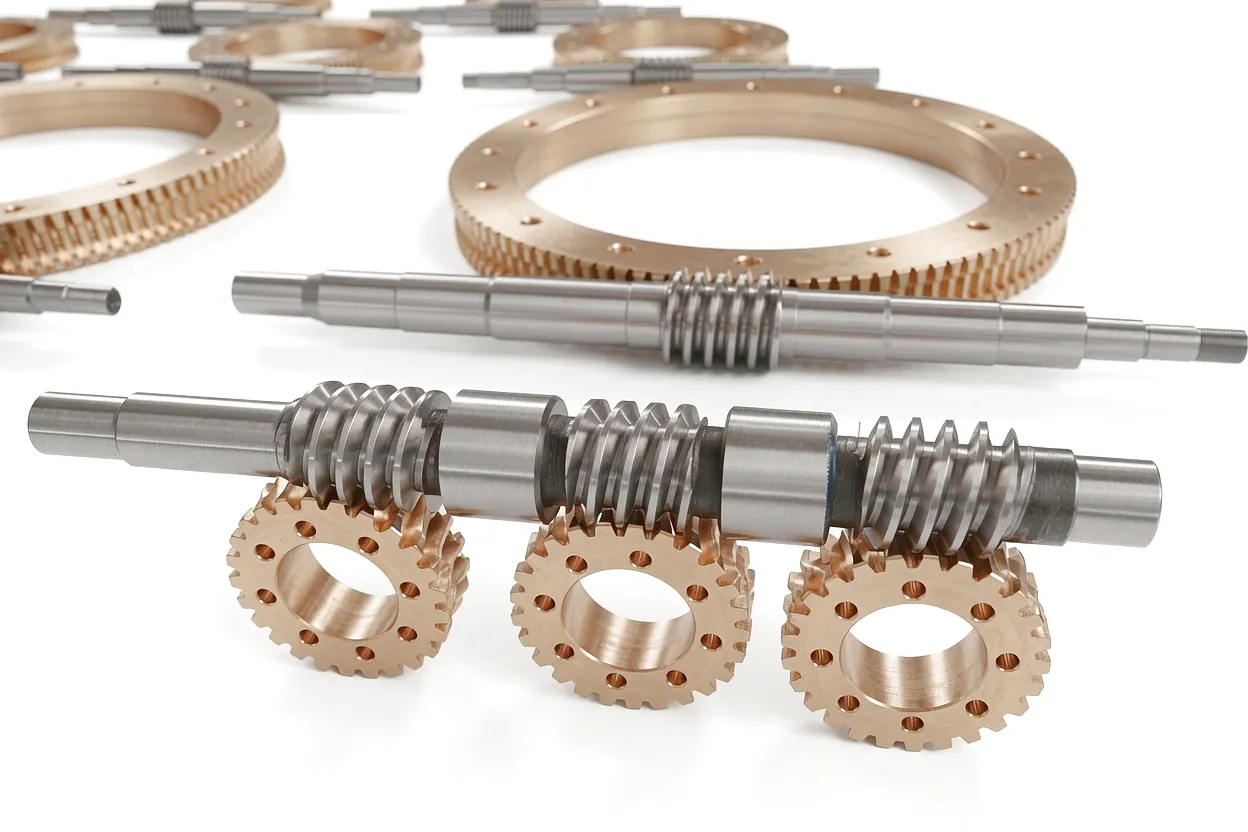
The mechanics of a worm gear shaft assembly rest on the principle of crossed-helical interaction. The worm shaft — a cylindrical component machined with one or more helical threads around its circumference — rotates about its own axis and drags the teeth of the worm wheel through sliding and rolling contact. The thread geometry follows an Archimedean spiral profile in the majority of industrial designs, although involute and enveloping (double-enveloping, or globoid) profiles are also applied where load-carrying capacity and efficiency must be maximised simultaneously. As the shaft completes a single revolution, the wheel advances by one tooth pitch per thread start, delivering a speed reduction ratio equal to the number of wheel teeth divided by the number of shaft thread starts — a relationship that allows ratios anywhere from 5:1 to well over 100:1 in standard catalogue products, with custom configurations reaching even higher values.
Material Selection: The Metallurgy Behind Long Service Life
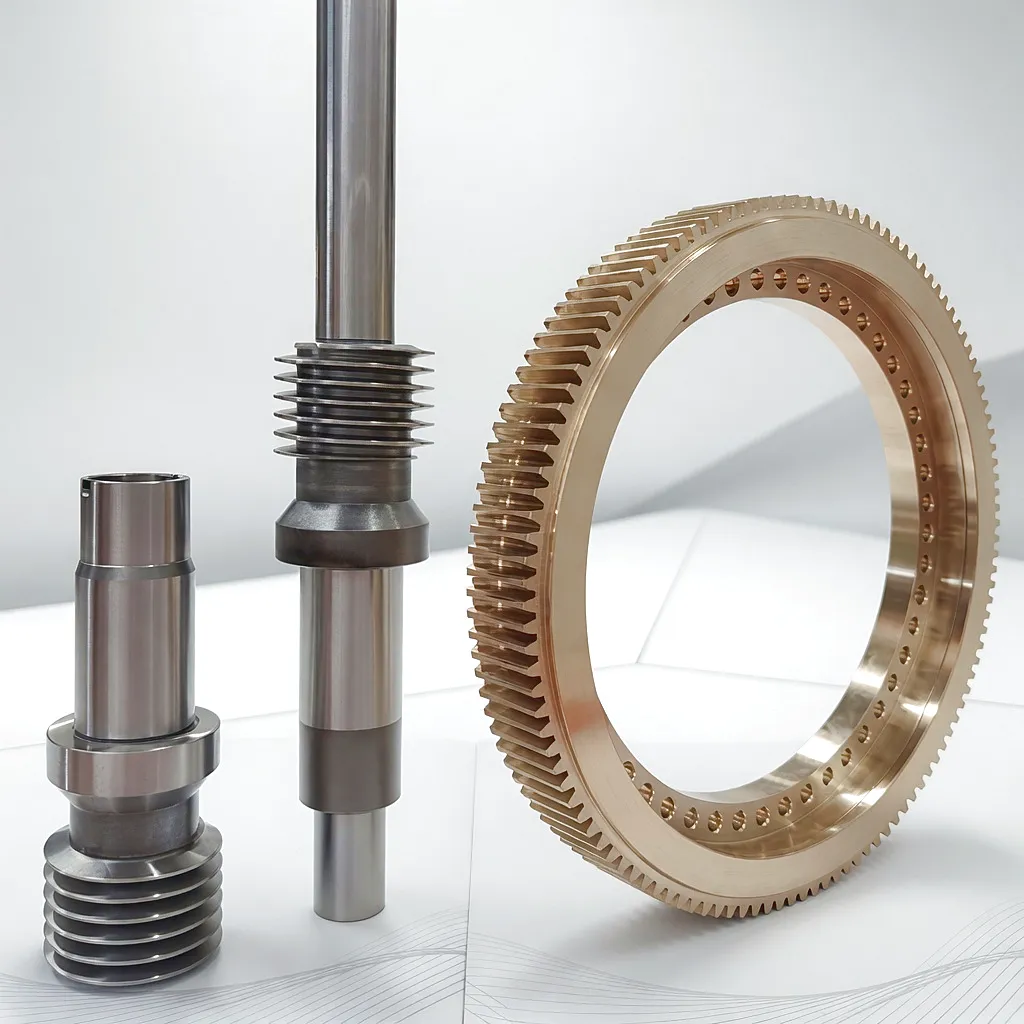
The choice of raw material for a worm gear shaft is not a peripheral specification — it is the foundation upon which every other performance guarantee rests. Worm shafts are overwhelmingly manufactured from steel alloys, with the specific grade determined by the torque rating, operating speed, thermal environment and surface treatment strategy. Case-hardening steel grades such as 20CrMnTi, 20Cr and 17CrNiMo6 dominate mid-to-heavy-duty applications because their low-carbon cores absorb shock loading without brittle fracture while the carburised surface layer achieves case hardness values of 58–62 HRC, providing exceptional wear resistance at the thread flanks where contact stresses are highest.
Grade 45 medium-carbon steel is widely used for light-duty worm shafts where costs must be minimised. Through-hardened to HRC 28–35, it offers a balance of machinability, toughness and moderate surface hardness adequate for low-speed, low-shock applications in agricultural machinery, gates and small conveyors.
20CrMnTi and 20Cr grades undergo carburising at 920°C, followed by quenching and low-temperature tempering. The resulting case depth of 0.8–1.5 mm combines an ultra-hard thread surface with a tough, ductile core — the standard combination for medium-to-heavy worm gear shafts in conveyor drives, elevator systems and industrial machinery throughout the Midlands and Northern England manufacturing belt.
For food processing lines, pharmaceutical manufacturing and marine environments — all significant sectors in UK industry — 316L stainless steel worm shafts resist corrosion without surface coating degradation over time. Duplex stainless grades and titanium alloy shafts are specified for offshore and chemical plant applications where chloride attack and elevated temperatures coincide, demanding both corrosion resistance and high fatigue strength.
Surface treatment adds the final layer of performance to the chosen substrate. Thread grinding to ISO grade 5 tolerance ensures consistent tooth contact across the full face width, while nitrocarburising treatments applied to alloy steel shafts grow a compound layer typically 10–20 µm deep that further elevates surface hardness and scuff resistance. Phosphating and specialised gear oil impregnation are used on lower-grade shafts to provide a sacrificial surface reservoir during the critical running-in period, during which the mating contact geometry self-conforms before stabilising into the optimal contact patch.
Core Technical Advantages of the Worm Gear Shaft
A single-stage worm gear shaft assembly achieves speed reduction ratios unattainable in a comparable envelope using parallel-axis gearing, reaching 100:1 or beyond in a package whose axial length is frequently less than one-quarter of an equivalent multi-stage helical gearbox. This space efficiency is transformative in retrofit applications where mounting space is constrained by existing plant layouts — a common scenario in the refurbishment of older manufacturing facilities across Yorkshire and Lancashire.
When the lead angle of the worm shaft thread falls below the friction angle of the gear pair, the assembly self-locks under reverse load. This behaviour eliminates the need for secondary mechanical brakes in many lifting, positioning and valve actuation applications, simplifying drivetrain architecture and reducing the failure points in safety-critical installations such as overhead hoists, scissor lifts and automated security barriers.
The continuous sliding engagement of the worm shaft thread produces a smooth torque transfer free of the harmonic impulse loading characteristic of spur gears. Noise levels in properly lubricated worm drives routinely measure 8–12 dB lower than equivalent helical arrangements, meeting stringent ambient noise requirements in NHS-regulated medical facilities, commercial refrigeration plant and laboratory automation environments where vibration-induced measurement drift is a concern.
The ninety-degree offset between input and output shafts afforded by the worm gear shaft configuration is architecturally unique in the compact gear reducer family. It allows machine designers to route power around physical obstacles, change the plane of motion without intermediate bevel gears, and mount motor and load at right angles within the same mounting footprint — a versatility that design engineers at Birmingham’s advanced manufacturing research clusters consistently exploit in prototype automation cells.
The distributed contact geometry of a well-designed worm shaft means instantaneous shock loads are absorbed across multiple thread leads simultaneously, reducing peak Hertzian contact stress. Case-hardened worm gear shafts from precision manufacturers regularly demonstrate service overload factors of 1.8–2.5 times the nominal rated torque before any contact fatigue damage initiates — a safety margin that makes the worm gear shaft particularly valuable in unpredictable loading environments such as quarrying, aggregate processing and bulk materials handling.
Worm Gear Shaft: Technical Performance Parameters
The table below consolidates representative technical specifications drawn from standard production ranges. Custom parameters can be configured to any operating requirement — contact the Ever Power applications team for bespoke sizing.
| Parameter | Range / Value | Notes |
|---|---|---|
| Centre Distance | 40 – 400 mm | Standard range; custom up to 600 mm available |
| Speed Reduction Ratio | 5:1 – 100:1 (single stage) | Multi-stage configurations to 10,000:1 |
| Output Torque (Nm) | 5 – 50,000 Nm | Dependent on centre distance, ratio and material |
| Shaft Diameter Range | 12 – 180 mm | Both input and output shafts configurable |
| Thread Form | ZA / ZN / ZI / ZK (Globoid) | Per ISO 1122-1 / DIN 3975 classification |
| Thread Starts | 1, 2, 4 starts | Higher starts = higher efficiency; lower ratio |
| Lead Angle | 3° – 28° | Below ~5.7°: self-locking; above: reversible |
| Thread Surface Hardness | 56 – 62 HRC | Case-hardened alloy steel; carburised & ground |
| Thread Surface Finish | Ra 0.4 – 0.8 µm | CNC ground, lapped on premium grades |
| Transmission Efficiency | 45% – 95% | Depends on lead angle, lubrication and ratio |
| Operating Temperature Range | -25°C to +120°C | Extended range with synthetic gear oil |
| Key Material Grades | 20CrMnTi / 17CrNiMo6 / 316L SS / Gr.45 | Stainless & duplex available on request |
| Dimensional Tolerance Grade | ISO Grade 5 – Grade 7 | Grade 5 standard on precision series |
| Shaft Crossing Angle | 90° (standard); 45° / 60° custom | Non-90° available for specialised layouts |
Industrial Application Scenarios
 Installed wind capacity has grown into one of the most significant components of the global renewable energy portfolio. Across the UK — home to some of the world’s largest offshore wind farms off the coasts of Yorkshire, Scotland and Wales — the megawatt-scale turbine relies on precision worm gear shaft mechanisms for two absolutely critical functions: yaw control and pitch adjustment. The yaw drive rotates the entire nacelle assembly to track wind direction, while the pitch drive adjusts each individual rotor blade angle to optimise aerodynamic lift and protect the turbine structure during high-wind events.

Concrete mixer drums, crane slewing rings and aerial work platform elevating mechanisms all exploit the high torque-to-weight ratio and self-locking reliability of worm gear shaft-based drives throughout UK construction sites.
Agitator drives, valve actuators and reactor feed screw assemblies in the Teesside chemical corridor rely on precision worm shaft reducers to deliver reliable positioning accuracy and process consistency under corrosive atmospheric conditions.
Collaborative robot joint drives, automated guided vehicle steering assemblies and precision indexing tables in Sheffield and Coventry’s advanced manufacturing districts employ compact worm gear shaft reducers where backlash repeatability and torque density directly determine positioning accuracy.
Track-switching actuators, platform barrier drives and station equipment across UK Network Rail infrastructure incorporate worm shaft reducers chosen for their tamper resistance, self-holding behaviour and long intervals between scheduled maintenance inspections — all critical attributes in public safety-critical systems.
Ever Power: Precision Manufacturing and Full Customisation
Ever Power operates a vertically integrated precision manufacturing facility dedicated to worm gear shafts and associated power transmission components. The production floor combines CNC thread-whirling centres, precision cylindrical grinding machines and coordinate measuring equipment to deliver dimensional consistency from first-off to high-volume batch runs. Every worm gear shaft passes through in-process inspection checkpoints measuring thread lead accuracy, runout, surface finish and case depth before final release — a quality discipline that reflects the manufacturing rigour expected by UK OEM partners with BS EN ISO 9001:2015 supply chain requirements.
Customisation is not an afterthought at Ever Power — it is the core service proposition. The applications engineering team works directly with customers’ design engineers to interpret load duty cycles, speed profiles and environmental constraints, translating these requirements into complete worm shaft specifications that may differ substantially from catalogue standards. Custom thread forms, non-standard shaft diameters with fine-tolerance keyway features, speciality coatings for marine environments, and material upgrades to duplex stainless or titanium alloy are all within the production scope. Tooling cycles for bespoke worm gear shaft profiles are typically completed within 15–20 working days, with first-article inspection reports provided as standard.
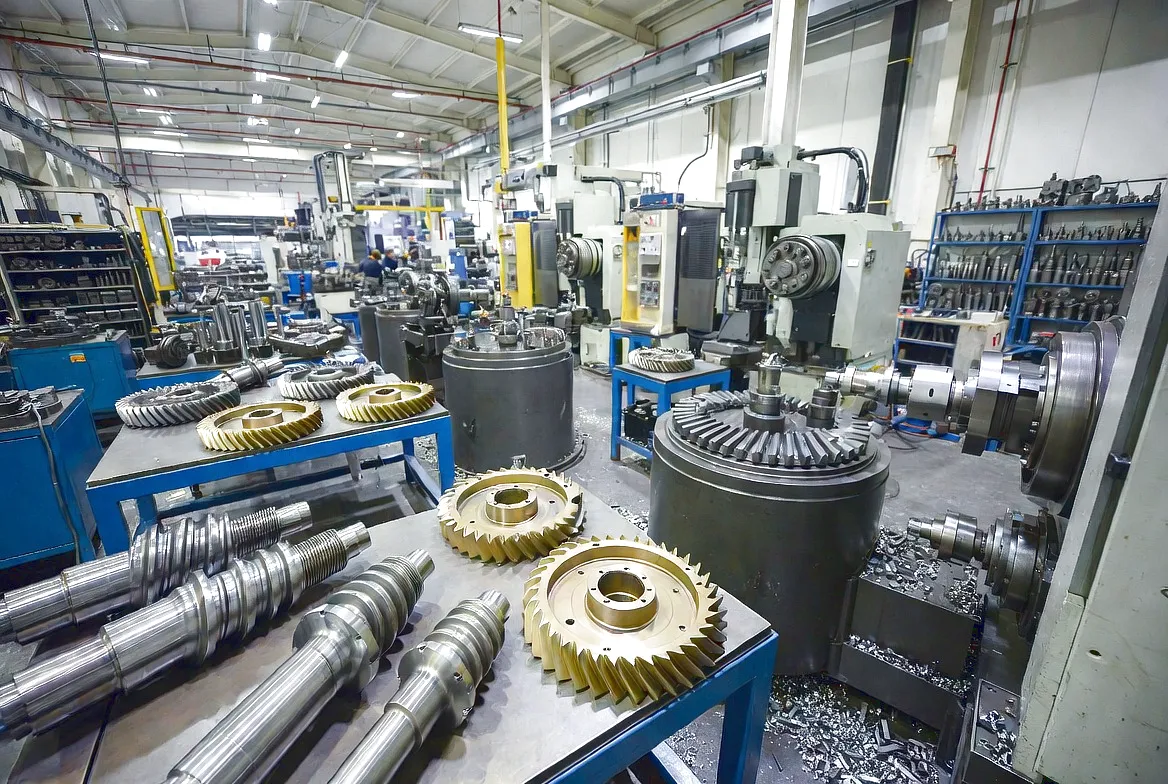
High-speed rotary cutting achieves thread profiles in a single pass with superior surface finish compared to conventional hobbing, reducing subsequent grinding time while maintaining lead accuracy within ±0.01 mm/300 mm.
Post-hardening CNC grinding to ISO Grade 5 corrects heat treatment distortion and achieves final tolerances. Simultaneous multi-axis control maintains thread profile geometry across the full working length with runout below 0.005 mm.
Each worm gear shaft batch is sampled on a temperature-controlled CMM suite measuring lead, flank form and pitch deviation to ISO 1328-1 standards. Full inspection reports are provided as standard with every shipment to UK and export customers.
Standard range worm gear shafts ship within 3–7 working days. Custom configurations are delivered within 20 working days of drawing approval. UK-based OEM partners benefit from DDP delivery options, simplifying procurement and inventory management.
Ready to discuss your worm gear shaft specification with our engineering team?
Customer Success Story: Sheffield Steel Processor
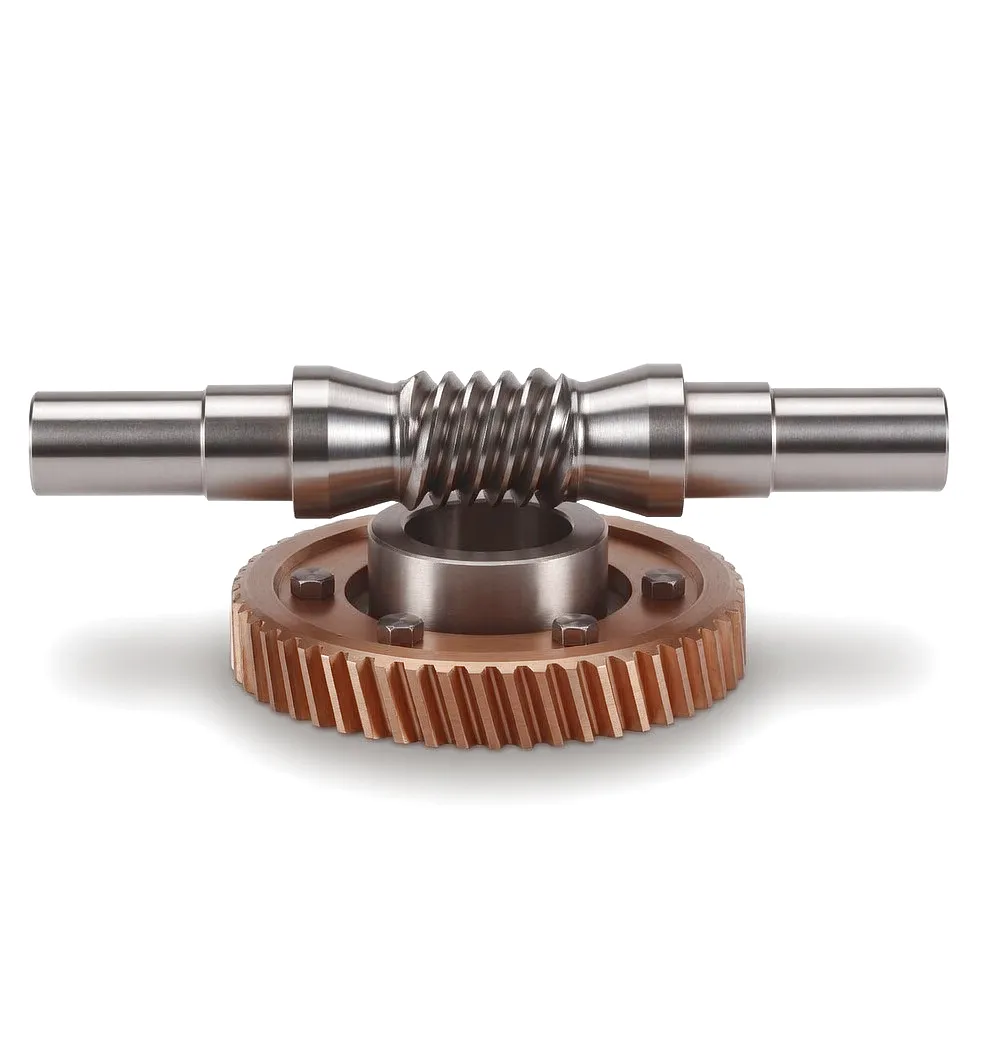
“The 17CrNiMo6 worm gear shaft Ever Power supplied has completely transformed our feed line reliability. We’ve run well over two years without a single unplanned gear drive failure — that’s unprecedented for this application. The thread flank finish quality is visibly superior to everything we’ve used before.”
“Ever Power’s engineering team turned around a complete custom worm gear shaft drawing review and first-article delivery in under three weeks. The CMM inspection report they shipped with the parts gave us everything we needed for our supplier qualification audit. Their customisation capability is genuinely exceptional — not just a sales pitch.”
“We switched to Ever Power stainless worm gear shafts for our washdown food processing lines and the improvement has been dramatic. Zero corrosion after 18 months in a high-humidity, high-hygiene environment, and the noise reduction compared to our old supplier’s parts made an immediate, noticeable difference to the production floor working environment.”
 Choosing the correct
 Frequently Asked Questions
Ever Power — Precision Worm Gear Shaft Manufacturing | Customisation | Global Supply
edit by gzl