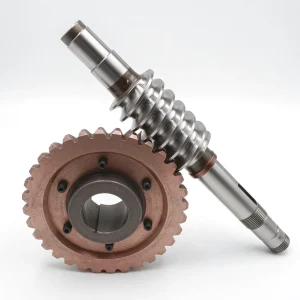
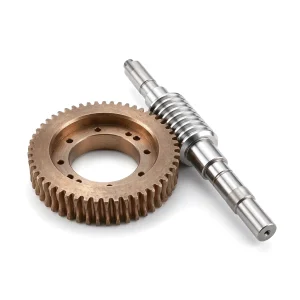
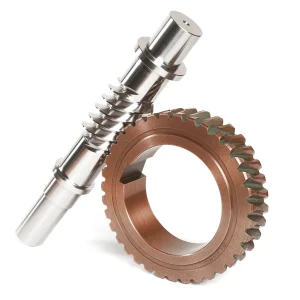
Açıklama
Duplex Worm Gear — Zero-Backlash Precision Worm Drive Solutions
Engineering-grade duplex worm gear sets engineered for UK and global B2B industries demanding repeatable positional accuracy, minimal backlash, and long-term load reliability. Supplied from our certified manufacturing facility with full customisation capability.
What Is a Duplex Worm Gear?
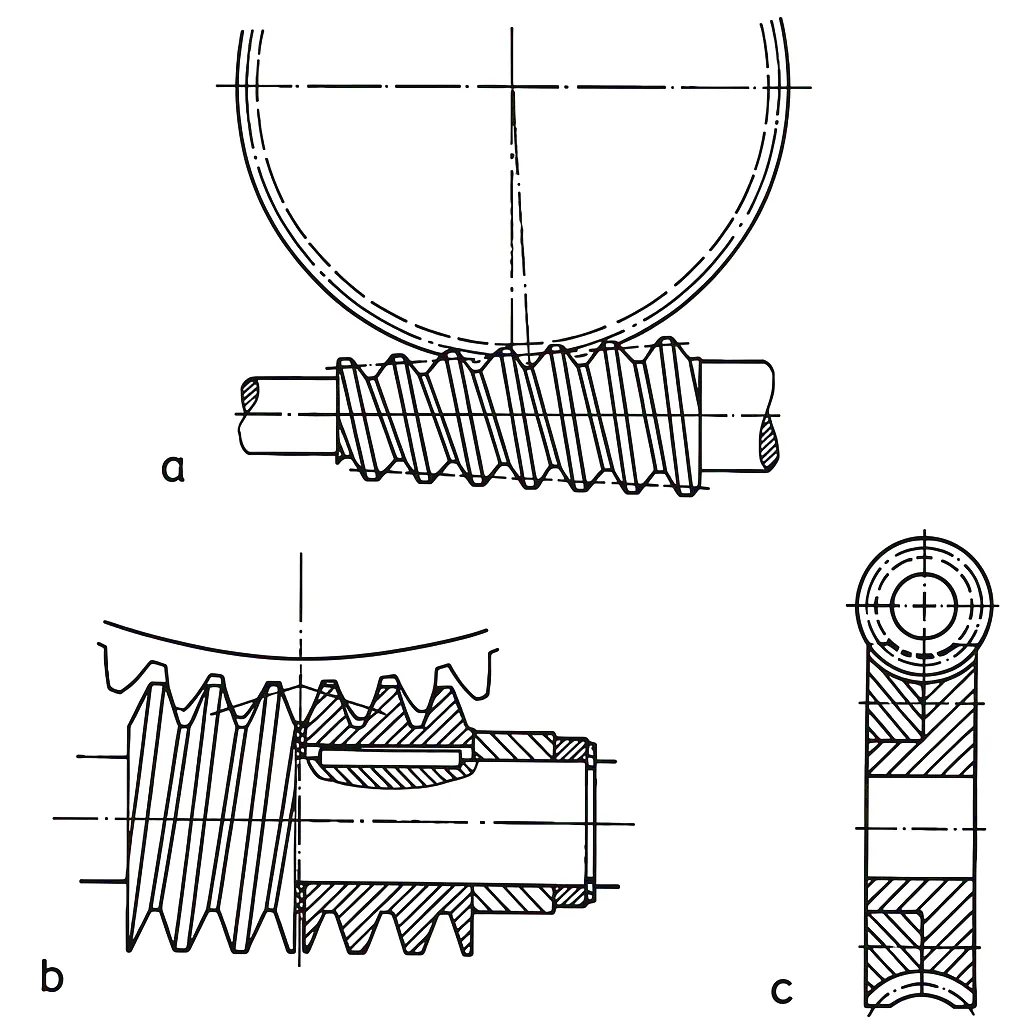
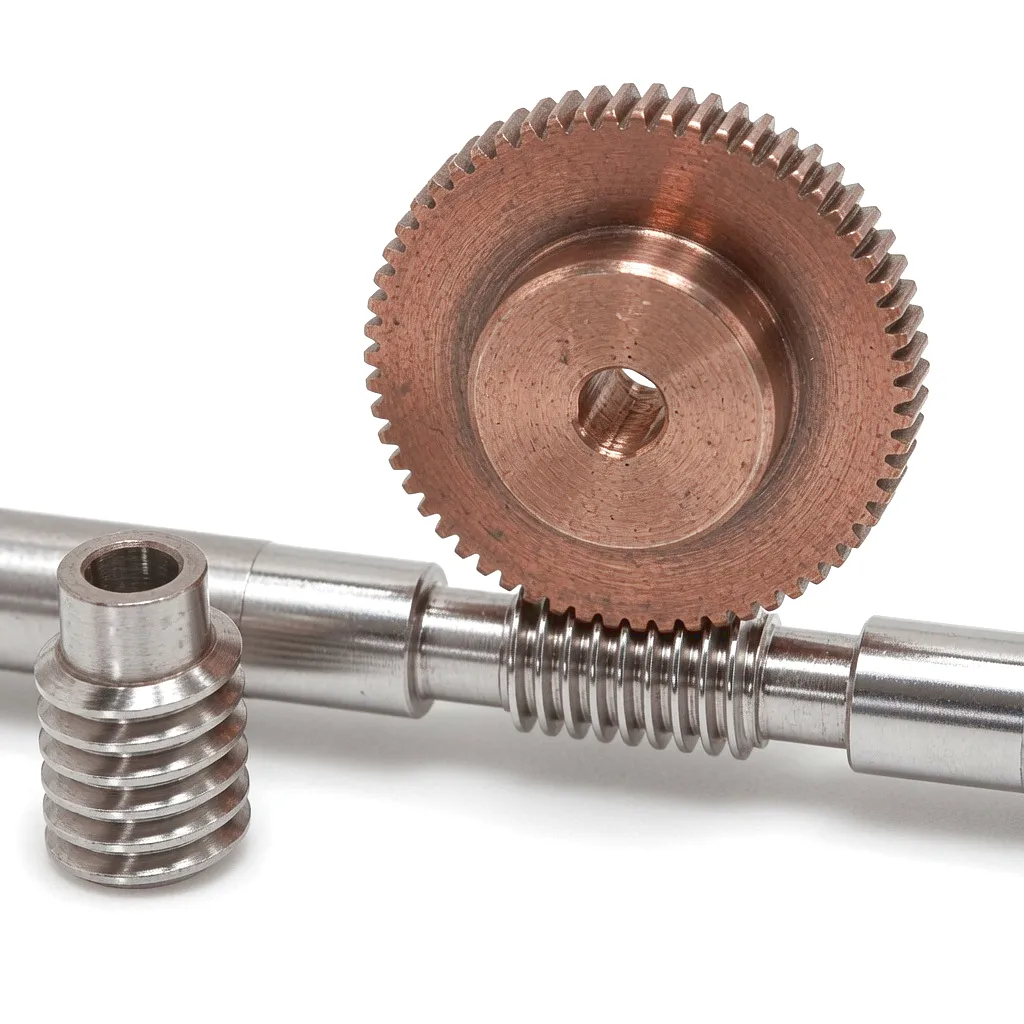 A duplex worm gear — sometimes called a dual-lead worm gear — is a precision worm gear set where the left and right flanks of the worm thread are intentionally manufactured with slightly different modules and diameter quotients. This engineering choice means the two tooth profiles carry distinct lead angles, causing tooth thickness to increase continuously from one end of the worm to the other, while the gap between threads decreases correspondingly. The practical result is a mechanism that gives the design engineer precise, continuous control over backlash — without compromising contact geometry, load capacity, or transmission efficiency.
Unlike conventional worm gears that rely on eccentric hubs, conical worm axial shifts, or split-wheel arrangements to manage backlash, the duplex worm gear method is geometrically clean. Backlash adjustment is achieved simply by shifting the worm axially until the section carrying the required tooth thickness engages with the worm wheel — no geometric distortion of the contact zone, no changes to meshing interference thresholds, and no reduction in the load-bearing area. This preserves the evolved contact profile that makes worm gears so effective at transmitting high torque across a compact, 90-degree shaft arrangement.
At the worm wheel, the different modules on each side produce different addendum modification coefficients and different rolling circle diameters per flank. The tooth thickness and gap width remain constant around the wheel’s circumference, making the wheel itself straightforward to inspect and replace. This asymmetry between worm and wheel is the fundamental working principle behind the duplex system’s ability to deliver zero or near-zero backlash in demanding applications like CNC rotary tables, precision milling machines, and servo-controlled press equipment across UK manufacturing facilities.
Technical Specification — Duplex Worm Gear Design
How the Duplex Worm Gear Works — Principle, Material and Assembly
The operating principle of the duplex worm gear rests on a simple but powerful geometric insight: if you manufacture the two thread flanks with marginally different modules, you produce a worm whose tooth thickness varies continuously along its length. When this worm is paired with a correctly matched duplex worm wheel, the assembly allows for precise backlash setting through nothing more than an axial position shift. Moving the worm toward the thicker-tooth end reduces backlash; moving it toward the thinner end opens the clearance. The engineer can set any desired backlash value at initial mounting and re-adjust it as the gear set wears — without disturbing the involute contact geometry, without changing the centre distance, and without introducing any interference between mating teeth.
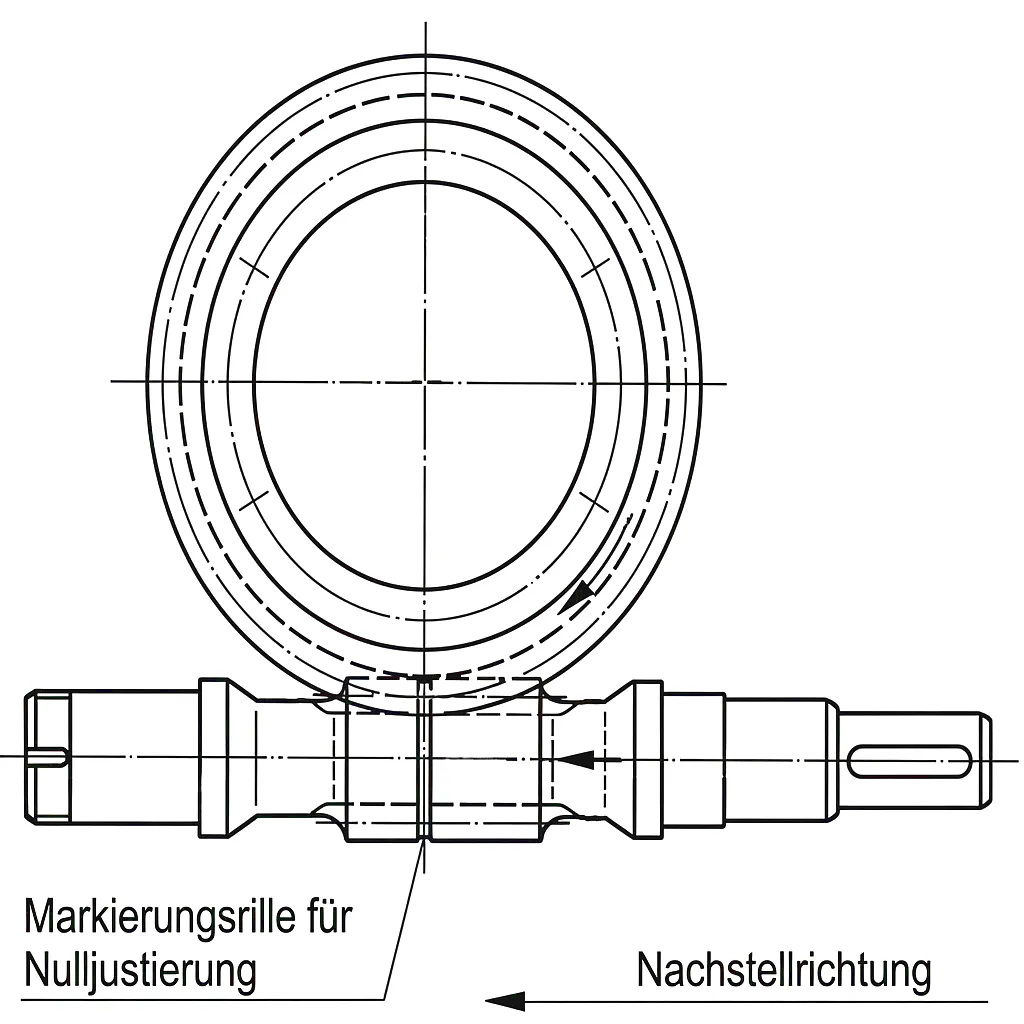
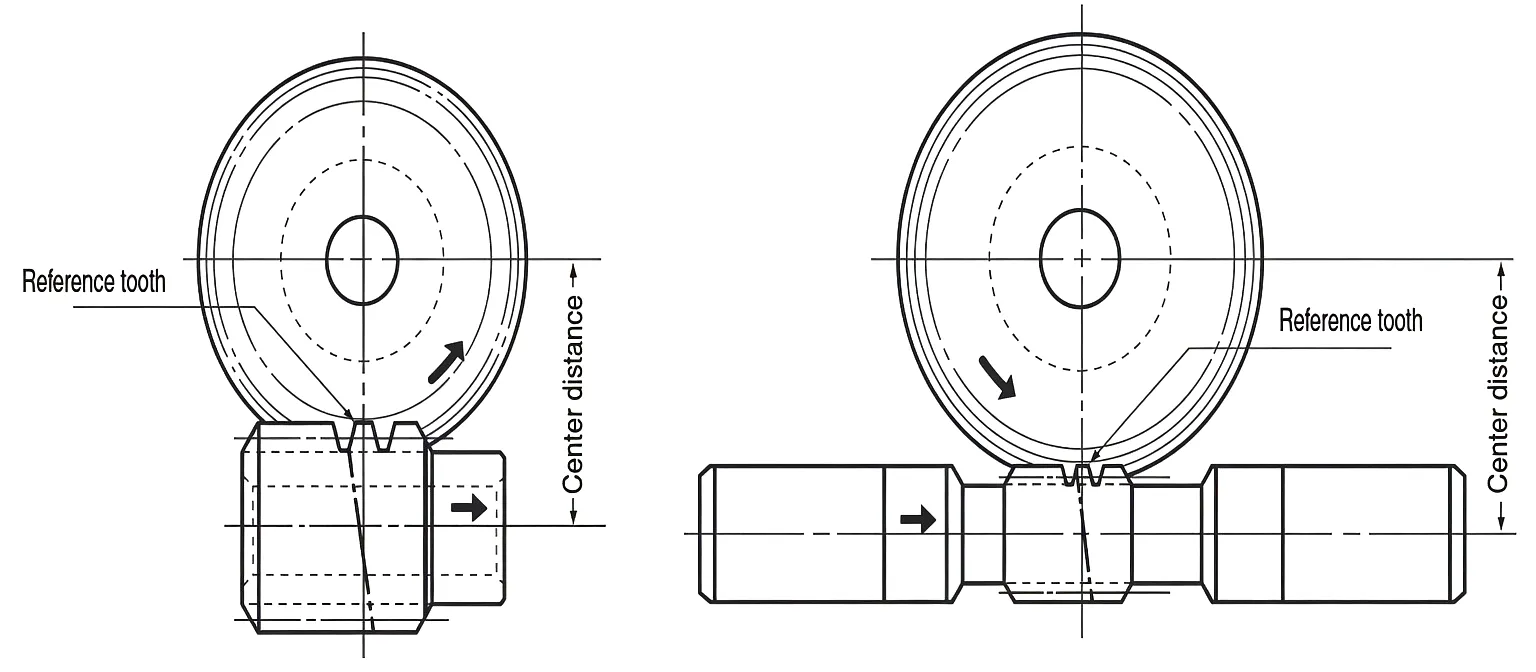
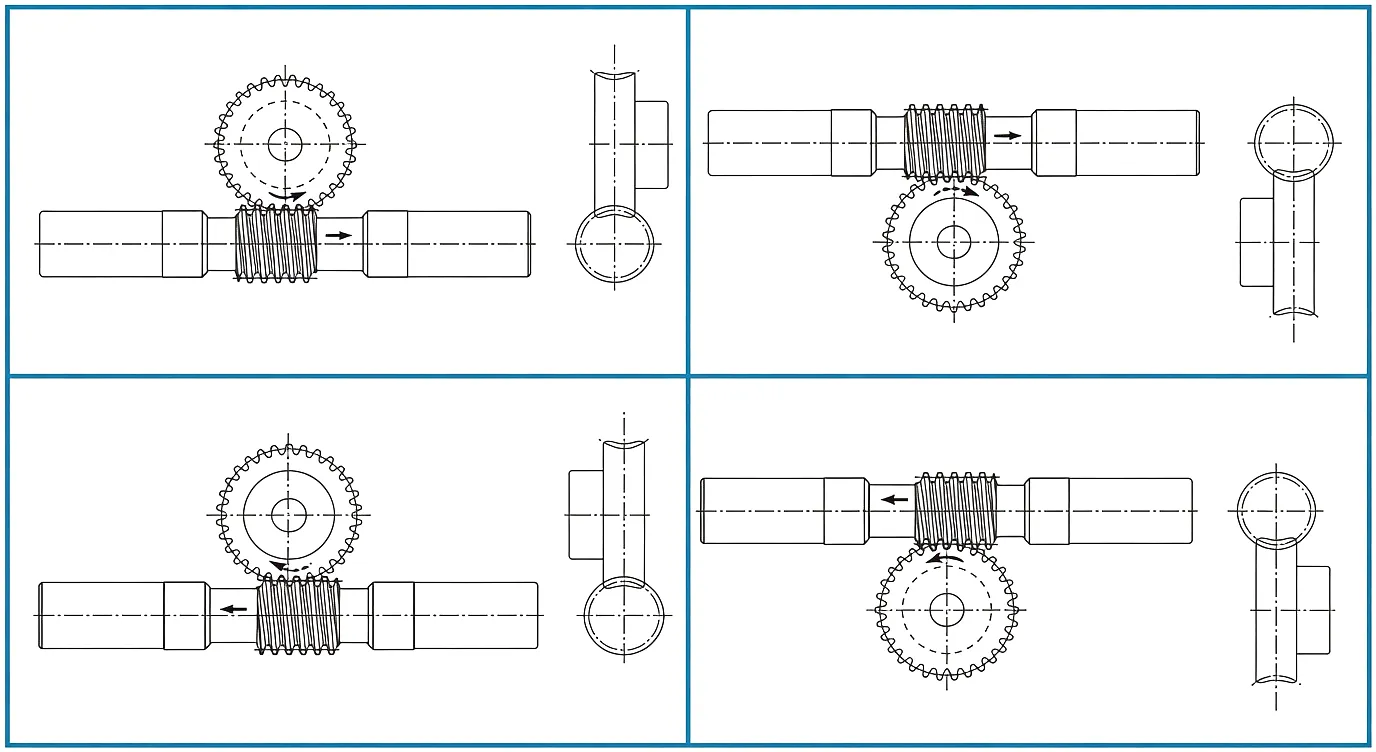
Correct assembly is critical. Both the worm and the worm wheel carry an orientation arrow stamped into the component body; these two arrows must align in the same direction when the set is assembled. Incorrect orientation causes the effective centre distance to increase beyond the design value, making precise mesh impossible and risking damage to both components. A V-groove reference mark (60° included angle, 0.3 mm deep) is cut into the tip of the reference tooth on the worm. When this marked tooth is positioned directly in line with the worm wheel’s centre of rotation at the nominal centre distance, the gear set achieves its designed near-zero backlash of ±0.045 mm.
Material selection is matched to the application. Worm shafts are produced in hardened alloy steel — typically case-hardened to a surface hardness of 58–62 HRC — giving the worm thread excellent wear resistance under the high sliding velocities inherent in worm gear contact. Worm wheels are cast or forged in phosphor bronze or high-tin brass alloys, which provide the self-lubricating properties needed to manage the sliding contact between dissimilar metals while preserving surface finish over millions of operating cycles. For particularly demanding UK applications such as heavy-duty tilting tables or continuous-cycle press operations, our engineering team can specify alternative materials including ductile iron or nickel-aluminium bronze to achieve the required fatigue life.
Primary Application Scenarios
Why Duplex Worm Gears Outperform Conventional Solutions
Every alternative backlash control method — eccentric hub rotation, conical worm shifting, split worm halves, split wheel discs — shares a common flaw: each adjustment moves the contact zone away from the geometrically optimum position. The result is a smaller contact patch, reduced load-carrying capacity, lower transmission efficiency, and measurable start-up wear every time the setting is changed. In high-cycle UK manufacturing operations, that wear cost compounds into significant unplanned maintenance. The duplex worm gear sidesteps all of this because its backlash control mechanism is geometrically neutral: the contact area, efficiency, and tooth stress distribution remain unchanged across the full adjustment range.
Customer Success: Real-World Performance
The following case study and customer reviews reflect applications where our duplex worm gears have delivered measurable performance improvements in UK and European production environments.
Eliminating Positional Drift on a Five-Axis CNC Rotary Table
A West Midlands precision machining firm producing aerospace turbine components had been experiencing angular positional error accumulation in the rotary B-axis of their five-axis CNC machining centre. The existing conventional worm gear drive showed backlash of approximately 0.12 mm at the table rim after 18 months of operation, resulting in rejected parts and costly re-machining cycles. Their maintenance team had repeatedly adjusted the eccentric hub arrangement, but each adjustment introduced a short-lived improvement followed by renewed drift as start-up wear opened the clearance again within weeks.
They specified a replacement duplex worm gear set from us in a custom centre distance to fit their existing housing. Following installation and axial adjustment to the V-groove reference mark, measured backlash at the table rim was brought to under 0.03 mm. Over the following 14 months of three-shift operation, no further backlash adjustment was required — and when one was eventually carried out as part of a scheduled service, it was completed in under 20 minutes without removing the gear set from the machine. Part rejection rates on that axis fell by over 90%, and the customer has since specified duplex worm gear sets for two additional machining centres in their facility.
“We’ve been using these duplex worm gear sets in our press-brake indexing heads for just over two years. The ability to re-adjust after wear without pulling the entire head apart has saved us several days of downtime we used to budget for annually. The part quality from our engineering team is excellent.”
“We specified a custom duplex worm gear for a high-speed tilting table used in automotive jig welding. Getting a quote was straightforward, delivery was faster than we expected, and the gear set performed exactly as predicted on the bench. We’ve ordered three more since.”
“The supplier’s engineering support was what set them apart. We needed a non-standard reduction ratio and an extended worm shaft to fit our milling machine’s existing gearbox housing. They came back with a complete proposal, including centre distance and mounting recommendations. Zero-backlash operation confirmed on first run.”
Manufacturing Capability & Custom Engineering Services
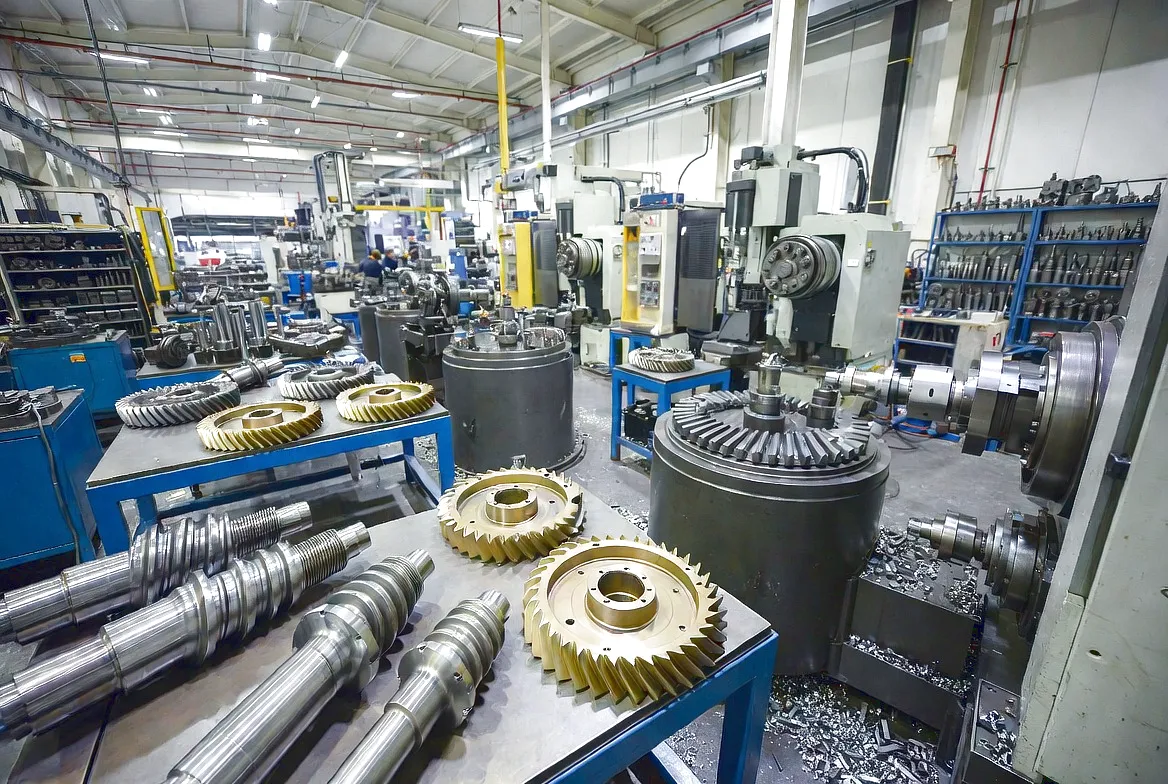
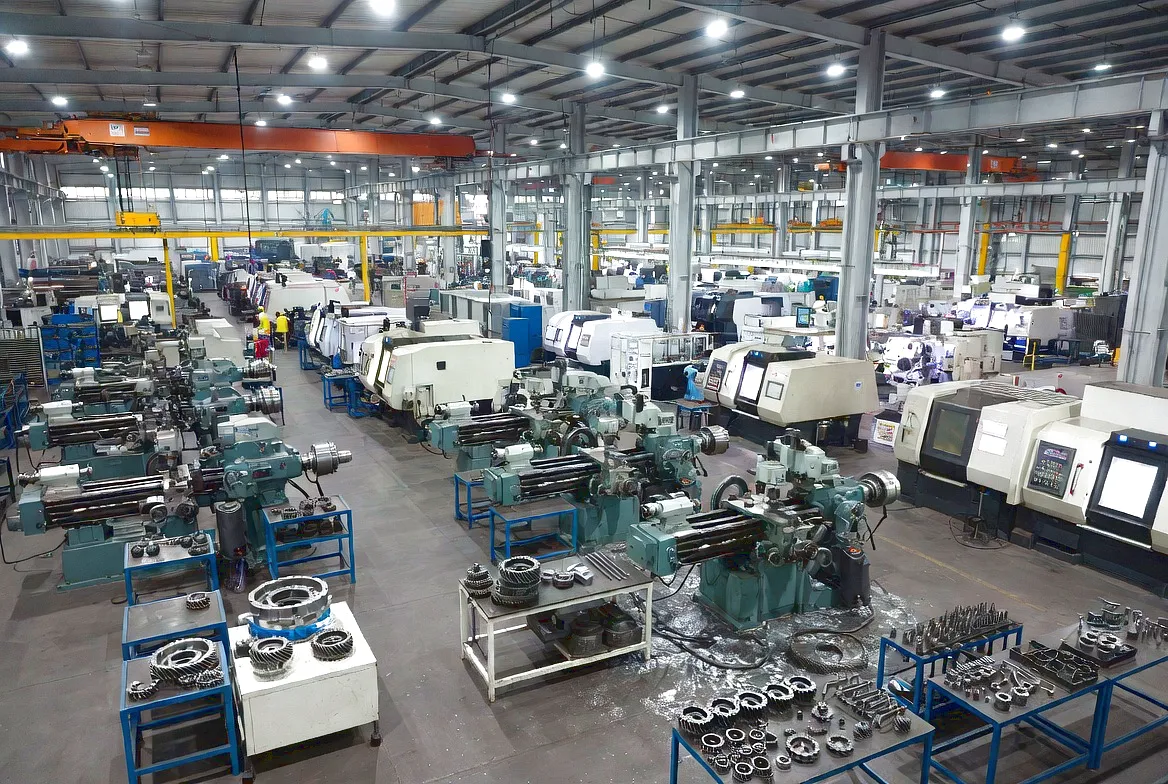
Our manufacturing facility operates precision gear-grinding and worm-milling machines calibrated to ISO 1328 accuracy grades, supported by a full metrology suite including CMM and involute gear testers. This infrastructure allows us to deliver standard duplex worm gear sets quickly from stock, while also supporting fully bespoke engineering for OEM, retrofit, and research applications. UK B2B customers frequently approach us with non-standard requirements: unusual centre distances, specific reduction ratios not in the standard range, custom shaft extensions, special flange mounting configurations, or material upgrades for corrosive or elevated-temperature environments. Our application engineers work directly with your design team to confirm compatibility and specify the optimum duplex worm gear solution.
Our Custom Duplex Worm Gear Capabilities
✓ Non-Standard Reduction Ratios
✓ Special Shaft Extensions
✓ Custom Flange Mounting
✓ Alternative Materials (NiAlBronze, Ductile Iron)
✓ Surface Treatment Options
✓ OEM & Retrofit Supply
✓ Full Technical Documentation
Frequently Asked Questions
Send us your technical requirements — centre distance, ratio, shaft configuration, and operating environment — and receive a detailed engineering proposal with a competitive price from our team.
Get a Quote → [email protected]