Technical Deep Dive · Power Transmission
Comprehensive Guide to Worm Gear Shafts: Engineering Principles, Advanced Materials, and Industrial Applications
A complete technical reference for engineers, procurement managers and plant operators across UK manufacturing, food processing, materials handling and heavy industry sectors.
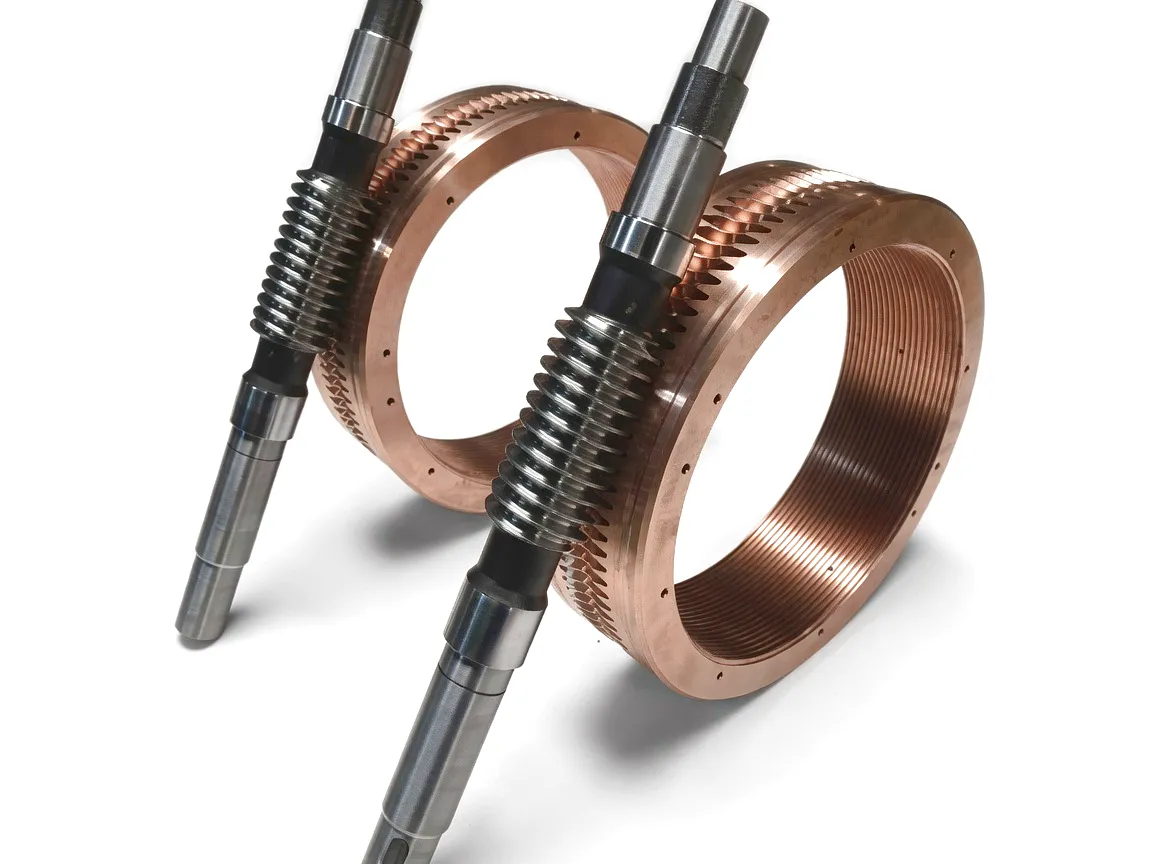
In the vast landscape of mechanical power transmission, the worm gear shaft occupies a position of particular importance. Unlike spur or helical gears, which transfer motion between parallel shafts, the worm gear shaft operates at 90 degrees to its mating wheel, creating a compact and highly efficient arrangement that is almost impossible to replicate through any other mechanical configuration. This orthogonal arrangement makes the worm gear shaft the component of choice wherever space is constrained, high reduction ratios are needed in a single stage, or where the self-locking property of the gear pair must prevent back-driving under load. From the conveyor lines of Birmingham’s automotive supply chain to the packaging machinery running continuously in Sheffield’s food processing facilities, worm gear shafts are embedded in the operational fabric of British manufacturing without most engineers giving them a second thought — until they fail, or until a new design demands a tighter specification.
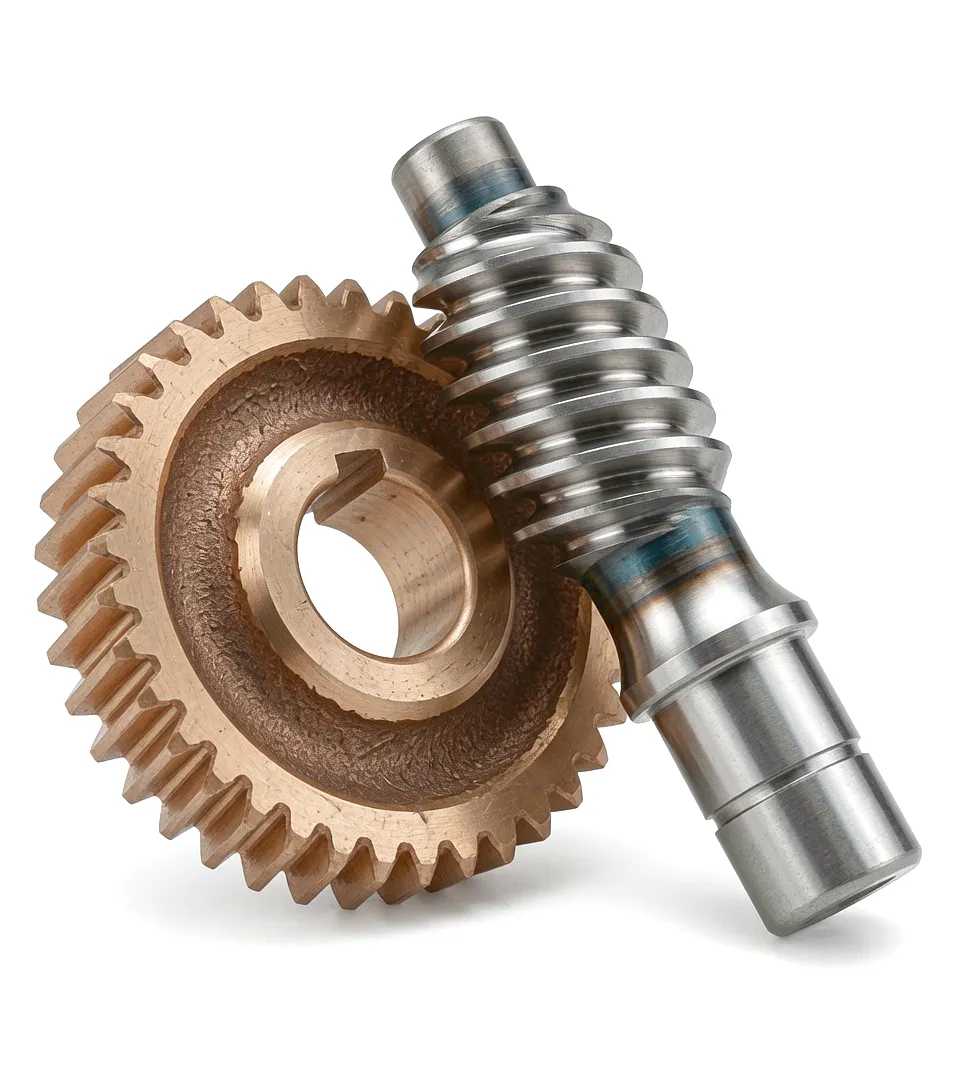
The worm gear shaft itself is the driving member of the worm drive pair. It is a cylindrical component machined with a helical thread — the worm — that meshes with the teeth of the worm wheel, transferring rotational motion while simultaneously stepping down speed and multiplying torque. The thread geometry, lead angle, thread form, and surface finish of the worm gear shaft are the primary determinants of efficiency, load capacity, and service life. Understanding these parameters is not merely academic: it is the foundation for intelligent component selection, accurate service interval planning, and effective system integration. This article provides a thorough technical reference covering working principles, materials, performance data, application environments and the manufacturing capabilities that make a high-quality worm gear shaft a reliable long-term investment.
Working Principle
How a Worm Gear Shaft Converts Motion
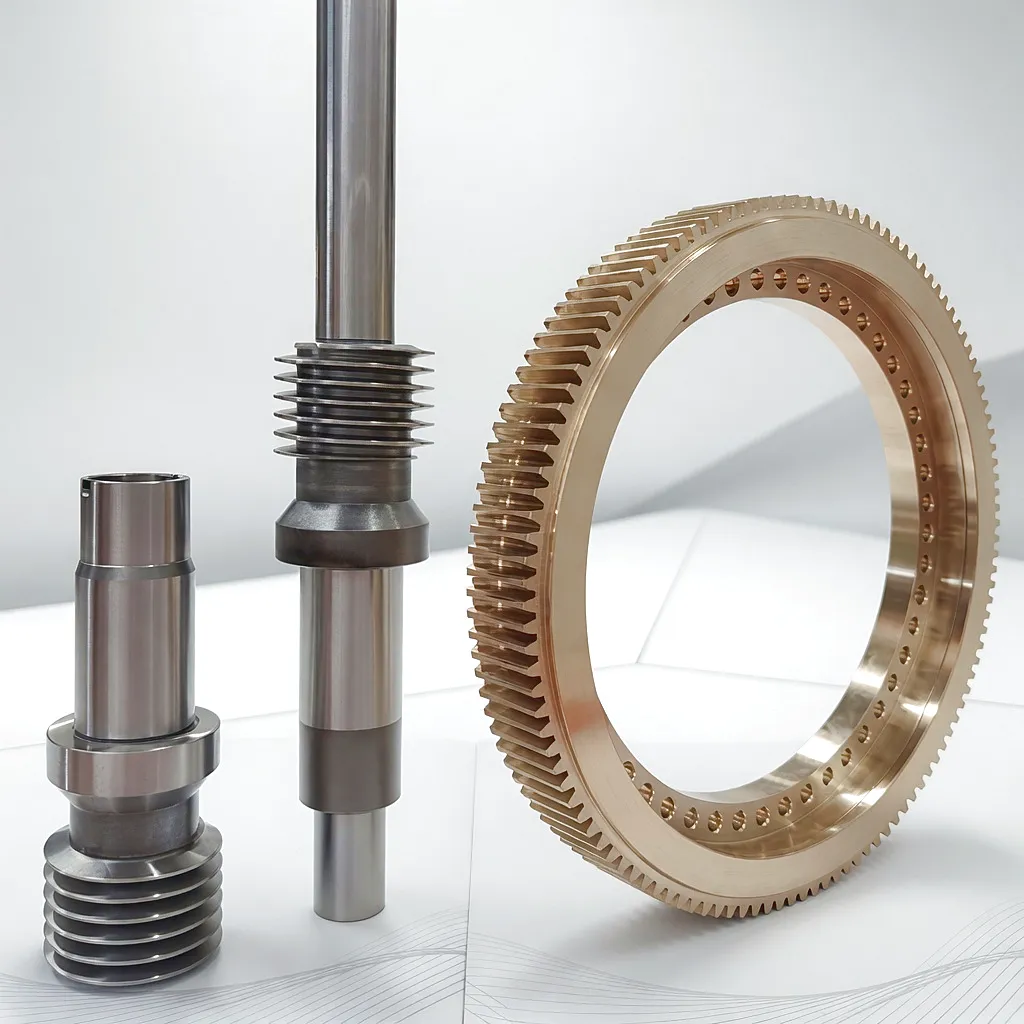
The fundamental operating principle of a worm gear shaft rests on the interaction between a helical thread and a curved gear tooth. When the worm shaft rotates, each revolution of the shaft advances the worm wheel by exactly one tooth — or by multiple teeth, depending on whether the worm is single-start or multi-start. A single-start worm gear shaft will produce a gear ratio equal to the number of teeth on the worm wheel: a 60-tooth wheel paired with a single-start worm yields a 60:1 reduction. In industrial practice, single-start worm gear shafts dominate applications requiring maximum torque multiplication, while multi-start versions (two, three, or four starts) are selected when higher output speed is needed alongside moderate reduction.
The sliding contact between the worm thread flanks and the worm wheel teeth is what defines the mechanical character of the worm drive. Unlike rolling contact in helical or spur gear pairs, this sliding motion generates friction. That friction is the source of two defining traits: heat generation at the mesh, which demands adequate lubrication and thermal management, and the self-locking behaviour, which occurs when the lead angle of the worm gear shaft is below approximately 5 degrees. At that threshold, the direction of the friction vector reverses, meaning the driven load cannot back-drive the worm shaft even when the driving motor is de-energised. This property is exploited in lift mechanisms, valve actuators and positioning tables wherever holding position without a brake is operationally valuable. The helix angle, axial pitch, and thread root profile must all be correctly matched to the worm wheel tooth form to ensure smooth, even load distribution across the tooth contact patch throughout the meshing cycle.
90°
Shaft angle between worm and wheel — maximises packaging density
60:1
Single-stage reduction ratio achievable — no intermediate shaft required
Self-Lock
Inherent at lead angles below 5° — eliminates need for external holding brake
Quiet
Sliding mesh contact produces substantially lower noise than spur gear alternatives
Material Science
Core Materials for Worm Gear Shaft Manufacture
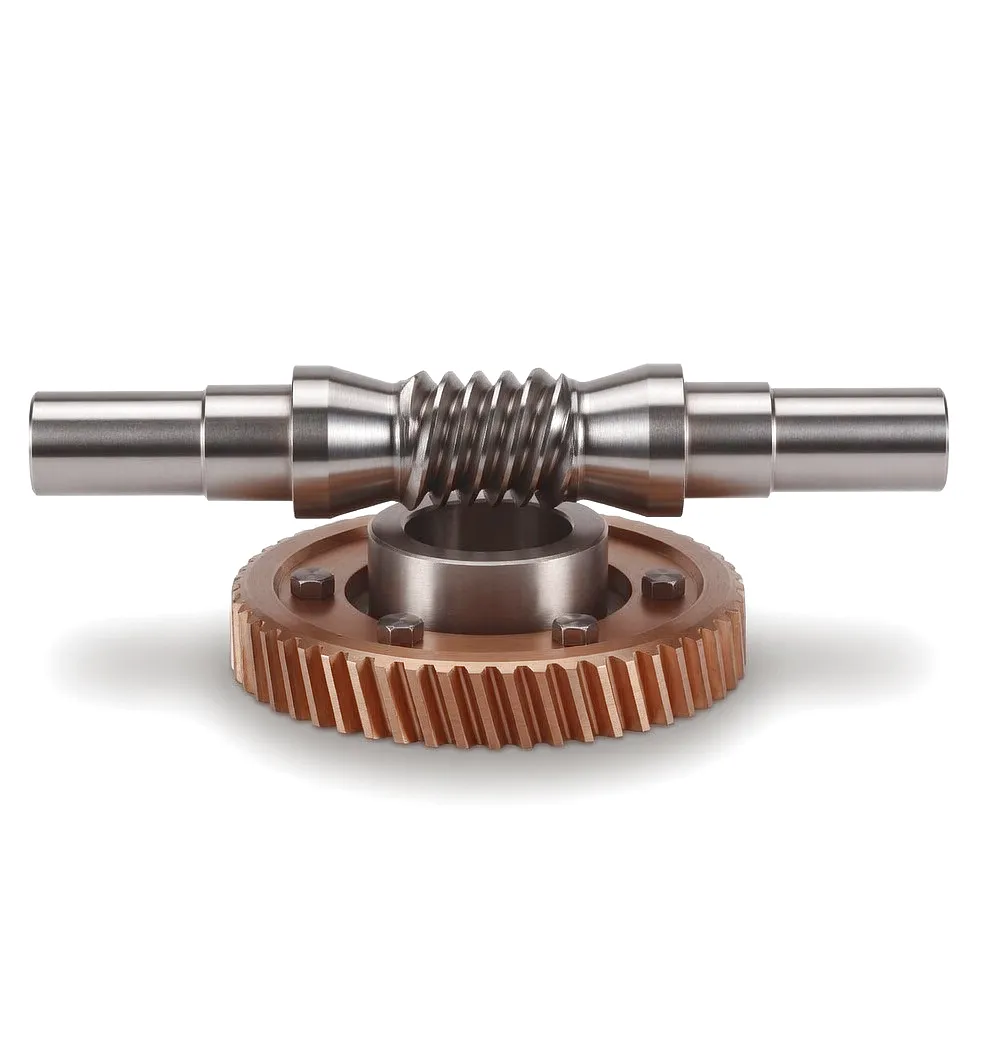
Material selection for a worm gear shaft is arguably the most consequential engineering decision in the entire assembly, because the mechanical properties of the shaft govern every performance parameter: fatigue life under reversing bending loads, surface hardness at the thread flanks, torsional rigidity under peak torque spikes, and corrosion resistance in aggressive service environments. The worm gear shaft experiences complex, combined loading — it is simultaneously subjected to torsion from the driving motor, bending from the cantilever forces at the gear mesh, and axial thrust from the helix geometry — so the material must deliver an exceptional balance of toughness, hardness, and machinability. No single material is universally optimal; the right choice depends on duty cycle, output torque, operating temperature, and budget constraints.
Alloy steels, particularly grades such as 20CrMnTi, 42CrMo4, and the equivalent EN standards widely specified by UK design engineers, dominate high-load worm gear shaft production. After rough machining, these steels are typically carburised and case-hardened to achieve surface hardnesses of 58–62 HRC while retaining a tough, ductile core that absorbs shock loads without brittle fracture. For moderate-duty applications where cost control is critical — prevalent in the materials handling sector across the Midlands and northern England — carbon steels such as C45 or EN8 are through-hardened and ground to provide adequate performance at reduced unit cost. Stainless steel variants, primarily 17-4PH or 316L, are specified in food processing and pharmaceutical environments where chemical resistance and hygienic surface finish standards supersede pure mechanical performance metrics. Bronze alloy worm wheels paired with steel shafts remain the most common material combination, as the dissimilar metals minimise adhesive wear and allow the softer bronze to sacrifice under overload rather than damaging the harder steel shaft.
20CrMnTi / 42CrMo4 Alloy Steel
Case-hardened to 58–62 HRC. Ideal for heavy industrial duty, mining conveyors, press machinery. High fatigue strength, excellent torsional rigidity, widely available in UK steel stockholders.
C45 / EN8 Carbon Steel
Through-hardened to 240–280 HB. Cost-effective for medium-duty conveyors, packaging lines. Good machinability, widely stocked, suits OEM volume production in Birmingham supply chains.
316L / 17-4PH Stainless Steel
Corrosion-resistant, meets food-grade hygiene standards. Specified in dairy, beverage and pharmaceutical plants across the UK. Compatible with CIP wash-down regimes.
Nitrided Tool Steel
Used in precision actuators and indexing drives. Surface hardness to 70 HRC via gas nitriding. Dimensional stability superior to carburised grades. Suitable for Sheffield precision engineering sector.
Performance Data
Worm Gear Shaft Technical Parameters
The table below consolidates key technical and performance parameters for standard and custom worm gear shaft configurations. These figures reflect the production capabilities and verified performance ranges from Ever Power’s precision manufacturing facility. All data is provided as a reference baseline; project-specific parameters will vary according to application duty cycle, lubrication regime, mounting configuration, and thermal environment. Engineers are strongly encouraged to contact the technical team for application-specific sizing.
| Parameter | Standard Range | High-Duty Range | Unit |
|---|
| Reduction Ratio (single stage) | 5:1 – 60:1 | 60:1 – 100:1 | – |
| Output Torque | 50 – 2,000 | 2,000 – 20,000 | N·m |
| Input Speed (max) | up to 1,500 | up to 3,000 | rpm |
| Lead Angle (self-locking threshold) | 3° – 25° | Self-lock: <5° | degrees |
| Shaft Diameter (worm) | 20 – 100 | 100 – 300 | mm |
| Thread Form | ZA / ZN / ZI / ZK | ZI (involute) preferred | – |
| Thread Surface Hardness | 45 – 55 HRC | 58 – 62 HRC | HRC |
| Thread Surface Roughness Ra | 0.8 – 1.6 | 0.2 – 0.4 | µm Ra |
| Shaft Material (standard) | C45 / 42CrMo4 | 20CrMnTi / Nitrided | – |
| Operating Temperature | -20 to +80 | -40 to +120 | °C |
| Efficiency (lubricated) | 70 – 80% | 80 – 92% | % |
| Starts (thread count) | 1 | 1, 2, 3, 4 | – |
Why Choose
Core Technical Advantages of the Worm Gear Shaft
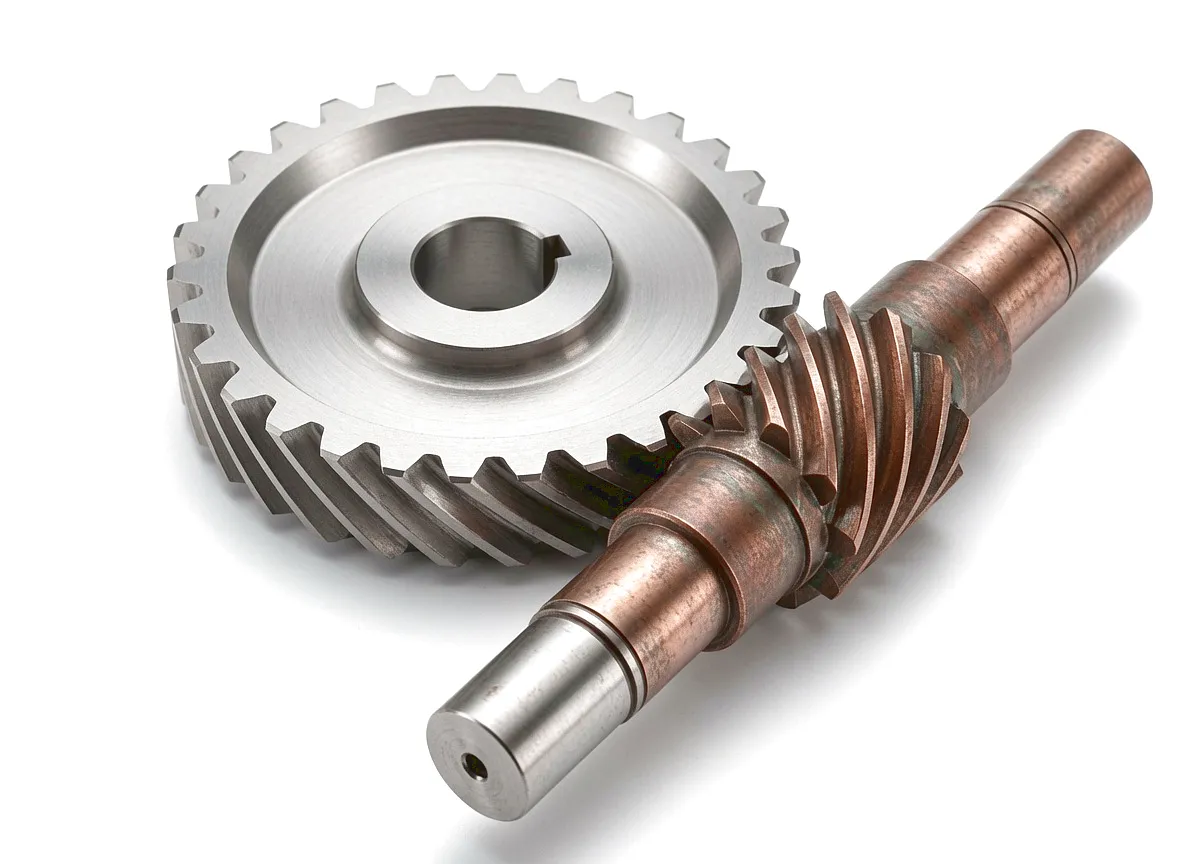
The reasons engineers specify a worm gear shaft over alternative transmission solutions go beyond simple ratio arithmetic. There is a convergence of mechanical properties — compactness, load capacity, noise behaviour, and safety features — that makes the worm gear shaft the dominant choice in a wide range of industrial duty classes. Understanding these advantages in engineering depth, rather than marketing summary, enables procurement teams to make defensible specification decisions and assists maintenance engineers in setting realistic performance expectations for installed equipment. The following points represent the genuine, application-tested strengths that justify the continued widespread use of worm gear shafts across British and global industrial installations.
⚡
High Single-Stage Reduction
Ratios from 5:1 to 100:1 in a single mesh stage eliminate intermediate shafts, bearings and housings, reducing system bill of materials and potential failure points. Competing helical trains require two or three stages to match the same reduction.
🔒
Inherent Self-Locking
At lead angles below 5 degrees, the friction geometry of the worm gear shaft prevents back-driving, providing a built-in mechanical safety feature for lift tables, gravity-loaded conveyors, and valve actuators without adding external brakes to the drive train.
🔅
Smooth, Quiet Running
The continuous sliding mesh between worm and wheel teeth creates a progressive, cushioned load transfer that is measurably quieter than equivalent spur or bevel drives. This is a decisive advantage in food production, medical device assembly, and commercial building services.
💾
Compact Envelope
The 90-degree shaft angle means the worm gear shaft and wheel fit into a cuboid housing that is often 40–60% smaller in volume than an equivalent in-line planetary gearbox delivering the same reduction ratio and torque capacity.
🔧
Shock Load Tolerance
The large contact area across the worm wheel tooth face — a characteristic of the throated wheel form — distributes shock loads over a wider surface than point or line contact gear types, giving the worm gear shaft drive superior resistance to impact loading in crushing, pressing and stamping applications.
🏭
Cost-Effective At Scale
Worm gear shaft production is well-suited to CNC turning and thread-grinding automation, enabling competitive unit pricing at both small batch and high-volume quantities. This makes it the practical choice for OEMs designing products for mass-market distribution from UK manufacturing bases.
Industrial Applications
Where Worm Gear Shafts Are Used Across UK Industry
Large Combine Harvesters — Precision Crop Adjustment
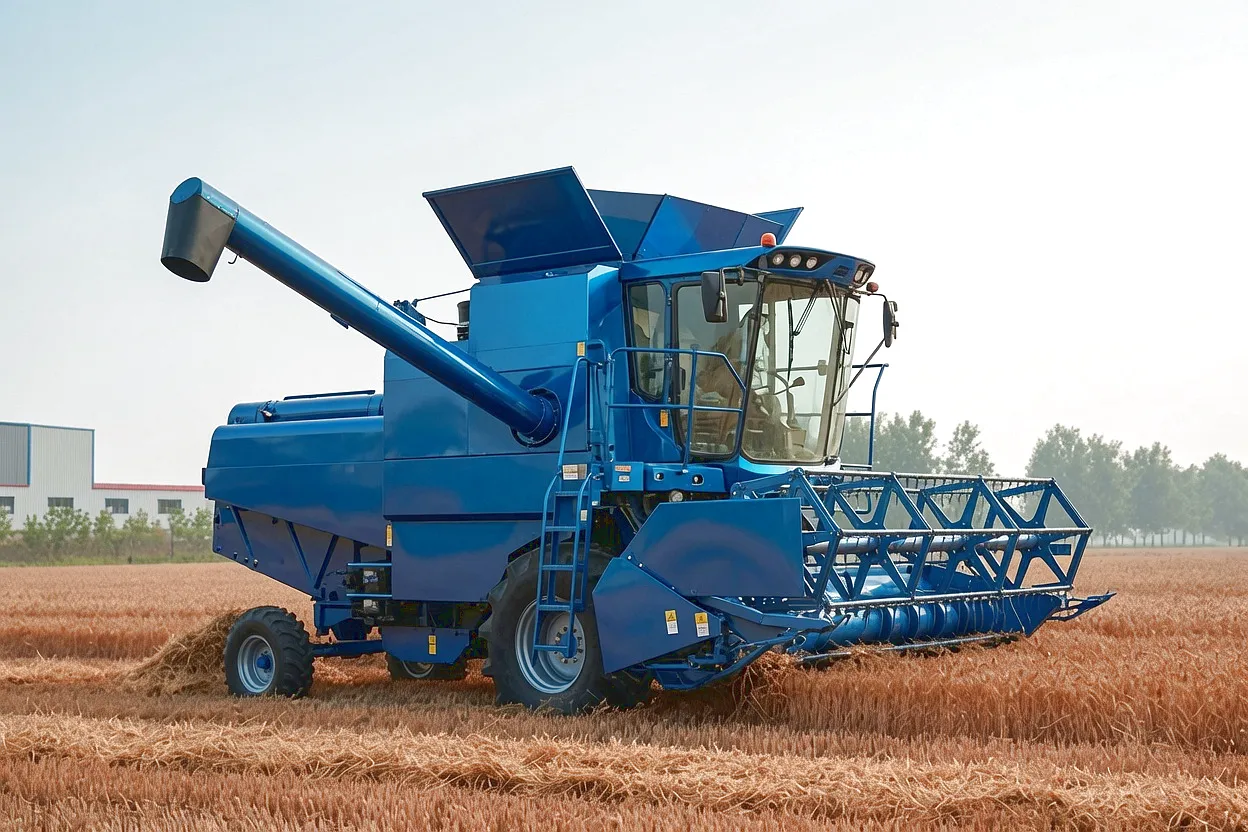 Inside large combine harvesters — including models such as the John Deere JD S680 — the worm gear shaft drives several critical adjustment systems that must operate reliably under dusty, vibrating field conditions throughout a continuous harvest season. The header width adjustment mechanism uses a worm gear shaft arrangement with a 40:1 to 60:1 ratio, driven by an electric or hydraulic motor, allowing the operator to alter crop intake width from the cab without leaving the driving seat. The threshing drum clearance adjustment, which directly controls grain separation quality and therefore harvest yield, employs a worm gear shaft pair that positions the concave plate to within ±5 mm accuracy. Because this setting must hold position absolutely once established — even when the drum is subjected to heavy crop throughput vibration — the self-locking characteristic of the worm gear shaft is not optional: it is the engineering requirement that makes remote, cab-operated adjustment safe and dependable. The cleaning sieve aperture is similarly controlled via a worm gear shaft mechanism, enabling real-time adaptation to crop moisture and density without machine downtime. For UK arable farming operations in Lincolnshire, East Yorkshire and the East Anglian grain belt, where harvest windows are short and machine availability is critical, the reliability of these worm gear shaft systems directly impacts seasonal profitability.
Conveyor and Material Handling Systems
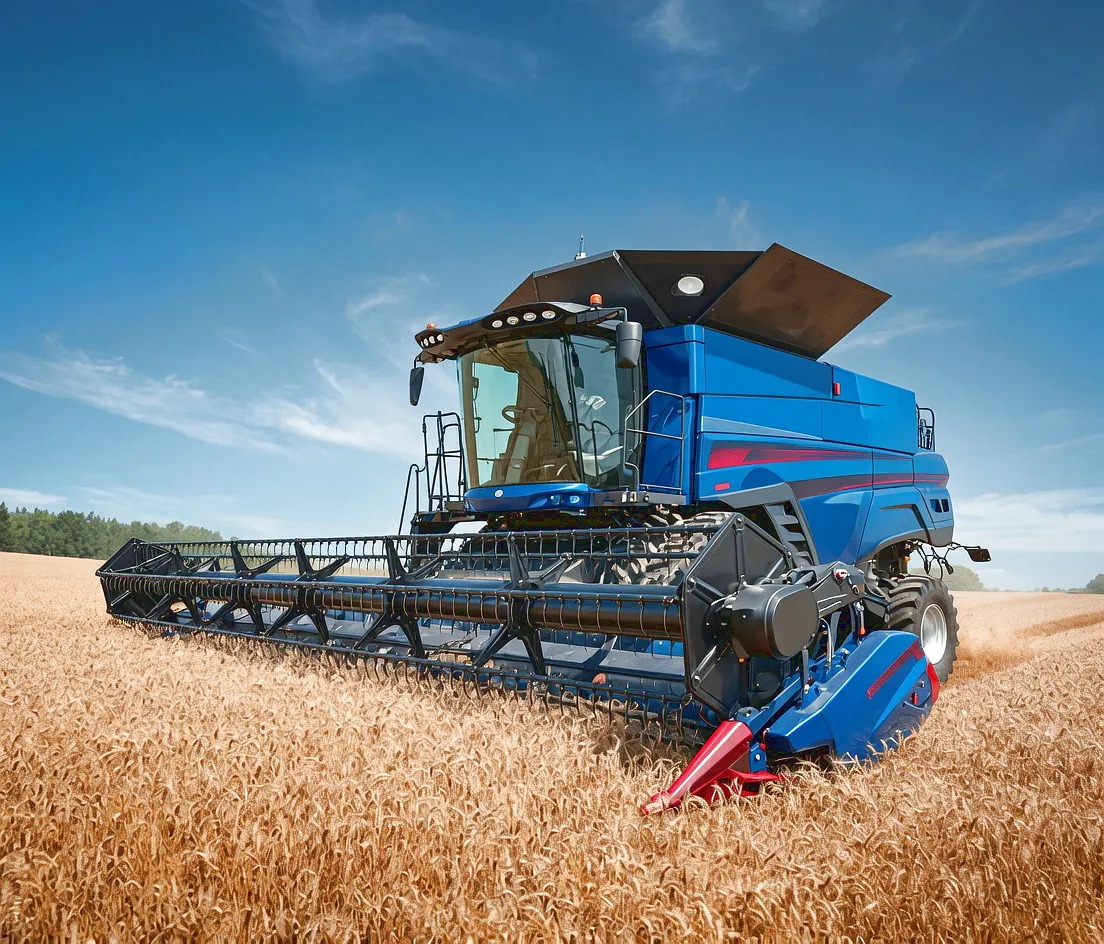 Across distribution centres, food manufacturing plants and automotive component factories in the West Midlands and Greater Manchester, worm gear shafts power the belt drives, live roller beds and elevating conveyor sections that move product continuously through production and logistics processes. The worm gear shaft in a belt conveyor drive head delivers the high reduction ratio needed to match a standard AC motor speed to the slow, controllable belt speed required for safe product handling, typically in the range of 0.1 to 2.0 metres per second. The compact right-angle housing allows the drive unit to be mounted directly on the conveyor frame without a separate gearbox platform, simplifying installation and reducing the structural steel requirements of the conveyor support structure. In sorting and distribution environments, where conveyors change direction frequently, the 90-degree output of the worm gear shaft simplifies the drive arrangement at turning sections. The quiet running behaviour of the worm drive is a meaningful advantage in distribution hubs where noise regulations under UK Noise at Work Regulations 1989 require close management of occupational sound levels.
Food & Beverage Processing
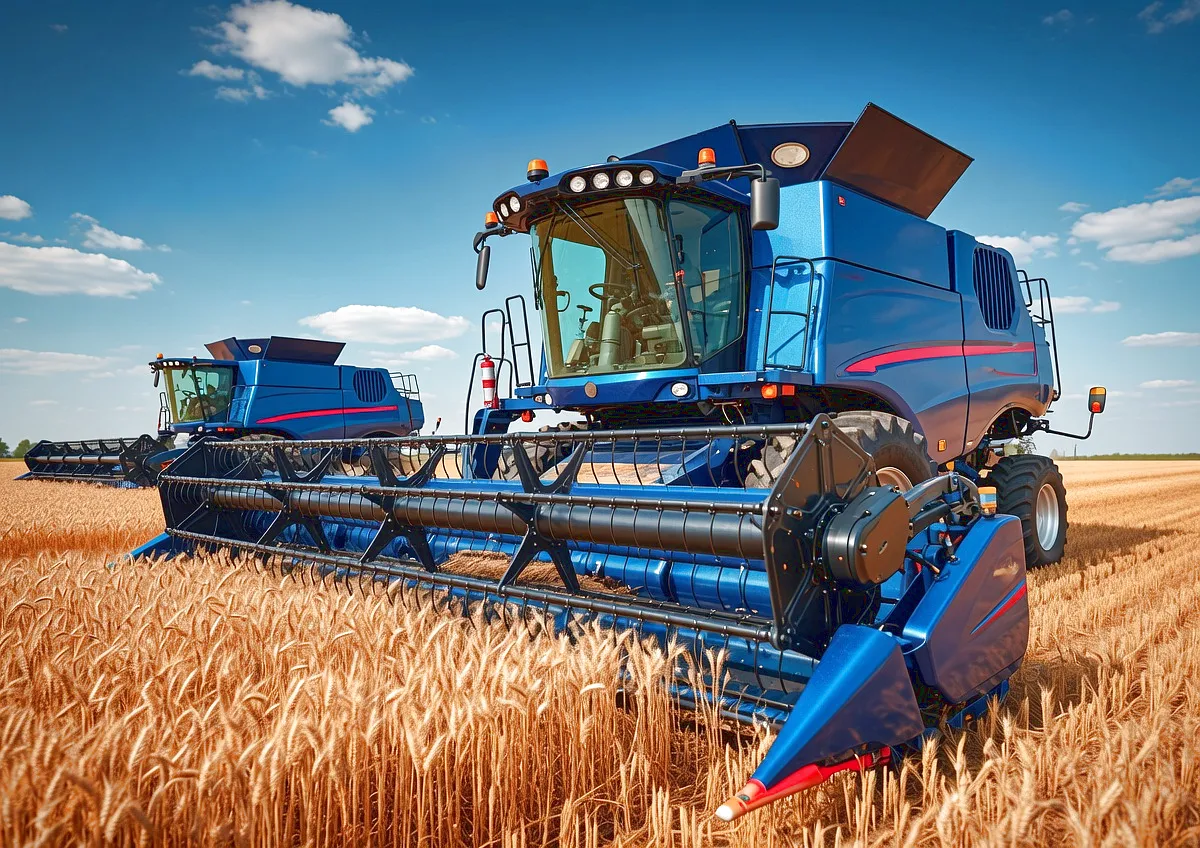 The UK food manufacturing sector — centred on locations including Northamptonshire, Leicestershire and the Humber estuary — relies heavily on worm gear shafts in mixing, filling, dosing and packaging machinery. Where the application demands both a precision speed reduction and hygienic construction, stainless steel worm gear shafts machined to Ra 0.4 µm surface finish deliver the required combination. Filling machines, dough mixers and rotary depositors all use worm gear shaft assemblies to translate high-speed motor output into the controlled, repeatable rotary or linear motion needed for accurate product placement. In breweries and dairy operations across Yorkshire and Scotland, the worm gear shaft drives agitators, pasteuriser conveyors and can-seaming heads. The self-locking property prevents equipment creep during CIP (clean-in-place) stoppages, reducing the risk of uncontrolled movement when maintenance staff access the machine. All stainless steel worm gear shaft variants available from Ever Power are manufactured from 316L or 17-4PH grades, with optional FDA-compliant lubricant compatibility specified at the design stage.
Lifting Equipment, Stage Machinery & Valve Actuation
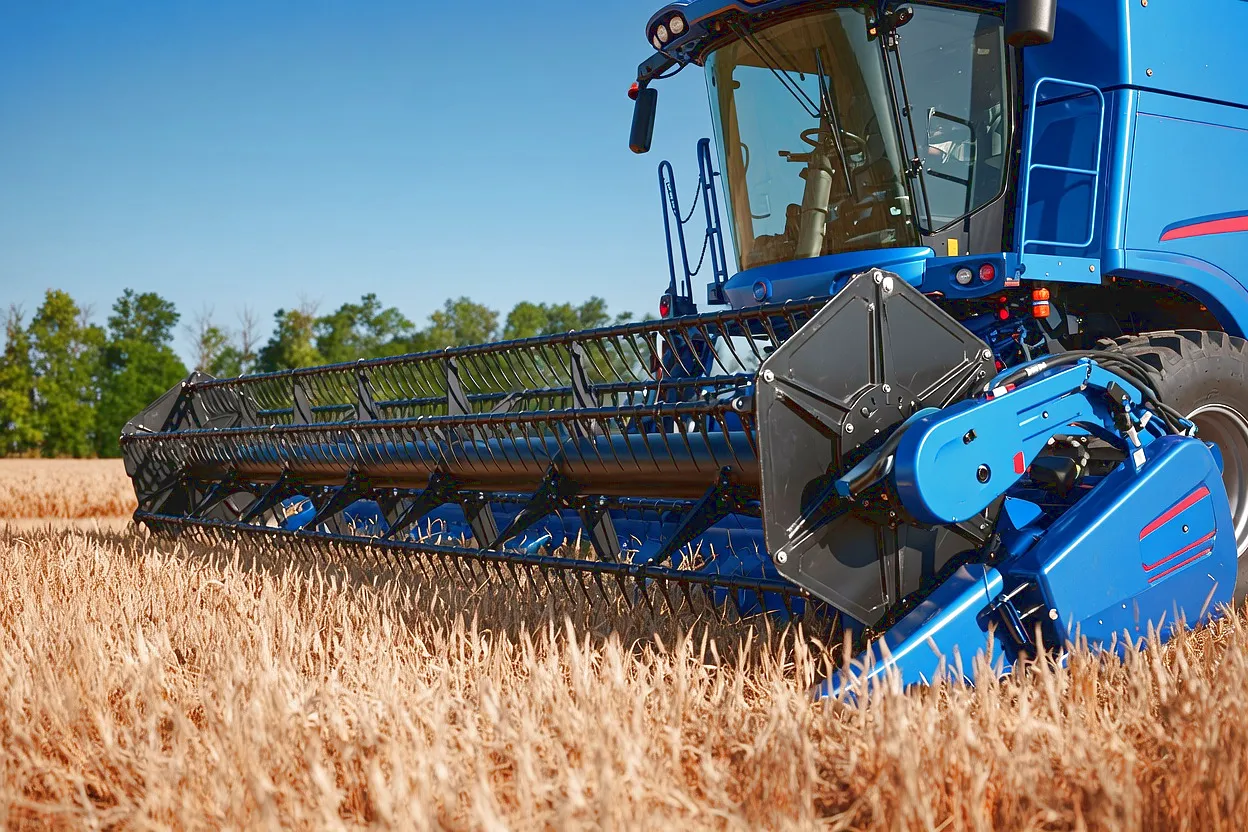 Scissor lifts, dock levellers, theatre stage lifts and building services valve actuators across the UK specify the worm gear shaft precisely because no additional brake mechanism is required to hold position under static load. A 60:1 single-start worm gear shaft, when correctly proportioned, will hold a fully loaded lift platform in position indefinitely without motor power, relying solely on the friction geometry of the shaft and wheel mesh. This mechanical self-lock meets the safety intent of the Lifting Operations and Lifting Equipment Regulations 1998 (LOLER) for static holding, simplifying the engineering compliance review for equipment designers. In theatre productions from London’s West End to touring venues in Edinburgh and Manchester, stage automation relies on worm gear shaft actuators to position scenery platforms with sub-millimetre repeatability. The combination of high ratio, self-locking, and quiet operation makes the worm gear shaft the only practical choice in environments where audible noise from the drive system would be detectable by audiences during a performance.
Manufacturer Profile
Ever Power — Precision Worm Gear Shaft Manufacturing
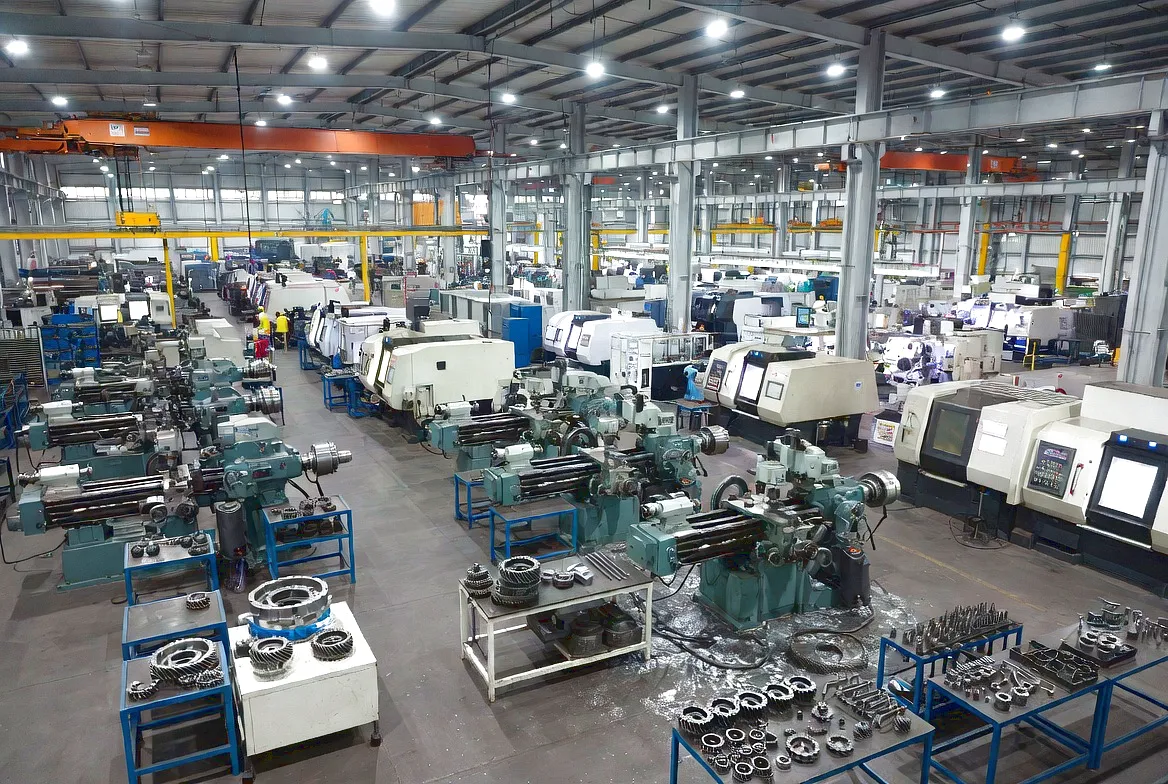
Ever Power is a precision mechanical transmission manufacturer with a dedicated production line for worm gear shafts serving industrial clients across Europe and the UK. The manufacturing facility operates a full complement of CNC lathes, thread-grinding machines, and surface-hardening furnaces, enabling the complete in-house production of worm gear shafts from bar stock through to final inspection and despatch — without sub-contracting any critical machining operations. This vertical integration gives Ever Power direct control over dimensional tolerances, surface finish, heat treatment consistency and lead times, which translates into faster delivery turnaround and more reliable quality compliance for clients operating in regulated sectors such as food production, pharmaceutical manufacturing, and lifting equipment.
Ever Power’s customisation capability covers the full specification range: non-standard thread forms, oversized shaft diameters for high-torque applications, bespoke shaft extensions and spline profiles, and surface coatings including hard chrome, electroless nickel, and black oxide. For UK clients supplying into OEM programmes that require dimensional compliance with BS/ISO standards, the technical team can work directly from customer drawings or reverse-engineer legacy components where original drawings are no longer available. Ever Power maintains representative stock of the most common worm gear shaft sizes for rapid despatch to UK addresses, with next-working-day air freight available for urgent replacement requirements. For enquiries, custom designs or technical consultations, contact the dedicated UK sales channel directly.
ISO 9001
Quality Management Certified
100%
In-house Machining & Heat Treatment
±0.01mm
Thread pitch tolerance capability
Custom
Non-standard dims, materials, coatings available
Customer Case Study
Sheffield Precision Forgings — Conveyor Upgrade Programme
Heavy Industry · South Yorkshire · 2024
A Sheffield-based closed-die forging company operating a high-throughput production line for automotive crankshaft blanks experienced recurring drive failures on its billet transfer conveyor system. The existing drives — generic parallel-shaft helical reducers sourced from a European distributor — were failing at intervals of eight to fourteen months, creating unscheduled downtime events that interrupted a just-in-time supply agreement with a major UK automotive OEM. The failure mode was consistent: accelerated wear on the output pinion caused by vibration-induced fretting under the impact loads generated each time a 12-kilogram steel billet was dropped onto the conveyor from the forging press discharge chute. The original design had not accounted for the shock loading severity at this specific point in the line.
The plant engineering team contacted Ever Power’s technical sales team to explore a more appropriate drive solution. After reviewing the application duty data — 16-hour daily operation, shock load peaks estimated at 6× nominal torque, ambient temperature 35–45°C near the forge — Ever Power specified a custom 42CrMo4 worm gear shaft with a 40:1 ratio, case-hardened to 60 HRC on the thread flanks, and a full-complement cylindrical roller bearing arrangement on the shaft journal. The housing was designed with extended oil capacity to manage the elevated operating temperature. The replacement units were manufactured, heat treated and despatched within four weeks of order confirmation, allowing fitment during a scheduled maintenance window rather than requiring emergency shutdown time.
Eighteen months after installation, all four conveyor drives are operating without any gear failure events. The estimated operational saving — accounting for avoided downtime costs and the production penalty clauses under the OEM supply agreement — has been calculated at approximately £180,000 over the period. The plant’s reliability engineer has since standardised the Ever Power worm gear shaft specification across four additional conveyor positions on the same production line. The project demonstrated that correct application analysis at the specification stage, combined with appropriate material and geometry selection, can transform an unreliable drive point into a genuinely low-maintenance asset.
★★★★★
“The Ever Power shaft ran in smoothly and the thread-ground flanks made an immediately noticeable difference to vibration levels at the drive head. Eighteen months in, we have not had to touch it. For a high-shock conveyor environment, the material specification was clearly the right call.”
— Maintenance Engineering Manager, Sheffield Precision Forgings
★★★★★
“We needed a non-standard shaft length with a specific spline profile at the drive end, and Ever Power turned it around in under five weeks. The technical drawing review from their engineers caught two tolerance stack-up issues before production started. That kind of pre-production collaboration is hard to find with most suppliers.”
— Senior Design Engineer, Midlands Packaging Machinery OEM
★★★★★
“We supply dairy processing equipment across Scotland and the north of England and food-grade compliance is non-negotiable. The 316L stainless worm gear shafts from Ever Power came with full material traceability certificates and the surface finish data we need for BRCGS site audits. The process from enquiry to delivery was straightforward and the pricing was competitive against European alternatives.”
— Procurement Director, Scottish Food Processing Equipment Manufacturer
FAQ
Common Questions About Worm Gear Shafts
How much does a custom worm gear shaft typically cost for a UK industrial conveyor application?
The price of a custom worm gear shaft for a UK industrial conveyor depends on the shaft diameter, material grade, thread form, heat treatment specification, and quantity. Standard carbon steel shafts for light-duty conveyors typically start from around £80–£150 per unit at modest quantities, while alloy steel case-hardened variants for heavy industrial duty range from £200 to £600 or more depending on complexity. Custom stainless steel or nitrided versions command a premium. For an accurate quotation, contact Ever Power at
[email protected] with your dimensional drawing and duty requirements.
What is the maximum torque output available from a single-stage worm gear shaft drive in heavy manufacturing?
In heavy manufacturing environments, a single-stage worm gear shaft drive can deliver output torques of up to 20,000 N·m using large-diameter case-hardened alloy steel shafts paired with bronze worm wheels. Standard production units typically cover the range up to 2,000 N·m. For applications exceeding this, a compound worm drive — two stages in series — or a larger single-stage unit with bespoke housing can extend the range further. The achievable torque is also constrained by the gear ratio selected and the input motor power.
Which material should I specify for a worm gear shaft used in a UK food processing plant that requires regular wash-down?
For food processing environments requiring regular clean-in-place or hose-down procedures — common in UK dairy, bakery and beverage plants — a 316L stainless steel worm gear shaft is the standard specification. This grade provides adequate corrosion resistance to the detergents and sanitisers used in food plant CIP systems. Where higher mechanical strength is also required, 17-4PH precipitation hardening stainless steel offers improved hardness while retaining corrosion resistance. Always confirm that the lubricant used in the drive housing is food-grade (H1 rated) to comply with BRCGS and BRC Food Safety Standards.
Where in the UK can I find a reliable worm gear shaft supplier who can produce non-standard custom shaft dimensions?
Ever Power supplies worm gear shafts to UK clients nationwide, including engineering companies in Birmingham, Sheffield, Manchester, Leeds, and London. Custom non-standard shaft dimensions — including unusual diameters, bespoke thread pitches, integrated splines, keyways, and flanged ends — are produced in-house and can be delivered to UK addresses within four to six weeks of drawing approval for most specifications. Rush lead times are available on request. Send your enquiry to
[email protected].
How does the self-locking property of a worm gear shaft work, and when should I rely on it for a lifting application?
The self-locking behaviour occurs when the lead angle of the worm gear shaft is sufficiently low — typically below 5 degrees — that the friction force at the thread flank exceeds the tangential force component from the load trying to back-drive the shaft. At this geometry, cutting off the drive motor leaves the load held in position by the friction lock in the mesh. For lifting applications covered by LOLER in the UK, self-locking should be treated as a supplementary safety feature rather than the primary load-holding method: a dedicated mechanical brake or load-holding device should still be specified in the safety design. However, the self-locking property significantly simplifies the overall system design and is widely relied upon in scissor lifts, valve actuators, and stage machinery across the UK.
How long does it take to get a price or delivery quote for a custom worm gear shaft from a UK supplier like Ever Power?
For standard worm gear shaft enquiries submitted with a dimensional drawing or a clear written specification, Ever Power’s technical sales team typically returns a quotation within one to two business days. Complex custom designs requiring detailed application review or material substitution engineering may take up to three business days for a comprehensive quote. Send your drawing or specification to
[email protected] and include your required delivery date to allow the team to confirm production scheduling from the outset.
What gear ratio range is available for worm gear shaft drives used in combine harvester adjustment mechanisms in UK agriculture?
For combine harvester drum clearance, header width and sieve aperture adjustment mechanisms — applications well established in UK arable farming in East Yorkshire, Lincolnshire and East Anglia — worm gear shaft units in the 40:1 to 60:1 range are most commonly specified. This range provides the torque multiplication needed to overcome the spring-loaded or friction-loaded adjustment points, while still allowing fast enough adjustment travel time for the operator to make corrections during crop throughput without excessive delay. All such drives rely on the self-locking property of the worm gear shaft to maintain the set position under machine vibration and dynamic crop loads. Ever Power can supply both standard and custom versions in these ratios with electric or hydraulic motor mounting flanges to suit most combine harvester platform designs.
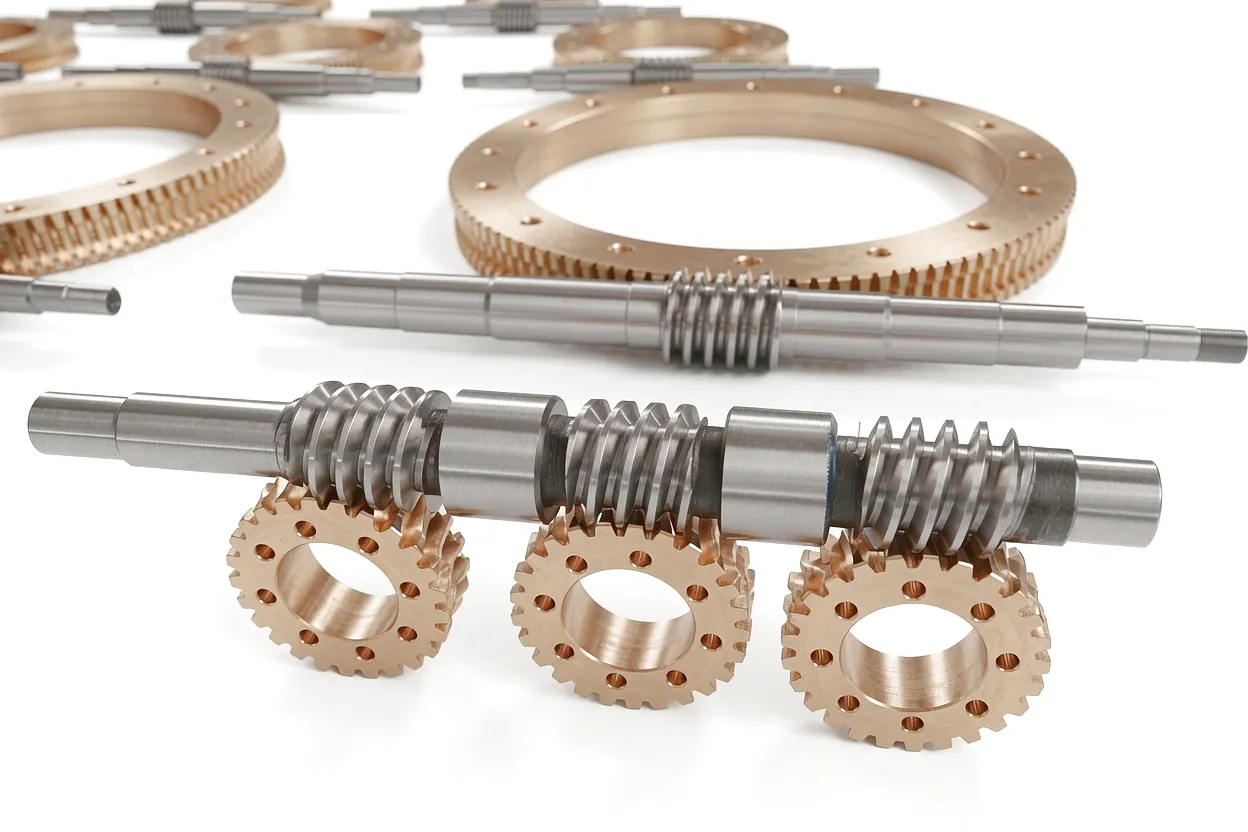
Ready to Specify Your Worm Gear Shaft?
Tell Ever Power your application requirements — duty cycle, torque, ratio, material preference, operating environment — and the technical team will return a full recommendation with pricing within 48 hours.
Contact Ever Power — [email protected]
edit by gzl