What Is a Worm Gear Shaft and Why Does It Matter in Power Transmission?
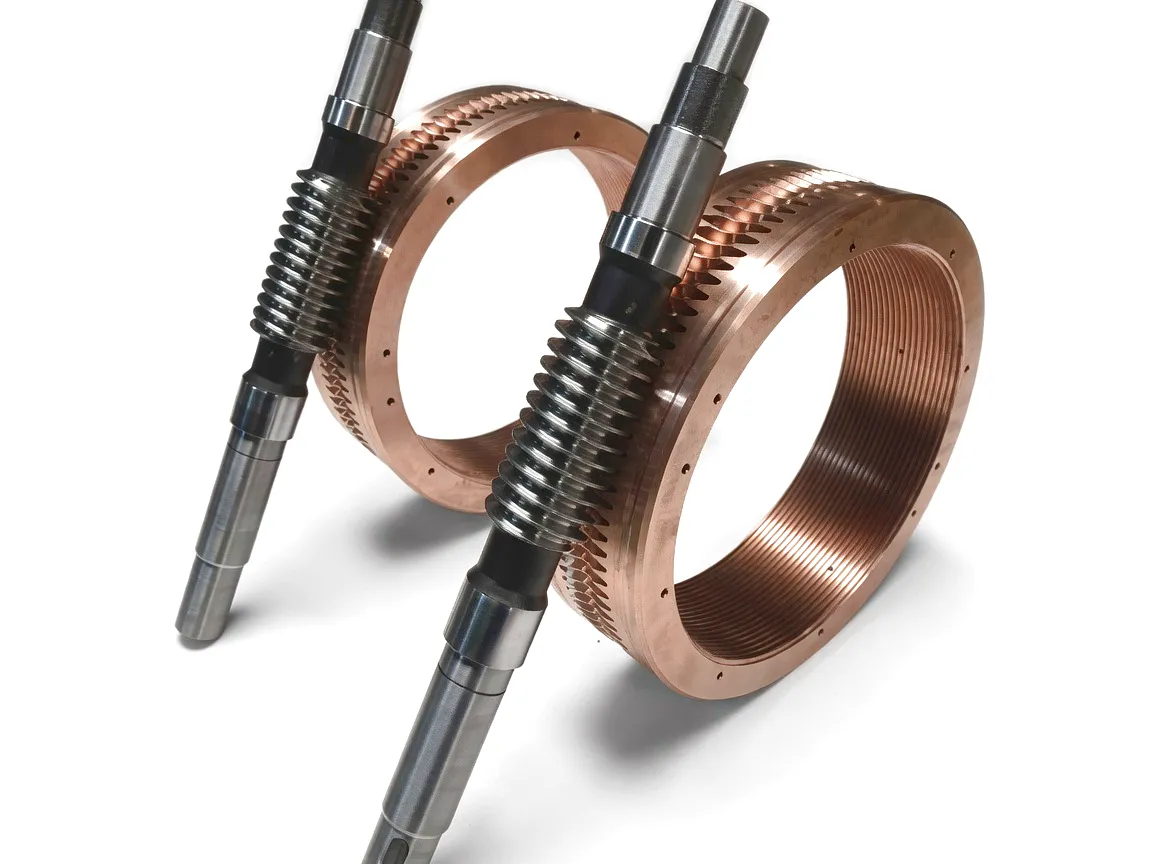
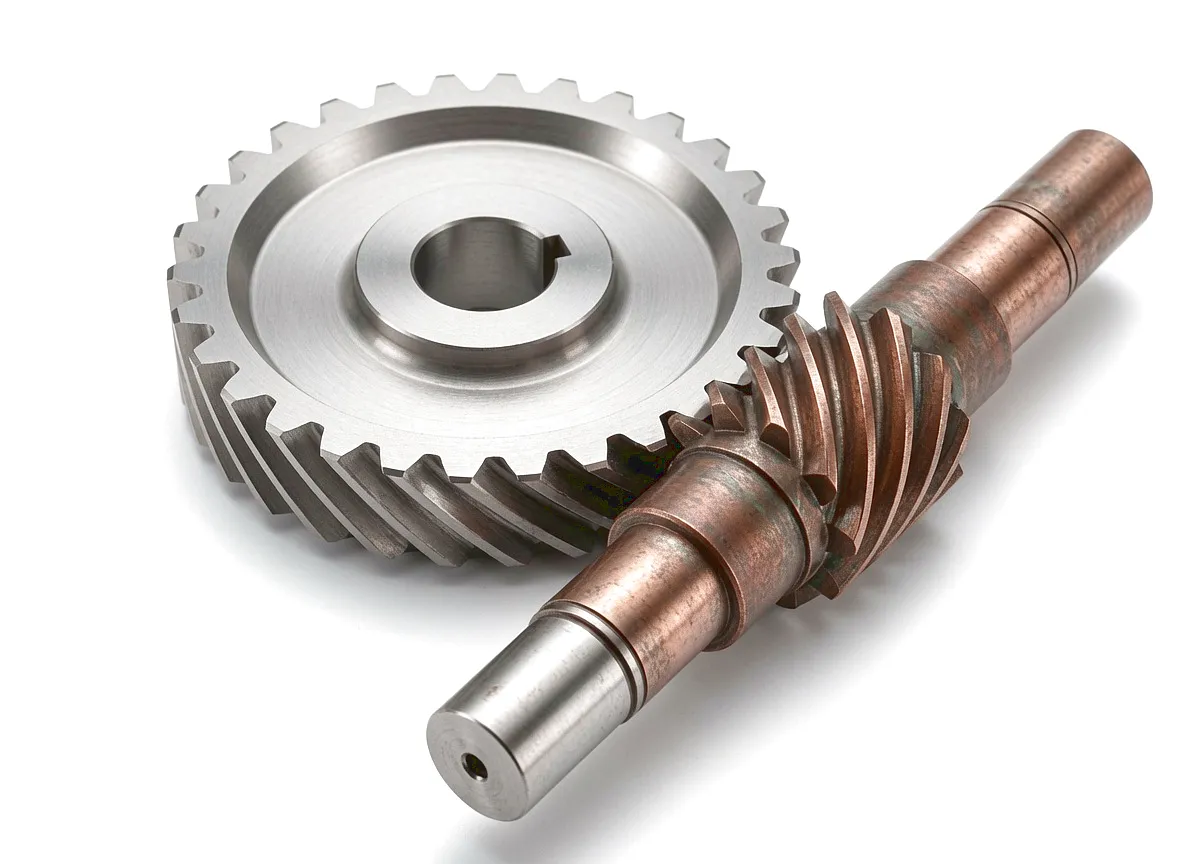
Within the broader landscape of British manufacturing — where industries spanning automotive, food production, pharmaceutical packaging, and heavy materials handling continue to invest heavily in mechanical reliability — the worm gear shaft occupies a uniquely important position. Its ability to deliver self-locking characteristics under static load conditions, combined with its mechanically silent operation and inherent vibration damping, has kept it firmly embedded in engineering specifications even as more novel drive technologies have emerged. Engineers at facilities in Sheffield, Birmingham, and Manchester regularly specify worm gear shaft solutions precisely because the technology’s predictable behaviour under variable load profiles reduces maintenance intervention cycles and extends overall drivetrain service life far beyond what comparable alternatives can achieve in the same installation footprint.
The Working Principle Behind Worm Gear Shaft Mechanics
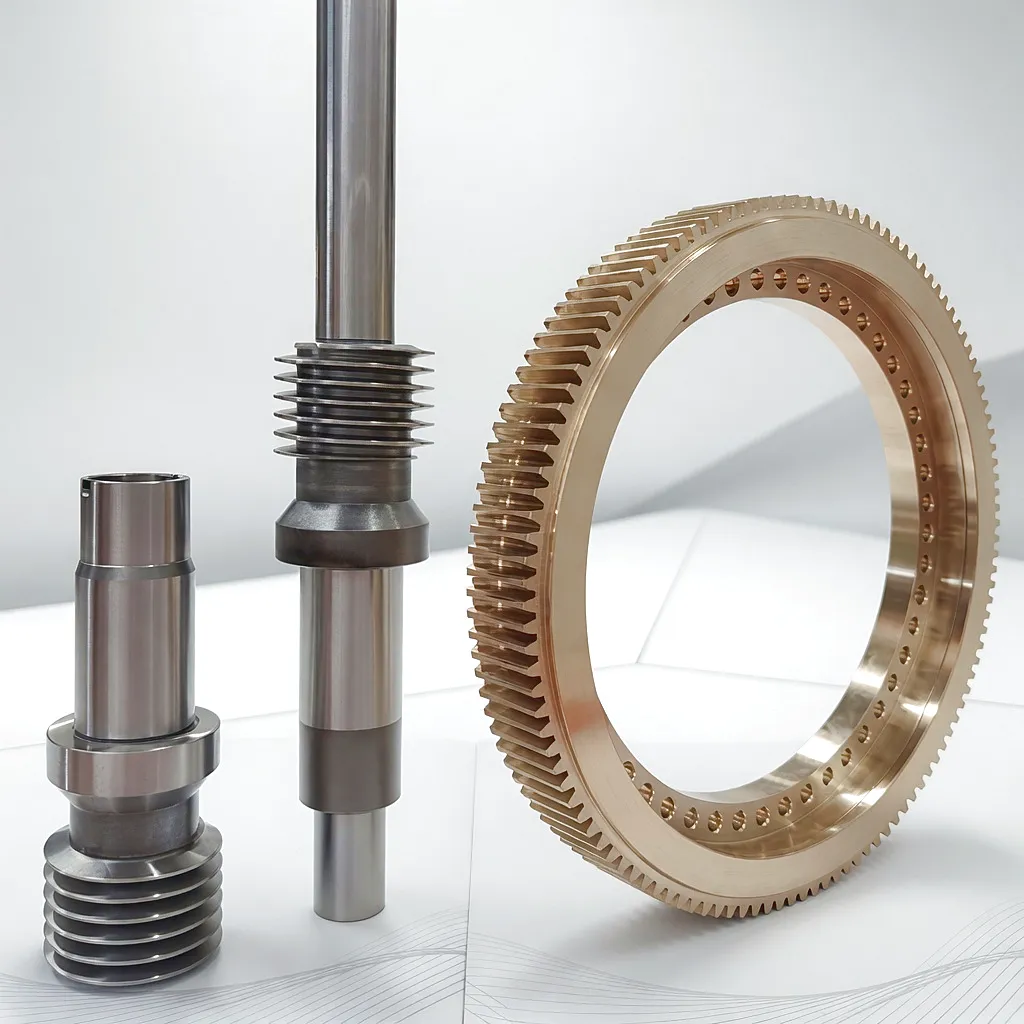
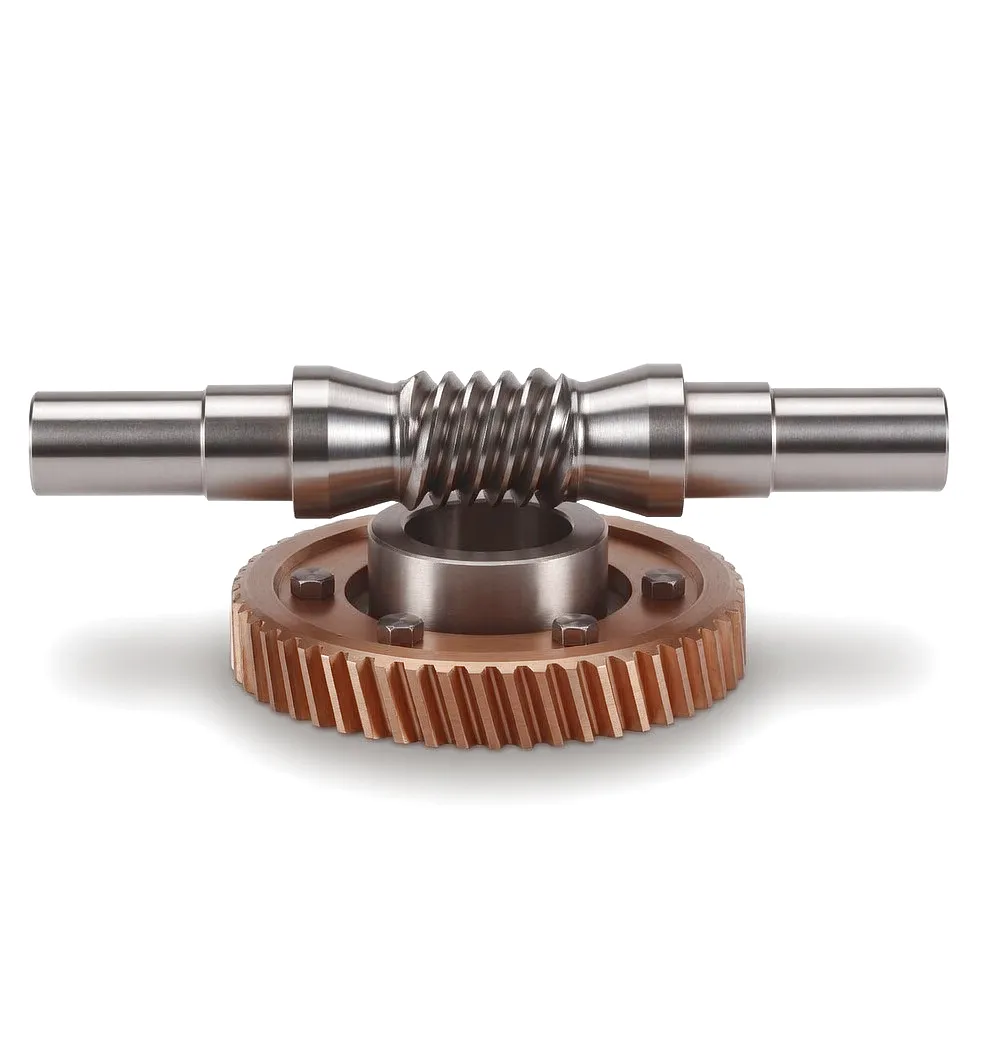
The gear ratio of a worm gear shaft assembly is determined by the number of starts on the worm divided into the number of teeth on the worm wheel. A single-start worm meshing with a 60-tooth wheel produces a 60:1 reduction in a single stage — an extraordinarily high ratio that would require multiple stages in a conventional spur gear arrangement. Multi-start worms (two, three, or four starts) reduce the ratio but improve mechanical efficiency by increasing the effective lead angle. Heat generation is a practical concern in heavily loaded worm gear shaft applications, because the sliding contact produces substantially more heat than rolling contact gear types. This is why lubrication selection, oil viscosity grade, and thermal management features such as cooling fins or forced oil circulation are engineering considerations that responsible worm gear shaft suppliers address proactively in their product specifications.
Mathematically, the velocity ratio (i) of a worm drive is expressed as: i = z2 / z1, where z2 is the number of worm wheel teeth and z1 is the number of worm starts. The efficiency (eta) varies with the lead angle (gamma) and friction angle (rho) according to: eta = tan(gamma) / tan(gamma + rho) for driving. Understanding these relationships allows engineers to balance reduction ratio requirements against efficiency targets and thermal limits, ensuring the selected worm gear shaft operates reliably within its rated duty cycle across the full range of operating conditions encountered in British industrial environments.
Core Materials Used in Precision Worm Gear Shaft Manufacturing
Material selection for the worm gear shaft is arguably the single most consequential engineering decision in the design process. The shaft operates under complex combined loading — torsion, bending, and axial thrust simultaneously — while also experiencing elevated surface contact stresses and sliding friction at the tooth mesh. These demands require materials that combine high surface hardness for wear resistance with sufficient core toughness to resist fatigue cracking under cyclic loading conditions that are unavoidable in real industrial service.
Grades such as 20CrMnTi, 42CrMo4, and EN36 are widely used for high-load worm gear shaft applications. After machining, these steels undergo carburising or nitriding surface treatment followed by precision grinding to achieve surface hardness values of HRC 58–62, while retaining a tough, ductile core. This combination is particularly well-suited to heavy industrial drives where shock loading is a regular occurrence.
C45 and EN8 medium carbon steels treated by induction hardening provide a cost-effective solution for moderate-duty worm gear shaft applications. Induction hardening selectively hardens the thread profile while leaving the shaft body in a normalised condition, offering a practical balance of wear resistance and machinability that suits volume production requirements in UK engineering facilities.
316L and 17-4PH stainless steels are increasingly specified for worm gear shaft components deployed in food-grade processing equipment, pharmaceutical manufacturing, and marine environments where corrosion resistance is non-negotiable. These materials sacrifice some surface hardness compared to alloy steels but deliver outstanding resistance to chemical attack and hygienic cleanability that other grades cannot match.
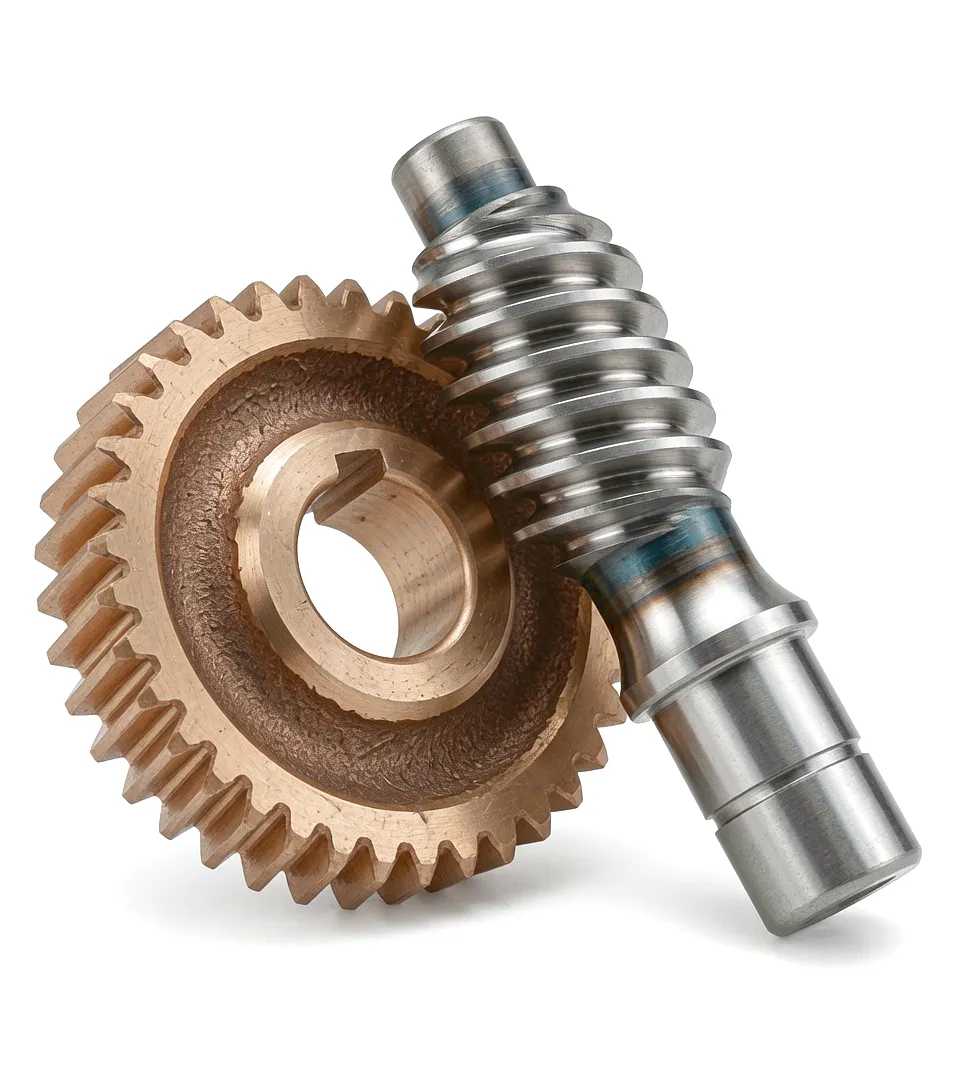
While not a shaft material itself, the worm wheel’s phosphor bronze construction is inseparable from worm gear shaft performance analysis. The intentional material pairing — hard steel worm shaft against softer bronze wheel — allows the softer wheel material to accommodate the inevitable sliding contact wear, concentrating material loss in the more easily replaced component and extending overall drive service intervals considerably.
Heat treatment and surface finishing processes are equally critical to final worm gear shaft performance as the base material itself. Thread grinding after heat treatment corrects the dimensional distortion introduced by hardening, restoring the precision profile accuracy required for quiet operation and even load distribution. Surface roughness values at the contact flanks are typically specified at Ra 0.4–0.8 micrometres for industrial drives, with higher-grade precision units requiring Ra values below 0.2 micrometres to achieve the noise levels demanded by modern production environments in the UK’s precision engineering sector.
Product Technical & Performance Specifications
Standard range reference data — custom configurations available from Ever Power Engineering.
| Parameter | Light Duty | Medium Duty | Heavy Duty | Precision Grade |
|---|---|---|---|---|
| Output Torque Range | 2–50 N·m | 50–500 N·m | 500–5,000 N·m | Up to 15,000 N·m |
| Gear Ratio | 5:1 – 20:1 | 20:1 – 60:1 | 60:1 – 100:1 | Up to 300:1 |
| Shaft Diameter Range | 8–25 mm | 25–60 mm | 60–120 mm | Up to 220 mm |
| Shaft Material | C45 Steel | 42CrMo4 Steel | 20CrMnTi | Custom Alloy / SS |
| Surface Hardness | HRC 45–50 | HRC 55–58 | HRC 58–62 | HRC 60–64 |
| Thread Surface Finish | Ra 1.6 µm | Ra 0.8 µm | Ra 0.4 µm | Ra 0.2 µm |
| Mechanical Efficiency | 40–55% | 55–75% | 75–85% | Up to 92% |
| Operating Temp. Range | -10°C to +60°C | -20°C to +80°C | -30°C to +100°C | -40°C to +120°C |
| Shaft Axis Angle | 90° (standard) | 90° (standard) | Custom angles | Any angle on request |
| Number of Starts | 1 | 1–2 | 1–4 | 1–6 custom |
Core Technical Advantages of Worm Gear Shaft Assemblies
A single-stage worm gear shaft assembly routinely achieves reduction ratios from 5:1 up to 100:1 or beyond, eliminating the need for multi-stage gearboxes in many applications. This dramatically reduces drivetrain length, weight, and installation cost while simplifying maintenance access for maintenance engineers at facilities across Birmingham and the wider West Midlands manufacturing corridor.
At lead angles below approximately 6 degrees, a worm gear shaft assembly becomes mechanically self-locking, meaning the driven load cannot reverse-drive the motor. This eliminates the need for external braking mechanisms in vertical lift applications, conveyor systems, and agricultural machinery booms — a genuine safety and cost advantage that competing gear types cannot replicate without added external hardware.
The continuous sliding contact across multiple teeth simultaneously produces extremely low vibration and noise levels compared to spur or helical gears operating at equivalent reduction ratios. This makes worm gear shaft drives the preferred choice for applications in food and beverage production facilities, medical device manufacturing sites, and automated packaging environments where acoustic performance is a contractual requirement.
The right-angle axis configuration inherent in worm gear shaft design allows driven machinery to be positioned perpendicular to the drive motor, opening up installation possibilities that are impossible with inline gear arrangements. In space-restricted plant layouts — a common challenge in retrofitting older factory buildings across Sheffield and Leeds — this geometric flexibility is a decisive advantage during mechanical design review.
The distributed load sharing across multiple tooth contacts simultaneously gives worm gear shaft drives a natural resilience to momentary shock loads and torque spikes. This is particularly valuable in aggregate processing, construction materials handling, and mineral extraction applications where sudden resistance changes would destroy less robust gear types within very short service periods, generating costly unplanned stoppages.
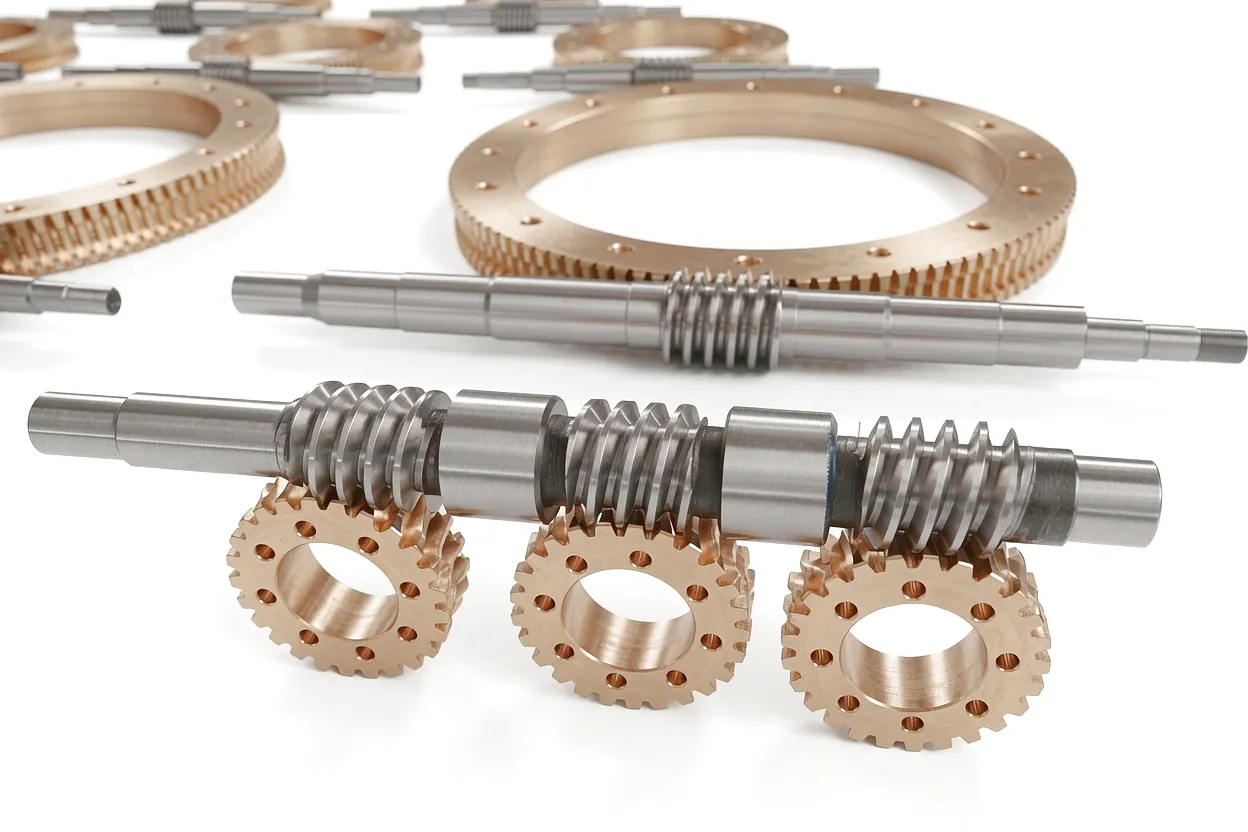
Modern worm gear shaft components can be configured across an extraordinarily wide parameter space — shaft diameter, thread form, lead angle, number of starts, end treatment, keyway geometry, and surface coating are all independently specifiable. This degree of customisation, particularly when working with an experienced manufacturer, allows engineers to obtain a precisely matched worm gear shaft component rather than adapting their design around a catalogue compromise.
Industrial Application Scenarios Across Key UK Sectors
 Worm gear shaft drives are the backbone of conveyor drive systems throughout the UK’s warehousing and distribution sector, particularly across logistics hubs in Coventry, Northampton, and the greater Manchester region. The combination of compact footprint, inherent load holding, and smooth speed reduction makes them ideal for belt, slat, and roller conveyor head drives that must maintain precise belt speed under variable loading as throughput levels fluctuate across shift patterns. In automated sortation systems, the low backlash achievable with precision-ground worm gear shaft assemblies ensures positioning accuracy that keeps downstream barcode reading and parcel diversion equipment operating within tolerance. Maintenance planning departments at major UK distribution centres consistently report extended service intervals compared with equivalent parallel-shaft gearboxes in the same environment, attributing this to the worm’s inherently self-damping response to shock loading events.
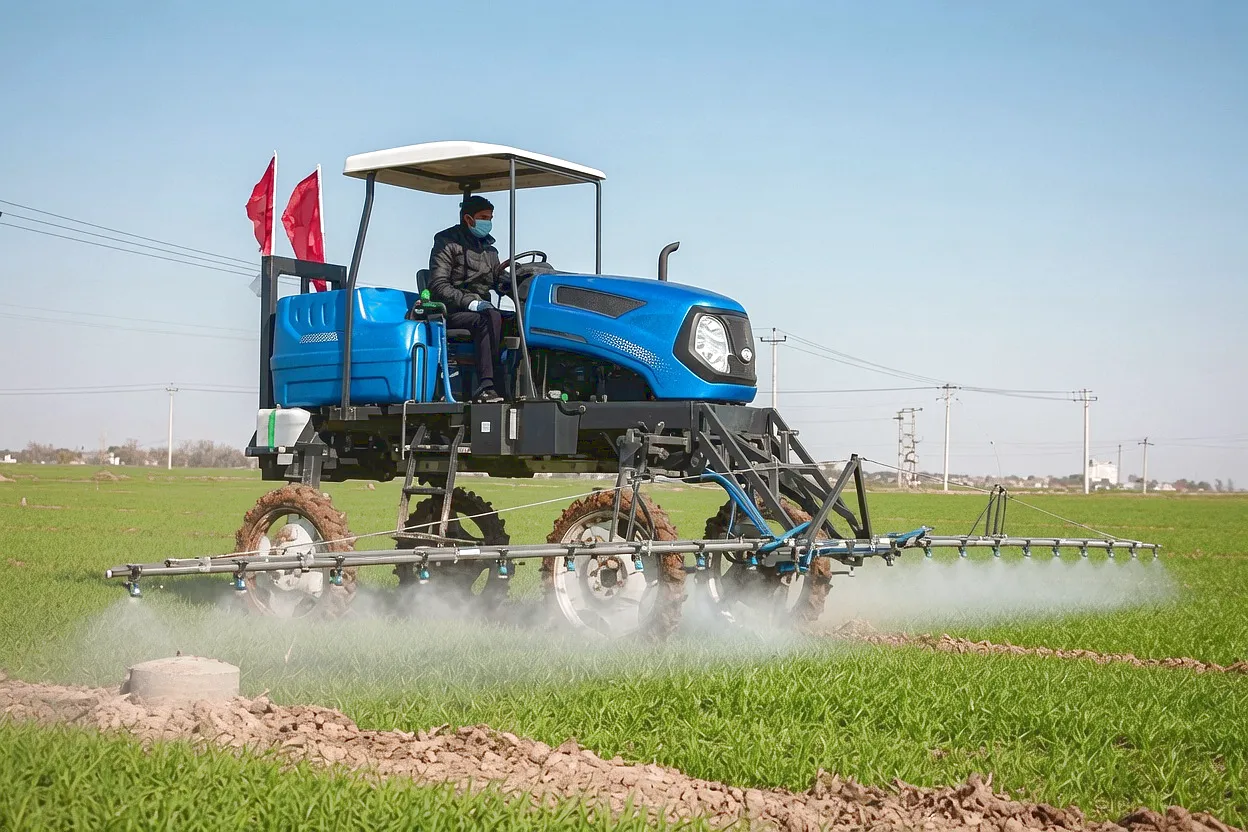 Modern self-propelled crop protection sprayers equipped with wide-span folding booms represent one of the most demanding and safety-critical worm gear shaft application environments in British agriculture. On machines operating across the arable farmlands of Lincolnshire, East Anglia, and the Yorkshire Wolds, boom spans reaching 44 metres unfold from a compact folded transport position and must deploy smoothly, lock into working position precisely, and return to the folded state without drift or creep. The hydraulic motor and worm gear shaft combination driving the boom articulation joints provides exactly the operational characteristics this application demands. During deployment, the worm gear shaft assembly drives controlled, even rotation of the boom sections as they unfold sequentially, with the high gear ratio delivering the controlled low-speed motion necessary for stable boom extension without oscillation.
 The UK food manufacturing sector — spanning facilities across Yorkshire, Lincolnshire, and the South West — relies extensively on worm gear shaft drives for mixing, slicing, filling, and conveying operations where hygiene, quiet operation, and mechanical reliability under high wash-down pressure are simultaneously required. Stainless steel worm gear shaft variants with sealed bearing arrangements and NSF-compliant lubrication systems meet the rigorous demands of BRC and SALSA-certified production environments. The smooth, continuous motion delivered by worm gear shaft drives is particularly valued in depositing and filling line applications, where jerky or irregular output motion would introduce unacceptable product weight variation or spillage losses.
 Stage lifts, scissor platforms, dock levellers, and industrial positioning tables throughout the UK entertainment, logistics, and automotive sectors all leverage the worm gear shaft’s self-locking behaviour as a primary safety mechanism. In theatre rigging systems across London’s West End venues and the major regional theatres in Edinburgh and Manchester, worm gear shaft driven fly systems hold suspended loads of several tonnes motionlessly during performances — with no power consumption and no risk of drift — satisfying the Machinery Directive safety requirements for suspended load applications without costly redundant braking systems. In automotive manufacturing plants across the West Midlands, worm gear shaft assemblies drive precision floor-level pallet positioning systems where repeatable positioning to within fractions of a millimetre is required cycle after cycle throughout three-shift production schedules.
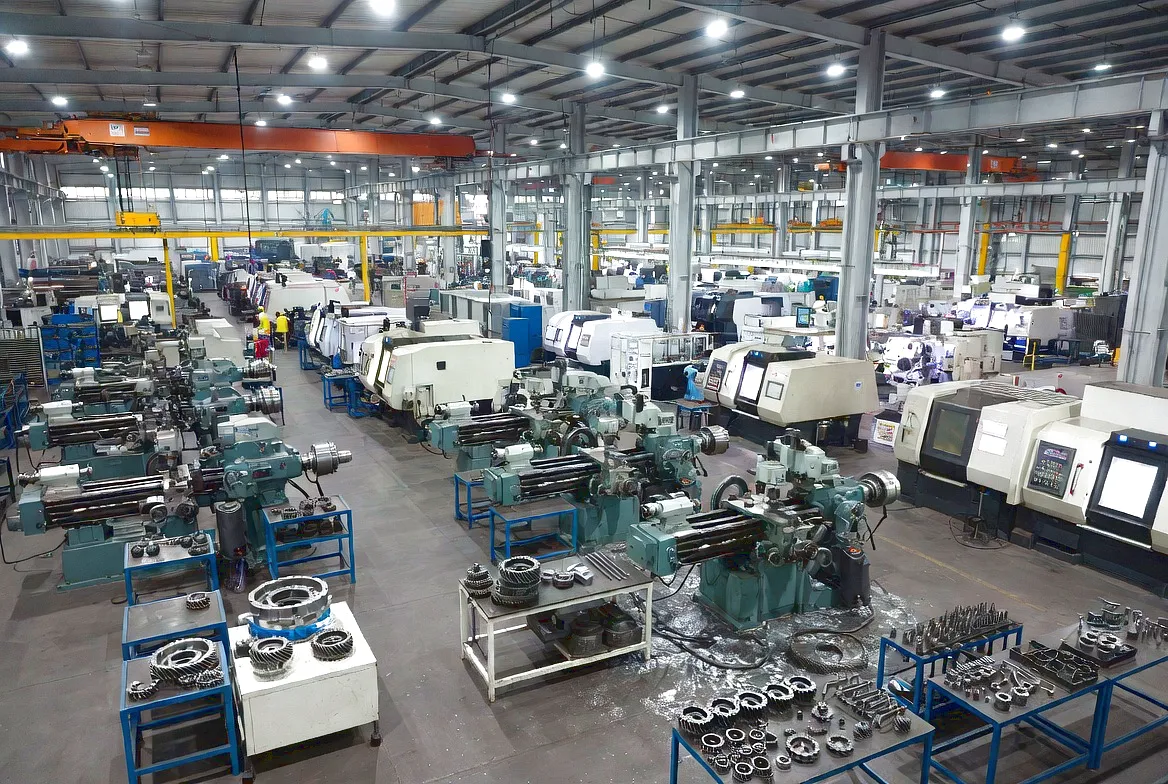
Customer Success Story: Sheffield Steel Fabrication Group
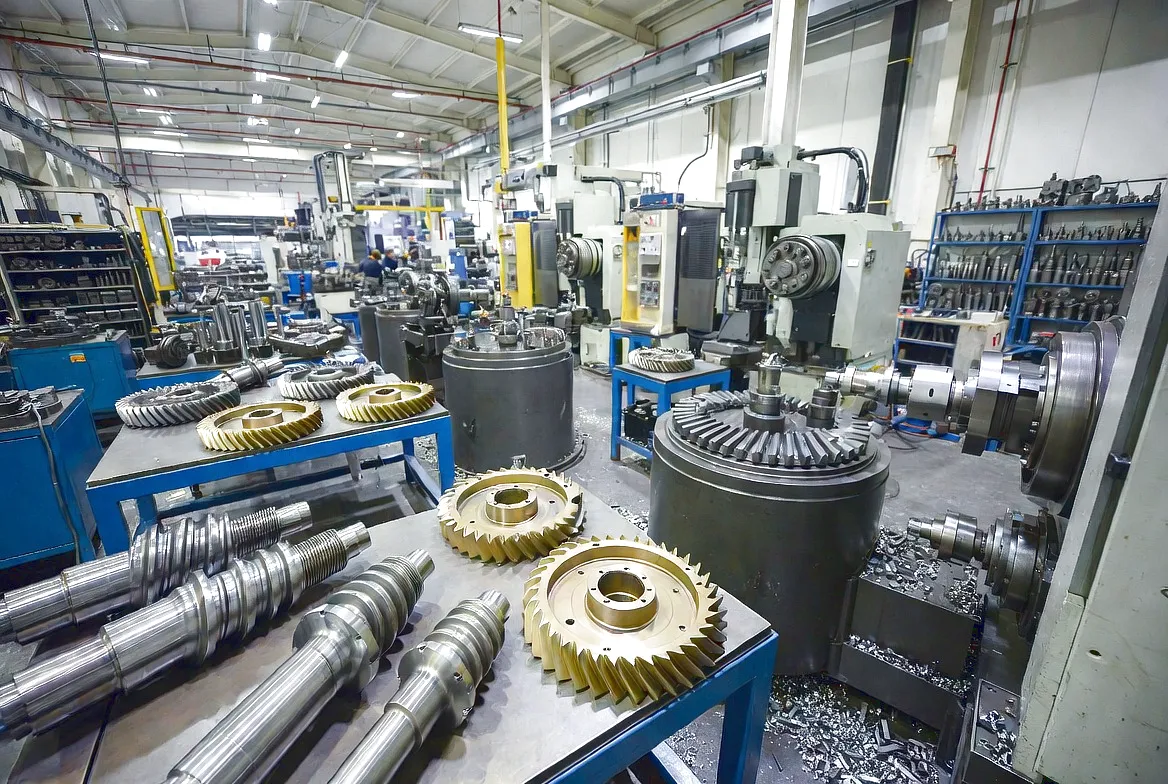 Sheffield Steel Fabrication Group operates a large-scale structural fabrication facility in the Don Valley, producing heavy steel subassemblies for the offshore energy and civil engineering sectors across the UK and Northern Europe. Their primary plate rolling and section bending production line was running with an ageing parallel-shaft gearbox arrangement that had been repeatedly failing across multiple drive positions, generating unplanned downtime costs estimated at over £40,000 per incident when factoring in lost production time, emergency maintenance labour, and expedited component sourcing.
Following a recommendation from a mechanical engineering consultant engaged to review the production line’s reliability record, their engineering team approached Ever Power with dimensional data from the failing gearboxes and a specification covering the operating torque range, duty cycle profile, and installation envelope constraints. Ever Power’s technical team reviewed the application parameters and proposed a custom worm gear shaft solution using 20CrMnTi carburised and ground shafts paired with centrifugally cast phosphor bronze worm wheels, providing a substantially higher load rating within the same physical footprint as the original gearboxes.
The first batch of twelve albero a vite senza fine assemblies was delivered to Sheffield within 18 working days of order confirmation, accompanied by full material certification documentation and dimensional inspection reports for each unit. The drives were installed during a planned maintenance weekend, and the production line returned to service on schedule. In the 14 months since installation, the Sheffield facility has recorded zero worm gear shaft related stoppages on the treated drive positions — a result that the engineering manager described as transformative for the facility’s OEE (Overall Equipment Effectiveness) metrics and night shift operating confidence.
What Our UK Customers Say
“The worm gear shaft replacements Ever Power supplied have completely resolved the drive failures we were experiencing on our plate rolling line. The surface finish quality on the thread form is visibly superior to the original equipment, and 14 months of fault-free operation speaks for itself. The documentation pack they include with each delivery also satisfies our ISO 9001 supplier records requirements without any extra chasing.”
“We needed a custom worm gear shaft with a non-standard bore and keyway configuration for a retrofit project on a bottling conveyor line. Ever Power turned around a dimensional confirmation within 24 hours and had prototypes on site in under three weeks. The self-locking performance under static load is exactly what we needed to eliminate the brake caliper arrangement that had been causing repeated maintenance issues on night shifts.”
“Our procurement team had been struggling to source stainless worm gear shaft components with the hygiene certifications our food production audit requires. Ever Power provided 316L material certifications, dimensional reports, and NSF-compliant lubrication specifications in one delivery pack. Lead time was competitive and the technical support during specification was genuinely impressive — they clearly understand the hygiene engineering requirements that UK food manufacturers face.”
Frequently Asked Questions
Custom worm gear shaft pricing depends heavily on material grade, tolerance class, quantity, and required surface treatment. Light-duty standard-material shafts in quantities of 10 or more typically range from £35–£120 per unit, while precision-grade, fully certified components in alloy or stainless steel with comprehensive documentation can range from £180–£600 or more per unit depending on complexity. Ever Power provides fixed-price quotations within 24 hours of receiving technical specifications, allowing UK procurement teams to budget accurately before committing to orders. Contact [email protected] for a tailored price enquiry.
Ever Power specialises in exactly this supply profile, shipping custom and standard worm gear shaft assemblies to UK addresses with lead times as short as 10–15 working days for standard grades. Emergency replacement orders for breakdown situations can be expedited via DHL Express International Priority freight, typically arriving within 48–72 hours of despatch. All stainless steel variants ship with full EN 10204 3.1 material certification as standard. Reach the engineering and sales team at [email protected] for a same-day response.
For UK food and beverage environments subject to BRC or SALSA auditing requirements, 316L austenitic stainless steel is the preferred worm gear shaft material, offering excellent resistance to both dilute acid and alkaline cleaning agents commonly used in CIP (Clean-In-Place) wash cycles. Where additional hardness is required for higher load applications, 17-4PH precipitation hardening stainless steel offers a significant improvement in surface hardness while retaining adequate corrosion resistance for most food production environments. All shafts should be specified with Ra 0.8 µm or finer surface finish to prevent product residue entrapment.
Self-locking occurs when the worm lead angle is smaller than the friction angle at the tooth contact surface — typically when the lead angle is below 6 degrees. Under these conditions, the geometry and friction forces combine to prevent reverse rotation, effectively locking the drive output without external intervention. In Birmingham’s automotive manufacturing sector, this is used to hold fixture positioning stages and press tooling without separate braking circuits. In Sheffield’s heavy fabrication industry, self-locking worm gear shaft drives secure plate positioning fixtures during welding operations where absolute positional stability is required throughout the welding cycle.
When requesting a worm gear shaft quote for a conveyor drive, supply the following minimum data: required output torque (N·m), duty cycle (continuous or intermittent), drive motor speed (rpm), desired gear ratio or output speed, shaft centre distance, mounting configuration, and environmental conditions (temperature range, presence of wash-down, dust exposure). Additionally, specifying the shaft end configuration — diameter, length, keyway dimensions, and any flange or coupling requirements — avoids costly later design revisions. Ever Power’s UK quotation form covers all these parameters and returns a priced proposal within 24 hours for most standard-range conveyor drive requirements.
Worm gear shaft efficiency typically ranges from 40–85% depending on lead angle and lubrication quality, compared to helical gear efficiencies of 95–99% per stage. This difference is significant in continuously running, high-power applications where energy cost is a primary operating concern. However, for applications where duty cycles are intermittent, reduction ratios exceed 30:1, installation space is constrained, self-locking behaviour is required, or acoustic performance is critical, the efficiency trade-off is an entirely rational engineering decision. Many UK plant engineers find that the elimination of secondary braking hardware, reduced drivetrain length, and lower maintenance frequency more than offsets the additional motor power required over the equipment lifecycle.
Yes. Ever Power’s quality management system supports EN 10204 3.1 and 3.2 material certification levels, with full heat number traceability from raw material receipt through final dimensional inspection. For AS9100-adjacent requirements common in UK aerospace subcontract environments, additional documentation — including PPAP-style first article inspection reports, DFMEA summaries, and process capability data — can be supplied by pre-arrangement. Defence supply chain requirements involving export control classification can be discussed confidentially with our technical team. Email [email protected] with your specific documentation requirements for a tailored quality plan proposal.
Structured data (FAQPage + Speakable JSON-LD schema) for this article is provided separately as per editorial workflow. Please insert the schema block in the document head via your SEO plugin (e.g. Yoast, Rank Math custom schema field).
Ready to source precision worm gear shaft components for your UK project?
Ever Power engineering team responds to all technical enquiries within one business day. Custom configurations, urgent replacements, and volume OEM supply — all handled from a single point of contact.
edit by gzl