📧 Get a Quote — [email protected]
Our engineering team typically responds within 4 business hours (UK time).
How the Worm Gear Shaft Actually Works
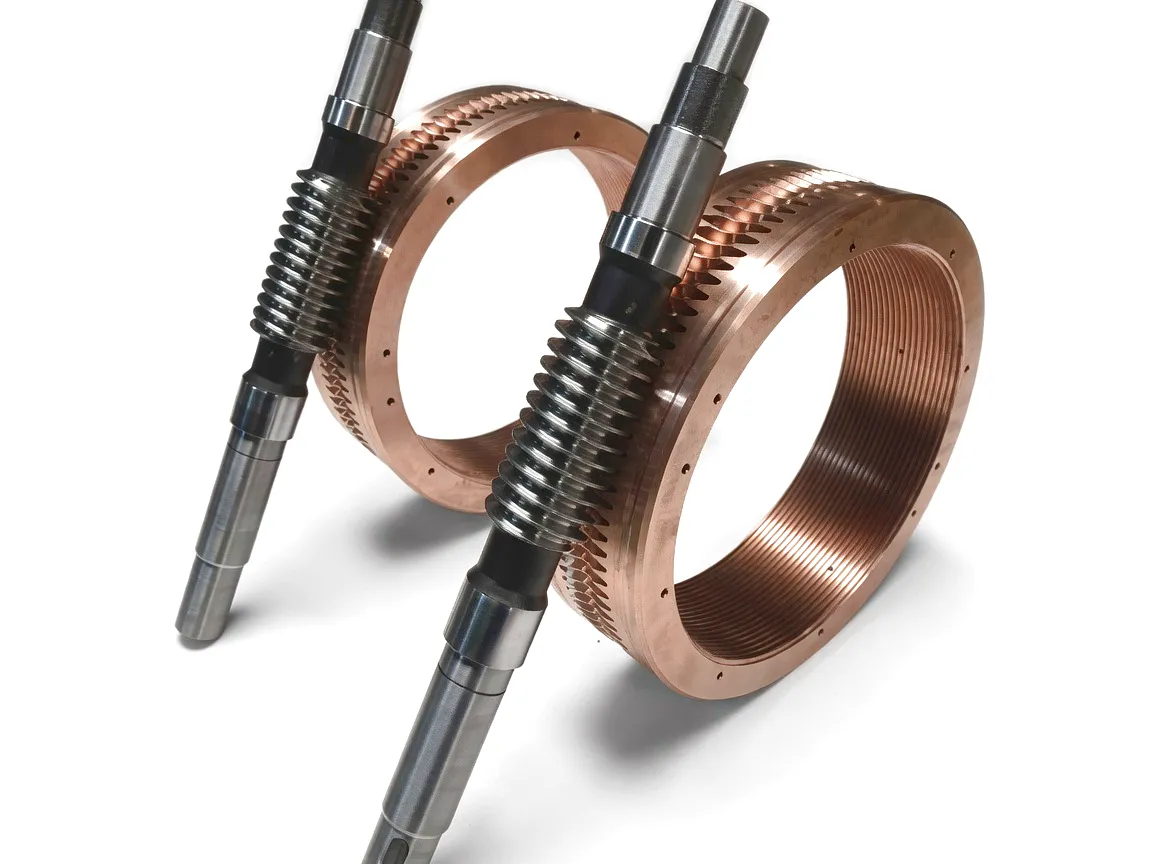
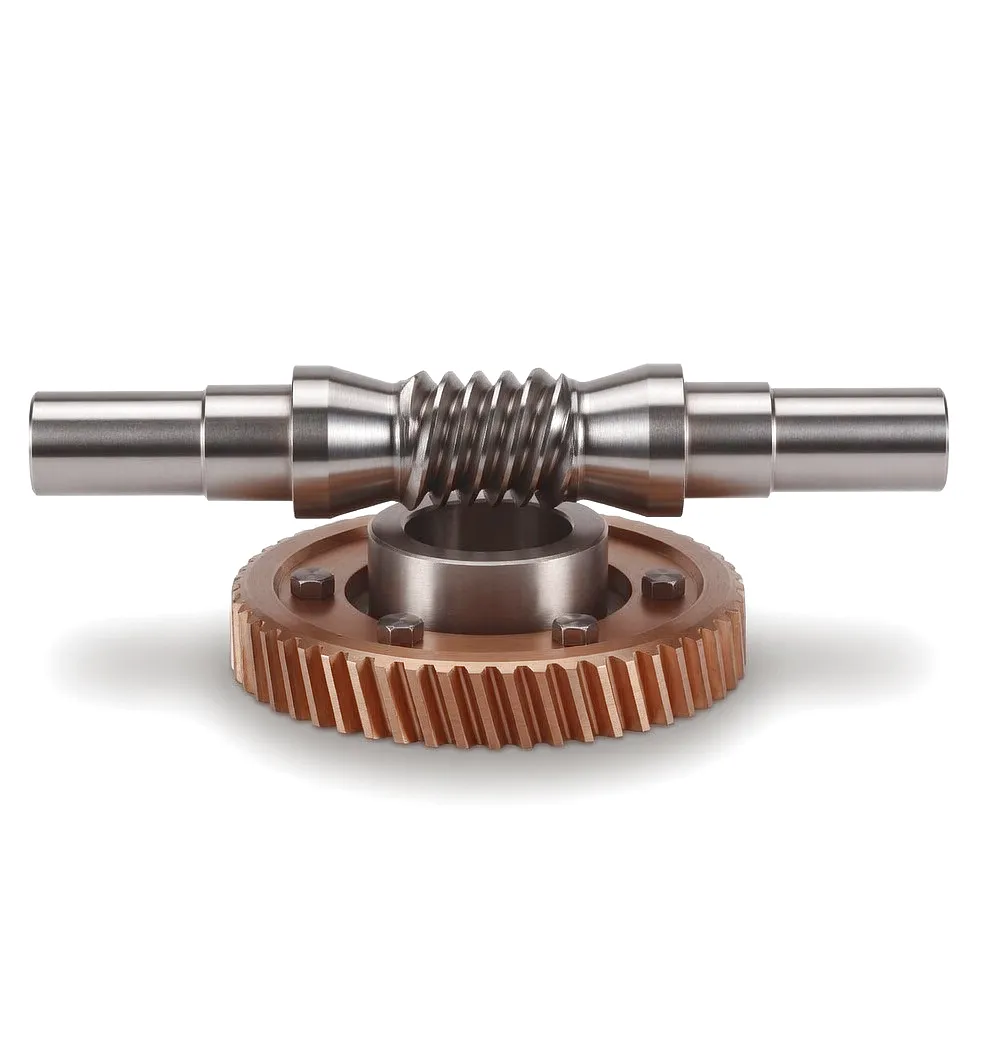
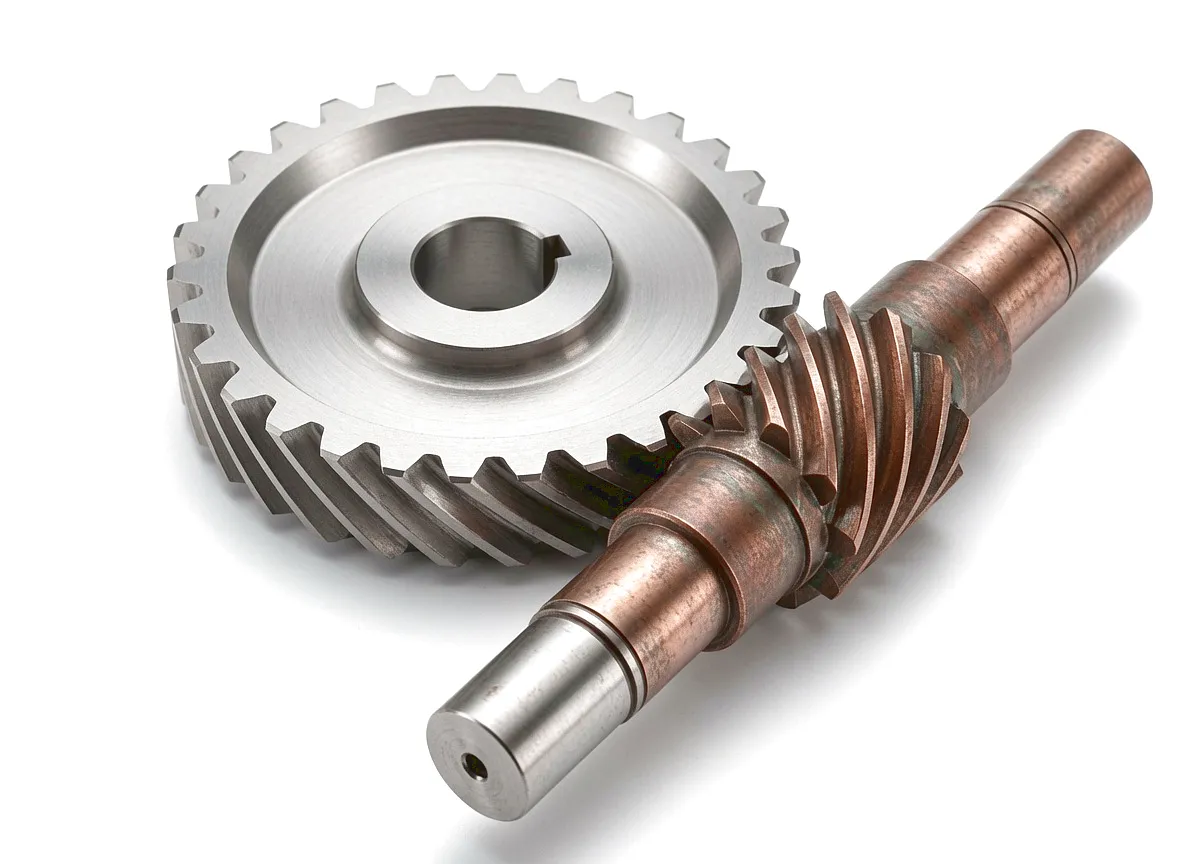 The worm gear shaft operates on a helical engagement principle that is deceptively simple in concept yet remarkably demanding in execution. The shaft itself — typically a single-thread or multi-thread worm — is mounted coaxially with a driving source such as a servo motor. As the shaft rotates, its helical thread meshes with the teeth of a bronze or alloy-steel worm wheel (also called the worm gear), converting the input rotational axis by 90 degrees while simultaneously reducing speed and amplifying torque. Because the contact between the worm shaft thread and the wheel tooth involves a sliding action rather than the rolling contact found in spur or helical gears, the tribological conditions are considerably more severe — but the geometry also creates a mechanical advantage that allows single-stage reduction ratios from 5:1 all the way to 100:1 or beyond, something no other compact gearing type can match.
One of the most consequential characteristics of the worm gear shaft in machine tool applications is self-locking. When the lead angle of the worm thread is below approximately 5 to 6 degrees, the friction forces along the tooth flank are sufficient to prevent the worm wheel from back-driving the shaft. In practical terms, this means a CNC rotary table can be clamped to position without an external hydraulic or mechanical brake, simply by leaving the servo motor energised. During heavy milling operations where cutting forces attempt to rotate the table back, the worm gear shaft’s self-locking geometry resists that force passively. This eliminates a category of auxiliary clamping hardware and simplifies the machine’s electrical and hydraulic architecture, a feature that British machine tool OEMs in the West Midlands and South Yorkshire clusters have long valued when designing compact, cost-effective machining centres.
Backlash elimination is the other critical engineering challenge. Standard worm gear shafts exhibit some degree of tooth flank clearance, which manifests as angular error when reversing direction. Modern high-precision CNC rotary tables address this through the dual-lead worm shaft (also known as the variable-lead or tapered-lead worm). In this design, the thread lead on the left flank differs slightly from the thread lead on the right flank along the same shaft. By translating the shaft axially — typically via an adjustment nut — the effective tooth thickness changes, allowing the manufacturer to close the backlash gap without replacing any components. Ever Power’s dual-lead worm gear shafts for rotary table applications are ground to DIN 3974 accuracy grade 5 or better, achieving backlash values below 3 arcseconds in assembled table configurations.
Material Selection: Why Metallurgy Governs Service Life
Worm Shaft Core
The worm shaft body is typically manufactured from case-hardening or through-hardening alloy steels. Common choices include 20CrMnTi (case-carburised to 58–62 HRC surface hardness), 42CrMo4 (through-hardened and tempered to 280–320 HB core, surface induction-hardened to 50–56 HRC), and 18CrNiMo7-6 for the highest load applications. The governing requirement is that the thread flanks must achieve sufficient surface hardness to resist pitting and abrasive wear from sliding contact, while the shaft core must retain adequate toughness to handle bending and torsional fatigue over tens of millions of cycles.
Worm Wheel Material
The mating worm wheel in a worm gear shaft assembly is almost invariably made from a copper-based alloy, most commonly centrifugally cast or continuous-cast phosphor bronze (CuSn12 or CuSn12Ni2) or high-lead bronze for lower-duty applications. The bronze provides excellent conformability under sliding contact, superior embeddability of fine contaminant particles that would otherwise score the steel shaft, and a low coefficient of friction against hardened steel — a critical triad of properties that determines whether a worm drive runs cool and quietly or runs hot and fails prematurely. For very high duty-cycle applications, aluminium bronze (CuAl10Fe5Ni5) offers higher compressive yield strength at the cost of slightly higher friction.
Surface Engineering
Beyond base metallurgy, the surface finish of the worm shaft thread flanks is a critical process variable. Thread grinding to Ra 0.4 µm or better reduces the running-in wear and lowers the steady-state operating temperature. Many high-performance worm gear shafts are additionally phosphated or receive a manganese phosphate coating to improve initial lubrication retention during commissioning. PVD (Physical Vapour Deposition) hard coatings such as TiN or DLC (Diamond-Like Carbon) are applied to shafts operating in inadequately lubricated environments, though such coatings remain uncommon in conventional machine tool rotary table applications where circulating oil or grease lubrication is the norm.
The interaction between shaft steel and wheel bronze is not arbitrary — it represents a tribological pairing refined over more than a century of industrial practice. The steel shaft, being the harder element, acts as the load-bearing counterpart, while the bronze wheel sacrificially absorbs the wear. Provided that the lubrication regime is maintained within the manufacturer’s specification and the oil viscosity is appropriate for the operating speed (typically ISO VG 220 or VG 320 for worm drive units), the steel worm shaft will outlast the bronze wheel by a factor of three to five, meaning planned maintenance cycles focus on wheel replacement rather than shaft replacement. This asymmetry in wear life is a deliberate design feature, not an oversight.
Technical Performance Parameters — Worm Gear Shaft Reference Table
The table below represents typical specification ranges for worm gear shafts used in CNC machine tool rotary indexing and feed drive applications. Actual parameters are configured to project requirements — custom specifications beyond these ranges are available from Ever Power.
| Parameter | Standard Range | High-Precision Range | Unit / Note |
|---|---|---|---|
| Gear Ratio (i) | 5:1 – 100:1 | 40:1 – 90:1 (rotary table) | Single-stage, standard worm |
| Output Torque | 50 – 12,000 N·m | 500 – 8,000 N·m | Depends on centre distance & material |
| Module (m) | 1 – 16 | 2 – 10 | mm; per ISO 54 / DIN 780 |
| Lead Angle (γ) | 1.5° – 30° | 3° – 12° (self-locking zone) | Below ~6°: self-locking |
| Shaft Diameter | 20 – 250 mm | 30 – 160 mm | Root circle; custom available |
| Pressure Angle | 14.5° / 20° | 20° (preferred) | Higher angle = stronger tooth |
| Thread Accuracy | DIN 3974 Grade 7–8 | DIN 3974 Grade 4–6 | CNC ground; Grade 4 = ≤ 3 arcsec backlash |
| Input Speed (max) | 1,500 rpm | 3,000 rpm (special design) | Thermal rating dependent |
| Efficiency (η) | 50% – 85% | 75% – 92% (multi-thread) | Higher starts = higher efficiency |
| Shaft Material | 42CrMo4 (induction-hardened) | 20CrMnTi / 18CrNiMo7-6 | Surface 56–62 HRC |
| Surface Roughness (Rα) | Ra 0.8 – 1.6 µm | Ra 0.2 – 0.4 µm (ground) | Thread flank measurement |
| Lubrication | ISO VG 220 / 320 (splash/circulating) | ISO VG 220–460; EP-additive gear oil | Per DIN 51509 / AGMA 9005 |
Core Technical Advantages of the Worm Gear Shaft
Extreme Reduction Ratio in One Stage
No other single-stage gear arrangement delivers reduction ratios between 5:1 and 100:1 within the same compact mounting envelope. For CNC rotary tables and indexing mechanisms this means the servo motor output shaft speed is reduced to a level where the table’s angular increments become controllable with extraordinary resolution, without the mechanical complexity of a multi-stage planetary or spur gearbox.
Passive Self-Locking Without Brakes
At lead angles below approximately 5–6 degrees, the worm gear shaft is inherently self-locking: the output shaft cannot back-drive the input. For rotary table applications under milling or turning operations, this eliminates the need for a hydraulic clamping cylinder during light-to-medium cutting passes. The mechanical architecture is simplified, oil pressure circuits removed, and the table’s positional stability relies on a passive physical property rather than an active control system.
Arcsecond-Level Positional Accuracy
Dual-lead worm gear shafts ground to DIN 3974 Grade 4 or Grade 5 tolerances deliver assembled backlash below 5 arcseconds and in some configurations below 3 arcseconds after pre-load adjustment. When coupled with a high-resolution angle encoder and a modern servo controller, this level of mechanical precision enables five-axis machining of complex sculptured surfaces with dimensional tolerances in the micrometre range — meeting or exceeding the requirements of aerospace, medical device, and optical component manufacturing.
Low Vibration and Quiet Operation
The continuous sliding tooth contact of the worm gear shaft — in contrast to the impact-like meshing of spur gears — produces a smooth, low-impulse force transmission that substantially reduces structure-borne vibration. In a machine tool environment this translates to improved surface finish on machined components, extended tool life (vibration is one of the leading causes of premature insert failure), and a quieter workshop environment that supports compliance with UK occupational health and noise exposure regulations under the Control of Noise at Work Regulations 2005.
90-Degree Axis Redirection in One Unit
The orthogonal (right-angle) relationship between the worm shaft axis and the worm wheel axis — a fixed geometric property of the worm gear shaft — allows machine designers to redirect drive power through 90 degrees within a single compact assembly. For machine tool architects working on tilting heads, right-angle feed units, and pallet changers, this removes the need for bevel gear stages or separate right-angle gearboxes, reducing the component count, the assembly cost, and the total drive train inertia.
Compact Envelope, High Torque Density
The specific torque density (output torque per unit volume) of a properly designed worm gear shaft assembly rivals or exceeds that of planetary gear units at medium reduction ratios. The centre distance of the worm gear set is determined almost entirely by the required output torque, meaning that for very high torque-to-weight requirements, a well-specified worm gear shaft often presents a more economical solution than a multi-stage alternative, particularly when shaft-mounted or foot-mounted installation layouts are involved.
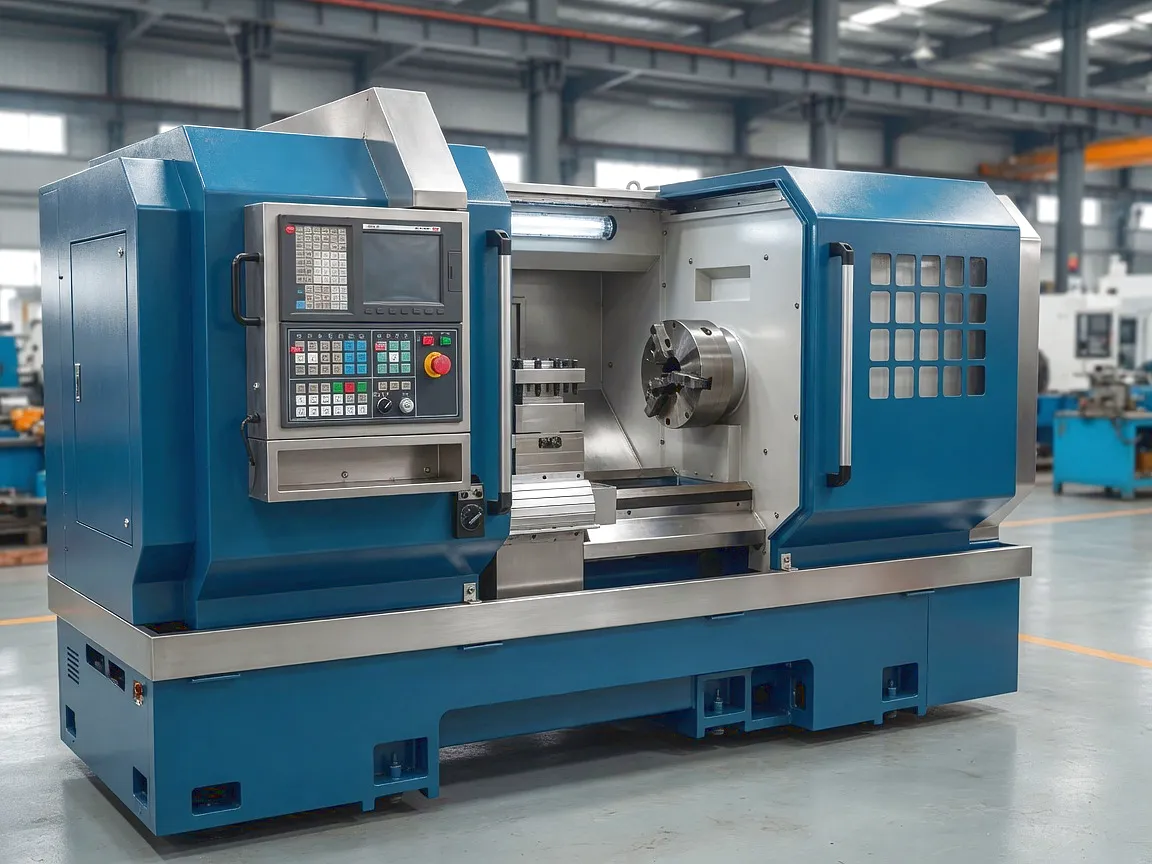
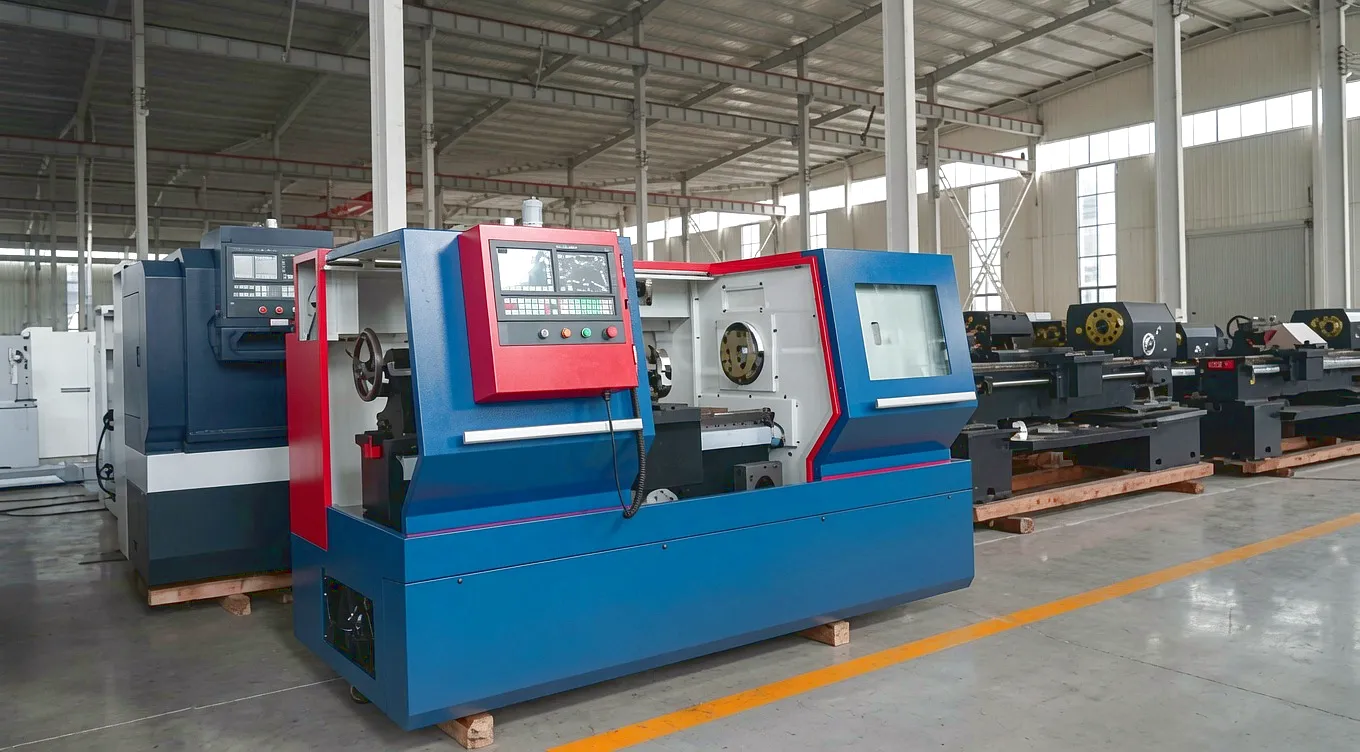
Industrial Application Scenarios Across UK Manufacturing
Ever Power: Precision Manufacture and Custom Worm Gear Shaft Solutions
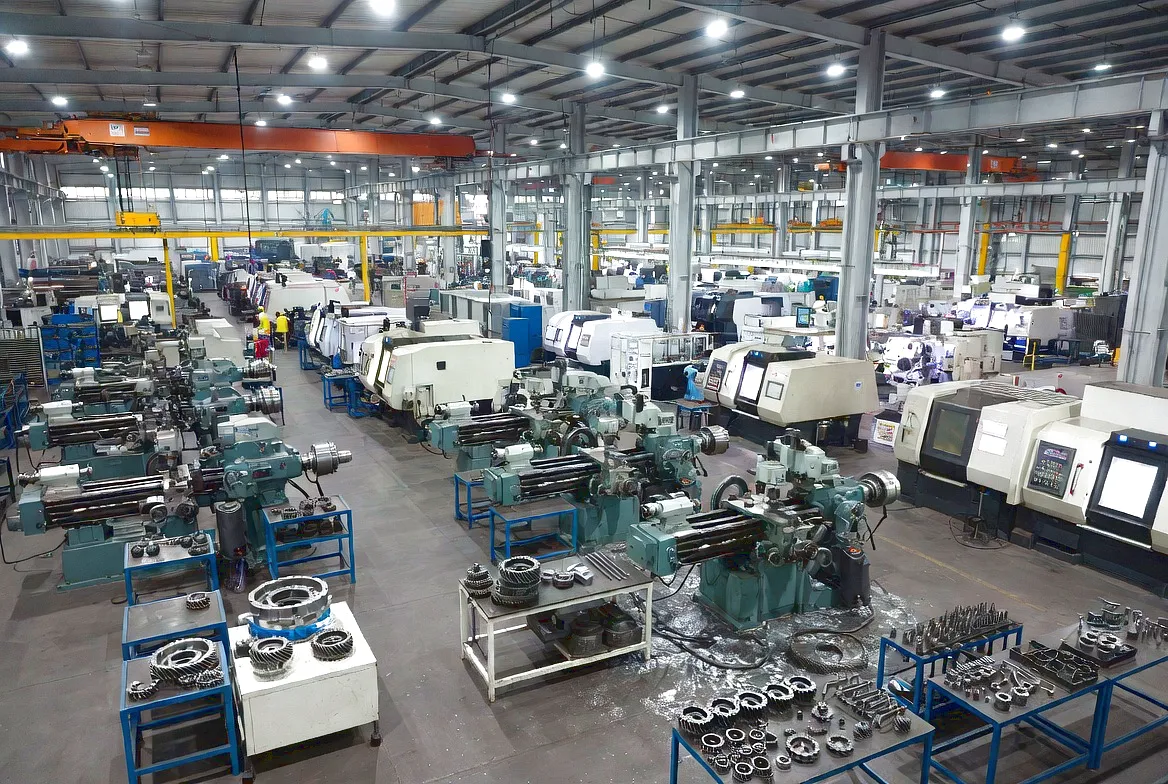
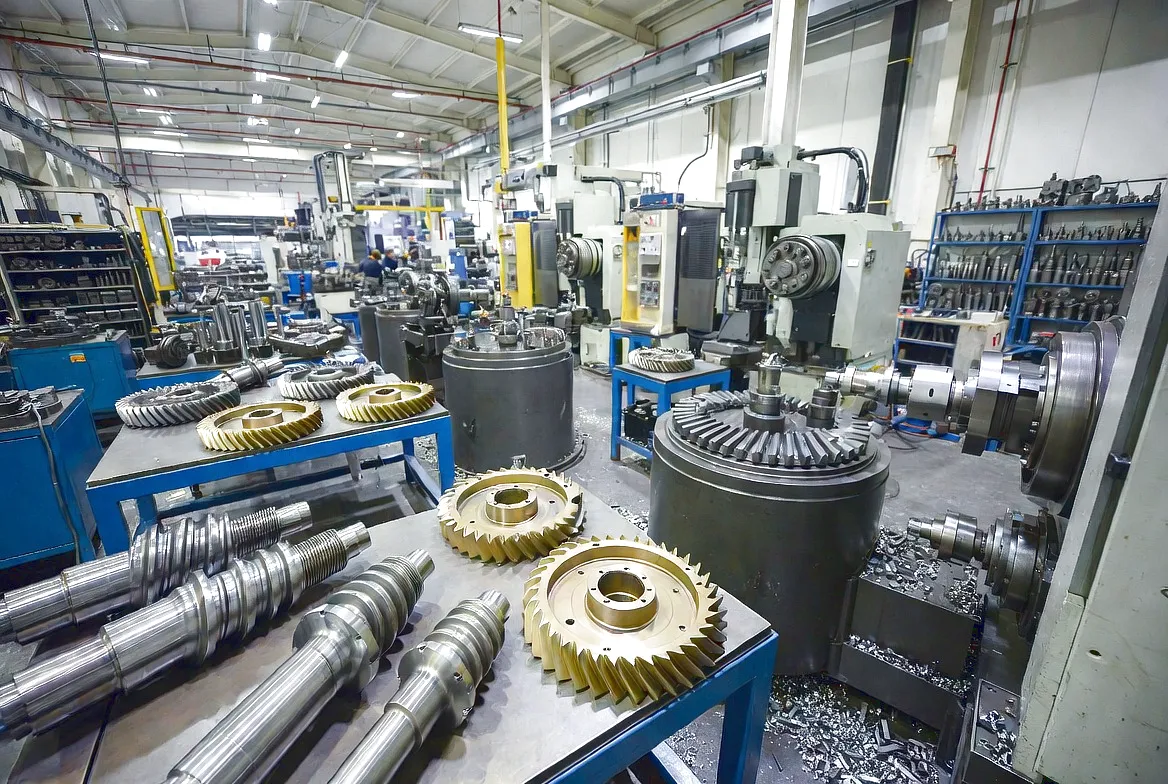
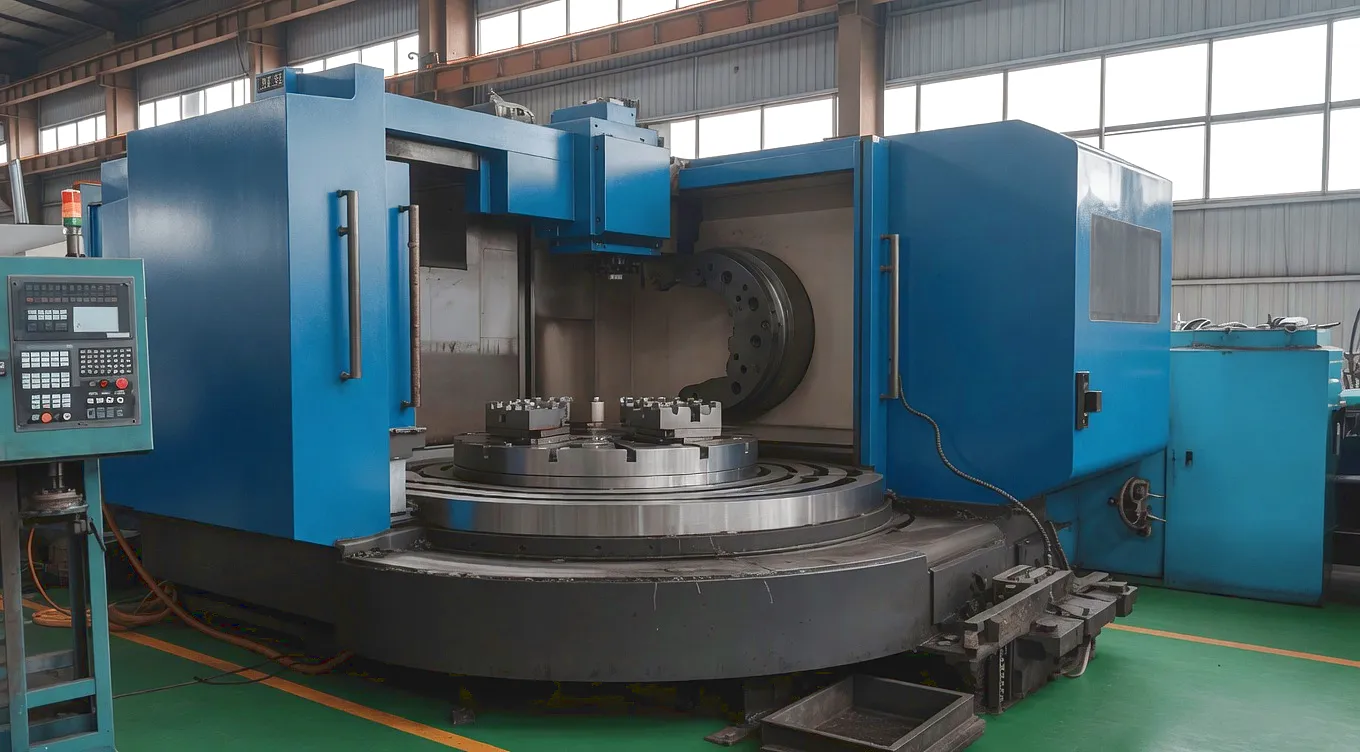
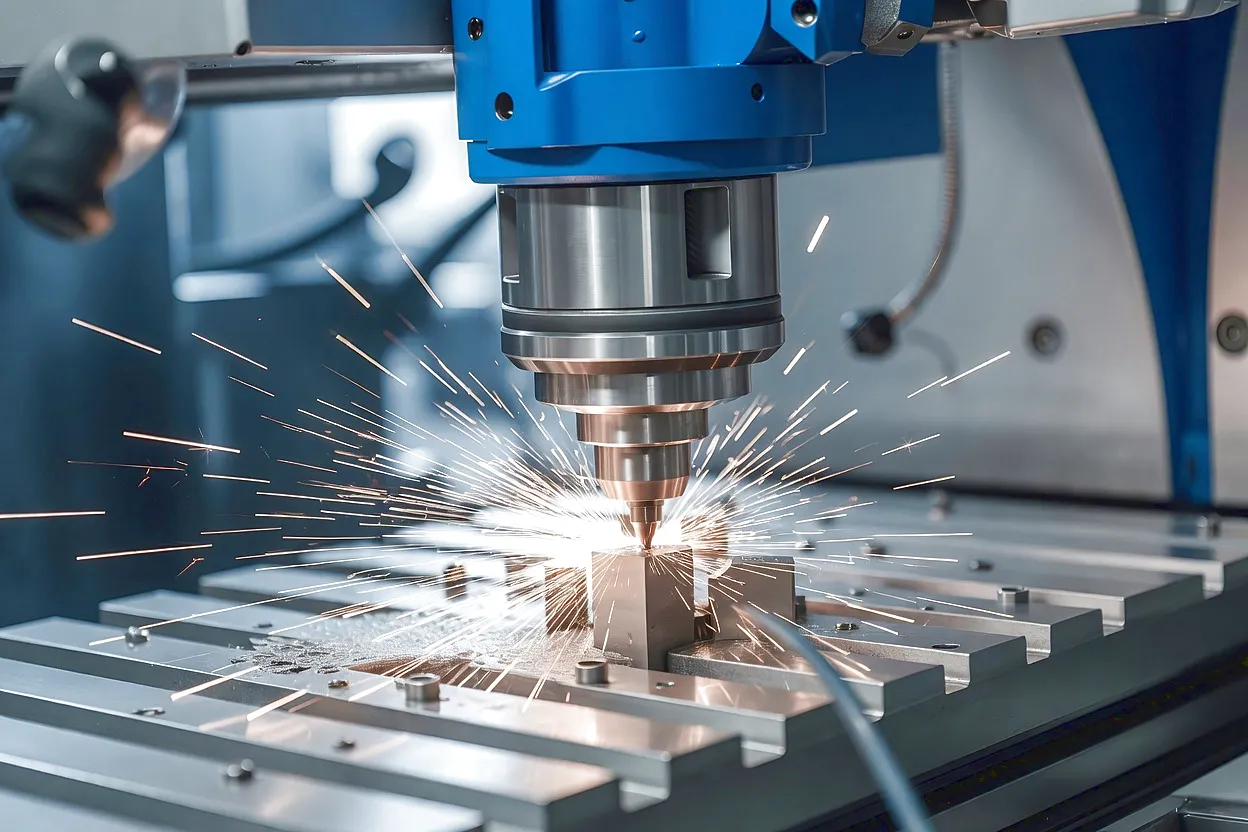
Ever Power has spent two decades building a manufacturing capability specifically around the complex geometry and material demands of precision worm gear shaft production. The facility runs Reishauer and Klingelnberg thread-grinding machines alongside Zeiss CMM inspection systems, allowing the production team to meet DIN 3974 Grade 4 thread accuracy consistently across production runs — not just on sample pieces. The combination of in-house forging, heat treatment, CNC turning, thread grinding, and coordinate measurement means that every worm gear shaft leaving the facility carries a dimensional report traceable to national measurement standards.
The customisation capability at Ever Power extends well beyond selecting a stock ratio and bore diameter from a catalogue. Engineering customers from across the UK — including machine tool OEMs in the West Midlands, special-purpose machinery builders in Lancashire, and defence equipment manufacturers in Bristol — regularly work with Ever Power’s application engineering team to develop worm gear shaft configurations that exist nowhere in any catalogue. These bespoke designs may involve non-standard lead angles to achieve specific self-locking thresholds, modified thread profiles optimised for a customer’s particular lubrication system, hybrid material selections combining a 20CrMnTi shaft with an aluminium-bronze wheel for weight-critical applications, or multi-start thread configurations designed to maximise efficiency at high input speeds while still achieving the required output torque within a constrained centre distance. Ever Power’s supply chain is structured to deliver small-batch custom worm gear shaft orders (as low as five pieces) on lead times competitive with standard catalogue items from European stockists.
Ready to specify your worm gear shaft?
Send your drawings, requirements, or specification enquiry directly to our engineering team.
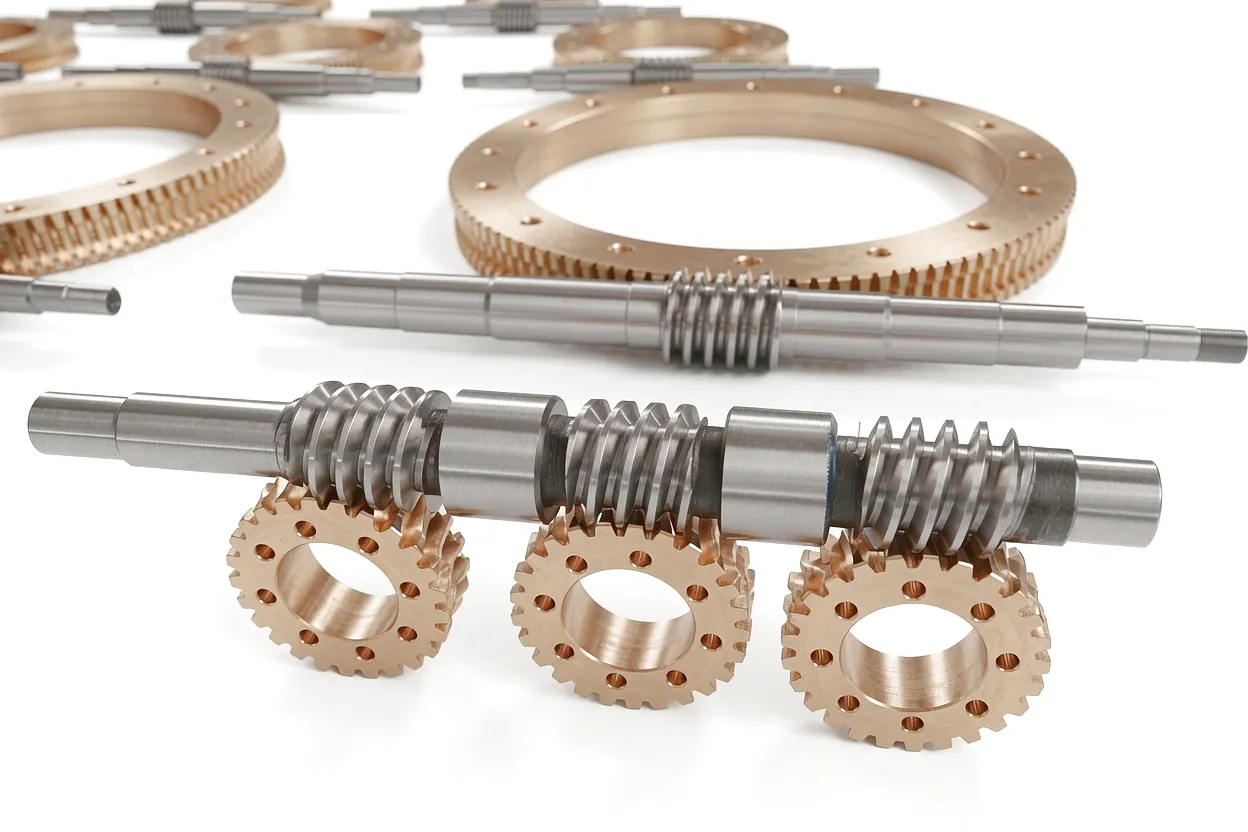
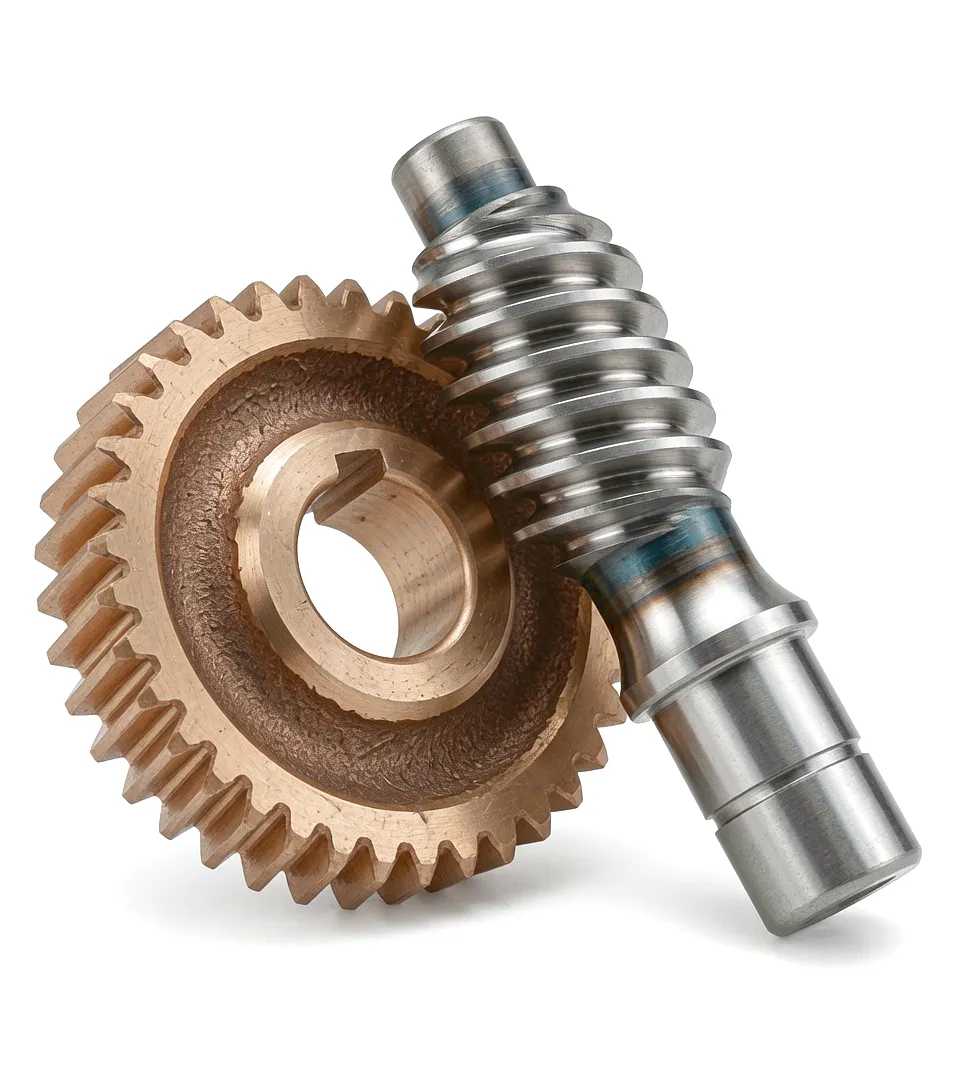
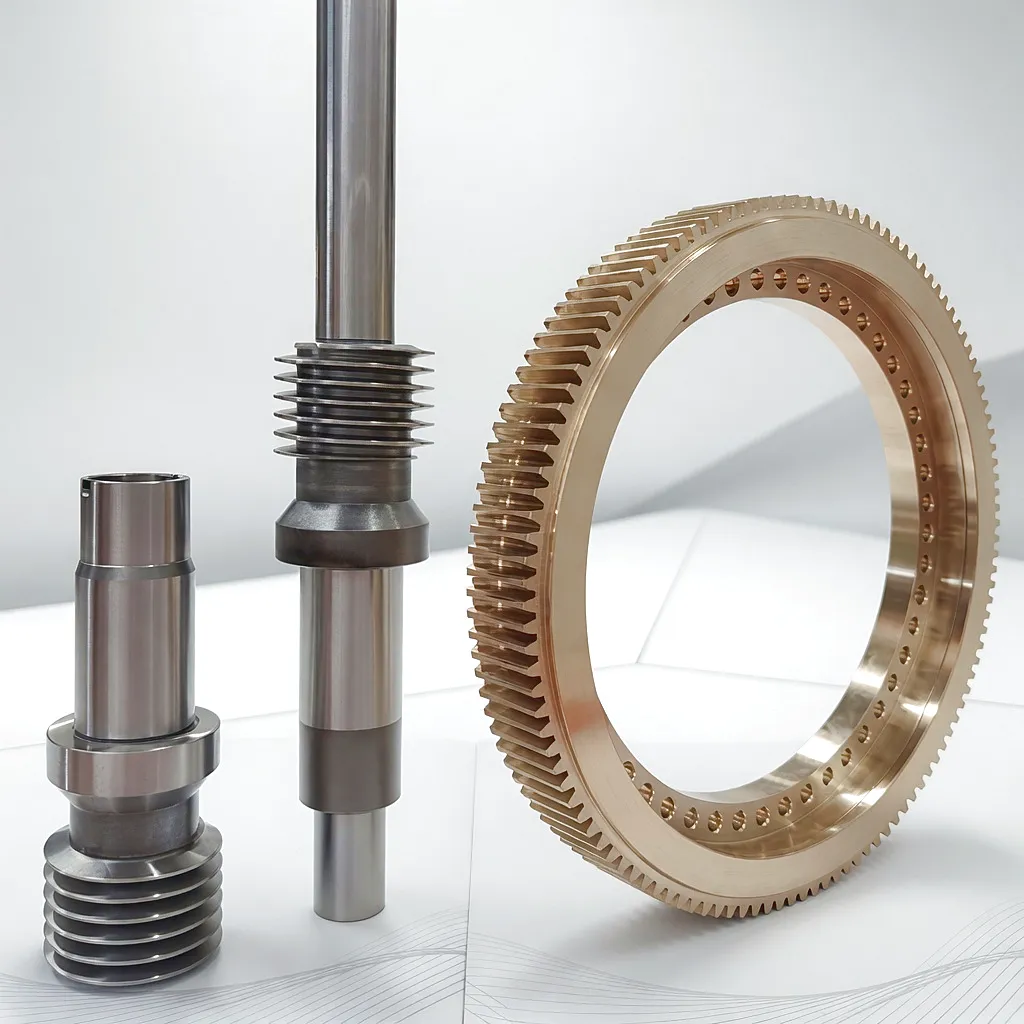
Worm Gear Shaft Product Gallery
Customer Success: Sheffield Aerospace Sub-Contractor
 A precision engineering firm based in the Lower Don Valley area of Sheffield — supplying structural aerostructure components to a Tier 1 aerospace prime — was commissioning two new five-axis machining centres to support a long-term contract for titanium wing-rib machining. The OEM’s standard rotary table specification used a catalogue worm gear shaft drive rated to DIN 3974 Grade 6, which during initial machining trials exhibited angular positioning errors of up to 12 arcseconds during repeated bi-directional indexing cycles under titanium cutting loads. This error was translating into a measured run-out on the finished components that placed them at the upper boundary of the design tolerance, with a reject rate around 7% — commercially unacceptable given the material cost of aerospace-grade titanium billets.
The firm’s engineering director contacted Ever Power after a recommendation from a sister site in the West Midlands. Following a technical review — covering the servo tuning parameters, the thermal cycle of the machining sequence, the existing oil viscosity specification, and the cutting force model — Ever Power’s application engineering team proposed a replacement ingranaggio a vite senza fine shaft to DIN 3974 Grade 4, incorporating a dual-lead design for backlash elimination and specifying 20CrMnTi case-carburised and ground to Ra 0.3 µm on the thread flanks. The mating wheel was upgraded from standard centrifugal-cast CuSn12 to a premium CuSn12Ni2 alloy offering higher compressive yield strength under the titanium milling radial forces.
After installation and a 20-hour run-in period at reduced load using ISO VG 220 EP gear oil, the Sheffield facility ran a full acceptance test cycle. Bi-directional angular positioning error under cutting load measured at 3.8 arcseconds peak, comfortably within the process requirement. The component reject rate fell to below 0.5%, delivering a return on the worm gear shaft upgrade investment within fewer than six weeks of production. The facility subsequently retrofitted the same Ever Power worm gear shaft specification to its existing rotary table fleet of four additional machines.
✓
“The Ever Power worm gear shaft reduced our rotary table positioning error from 12 arcseconds to under 4 arcseconds. For aerospace titanium machining, that margin means the difference between acceptable and scrap. The technical support during specification was exactly what we needed — no generic answers, just engineering.”
Engineering Director — Sheffield Aerospace Sub-Contractor
✓
“We specified Ever Power’s dual-lead worm gear shaft for a batch of custom rotary transfer tables being built in our Birmingham facility. The lead time was three weeks from drawing approval to delivery — shorter than our standard European supplier by nearly a fortnight. Quality was consistent across all twelve units. We’ll be specifying Ever Power on the next batch.”
Procurement Manager — Special Purpose Machine Builder, Birmingham
✓
“I was sceptical about the efficiency claims for the multi-start worm gear shaft configuration Ever Power proposed for our conveyor drive application. After six months of continuous operation, the measured motor current draw is 18% lower than our previous single-start worm unit. That translates to a meaningful energy cost saving across our Derby facility’s twelve conveyor lines. The payback period was well under twelve months.”
Maintenance Engineer — Automotive Parts Manufacturer, Derby
Frequently Asked Questions
Questions our UK and international customers ask most often about worm gear shafts.
Ever Power Precision Transmission
Specify Your Worm Gear Shaft Today
From dual-lead precision rotary table shafts to high-torque feed drive solutions — Ever Power’s engineering team is ready to respond.