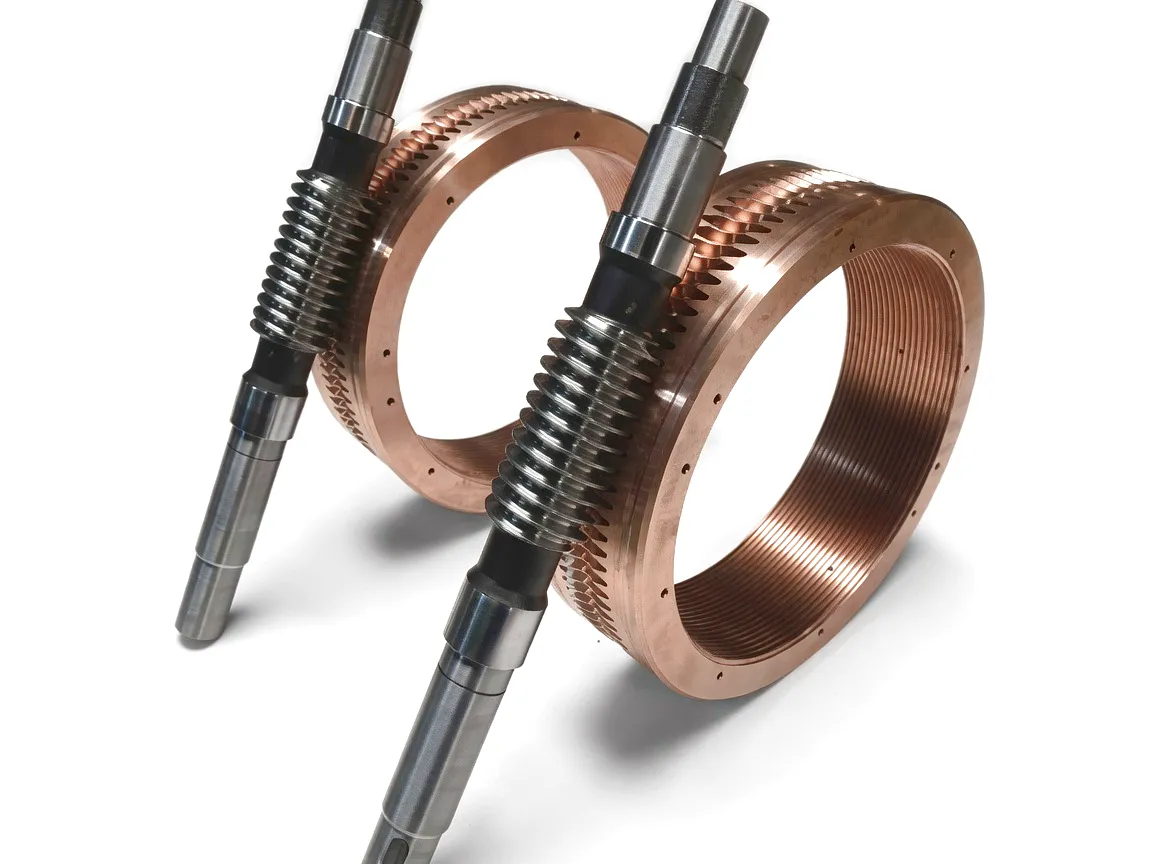
The worm gear shaft is one of the most mechanically elegant solutions in industrial power transmission. Unlike conventional gear arrangements that transfer motion in parallel planes, the worm shaft engages a worm wheel at a 90-degree angle, converting high-speed rotational input into dramatically reduced, high-torque output — all within a remarkably compact envelope. This geometry alone explains why the component is indispensable in environments where space is constrained but torque demands are uncompromising. Drive systems in escalators, conveyors, packaging machinery, and heavy lifting equipment throughout the United Kingdom rely on this component every hour of every working day. Whether the facility is a steel rolling plant in Sheffield, an automotive sub-assembly line in Birmingham, or a logistics warehouse on the outskirts of Manchester, the worm gear shaft performs quietly, reliably, and with outstanding mechanical efficiency when correctly specified and maintained. Its ability to provide a self-locking function — preventing back-driving under load — makes it uniquely suited to safety-critical applications where holding position under gravity or sudden load reversal is non-negotiable. Understanding how this component works, what materials it demands, and how it should be selected for specific duty cycles is the foundation of intelligent procurement for any serious engineering operation.
Ready to source precision worm gear shafts for your project?
Get a Competitive Quote from Ever Power Today
How the Worm Gear Shaft Actually Works
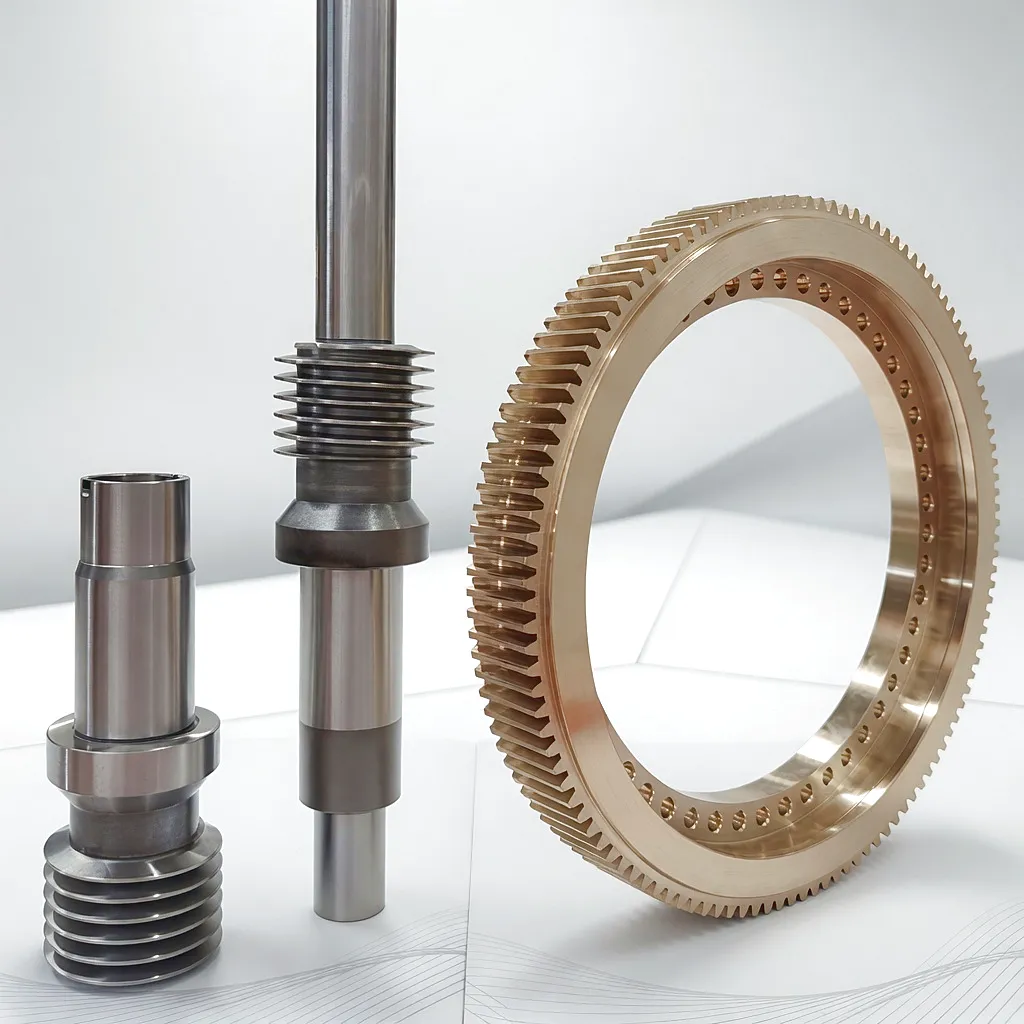
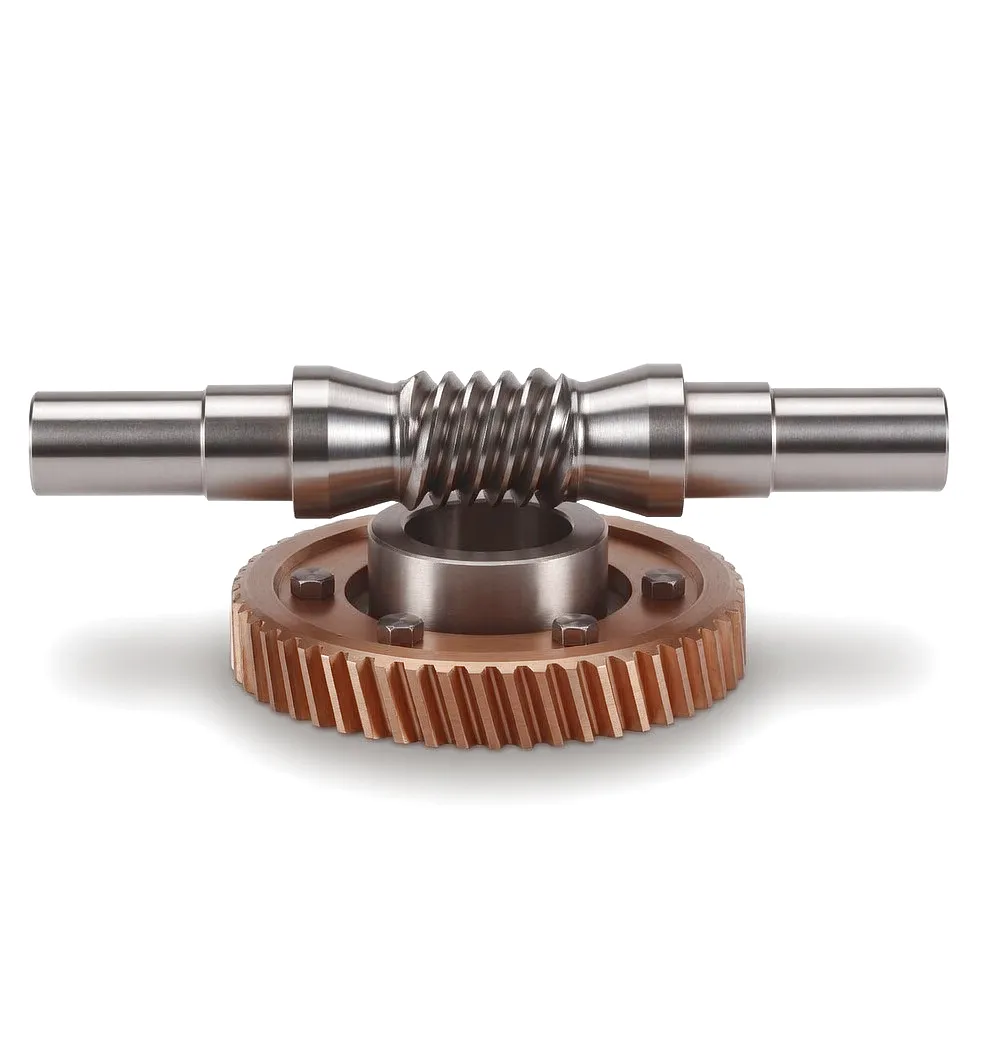
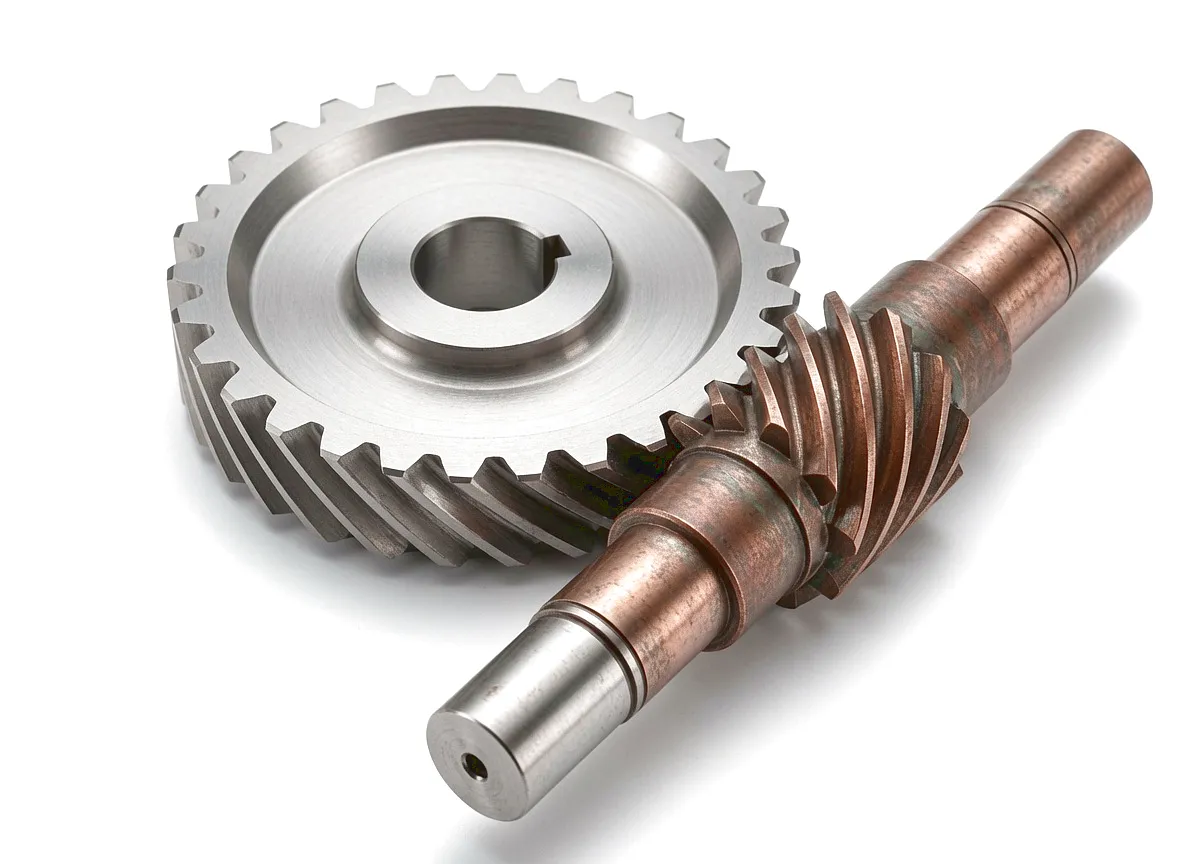
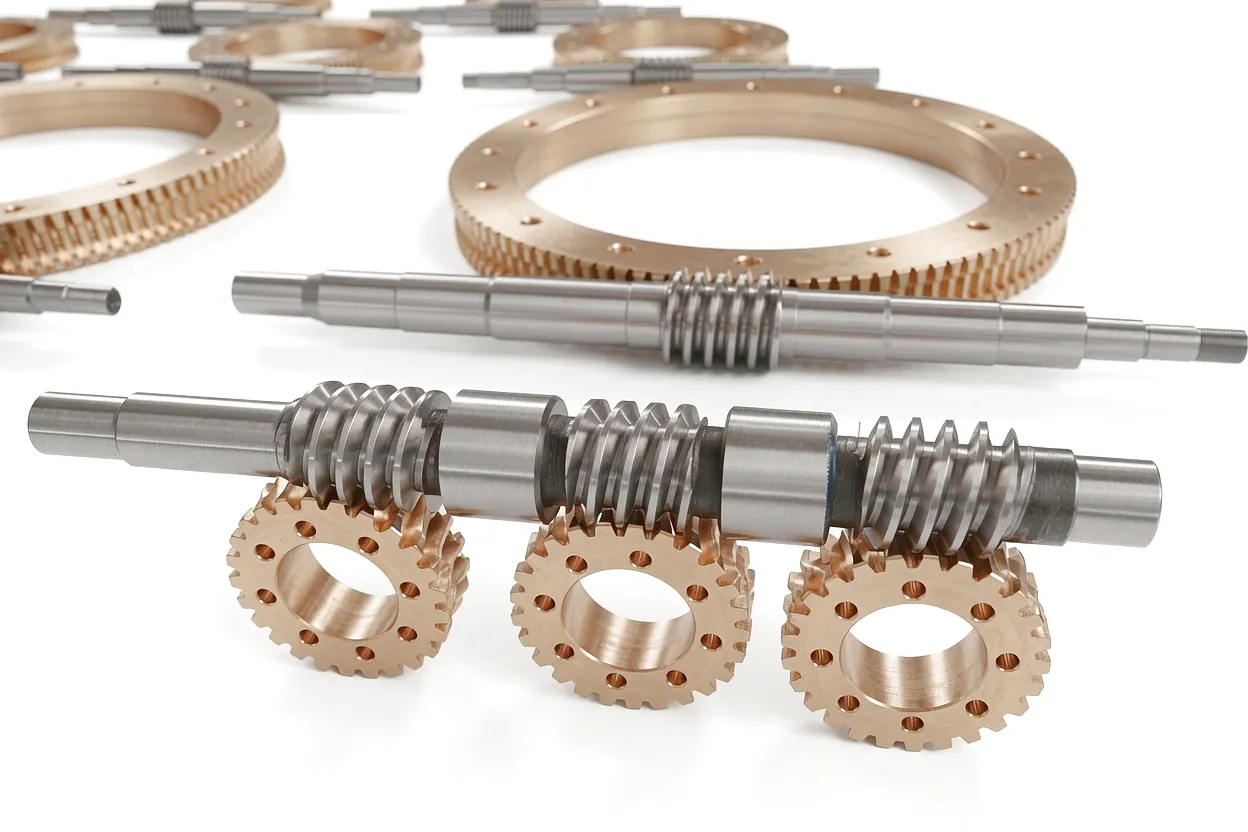
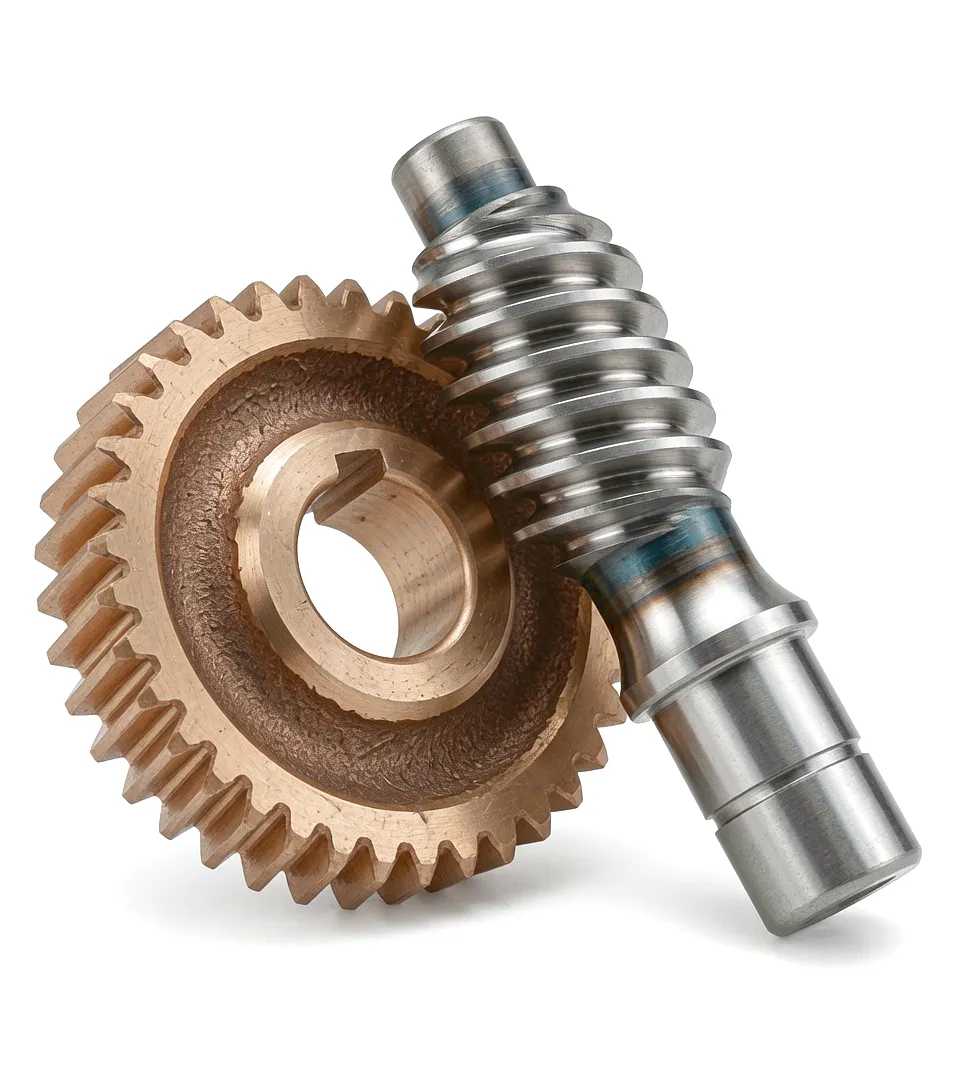
At its core, a worm gear shaft assembly consists of two primary elements: the worm — a helical screw-shaped shaft — and the worm wheel, a gear with specially angled teeth designed to mesh with the worm’s thread. When the worm shaft rotates, its threads engage with the worm wheel teeth in a sliding, rolling contact that generates mechanical advantage through a significant gear ratio. The lead angle of the worm thread, combined with the number of thread starts, determines both the transmission ratio and the efficiency of the drive. A single-start worm can achieve ratios as high as 70:1 in a single stage, whereas double or triple-start designs offer improved efficiency at lower ratios. The contact between the two elements occurs across an elongated, curved surface — quite unlike the point or line contact in conventional spur gears — which distributes load more evenly and contributes to the component’s characteristic smoothness and low vibration characteristics. The direction of motion is inherently irreversible in designs with low lead angles, meaning the worm can drive the wheel but the wheel cannot back-drive the worm under standard operating conditions. This built-in self-locking behaviour is exploited widely in hoisting, lifting, and positioning systems where holding the load without motor power is a fundamental safety requirement.
Core Materials in Worm Gear Shaft Manufacturing
Case-Hardened Alloy Steel
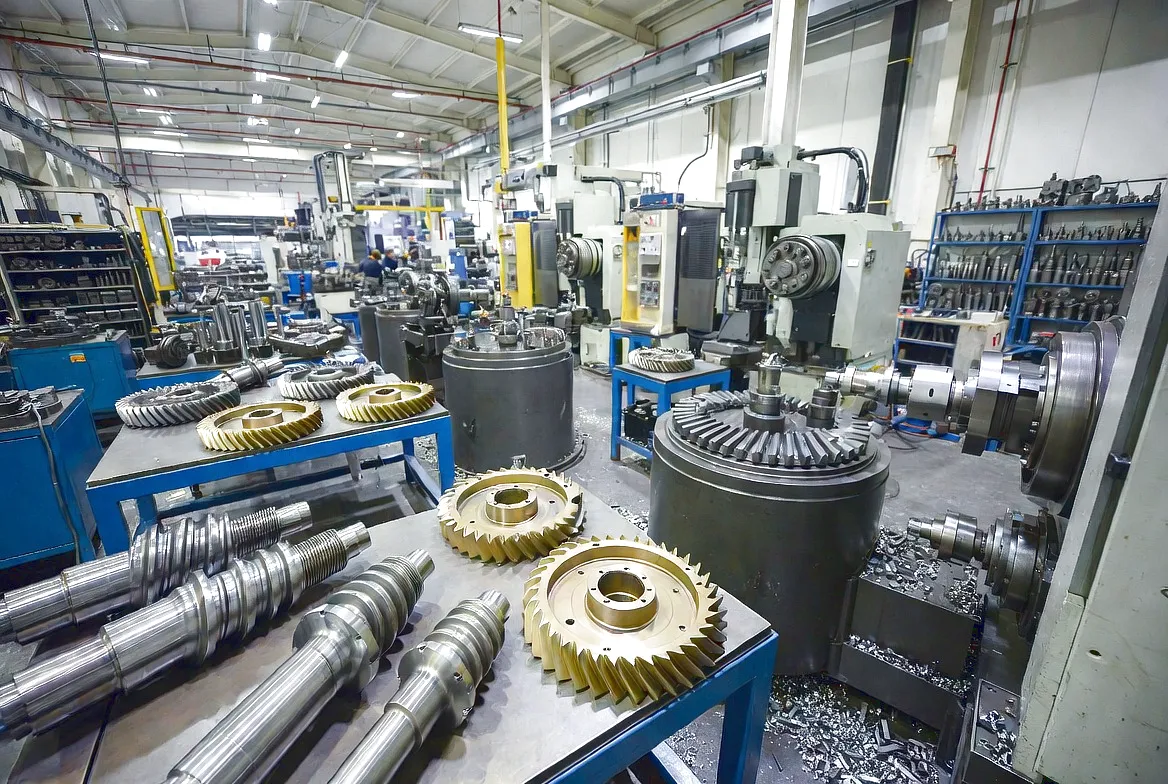
The worm shaft itself is almost universally manufactured from alloy steels such as 20CrMnTi, 42CrMo4, or 18CrNiMo7-6. These grades are selected for their ability to accept deep case hardening through carburising or nitriding, producing a surface hardness typically between 58 and 62 HRC while retaining a tough, impact-resistant core. The contrast between hard surface and resilient core is what allows the worm to resist both abrasive wear from sliding contact and the shock loads that occur during machine start-up and emergency stops. In Sheffield and other UK precision engineering centres, these steel grades are routinely processed on CNC grinding machines capable of achieving thread profiles to within microns of nominal geometry, ensuring correct load distribution across the full face width of the worm wheel.
Phosphor Bronze & Tin Bronze Worm Wheels
The mating worm wheel is typically cast or machined from phosphor bronze (CuSn10P) or tin bronze (CuSn12), materials chosen specifically for their excellent compatibility with hardened steel under the sliding contact conditions that characterise worm gear meshing. Bronze’s inherent lubricity helps compensate for the high sliding velocity inherent in the worm drive geometry, reducing the risk of adhesive wear and scuffing even under boundary lubrication conditions. At higher load ratings or in corrosive environments — such as food processing facilities in the West Midlands or coastal installations — special alloys incorporating nickel or aluminium may be specified to extend service life. The combination of a hardened steel worm against a bronze wheel is, in many respects, the defining material pairing of the worm gear shaft system.
Cast Iron & Stainless Steel Variants
For lower-duty, slow-speed applications, grey cast iron worm wheels offer a cost-effective alternative. The graphite flakes within the iron matrix provide a degree of built-in lubrication, although the wear rate under high load or contaminated lubrication conditions is significantly greater than bronze. In hygiene-critical installations — pharmaceutical packaging lines in Nottingham, for example — stainless steel worm shafts (grades 316 or 17-4PH) provide the corrosion resistance and washdown compatibility demanded by food safety regulations. Some high-speed, low-load applications even see engineering polymers such as nylon or acetal employed for the wheel element, offering silent operation and the ability to run without external lubrication for extended periods in clean environments.
Worm Gear Shaft Technical & Performance Parameters
| Parameter | Standard Range | Notes |
|---|---|---|
| Output Torque | 10 – 50,000 N·m | Dependent on module, ratio, and material grade |
| Gear Ratio | 5:1 – 100:1 (single stage) | Double reduction available for higher ratios |
| Shaft Angle | 90° (standard), custom angles available | Special skew-axis designs on request |
| Input Speed (max) | Up to 3,000 rpm | Higher speeds require premium lubrication and cooling |
| Transmission Efficiency | 40% – 95% | Increases with higher lead angle and multistart threads |
| Worm Shaft Material | 20CrMnTi, 42CrMo4, 316 SS | Case hardness 58–62 HRC standard |
| Worm Wheel Material | Phosphor bronze, tin bronze, cast iron | Bronze preferred for high-duty and continuous operation |
| Operating Temperature | -20°C to +120°C | Extended range possible with specialty lubricants |
| Thread Form | Archimedean, involute, ZK profile | Profile selection affects efficiency and load capacity |
| Module (m) | 1 – 25 (metric) | Determines tooth size and load-carrying capacity |
| Shaft Diameter (output) | 10 mm – 300 mm | Keyway, spline, or interference fit options |
| Surface Finish (worm thread) | Ra 0.4 – 0.8 µm | Ground finish for maximum efficiency and wear life |
Escalator Drive Systems: A Case Study in Worm Gear Efficiency

The escalator is one of the most demanding continuous-duty applications for the worm gear shaft, and one that demonstrates the component’s capabilities in a particularly compelling way. A modern escalator drive system pairs a dedicated traction motor with a worm gear reducer to drive the main shaft and, in turn, the step chain — the continuous loop of linked steps that carries passengers between floors. Operating speeds are typically set at 0.5 m/s or 0.65 m/s depending on the installation standard, with motor power requirements ranging from 5 kW up to 22 kW depending on the vertical rise and the rated passenger throughput, which for a standard commercial unit is typically specified at 7,200 persons per hour. The worm gear shaft assembly within the reducer typically operates at a transmission ratio of between 20:1 and 30:1, providing the necessary step-down from motor speed to the relatively slow output shaft speed needed to drive the step chain at the correct velocity.
What makes the worm gear shaft particularly well suited to this application is the compactness of the resulting gearbox. In underground railway stations such as those on the London Underground or in major shopping centres across Birmingham and Leeds, the drive station — the mechanical room at the top or bottom of the escalator — must fit within a volume dictated by the surrounding civil structure. Ceiling heights in older Tube stations can be extremely restricted, and the building fabric above the escalator pit is often shared with other services. The worm gear reducer’s ability to deliver the required ratio and torque within a housing that is far smaller than an equivalent helical or planetary gearbox means that the drive system can be accommodated without expensive structural modifications. The self-locking characteristic of the worm drive also contributes an additional safety margin, reducing the risk of uncontrolled reverse motion in the event of motor power failure — a critically important feature in a passenger transport application.
Industrial Application Scenarios Across the UK

Material Handling & Conveyor Systems
Belt conveyors, roller conveyors, and overhead chain conveyors in distribution centres and manufacturing plants throughout the Midlands and the North of England make extensive use of the worm gear shaft as the primary drive element at conveyor head drums and transfer stations. The right-angle geometry of the worm drive allows the motor to be tucked parallel to the conveyor frame rather than projecting in line with the belt, which is frequently the only arrangement that fits within a busy warehouse aisle or under a mezzanine deck. The self-locking capability prevents inclined conveyors from running back under load during power interruptions, eliminating the need for separate backstop clutches and reducing the total component count in the drive train. Logistics operators serving major UK retail distribution networks in Northampton and Milton Keynes have standardised on worm drive heads for this reason, valuing both the compactness and the passive safety they provide in continuous-duty 24-hour operation.

Machine Tool Rotary Tables & Indexing
Precision rotary tables on CNC machining centres, horizontal boring machines, and gear hobbing equipment in Sheffield’s tool-making districts rely on high-accuracy worm gear shaft assemblies to provide smooth, precise angular positioning. In these applications, the requirement for angular accuracy — measured in arc minutes or even arc seconds — demands worm shafts ground to extremely tight profile tolerances and matched to worm wheels that have been hobbed and finish-lapped to achieve minimum backlash. The combination of zero-backlash worm gear shaft sets and servo motor drive systems allows machine tool builders to achieve rotary positioning accuracies that rival direct-drive systems at a fraction of the cost, making the worm shaft an enduring choice for mid-range precision machining equipment despite the efficiency limitations of the drive type at high torque throughput.
Food Processing & Pharmaceutical Manufacturing
Filling lines, capping machines, and mixing vessels in food factories across the Humber Estuary and pharmaceutical production facilities in Cheshire require drive components that can withstand frequent high-pressure washdowns, resist the ingress of cleaning agents, and operate in environments where any lubricant leakage would pose a contamination risk. Stainless steel worm gear shaft units with sealed bearing housings, food-safe NSF H1 lubricants, and hygienically designed external surfaces meet these demands while continuing to provide the smooth, low-noise drive character that is particularly valued on sensitive filling and dosing equipment. The compactness of worm gear shaft reducers also allows filling machines to be constructed with more open, accessible layouts that are easier to clean and inspect — a genuine operational advantage in regulated production environments subject to GMP requirements and HACCP audits.

Valve Actuators & Pipeline Control
Gate valves, butterfly valves, and ball valves on high-pressure pipelines in the North Sea oil and gas sector, in petrochemical processing facilities around Teesside, and in water treatment works across Wales and the South West are frequently operated through motorised actuators built around worm gear shaft assemblies. The high torque output relative to the actuator’s physical size, combined with the self-locking nature of the drive that holds the valve in its set position without continuous motor engagement, makes the worm gear shaft the near-universal choice for valve actuation duty. Actuators can be specified with manual override handwheels — which also operate through the worm gear shaft — allowing the valve to be positioned manually in the event of power or control system failure, an important requirement for emergency isolation valves on process plant.
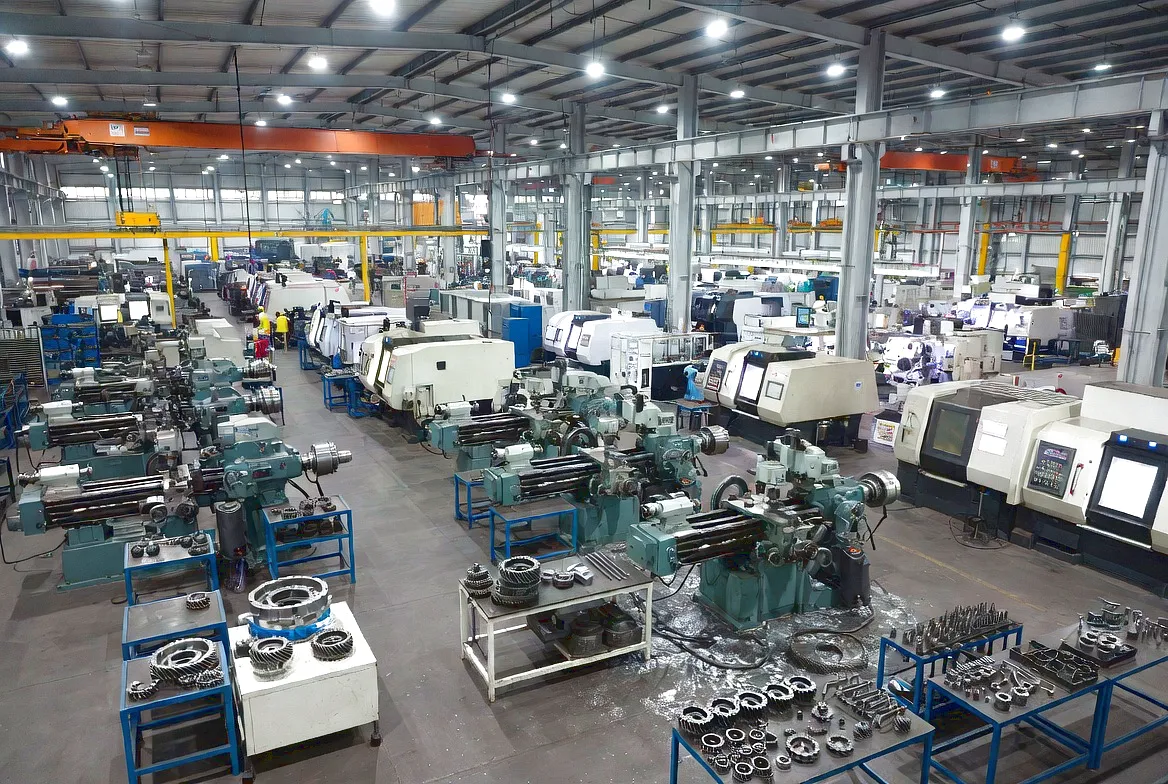
Customer Success Story: Sheffield Steel Processing, South Yorkshire
 Bradfield Precision Steel Products operates a rolling and finishing plant in the Lower Don Valley, producing precision flat bar and section steel for the aerospace sub-assembly and automotive stampings markets. The company’s continuous annealing line features a series of driven pinch roll assemblies that control strip tension through the furnace zone and into the quench section, and it was in this application that the ageing worm gear shaft units reached the end of their reliable service life after more than twelve years of three-shift operation. Strip breakage incidents during a particularly demanding production run involving high-silicon electrical steel grades had been traced back to inconsistent torque delivery from two of the eight drive stations, with inspection revealing significant bronze wear on the worm wheel flanks and measurable deviation from the original tooth profile geometry.
What Our Customers Say
“The worm gear shaft sets Ever Power supplied for our annealing line retrofit were dimensionally spot on and arrived ahead of the agreed delivery date. The improvement in torque consistency across all eight drive stations was immediately measurable — our strip break rate dropped to zero in the first month. Their applications team knew exactly what specification upgrade we needed without us having to draw it out for them.”
James Hartley — Maintenance Engineering Manager, Bradfield Precision Steel Products, Sheffield
“We’ve been using Ever Power for custom worm gear shaft supply on our conveyor head drives for four years now. Every batch comes with full material certs and dimensional reports, which is non-negotiable for our quality system. The lead times on non-standard shaft diameters are genuinely impressive — we’ve never had a production line held up waiting for a component. Their price per unit is very competitive given the level of documentation provided.”
Sarah Mitchell — Procurement Lead, Meridian Distribution Systems Ltd, Northampton
“We needed a worm gear shaft in stainless steel 316 with a specific bore and keyway to match our existing actuator housing. Ever Power turned around the quote within a day and had sample parts to us within three weeks — much faster than any domestic supplier we had approached. The parts passed our incoming inspection first time, with surface finish on the thread form better than the drawing called for. Highly recommended for anyone who needs a reliable worm shaft supplier with genuine custom capability.”
Dr. Kevin O’Brien — R&D Engineering Director, Valoris Process Technologies, Cheshire
Selecting the Right Worm Gear Shaft: A Practical Guide
 Choosing the correct worm gear shaft specification for an application requires the systematic consideration of several interdependent parameters, and getting the selection wrong — particularly in terms of material grade or duty cycle — is the single most common cause of premature failure. The process begins with a clear definition of the required output torque and the service factor that applies to the specific duty. Service factors account for the shock loading characteristics of the driven machine: a smooth-starting conveyor carrying uniform material might attract a service factor of 1.25, while a jaw crusher with high peak impact loads could require a factor of 2.5 or greater. Multiplying the nominal output torque by the service factor gives the design torque that the albero a vite senza fine must be rated to handle continuously throughout its intended service life.
The required gear ratio follows directly from the motor’s rated speed and the driven shaft speed that the application demands. For a standard four-pole induction motor running at approximately 1,450 rpm (the standard in the UK on a 50 Hz supply) and a required output of 50 rpm, the ratio is 29:1 — well within the range of a single-stage worm drive. It is worth noting that selecting a ratio below the self-locking threshold (typically around 20:1 for most worm lead angles and friction coefficients) allows greater flexibility in overhauling load handling but removes the passive safety benefit. For applications where the load must be held stationary with the motor de-energised, ensuring the drive is in the self-locking range is a non-negotiable design requirement rather than merely a desirable feature.
Environmental conditions must also be factored into the material selection. Shaft seal specification, housing protection class, and lubricant viscosity grade all depend on the ambient temperature range, the presence of dust or moisture, and the operating duty cycle (intermittent versus continuous). For UK outdoor installations — gate drives on lock mechanisms along the canal network in the Black Country, for instance — IP65 or IP66 sealed housings are the minimum appropriate specification to protect the worm gear shaft from the persistent damp conditions that characterise British outdoor industrial environments throughout the year.
Lubrication and Maintenance for Long Service Life
Oil Viscosity Selection
Worm gear shaft assemblies are typically lubricated with mineral or synthetic gear oils in the ISO VG 220 to VG 460 range, with the specific grade determined by the input speed, ambient temperature, and duty cycle. Synthetic polyalphaolefin (PAO) or polyglycol (PG) lubricants are strongly recommended for continuous high-duty applications, offering extended oil life, better viscosity index, and improved efficiency — the latter being particularly valuable given the inherently moderate efficiency of the sliding contact worm mesh. Polyglycol oils are especially effective in worm drives because their high film strength under sliding contact conditions reduces wear and operating temperature more effectively than mineral oils at equivalent viscosity grades.
Running-In and Oil Change Intervals
New worm gear shaft assemblies require a controlled running-in period during which the mating surfaces conformally wear to their operational contact pattern. It is standard practice to change the lubricant after the first 500 hours of operation to remove the fine metallic debris generated during this period, then revert to the normal scheduled oil change interval — typically 4,000 to 8,000 hours for synthetic oils in clean operating environments. Oil condition monitoring through periodic sampling and analysis provides early warning of abnormal wear, water ingress, or lubricant degradation that could threaten the service life of the worm gear shaft before the scheduled maintenance interval, and is a worthwhile investment for high-value continuous process plant.