Ever Power · Technical Knowledge Series
Worm Gear Shaft: Engineering Principles, Industrial Applications and Precision Customisation
A comprehensive technical guide for UK manufacturing engineers, procurement managers and OEM design teams.
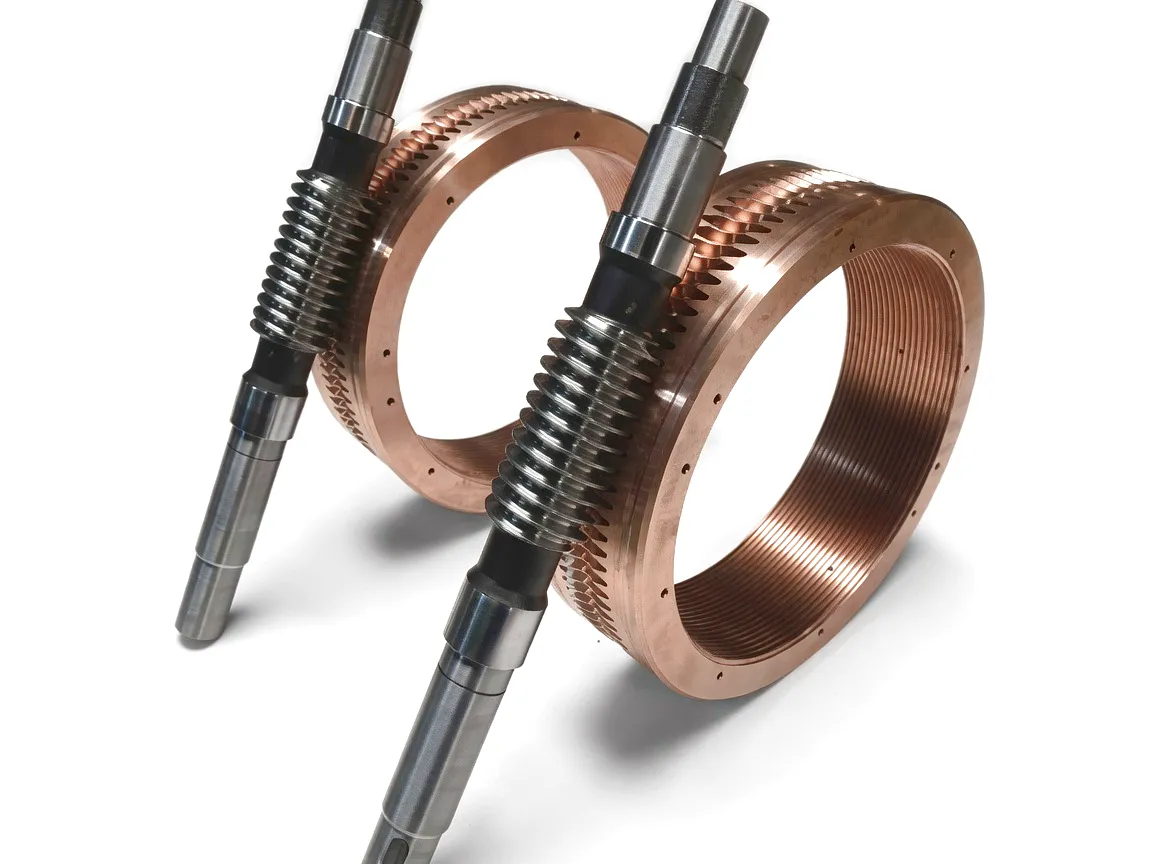
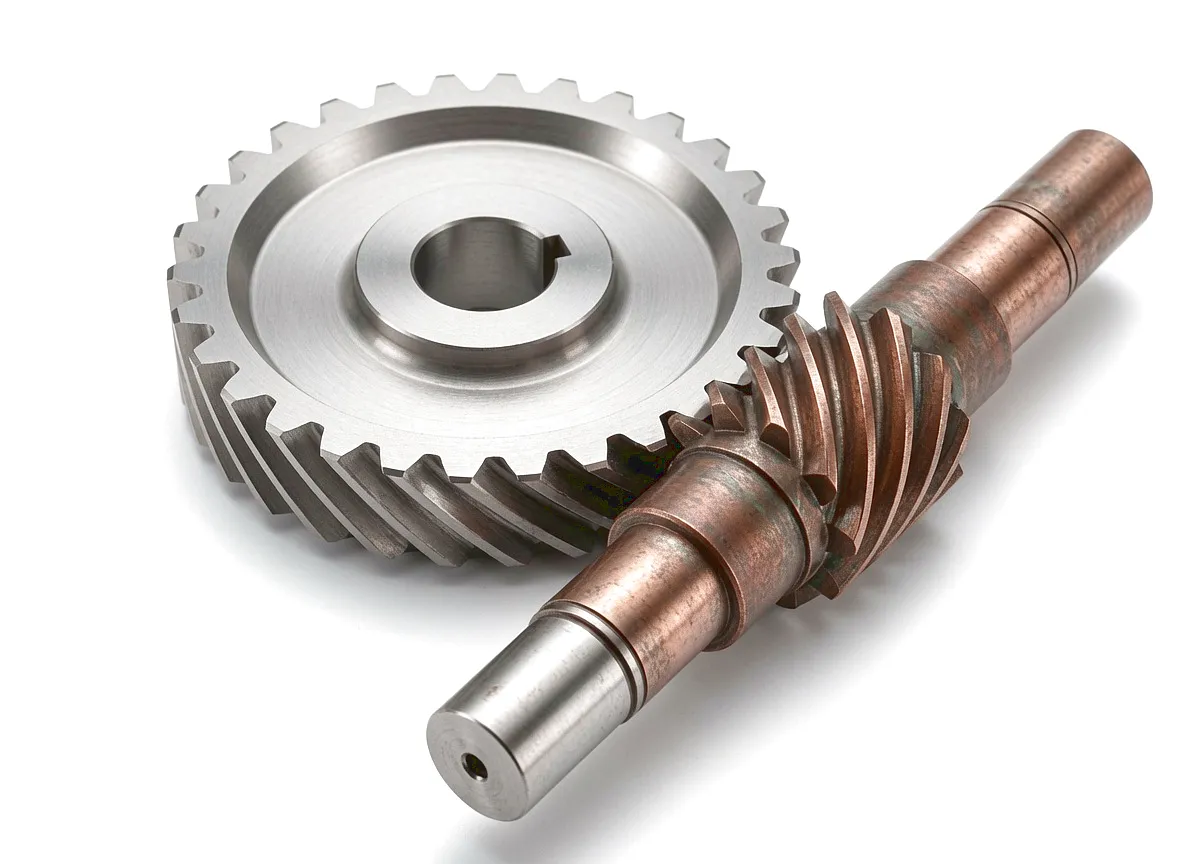
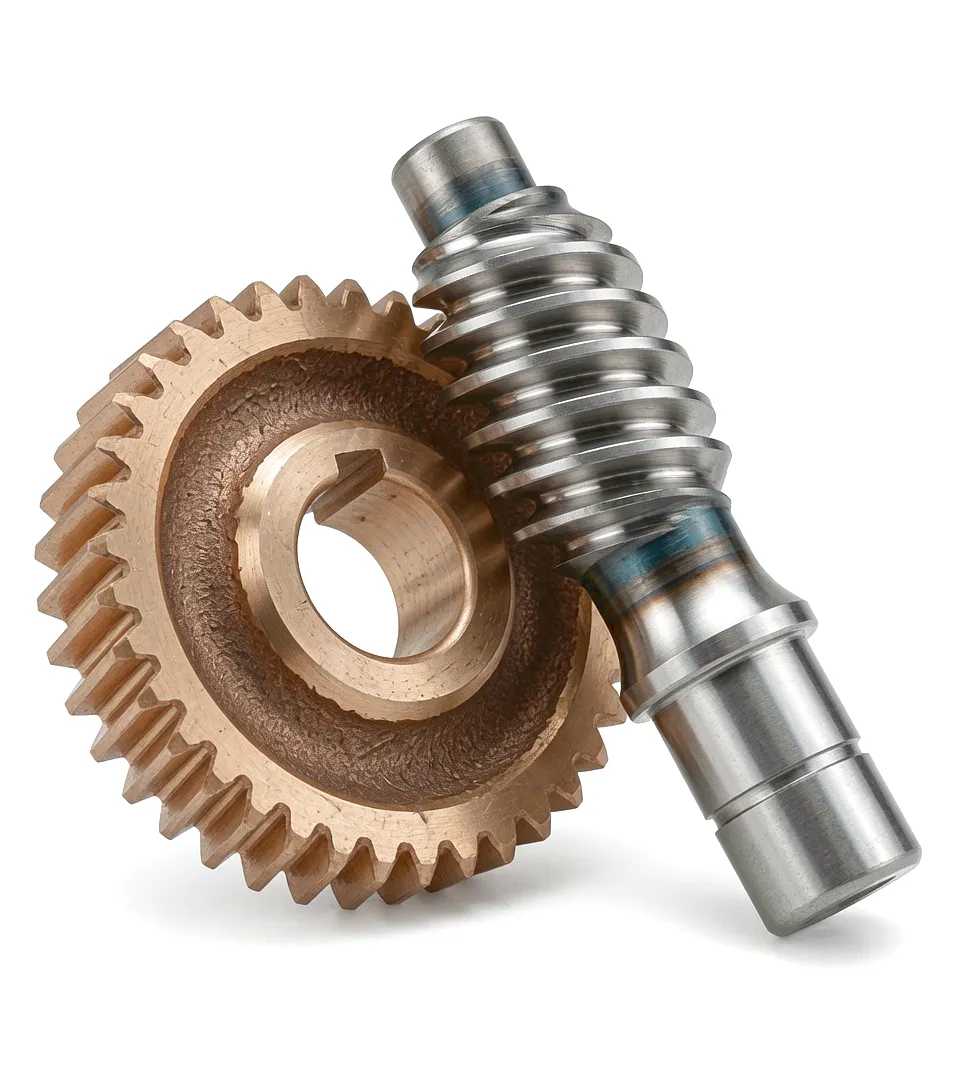
Within mechanical power transmission, few components combine elegance and raw functional capability the way a worm gear shaft does. At its core, the worm gear shaft is the driving element of a worm gear set — a precisely machined helical screw that meshes continuously with a worm wheel (gear) to transfer rotational motion, typically between perpendicular axes at 90 degrees. This geometry is what gives the worm gear shaft its defining characteristic: the ability to achieve very high gear ratios in an exceptionally compact spatial envelope. Whether found in the servo-driven positioning systems of a Sheffield steel-processing plant, the conveyor infrastructure of a Birmingham automotive parts facility, or the yaw and pitch drives of multi-megawatt offshore wind turbines along the UK coastline, the worm gear shaft is an indispensable transmission element across the full spectrum of modern British industry. Engineers specify it not simply because of its high reduction ratio capability, but because it delivers self-locking behaviour under static load, smooth and near-silent operation relative to bevel or helical alternatives, and a mechanical layout that lends itself exceptionally well to space-constrained installations where a right-angle drive must occupy the smallest possible footprint on a machine frame.
How a Worm Gear Shaft Actually Works
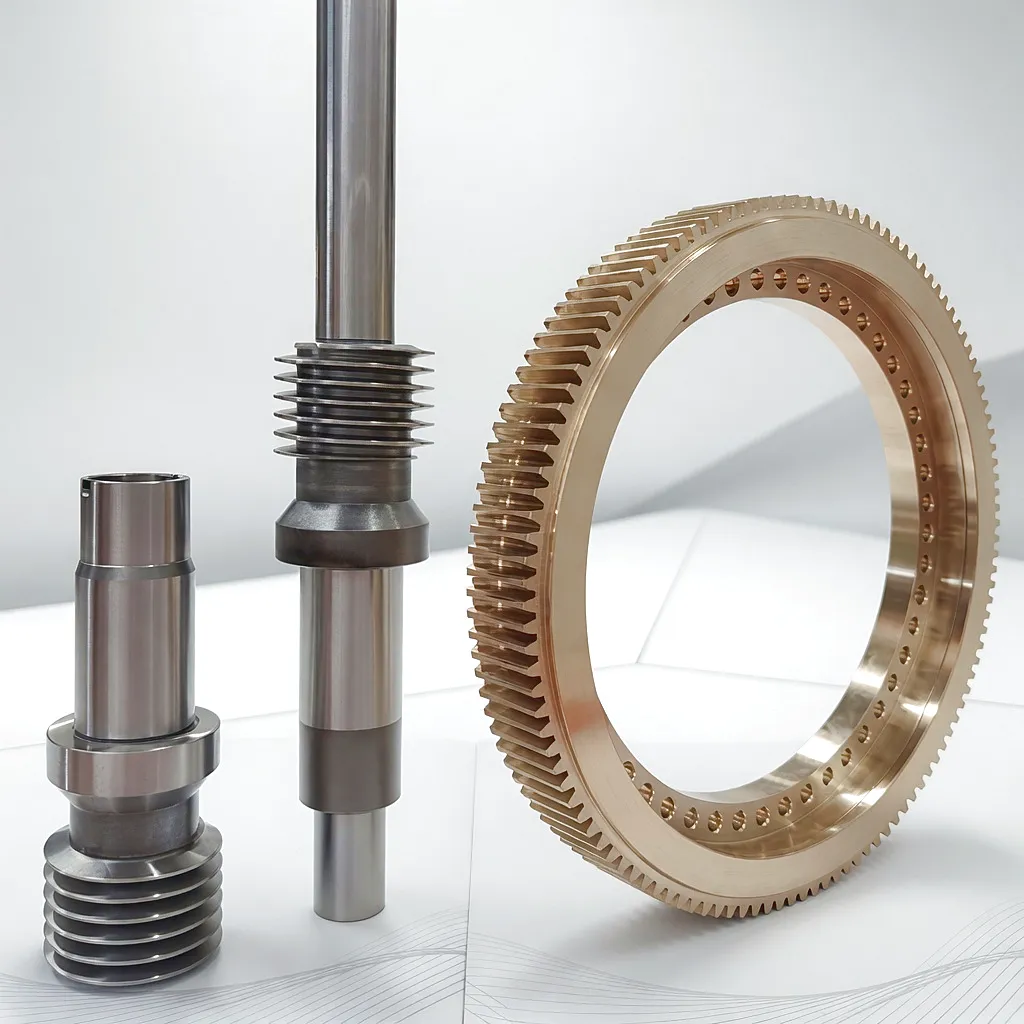
The operating principle of a worm gear shaft is rooted in a specific form of sliding helical meshing. The worm shaft, which resembles an elongated screw with one or more continuous helical threads, rotates about its own axis and drives the worm wheel — a toothed disc whose teeth are curved to conform to the worm’s thread profile. Each full rotation of the worm shaft advances the worm wheel by precisely the number of teeth equal to the number of starts (threads) on the worm. A single-start worm rotating once therefore advances the wheel by just one tooth, delivering a gear reduction ratio equal to the total number of teeth on the wheel. This is why reduction ratios of 10:1, 30:1, 60:1 and even 100:1 are entirely achievable within a single worm gear stage — something that would demand multiple gear stages using conventional spur or helical gears, resulting in a far more complex and bulky gearbox assembly.
The contact mechanics between the worm gear shaft and the worm wheel involve predominantly sliding rather than rolling contact. While this does generate more frictional heat than pure-rolling gear pairs, modern phosphor bronze wheel materials combined with hardened and precision-ground steel worm shafts minimise wear significantly. The sliding nature of the contact is also what produces the inherent self-locking characteristic that distinguishes worm drive systems from virtually all other gear geometries: when the lead angle of the worm shaft is below the friction angle of the mesh, torque applied from the output side cannot back-drive the input. In practical terms, this means a worm gear shaft can hold a load in position without any external brake — an enormously valuable property in lifting equipment, valve actuators and indexing tables where uncontrolled reverse motion would be hazardous or catastrophically expensive.
The geometry of the worm shaft itself is characterised by several critical parameters: the lead angle (the helix angle measured at the pitch cylinder), the pitch diameter, the axial pitch (distance between corresponding thread flanks measured along the worm axis), and the pressure angle. These parameters are interdependent and must be matched with extreme precision to the worm wheel geometry during design. A lead angle between 5° and 25° is typical for most industrial worm gear shafts; lower lead angles produce higher reduction ratios and stronger self-locking behaviour, while higher lead angles improve mechanical efficiency and reduce heat generation. The number of starts — commonly 1, 2, 3 or 4 — directly determines the transmission ratio achievable for a given wheel tooth count, and multi-start worm shafts are increasingly favoured in packaging machinery and servo-actuated positioning systems where higher throughput efficiency is required alongside a moderate reduction ratio.
Core Materials Behind Precision Worm Gear Shafts
The material science underpinning worm gear shaft manufacture is as important as the geometry itself. Because the worm shaft is the primary driver in the mesh, it must exhibit substantially greater surface hardness and fatigue resistance than the worm wheel. The benchmark material for industrial-grade worm gear shafts is 20CrMnTi alloy steel — a Chinese-standard carburising steel that, after gear hobbing, undergoes case hardening to achieve surface hardness levels of HRC 58–62 while retaining a tough, ductile core with hardness in the HRC 30–40 range. This dual-zone hardness profile is critical: the hard case resists abrasive wear and pitting under the sliding contact load cycles of worm meshing, while the softer core absorbs shock loads without catastrophic fracture.
20CrMnTi Alloy Steel
Surface HRC 58–62 after carburising; high bending fatigue resistance; preferred for high-torque industrial drives and gearboxes operating under continuous duty cycles.
42CrMo4 (4140) Alloy Steel
Induction-hardened to HRC 52–58; excellent through-hardenability; widely specified by UK engineers for medium-to-heavy shock load applications such as crane slewing and heavy conveyor drives.
17CrNiMo6 Case-Hardening Steel
Premium grade for aerospace-adjacent and precision servo applications; very high core toughness combined with a deep, uniform carburised case; frequently specified for multi-start worm shafts in packaging and robotic systems.
304 / 316 Stainless Steel
Selected for food processing, pharmaceutical and marine environments where corrosion resistance is the dominant design constraint; typically paired with non-metallic or aluminium bronze worm wheels to reduce galling risk under the corrosive conditions.
Post-machining finishing operations are equally influential in determining the service life of a worm gear shaft. Thread grinding — carried out on CNC thread grinding centres to achieve surface roughness values of Ra 0.4 µm or better on the working flanks — is the recognised benchmark for premium worm shafts. This grinding process not only removes the case distortion introduced by the heat treatment cycle but creates the precise flank geometry that enables full conformity of contact with the worm wheel from the first revolution. Without this final grinding stage, concentrations of contact stress arise at tooth entry and exit points, which can initiate fatigue pitting at a fraction of the design service life. For the most demanding UK applications — heavy-duty mining equipment in Wales, large-scale food processing lines in East Anglia, or steel rolling mill auxiliaries in South Yorkshire — thread-ground worm gear shafts are invariably the correct specification.
Core Technical Advantages of the Worm Gear Shaft
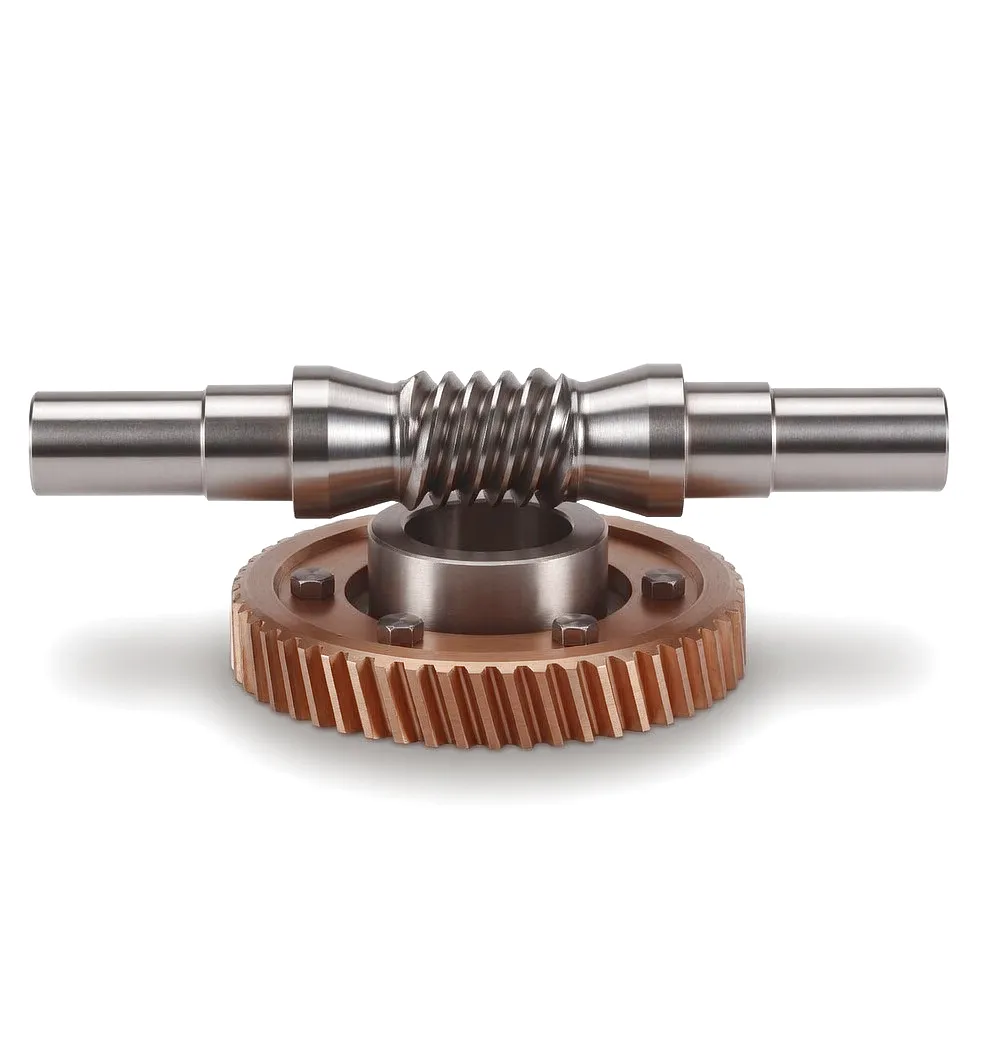
High gear ratios in a compact package remain the most commercially compelling attribute of the worm gear shaft. Where a spur gear stage might deliver a maximum practical reduction of 6:1 before tooth width constraints become unmanageable, a well-designed worm gear shaft stage routinely delivers 80:1 or even 100:1 in a housing no larger than a shoe box. This spatial efficiency translates directly into lower installation costs, reduced machine frame complexity and the ability to integrate powerful reduction drives into retrofit applications where available space is tightly constrained — a consideration that UK plant engineers working with legacy machinery in Victorian-era factory buildings are acutely familiar with.
⚙️
Self-Locking Under Static Load
When lead angle falls below the friction angle, reverse back-driving is mechanically impossible — eliminating the need for separate holding brakes in lifting, valve and indexing applications.
📐
Right-Angle Drive Geometry
The standard 90° shaft crossing angle integrates naturally into machine architectures where motor and driven shaft must be orthogonal — ideal for conveyor drives, mixer gearboxes and rotary transfer systems.
🔇
Smooth, Low-Noise Operation
Continuous multi-tooth engagement and the sliding contact mechanism produce markedly lower vibration and noise than spur or bevel gears — particularly valued in food processing, pharmaceutical clean rooms and urban building services installations across London and the South East.
🏭
Compact Single-Stage Ratio Range
Ratios from 5:1 to 100:1 achievable within a single-stage worm gear drive, reducing gearbox complexity, maintenance points and overall drivetrain weight — directly benefiting total-cost-of-ownership calculations across long production runs.
Worm Gear Shaft: Technical Performance Parameters
The table below summarises the principal technical and performance parameters that define the specification of a worm gear shaft across the range of standard and custom variants manufactured by Ever Power. These figures should be treated as indicative of the typical engineering envelope; specific application requirements — particularly those involving elevated operating temperatures, wash-down environments, or extreme output torque demands — will be addressed through Ever Power’s engineering consultation process and documented in a formal application datasheet prior to production.
| Parameter | Standard Range | Custom / Extended Range | Notes |
|---|
| Shaft Diameter (Centre) | 16 mm – 120 mm | Up to 300 mm | CNC-turned and ground; h6 tolerance standard |
| Number of Starts | 1, 2, 3, 4 | Up to 6 starts | Higher starts = higher efficiency, lower ratio per wheel tooth count |
| Gear Reduction Ratio (single stage) | 5:1 – 80:1 | Up to 100:1 | Determined by wheel tooth count ÷ number of starts |
| Output Torque Capacity | 25 N·m – 8,000 N·m | Up to 25,000 N·m | Dependent on shaft diameter, material, and centre distance |
| Lead Angle | 3° – 25° | Up to 35° | Lower angles = self-locking; higher angles = higher efficiency |
| Pressure Angle | 14.5° / 20° | Custom angles to DIN/AGMA | 20° pressure angle standard for new designs |
| Surface Hardness (Flank) | HRC 52 – 62 | HRC 62+ (special grade) | Verified per batch by Rockwell hardness testing |
| Thread Flank Surface Finish | Ra 0.8 µm | Ra 0.4 µm (ground finish) | Thread grinding available on all custom worm shafts |
| Shaft Crossing Angle | 90° | Custom angles (e.g., 45°) | Non-right-angle configurations available on request |
| Material Grade (Standard) | 20CrMnTi / 42CrMo4 | 17CrNiMo6, 316 SS, Duplex SS | Stainless and duplex for corrosive/hygienic environments |
| Operating Temperature Range | -20°C to +120°C | -40°C to +180°C (with coating) | Specify lubricant grade and seal material for extended ranges |
| Mechanical Efficiency (typical) | 40% – 90% | Up to 95% (multi-start, high lead angle) | Efficiency rises with lead angle and decreases with ratio |
Industrial Application Scenarios Across UK Sectors
Featured Application · Renewable Energy
Wind Turbine Yaw and Pitch Drive Systems

Installed wind power capacity has become a defining pillar of global renewable energy strategy, and within the critical drive systems of megawatt-class wind turbines, worm gear shaft transmission carries two absolutely fundamental functions: yaw drive control and blade pitch adjustment. The yaw system rotates the entire nacelle assembly — housing the generator, gearbox and rotor hub — to align the rotor plane perpendicular to the prevailing wind direction. This demands a drive mechanism capable of generating enormous holding torque while accepting continuous, low-speed slewing commands from the turbine control system. A precision worm gear shaft drive is uniquely suited to this function: its self-locking characteristic ensures the nacelle remains precisely positioned against fluctuating wind loads without any powered holding, while its high reduction ratio allows a compact, motor-driven gearbox to generate the nacelle-turning torque required to overcome the substantial bearing and seal friction of a rotor assembly that may weigh in excess of 100 tonnes.
The pitch control mechanism — which adjusts each individual rotor blade’s angle of attack relative to the wind to regulate turbine output power and protect the structure during storm conditions — likewise depends on the precision and reliability of worm gear shaft drives mounted within each blade root. These pitch drives must respond to control signals within milliseconds and hold blade position against aerodynamic loads measured in hundreds of kilonewtons. UK offshore wind installations along the North Sea coast, in the waters off Yorkshire and East Anglia, are among the largest and most technically demanding in the world, operating in salt-laden, high-humidity environments that place severe corrosion and fatigue demands on every mechanical component in the drivetrain. Ever Power’s marine-grade, stainless-option worm gear shafts with sealed, grease-packed bearings are engineered specifically for this class of service.

Conveyor and Material Handling
Birmingham and the West Midlands represent one of the densest concentrations of automotive and logistics warehousing in the UK. Belt conveyor systems, roller conveyor drives and pallet handling systems throughout these facilities rely on worm gear shaft units to deliver smooth, controlled speed reduction from AC induction motors to conveyor head drums. The smooth meshing action of the worm drive minimises the conveyor belt surface vibration that can cause product displacement or quality issues in high-sensitivity assembly lines.

Packaging and Processing Machinery
From the confectionery manufacturing lines of Yorkshire and Humberside to the beverage filling systems of the Thames Valley, worm gear shafts drive filling carousels, capping machines, labelling heads and conveyor indexing stations with the precision demanded by high-speed packaging throughput. The low-noise characteristics of worm drives are particularly valued in food factory environments where regulatory noise exposure limits are stringent.
 Steel processing plants across Sheffield and Rotherham depend on worm gear shaft technology in the auxiliary drives of their rolling mill tables, billet transfer systems and cooling bed rakes. In these environments, the ability of the worm gear shaft to maintain precise, controllable positioning under heavy static loads — often without a separately powered holding brake — directly reduces capital cost and simplifies the electrical control architecture. The high ratio capability also allows large-diameter drum drives to be powered from compact, standard-frame motor sizes, minimising the structural steel cost of motor support platforms in the plant infrastructure.
Lifting and hoisting systems represent another major application domain where the worm gear shaft is irreplaceable. Stage counterweight systems in London’s West End theatres and live event venues, goods lifts in warehouses and distribution centres from Manchester to Bristol, and vehicle inspection platform drives in automotive service centres all rely on the self-locking security of the worm gear shaft drive. Building services engineers in the UK specify worm gear shaft gearboxes for HVAC damper actuators and industrial ventilation control systems, where the combination of compact right-angle drive geometry, quiet operation and load-holding capability ideally matches the architectural and acoustic constraints of modern commercial buildings.
Manufacturing Excellence
Ever Power: Precision Manufacturing and Global Custom Capability
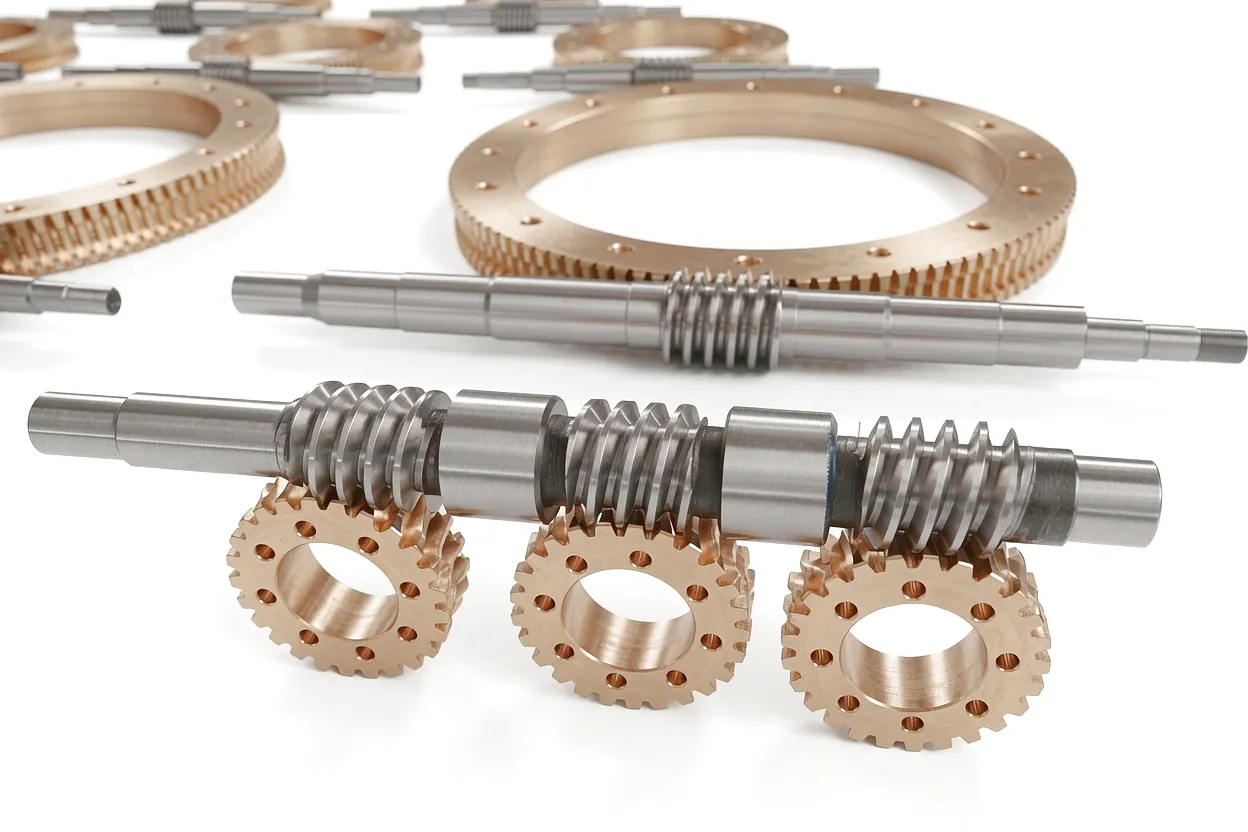
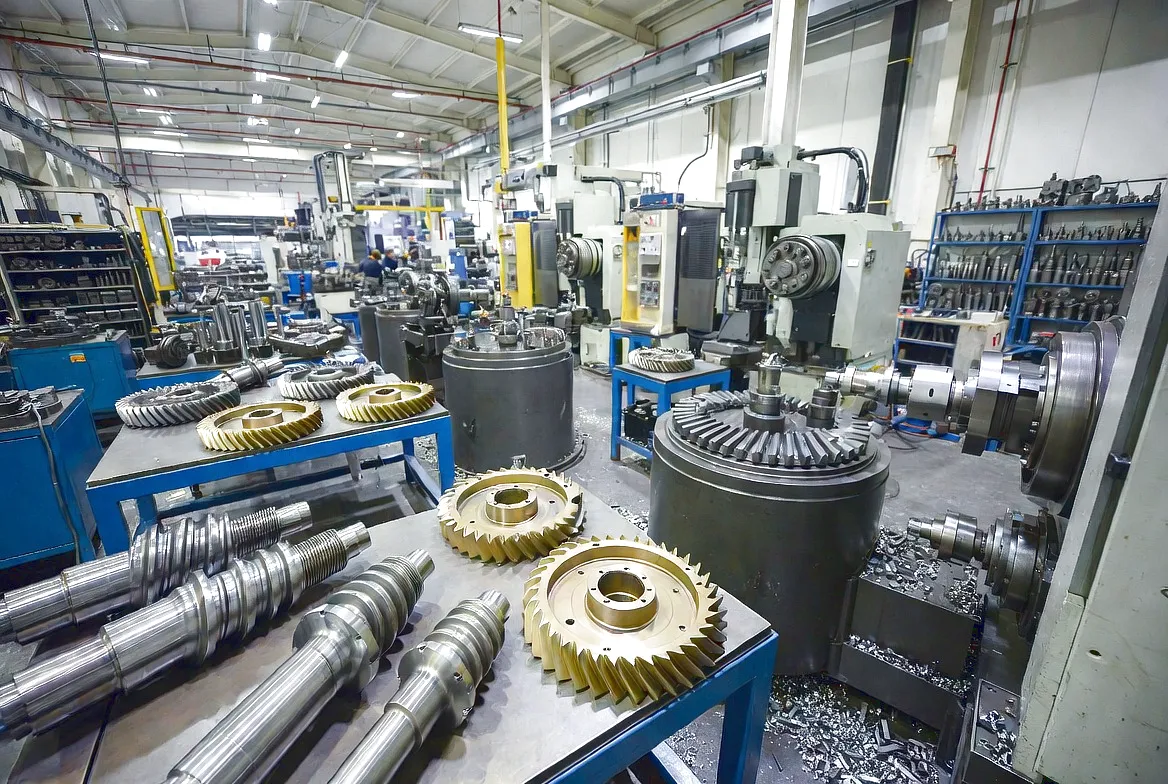
Ever Power operates a fully integrated precision manufacturing facility where every worm gear shaft passes through a controlled production sequence from raw material verification to final dimensional inspection. The production process begins with incoming material certification — all alloy steel bar stock is spectrographically verified against the declared chemical composition before being released to the turning shop. CNC turning centres with live tooling capability produce near-net blanks to within 0.1 mm of final diameter, after which the hobbing machines — running specialised worm thread hobs at controlled feed rates — cut the helical thread profile to the required accuracy grade. Heat treatment, carried out in computer-controlled gas-carburising furnaces with recorded atmosphere and time cycles, is followed by straightening to correct any shaft deflection introduced during the thermal cycle, ensuring that subsequent thread grinding operations begin from a geometrically sound starting point.
Thread grinding — conducted on multi-axis CNC cylindrical grinding centres using CBN (cubic boron nitride) grinding wheels — brings the worm shaft thread flanks to the final dimensional accuracy and surface finish specification. DIN 3974 accuracy Grade C or better (equivalent to AGMA Class 11) is achievable across the full standard product range, with Grade A (AGMA Class 13) available for precision servo and indexing drive applications. Every finished worm gear shaft undergoes CMM (coordinate measuring machine) inspection of helix angle, lead variation, tooth profile deviation and shaft runout, and a full inspection report accompanies each shipment — a documentation standard that UK engineering customers rightly expect and that Ever Power provides as standard practice.
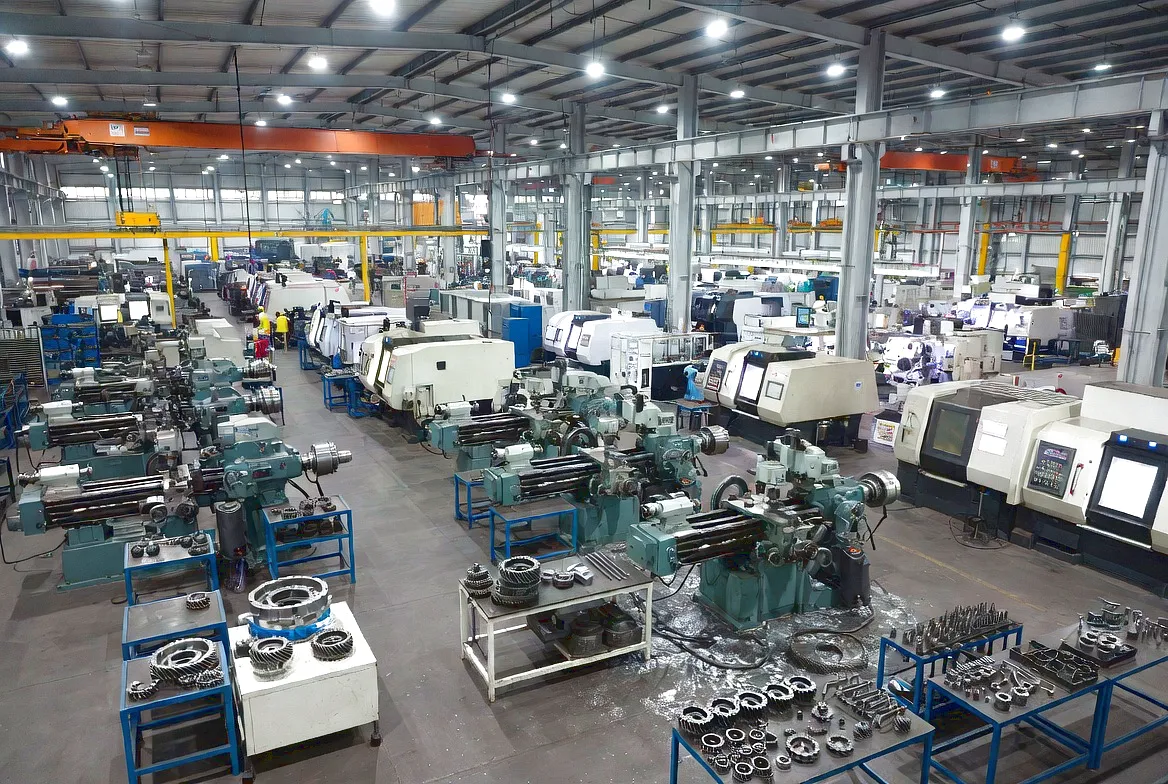
Customisation is the heart of what Ever Power delivers for UK OEM and engineering customers. Standard off-the-shelf worm gear shaft ranges serve a substantial proportion of replacement and maintenance requirements, but the engineering team at Ever Power understands that the most demanding industrial applications — new machine designs, performance upgrades, retrofit projects and high-volume OEM supply programmes — require more than catalogue dimensions. Ever Power’s application engineering team works directly with your design engineers to review the load spectrum, environmental conditions, mounting constraints and required service life of your application, then proposes an optimised worm gear shaft specification including material selection, lead angle, number of starts, shaft end configurations, keyway and spline options, and surface coating or treatment requirements. Typical custom development lead times run from 3 to 6 weeks from confirmed drawing approval to first article inspection, with production deliveries thereafter supplied against a Kanban-style call-off schedule to support your manufacturing planning requirements. UK warehousing and logistics partners ensure that express shipment to any address in England, Scotland or Wales is achievable within 48 hours of order release.
Customer Success Story
Renishaw-Tier Conveyor Retrofit in Gloucestershire: Precision Drive Upgrade Delivers 60% Reduction in Unplanned Downtime
 A precision metrology components manufacturer based near Gloucester — supplying sub-components to the UK aerospace and automotive calibration sectors — had operated a 14-station rotary transfer machine since the early 2000s. The machine’s indexing drive, originally fitted with a spur-gear reduction unit, had become an increasing maintenance liability: the gear unit generated audible noise that interfered with the factory’s noise monitoring compliance obligations, and the lack of any load-holding mechanism in the drive meant that the machine required a separately mounted brake unit that consumed valuable cabinet space and added a further maintenance item to the schedule. After a particularly disruptive failure mid-production run — requiring an emergency parts shipment and two days of lost production — the engineering manager initiated a review of the drive architecture.
The technical team contacted Ever Power following an online search for worm gear shaft suppliers capable of delivering precision custom worm shafts compatible with an existing 80:1 ratio gearbox housing. Ever Power’s application engineers reviewed the original machine drawings provided by the customer and proposed a bespoke 3-start, 80:1 ratio worm gear shaft in 20CrMnTi steel with thread-ground flanks to DIN 3974 Grade B, featuring a flanged shaft end to match the existing housing bore pattern. The custom shaft was delivered within four weeks of drawing sign-off. Installation was completed over a scheduled weekend maintenance window, with no modification to the machine frame required. The new worm gear shaft drive eliminated the separate brake unit entirely — the self-locking worm mechanism providing all necessary load-holding function — and reduced measured drive noise at the operator station from 76 dB(A) to 68 dB(A), bringing the machine into comfortable compliance with the factory’s noise action level thresholds. Over the 18 months following the retrofit, not a single unplanned drive stoppage occurred on the transfer machine. The engineering manager calculated that the reduction in unplanned downtime represented an annual saving of approximately £34,000 against the cost of the previous year’s emergency maintenance events and associated production losses.
★★★★★
“The thread-ground worm shaft from Ever Power ran our transfer machine through a full 18-month production cycle without a single drive fault. The self-locking torque is rock-solid and the noise reduction was frankly astonishing. We’ve since specified Ever Power for three other machines on site.”
— James H., Engineering Manager, Gloucestershire Metrology Components Ltd
★★★★★
“We needed a stainless worm gear shaft for a wash-down conveyor in our Sheffield food processing plant — tight hygiene compliance, restricted space under the belt, and a specific ratio needed. Ever Power came back with a full custom spec in three days and delivered on time. Frankly the best supplier experience we’ve had on a bespoke transmission component.”
— Sarah T., Mechanical Design Lead, Yorkshire Food Systems PLC
★★★★★
“Our Birmingham automotive parts facility was running three different worm shaft suppliers across our legacy equipment — a maintenance nightmare. We consolidated to Ever Power for the custom regrind programme, and the consistency of CMM inspection data between batches has been remarkable. The DIN Grade C documentation they supply out of the box removed an entire verification step from our incoming inspection protocol.”
— Mark L., Procurement Director, Midlands Drive Systems Group
Frequently Asked Questions
How much does a custom worm gear shaft cost in the UK, and what factors affect the price I receive in a supplier quote?
The cost of a custom worm gear shaft in the UK varies substantially depending on shaft diameter, length, material grade, accuracy specification, number of starts and required quantities. For a standard 42CrMo4 shaft in the 40–80 mm diameter range, unit prices for small-volume prototyping (5–20 pieces) typically fall in the range of £80–£350 per shaft, while higher-volume production orders (500+ pieces) of the same specification may bring the price down to £25–£80 per unit. Thread-ground, high-accuracy shafts or stainless grades attract a premium of approximately 30–60% over standard hobbed-and-hardened counterparts. The most accurate way to understand the cost for your specific application is to contact Ever Power at
[email protected] and share your drawing or key dimensional requirements — the application team will return a firm quotation within 24 hours.
What is the best material for a worm gear shaft used in a UK food processing plant where the equipment undergoes daily wash-down with hot water and alkaline detergent?
For hygienic food processing environments where daily hot wash-down with alkaline CIP chemicals is standard practice, 316L stainless steel is the recommended base material for the worm gear shaft. Grade 316L offers superior resistance to chloride-induced pitting and crevice corrosion compared to the more common 304 grade, and its low carbon content minimises the risk of sensitisation during welding operations nearby. The shaft is best paired with a worm wheel in silicon bronze or aluminium bronze to minimise galling under the conditions of reduced oil-film lubrication that may occur in the opening minutes after a wash-down cycle. Ever Power routinely supplies 316L worm gear shafts with an electropolished surface finish on the shaft body — outside the thread zone — to eliminate surface microporosity that could trap bacterial contamination, meeting UK and EU food hygiene regulations applicable to open-gear food contact zone drive components.
Which worm gear shaft supplier in the UK or internationally can provide thread-ground shafts with DIN 3974 Grade B accuracy documentation and fast delivery to Birmingham?
Ever Power manufactures thread-ground worm gear shafts to DIN 3974 Grade B and Grade C as standard elements of its precision custom range. Each shaft is accompanied by a full CMM inspection report documenting lead deviation, profile deviation, helix angle and shaft runout against the specified tolerance bands — the exact documentation required for CE-marked machine components and for compliance with UK machinery safety regulations post-Brexit. For customers in the West Midlands, Birmingham and Coventry areas, Ever Power works with established UK freight forwarders and courier networks to provide 48-hour express delivery from Chinese production dispatch, with consignments tracked in real time and customs documentation pre-cleared. For urgent requirements, small-quantity shipments via international air freight are routinely arranged with a transit time of 3–5 working days to any major UK airport hub.
How do I calculate the correct gear ratio for a worm gear shaft when designing a new conveyor drive system for a logistics warehouse in Sheffield?
The gear ratio calculation for a worm gear shaft drive begins with your application requirements: the required output speed (conveyor belt speed and drive drum diameter define output shaft RPM), the available input speed (motor synchronous speed after inverter, typically 1,450 RPM for a 4-pole 50 Hz motor in UK mains installations), and the output torque requirement (calculated from belt tension and drum radius). The required gear ratio = motor output speed / required output shaft RPM. Once you have the ratio, select the number of starts — 1 start for ratios above 30:1, 2 starts for ratios 15:1 to 30:1, and 3 or 4 starts for ratios below 15:1 — and then set the worm wheel tooth count equal to the ratio multiplied by the number of starts. For a 40:1 ratio with a 1-start worm, the wheel has 40 teeth; with a 2-start worm, 80 teeth. The worm gear shaft pitch diameter is then set to achieve the required centre distance. Ever Power’s technical team is happy to assist UK engineers at any stage of this calculation process.
When should I choose a worm gear shaft drive over a helical gear drive for a new machine design intended for the UK manufacturing sector?
Choose a worm gear shaft drive when your design requires: a high single-stage reduction ratio (above 20:1), a right-angle (90°) output axis relative to the motor input, inherent self-locking capability without a separate brake, low-noise drive operation, or a compact axial envelope where a helical drive would require a larger housing diameter. Helical drives are preferable when mechanical efficiency above 95% is mandatory — such as in high-duty-cycle drives where heat generation from the worm mesh would require oversized thermal management. For the majority of UK industrial applications — including conveyor systems, packaging machinery, valve actuators, lifting equipment and positioning systems — the worm gear shaft drive represents the optimal balance of cost, compactness, noise performance and application reliability. When in doubt, presenting your torque-speed-ratio requirement to Ever Power’s application engineers will result in a clear recommendation backed by documented calculations.
Where can I find a reliable worm gear shaft manufacturer that offers OEM-grade customisation services and can ship reliably to customers throughout England and Scotland?
Ever Power is a precision worm gear shaft manufacturer with a proven track record of supplying OEM and aftermarket customers throughout the UK. With integrated CNC manufacturing, in-house heat treatment, thread grinding capability and comprehensive CMM inspection, Ever Power can handle the full scope of custom worm gear shaft requirements from early-stage design consultation through to volume production supply. UK customers benefit from a dedicated English-language sales and technical support team, transparent lead times, and logistics partnerships that ensure reliable delivery performance to England, Scotland and Wales. To start a conversation about your OEM worm gear shaft requirements — whether for a single prototype or a 10,000-piece annual programme — contact the technical sales team directly at
[email protected].
Ready to Specify?
Get Your Custom Worm Gear Shaft Quote from Ever Power
Send your drawing, requirement, or enquiry to our UK-facing technical sales team. Response within 24 hours.
✉ [email protected] — Get a Quote Now
edit by gzl