Ever Power — Precision Transmission Components
Worm Gear Shaft: Engineering Principles, CNC Machine Tool Applications & Industrial Solutions for the UK Market
A comprehensive technical guide covering working principles, materials, performance parameters, CNC indexing applications, and bespoke manufacturing from Ever Power.
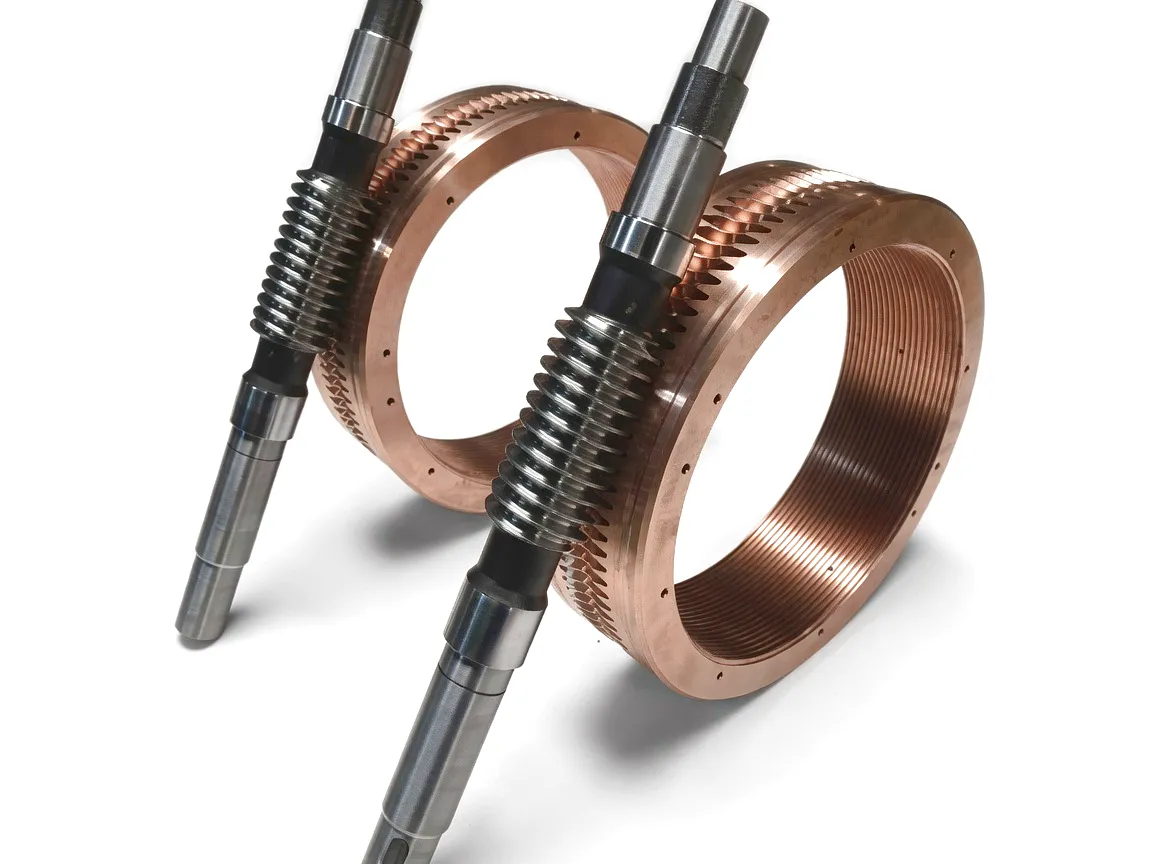
The worm gear shaft stands as one of the most mechanically distinctive and versatile components in modern power transmission engineering. Unlike conventional spur or helical gearing systems, a worm gear shaft achieves high reduction ratios within a remarkably compact envelope, making it indispensable across heavy industry, precision machine tools, automated production lines, and material handling infrastructure. The geometry of a worm gear shaft — a helical thread wrapped around a cylindrical shaft body — allows it to mesh perpendicularly with a mating worm wheel, transferring torque and rotational motion through sliding and rolling contact between precisely machined flanks. This orthogonal arrangement is not merely a spatial convenience; it fundamentally enables self-locking behaviour under specific lead angle conditions, eliminates the need for secondary braking mechanisms in many vertical-load or positioning applications, and delivers power smoothly with minimal vibration. For engineers specifying transmission components for CNC machine tools, rotary indexing tables, food processing conveyors, or lifting equipment, understanding the full technical landscape of the worm gear shaft — from metallurgical considerations to geometric tolerances and backlash elimination — is essential for achieving optimal system performance and longevity.
In the United Kingdom’s manufacturing sector, worm gear shafts serve as critical enabling components across Birmingham’s precision engineering firms, Sheffield’s advanced materials processors, and the broader aerospace and automotive supply chains concentrated across the Midlands and North of England. The demand for higher accuracy, tighter tolerancing, and application-specific customisation continues to intensify as UK manufacturers invest in five-axis machining centres, collaborative robotic systems, and advanced automated assembly lines. This guide explores every dimension of the worm gear shaft — its mechanics, materials, performance data, CNC machine tool integration, and the bespoke manufacturing capabilities available through Ever Power.
How a Worm Gear Shaft Works: The Engineering Principle
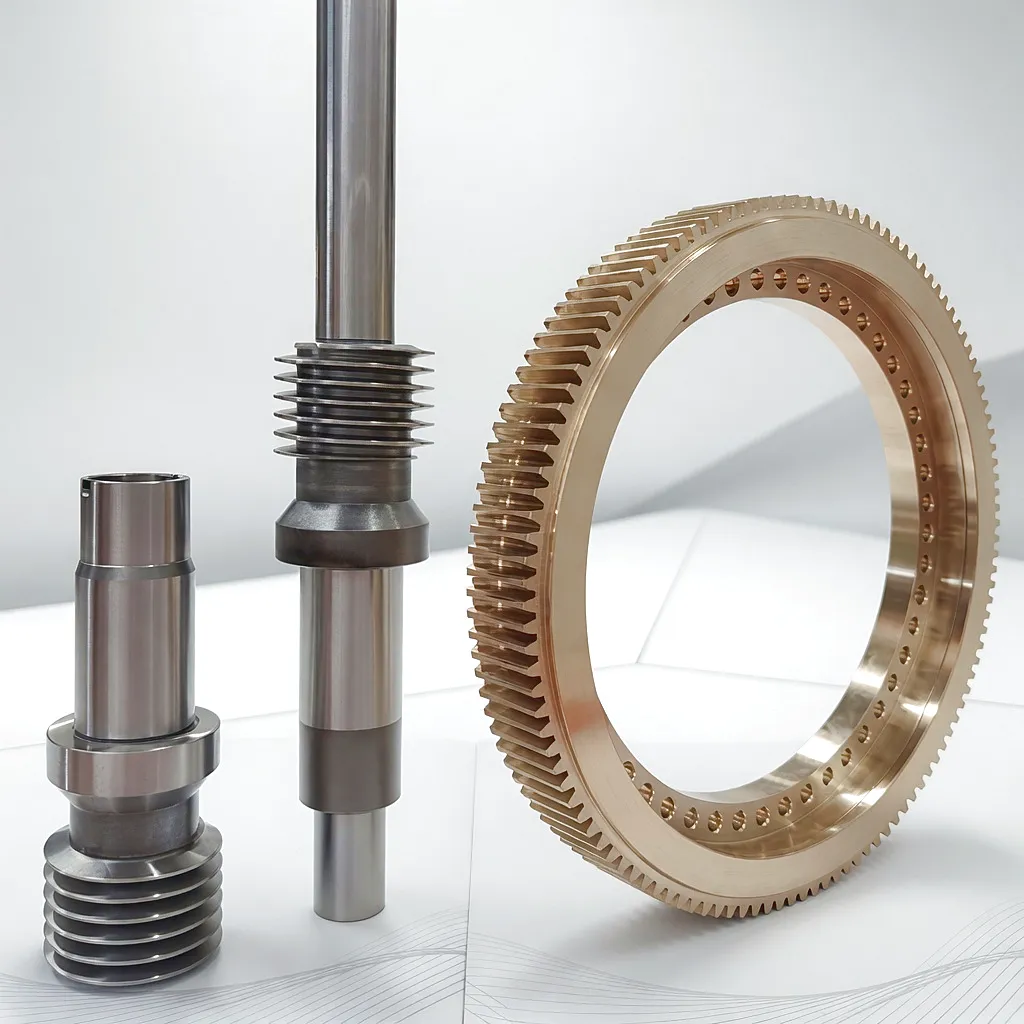
The operating principle of a worm gear shaft rests on the geometry of the helical thread — the worm — meshing with the curved teeth of a mating bronze or cast iron worm wheel at a 90-degree shaft angle. When the worm rotates, its thread progressively engages successive teeth on the wheel, creating a wedging action that generates high tangential force on the wheel’s periphery. The lead angle of the worm thread — the angle between the thread helix and a plane perpendicular to the worm shaft axis — directly governs both the mechanical advantage and the self-locking characteristic. Lead angles below approximately 6 degrees produce self-locking; the worm can drive the wheel, but the wheel cannot back-drive the worm, because the friction force at the mesh exceeds the axial component of the wheel’s tangential force. This property is extensively exploited in CNC rotary tables, positioning stages, and lifting mechanisms where load holding without energy expenditure is required.
The thread profile of a worm gear shaft is typically defined by one of three standard geometries: the ZA (Archimedean spiral) worm, where the axial section is straight-flanked; the ZN (normal section straight flank) worm; and the ZI (involute helicoid) worm, which closely resembles a helical gear in its cross-section. Each profile offers different contact characteristics and is suited to different accuracy and load requirements. High-precision CNC indexing applications predominantly employ ZI or ZK (convolute worm) profiles because they afford improved contact ratio, more uniform tooth loading, and greater tolerance to minor misalignment. The number of thread starts — single, double, triple, or quadruple — determines the gear ratio for a given number of wheel teeth: a single-start worm meshing with a 60-tooth wheel gives a 60:1 ratio, while a four-start worm with the same wheel yields 15:1. This flexibility allows designers to tailor the transmission ratio, efficiency, and torque output of the worm gear shaft assembly across an enormous range without altering the package dimensions significantly.
Reduction Ratio
5:1 – 100:1
Achievable in a single stage — far exceeding helical or spur gear stages
Self-Locking Angle
< 6°
Lead angles below 6° create inherent self-locking, eliminating separate braking hardware
Contact Type
Line → Area
Enveloping designs achieve area contact for superior load distribution and reduced surface stress
Shaft Angle
90°
Standard orthogonal arrangement; non-intersecting, non-parallel axes for space-efficient layouts
CNC Machine Tool Application: Rotary Table Indexing & Feed Axes
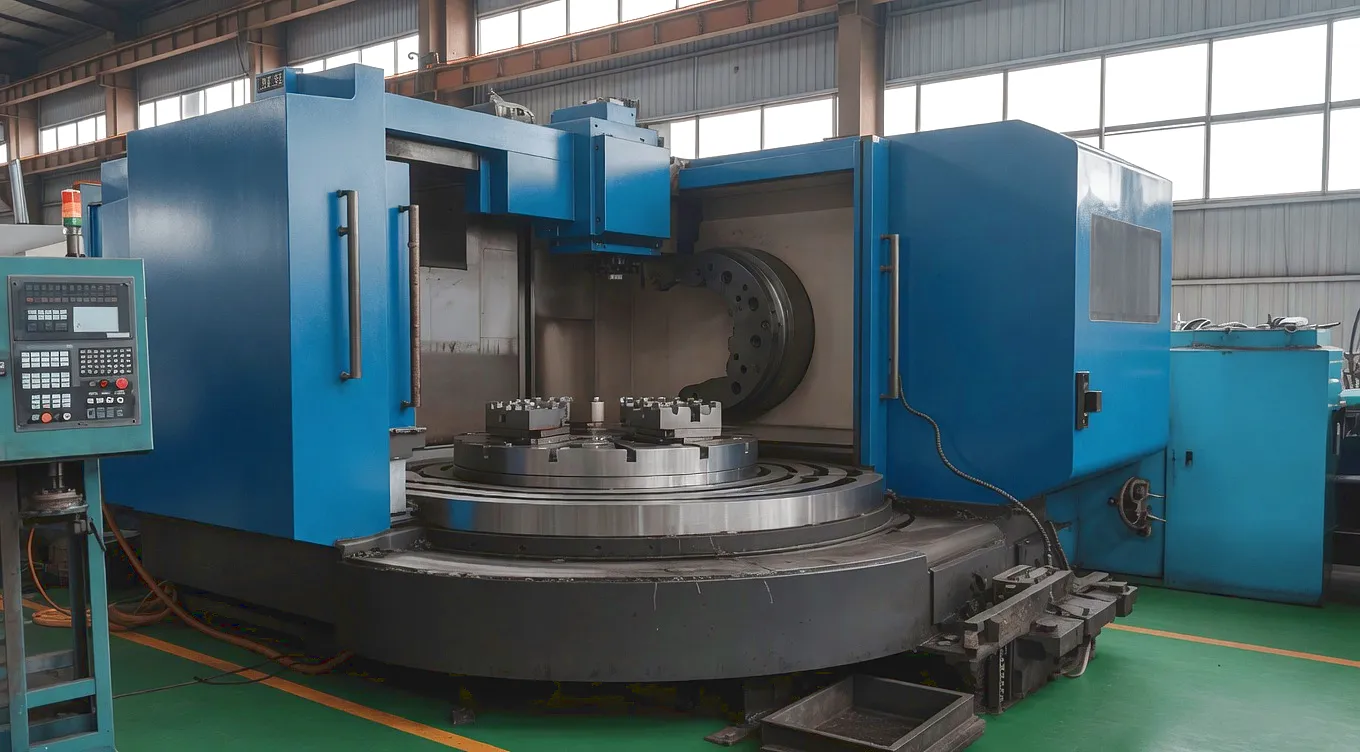
Among the most demanding applications for the worm gear shaft is the NC rotary table — the fourth and fifth axis indexing mechanism found in vertical machining centres (VMC), horizontal machining centres (HMC), and multi-axis turning-milling platforms. In a CNC rotary table, the worm gear shaft is driven by a servo motor through a coupling, and its rotation drives the worm wheel, which is directly mounted to or integral with the table platter. The single-stage reduction inherent in this arrangement allows transmission ratios of 40:1 to 90:1 with a single mesh — meaning that a servo motor capable of delivering 5 Nm of torque can produce 200 Nm to 450 Nm at the table with no intermediate gearbox stages. This compact, high-ratio characteristic makes the worm gear shaft uniquely suited to the space constraints of a machine tool column or saddle.
Indexing precision is paramount in five-axis machining. Modern high-accuracy CNC rotary tables employ dual-lead worm gear shafts — a configuration where the left and right flanks of the worm thread carry slightly different lead values. By translating the worm gear shaft axially within its housing, the mesh backlash can be adjusted to near-zero without replacing components. This capability allows field engineers to periodically recalibrate table accuracy as the mesh wears, extending the service interval and maintaining angular positioning accuracy at the arc-second level (typically ±2 to ±5 arc-seconds for precision-class tables, down to sub-arc-second for super-precision units). In the tilting head (B-axis or A-axis) of five-axis machining centres, the worm gear shaft provides the reduction between the B-axis servo motor and the head casting, with hydraulic clamping applied after positioning to bear the milling reaction torque. Swing ranges of ±90° to ±110° with ratios of 60:1 to 72:1 are standard in current five-axis platforms from UK-based machine tool builders and the European manufacturers supplying the British market.
VMC / HMC 4th & 5th Axis
Dual-lead worm gear shafts with 40:1–90:1 ratios and self-locking properties hold workpiece angle without servo holding torque, reducing thermal load on axis drives and improving thermal stability of machined dimensions.
B-Axis Tilting Head
60:1 to 72:1 worm gear shaft drives B-axis rotation in five-axis heads, combined with hydraulic face-tooth clamping for rigid milling. Lead angle optimised for rapid positioning speed without sacrificing self-locking at rest.
ATC Tool Magazine Drive
Automatic tool changers use worm gear shaft reducers in carousel rotation drives, benefiting from self-locking to eliminate pot position error during spindle approach. Reduces servo sizing requirements for the tool magazine axis.
Auxiliary & Feed Systems
Balance counterweight drives, chip conveyor transmissions, coolant pump drives, and pallet changer rotary mechanisms all leverage worm gear shaft compactness and high reduction in CNC machine tool auxiliaries.
Dual-Lead Worm Gear Shaft Technology
Left and right thread flanks carry different lead values. Axial translation of the worm gear shaft closes backlash without component replacement — a field-adjustable zero-backlash solution for high-precision CNC indexing.
±2 arc-sec
Achievable Indexing Accuracy
Core Materials: What Worm Gear Shafts Are Made From
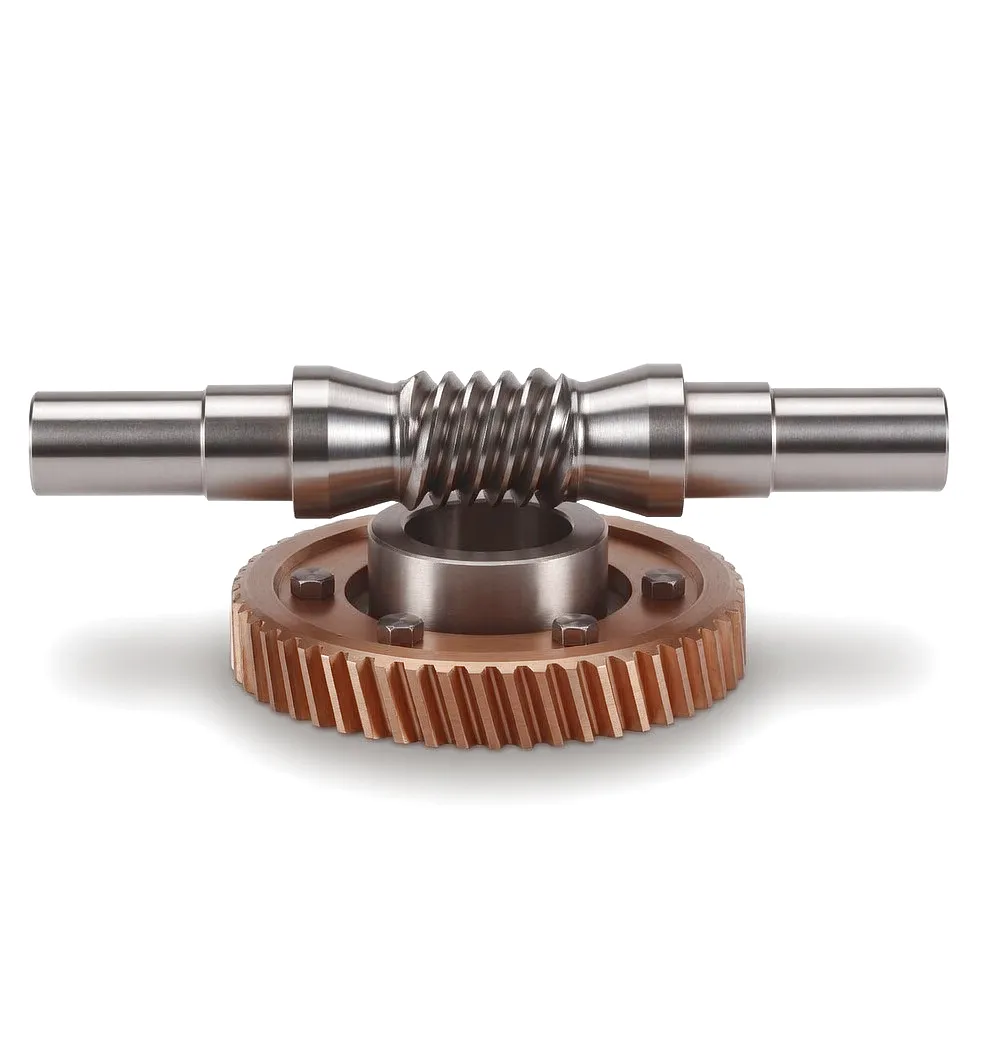
Material selection for the worm gear shaft is arguably the single most influential design decision affecting service life, load capacity, thermal behaviour, and maintenance interval. The worm gear shaft body itself — the shaft proper — is almost universally produced from alloy steel, with the specific grade chosen based on the torque load, surface hardness requirement, and operating environment. For general industrial applications, 20CrMnTi (a chromium-manganese-titanium case-hardening steel widely used in Chinese and European gear manufacturing) or 42CrMo4 (a high-strength quench-and-temper alloy steel conforming to EN 10083-3, widely specified by UK mechanical engineers) provides the core toughness to resist torsional fatigue while permitting case depths of 0.8 mm to 1.5 mm after carburising and quenching. The case-hardened surface achieves HRC 58–62, which minimises thread wear and enables the tight tolerancing needed for arc-second-class indexing. For very high torque applications — such as the main worm shaft in a large industrial elevator or a heavy-duty rotary kiln drive — 18CrNiMo7-6 (EN 36C equivalent) provides superior core impact toughness after case hardening, with Charpy impact values exceeding 50 J at −20 °C, critical for UK installations subject to outdoor temperature cycling in facilities such as Yorkshire’s steel processing sites or Scottish offshore support yards.
When operating temperatures exceed 200 °C, or where the worm gear shaft is exposed to corrosive industrial environments — such as food processing washdown areas in the Midlands, or chemical plant service in Teesside — stainless steel variants (typically AISI 304, 316L, or 17-4 PH precipitation-hardened grade) offer adequate corrosion resistance. However, stainless grades sacrifice some case hardness capability and are generally limited to applications where load and speed are moderate. Nitrided steel variants, where the surface is enriched with nitrogen to a depth of 0.3–0.6 mm, achieve surface hardness of HV 700–1000 while maintaining dimensional stability superior to carburised grades, making them preferred in precision aerospace actuation worm shafts where post-heat-treatment distortion must be minimised. Ground thread profiles on nitrided worm gear shafts routinely achieve thread lead error below 5 µm per 300 mm length — the geometric quality foundation for arc-second indexing in CNC machine tools.
42CrMo4 Alloy Steel
EN 10083-3 standard; quench & temper; Rm 900–1100 MPa; excellent fatigue resistance; primary choice for industrial worm gear shafts in UK engineering specifications
20CrMnTi Case-Hardening Steel
Case depth 0.8–1.5 mm; surface HRC 58–62 after carburising; excellent for high-ratio CNC indexing worm gear shafts; ground thread achieves Ra 0.4 µm
18CrNiMo7-6 (EN 36C)
Superior core toughness; Charpy >50 J at −20 °C; heavy-duty lifting and rotary kiln worm gear shafts; preferred for outdoor-rated UK industrial installations
Nitrided / Stainless Variants
Nitrided: HV 700–1000 surface; minimal distortion; aerospace actuators. Stainless 316L: food processing, chemical plant; moderate load applications
Technical Performance Parameter Table: Worm Gear Shaft
The table below consolidates the key technical parameters engineers should specify when selecting or designing a worm gear shaft assembly. Values represent standard production ranges; Ever Power’s manufacturing capabilities extend across the full range and beyond for bespoke projects.
| Parameter | Typical Range | High-Precision CNC Class | Unit / Notes |
|---|---|---|---|
| Output Torque | 10 – 50,000 | 200 – 5,000 | N·m; varies with ratio and centre distance |
| Gear Ratio | 5:1 – 100:1 | 40:1 – 90:1 | Single stage; CNC tables commonly 60:1, 72:1, 80:1 |
| Centre Distance | 40 – 630 | 50 – 300 | mm; ISO standard centre distances preferred |
| Worm Thread Starts | 1, 2, 3, 4 | 1 (single start for max ratio) | More starts = higher efficiency but lower ratio |
| Lead Angle | 2° – 30° | 3° – 8° | Self-locking below ~6°; higher angle = higher efficiency |
| Mechanical Efficiency | 30% – 92% | 55% – 75% | Self-locking units typically 30–50%; multi-start 70–92% |
| Thread Profile | ZA, ZN, ZI, ZK | ZI, ZK (involute / convolute) | ZI preferred for CNC; ZA for standard reducers |
| Surface Hardness (Shaft) | HRC 45 – 62 | HRC 58 – 62 | Carburised & quenched; enables fine grinding |
| Thread Surface Finish | Ra 0.4 – 1.6 | Ra 0.2 – 0.4 | µm; precision ground for CNC indexing service |
| Lead Error | ± 10 – ± 30 | ± 3 – ± 6 | µm per 300 mm; governs angular indexing precision |
| Indexing Accuracy | ± 10 – ± 60 | ± 2 – ± 10 | arc-seconds; precision-class CNC rotary tables |
| Input Speed (max) | 300 – 3,000 | 1,500 – 3,000 | rpm; higher speed increases heat generation |
| Worm Shaft Material | 42CrMo4, 20CrMnTi, 18CrNiMo7-6 | 20CrMnTi (carburised & ground) | Alloy steel standard; stainless optional for corrosive duty |
| Shaft Angle | 90° | 90° | Standard; custom angles available on request |
| Operating Temperature | -20 °C to +120 °C | 0 °C to +80 °C | Lubricant-dependent; thermally managed in CNC installations |
Core Technical Advantages of the Worm Gear Shaft
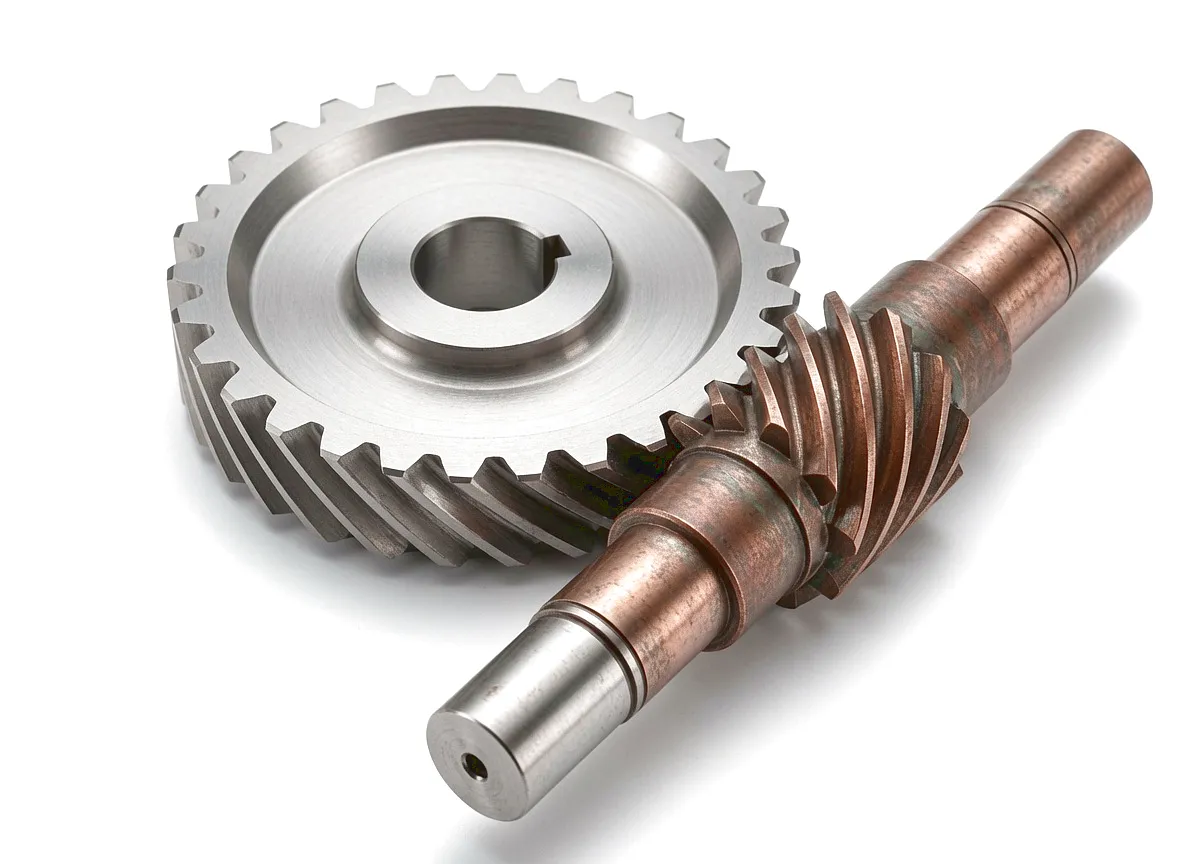
The enduring appeal of the worm gear shaft across diverse engineering disciplines stems from a combination of mechanical properties that are genuinely difficult to replicate with other transmission types. The ability to achieve large speed reductions in a single stage — ratios of 60:1 to 100:1 that would require three or four spur gear stages, each introducing its own backlash, alignment sensitivity, and mounting complexity — is perhaps the most commercially significant advantage. For system integrators supplying automated production lines to Midlands automotive manufacturers, or conveyor systems to port logistics operators in Felixstowe and Tilbury, this space economy translates directly into reduced machine footprint, simplified installation, and lower overall system cost. Beyond the ratio advantage, the smooth sliding contact at the mesh (as opposed to the rolling/impact contact in helical gears) produces significantly lower noise and vibration levels — a factor of increasing importance as UK legislation continues to tighten workplace noise exposure limits under the Control of Noise at Work Regulations 2005.
High Single-Stage Ratio
5:1 to 100:1 in a single mesh eliminates intermediate stages, reducing component count, assembly time, and potential failure points. Ideal for compact machine tool and robotic applications where envelope is constrained.
Inherent Self-Locking
Lead angles below 6° create genuine self-locking. CNC rotary tables, elevator drives, and valve actuators maintain position without servo holding current or mechanical brakes. Reduces energy consumption and hardware complexity.
Quiet & Smooth Operation
Sliding contact mesh produces lower impact noise than spur or helical gears. Continuous tooth engagement with no impact loading delivers vibration-free torque transfer — critical in precision measurement and optical positioning stages.
Orthogonal Layout Flexibility
90-degree shaft arrangement enables non-parallel, non-intersecting power flow — essential in multi-axis machine tools, right-angle conveyor corners, and packaging machines where input and output shafts occupy perpendicular planes.
Field-Adjustable Backlash
Dual-lead worm gear shaft designs allow backlash elimination via axial adjustment of the worm shaft position. Field engineers can recalibrate indexing accuracy as the mesh wears, extending service life without component replacement.
High Shock Load Tolerance
The large contact area and sliding nature of worm gear mesh dissipates shock energy across a wider tooth flank area compared to spur gears, making the worm gear shaft more forgiving under pulsating or impact loads in mining, quarrying, and press transfer applications.
Industrial Application Scenarios
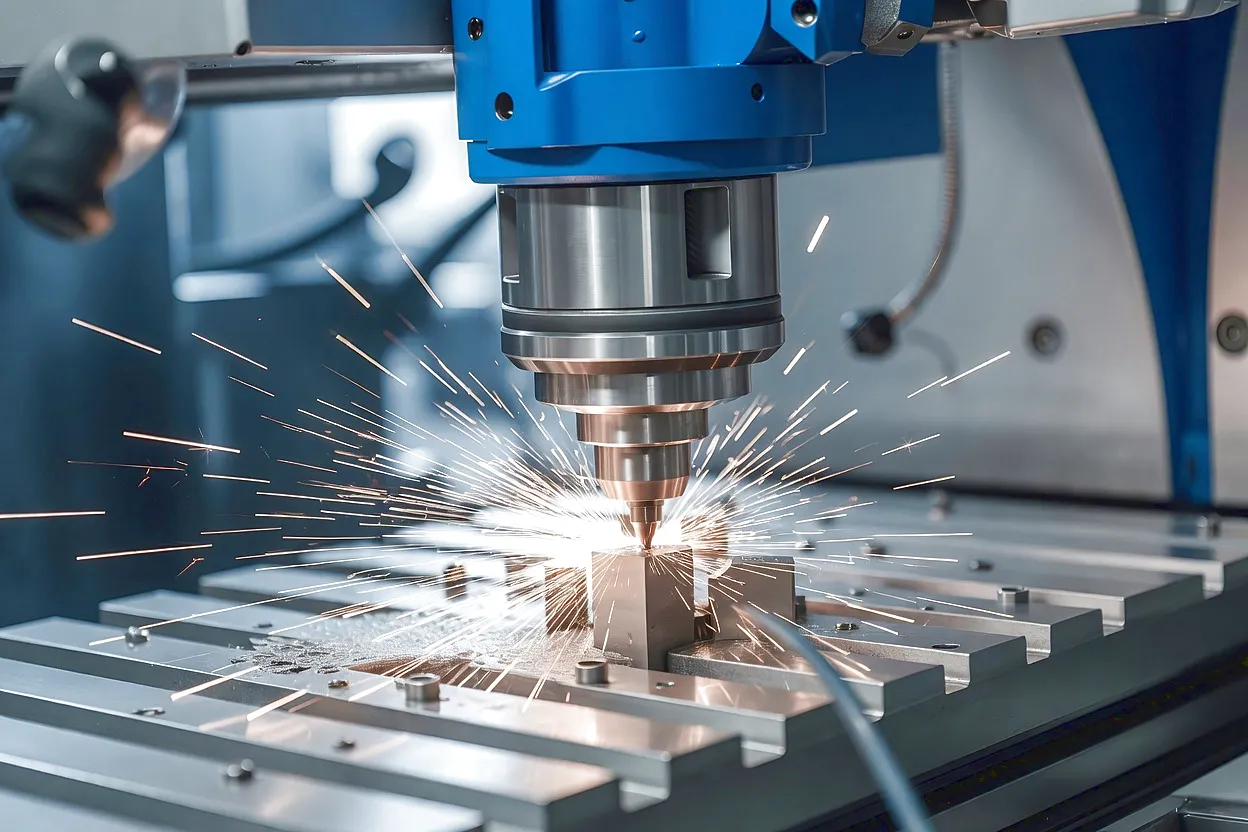
The breadth of industries relying on worm gear shafts reflects both the mechanical versatility of the design and the economic advantages it delivers across volume segments ranging from sub-kilowatt automation to megawatt bulk material handling. In the UK’s food and beverage manufacturing sector — with major plants concentrated around the Tees Valley, West Midlands, and the Greater Manchester conurbation — worm gear shaft driven conveyors and packaging machines operate continuously under washdown conditions. Stainless steel worm gear shafts rated to IP65 or IP69K are specified here, with food-grade lubricants and sealing systems that comply with EHEDG (European Hygienic Engineering and Design Group) guidelines, ensuring that production equipment meets both the Food Standards Agency requirements and the export hygiene standards demanded by European trade partners post-Brexit. The compact footprint of a worm gear shaft reducer versus a conventional helical gearbox allows line designers to fit more process stages within the available factory floor area — a recurring constraint in the UK’s established food manufacturing facilities, many of which occupy Victorian-era buildings with limited floor-to-ceiling clearances and no scope for expansion.
In the construction equipment and materials handling sector, worm gear shafts appear in concrete mixer drum drives, mobile elevated work platform (MEWP) slew drives, and dock leveller tilt mechanisms. The self-locking characteristic is especially valued in elevated platforms, where the inability of the worm wheel to back-drive the worm provides a passive safety mechanism preventing uncontrolled lowering if hydraulic pressure is lost. UK safety regulations under the Lifting Operations and Lifting Equipment Regulations 1998 (LOLER) require that lifting equipment incorporate braking or locking mechanisms capable of holding rated loads; the worm gear shaft’s self-locking behaviour can contribute to satisfying this requirement and may allow simplification of the hydraulic circuit. In Sheffield’s still-active steel strip processing and rolling operations, worm gear shaft reducers serve as the feed control drives for coil edge trim equipment, where the combination of high torque at low speed, resistance to the hot, oily environment, and simplicity of maintenance aligns precisely with the harsh conditions of a strip steel plant.
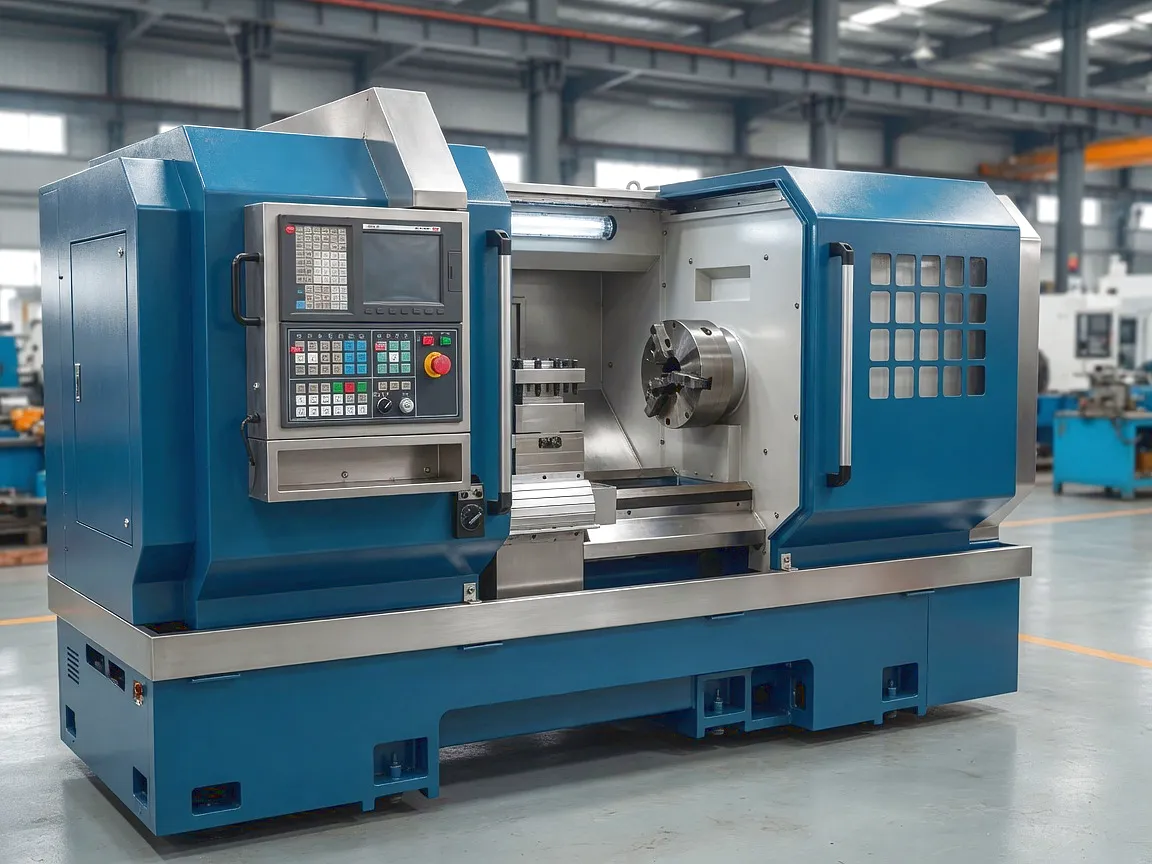
Elevator & Hoist Drives
Self-locking worm gear shaft prevents load drop on power failure — intrinsic safety for LOLER compliance
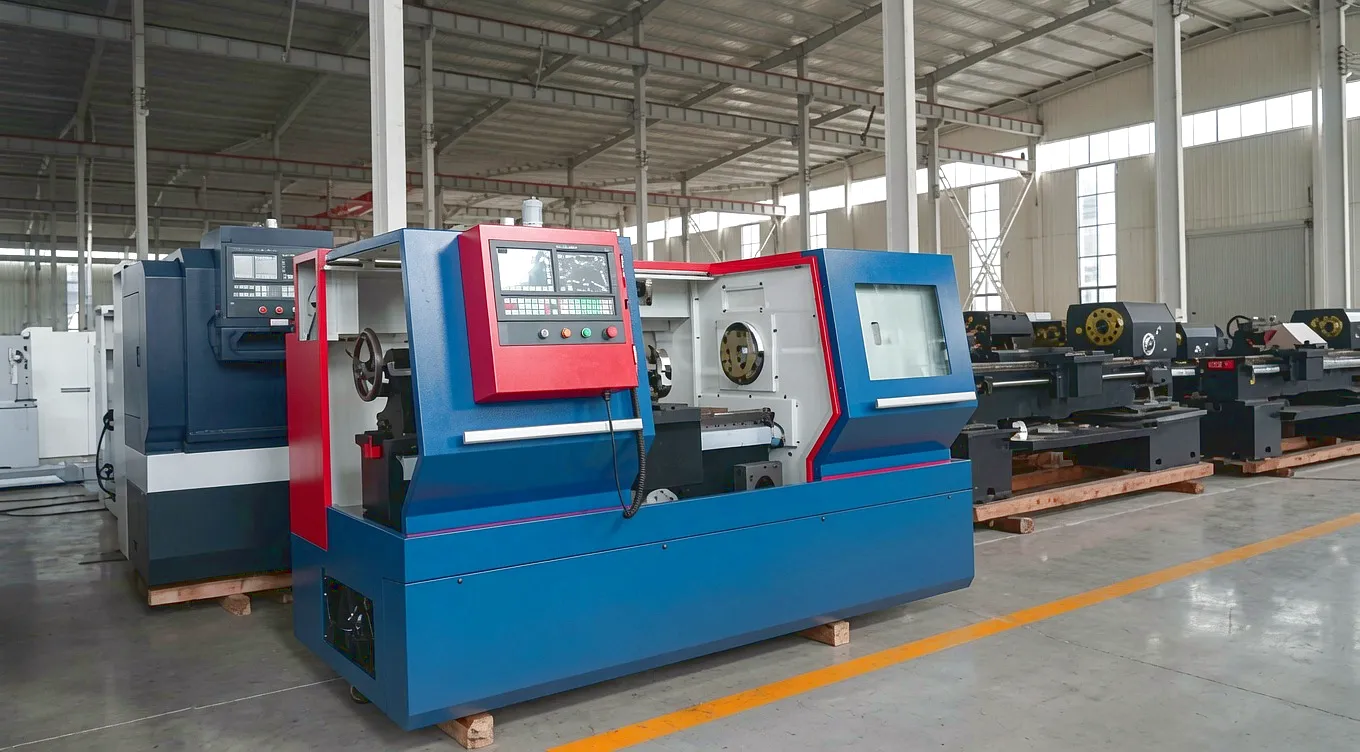
Robotics & Automation Joints
Compact worm gear shafts in robot arm joints deliver high torque-to-weight ratio for collaborative robotics integration
Beyond machine tools and manufacturing, worm gear shafts are integral to water treatment infrastructure across the UK — operating sluice gate actuators, scraper arm drives in primary settlement tanks, and the aeration diffuser adjustment mechanisms in biological treatment stages. Thames Water, Severn Trent, and Scottish Water all operate large inventories of worm-driven actuators in waterworks ranging from Victorian-era treatment works in London to modern membrane bioreactor plants in the Scottish Borders. The combination of high reduction ratio in a compact sealed housing, resistance to the humid, chemically active environment, and straightforward maintenance access makes the worm gear shaft a preferred actuator drive technology across the UK water industry.
Ever Power: Precision Manufacturing & Custom Worm Gear Shaft Solutions
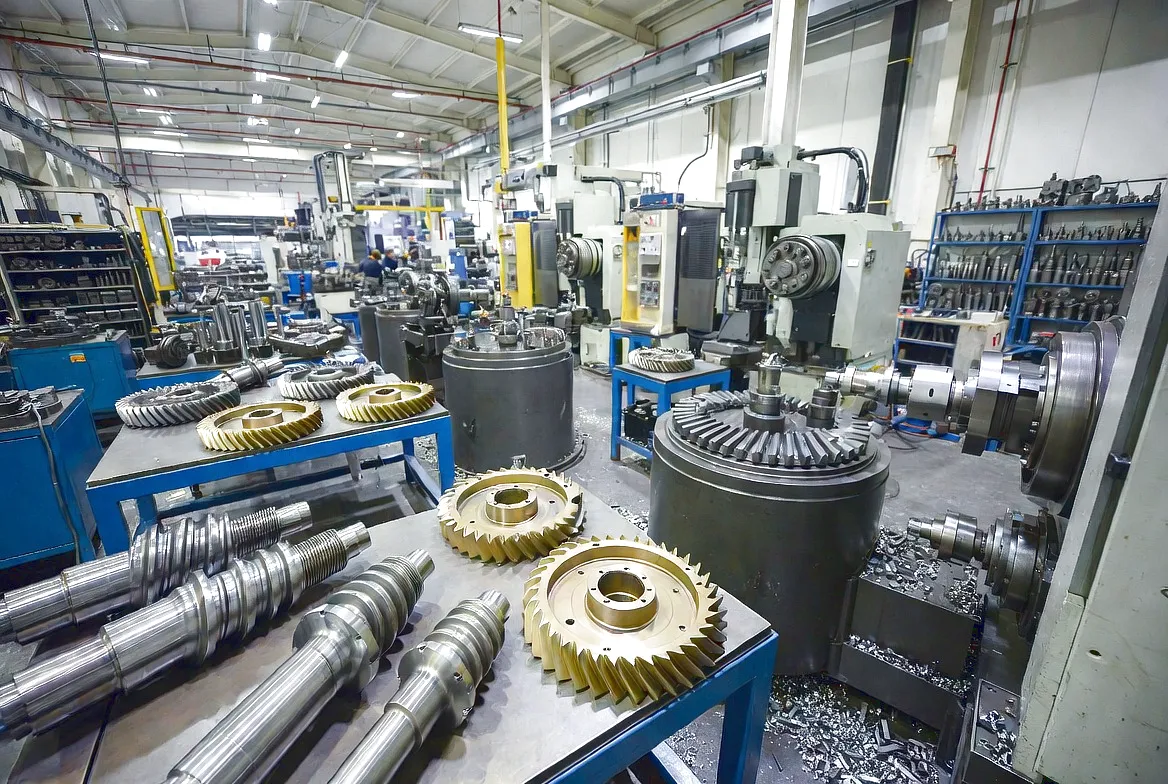
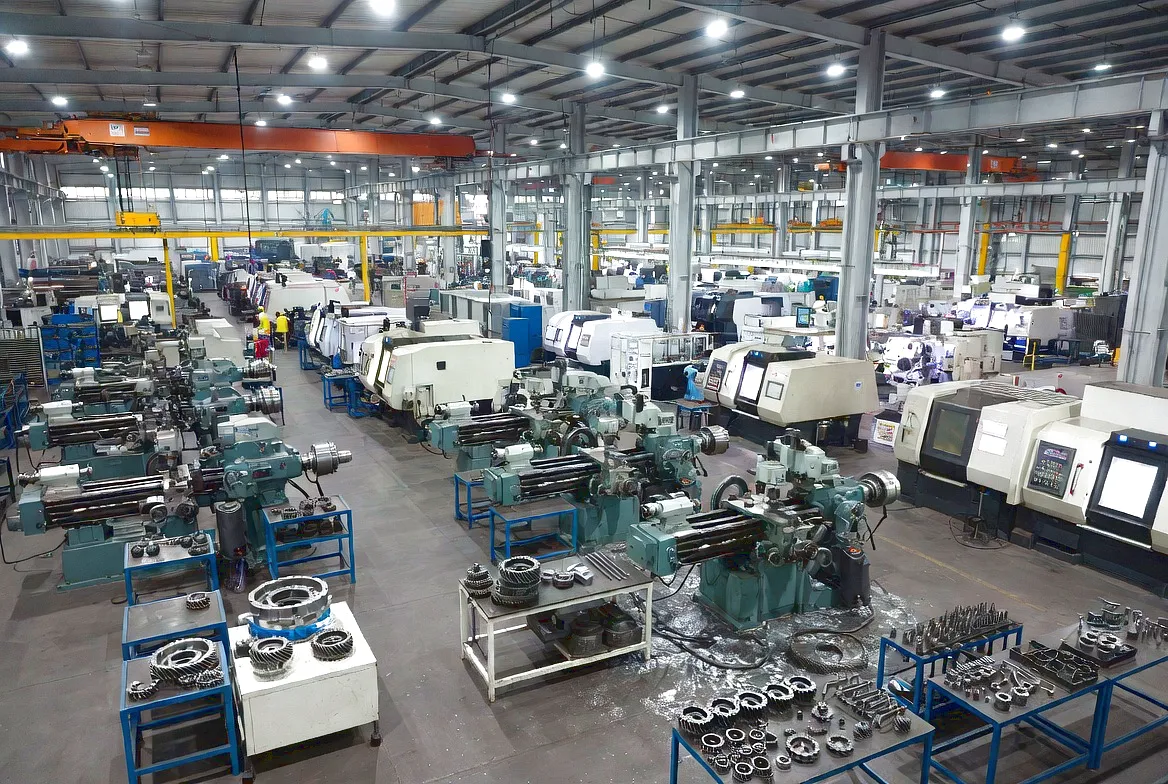
Ever Power has built its reputation in the precision transmission component sector through a manufacturing philosophy that places geometric accuracy, metallurgical integrity, and application-specific customisation at the centre of every worm gear shaft produced. Our facility operates a dedicated worm gear shaft production line equipped with CNC worm thread grinding machines capable of achieving thread lead errors below 5 µm per 300 mm and surface finishes of Ra 0.2 µm on the thread flanks — the geometric foundation for arc-second-class indexing accuracy in CNC machine tool applications. Thread grinding is performed using multi-start CBN (cubic boron nitride) wheels, which maintain profile accuracy across longer production runs than conventional corundum wheels, ensuring consistent quality from the first to the last unit in a batch. Every worm gear shaft undergoes CMM (coordinate measuring machine) inspection for thread lead accuracy, pitch diameter, thread profile form error, and cylindricity of the journal diameters, with full measurement reports issued as standard on all export shipments to UK customers.
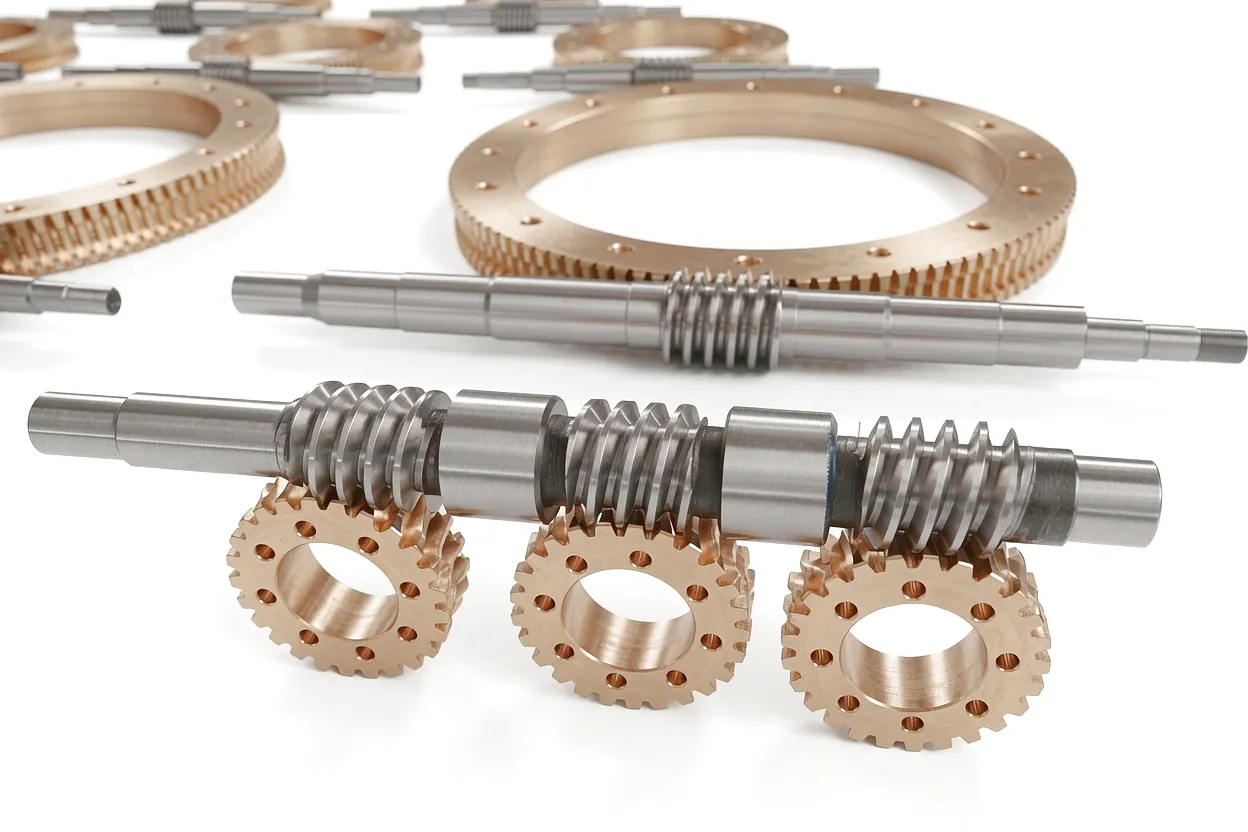
The customisation capabilities available through Ever Power span the complete technical scope of worm gear shaft engineering. We routinely develop dual-lead worm gear shafts for CNC rotary table OEMs, with left and right flank leads specified to achieve target backlash elimination over a defined service life, working backwards from the customer’s required table life in indexing cycles. Multi-start thread configurations with between one and six starts, module values from 1 to 25, and shaft diameters from 15 mm to 350 mm are all within our standard production envelope. For UK defence and aerospace customers requiring traceability to AS9100 Rev D or NADCAP Heat Treatment specifications, Ever Power maintains full material certification chains from mill certificate to final inspection record, with first-article inspection (FAI) documentation available to PPAP Level 3 equivalent on demand. Hollow-bore worm gear shaft variants, flanged shaft ends, integrated encoder stub shafts, and keyway-plus-circlip retention features are all available as standard custom options without engineering surcharge for volumes above 10 units.
Ready to specify your worm gear shaft? Contact Ever Power for a custom quotation.
Our engineering team responds within one working day to UK enquiries. Drawings, samples, and CMM reports available on request.
Ra 0.2
µm Thread Finish
5 µm
Max Lead Error / 300 mm
15–350
mm Shaft Diameter Range
1–6
Thread Starts Available
1 Day
UK Quote Response Time
Customer Success Story: Sheffield Precision Engineering, Five-Axis Rotary Table Refurbishment
Case Study | Sheffield, South Yorkshire | Aerospace Sub-Contract Machining
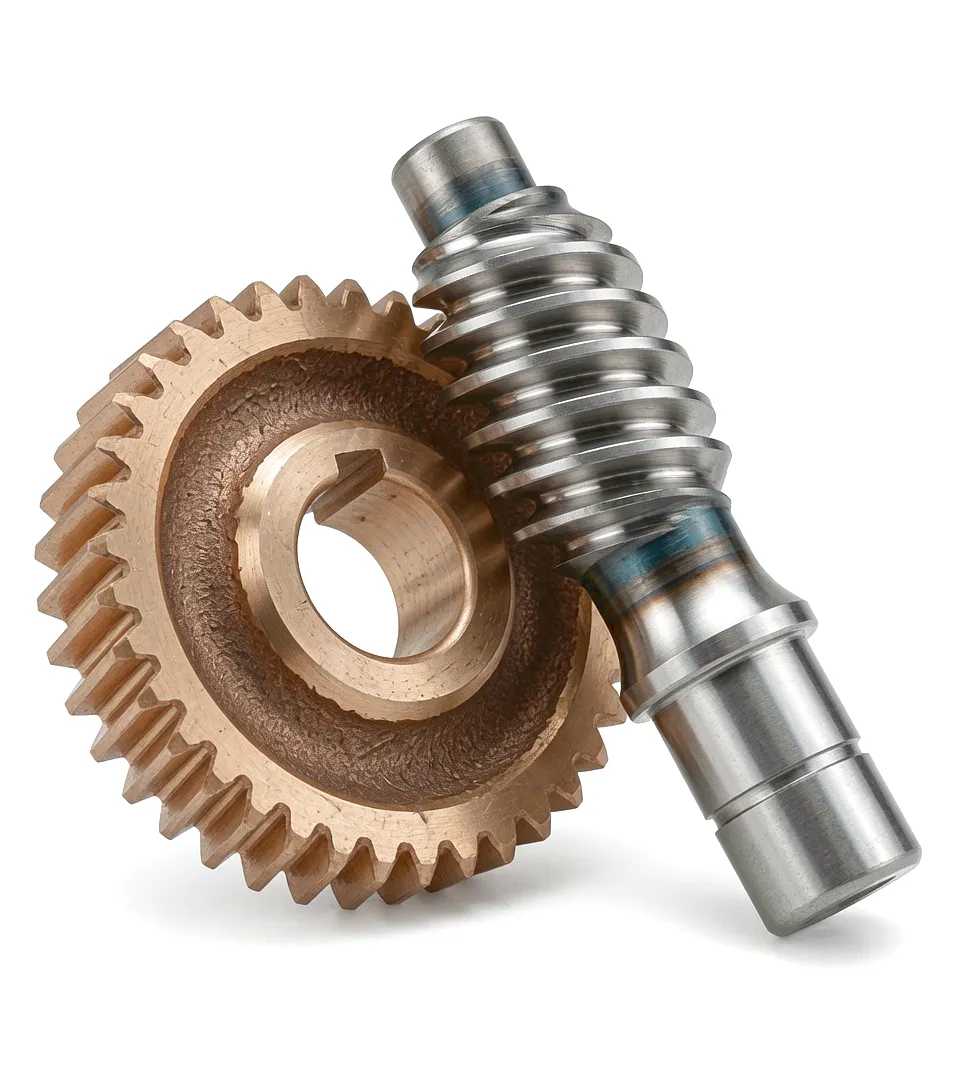 Meridian Precision Components Ltd, an established aerospace sub-contract machining business operating out of a 4,500 m² facility near the Meadowhall interchange in Sheffield, runs a cell of six five-axis machining centres producing structural titanium and aluminium components for two Tier 1 aerospace primes. One of their older HMC platforms — a Japanese-built horizontal machining centre installed in 2009 — began exhibiting angular positioning errors exceeding 25 arc-seconds on its fourth-axis rotary table during a routine calibration audit, placing it outside the process capability limits required for the customer’s AS9100-controlled inspection plan. The worn worm gear shaft within the rotary table’s indexing drive was identified as the root cause after the table housing was opened: the original shaft showed measurable thread flank wear across approximately 60% of its active length, evidenced by localised bronze transfer from the mating worm wheel onto the shaft flanks.
Meridian’s engineering team contacted Ever Power following a recommendation from their machine tool service agent. The original albero a vite senza fine drawing was supplied, and Ever Power’s technical team identified it as a dual-lead ZI profile shaft, module 2.5, 60:1 ratio, with a nominal 80 mm shaft diameter and 1,000 mm overall length, ground to an original Ra 0.4 µm thread finish. Ever Power produced a replacement worm gear shaft in 20CrMnTi carburised and ground steel, with the thread flanks ground to Ra 0.2 µm — an improvement on the original specification — and dual-lead geometry allowing backlash elimination. A full CMM inspection report covering thread lead error across the full 750 mm active thread length, thread profile form, and journal diameter roundness was provided with the shipment. Delivery to Sheffield was completed within 18 working days of drawing approval, including surface inspection and measurement report, via overnight freight from our distribution partner in the East Midlands.
After installation and axial adjustment to eliminate backlash, Meridian’s calibration engineer measured the refurbished table at ±3.8 arc-seconds across the full 360° rotation — comfortably within their 10 arc-second process requirement and a significant improvement over the original factory-new specification. Machine uptime was restored, and Meridian subsequently ordered replacement worm gear shafts for two further HMC rotary tables in their cell, specifying Ever Power as the preferred supplier for their ongoing rotary table maintenance programme.
Customer Reviews
“Indexing performance exceeded our original spec.”
The replacement worm gear shaft from Ever Power achieved ±3.8 arc-seconds on our HMC rotary table — better than the machine’s original calibration from 2009. The CMM report was thorough, and the dual-lead geometry made backlash elimination straightforward during installation. We’ve now standardised Ever Power as our rotary table worm shaft supplier across all our CNC cells.
— James Hartley, Engineering Manager, Meridian Precision Components Ltd, Sheffield
“Custom stainless shaft delivered to exactly our specification.”
We specified a 316L stainless worm gear shaft for our washdown conveyor system, and Ever Power’s technical team confirmed material certificates and provided a thread profile report without being asked. Delivery to our Birmingham facility took sixteen working days, which kept our production line installation on schedule. The shaft has now run for eight months without any sign of corrosion or wear at the thread flanks.
— Susan Patel, Procurement Lead, Midlands Food Automation Ltd, Birmingham
“Responsive technical team, competitive price, no surprises.”
We sourced dual-lead worm gear shafts for a batch of twelve rotary tables we were building for a UK aerospace Tier 1. Ever Power supplied detailed drawings review comments within 24 hours of receipt, highlighted two dimensional tolerancing issues with our original DXF that would have caused assembly interference, and gave us a firm price by return. The AS9100 traceability paperwork was complete and required no chasing. An honest, technically capable supplier at a very competitive price point for the quality level delivered.
— Tom Blackwell, Design Engineer, Nexus Mechatronics Ltd, Derby
Frequently Asked Questions About Worm Gear Shafts
How much does it cost to get a custom worm gear shaft made for a CNC rotary table here in the UK?
Custom worm gear shaft pricing depends on several variables including shaft diameter, overall length, thread module, number of starts, material grade, heat treatment specification, and required surface finish. For a typical CNC rotary table replacement worm gear shaft (approximately 60–120 mm shaft diameter, dual-lead, ground to Ra 0.4 µm) sourced through Ever Power, indicative unit prices for small batches of 1–5 pieces generally fall in the range of £300 to £1,200 per shaft, depending on material and tolerance class. Larger batches reduce unit cost significantly. Ever Power provides formal quotes within one working day for UK enquiries — send your drawing or specification to [email protected] for a no-obligation price.
What type of worm gear shaft material is best for a food processing plant in Birmingham where daily washdown is required?
For washdown environments in food processing facilities, 316L austenitic stainless steel is the material of choice for the worm gear shaft body. Grade 316L offers superior chloride corrosion resistance compared to 304 (important where cleaning chemicals contain chlorinated compounds), and carries an acceptable EHEDG compliance pathway when combined with appropriate sealing. The worm gear shaft’s journal diameters and thread flanks should be finished to Ra 0.8 µm maximum to reduce bacterial adhesion sites. For load-bearing requirements typical of conveyor and packaging drives, 316L worm gear shafts are manufactured to core hardness of approximately HB 260–310 after solution annealing, and the thread flanks are nitrided in some high-wear applications to improve surface hardness while retaining bulk corrosion resistance.
Which UK supplier can provide dual-lead worm gear shafts with full CMM inspection reports and AS9100 traceability for aerospace applications?
Ever Power supplies dual-lead worm gear shafts with full CMM inspection reports covering thread lead error, pitch diameter, thread profile form, and journal cylindricity as standard. For aerospace applications requiring AS9100 Rev D traceability, Ever Power provides full material certification chains from mill certificate to final inspection record, with first-article inspection documentation available to PPAP Level 3 equivalent. Our shafts have been specified by UK aerospace sub-contractors in Sheffield, Derby, and Filton, and we maintain English-language documentation throughout to simplify the approval process for UK procurement teams. Contact [email protected] with your drawing and quality plan requirements.
How does a dual-lead worm gear shaft eliminate backlash in CNC machine tool rotary tables, and what adjustment procedure is involved?
A dual-lead worm gear shaft carries left and right thread flanks with slightly different lead values — for example, the right flank might have a lead of 10.00 mm while the left flank has 10.15 mm per thread start. The difference in lead means the tooth space between flanks changes progressively along the shaft length. When the worm gear shaft is shifted axially (typically using a fine-pitch adjusting nut or shim pack at the shaft end), the effective mesh point moves to a position where the gap between worm thread flanks and worm wheel teeth narrows to zero, eliminating backlash. Field adjustment involves loosening the axial constraint, shifting the shaft until a dial indicator on the worm wheel shows zero rotational play under a light reverse torque test, then re-securing the axial position. This can be repeated multiple times as the mesh wears, without replacing the shaft.
Where can I get a fast quote for a replacement worm gear shaft for a Sheffield steel plant’s conveyor drive, and what is the typical lead time?
For replacement worm gear shafts serving conveyor drives in Sheffield’s steel processing operations, Ever Power offers a one-working-day quote turnaround upon receipt of drawing or sample dimensions. Standard delivery lead times for custom-manufactured worm gear shafts in alloy steel (42CrMo4 or 20CrMnTi) with heat treatment and thread grinding run 15–22 working days from drawing approval, delivered to South Yorkshire via overnight freight. For urgent breakdown recovery situations, please indicate this in your enquiry to [email protected] and our team will advise on expedited scheduling. Where a sample shaft is available, dimensional reverse engineering from physical sample is offered as a service for obsolete or undocumented designs.
What is the typical price range for a standard worm gear shaft reducer supplied to a UK automotive components manufacturer in the West Midlands?
Worm gear shaft reducers for standard industrial conveyor and transfer applications in automotive manufacturing environments typically range from £150 to £800 for inline reducer units (worm gear shaft plus housing, bearings, oil seals, and output flange) at small batch volumes. CNC-quality worm gear shaft assemblies for rotary table or indexing applications command premium pricing due to grinding accuracy and measurement certification requirements. Volume agreements for regular supplies to West Midlands automotive Tier 1 and Tier 2 manufacturers often result in price reductions of 15–30% versus spot order pricing. Request a volume pricing schedule from [email protected] with your estimated annual demand.
Specify Your Worm Gear Shaft — Ever Power Delivers Globally to UK Industry
Custom ratios, materials, accuracy grades, and certifications. From Sheffield aerospace to Birmingham food automation — Ever Power’s worm gear shaft manufacturing supports the full breadth of UK industrial demand.
edit by gzl | © Ever Power Transmission Components | Worm Gear Shaft Specialists | UK Market & Global Supply