Worm Gear Shaft for CNC Machine Tool Rotary Tables & Indexing Systems
How high-precision worm gear shaft assemblies drive fourth-axis and fifth-axis indexing in VMC, HMC, and CNC turning applications — engineering insight from Ever Power.
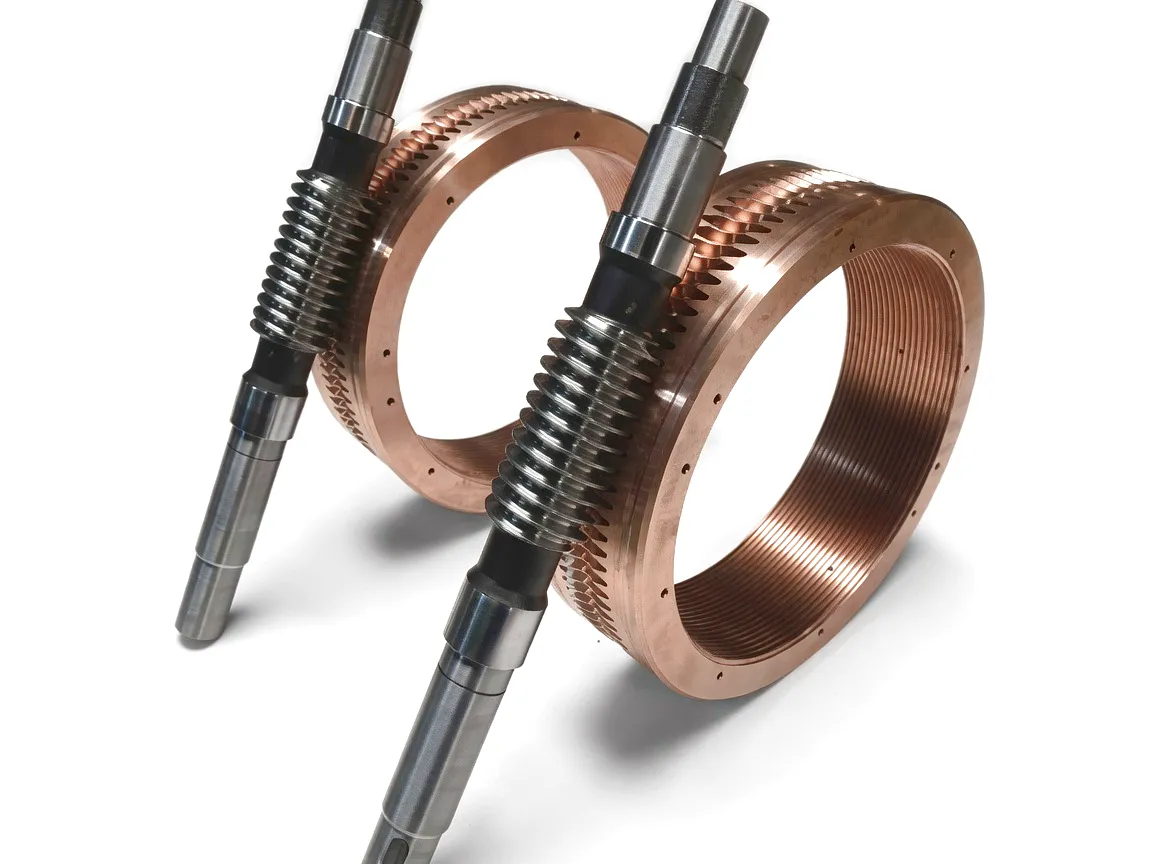 In the world of precision CNC machining, few mechanical components carry as much responsibility as the worm gear shaft. Whether you are running a vertical machining centre (VMC) in Birmingham’s automotive supply chain, or operating a horizontal machining centre (HMC) in a Sheffield aerospace facility, the rotary table at the heart of your fourth or fifth axis relies on this critical transmission element to deliver repeatability within fractions of an arcsecond. The worm gear shaft translates the high-speed, low-torque output of a servo motor into the slow, powerful, and precise angular motion that positions a workpiece — and holds it there under cutting forces — without flinching.
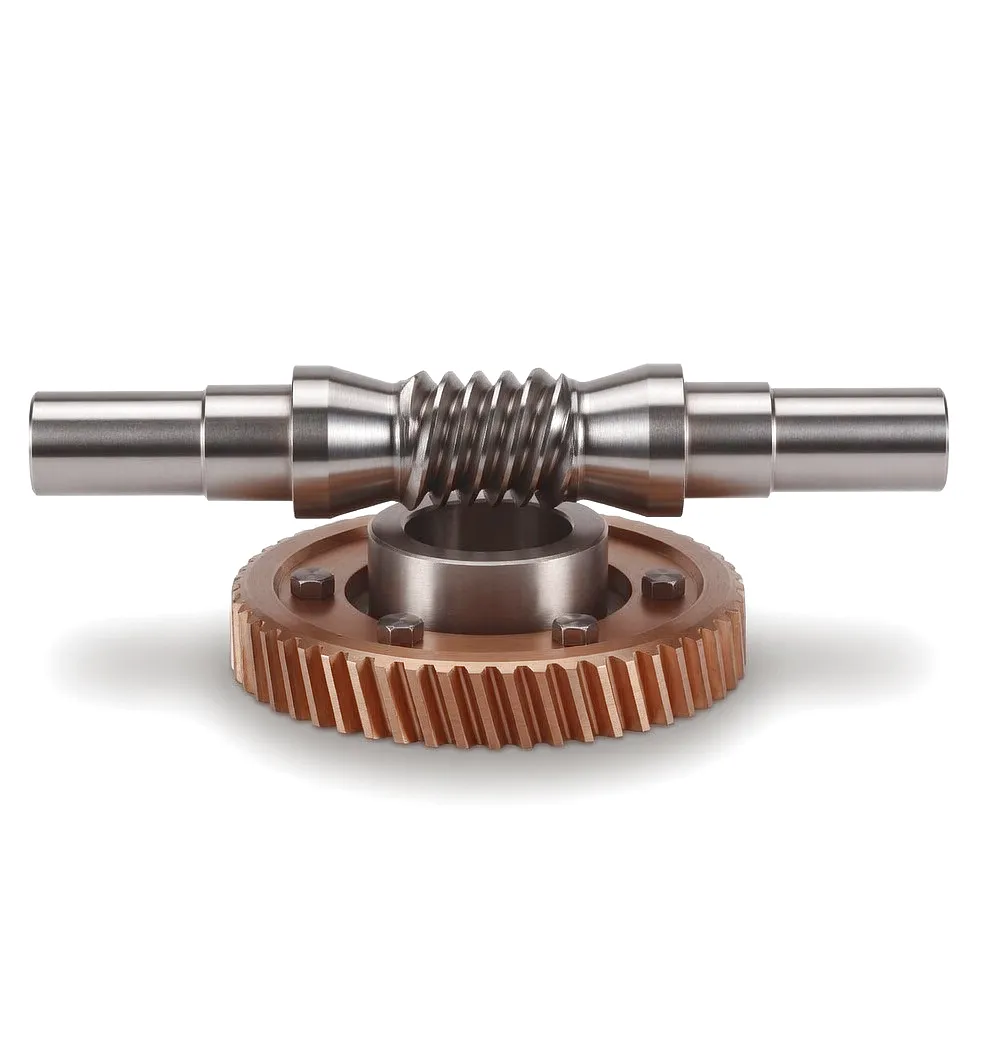
The principle is elegantly straightforward: a helical thread machined onto a hardened steel shaft — the worm — meshes with a mating bronze or cast-iron wheel. Because the thread approaches the wheel teeth at a steep angle, enormous gear reductions are possible in a single stage, typically ranging from 40:1 to 90:1 in CNC indexing duty. This same geometry, where the worm drives the wheel but the wheel cannot easily back-drive the worm, delivers the self-locking behaviour that machine tool designers prize above almost everything else: once the servo motor stops, the rotary table stays locked in position with no hydraulic clamp or electromagnetic brake required, dramatically reducing the complexity and cost of the clamping architecture.
Modern CNC applications, however, demand considerably more than a simple locked wheel. The worm gear shaft must accommodate continuous bi-directional positioning cycles, suppress thermal growth during long production runs, and maintain consistent backlash performance throughout tens of millions of indexing cycles. Meeting those demands requires a marriage of precision metallurgy, optimised tooth geometry, and exacting manufacturing tolerances — topics this article explores in depth, with particular reference to the engineering practices used across the UK’s advanced manufacturing sector.
📧 Get a Quote — [email protected]
Response within 24 hours · Custom specifications welcome · UK-experienced team
How a Worm Gear Shaft Works in CNC Indexing Duty
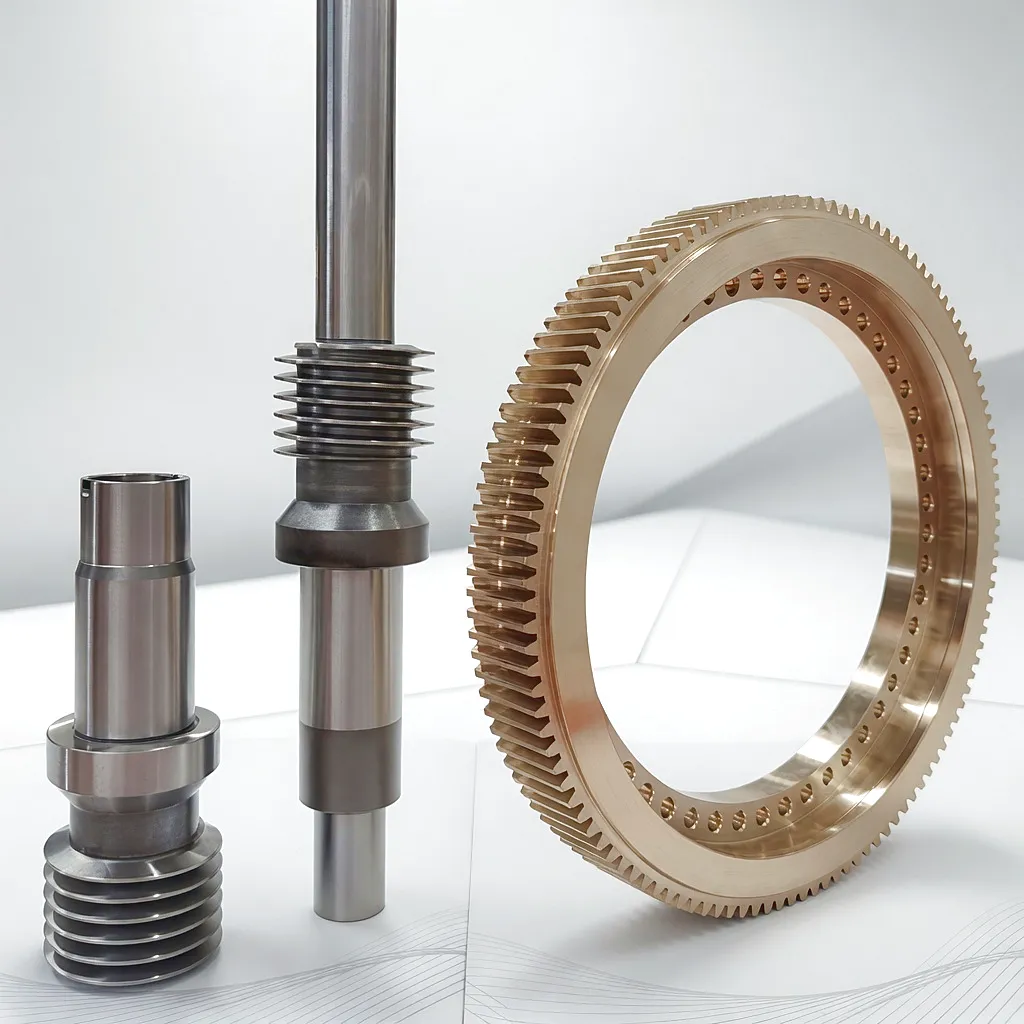 In a CNC rotary table or indexing head, the drive train begins at the servo motor output shaft, which connects via a coupling to the worm gear shaft. The worm itself is a cylindrical rod carrying one or more helical threads — called starts — machined to precise lead angle and tooth profile geometry. As the servo motor rotates, the worm thread acts like a continuously advancing rack, pushing against the inclined faces of the worm wheel teeth. Each full revolution of the worm gear shaft advances the worm wheel by exactly one tooth pitch, or by two pitches on a two-start worm. Because the worm wheel may carry 60, 72, or 90 teeth depending on the required gear ratio and angular resolution, a single revolution of the worm shaft results in 1/60th, 1/72nd, or 1/90th of a full wheel revolution — producing the high torque multiplication and fine angular resolution that CNC positioning demands.
The contact between worm and wheel is a sliding mesh rather than the rolling contact found in spur or helical gears. This sliding action, combined with the high contact ratio across multiple tooth pairs simultaneously, contributes to the smooth, vibration-free motion that high-speed machining centres need when interpolating between positions during five-axis contouring operations. It does, however, generate frictional heat, which is why worm gear shaft assemblies in continuous-duty CNC applications are designed with forced lubrication systems — typically pressure-fed gear oil or targeted mist lubrication — to manage thermal rise and film formation across the tooth contact zone.
Conventional single-lead worm gear shafts develop progressive tooth clearance — backlash — as the contacting surfaces wear. In a CNC indexing environment, even two or three arcminutes of backlash translate to visible positional errors and scrapped workpieces. The solution adopted by precision machine tool builders is the dual-lead worm gear shaft, where the left flank and right flank of the worm thread carry marginally different lead angles — typically a difference in the range of 0.2 to 0.8 degrees. By shifting the worm shaft axially along its own centreline, the engineer closes or opens the mesh clearance on both flanks simultaneously, restoring zero-backlash contact without replacing the worn gear set. This axial adjustment mechanism can be incorporated into the machine design as a simple screw-and-locknut arrangement, making field compensation quick and cost-effective for maintenance teams across the UK’s production environments.
Beyond the rotary table, the same worm gear shaft operating principle appears in the tilting head (B-axis or A-axis) of five-axis machining centres, in automatic tool changer magazine drives, and in the auxiliary systems of the machine — coolant pump transmissions, chip conveyor drives, and counterbalance mechanisms. In each of these roles, the self-locking characteristic of the worm drive is the primary reason for its selection: when the servo stops, the mechanical system holds its position without continuous electrical holding torque, which reduces servo amplifier heat dissipation and extends the service life of both the drive electronics and the motor windings.
Material Selection: What Makes a Worm Gear Shaft Last
The performance ceiling of any worm gear shaft assembly is set long before the first machining pass — it is set when the metallurgist selects the material grades. The worm and the wheel run in a tribologically demanding mesh where surface hardness, fatigue strength, thermal conductivity, and machinability must all be balanced simultaneously. UK manufacturers and global OEMs sourcing for British facilities have increasingly standardised on the following combinations.
The worm gear shaft body is typically machined from 20CrMnTi, a Chinese standard alloy closely equivalent to Germany’s 20MnCr5 and to BS EN 10084 grade 20MnCr5 used widely in UK gearbox manufacture. After rough machining, the shaft undergoes carburising to a case depth of 0.8–1.4 mm, then quenching and tempering to achieve a surface hardness of 58–62 HRC. The retained core toughness (typically 30–35 HRC in the core) ensures the shaft can absorb shock loads during tool engagement without brittle fracture. Grinding of the thread flanks to IT5 or better is carried out after heat treatment to maintain thread accuracy despite thermal distortion.
For medium-precision applications or where case-hardening furnace capacity is limited, 42CrMo4 (BS EN 10083 equivalent) through-hardened to 48–52 HRC provides a cost-effective alternative. This grade is widely available through UK steel stockholders — including Macsteel and Barrett Steel — meaning replacement blanks can be procured locally if an emergency re-manufacturing situation arises. Surface treatment with hard chrome plating or physical vapour deposition (PVD) TiN coatings can further extend wear life in demanding applications. The modulus of elasticity around 210 GPa ensures that shaft deflection under peak torque loading remains within acceptable limits for arcsecond-class positioning.
The worm wheel tooth ring in the vast majority of CNC indexing applications is cast or machined from phosphor bronze, specifically CuSn10P (equivalent to BS EN 1982 CC483K). The low coefficient of friction against hardened steel (approximately 0.06–0.10 under lubricated conditions), combined with excellent conformability as the tribological pair beds in during initial run-in, makes phosphor bronze the material of choice. Its tensile strength of around 320–380 MPa is sufficient for the tooth bending loads encountered at gear ratios of 60:1 to 90:1, where torque multiplication places considerable stress on individual wheel teeth during high-acceleration indexing cycles.
Where the wheel diameter is large — typically 300 mm or above — or where the application involves very high static holding torques with infrequent indexing (such as a heavy-duty rotary fixture table in a shipbuilding facility), centrifugal-cast nodular iron (BS EN 1563, grade EN-GJS-600-3) offers a significantly more economical wheel body while still providing the tooth strength required. A bronze tooth-ring insert can be shrink-fitted onto the iron body hub to retain the favourable tribological pairing with the hardened steel worm gear shaft, giving a composite construction that is cost-efficient at scale.
Core Technical Advantages of Worm Gear Shaft Drives in CNC Applications
A single worm gear shaft stage routinely achieves reduction ratios from 5:1 to 100:1 — territory that would require two or three stages of helical or spur gearing. For CNC rotary tables, this compactness eliminates intermediate shafts, bearings, and housing bores, reducing the inertia reflected back to the servo motor and improving dynamic response during acceleration-deceleration indexing cycles. The reduced component count also means fewer potential failure points, which directly translates to higher machine uptime — a commercially critical metric for UK automotive and aerospace production facilities running 24/7 shift patterns.
When the lead angle of the worm thread is smaller than the arctangent of the coefficient of friction between the mesh surfaces — typically below about 5.7 degrees for common bronze-on-steel contact — the drive becomes irreversible. The worm gear shaft can rotate the wheel, but the wheel cannot back-drive the worm. This self-locking property means a rotary table armed with a worm gear shaft needs no external clamping during milling or drilling: the cutting forces acting through the workpiece are resisted entirely by the gear mesh geometry. This removes the need for hydraulic clamp valves, accumulators, and associated sealing systems, simplifying the machine tool design and reducing energy consumption during the clamping phase of each cycle.
Dual-lead worm gear shaft technology, combined with precision ground tooth flanks and close-tolerance journal bearings, allows modern CNC rotary tables to achieve positioning accuracy in the range of ±3 to ±5 arcseconds and repeatability of ±1 to ±2 arcseconds. These figures are broadly equivalent to the best ball-screw linear axes in terms of positioning uncertainty relative to the angular equivalent of a typical CNC linear step size, making the worm gear shaft a viable alternative to direct-drive torque motors in many medium-load applications — at a fraction of the cost and with the mechanical advantage of inherent self-locking behaviour.
The helical worm thread engages the wheel teeth progressively across a high contact ratio — often three to five teeth in simultaneous mesh — spreading the load over a wider contact area and eliminating the impulsive loading cycles that cause audible noise and vibration in spur gears. For UK medical device manufacturers and electronics assembly facilities where low vibration is essential to workpiece dimensional integrity (particularly when machining thin-walled titanium implant components), the smooth motion profile of a well-designed worm gear shaft drive is a significant differentiating advantage over alternative transmission technologies.
A correctly specified and lubricated worm gear shaft assembly in a CNC rotary table — using ISO VG 220 to VG 460 gear oil, changed at recommended 2,000-hour intervals — routinely achieves 20,000 to 30,000 operating hours before the first tooth-flank restoration is required. In the context of a three-shift manufacturing environment running 6,000 hours per year, this represents five or more years of front-line production service. For procurement managers in UK engineering companies — particularly those operating under BS EN ISO 9001:2015 quality management systems that require documented maintenance intervals — this predictable service life is an important factor in total cost of ownership calculations.
The worm gear shaft and wheel axes are naturally perpendicular, making the assembly ideally suited to the compact right-angle drive configurations required in CNC rotary tables, trunnion-style five-axis units, and indexing heads. The axis offset between worm and wheel also provides clearance for bearing arrangements and oil seals that would be geometrically difficult to accommodate in a bevel or hypoid configuration. Machine tool designers building compact, high-rigidity five-axis heads for aerospace rib-milling operations particularly value this geometric efficiency, as it allows the tilting head mass to be minimised — directly improving dynamic performance and reducing the cutting force moment arm at the spindle.
Product Technical & Performance Specification Table
The following table covers the typical operating and dimensional parameters for Ever Power’s worm gear shaft assemblies supplied to CNC machine tool and industrial indexing applications. Custom specifications outside these ranges are available on request.
| Parameter | Standard Range | High-Precision Range | Unit / Notes |
|---|---|---|---|
| Module (m) | 1 – 10 | 0.5 – 8 | mm; per ISO 54 |
| Gear Ratio (i) | 5:1 – 100:1 | 40:1 – 90:1 | Single-stage; CNC indexing standard |
| Worm Lead Angle | 3° – 30° | 3° – 8° (self-locking zone) | degrees; lower = higher self-locking |
| Worm Shaft Surface Hardness | 48 – 52 HRC | 58 – 62 HRC | After carburising & quenching |
| Thread Flank Ra (Ground) | 0.4 – 0.8 µm | 0.1 – 0.2 µm | Surface roughness; superfinished option |
| Output Torque (Wheel) | 50 – 5,000 N·m | 200 – 3,000 N·m | Continuous rated; duty cycle dependent |
| Positioning Accuracy | +/-15 to +/-30 arcsec | +/-3 to +/-5 arcsec | Dual-lead / ground-thread version |
| Repeatability | +/-5 arcsec | +/-1 to +/-2 arcsec | Bidirectional; encoder-referenced |
| Backlash (adjustable) | 3 – 10 arcmin | 0 – 1 arcmin (dual-lead) | Post-adjustment value |
| Worm Material | 42CrMo4 / EN 19 | 20CrMnTi (case-hardened) | BS EN 10083 / 10084 equivalent |
| Wheel Material | Nodular Iron (BS EN 1563) | Phosphor Bronze CuSn10P | CC483K per BS EN 1982 |
| Input Speed (Worm) | up to 1,500 rpm | up to 3,000 rpm | With forced lubrication at upper end |
| Operating Temperature | -10°C to +80°C | -20°C to +100°C | With approved synthetic lubricant |
| Efficiency (%) | 50 – 70% | 65 – 80% | Multi-start worm at higher end |
| Centre Distance | 40 – 400 mm | 50 – 300 mm | Custom beyond range on request |
| Shaft Runout (TIR) | 0.02 – 0.05 mm | 0.003 – 0.008 mm | Total indicator reading at journal |
Industrial Application Scenarios Across the UK Manufacturing Sector
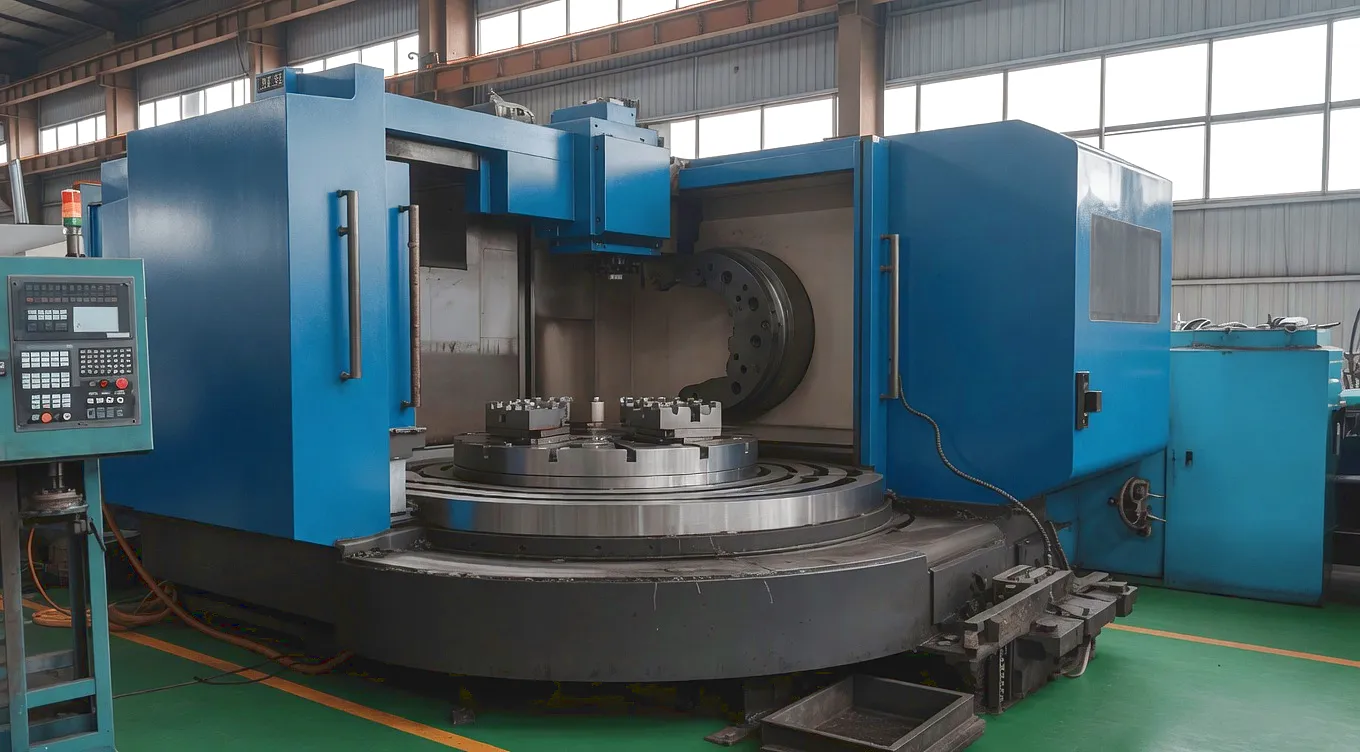
This is the most demanding and performance-critical deployment of the worm gear shaft in modern manufacturing. Vertical machining centres operating in automotive component plants throughout the West Midlands — producing cylinder heads, transmission housings, and steering knuckles — rely on fourth-axis rotary tables to index complex castings through multiple machining faces within a single clamping. The worm gear shaft drives the table through precise angular steps, typically at 90° or 45° for rectangular parts, but capable of interpolating to any angle required by the CAM programme. Positioning accuracy of ±5 arcseconds or better, combined with the mechanical self-locking property that resists cutting torques up to several thousand Newton-metres, makes this application the benchmark for worm gear shaft performance characterisation. Five-axis tilting trunnion tables used in aerospace rib-milling at facilities near Bristol similarly depend on matched worm gear shaft pairs — one for B-axis tilt and one for C-axis rotation — to achieve simultaneous five-axis contouring.
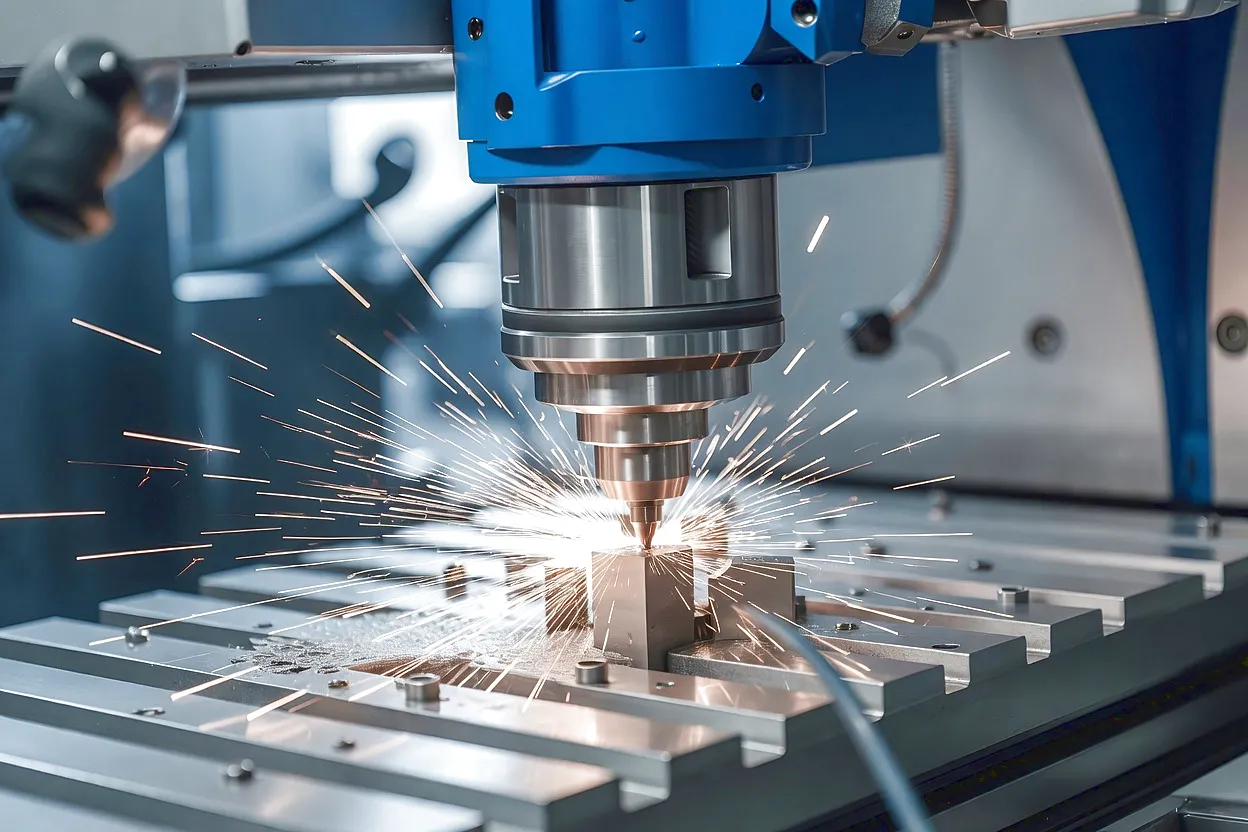
In a tilting spindle head design, the worm gear shaft drives the B-axis swing through a gear ratio commonly in the range of 60:1 to 72:1, providing the torque magnification needed to counter the gravitational moment of the spindle assembly and maintain the commanded angular position under milling forces. The head typically swings through ±90° or ±110°, enabling the spindle to machine undercut features and inclined surfaces without re-clamping the workpiece. Sheffield’s precision engineering sector — which supplies turbine blade fixtures and structural aircraft components to Rolls-Royce and MOOG — has been an early adopter of five-axis machining centres that depend on high-precision worm gear shaft drives for consistent angular positioning over multi-hour machining programmes. Hydraulic clamping rings supplement the worm self-lock in these heads during heavy cutting passes, combining the best of both technologies.
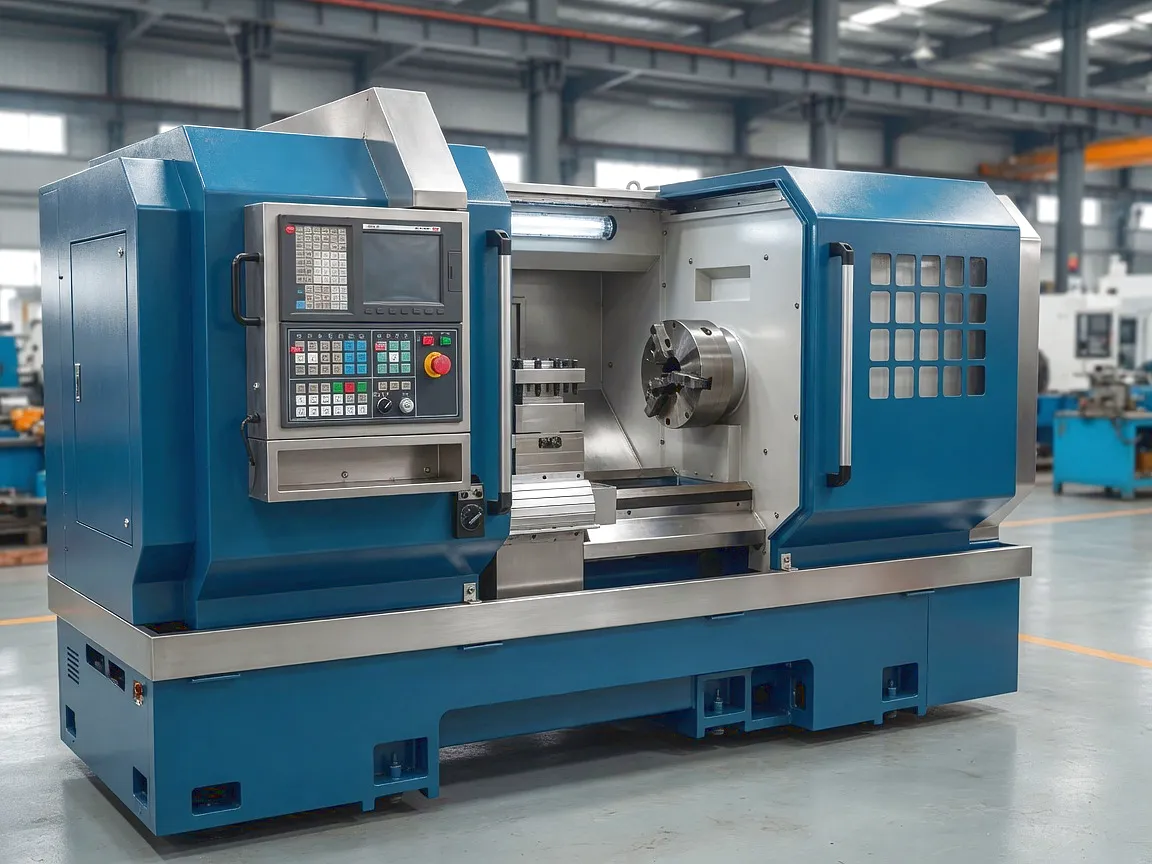
The disc or chain-type tool magazine of a modern machining centre may carry 20 to 120 tool pockets. During a tool change, the magazine must rotate rapidly to the commanded pocket position and then hold perfectly still — under the weight of the tools and the lateral forces of the arm motion — while the robotic arm performs the exchange. A worm gear shaft drives this magazine rotation with the speed control precision that servo-driven cam systems demand, and its inherent self-locking ensures that the magazine does not drift under inertia or gravitational loading after the servo positions it. This eliminates the servo holding torque that would otherwise heat the drive electronics during long tool-in-cut periods. ATC systems in the East Midlands’ precision sub-contract sector — where agile, high-mix/low-volume production requires tool changes every three to five minutes on average — benefit enormously from the reliability and low maintenance of worm-driven magazine systems.
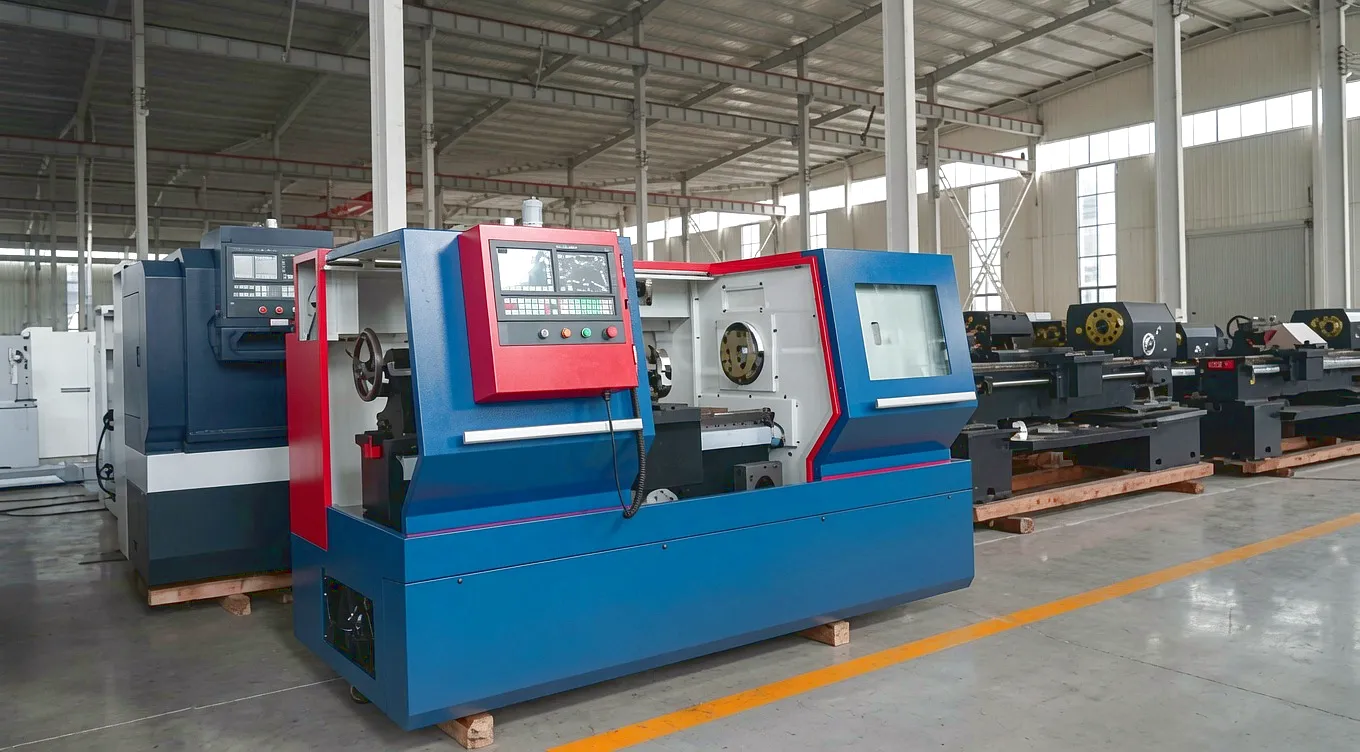
Beyond the primary motion axes, worm gear shaft reducers serve the machine tool’s auxiliary infrastructure. Chip conveyors beneath machining centres handling stainless steel, titanium, or cast iron swarf require continuous heavy-duty torque at very low output speeds — a role for which worm gear shaft drives are ideally suited due to their high reduction ratio and resistance to sudden torque spikes when large chips jam the conveyor flights. Similarly, the counterbalance mechanism on a large vertical ram (used in gantry-type machining centres at shipbuilding facilities in the north-east of England) uses a worm gear shaft drive to control the hydraulic counterbalance valve opening, while coolant pump drives use worm reducers where the pump shaft must be oriented at 90° to the motor axis to fit within the machine base envelope. All of these applications confirm that the worm gear shaft is a genuinely versatile transmission component across the full mechanical architecture of the CNC machine tool.
Ever Power: Precision Manufacturing & Custom Worm Gear Shaft Solutions
With decades of focused experience in precision worm gear shaft manufacture, Ever Power has established itself as a trusted partner for machine tool builders, system integrators, and maintenance engineering teams across the UK and globally.
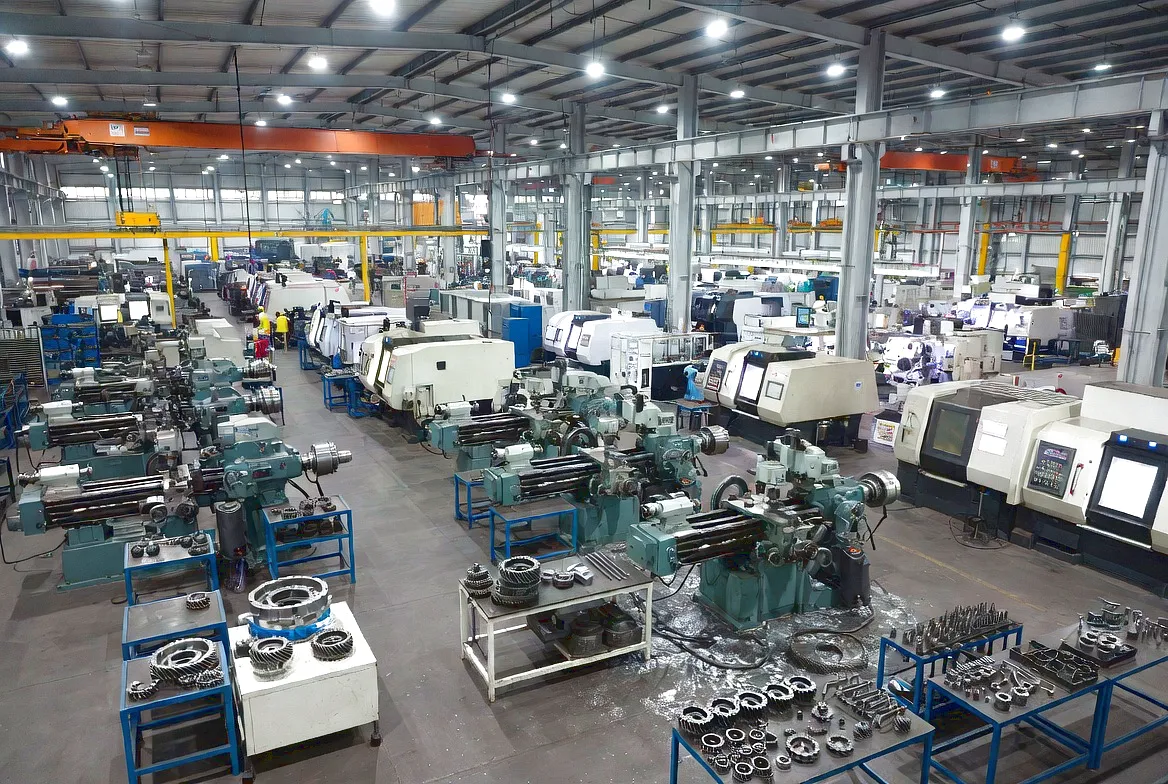
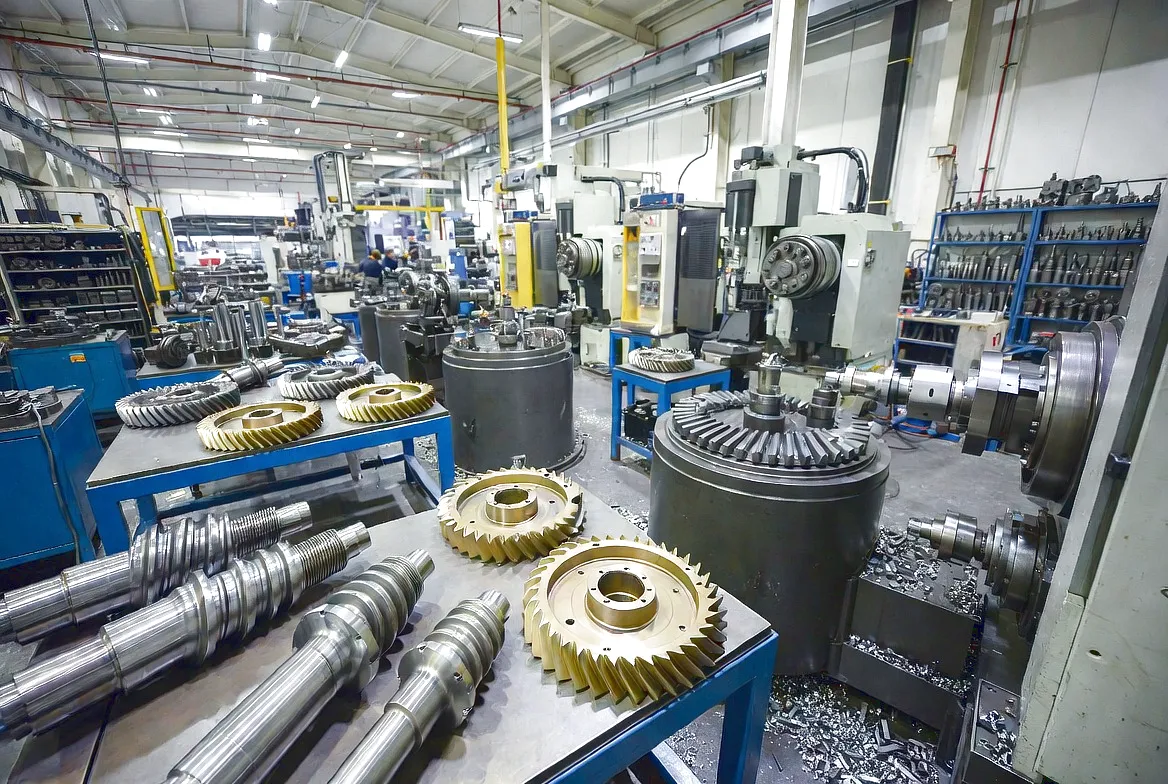
Ever Power’s manufacturing facility operates a fleet of CNC gear grinding machines capable of achieving Ra 0.1 µm on worm thread flanks — a surface finish level that approaches superfinishing and delivers the minimal friction and maximum load distribution that precision indexing applications require. Every worm gear shaft destined for high-accuracy CNC service undergoes thread profile measurement on a dedicated gear measuring centre, with full CMM documentation provided to customers upon request. This level of metrology transparency builds the manufacturing traceability that UK aerospace and defence sub-contractors need to meet their prime contractor quality assurance requirements.
Every dimension of the worm gear shaft — module, number of starts, lead angle, centre distance, shaft diameter and length, keyway geometry, and thread profile type (ZA, ZN, ZI, or ZK) — can be engineered to match a customer’s exact design requirement. Ever Power’s engineering team works directly with customers’ CAD drawings, accepting DXF, STEP, or IGES formats, and can produce prototype worm gear shaft sets within 15 working days for evaluation before committing to production volumes.
The manufacturing sequence for an Ever Power worm gear shaft begins with raw material certification and bar inspection, progresses through rough turning, carburising heat treatment, journal grinding, worm thread grinding on five-axis CNC gear grinders, and final inspection including lead error, profile error, and pitch deviation measurement — all to ISO 1328-1 grade 5 or better as standard, with grade 3 available for the most demanding CNC applications.
Ever Power holds finished goods inventory for popular modular sizes, enabling rapid dispatch of standard worm gear shaft assemblies to UK addresses via express airfreight — typically 5 to 7 business days from order confirmation. For customers operating planned maintenance programmes, blanket order agreements with call-off flexibility ensure that critical spare worm gear shaft sets are always available without tying up excessive working capital in warehouse stock.
Share your drawing or technical requirements with Ever Power’s engineering team and receive a detailed quotation with material certification and delivery schedule within 24 hours.
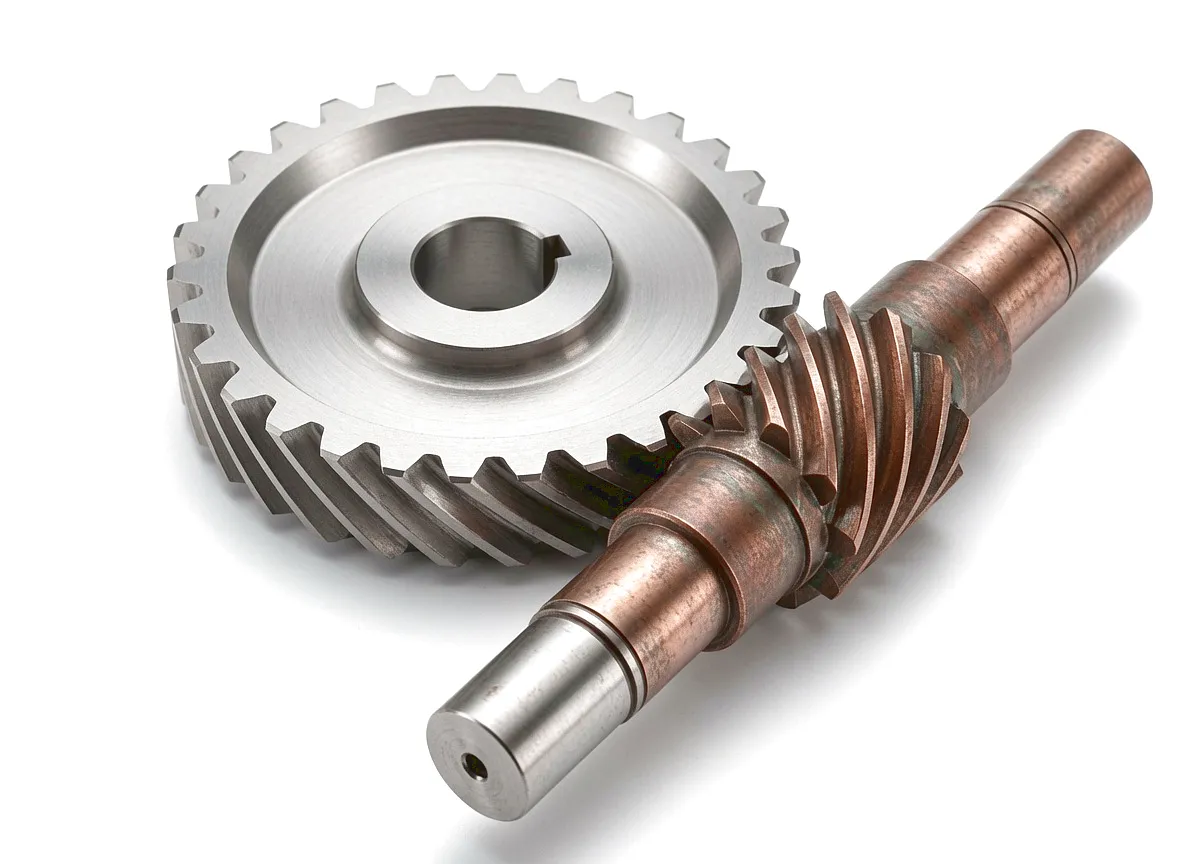
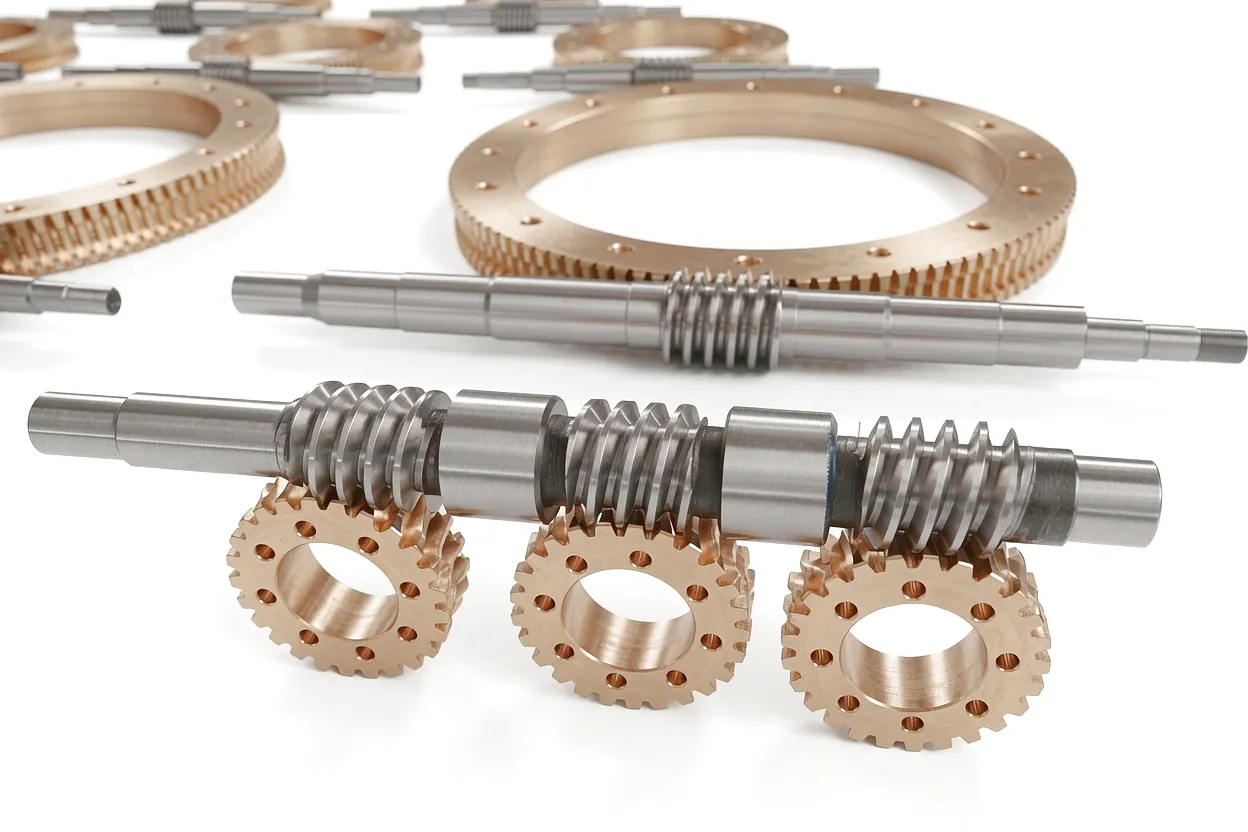
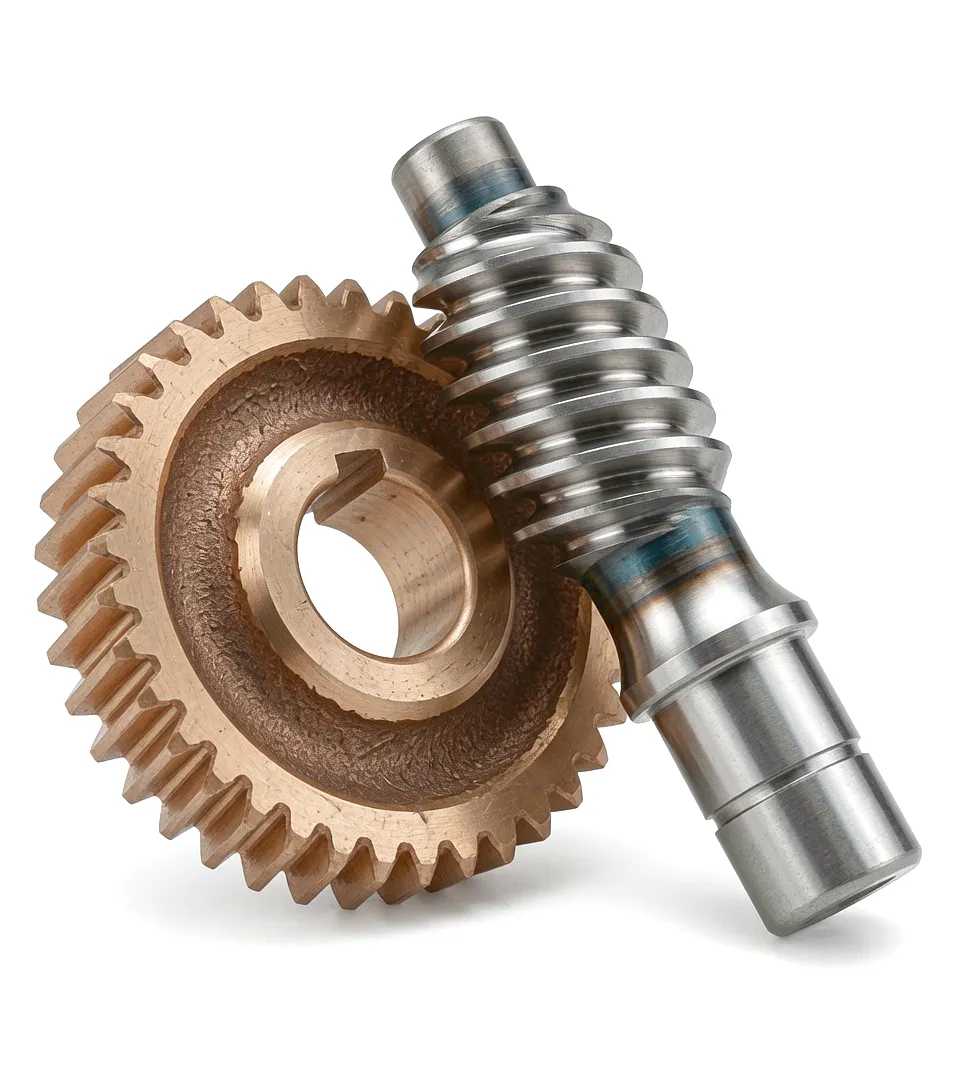
Worm Gear Shaft Product Range
Customer Success Story: Sheffield Aerospace Component Supplier
A precision sub-contract engineering firm based in Sheffield’s Advanced Manufacturing Innovation District was running a pair of horizontal machining centres with fourth-axis rotary tables to produce titanium structural brackets for commercial aircraft pylons. The rotary tables, originally equipped with generic worm gear shaft drives sourced from a local catalogue supplier, had developed progressive backlash issues after approximately 18 months of three-shift operation. By the time the problem was identified through statistical process control (SPC) analysis of the angular dimension scatter on finished brackets, four shipments had been quarantined pending dimensional re-inspection — a costly disruption on a programme with strict delivery schedules managed under AS9100D quality framework.
The maintenance engineering manager contacted Ever Power after reading technical material on dual-lead worm gear shaft technology. Following a detailed technical exchange — covering the existing table centre distance, wheel tooth count (72 teeth, giving a 72:1 ratio with the single-start worm), and the maximum cutting torque demanded by the titanium milling cycles — Ever Power’s applications team proposed a direct-replacement dual-lead worm gear shaft in 20CrMnTi case-hardened steel, ground to ISO 1328-1 grade 4, with a thread flank Ra of 0.15 µm. Two matching shaft sets were shipped from Ever Power’s stock via airfreight to Sheffield’s logistics hub in Rotherham, arriving within six business days of the order confirmation.
The maintenance team fitted the new albero a vite senza fine sets over a single weekend shutdown, used the dual-lead axial adjustment to set measured backlash to less than 0.5 arcminutes on both tables, and recommissioned the machines the following Monday morning. SPC monitoring over the subsequent three months showed the angular position scatter on titanium bracket drilling patterns had reduced from a Cpk of 0.82 (pre-replacement) to 1.68 — comfortably inside the AS9100D process capability target of 1.33. The productivity recovery — eliminating the quarantine and re-inspection programme — was estimated by the quality manager to have saved the company approximately £38,000 in direct labour and delivery penalty exposure over the following quarter. No further backlash-related positional error has been recorded in the 14 months since the Ever Power worm gear shaft sets were installed.
Customer Reviews
“The dual-lead worm gear shaft Ever Power supplied completely solved the creeping backlash problem that had been causing our rotary table to drift out of tolerance on titanium bracket angles. The thread surface finish quality is visibly superior to anything we had fitted before, and the ISO grade 4 inspection report gave our quality team everything they needed for AS9100D traceability. Lead time was also surprisingly short given the custom centre distance we specified.”
“We source worm gear shaft assemblies for our rotary table rebuild service in Birmingham. Ever Power’s ability to match legacy centre distances and wheel tooth counts from a simple dimensional drawing — and deliver ground-thread worm shafts on a two-week turnaround — has transformed our rebuild capability. Our customers are getting spindle-equivalent accuracy from their refurbished fourth-axis tables, which genuinely surprises them. We’ve recommended Ever Power to three other rebuild shops in the West Midlands already.”
“We supply custom five-axis machining centres to the North East’s offshore and energy sector, and the tilting head worm gear shaft is the single most performance-critical component in our machine. Ever Power worked through three iterations of our B-axis worm geometry with us before we settled on a final specification that met both the angular accuracy and the peak-holding-torque requirements simultaneously. The collaborative engineering process — completely unprompted from their side — saved us roughly two months of in-house development time. Service and communication throughout were excellent.”
Frequently Asked Questions
Real questions from CNC engineers, maintenance managers, and procurement teams across the UK manufacturing sector.
Custom dimensions · ISO Grade 3–6 accuracy · AS9100D documentation · Fast UK despatch
© Ever Power Worm Gear Shaft — Precision Transmission Engineering for CNC & Industrial Applications | edit by gzl