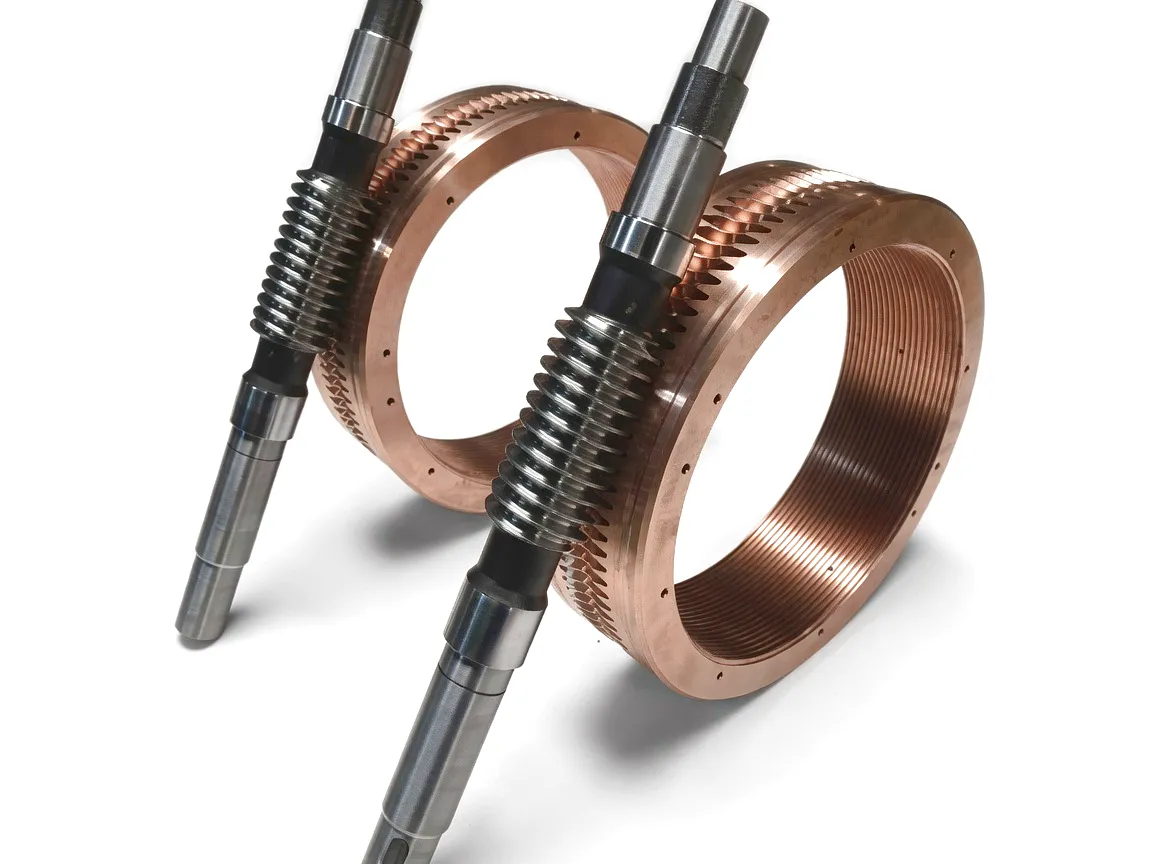
How a Worm Gear Shaft Actually Works
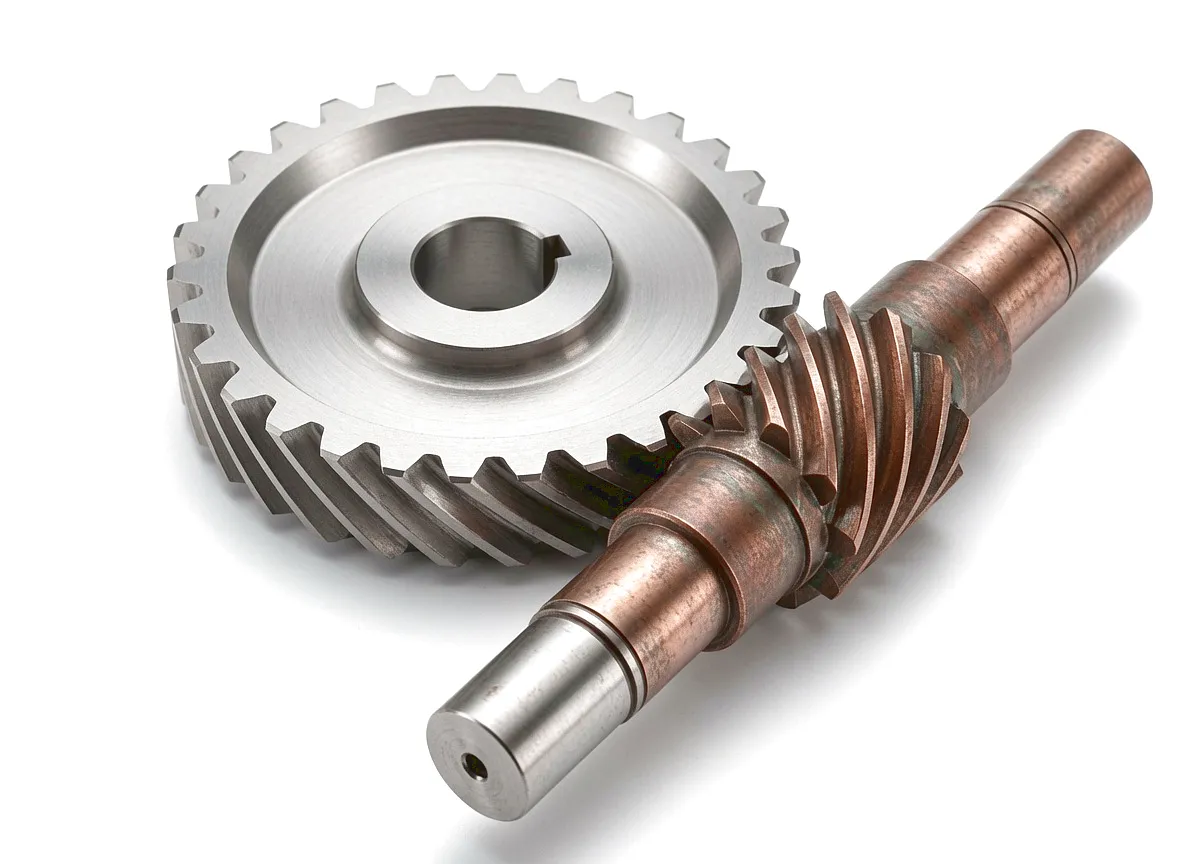
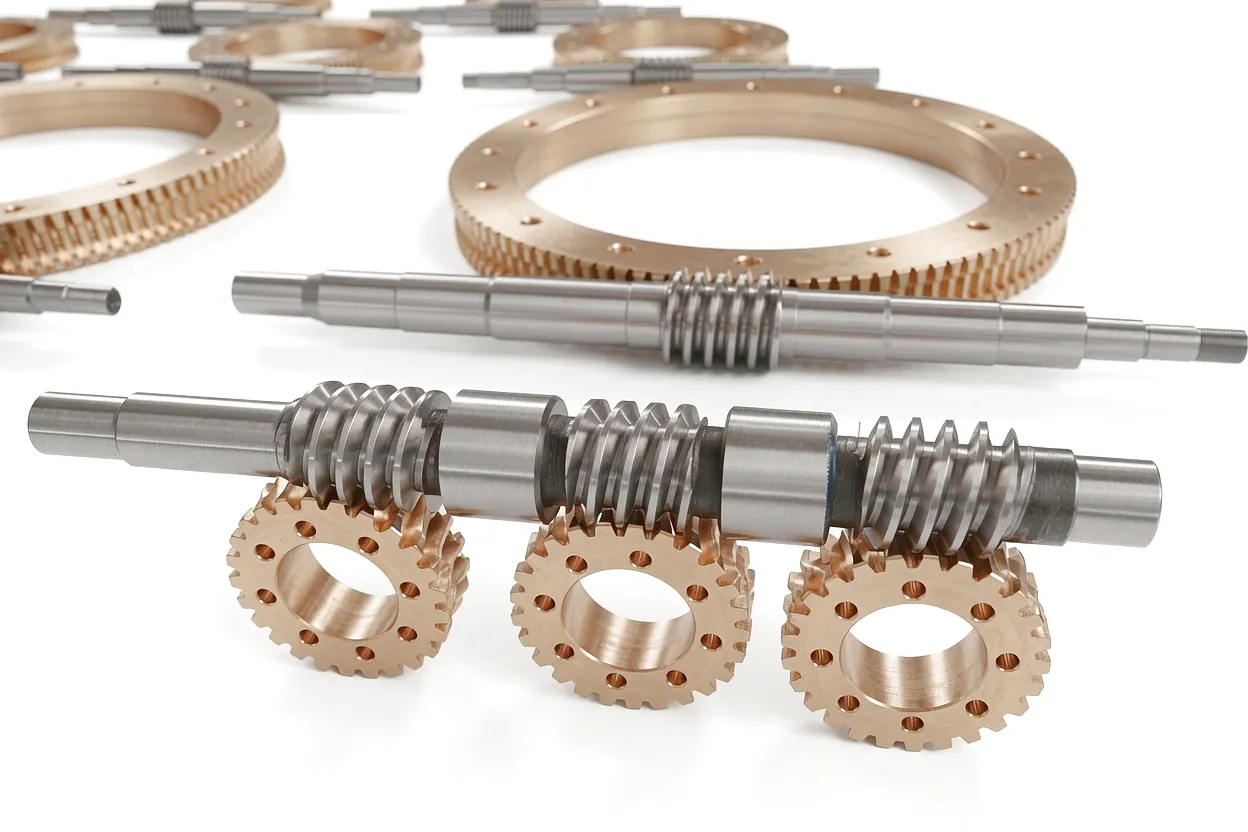
The working principle of a worm gear shaft is rooted in helical screw geometry. The shaft itself is machined with a continuous helical thread — similar in form to a precision screw — whose pitch, lead angle, and pressure angle are calculated to mesh correctly with the corresponding worm wheel teeth. When the worm shaft rotates, its thread engages successive teeth on the worm wheel, advancing it through a precise angular increment with each full shaft revolution. The number of thread starts (single-start or multi-start) directly governs the velocity ratio: a single-start worm advancing a 40-tooth wheel produces a 40:1 reduction, whereas a double-start worm with the same wheel halves that ratio to 20:1. This relationship gives designers a remarkably controllable way to specify reduction ratios from 5:1 up to 1000:1 within a single stage — far beyond what parallel-axis gear stages can offer without a multi-stage cascade.
The contact geometry is inherently a sliding action rather than a rolling one. As the worm shaft thread bears against the wheel tooth flank, there is significant relative sliding velocity along the tooth surface. This makes lubrication selection critical — the wrong viscosity or additive package accelerates bronze wheel wear and generates excess heat. In correctly specified systems, however, this sliding contact distributes load across a broad tooth face, reducing peak Hertzian stress and contributing to extremely quiet, vibration-free operation. That acoustic characteristic is particularly valued in food-processing and pharmaceutical environments, where mechanical noise can indicate contamination risk or trigger regulatory scrutiny.
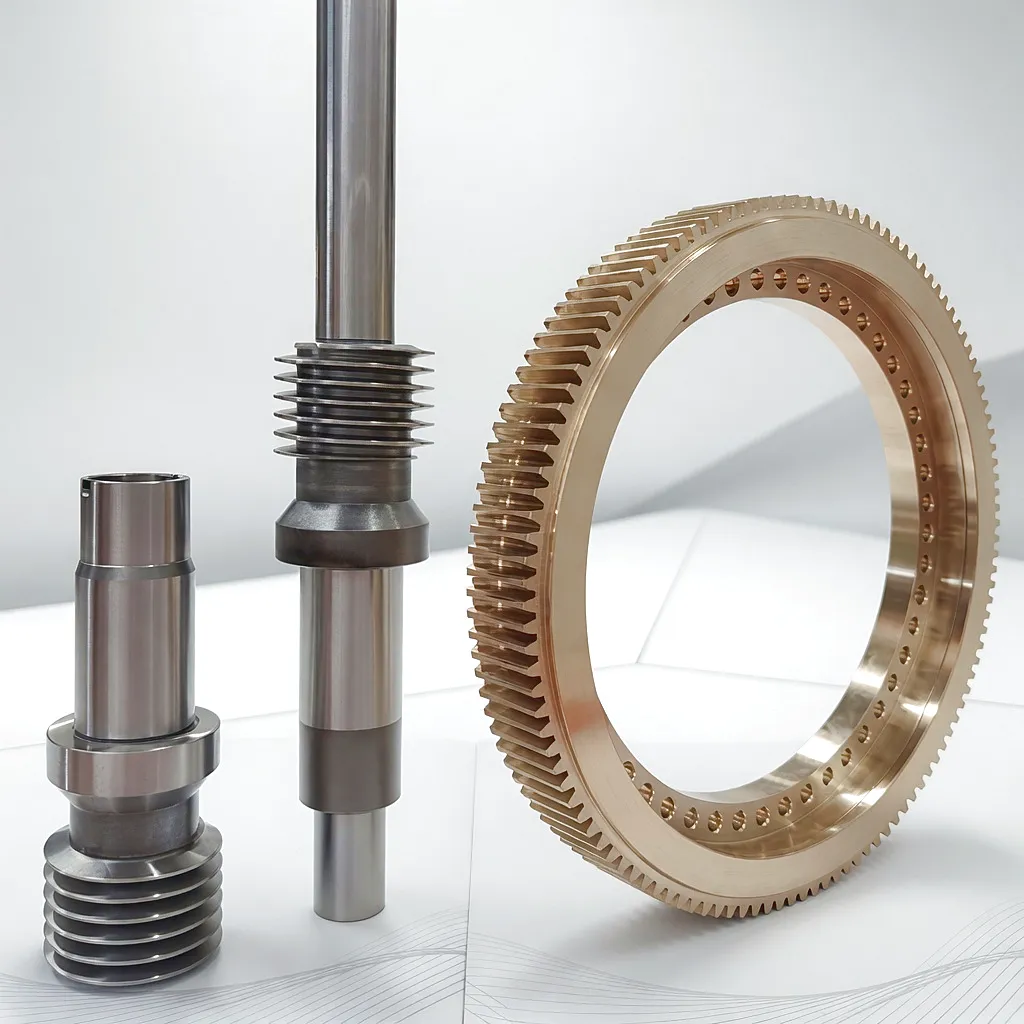
Thread geometry detail — Ever Power worm shaft
The self-locking characteristic deserves particular attention from a system-design perspective. When the lead angle of the worm shaft thread falls below approximately 6 degrees, and friction coefficients are within normal operating ranges, the gear pair becomes irreversible: the worm wheel cannot back-drive the worm shaft. This mechanical self-locking eliminates the need for external braking devices in many vertical-load applications — hoists, lifting platforms, valve actuators, and solar tracker drives all exploit this property to hold position safely under static loads without continuous power input. Designers should note, however, that reliance on self-locking for safety-critical applications requires careful verification of lead angle and surface condition, since wear or lubrication changes can shift the friction balance over time.
Engineering Insight: Self-Locking Threshold
Lead angle below ~6° + standard lubrication → irreversible self-locking. Lead angle 6°–11° → conditionally self-locking (verify application loads). Lead angle above 11° → back-drive possible; external locking required for vertical loads.
Material Science Behind the Worm Shaft
Alloy Steel Shaft
20CrMnTi, 42CrMo4, and 16MnCr5 are the workhorses of worm shaft production. Case-hardened to 58–62 HRC on the thread flanks, these steels deliver the wear resistance needed for high-duty cycles while retaining a tough, ductile core that absorbs shock loads without brittle fracture. 42CrMo4 is especially prevalent in UK industrial supply chains due to its excellent machinability and widespread availability from European mills — a practical consideration for lead times in Sheffield-based manufacturing facilities.
Phosphor Bronze Wheel
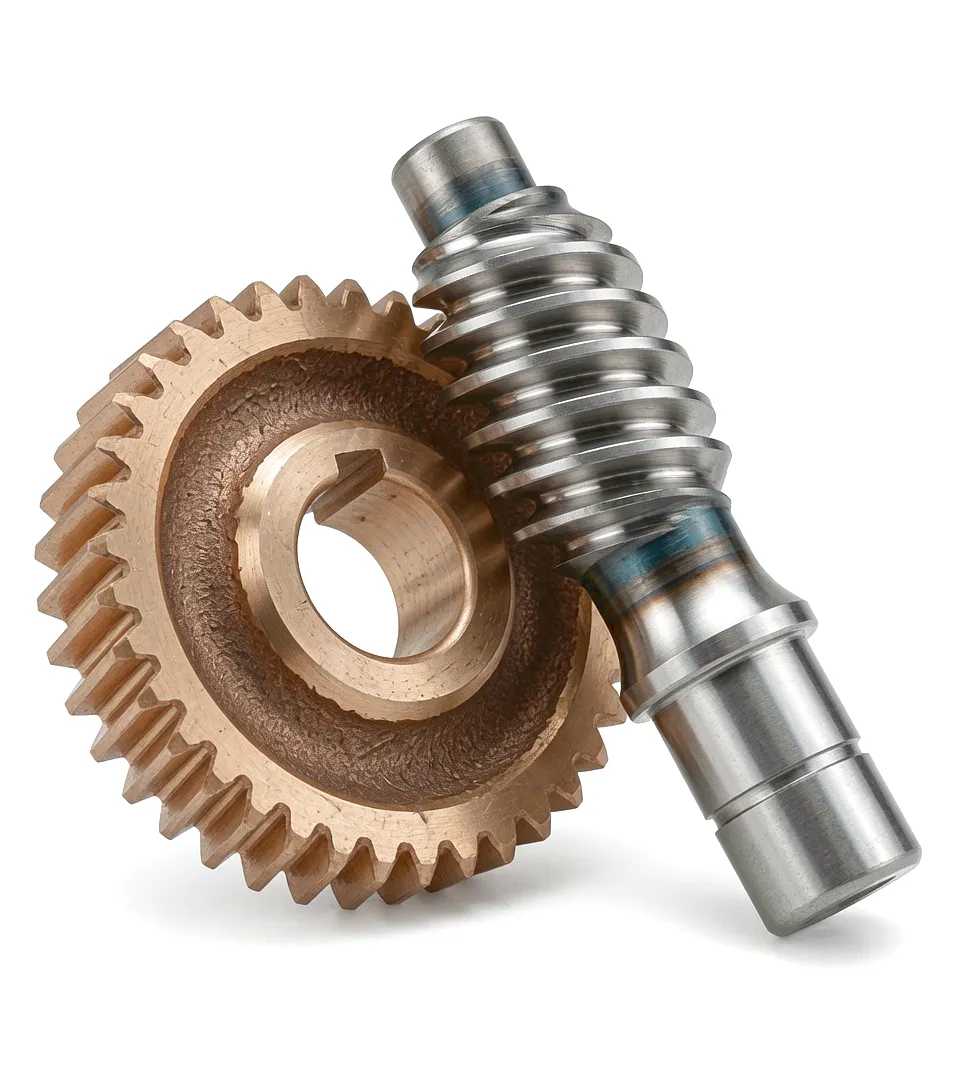
The paired worm wheel is typically cast or centrifugally cast from CuSn10Pb1 or CuSn12 phosphor bronze. Bronze’s relatively low coefficient of friction against hardened steel, combined with excellent conformability under load, makes it the near-universal choice. In high-temperature environments or where mineral oil lubrication is restricted, CuAl10Ni aluminium bronze offers improved thermal stability at the cost of slightly reduced anti-friction properties.
Stainless Steel (316L)
For food-grade, marine, and pharmaceutical applications where corrosion protection takes priority over maximum load capacity, 316L stainless steel worm shafts are specified. The austenitic structure limits hardness to approximately 200–250 HB through cold working, which reduces the achievable surface hardness compared to carburised alloy steel — a trade-off designers must account for by applying a service factor and potentially shortening replacement intervals in very high-duty applications.
Nylon / Acetal Wheel
Light-duty and instrument-grade applications sometimes employ a nylon PA66-GF30 or acetal (POM-C) worm wheel paired with a hardened steel shaft. These combinations offer near-zero corrosion, extremely quiet operation, and tolerance for grease-free or dry running. Maximum torque capacity is significantly lower than bronze, but for small actuators, medical equipment, and consumer goods, polymer wheels provide a cost-efficient, maintenance-reduced solution.
Heat treatment is the metallurgical step that separates a reliable worm gear shaft from one that fails prematurely. Case carburising at 880–920°C followed by oil quenching and low-temperature tempering at 160–180°C produces a surface carbon content of 0.8–1.0% with a case depth of 0.8–1.5 mm — sufficient to provide a hard, wear-resistant contact layer while leaving the shaft core at 35–45 HRC. Induction hardening is an alternative for through-hardened medium-carbon steels, offering selective hardening of the thread flanks with minimal shaft distortion — a significant advantage when holding tight shaft tolerances during high-volume production. After hardening, thread grinding on CNC worm grinding machines brings thread profile accuracy to ISO Class 4–6, with involute profile deviations typically held within 5–8 micrometres on premium-grade shafts.
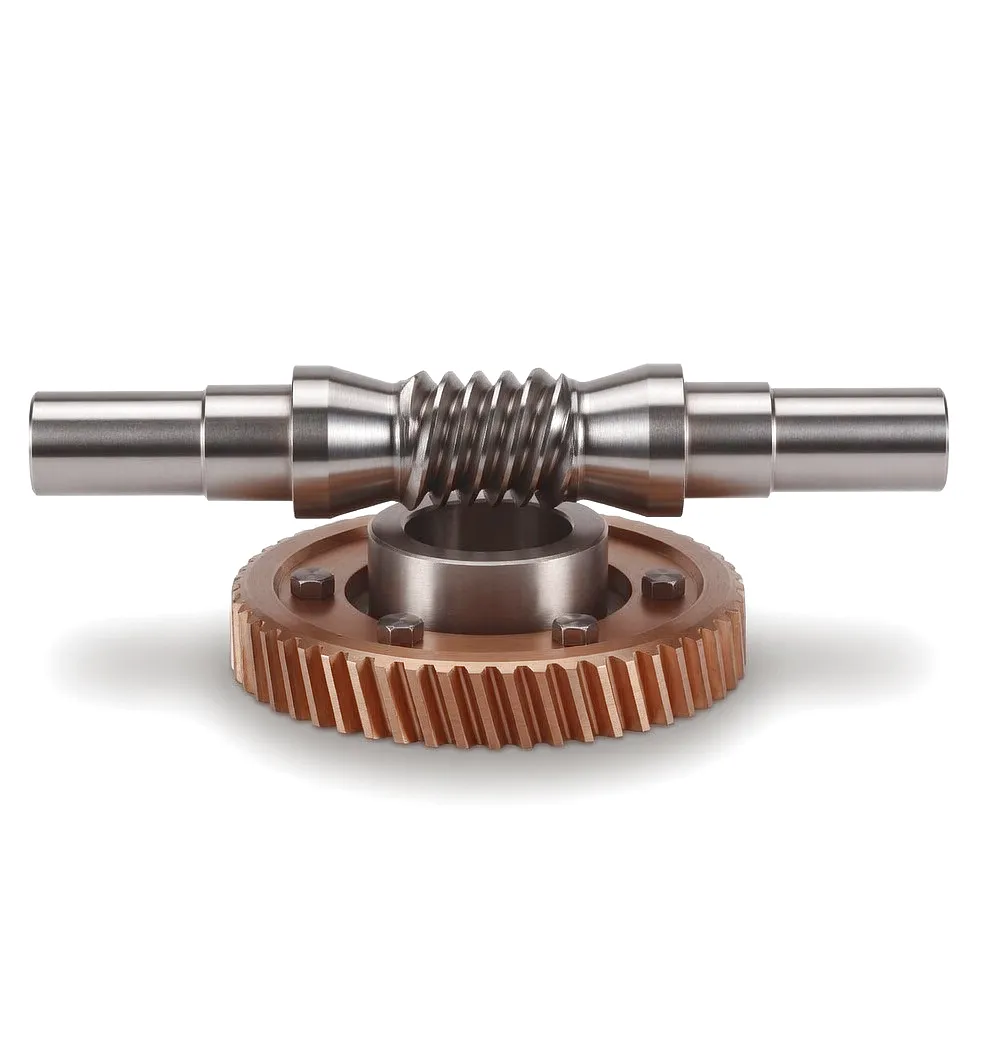
Case-hardened shaft — Ever Power manufacturing
Product Technical & Performance Parameters
The table below compiles representative performance parameters for Ever Power worm gear shaft assemblies across standard product lines. Values reflect ISO 14521 and DIN 3975 standards; actual ratings vary with operating conditions, lubrication, and duty cycle. Contact our engineering team for application-specific sizing.
| Parameter | Light Duty | Medium Duty | Heavy Duty | Extreme Duty |
|---|---|---|---|---|
| Output Torque | 5 – 150 Nm | 150 – 1,500 Nm | 1,500 – 8,000 Nm | 8,000 – 50,000 Nm |
| Reduction Ratio | 5:1 – 20:1 | 20:1 – 60:1 | 60:1 – 200:1 | 200:1 – 1000:1 |
| Shaft Material | 20CrMnTi | 42CrMo4 | 42CrMo4 / 16MnCr5 | 42CrMo4 (deep case) |
| Surface Hardness | 56–58 HRC | 58–62 HRC | 60–62 HRC | 60–64 HRC |
| Thread Accuracy | ISO Class 7–8 | ISO Class 6–7 | ISO Class 5–6 | ISO Class 4–5 |
| Shaft Crossing Angle | Standard 90° | Custom 45°, 60°, 120° available on request | |||
| Input Speed (max) | 3,600 rpm | 2,800 rpm | 1,500 rpm | 960 rpm |
| Mechanical Efficiency | 75–82% | 70–78% | 65–75% | 55–68% |
| Operating Temperature | -20°C to +80°C (standard) | -40°C to +120°C (special grade) | -20°C to +100°C | ||
| Module Range (m) | 0.5 – 2 | 2 – 6 | 6 – 16 | 16 – 40 |
| Shaft Diameter Range | 10 – 35 mm | 35 – 100 mm | 100 – 250 mm | 250 – 500 mm |
| Noise Level | < 58 dB(A) | < 65 dB(A) | < 72 dB(A) | < 78 dB(A) |
Core Technical Advantages
Why worm gear shaft drive systems continue to outperform alternatives in demanding industrial environments.
▶
Extreme Reduction in a Single Stage
Ratios to 1000:1 achievable without multi-stage cascades, dramatically reducing gearbox envelope size, component count, and total drivetrain weight — a critical advantage in mobile and space-constrained installations.
■
Mechanical Self-Locking
At low lead angles, the worm shaft cannot be back-driven by load, eliminating the need for separate holding brakes in many vertical or gravity-loaded installations and simplifying overall system design and control logic.
●
Right-Angle Power Routing
The standard 90° shaft crossing angle allows motor and driven shaft to be oriented perpendicular, unlocking machine layouts that would otherwise require bevel gear stages, universal joints, or shaft extensions — simplifying assembly and reducing alignment sensitivity.
◆
Smooth, Low-Noise Operation
Continuous sliding contact distributes load smoothly across tooth flanks, producing minimal vibration and lower noise levels than comparable spur or helical gear stages — especially valuable in pharmaceutical, food processing, and public-space applications where acoustic output is regulated or commercially sensitive.
▴
High Shock Load Tolerance
The large contact area across the tooth face and the inherent compliance of bronze wheel material absorb impact loads that would crack the teeth of equivalent hardened steel gear pairs — making worm drives the preferred choice in recycling, mining, and material-handling applications where load cycles are highly irregular.
★
Compact Footprint
The coaxial arrangement of worm shaft and wheel achieves large torque multiplication within an overall package size significantly smaller than an equivalent spur gear reduction, making worm drives ideal for retrofit upgrades in existing machinery frames and for OEM integration into space-constrained product designs.
Industrial Application Scenarios
 Worm gear shaft assemblies are at the heart of virtually every industrial conveyor system — from the car body transfer lines in Coventry’s automotive suppliers to the parcel sortation conveyors serving UK logistics hubs in Milton Keynes and Daventry. The worm shaft drives the conveyor head drum or intermediate transfer unit, converting the motor’s high-speed, low-torque output into the controlled, high-torque rotation that moves product reliably along the belt. In inclined conveyor applications where product must be held in position during motor-off periods, the self-locking property of the worm gear shaft prevents roll-back without an external brake — simplifying the drive package and reducing the number of failure modes. Modular worm gearbox housings allow the same worm shaft assembly to be reoriented in multiple output configurations (foot-mounted, flange-mounted, shaft-mounted) to suit the physical constraints of different conveyor frame designs. For UK food and beverage distribution operations, stainless steel worm shaft variants with food-grade lubrication meet BRCGS and HACCP requirements without compromising drive performance.
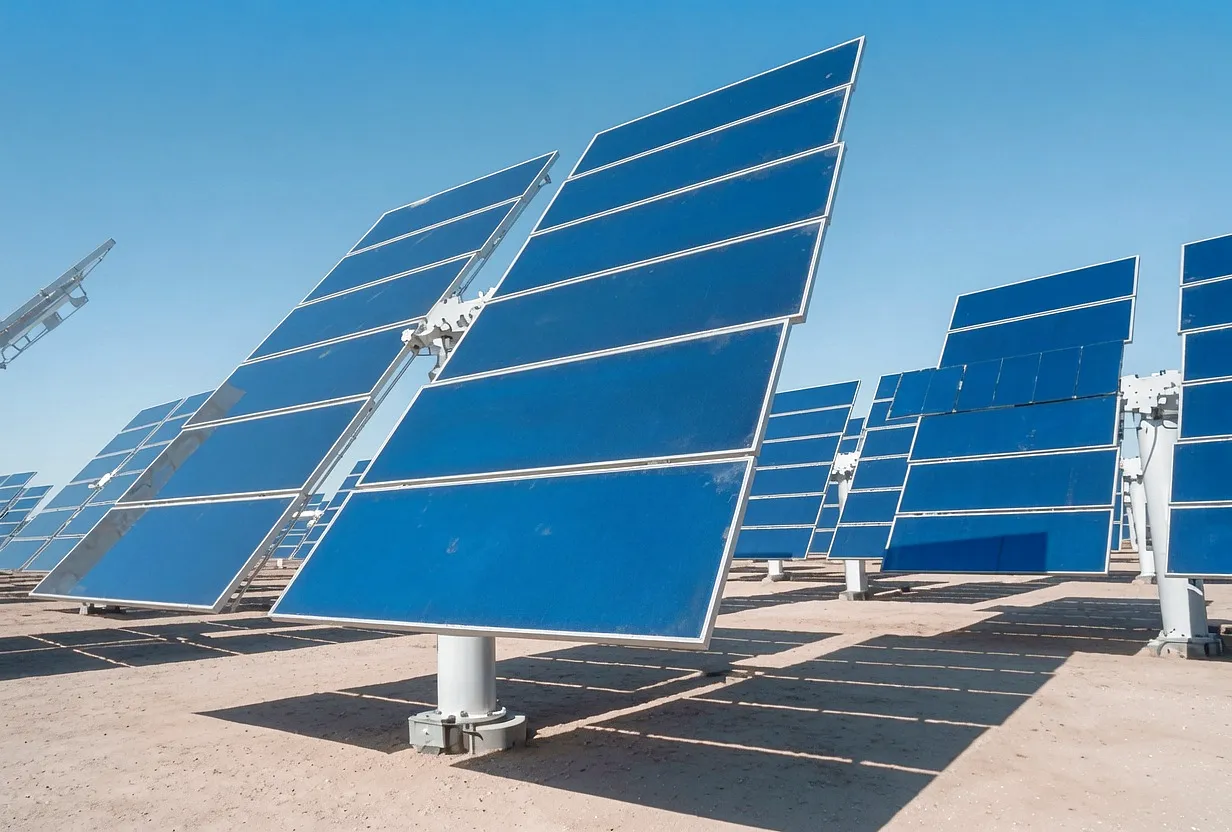
The azimuth drive mechanism of solar photovoltaic tracker systems represents one of the most demanding precision applications for worm drive technology. As solar arrays across the UK’s growing renewable energy sector — from installations in East Anglia’s flat agricultural plains to Scottish hillside farms — track the sun’s daily arc, the worm gear shaft provides the angular displacement authority that maximises panel efficiency. A typical single-axis or dual-axis tracker employs a worm drive with a reduction ratio between 300:1 and 1000:1, paired with a low-speed motor producing an output rotation of just 0.1–1 rpm. Over a full operating day, the panel assembly traverses approximately 160° of azimuth arc, consuming minimal energy while maintaining panel-to-sun alignment to within fractions of a degree.
The genuine engineering advantage in this application is the worm shaft’s self-locking capability under wind loading. When gusts at wind speeds reaching 18 m/s strike the panel face, the worm gear shaft assembly holds panel position without the motor actively resisting — because the geometry of the thread engagement physically prevents back-driving. Field data from solar installations in the UK shows that this passive position-holding reduces actuator motor energy consumption by up to 35% compared to active-hold systems using separate braking. Stainless or coated worm shaft variants with IP67-rated housing seals are standard specification for outdoor renewable energy deployments, where moisture ingress and seasonal temperature swings between -15°C and +40°C must be tolerated across a 25-year service life with minimal maintenance access.

Key Tracker Specs
Ratio: 300:1 → 1000:1
Output speed: 0.1 → 1 rpm
Daily travel: ~160°
Wind hold: 18 m/s passive
Efficiency gain: +15 → 25%

Packaging Machinery
UK pharmaceutical packaging lines in Cheshire and North Yorkshire use worm shaft drives in indexing tables, cap torquers, and labelling carousel drives. The smooth output motion, consistent index accuracy, and near-silent operation at low speeds comply with GMP acoustic guidelines while handling product throughputs of 200–400 units per minute.
Automation & Robotics
In collaborative robot joint designs and automated guided vehicle steering columns, worm gear shaft assemblies provide the precise angular positioning, backdriving resistance, and compact size that servo motor direct-drive arrangements cannot match in cost-sensitive OEM production. UK robot integrators in Swindon and Bristol increasingly specify custom worm shaft modules from specialist suppliers rather than adapting standard gearbox flanges.
Manufacturing Excellence
Ever Power — Precision Worm Gear Shaft Manufacturing
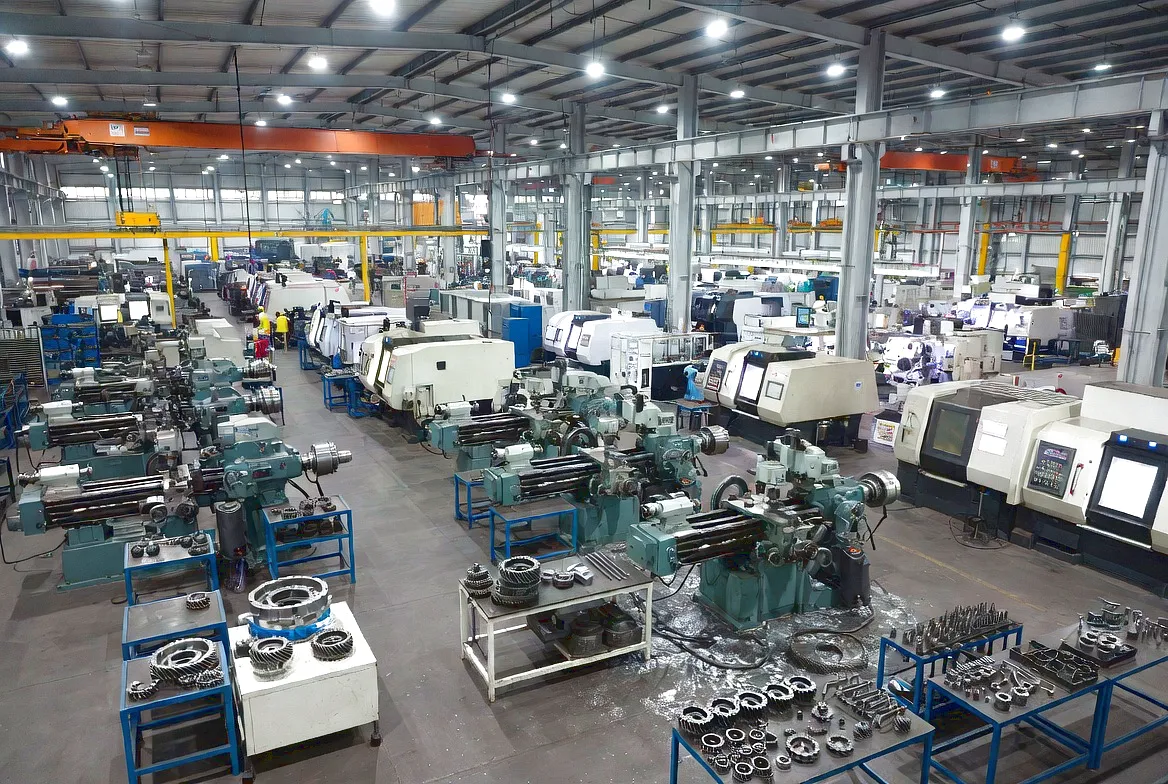
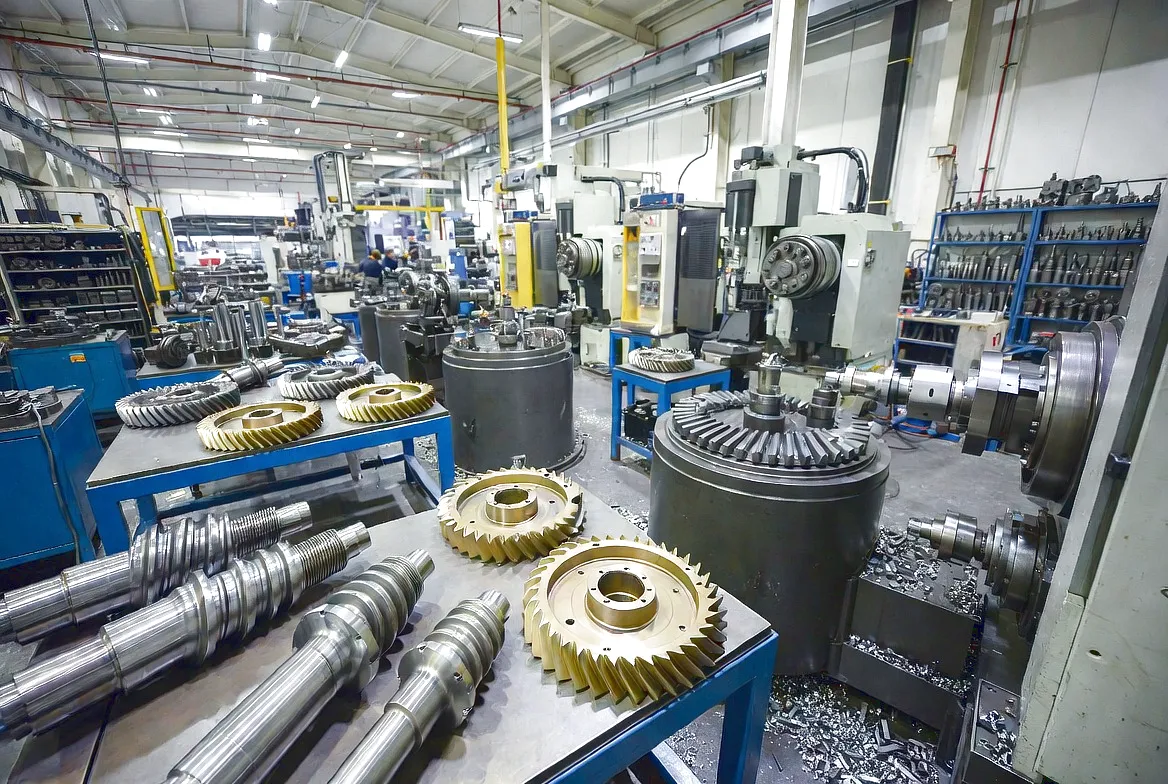
At Ever Power, precision worm gear shaft production is built on vertically integrated manufacturing — from raw billet selection through heat treatment, CNC thread grinding, and CMM inspection — within a single production facility. Our engineering team works directly with customers to translate application requirements into optimised shaft geometry: lead angle, module, thread start count, surface finish, and shaft tolerance class are specified from first principles, not adapted from catalogue standards. This approach is particularly valued by UK engineering companies in Birmingham’s manufacturing corridor and by Yorkshire-based OEM machinery builders, where bespoke shaft specifications are the norm rather than the exception.
Our CNC worm grinding machines hold thread profile deviations within 4–6 micrometres at production volumes, while our in-line CMM stations measure 100% of shafts against customer drawings before shipment. For UK customers requiring compliance documentation, we supply full material certificates, heat treatment records, and dimensional inspection reports as standard with every order. Custom surface treatments — including hard chrome plating, electroless nickel, PTFE coating, and phosphate coating — are available for corrosion-sensitive or food-contact applications, with lead times discussed during the quotation stage.
Customisation Capabilities
Non-standard shaft angles
Stainless / titanium alloy shafts
316L food-grade variants
Assembled worm gearbox supply
OEM white-label batches
DXF / STEP drawing import
EN 10204 3.1 material certs
Product Range Gallery
Customer Success Story
Continuous Casting Line Gearbox Replacement — Sheffield Steel Fabricator
A medium-sized steel section fabricator operating a continuous casting and rolling line in Sheffield’s Lower Don Valley approached Ever Power in 2023 with a persistent reliability problem. Their existing albero a vite senza fine assemblies — sourced from a generic European catalogue supplier — were failing at intervals of 8–11 months on the casting line’s secondary cooling-zone roller drives. Each failure required a 14-hour production shutdown to replace the gearbox, at an estimated cost of £18,000–£22,000 per incident including lost production, maintenance labour, and emergency parts procurement. Over a 24-month period, the plant had experienced five such failures across three drive positions, representing a direct and preventable maintenance liability exceeding £95,000.
The Ever Power application engineering team conducted an on-site assessment with the plant maintenance manager and identified the root cause as a combination of factors: the existing worm shaft module was undersized for the actual radial load generated by the roller under billet weight, the worm shaft material specification (C45 induction hardened) was inadequate for the combined operating temperature of 85–95°C at the drive position, and the thread grinding accuracy of the catalogue shafts was ISO Class 7 — one step below the Class 6 required for consistent tooth contact under the cyclic loading pattern of a rolling line. The existing shafts were also machined without the specific lead angle optimisation needed for the required 65:1 reduction, which created intermittent self-locking boundary conditions during roller deceleration events.
Ever Power supplied a revised worm shaft design in 42CrMo4 deep case-hardened steel (62 HRC surface, 1.2 mm case depth), ground to ISO Class 5 thread accuracy, with a lead angle recalculated to maintain stable self-locking throughout the deceleration cycle. The shaft shoulder geometry was redesigned to improve axial load distribution and reduce fretting at the bearing seating. Housing bore tolerances and lubrication channels were revised to ensure full oil film development at the operating temperature range. The first replacement batch of six shafts (three drive positions, two shafts each as installed spares) was delivered within 11 working days of drawing approval, packaged individually in protective VCI film and rigid timber crates per the plant’s incoming inspection requirements.
Following installation in early 2024, the plant ran all three drive positions through 18 consecutive months of three-shift operation without a single worm gear shaft failure. At the 18-month inspection, thread flank wear measured by CMM was within acceptable limits, with projected service life extrapolated to 36–42 months before the first planned replacement interval. The maintenance manager calculated a first-year saving of approximately £62,000 against the prior failure pattern, with a further £80,000 in avoided maintenance costs projected over the three-year replacement cycle. The company subsequently standardised on Ever Power worm gear shaft assemblies across all 11 gearbox positions on the casting line.
What Our Customers Say
★★★★★
“The Ever Power engineering team understood our casting line application within the first technical call. The revised shaft specification they proposed addressed a root cause our own maintenance team had missed for two years. Eighteen months in, zero failures. The documented cost saving paid for four years of supply at their pricing.”
Robert Ashford — Plant Engineering Manager
Steel Section Fabricator, Sheffield, South Yorkshire
★★★★★
“We needed a non-standard worm shaft in 316L stainless with a specific thread form for an indexed packaging carousel — not something you find in any catalogue. Ever Power turned around a quoted drawing within 48 hours and had parts on our floor in nine working days. Thread accuracy on delivery was checked against our own CMM and matched their inspection report exactly. Exceptional supplier.”
Catherine Holt — Head of Procurement
Pharmaceutical Packaging Equipment OEM, Macclesfield, Cheshire
★★★★★
“We source worm gear shafts for solar tracker azimuth drives across our UK renewable portfolio. The self-locking performance under high-wind conditions at our East Anglian sites has been exactly as specified. Ever Power’s technical team provided wind-load back-drive analysis as part of the quotation — no other supplier we contacted was able to offer that level of pre-sale engineering support.”
Marcus Webb — Technical Director
Renewable Energy Systems Integrator, Norwich, Norfolk
Frequently Asked Questions
Answers to the questions UK engineers and procurement managers ask most about worm shaft specification, pricing, and supply.
© Ever Power Transmission Technology Co., Ltd. All technical data is provided for engineering reference. Specific application ratings should be verified with our engineering team. edit by gzl