Technical Knowledge Series

Worm Gear Shaft in Bucket Elevator Systems: Engineering Principles, Material Science & Industrial Applications

How self-locking worm drive technology solves the most critical challenge in vertical bulk material conveying — and why it remains the preferred choice across UK manufacturing and processing industries.

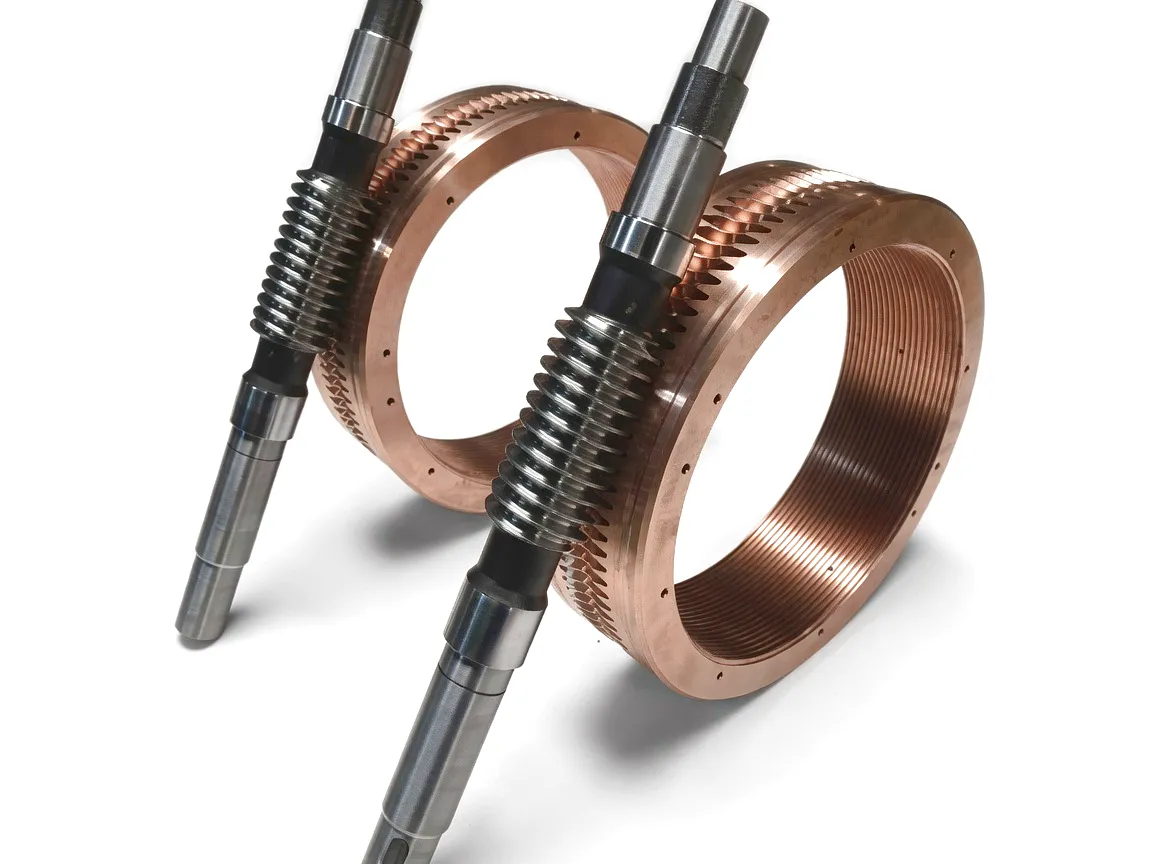
Worm gear shaft product for bucket elevator

The bucket elevator stands as one of the most efficient methods for moving bulk materials vertically — handling everything from grain and fertiliser to mineral powder and cement clinker. At the heart of its drive system sits the worm gear shaft, a component whose engineering sophistication is easy to underestimate at first glance. Unlike a conventional gear drive, the worm gear shaft arrangement delivers a mechanical self-locking capability that eliminates the need for a separate backstop or hydraulic brake. In facilities across the UK, from grain processing mills in East Anglia to chemical manufacturing plants in the Humber Estuary, this characteristic alone has made the worm gear reducer the drive of choice for vertical conveying applications where uncontrolled material reversal would mean catastrophic spillage, equipment damage, and significant production downtime.

When a loaded bucket elevator stops under full load — a scenario that arises regularly during power interruptions or planned maintenance — the drive system must prevent the descending weight of the material-filled buckets from spinning the system into reverse. Conventional gear reducers cannot do this without an added mechanical backstop device. The worm gear shaft, by contrast, uses the geometry of its helical thread engagement to generate sufficient friction that the drive locks against back-driven rotation automatically. This article explores precisely why that matters, how the worm gear shaft achieves it, and what engineering considerations govern the selection of this component for demanding vertical conveying duties.

Working Principle of the Worm Gear Shaft in Bucket Elevator Drives
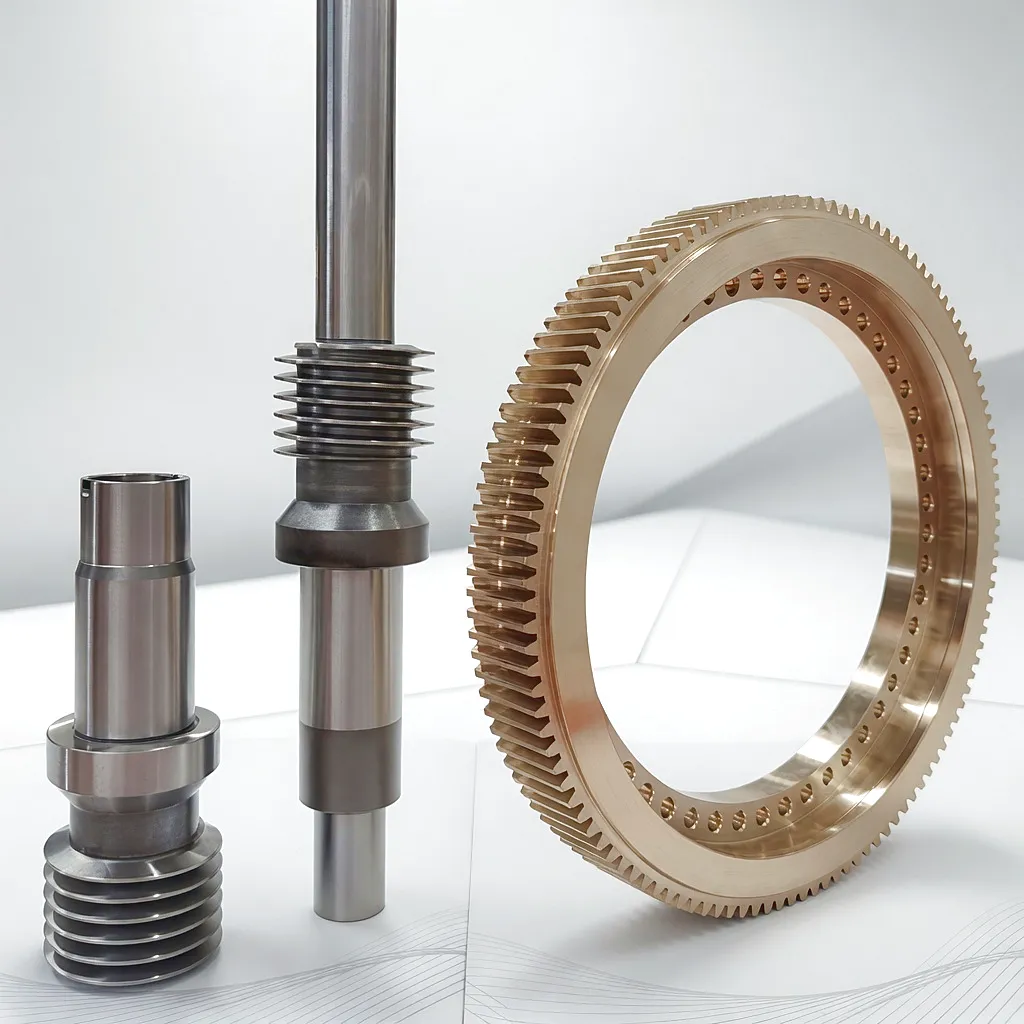
Worm gear shaft working principle

The worm gear shaft is a cylindrical shaft precision-machined with a continuous helical thread — the worm — that meshes perpendicularly with a toothed wheel called the worm gear or worm wheel. This right-angle transmission arrangement converts the rotation of a high-speed motor into slow, high-torque rotation at the output shaft that drives the bucket elevator head pulley. The key mechanical parameter governing the self-locking behaviour is the lead angle of the worm thread. When this lead angle is sufficiently shallow — typically below 6 degrees — the thread geometry creates a condition where friction between the worm and worm wheel is greater than the axial force component that would be required to back-drive the worm. In practice, this means that torque applied at the output shaft (as would happen when the bucket elevator tries to reverse under load) cannot turn the worm shaft. The system locks mechanically without any external intervention.

The thread form itself — most commonly a modified Archimedes or involute helicoid profile in industrial-grade worm shafts — determines the contact patch between worm and wheel. A broader, smoother contact area distributes load more evenly, reduces surface pressure (Hertzian stress), and extends the operational life of both components. During normal operation in a bucket elevator, the worm shaft spins at the motor speed while the worm wheel turns at a fraction of that speed, providing the large speed reduction ratios (from 10:1 up to 80:1 in a single-stage unit) that the relatively slow bucket chain demands. The chain speed in a typical bucket elevator is held between 1 m/s and 2 m/s; at higher speeds, material discharge patterns from the buckets become erratic, causing spillage at the discharge head. The worm gear reducer allows the drive motor to operate at its optimum efficiency speed while the output precisely matches the conveying requirement.

Key Mechanism: The self-locking property emerges from the relationship between lead angle (λ) and the friction angle (ρ). When λ < ρ, the drive locks against reversal. Typical bucket elevator worm reducers maintain λ between 3.5° and 6°, using bronze worm wheels against hardened steel shafts to produce friction coefficients in the range of 0.05 to 0.08 under lubricated conditions — sufficient to prevent back-drive while maintaining acceptable forward drive efficiency.

Material Science Behind High-Performance Worm Gear Shafts

Material selection for the worm gear shaft and its mating wheel is not an arbitrary engineering decision — it directly determines the reducer’s torque capacity, thermal operating range, wear life, and maintenance intervals. In bucket elevator applications, where continuous duty cycles at elevated loads are the norm rather than the exception, choosing the wrong material pairing can result in premature scoring of the worm flank, accelerated wear of the bronze wheel, and unexpected seizure under the high contact pressures that occur during start-up against a fully loaded elevator. The most widely adopted solution across the global and UK-specific bucket elevator industry pairs a case-hardened alloy steel worm shaft against a centrifugally cast phosphor bronze or aluminium bronze worm wheel. This dissimilar metal pairing is deliberate and functional: the softer bronze wheel acts as a sacrificial component, wearing preferentially and protecting the harder, more expensive worm shaft, while also providing the lubricity needed to reduce the coefficient of friction at the contact interface.

⚙️
Worm Shaft: 20CrMnTi / 42CrMo4

Carburised and case-hardened to 58–62 HRC at the tooth flank. The case depth of 0.8–1.2 mm provides a wear-resistant surface while the tough core absorbs shock loads from start/stop cycling. Grinding to Ra 0.4 µm surface finish minimises friction and heat generation at the mesh point.

🔩
Worm Wheel: ZCuSn10Pb1 / CuAl10Fe5

Centrifugally cast phosphor bronze or aluminium bronze. Tin bronze (ZCuSn10Pb1) delivers excellent conformability and anti-scoring properties for standard loads. Aluminium bronze (CuAl10Fe5) is specified when operating temperatures exceed 90°C or when corrosive dust environments demand greater chemical resistance.

🛡️
Housing: EN-GJL-250 / Nodular Cast Iron

Grey cast iron housings provide vibration damping critical for variable-load start cycles common in grain and fertiliser elevators. Nodular (ductile) iron GJS-500-7 is used for larger units where impact resistance during jam-clearing events is required. Internal bore finish and bearing seat tolerances are held to H7/h6 for interference fit integrity.

💧
Lubrication: ISO VG 220/320 Synthetic Gear Oil

Polyalphaolefin (PAO) or polyalkylene glycol (PAG) synthetic gear oils are increasingly specified in UK food processing and pharmaceutical bucket elevators, where mineral oil contamination risk requires food-grade H1 lubricant certification. PAG-based lubricants are particularly effective in worm gear shaft reducers, reducing mesh temperatures by up to 15°C compared to mineral equivalents.
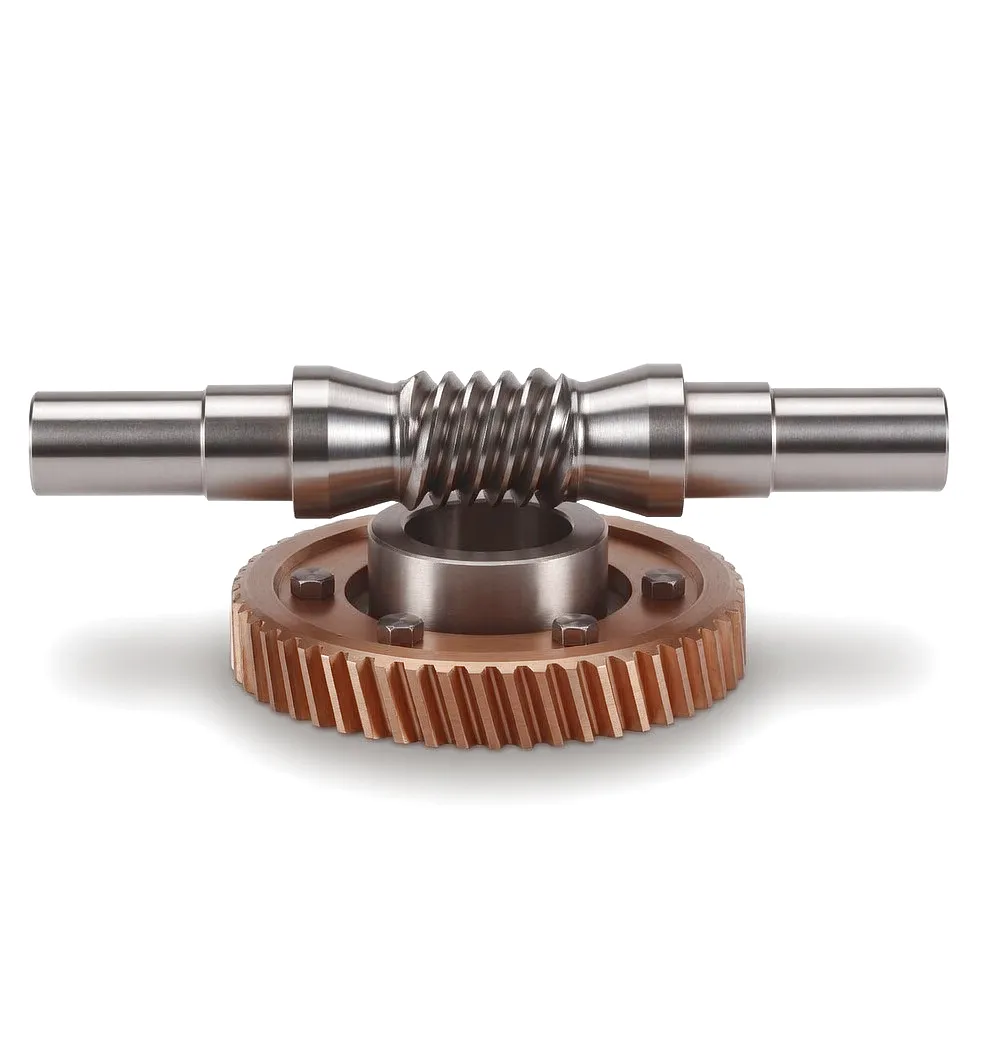
Worm gear shaft material and construction detail

The heat treatment of the worm gear shaft is arguably the most technically demanding stage of its manufacture. The carburising process introduces carbon into the surface layer of the alloy steel shaft at temperatures of 900–950°C, followed by quenching and low-temperature tempering to lock in the surface hardness while relieving residual stresses. If this process is executed without precise atmosphere control, the resulting case depth can be uneven — creating weak zones that fail prematurely under the repeated contact cycles a bucket elevator shaft endures over years of operation. Modern manufacturing facilities use atmosphere-controlled continuous carburising furnaces with oxygen probe feedback to maintain carbon potential within ±0.05 wt% of the specification throughout each treatment batch. After heat treatment, precision thread grinding removes the distortion introduced during hardening, restoring the worm profile to within 8 µm of the theoretical form — a tolerance level that is only achievable with CNC grinding centres equipped with in-process gauging and automatic compensation algorithms. It is this combination of metallurgical precision and manufacturing control that distinguishes a high-performance worm gear shaft from an economy casting.

Core Technical Advantages in Bucket Elevator Applications

🔒
Inherent Self-Locking — Zero Additional Backstop Required

When the bucket elevator stops under full load, the worm gear shaft assembly locks automatically against reversal without any additional mechanical device. This eliminates the cost, maintenance requirement, and failure risk of a separate ratchet backstop or electromechanical brake, which is a particularly valuable simplification in compact headhouse designs where space and access are limited — a common constraint in the older milling and processing buildings found across the East Midlands and Yorkshire.

High Single-Stage Reduction Ratios (10:1 to 80:1)

A single worm gear stage delivers the kind of reduction ratio that would require two or three conventional spur gear stages, significantly compressing the physical footprint of the gearbox. For bucket elevator drive arrangements where the reducer must fit within the headhouse structure, this compact transmission geometry is a significant engineering advantage. Reduction ratios above 40:1 are particularly common in fertiliser and mineral powder elevators operating at the lower end of the 1 m/s bucket speed range.

🎯
Right-Angle Transmission Without Bevel Gear Complexity

The orthogonal (90-degree) input-to-output shaft arrangement suits bucket elevator drives where the motor is typically mounted horizontally while the head drive shaft runs horizontally across the width of the elevator housing. Achieving this angle with a helical bevel gear arrangement requires far greater machining precision for the spiral tooth form and introduces higher sensitivity to mounting misalignment. The worm gear shaft arrangement tolerates moderate angular and parallel misalignment without significant performance degradation.

🔇
Low Vibration and Quiet Running

The sliding contact between worm shaft thread and worm wheel tooth — as opposed to the rolling contact in spur or helical gears — produces a characteristically smooth, quiet drive. In grain storage facilities and food processing plants where occupational noise limits are strictly regulated under UK Health and Safety Executive (HSE) guidelines, operating noise levels consistently below 72 dB(A) are achievable with well-lubricated worm gear reducers even at full rated load. This is a material benefit compared to multi-stage helical units at equivalent reduction ratios.

📐
Shock Load Absorption During Start-Up Cycling

The conforming contact geometry of the worm-to-wheel mesh distributes peak contact stresses across a larger surface area than involute spur gear contact. This makes the worm gear shaft reducer inherently more tolerant of the high instantaneous torque spikes that occur when a bucket elevator starts against a partially-loaded chain. For drives controlled by direct-on-line (DOL) starters — still common in smaller UK agricultural and quarrying installations — this shock tolerance extends service intervals considerably.

🛠️
Simplified Maintenance and Replacement Protocol

The modular construction of a worm gear reducer — separating the bronze worm wheel, steel worm shaft, and housing as distinct replaceable assemblies — allows site maintenance teams to replace the worn wheel without disturbing the housing or shaft alignment. In UK mining and quarrying operations where elevator drives operate in dusty, vibration-prone environments, scheduled worm wheel replacement every 15,000–20,000 operating hours is a predictable maintenance event that can be planned around production shutdowns, avoiding unplanned downtime.

Product Technical & Performance Specifications

ParameterSpecification RangeTypical Bucket Elevator ValueNotes
Output Torque50 – 20,000 N·m500 – 5,000 N·mDepends on elevator height and bucket load per unit
Speed Reduction Ratio (i)7.5 : 1 – 100 : 120 : 1 – 60 : 1Single-stage; higher ratios available in dual-stage
Output Shaft Speed14 – 200 rpm25 – 80 rpmMatched to 1 – 2 m/s chain speed requirement
Centre Distance50 – 500 mm100 – 280 mmDetermines tooth load and thermal rating
Worm Lead Angle (λ)3.5° – 28°3.5° – 6° (self-locking)λ < 6° ensures positive self-locking under typical μ
Worm Shaft Material20CrMnTi / 42CrMo420CrMnTi (carburised)Surface hardness 58–62 HRC; core 30–40 HRC
Worm Wheel MaterialZCuSn10Pb1 / CuAl10Fe5ZCuSn10Pb1 (standard)Centrifugal casting ensures uniform grain structure
Drive Efficiency (η)55% – 92%65% – 80%Lower lead angles reduce efficiency; trade-off for self-lock
IP Protection RatingIP54 – IP66IP55 (dusty environments)Higher rating for cement, mineral powder, or coastal sites
Conveying Capacity Range5 – 800 t/h20 – 400 t/hBulk density and bucket volume determine actual value
Maximum Lift HeightUp to 80 m (special)30 – 50 m (standard)Chain tension and structural design limit practical height

Industrial Application Scenarios Across the UK and Global Markets
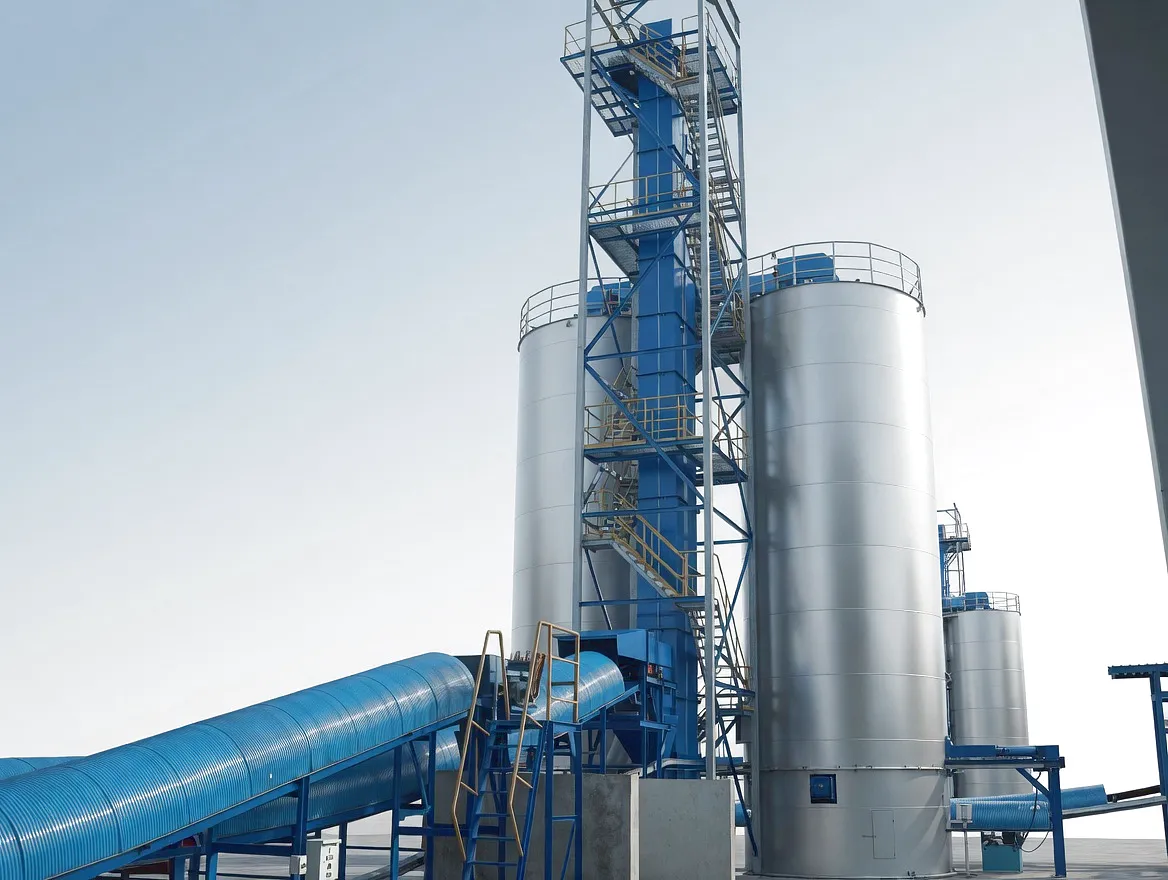
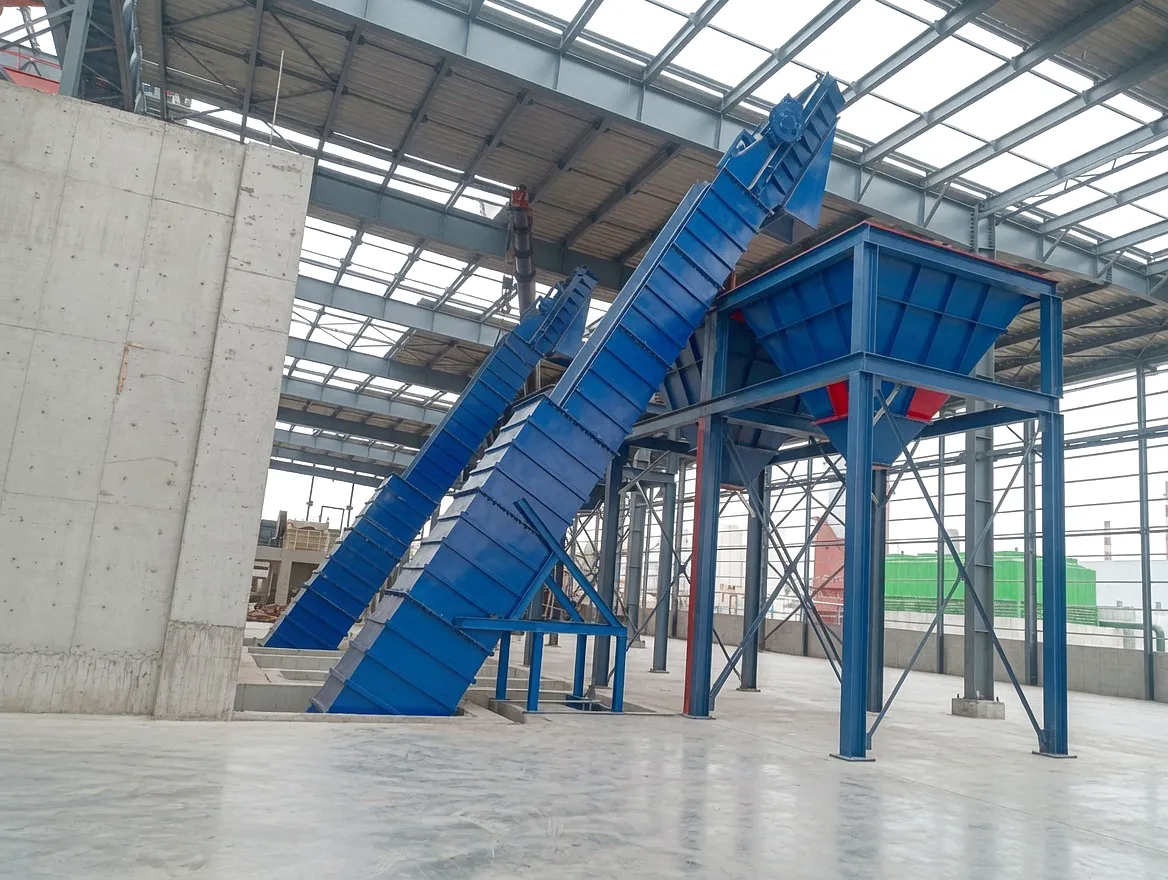
Worm gear shaft bucket elevator application in grain processing

Grain storage and milling represents the single largest application segment for worm-gear-driven bucket elevators in the United Kingdom. Storage complexes in Lincolnshire, Cambridgeshire, and Norfolk regularly operate elevator towers handling wheat, barley, and oilseed rape at throughput rates of 80–200 t/h, with lift heights of 30–40 m to reach the upper sections of concrete storage silos. The self-locking characteristic of the worm gear shaft in these systems is not merely a convenience — it is a regulatory requirement in many site insurance policies, where uncontrolled reversal of a grain elevator under power failure is classified as a fire and explosion risk due to the potential for grain dust ignition from sparking metal components. The ability of a correctly specified worm gear shaft reducer to maintain its mechanical lock-up under these conditions, without any powered assistance, provides a level of fail-safe reliability that facility managers and their insurers have come to depend upon.

🌾
Grain & Agricultural Processing

Elevators handling wheat, barley, maize, and oilseed rape from intake pits to storage silos. Typical installations in East Anglia and the East Midlands see duty cycles of 16–20 hours per day during harvest seasons, demanding reducers with certified thermal ratings at sustained full load. Worm gear shaft assemblies with oversized heat-dissipating housings and synthetic lubricants handle these duty cycles without oil breakdown or excessive temperature rise.

⚗️
Chemical & Fertiliser Production

Ammonium nitrate, urea, and compound NPK fertiliser granules are handled in bucket elevators where corrosive dust environments demand IP55 or IP66 sealed worm gear shaft reducers with epoxy-coated housings and stainless-steel hardware. Plants in the Humber Estuary, Teesside, and Merseyside chemical processing zones rely on worm gear reducers that maintain seal integrity under pressure wash-down cleaning cycles.

🏗️
Cement & Construction Materials

Raw meal, cement clinker, and fly ash are elevated from grinding mills to blending silos in temperatures that can reach 150°C at the product surface. Worm gear shaft reducers specified for these applications use high-temperature synthetic oils and thermally rated bronze wheel alloys, with fan-cooled housing options available for installations near cement kilns in sites such as those operating across South Wales and the Peak District limestone belt.

⛏️
Mining & Mineral Processing

Iron ore fines, coal, potash, and crushed limestone are conveyed in heavy-duty bucket elevators where chain tension forces and bucket weights demand worm gear shaft units in the 2,000–20,000 N·m output torque range. Mining operations in Cornwall (china clay), County Durham (quarrying), and North Yorkshire (potash extraction) operate worm-driven elevators rated for continuous 24-hour production schedules, with scheduled service intervals aligned with planned production shutdowns.

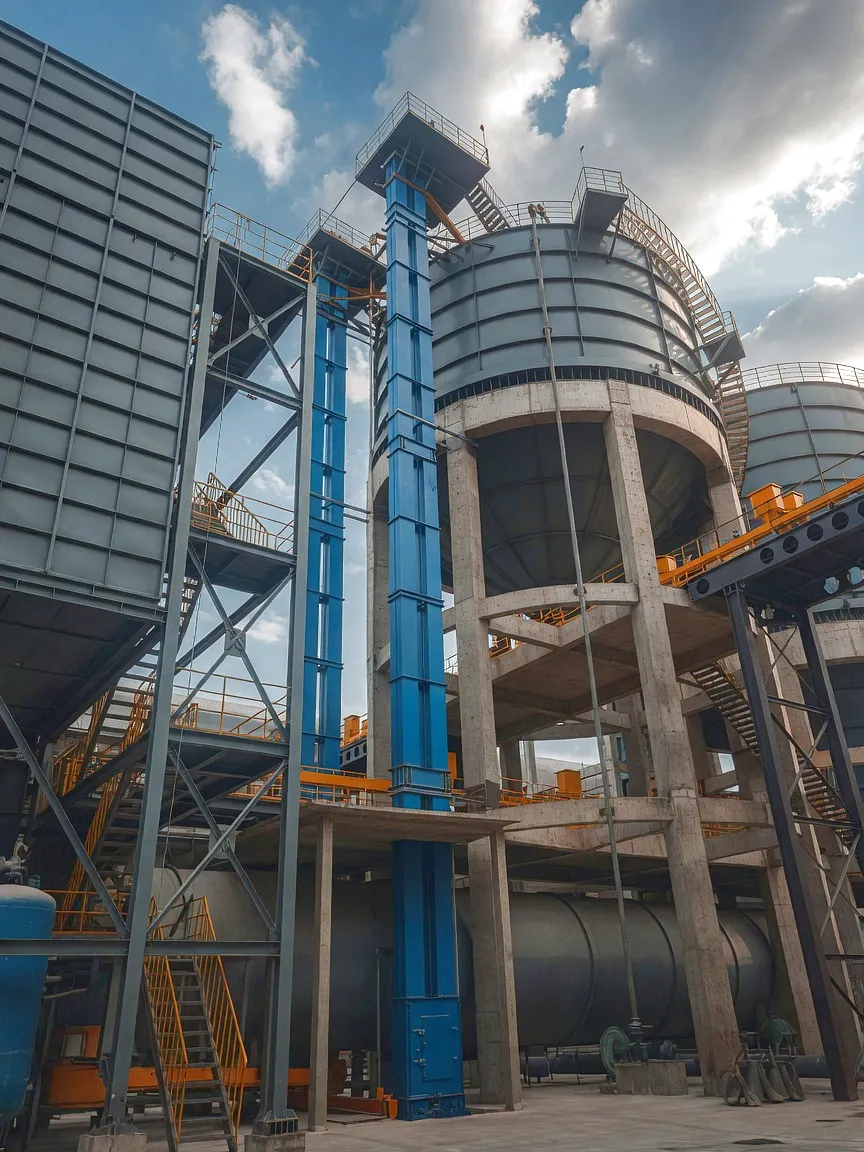
Worm gear shaft application in industrial conveying

The pharmaceutical and food ingredient sectors represent a growing application area for worm gear shaft driven bucket elevators in the UK, particularly as domestic manufacturing capacity has expanded following recent supply chain restructuring. Sugar, salt, flavourings, enzyme powders, and active pharmaceutical ingredients (APIs) are elevated using bucket chains where the reducer’s bearing seals must prevent product contamination from lubricant ingress. Food-grade H1 certified worm gear shaft reducers, using polyalkylene glycol lubricants that are safe if minor contact with product occurs, are now standard specification at sites operated by major food and pharmaceutical manufacturers in Sheffield, Nottingham, and the West Midlands manufacturing corridor. These facilities demand traceable batch certification for all components, including the worm gear shaft assembly, as part of their GMP (Good Manufacturing Practice) quality systems — a documentation requirement that separates premium supply chains from commodity catalogue suppliers.

Manufacturing Partner

Ever Power: Precision Manufacturing & Custom Worm Gear Shaft Solutions

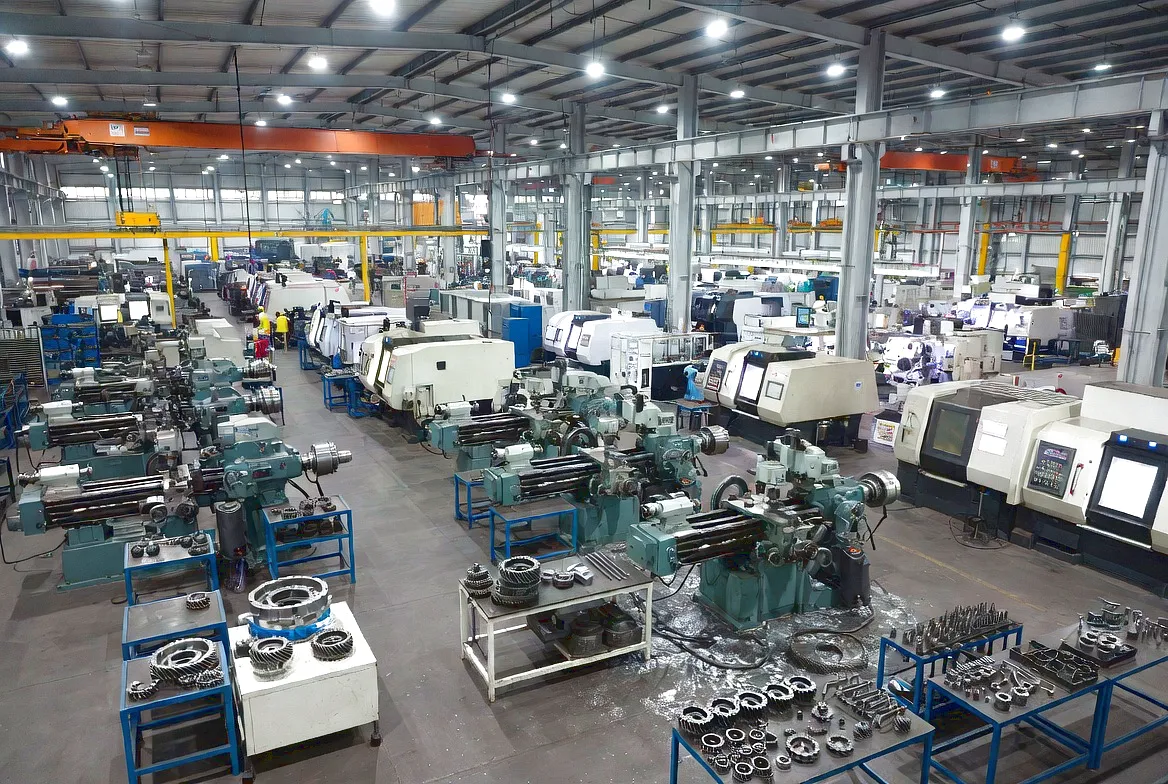
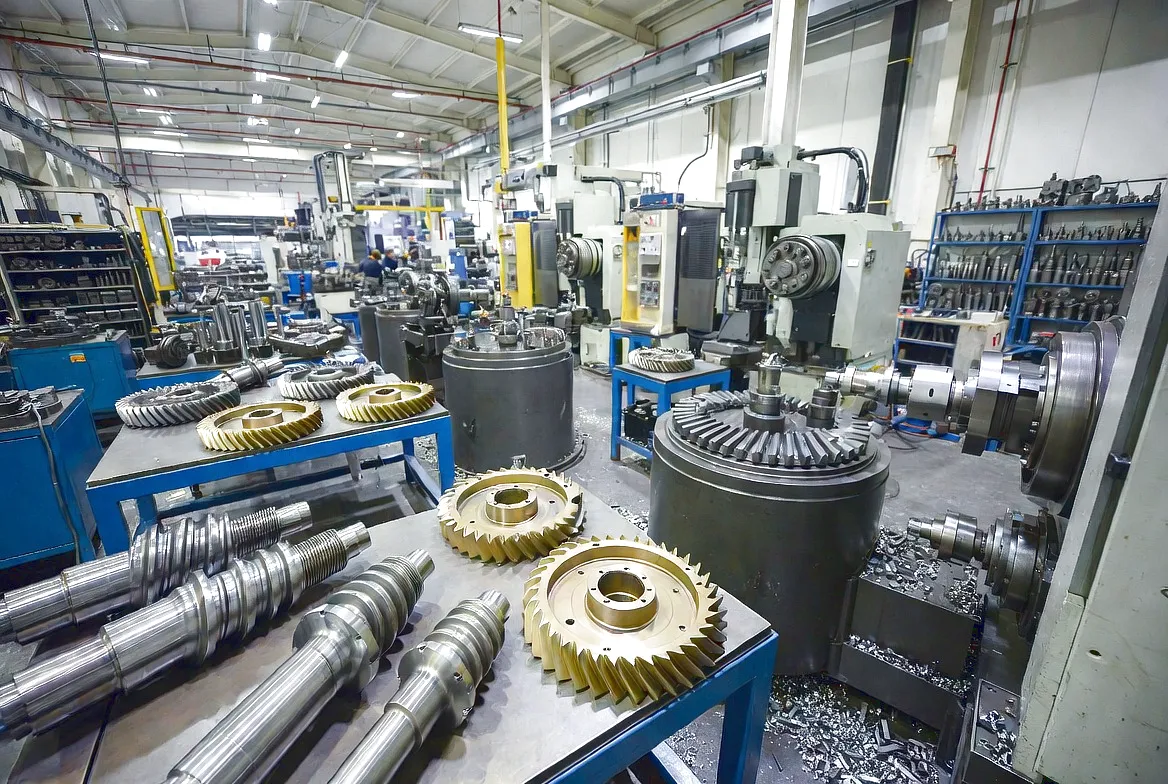
At Ever Power, the design and manufacture of worm gear shafts for bucket elevator applications is not a commodity catalogue exercise — it is a precision engineering discipline backed by decades of application knowledge and continuous investment in manufacturing capability. Our production facility operates CNC worm grinding centres, atmosphere-controlled case-hardening furnaces, and co-ordinate measuring machines (CMMs) with sub-micron resolution, enabling us to manufacture worm gear shafts that meet the most demanding performance specifications our global and UK-based clients require.

Ever Power worm gear shaft manufacturing facility
Ever Power precision CNC manufacturing workshop

Our customisation capability extends across every dimension of worm gear shaft design. Centre distance, shaft diameter, keyway configuration, mounting flange pattern, reduction ratio, surface coating specification, and lubricant type are all individually specified for each client order. For UK customers supplying into regulated industries — food, pharmaceutical, water treatment — we maintain full material traceability from raw billet to finished assembly, with documentation packages that satisfy BS EN ISO 9001:2015 and customer-specific quality plans. Delivery logistics to UK distribution centres in Birmingham, Sheffield, Leeds, and Manchester are managed through our established freight network, with standard lead times of 3–6 weeks for catalogue-range units and 8–12 weeks for fully engineered custom worm gear shaft assemblies. Express manufacturing and air freight options are available for emergency replacement situations where production downtime cost makes expedited delivery economically justified.

✦ Custom Ratio Engineering

Non-standard reduction ratios from 6:1 to 120:1, engineered to match specific chain speed and motor speed combinations without requiring the customer to accept a compromise catalogue ratio.

✦ Extended Shaft Configurations

Hollow bore, double-ended, and splined output shaft configurations to interface with a wide range of head pulley hub designs without adaptor plates or coupling compromises.

✦ Material Upgrade Packages

Aluminium bronze wheel upgrades, stainless-steel housing hardware, PTFE lip seals, and food-grade H1 lubricant pre-fill — all specified and documented for regulated industry customers.

✦ OEM Replacement Matching

Direct dimensional and performance cross-referencing against obsolete OEM units from discontinued product lines — enabling drop-in replacement without structural modification to existing elevator headhouses.

Customer Success Story: Sheffield Steel Products, South Yorkshire
Case Study

Sheffield, South Yorkshire — Metallurgical Powder Processing

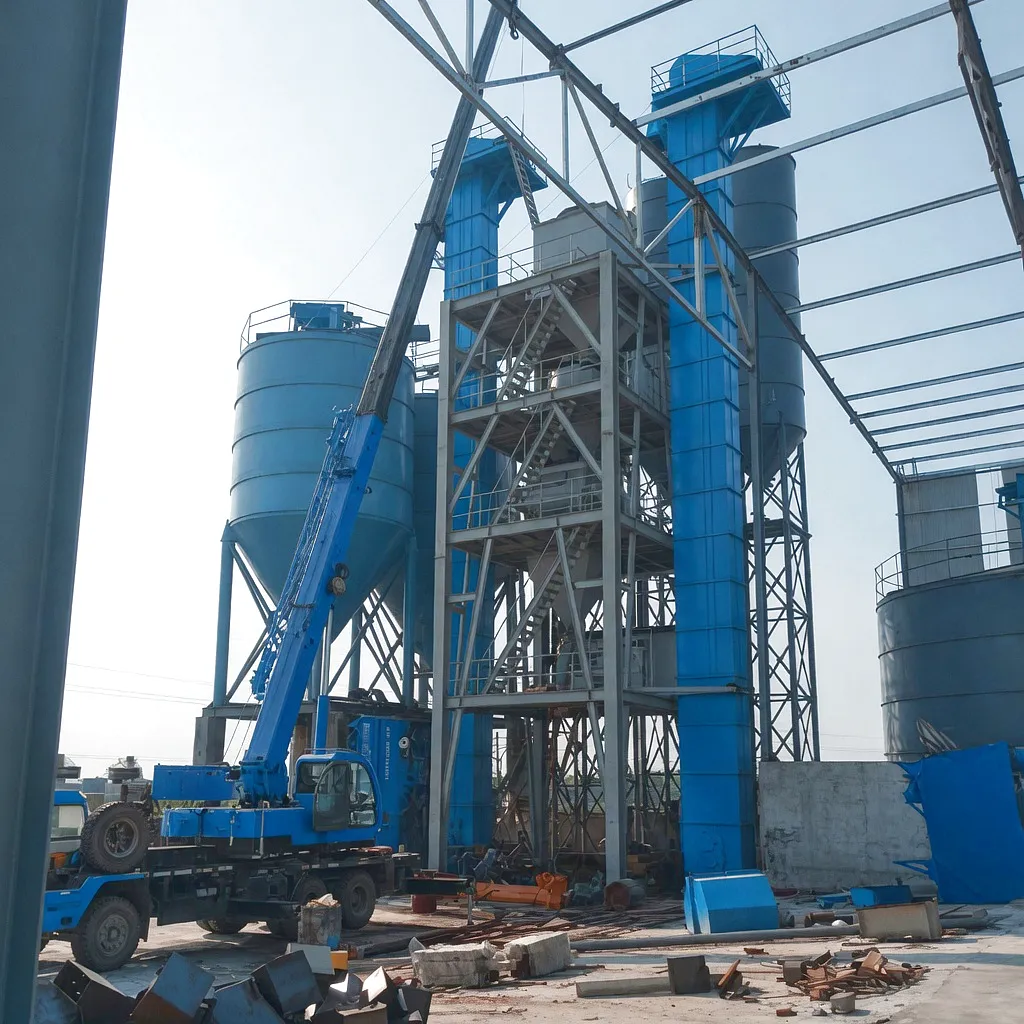
Industrial application worm gear shaft bucket elevator Sheffield

Sheffield Steel Products Ltd, a specialist manufacturer of steel alloy powders and granules supplying the additive manufacturing and sintering industries, approached Ever Power in early 2024 with a chronic reliability problem. Their existing bucket elevator — a 38-metre-tall unit transporting iron-chromium alloy powder from the atomisation unit to blending silos — was experiencing reducer failures at intervals of 14 to 18 months. Post-failure inspection consistently identified the same failure mode: scoring and seizure of the worm wheel bronze at the tooth contact zone, accompanied by evidence of oil starvation on the lower worm thread flanks. The existing OEM reducer carried a standard ISO VG 220 mineral oil fill, which was proving inadequate for the combination of high ambient temperature (40–55°C in the plant during summer production) and the extended continuous duty cycles imposed by the 24/7 production schedule.

Ever Power’s application engineering team conducted a full duty cycle analysis — calculating the actual thermal load on the reducer from the drive power (7.5 kW), ambient temperature profile, and the continuous-duty service factor. This analysis revealed that the existing reducer’s thermal rating was being exceeded by approximately 22% under summer operating conditions, driving oil viscosity below the minimum film thickness required for adequate lubrication of the worm-to-wheel contact. The recommended solution involved three specific interventions: first, upgrading the worm wheel material from standard ZCuSn10Pb1 phosphor bronze to CuAl10Fe5 aluminium bronze, which offers 35% greater thermal conductivity and better performance under oil-starved conditions; second, replacing the mineral oil fill with an ISO VG 320 synthetic PAG-based lubricant specifically formulated for albero a vite senza fine applications; and third, installing an oil-level sight glass and automated thermal cutout switch linked to the drive motor’s PLC.

Worm gear shaft elevator applicationThe Ever Power replacement worm gear shaft reducer was commissioned in May 2024. At the 12-month service inspection in May 2025, the worm wheel tooth faces showed uniform wear within expected parameters — a dramatic contrast to the scoring damage seen at equivalent inspection intervals on the previous unit. Sheffield Steel Products’ maintenance manager confirmed that the annualised cost of unplanned downtime associated with elevator reducer failures had dropped from approximately £48,000 per year to zero in the first full operating year following the Ever Power installation. The direct payback period on the premium-specified replacement reducer and lubrication upgrade was calculated at under seven months, with ongoing savings accruing from both eliminated unplanned downtime and extended planned maintenance intervals.

What Our Customers Say
★★★★★

“The Ever Power worm gear shaft reducer completely solved the heat-related failure cycle we’d been fighting for years. Their application engineering team identified the root cause within a single consultation call and specified the right aluminium bronze wheel and PAG lubricant combination. Twelve months without a single unplanned stop — that’s what we needed.”

James H., Maintenance Manager
Sheffield Steel Products Ltd, South Yorkshire
★★★★★

“We needed a non-standard reduction ratio for our grain elevator retrofit — 37.5:1 is not something you find in any catalogue. Ever Power engineered it to our exact shaft speed requirement, supplied full material certificates, and delivered to our Birmingham depot on schedule. The self-locking performance under full load stop is exactly as specified. We’ve now ordered three more units for our other sites.”

Sarah M., Mechanical Engineering Lead
Midlands Grain Storage & Logistics, Birmingham
★★★★★

“Our fertiliser plant in Teesside operates IP55-rated worm gear shaft reducers from Ever Power on six bucket elevator lines. The epoxy housing coating has shown zero corrosion after two years of potassium chloride dust exposure and regular pressure wash-down. The documentation package — material certs, test reports, dimensional records — is exactly what our QA team requires. Genuinely impressive supply chain reliability.”

David R., Plant Engineering Director
Teesside Agricultural Chemicals, Middlesbrough

Frequently Asked Questions

Q.How does a worm gear shaft prevent a bucket elevator from reversing when the power cuts out mid-lift?

The self-locking mechanism relies on the relationship between the worm’s lead angle and the friction coefficient at the worm-to-wheel contact interface. When the lead angle is kept below the friction angle — typically below 6 degrees — any reverse torque from the load acting on the output shaft cannot generate sufficient axial force to rotate the worm in the reverse direction. The frictional resistance between the hardened steel worm thread and the bronze wheel tooth is greater than the driving force, so the system locks in place without any external power or additional locking device. This is a passive, mechanically inherent characteristic — it works regardless of whether the power failure is sudden or gradual, and it does not require any sensor or actuator to engage.

Q.What is the typical price range for a worm gear shaft reducer for a bucket elevator in the UK, and what factors affect the cost?

The cost of a worm gear shaft reducer for a bucket elevator application in the UK varies significantly based on output torque rating, centre distance, material specification, and any customisation requirements. Standard catalogue-range units in the 500–2,000 N·m output torque bracket typically carry list prices of £350 to £1,800 ex-works, with UK landed cost adding import duty and freight. Custom-engineered units with non-standard ratios, special material specifications, or food-grade certification packages can reach £3,000 to £8,000 or more depending on size. The investment in a correctly specified premium unit typically pays back within 6 to 18 months through reduced downtime and extended service intervals compared to an underspecified catalogue alternative. Contact Ever Power at [email protected] for a detailed quote matched to your specific application.

Q.Which worm gear shaft supplier in the UK can provide custom reduction ratios for a grain elevator upgrade project in Birmingham?

Ever Power specialises in precisely this type of engineered solution. Non-standard reduction ratios — anything that falls between or outside standard catalogue steps — can be manufactured to your exact specification, with full dimensional confirmation via CMM inspection report. For grain elevator retrofit projects in Birmingham and across the West Midlands, Ever Power offers fast-track quotation within 48 hours and maintains stock of common blank worm shaft materials to minimise lead time on custom gear-cutting. Delivery to Birmingham distribution points or direct to site is arranged through our established UK freight partners. Send your duty cycle data, existing shaft dimensions, and required output speed to [email protected] to begin the engineering review process.

Q.How do I calculate what output torque I need from the worm gear shaft reducer for my bucket elevator application?

The required output torque from the worm gear shaft reducer is calculated from the drive power (P, in kW), the output shaft speed (n, in rpm), and an appropriate service factor. The base formula is: Output Torque (N·m) = (9550 × P) / n. However, this gives only the nominal torque; the design torque must be multiplied by a service factor that accounts for start-up loading, shock frequency, and daily operating hours. For a bucket elevator starting under full load with direct-on-line starting, the service factor typically ranges from 1.5 to 2.5. The Ever Power application engineering team can perform this calculation for your specific installation parameters — contact us with motor kW rating, required chain speed, head pulley diameter, and elevator capacity to receive a formal drive selection report.

Q.Where can I find a reliable worm gear shaft supplier who can deliver to Sheffield for an urgent replacement on a bucket elevator that is out of service?

Ever Power maintains an emergency replacement programme for critical bucket elevator drives. When an elevator is out of service, production downtime costs can reach thousands of pounds per day, making fast response a commercial priority. For Sheffield and the wider South Yorkshire area, Ever Power can supply catalogue-range worm gear shaft reducers via expedited air freight from our manufacturing facility, with typical door-to-door transit of 3 to 5 working days. For dimensional cross-referencing against your failed unit, email photographs of the existing nameplate and shaft dimensions to [email protected] along with your required delivery address, and our team will confirm availability and lead time within the same business day.

Q.What is the recommended service interval for a worm gear shaft reducer on a continuous-duty bucket elevator handling fertiliser in a UK chemical plant?

For continuous-duty fertiliser handling applications — which are considered a severe service classification due to corrosive dust environments, potential temperature extremes, and high daily operating hours — the recommended maintenance schedule for a worm gear shaft reducer is as follows: oil level check and seal inspection every 1,000 hours; full oil change and bearing condition assessment every 4,000 hours (or 12 months, whichever is sooner when using mineral oil); worm wheel tooth contact pattern inspection every 8,000 hours; and complete reducer overhaul or planned replacement at 15,000 to 20,000 hours. Switching to a synthetic PAG lubricant can extend oil change intervals to 8,000 hours in clean environments, reducing maintenance frequency and total lubricant consumption over the service life of the unit.

Q.When should I choose a worm gear shaft reducer over a helical bevel gearbox for a new bucket elevator installation in a UK grain handling facility?

The worm gear shaft reducer is the preferred choice when any one of four conditions applies: the required reduction ratio exceeds 30:1 (making a single-stage worm arrangement more compact and lower cost than a two-stage helical bevel), the drive system requires inherent self-locking against reversal under load without additional backstop devices, the installation envelope requires a 90-degree input-to-output arrangement in an unusually compact headhouse, or the operational noise specification is below 75 dB(A). Where the primary requirement is high drive efficiency (above 90%) and the self-locking function can be provided by a separate ratchet backstop, a helical bevel gearbox will offer lower running energy costs. For most standard grain elevator applications in the UK, where installation simplicity and fail-safe reversal prevention are the dominant design drivers, the worm gear shaft reducer remains the more economical and technically appropriate solution overall.

Ready to Specify Your Drive?
Get a Custom Worm Gear Shaft Quote from Ever Power

Send your application parameters, drive duty cycle, and delivery location to our engineering team. Response within one business day.


✉ Contact Ever Power — [email protected]

edit by gzl