Ever Power | Precision Mechanical Transmission

Worm Gear Shaft in Overhead Crane Hoist Mechanisms: The Secondary Safety Lock That Protects Every Lift

A deep technical guide to worm gear shaft design, self-locking principles, material selection, and industrial deployment — with a focused look at how Britain’s manufacturing sector depends on this critical component.

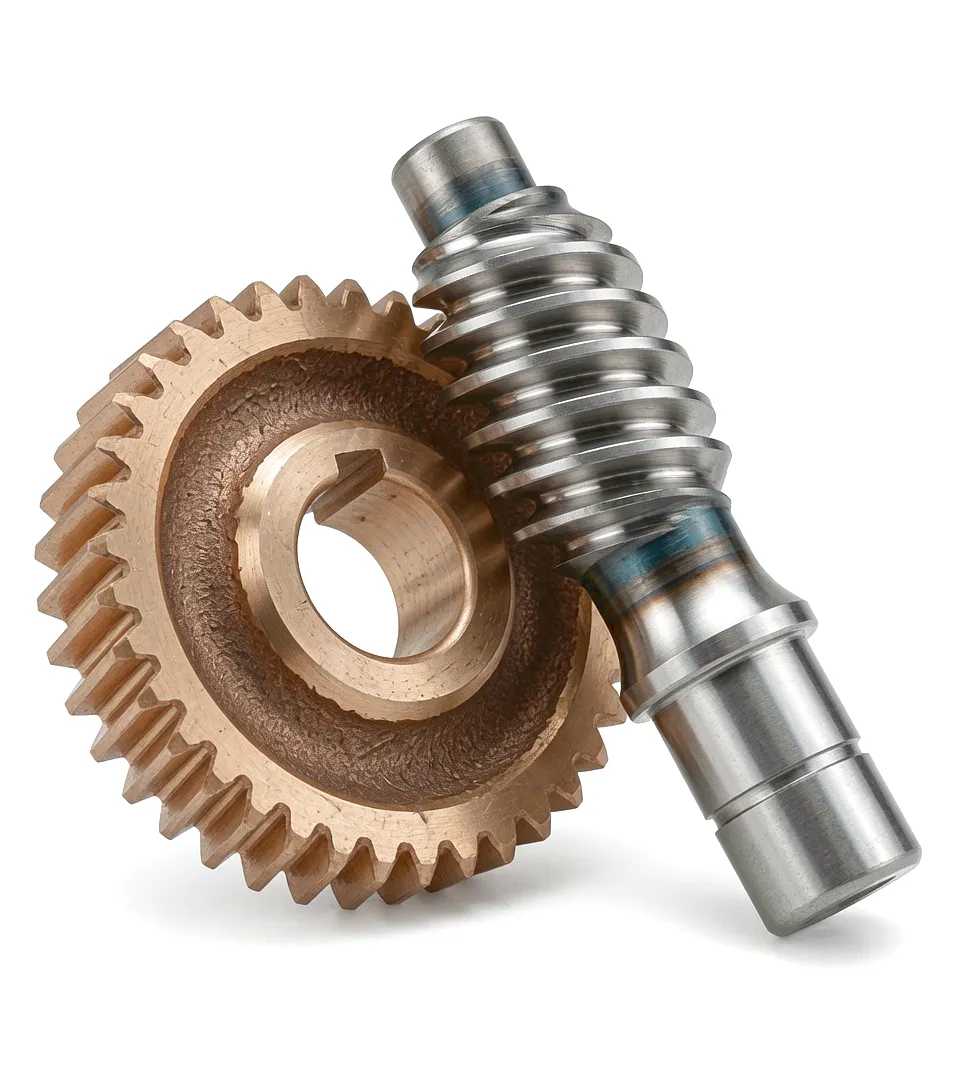
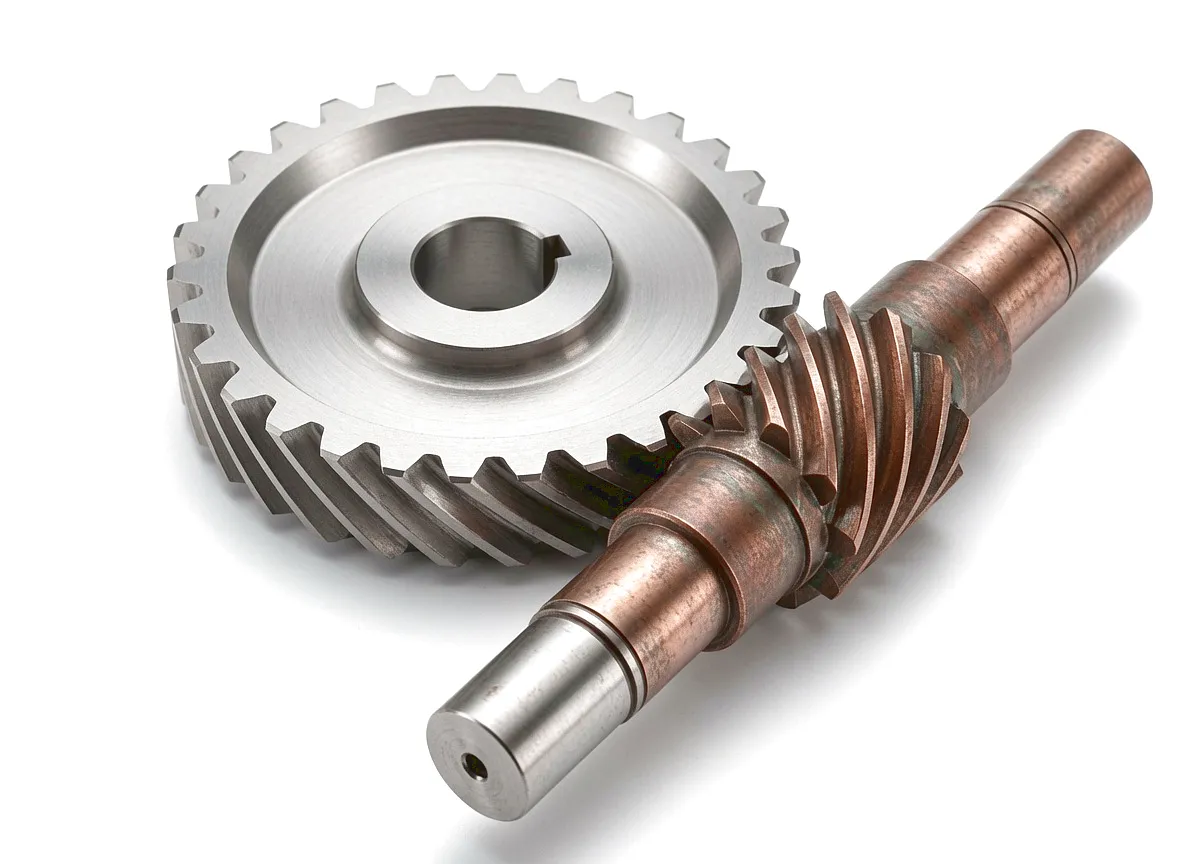
Worm gear shaft precision component by Ever Power

In overhead crane hoist systems, the primary drive train almost always relies on a wound-rotor induction motor or a variable-frequency drive motor, channelling rotational power through a cylindrical gear reducer to move the drum that raises and lowers wire ropes. Within this chain of precision components, the worm gear shaft occupies a uniquely critical position. Rather than acting purely as a power transmission element, it functions as what engineers call a secondary safety lock — positioned downstream of the main gear reducer, ready to engage its inherent self-locking characteristic the moment the primary brake fails. This self-locking nature is not a side effect; it is a designed-in physical law derived from the geometry of the helix angle and the friction between the worm shaft and the mating gear wheel. When something goes wrong at the primary brake, the worm gear shaft quietly holds the load in place, giving workers on the factory floor the seconds they need to step back, assess the situation, and activate emergency protocols.

For heavy industry in the UK — from the steel fabrication plants of Sheffield and the engineering workshops of Birmingham to the port logistics facilities of Southampton and the offshore fabrication yards of Aberdeen — reliable crane operation is not optional. It is the backbone of daily production. A worm gear shaft that fails to hold its load does not merely cause downtime; it creates a life-safety event. This is why procurement engineers, maintenance managers, and plant directors across Britain have consistently specified precision-manufactured worm gear shafts from trusted global suppliers with proven track records in exact-tolerance production. Understanding what makes a quality worm gear shaft, how it works inside an overhead crane hoist, and what specifications to demand when sourcing one is no longer a specialist academic exercise — it is essential operational knowledge.

📧 Get a Quote — [email protected]

Fast response · Custom specifications · UK market experience

How a Worm Gear Shaft Works Inside a Crane Hoist

Mechanical Principle & Self-Locking Theory

Helical Thread Engagement

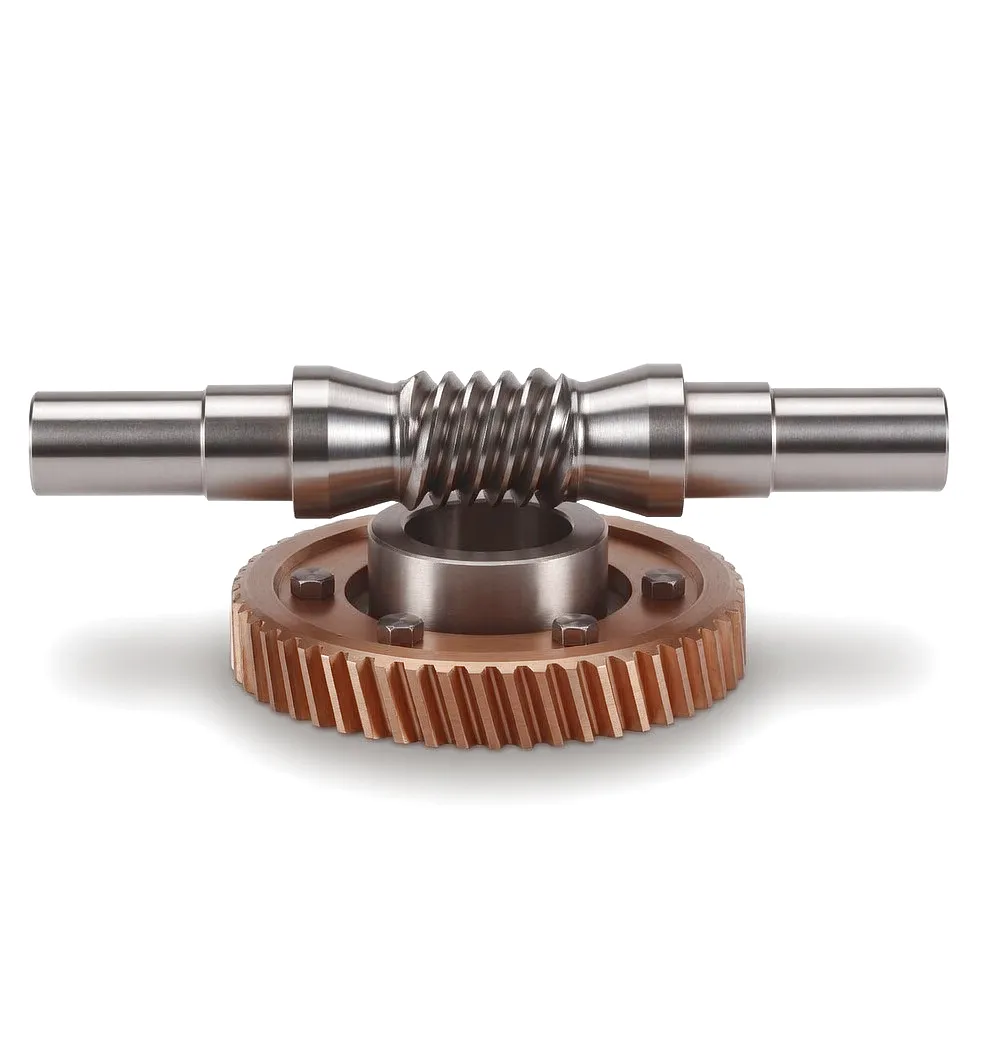
The worm gear shaft resembles a threaded screw with a precisely calculated lead angle. As it rotates, the helical thread meshes with the teeth of the bronze or cast-iron worm wheel, converting high-speed rotary motion into slow, high-torque output. The critical design variable is the lead angle — the angle between the helix of the thread and the plane perpendicular to the shaft axis. When this angle is kept below the friction angle (typically between 4° and 6° for cast iron surfaces), the worm can drive the wheel but the wheel cannot back-drive the worm. This irreversibility is the mechanical foundation of the self-locking safety behaviour so prized in overhead crane applications.

🔒

Self-Locking Safety Mechanism

In a bridge crane’s hoist mechanism, the worm gear shaft is mounted downstream of the main cylindrical gear reducer. Under normal operating conditions, the electric motor provides forward drive and the worm gear shaft transmits torque to the drum shaft, raising or lowering the load smoothly. The moment the primary electromagnetic brake loses holding force — whether through a power cut, a mechanical failure, or a control system fault — the suspended load generates a reverse torque on the output shaft. Instead of allowing the wheel to spin backwards and the load to freefall, the worm gear shaft locks in place. Contact friction between thread flanks and wheel teeth prevents any reverse rotation, giving maintenance crews and crane operators the critical seconds needed for a safe emergency response. This is not merely a convenience; in many UK plant safety frameworks, a secondary mechanical anti-drop device is a formal engineering requirement.

📈

Torque Transmission & Gear Ratio

Worm gear shaft assemblies used in crane hoist systems typically achieve gear ratios ranging from 10:1 to 70:1 within a single-stage unit — a reduction that would require multiple gear stages if achieved with spur or helical gears. The output torque from the worm gear shaft is therefore dramatically higher than the input torque from the motor shaft, making it possible to lift very heavy loads with a relatively compact and lightweight drive package. The efficiency of power transmission through the worm gear pair varies with the lead angle: higher lead angles improve efficiency but reduce self-locking reliability, while lower lead angles guarantee lock but increase heat generation and reduce overall transmission efficiency. For crane safety lock applications, engineers deliberately choose lead angles at the conservative end to ensure reliable self-locking under the maximum rated load.

Core Materials for Worm Gear Shaft Manufacturing

Material Selection & Metallurgical Standards
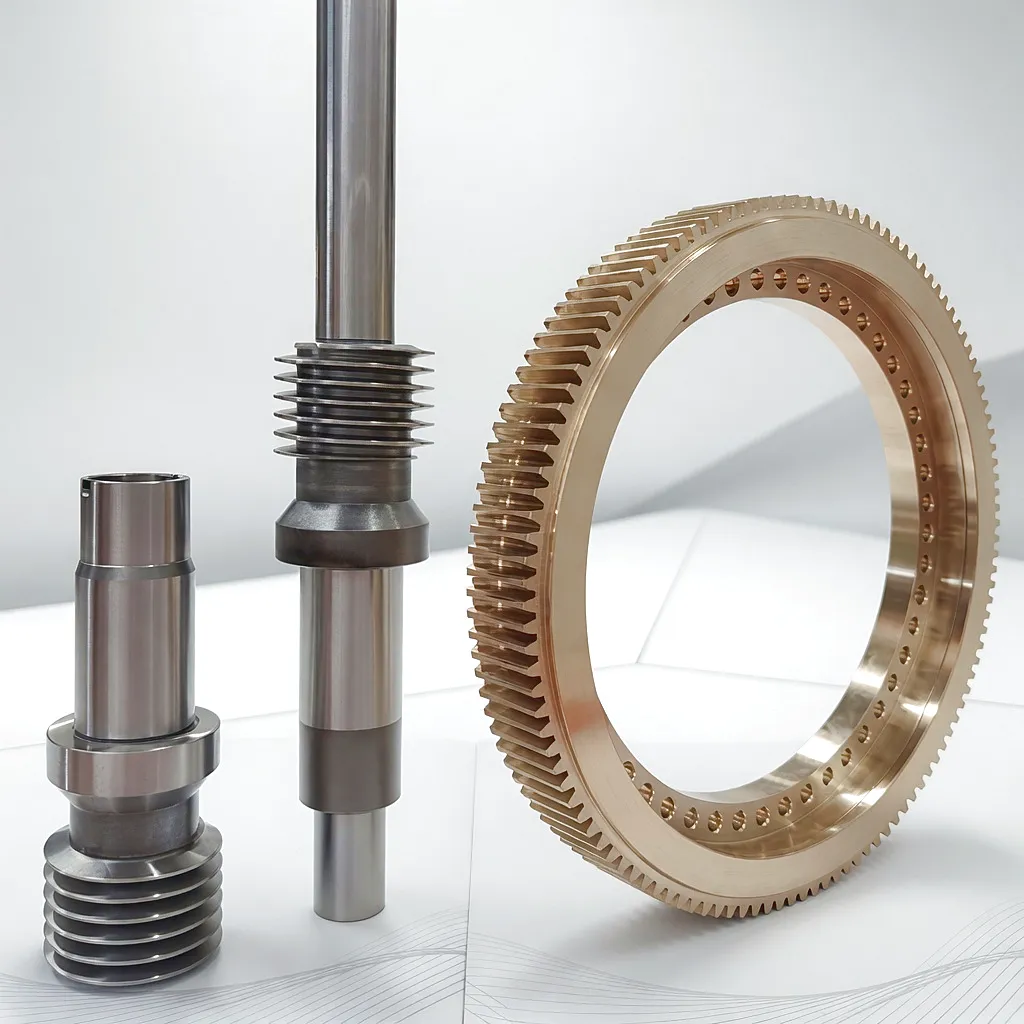
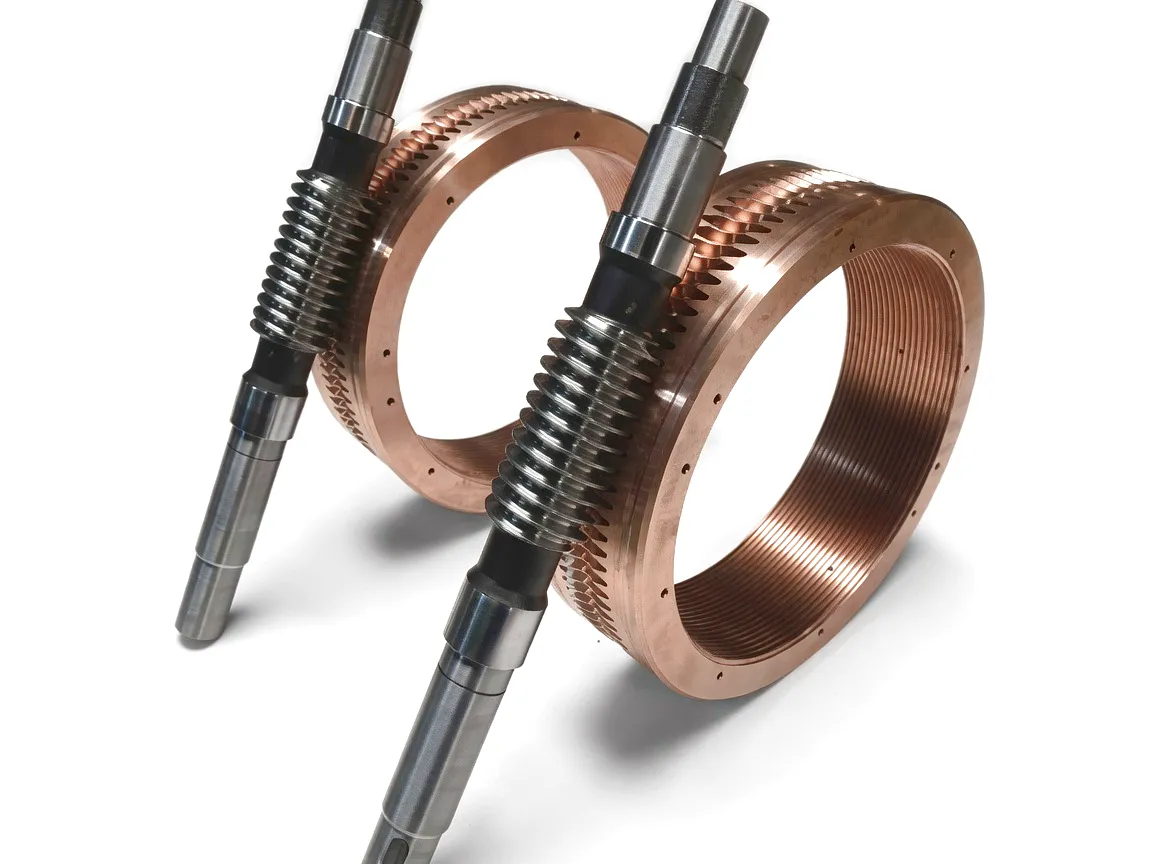
Worm gear shaft material and precision machining

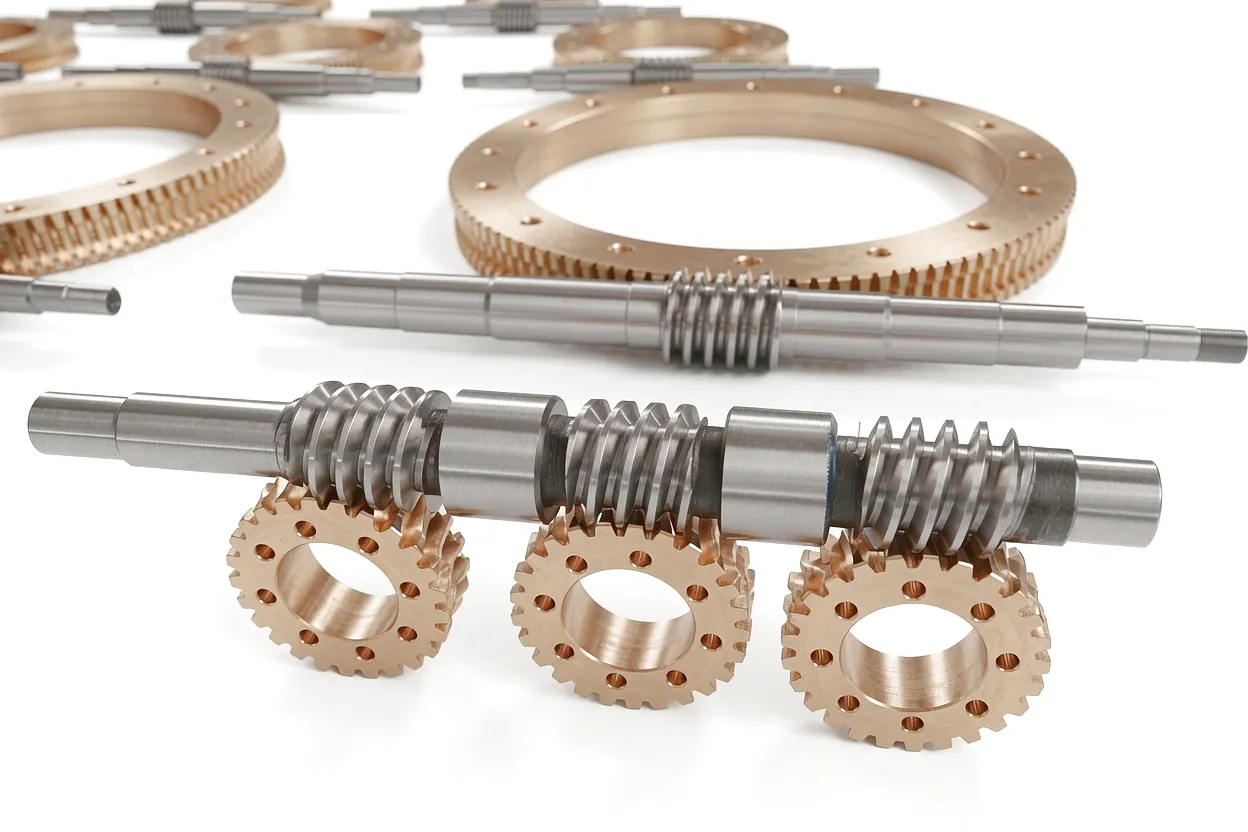
The material pairing of worm and wheel is one of the most consequential decisions in the design of a worm gear shaft assembly. For the worm shaft itself — the driven helical screw element — engineers almost universally choose case-hardened alloy steels such as 20CrMnTi, 20CrMo, or the widely specified 42CrMo4. These steels combine a hard, wear-resistant outer case with a tough, ductile core, allowing the shaft to withstand the intense sliding contact that characterises worm gear meshing without developing surface fatigue cracks. After rough machining, the shaft is carburised or carbonitrided, heat-treated to a surface hardness of 58–62 HRC, and then precision-ground on the thread flanks and journal diameters to achieve the final thread profile tolerance. UK buyers procuring to BS EN ISO 1328 standards will recognise the importance of specifying thread quality grade alongside hardness and material certificates.

For the mating worm wheel, the conventional choice is a centrifugally cast phosphor bronze (such as CuSn12) or a tin bronze alloy machined with high-precision hobbing. Bronze is selected because its low coefficient of friction against hardened steel minimises heat generation during the sliding contact, prolongs service life under continuous operation, and provides a natural self-polishing effect that improves meshing contact over the initial run-in period. In high-duty cycle crane applications — such as the heavy slabbing cranes used in Sheffield’s remaining steel mills — aluminium bronze grades with higher tensile strength are sometimes specified instead of standard tin bronze, providing better resistance to the heavy shock loads that occur during rapid lifts or emergency stops.

42CrMo4 Alloy Steel
Surface hardness 58–62 HRC after case hardening. Tensile strength up to 1100 MPa. Excellent fatigue resistance under cyclic bending and torsional loads.
20CrMnTi Carburised Steel
Case depth 0.8–1.2 mm. Core hardness 35–45 HRC. Preferred for worm shafts in medium-duty and heavy-duty crane hoist units due to toughness-to-wear balance.
🔥
CuSn12 Phosphor Bronze
Used for worm wheel. Low friction against hardened steel. Self-polishing under load. Tensile strength 280–360 MPa. Corrosion-resistant in oily environments.
💫
Aluminium Bronze (CuAl10)
Higher tensile strength than tin bronze (~600 MPa). Suited for shock loading in heavy-duty crane applications such as smelting and forge shop overhead cranes.

Core Technical Advantages of the Worm Gear Shaft

Why engineers specify worm gear shafts over alternative drive solutions

High Gear Ratio in Compact Footprint

A single worm gear shaft stage routinely delivers ratios from 10:1 to 70:1, and in some heavy-duty crane hoist configurations up to 100:1. This makes it possible to achieve the extremely low output speeds and high torque multiplications needed for lifting operations without stacking multiple gear stages, which would increase the drivetrain’s axial length, weight, and potential failure points. For crane designers working within tight headroom constraints — a common challenge in Birmingham’s automotive press shops or in the older industrial buildings of Manchester — this compactness is a genuine engineering advantage.

Inherent Self-Locking — No Additional Brake Required

Unlike spur gears, helical gears, or bevel gears — which can all back-drive freely — a correctly designed worm gear shaft with a low lead angle cannot be driven in reverse by an axial load on the output shaft. This means that when it is deployed as a secondary safety device in a crane hoist, the load remains stationary even if the motor is switched off, the brake pads are worn through, or the hydraulic brake circuit loses pressure. In practice, this is a passive, mechanical safety assurance that does not depend on any electrical power, hydraulic pressure, or electronic control logic — it works because of physics, which means it works reliably even in a total power failure scenario.

Low Noise and Smooth Operation

The sliding contact mechanism between the worm thread and the wheel teeth, lubricated with a film of gear oil, produces far less impact noise than spur or bevel gear meshing, where tooth contact is more abrupt. For overhead crane applications in environments where noise control is a health and safety consideration — such as indoor production halls in UK automotive assembly plants or the assembly bays of aerospace component manufacturers — the quieter operation of the worm gear shaft is a practical operational benefit that crane specifiers actively seek out when evaluating drive configurations.

Right-Angle Drive Configuration

The worm gear shaft transmits power between two shafts that are perpendicular to each other — typically the input (worm) shaft is horizontal and the output (wheel) shaft is also horizontal but at 90 degrees. This orthogonal arrangement is extremely well suited to crane hoist drum arrangements, where the motor shaft and the drum shaft are seldom aligned in the same plane. The right-angle configuration allows machinery designers to fit the drive package into confined headroom spaces without resorting to bevel or spiral bevel gear pairs, which are more expensive to manufacture and more sensitive to mounting alignment errors.

Worm Gear Shaft Technical & Performance Parameter Table

Standard specifications for crane hoist and industrial transmission applications

ParameterStandard RangeHeavy Duty RangeNotes
Gear Ratio (i)10:1 – 40:140:1 – 100:1Single stage; higher ratios via compound
Output Torque50 – 500 N·m500 – 20,000 N·mDependent on centre distance and material
Lead Angle (gamma)3° – 10°3° – 5° (safety lock)Below friction angle for self-locking
Shaft Material (Worm)42CrMo4 / 20CrMo20CrMnTi (carburised)Case hardened to 58–62 HRC
Wheel MaterialCuSn12 Phosphor BronzeCuAl10 Aluminium BronzeBronze centrifugally cast for uniformity
Thread Profile StandardZA / ZN (archimedes)ZK (involute)ZK suits grinding; superior surface finish
Transmission Efficiency70% – 85%45% – 70% (low lead angle)Lower efficiency = stronger self-lock
Centre Distance Range40 – 200 mm200 – 630 mmCustom centre distances available on request
Operating Temperature-20°C to +80°C-40°C to +100°C (special grade)Synthetic lubricant extends upper range
Thread Quality GradeISO 1328 Grade 7–9ISO 1328 Grade 4–6Grade 4–6 requires CNC grinding
Surface Roughness (Ra)Ra 0.8 – 1.6 umRa 0.4 – 0.8 umThread flanks ground and polished

Industrial Application Scenarios

Where worm gear shafts are specified across British and global industry
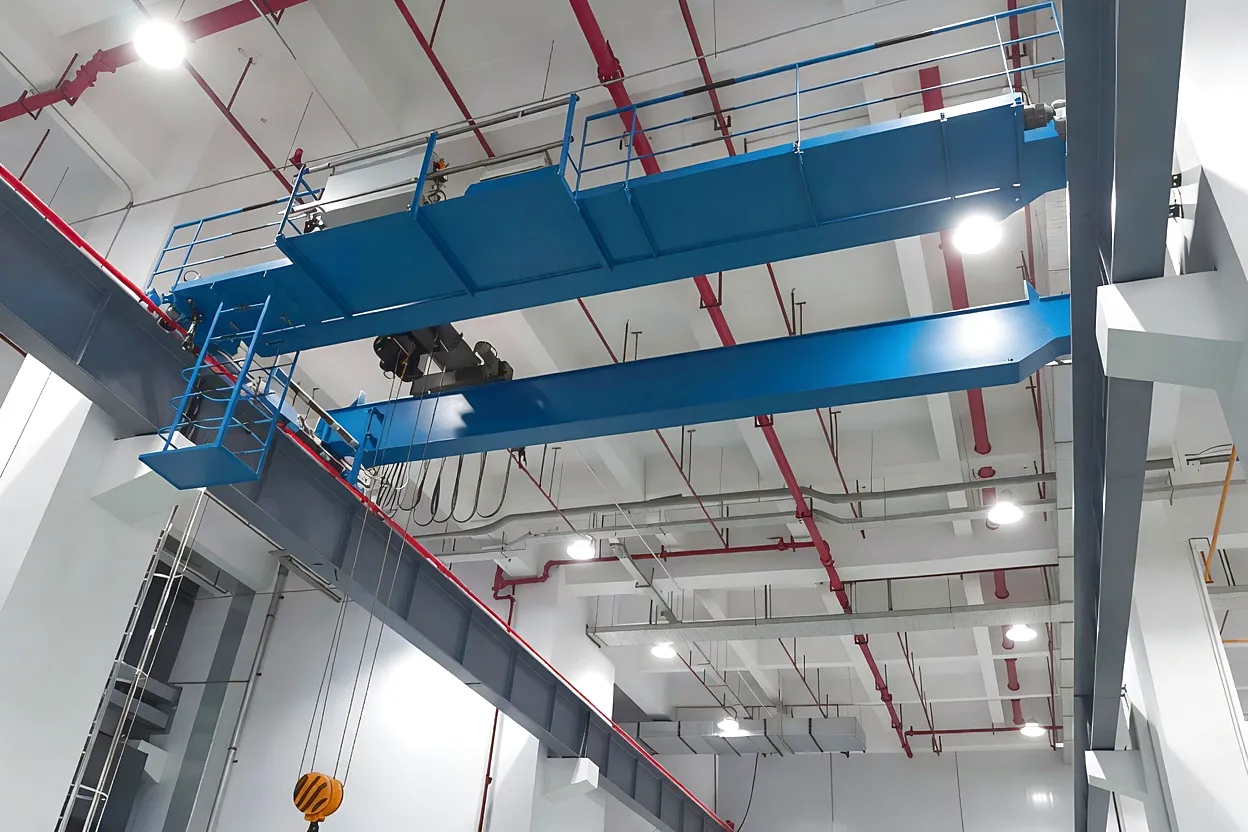
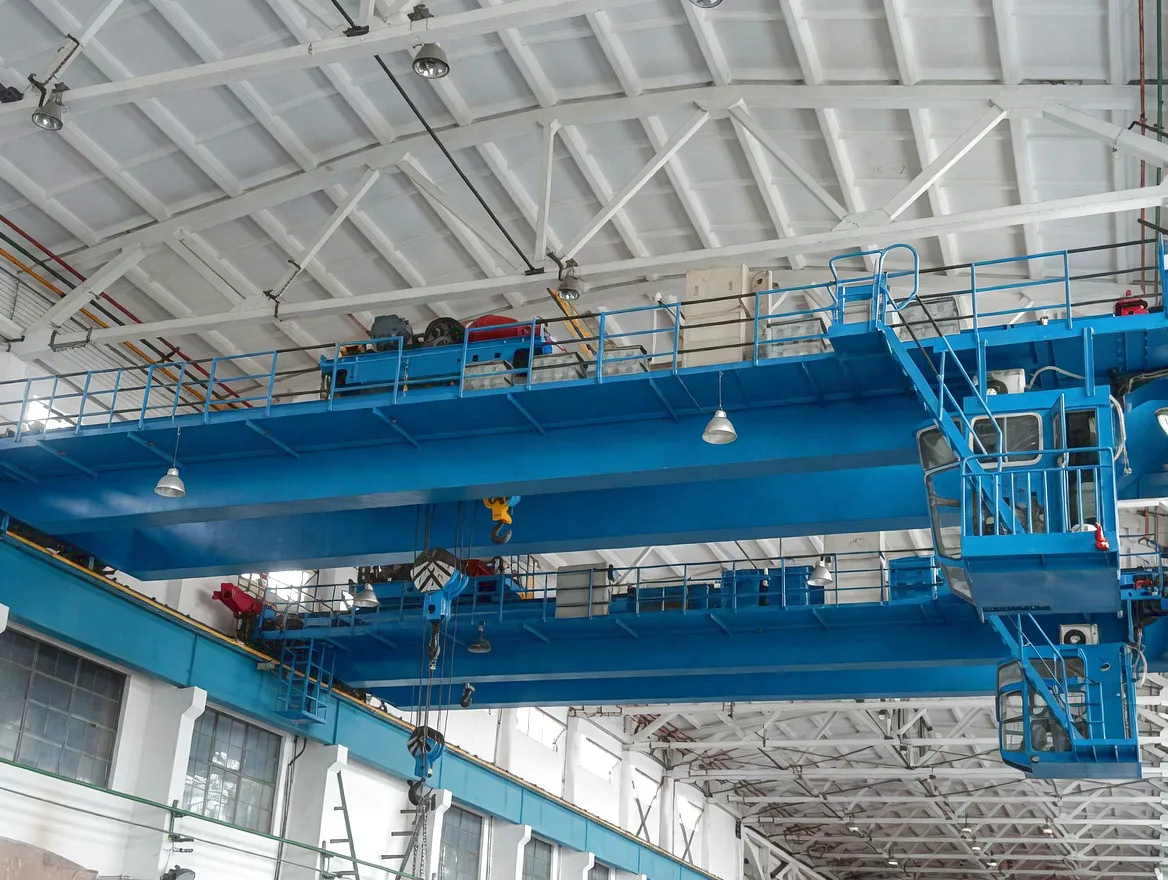
Overhead crane hoist with worm gear shaft safety lock

Bridge crane and overhead travelling crane hoist mechanisms represent the most safety-critical application for worm gear shafts in the UK market. Every operational overhead crane used to lift personnel access platforms, hot metal ladles, or heavy forgings is governed by the Lifting Operations and Lifting Equipment Regulations (LOLER) 1998, which demand that lifting equipment is strong enough, adequately stable, and that there is sufficient mechanical means to prevent loads from dropping uncontrolled. The worm gear shaft positioned as a secondary safety lock directly satisfies this last requirement. Facilities in Sheffield manufacturing steel sections, Birmingham pressing automotive body panels, and the heavy engineering works of Newcastle and Teesside have all specified worm gear shaft safety locks as part of their overhead crane upgrade programmes in recent years — not merely for regulatory compliance, but because the mechanical certainty of a worm-locked load is a comfort that no electronic brake can fully replicate.

Worm gear shaft in conveyor drive

Inclined Conveyor Drives

On bulk material handling systems — coal conveyors in power stations, aggregates lines in quarries across Yorkshire and the Midlands, and grain conveyors in East Anglian food processing facilities — worm gear shafts are deployed at the head drive to provide a hold-back function. If the drive motor trips, the worm gear shaft prevents the loaded incline belt from running backwards under gravity, protecting both the belt structure and the personnel who may be working near the conveyor’s lower section.
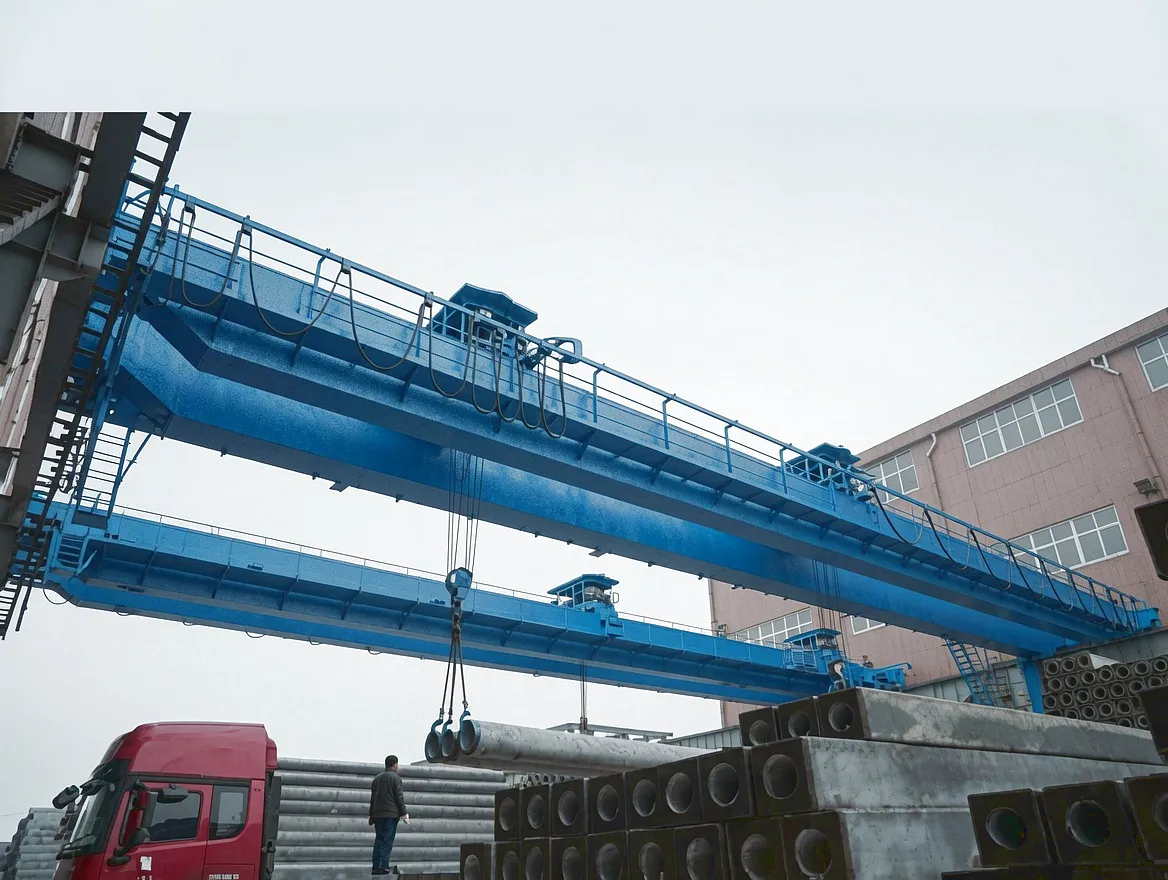
Worm gear shaft in industrial gate valve

Valve & Sluice Gate Actuators

Water treatment infrastructure, flood defence sluice gates, and process plant valve actuators across the UK use worm gear shafts as standard because the self-locking feature keeps gate valves and butterfly valves in any commanded position without requiring continuous brake torque. Thames Water and other major utilities specify worm-driven gate actuators for this reason — once the operator drives the valve to the required position, cutting the actuator power leaves the valve locked in place, preventing unauthorised movement caused by process pressure differentials.
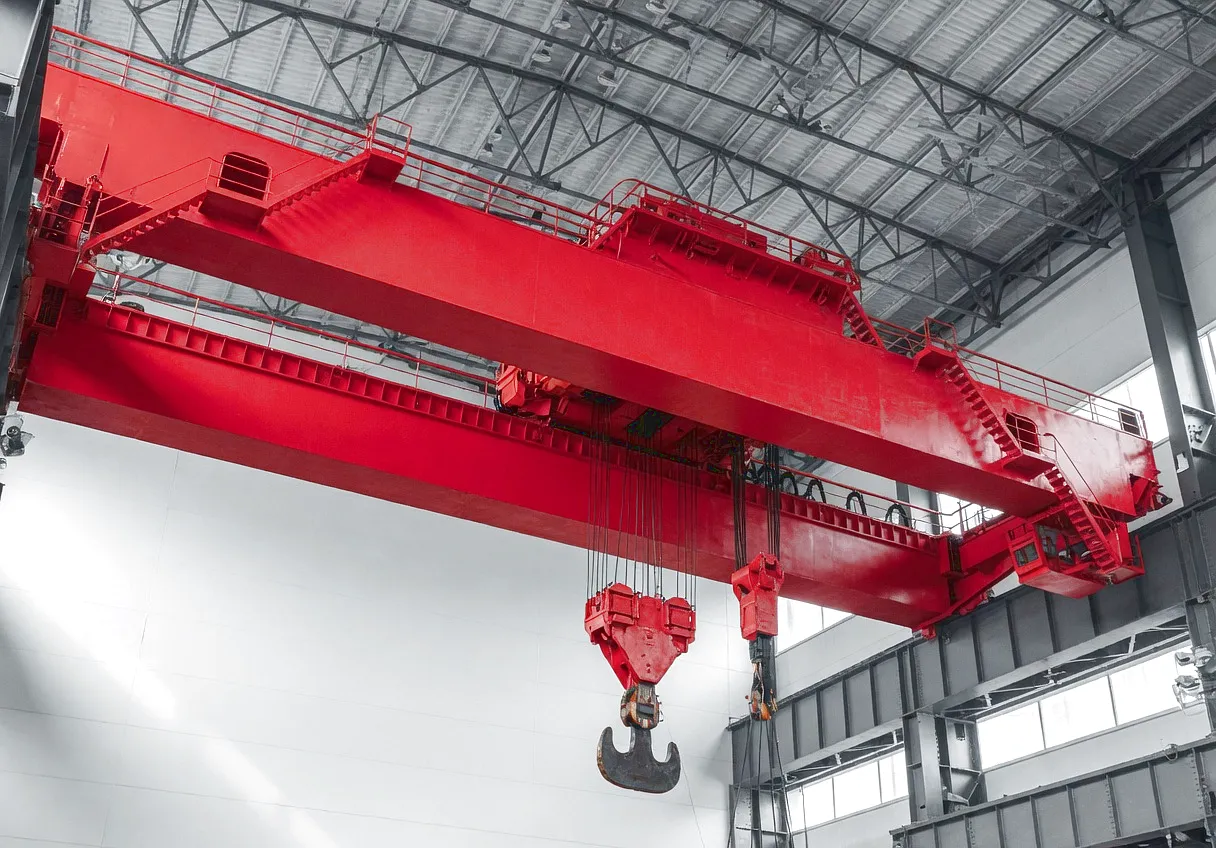
Worm gear shaft in stage machinery lift

Stage Machinery & Arena Lifts

The entertainment industry uses worm gear shafts extensively in theatre stage lifts, counterweight flying systems, and arena video screen hoists. In venues such as the O2 Arena in London, the AO Arena in Manchester, or the First Direct Arena in Leeds, stage automation equipment carrying heavy scenery pieces or performers must positively hold position during power interruptions. Worm gear shafts used in these systems undergo rigorous PSSR 2000 compliance checks and are typically specified with redundant encoder feedback systems to monitor position drift, but it is the worm shaft’s mechanical lock that is the last line of physical defence.

Additional Applications Across UK Industry
Offshore wind turbine pitch drives
Rail track maintenance equipment
Robotics joint actuators (collaborative robots)
Ship deck winches and mooring capstans
Food processing dosing and filling machines
Printing press tension rollers
Agricultural feed augur drives

Ever Power: Precision Worm Gear Shaft Manufacturing

Custom fabrication · Advanced CNC grinding · Global supply chain
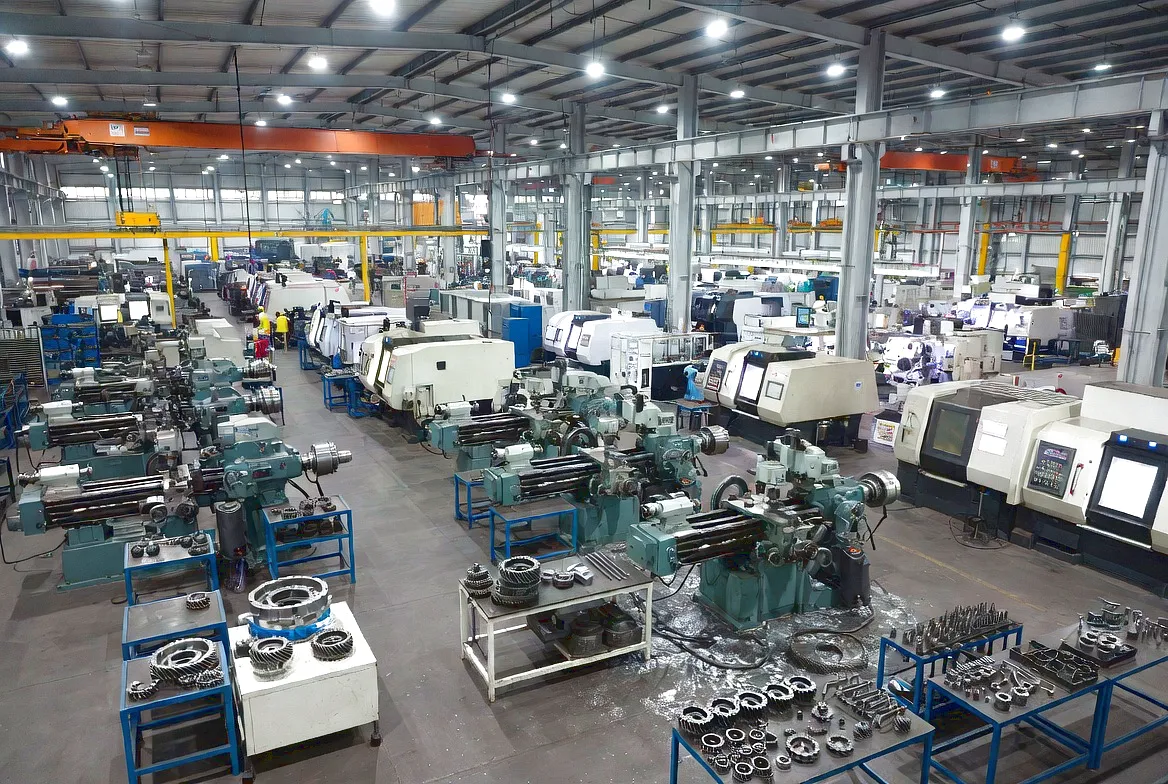
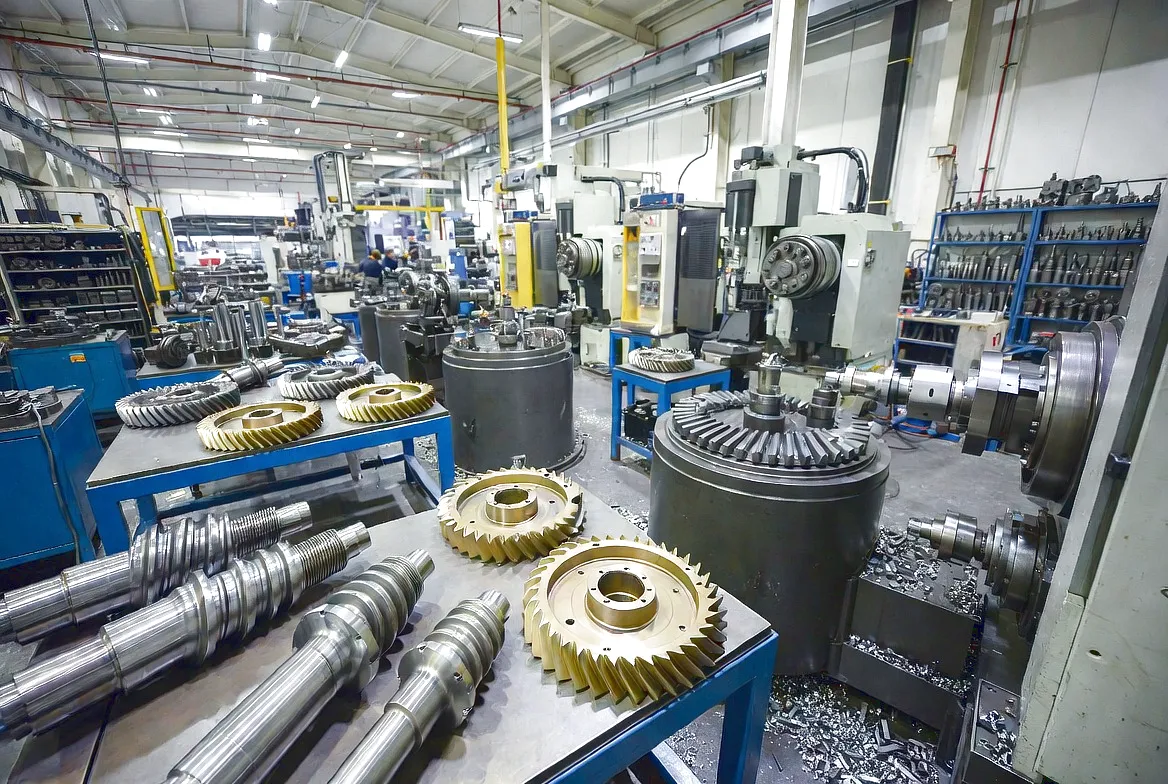
Ever Power worm gear shaft manufacturing workshop
Ever Power precision CNC machining of worm shafts

Ever Power has built its reputation over more than two decades as a specialist in the design and manufacture of precision worm gear shafts for demanding industrial applications. The company’s production facility operates with a fleet of Mazak and DMG Mori CNC thread grinding centres capable of achieving thread profile tolerances to ISO 1328 Grade 4 — a standard that few competitors in the global marketplace can consistently deliver. Every worm shaft that leaves Ever Power’s facility passes through a coordinate measuring machine (CMM) inspection cycle, with the full inspection report provided as standard documentation for customers requiring full material and dimensional traceability.

For UK buyers, Ever Power offers a dedicated customs clearance and documentation service, ensuring that worm gear shafts arrive with all necessary material certificates, dimensional inspection records, and CE-compatible documentation required for compliance with UK PSSR 2000 and LOLER 1998 frameworks. Delivery to Birmingham, Sheffield, Manchester, Glasgow, and other UK industrial centres is typically achievable within agreed lead times established at the quotation stage, with express freight options available for planned maintenance shutdowns or urgent replacement situations.

Ever Power’s customisation capabilities extend well beyond standard catalogue dimensions. The engineering team regularly works with procurement and design engineers to develop albero a vite senza fine assemblies with non-standard centre distances, multi-start thread configurations, flanged output shaft options, integrated encoder mounting provisions, and special material grades for applications involving elevated temperatures, corrosive environments, or food-grade cleanliness requirements. Customers are encouraged to share their application drawings and duty cycle data early in the enquiry process, allowing Ever Power’s engineers to recommend the most appropriate thread profile, material pairing, and heat treatment specification for the exact duty.

Start Your Custom Worm Gear Shaft Project

Share your drawing, specification, or application requirements. Ever Power’s engineering team responds to all enquiries within one working day.
📧 Get a Quote from Ever Power

🎯
ISO 1328 Grade 4
Thread grinding precision — tightest tolerance tier available
📋
Full CMM Inspection
Dimensional reports & material certs with every shipment
Custom Design Service
Non-standard dimensions, profiles & alloys on request
🚚
UK-Ready Logistics
UKCA documentation, DDP shipping, UK import support
📅
Flexible Lead Times
Scheduled production or priority manufacturing for urgent orders

Ever Power worm gear shaft product
Worm shaft precision product
Worm gear shaft component Ever Power

Customer Success Story

Sheffield, South Yorkshire — Heavy Press Shop Crane Upgrade
🏭
Rotherham Precision Forging & Press Co. Ltd.
Rotherham, South Yorkshire — Steel Forging & Heavy Press Operations

Worm gear shaft advantages and technical featuresRotherham Precision Forging & Press Co. Ltd. operates a 1,200-tonne hydraulic press shop that produces near-net-shape steel forgings for the UK rail and defence industries. Their ageing overhead bridge crane fleet — a bank of four 20-tonne and 50-tonne units installed in the early 2000s — was flagging in the LOLER inspection reports because the original electromagnetic braking systems on three of the hoists showed signs of thermal wear and inconsistent holding torque. The plant’s health and safety manager, working with an independent lifting equipment inspector, identified the need for a secondary mechanical anti-drop system that would provide a passive safety backstop independent of the electrical control system.

After reviewing three potential suppliers, Rotherham Precision selected Ever Power as their worm gear shaft partner based on Ever Power’s ability to deliver bespoke shaft assemblies with non-standard centre distances that matched the original gear reducer output shaft geometry without requiring extensive modifications to the crane bridge structure. Ever Power’s engineers reviewed the crane’s duty class (M6 under FEM classification), the maximum rated load of 50 tonnes, the proposed duty cycle, and the operating temperature range within the press shop — where ambient temperatures near the furnace bays regularly reach 45°C — before proposing a 42CrMo4 worm shaft with a CuAl10 aluminium bronze wheel, a lead angle of 4.5°, and synthetic VG460 worm gear oil to ensure adequate lubrication at elevated temperatures.

The complete worm gear shaft assemblies were delivered within the agreed 28-day lead time, arriving at the Rotherham site with full dimensional inspection certificates, material mill certs for both the worm shaft and wheel, and a detailed installation and commissioning guide prepared by Ever Power’s technical team. The crane retrofit was completed over a scheduled bank holiday maintenance shutdown, with all four cranes returning to service within 72 hours. Twelve months after commissioning, the plant reported zero unexpected hoist events, and the units passed their annual LOLER thorough examination with no lifting equipment defects noted on the hoist mechanism. The plant is currently planning a further order to extend the same safety upgrade to their secondary crane fleet.

💬 What Our Clients Say

“We specified a self-locking lead angle of 4.5° and the unit has held every test load we have put through it without a micron of drift. The thread finish quality on the delivered shaft was genuinely better than what we received from two previous European suppliers. Ever Power’s willingness to provide the aluminium bronze wheel option rather than pushing a standard phosphor bronze unit showed they understood our duty conditions.”

— Plant Engineering Manager, Rotherham Precision Forging & Press Co. Ltd., Sheffield
★★★★★

“The documentation pack that arrived with the worm gear shaft assemblies was exactly what our LOLER-competent person needed to sign off the installation. Full CMM report, mill certs, and a hardness test record for every shaft. We did not have to chase for a single document. That level of traceability support is rare from an overseas supplier and it made the inspection process straightforward.”

— Lifting Equipment Safety Officer, Heavy Engineering Works, Birmingham
★★★★★

“We ordered a custom worm gear shaft with an extended output stub to fit a bespoke encoder mounting bracket. Ever Power turned around the revised drawing for approval within 48 hours and the manufactured part matched the drawing perfectly on first article inspection. Lead time of 21 working days for a non-catalogue part was impressive. We have now made Ever Power our preferred worm gear shaft supplier for all our new crane hoist designs.”

— Senior Mechanical Design Engineer, Crane & Hoist OEM, Manchester
★★★★★

Frequently Asked Questions

Technical & commercial questions from UK industrial buyers

How does a worm gear shaft function as a secondary safety lock in a UK overhead bridge crane hoist system?

In a bridge crane hoist, the worm gear shaft is positioned downstream of the main cylindrical gear reducer. The worm shaft’s lead angle is deliberately kept below the contact friction angle — typically between 3° and 5°. This geometry means the worm can transmit torque from the motor to the drum, but any reverse torque generated by a hanging load cannot back-drive the worm. If the primary electromagnetic brake fails during a lift, the worm gear shaft’s self-locking action arrests any load movement, holding the suspended weight stationary without any electrical input. This passive mechanical lock is what makes it a secondary safety device that complements, rather than replaces, the primary brake system.

What is the typical price range or cost for a custom worm gear shaft suitable for a 50-tonne overhead crane in the UK?

The cost of a custom worm gear shaft for heavy crane applications depends significantly on the centre distance, gear ratio, shaft material, heat treatment specification, and thread quality grade. For a 50-tonne crane application using 42CrMo4 steel ground to ISO 1328 Grade 5 with a large-diameter aluminium bronze wheel, expect the complete assembly price to be meaningfully higher than a standard catalogue unit. The best way to get an accurate cost for your specific crane duty is to send your application data — including maximum load, duty class, centre distance, and any existing drawing — to [email protected]. Ever Power provides detailed quotations within one working day.

Which materials are best suited for a worm gear shaft used in a high-temperature Sheffield steelworks environment?

For steelworks environments where ambient temperatures regularly exceed 40°C near furnace bays, 42CrMo4 carburised worm shafts are paired with CuAl10 aluminium bronze wheels rather than standard tin bronze, because aluminium bronze retains its strength and wear resistance better at elevated temperatures. The lubricant selection is equally important — synthetic VG460 or VG680 worm gear oils maintain an adequate film thickness at temperatures up to 100°C, whereas mineral-base oils thin out too quickly in hot environments and can cause accelerated surface wear on the shaft thread flanks. Ever Power can advise on the full material and lubrication specification for steelworks crane applications.

Where in the UK can I find a reliable supplier of precision worm gear shafts for industrial crane applications?

While some UK-based machine shops can manufacture standard worm gear shafts, companies requiring precision-grade components to ISO 1328 Grade 4 or 5 with full CMM traceability documentation typically source from specialist international manufacturers with CNC thread grinding capabilities. Ever Power supplies precision worm gear shafts directly to engineering companies, crane OEMs, and plant maintenance departments across the UK — including sites in Birmingham, Sheffield, Manchester, Bristol, Glasgow, and Aberdeen — with DDP delivery terms that include all import documentation and duties pre-paid, making the procurement process no more complex than sourcing from a domestic supplier.

How long does it typically take to get a custom worm gear shaft quote, and what information do UK buyers need to provide?

Ever Power responds to all quotation requests within one working day. To generate an accurate quote for a worm gear shaft, you should provide: the required gear ratio, the maximum input torque or motor power rating, the centre distance, the desired thread quality grade, any material or heat treatment requirements, the shaft mounting configuration (parallel key, spline, or flanged), and — if applicable — any existing dimensional drawing of the shaft you are replacing. Sending this information directly to [email protected] allows Ever Power’s engineers to assess the application and return a firm price with a confirmed delivery schedule, rather than a range estimate.

What is the difference between a self-locking and a non-self-locking worm gear shaft, and when would a Birmingham crane engineer specify each type?

A self-locking worm gear shaft uses a lead angle below the friction angle of the mating surfaces — typically below 5° — which prevents the load from back-driving the worm. This is specified for crane hoists, valve actuators, stage lifts, and any application where loads must hold stationary position without continuous brake engagement. A non-self-locking configuration uses a higher lead angle (above 8°–10°) that allows back-driving, offering better mechanical efficiency but no inherent position holding. Non-self-locking worm gear shafts are used in applications where back-drive is intentional or where the load must be capable of gravity-assisted lowering under controlled conditions, such as certain conveyor tensioning systems or slow-travel positioning drives.

Who is responsible for verifying that a replacement worm gear shaft meets LOLER 1998 requirements in a UK manufacturing facility?

Under LOLER 1998, the duty holder — which is the employer or person who controls the use of lifting equipment — is responsible for ensuring that lifting equipment and all its components, including the gear train and safety devices, are fit for purpose and properly maintained. In practice, this means any replacement worm gear shaft used in a crane hoist system must be accompanied by documentation confirming it is rated to at least the original design capacity, preferably with a conformity declaration from the manufacturer. A competent person — typically a qualified lifting equipment inspector or a chartered mechanical engineer — should review the replacement part specification and confirm it is appropriate for the application before the crane is returned to service. Ever Power provides documentation packages designed to support this sign-off process.

Ready to Source a Precision Worm Gear Shaft?

Whether you need a direct replacement for an existing crane hoist unit, a custom-engineered assembly for a new machine design, or a technical consultation on self-locking lead angle selection — Ever Power’s engineering team is ready to help UK buyers get the right specification from day one.

📧 Request Your Quote — [email protected]

Ever Power · Precision Worm Gear Shaft Manufacturer · Serving UK Industry

edit by gzl