Worm Gear Shaft in Gantry Cranes and Port Luffing Cranes: Engineering Self-Holding Torque for Safe, Reliable Crane Operation
A deep technical guide to the worm gear shaft assemblies that keep crane loads locked in position — even when the power goes out.
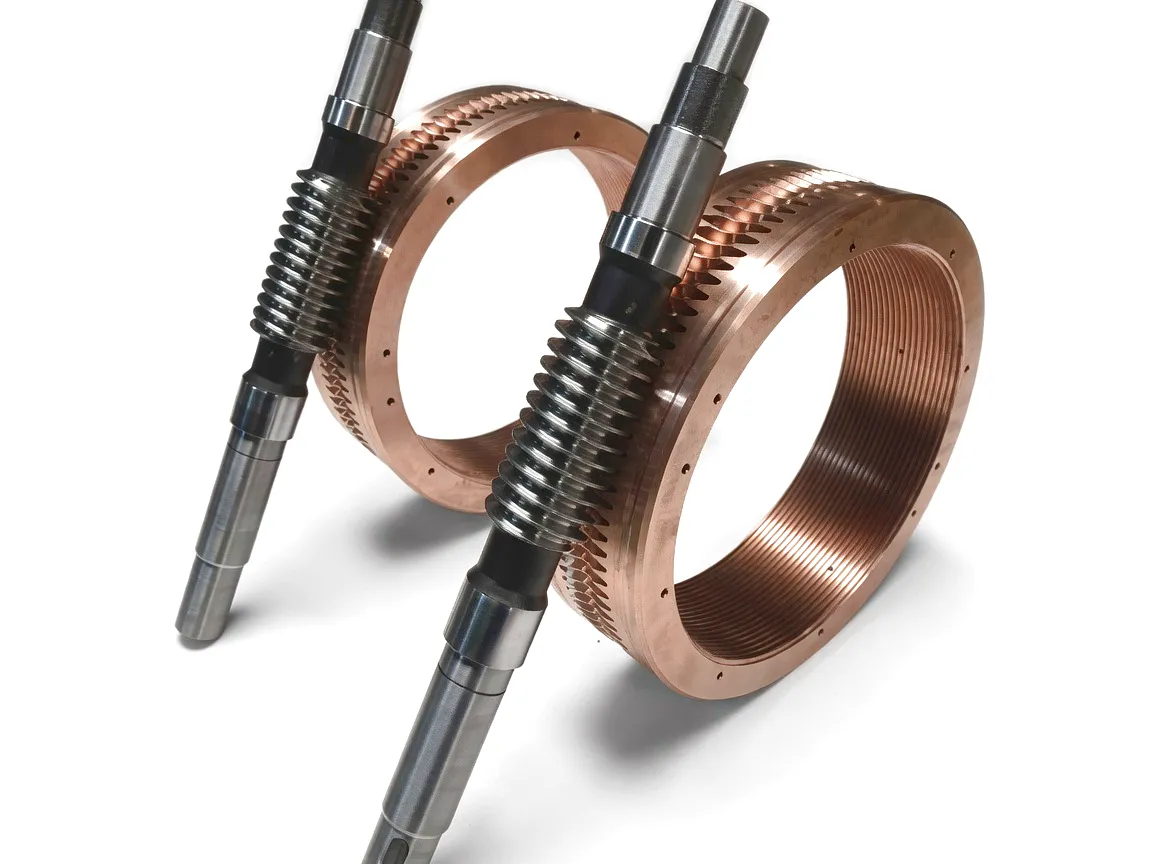
How a Worm Gear Shaft Transmits Motion and Locks Position in Crane Drives
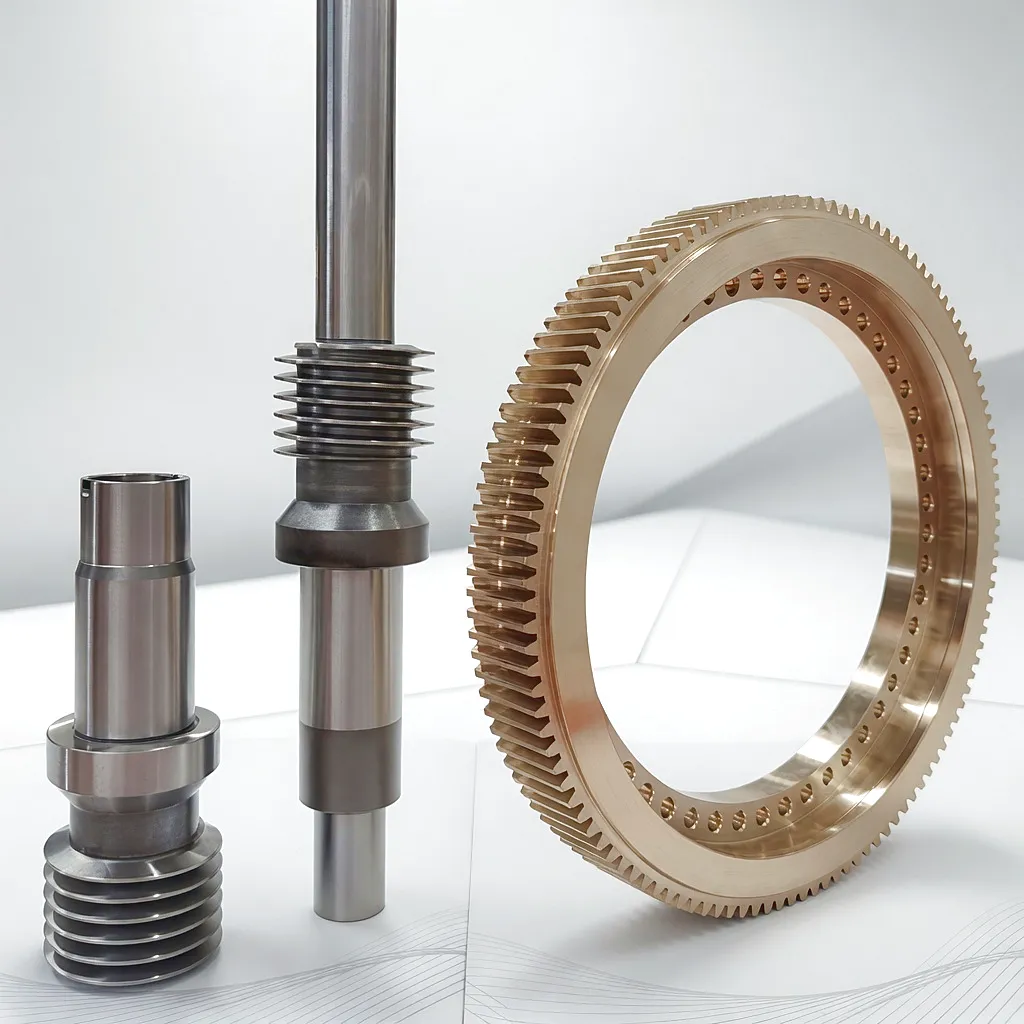
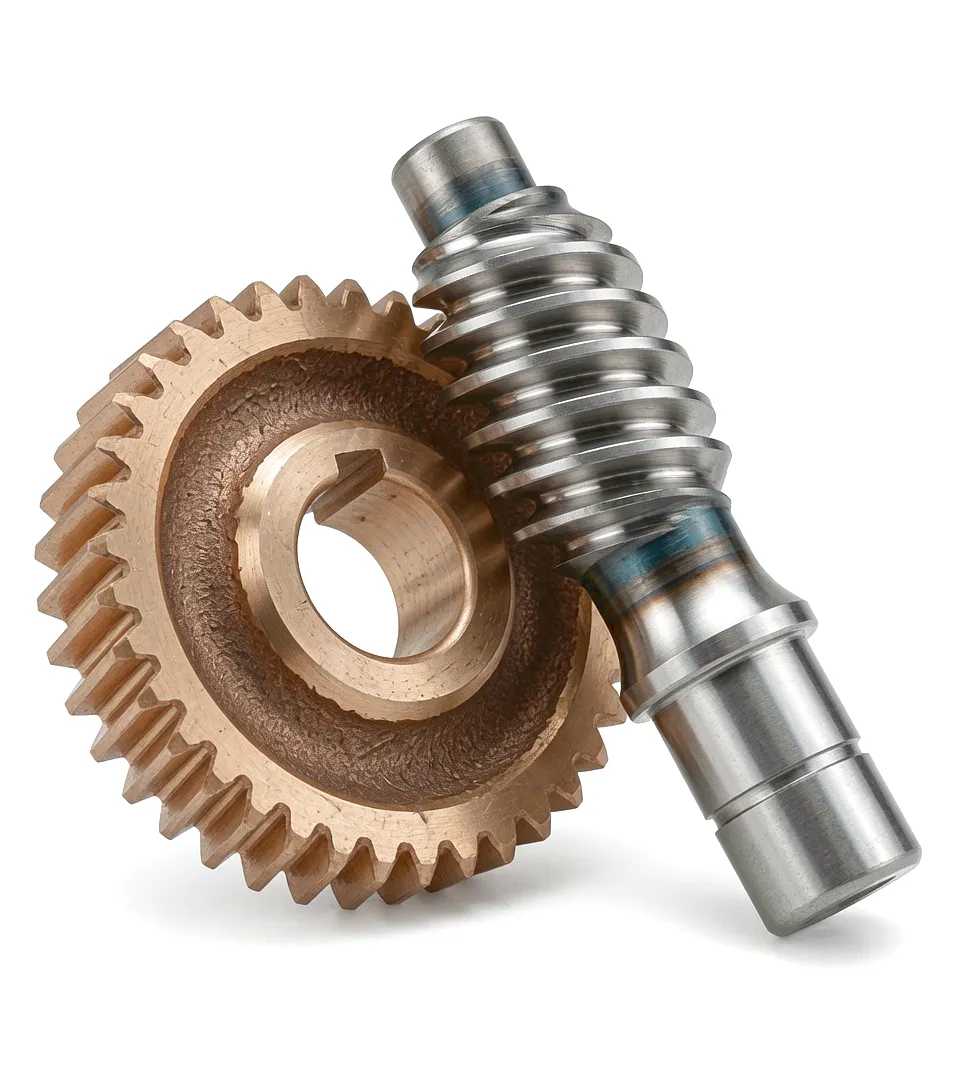
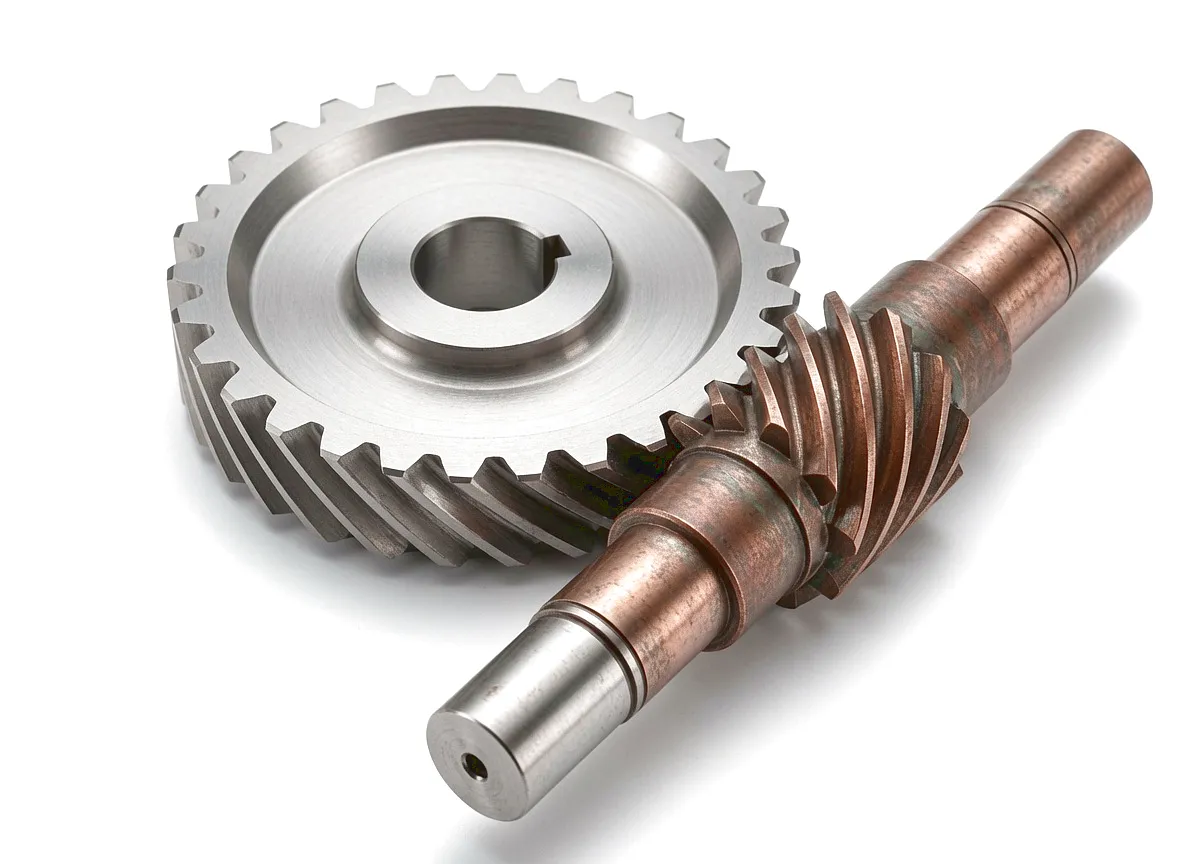
A worm gear shaft is, at its simplest, a cylindrical shaft machined with one or more continuous helical threads — the “worm” — that engages a toothed wheel known as the worm wheel or worm gear. When the worm rotates, its spiral thread advances against the teeth of the wheel, converting high-speed, low-torque input into low-speed, high-torque output. The geometry is what separates this drive from spur or helical alternatives. Because the contact between worm and wheel occurs along a sliding line rather than a rolling point, the friction angle between the mating surfaces can be engineered to exceed the lead angle of the helix. When that condition is satisfied, the worm wheel physically cannot drive the worm backwards. This is the self-locking condition, and it is the reason crane engineers specify these assemblies wherever reverse-driven loads pose a safety hazard. In the travel drive of a gantry crane, the reducer sits between the motor and the rail wheel, and the self-locking property adds a passive layer of holding force that supplements the electromagnetic brake. In a luffing crane boom mechanism, it is even more critical: should the hydraulic or electric actuator lose power, the worm pair holds the boom at its current angle against the full gravitational moment of the jib and payload. The self-holding torque is not a by-product; it is the primary engineering reason that this particular gear topology has been specified in UK crane designs for more than a century of documented use.
Reduction ratios achievable in a single worm stage range from roughly 5:1 up to 100:1 and beyond, depending on the number of starts cut into the worm. A single-start worm produces the highest ratio and the most reliable self-locking behaviour, while multi-start configurations trade some of that locking security for improved mechanical efficiency. Travel drives on rail-mounted gantry cranes often use a double-start worm paired with a secondary brake to balance speed and safety, whereas the slewing ring of a harbour crane — where the load must not drift even a fraction of a degree — nearly always runs a single-start worm gear shaft assembly. Understanding this relationship between start count, lead angle, efficiency, and self-holding torque is central to selecting the correct reducer for any given crane duty cycle.
Core Materials Used in Worm Gear Shaft Manufacturing
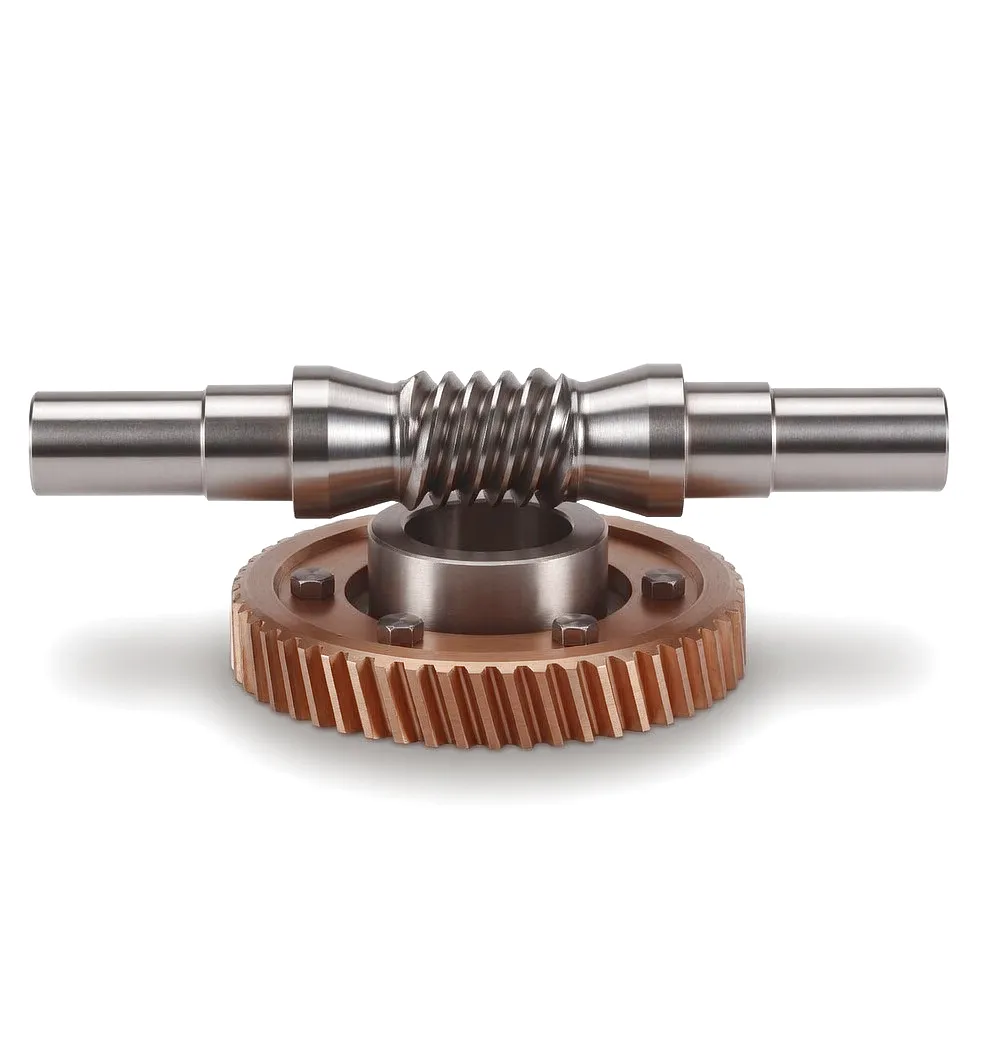
Material selection for a worm gear shaft is driven by two competing demands: the worm itself must be extremely hard and wear-resistant, while the worm wheel needs to be softer and slightly sacrificial so that it absorbs the sliding wear rather than galling the worm surface. The worm — the shaft component — is typically manufactured from case-hardened alloy steel such as 20CrMnTi (carburised chromium-manganese-titanium steel) or EN36B, a nickel-chromium case-hardening steel widely specified across UK manufacturing. After carburising and quenching, the surface hardness of the worm threads reaches 58–62 HRC while the core retains ductile toughness at around 30–35 HRC, giving the shaft the ability to resist surface pitting without becoming brittle under shock loads — a common condition when a gantry crane engages its travel drive against wind resistance on an exposed quayside.
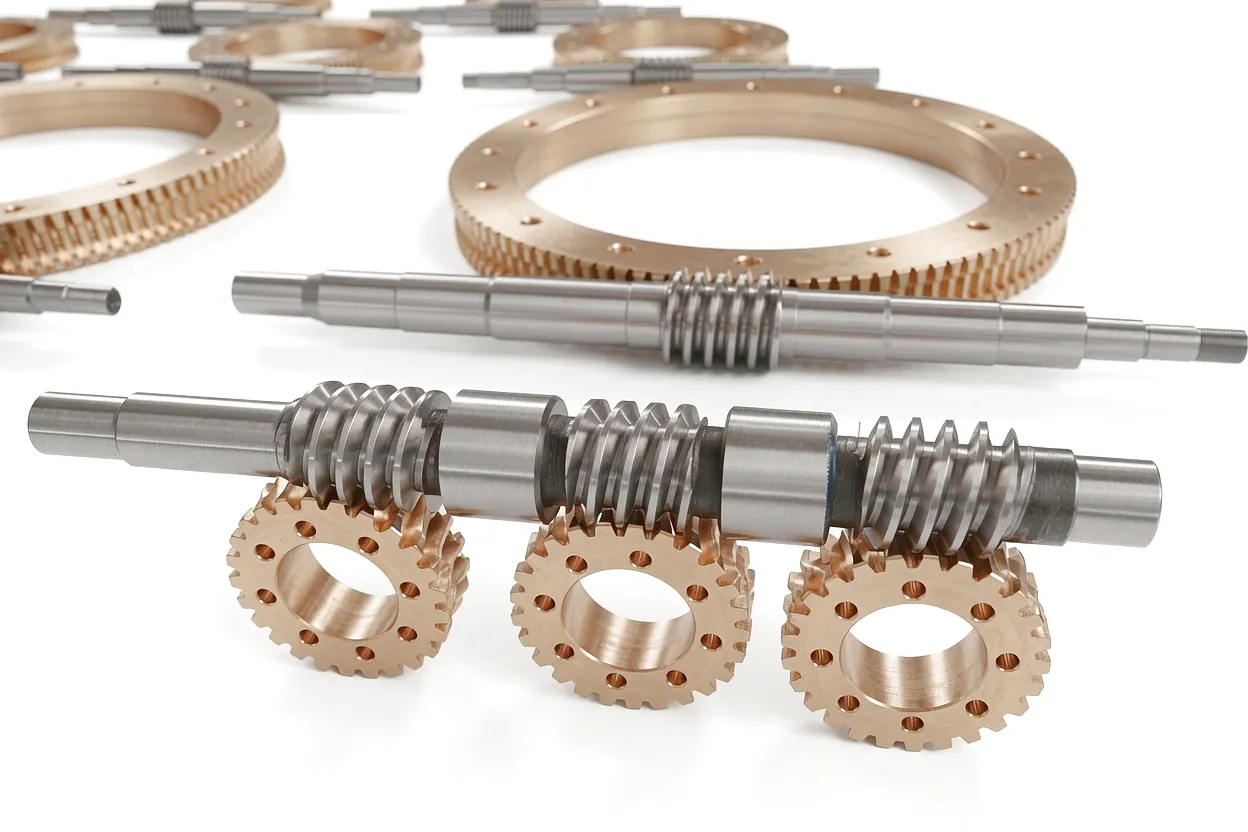
The mating worm wheel is almost invariably cast from a tin-phosphor bronze alloy such as PB1 (BS 1400: PB1-C), which contains approximately 10% tin and a small fraction of phosphorus. This alloy provides the anti-friction properties essential for the sliding contact in a worm pair, along with good corrosion resistance for installations exposed to marine atmospheres — a significant factor for cranes operating at UK coastal ports. In heavy-duty crane reducers handling peak torques above 20,000 Nm, centrifugally cast bronze blanks are preferred because the casting process drives porosity outward, leaving a denser and more uniform microstructure at the tooth contact zone. Some manufacturers are now experimenting with aluminium-bronze alloys (AB2) for high-temperature applications, though phosphor bronze remains the industry standard for worm drive assemblies destined for crane service. Surface treatment of the worm threads — typically grinding to a mirror-like Ra 0.4 micrometres or better — directly affects transmission efficiency and the operating temperature of the gearbox, so it is one of the most tightly controlled quality parameters in production.
Technical Advantages of Worm Gear Shaft Drive Systems
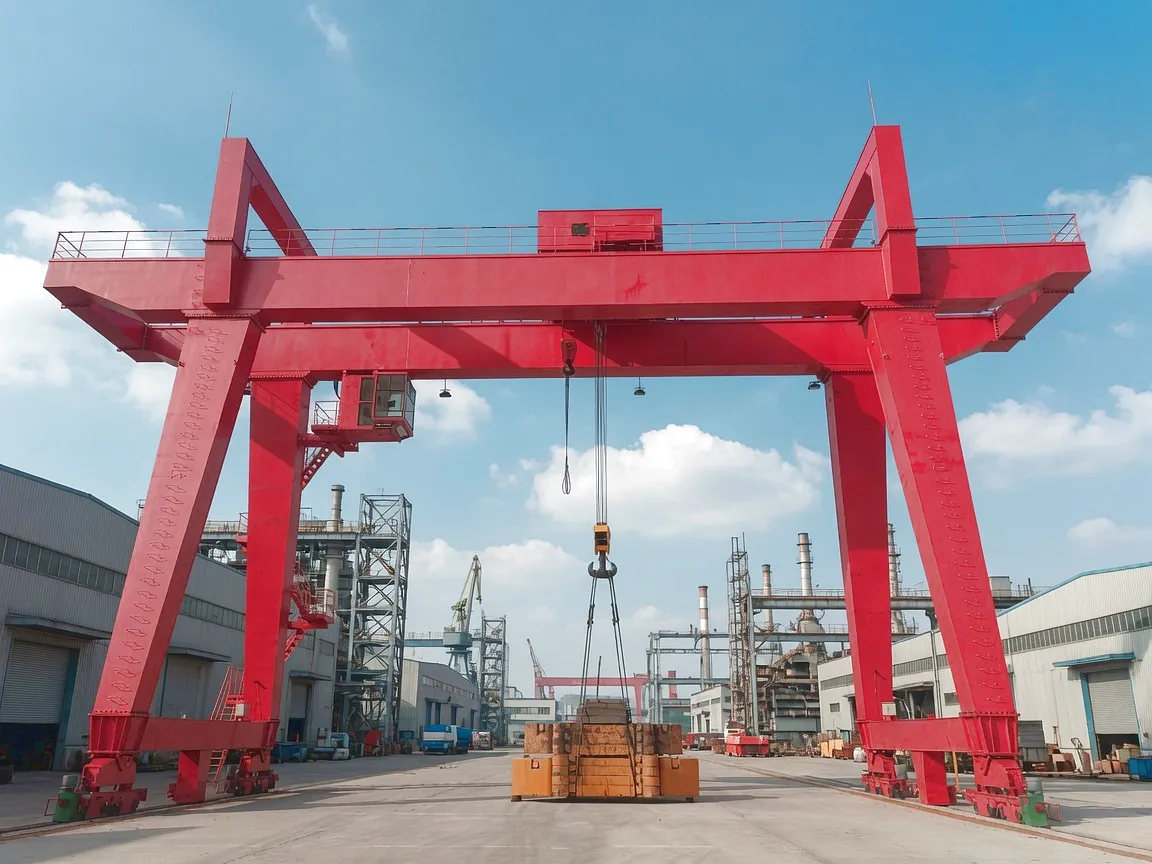
The advantages of choosing a worm gear shaft reducer over alternative gear arrangements are not abstract. They map directly to measurable outcomes in crane performance, maintenance scheduling, and site safety. Crane owners across the UK — from steelworks in Sheffield to container terminals at Southampton — choose worm-type reducers for specific, quantifiable reasons.
◆ Self-Holding Torque Without External Power
The defining advantage. A correctly specified worm drive assembly with a helix lead angle below the static friction angle will resist back-driving under full rated load. In a luffing crane boom, this means the jib remains at its set angle even if the motor, brake, and control system all lose power simultaneously. No other single-stage gear type offers this level of passive load retention, and UK crane safety regulations under LOLER 1998 and BS 466 explicitly acknowledge the value of mechanical self-locking as a secondary holding device.
◆ Compact Envelope, High Reduction Ratio
A single worm drive stage can achieve reduction ratios that would require two or three stages of helical gearing. This compactness matters enormously in crane design, where the travel bogie space is constrained and every kilogramme added to the crane structure reduces useful payload. In the end-carriage of a gantry crane, a compact worm reducer can be mounted directly on the driven wheel axle, eliminating intermediate coupling shafts and reducing alignment maintenance.
◆ Smooth, Low-Noise Transmission
The sliding contact between worm and wheel produces a characteristically quiet transmission compared with the meshing impacts of spur or bevel gears. For cranes operating near residential areas — an increasingly common situation as UK port developments push closer to established communities — noise reduction is a planning compliance issue, not merely a comfort preference. Worm-type assemblies running on correctly formulated synthetic PAO lubricants can operate at noise levels 6–10 dB below equivalent helical units.
◆ Shock-Load Absorption
Crane drives experience repeated transient overloads during jogging, reversing, and emergency stops. The sliding mesh of the worm pair inherently damps these spikes, protecting downstream components such as couplings and wheel bearings from fatigue damage. In a steel-mill gantry crane handling molten ladles, this shock tolerance translates directly to longer intervals between wheel-bearing replacements — a significant operating cost saving at plants in Scunthorpe and Rotherham.
◆ Low Maintenance Demand
With fewer moving parts than a multi-stage helical gearbox and no axial thrust bearings to monitor, a worm-type reducer simplifies maintenance planning. Oil changes at 5,000-hour intervals and periodic thread-surface inspection are typically the only scheduled interventions, making the worm reducer a popular choice for remote or difficult-to-access crane installations across the UK industrial landscape.
Worm Gear Shaft — Technical and Performance Parameters
The table below summarises the typical specification ranges for worm gear shaft assemblies used in gantry crane travel drives and port luffing crane mechanisms. These values reflect the standard production capabilities of Ever Power and can be adjusted through custom engineering to meet specific crane duty classifications (FEM/ISO).
| Parameter | Range / Value | Notes |
|---|---|---|
| Worm Shaft Diameter | 40 mm – 320 mm | Customisable to specific crane OEM drawings |
| Centre Distance | 50 mm – 500 mm | Matches standard gearbox housings |
| Reduction Ratio | 5:1 – 100:1 | Single-start for self-locking; multi-start for higher efficiency |
| Output Torque | 100 Nm – 50,000 Nm | Peak torque up to 150% rated for 15 seconds |
| Input Speed | 750 – 3,000 rpm | Matched to standard IEC motor frames |
| Worm Material | 20CrMnTi / EN36B | Case-hardened to 58–62 HRC |
| Worm Wheel Material | PB1 Phosphor Bronze | Centrifugally cast for heavy-duty service |
| Surface Roughness (Worm) | Ra ≤ 0.4 μm | Ground and polished thread flanks |
| Helix / Lead Angle | 1° – 25° | Below ~6° ensures self-locking |
| Mechanical Efficiency | 35% – 90% | Inversely related to self-locking capability |
| Lubricant | Synthetic PAO ISO VG 320/460 | EP additives essential; mineral oil acceptable for light duty |
| Operating Temperature | -20 °C to +80 °C | Extended range available for Arctic or furnace-area duty |
| Self-Locking Capability | Confirmed at ratios ≥ 30:1 | Static friction coefficient dependent; verified per DIN 3996 |
| Duty Classification | FEM 1Am – 4m / ISO M1 – M8 | Crane-rated duty cycle per BS EN 13001 |
Where Worm Gear Shaft Assemblies Work Across UK Industry
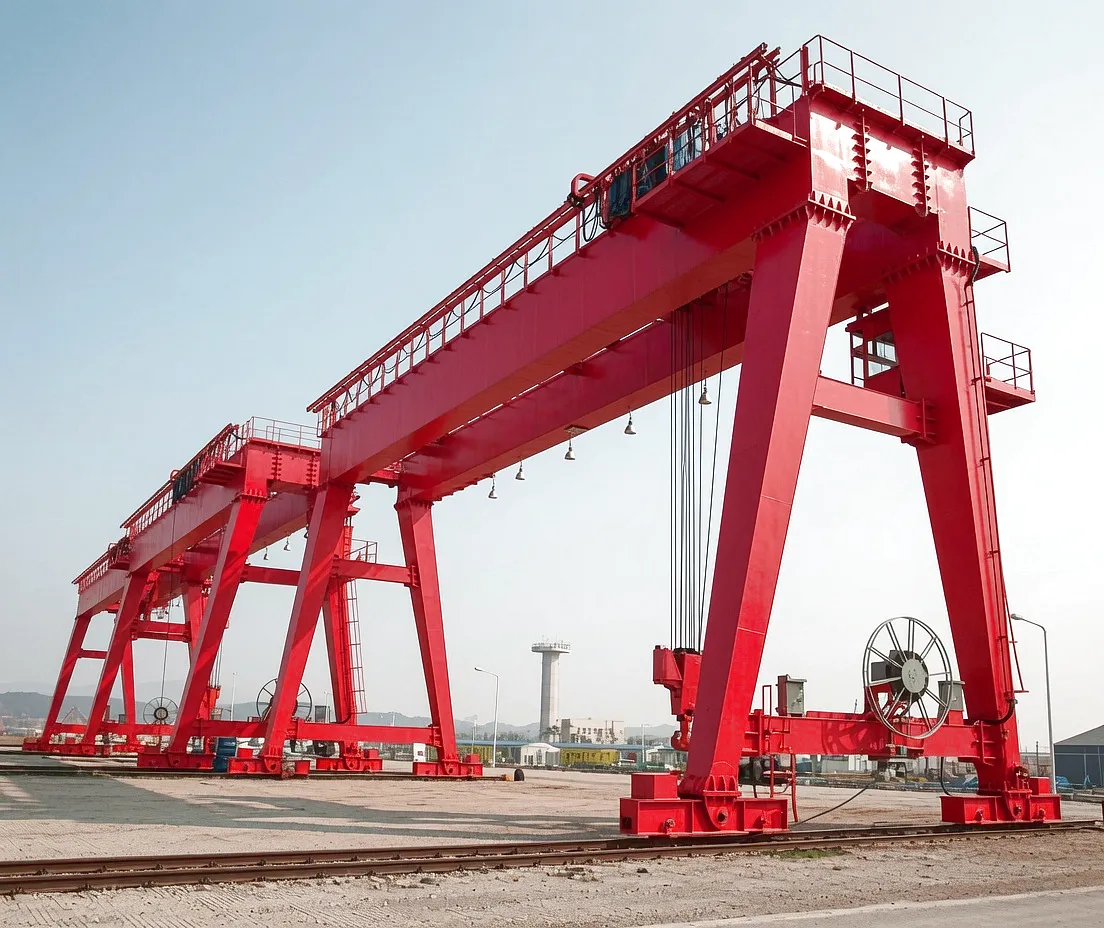
The worm gear shaft finds its natural home in any application that combines a need for speed reduction with a demand for load-holding safety. Across the UK, the diversity of installations is striking. At the Port of Felixstowe — Britain’s busiest container terminal — rail-mounted gantry cranes use worm-type reducers in their long-travel drives to ensure precise positioning along the quay wall, with the self-locking property providing an additional fail-safe should the disc brake wear beyond its service limit between inspections. Dock-side luffing cranes at the Port of Liverpool employ single-start worm drive units in the boom luffing mechanism, where the holding torque requirement can exceed 35,000 Nm, and any slippage would endanger both the load and the dockworkers below. In the slewing ring drives of harbour cranes at Tilbury and Teesport, worm gear shaft reducers prevent wind-induced rotation when the crane is parked out of service, eliminating the need for separate slewing locks.
Away from the waterfront, worm gear shaft assemblies are equally at home in heavy industry. Steel mills around Sheffield and Rotherham run overhead gantry cranes that transport ladles of molten metal along the melt shop, and the travel drive on these cranes must hold position over the casting bay with absolute reliability. A worm reducer paired with a failsafe disc brake provides two independent holding systems — a redundancy that insurers and HSE inspectors specifically look for during periodic examinations under LOLER. Automotive body plants in the West Midlands — particularly around Birmingham and Coventry — use smaller gantry cranes on assembly lines where the worm drive provides the quiet, jerk-free motion needed to move car bodies through painting and welding stations without inducing vibration in the workpiece. Aggregate and cement works in the Peak District and the Pennines deploy worm-driven crane travel systems in dusty, abrasive environments where the enclosed worm gearbox resists contamination far better than an open gear train would.
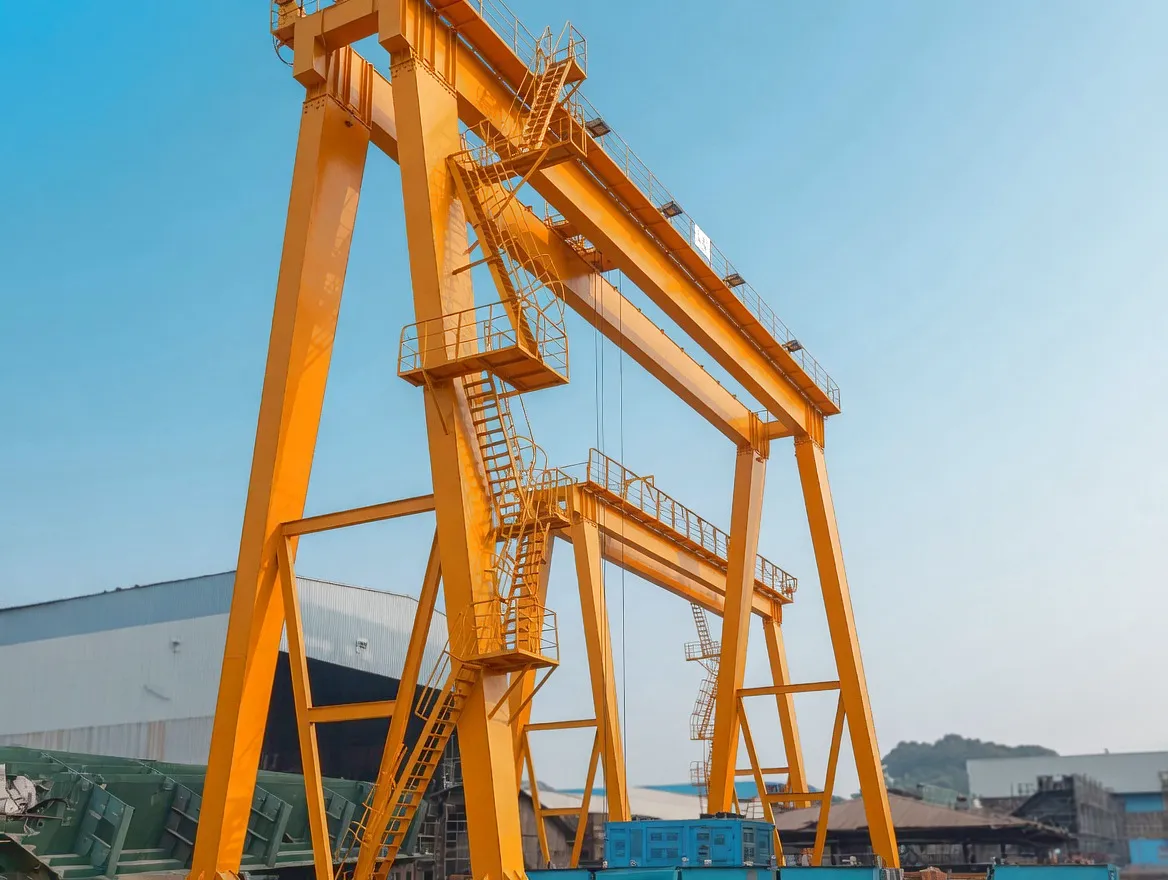
Logistics and distribution centres across the Midlands corridor — from the East Midlands Gateway near Nottingham to the warehousing clusters along the M6 corridor — also rely on worm-driven overhead cranes to handle heavy palletised loads, racking installation, and machinery placement. The compact footprint of the worm reducer allows these cranes to maintain a low headroom profile, maximising usable warehouse height — an increasingly valuable feature as UK land costs drive the construction of taller distribution sheds. In renewable energy, worm gear shaft assemblies feature in the pitch and yaw mechanisms of wind turbines and in the hoisting winches used during offshore wind-farm construction off the coasts of East Anglia and the Humber. In wastewater treatment facilities operated by utilities such as Yorkshire Water and Severn Trent, worm-driven mechanisms control sluice gates and rotating screen rakes, where the self-locking function prevents the gate from being forced open by hydrostatic pressure during a power outage.
Ever Power — Precision Worm Gear Shaft Manufacturing and Custom Engineering
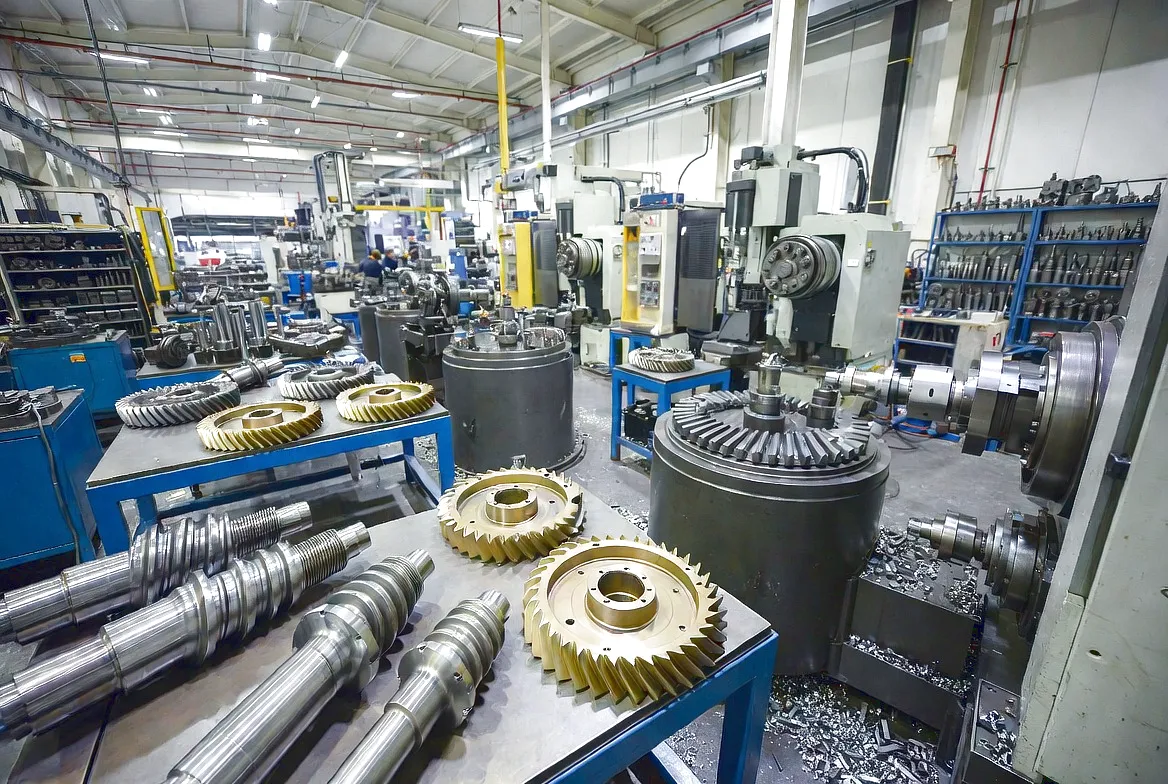
Ever Power operates a vertically integrated manufacturing facility equipped with dedicated CNC worm-milling machines, thread-grinding centres, and gear-measuring instruments traceable to national standards. The production line handles everything from raw billet cutting and rough turning through to final profile grinding of the worm threads, heat treatment in controlled-atmosphere furnaces, and precision bore-finishing of the worm wheel hubs. This in-house capability means that when a UK crane builder or port authority needs a custom assembly that deviates from a catalogue size — perhaps a non-standard centre distance to fit an existing gearbox housing, or a modified thread profile to achieve a precise self-holding torque margin — Ever Power can respond with full engineering drawings within 72 hours and deliver prototype parts in as few as three weeks.
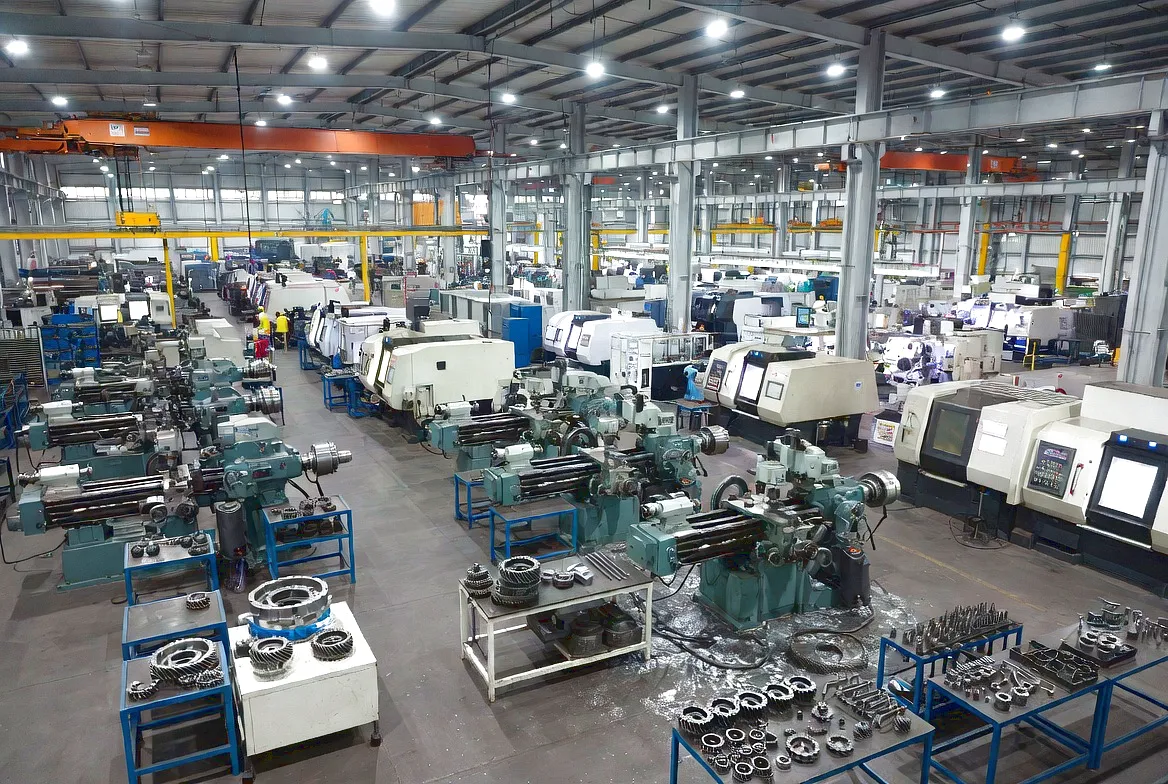
Customisation is not a bolt-on service at Ever Power; it is embedded in the production workflow. Engineers routinely adjust worm lead angles, specify alternative bronze alloys for extreme temperature or corrosive environments, modify shaft end configurations (keyed, splined, hollow-bore, or flanged output), and adapt mounting arrangements to suit both new-build crane designs and retrofit projects on legacy equipment. The company’s supply chain team maintains buffer stock of the most commonly requested raw materials — including pre-certified EN36B bar and PB1 bronze blanks — to eliminate the four-to-six-week lead time that material sourcing alone can add to an order. For UK customers, this translates to a door-to-door delivery window that competing suppliers struggle to match, particularly for urgent breakdown replacements where every hour of crane downtime carries a measurable financial penalty. Quality assurance follows a documented inspection protocol that includes 100% thread-profile verification on a Klingelnberg or Gleason gear-measurement machine, magnetic particle inspection of all hardened surfaces, and a full dimensional report supplied with every shipment.
Customer Success — Teesside Steelworks Crane Retrofit
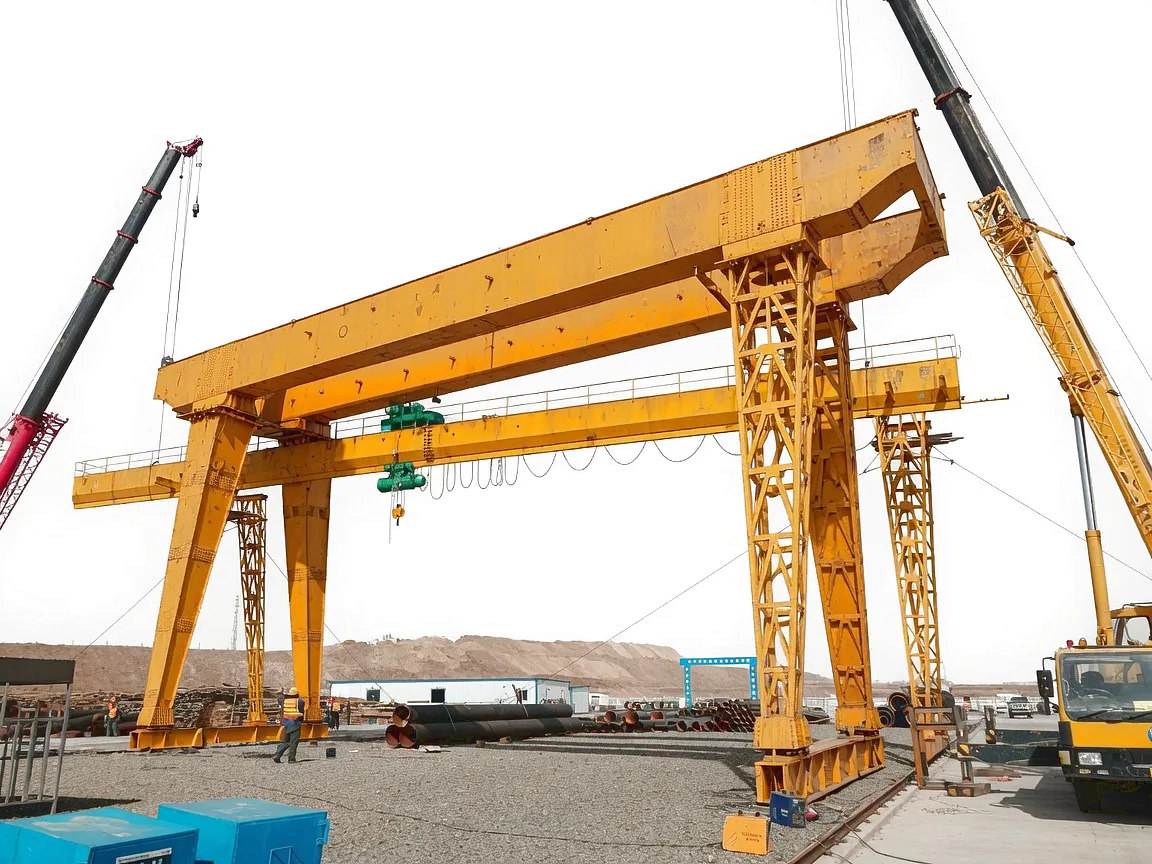
A specialty steel producer operating two 50-tonne overhead gantry cranes at its Redcar melt shop on Teesside contacted Ever Power after repeated failures of the original helical travel-drive reducers. The cranes, built in the late 1990s, ran on a 72-metre rail span and were subjected to high ambient temperatures from the nearby electric arc furnace, combined with heavy particulate contamination. The helical gearboxes suffered accelerated bearing wear and had no inherent load-holding capability, which meant the disc brakes alone were responsible for positioning the crane over the casting pit — a liability the plant’s insurance underwriter flagged during an annual risk review.
Ever Power’s engineering team proposed a direct retrofit: replacing each helical reducer with a custom worm drive assembly sized to deliver the same output speed and torque within the existing mounting footprint. The new worm shaft was manufactured from EN36B steel, carburised and ground to Ra 0.3 micrometres, with a centrifugally cast PB1 bronze worm wheel. The centre distance was held to the original 250 mm to avoid any structural modification to the crane end-carriage. A sealed, fan-cooled gearbox housing with labyrinth seals replaced the original lip seals, addressing the contamination problem at source. From drawing approval to delivery, the project took four weeks, and on-site installation was completed in a single planned maintenance shutdown over a bank-holiday weekend. Within the first six months of service, unplanned downtime on the travel drive dropped to zero, the self-locking function passed a static load-holding test at 120% rated capacity, and the plant’s maintenance manager reported measurable reductions in brake pad consumption — a clear indication that the worm drive was sharing the holding load as intended.
What Customers Say About Ever Power Worm Drive Products
★★★★★
“We fitted the Ever Power worm drive assemblies to both our quayside luffing cranes at Immingham last spring. The self-holding torque performance was verified at 38,000 Nm during commissioning — well above our safety specification. Delivery from order to dockside was 26 days, which was faster than the European OEM we had been quoting. Genuinely impressed with the thread-surface finish and the documentation package.”
— Crane Maintenance Manager, Bulk Terminal Operator, Port of Immingham
★★★★★
“After the Teesside retrofit, we ordered a second batch for our Sheffield plant. The custom hollow-bore output shaft saved us redesigning the wheel-axle coupling. What I value most is the engineering dialogue — Ever Power’s team understood our duty classification and thermal constraints, not just the dimensions. The worm drive units have been running for over 4,000 hours now without a single oil change flag.”
— Chief Mechanical Engineer, Specialty Steel Manufacturer, South Yorkshire
★★★★☆
“We needed a replacement worm shaft for a 1980s-vintage gantry crane at our Birmingham stamping plant — long discontinued by the original builder. Ever Power reverse-engineered the part from a worn sample, matched the original bronze alloy, and delivered inside three weeks. Fit was spot-on, and the crane has been back in service on our body-shop line without issue. Will be returning for the second crane in Q3.”
— Plant Engineering Director, Automotive Tier-1 Supplier, West Midlands
Frequently Asked Questions — Worm Gear Shaft for Cranes
Q: What is the typical cost of a custom worm gear shaft for a gantry crane travel drive in the UK?
Pricing depends on the shaft diameter, centre distance, material grade, and quantity ordered. A single custom worm drive assembly for a standard 20-tonne gantry crane typically falls in the range of GBP 1,200 to GBP 4,500 depending on complexity. Ever Power provides detailed quotations within 48 hours of receiving your specification drawing — contact [email protected] for a precise figure based on your crane model.
Q: How do I find a reliable worm gear shaft supplier who can deliver to our site near Sheffield within three weeks?
Ever Power maintains buffer stock of pre-certified alloy steel and phosphor bronze, which allows production to begin immediately after drawing approval. Delivery to South Yorkshire addresses typically takes 15 to 20 working days from confirmed order, including heat treatment and final inspection. For emergency breakdown replacements, an expedited service with partial shipments is available.
Q: Which materials should I specify for a worm gear shaft that will operate in a marine environment at a UK port?
For coastal and marine exposure, the recommended combination is an EN36B case-hardened alloy-steel worm shaft paired with a PB1 tin-phosphor bronze worm wheel. The bronze alloy provides natural corrosion resistance, while the hardened steel worm should receive an additional surface treatment such as hard-chrome plating or manganese phosphate coating if direct spray exposure is anticipated. Sealed housing with labyrinth seals, rather than lip seals, is also advised.
Q: What reduction ratio does a worm drive need to guarantee self-locking in a luffing crane boom mechanism?
Self-locking is reliably achieved when the worm lead angle falls below the static friction angle of the worm-and-wheel material pair — in practice, this corresponds to single-start designs at ratios of 30:1 or higher with steel-on-bronze contact lubricated with synthetic PAO oil. For luffing crane booms where the holding torque margin is safety-critical, many UK engineers specify 40:1 or 50:1 with independent verification against DIN 3996 criteria.
Q: Where can I get a quote for a replacement worm gear shaft for a legacy crane that is no longer manufactured?
Ever Power routinely reverse-engineers worm drive components for discontinued crane models. Send a photograph and any available dimensions of the original shaft to [email protected], and the engineering team will produce a manufacturing drawing and quotation, typically within 48 to 72 hours. This service has been used by crane operators across Birmingham, Teesside, and the Scottish Central Belt to keep legacy equipment in safe, productive service.
Q: How often should a worm gear shaft reducer be inspected on an overhead crane used in a steel mill near Rotherham?
In high-duty-cycle steel-mill crane service (FEM 3m or 4m classification), a worm-type reducer should receive a visual and oil-quality inspection every 2,500 operating hours and a full stripdown inspection — including thread-profile measurement and bearing clearance checks — every 10,000 hours or at the statutory thorough examination interval under LOLER, whichever comes sooner. Ever Power supplies inspection checklists with every unit delivered.
Q: What is the difference in price between a standard catalogue worm gear shaft and a fully custom-engineered version for UK crane applications?
A catalogue-size worm drive assembly from Ever Power typically costs 15% to 30% less than a fully bespoke design, because tooling and material are already optimised for that size. Custom engineering adds value when the application demands a non-standard centre distance, a specific bronze alloy, or a modified output-shaft configuration. The quotation from Ever Power itemises the custom engineering element separately, so you can see exactly where the additional cost lies.
Q: Who are the main worm gear shaft suppliers serving the crane and heavy-lifting industry across England and Scotland?
The UK market includes several domestic gearbox manufacturers alongside international specialists. Ever Power has built a strong reputation among crane OEMs and end-users by combining competitive pricing with rapid delivery and genuine custom-engineering capability. Clients from the Port of Felixstowe to offshore wind installations off Aberdeen rely on Ever Power for both new-build and replacement worm drive assemblies backed by full material certification and dimensional reporting.
edit by gzl