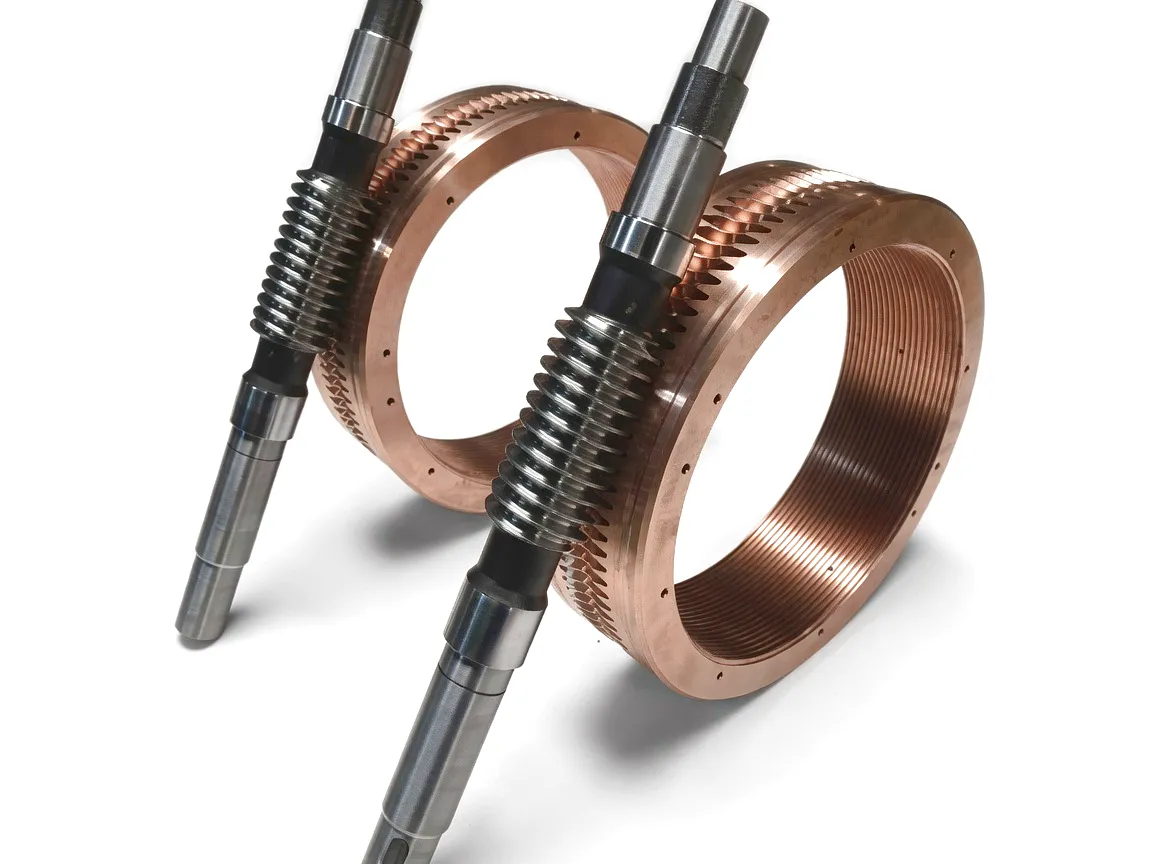
What Is a Worm Gear Shaft and Why Does It Matter in Modern CNC Engineering?
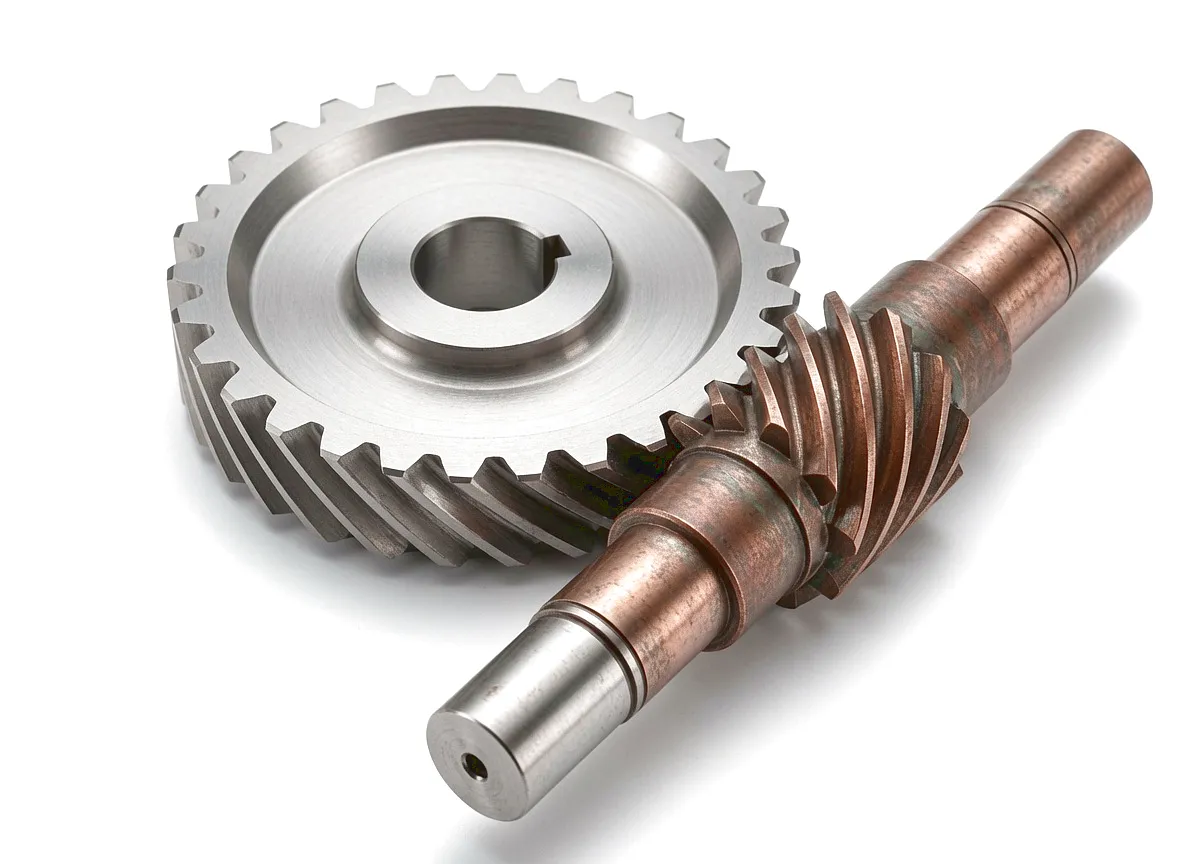
A worm gear shaft is the primary driving element in a worm gear transmission system — a helically threaded cylindrical shaft that meshes with a mating worm wheel to transfer rotational motion at a precisely controlled ratio, typically between 5:1 and 100:1 in a single reduction stage. Unlike conventional spur or helical gear pairs, the worm gear shaft transmits power at a 90-degree axis offset, making it uniquely suited to applications where compact layout, high reduction ratio, and inherent self-locking are all required simultaneously. The shaft’s threaded profile — whether single-start, double-start, or multi-start — determines the lead angle, transmission ratio, and efficiency characteristics of the entire drive assembly. In modern precision engineering, particularly within CNC machine tool design, the worm gear shaft is not merely a component; it is an enabling technology that defines the angular positioning accuracy, repeatability, and dynamic stiffness of the axes it drives.
Across the United Kingdom’s manufacturing heartlands — from Birmingham’s automotive and aerospace machining clusters to Sheffield’s advanced steel and precision components sector — worm gear shafts underpin the rotary tables, tilting heads, ATC mechanisms, and auxiliary drive systems that keep modern VMCs and HMCs running at the tolerances demanded by today’s contracts. The critical role of this component means that material selection, thread geometry, surface finishing, and assembly precision are not engineering footnotes; they are commercial differentiators that determine whether a machine tool produces acceptable parts or scrap. This guide examines every dimension of worm gear shaft engineering with the technical rigour that UK procurement engineers and machine tool builders expect.
How a Worm Gear Shaft Transmits Power: The Mechanics Behind the Motion
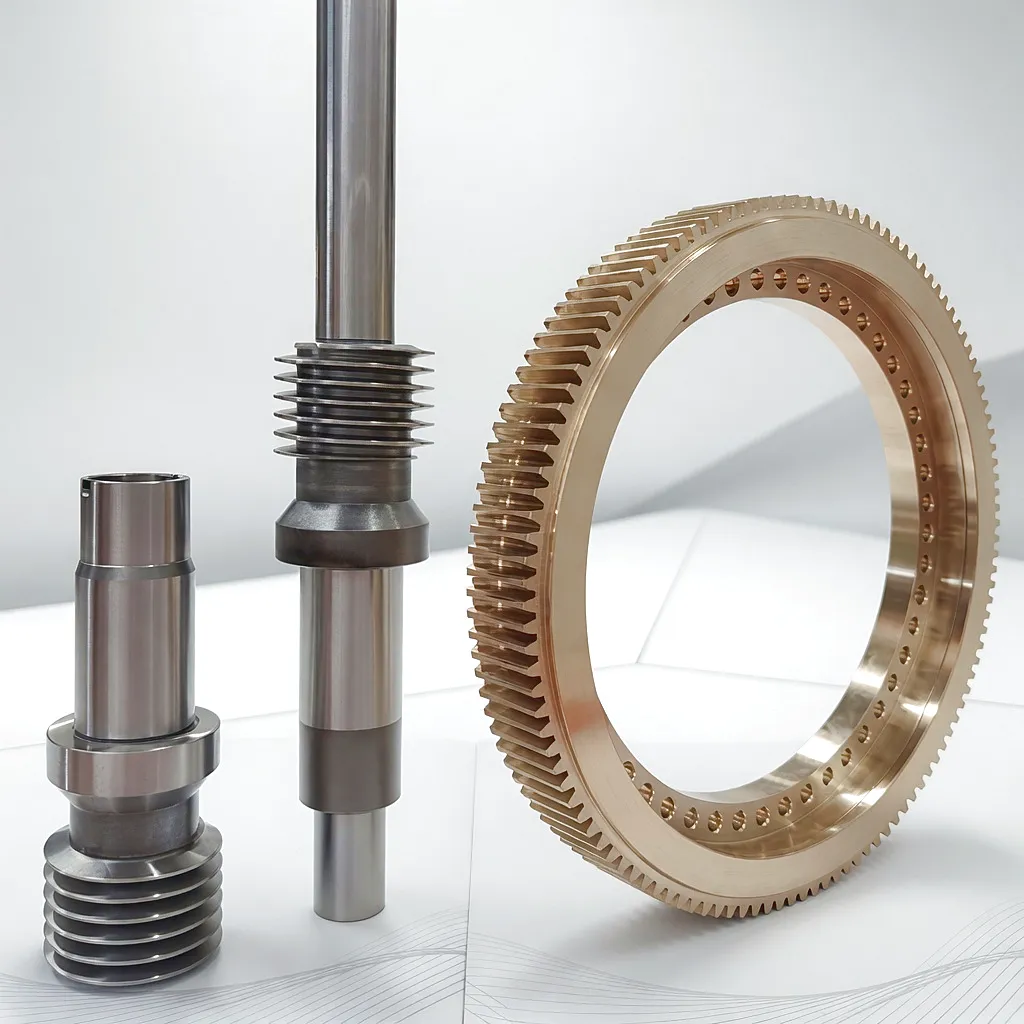
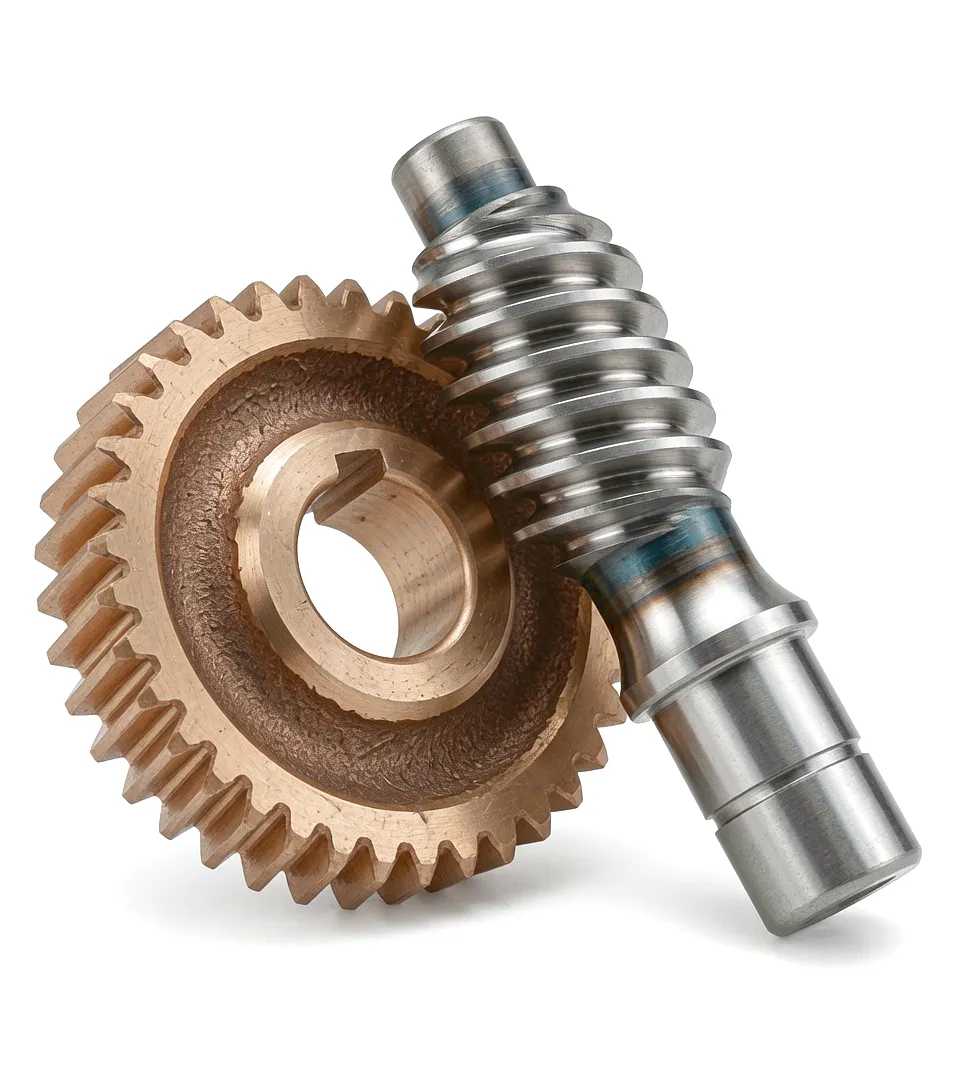
The working principle of a worm gear shaft centres on the helical thread engagement between the worm (shaft) and the worm wheel (gear). When the input shaft — driven by a servo motor, stepper motor, or gearmotor — rotates, its helical thread form advances along the axial direction, pushing against the conjugate tooth flanks of the worm wheel and causing it to rotate about its own perpendicular axis. The transmission ratio i is simply the number of worm wheel teeth divided by the number of thread starts on the worm shaft. A single-start worm meshing with a 60-tooth worm wheel therefore produces a 60:1 reduction in a single, compact stage — something that would require multiple gear stages to replicate with conventional gear trains.
The lead angle gamma of the worm thread — defined as the angle between the helix and a plane perpendicular to the worm shaft axis — is the governing parameter for self-locking behaviour and mechanical efficiency. When the lead angle falls below the friction angle (typically below approximately 6 degrees for steel-on-bronze contacts), the worm gear drive becomes self-locking: the worm wheel cannot back-drive the worm shaft under static or dynamic load. This characteristic is exploited deliberately in CNC rotary table design, where it eliminates the need for external braking mechanisms during the cutting phase, reducing system complexity and improving positional rigidity. At higher lead angles (above 15 degrees), efficiency climbs toward 90% or beyond, but self-locking is surrendered — a trade-off that must be evaluated case by case.
In CNC machine tool applications such as the fourth-axis and fifth-axis rotary tables fitted to vertical machining centres (VMCs) and horizontal machining centres (HMCs), the worm shaft is driven by a servo motor through a coupling. The worm meshes with the worm wheel, which is rigidly connected to the rotary table platter. To achieve the arc-second level positioning accuracy demanded by aerospace and precision automotive components — a requirement that is particularly acute for manufacturers in Birmingham and Sheffield supplying Tier 1 contracts — modern CNC rotary tables employ dual-lead worm shafts (also known as variable lead worms). In this configuration, the left and right flanks of the worm thread carry deliberately different lead values. By shifting the worm shaft axially using an adjusting mechanism, the tooth flank contact migrates along the thread in a controlled manner, taking up backlash without imposing preload stresses that would accelerate wear. The result is a transmission that maintains arc-second repeatability over tens of millions of indexing cycles.
For tilting-head (B-axis or A-axis) mechanisms on five-axis machining centres, the worm gear shaft drives the head’s swivel motion through the same principle, with the worm wheel mounted coaxially with the tilt axis. After positioning, a hydraulic or mechanical clamping system locks the head against the milling forces. Swing range is commonly ±90° or ±110°, with gear ratios of 60:1 to 72:1 — a range that balances resolution, speed, and rigidity. ATC (Automatic Tool Changer) magazine rotation mechanisms equally rely on worm shaft drives, where the self-locking nature ensures the magazine stays perfectly locked between tool changes without any active braking current from the servo driver, reducing thermal load on the electrical system.
Core Materials for Worm Gear Shaft Manufacturing: Choices That Define Performance
Material selection for a worm gear shaft is arguably the most consequential engineering decision in the design process, directly governing load capacity, wear resistance, thermal stability, and service life. The worm shaft and worm wheel are typically made from dissimilar material pairs — the classic combination being a hardened alloy steel worm shaft running against a phosphor bronze or aluminium bronze worm wheel. This pairing is not arbitrary: the softer bronze wheel sacrifices itself to the harder steel thread, generating a burnished, low-friction contact surface that reduces operating temperature and extends the life of both components. The selection of specific alloys, however, goes considerably deeper than simply choosing steel and bronze.
20CrMnTi / 20CrNiMo — Case-Hardened Alloy Steel
The most widely used worm shaft material in high-duty CNC applications. After rough machining, the shaft undergoes carburising and case hardening to achieve a surface hardness of 58–62 HRC with a case depth of 0.8–1.5 mm. The hardened case resists contact fatigue and wear, while the tough core absorbs shock loads. Tooth flanks are subsequently ground to Ra 0.4 μm or better — a surface quality specification that directly enables arc-second indexing accuracy in CNC rotary tables.
42CrMo4 / 4140 — Induction-Hardened Alloy Steel
For medium-duty worm gear shafts requiring excellent core toughness alongside surface hardness, 42CrMo4 (EN 10083 designation, widely specified by UK engineers) is the preferred grade. Induction hardening of the thread flanks achieves 50–56 HRC locally without distorting the shaft geometry. This approach is cost-effective for batch production and is commonly specified by gearbox OEMs in the West Midlands for industrial conveyor and material handling applications.
303 / 316 Stainless Steel — Corrosion-Resistant Grade
Food processing machinery, pharmaceutical equipment, and marine applications in UK coastal industrial zones require worm shafts that resist oxidation and contamination. Austenitic stainless grades are used where chemical compatibility takes priority. Surface hardness is lower than alloy steel grades — typically 25–35 HRC via nitrogen diffusion (Sursulf) treatment — so these shafts are specified for light-to-medium duty cycles rather than continuous heavy-load service.
Phosphor Bronze (PB2) / Aluminium Bronze — Worm Wheel Pairing
While the worm wheel is a separate component, its material is inseparable from the worm shaft’s material specification. Phosphor bronze (CuSn10P, PB2 per BS 1400) is the standard choice, offering excellent conformability, anti-seize properties, and a low coefficient of friction against hardened steel. Aluminium bronze offers higher strength for heavy-duty applications. The bronze wheel’s softer matrix also retains lubricant micro-pockets, helping maintain the elastohydrodynamic (EHD) film that is critical to extended bearing life under the sliding contact inherent to worm gear meshing.
Seven Core Technical Advantages of the Worm Gear Shaft in Industrial Drive Systems
The sustained adoption of the worm gear shaft across diverse heavy industries — from CNC machining in Birmingham to offshore lifting equipment along the Scottish east coast — reflects a set of engineering advantages that competing drive technologies struggle to match simultaneously. Understanding these advantages in precise technical terms enables procurement engineers to make evidence-based specification decisions rather than defaulting to convention.
⚡ High Single-Stage Reduction Ratio
A single worm gear shaft stage achieves ratios from 5:1 to 100:1, eliminating the cost, space, and additional failure modes of multi-stage planetary or helical trains. In CNC rotary tables, ratios of 40:1 to 90:1 are standard, enabling compact servo motors to drive heavy table platters with full torque capacity.
🔒 Inherent Self-Locking
At low lead angles, the worm gear shaft cannot be back-driven by the load. This self-locking property is exploited in CNC rotary tables, lifting equipment, and valve actuators to maintain position under cutting forces or gravity without continuous motor braking current, reducing servo drive thermal load and improving overall energy efficiency.
📈 Quiet and Smooth Operation
The sliding contact between the worm thread and wheel tooth produces an inherently quiet transmission — a feature prized in food processing, packaging, and laboratory automation environments where noise levels affect operator welfare and regulatory compliance under UK COSHH and Noise at Work regulations.
🔅 90-Degree Axis Cross
The natural 90-degree shaft offset is a powerful layout advantage in machine tool and gearbox design. It allows designers to place motor and driven shaft in perpendicular planes, enabling extremely compact drivetrains for rotary table headstocks, lifting mechanisms, and conveyor drives without additional bevel or miter gear stages.
🎯 Precision Angular Positioning
Dual-lead worm shafts with ground thread flanks achieve backlash-free transmission with repeatability within ±3 arc-seconds in premium grades. This surpasses many competing solutions and makes precision worm gear shafts the technology of choice for five-axis machining centres serving aerospace supply chains in Bristol, Derby, and Filton.
🔧 High Overload Tolerance
The tooth contact pattern across a worm gear shaft and bronze wheel spans multiple teeth simultaneously, distributing load over a larger contact area than a spur gear pair of equivalent centre distance. This multi-tooth contact gives worm gear transmissions a generous short-term overload capacity — typically 200–300% of rated torque — which is valued in press-brake and rolling mill auxiliary drives.
🛠 Modular Customisation
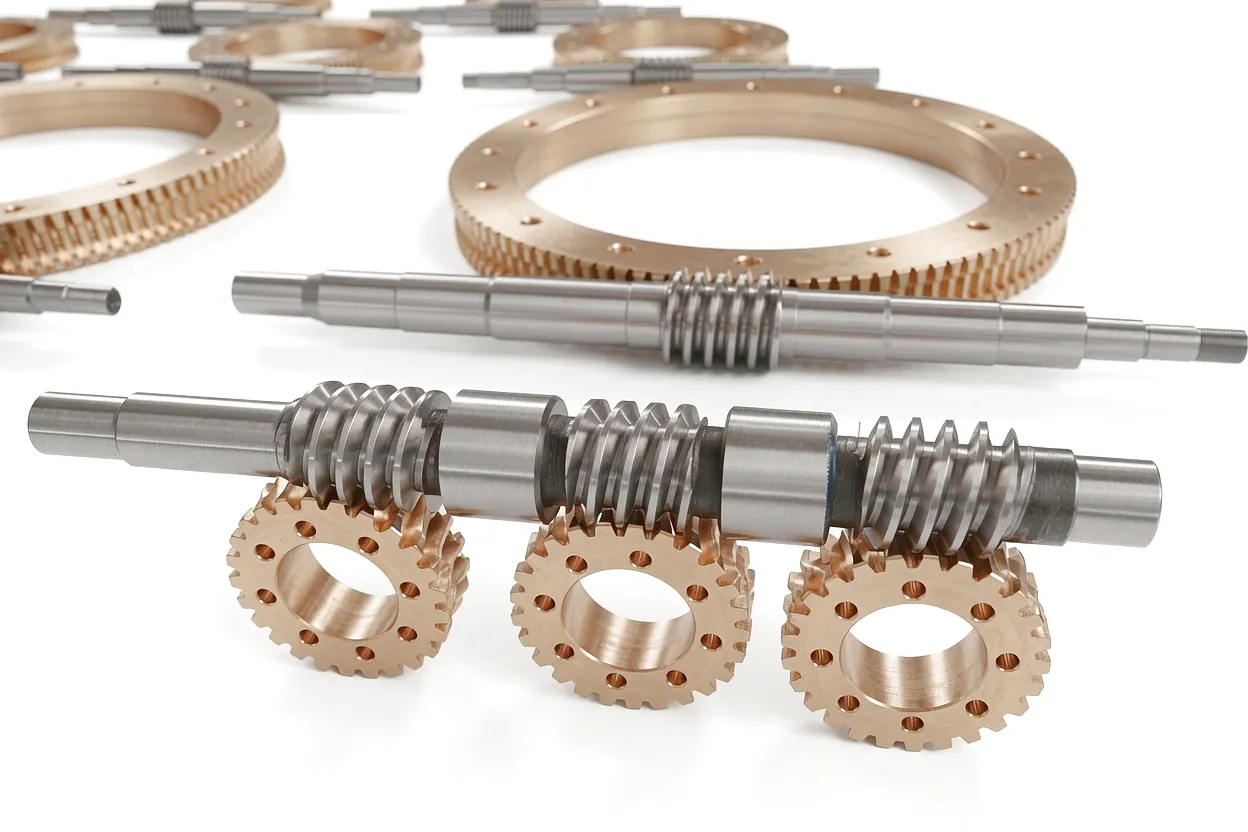
Worm gear shafts can be customised in module, thread form (ZA, ZN, ZI, ZK profiles per DIN 3975), lead angle, number of starts, shaft end geometry, and surface treatment to match any machine tool or industrial drive application. Ever Power manufactures bespoke worm shafts to customer-supplied drawings or reverse-engineered from worn originals, typically with delivery lead times of 3–6 weeks for batches from prototypes to 500 pieces.
Worm Gear Shaft: Product Technical and Performance Parameter Table
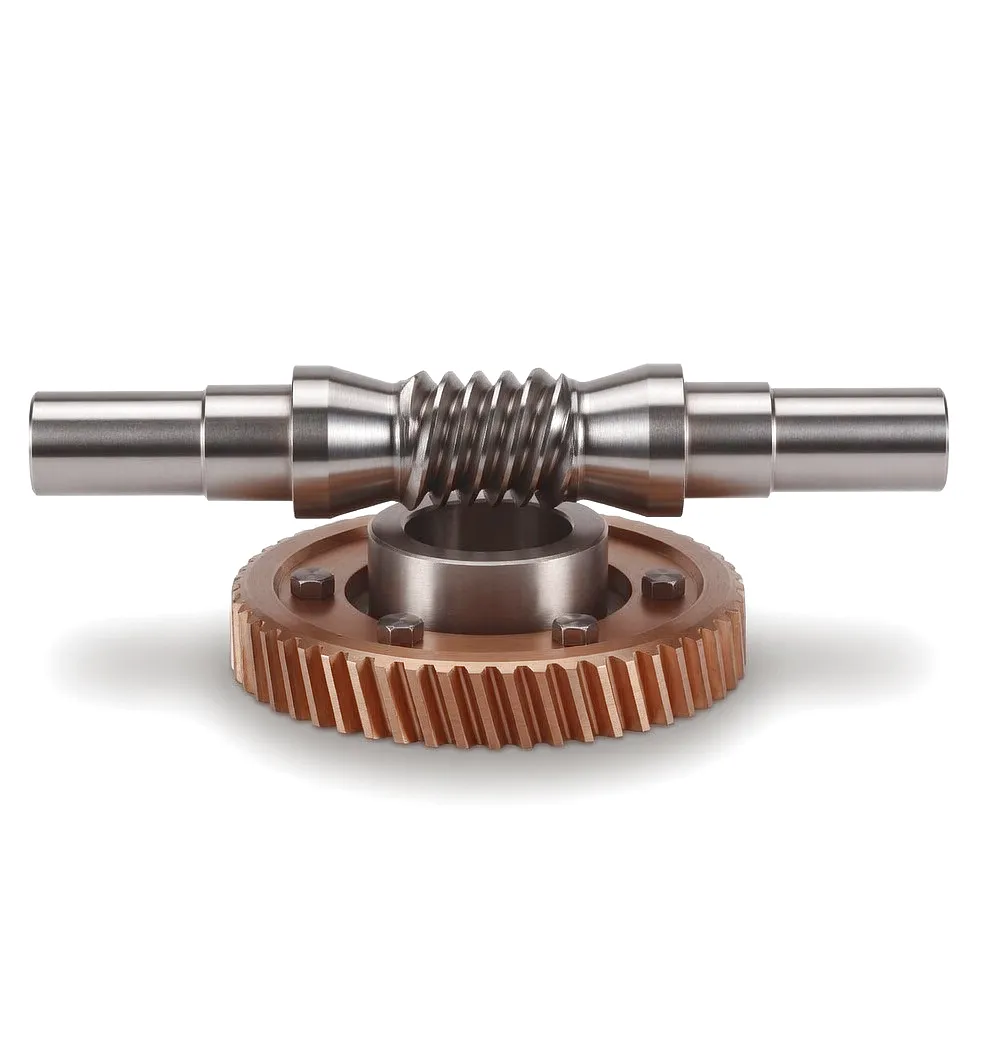 The following table consolidates the key engineering parameters that define worm gear shaft selection and performance. These ranges reflect Ever Power’s standard production capabilities, with values extending beyond these bounds available on request for special applications. Procurement engineers and machine tool designers in the UK are encouraged to use this table as a reference framework when specifying components against AGMA 6022 or ISO 14521 standards, which govern industrial worm gear rating methods applicable across British manufacturing.
| Parameter | Standard Range | Precision Grade | Unit / Remark |
|---|---|---|---|
| Module (m) | 1 – 12 | 0.5 – 16 | mm (ISO standard modules) |
| Transmission Ratio (i) | 5:1 – 80:1 | 5:1 – 100:1 | Single stage |
| Output Torque | 5 – 5,000 | Up to 20,000 | N.m (continuous rated) |
| Lead Angle | 3° – 25° | 1.5° – 30° | Affects self-lock and efficiency |
| Number of Thread Starts | 1, 2, 4 | 1 – 6 | Affects ratio and efficiency |
| Shaft Material | 42CrMo4 / 20CrMnTi | 20CrNiMo / 18CrNiMo7 | Carburised & case-hardened |
| Thread Flank Hardness | 50 – 56 HRC | 58 – 62 HRC | Surface / case-hardened |
| Thread Flank Surface Finish | Ra 0.8 μm | Ra 0.2 – 0.4 μm | CNC ground flanks |
| Backlash (Dual-Lead Grade) | <5 arc-min (adjustable) | <±3 arc-sec (zero backlash) | After axial adjustment |
| Shaft Axis Cross Angle | 90° | 90° (±0.01° tolerance) | Standard configuration |
| Shaft Diameter Range | 12 – 160 mm | 8 – 300 mm | OD at journal |
| Thread Profile Standard | ZA, ZN (DIN 3975) | ZI, ZK, Enveloping | Per DIN 3975 / ISO 1122 |
| Mechanical Efficiency | 50% – 80% | Up to 92% (multi-start) | Depends on lead angle |
| Operating Temperature | -20°C to +80°C | -40°C to +120°C | Dependent on lubrication |
| Input Speed (max) | 1,500 rpm | Up to 3,000 rpm | With precision bearings |
CNC Machine Tool Workpiece Indexing and Feed: The Core Industrial Application of Worm Gear Shafts
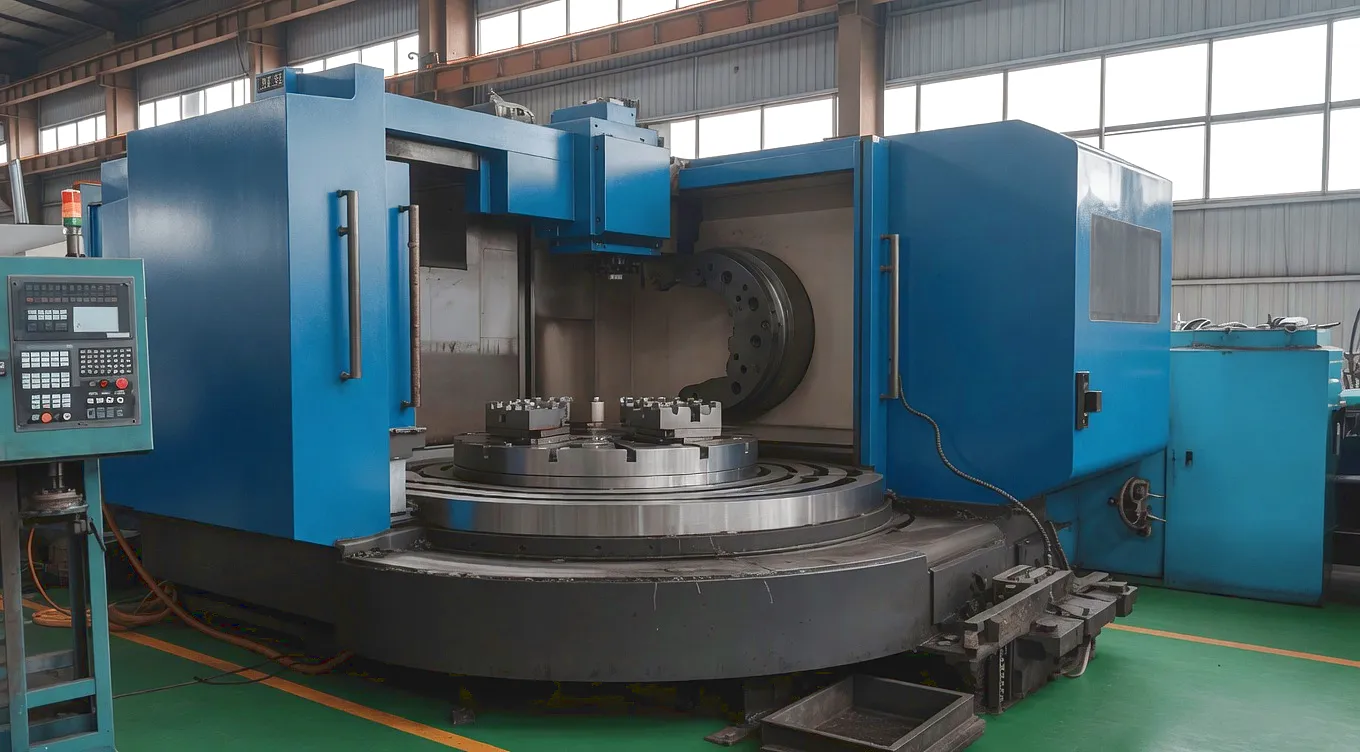
Within CNC machine tool technology, the worm gear shaft’s most strategically significant application is the rotary indexing system — the mechanism by which the fourth and fifth axes of a VMC or HMC achieve precise angular positioning of the workpiece. The NC rotary table (CNC fourth-axis rotary table) is, without exception, built around a precision worm gear shaft pair as its core transmission element. A servo motor, connected through a zero-backlash coupling, drives the worm shaft. The worm meshes with the worm wheel, which is press-fitted and keyed to the table spindle. As the servo drive commands a rotation — whether an intermittent 45-degree index for a bolt-hole pattern or a continuous 360-degree rotation for thread milling — the worm gear shaft translates that command into table motion with a consistency measured in arc-seconds, not arc-minutes.
For the Tier 1 and Tier 2 precision subcontractors concentrated in Birmingham’s Jewellery Quarter and Tyseley manufacturing districts, and in Sheffield’s advanced manufacturing corridor along the Don Valley, this level of angular precision is not optional. Aerospace brackets, automotive transmission housings, and medical implant fixtures all feature compound-angle features that require the rotary table to hold its commanded position against substantial milling torques without angular drift. The dual-lead worm shaft configuration — where asymmetric left and right flank leads allow axial adjustment to dial out backlash — is the technical mechanism that makes this possible. Once adjusted, the transmission exhibits near-zero backlash (below ±3 arc-seconds) across its full angular range, validated by laser interferometry or autocollimator measurement during machine commissioning.
Five-axis machining centres, which are increasingly prevalent in UK precision subcontracting as a response to the demand for single-setup complex part machining, employ the worm gear shaft in the B-axis (or A-axis) tilting head. The head swings through ±90° or ±110° via a worm gear shaft drive with a ratio typically in the range of 60:1 to 72:1. After positioning, a hydraulic disc clamp or face gear lock rigidly secures the head against the milling forces generated by heavy roughing cuts. The self-locking nature of the worm shaft provides a secondary level of positional security during this clamping, ensuring that even if the clamp experiences slight hydraulic pressure drop, the head does not drift. Tool magazine rotation in ATC systems similarly exploits the worm shaft’s self-locking, keeping the magazine drum stationary between tool-change cycles with zero power consumption from the servo drive.
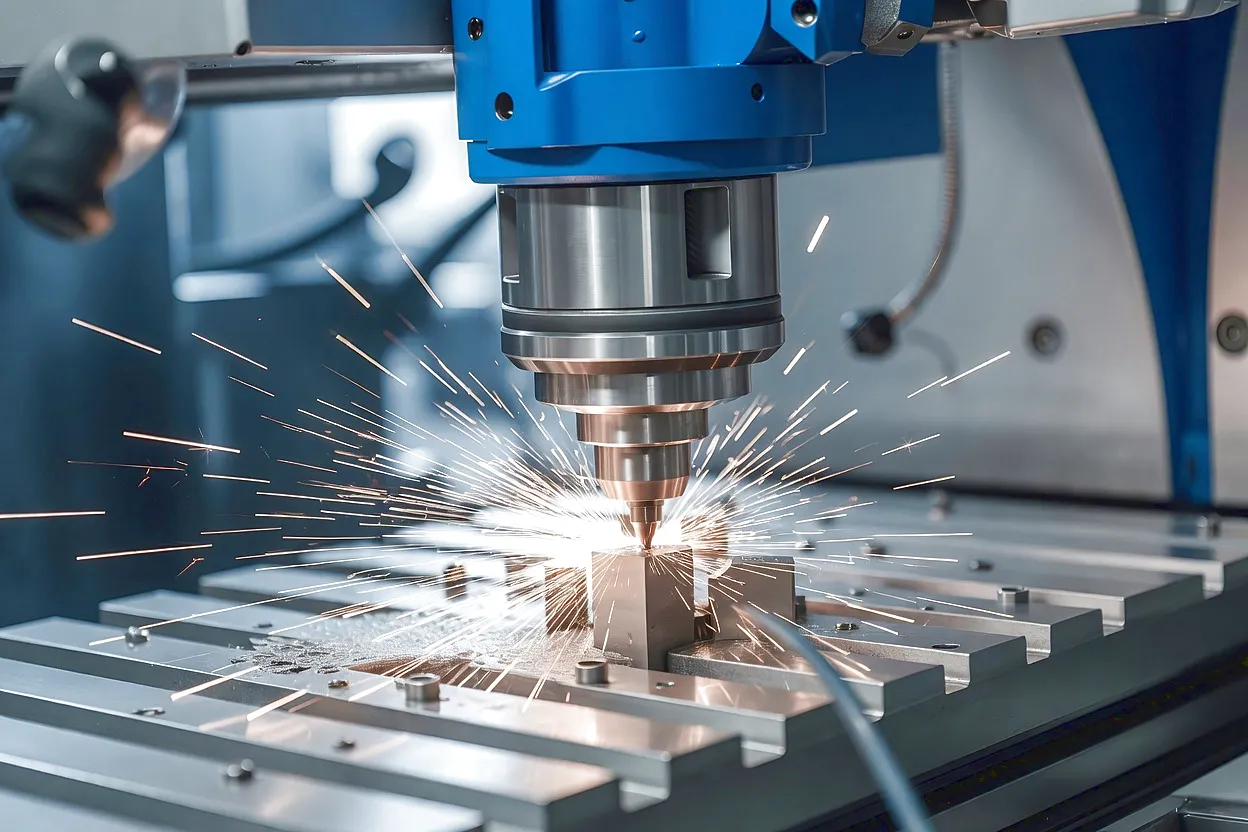
Conveyor and material handling systems across UK logistics and distribution centres — including major warehousing facilities in the East Midlands and the Thames Estuary logistics corridor — rely on worm gear shaft reducers for their powered roller drives, sorting diverters, and incline conveyor belt tensions. The self-locking characteristic prevents loaded belt conveyors from running backward during power interruptions.
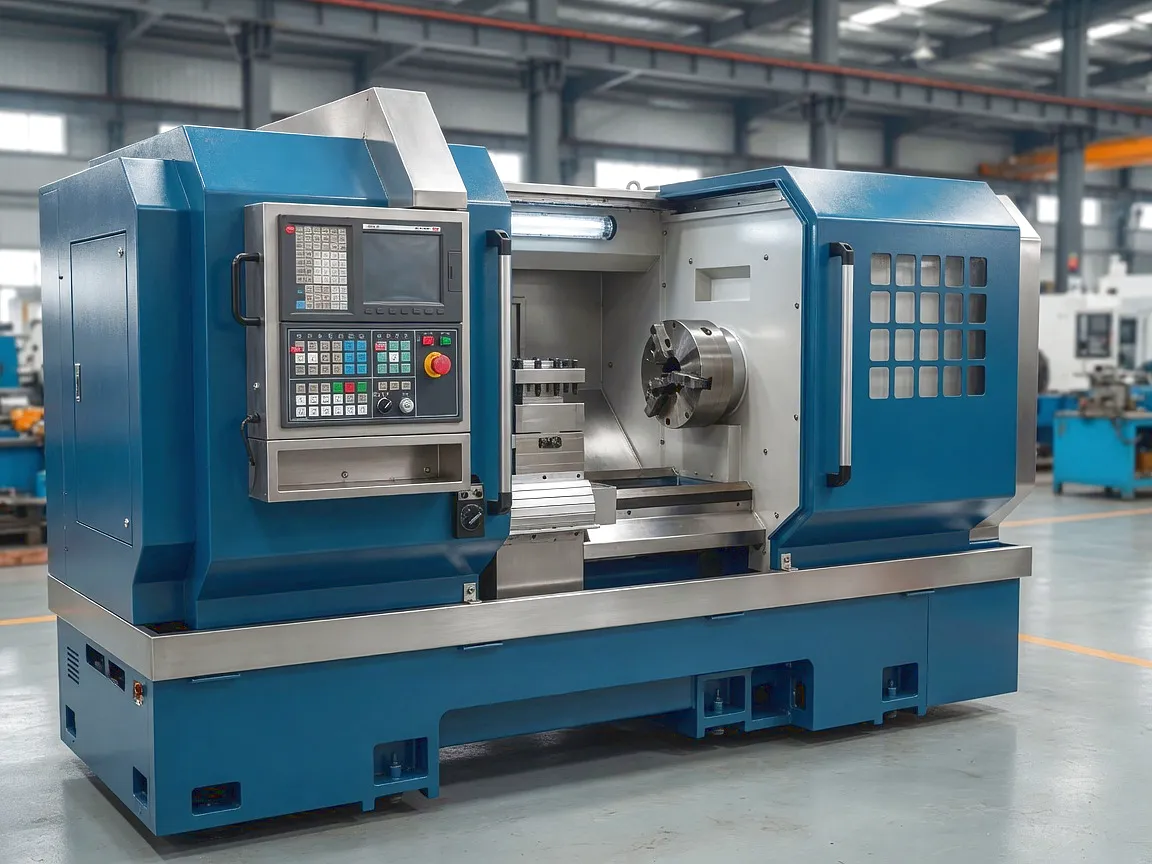
Packaging and food processing machinery — a sector with deep roots in UK manufacturing, including facilities in Yorkshire and the North West — uses worm gear shafts to drive filling heads, capping turntables, and conveyor indexers. The compact layout and quiet operation align with both engineering constraints and food factory noise management requirements under UK HSE guidance.
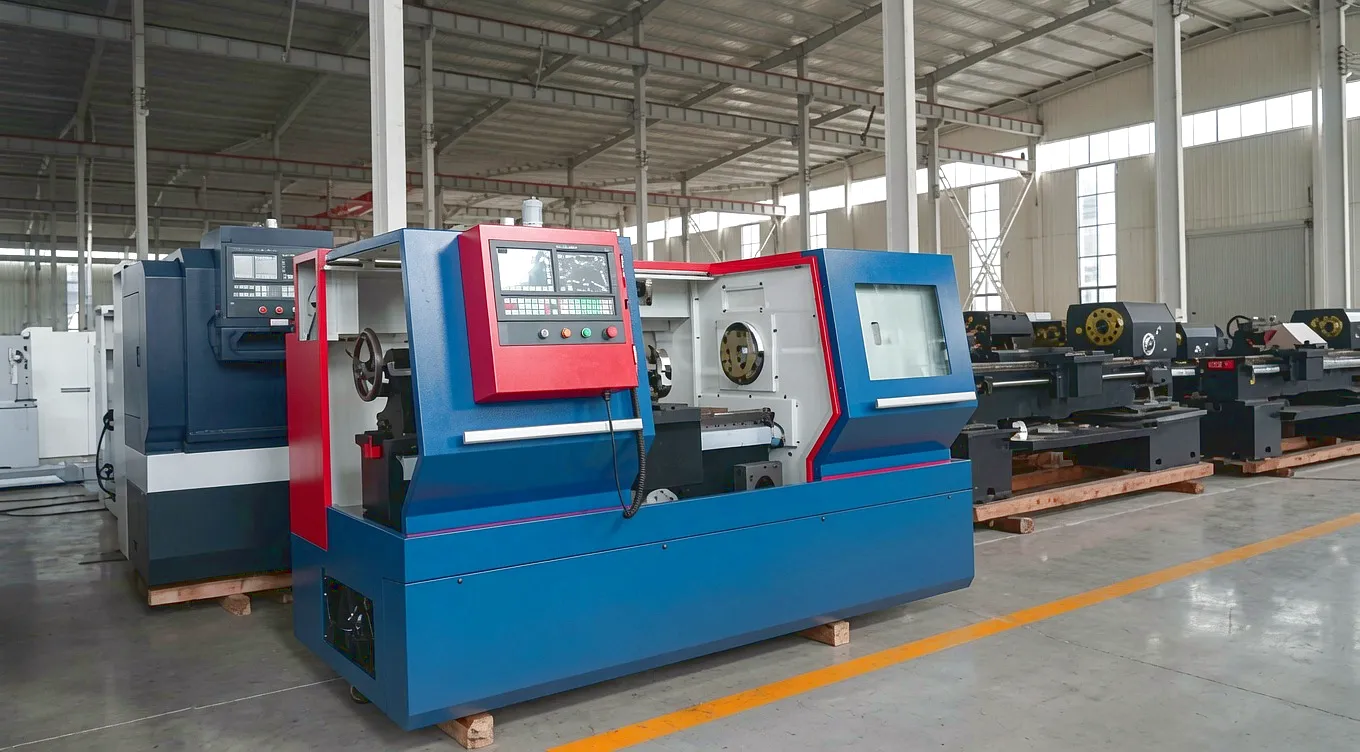
Lifting and hoisting equipment — overhead cranes, scissor lifts, dock levellers, and vehicle inspection platforms — represents one of the most safety-critical applications of worm gear shafts in UK industry. The self-locking property is here a legal safety requirement: a worm gear shaft with a lead angle below the friction angle holds a suspended load without active braking, meeting the load-holding requirements of BS EN 14492 and related lifting equipment regulations.
Beyond machine tools and lifting, worm gear shafts appear in renewable energy systems — particularly in the slew drives of single-axis solar trackers deployed across UK solar farms in southern England and the Welsh Borders — as well as in gate and valve actuators for water treatment infrastructure, automated door drives in commercial buildings, and the pitch control systems of small wind turbines. In each of these contexts, the ratio versatility, self-locking, and compact 90-degree axis geometry of the worm gear shaft provide engineering solutions that alternative drive technologies cannot match at comparable cost and package size.
Ever Power: Precision Worm Gear Shaft Manufacturing and Customisation for UK Industry
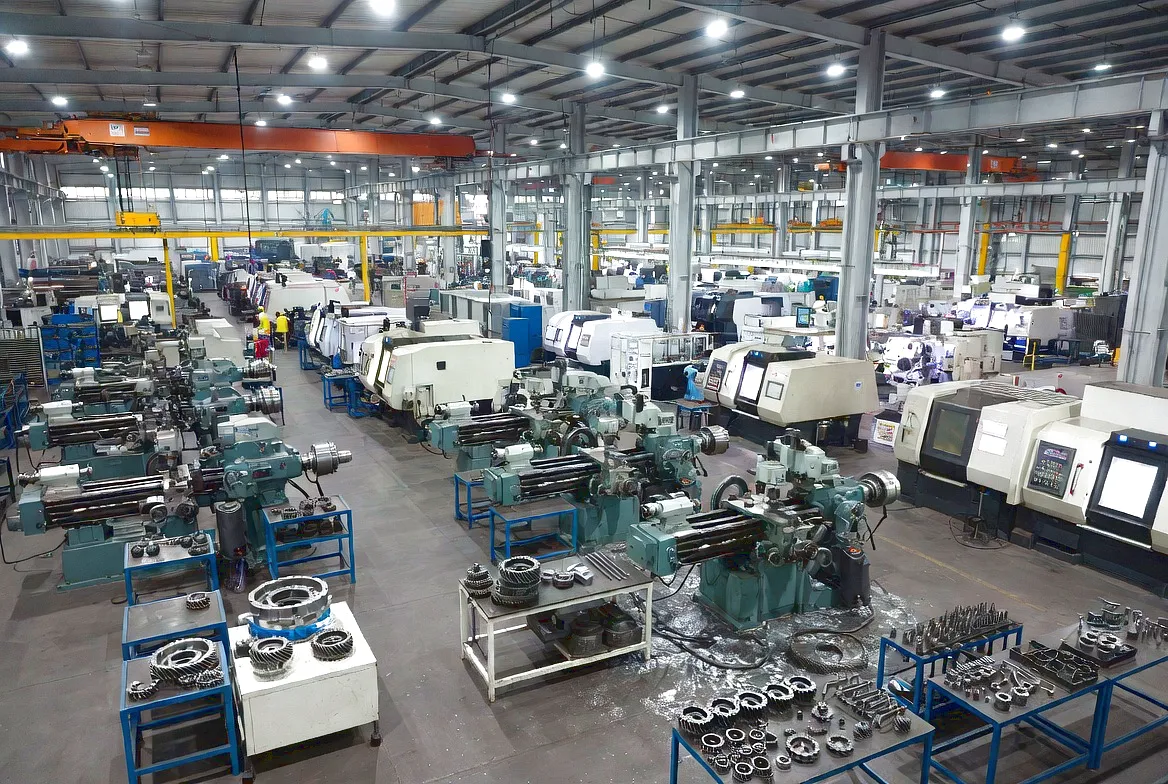
Ever Power is a specialist manufacturer of precision worm gear shafts serving B2B customers across the United Kingdom, European Union, and global export markets. The company’s production facility encompasses a complete chain of in-house manufacturing capabilities: from raw bar stock procurement and CNC turning through thread hobbing, gear grinding, case hardening, and final inspection — all under one roof. This vertically integrated approach gives Ever Power exceptional control over quality, lead time, and cost at every stage of the manufacturing process, and enables the technical flexibility to accept demanding custom specifications that many standard catalogue suppliers cannot accommodate.
Thread grinding is performed on multi-axis CNC worm grinding machines capable of achieving Ra 0.2 μm flank finishes and profile deviations within 3 μm — the surface quality standard required for precision CNC rotary tables and five-axis machining centre applications. Each precision worm gear shaft leaving the Ever Power facility is accompanied by a full dimensional inspection report and, where specified, a gear accuracy certificate to DIN 3975 or AGMA 2000 class levels, providing UK customers with the documentation trail needed for aerospace and defence quality management systems compliant with AS9100 Rev D.
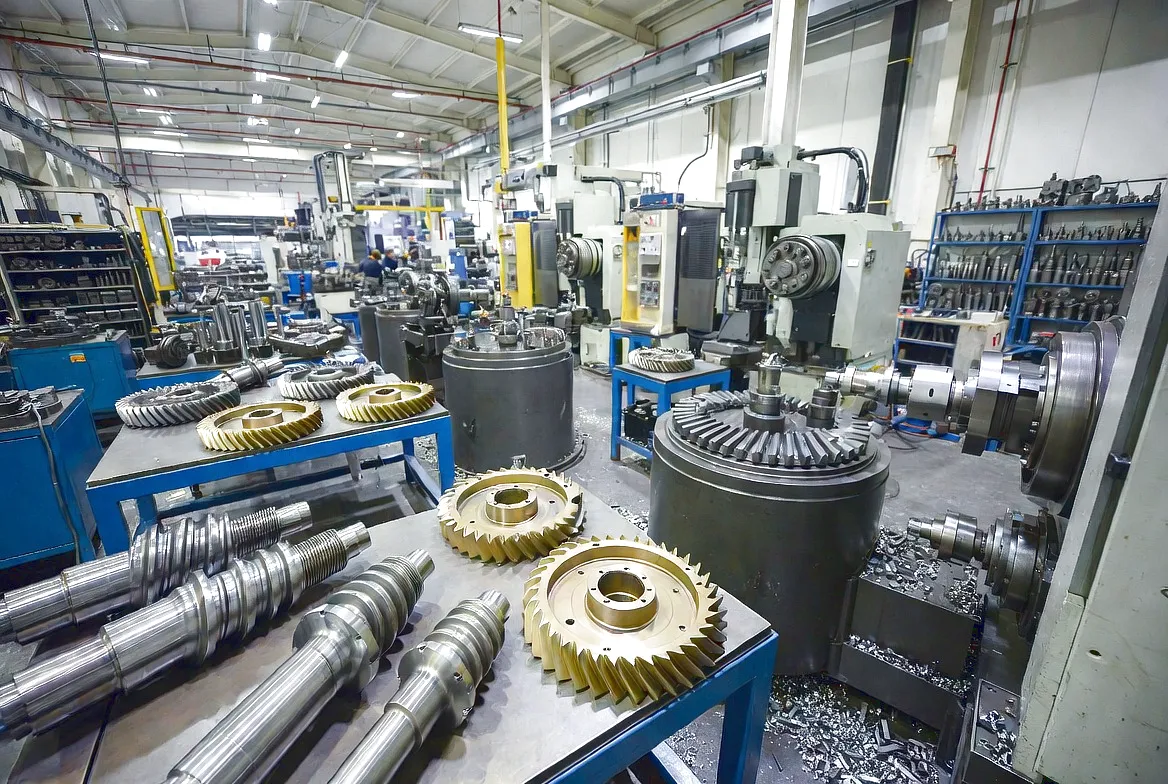
Customisation is at the centre of Ever Power’s value proposition to UK machine tool builders, gearbox OEMs, and industrial plant operators. The team’s application engineers work directly from customer-supplied drawings in DXF, STEP, or DWG format, or from worn samples brought in for reverse engineering. Parameters that can be fully customised include module and tooth count, lead angle and number of starts, worm profile type (ZA, ZN, ZI, ZK, or Archimedes), shaft material and heat treatment specification, shaft end geometry (splined, keyed, flanged, or solid), surface treatment (phosphate, zinc-nickel, hard chrome, or electroless nickel), and packaging requirements for shipping to UK destinations via DDP or DAP Incoterms. Batch sizes from single prototype pieces through to 500-piece production runs are handled within the same quality framework, with standard lead times of 3–6 weeks from drawing confirmation to despatch.
Ready to specify your worm gear shaft? Our engineers respond within 24 hours.
Ever Power Worm Gear Shaft Products
Sheffield Aerospace Subcontractor Cuts Scrap Rate by 73% with Ever Power Dual-Lead Worm Shafts
 Precision Components Yorkshire Ltd (PCY) is a precision subcontract machining company based in Rotherham, South Yorkshire, operating eight machining centres serving aerospace and defence customers including Tier 1 suppliers to the UK Ministry of Defence and civil aviation OEMs. In early 2024, PCY was experiencing escalating scrap rates on a batch of aluminium engine bracket assemblies requiring precise compound-angle drilling. The fifth-axis rotary table on their flagship VMC had accumulated approximately 80 million indexing cycles over four years of two-shift operation. The original құрт тәрізді беріліс білігі pair had worn to the point where backlash had grown to approximately 12 arc-minutes — nearly three times the 4.5 arc-minute tolerance specified for the bracket features. The cumulative positional error was causing off-axis hole positions that failed first article inspection.
PCY’s maintenance engineer contacted Ever Power after struggling to source a compatible dual-lead worm shaft from the original machine tool builder, which quoted a 16-week lead time and a price that the operations director described as “prohibitive for a replacement component.” Ever Power’s technical team received the customer’s drawing and a dimensional report from the worn shaft within 48 hours of first contact. Working from the customer’s drawings — a module 2, single-start dual-lead worm shaft in 20CrMnTi with a transmission ratio of 72:1 — Ever Power produced a set of replacement worm shafts in 20CrNiMo, upgraded from the original alloy specification for improved case hardness uniformity. Thread flanks were CNC ground to Ra 0.3 μm and the final gear accuracy was certified to DIN Class 5, an improvement on the original Class 6 shafts. DDP delivery to PCY’s Rotherham facility was completed in 23 working days from drawing confirmation.
After installation and axial adjustment to achieve less than ±2 arc-seconds of backlash — verified by autocollimator at the machine — the VMC returned to production on the bracket programme. Scrap rate fell from 8.4% to 2.3% within the first production month, a reduction of 73%. PCY subsequently placed a standing blanket order for two sets of replacement worm shafts per year as part of their planned preventive maintenance programme, specifying DDP delivery terms to their South Yorkshire facility to eliminate import administration overhead. The total cost saving — including reduced scrap material, operator time, and machine downtime — was calculated internally by PCY’s operations team at over £85,000 in the first twelve months.
⭐⭐⭐⭐⭐
“The dual-lead worm shaft Ever Power supplied matched our original drawing down to the micron. After adjustment, we measured ±1.8 arc-seconds of backlash — better than the original machine specification. The 23-day delivery to our Rotherham site was exceptional. We’ve already ordered the next set for our second machine.”
— David Thornton, Head of Maintenance, Precision Components Yorkshire Ltd, Rotherham
⭐⭐⭐⭐⭐
“We specified an upgraded material grade — 20CrNiMo instead of 20CrMnTi — and Ever Power’s engineering team confirmed the feasibility and adjusted the heat treatment spec without any additional charge. The gear accuracy certificate to DIN Class 5 satisfied our AS9100 quality audit with no queries. A genuinely professional supplier.”
— Sarah Kingham, Quality Manager, PCY Aerospace Division, South Yorkshire
⭐⭐⭐⭐⭐
“Ever Power accepted DDP delivery terms to our UK address and handled all export documentation seamlessly. The blanket order arrangement we now have gives us price certainty and confirmed lead times for the next 12 months. It’s exactly the supply chain reliability we need to run planned preventive maintenance without scrambling for parts.”
— Marcus Reid, Operations Director, Precision Components Yorkshire Ltd, Rotherham
Frequently Asked Questions About Worm Gear Shafts in CNC and Industrial Applications
Answers to the questions most commonly raised by UK procurement engineers, maintenance managers, and machine tool operators when specifying or sourcing precision worm gear shafts.
Specify Your Worm Gear Shaft with Ever Power
Custom worm gear shafts manufactured to your drawings. DDP delivery to any UK address. Precision grades for CNC rotary tables, gearbox OEMs, and heavy industry. Response within 24 hours.
📧 Get a Quote — [email protected]
edit by gzl