Ever Power | Precision Drive Technology
Worm Gear Shaft: The Self-Locking Backbone of Heavy Crane Drive Systems
How helical worm geometry delivers irreversible torque transmission — and why crane engineers across Birmingham, Sheffield and beyond rely on it when gravity cannot be trusted.
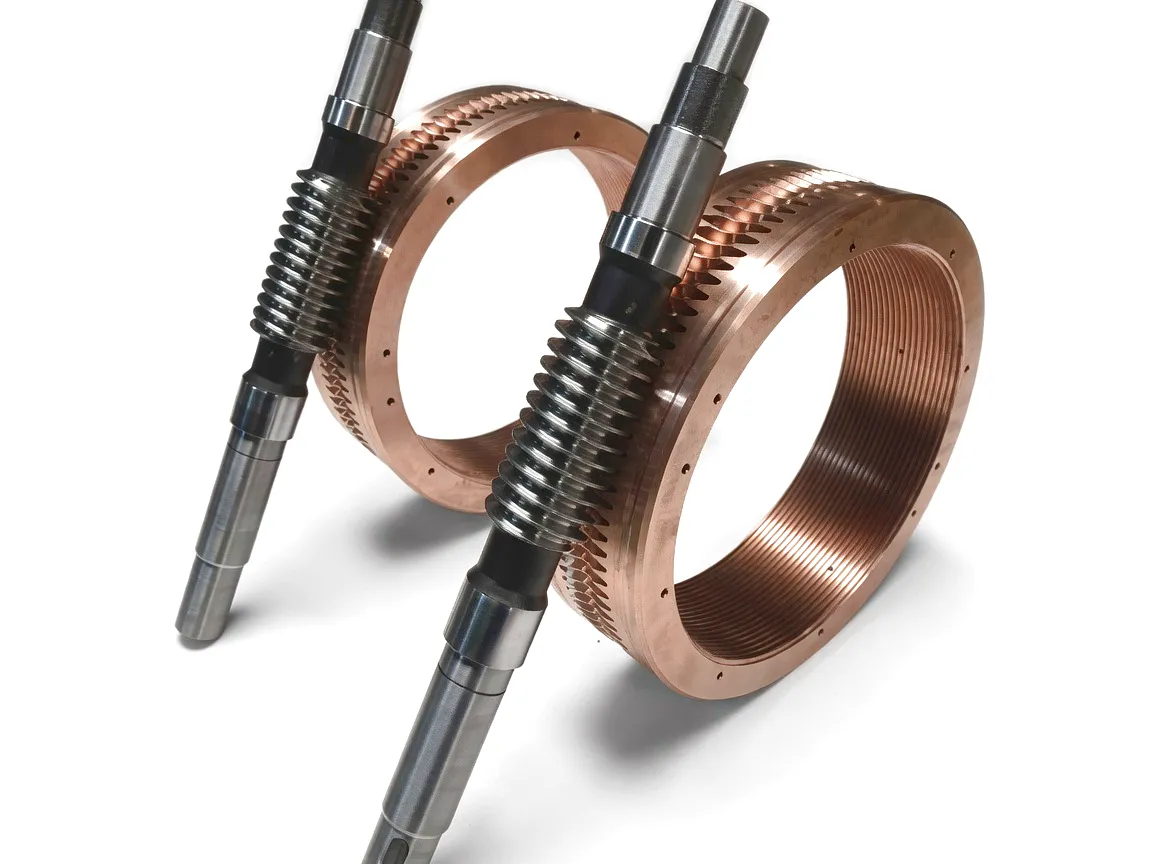
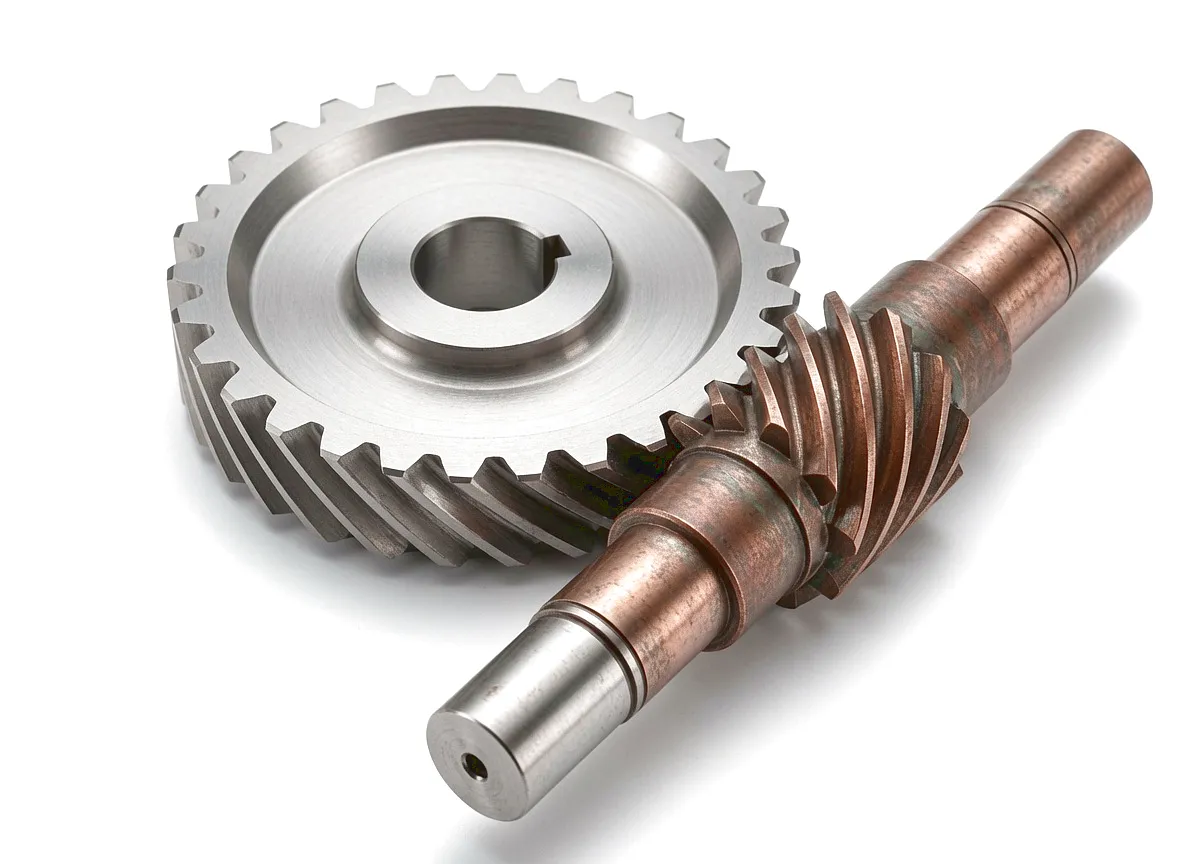
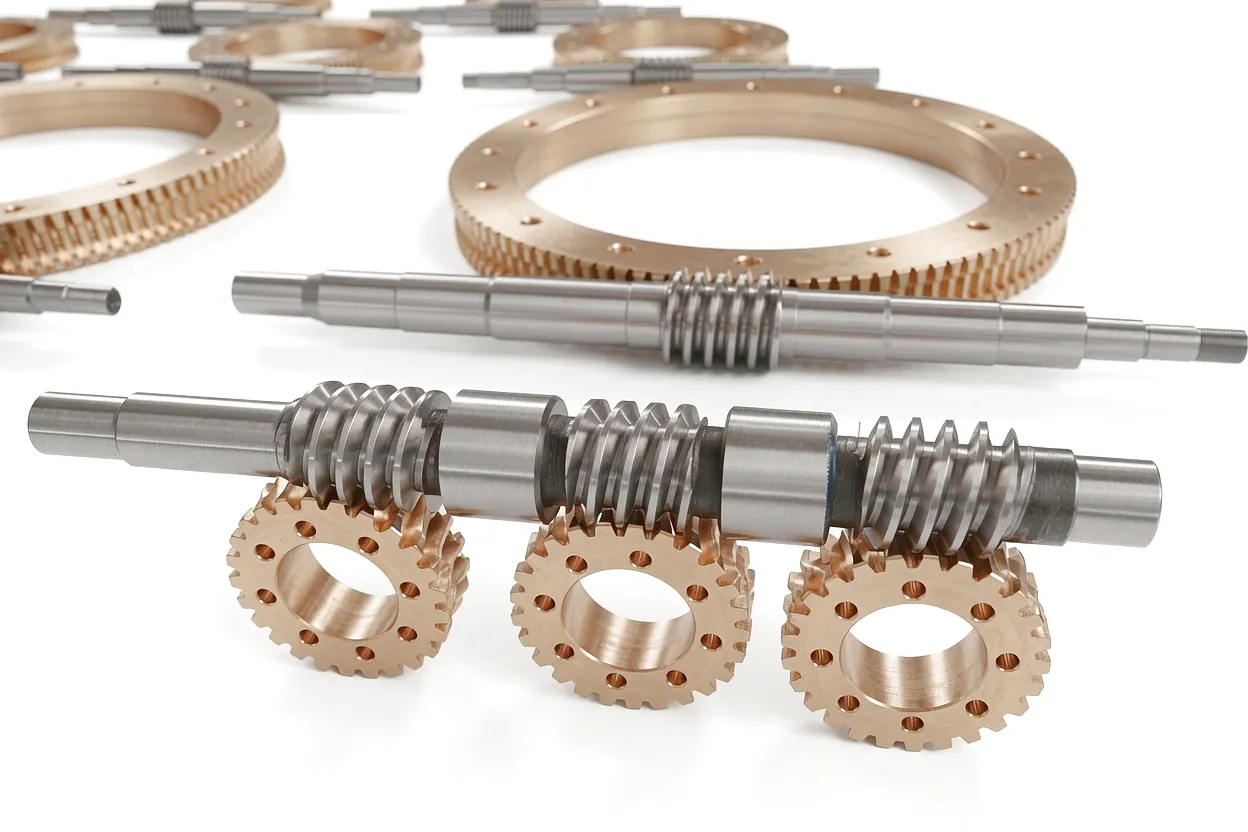
A worm gear shaft is far more than a rotating rod machined to carry a worm thread. Inside every gantry crane, harbour luffing crane and shipyard portal crane, this single component sits at the intersection of mechanical advantage and gravitational safety. The helical thread — cut with exacting precision into a hardened steel shaft — meshes continuously with a worm wheel whose bronze or cast-iron teeth absorb radial force across a distributed contact patch far wider than that of any spur or helical gear pair. This distributed engagement is what gives worm drive technology its famously quiet operation, its compact footprint, and, most critically for crane applications, its inherent self-locking or self-holding characteristic that keeps a suspended load frozen in position the instant power is removed.
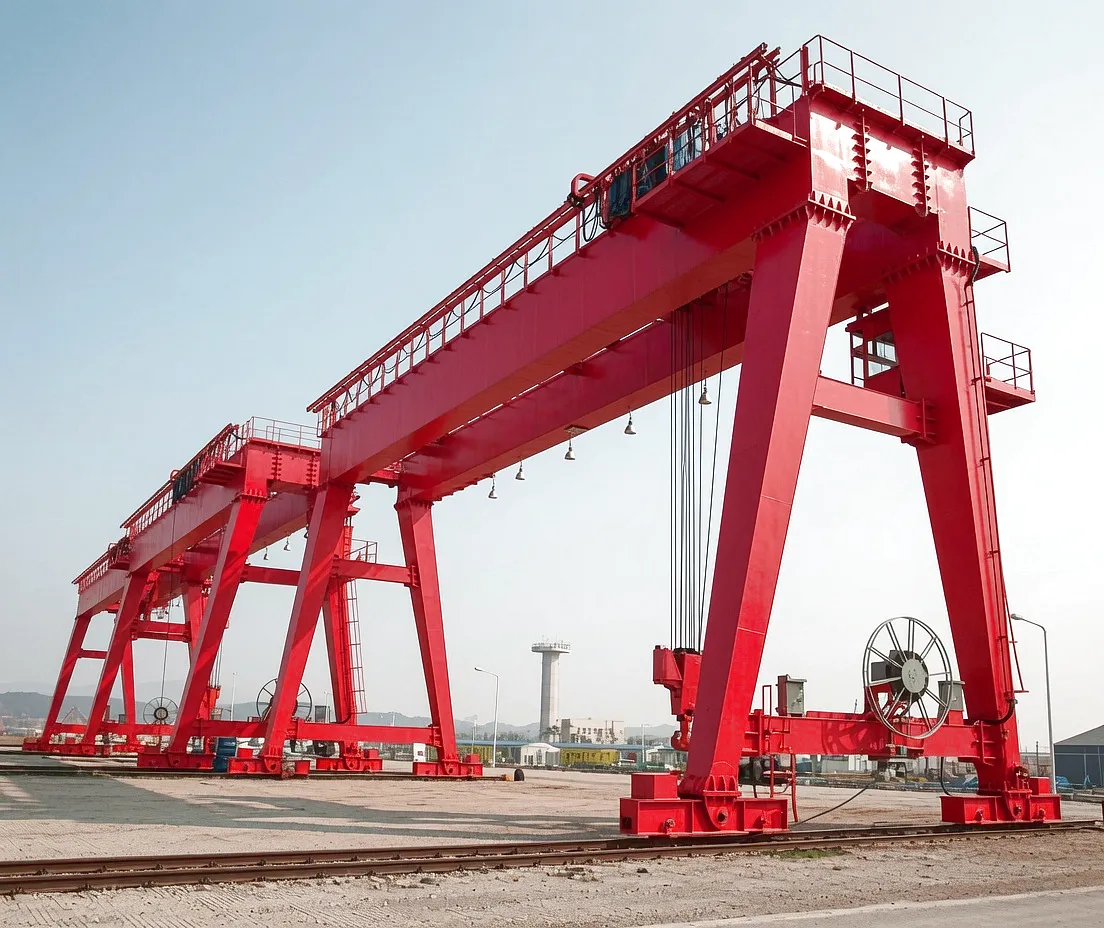
Within gantry crane long-travel mechanisms, worm gear reducers are deployed as low-ratio speed reduction units positioned between the electric drive motor and the wheel axle, working in concert with electromagnetic brakes to achieve crisp, position-accurate stops. In harbour portal cranes — the tall, sea-fronting structures familiar to ports in Liverpool, Southampton and Felixstowe — worm transmission systems appear in both the luffing mechanism that raises and lowers the boom and the slewing ring drive that rotates the entire upper structure. Both applications share an absolute requirement for self-holding torque (SHT): the mechanical ability to prevent back-driving under gravitational or wind load when the motor is de-energised. No spring-loaded brake alone can match the passive security offered by a correctly specified worm gear shaft.
How a Worm Gear Shaft Actually Works — The Geometry Behind the Force
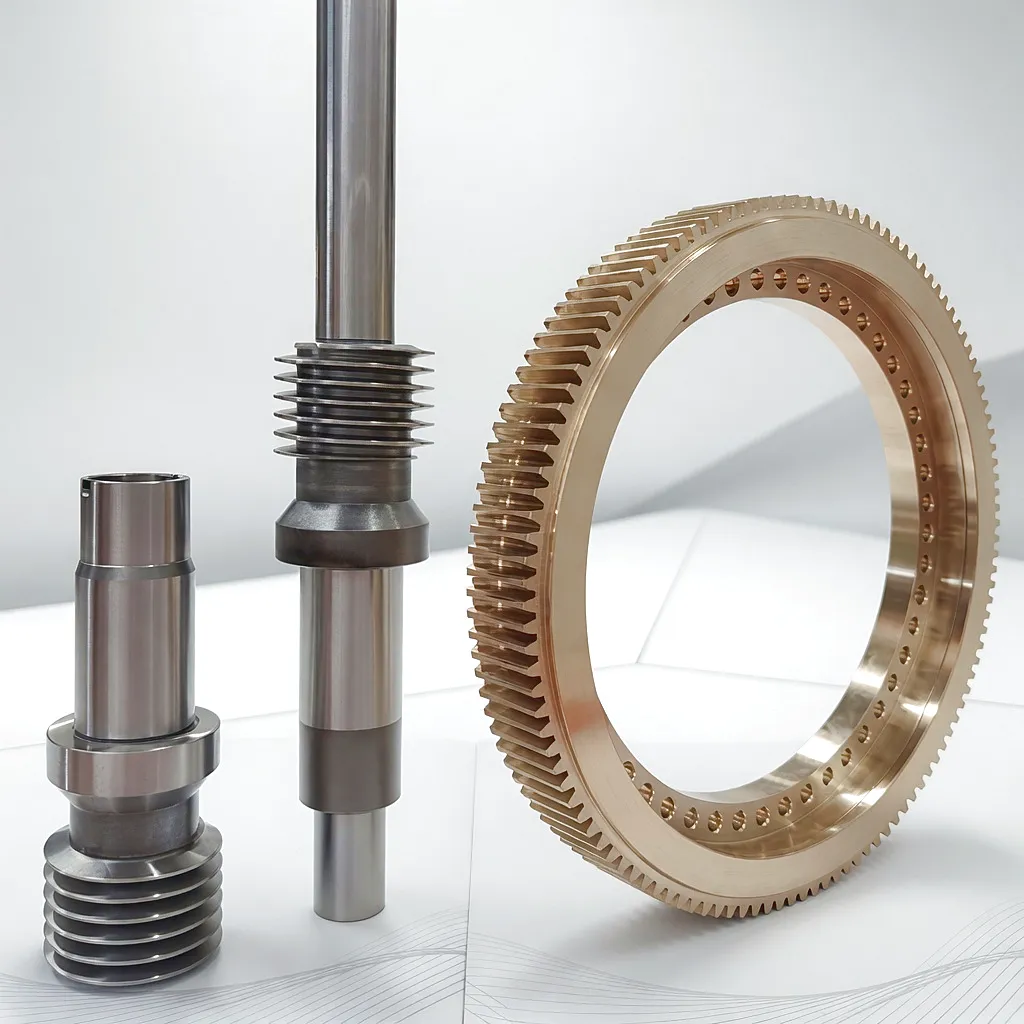
The operating principle begins with the lead angle — the helix angle at which the thread winds around the shaft’s cylindrical body. When the worm shaft rotates, its thread teeth push against the teeth of the worm wheel in a sliding contact rather than the rolling contact found in standard gear pairs. This sliding motion generates frictional heat and demands superior lubrication, but it simultaneously creates the conditions for self-locking: when the lead angle falls below the friction angle of the meshing surfaces (typically below 6° for steel-on-bronze pairs), the worm wheel cannot rotate the worm shaft backward, regardless of the torque applied at the wheel. This is the self-holding torque phenomenon exploited in every crane mechanism that must hold position without continuous brake engagement.
Power is transmitted by the continuous sliding and wedging action between the worm thread flanks and the concave, enveloping tooth profile of the worm wheel. The worm wheel is deliberately cut with a curved tooth face — often called a throat — that wraps partially around the worm’s diameter. This enveloping geometry increases the simultaneous number of teeth in contact, distributing load across a wider area, reducing contact stress, and enabling very high reduction ratios (from 5:1 up to 100:1 or beyond in a single stage) within a housing that occupies far less radial space than an equivalent planetary or helical reducer. The shaft itself serves as the primary input member, transmitting motor torque through its own torsional rigidity while its journal sections carry radial and thrust bearing loads generated by the meshing forces. Shaft deflection must be controlled to within strict tolerances — typically below 0.02 mm under rated load — or the worm-wheel contact pattern shifts toward the tooth tips, dramatically reducing load capacity and accelerating wear.
The velocity ratio of a worm drive is fixed by two parameters: the number of thread starts on the worm shaft and the number of teeth on the worm wheel. A single-start worm advances one thread pitch per shaft revolution, while a four-start worm advances four pitches. High reduction ratios use single-start worms; applications that need efficiency above self-locking range employ multi-start configurations. In crane luffing mechanisms, engineers typically target single- or double-start worm shafts to guarantee self-holding torque, knowing that efficiency will be sacrificed to gain the passive safety margin that keeps the boom stationary through power loss, hydraulic failure, or grid disturbance.
Core Materials — Why Metallurgy Defines Crane-Grade Performance
⚙️
Worm Shaft Alloy Steel
20CrMnTi, 42CrMo4, and 18CrNiMo7-6 case-hardening steels dominate crane shaft production. After rough-turning and thread milling, shafts undergo carburising and quenching to achieve a case hardness of 58–62 HRC to a depth of 0.8–1.5 mm while preserving a tough, ductile core that resists shock loading from sudden crane starts and emergency stops.
🔩
Worm Wheel Bronze Alloys
The mating worm wheel is traditionally cast in centrifugally cast phosphor bronze (C90500 / PB1) or aluminium bronze, whose tin content lowers the coefficient of friction against the hardened steel shaft thread, extending service life and reducing the thermal load at the mesh. For very high-load crane applications, shell-cast flanged bronze rims are bonded or bolted to a grey iron or ductile iron centre hub.
🛡️
Surface Treatments
Thread flanks on marine or coastal crane shafts frequently receive additional shot-peening after grinding to introduce compressive residual stresses that resist fatigue crack propagation. Phosphating or nickel plating is applied to shaft journal areas to reduce corrosion risk in salt-air environments typical of British port installations from Teesport to Tilbury.
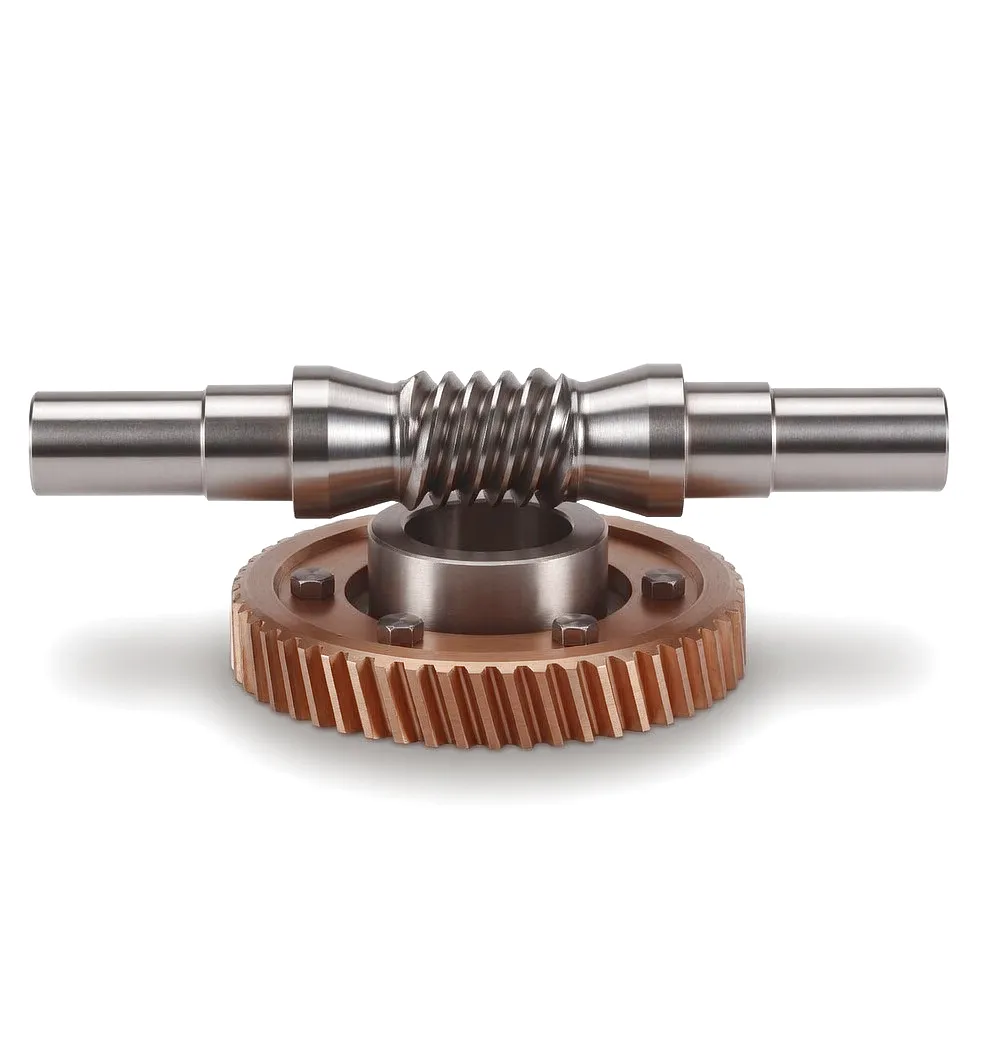
Thread grinding is the defining manufacturing operation for any worm gear shaft intended for crane-grade service. After carburising, the shaft is returned to the CNC grinding centre where the worm thread flanks are precision-ground to DIN 3974 Class 7 tolerances or tighter, removing the distortion introduced by heat treatment and establishing the final involute or Archimedes tooth profile with lead error below 8 micrometres per 25 mm of worm length. This precision is non-negotiable in crane mechanisms: even a small deviation in lead translates directly into uneven load sharing across the tooth contact patch, localised pitting, and ultimately premature failure that could compromise load safety.
Journal grinding follows thread grinding, with final bearing seat diameters held to h5 or k5 tolerance bands to ensure correct interference or transition fits with the tapered roller or spherical roller bearings that support the shaft. These bearings must accommodate the large axial thrust load generated by helical worm tooth forces — a force that points along the worm shaft axis and can reach 60–80% of the tangential mesh force at low lead angles. Bearing arrangement, pre-load, and housing bore geometry are all defined in the shaft’s design package and must be verified during assembly using dial gauge measurements before the complete reducer assembly is run under load on the test rig.
Technical & Performance Parameters — Worm Gear Shaft Specification Table
The parameters below represent the standard production range available from Ever Power. Custom specifications extending beyond these ranges are routinely supplied; see the customisation section for detail. All values are for worm gear shafts intended for use in crane and heavy industrial drive systems.
| Parameter | Standard Range | Crane-Grade Spec | Unit / Note |
|---|
| Centre Distance (a) | 50 – 400 | 80 – 400+ | mm |
| Output Torque | 50 – 50,000 | 500 – 50,000 | N·m |
| Reduction Ratio (i) | 5 : 1 – 100 : 1 | 10 : 1 – 60 : 1 | Single stage |
| Lead Angle (gamma) | 2° – 30° | 3.5° – 8° (SHT range) | Self-locking < friction angle |
| Number of Starts | 1 – 6 | 1 – 2 (crane standard) | 1 start for max SHT |
| Shaft Material | 20CrMnTi / 42CrMo4 | 18CrNiMo7-6 / 42CrMo4 | Alloy steel, carburised |
| Thread Hardness | 55 – 60 HRC | 58 – 62 HRC | Case depth 0.8 – 1.5 mm |
| Thread Accuracy Grade | DIN 3974 Cl. 8 | DIN 3974 Cl. 6 – 7 | CNC ground flanks |
| Drive Efficiency (eta) | 40% – 90% | 50% – 75% (SHT range) | Lower at small lead angle |
| Input Speed | up to 3000 | 750 – 1500 | rpm |
| Self-Holding Torque | Design-specific | Verified per IEC 60034 / ISO 6336 | Test report included |
| Shaft Shaft Deflection Limit | < 0.05 mm rated | < 0.02 mm at max load | Dial gauge verified |
| Operating Temperature | -20 to +80 °C | -30 to +80 °C | Outdoor UK port conditions |
Core Technical Advantages — Why Crane Engineers Choose Worm Drive
🔒
Passive Self-Locking Without Power
Single-start worm shafts with lead angles below the interface friction angle are mechanically irreversible. The load cannot back-drive the shaft even if the motor is completely de-energised or the power grid fails. In crane luffing mechanisms this eliminates the risk of uncontrolled boom drop, a critical safety advantage that no other reducer type provides passively without auxiliary braking hardware.
📦
High Ratio in Minimal Space
A single worm drive stage routinely achieves 10:1 to 80:1 speed reduction in a housing envelope substantially smaller than an equivalent multi-stage helical arrangement. In the confined machinery houses of portal cranes and gantry cranes where every cubic centimetre is contested by motors, brakes, and cable drums, the compactness of worm reducer units translates into real engineering value.
🔇
Quiet, Low-Vibration Operation
Because worm-gear contact is sliding rather than impacting, the characteristic gear-tooth impulse noise present in spur and bevel drives is absent. Noise levels in well-lubricated worm reducers typically run 6–12 dB(A) below equivalent-ratio helical reducers. In ports and urban distribution facilities where community noise regulations apply — an increasingly significant constraint in UK planning approvals — this quietness is a genuine competitive differentiator.
⚡
High Shock and Overload Tolerance
The distributed multi-tooth contact and the ductile core retained in the carburised shaft allow worm drives to absorb momentary overloads — motor starting surges, blocked travel stops, emergency brake engagements — without the tooth fracture risk that would terminate a spur gear. Crane duty cycles classified FEM/ISO M5 through M8 demand exactly this overload resilience, and worm gear shafts manufactured to correct material specifications deliver it reliably.
🔄
90° Right-Angle Power Transmission
Worm drives naturally transmit power between perpendicular shafts — an arrangement that meshes perfectly with most crane architecture where a horizontal motor drives a perpendicular wheel axle or slewing ring. Eliminating the bevel gear stage or coupling that would otherwise be required to achieve this 90° offset reduces part count, cuts potential failure points, and simplifies the gearbox housing design considerably.
🎯
Smooth Speed Modulation
Because the worm meshes continuously rather than in discrete tooth-pitch increments, the output speed is inherently smooth and free from the low-frequency torsional ripple that characterises large-module spur gears. This is especially valuable in portal crane slewing mechanisms where angular velocity fluctuations would swing suspended loads laterally, creating hazardous pendulum oscillations that require the operator to counteract manually.
Industrial Application Scenarios — Where Worm Gear Shafts Earn Their Keep
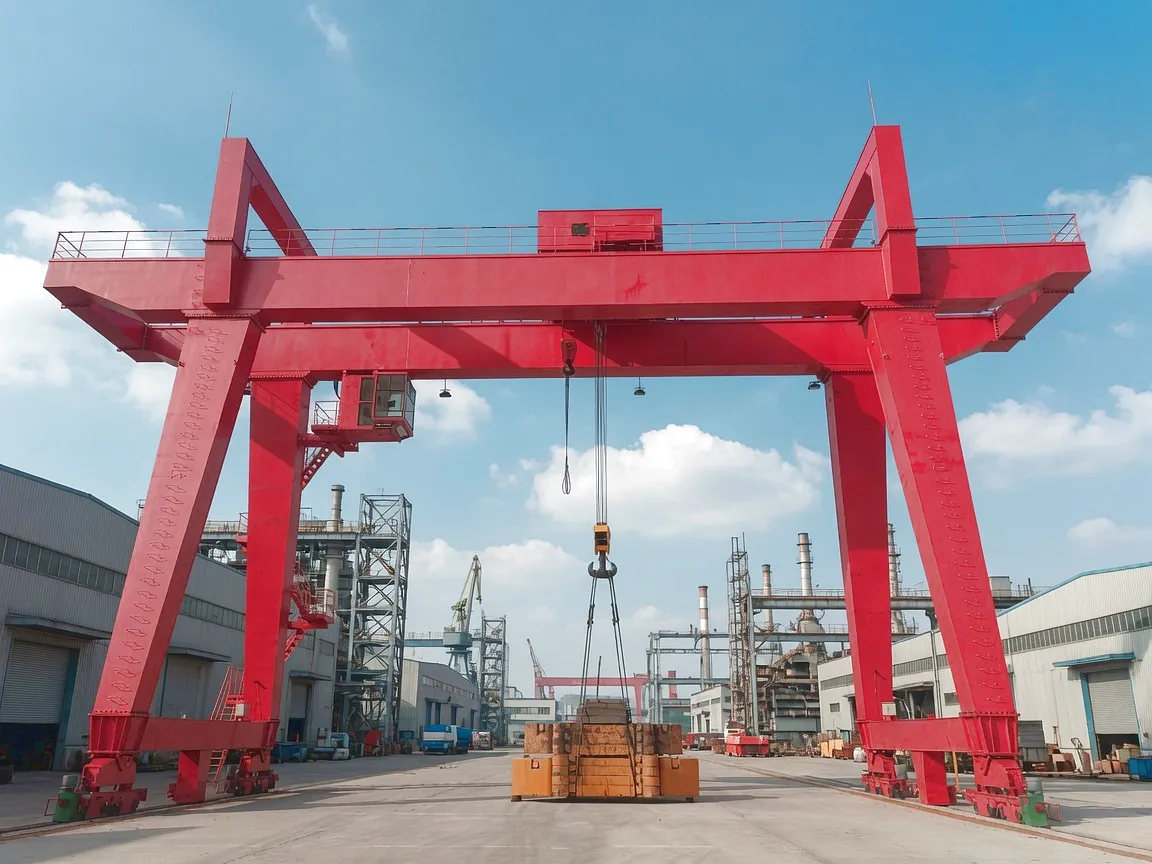
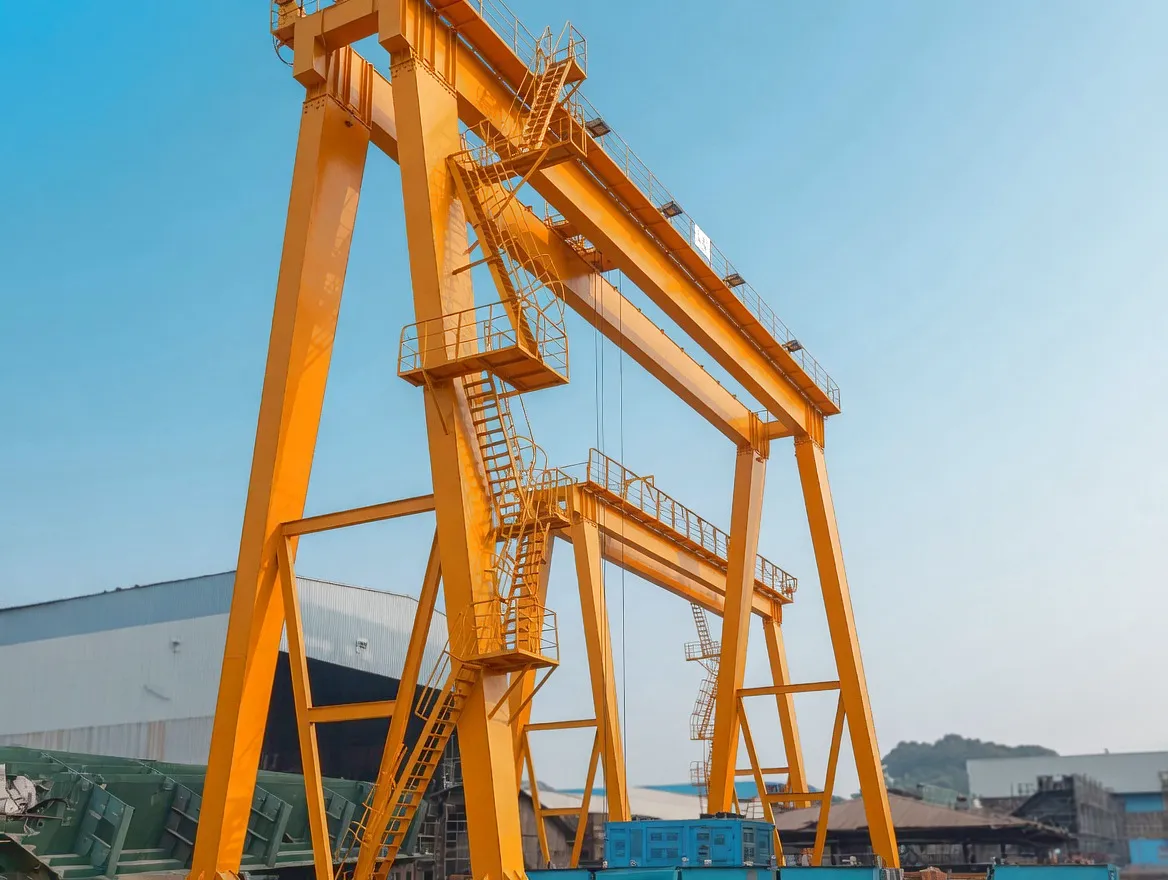
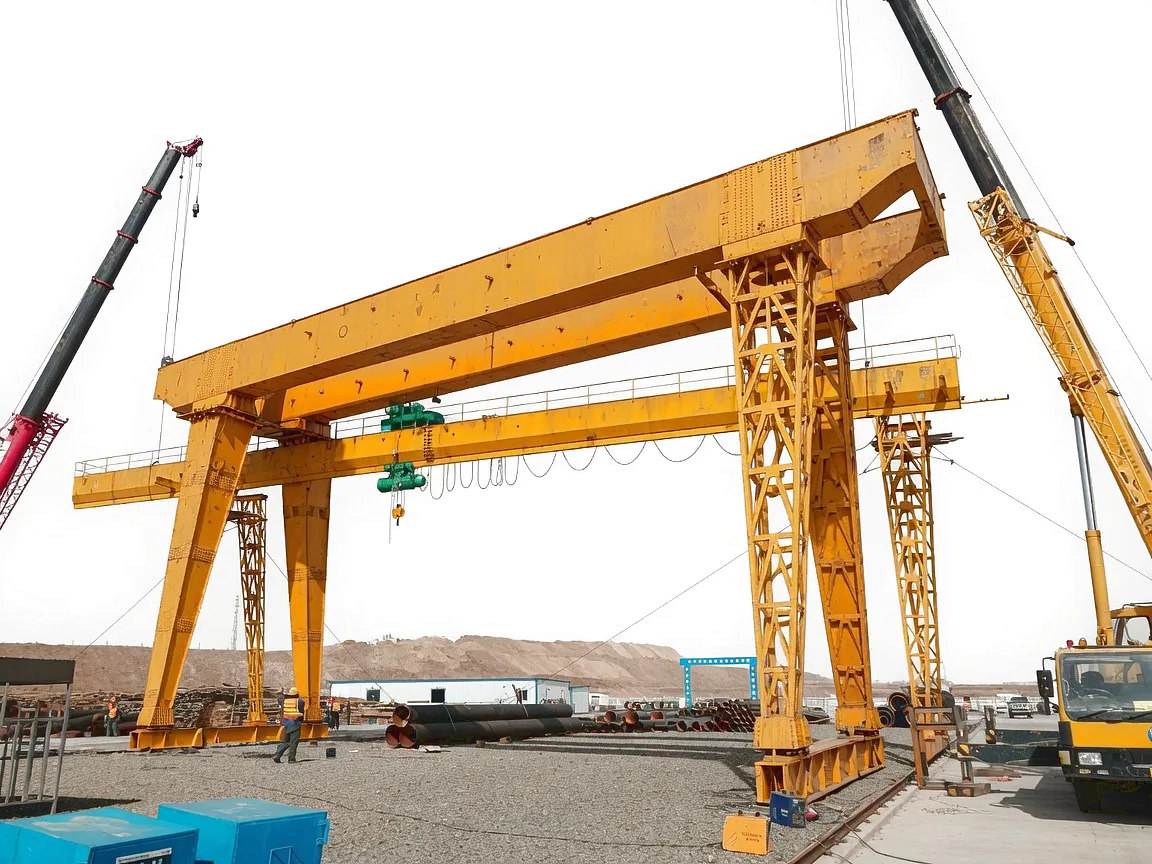
Gantry crane long-travel (crab travel) drives are among the most demanding applications for worm gear shafts because the mechanism must simultaneously deliver precise positional repeatability, smooth acceleration ramps, and absolute holding capability during load positioning pauses. In steelworks gantry cranes — of the type operating at Sheffield and Rotherham steel processing facilities — the worm reducer is mounted at the crane bridge end truck, with its output shaft driving the road wheel directly or through a short coupling. The self-holding torque of the worm gear shaft supplements the electromagnetic disc brake, providing a second layer of position security that prevents bridge creep on sloping rail installations or in the event of brake wear-induced slippage.
Luffing mechanism drives in harbour luffing cranes demand the highest self-holding torque density of any crane application. When a Liverpool or Teesport harbour luffing crane holds a 40-tonne container at a 55° boom angle in a Force 6 wind, the worm gear shaft in the luffing reducer must resist a back-driving torque that combines gravitational boom weight, load weight, and dynamic wind moment — all without any supplemental braking. Correctly selected single-start worm gear shafts with lead angles in the 3.5° to 5.5° range handle this task continuously and without degradation, provided the lubricant grade, temperature, and viscosity remain within the operating specification for the prevailing outdoor British conditions.
Slewing Ring Drives
Portal and derrick crane rotation mechanisms use worm reducers to drive the slewing ring gear, achieving the slow, controlled slewing speeds — typically 0.2 to 1.5 rpm — needed for safe load handling without the torque spikes that would otherwise excite structural resonance in the crane’s latticed boom.
Automated Conveyor Positioning
Distribution warehouses in the UK Midlands’ logistics corridor — Coventry, Northampton, Rugby — deploy worm gear reducers in conveyor divert gates and indexing turntables where the load must be held in a precise angular position between movements without the continuous power draw of an energised motor holding a brake open.
Packaging Machinery Indexing
Food processing and pharmaceutical packaging machines across the North West of England use compact worm gear shaft assemblies to drive intermittent indexing tables, requiring the high repeatability and zero-backlash positioning capability that precision-ground worm threads provide.
Mining & Quarry Equipment
Belt conveyor takeup drives, roof bolter rotary heads, and incline hoist mechanisms used across Welsh and Northern English quarrying operations require the worm gear shaft’s combination of high torque density, self-holding capability, and ability to run continuously in contaminated, dusty environments with infrequent maintenance access.
Manufacturing Excellence
Ever Power — Precision Worm Gear Shaft Manufacturing & Custom Solutions
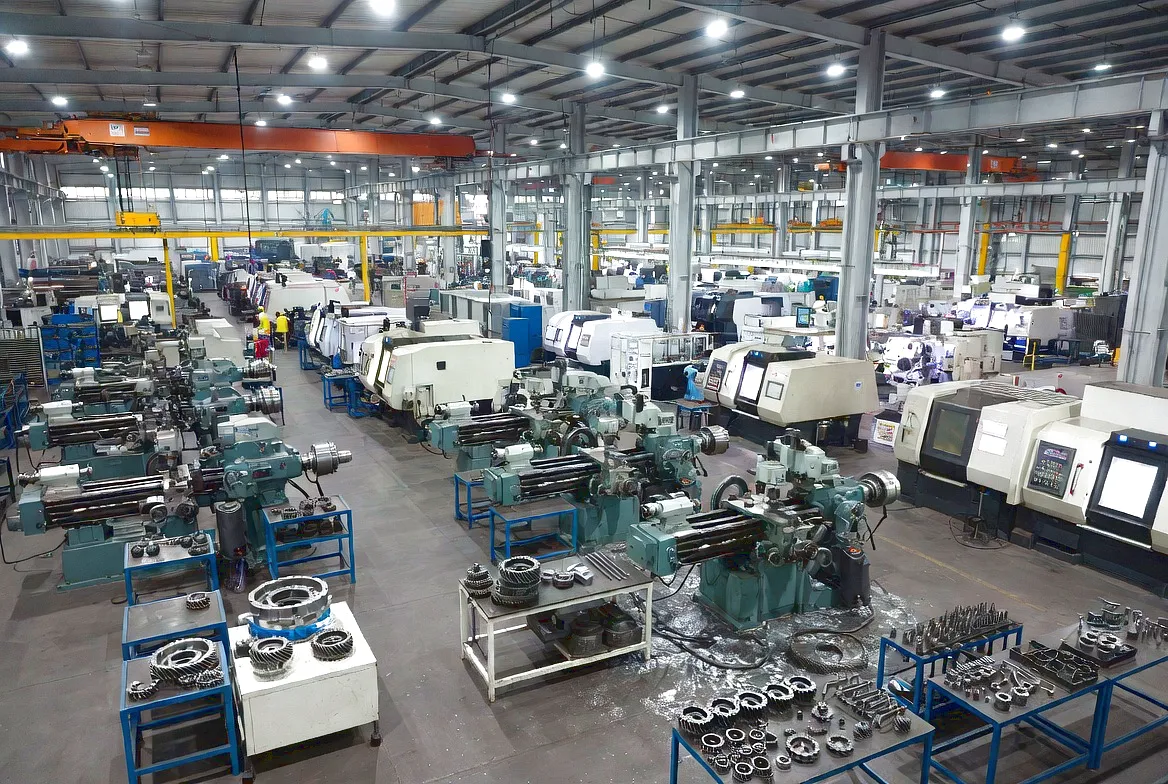
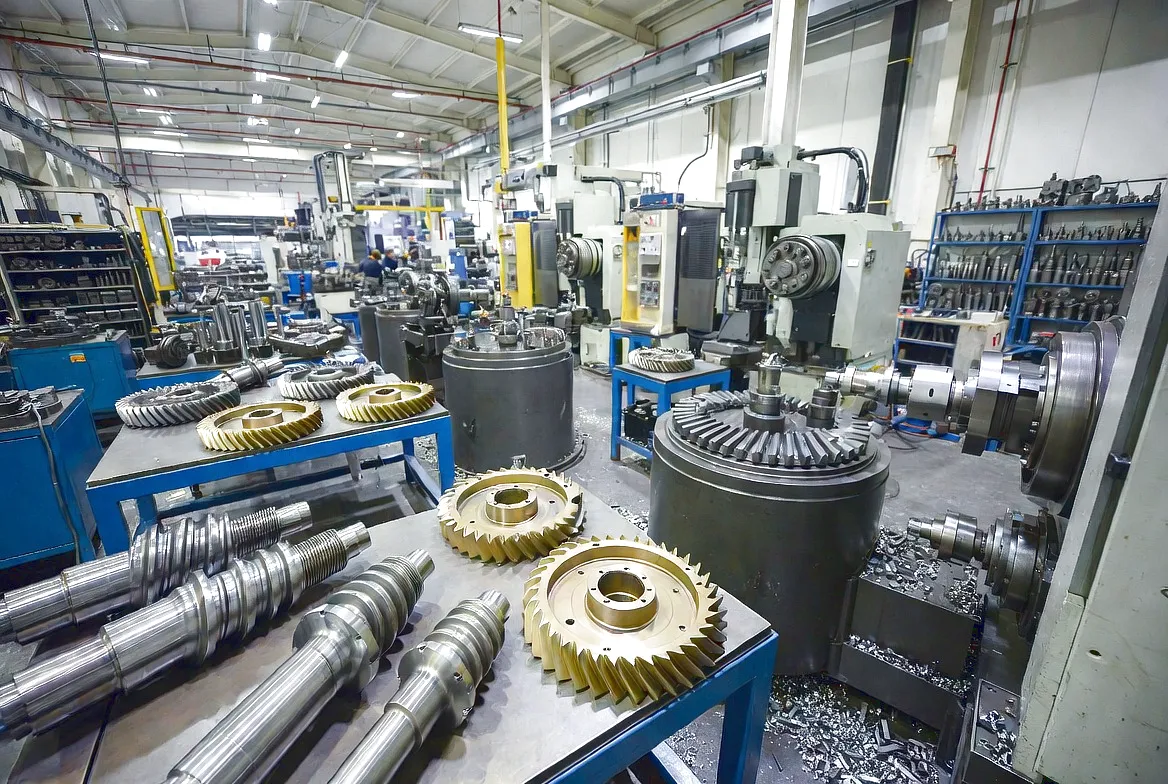
Ever Power operates a dedicated precision drive component manufacturing facility equipped with a complete production chain spanning raw bar stock selection, rough turning, carburising and quenching furnace lines, CNC thread grinding centres (achieving DIN 3974 accuracy grade 6 as standard), journal grinding, inspection on Zeiss CMM coordinate measuring machines, and final assembly and test rigs capable of load-testing complete worm reducer assemblies up to 50,000 N·m output torque. The depth of this vertical integration means that every worm gear shaft produced carries traceability from the steel mill certificate to the final inspection report — a level of documentation that increasingly matters to UK crane OEMs navigating machinery directive compliance and CE/UKCA marking obligations.
What sets Ever Power apart from catalogue-only suppliers is the depth of customisation capability available across every design parameter. Shaft diameter, thread module, number of starts, overall shaft length, keyway or spline output, hollow bore configurations, mounting flange geometry, surface treatment specification, and bearing selection — all can be adapted to match the exact envelope and performance target of a customer’s crane or industrial drive design. For British crane builders sourcing through a streamlined supply channel, Ever Power offers comprehensive technical co-operation from the concept phase, including FEA stress analysis reports, gear rating calculations per ISO 6336, and prototype runs before full production commitment. Lead times for standard range items are kept competitive through maintained semi-finished stock, while bespoke engineered shafts are quoted individually with realistic and transparent delivery schedules.
ISO 9001
Quality Certified
50,000 N·m
Max Test Torque
DIN 3974
Grade 6 Thread Grinding
Full Custom
OEM Design Support
Customer Success Story — Newport Docks, South Wales
Project Background
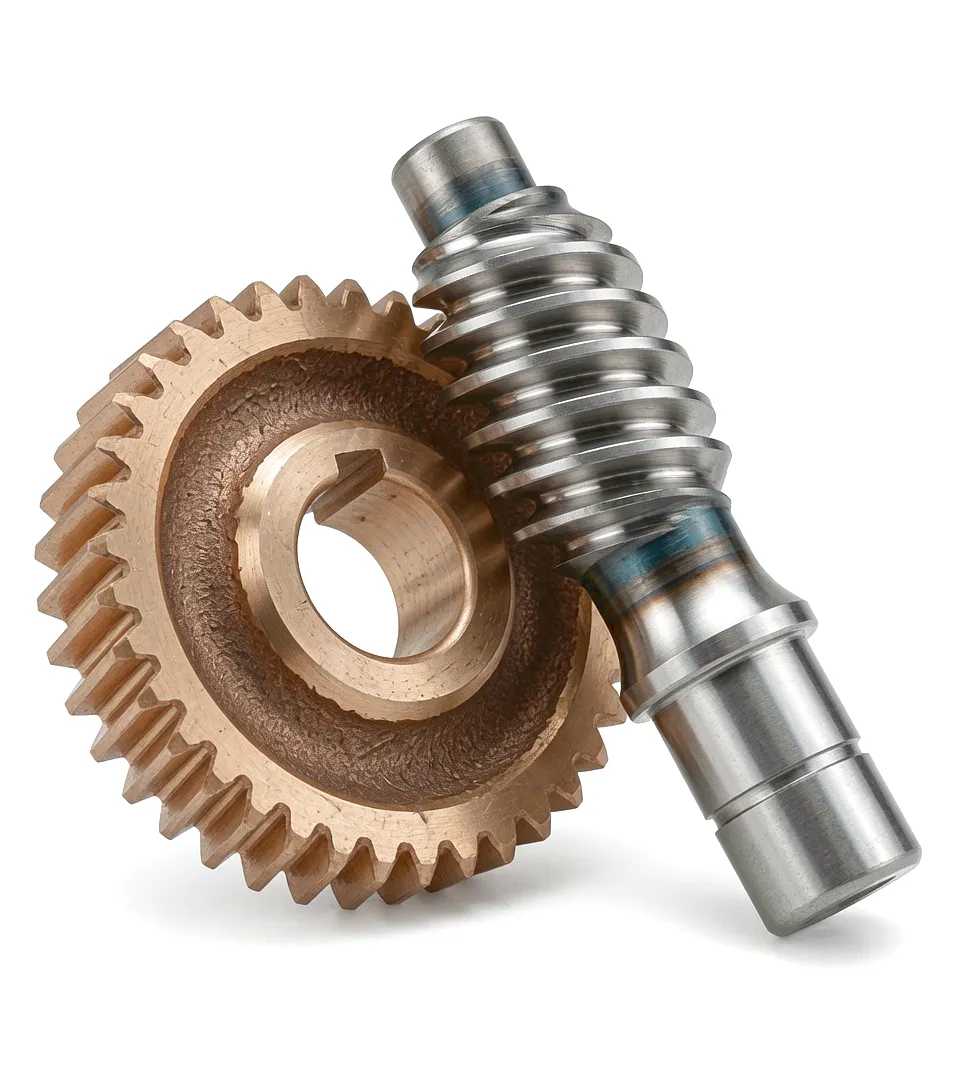 A port equipment maintenance contractor based in Newport, South Wales was commissioned to overhaul the luffing and slewing mechanisms of two aging 50-tonne harbour portal cranes at the ABP Newport terminal. Both cranes had accumulated over 18 years of operation and the original worm reducers — sourced from a now-defunct European supplier — had developed excessive backlash in the luffing drive and intermittent self-holding failures in the slew mechanism that were flagged during the operator’s annual safety inspection. Replacement reducers from the original design source were unavailable, and the standard-catalogue options from UK distributors either could not match the required centre distances or could not confirm the self-holding torque rating required under the applicable machinery directive.
The contractor contacted Ever Power’s technical sales team through their website, providing the original reducer drawings, the crane’s load rating sheets, and the FEM duty group classification (M6/H2). Ever Power’s engineering team completed a full replacement design within four working days, specifying two custom worm gear shaft assemblies: one for the luffing mechanism with a 28:1 ratio single-start worm (lead angle 3.8°, verified self-holding torque 14,200 N·m) and one for the slewing drive with a 20:1 double-start worm (lead angle 5.6°, SHT 7,400 N·m). Both shaft designs retained the original output bore and key dimensions to simplify the installation without crane structural modification.
Both complete reducer assemblies — including worm gear shafts, bronze worm wheels, housing, bearings, and seals — were shipped to Newport within six weeks. Installation was completed during a planned crane maintenance window and both cranes returned to full operational status with SHT values verified against the original design requirements. In the 24 months since installation, both reducers have logged zero unplanned stoppages and the most recent inspection confirmed thread flank wear within normal projected limits for their duty cycle, suggesting a remaining service life well in excess of ten years before the next major overhaul.
What Customers Say About Ever Power Worm Gear Shafts
★★★★★
“The self-holding torque test report that came with the Newport crane reducers was exactly what our certifying engineer needed to close out the UKCA file. The luffing shaft has held boom angle within 0.1° across several months of continuous container operations — a level of positional stability we honestly did not expect from a custom unit delivered in six weeks.”
— M. Griffiths, Lead Mechanical Engineer
Port Crane Maintenance Contractor, Newport, South Wales
★★★★★
“We’ve sourced worm gear shafts from several suppliers over the years. Ever Power’s DIN 3974 Grade 6 ground shafts are noticeably better: the contact pattern bluing test showed full-width engagement from the very first assembly, with no bedding-in period required. For our Sheffield steel plant gantry crane project, that difference in initial quality translates directly into reduced commissioning time and earlier production handover.”
— R. Blackburn, Procurement Director
Industrial Drive Systems Integrator, Sheffield, South Yorkshire
★★★★★
“We asked Ever Power for a worm gear shaft design that could operate in a coastal salt-fog environment at Teesport without more than annual lubrication service intervals. They specified nickel-plated journal areas and a filled-for-life grease arrangement on the shaft bearings that has genuinely delivered on that promise. Twelve months in and the grease sample analysis shows no moisture ingress and wear metals at the same level as the baseline sample. The cost per operating hour works out considerably lower than what we were getting from the previous European supplier.”
— S. Okafor, Reliability Engineer
Port Engineering Services, Middlesbrough, North East England
How to Select the Right Worm Gear Shaft for Your Crane Application
Selecting a құрт тәрізді беріліс білігі for a crane mechanism involves a sequence of interdependent decisions that begin with the required self-holding torque classification. Before any geometric parameters are fixed, the designer must determine whether the application truly requires confirmed self-locking (SHT greater than or equal to the maximum back-driving torque under worst-case load and angle) or whether it is sufficient to specify a worm that self-decelerates without guaranteed locking. Luffing and slewing mechanisms on harbour cranes universally require confirmed self-locking; long-travel drives typically do not, provided the electromagnetic brake is correctly rated.
Once the self-holding requirement is established, the selection sequence proceeds through output torque (derived from the maximum working load and the mechanism’s mechanical advantage), speed ratio (motor speed divided by required output speed), centre distance (constrained by the available housing volume), and efficiency (which determines the thermal power dissipated in the reducer at full-load continuous operation). Thermal load is often the limiting factor in crane slewing drives that operate for extended continuous periods: a low-efficiency worm pair at high continuous torque generates substantial internal heat, requiring either forced cooling provisions or a larger housing to provide sufficient oil-sump thermal mass.
Material selection for the worm shaft is driven by the maximum hertzian contact stress in the tooth mesh, which is determined by centre distance, module, material hardness, and the effective contact length. For crane-grade applications, 18CrNiMo7-6 case-carburised and ground to 58-62 HRC is the standard choice because its higher core toughness — compared with 20CrMnTi — better resists the crankshaft-like bending cycle imposed by the offset radial mesh force and the reversing torques produced by repeated crane travel starts and stops. The mating worm wheel material — typically centrifugally cast phosphor bronze C90500 — should be specified with a minimum tensile strength of 280 MPa and elongation above 20% to handle the ductile deformation that absorbs impact at engagement, without the brittle fracture risk that would arise from harder but less ductile alternatives.
Frequently Asked Questions — Worm Gear Shafts for UK Crane & Industrial Applications
▼
What exactly is the self-holding torque of a worm gear shaft and why does it matter so much for crane luffing mechanisms in the UK?
Self-holding torque (SHT) is the maximum back-driving torque that a worm gear shaft can resist without rotating, even with zero motor torque applied. It arises when the lead angle of the worm thread is lower than the friction angle at the meshing surfaces — typically below 6° for steel worms running against bronze worm wheels with proper lubrication. In crane luffing mechanisms specifically, SHT is the margin of safety that prevents the boom from dropping if power fails unexpectedly, if the brake lining wears beyond tolerance, or during an emergency stop sequence. UK machinery safety regulations and the applicable lifting directive require that luffing mechanisms be independently capable of holding the rated load at maximum boom angle without relying solely on the friction brake. A worm gear shaft with verified, documented SHT satisfies this requirement and supports the UKCA marking evidence dossier for the complete crane.
▼
How much does a custom worm gear shaft for a harbour portal crane cost, and how do I get an accurate quote from a supplier like Ever Power?
The cost of a custom worm gear shaft varies considerably depending on shaft diameter, thread module, material grade, accuracy class, surface treatment, and the order quantity. For a crane-grade shaft in the 80–200 mm centre distance range machined to DIN 3974 Class 7 from 42CrMo4, indicative unit prices for small batch orders (5–20 pieces) typically range from several hundred to a few thousand GBP per shaft, exclusive of the matching worm wheel. To receive an accurate price and delivery schedule from Ever Power, the most efficient approach is to send your reducer drawing (or a dimensional sketch with key parameters), the required torque rating, duty cycle classification (FEM/ISO), and target delivery location to
[email protected]. The engineering team will respond with a technical confirmation and commercial quotation, typically within 48–72 hours on working days.
▼
Which worm gear shaft material should I specify for a portal crane slewing drive that operates outdoors at a UK port in wet and salty conditions year round?
For outdoor port environments in the UK — whether at Southampton, Liverpool, Grimsby or similar coastal terminals — 18CrNiMo7-6 case-carburised alloy steel is the recommended worm shaft base material due to its superior core toughness in low temperatures and its resistance to cyclic fatigue under the reversing loads typical of slewing drives. Thread flanks should be ground to Ra 0.4 µm or better to minimise lubricant film breakdown under the sliding contact. Journal bearing seats benefit from electroless nickel plating (25–50 µm) to resist crevice corrosion between the shaft and any moisture that penetrates the seal. Housing and external surfaces of the reducer should be primed and painted to C4 corrosivity category as defined in ISO 12944, which is the appropriate level for high-humidity coastal port environments throughout the United Kingdom.
▼
Where can I find a reliable UK-serving supplier for precision worm gear shaft replacements when the original crane OEM is no longer trading?
When the original crane manufacturer has ceased trading or discontinued the relevant worm gear shaft design, the most efficient route to a dimensionally compatible replacement is to contact an experienced custom gear shaft manufacturer such as Ever Power directly. By supplying the existing shaft (or its measured dimensions) along with the reducer’s nameplate data and application torque requirements, a competent manufacturer can reverse-engineer and reproduce a fully interchangeable shaft — or improve on the original design if the failure mode of the predecessor suggests a metallurgical or dimensional deficiency. Ever Power supplies UK-serving customers through international freight, with documentation packages suitable for customs clearance through UK Border Force and UKCA supporting evidence available on request. Initial enquiries are welcomed at
[email protected].
▼
How do I tell whether my worm gear shaft’s self-holding torque is still adequate after years of service, and when should I plan a replacement?
Self-holding torque degrades in service primarily through two mechanisms: wear on the thread flanks that increases the effective lead angle, and progressive glazing or contamination of the mesh interface that alters the friction angle. The practical assessment protocol involves measuring the output shaft creep angle under a reference back-torque equal to 80% of the rated load torque — a test that can be carried out with the reducer in situ using a torque spanner and a dial gauge on the output shaft flange. If the shaft rotates more than 2° under this load during a 30-second observation period, the self-holding margin is insufficient and replacement should be planned at the next scheduled maintenance window. Contact pattern inspection — opening the reducer cover and applying engineer’s blue to the thread flanks before a test rotation — will additionally show whether the contact patch has migrated to the tooth tip or root, indicating shaft deflection or housing bore wear that compounds the SHT degradation.
▼
What is the typical lead time for a custom worm gear shaft order from Ever Power, and can they supply to Birmingham or Sheffield within the UK?
For custom worm gear shaft orders, Ever Power’s production lead time depends on the complexity of the design and the material specification required. Standard-range shafts in common alloy steels with module and diameter combinations stocked as semi-finished blanks are typically completed in four to seven weeks from confirmed order. More complex designs requiring non-standard materials, special thread profiles, or particularly large diameters are typically quoted at eight to twelve weeks. Delivery to UK destinations including Birmingham, Sheffield, and other major engineering centres is handled through established freight partners, with door-to-door transit averaging five to seven working days from dispatch. For time-critical crane maintenance projects, Ever Power’s team will discuss expedited production options where capacity allows. Contact
[email protected] with your required delivery date for a realistic assessment.
Ready to Specify Your Drive Solution?
Get a Precision Worm Gear Shaft Quote from Ever Power
Send your specification or drawing to our engineering team. We respond to all enquiries within 48 hours — including crane OEM replacements, custom designs, and urgent maintenance callouts.
📅 Email: [email protected]
© Ever Power Precision Drive Technology. All engineering data is provided for guidance purposes. Specifications should be confirmed by qualified engineers for specific applications. | edit by gzl