Technical Knowledge Series · Ever Power
Understanding Worm Gear Shaft Technology: Engineering Fundamentals, Material Science, and Practical Industrial Applications
A comprehensive technical guide for mechanical engineers, procurement specialists, and OEM manufacturers across the United Kingdom and global markets.
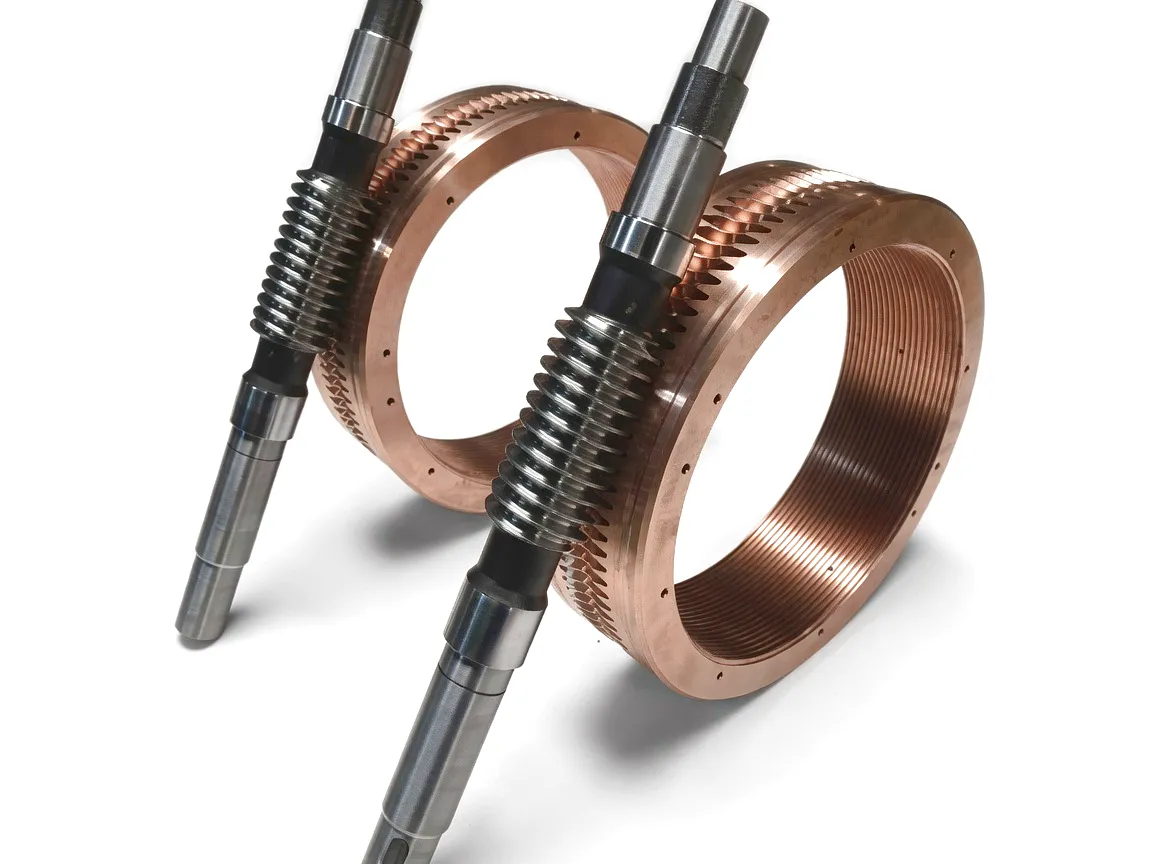
The worm gear shaft sits at the heart of countless power transmission systems — a deceptively compact component that quietly handles the mechanical demands of industries ranging from food processing in Birmingham to offshore energy operations in Aberdeen. Unlike a standard spur gear assembly, the worm gear shaft combines rotational motion with right-angle redirection and a self-locking capability that no other single drivetrain element reliably delivers. This convergence of features makes it the default engineering choice whenever torque multiplication, spatial compactness, and backstop security must coexist within a single gearbox housing. Understanding why these shafts behave the way they do — and how their geometry, material composition, and surface finish interact under load — is essential knowledge for anyone specifying or sourcing precision drive components for serious industrial work.
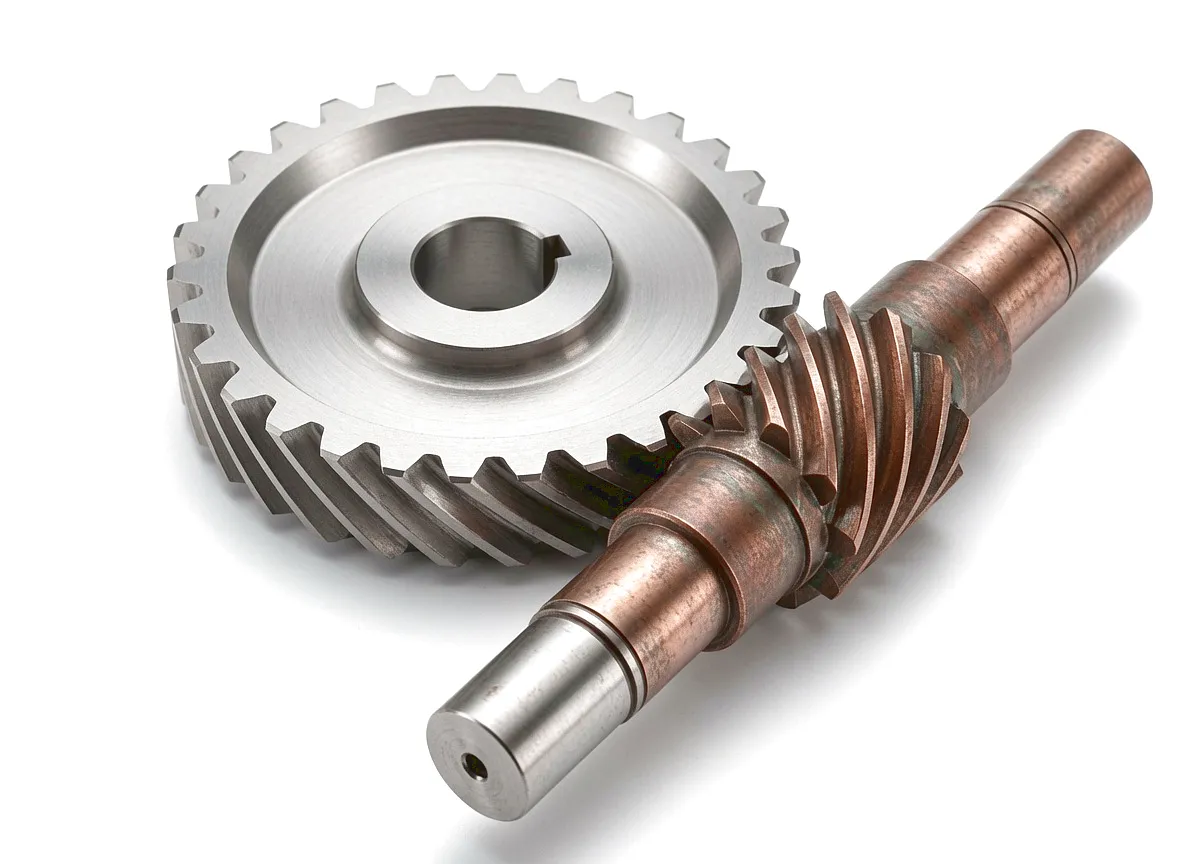
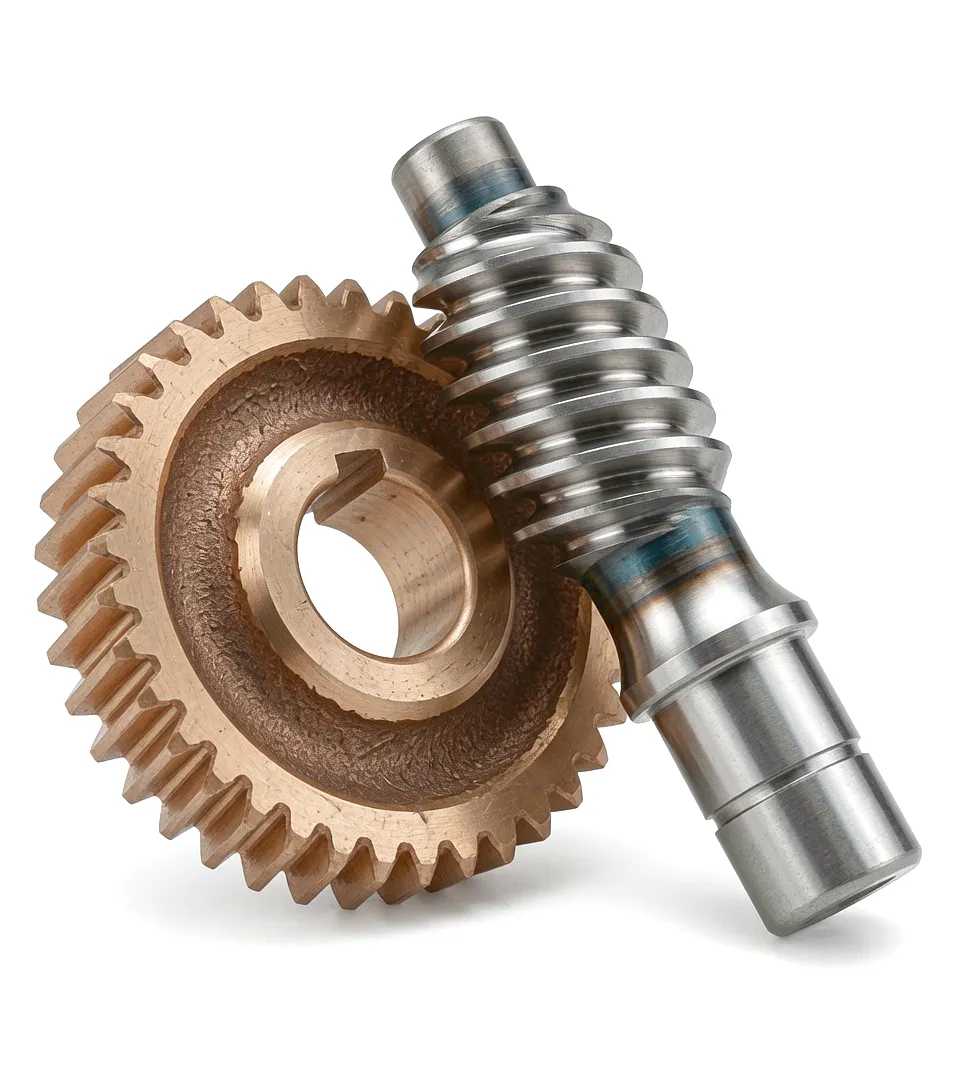
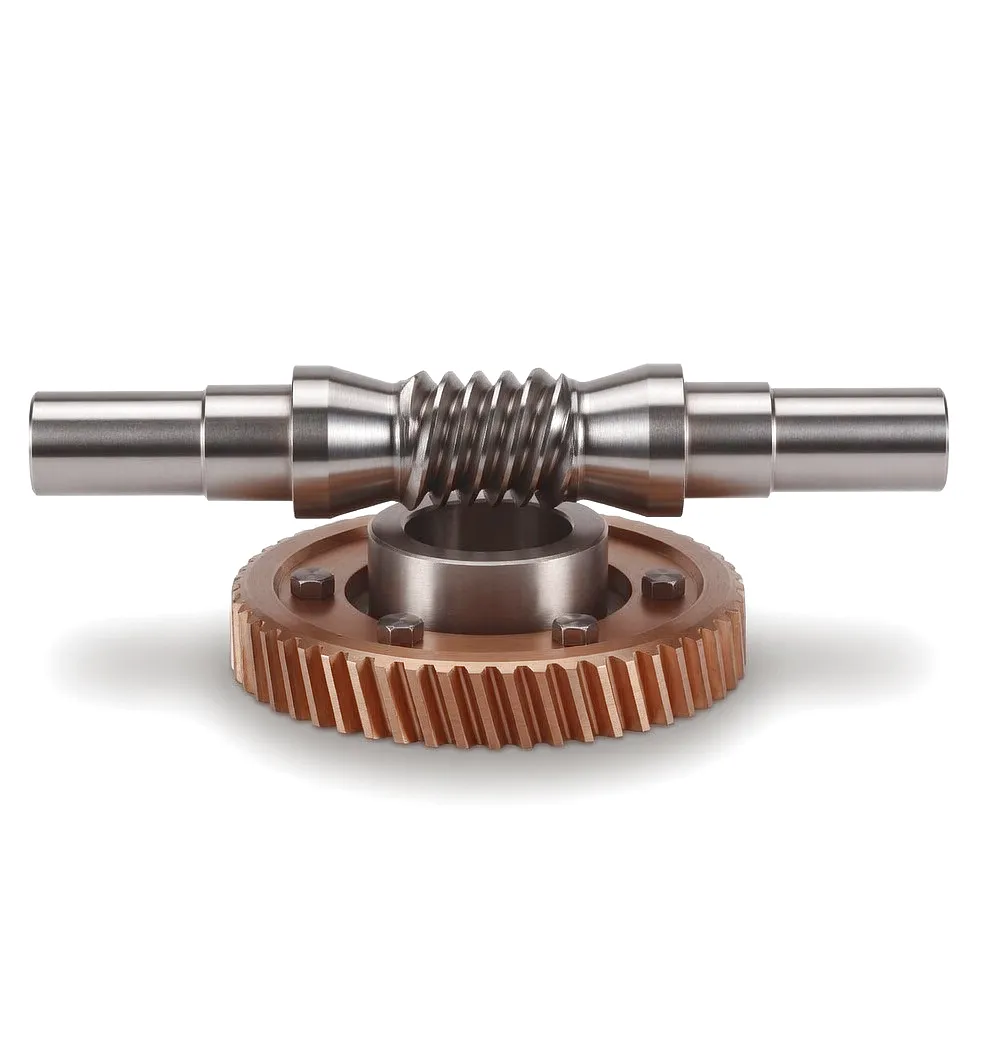
At its most fundamental level, a worm gear shaft is a cylindrical screw-form shaft whose helical thread meshes perpendicularly with a toothed wheel called a worm wheel or worm gear. The shaft itself carries the worm — either machined integrally or assembled — and transmits input torque from a motor or prime mover into the gear pair. The resulting transmission ratios can range from as modest as 5:1 all the way to 100:1 in a single reduction stage, which is why engineers designing compact actuators for automated systems turn to this configuration before considering planetary or helical alternatives. In the UK’s manufacturing corridors, from Sheffield’s precision machining clusters to Coventry’s automotive supply chains, the worm gear shaft remains a cornerstone of engineered drive solutions.
Need a Custom Worm Gear Shaft?
Ever Power engineers are ready to review your specifications — fast turnaround, precision-guaranteed.
Get a Quote →
How a Worm Gear Shaft Actually Works
The Mesh Geometry
The worm thread engages the worm wheel at a crossing angle of exactly 90 degrees. Each rotation of the worm shaft advances the wheel by precisely one or more teeth, depending on the lead (number of thread starts). A single-start worm turning once moves the wheel forward by just one tooth pitch — producing naturally high reduction ratios without a cascade of gear stages. This sliding contact geometry generates considerable friction at the mesh interface, which is both a limitation (thermal load) and an inherent advantage (self-locking behaviour under certain lead angles below 6 degrees).
Self-Locking Mechanism
When the helix angle of the worm is smaller than the friction angle at the contact surface, the gear set becomes self-locking — meaning no external brake is needed to hold a raised load. This property is critical in lifting, positioning, and valve-control systems where a loss of motor power must not result in uncontrolled back-driving. UK machinery safety standards, including those aligned with BS EN ISO 4301 for crane drives, leverage this characteristic as a passive failsafe, reducing mechanical brake complexity and the overall bill of materials on safety-critical equipment.
Torque Multiplication
The mechanical advantage built into a worm gear shaft pairing is formidable. A motor delivering 10 Nm of input torque through a 40:1 worm gearbox will generate approximately 320–360 Nm at the output shaft (accounting for 80–90% efficiency in bronze-on-steel configurations). This means a fractional-horsepower motor can drive conveyor systems, rotary tables, and mixers at low speed with high torque output — a combination frequently demanded in food processing plants operating in areas such as Grimsby or Leicester, where compact drive footprints are required on processing lines that run continuously across multiple shifts.
Material Selection: What Worm Gear Shafts Are Made From and Why It Matters
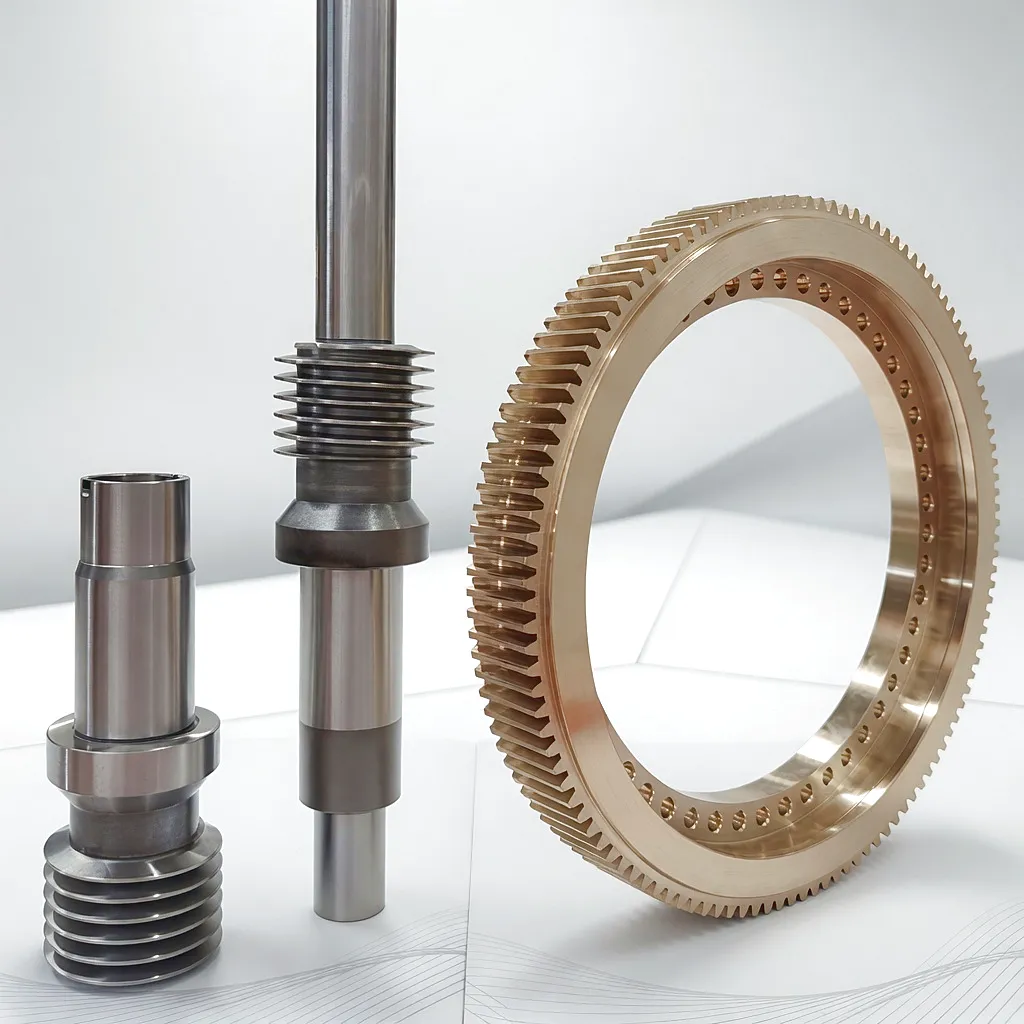
Material choice for a worm gear shaft is not a minor specification note — it is a fundamental engineering decision that determines load capacity, thermal performance, corrosion resistance, surface fatigue life, and ultimately the service interval of the entire gearbox assembly. The worm shaft and worm wheel are almost always manufactured from different material families. This deliberate mismatch is driven by tribology: the paired materials must exhibit low combined friction coefficients while maintaining adequate hardness to resist pitting and micro-scoring under the predominantly sliding contact loads characteristic of worm gear pairs.
For the worm shaft itself, the dominant material is case-hardened alloy steel — typically grades such as 20CrMnTi, 42CrMo4 (equivalent to 4140 in AISI designation, widely referenced in British engineering drawings), or 18CrNiMo7-6 for heavy-duty applications. These steels are carburised or nitrided to achieve surface hardness values of 58–62 HRC while maintaining a tough, ductile core that absorbs shock loads without brittle fracture. The hardened surface is then precision-ground to Ra 0.4–0.8 µm on the thread flanks, achieving the smooth finish necessary to promote hydrodynamic oil film formation during operation — the single most important factor in reducing sliding wear at the mesh interface.
Stainless steel variants — particularly 316L and 17-4 PH grades — are selected when chemical resistance is non-negotiable, as in pharmaceutical manufacturing around Macclesfield or in marine equipment built for North Sea applications out of Aberdeen. These grades sacrifice some hardness compared to alloy steel equivalents but provide the corrosion immunity that food-grade and saltwater environments demand. Titanium alloy shafts are occasionally specified for aerospace-adjacent applications where weight reduction carries a cost premium, though this remains a niche segment in mainstream industrial procurement.
42CrMo4 Alloy Steel
Standard worm shaft material. Case hardness 58–62 HRC, core toughness 900–1100 MPa UTS. Excellent fatigue resistance for continuous-duty industrial drives.
18CrNiMo7-6
Premium-grade carburising steel for heavy loads. Used in mining, heavy conveyor, and steel mill applications where impact loading accompanies steady torque.
316L Stainless Steel
Corrosion-resistant grade. Preferred in food & beverage, pharmaceutical, and offshore environments. Surface hardness lower but passivation ensures longevity.
Phosphor Bronze Wheel Pairing
The mating worm wheel in most industrial assemblies uses PB1 or PB2 phosphor bronze (BS 1400), providing excellent conformability, embeddability, and anti-seizure characteristics.
Product Technical & Performance Parameters
The following table summarises the typical specification range for worm gear shafts manufactured by Ever Power. Custom dimensions outside these ranges are available — contact the engineering team with your drawings for a dedicated assessment.
| Parameter | Specification Range | Notes |
|---|
| Shaft Diameter | 10 mm – 320 mm | Custom diameters available per drawing |
| Module (m) | 1 – 20 | Per ISO 54 / BS 436 standard series |
| Reduction Ratio | 5:1 – 100:1 | Single-stage; double-stage up to 3600:1 |
| Output Torque | 5 Nm – 50,000 Nm | Dependent on module, material grade & lubrication |
| Helix Angle | 3° – 30° | Below ~6° = self-locking; above 6° = reversible |
| Number of Thread Starts | 1 – 6 | Higher starts = higher efficiency, lower ratio |
| Surface Hardness (Worm) | 58 – 62 HRC | Carburised & case-hardened; ground post-hardening |
| Thread Flank Surface Finish | Ra 0.4 – 0.8 µm | CNC form-grinding; promotes oil film formation |
| Centre Distance | 25 mm – 500 mm | Matched to worm wheel OD and application envelope |
| Operating Temperature | -30°C – +120°C | Synthetic lubricant extended range; seals adapted accordingly |
| Transmission Efficiency | 50% – 92% | Varies with helix angle, speed, lubrication film thickness |
| Material Options (Worm Shaft) | 42CrMo4, 20CrMnTi, 316L SS, Ti-6Al-4V | Other alloy grades on request |
| Shaft End Options | Keyed, splined (DIN 5480), flanged, hollow bore | Per customer assembly interface drawings |
| Gear Accuracy Class | ISO Grade 4 – Grade 8 | Grade 4–5 standard for precision positioning systems |
Core Technical Advantages of the Worm Gear Shaft
⚙️
High Reduction Ratio in Single Stage
A single worm gear shaft stage achieves ratios of 5:1 to 100:1 — a range that requires two or three stages of helical or spur gearing to replicate. This directly translates into shorter gearbox axial length, fewer components, reduced assembly time, and lower total system cost. For machine builders in the East Midlands working to tight cabinet envelope constraints, this compact ratio range is frequently the decisive specification factor.
🔒
Inherent Self-Locking Under Load
The self-locking property inherent to low-lead-angle worm gear shaft configurations eliminates the need for separate holding brakes on many lifting and positioning applications. This is not a secondary benefit — in dock levellers operating at ports such as Immingham or Tilbury, and in stacker crane drives throughout UK warehousing facilities, this feature removes an entire brake assembly from the critical-path BOM, simplifying both commissioning and long-term maintenance schedules.
📐
Right-Angle Power Transmission
The natural 90-degree crossing angle between input shaft and output shaft is a geometric advantage that no bevel or helical arrangement provides without additional complexity. Packaging a right-angle drive into a confined mechanical envelope — as required in conveyor transfer stations, bottling machine drives, or textile machinery in the Yorkshire mills that still operate precision weaving equipment — becomes a straightforward exercise when the worm gear shaft is specified from the outset.
🔇
Smooth, Low-Noise Operation
The sliding — rather than rolling — contact between the worm thread and wheel teeth distributes load across a continuous tooth contact arc, rather than concentrated point contacts typical of spur gearing. This produces inherently smoother torque delivery and significantly lower operational noise levels. In environments where workplace noise regulations under the UK’s Control of Noise at Work Regulations 2005 must be observed — particularly in Sheffield metalworking shops and Midlands foundries — specifying a worm gear shaft drive can contribute meaningfully to noise reduction without acoustic enclosures.
🔧
Shock Load Tolerance
The distributed tooth engagement and the ductile core properties of case-hardened worm gear shaft alloys give this drive type inherent resilience to intermittent shock and overload events. In aggregate processing equipment operating in quarries across Wales or Scotland, or in recycling plant shredder drives, peak torque spikes up to 2.5x the rated design load are absorbed without gear fracture — provided the shaft material grade and housing structure are specified correctly at the design stage.
📦
Compact Spatial Footprint
The right-angle layout means motor and driven machine can be positioned side by side or at any offset angle, allowing machinery designers to optimise floor plan layouts without routing driveshafts through tortuous paths. This is particularly valued in retrofit scenarios — replacing worn chain-and-sprocket or belt drive arrangements in older plant across the North of England, where floor space is at a premium and structural steelwork cannot easily be relocated to accommodate a larger gearbox footprint.
Industrial Application Scenarios
The worm gear shaft is not a single-industry component — its combination of speed reduction, torque multiplication, self-locking, and right-angle geometry makes it relevant across a breadth of sectors that would surprise engineers encountering the component for the first time.
Agricultural Machinery
Large Combine Harvester Adjustment Systems
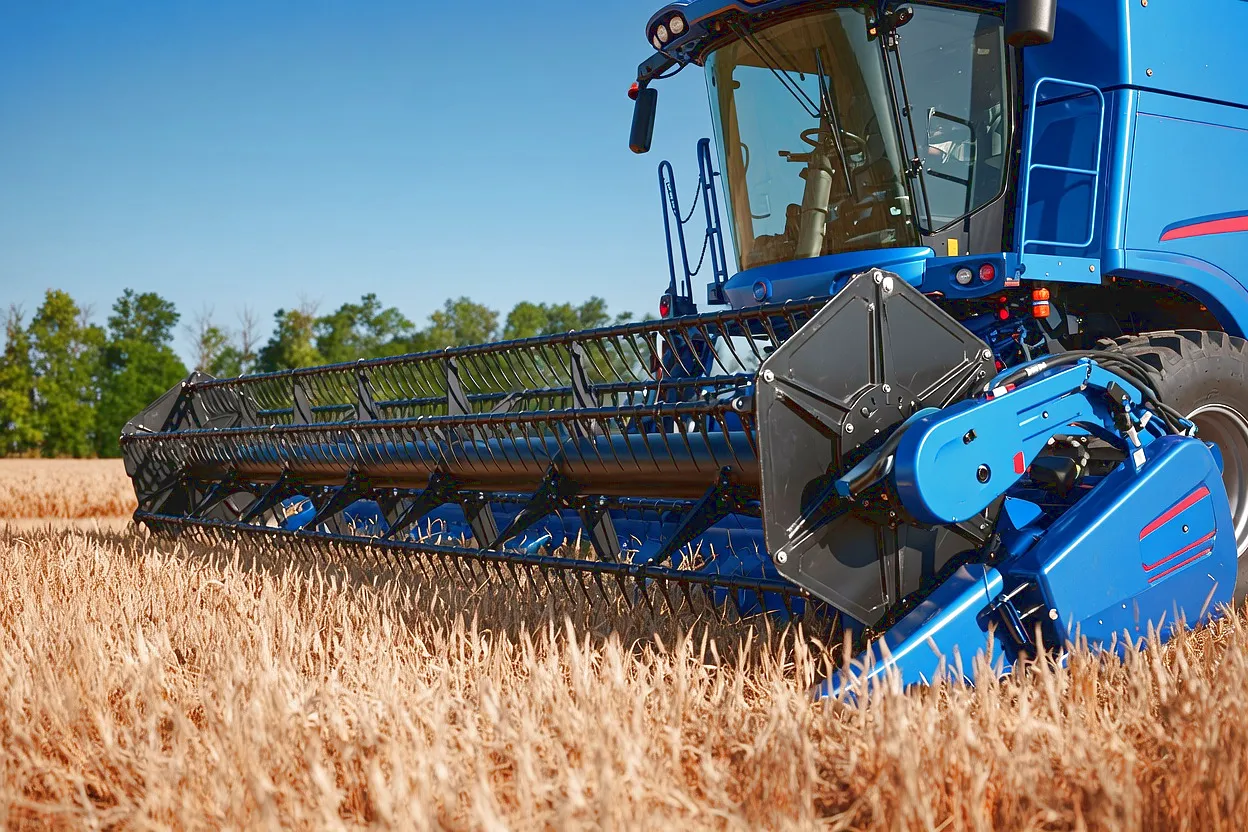
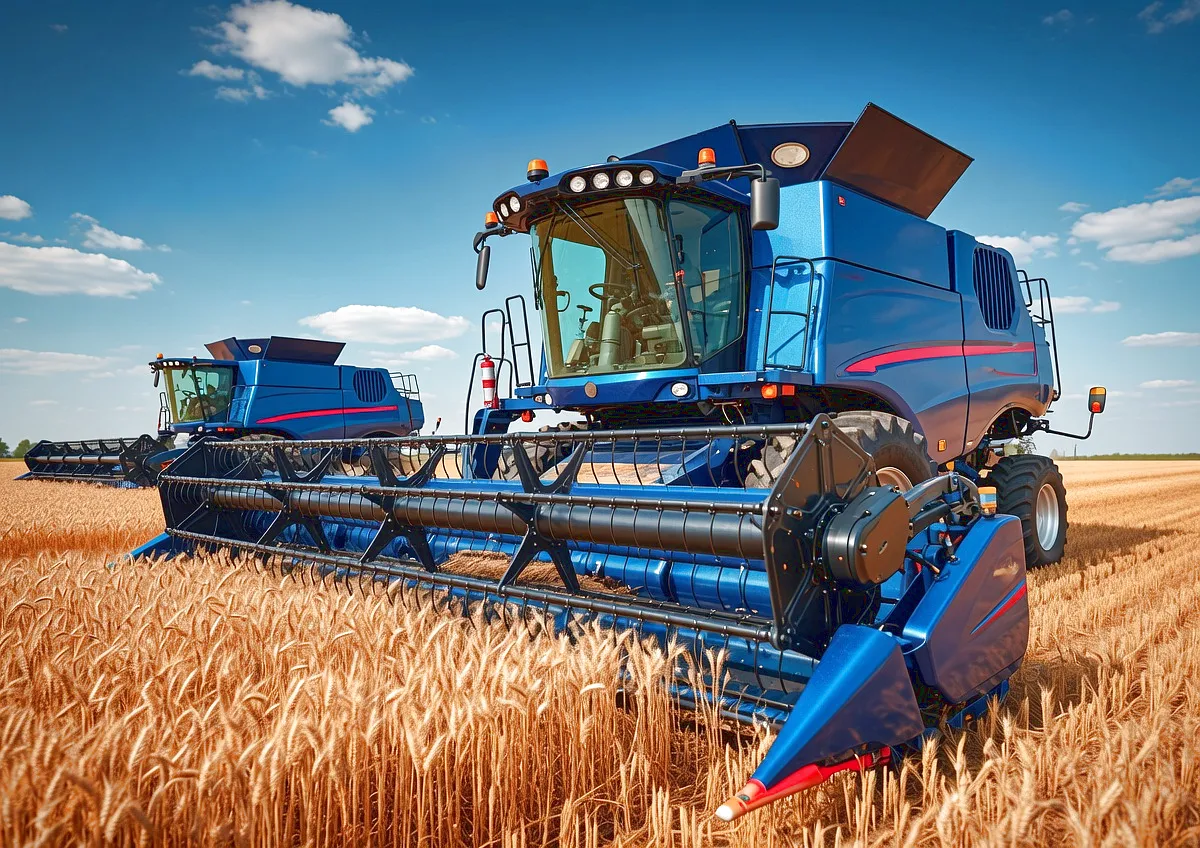
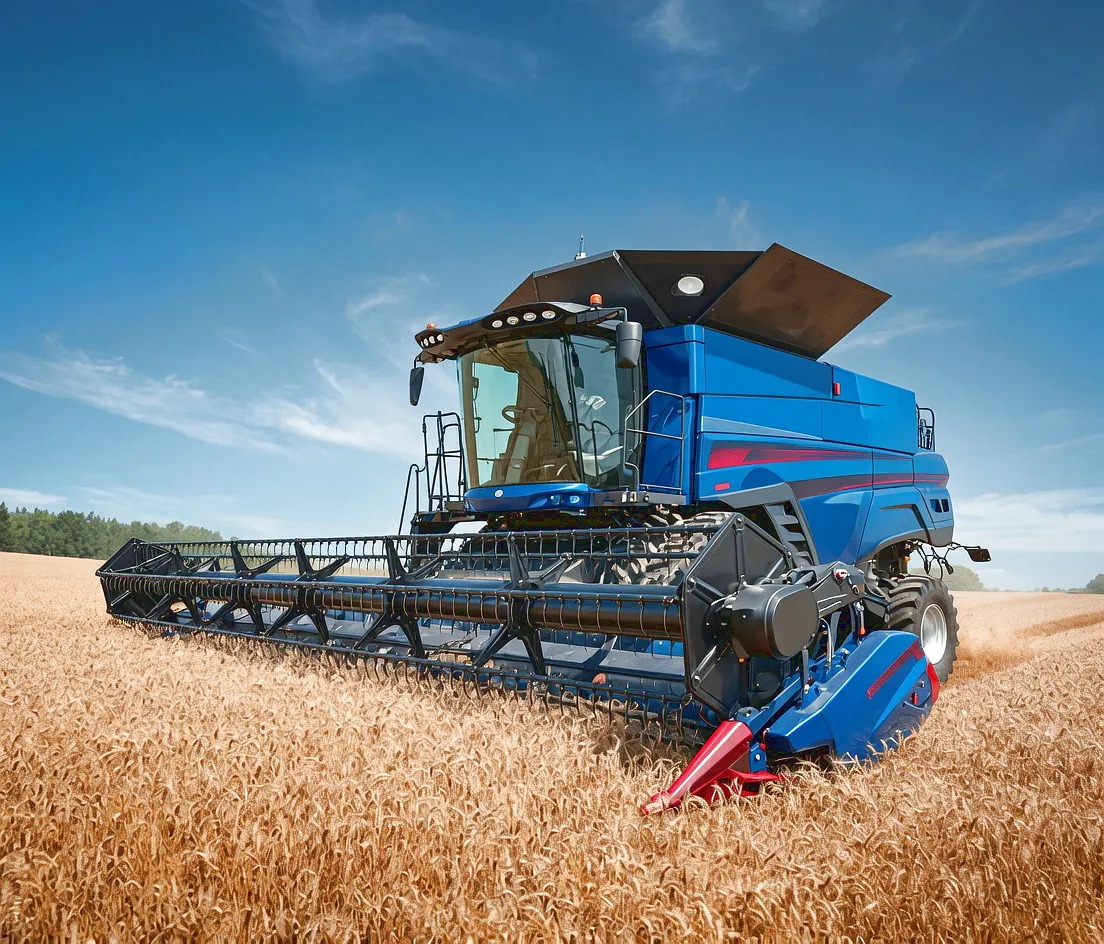
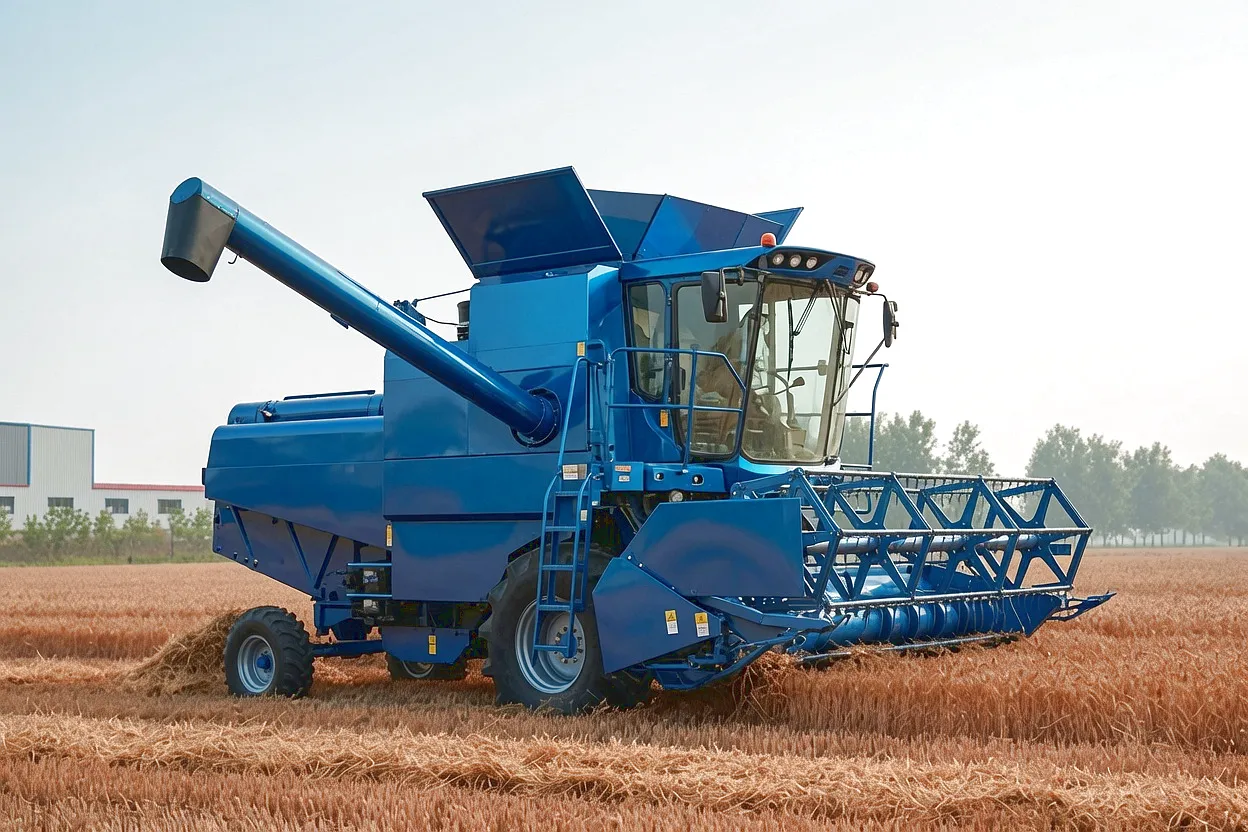 Inside large combine harvesters such as the John Deere JD S680 series, worm gear shaft drives appear at multiple critical adjustment points — header width control, threshing drum clearance, and cleaning sieve aperture adjustment. These mechanisms must be remotely operable from the cab during harvesting and, once adjusted, must hold position absolutely without drift. The worm gear shaft pairing delivers exactly this: a typical reduction ratio of 40:1 to 60:1, combined with self-locking geometry, allows electric or hydraulic actuation to position components to within ±5 mm precision. In UK farming operations across the East Anglian plains and the Yorkshire Wolds — where wheat and oilseed rape harvests demand continuous in-field adjustment as crop density varies — this reliability under vibration and variable load is operationally critical. No external brake solenoid or secondary locking mechanism is required, reducing cab-level electrical complexity and improving long-term field reliability.
Food Processing & Packaging Lines
Across food manufacturing operations in the East Midlands and along the M62 corridor — from confectionery factories in York to ready-meal producers in Warrington — worm gear shaft drives power conveyor systems, rotary fillers, and indexing tables. Stainless steel shaft variants comply with hygiene-by-design standards referenced under BS EN 1672-2 for food machinery, while the self-contained gearbox format simplifies HACCP-compliant cleaning routines. Reduction ratios of 20:1 to 60:1 allow precise line speed control matched to packaging machine cycle rates.
Material Handling & Automated Warehousing
Automated storage and retrieval systems (ASRS) operating in distribution centres across the East Midlands logistics corridor rely on worm gear shaft drives for both horizontal travel and vertical lift axes. The self-locking property under gravity loading is essential for the elevated shuttle axes, while the smooth torque delivery of multi-start worm shaft designs enables the acceleration profiles required for high-cycle ASRS operation at 100–200 cycles per hour without excessive thermal generation within the gearbox housing.
Heavy Industrial & Steel Plant Drives
Sheffield’s legacy steel industry and the broader advanced manufacturing sector it has spawned continues to utilise heavy-duty worm gear shaft assemblies in ladle transfer cars, coil turning equipment, and furnace door drives. These applications demand shaft diameters up to 250 mm and output torques exceeding 30,000 Nm — specifications that require the more specialised 18CrNiMo7-6 carburised steel grades and precision grinding of thread geometry to ISO Grade 5 or above. Delivery lead times from Ever Power for large-section custom worm shafts via air freight to UK destinations average 18–22 business days from drawing approval.
Additional High-Value Application Areas
Gate & Valve Actuators
Medical Imaging Beds
Solar Tracker Drives
Stage & Theatre Hoists
Marine Deck Winches
Scissor Lift Tables
Printing & Laminating Presses
Water Treatment Plant Gates
Manufacturing Partner
Ever Power: Precision Worm Gear Shaft Manufacturing & Customisation
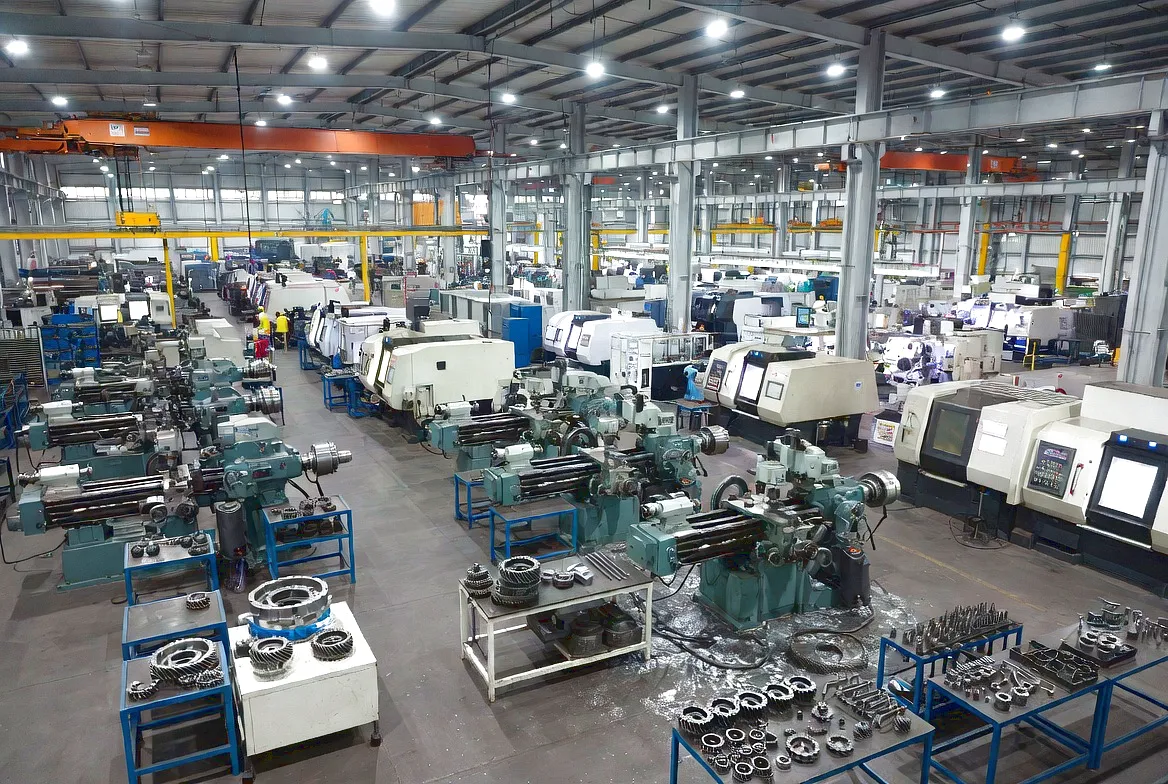
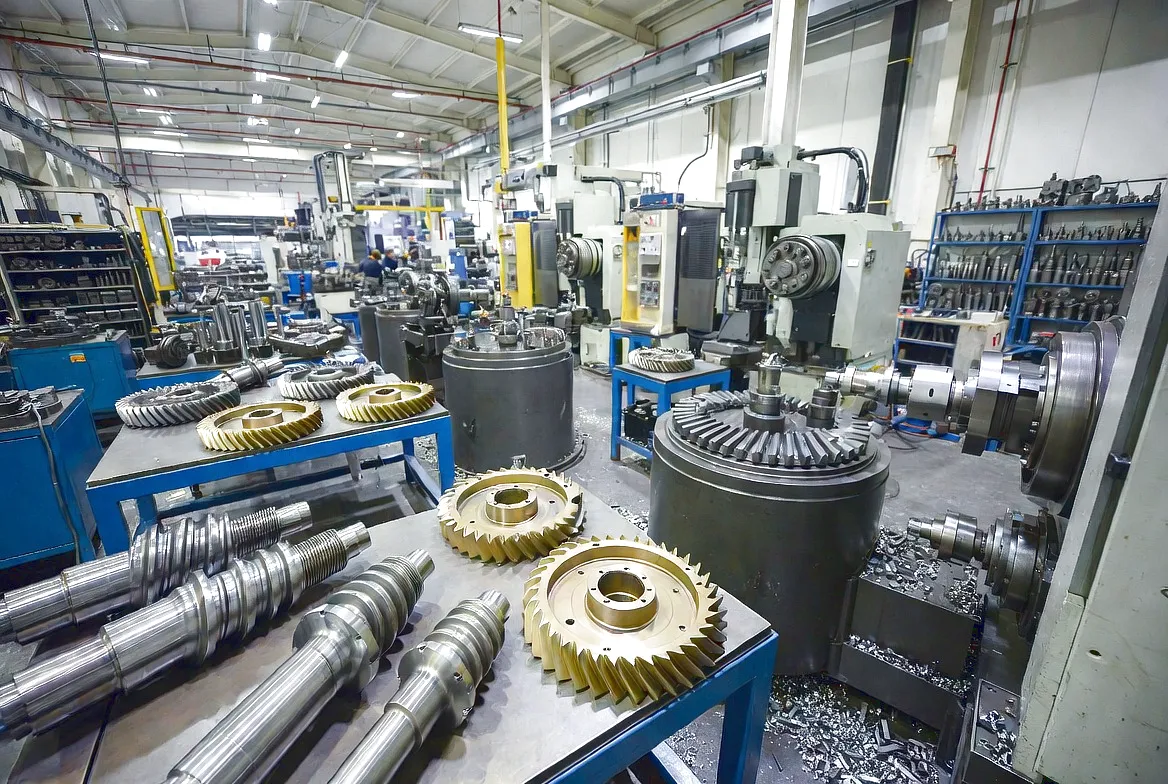 Ever Power operates a dedicated worm gear shaft production facility equipped with Gleason and Reishauer CNC thread-grinding centres, Mazak multi-axis turning centres, and in-house carburising and case-hardening furnaces. The manufacturing workflow supports both standard catalogue items and fully bespoke designs developed from customer drawings or functional specifications. From the initial receipt of a customer’s CAD file or sketch, Ever Power’s engineering team will produce a DFM (Design for Manufacture) review, material recommendation, and firm quotation within 48 working hours — a response standard that procurement teams across the UK, Germany, and North America consistently rely upon when sourcing replacement or upgraded worm gear shaft components under operational time pressure.
The customisation capability at Ever Power extends well beyond simple dimensional variation. The engineering team routinely supports requests for integral shaft-and-worm constructions machined from a single billet — eliminating press-fit joint risk entirely — for customers where gearbox reliability in remote or difficult-to-service locations is non-negotiable. Thread grinding to ISO Grade 4 accuracy with 100% CMM inspection of critical dimensions is standard practice on all precision-class worm gear shaft orders. DIN 5480 spline profiles, proprietary keyway configurations, and custom shaft-end tapers are all produced in-house without outsourced machining steps, ensuring full traceability and quality ownership throughout manufacture.
Thread Grinding
CNC profile grinding to Ra 0.4 µm on Reishauer machines; ISO Grade 4–5 accuracy standard
Heat Treatment
In-house carburising furnaces, case depth 0.8–2.5 mm; Rockwell surface hardness 58–62 HRC
CMM Inspection
100% dimensional verification on critical orders; full inspection report issued with each shipment
UK Logistics
Air freight to major UK airports; DDP Incoterms available; standard lead time 18–22 business days
Ready to Specify a Custom Worm Gear Shaft?
Send your drawings or specifications to the Ever Power engineering team. Response within 48 hours.
Get a Quote from Ever Power →
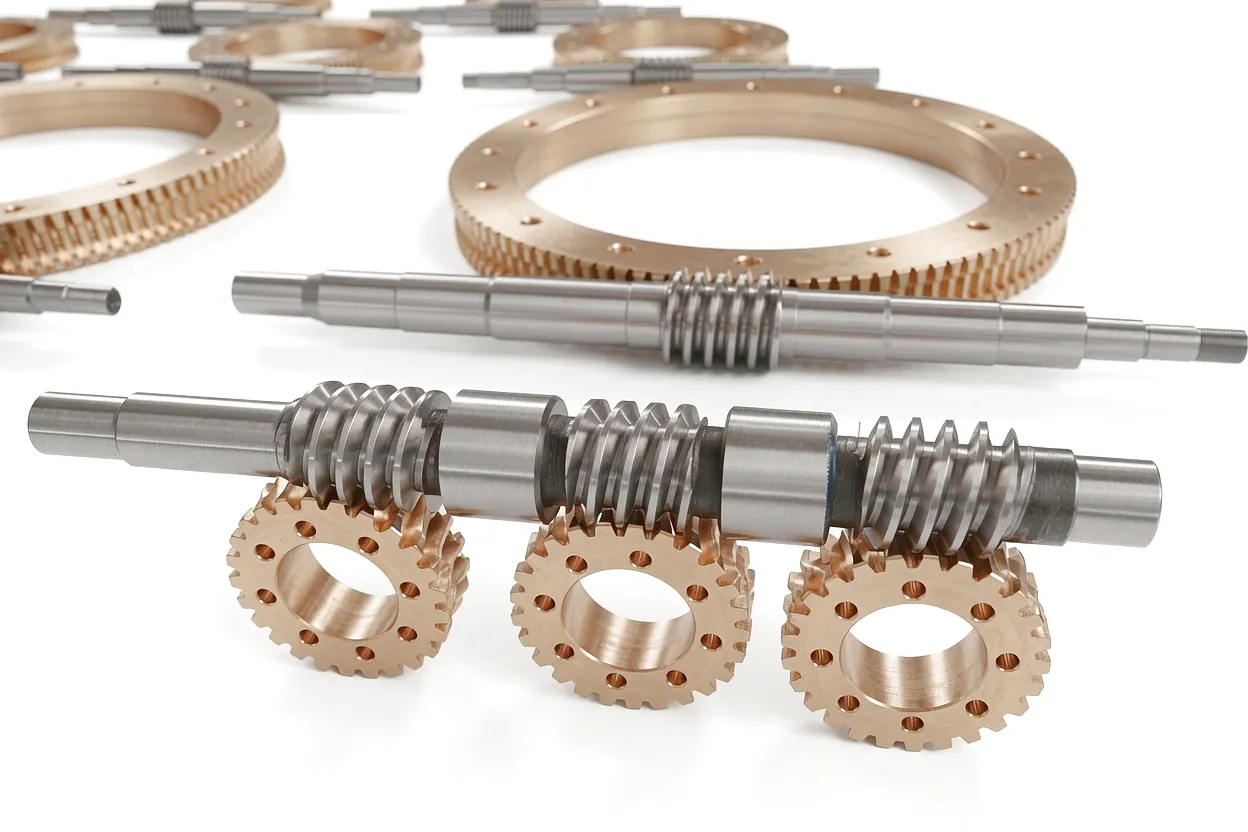
Worm Gear Shaft Product Gallery
Customer Success Story: Sheffield Precision Conveyor Systems Ltd
Background
Sheffield Precision Conveyor Systems Ltd, a manufacturer of heavy-duty belt conveyor systems for the UK steel processing and scrap recycling sectors, was experiencing repeated premature failure of worm gear shaft assemblies sourced from a European supplier. The shafts were fracturing at the thread root in the contact zone after approximately 2,800 operating hours — well below the 8,000-hour service target stipulated in their internal design standard. The failures were occurring specifically in units serving shuttle conveyor transfer points where shock loads from falling scrap metal bales were transmitted directly to the gearbox input shaft.
The engineering team at Sheffield Precision Conveyor approached Ever Power following a referral from a shared customer in the Rotherham industrial estate. After reviewing the original drawings and failure mode photographs, Ever Power’s engineers identified two root causes: an insufficient case hardening depth (original specification was 0.6 mm vs the required 1.4 mm for this shock load profile), and thread root radius undersized relative to the ISO 1328 geometry recommendation for the applied bending moment. Both issues were addressable through material and process change without geometric redesign.
Ever Power supplied a revised worm gear shaft specification in 18CrNiMo7-6 steel, carburised to a case depth of 1.5 mm and quenched to achieve 60 HRC surface hardness. Thread root radius was increased to 0.4 × module per Ever Power’s standard design rule for shock-load applications. The first batch of 24 shafts was delivered to Sheffield within 20 business days from drawing approval. Following 12 months of operation across three shifts, zero shaft failures have been recorded on the upgraded drives — a result that removed an unplanned maintenance event averaging £4,800 per occurrence in shaft replacement and downtime costs. Sheffield Precision Conveyor has since standardised all құрт тәрізді беріліс білігі procurement across their product range through Ever Power.
What Customers Say About Ever Power Worm Gear Shafts
★★★★★
“We had been chasing the same shaft failure for two years with a different supplier. Ever Power’s engineering team identified the root cause within a week of receiving our drawings and failure photographs. The replacement shafts have now run for over 14 months without a single incident. The CMM inspection report that came with the delivery gave our quality team exactly the traceability documentation they needed for our ISO 9001 audit.”
— Operations Director, Sheffield Precision Conveyor Systems Ltd, Sheffield
★★★★★
“We source custom worm gear shaft assemblies from Ever Power for our stainless-format food conveyor range. The 316L shaft material meets all our food-grade design requirements, the thread surface finish is consistently within Ra 0.6 µm, and the lead time has never slipped beyond the committed date in three years of ordering. For a procurement team managing tight production schedules in Nottingham, that reliability is genuinely worth a premium.”
— Purchasing Manager, Belton Food Machinery Ltd, Nottingham
★★★★★
“We specified an integral worm and shaft design — machined from a single 42CrMo4 billet — for a press automation project in Birmingham where press-fit failure risk was unacceptable due to the high-cycle loading. Ever Power produced DFM drawings within 24 hours, confirmed feasibility, and delivered finished parts in 19 business days. The dimensional accuracy on the thread form was spot-on; no rework required. We will be placing repeat orders across all four drive stations in the press line.”
— Lead Mechanical Engineer, Midland Automation Components Ltd, Birmingham
Frequently Asked Questions
How much does a custom worm gear shaft cost from a UK industrial supplier, and what factors affect the price? +
Custom worm gear shaft pricing depends primarily on shaft diameter, material grade, thread accuracy class, case hardening depth, and order quantity. A standard 42CrMo4 shaft at 50 mm diameter in a batch of 10 units from a supplier like Ever Power typically sits in the £180–£340 per piece range for UK delivery, with 316L stainless variants carrying a 30–50% material premium. Heavy-duty shafts over 150 mm diameter with integral worm and full CMM inspection carry higher unit costs but eliminate the assembly risk and maintenance exposure of separate fitted components. To get an accurate quote, send your drawing or dimensions to Ever Power’s sales team at
[email protected].
Which worm gear shaft supplier in the UK can deliver custom parts within three weeks for a Birmingham engineering project? +
Ever Power manufactures and supplies custom worm gear shaft components with a standard lead time of 18–22 business days from confirmed drawing approval, delivered DDP to Birmingham and other UK industrial locations. Air freight logistics from the Ever Power factory to UK airports is built into the standard delivery service. For urgent replacement orders where a machine is down, an expedited service can reduce lead time by 3–4 business days at an additional freight surcharge. Contact
[email protected] with your urgency details for a time-critical response.
What is the best material for a worm gear shaft used in food processing equipment in Sheffield? +
For worm gear shaft applications in direct-contact food processing zones, 316L austenitic stainless steel is the standard specification. It offers excellent corrosion resistance against cleaning agents and product acids, can be passivated to meet FDA and EU food contact material regulations, and is readily available in bar form for CNC machining. Where the shaft is not in direct food contact but still requires washdown resistance, 17-4 PH stainless provides higher hardness (up to 40 HRC in H900 condition) for improved surface durability. For non-food-contact drives in the same facility, 42CrMo4 with an epoxy or hard chrome coating remains the cost-effective choice.
How do I calculate the correct reduction ratio for a worm gear shaft driving a conveyor in a UK recycling plant? +
Start with the required output shaft speed (in RPM) and divide your motor’s rated speed by this figure to get the required ratio. For example, a 1,450 RPM motor driving a conveyor drum at 36 RPM requires a 40:1 ratio. Then verify that the output torque at this ratio — motor torque multiplied by ratio, multiplied by gearbox efficiency (typically 0.78–0.85 for a worm drive) — meets or exceeds the conveyor’s peak load torque with a safety factor of 1.5 to 2.0. For recycling plant shock load applications, apply a service factor of 1.8 minimum when sizing the worm gear shaft assembly.
Where can I get a quote for a replacement worm gear shaft for an agricultural harvester operating in East Anglia? +
Send your shaft drawing, photograph of the worn part, or key dimensions (shaft diameter, module, number of thread starts, shaft length, and end configuration) directly to Ever Power at
[email protected]. The team will confirm material specification, current stock or manufacture lead time, and a unit price within 48 working hours. For emergency harvesting season replacements in East Anglia, Ever Power can prioritise manufacturing and use express air freight to minimise machine downtime during the narrow harvest window.
When should I choose a worm gear shaft over a helical gearbox for a UK industrial drive application? +
Choose a worm gear shaft drive when three or more of the following conditions apply: you need a right-angle output; a ratio above 20:1 in a single stage; self-locking behaviour is required; noise levels must be minimised; or the installation envelope is too confined for an inline helical solution. Helical gearboxes offer higher efficiency (94–98% vs 70–90% for a worm drive) and are preferable where energy consumption over long running hours is the primary concern. But for applications combining high ratio, right-angle geometry, and compact housing — such as valve actuators, conveyor drives, and positioning systems — the worm gear shaft configuration is the more practical and often the more economical engineering solution.
Who manufactures high-precision custom worm gear shafts for the UK steel and heavy industry sector with fast delivery? +
Ever Power is a specialist precision manufacturer of custom worm gear shaft components serving the UK steel, heavy manufacturing, food processing, and agricultural machinery sectors. With in-house CNC thread grinding, carburising heat treatment, and CMM inspection, Ever Power produces ISO Grade 4–5 accuracy shafts in alloy steel, stainless steel, and custom alloy grades. DDP delivery to Sheffield, Birmingham, Rotherham, and other UK industrial locations is standard. Request a quote at
[email protected] with your drawing or dimensional requirements.
Specify Your Worm Gear Shaft Today
Ever Power · Precision Manufacturing · Custom Worm Gear Shaft Solutions for UK Industry
Contact Ever Power →
edit by gzl