The Complete Guide to Worm Gear Shafts: Engineering Specifications, Selection, and Best Practices for Industrial Buyers
Precision motion control, self-locking capability, and decades of manufacturing heritage — everything engineering teams need to specify, source, and deploy the right worm gear shaft for demanding UK industrial applications.
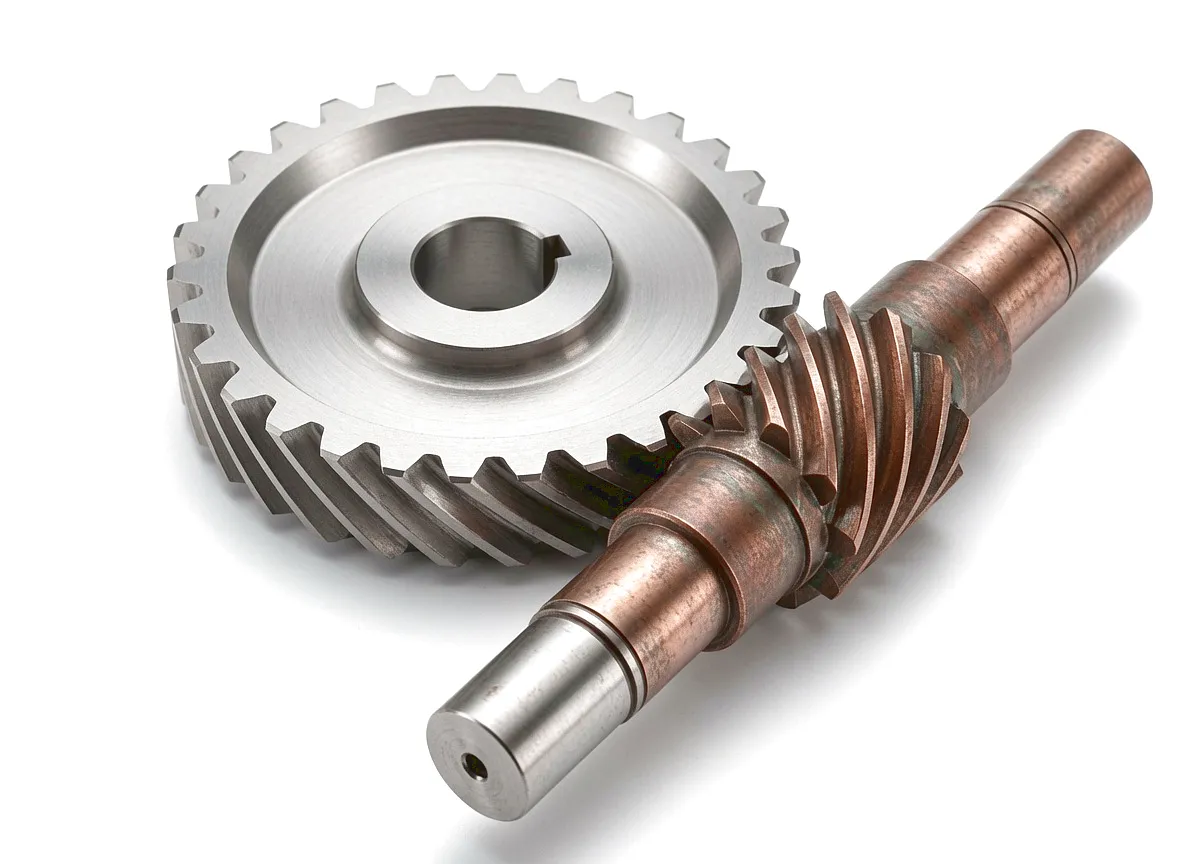
The worm gear shaft sits at the heart of mechanical power transmission systems wherever compact, high-ratio speed reduction and reliable self-locking behaviour are non-negotiable. Unlike spur or helical gears that distribute force along a tangential contact line, the worm gear shaft delivers torque through a spiral thread mesh against a mating worm wheel — a geometry that simultaneously produces extreme reduction ratios in a single stage, creates a natural braking effect when power is removed, and keeps the overall drivetrain envelope remarkably small. From the heavy material-handling conveyors serving Birmingham’s logistics parks to the precision elevator drives installed across Sheffield’s urban regeneration projects, worm gear shafts underpin a remarkable breadth of real-world motion control tasks. As British manufacturers increasingly reshore critical drivetrain components in response to supply-chain pressures, specifying a worm gear shaft with the correct lead angle, helix direction, centre distance, and surface treatment is more commercially consequential than ever.
This guide takes an uncompromising technical approach, working through the physics of the worm-and-wheel mesh, the metallurgical choices that govern wear life, the performance parameters that define selection, and the industrial application landscapes across the UK where these components deliver sustained competitive advantage. Whether you are a mechanical design engineer at a West Midlands OEM, a maintenance manager sourcing replacement shafts for a food-processing line in Yorkshire, or a procurement specialist building a global supply chain, you will find actionable data and honest engineering commentary on every page.
How a Worm Gear Shaft Actually Works
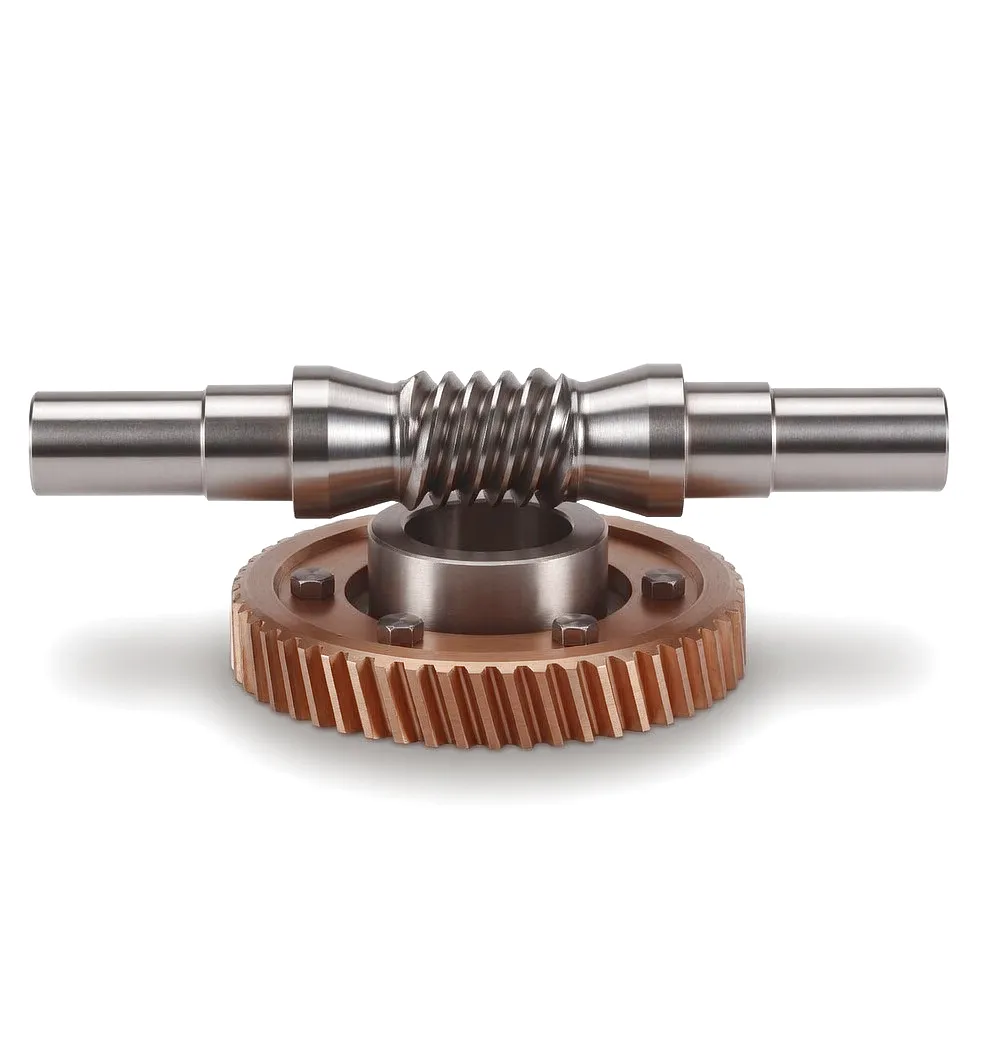
The operating principle of a worm gear shaft rests on the geometry of a helical screw thread engaging with the curved teeth of a bronze or cast-iron worm wheel. The worm shaft — which is the driving element in most configurations — carries one or more continuous helical threads ground into its cylindrical surface. When the shaft rotates, each thread advances along the tooth flank of the worm wheel, converting rotational motion through a sliding contact rather than the rolling contact found in conventional gear pairs. This fundamental distinction has profound consequences for both efficiency and load distribution. The sliding contact introduces greater friction losses than rolling-element alternatives, but it also spreads the load across a larger tooth-face contact area, reducing peak Hertzian stress and allowing the assembly to transmit surprisingly high torques in a compact package.
The lead angle — the angle at which the worm thread rises relative to a plane perpendicular to the shaft centreline — directly controls the self-locking property that makes worm gear shafts indispensable in holding applications. When the lead angle falls below approximately 6°, the friction angle exceeds the lead angle, and the mesh becomes self-locking: the output wheel cannot back-drive the worm even under substantial reverse torque. This characteristic removes the need for secondary braking mechanisms on gravity-loaded lifts, gate actuators, and solar tracker drives. For applications demanding higher efficiency with bidirectional backdrive capability, engineers specify multi-start worms with lead angles above 15°, accepting a controlled reduction in self-locking margin in exchange for efficiency gains that can reach 90% or beyond.
The centre distance, the nominal diameter of both the worm and the wheel, and the module value define the kinematic relationship between the two mating components. A single-start worm producing one rotation per revolution of the input shaft yields a gear ratio equal to the number of teeth on the worm wheel — commonly between 7 and 100 in industrial practice. Double-start or quadruple-start worms halve or quarter the ratio respectively, while preserving the same centre distance and housing architecture. This modularity gives machine designers considerable flexibility to optimise speed-reduction ratio, output torque, and efficiency within a fixed envelope — a critical advantage for UK OEMs managing tight product lineage constraints across model families.
Material Selection: What Governs Long-Term Reliability
Grades 20CrMnTi and 42CrMo4 dominate worm shaft manufacture. The carburising-and-quenching cycle brings surface hardness to 58–62 HRC while retaining a tough core, resisting torsional fatigue under cyclic load reversals typical of indexing machinery.
The mating worm wheel is almost universally produced from centrifugally cast phosphor bronze (CC483K to BS EN 1982). The alloy’s low coefficient of friction against hardened steel, combined with excellent conformability under mixed-lubrication regimes, is the primary reason this pairing has survived a century of engineering scrutiny.
Thread grinding to Ra 0.4 µm followed by phosphating or hard-chrome plating extends contact fatigue life by up to 40% in laboratory testing. For corrosive environments — marine installations in Portsmouth, chemical plants on Teesside — electroless nickel plating or PVD TiN coatings bring salt-spray resistance well above 1,000 hours to BS EN ISO 9227.
For food processing lines — a sector that stretches from Yorkshire’s snack manufacturers to Scottish whisky bottling plants — 316L stainless steel shafts machined to H6 bore tolerances eliminate the galvanic corrosion risk of conventional plated finishes, meeting BRCGS Packaging Issue 6 material-contact requirements without compromising mechanical performance.
Lubrication forms the fourth material dimension of worm gear shaft performance. ISO VG 220 or VG 320 polyalphaolefin (PAO) gear oils, or semi-fluid greases conforming to NLGI Grade 00, are the predominant choices in UK industrial practice. The relatively high viscosity index of modern synthetic gear oils reduces the temperature-dependent viscosity collapse that accelerates adhesive wear under sustained high-load operation — particularly important in the continuous-duty conveyors and blending equipment common across the Humber and Teesside industrial corridors.
Technical & Performance Parameters
The table below summarises the principal specification parameters across the standard product range. Values reflect Ever Power’s production capabilities; custom dimensions outside these ranges are available on enquiry.
Core Technical Advantages
The engineering case for the worm gear shaft goes well beyond simple reduction ratio. Several distinctive mechanical properties combine to make it the default choice across a wide spectrum of positioning, lifting, and motion-control applications throughout the UK manufacturing base.
Ratios of 60:1 or 80:1 achievable without compound gearing, eliminating intermediate shafts, bearings, and housings that add cost, mass, and maintenance touchpoints.
No additional brake required on gravity-loaded axes. Reduces BOM count, simplifies control logic, and eliminates the secondary failure mode associated with external disc brakes.
The sliding tooth engagement and large contact ratio suppress the gear-mesh harmonics that cause noise and vibration complaints in spur-gear gearboxes — critical in food processing, medical device manufacturing, and building services.
The orthogonal input-output shaft geometry allows machine architects to route power around corners inside tight envelopes — indispensable in conveyors, portal frames, and packaging machinery where rectilinear layouts are fixed by upstream and downstream equipment.
The distributed contact area across the worm thread flanks absorbs impulse loads — such as the jam-and-release cycles on agricultural crop separators and industrial shredders — without the immediate tooth-fracture risk that affects narrow-face helical gears at equivalent ratios.
Under the right lubricant and thermal management, phosphor bronze-on-hardened-steel mesh wears conformally, developing an improved contact pattern over the initial run-in period that extends predicted L10 life well beyond 20,000 operating hours in moderate duty applications.
Industrial Application Scenarios
From Yorkshire’s packaging lines to the North Sea offshore platforms, worm gear shafts serve mission-critical motion control roles across virtually every sector of British industry.
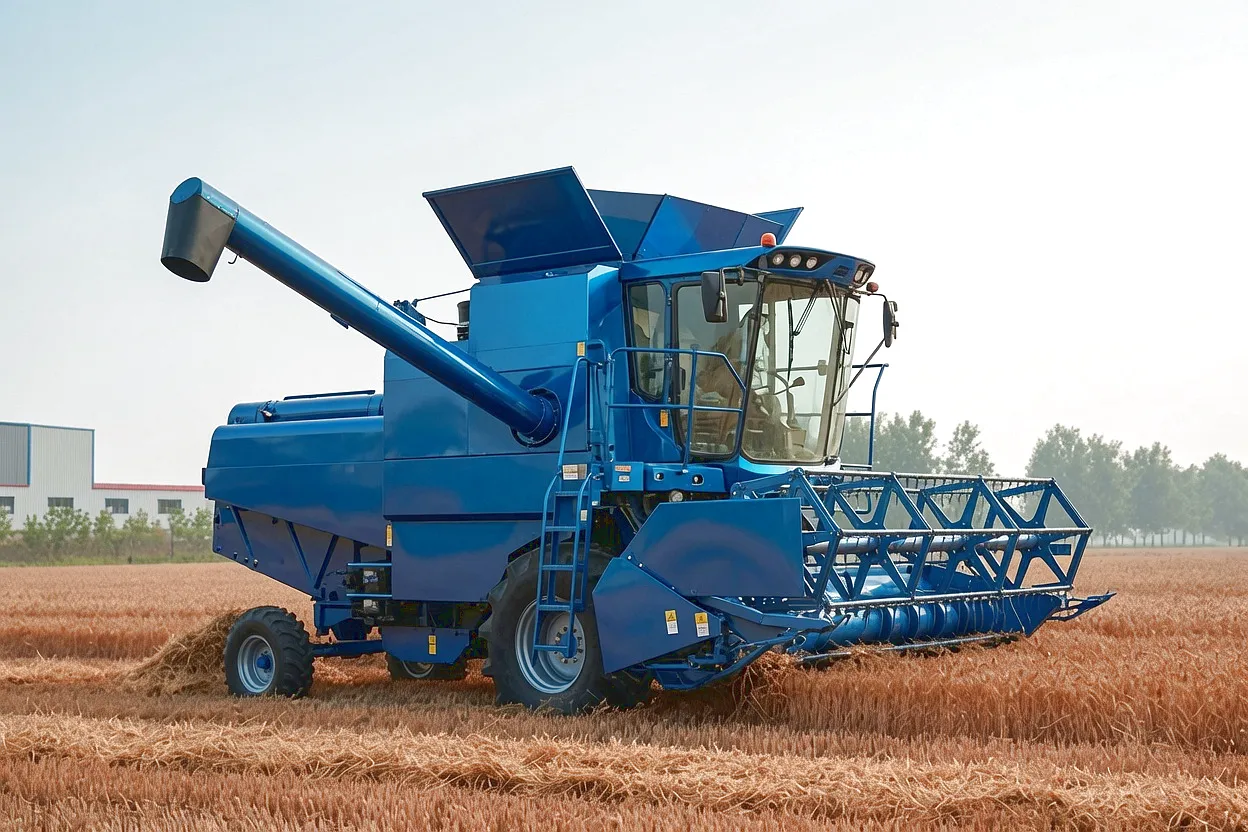
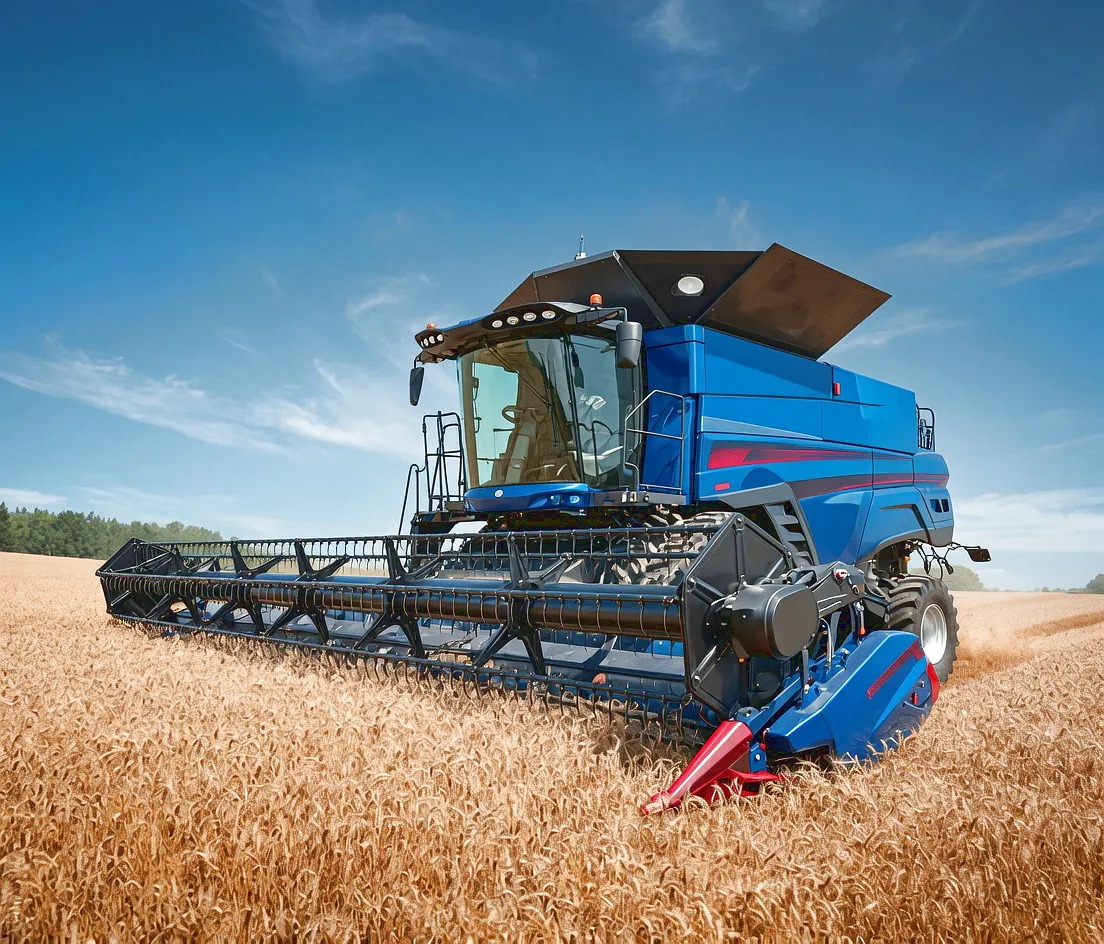
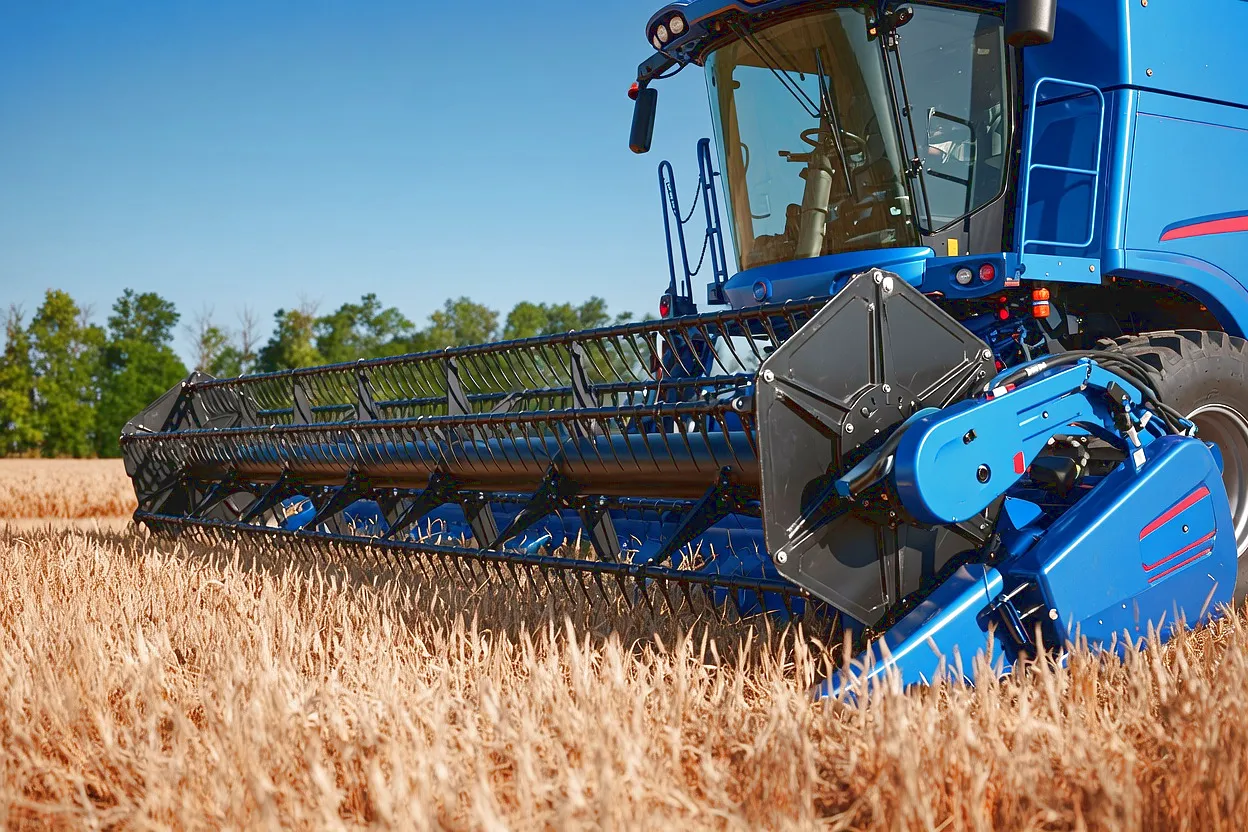
In large combine harvesters — such as the John Deere S680 series — the worm gear shaft is a cornerstone of in-cab remote adjustment systems. Multiple worm-and-wheel assemblies govern header width positioning, threshing drum clearance, and cleaning sieve aperture, each requiring precise, repeatable adjustment during active harvesting operations without operator intervention in the machine body.
The engineering rationale for choosing a worm gear shaft in this role is threefold. The self-locking property — critical here — holds each adjustment position firmly once reached, without any secondary fastener or locking mechanism, even under the substantial vibration loads generated by crop threshing. There is no creep, no positional drift, and no need for the operator to re-check positions during a harvest run. Typical transmission ratios in these mechanisms span 40:1 to 60:1, matched with compact electric or hydraulic actuators to deliver ±5 mm gap adjustment accuracy across the full working width of the machine.
The operating environment is severe: combine harvesters encounter constant shock loading from stones and dense crop material, wide ambient temperature swings from dawn starts below 5°C to mid-afternoon peaks above 30°C, and pervasive dust and moisture contamination. Worm gear shafts specified for this duty carry IP65 sealing as a minimum, use PAO synthetic lubricants rated for the full thermal range, and have thread surface finishes held to Ra 0.4 µm to ensure the self-locking lead angle remains geometrically stable over the full service interval. UK arable contractors operating across the Lincolnshire fens and the East Anglian cereal belt depend on precisely these characteristics to maintain combine throughput through the narrow harvest window each season.
Accuracy: ±5 mm
Drive: Electric / Hydraulic
Sealing: IP65+
Self-locking: Yes
Horizontal and inclined belt conveyors serving the warehousing and distribution sectors around Birmingham’s National Exhibition Centre logistics zone rely on worm gear shaft drives for reliable low-speed, high-torque output. The 90° offset input shaft allows motor-to-conveyor integration without the bevel stage that would otherwise add assembly complexity. Self-locking prevents loaded belts from running back during power interruptions — a material-safety requirement under the Provision and Use of Work Equipment Regulations 1998 (PUWER).

Low-rise passenger lifts and goods hoists installed across Sheffield’s regenerated cultural quarter and Manchester’s commercial district use worm gear shaft drives as the primary speed-reduction element. The combination of high ratio, self-locking, and near-silent operation under EN 81-20 lift installation standards makes the worm configuration the preferred engineering choice at speeds up to 1.0 m/s. The compact gearbox depth also simplifies machine-room-less (MRL) designs now mandatory in many modern UK commercial builds.
Yorkshire’s food manufacturing corridor — running through Leeds, Pontefract, and Wakefield — demands stainless worm gear shaft drives that withstand CIP (clean-in-place) chemical wash cycles without corrosion or lubricant contamination. The smooth rotary motion delivered to capping heads, label indexers, and auger filling spouts relies on the worm’s suppressed vibration profile. Zero backlash units to DIN 3974 Grade 5 ensure portion-control accuracy in gravimetric filling applications.
Ground-mounted solar farms in East Anglia and the East Midlands integrate single-axis tracker drives built around worm gear shaft assemblies with 80:1 ratios. The self-locking property is non-negotiable: tracker frames carrying 30+ panels must hold their position in winds to Beaufort Force 8 without powered assistance. The slow output speed — typically 0.05 rpm — matches solar tracking rates without further gearing, and the sealed IP67 design tolerates UK outdoor weathering over 25-year farm asset lifetimes.
Ever Power: Precision Manufacturing & Custom Worm Gear Shaft Solutions
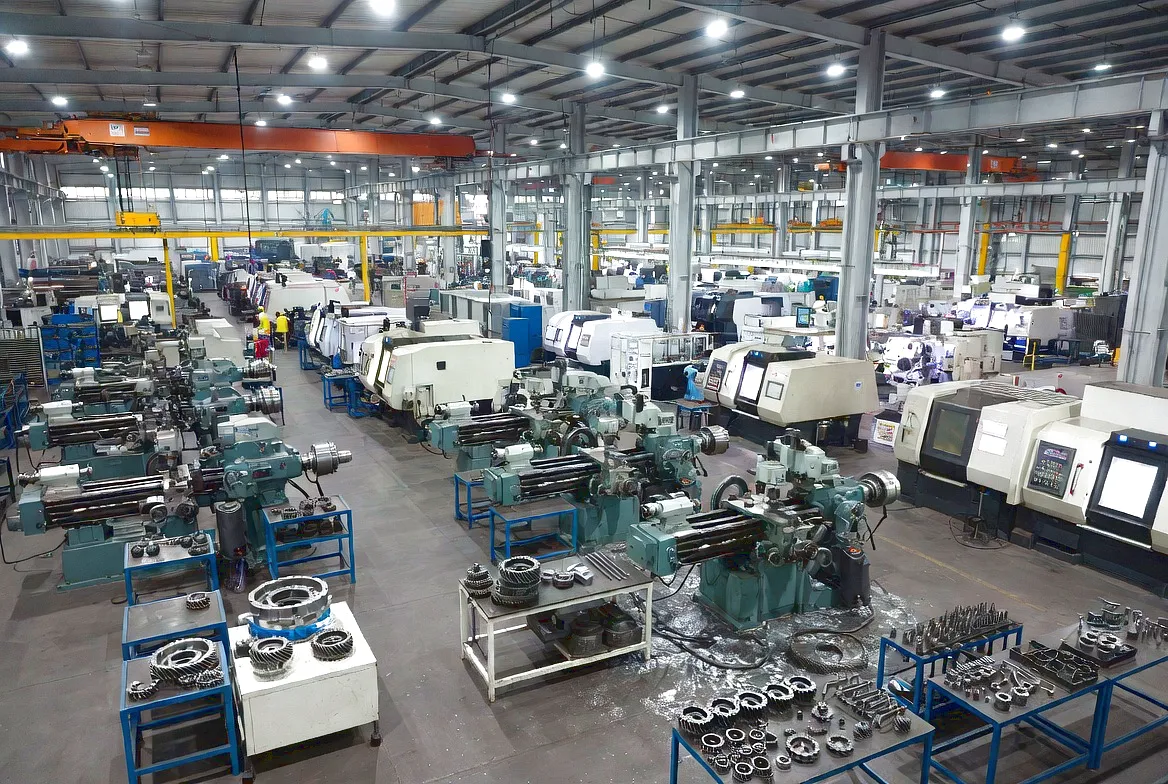
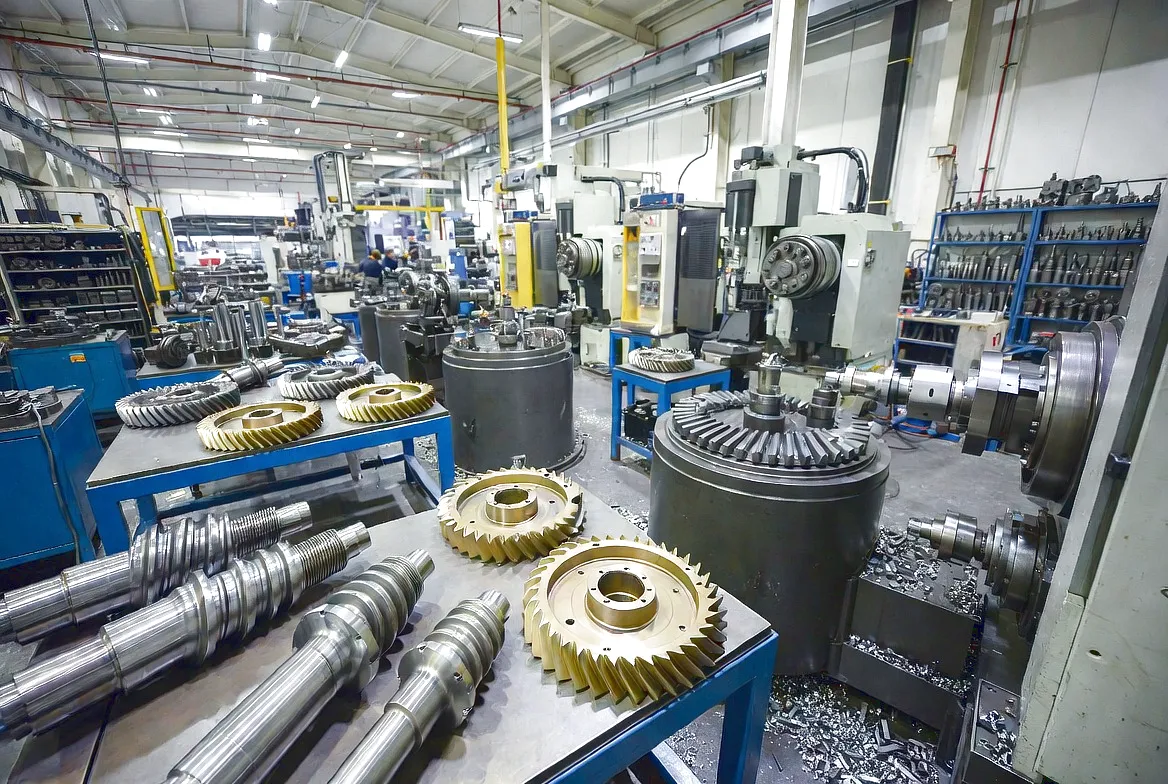
Ever Power operates a purpose-built worm gear shaft manufacturing facility equipped with multi-axis CNC thread grinding centres, coordinate measuring machines (CMM) with 0.1 µm resolution, and a climate-controlled quality laboratory that verifies every shaft against the dimensional and hardness specifications agreed at order placement. The production floor operates on lean manufacturing principles, with takt-time controlled cells enabling lead times of 4–6 weeks for standard catalogue units and 8–12 weeks for fully engineered specials — competitive benchmarks for UK buyers accustomed to long lead times from European and domestic suppliers.
Customisation sits at the core of Ever Power’s value proposition. Engineering teams can specify any combination of centre distance, gear ratio, number of starts, shaft end configuration, mounting interface, surface treatment, and sealing standard. Ever Power’s applications engineers provide DXF-format 3D models and full material certification documentation — including EN 10204-3.1 mill certificates and hardness test reports — as standard shipment documents for customers in regulated sectors such as the pharmaceutical, food, and defence supply chains. This documentation rigour meets the traceability requirements of the UK’s Good Manufacturing Practice (GMP) framework without additional customer-side audit burden.
The supply chain extends to a network of accredited UK-based distribution partners holding strategic buffer stocks of the most popular worm gear shaft sizes, meaning urgent replacement requirements for operations in the Midlands automotive corridor or the Northeast’s process industry zone can be fulfilled within 48–72 hours of order placement. For volume contracts, Ever Power provides dedicated vendor-managed inventory agreements that align stock levels with planned maintenance shutdowns, reducing both emergency purchasing premiums and unplanned downtime costs.
Ever Power’s engineering team responds within one business day with a preliminary specification review and indicative pricing. Share your application requirements — torque, ratio, envelope, duty cycle, operating environment — and we will engineer a solution.
Customer Success Story
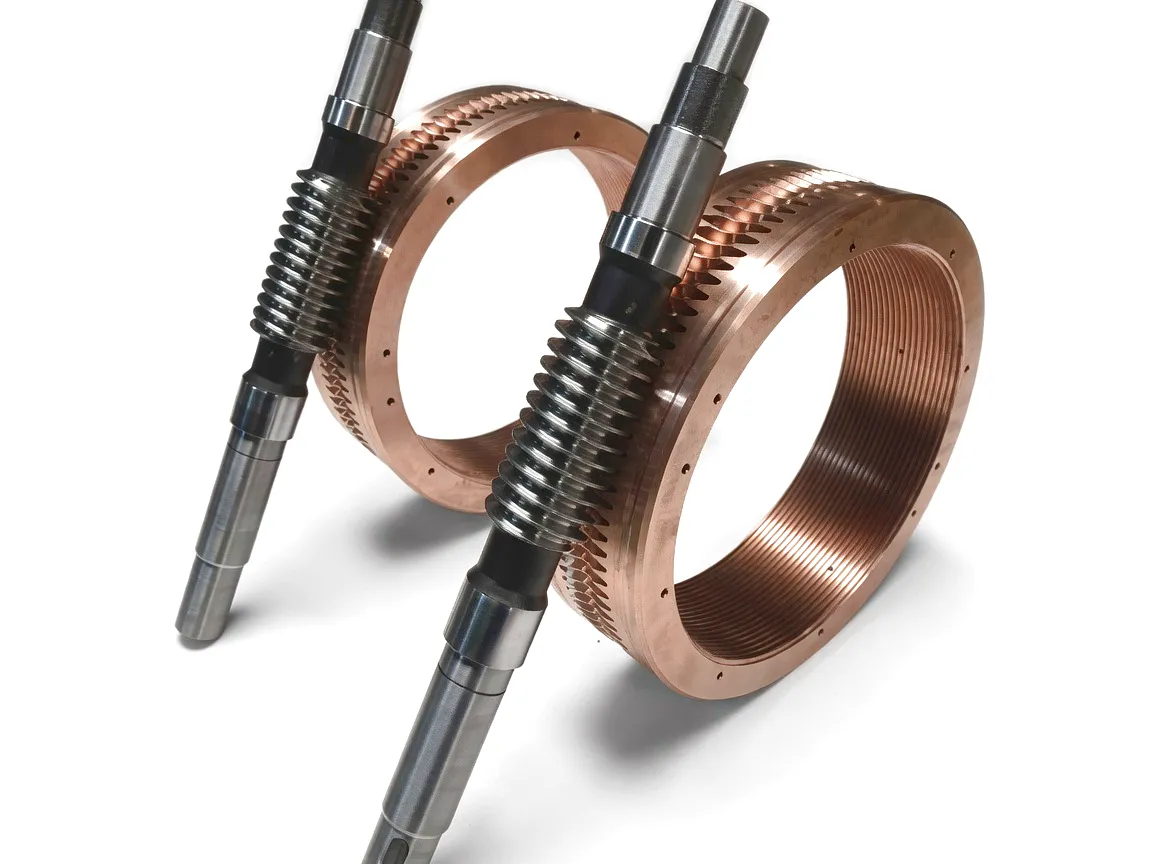
A Sheffield-based forging and stamping company specialising in aerospace-grade titanium components had been operating a legacy ring-rolling press for eleven years. The press used a conventional helical gear reduction stage to drive the mandrel roll at controlled low speeds — but repeated shock loading from billet impact events was causing premature fatigue failure in the gear teeth, resulting in unplanned stoppages roughly every 14 months at an average cost of £38,000 per incident including labour, replacement parts, and lost production.
The maintenance manager contacted Ever Power’s UK technical sales team after researching alternatives to the existing drive configuration. After reviewing the application data — peak torque 2,400 Nm, input speed 1,450 rpm, required output speed range 18–28 rpm, operating cycle 18 hours per day — Ever Power’s engineers specified a custom dual-start құрт тәрізді беріліс білігі assembly with a 60:1 ratio, 42CrMo4 shaft hardened to 60 HRC, and phosphor bronze wheel centrifugally cast to CC483K. The thread surface was ground to Ra 0.4 µm and the complete assembly was sealed to IP66 to manage the process coolant environment.
Installation took place during a scheduled two-day maintenance window. The first service inspection at 10,000 hours showed no measurable wear on the worm thread flanks and a contact pattern covering 72% of the active tooth face — above the 65% minimum specified in the Ever Power quality protocol. At the time of writing, the unit has completed 26,000 operating hours without intervention, representing a maintenance cost saving of over £75,000 versus the previous gear arrangement and eliminating two complete unplanned shutdown events.
What Customers Say
“The surface finish on the thread flanks was noticeably better than anything we’d sourced through our previous UK distributor. We ran the first unit for eight months before the initial lubrication check and found the oil still within viscosity specification — a strong indicator of controlled operating temperatures and correct mesh geometry.”
“Our biggest concern when switching supplier was the customisation turnaround. Ever Power delivered EN 10204-3.1 certified units to a non-standard centre distance within ten weeks, complete with CMM reports. The documentation package alone would have taken our previous European supplier an extra three weeks to compile. For a regulated food manufacturing environment, that traceability matters enormously.”
“We specified a 40:1 self-locking worm gear shaft for the elevation axis of our single-axis solar tracker prototype. The unit held panel angle to within 0.15° over a six-month outdoor test in East Anglia — wind, frost, and sustained rain included. The IP67 rating delivered exactly what was promised. We have since rolled this specification across our commercial tracker product line.”
Frequently Asked Questions
Real questions from UK engineering and procurement teams, answered plainly.
A worm gear shaft carries a continuous helical thread that meshes with a mating worm wheel rather than a parallel gear. Unlike helical gears, the worm shaft delivers power at a 90° shaft crossing angle, achieves much higher reduction ratios in a single stage, and — critically — can be designed to be self-locking, preventing the output from back-driving the input. This makes it the correct choice wherever holding position without a brake is a design requirement, something helical gears cannot inherently provide.
Pricing for custom worm gear shafts depends primarily on centre distance, required torque rating, material grade, surface treatment, and certification requirements. Standard-range units typically fall between £80 and £600 per shaft; fully engineered specials in exotic materials or with comprehensive third-party documentation can reach £1,500 to £4,000 per unit at low volumes. The best way to get an accurate quote for your specific application is to contact Ever Power directly at [email protected] with your torque, ratio, and mounting requirements.
Birmingham’s automotive press lines and precision machining sub-contractors, and Sheffield’s forging, stamping, and special steels manufacturers, are among the heaviest users. Worm gear shaft assemblies appear in press feed mechanisms, rotary indexing tables, and manipulator arms across these sectors. The same concentration of heavy engineering businesses also creates strong demand for replacement and upgrade shaft sets, particularly where legacy presses from the 1980s and 1990s are still in service.
For a standard belt conveyor in a food processing environment, ratios between 20:1 and 60:1 cover the vast majority of applications when paired with a 4-pole (1,450 rpm) IEC motor. The exact ratio depends on the required belt speed, pulley diameter, and required drive torque. In food-grade applications, an additional constraint is the need for stainless steel shaft material and food-safe synthetic lubricant — both of which should be specified at the enquiry stage to ensure the unit is correctly configured from the outset.
Ever Power maintains strategically held buffer stocks through a network of UK distribution partners positioned to serve the Midlands, Yorkshire, and the Northeast within 48–72 hours for standard-range units. For confirmed emergency requirements, contact [email protected] with your shaft dimensions, required ratio, and existing unit photographs — the team can confirm stock availability and arrange same-day despatch from the nearest UK distribution point in most cases.
Self-locking is guaranteed when the worm lead angle is sufficiently lower than the friction angle at the mesh contact. As a practical guideline, any single-start worm gear shaft with a lead angle below 5° will be self-locking under virtually all lubricated conditions encountered in lifting applications. Ever Power’s application engineers verify the self-locking margin analytically using the actual coefficient of friction for the specified lubricant and surface finish combination, and will confirm the result in writing as part of the technical datasheet issued with every custom order.
A multi-start worm gear shaft — two or four starts — is the right choice when efficiency matters more than self-locking. By increasing the lead angle, double and quadruple-start designs can achieve efficiencies of 85–92% compared to 55–70% for comparable single-start units. This matters in continuous-duty pumping, blending, and mixing applications where the energy cost difference across a year of operation runs into thousands of pounds. The trade-off is that multi-start designs are generally not self-locking, so a separate holding brake must be incorporated in the drive system where gravity load retention is needed.
Response within 1 business day · EN 10204-3.1 documentation · UK distribution network