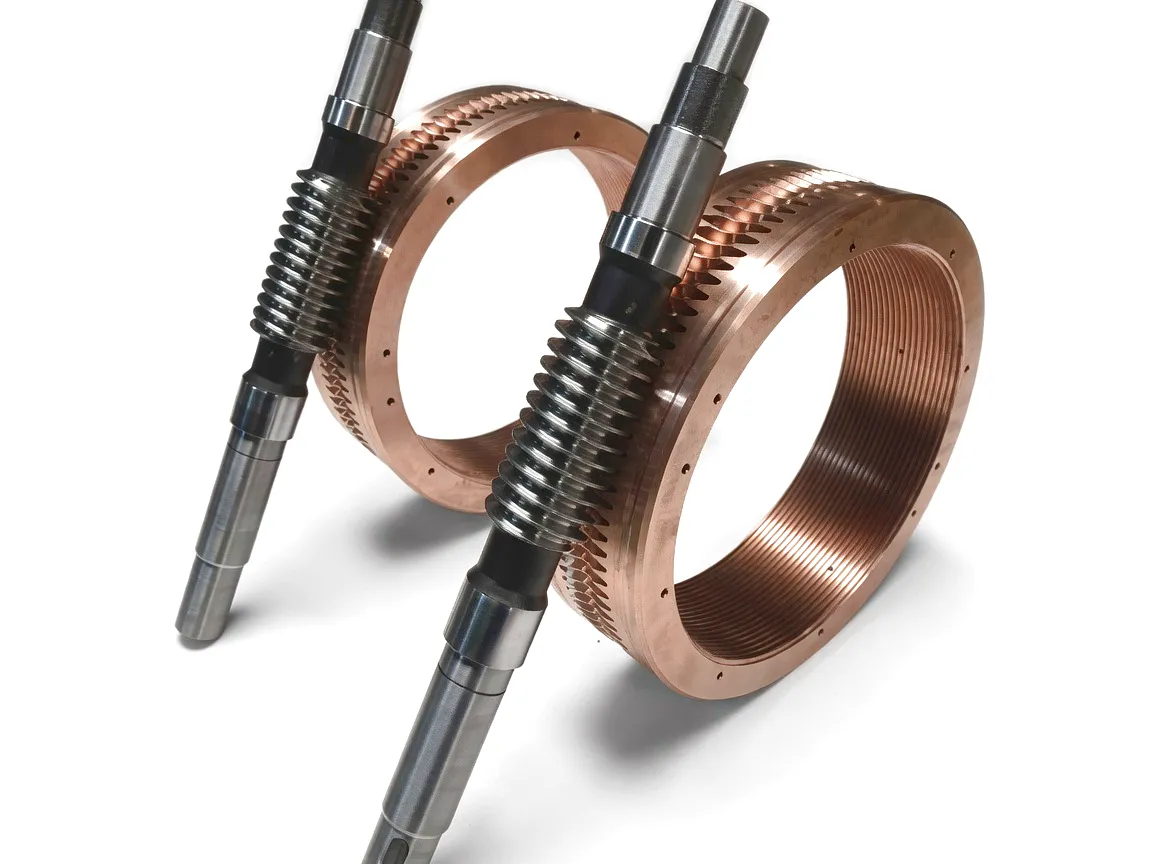
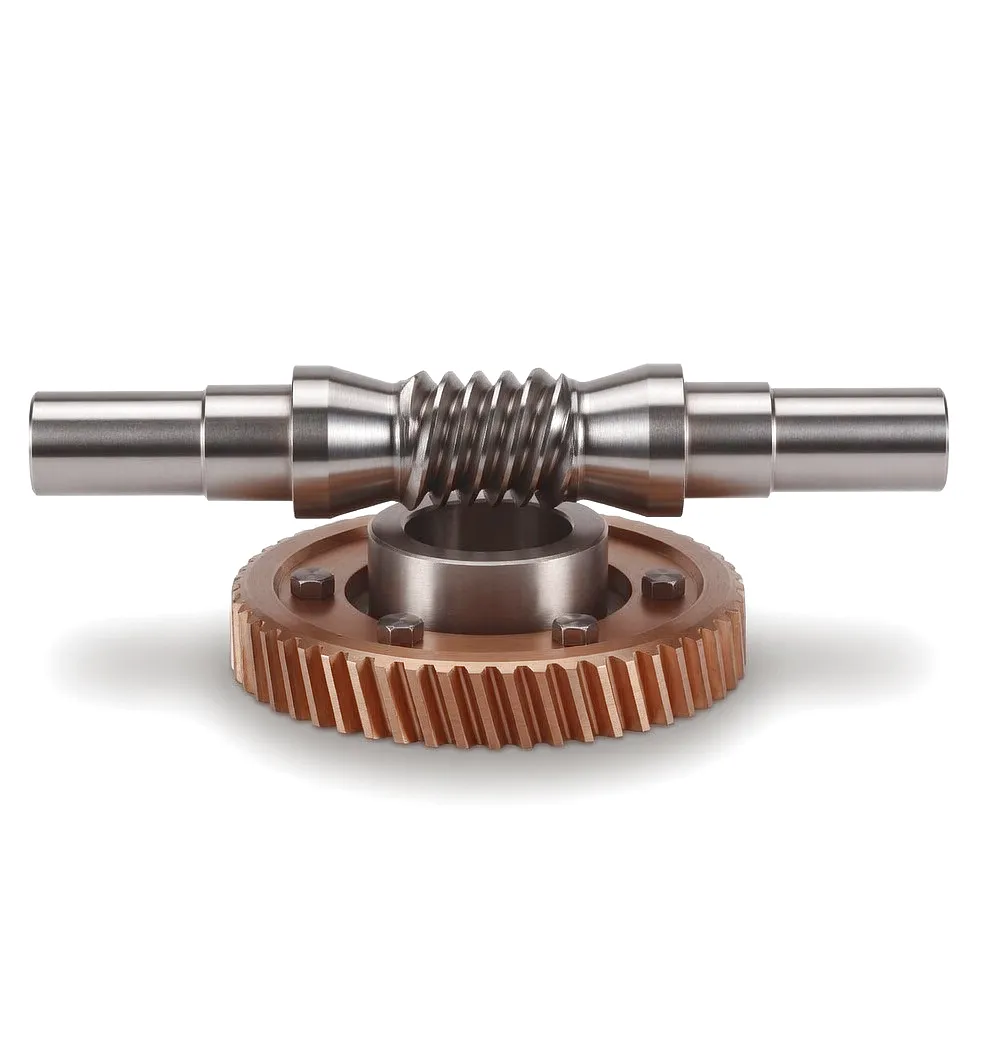
A worm gear shaft is the primary input drive element within a worm gear reduction system, transmitting rotational motion from a motor or prime mover to a mating worm wheel through a helical thread profile. At its simplest, it looks like a threaded cylinder — yet its geometry encodes some of mechanical engineering’s most elegant torque multiplication principles. The lead angle, thread form, pitch diameter, and surface finish of a worm gear shaft together determine not only how efficiently power travels from input to output, but also whether the assembly is self-locking under reverse loads. In heavy industrial environments from Birmingham’s automotive pressing plants to Sheffield’s precision forging facilities, these components underpin a vast range of critical machinery: conveyors, escalators, packaging lines, valve actuators, and lifting equipment all depend on correctly specified worm gear shafts to deliver controlled, reliable motion.
Unlike spur or helical gears, a worm gear shaft enables very large speed reduction ratios — commonly 5:1 to 100:1 — in a single compact stage. That compactness is particularly valued in applications where machine room space is constrained or where the drive must fit within a tight mechanical envelope. The self-locking capability of many worm gear shaft assemblies also removes the need for separate mechanical brakes in vertical or inclined applications, reducing both component count and maintenance overhead. For procurement engineers and plant designers across the UK, understanding the full technical picture of the worm gear shaft means better sourcing decisions and fewer costly mid-life failures.
How a Worm Gear Shaft Works: Mechanics and Motion
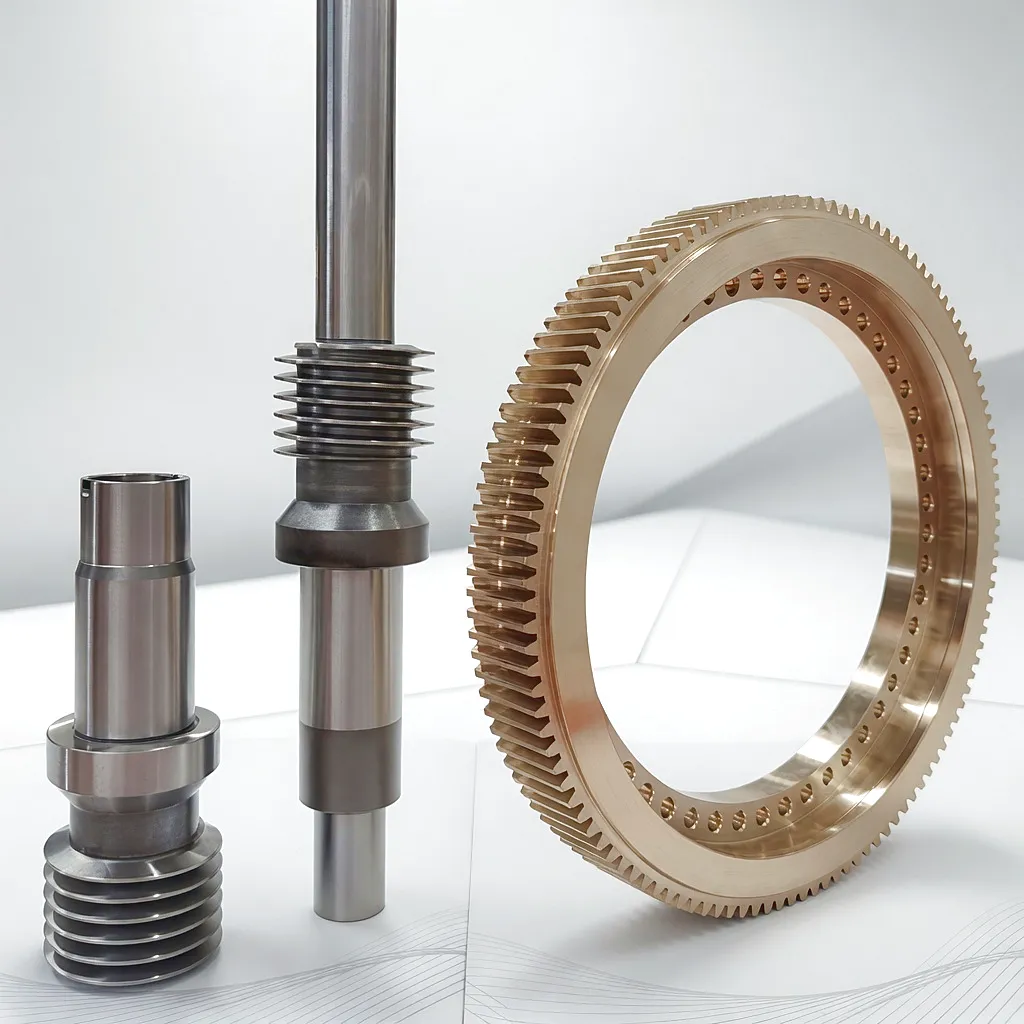
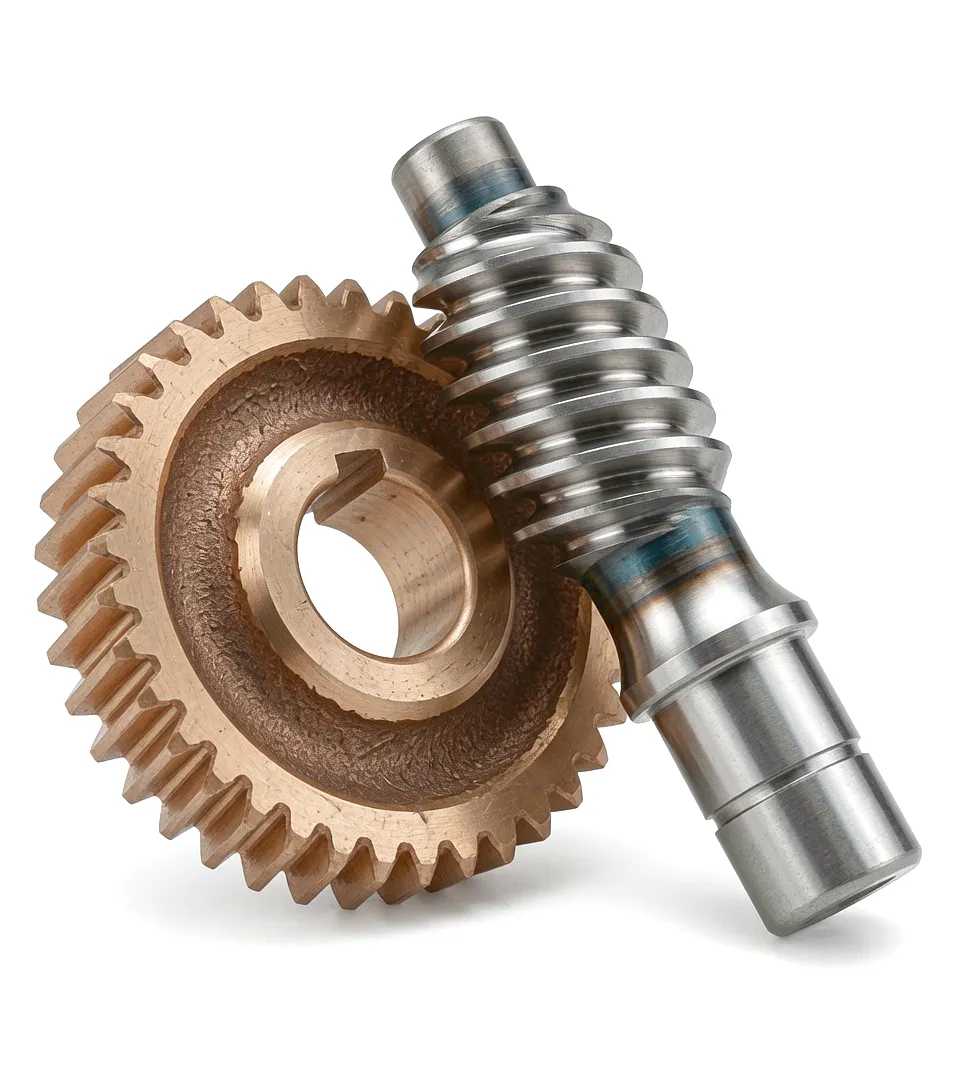
The operating principle of a worm gear shaft relies on the geometry of a screw thread engaging with the teeth of a worm wheel arranged at a 90-degree offset axis. When the shaft rotates, each revolution of the worm advances the wheel by one tooth — or, if the thread is multi-start, by the number of starts. This tooth-by-tooth engagement is what produces the dramatic reduction ratios characteristic of worm drive systems. Because the contact patch between the worm shaft thread and the wheel tooth involves sliding rather than rolling motion, friction plays a significant role in the system’s behaviour. A low lead angle (below roughly 5–6 degrees) means reverse torque from the wheel cannot drive the worm backward: the system becomes self-locking. This property is invaluable in hoists, scissor lifts, and escalator drive stages, where the load must remain stationary whenever the motor is de-energised.
The thread profile most commonly encountered on a worm gear shaft in UK industrial manufacture is the involute helicoid (ZI form), though the convolute forms ZN and ZA, along with the globoid (ZK) profile, are also deployed for specific performance needs. Each profile affects the contact pattern and the degree of surface conformity between the thread flanks and the wheel tooth. Globoid worms, for instance, wrap around the wheel and achieve a much larger contact area, improving load distribution and extending fatigue life — a consideration that carries weight when worm gear shaft assemblies are installed in continuously operating conveyors or escalator drives running 18 or more hours a day.
Lubrication is another factor that the operating principle demands respect for. The sliding motion at the tooth contact generates heat proportional to load and speed, and the viscosity, pour point, and additive package of the gear oil must be matched to the shaft’s pitch line velocity and the ambient temperature range of the installation. Worm gear shaft assemblies in unheated UK warehouses and outdoor transfer stations need oil rated to remain fluid at near-freezing temperatures, while the same unit in a glass furnace control station may require a higher-temperature synthetic. Understanding these operating mechanics is the starting point for every successful worm gear shaft specification.
Core Materials in Worm Gear Shaft Manufacturing
Material selection for a worm gear shaft is one of the most consequential decisions in the design process, because the shaft must resist torsional fatigue, surface contact stress, and — in many applications — corrosive attack, all simultaneously. The most widely used shaft materials in precision-manufactured worm gear assemblies are case-hardening steels, medium-carbon alloy steels, and, for certain food-grade or marine applications, stainless steels.
Carburised and case-hardened to 58–62 HRC at the working surface while retaining a tough, ductile core. This combination provides excellent resistance to pitting and scuffing under high Hertzian contact stress. These grades are the dominant choice for medium-to-high load worm gear shafts in automotive, conveyor, and general industrial gearboxes manufactured in the UK’s West Midlands engineering corridor.
Through-hardened or induction-hardened, offering tensile strengths of 900–1100 MPa and excellent torsional rigidity. Widely specified for large-diameter worm shafts in heavy-duty mixing equipment, extruders, and mining conveyors where the shaft diameter may exceed 100 mm. Its good machinability also makes it a cost-effective choice when CNC turning and thread milling are the primary manufacturing routes.
Selected when the worm gear shaft must withstand wash-down cycles, food-contact regulations, or coastal industrial atmospheres (including many UK port installations and Scottish salmon processing plants). While somewhat lower in core hardness than alloy steels, it offers outstanding oxidation resistance and can be nitrided to improve surface hardness without compromising the passive oxide layer.
Though the shaft itself is steel, its counterpart worm wheel is almost universally cast from phosphor bronze (CuSn12) or centrifugally cast bronze. This dissimilar-metal pairing is deliberate: the bronze’s inherent lubricity and compliance allow the two surfaces to run-in together, reducing the risk of catastrophic adhesive wear even during early operation when the surfaces are not yet fully bedded. The resulting tribological system is what makes the worm gear shaft drive reliable over years of continuous service.
Core Technical Advantages of the Worm Gear Shaft
A worm gear shaft arrangement routinely delivers reduction ratios of 5:1 to 100:1 within a single compact stage, matching what helical gear trains can only achieve across three or four stages occupying far greater axial length. This makes it particularly attractive for retrofitting drives into existing machine housings with limited space.
When the lead angle is designed below the friction angle (typically under 5–6 degrees), the worm gear shaft assembly becomes self-locking: the output load cannot backdrive the input worm. This eliminates the need for supplementary backstop or braking devices in many vertical-lift and escalator applications, reducing cost, weight, and maintenance burden considerably.
The continuous sliding contact between the worm shaft thread and the worm wheel teeth produces a gliding motion that, when adequately lubricated, generates far less noise and vibration than the meshing of spur or bevel gear teeth. This is a meaningful benefit in passenger-carrying applications such as escalators and passenger lifts, where vibro-acoustic comfort is a design criterion.
With input and output axes arranged at 90 degrees as standard, the worm gear shaft drive naturally redirects torque into configurations that suit the spatial constraints of real machines. Packaging lines, conveyor junctions, and valve actuation systems frequently exploit this orthogonal layout to simplify their overall drive architecture without additional bevel gear stages.
By converting high-speed, low-torque motor rotation into low-speed, high-torque output, the worm gear shaft enables relatively small motors to handle very large process loads. This torque multiplication is particularly effective in bulk material handling — a 7.5 kW motor driving a 40:1 worm gear shaft assembly can deliver over 20,000 Nm at the output shaft under favourable efficiency conditions.
The axial compactness of a worm gear shaft drive — achieving large ratios in a housing typically 30–50% smaller than an equivalent helical unit — is one of the single most commercially compelling reasons for its continued widespread adoption. Escalator machine rooms in London Underground stations, for instance, exploit this compactness to fit complete drive systems into spaces that a parallel-shaft alternative could not occupy.
Worm Gear Shaft — Technical and Performance Parameters
The table below consolidates the principal technical parameters relevant to the specification and procurement of a worm gear shaft for industrial applications. Values shown represent the standard range achievable by a precision manufacturer; custom designs can extend or modify these figures based on specific duty requirements agreed at the quotation stage.
| Parameter | Standard Range | Unit / Note |
|---|---|---|
| Shaft Diameter | 10 – 200 | mm; custom up to 350 mm |
| Reduction Ratio | 5:1 – 100:1 | Single stage; 300:1+ in double-stage |
| Output Torque | 50 – 50,000 | Nm; rating dependent on ratio and input power |
| Lead Angle | 2° – 25° | Below ~6° typically self-locking |
| Thread Starts | 1 – 6 | Multi-start increases efficiency and speed |
| Transmission Efficiency | 50% – 92% | Higher lead angle = higher efficiency |
| Input Speed (max) | Up to 3,000 | rpm; pitch line velocity typically < 10 m/s |
| Shaft Material (Worm) | 20CrMnTi, 42CrMo4, SS316 | Case-hardened or through-hardened |
| Surface Hardness (Thread Flanks) | 58 – 62 HRC | Post carburising and quench |
| Thread Profile (Standard) | ZI (Involute Helicoid) | ZA, ZN, ZK available on request |
| Axle Angle (Input / Output) | 90° | Standard; non-standard angles available |
| Centre Distance | 25 – 500 | mm |
| Module (m) | 1 – 20 | Non-standard modules manufactured to order |
| Thread Surface Roughness (Ra) | 0.4 – 0.8 | µm; ground finish standard |
| Operating Temperature | -20°C to +80°C | Synthetic lubricant extends to ±40°C |
Industrial Application Scenarios for Worm Gear Shafts

Escalator drive systems across UK transport hubs — from London Underground stations to Manchester’s Metrolink interchanges and Birmingham New Street’s concourse — rely heavily on worm gear shaft drives paired with dedicated traction motors. The rated step speed for a typical commercial escalator is 0.5 m/s or 0.65 m/s, with the drive motor sized according to the rise height and passenger capacity, which can reach 7,200 persons per hour on busy commuter routes. Motor powers for these applications typically span 5 kW to 22 kW, and the worm gear shaft reduction ratio within the gearbox is usually set between 20:1 and 30:1 to deliver the correct step chain speed. The compact form factor of the worm gear shaft drive is especially beneficial in these installations: escalator machine rooms in underground and constrained shopping centre environments have strict headroom limitations, and a worm gear shaft unit’s low profile allows the entire drive package — gearbox, motor, and auxiliary braking — to fit within a housing that a parallel-shaft alternative could not occupy. The inherent noise smoothness of the worm gear shaft contact also ensures the pleasant, low-vibration ride experience that passengers in retail and transit environments expect.

Across Yorkshire’s aggregate quarries and the distribution warehouses of the East Midlands Logistics Corridor, worm gear shaft drives are the backbone of belt conveyor head drum and screw conveyor systems. A single worm gear shaft assembly mounted to the conveyor head drum provides the precise, constant-velocity drive needed to maintain stable material flow. The self-locking property of the worm gear shaft is particularly valuable on inclined conveyors, where an unexpected power failure could otherwise cause the belt to roll back, potentially damaging product and creating safety hazards. For abrasive and dusty environments — coal handling at power stations, aggregate loading at quarry plants — the sealed, enclosed nature of the worm gear shaft gearbox casing protects the gear mesh from contamination far more effectively than open drive arrangements, reducing unplanned maintenance stoppages that are expensive at high-throughput industrial sites.
Large quarter-turn and multi-turn valves on water treatment pipelines in Wales, offshore platforms in the North Sea, and gas distribution networks across Scotland frequently use worm gear shaft actuator assemblies. The high reduction ratio allows a relatively low-torque motorised actuator to open or close large-diameter gate and butterfly valves against high differential pressures. The self-locking property ensures valves stay in their commanded position without continuous power application.
Confectionery manufacturers in Birmingham, dairy processing plants across Cheshire, and seafood packaging facilities in Hull deploy worm gear shaft drives in filling machines, labelling units, and portioning conveyors. Stainless-steel worm gear shafts with food-grade lubrication meet FDA-equivalent hygiene standards applied in UK food factories. Their compact housings are also easy to clean-in-place, reducing downtime during the frequent changeovers common in FMCG production environments.
Sheffield’s specialty steel producers and aluminium extruders in the West Midlands use large worm gear shaft assemblies in roll adjustment drives, coiler tensioning arms, and strip-threading systems. The ability to hold a precise roll gap position without drift — enabled by the worm gear shaft’s self-locking capability — is critical to maintaining dimensional tolerances in strip products, where even sub-millimetre variation in gauge can trigger customer rejection of entire coils.
Combine harvester header drives, grain auger systems, and concrete mixer drum drives across the UK’s agricultural heartland in Lincolnshire, Cambridgeshire, and the Scottish Borders incorporate worm gear shaft drives for their durability in dusty, wet outdoor conditions. The robust sealed gearbox design survives the shock and vibration loads inherent to field operation, while the high torque output of a correctly rated worm gear shaft drive matches the demands of turning heavy mixer drums or auger screws loaded with wet grain or aggregate.

Industrial hoists, scissor lifts, vehicle workshops in Coventry, and dock-side freight elevators at Port of Southampton all make use of worm gear shaft drives as the primary hoisting mechanism. The worm gear shaft’s self-locking quality is non-negotiable in these applications: when the motor is switched off, the suspended load must remain stationary. The alternative — a non-self-locking helical or spur reduction — would require a secondary mechanical brake of equal capacity to prevent gravitational descent. By building that holding capability directly into the worm gear shaft geometry, manufacturers simplify the hoist design while simultaneously reducing the number of maintenance-critical brake components in the drivetrain.
Customer Success Story: Sheffield Steel Products Ltd
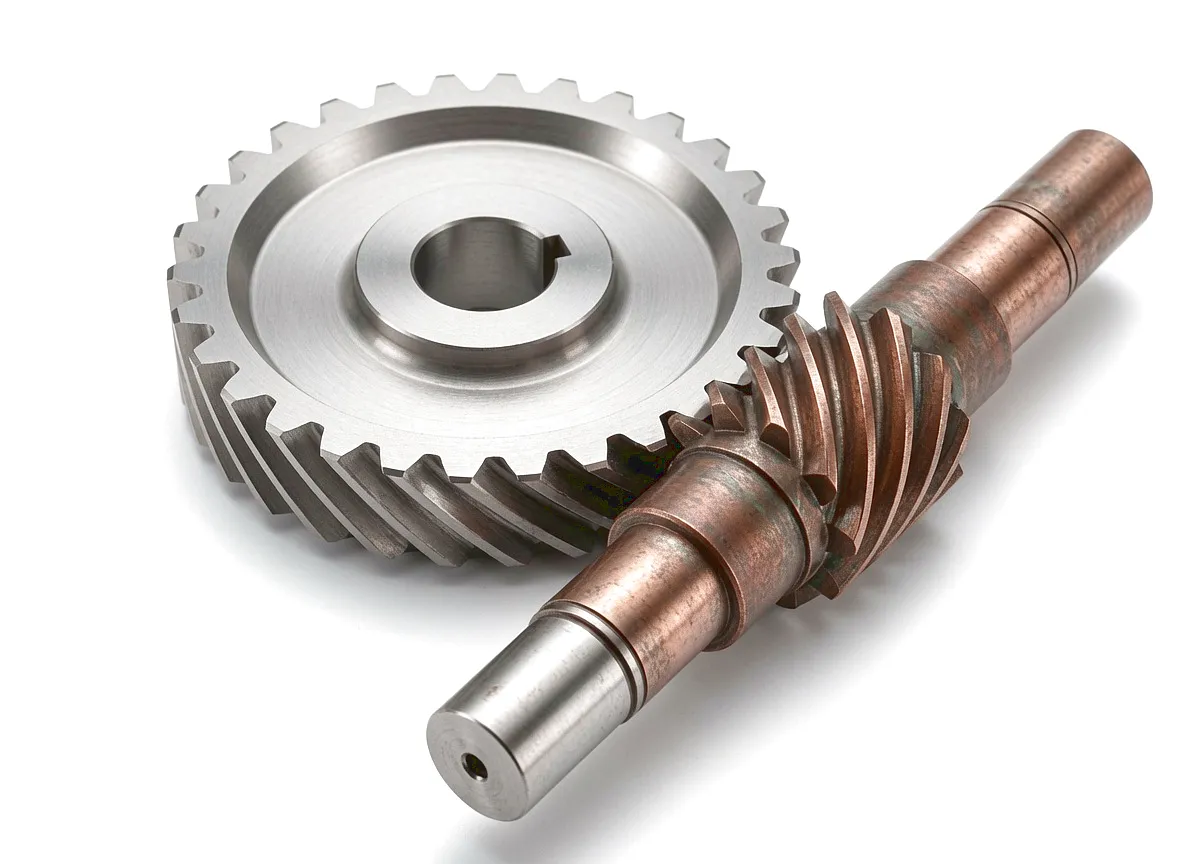 Sheffield Steel Products Ltd operates a specialty cold-rolling facility near the Don Valley, producing high-tolerance stainless and tool steel strip for aerospace and medical device customers across the UK and Europe. Their rolling mill’s pass-line adjustment drives — responsible for precisely positioning the top roll of a 4-high rolling mill to within ±0.02 mm — had been fitted with imported worm gear shaft assemblies from a catalogue supplier for over a decade. By 2023, repetitive premature thread wear on the worm shafts was forcing unplanned maintenance stoppages at an average rate of once every 11 weeks, each shutdown costing the plant approximately £28,000 in lost production and emergency maintenance labour.
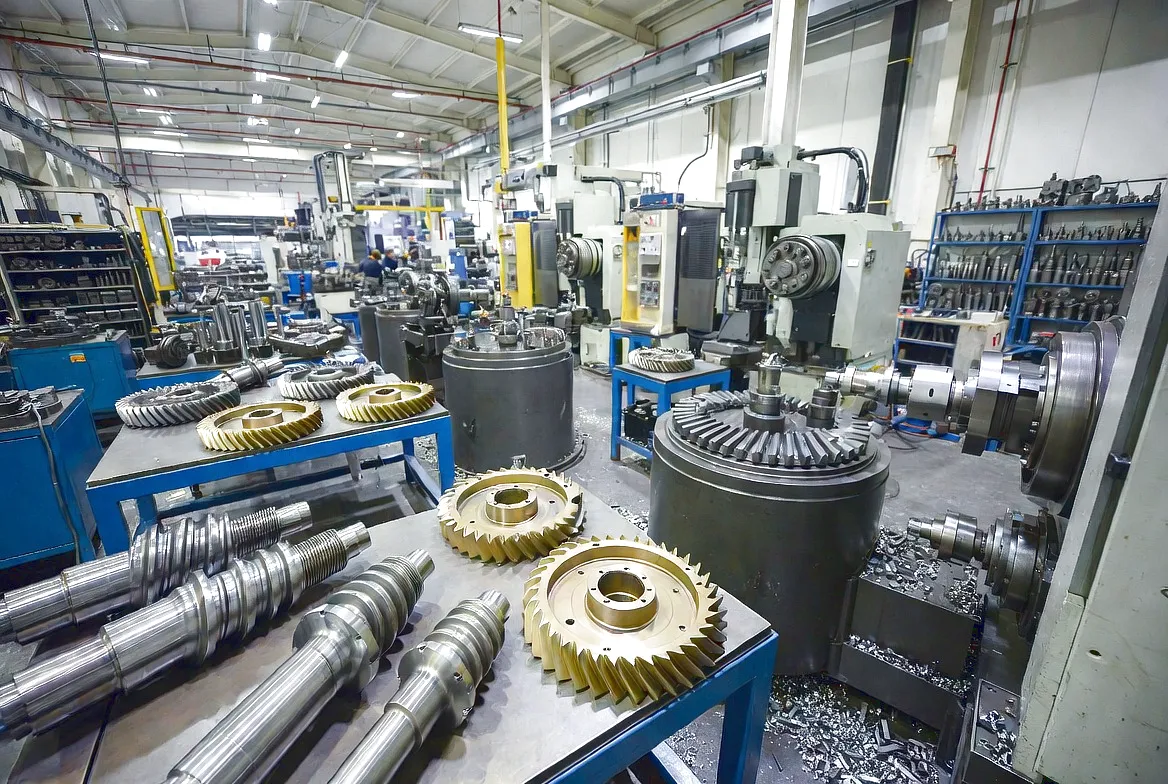
Sheffield Steel Products’ chief mechanical engineer contacted Ever Power after reviewing technical documentation on custom-engineered worm gear shaft solutions. After a detailed exchange of drawings, duty cycles, and operating load data, Ever Power’s engineering team identified the root cause: the original catalogue worm gear shafts had been manufactured from through-hardened medium-carbon steel and ground only to IT8 thread lead accuracy. For the shock loads and frequent reversal cycles characteristic of roll adjustment drives, this was insufficient. Ever Power proposed a replacement құрт тәрізді беріліс білігі in 20CrMnTi case-hardening steel, carburised and quenched to 60 HRC at the thread flanks, ground to IT6 accuracy, and finished to Ra 0.4 µm. The shaft shoulder fillets were specified with a generous radius and the keyway entry chamfer was redesigned to reduce stress concentration.
A first batch of six worm gear shaft units was delivered to Sheffield within four weeks of drawing approval. After 18 months of operation, not a single unit has required unplanned replacement. The plant’s annual maintenance budget for the roll adjustment drive circuit has fallen by 67%, and the improved thread surface quality has also reduced the breakaway torque required to initiate roll movement — a secondary benefit that has slightly improved the positional accuracy of the pass-line control system and reduced micro-stepping errors in automated gauge control.
What Our Customers Say
The jump in thread surface quality on Ever Power’s worm gear shafts compared to what we had been using was immediately obvious when we inspected the first delivery. Eighteen months running three shifts and not a single unplanned pull — that’s the performance standard we needed, and these components have delivered it without compromise.
We needed a non-standard centre distance and a specific keyway tolerance for our packaging line rebuild. Most suppliers quoted 12 weeks and a high tooling surcharge. Ever Power turned around a fully compliant custom worm gear shaft drawing for approval within three days, and the finished components arrived in four weeks. The fit was perfect first time. That’s what supply chain reliability looks like.
Our escalator refurbishment project across three Glasgow subway stations required worm gear shaft replacements to a very tight original equipment drawing. Ever Power’s engineering team reviewed our drawings, confirmed material equivalency for the specified steel grade, and provided a CMM inspection report with every shaft. The level of documentation and traceability they supply gives our client and our own quality team complete confidence.
Worm Gear Shaft Drives in Escalator Systems: A Technical Deep Dive

The escalator is one of the most demanding operational environments for a worm gear shaft drive. Consider the duty profile: an escalator in a busy commuter station — London Victoria, Leeds City Station, or the Buchanan Street entrance to Glasgow’s subway — may run continuously for 20 hours a day, carrying up to 7,200 passengers per hour at a step speed of 0.5 m/s or 0.65 m/s. The drive motor is typically an AC induction unit rated between 5 kW and 22 kW depending on the vertical rise and the rated passenger load. The worm gear shaft gearbox sits between the motor and the main drive axle, providing a reduction ratio of approximately 20:1 to 30:1 and converting the motor’s 1,450 rpm output to the 50–70 rpm range needed to drive the step chain at the correct linear speed.
A key design constraint in escalator worm gear shaft selection is the machine room (or machine space) envelope. Particularly in heritage underground stations and constrained urban shopping centres, the headroom and floor area available for the drive assembly are strictly limited by the civil structure. The worm gear shaft gearbox — with its right-angle output and compact ratio achieved in a single stage — consistently out-performs parallel-shaft alternatives in these dimensionally restricted environments. A 22:1 worm gear shaft gearbox serving a 7.5 kW escalator motor will typically fit within a housing envelope of around 400 mm × 300 mm × 250 mm; the equivalent helical gear train would require a housing roughly 60% longer in the axial direction.
The self-locking characteristic of an escalator worm gear shaft also serves a critical safety function. In the event of motor failure or a power interruption, the step chain and passenger load must decelerate to a stop without uncontrolled acceleration. A correctly designed worm gear shaft drive, with a lead angle well below the friction angle, provides inherent mechanical braking through the gear mesh itself — though escalator safety codes universally also mandate supplementary electromechanical brakes for redundancy. This means the worm gear shaft is performing double duty: not only transmitting drive torque during normal operation, but also acting as the first line of mechanical resistance against uncontrolled descent during a power event. This dual role demands a worm gear shaft manufactured to the highest precision — any thread wear, pitting, or dimensional inaccuracy degrades both the drive efficiency and the self-locking holding torque, with safety implications that justify the thorough inspection and material standards applied by reputable manufacturers.
How to Correctly Specify a Worm Gear Shaft
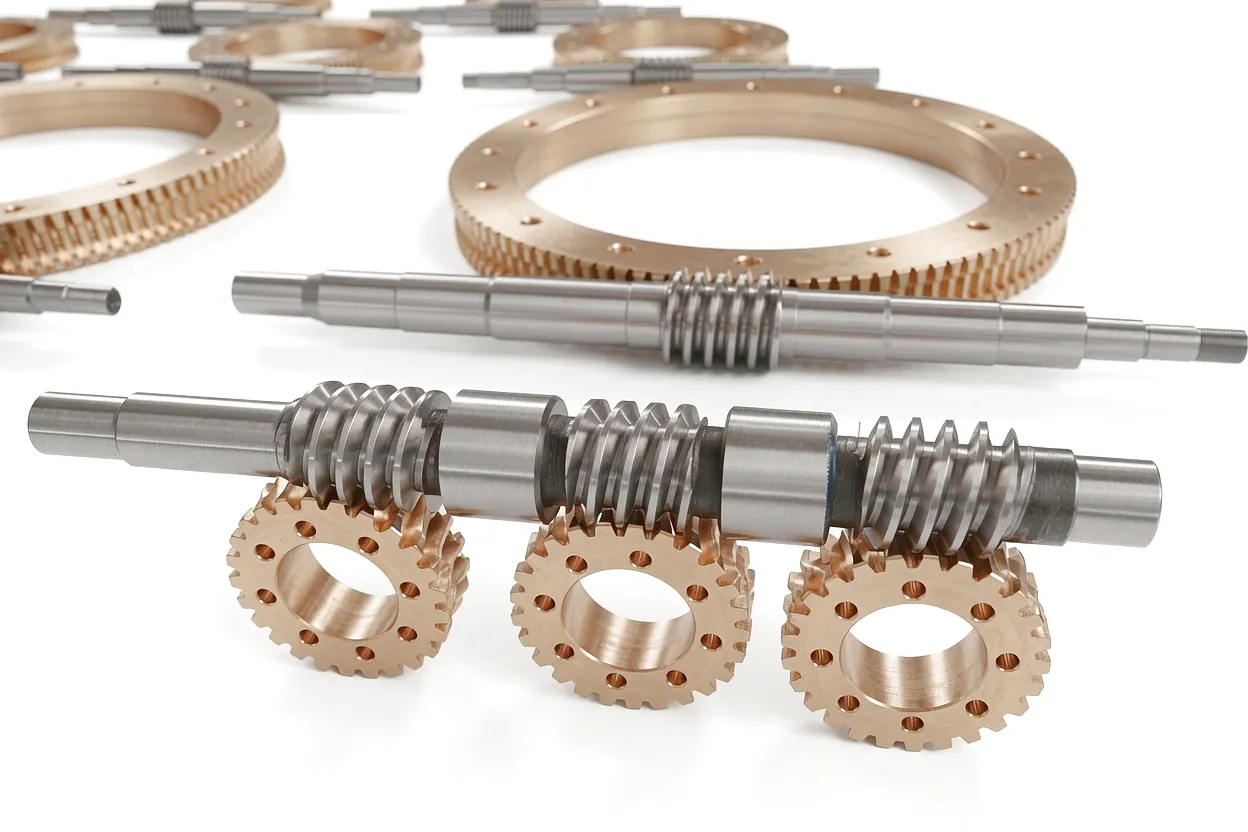
Getting the specification of a worm gear shaft right at the outset saves far more money than any cost optimisation exercise at the procurement stage. The starting point is always the required output torque and the available input speed and power. From these three values, the transmission efficiency of the chosen ratio determines the thermal loading on the gearbox — a factor frequently underestimated by engineers more familiar with helical gear systems. A worm gear shaft with a 50:1 ratio at a low lead angle might have a mechanical efficiency of only 55–65%, meaning that 35–45% of input power converts directly into heat at the gear mesh. If this thermal load is not managed — through adequate housing surface area, cooling fins, or an external oil cooler — the lubricant will overheat, viscosity will drop, and accelerated wear will follow.
The second critical parameter is the duty cycle — specifically, whether the drive operates continuously, intermittently, or in frequent reversal. Continuous duty at full torque is the most thermally demanding scenario and requires the largest service factor. Intermittent duty with adequate off-time for cooling allows a more compact worm gear shaft selection. Frequent reversal — as in the roll adjustment drives discussed in the Sheffield case study — creates torsional fatigue that must be accounted for through material selection and the lead accuracy specification. The AGMA and ISO 14521 standards for worm gear shaft design both provide service factor tables that translate duty cycle characteristics into sizing factors.
Environmental factors round out the specification. Is the worm gear shaft assembly to be mounted vertically, horizontally, or at an angle? Does the environment involve dust, moisture, wash-down, or chemical exposure? What are the ambient temperature extremes? All of these factors influence the housing design, the seal selection, the lubricant specification, and potentially the shaft material choice. Communicating these parameters to the manufacturer at the quotation stage — and requesting a formal application review — is the single most effective way to ensure that the custom worm gear shaft delivered to your facility will perform reliably for its full design life.
Frequently Asked Questions About Worm Gear Shafts
Tell Ever Power your specifications — torque, ratio, material, and quantity — and receive a technical response and competitive quote within 24 hours.