Mechanical Engineering Knowledge Series
Worm Gear Shaft: Engineering Principles, Materials, Performance & Industrial Applications
A technical deep-dive into one of mechanical engineering’s most versatile precision components — from crane luffing mechanisms to heavy industrial drives across UK manufacturing.
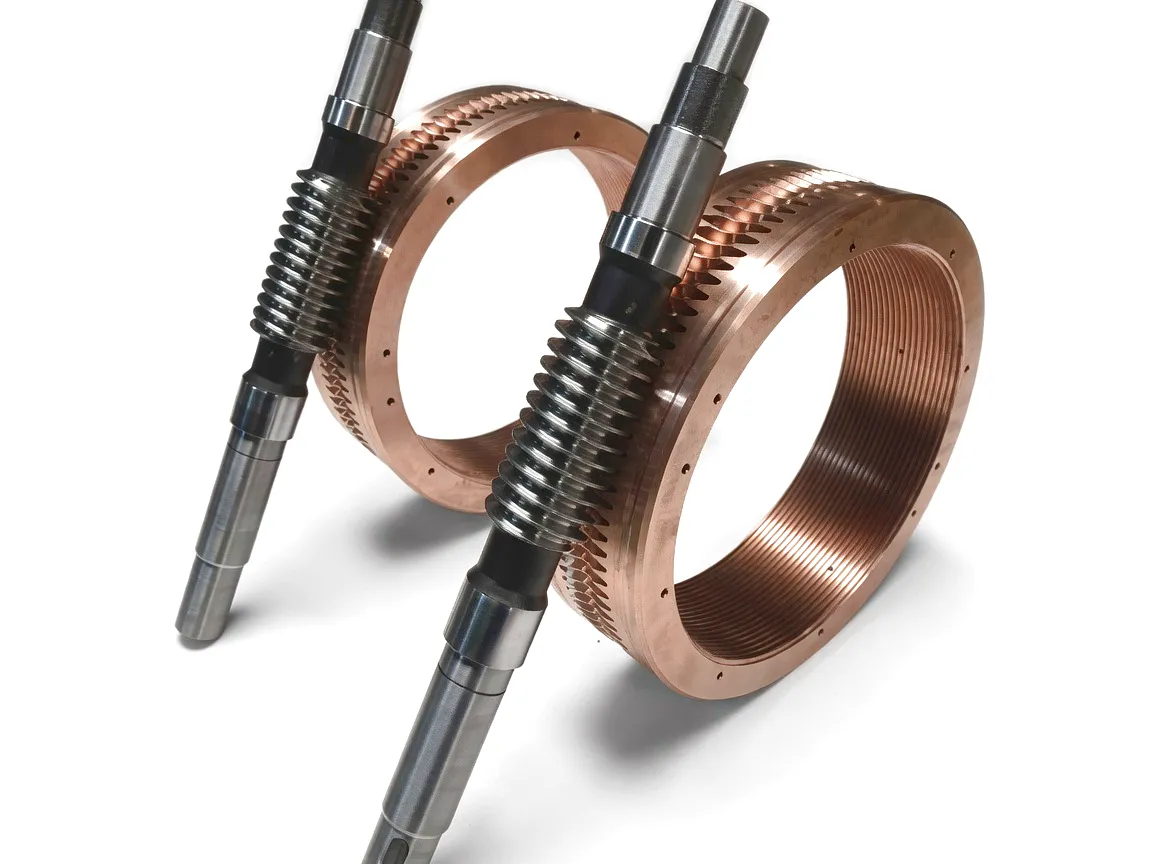
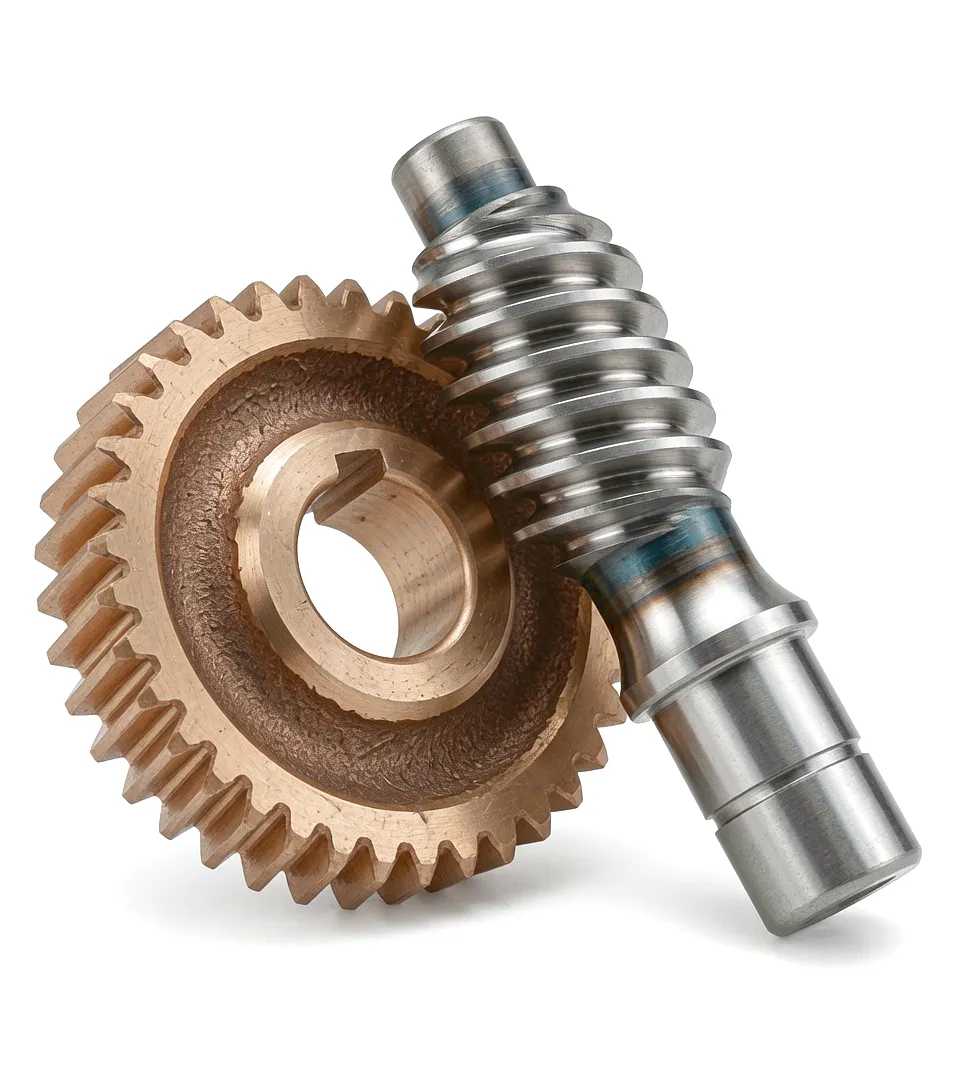
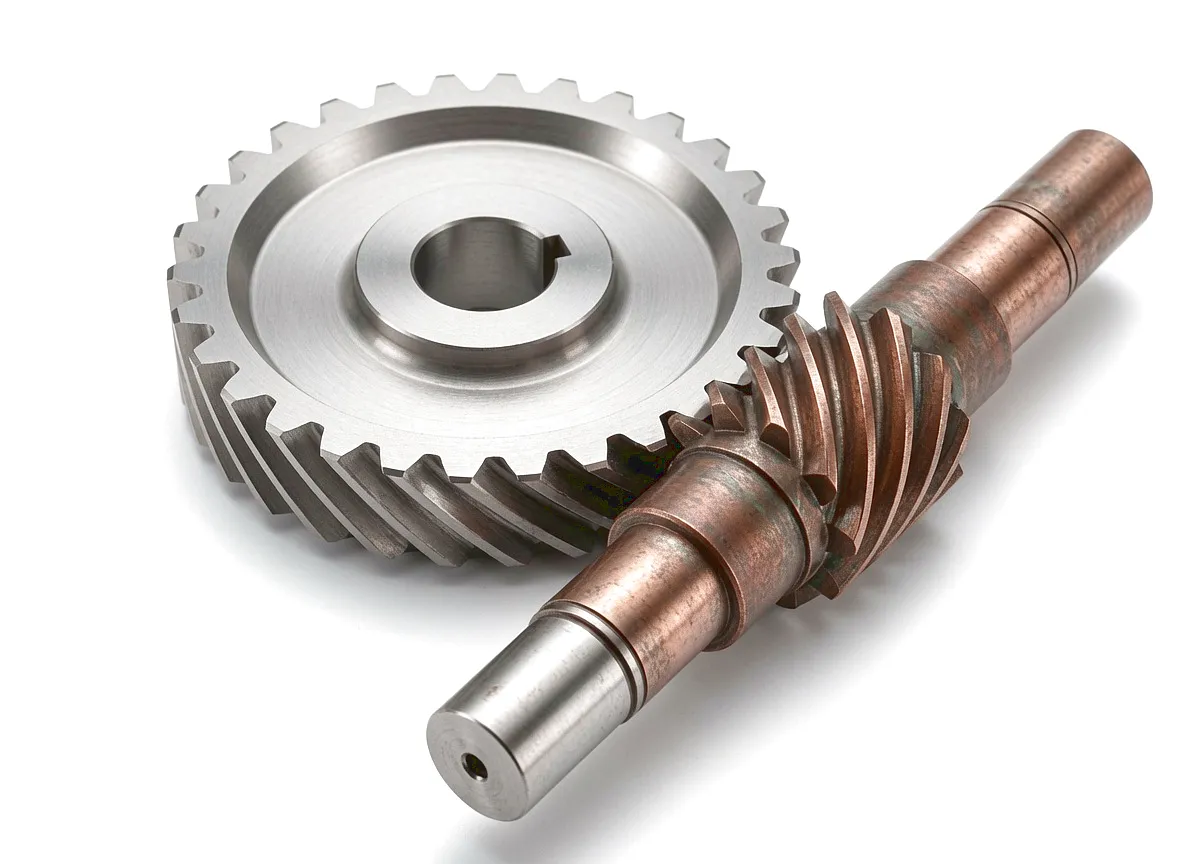
The worm gear shaft sits at the intersection of elegant mechanical geometry and hard-wearing industrial performance. In its simplest physical form, it is a cylindrical shaft machined with a continuous helical thread — much like a screw — that meshes with a toothed wheel called the worm gear or worm wheel. Yet the implications of this deceptively simple arrangement go far beyond anything the geometry alone suggests. In a single compact package, a worm gear shaft can achieve high reduction ratios, transmit torque through a 90-degree axis change, and provide an inherent self-locking capability that many competing transmission types simply cannot match. For engineers working on gantry cranes, port luffing cranes, conveyor systems, or any mechanism where load must be held securely in position after power is removed, this self-holding characteristic is not just convenient — it is often the decisive engineering requirement that determines which component goes into the design.
Across the UK’s industrial heartlands — from the fabrication shops of Birmingham and Sheffield to the dockside crane facilities of Southampton and the heavy machinery plants of the North East — the worm gear shaft has been a trusted motion-control component for generations. Its ability to operate reliably under heavy cyclic loads, to tolerate misalignment better than many alternatives, and to deliver consistent performance in harsh environments makes it a recurring specification choice wherever reliable, compact gear reduction is needed alongside a mechanical braking function. Understanding the full engineering picture behind this component — how it works, what it is made from, how to specify it correctly, and where it fits within modern industrial systems — is the foundation of making the right procurement decision for any demanding drive application.
Need a custom worm gear shaft solution for your project? Our engineering team responds within 24 hours.
How the Worm Gear Shaft Actually Works
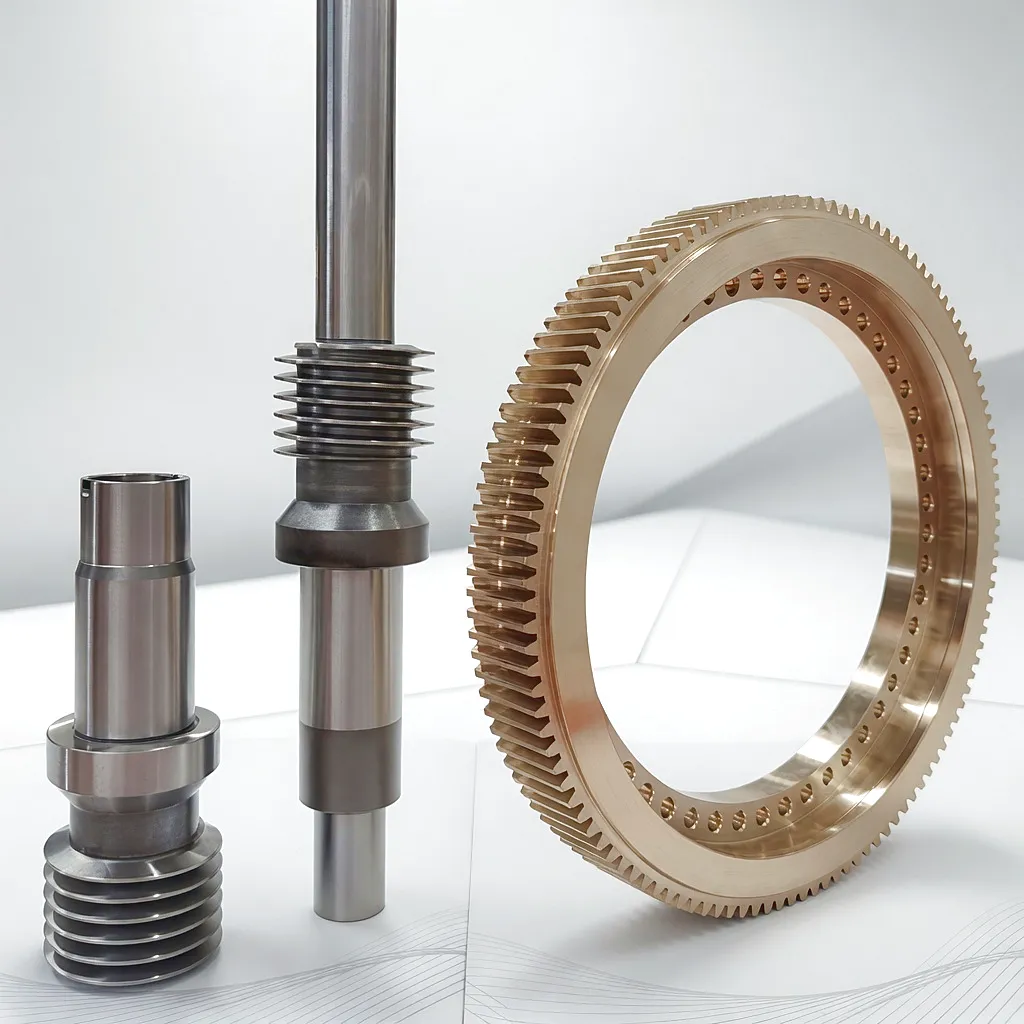
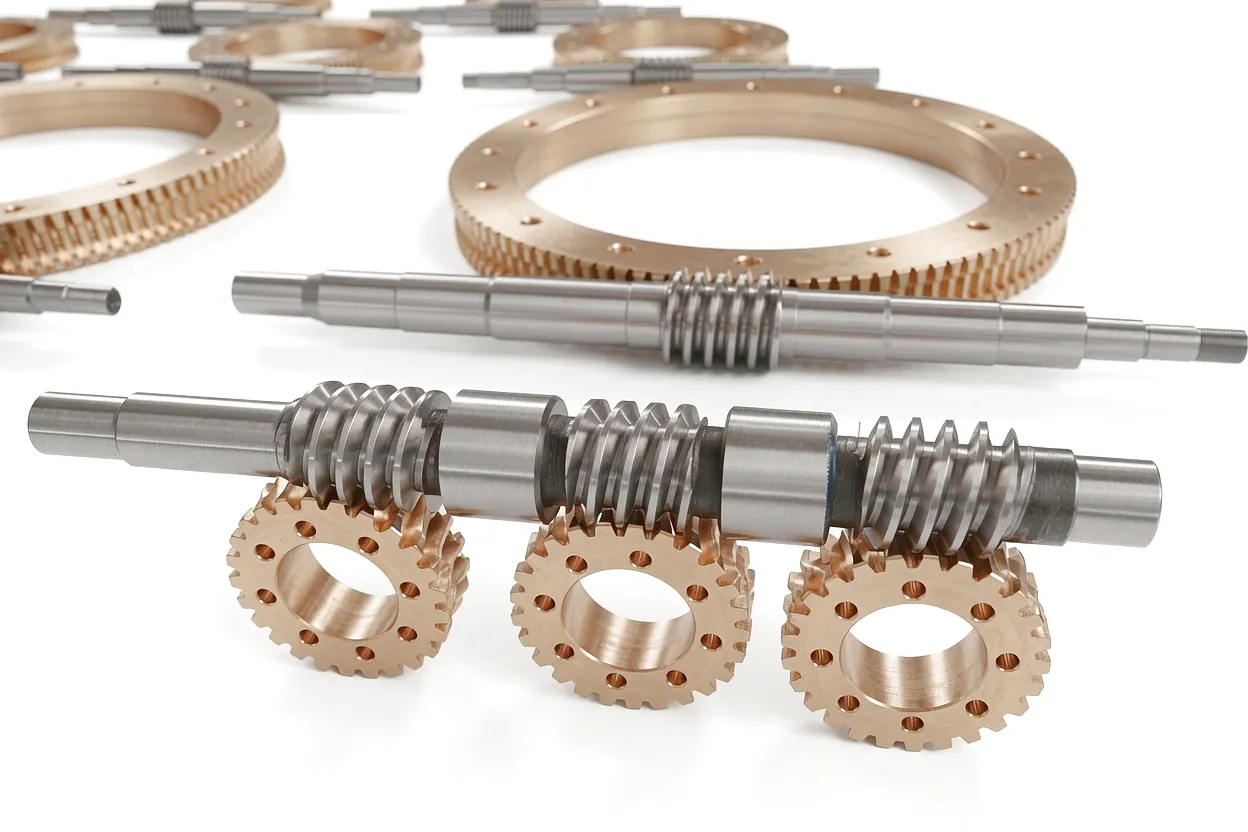
Motion transfer in a worm gear shaft assembly relies on continuous helical contact. The worm — the shaft itself — rotates on its own axis, and each turn advances the worm wheel by exactly one tooth pitch. This one-to-one relationship between shaft revolution and tooth advancement is the mechanical origin of the high reduction ratios achievable with the worm drive configuration. A worm with a single thread start meshing with a 40-tooth wheel delivers a 40:1 reduction in a single stage; increase the tooth count to 80 and the ratio doubles to 80:1, all within the same physical envelope. Multi-start worms (two, three, or four thread starts) reduce the ratio proportionally but improve efficiency, which is why the thread count is a critical selection parameter whenever thermal performance or energy consumption is a priority alongside ratio requirements.
The contact geometry between worm and wheel is not simple line contact, as found in spur gears. Instead, the worm thread and the wheel tooth share a curved, conforming contact surface — the result of the wheel being hobbed with a cutter that is the geometrical conjugate of the worm thread profile. This larger effective contact area distributes load across a greater surface, reducing Hertzian contact stress and giving the worm gear shaft combination its characteristic ability to handle shock loads without tooth fracture. The downside is that this sliding-dominated contact generates more heat than rolling contact in helical or bevel gears, which is why lubrication selection and oil sump temperature management are not optional considerations but core parts of any worm drive specification exercise.
The self-locking behaviour arises from the helix angle geometry. When the lead angle of the worm thread (measured from a plane perpendicular to the worm axis) is less than approximately 6 degrees, the friction forces at the contact interface become sufficient to prevent the worm wheel from back-driving the worm. This means that when the input shaft stops rotating, the output load cannot cause the shaft to turn backwards — the drive is mechanically locked without any additional brake or detent mechanism. In crane applications, in valve actuators, in lifting tables, and in any system where a load must remain precisely positioned after power removal, this property is not a side effect but a deliberate engineering goal. The worm gear shaft is selected precisely because it provides this function in an inherently safe, mechanically guaranteed way.
Core Materials in Worm Gear Shaft Manufacturing
Alloy & Case-Hardening Steels
The worm shaft is almost universally produced from medium-carbon alloy steels such as 20CrMnTi, 42CrMo4 (EN 19), or 18CrNiMo7-6. After rough machining and thread hobbing, the shaft undergoes carburising, case hardening, or induction hardening to achieve a surface hardness typically in the range of 58–62 HRC. This hardened case provides the wear resistance needed at the sliding contact interface, while the tougher core material beneath absorbs shock loads without fracture. Ground finishing of the thread flanks to Ra 0.4–0.8 µm is standard for high-duty applications, as surface finish directly influences lubricant film formation and therefore both efficiency and service life. Some high-corrosion environments, such as food processing or offshore equipment, call for stainless steel variants — 316L or 17-4PH — though these require careful heat treatment protocols to maintain dimensional stability.
Phosphor Bronze & Centrifugal Castings
The mating worm wheel is the component most commonly produced from tin phosphor bronze — specifically CuSn12 or CuSn10Pb1 to EN 1982. The bronze-on-steel pairing is not accidental: bronze is significantly softer than the hardened steel worm and, crucially, it has a low friction coefficient against polished steel, which limits the heat generation inherent in the worm’s sliding contact mechanism. As the pair runs in, the bronze wheel conformally wears to match the worm thread profile more closely, further improving load distribution and efficiency over the component’s break-in period. For lighter-duty or lower-cost applications, grey cast iron (GG25/GG30) is also used as a wheel material, though at the cost of shorter service life in higher-speed or higher-load conditions. Aluminium bronze (CuAl10Fe5Ni5) offers a performance step-up in high-load, high-temperature environments where standard tin bronze approaches its thermal limits.
Aluminium Alloy & Grey Cast Iron
Housings for worm gear shaft assemblies are produced either in pressure-die-cast aluminium alloy (EN AC-46000 or similar) for light to medium duty applications, or in grey cast iron (GG25) for heavy industrial units. Aluminium housings offer superior thermal dissipation — critical given the heat generated at the worm contact — while iron housings provide greater rigidity and better vibration damping under heavy cyclic loads. Bearing retention bores in both materials are precision-machined to H7 tolerances, ensuring correct bearing fits and minimising deflection under load. In marine, food-grade, or chemically aggressive environments, stainless steel housings or aluminium housings with hard anodising and epoxy coating are specified to extend corrosion resistance beyond the capability of standard finishing treatments.
Technical Performance Parameter Table
The table below summarises the key technical and performance parameters for industrial worm gear shaft assemblies across the standard size range supplied by Ever Power. Values shown reflect standard product ranges; custom specifications beyond these limits are available on request.
| Parameter | Light Duty | Medium Duty | Heavy Duty | Unit |
|---|---|---|---|---|
| Output Torque (T2) | 10 – 150 | 150 – 800 | 800 – 4,500 | N·m |
| Input Speed (n1) | up to 3,000 | up to 2,000 | up to 1,500 | rpm |
| Gear Ratio (i) | 5:1 – 20:1 | 20:1 – 50:1 | 50:1 – 100:1 | — |
| Shaft Cross-Axis Angle | 90° | 90° | 90° | degrees |
| Worm Shaft Material | 42CrMo4 (EN19) | 20CrMnTi | 18CrNiMo7-6 | — |
| Worm Wheel Material | GG25 Cast Iron | CuSn10Pb1 Bronze | CuSn12 Ph. Bronze | — |
| Surface Hardness (HRC) | 54 – 58 | 58 – 60 | 60 – 62 | HRC |
| Worm Thread Surface Ra | 0.8 – 1.6 | 0.4 – 0.8 | 0.2 – 0.4 | µm |
| Mechanical Efficiency (η) | 75 – 82% | 70 – 78% | 55 – 72% | % |
| Self-Locking Lead Angle | < 6° | < 6° | < 5° | degrees |
| Ambient Operating Temperature | -10 to +40°C | -20 to +50°C | -30 to +60°C | °C |
| Protection Rating (IP) | IP54 | IP55 – IP65 | IP65 – IP67 | — |
| Centre Distance (a) | 25 – 80 | 80 – 200 | 200 – 500 | mm |
Core Technical Advantages of the Worm Gear Shaft
Inherent Self-Locking
When the lead angle falls below the friction angle, the worm gear shaft becomes mechanically self-locking — the output load cannot back-drive the input. This is not a software or solenoid feature; it is geometry. No additional holding brake is required in many positioning and lifting applications, reducing system cost and eliminating one potential failure mode from the safety architecture.
High Single-Stage Reduction Ratios
A single worm gear shaft stage can achieve ratios from 5:1 to 100:1 without compounding, whereas equivalent ratios in spur or helical gear trains would require three or four stages of meshing pairs. This compactness advantage is significant in machine tools, packaging systems, and any design where mounting space is constrained. A higher reduction ratio also means a smaller motor can drive the same output load, which has direct implications for motor sizing and energy efficiency in variable-duty applications.
Quiet, Low-Vibration Operation
The gradual, sliding contact between the worm thread and the bronze wheel teeth produces notably lower noise levels than spur gear drives of comparable torque capacity. This characteristic makes the worm gear shaft a preferred choice in environments where acoustic comfort matters — passenger-facing lifts, building HVAC systems, precision positioning stages in manufacturing laboratories, and food production lines where clean-room standards demand minimal airborne particulate alongside low noise emission.
Compact 90-Degree Drive Arrangement
Transmitting drive through a right-angle is the worm gear shaft’s fundamental geometric property, and it remains one of the most practical engineering advantages in real machine layouts. When the drive motor and the output shaft must be perpendicular — as in the travel drives of gantry cranes, the slewing mechanisms of port cranes, or the cross-slide drives of machine tools — the worm drive provides this arrangement in the smallest possible package with a single meshing stage, rather than requiring additional bevel gears or complex shaft arrangements.
Shock Load Tolerance
The conforming contact geometry of the worm and wheel pair, combined with the natural compliance of the bronze wheel material, gives the worm gear shaft excellent shock absorption characteristics. Under sudden load reversals or impact loads — common in crane travel mechanisms hitting runway end-stops, in conveyor systems where jams cause torque spikes, or in agricultural machinery encountering ground obstructions — the drive absorbs energy rather than transmitting destructive spike loads directly to connected shafts and couplings.
Long Service Life Under Correct Lubrication
A correctly specified and lubricated worm gear shaft assembly running within its rated thermal and torque limits can achieve service lives of 20,000 hours or more in many industrial environments. The bronze wheel, rather than the hardened steel worm, wears preferentially during its service life, and the wheel is designed as a replaceable component. This asymmetric wear strategy means the more costly and precisely ground worm shaft can typically be retained through multiple wheel replacements, giving the owner a very cost-effective long-term maintenance model compared with replacing the complete gearbox unit.
Industrial Application Scenarios: Where the Worm Gear Shaft Delivers
Lifting & Crane Systems
Gantry Cranes, Portal Cranes & Luffing Mechanisms
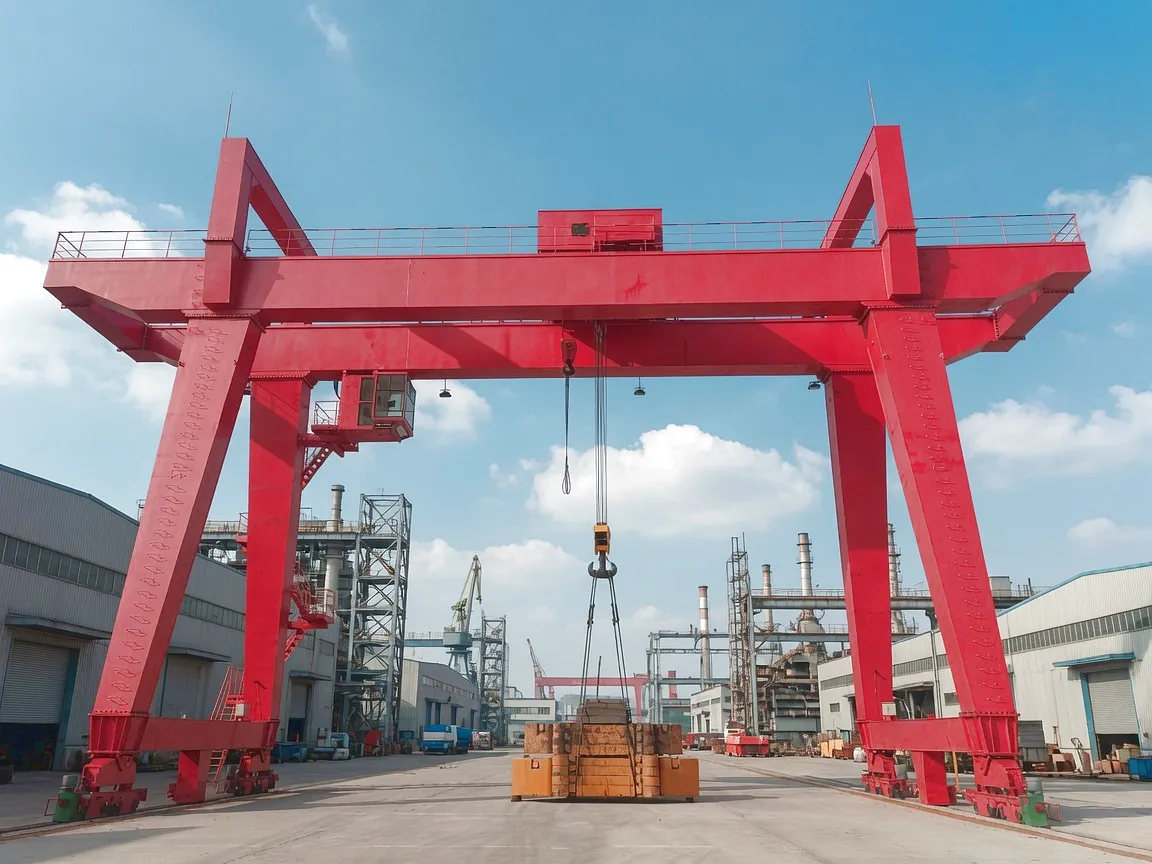
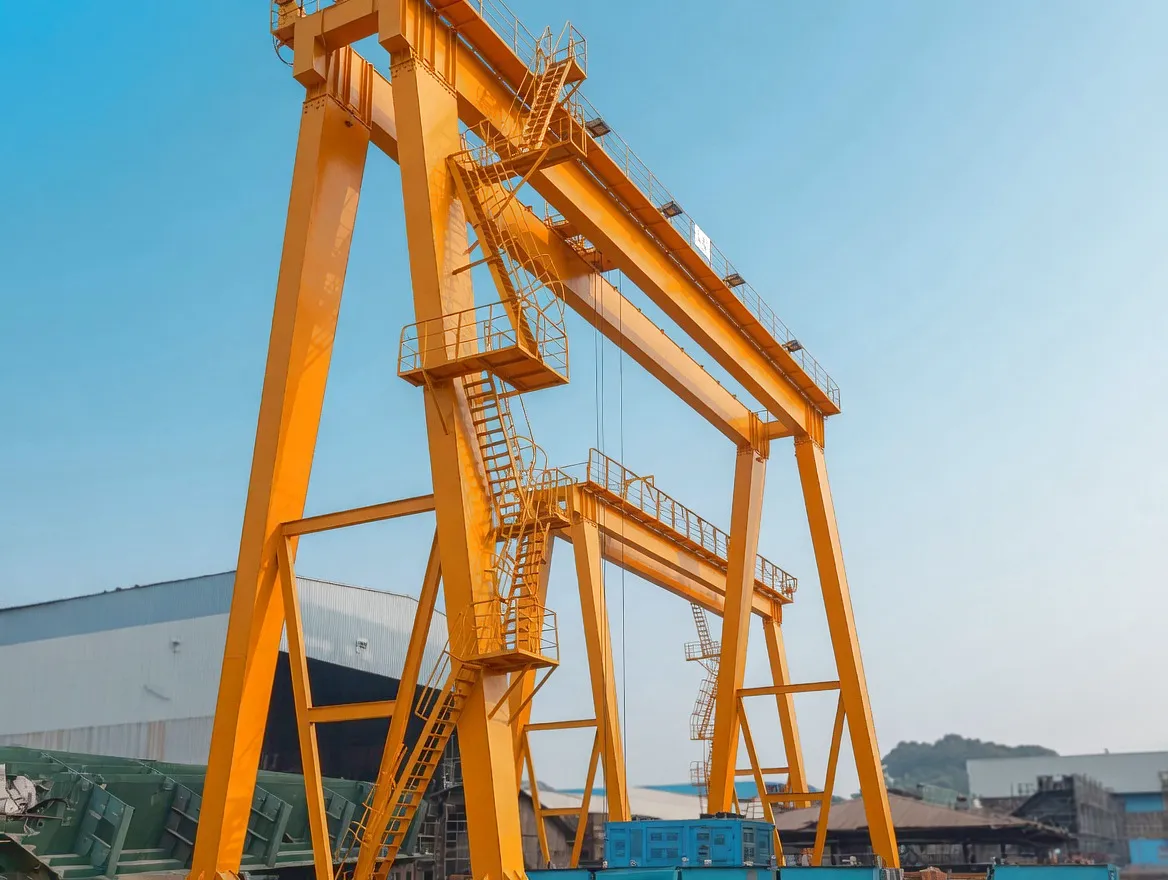
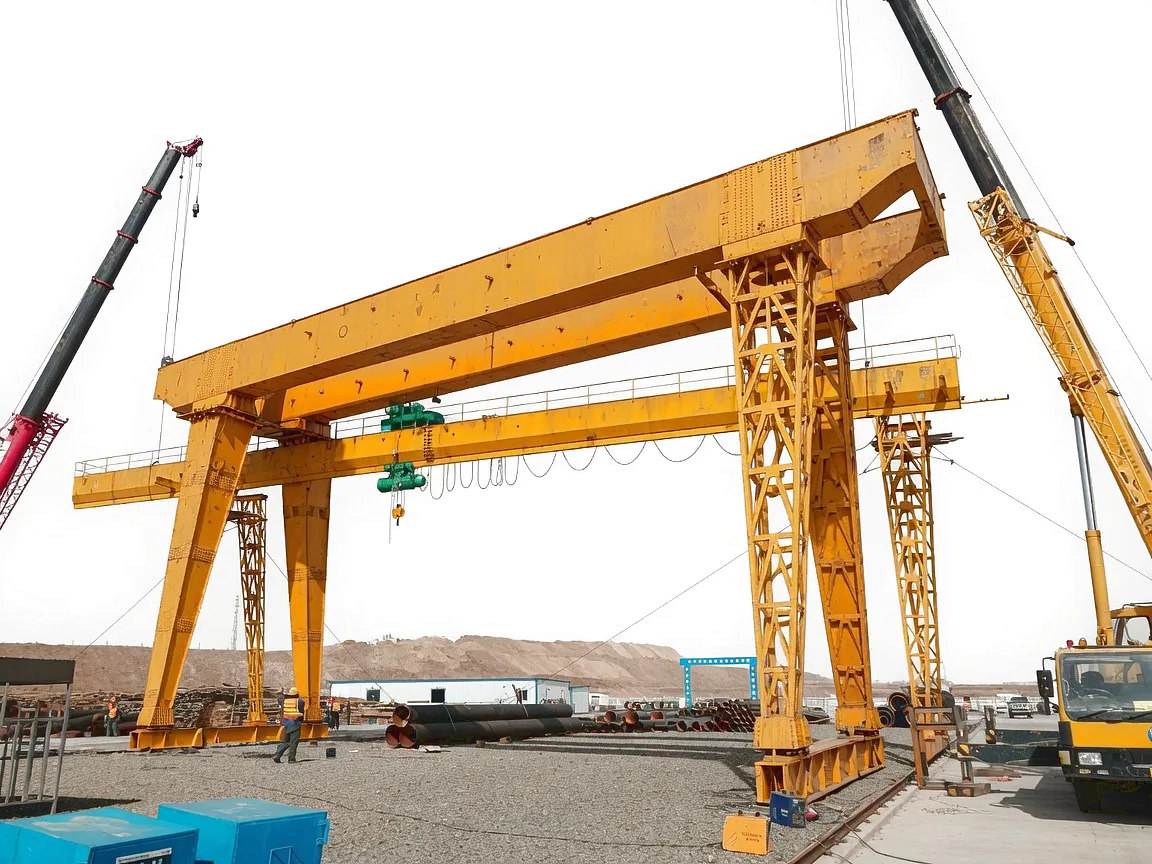
In gantry crane (portal crane) applications, the worm gear shaft forms the heart of the long-travel drive mechanism. The worm gearbox is positioned between the electric motor and the crane’s rail-running wheels, providing a compact low-speed, high-torque output while the self-locking characteristic of the worm shaft ensures that when the motor is de-energised and the brake is applied, the crane bridge cannot drift along the runway under external wind loads or gradient forces. Port luffing cranes — the large harbour cranes used in Southampton, Tilbury, and Felixstowe to handle bulk cargo and containers — are particularly demanding users of the worm gear shaft’s self-holding torque capability. The luffing mechanism changes the elevation angle of the crane jib, and when the motor stops, the jib must remain at precisely the angle set by the operator. Any tendency to creep downward under its own weight and the suspended load weight would represent a safety-critical failure. The inherent self-holding torque of a correctly designed worm shaft, combined with the electromagnetic brake on the motor, provides the dual-redundancy demanded by UK lifting equipment safety standards including LOLER 1998 and the relevant BS EN 13001 series of crane design standards.
Material Handling
Conveyor & Bulk Material Handling Systems
Belt conveyor head-end drives and screw conveyor drives throughout UK manufacturing — including the steel distribution centres of Sheffield and Rotherham and the automotive body stamping facilities around Coventry and Birmingham — routinely specify worm gear shafts in the 100–800 N·m output torque range. The worm drive’s ability to interface directly with the conveyor head shaft via a hollow bore or solid output shaft, combined with its small mounting footprint, makes it easy to integrate into the tight inter-stage spacing of multi-level conveyor systems. The inherent self-locking feature also prevents loaded incline conveyors from running back during power interruptions, which is a significant operational benefit in multi-shift manufacturing environments where unscheduled stops can scatter product across the facility floor, causing both production loss and safety risk. Worm gear shaft specifications for conveyor applications typically favour two-start or four-start worm designs to improve thermal efficiency during extended continuous duty cycles, with ISO VG 220 or VG 320 mineral gear oils providing the lubrication baseline.
Packaging Machinery
In automated packaging lines — from pharmaceutical blister pack machines in Nottingham to bottling lines in the English Midlands — worm gear shaft units drive the indexing turntables, cam-operated forming jaws, and synchronised filling head mechanisms that require precise, smooth, low-speed rotation. The combination of high ratio and quiet operation makes the worm drive the default choice here over helical or spur alternatives, and the long service life between maintenance intervals reduces line downtime in continuous production environments.
Valve Actuators & Gate Controls
Water treatment plants, power generation facilities, and North Sea oil and gas infrastructure all rely on worm gear shaft actuators to position gate valves, butterfly valves, and globe valves against line pressure. When power is removed, the worm shaft holds the valve position without drift — a safety-critical requirement in process plant applications where valve position must be maintained exactly in the event of a power outage. UK Water Industry Research (UKWIR) guidelines for valve actuation specifically reference the self-holding characteristic as a preferred design approach in high-consequence valve positions.
Further Application Sectors Across UK Industry
 Beyond the headline applications outlined above, the worm gear shaft finds regular deployment across a broad spectrum of UK manufacturing and infrastructure sectors. In the agricultural machinery segment — prominent across the East Midlands, Yorkshire, and East Anglia — worm drives power the steering gearboxes of combine harvesters, the reel height adjustment mechanisms of balers, and the variable-speed drives of seed drills, all environments where robust, self-locking, low-maintenance drive technology is a practical necessity rather than a design preference. Machine tool builders in Worcester, Derby, and Edinburgh specify worm gear shafts for rotary table indexing heads, where the combination of high positioning repeatability and zero back-drive is fundamental to machining accuracy. Lift and escalator manufacturers in the UK, operating under the rigorous requirements of BS EN 81-20/50, use worm drives in their hoist machine designs precisely because the self-locking geometry provides a passive safety function in addition to the mechanical governor and safety gear systems.
Renewable energy infrastructure — particularly the solar tracker drives used in the growing number of ground-mounted photovoltaic installations across southern England and the Scottish lowlands — represents a newer and rapidly growing segment for the worm gear shaft. Single-axis and dual-axis solar trackers require a drive system that can accurately position the panel array to within fractions of a degree, hold that position against wind loading without power consumption, and operate reliably through years of outdoor thermal cycling and weather exposure. The worm gear shaft addresses all three requirements in a single, maintainable package, and the self-locking feature eliminates the need for a separate holding brake, significantly simplifying the tracker structure.
Manufacturing Excellence
Ever Power: Precision Manufacturing & Custom Worm Gear Shaft Solutions
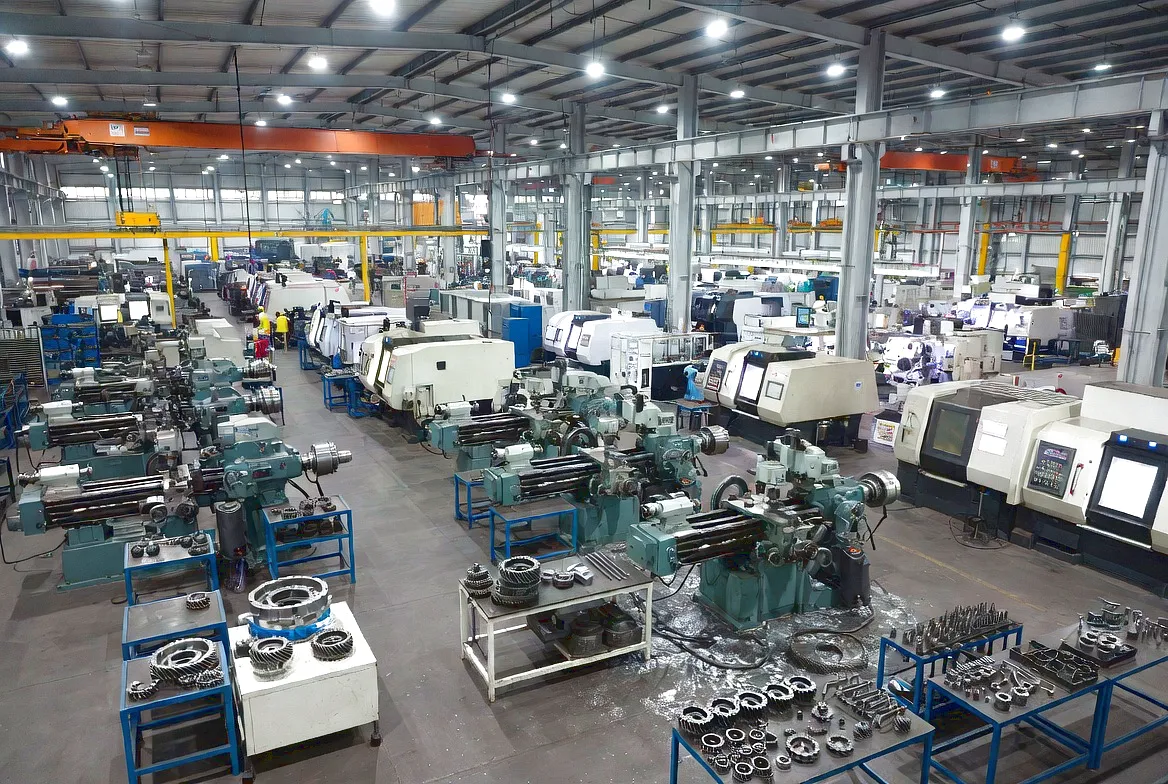
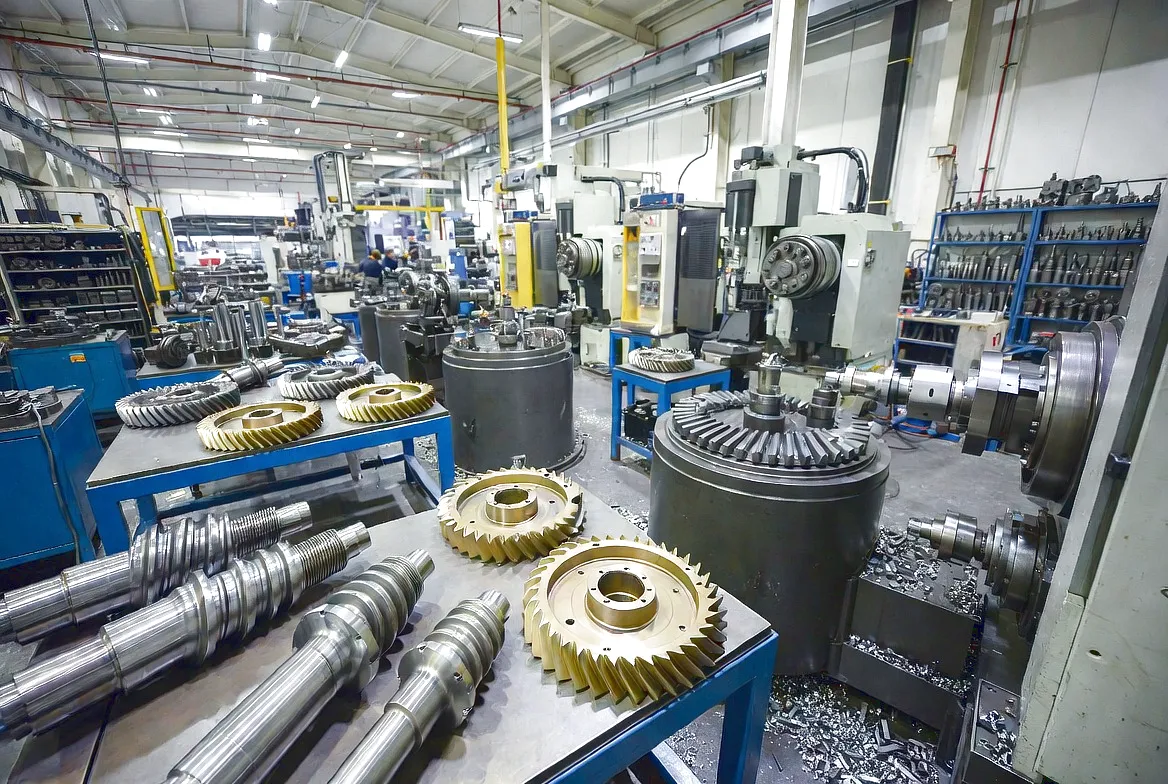
Ever Power operates a dedicated precision manufacturing facility focused entirely on worm drive components, with a production capability covering worm gear shafts from 25 mm to 500 mm centre distance in single-piece and volume production runs. The manufacturing process at Ever Power begins with material certification — every steel billet and bronze casting is traceable to mill certificate level, a supply chain discipline that matters particularly for UK customers working to BS EN ISO 9001:2015 quality management systems or the more demanding IATF 16949 standard used in automotive supply chains. Thread hobbing is performed on purpose-built CNC hobbing machines, followed by a carburising and case-hardening treatment cycle controlled to within ±5°C to achieve consistent case depth and surface hardness across the full thread profile. Thread flanks are then cylindrical ground on CNC grinding centres to achieve the Ra surface finish values called up in the customer specification, with in-process SPC monitoring confirming that no unit deviates from the agreed tolerance band.
The customisation capabilities at Ever Power extend well beyond standard catalogue adjustments. Engineering teams at Ever Power regularly work directly with UK customers’ design engineers to develop application-specific worm gear shaft configurations — double-start worms for higher efficiency in continuous duty applications, hollow bore output configurations for direct shaft mounting on conveyor head shafts, flanged output variants for crane travel wheel integration, and extended shaft versions for dual-output configurations in synchronised drive applications. Material substitutions for food-grade, marine, or chemically aggressive environments are handled within the standard quotation and drawing review process, and samples for first-article inspection are typically available within 15 working days of drawing approval, with production lead times for standard configurations beginning at 3 to 4 weeks depending on order volume. UK customers receive DDP (Delivered Duty Paid) pricing options, fully compliant shipping documentation, and CE marking where applicable under relevant UK machinery regulations.
Ready to discuss your custom worm gear shaft specification?
Our application engineers are available to review your torque, ratio, and mounting requirements and recommend the optimal configuration. Response guaranteed within one business day.
Product Range Overview
Customer Success Story
Sheffield Steel Distribution Centre: Retrofitting Gantry Crane Travel Drives
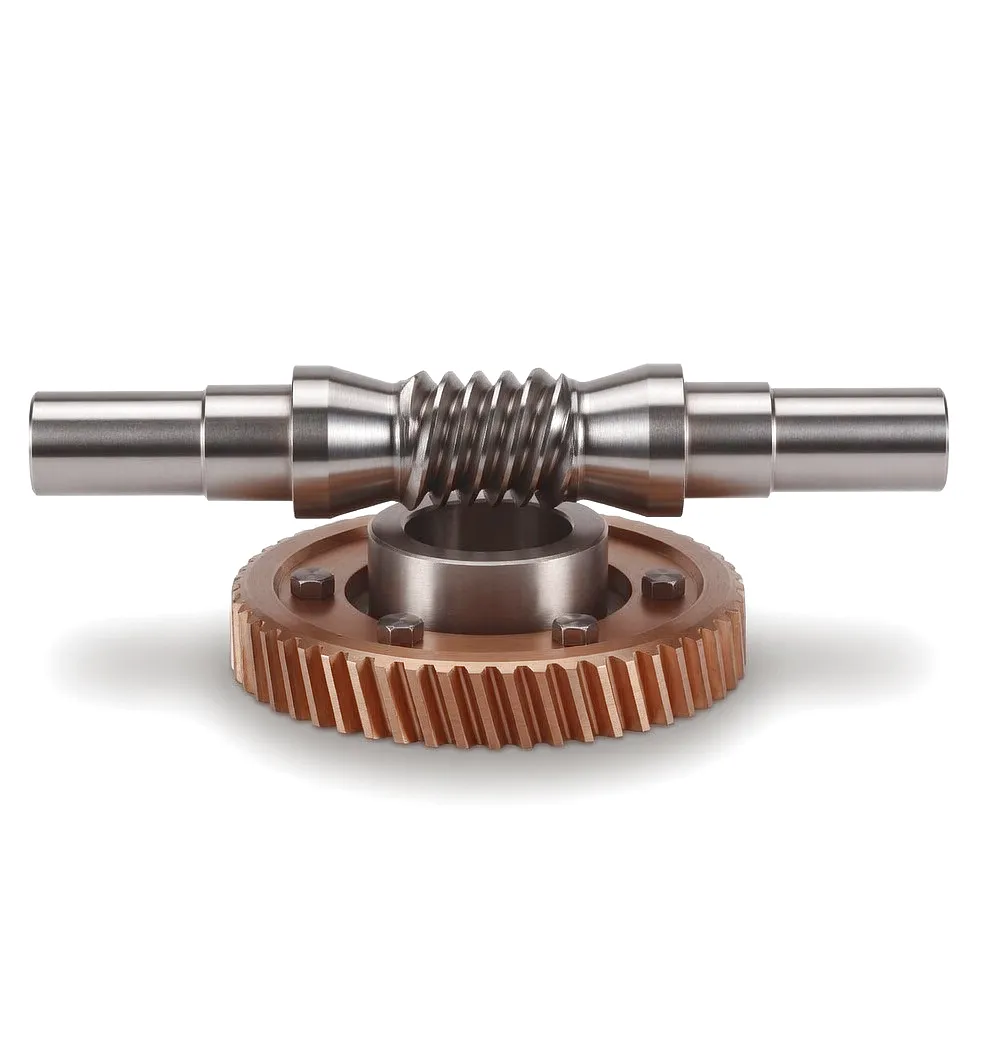 A large-scale steel stockholder and distribution operation based in Sheffield — operating a facility that processes and dispatches structural steel sections to construction projects throughout Yorkshire and the Humber region — approached Ever Power with a challenge that is familiar to many UK heavy industry operators. Their existing overhead gantry crane fleet, running on two parallel runway systems inside a 120-metre-long warehouse structure, had been fitted with generic gear motor units that were reaching end of service life. Several of the units had begun showing signs of helical gear fatigue, and the procurement and engineering teams had identified that the original drive selection was undersized for the actual duty cycle, which included frequent starts under full load and a significant proportion of time running at low speed with maximum suspended loads while positioning structural sections onto cutting tables.
Ever Power’s engineering team completed a full duty cycle analysis based on the Sheffield facility’s operational data — including load spectrum, daily operating hours, start frequency, and the ambient temperature range in the unheated warehouse (which ranged from approximately 2°C in winter to 38°C under the roof in summer). The analysis confirmed that the replacement specification should target a thermal safety factor of at least 1.3 over the calculated thermal rating, and that self-locking worm gear shaft units would eliminate the residual position drift that the crane operators had observed when positioning loads at very low speed with the original helical drives. Ever Power supplied a set of six customised құрт тәрізді беріліс білігі assemblies in the 400 N·m output torque class, featuring 40:1 reduction ratio, 18CrNiMo7-6 worm shafts hardened to 60–62 HRC, CuSn12 phosphor bronze wheels, and oil sump capacity sized for 8,000-hour oil change intervals to align with the facility’s twice-yearly planned maintenance shutdown schedule.
Following installation — carried out over a single weekend shutdown by the facility’s own maintenance team using Ever Power’s installation manual and remote technical support — the cranes were commissioned without issues. After eighteen months of continuous operation, the Sheffield facility’s engineering manager reported zero unplanned maintenance events attributable to the drive units, a measurable reduction in positioning time per lift cycle (attributed to the elimination of the back-drive tendency in the old units), and confirmation that all six units remained within their oil temperature specification even during the warmest summer operating periods. The facility subsequently placed a follow-on order for an additional four units to complete the modernisation of their second crane runway.
“We specified Ever Power worm gear shaft units for our crane travel drives because the self-locking characteristic was non-negotiable under our LOLER risk assessment. The units delivered exactly what was promised — no positional drift, no unplanned maintenance in 18 months, and the custom oil sump sizing saved us an extra maintenance shutdown every year. The technical support from the Ever Power team during the selection process was genuinely impressive.”
— Engineering Manager, Steel Stockholder, Sheffield
“The lead time from Ever Power was the deciding factor in our selection. We had a planned shutdown window of three weeks, and they confirmed production and delivery of six custom units within fifteen working days of drawing approval. They arrived on schedule, the dimensional accuracy was spot-on — our fitting team installed all six units without a single modification — and the supplied material certificates were exactly what our quality system required. We will be using Ever Power as our go-to worm shaft supplier going forward.”
— Procurement Manager, Crane Service Contractor, Leeds
“We specified Ever Power worm gear shafts for a luffing crane modernisation project at a Southampton port terminal. The self-holding torque data provided in the technical documentation was detailed enough for our structural engineer to sign off the safety calculation without additional physical testing, which saved us roughly three weeks in the approval process. The finished units met our IP65 and marine coating specification exactly, and they have been running without fault through two full UK winters of dockside operation.”
— Chief Mechanical Engineer, Port Infrastructure Services, Southampton
Frequently Asked Questions
Ever Power — Precision Worm Drive Engineering
Discuss Your Worm Gear Shaft Requirement Today
Whether you are engineering a new crane system in Birmingham, replacing worn drive components in Sheffield, or specifying a bespoke actuator for a port installation in Southampton — Ever Power’s engineering team is ready to help. Send us your specification and receive a full technical quotation within one business day.
edit by gzl