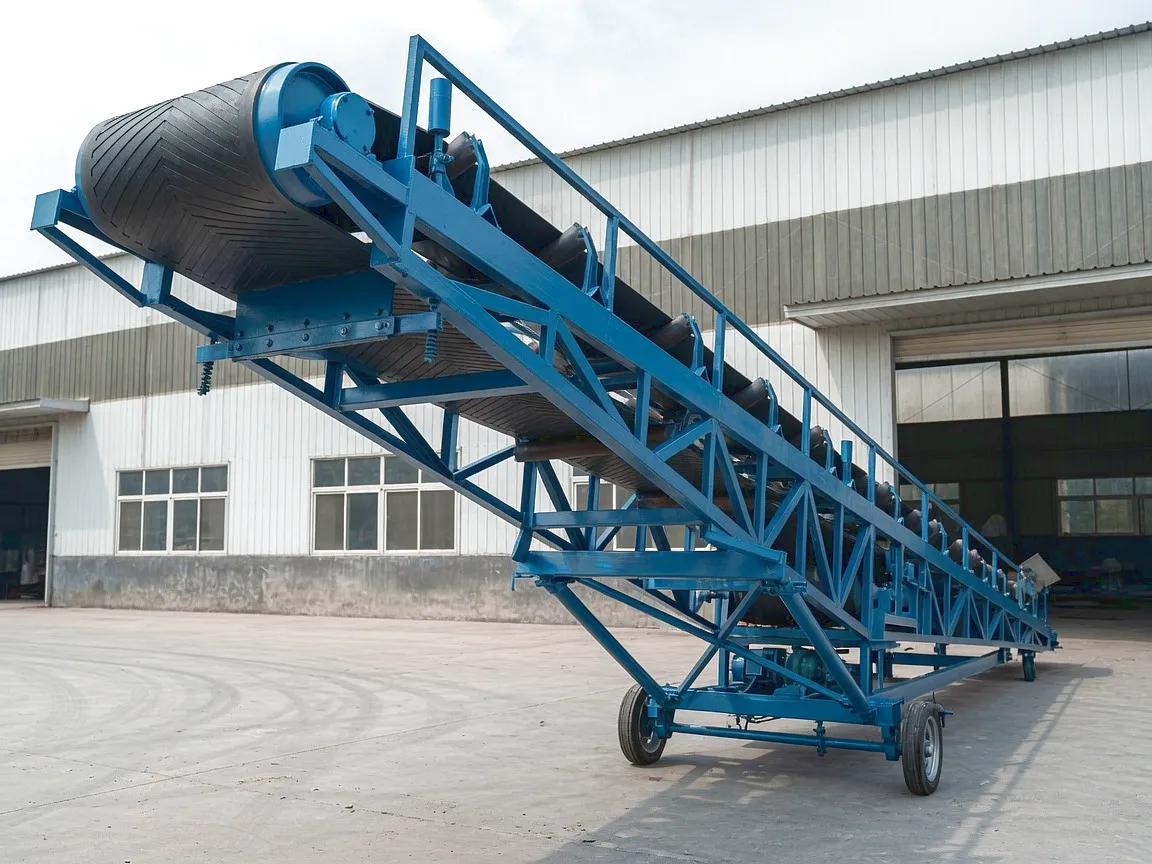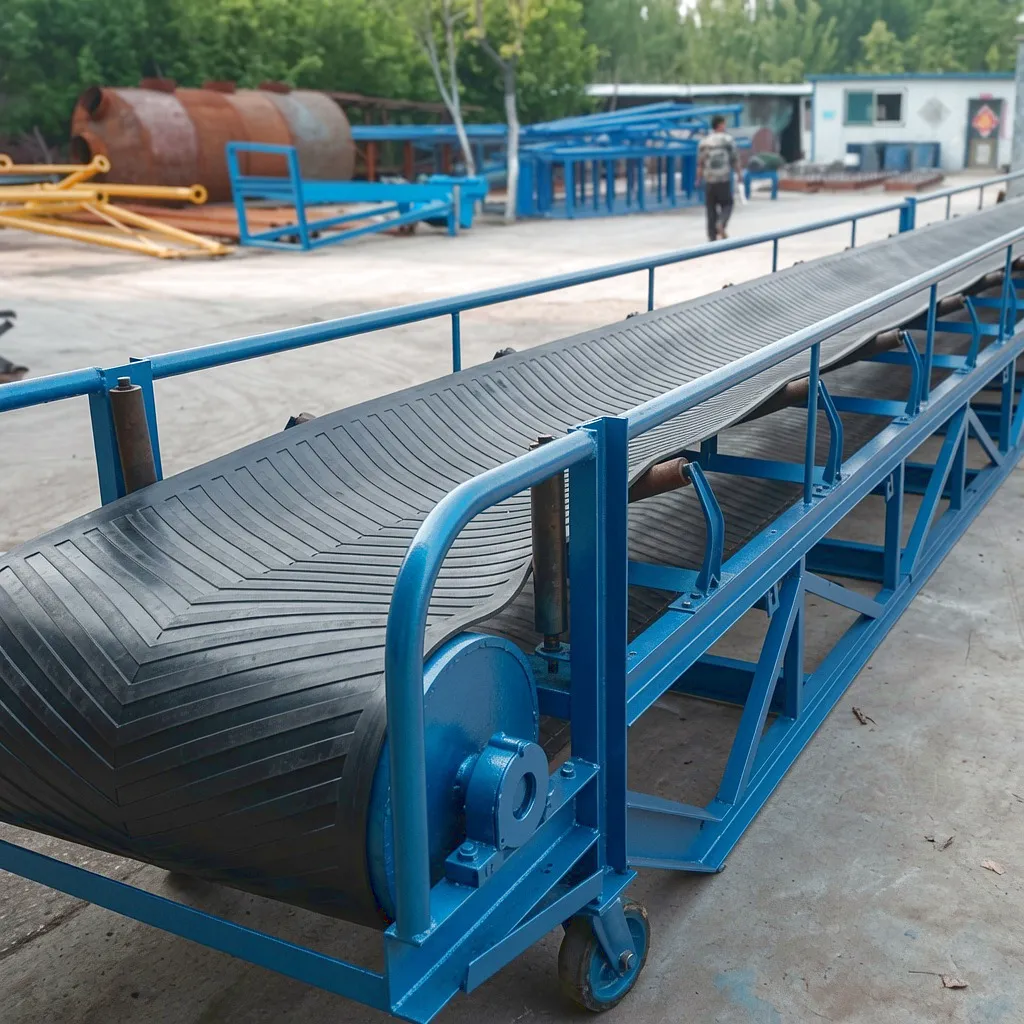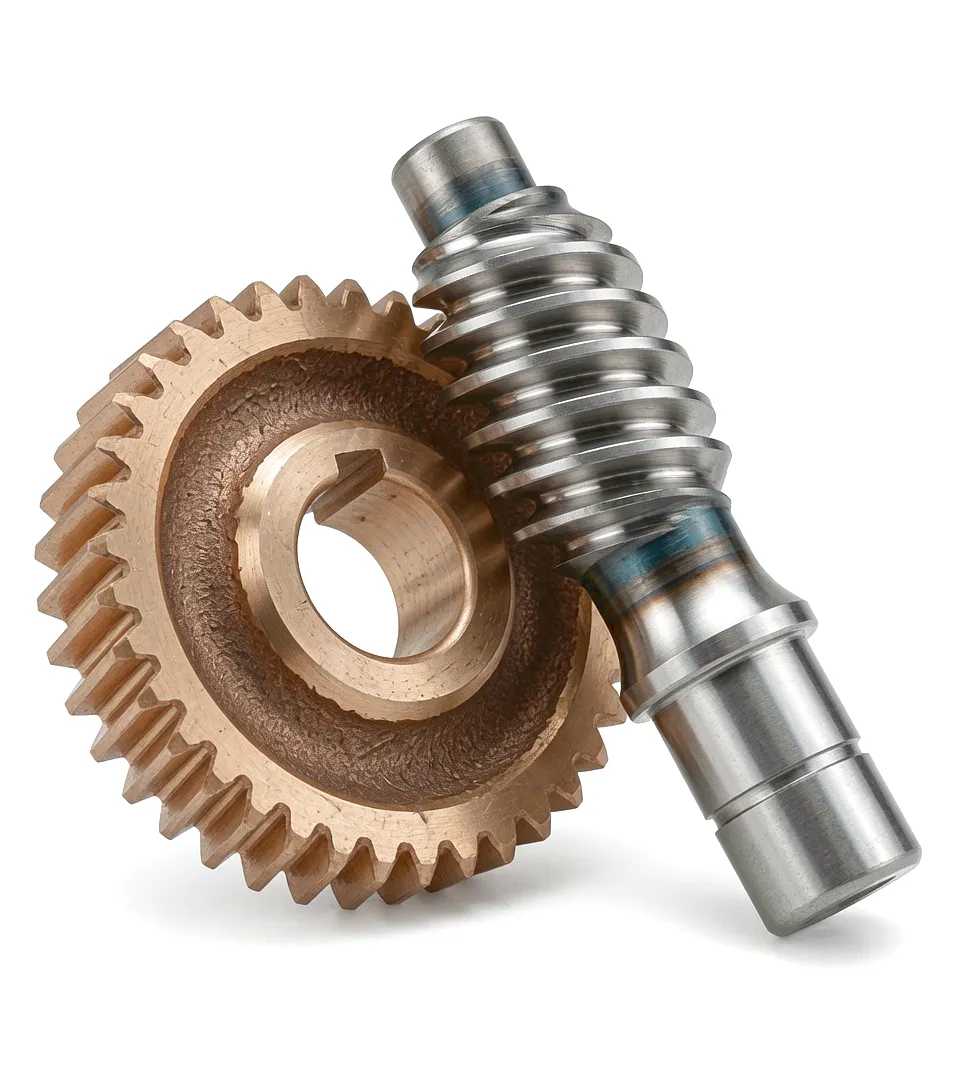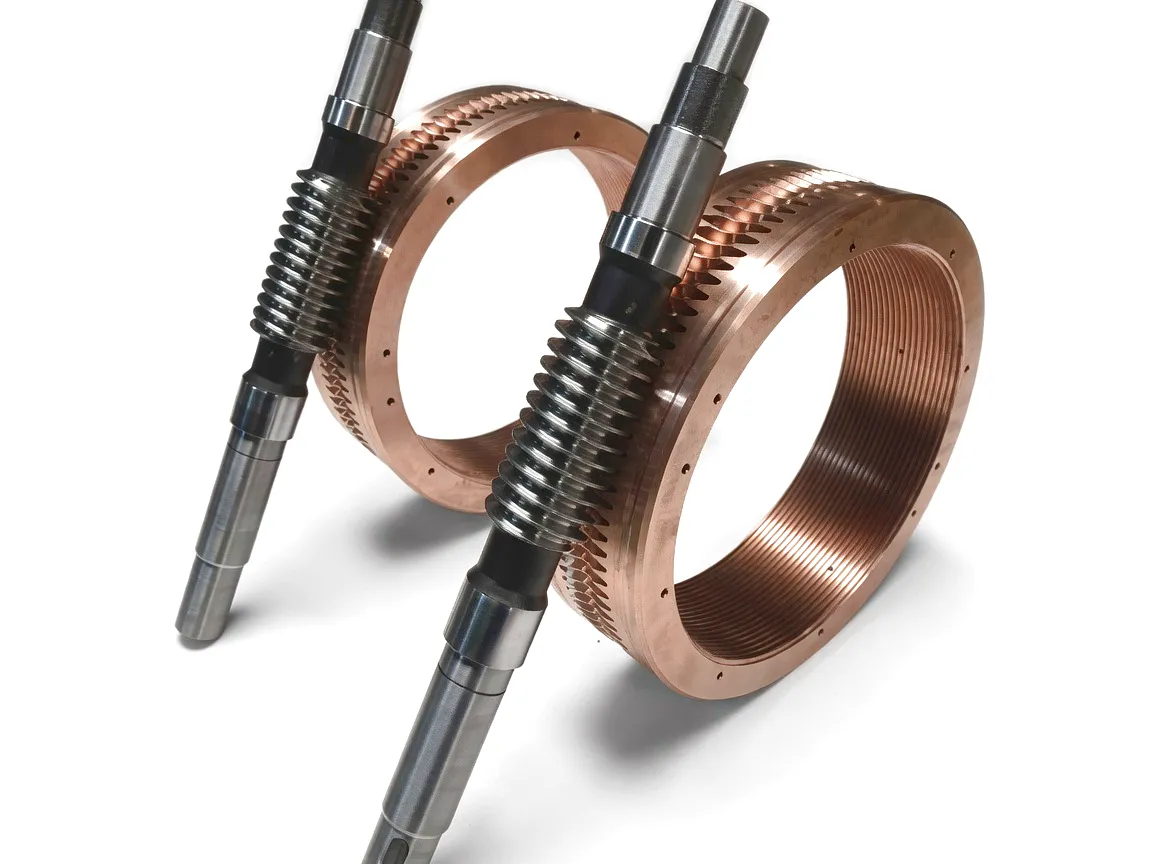
The worm gear shaft sits at the mechanical heart of belt conveyor systems across British industry, translating high-speed motor rotation into the measured, consistent torque that production lines depend on. When an electric motor spins at 1,450 r/min — the standard no-load speed for a 4-pole, 50 Hz three-phase induction motor widely used in UK factories — the raw output is far too fast and lacking the torque for practical conveyor work. The worm gear shaft assembly bridges that gap, delivering output shaft speeds in the 5–60 r/min range and belt velocities between 0.5 and 3 m/s, depending on the gearbox ratio selected. This is not simply about slowing things down; it is about transforming power characteristics so that a modestly sized motor can move tonnes of aggregate, packaged goods, or steel billets with quiet reliability shift after shift.
In the UK, industries stretching from the logistics parks of the West Midlands to the processing plants of South Yorkshire have long relied on worm-type reduction technology precisely because it offers a compact, self-locking, and quiet drive solution. WPA, WPB, and WD series worm gear reducers are found throughout British manufacturing wherever space is at a premium and where engineers need a predictable, low-maintenance reduction ratio without the complexity of multi-stage helical or bevel gearboxes. The worm gear shaft is central to all of these configurations, carrying the input torque from the motor coupling, transmitting motion through meshing with the worm wheel, and delivering the reduced-speed output to the drive roller of the conveyor.
Working Principle of the Worm Gear Shaft in Belt Conveyor Applications
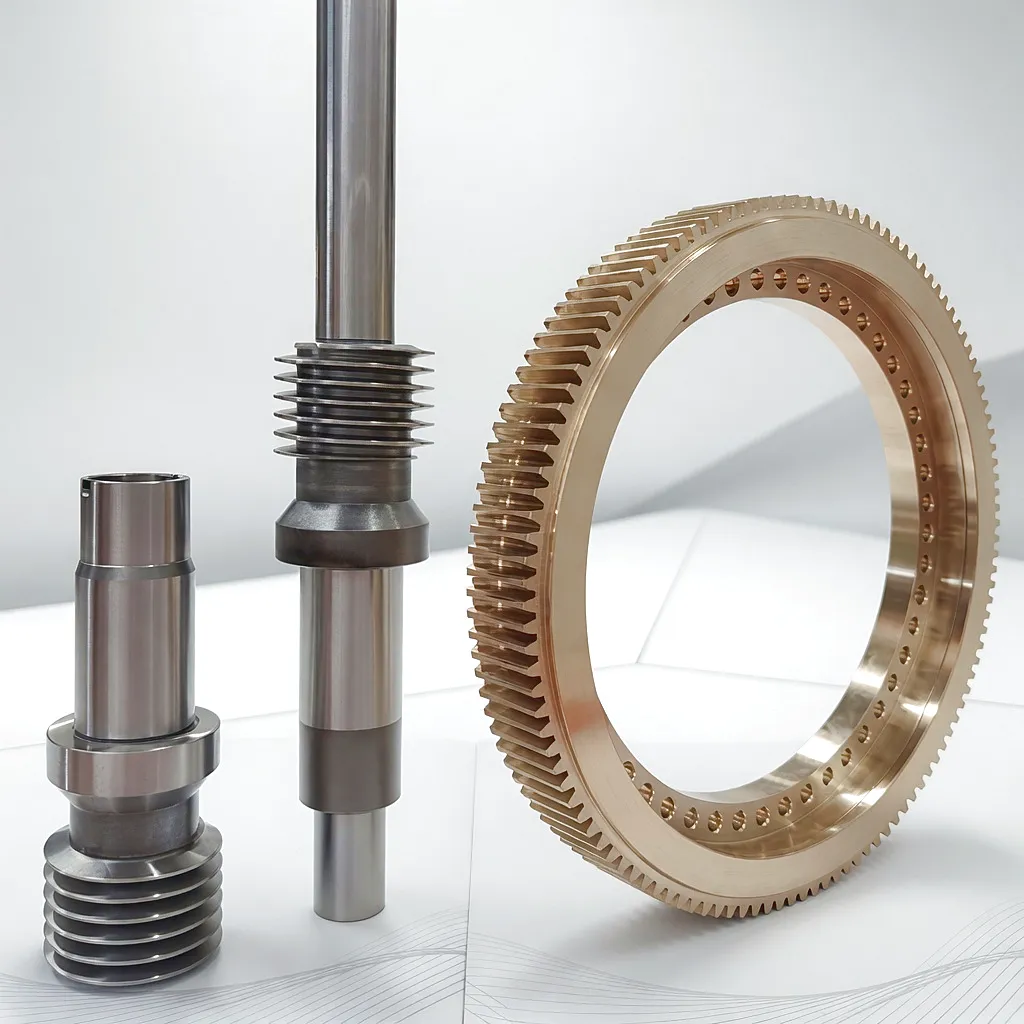
The worm gear shaft operates on a deceptively simple mechanical principle: a helical thread cut around a cylindrical shaft — the worm — meshes perpendicularly with the teeth of a worm wheel (also called the worm gear). As the worm rotates, its thread advances into the wheel’s tooth spaces, pushing the wheel around at a fraction of the worm’s rotational speed. The ratio between input and output speeds, known as the gear ratio, is determined by the number of starts on the worm and the number of teeth on the wheel. A single-start worm meshing with a 40-tooth wheel produces a 40:1 reduction, bringing a 1,450 r/min motor down to approximately 36 r/min — a belt speed of roughly 1.1 m/s on a typical 300 mm drive roller.
What distinguishes this mechanism from other gear types is the angle at which power is transferred. The worm and wheel axes sit at 90 degrees to each other, which is why the gearbox can be mounted directly at the drive roller shaft end without any additional bevel stages or angle gearboxes. The worm gear shaft runs parallel to the motor output shaft and delivers its torque perpendicularly to the conveyor drive roller, making the entire drive train extremely compact. The contact between worm thread and wheel tooth is a sliding action rather than a rolling one, which contributes to the quiet, vibration-free operation valued in food processing, logistics, and packaging environments across the UK. Under load, the lead angle of the worm threads creates a self-locking effect — the conveyor belt cannot back-drive the motor when power is cut, eliminating the need for additional backstop devices in many installations.
Core Materials Used in Manufacturing Worm Gear Shafts
Material selection for the worm gear shaft is not a single decision — it cascades through every aspect of performance, service life, and cost. The shaft body itself must resist the torsional stresses imposed by the input torque, handle bending loads from gear mesh forces, and maintain precise dimensional tolerances under thermal cycling as the gearbox heats and cools through working shifts. For standard conveyor applications running at input speeds around 1,450 r/min and moderate reduction ratios, a medium-carbon alloy steel such as 42CrMo4 (equivalent to EN19 in UK standards) is the material of choice. This grade offers a tensile strength of 900–1,100 MPa after quenching and tempering, with excellent fatigue resistance under the cyclic loading that conveyor drives experience continuously.
🔩
Worm Shaft Body
42CrMo4 / EN19 alloy steel, quenched and tempered to 900–1,100 MPa tensile strength. Carburised surface to 58–62 HRC for thread wear resistance.
⚙️
Worm Wheel
Phosphor bronze (CuSn10P or CuSn12) rim centrifugally cast onto a cast-iron or steel hub. Excellent anti-friction properties reduce sliding wear at the mesh interface.
🏗️
Housing
Grey cast iron GG25 or ductile iron GGG40 for standard duty. High-tensile aluminium alloy housings offered for lightweight portable conveyor units and food-grade environments.
💧
Seals & Bearings
Tapered roller or angular contact ball bearings, pre-loaded to control shaft end-float. Nitrile or Viton lip seals rated to 120 °C continuous service for UK industrial duty cycles.
The worm thread on the shaft is typically case-hardened to 58–62 HRC through carburising and quench hardening, creating a tough core with a wear-resistant surface. Ground after heat treatment to achieve surface roughness values of Ra 0.8 µm or better, the thread flanks minimise friction losses and extend the working life of the bronze wheel. In demanding heavy-duty applications — such as the coal handling conveyors still operational in parts of Yorkshire and the aggregate processing plants in the East Midlands — a fully hardened 20CrMnTi carburised shaft paired with a centrifugally cast CuSn12 bronze wheel can extend mean time between overhauls to 20,000 operating hours or more, significantly reducing planned maintenance costs over the asset lifecycle.
Core Technical Advantages of Worm Gear Shaft Assemblies
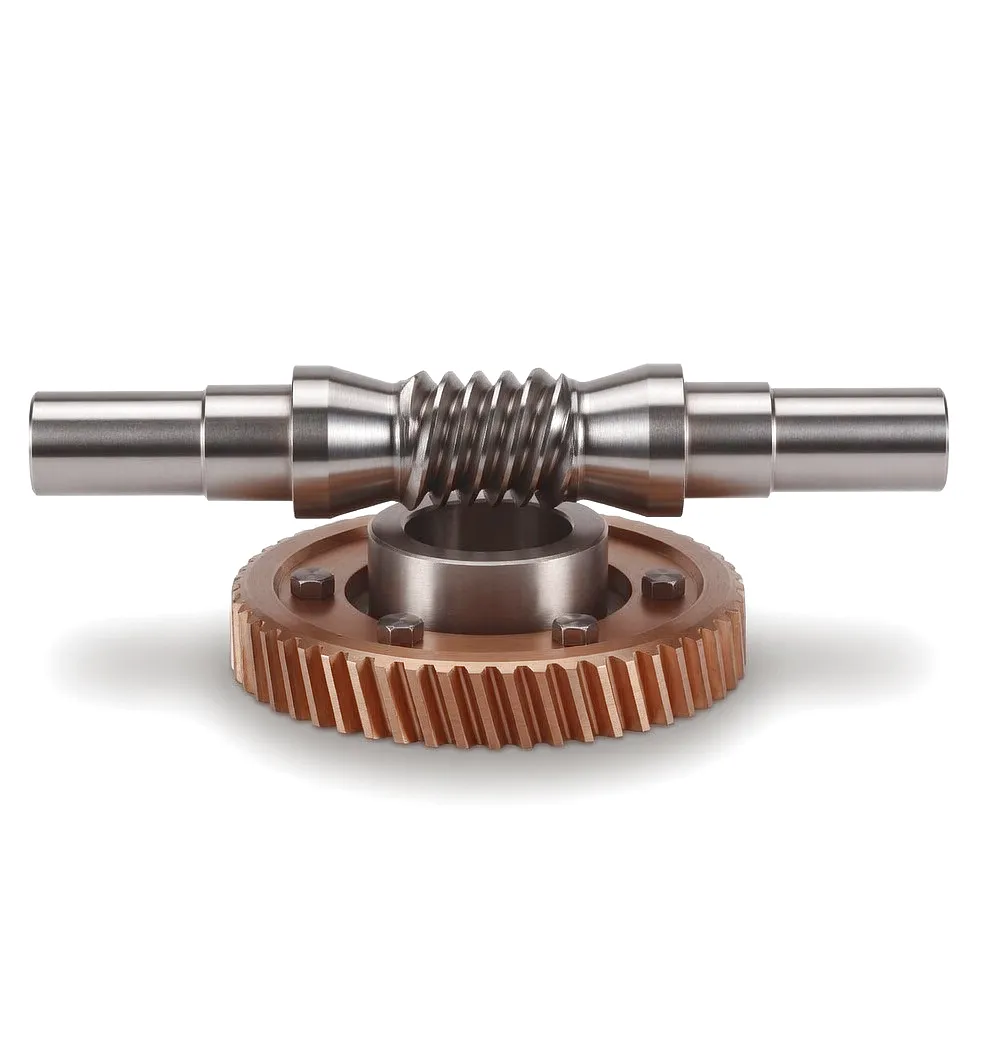
Engineers and procurement managers evaluating drive solutions for belt conveyors consistently return to worm gear shaft configurations for a combination of reasons that no single alternative fully replicates. The geometry of the worm-and-wheel mesh inherently provides a high single-stage reduction ratio — from 5:1 up to 100:1 or beyond — in a package whose centre-to-centre distance is remarkably small compared with equivalent parallel-shaft helical reducers. This compactness is critical when integrating drives into existing conveyor structures in Birmingham’s automotive component factories or the tight plant layouts typical of Sheffield steel service centres, where every square metre of floor space carries a premium. The reducer simply bolts to the end of the drive roller shaft, and the motor flanges directly to the gearbox input face, eliminating shaft couplings, intermediate bearings, and the alignment challenges they bring.
01
High Single-Stage Reduction
Ratios from 5:1 to 100:1 achievable in a single mesh stage, cutting gearbox complexity and cost compared with multi-stage spur or helical arrangements.
02
Inherent Self-Locking
At lead angles below approximately 5°, the worm gear shaft assembly is self-locking under back-driving load. Conveyor belts hold position when power is removed, improving safety without external brakes.
03
90° Shaft Arrangement
The right-angle input/output configuration allows the motor to be positioned axially alongside or above the conveyor frame, integrating cleanly into compact machine layouts.
04
Low Noise & Vibration
Sliding tooth contact produces smooth, low-noise operation — typically below 72 dB(A) at rated load — meeting UK Workplace Noise Regulations and supporting hearing conservation programmes.
05
VFD Compatibility
Paired with a variable-frequency drive motor, the worm gear shaft assembly enables stepless belt speed adjustment from 0.1 to 3 m/s, supporting flexible production scheduling.
06
Minimal Maintenance
Oil-splash lubrication in a sealed housing means service intervals can be extended to 5,000–10,000 hours, reducing planned downtime costs and maintenance labour across multi-shift operations.
Worm Gear Shaft Technical & Performance Parameters
The table below summarises the typical performance envelope of WPA, WPB, and WD series worm gear reducers as used in belt conveyor installations. These figures represent standard catalogue values; Ever Power’s engineering team regularly supplies custom worm gear shaft assemblies that extend these ranges to suit specific application requirements, including non-standard ratios, extended shaft ends, and reinforced bearing arrangements for high-overhung-load duties.
| Parameter | WPA Series | WPB Series | WD Series |
|---|
| Input Speed (r/min) | 960 – 1,450 | 960 – 1,450 | 960 – 1,450 |
| Output Speed Range (r/min) | 5 – 60 | 5 – 50 | 7 – 60 |
| Reduction Ratio | 10:1 – 80:1 | 15:1 – 100:1 | 10:1 – 60:1 |
| Output Torque (N·m) | 50 – 2,500 | 80 – 4,000 | 100 – 3,200 |
| Shaft Material | 42CrMo4 / EN19 | 42CrMo4 / 20CrMnTi | 42CrMo4 |
| Worm Wheel Material | CuSn10P Bronze | CuSn12 Bronze | CuSn10P / Ductile Iron |
| Shaft Surface Hardness | 56 – 60 HRC | 58 – 62 HRC | 56 – 62 HRC |
| Mechanical Efficiency (%) | 70 – 85 | 72 – 86 | 75 – 88 |
| Belt Speed (m/s) | 0.5 – 2.5 | 0.5 – 2.0 | 0.5 – 3.0 |
| Lubrication Type | ISO VG 220 / VG 320 | ISO VG 320 / VG 460 | ISO VG 220 – 460 |
| Noise Level (dB(A)) at 1 m | < 72 | < 72 | < 70 |
| Ambient Temperature (°C) | -10 to +40 | -10 to +40 | -20 to +50 |
Industrial Application Scenarios for Worm Gear Shaft Systems
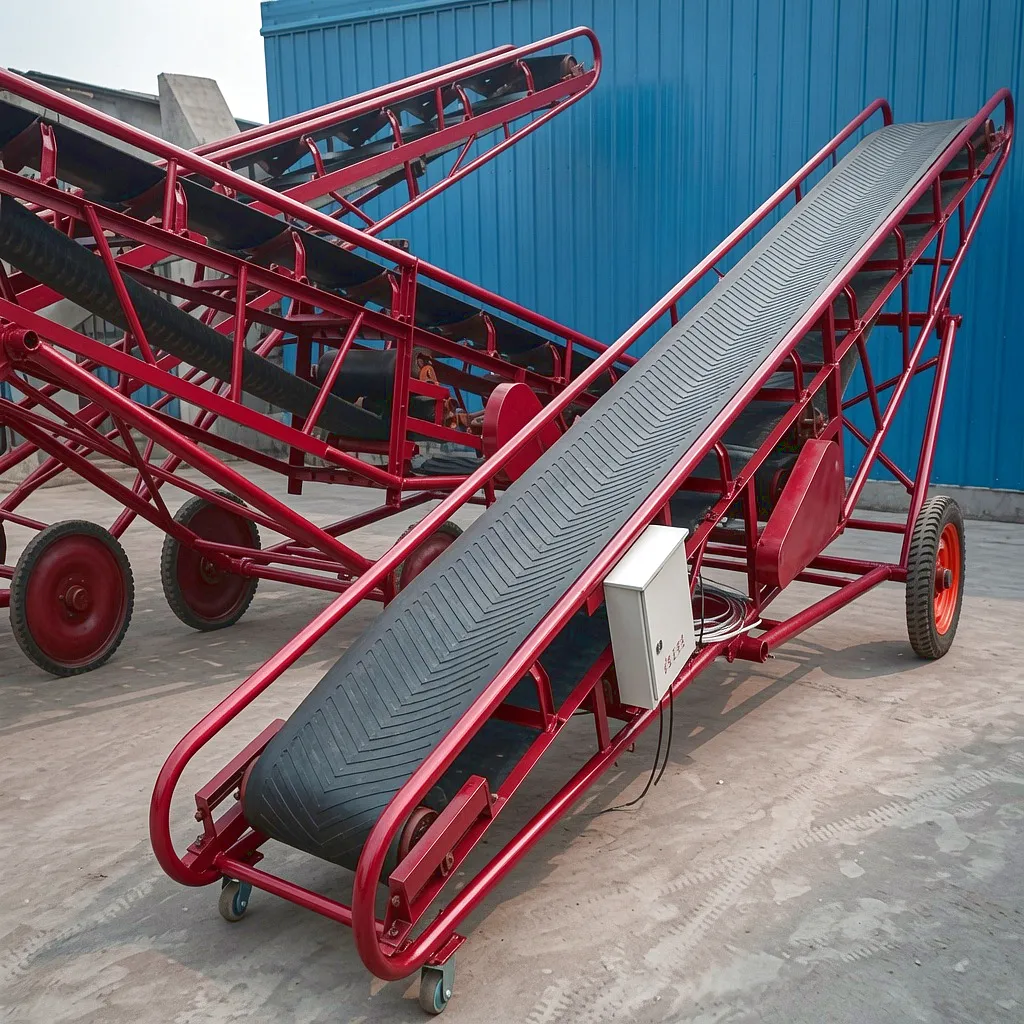
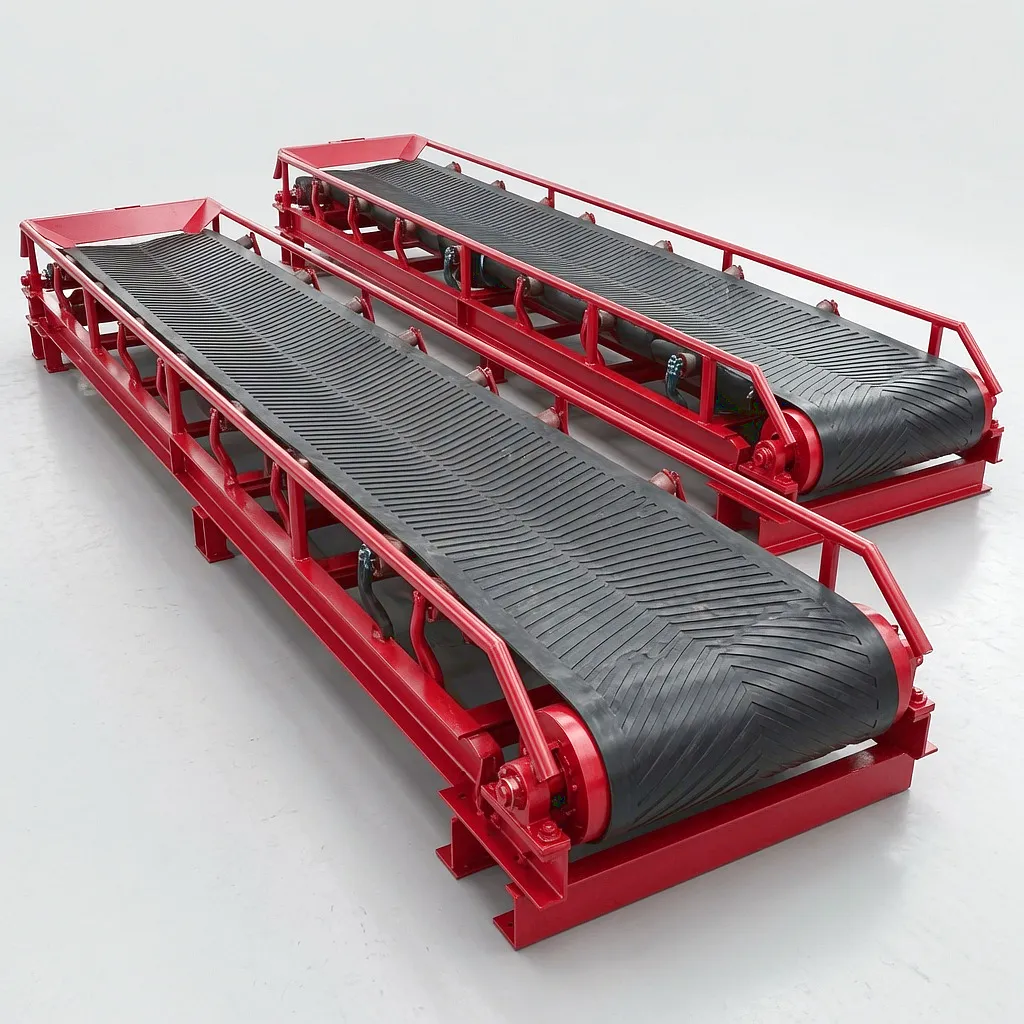
Across the UK’s industrial geography, worm gear shaft assemblies appear in a remarkably diverse range of settings. The technology’s combination of compactness, ratio flexibility, and self-locking behaviour makes it an almost universal choice wherever controlled-speed material handling is required. In the automotive supply chain — particularly the pressing, stamping, and sub-assembly facilities clustered around Birmingham and Coventry — belt conveyors equipped with WPB series worm gear reducers move body panels, engine components, and trim parts between production cells at precisely timed belt speeds. The VFD-paired drive configuration is standard in these plants, as it allows belt velocity to be synchronised with robotic pick-and-place stations without mechanical adjustments. The worm gear shaft’s smooth torque delivery also prevents the sudden jolts that could damage surface-finished components during transit.
🏭
Steel & Metal Processing
Sheffield and Rotherham steel service centres use worm gear shaft-driven conveyors to transport steel coils, bar stock, and sections through cutting and profiling lines. The self-locking feature is critical for inclined transfer conveyors handling loads in excess of 5 tonnes.
🌾
Grain & Agri-Food Processing
In Lincolnshire and the East Riding, grain handling terminals and malting facilities rely on low-speed worm gear drives for belt conveyors handling wheat, barley, and malt at velocities of 0.5–1.2 m/s to prevent grain fracture and minimise dust generation.
📦
Logistics & Distribution
The major fulfilment centres and parcel sorting hubs serving the West Midlands and Greater Manchester use WD series worm gear reducers on checkout conveyors and accumulation lines, where variable belt speed and quiet operation are essential for 24/7 shift patterns.
⛏️
Quarrying & Aggregates
Quarrying operations in the Peak District and Welsh borders use heavy-duty WPB worm gear shaft assemblies on overland conveyors carrying crushed limestone and aggregate. The sealed, oil-bath lubrication system withstands the high dust loads and external wash-down requirements of outdoor quarry environments.
🍫
Food & Beverage Manufacturing
Confectionery and bakery facilities in the North West and Home Counties specify stainless-steel-housed worm gear shaft assemblies with food-grade synthetic lubricants to comply with Food Safety Act requirements, moving product on slat and belt conveyors at controlled speeds to synchronise with packaging machinery.
♻️
Waste & Recycling
Waste processing and materials recovery facilities across England use ruggedised worm gear drives on picking conveyors and sorting lines. The IP65/IP66 rating of sealed gearbox housings makes them suitable for wet, dirty, and corrosive waste stream environments.
Selecting the Right Worm Gear Reducer Series: WPA, WPB, or WD?
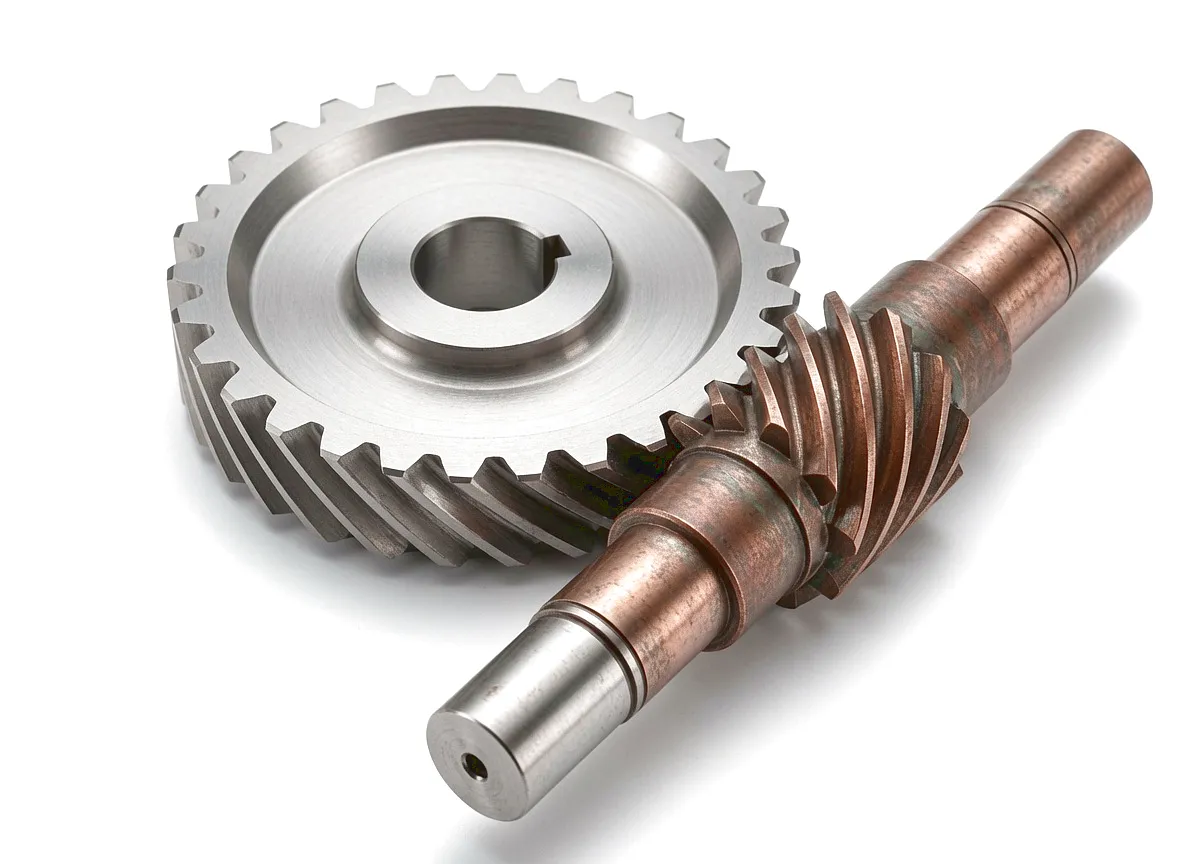
Choosing between WPA, WPB, and WD series worm gear reducers is not simply a matter of torque capacity — it involves a nuanced assessment of housing configuration, centre distance, duty cycle, and how the gearbox interfaces with the conveyor structure. The WPA series employs a solid cast-iron housing with a foot-mounted base, making it the natural choice for floor-standing conveyor drives where the reducer sits beneath the frame on a concrete plinth or structural steel. This is the most prevalent configuration in warehouse logistics facilities across the East Midlands and in the malt houses of Burton-on-Trent, where the foot-mount allows precise alignment shimming during installation. WPA units are available in centre distances from 50 mm to 250 mm, covering output torques from roughly 50 N·m to 2,500 N·m, and are typically paired with B3 or B5 flange-mounted three-phase motors.
The WPB series addresses the same application range but adds a flange output face, enabling direct mounting onto the conveyor drive roller stub shaft without a coupling or intermediate bearing housing. This arrangement is popular in the automotive sector around Wolverhampton and Swindon, where minimising the number of mechanical interfaces reduces assembly time and potential misalignment faults. WPB units tend to carry slightly higher output torque ratings at equivalent centre distances because the integrated output flange provides a more rigid support arrangement for the output shaft, reducing bending moments on the worm gear shaft assembly itself. The WD series takes a different approach — it is specifically designed for dual-output or through-shaft configurations, where a single worm gear unit must drive two conveyor sections from a common input. This is the topology of choice in sorting conveyor systems where a central drive point feeds two parallel belt lines, reducing the total number of motors, gearboxes, and control components by up to 40%.
⚡
Variable-Frequency Drive Integration: Achieving 0.1–3 m/s Belt Speed Control
One of the most significant advances in belt conveyor drive engineering over the past two decades has been the widespread adoption of variable-frequency drives (VFDs) — also called inverter drives or frequency converters — in combination with worm gear shaft reducers. The combination produces a drive system that can sweep belt speed continuously from as low as 0.1 m/s up to 3 m/s without any mechanical adjustment. This range covers everything from gentle product loading on fragile goods conveyors in pharmaceutical facilities to high-throughput aggregate transfer belts. In UK industry, the energy-saving implications are particularly relevant given current electricity pricing: running a conveyor belt at 60% of maximum speed reduces motor energy consumption by roughly 50% due to the cube relationship between motor speed and power draw in fan-law applications.
The VFD output introduces higher-frequency voltage harmonics that can stress winding insulation in standard motors. For this reason, VFD-paired conveyor drives in UK installations typically specify inverter-duty three-phase motors wound with Class F or Class H insulation, and the worm gear shaft assembly’s input-side seals and bearings must be rated to handle the slightly elevated bearing currents that VFDs can generate. Ever Power’s engineering team advises customers to specify shaft-grounding rings and VFD-rated input seals when the drive cable run between VFD panel and motor exceeds 10 metres — a common situation in larger UK distribution centres where drive panels are centralised in MCC rooms away from individual conveyors.
Ever Power · Precision Manufacturing
Factory Capability & Custom Worm Gear Shaft Manufacturing
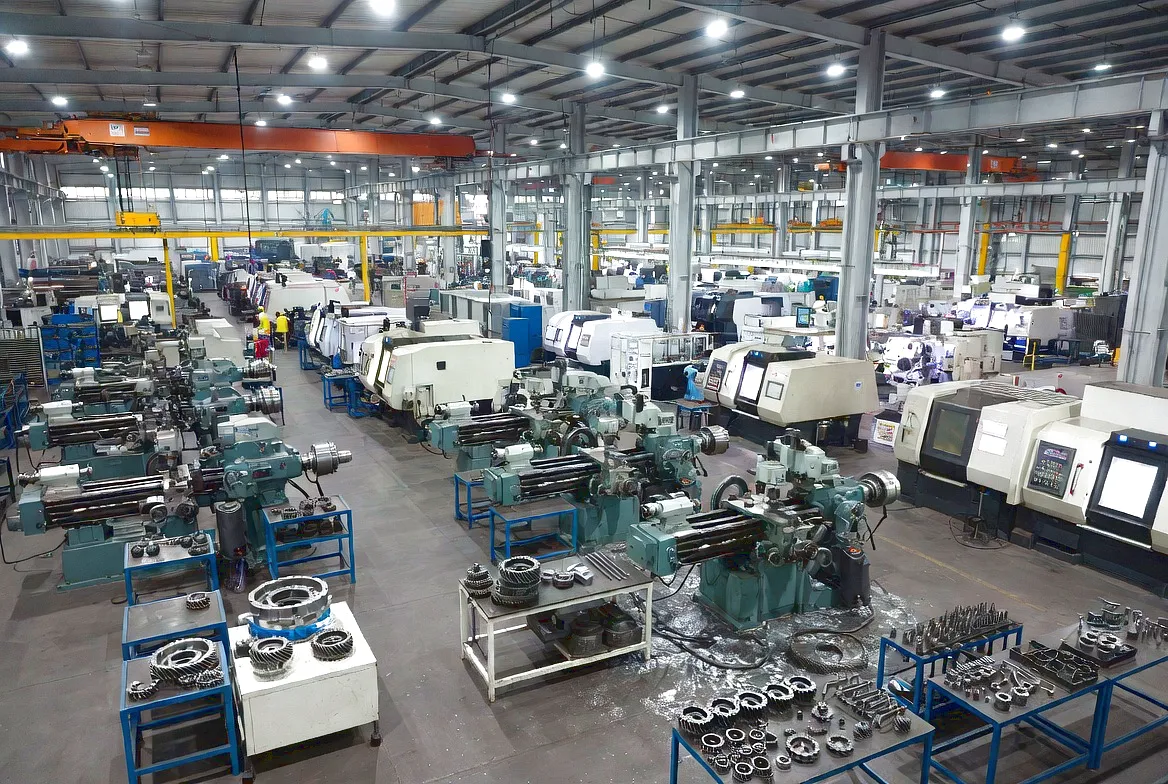
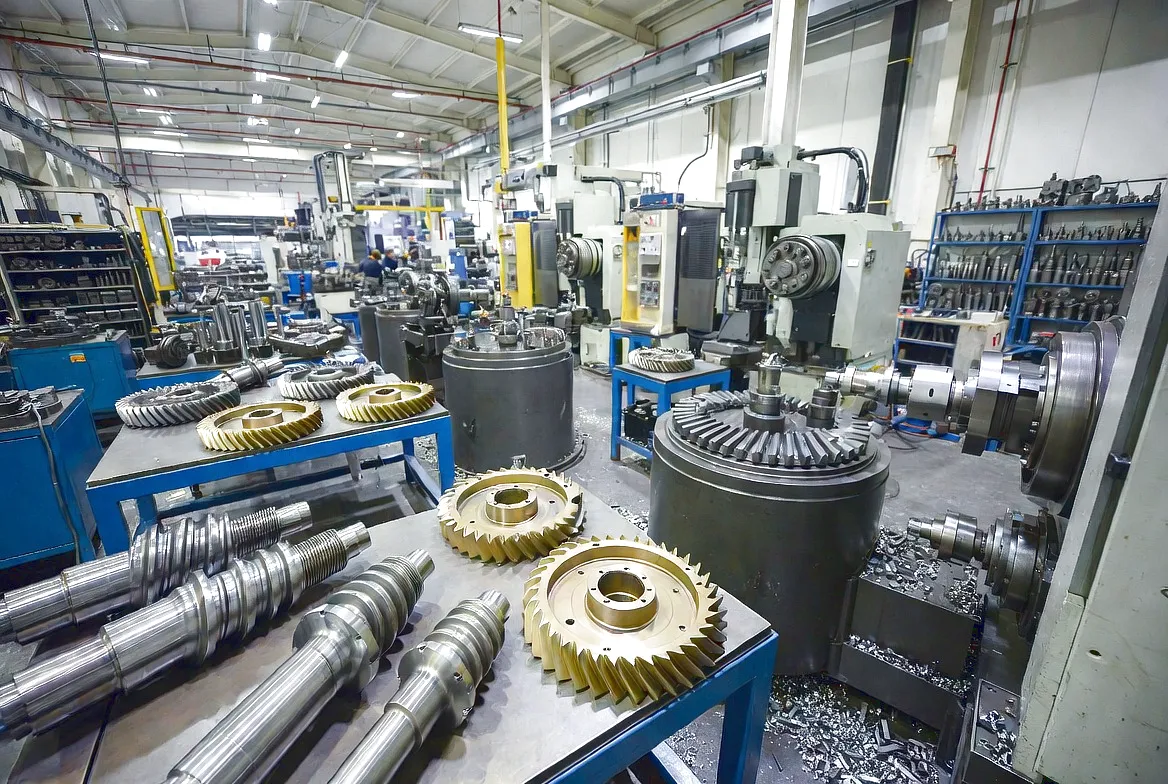
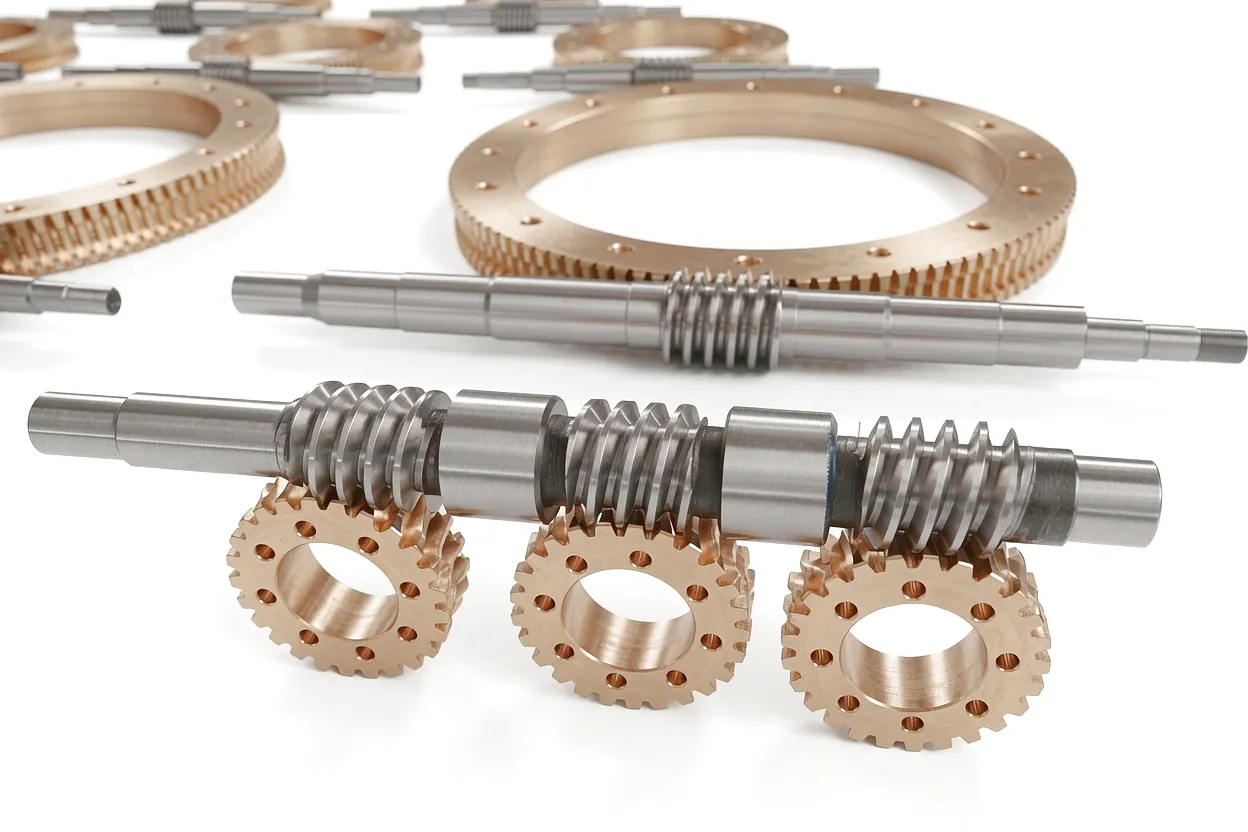
Ever Power operates a dedicated worm gear shaft manufacturing facility equipped with CNC turning centres, gear grinding machines, and coordinate measuring equipment calibrated to ISO 9001:2015 standards. The production floor spans multiple precision machining cells, each focused on a specific stage of the worm shaft manufacturing process: rough turning, thread whirling, heat treatment, cylindrical grinding, thread grinding, and final inspection. This integrated production model gives Ever Power complete control over dimensional tolerances and surface finish quality from raw bar stock to finished component, eliminating the quality risks that arise when shaft manufacturing and wheel production are outsourced to separate vendors — a common cost-cutting measure that frequently leads to assembly mismatch and premature wear in the field.
Ever Power’s customisation capabilities extend across every geometrical and material parameter of the worm gear shaft assembly. For UK customers who need to replace legacy drives from obsolete conveyor systems — a frequent challenge in older industrial estates in areas like Stoke-on-Trent, Hull, and Teesside — the engineering team can reverse-engineer shaft dimensions from customer-supplied drawings or physical samples, reproduce the original gear geometry, and manufacture a drop-in replacement in standard production lead times of 15–25 working days for most frame sizes. Non-standard shaft extensions, keyway configurations, flange bolt patterns, and housing mounting arrangements are all accommodated within the standard engineering service, with full technical documentation including material certificates, inspection reports, and dimensional inspection records supplied as standard with every export shipment to the UK.
✓ CNC 5-axis worm thread grinding to DIN 3974 Grade 6
✓ In-house carburising and quench hardening furnaces
✓ CMM dimensional inspection to ±0.005 mm
✓ Bronze wheel centrifugal casting in-house
✓ Custom reduction ratios from 5:1 to 120:1
✓ DDP UK shipping, full export documentation
Customer Success Story: Rotherham Steel Processing Plant
📍 Rotherham, South Yorkshire
⚙ Steel Service Centre
📅 Project Year: 2023
A Rotherham-based steel service centre operating two shift patterns, six days a week, approached Ever Power after experiencing repeated failures on the worm gear shaft assemblies of their heavy-duty coil transfer conveyors. The existing drives — sourced from a European catalogue supplier — were rated at 1,200 N·m output torque but were running hot and suffering shaft wear on the input taper due to misalignment of the motor coupling. Two units had failed within an 18-month period, each causing 6–8 hours of unplanned downtime and significant disruption to the facility’s just-in-time delivery commitments to automotive stamping customers in Birmingham.
Ever Power’s engineering team conducted a remote application audit, reviewing the client’s conveyor drawings, motor specifications, and the operating load cycle data from the VFD control panel logs. The analysis identified two compounding problems: the original worm gear shaft had been specified to a nominal torque rating without applying the application service factor (SF) for the actual start-stop frequency — which was 18 starts per hour during peak production — and the output shaft bore tolerance on the existing units was slightly oversize due to a batch machining error, allowing fretting corrosion to develop at the roller shaft interface. Ever Power supplied custom WPB-250 units with a nominal output torque rating of 2,000 N·m (SF = 1.65 applied), input-side spacer coupling to isolate the motor from shaft misalignment, and output bore finish-machined to H7 tolerance with a fitted parallel key for positive torque transmission. The replacement units were DDP-shipped to Rotherham within 18 working days of order confirmation.
Following installation and commissioning in November 2023, the facility reported zero drive failures across the subsequent 14-month monitoring period — a marked improvement over the previous failure rate of 1.3 units per year. Planned maintenance costs for the conveyor drive system dropped by approximately 35% against the preceding year’s actuals, and the operations manager confirmed that the precision coupling arrangement allowed the motor to be replaced on one unit without realigning the gearbox, halving the planned maintenance time during the annual Christmas shutdown. The success of this project led to Ever Power being specified as the preferred құрт тәрізді беріліс білігі supplier for the client’s planned conveyor extension project in 2025.
Customer Reviews
★★★★★
“The custom WPB-250 units Ever Power supplied have been running without a single issue for over a year on our heaviest coil transfer conveyors. The output bore tolerance was exactly as specified — H7 every time — and the material certificates were supplied without even having to ask. For a critical drive application, that attention to dimensional accuracy matters more than price.”
D. Hartley
Operations Manager · Steel Service Centre, Rotherham
★★★★★
“We needed a non-standard reduction ratio — 47:1 — for a slow-moving inclined belt feeding our malting kiln. Most suppliers wanted to quote a 40:1 or 50:1 as the nearest catalogue option. Ever Power actually manufactured the exact ratio we needed, confirmed it met our minimum belt speed with a VFD at 35 Hz, and delivered in 20 working days. Genuinely responsive engineering support from enquiry through to commissioning.”
P. Williamson
Plant Engineer · Malting Facility, Burton-on-Trent
★★★★★
“Our fulfilment centre runs three shifts, 365 days a year, and drive reliability is non-negotiable. We’ve been specifying Ever Power WD series worm gear shaft assemblies for our accumulation conveyors for two years. The noise levels are noticeably lower than the units we replaced — our operatives commented on it without being prompted — and the sealed housing design means oil-change intervals have stretched to 8,000 hours. Excellent product and competitive pricing for direct UK delivery.”
A. Patel
Facilities & Engineering Lead · Logistics Fulfilment Centre, Coventry
Frequently Asked Questions about Worm Gear Shafts
What is the typical price range for a custom worm gear shaft assembly for a UK belt conveyor system, and how do I get an accurate quote?
+
Pricing for worm gear shaft assemblies varies widely depending on centre distance, reduction ratio, material specification, output torque class, and quantity. A standard WPA-100 unit for a light conveyor application typically runs from £180–£350 ex-works; a heavy WPB-250 unit with custom output bore and keyway may be £900–£2,200 depending on specification. The most reliable way to get an accurate quote for UK delivery is to email the gearbox frame size or output torque requirement, the reduction ratio needed, shaft dimensions, and your target belt speed to
[email protected]. Ever Power typically responds with a detailed technical and commercial quotation within 24 hours.
How long does it take to ship a worm gear shaft order from the manufacturer to a UK manufacturing plant in Birmingham or Sheffield?
+
For standard catalogue sizes, Ever Power typically ships within 10–15 working days from order confirmation. Custom worm gear shaft specifications — including non-standard ratios, bespoke bore sizes, or special material grades — are manufactured in 18–28 working days. Shipment to Birmingham, Sheffield, and other major UK industrial centres is by sea freight with DDP (Delivered Duty Paid) Incoterms, meaning customs duties and import VAT are handled before delivery. Door-to-door transit from dispatch to UK delivery point is typically 5–9 days on express sea freight or 4–7 days by air freight for urgent requirements.
Which worm gear shaft supplier in the UK can provide a non-standard reduction ratio for a belt conveyor running at exactly 22 r/min output speed?
+
Ever Power specialises in non-standard worm gear shaft ratios that fall between standard catalogue steps. For a 22 r/min output from a 1,450 r/min motor, the required ratio is approximately 66:1. This falls between common catalogue ratios of 60:1 and 80:1, but can be manufactured precisely with a custom worm thread count and wheel tooth number. The process involves CNC thread grinding of a new worm shaft profile and casting of a matched bronze wheel, typically within the standard custom production lead time. Contact
[email protected] with your conveyor drive roller diameter and target belt speed to receive a full specification recommendation.
What are the most common causes of worm gear shaft failure on UK industrial belt conveyors, and how can I prevent early failure in my system?
+
The most frequent failure modes are: (1) under-specification — choosing a gearbox by nominal torque without applying an application service factor for start frequency or shock loading; (2) oil contamination — water ingress through damaged lip seals in wet environments such as food plants or outdoor quarry conveyors; (3) overheating — caused by high ambient temperatures combined with low-efficiency ratios above 50:1, or by running VFD-controlled motors below 30 Hz for extended periods without forced cooling; and (4) shaft misalignment — particularly at the input coupling between motor and worm shaft, which causes radial loading on the input bearing and accelerated shaft journal wear. Preventive measures include correct application service factor selection, regular oil analysis, IP-rated seals for wet environments, and elastic jaw couplings with adequate angular misalignment capacity.
How does a worm gear shaft enable variable-speed belt control between 0.1 and 3 m/s when used with a variable-frequency drive motor in a UK logistics facility?
+
The VFD adjusts the frequency of the AC supply to the motor, changing the motor’s synchronous speed proportionally. At 50 Hz, the motor runs at its rated speed (typically 1,450 r/min at 4-pole). At 25 Hz, it runs at approximately 725 r/min. The worm gear shaft reducer then applies its fixed reduction ratio to this already-reduced motor speed. A WD-200 unit with a 30:1 ratio and a 300 mm drive roller, driven by a motor at 50 Hz (1,450 r/min), delivers a belt speed of approximately 2.3 m/s. Running the same system at 10 Hz gives approximately 0.46 m/s — matching the lower end of the target range. The worm gear shaft’s self-locking behaviour also means the belt holds position safely when the VFD ramps to zero speed, even on inclined conveyors, without requiring a separate brake.
Where can I find a reliable worm gear shaft supplier that offers WPA, WPB, and WD series reducers with fast UK delivery and full technical support?
+
Ever Power offers the full WPA, WPB, and WD series range with DDP delivery to all major UK industrial cities including Birmingham, Sheffield, Manchester, Leeds, and Bristol. Technical support is available by email throughout the project cycle — from application sizing and ratio selection through to installation and commissioning queries. For urgent requirements, air freight delivery can be arranged with a quotation turnaround within 24 hours. Send your application data or drawing to
[email protected] to begin the procurement process.
Ready to Specify?
Get Your Worm Gear Shaft Quote from Ever Power
Tell us your reduction ratio, output torque, shaft dimensions, and belt speed target — and we’ll respond with a full technical and commercial proposal within 24 hours.
edit by gzl