Ever Power Precision Engineering
Worm Gear Shaft: Engineering Principles, Materials, and Industrial Applications
A definitive technical guide for mechanical engineers, procurement specialists, and OEM manufacturers across the UK — covering design mechanics, performance data, and precision customisation from Ever Power.
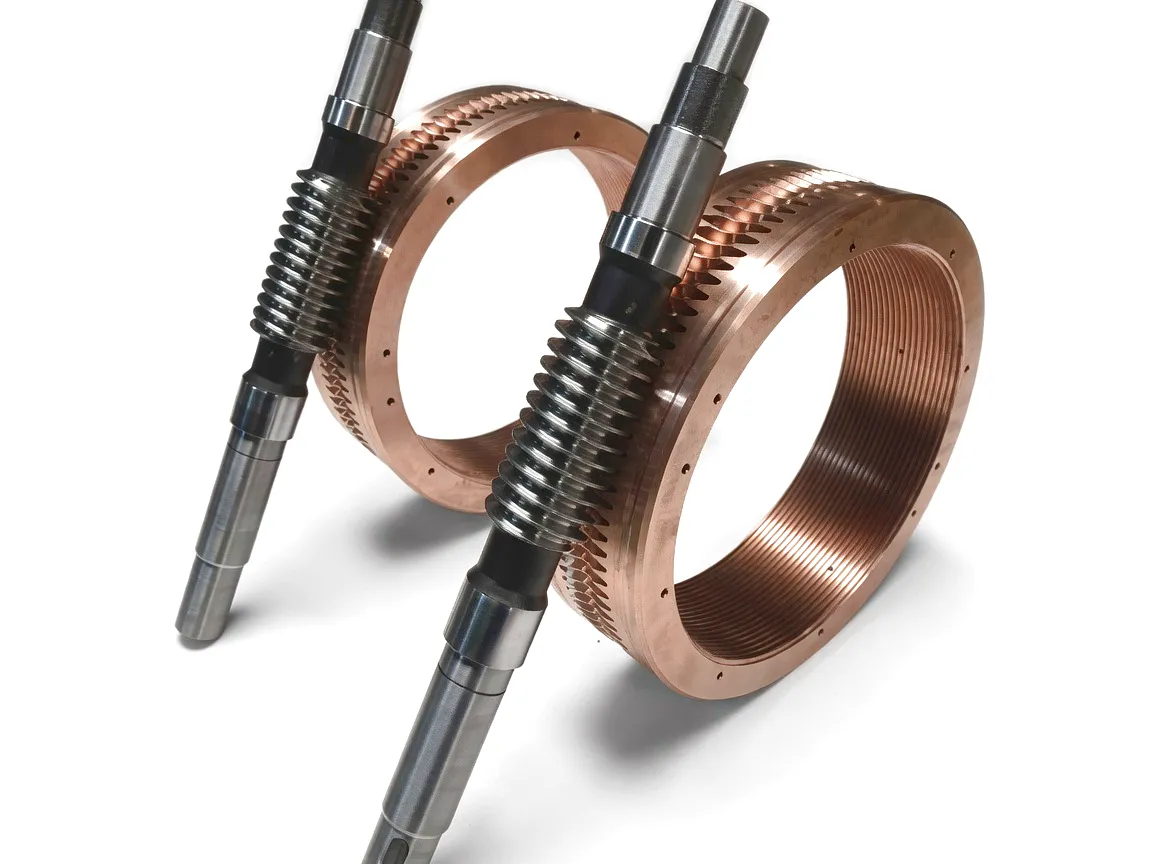
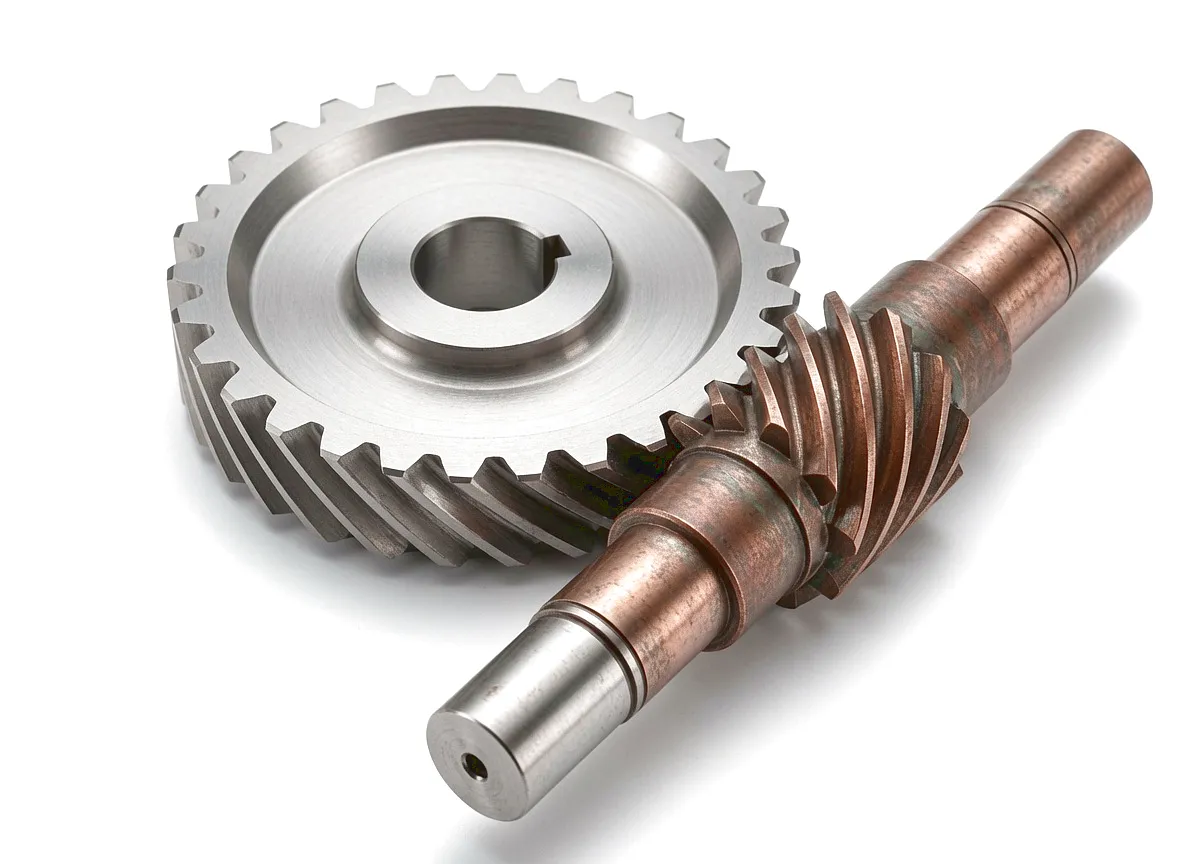
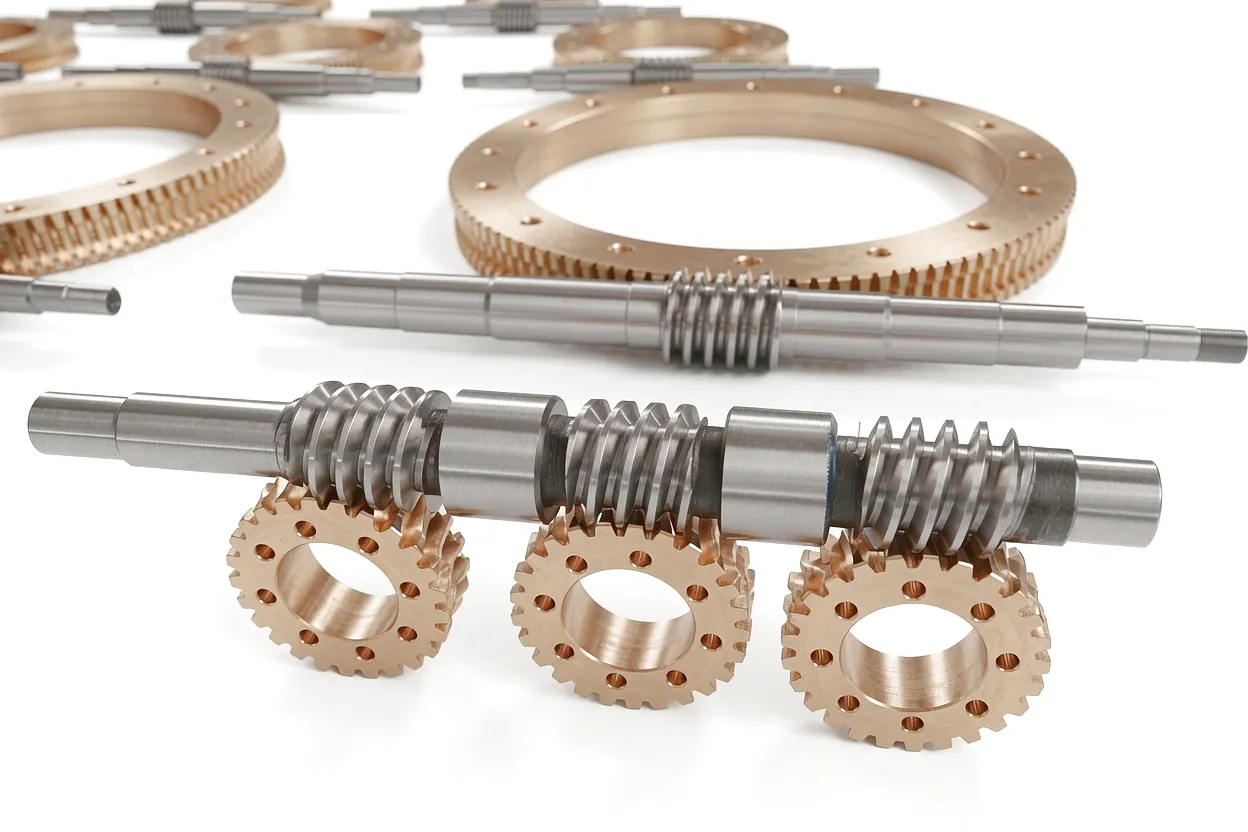
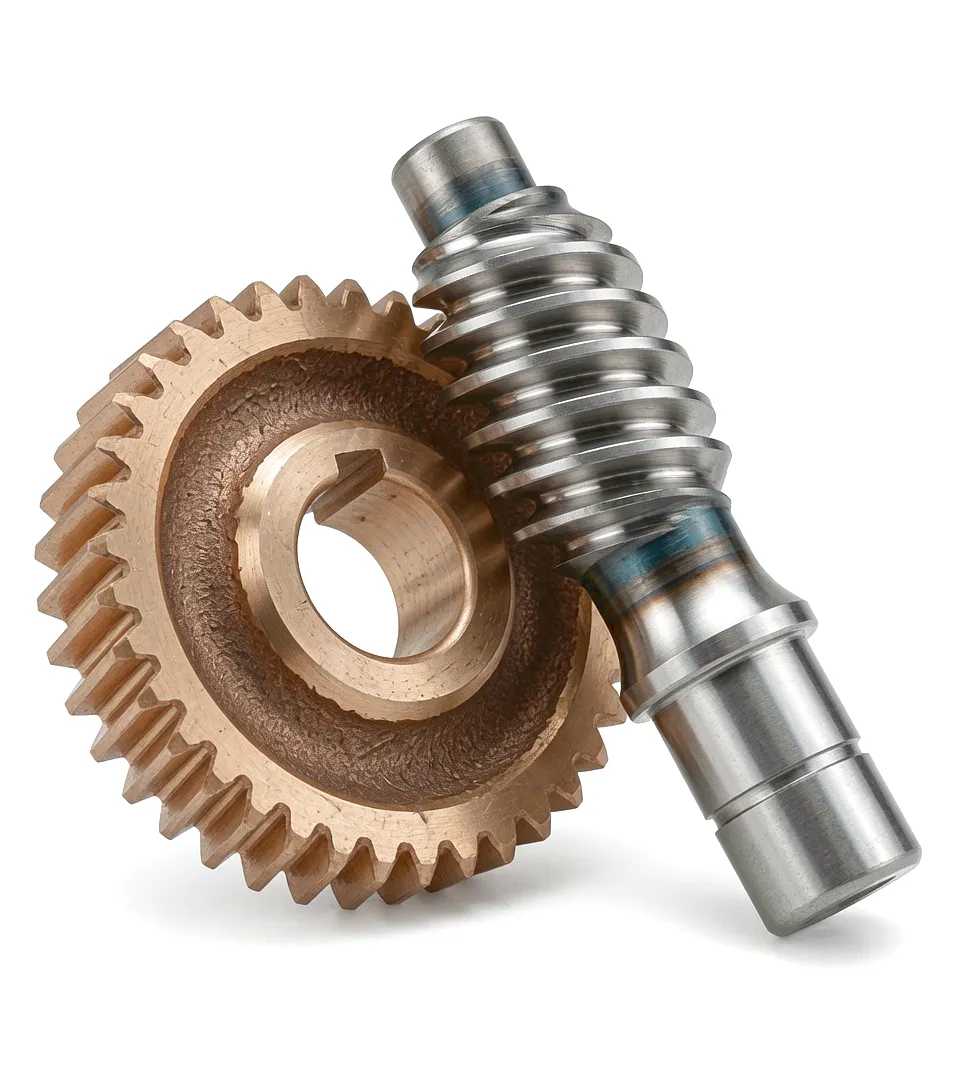
The worm gear shaft sits at the intersection of mechanical elegance and engineering practicality. It is a specialised shaft that forms the driving element of a worm gear assembly, featuring a helical thread — the worm — that meshes continuously with the teeth of a worm wheel to transmit rotary motion at a 90-degree angle while dramatically reducing rotational speed and multiplying output torque. Across the UK’s manufacturing heartlands — from the precision engineering workshops of Sheffield and the automotive supply chains of Birmingham to the heavy process industries of Teesside — this component is trusted wherever controlled, high-ratio power transmission is required. Its ability to deliver large speed reductions in a single, compact stage makes it indispensable in conveyors, packaging lines, agitators, and lifting equipment. Unlike helical or spur gear arrangements that demand multi-stage gearboxes for equivalent reduction ratios, the worm gear shaft achieves ratios of 5:1 to 100:1 within a single housing, combining spatial efficiency with mechanical robustness. Understanding the engineering detail behind this component — its geometry, material choices, and thermal behaviour — is essential for specifying the right solution and avoiding premature failure in demanding industrial environments.
British industry places particular demands on power transmission components. The wet, variable-temperature operating conditions common in outdoor agricultural machinery in Yorkshire, the vibration-intensive environments of Welsh quarrying operations, and the cleanliness requirements of food processing facilities in East Anglia all push components to perform consistently across a wide envelope of service conditions. A well-engineered worm gear shaft, manufactured to the correct tolerances and case-hardened to an appropriate depth, will outlast many alternative transmissions in these scenarios, provided the specification process is carried out rigorously from the outset.
How a Worm Gear Shaft Transmits Power
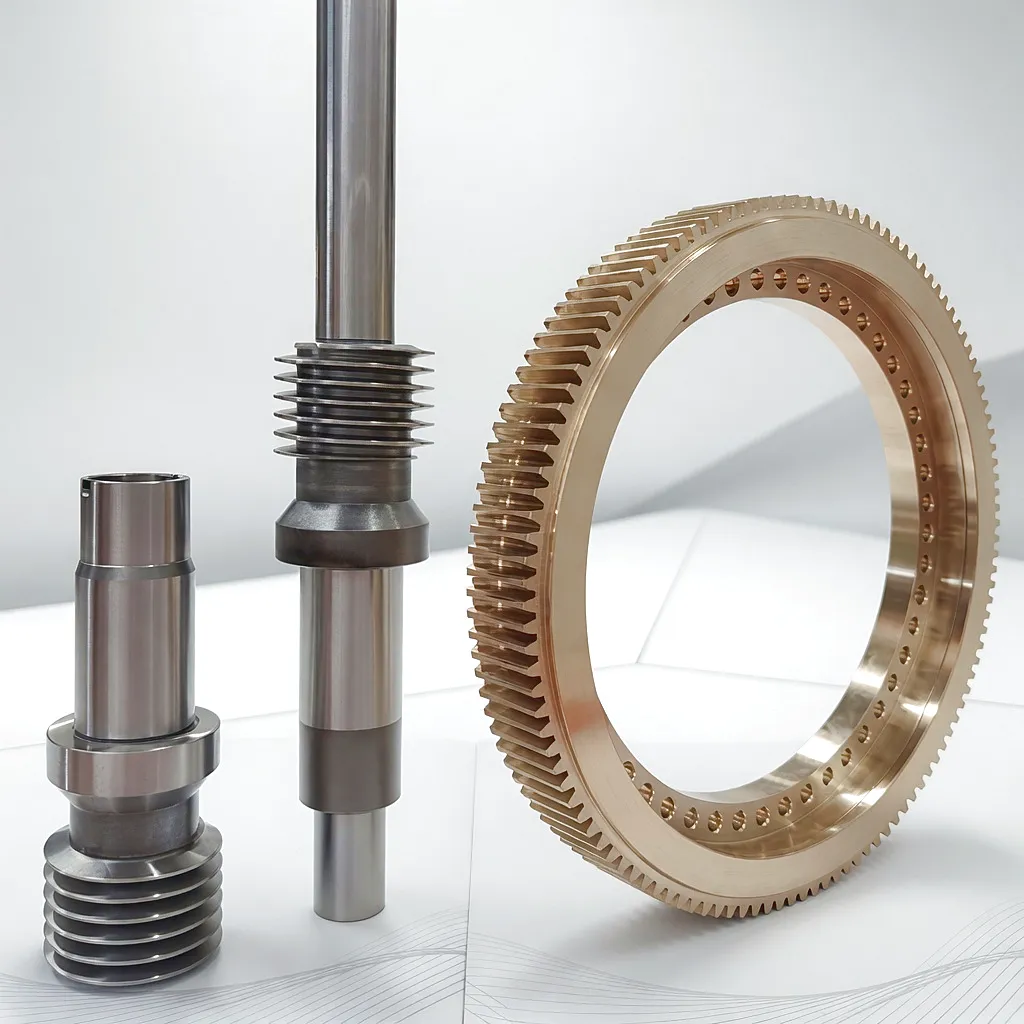
The mechanics of a worm gear shaft depend on continuous sliding contact between the worm thread and the gear wheel teeth. As the worm shaft rotates, its helical thread engages successive teeth on the worm wheel, pushing them along an arc and inducing rotation in the wheel’s axis, which is perpendicular to the shaft’s own axis. This 90-degree axis crossing is a defining geometric feature of the worm drive system and fundamentally distinguishes it from parallel-axis gearing. The lead angle of the worm — the angle between the helix and a plane perpendicular to the shaft axis — governs both the gear ratio and the self-locking characteristic. Shafts with lead angles below approximately 5 degrees exhibit self-locking behaviour: back-driving from the wheel side cannot overcome the friction forces at the tooth contact surfaces. This property is directly exploited in hoisting equipment, valve actuators, and boom-folding systems on agricultural machinery where the load must remain stationary when the drive is removed.
The velocity ratio is determined by the ratio of the number of teeth on the worm wheel to the number of starts (threads) on the worm shaft. A single-start worm meshing with a 50-tooth wheel produces a 50:1 ratio; a four-start worm on the same wheel gives 12.5:1. The number of starts therefore allows designers to tune the ratio and efficiency simultaneously. Higher start counts reduce the ratio while significantly improving mechanical efficiency, as more teeth are engaged simultaneously and the helix angle increases, reducing the wedging action that generates heat. For applications where efficiency matters — continuous-duty conveyors, for example — four-start worms with lead angles of 15 to 25 degrees may deliver efficiencies exceeding 85 percent, while single-start designs at tight ratios may operate at 40 to 60 percent efficiency and require careful thermal management.
Core Materials Used in Worm Gear Shaft Manufacturing
Fe
Case-Hardened Alloy Steel
Grades such as 20CrMnTi, 42CrMo4, and 18CrNiMo7-6 are the backbone of high-performance worm gear shaft manufacturing. The core of these steels retains toughness to absorb shock loads while the case-hardened surface — typically carburised to a depth of 0.8 to 1.5 mm and hardened to 58–62 HRC — resists the severe contact stresses generated during meshing. In UK industrial applications where shock loading is common, such as quarrying crushers in South Wales or aggregate conveyor drives in the East Midlands, alloy steel shafts ground to tolerances of h6 or better on the bearing journals provide the fatigue resistance needed for multi-year service life. Post-hardening precision grinding ensures that dimensional distortion introduced by the heat treatment cycle is fully corrected, maintaining the involute tooth form accuracy demanded by modern gear standards.
Cu
Phosphor Bronze Wheel (Paired Material)
While the shaft itself is steel, the mating worm wheel is almost universally manufactured from phosphor bronze (typically CuSn12 or CuSn12Ni2) or aluminium bronze for the highest load ratings. The intentional hardness differential — steel worm against the softer bronze wheel — ensures that wear is concentrated on the replaceable, lower-cost wheel element rather than the precision-ground shaft. The tin content in phosphor bronze provides an excellent coefficient of friction against steel under lubricant film conditions, reduces the risk of galling during momentary oil film breakdown, and imparts respectable compressive strength to sustain the high contact pressures inherent in worm gearing. For food processing environments prevalent across Yorkshire’s agricultural processing sector, leaded bronzes are avoided and nickel-aluminium bronze variants meeting hygiene-grade standards are substituted.
Ni
Stainless Steel Variants
Grades 316L and 17-4 PH stainless steel are selected for worm gear shafts operating in corrosive environments — marine deck equipment around UK coastal ports, chemical dosing systems in water treatment plants across the Thames Valley, and pharmaceutical mixing applications in Cambridge’s life sciences cluster. While stainless steel cannot be carburised to the same case depths as alloy steel, it can be nitrogen-hardened using controlled atmosphere diffusion to achieve surface hardness values of 950 to 1100 HV, providing acceptable wear resistance for medium-load applications. The corrosion resistance of the shaft must be matched by equivalent protection of the housing and the selection of compatible lubricants — food-grade NSF H1 greases or white mineral oils — to maintain the integrity of the entire assembly over its service life.
Technical and Performance Specifications
The table below consolidates the principal performance parameters applicable to a standard range of worm gear shafts manufactured by Ever Power. Values represent typical operating envelopes; custom specifications — including non-standard ratios, extended shaft lengths, or modified keyway profiles — are available on request via the engineering team.
| Parameter | Light-Duty Range | Medium-Duty Range | Heavy-Duty Range |
|---|
| Output Torque | 5 – 50 N·m | 50 – 500 N·m | 500 – 5,000 N·m |
| Speed Ratio | 5:1 – 20:1 | 20:1 – 60:1 | 60:1 – 100:1 |
| Shaft Diameter | 10 – 30 mm | 30 – 80 mm | 80 – 200 mm |
| Centre Distance | 40 – 80 mm | 80 – 160 mm | 160 – 400 mm |
| Input Speed (max) | 3,000 rpm | 2,000 rpm | 1,500 rpm |
| Mechanical Efficiency | 75 – 90% | 55 – 80% | 40 – 65% |
| Thread Form | ZA / ZI (Archimedes) | ZN / ZK (Involute) | ZK (Convolute) |
| Lead Angle Range | 3° – 8° | 8° – 18° | 18° – 30° |
| Case Hardness | 56 – 58 HRC | 58 – 60 HRC | 60 – 62 HRC |
| Surface Finish (Ra) | 0.8 μm | 0.4 μm | 0.2 μm |
| Axis Crossing Angle | 90° (standard) | 90° or custom | 90° or custom |
Core Technical Advantages
⚙
High Reduction Ratio in Single Stage
Achieving ratios from 5:1 up to 100:1 within a single enclosed stage represents a significant space and cost advantage over equivalent multi-stage helical or bevel arrangements. For machinery designers working within the tight envelope constraints typical of British packaging machinery built in Coventry or Derby, this compactness is decisive. The single-stage architecture also reduces the number of lubrication points, seals, and bearings requiring maintenance, directly improving whole-life ownership costs for end operators.
🔒
Inherent Self-Locking Capability
When the lead angle is kept below the friction angle of the sliding contact — typically below 4.5 degrees with mineral oil lubrication — the worm gear shaft assembly becomes mechanically self-locking. This property eliminates the need for external brakes in hoisting, positioning, or boom-deployment applications, reducing cost, weight, and potential failure modes. In agricultural sprayer boom systems and warehouse mezzanine lifts common across Midlands distribution centres, self-locking worm gear shafts provide a passive safety function that operates independently of the control system, ensuring the load remains held even during power interruption.
🔇
Low Vibration and Quiet Operation
The continuous sliding engagement of the worm and wheel — as opposed to the periodic tooth impact characteristic of spur gearing — produces substantially lower noise levels and vibration amplitudes. This matters in applications where operator comfort is regulated, including food and pharmaceutical processing lines subject to UK Health and Safety Executive noise at work regulations, and in automated warehouse systems where noise accumulation across hundreds of drives affects building occupancy compliance. Precision-ground worm gear shafts with surface finishes of Ra 0.4 μm or better contribute further to low-noise operation by minimising oil film disruption at the tooth contact zone.
📈
Smooth Torque Delivery Under Variable Load
The multi-tooth contact pattern typical of worm gearing distributes load across several tooth surfaces simultaneously, averaging out any local geometry imperfections and providing a smooth torque transmission curve. This characteristic is highly valued in mixing and agitation equipment where torque ripple would otherwise accelerate fatigue in the mixer shaft and frame structure. It is equally important in precision positioning stages where velocity uniformity during slow-speed rotation — a common requirement in robotics and CNC rotary tables manufactured in advanced engineering clusters around Bristol — depends on consistent tooth contact geometry throughout the mesh cycle.
🔧
Right-Angle Drive Without Additional Components
The 90-degree axis crossing inherent in worm gearing eliminates the need for bevel stages, hypoid pinions, or separate gearbox adapters where drive direction change is required. This integral right-angle capability simplifies gearbox housing design, reduces the number of oil seals and bearing sets, and decreases the risk of misalignment-induced premature failure. For material handling conveyors in Birmingham distribution centres and cross-belt sorting systems in logistics hubs, the worm gear shaft’s direct right-angle output reduces the footprint of drive assemblies while maintaining the structural rigidity needed to sustain years of continuous duty cycling.
Industrial Application Scenarios
Where worm gear shafts deliver decisive engineering value

Agricultural Sprayer Boom Deployment Systems
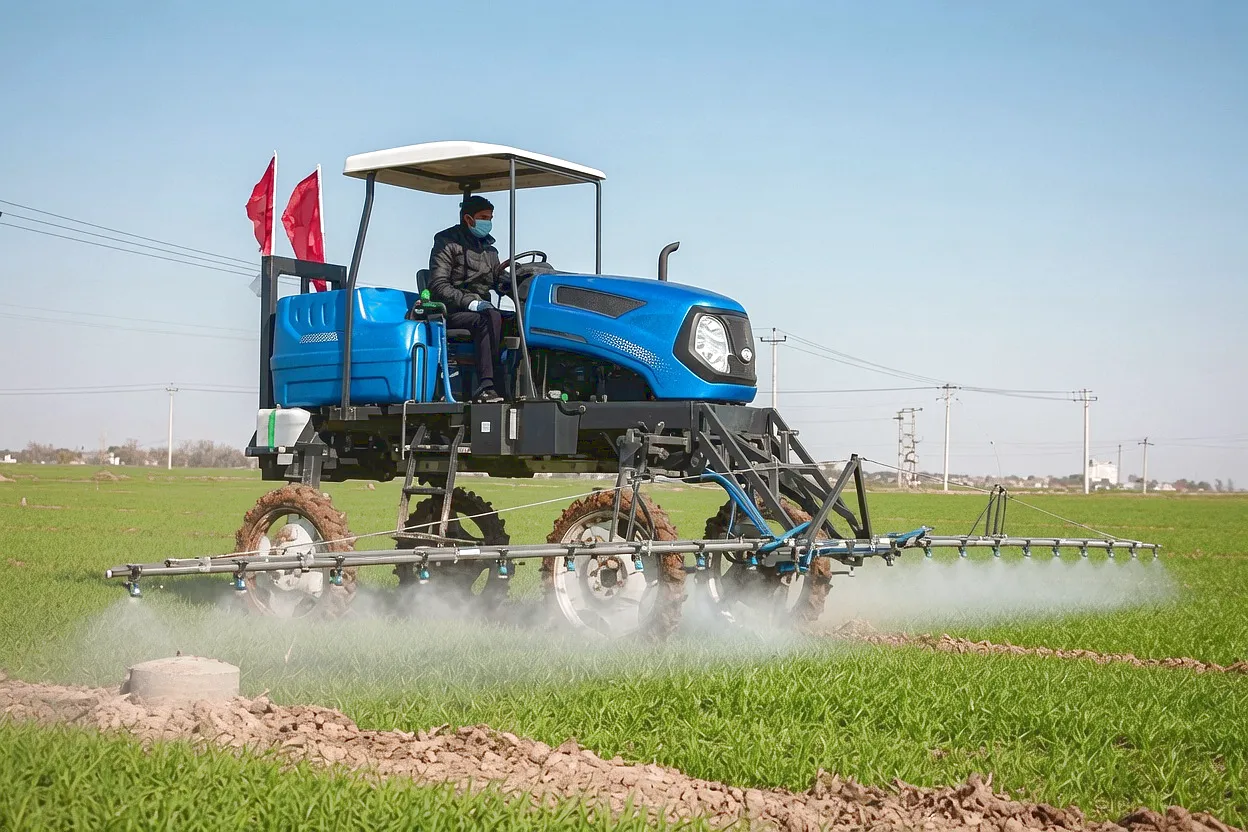
Self-propelled crop sprayers operating across the arable farmlands of Lincolnshire, Norfolk, and Yorkshire rely on worm gear shafts within hydraulic motor-driven boom folding actuators to unfold and retract spray booms spanning up to 44 metres. At full working width, the boom assembly represents a considerable overturning moment that must be supported positively when the drive motor is de-energised — precisely the condition met by the self-locking characteristic of a low-lead-angle worm shaft. When the sprayer encounters an obstacle or is temporarily parked with engine off, hydraulic pressure loss would allow an uncontrolled boom collapse were it not for the mechanical lock inherent in the worm drive. The worm gear shaft in this context must withstand high cyclic fatigue from the repeated fold-unfold cycles accumulated over a busy spraying season — potentially 150 to 200 deployments per day — while resisting the shock loads transmitted through the boom structure when traversing field headlands at speed. Ever Power supplies dedicated agricultural-grade worm gear shafts with phosphate surface treatments and high-viscosity EP grease filling for extended-interval service in this sector.
Packaging and Food Processing Conveyors
The UK’s food manufacturing sector — concentrated in facilities across the East Midlands, the Humber estuary, and Scotland’s central belt — operates extensive conveyor and transfer systems where speed control, hygiene, and drive reliability are simultaneously critical. Worm gear shafts fitted in NEMA- or IEC-frame C-face gearboxes drive live-roller conveyors, checkweigher infeed belts, and bucket elevator drives at precise reduced speeds matched to the throughput rates of filling, sealing, and labelling machines downstream. The sealed housing of a worm gearbox suits the high-pressure washdown regimes standard in UK Food Standards Agency compliant facilities, and stainless steel or electroless nickel plated housings are routinely specified to prevent rust contamination. For multi-lane sortation systems handling 60-gram condiment pouches at 800 units per minute, the worm gear shaft provides the speed accuracy and vibration-free torque delivery that keeps product tracking reliable and minimises line stoppages caused by conveyor timing faults.

Material Handling and Hoist Drives
Overhead travelling cranes, jib cranes, and scissor-lift tables in engineering workshops across Sheffield’s steel processing strip and Birmingham’s automotive tier-1 supplier base rely on worm gear shaft assemblies as the core lifting and slewing actuators. In these applications the load-holding function provided by the self-locking worm is of paramount safety importance — it prevents the suspended load from descending when the operator releases the control or when a power cut occurs. UK Lifting Operations and Lifting Equipment Regulations (LOLER) mandate that lifting machinery include adequate means of preventing uncontrolled load descent, and a correctly specified worm gearbox with sufficient self-locking margin satisfies this requirement mechanically without dependence on a separate brake that could suffer wear or adjustment drift. Ever Power applies safety margins of at least 1.5x over the calculated holding torque to account for lubricant viscosity variation across the -10 °C to +40 °C ambient range encountered in northern England workshop environments.

Process Valve Actuators and Pipeline Control
Gas and water utility infrastructure across the UK — from the North Sea pipeline terminals at Bacton and St Fergus to water treatment facilities operated by Severn Trent and Anglian Water — uses motorised gate, butterfly, and ball valve actuators driven by worm gear shaft gearboxes. The worm gear shaft is ideally suited here because it provides quarter-turn or multi-turn actuation at very low speeds with high torque multiplication from a standard AC induction motor, it retains position under spring force from the valve seal without additional braking hardware, and its right-angle configuration allows compact actuator heads that mount directly onto the valve bonnet flange. Corrosion-resistant materials — 316L stainless shafts, epoxy-coated aluminium alloy housings, and PTFE-sealed bearings — are standard practice in chemical dosing and water treatment environments where BS EN 15714-2 specifies the functional requirements for electric valve actuators. Ever Power supplies complete certified actuator gear sets with traceability documentation for infrastructure-critical utility applications.
Manufacturing Excellence
Ever Power: Precision Manufacturing and Custom Worm Gear Shaft Solutions
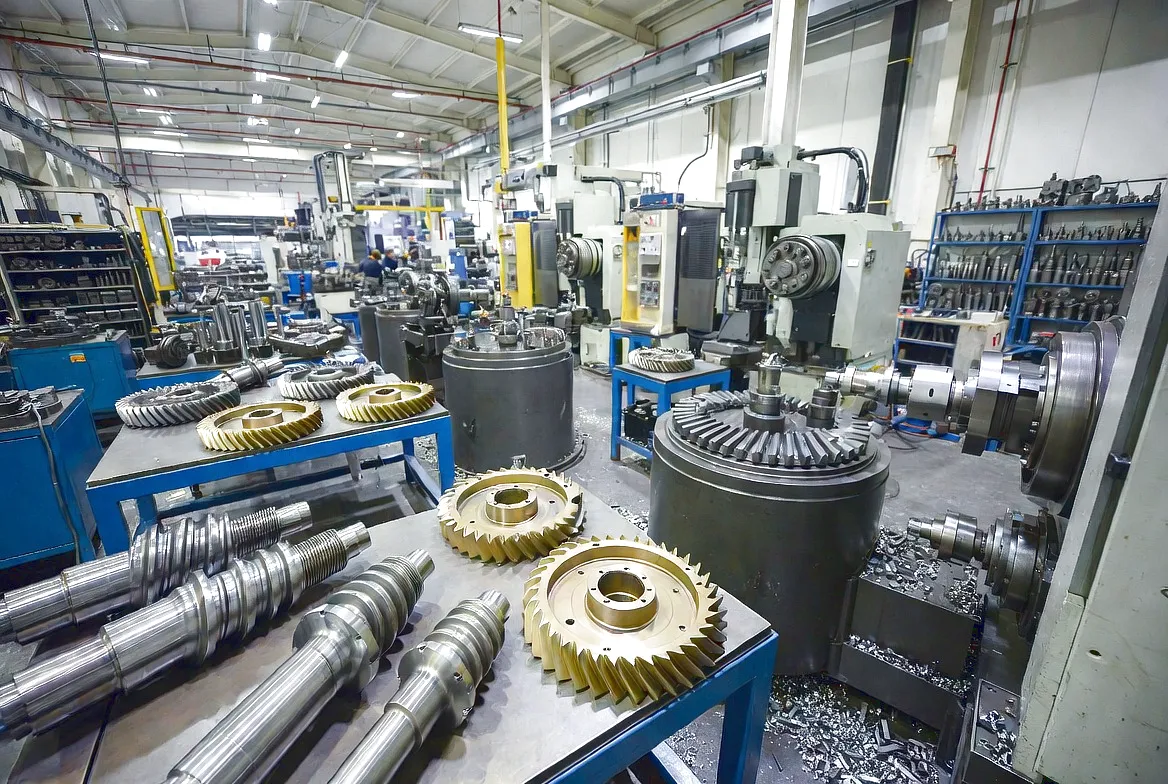
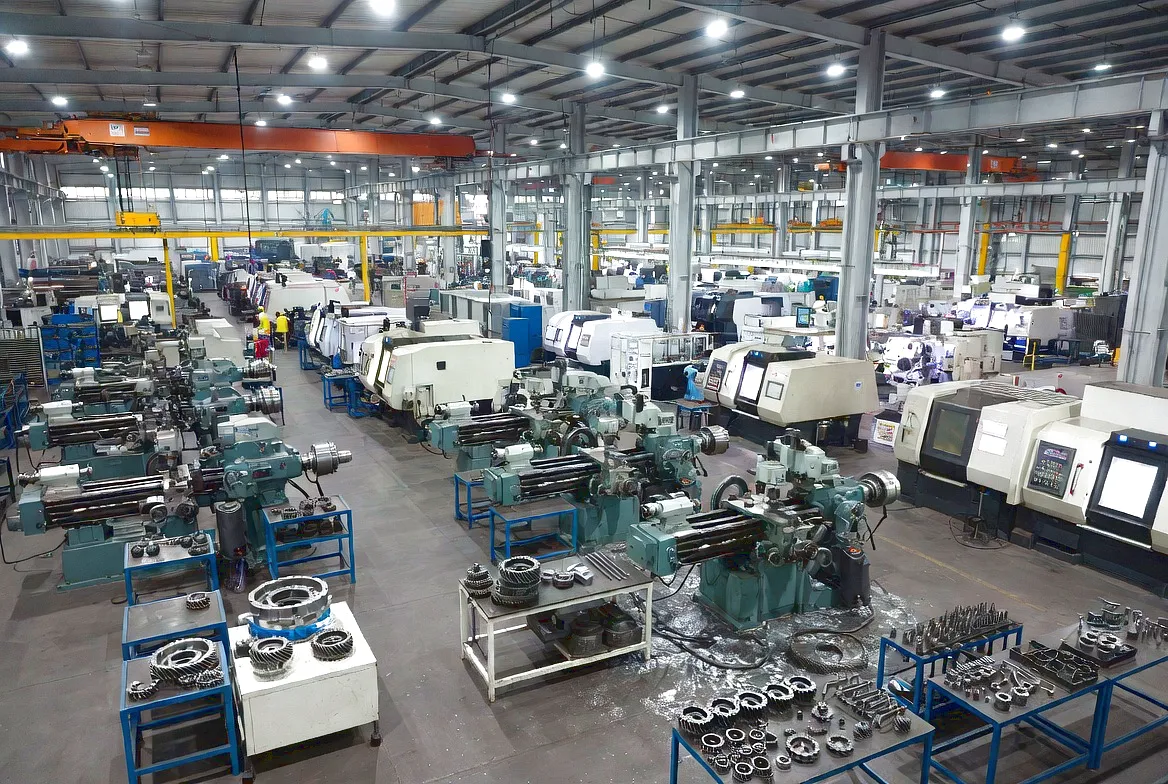 Ever Power operates a purpose-built precision engineering facility equipped with five-axis CNC grinding centres, closed-loop CNC hobbing machines with sub-arc-second servo resolution, and a dedicated heat treatment shop capable of atmospheric gas carburising and oil quench. The manufacturing process flows from billet steel procurement — certified to DIN 17212 or BS 970 Part 1 as appropriate — through roughing, pre-hardening normalisation, precision thread grinding, and final dimensional verification on Zeiss coordinate measuring machines to traceable calibration standards. Every worm gear shaft that leaves the facility is accompanied by a material certificate, gear inspection chart confirming lead, pitch, and tooth form accuracy to DIN 3975 or AGMA 6022 Class 12 standard, and hardness test records.
Customisation is at the core of Ever Power’s value proposition to UK and European industrial customers. Standard catalogue shafts are supported by a rapid-draw custom service: customers submit shaft length, keyway profile, flange drilling pattern, thread module, number of starts, centre distance, and surface treatment requirements, and Ever Power’s engineering team returns a dimensioned 3D model and DFM report within 48 hours. Prototype batches of five to ten pieces are typically completed within three to four weeks, supporting OEM new product development timelines. For series production, proven tooling is retained in the Ever Power dedicated rack, enabling repeat orders to be shipped in four to six weeks from order placement — a lead time that compares favourably with European domestic manufacturers for bespoke precision gearing.
Ever Power’s quality management system operates under ISO 9001:2015 certification, and the company maintains an active ISO 14001 environmental certification relevant to its heat treatment and surface finishing operations. The supply chain extends to certified steel mills in Europe and Asia, with incoming material subject to spectrographic composition verification before entering the production flow. Bearing journal diameters are ground to k5 or h6 tolerances as standard, with tighter tolerances to j5 available for high-speed shaft applications. Keyways are machined to DIN 6885 form A or B, and SAE rectangular spline profiles are available as a no-cost option for customers designing to North American standards — a common requirement when supplying into the global agricultural OEM market from a UK base.
✓ ISO 9001:2015
✓ DIN 3975 / AGMA 6022
✓ 3–4 week prototype
✓ Custom keyways & flanges
✓ Stainless & alloy steel
Installation, Lubrication, and Maintenance Guidance
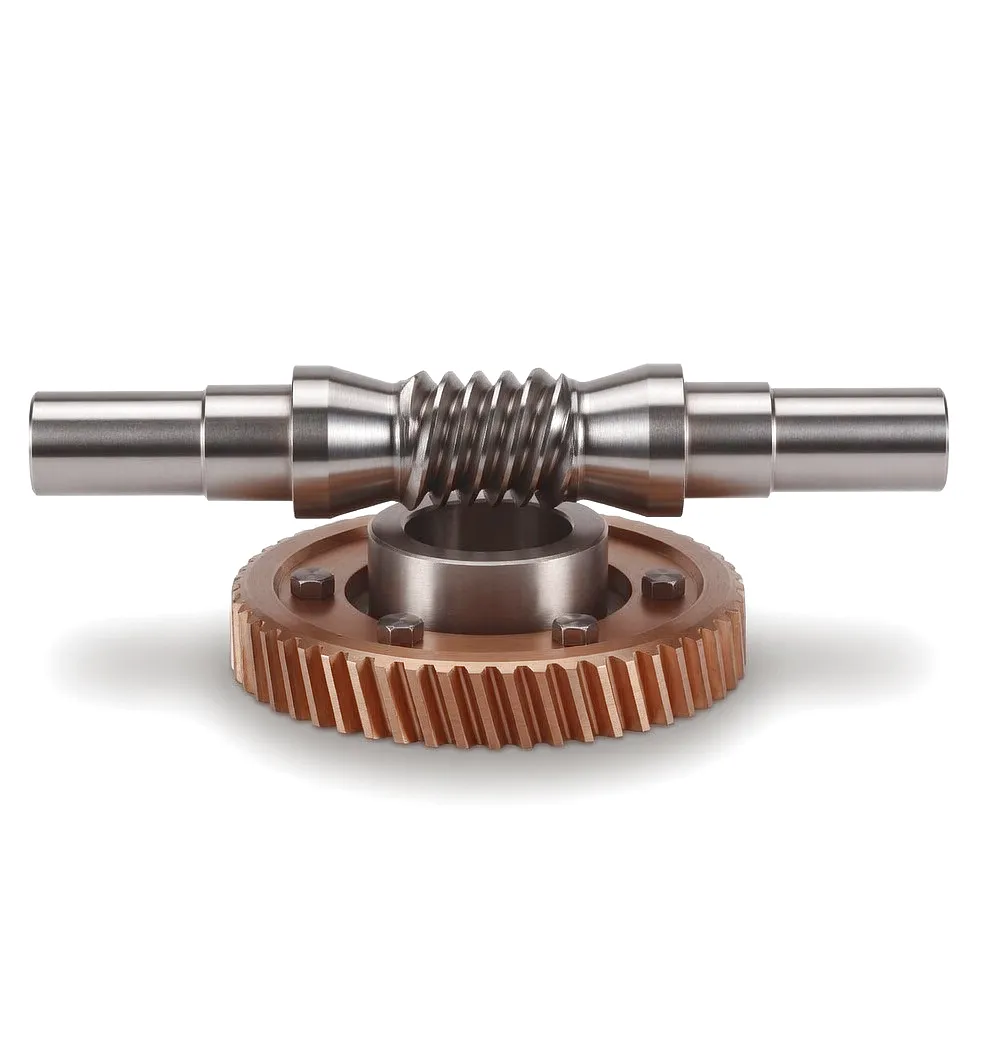
Correct installation practice is as important as accurate specification when it comes to realising the designed life of a worm gear shaft assembly. The input shaft must be aligned with the driving motor coupling within the tolerance band stated in the gearbox documentation — typically 0.05 mm parallel misalignment and 0.1 degree angular misalignment for standard foot-mounted units — because misalignment introduces bending moments at the bearing journals that add directly to the calculated load case and accelerate bearing fatigue. Shaft-to-housing fits must match the tolerance grades specified: interference fits (H7/k6 or H7/m6) are appropriate for applications with shock loading or reversing duty, while clearance fits suitable for easy assembly are reserved for light-duty, unidirectional drives where the keyway transmits the full torque. Under-tightening of bearing lock nuts — a common shortcut on site — allows axial float of the worm shaft during operation, disrupting the tooth contact pattern and generating edge loading that scars the wheel teeth.
Lubrication regime is the single most influential variable in worm gearbox service life after initial specification accuracy. The sliding contact between worm thread and wheel tooth generates substantial frictional heat, and the lubricant must simultaneously reduce friction coefficient, carry away heat, and protect surfaces from micropitting fatigue. ISO VG 220 or VG 320 mineral gear oil with EP additives and oxidation inhibitors is the baseline recommendation for ambient temperatures between 10 °C and 40 °C in UK indoor environments. For outdoor installations subject to the sub-zero temperatures encountered in Scottish highland agricultural operations or Yorkshire Dales quarrying sites, synthetic ISO VG 150 polyalphaolefin (PAO) oil maintains adequate film thickness across the full temperature range without the viscosity-temperature degradation that affects mineral oils. Oil change intervals of 5,000 operating hours or 12 months (whichever occurs first) are standard for enclosed oil-lubricated gearboxes, with the first oil change recommended at 500 hours to flush break-in wear debris. Grease-lubricated worm gear shafts in agricultural sealed units require repacking at each season’s end maintenance service.
🏆
Customer Success Story
Sheffield Recycling Systems: Reducing Drive Failures by 74% with Custom Worm Gear Shafts
 A mid-sized materials recovery facility operating a 40,000-tonne-per-year municipal waste processing line in Sheffield’s Lower Don Valley industrial corridor was experiencing repeated premature failure of the worm gear shaft drives on their primary trommel screen and ferrous extraction conveyor. The existing off-the-shelf drives were sourced from a European catalogue supplier and specified to ISO 6336 load calculations, but they consistently showed wheel tooth pitting failure at 8,000 to 10,000 operating hours — well short of the 25,000-hour target between major overhauls aligned to the facility’s capital replacement programme. Downtime events averaged 14 hours of lost production per failure, at an estimated cost of £3,200 per incident in tipping revenue foregone and emergency maintenance labour.
The facility’s engineering manager contacted Ever Power with detailed failure analysis data: metallurgical cross-sections of failed wheel teeth showed subsurface crack initiation at approximately 0.6 mm depth, consistent with insufficient case depth on the mating worm shaft allowing Hertzian contact stress to exceed the fatigue limit of the wheel material. The trommel application also imposed periodic peak torques of 2.1 times the rated figure when large contaminant items jammed the screen apertures, and the existing design had no service factor applied for this overload condition.
Ever Power’s engineering response included redesigning the worm shaft to 42CrMo4 with carburising to 1.2 mm case depth and 60–62 HRC surface hardness, increasing the module from 4 to 5 to reduce contact stress at nominal torque, and applying a 2.5x service factor in the rating calculation to absorb the documented overload events. The revised design used a four-start worm with 25:1 ratio to improve operating efficiency from 61% to 78%, reducing heat rejection and extending oil life. First delivery of ten replacement shaft sets was made within five weeks of order confirmation — meeting the facility’s scheduled annual maintenance window. Over the subsequent 30 months, the Sheffield facility reported zero worm gear shaft-related failures across all ten drives, a reduction in unplanned downtime by 74%, and an annualised saving in maintenance and lost production costs exceeding £38,000 against a total capital investment in the replacement shafts of £12,600.
★★★★★
“The case depth specification Ever Power applied to our replacement shafts was the key change. Their metallurgical reasoning was sound, their delivery was on schedule for our planned shutdown, and we have not had a single failure since installation across all ten drives. The quality is demonstrably better than what we were buying before at a comparable price.”
— Engineering Manager, Materials Recovery Facility, Sheffield
★★★★★
“We specified a non-standard shaft length and an unusual keyway depth to clear a hydraulic line on our trommel frame. Ever Power turned around a 3D model for sign-off within 36 hours and the machined shafts matched the drawing exactly. Their ability to do genuine custom work at production volumes, not just one-off prototypes, is what sets them apart from other suppliers we have used.”
— Maintenance Superintendent, Aggregate Processing Plant, West Yorkshire
★★★★★
“Our valve actuator application needed 316L stainless shafts with nitrogen hardening to meet the corrosion requirements of the water treatment environment, and we needed material traceability certificates conforming to WRAS standards. Ever Power provided full documentation including spectrographic analysis records. Lead time was four weeks for the first batch of 24 shafts, which is faster than our previous domestic UK supplier was managing.”
— Procurement Engineer, Utilities Infrastructure Contractor, Thames Valley
How to Select the Right Worm Gear Shaft for Your Application
Specifying a құрт тәрізді беріліс білігі correctly begins with a thorough characterisation of the application’s mechanical demands and environmental constraints. The starting point is the driven machine’s required output speed and the available input speed from the motor — these define the gear ratio needed, from which the number of worm starts and wheel tooth count can be derived. Output torque under worst-case loading — including service factors for shock, inertial, and starting torque — then determines the module and centre distance. Engineers using this process should apply the service factor tables in AGMA 6034 or BS 721 Part 1 rather than relying solely on the nominal rated torque from a catalogue, as worm gearboxes are particularly sensitive to sustained overloading due to the thermal limitations of their enclosed lubrication systems.
| Specification Factor | Key Consideration | Reference Standard |
|---|
| Speed Ratio | Motor rpm / required output rpm; select starts and tooth count accordingly | BS 721 Part 1 |
| Service Factor | 1.25–2.5 depending on shock level, duty cycle, and start frequency | AGMA 6034-B92 |
| Thermal Rating | Verify continuous thermal power rating at ambient temperature; add cooling fan if needed | DIN 3996 |
| Self-Locking | Lead angle below 4.5° for positive locking with mineral oil; verify at operating temperature | ISO/TR 14179 |
| Material Grade | Alloy steel case-hardened for standard; stainless for corrosive; duplex for marine | BS EN 10084 |
| Lubrication Method | Oil bath for enclosed continuous duty; grease for sealed-for-life or agricultural | ISO VG 220/320 |
| Mounting Position | Flange, foot, or hollow bore; confirm oil level position matches housing mounting orientation | IEC 60034-7 |
Frequently Asked Questions
Common questions from UK engineers, procurement managers, and OEM designers
How do I know what gear ratio I need for a worm gear shaft in my UK conveyor system?
+
You calculate the required ratio by dividing your motor’s output speed (typically 1,450 or 2,900 rpm from a standard 50 Hz IEC motor) by your desired conveyor shaft speed. For example, a belt conveyor needing a head pulley speed of 29 rpm driven by a 1,450 rpm motor requires a 50:1 ratio. Always verify the ratio against the catalogue offering in increments of 5:1 to 10:1 and choose the nearest ratio that gives you the speed you need at the motor’s nameplate rpm. If you are unsure, Ever Power’s team can perform the full drive train calculation for you — contact [email protected] with your load data.
What is the typical price or cost range for a custom worm gear shaft from a UK supplier like Ever Power?
+
Pricing for custom worm gear shafts depends on diameter, module, number of starts, material grade, heat treatment depth, surface finish, and quantity. As a broad guide, small alloy steel shafts in the 20–40 mm diameter range typically fall in the £45 to £150 per piece range for batches of 20 to 50 pieces; medium-duty shafts of 50–80 mm diameter in alloy steel with carburising and precision grinding range from £180 to £450 per piece; and heavy-duty shafts above 100 mm diameter start from around £600 per piece for 42CrMo4 with case hardening to 62 HRC. Stainless steel grades command a 30 to 50 percent premium. To receive an accurate quote for your specific requirement, email the drawing or specification to [email protected].
Which industries in Birmingham and Sheffield most commonly specify worm gear shaft drives in their machinery?
+
In Birmingham, the primary sectors using worm gear shaft drives include automotive component manufacturing (conveyor and press line drives), food and beverage processing along the M42 corridor, and materials handling for the region’s extensive logistics parks. In Sheffield, the steel processing industry accounts for a significant portion of worm gear shaft demand — used in coiler and decoiler drives, roller table feeds, and cooling bed actuators. The recycling and waste processing sector concentrated in Sheffield’s Lower Don Valley is also a major user, as are the region’s specialist precision engineering subcontractors making sub-assembly drives for sectors ranging from defence to medical device manufacture.
How long does it take to get a quote and delivery from an overseas worm gear shaft supplier to the UK, and where can I get one?
+
Ever Power typically responds to new enquiries within 24 hours with a commercial quotation for standard-range shafts and within 48 hours for custom designs requiring engineering review. Prototype quantities of five to ten custom pieces are delivered in three to four weeks from drawing approval. For series production orders, lead time is four to six weeks, and air freight delivery to major UK ports or direct to site can be arranged to compress the total elapsed time. All shipments are accompanied by EN 10204 3.1 material certificates, gear inspection reports, and customs documentation compliant with UK Great Britain Import requirements. Contact [email protected] with your requirements and a target delivery date.
What are the main reasons a worm gear shaft fails prematurely in a UK industrial application?
+
The most frequent causes of premature worm gear shaft failure in UK applications are: inadequate case hardening depth causing subsurface fatigue crack initiation under high contact stress; insufficient service factor in the original specification leaving no margin for actual peak loads; incorrect lubricant selection or degraded oil causing breakdown of the hydrodynamic film at the tooth mesh; shaft misalignment generating bending fatigue at bearing journal fillets; and ingress of water or abrasive contamination through worn lip seals, which is particularly prevalent in outdoor agricultural and quarrying installations. Addressing the root cause rather than simply replacing like-for-like is essential for breaking the failure cycle — something Ever Power’s application engineering team can assist with through failure analysis reviews.
When should I choose a worm gear shaft over a helical or bevel gear set for a new machine design in the UK?
+
Choose a worm gear shaft when you need any of the following: a gear ratio above 20:1 in a single stage, a right-angle drive without additional bevel stages, a self-locking hold function without a mechanical brake, low noise output in a noise-sensitive workplace under UK HSE guidelines, or compact packaging within a tight envelope. Worm drives are less suitable where continuous duty efficiency above 85 percent is critical — in those cases helical or helical-bevel arrangements are more appropriate — and where input speeds exceed 3,000 rpm continuously, as the sliding heat generation at high speeds demands cooling systems that add cost and complexity. For all other combinations of right-angle drive, high ratio, and moderate-to-low speed, the worm gear shaft remains the engineering-preferred and commercially optimal choice.
Who are the best worm gear shaft suppliers for OEM manufacturers based in the UK who need custom designs at competitive prices?
+
For UK OEM manufacturers requiring custom-designed worm gear shafts at production volumes with technical support and traceable quality documentation, Ever Power offers a compelling combination of precision manufacturing capability, application engineering support, fast prototype turnaround, and competitive pricing. The combination of five-axis CNC grinding, in-house heat treatment, Zeiss CMM inspection, and ISO 9001:2015 quality management enables Ever Power to consistently deliver to DIN 3975 Class 12 or better across a broad range of shaft sizes and materials. UK OEM design teams can engage directly with Ever Power’s engineering team by emailing [email protected] with a requirement brief or by uploading a drawing for immediate review and quotation.
Specify Your Worm Gear Shaft with Ever Power
Whether you need a direct replacement shaft, a custom-engineered design for a new OEM application, or engineering advice on an existing failure — Ever Power’s team is ready to help.
edit by gzl