Worm Gear Shaft: The Complete Engineering Guide for Industrial Transmission Applications
Published by Ever Power Engineering | Technical Series | UK Edition
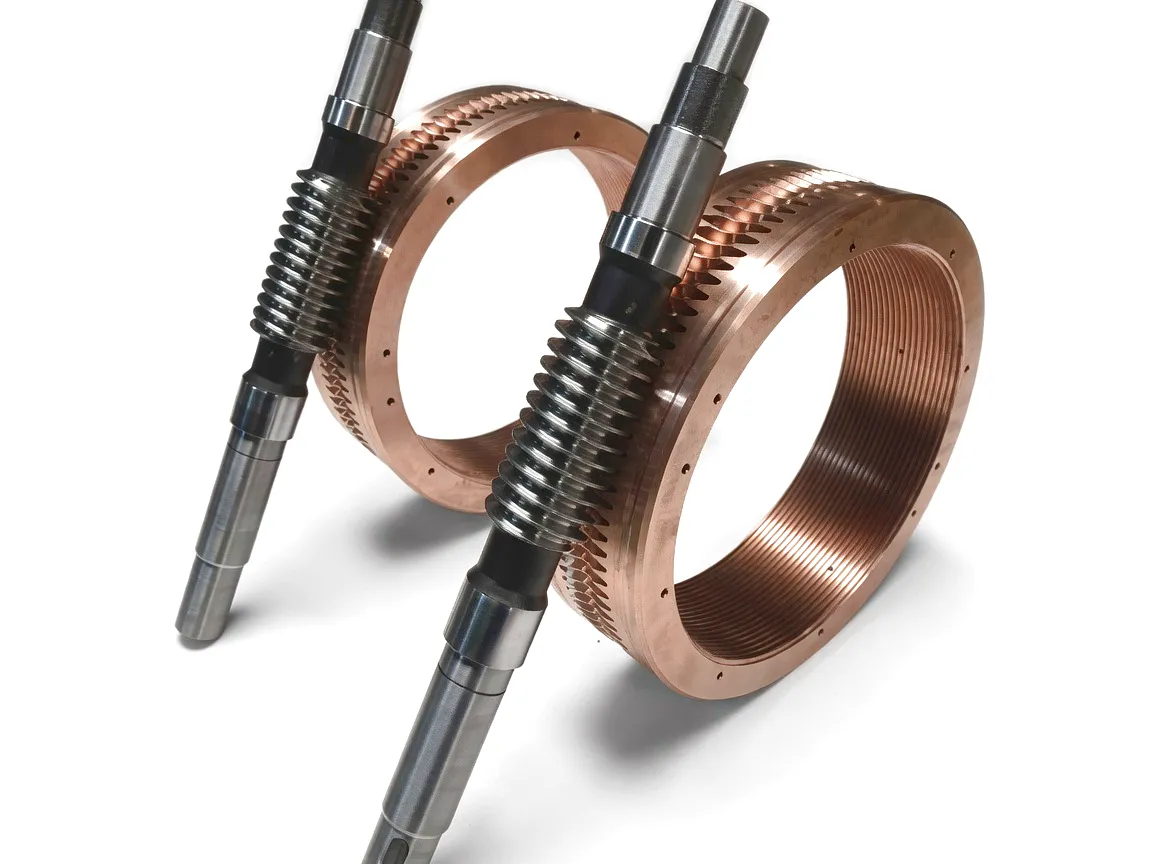
The worm gear shaft stands as one of the most quietly consequential components in modern mechanical power transmission. Whether buried inside a conveyor system at a Birmingham logistics hub, rotating the yaw mechanism of a wind turbine on the Yorkshire coast, or driving precision feed motion in a Sheffield CNC machining centre, this component transforms rotational speed into usable torque with a reliability that other gear configurations simply cannot match. Its helical thread geometry engages a mating worm wheel in a continuous sliding action, generating high reduction ratios in a compact axial footprint — a property that makes it indispensable wherever space, load, and output precision intersect. Engineers across UK manufacturing have long recognised the worm gear shaft not as a commodity part but as a precision-engineered answer to the specific demand for high torque, self-locking behaviour, and smooth, vibration-reduced motion. Understanding its construction, material science, and application logic is the foundation for specifying it correctly and extracting the full value of its design.
Need a worm gear shaft tailored to your drive system specifications? Our engineers are ready.
How the Worm Gear Shaft Works: The Mechanical Principle
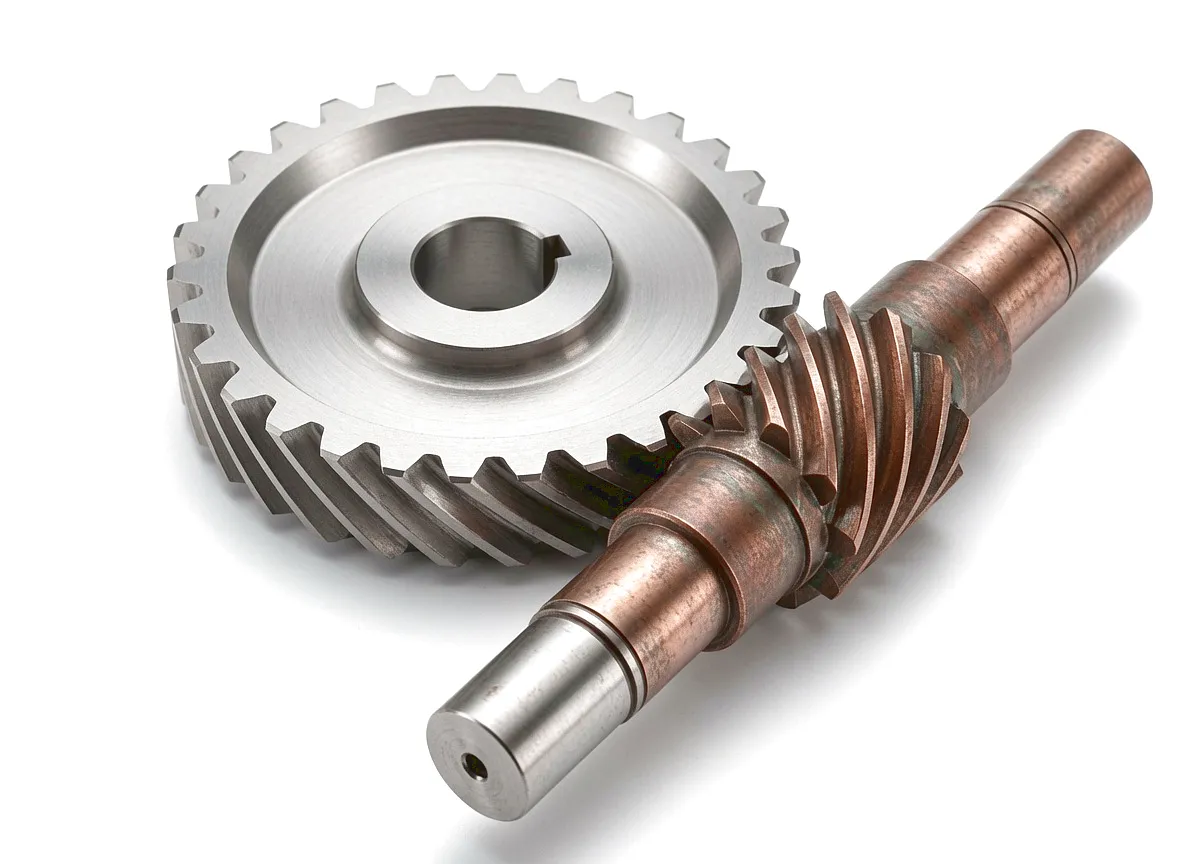
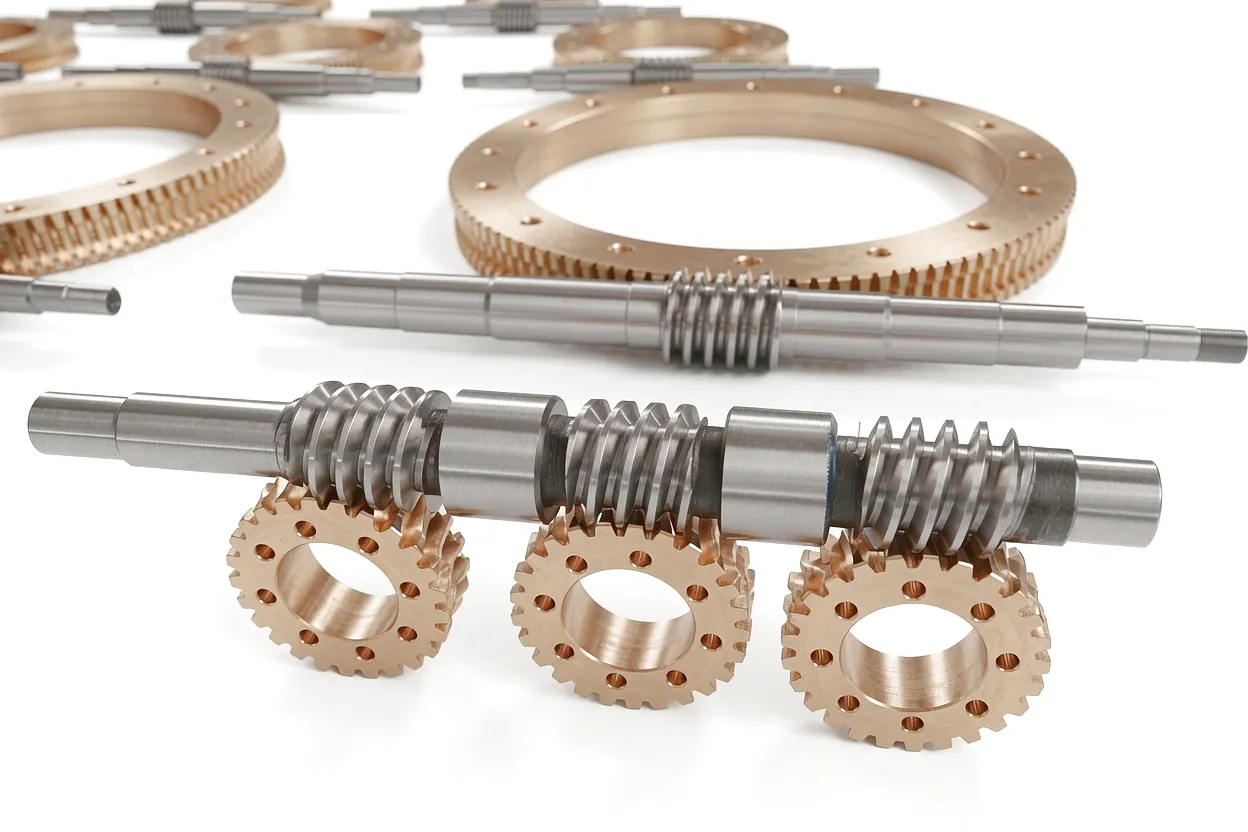
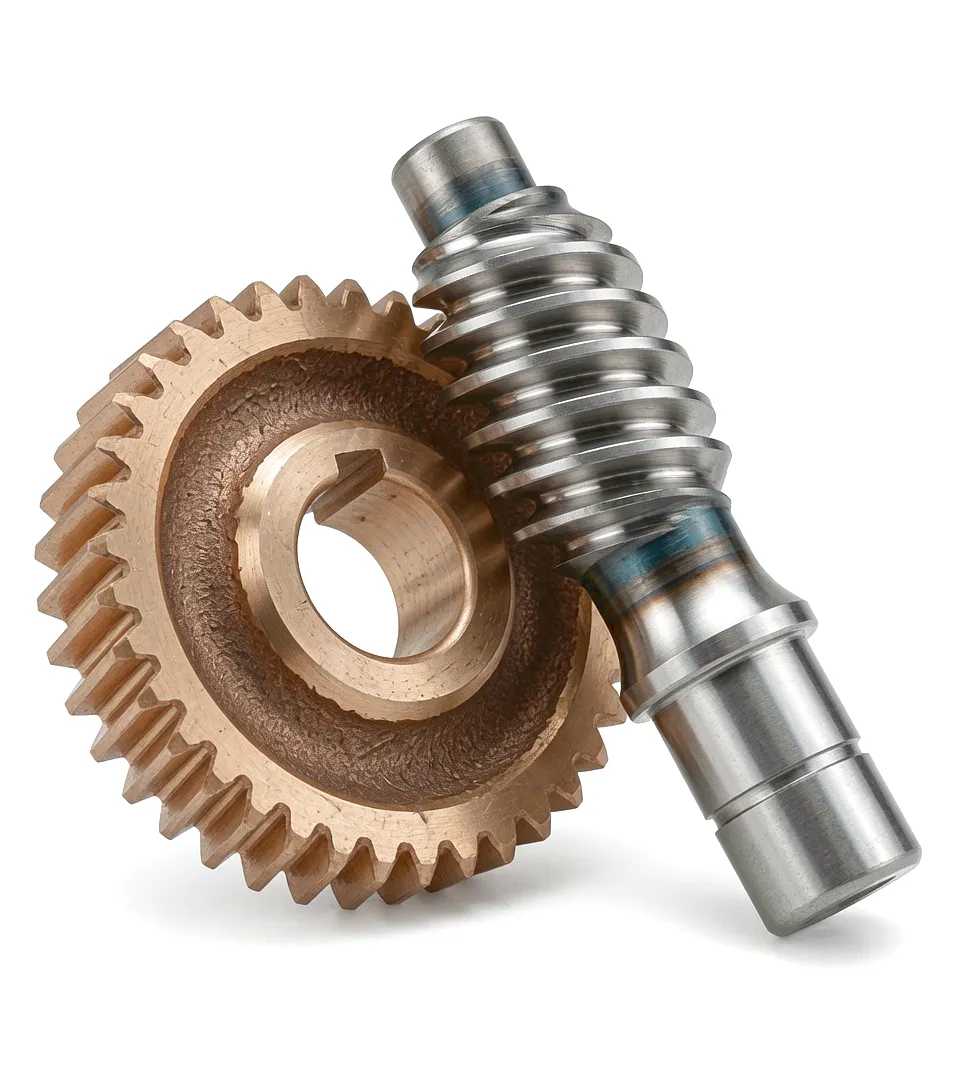
At its core, the worm gear shaft operates on the principle of a screw thread meshing against the teeth of a helical worm wheel. The shaft itself is the driving element — machined with one or more helical threads (known as starts) that wrap continuously around a cylindrical or globoidal body. As the shaft rotates on its axis, the thread pushes against the worm wheel teeth in a sliding engagement, causing the wheel to rotate at a dramatically reduced speed. The reduction ratio is determined by dividing the number of teeth on the worm wheel by the number of starts on the worm shaft: a single-start worm engaging a 40-tooth wheel delivers a 40:1 reduction in a single stage. This capacity for very high single-stage reduction is a fundamental design advantage over spur or helical gear pairs, which typically require multiple stages to achieve equivalent ratios.
The sliding contact nature of the engagement also introduces one of the worm gear shaft’s most valued properties: inherent self-locking. When the helix angle of the worm is below the friction angle of the mesh, back-driving from the wheel to the shaft becomes mechanically impossible under static conditions. This means a worm gear shaft can hold a load without any external braking mechanism — a property exploited in lifting equipment, gate valve actuators, and conveyor systems that must hold position on power-down. The geometry of the thread profile — typically an Archimedes, involute, or ZK (convolute) form — governs efficiency, contact stress distribution, and the smoothness of the velocity ratio under dynamic load. Precise machining of the lead angle and pressure angle is critical: even slight deviations translate into uneven wear patterns, elevated operating temperatures, and premature fatigue failure of the bronze wheel. Modern CNC gear grinding centres, operating to ISO 1328 tolerances, allow these parameters to be held within microns across production batches.
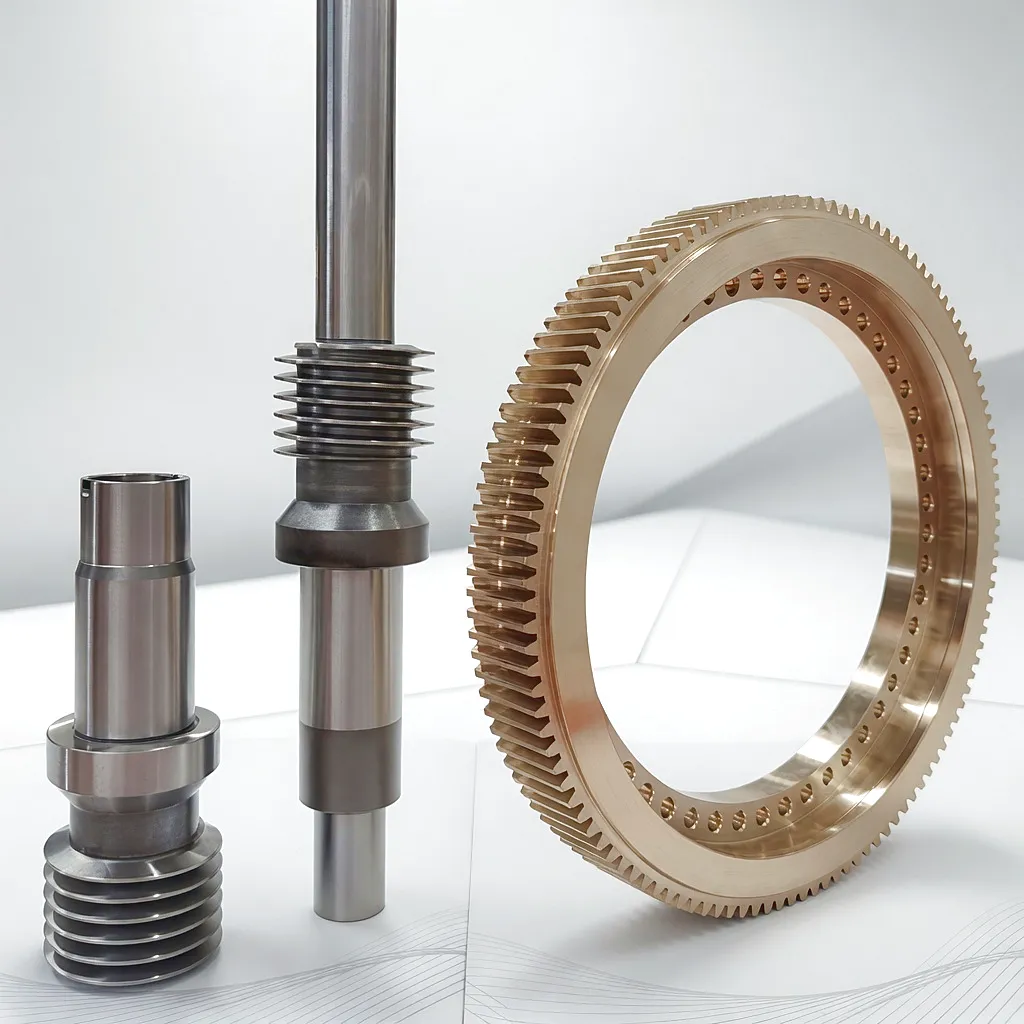 The axial thrust forces generated during worm gear shaft operation are significant and must be carefully managed in the bearing arrangement. Unlike a spur gear which loads its shaft predominantly in the radial direction, a worm shaft generates substantial axial thrust in addition to radial and bending loads. Proper bearing selection — typically a combination of cylindrical roller bearings for radial loads and angular contact or tapered roller bearings for axial loads — is therefore integral to the complete worm gear shaft assembly design. Engineers specifying these assemblies for UK industrial plant frequently reference BS ISO 6336 and AGMA 6022 for gear load capacity calculations alongside BS ISO 281 for bearing life assessment, ensuring that the bearing system complements the calculated gear tooth life rather than becoming the limiting component in service.
Material Science: What Goes Into a High-Performance Worm Shaft
Case-Hardening Steel (20CrMnTi / 20MnCr5)
The most widely used material for worm shafts in medium-to-heavy industrial service. After machining, the shaft undergoes carburising to raise the surface carbon content, followed by quench hardening to achieve case hardness of 58–62 HRC. The core remains tough at 30–40 HRC, providing excellent impact resistance. Ground and superfinished thread flanks reduce friction and improve lubrication film formation. UK customers operating in food processing or pharmaceutical environments often specify stainless-grade alternatives.
Alloy Steel (42CrMo4 / 4140)
Chromium-molybdenum alloy steel offers a high tensile strength typically in the 900–1100 MPa range after induction hardening, combined with excellent fatigue resistance under cyclic torsional loading. This grade suits larger worm shafts in heavy conveyor drives, extruder gearboxes, and marine deck machinery. Its through-hardening behaviour makes it predictable under the combined bending and torsional stresses present at the thread root during high-torque engagement.
Stainless Steel (316L / 17-4 PH)
Austenitic stainless grades provide corrosion resistance for wet, washdown, or chemically aggressive environments — characteristics demanded by UK breweries, coastal infrastructure operators, and water treatment plant engineers. 17-4 PH precipitation-hardening stainless delivers both corrosion immunity and sufficient surface hardness through age-hardening, achieving surface hardness around 40–43 HRC without the dimensional risk of carburising. It is the preferred material for worm gear shaft assemblies where FDA-compliant lubrication is also mandated.
Surface Treatments & Coatings
Beyond base material, the performance of a worm gear shaft is substantially influenced by surface treatment. Phosphating provides a sacrificial layer that retains break-in lubricant and suppresses adhesive wear during the initial running period. Hard chrome plating raises surface hardness and reduces friction on shafts operating in abrasive dust environments. For high-speed, high-temperature applications — such as extrusion and plastics processing — physical vapour deposition (PVD) coatings of TiN or DLC provide a hard, low-friction surface that extends service life significantly beyond uncoated counterparts.
Worm Gear Shaft — Technical & Performance Parameters
The table below covers the principal design and performance parameters engineers and procurement teams use when specifying a worm gear shaft assembly for industrial drive applications. Values listed reflect the standard production range; bespoke ratios, extended shaft lengths, and non-standard centre distances are available on request from Ever Power.
| Parameter | Specification / Range | Notes |
|---|---|---|
| Module (m) | 1 – 20 mm | Standard ISO modules; custom available |
| Centre Distance (a) | 25 – 800 mm | Matched to wheel OD and shaft diameter |
| Gear Ratio (i) | 5:1 – 100:1 (single stage) | Up to 3000:1 in multi-stage configuration |
| Input Speed | Up to 3000 rpm | Higher speeds consult engineering team |
| Output Torque | 5 N·m – 50,000 N·m | Dependent on module, ratio, and material |
| Lead Angle (gamma) | 3° – 30° | Below ~6° typically self-locking |
| Pressure Angle | 14.5° / 20° standard | 20° preferred for higher load capacity |
| Worm Shaft Material | 20CrMnTi / 42CrMo4 / 316L SS | Surface hardness 58–62 HRC after case hardening |
| Mating Wheel Material | Phosphor bronze (CuSn12) / Cast iron | Bronze preferred for continuous operation |
| Mechanical Efficiency | 50% – 92% | Higher with multi-start, lower lead angle boosts ratio at cost of efficiency |
| Thread Profile | Archimedes / Involute / ZK (Convolute) | ZK offers best contact geometry for high loads |
| Surface Finish (Ra) | 0.4 – 1.6 microns | CNC ground and superfinished flanks standard |
| Operating Temperature | -20°C to +120°C continuous | Special seals available for higher temps |
| IP Rating (assembled gearbox) | IP55 / IP65 standard; IP67 optional | Specified at assembly stage |
| Tolerance Grade | ISO 1328 Class 5–8 | Class 5–6 for precision positioning applications |
Core Technical Advantages of the Worm Gear Shaft
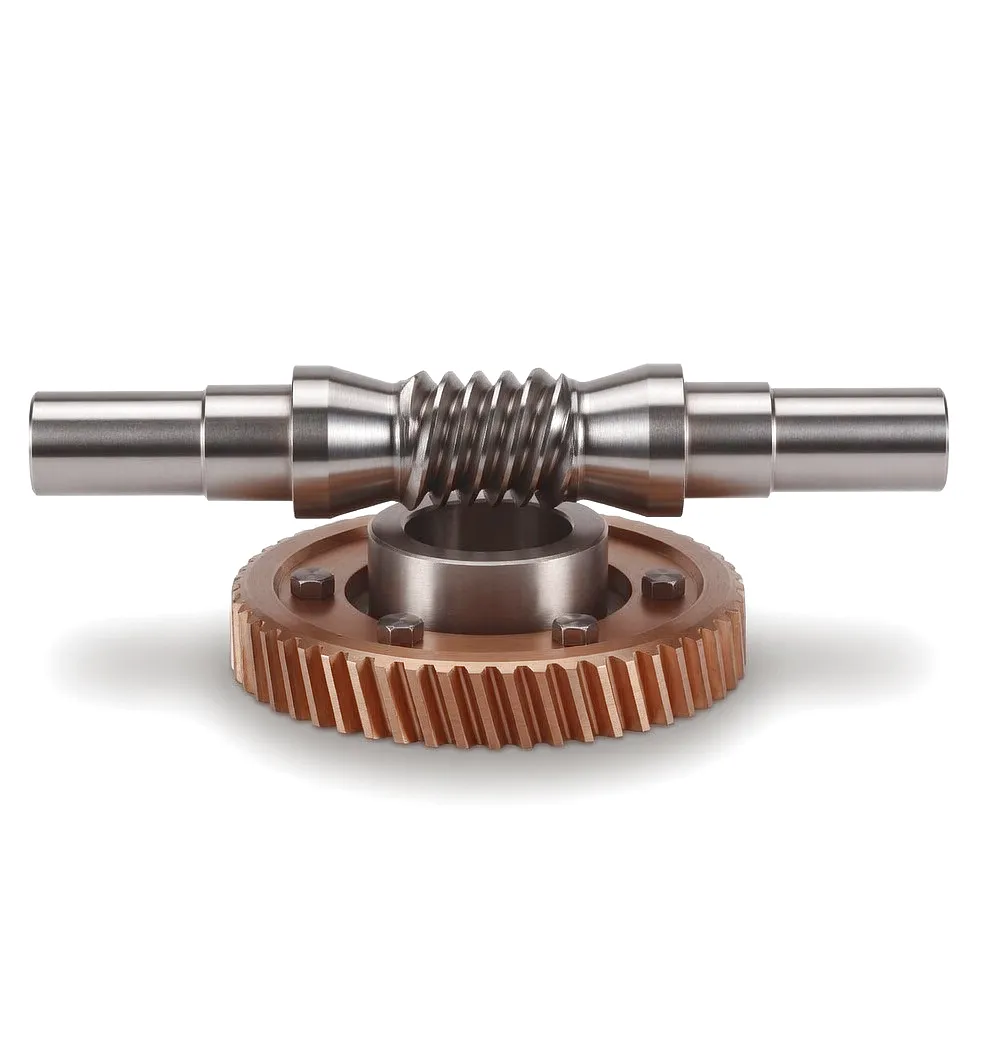 The worm gear shaft earns its place in industrial drive trains through a combination of attributes that no single alternative component replicates. The high single-stage reduction capability eliminates the need for multi-stage gearing, directly reducing gearbox size, weight, and manufacturing cost. For engineers working within constrained machine envelopes — a constraint encountered constantly in material handling equipment, automated packaging lines, and agricultural machinery across the UK Midlands manufacturing corridor — this compactness translates into real design freedom.
The self-locking characteristic at low lead angles removes the requirement for an external brake in many lifting and positioning applications. This reduces both the bill of materials and the number of potential failure modes in the system. A worm gear shaft that reliably self-locks under static load also improves safety certification compliance, particularly relevant to UK Machinery Directive (Supply of Machinery Safety Regulations 2008) requirements for drive systems in lifting machinery and automated gates.
✅ High Ratio Compactness
Up to 100:1 in one stage, eliminating complex multi-stage gearbox designs and reducing overall drivetrain length.
✅ Intrinsic Self-Locking
No external braking hardware required in many applications, reducing system complexity and improving operational safety.
✅ Smooth, Quiet Operation
Continuous sliding tooth engagement generates significantly less noise and vibration than comparable spur or bevel drives.
✅ Right-Angle Drive in One Unit
Input and output shafts are inherently perpendicular, providing right-angle power redirection without additional bevel stages.
✅ High Shock Load Tolerance
The sliding engagement absorbs shock loads more effectively than involute spur gear pairs, making the worm gear shaft suitable for crushers, mixers, and stirrer drives.
✅ Wide Torque Range
From light-duty 5 N·m instrument drives to 50,000 N·m industrial mill drives, the worm gear shaft scales across the full industrial torque spectrum.
Industrial Application Scenarios
🌋 Wind Turbine Yaw & Pitch Systems

Installed wind energy capacity has become a cornerstone of the UK’s and global renewable energy portfolio, and within megawatt-class turbines, worm gear shaft transmissions carry two critical responsibilities: yaw control and blade pitch adjustment. The yaw drive rotates the entire nacelle assembly to track wind direction, requiring a drive system that holds position reliably under enormous aerodynamic loads — precisely the condition that the self-locking worm gear shaft handles without any supplementary holding brake. In a typical 2.5 MW onshore turbine, four to eight worm gear shaft actuator assemblies work in coordinated rotation to orient a nacelle weighing over 80 tonnes, each required to respond to a yaw control signal within seconds while resisting back-driven rotation from lateral wind forces.
The pitch system, which controls the angle of each blade to regulate power output and provide aerodynamic braking, places even more demanding cyclic loading requirements on the worm gear shaft. Each blade undergoes continuous small-angle corrections throughout its operational life — potentially millions of cycles — and the shaft must sustain this fatigue loading while maintaining backlash within tight limits to prevent blade flutter. Case-hardened 20CrMnTi shafts paired with centrifugally cast phosphor bronze worm wheels, running in ISO VG 460 synthetic gear oil, represent the current technical standard for this application. Offshore installations in the North Sea additionally require IP67-rated gearbox housings and enhanced corrosion protection on all external shaft surfaces, specifications that Ever Power routinely supplies to turbine OEMs and aftermarket service operators across the UK’s growing renewable energy sector.

Conveyor & Material Handling
Distribution centres and logistics hubs across Milton Keynes, Coventry, and the East Midlands rely heavily on worm gear shaft gearboxes in inclined belt conveyors and accumulation roller systems. The self-locking property prevents belt rollback on powered-off inclines without secondary brake hardware, reducing both capital cost and maintenance burden. Robust sealed gearbox designs withstand the dust, vibration, and shift-pattern demands of 24/7 operations.

Food Processing & Mixers
In food manufacturing facilities across the North West and Scotland, worm gear shaft assemblies drive ribbon blenders, dough mixers, and filling machines. The right-angle configuration allows motor-gearbox assemblies to mount directly to the vessel frame without overhang shafts, keeping the floor footprint minimal. Stainless shaft variants with NSF-certified lubricants meet UK Food Standards Agency and EC 1935/2004 food contact material requirements while delivering the torque needed for dense product mixing.

Packaging Machinery & Automation
Precision-registered cam drives, indexing tables, and web tension control systems in UK packaging facilities from Bristol to Leeds use compact worm gear shaft units where positional repeatability is critical. Multi-start worm configurations trading some self-locking for improved efficiency are employed on these higher-cycle applications, where the primary demand is accurate angular positioning over hundreds of thousands of actuations per day with minimal thermal rise in the gearbox housing.
⚙ Agricultural Machinery
Combine harvester header drives, straw choppers, and seed drill metering mechanisms in UK agricultural equipment use worm gear shaft assemblies precisely because of their robustness against the unpredictable shock loading of field harvesting. The sealed housing protects the worm thread from abrasive chaff and grit contamination that would rapidly destroy the tooth flanks of an open gear pair. Sheffield and Birmingham tooling suppliers regularly specify these components for OEM supply to major UK agricultural equipment assemblers.
Further Application Areas
🔧 CNC Machine Tool Feeds
Precision rotary table drives and B-axis positioning in machining centres.
🚾 Gate & Door Actuators
Industrial security gates, flood barrier actuators, and dock leveller drives across UK infrastructure projects.
⚓ Marine Deck Machinery
Anchor windlass, hatch cover, and cargo ramp drives on commercial vessels operating from UK ports.
💧 Water Treatment
Sluice gate operators, aerator paddle drives, and filter press mechanisms at UK water utilities.
Ever Power: Precision Manufacturing & Custom Worm Gear Shaft Solutions
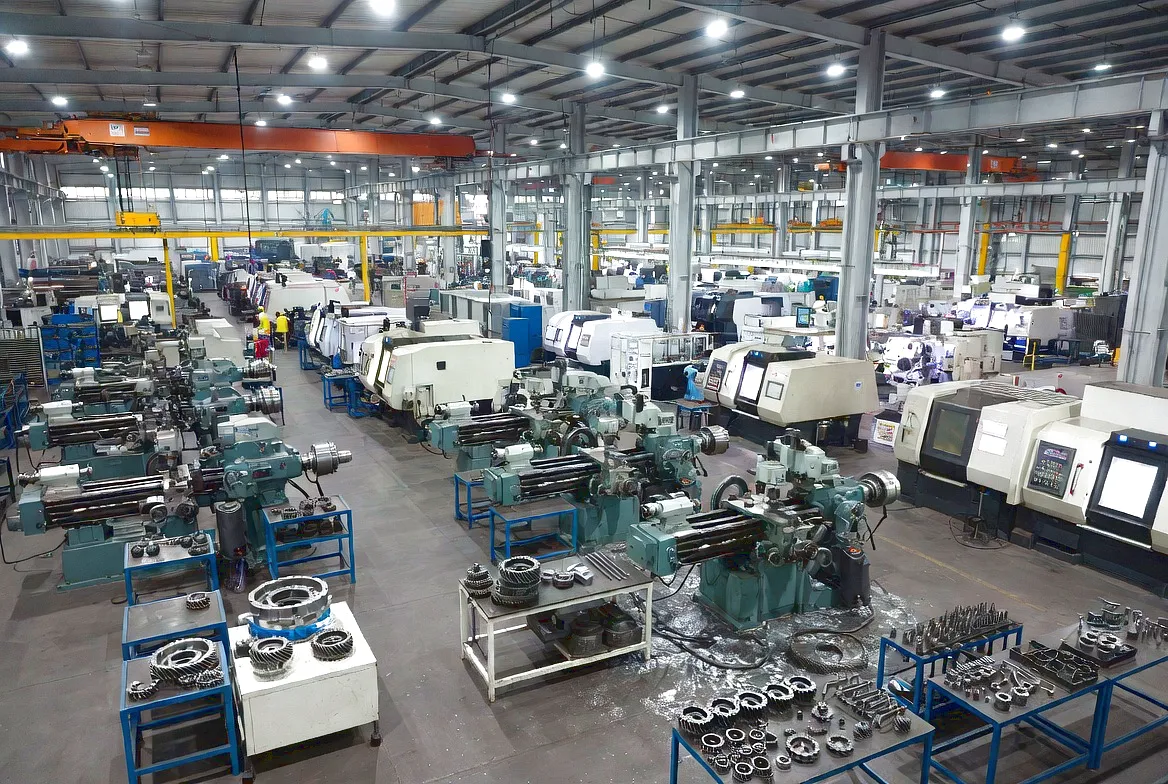
Ever Power operates a dedicated worm gear shaft manufacturing facility equipped with German and Swiss CNC gear grinding centres capable of producing worm threads to ISO 1328 class 4 tolerance — a level of precision that underpins the angular positioning accuracy required in wind turbine pitch systems and automated robotic assembly cells. The production workflow begins with raw material certification: every incoming steel billet is spectrographically analysed and hardness-tested before entering the machining queue. This upstream material verification eliminates the downstream risk of dimensional drift during heat treatment, a failure mode that has historically accounted for a disproportionate share of early-life worm shaft failures in the field.
The in-house heat treatment department — equipped with a sealed atmosphere carburising furnace and a precision-controlled quench tank — processes shafts through the complete case hardening cycle under digital temperature management, ensuring that case depth and core hardness meet the design intent across every piece in the batch. Post-hardening CNC grinding restores the thread geometry to final tolerance, with a superfinishing stage bringing flank Ra values below 0.4 microns on precision grades. This surface finish level is critical to hydrodynamic film formation in the loaded mesh, directly governing the operating efficiency and thermal envelope of the assembled gearbox.
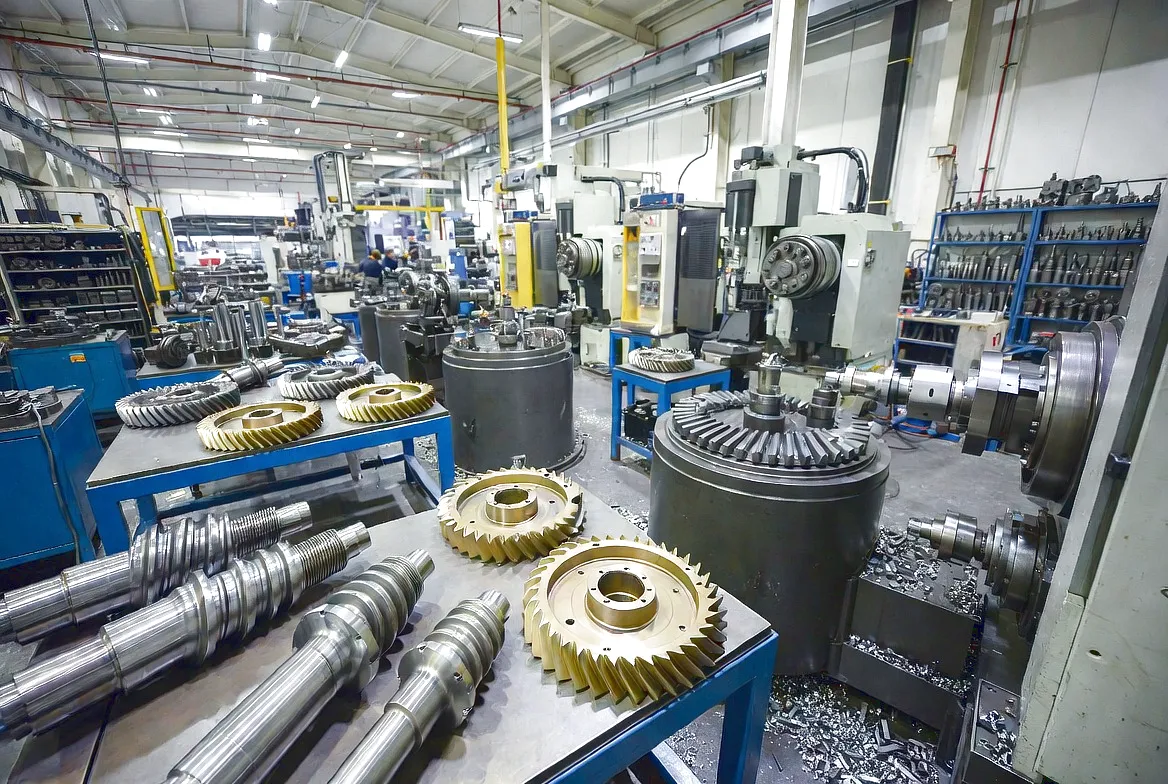
Ever Power’s customisation capability spans the full design parameter space. Engineering teams regularly collaborate with UK customers from the initial concept stage — receiving a customer’s gearbox envelope drawing, duty cycle data, and target service life, then producing a detailed gear design calculation using KISSsoft or equivalent analysis software before the first chip is cut. This application engineering service extends to shaft-end configurations: customers specify keyway profiles, spline forms (DIN 5480, ANSI B92.1, or involute spline to BS 3550), bore diameters, flange mounting patterns, and surface treatment requirements, all of which are documented in a customer-specific revision-controlled drawing that travels with the order through production and inspection. Lead times from drawing approval to ex-works despatch run 3 to 6 weeks for standard configurations and 6 to 10 weeks for complex custom assemblies, with DDP Incoterms delivery available directly to UK customer sites through our established freight forwarding partnerships.
Quality assurance at Ever Power is governed by an ISO 9001:2015-certified management system, with each worm gear shaft batch subject to final inspection covering: dimensional verification on a Zeiss CMM, thread profile scanning on a gear measurement centre, hardness spot-checking, surface roughness measurement, and a full dimensional report issued with each delivery. For customers requiring additional material traceability — a requirement increasingly common in UK defence, nuclear decommissioning, and offshore wind supply chains — full material heat number traceability and third-party inspection by Lloyd’s, SGS, or Bureau Veritas can be arranged at the quotation stage.
Ready to discuss your worm gear shaft requirements with Ever Power’s engineering team?
📧 Get a Quote — [email protected]
Custom ratios · Extended shaft configurations · UK DDP delivery · Third-party inspection available
Customer Success Story: Sheffield Steel Processing & Worm Gear Shaft Reliability
Background: Meridian Cold Roll Forming Ltd, Sheffield
Meridian Cold Roll Forming Ltd is a specialist steel section manufacturer based in the Lower Don Valley, Sheffield — a district with deep roots in precision steel processing dating back two centuries. The company operates a continuous cold roll forming line producing structural steel sections for the UK construction and automotive frame sectors. Running three shifts daily, their drive train includes twelve worm gear shaft gearboxes that control the speed of individual forming roll passes along the production line. Each gearbox operates under a continuous duty cycle at ratios between 30:1 and 60:1, driving chrome-plated forming rolls at closely controlled surface speeds to maintain dimensional accuracy of the section profile.
Prior to engaging Ever Power, Meridian experienced recurrent premature worm wheel wear failures occurring at approximately 8,000 to 10,000 running hours on their incumbent supplier’s gearboxes. Post-mortem analysis consistently revealed inadequate case depth on the worm shaft thread flanks, causing progressive transfer of material from the bronze wheel onto the insufficiently hardened shaft surface — a galling failure mode characteristic of under-hardened worm shafts under sustained high contact stress. Each failure required unplanned line stoppages averaging 14 hours, including removal, replacement, and recommissioning of the gearbox, with a direct cost impact of approximately £4,200 per event across labour, parts, and lost production.
Meridian’s engineering manager, sourcing a replacement supplier following a third consecutive failure on the same station, contacted Ever Power through a referral from a Sheffield-based industrial distributor. After a technical review of the application duty, Ever Power proposed a replacement құрт тәрізді беріліс білігі manufactured from 20CrMnTi steel with a case depth of 1.2–1.5 mm at 58 HRC, thread flanks superfinished to Ra 0.4 microns, and a thread profile optimised for the specific 40:1 ratio and input speed of the failed station. Twelve gearboxes were retrofitted with the new shafts over a planned maintenance weekend, avoiding production disruption. At the time of writing, the Ever Power shafts have exceeded 22,000 running hours without any recorded tooth surface distress — representing a service life improvement of more than 2x and a total estimated saving of over £126,000 in avoided downtime and replacement costs across the installation.
What Our Customers Say
★★★★★
“The case hardness depth specification that Ever Power delivered on our replacement worm shafts was noticeably superior to anything we had sourced previously. The thread flank finish under a magnifying glass tells you everything — you can see the quality of the grinding immediately. We have not had a single wear event since installation over a year ago. That alone justifies the sourcing decision completely.”
— D. Hargreaves, Engineering Manager, Sheffield
★★★★★
“We operate a stainless worm gear shaft from Ever Power in a washdown bakery environment, and the combination of the 316L material and the IP65 housing rating has been completely problem-free through two years of daily CIP cleaning cycles. Their pre-sales technical team understood our hygiene requirements without needing multiple clarification rounds — they got the specification right on the first drawing revision. That kind of application knowledge is rare from an overseas supplier.”
— S. Thornton, Maintenance Lead, Glasgow Food Manufacturing
★★★★★
“What sets Ever Power’s worm gear shaft apart for our wind turbine pitch application is the documented process control data they supply with each batch — case depth reports, CMM dimensional printouts, and hardness certificates. When you are putting these into a turbine that will run unmaintained for 25 years offshore, that traceability is not optional. Their willingness to accommodate our QCP requirements and third-party Lloyd’s inspection at no extra negotiation hassle made the procurement straightforward.”
— R. Patel, Procurement Engineer, Offshore Wind Developer, Bristol
Frequently Asked Questions About Worm Gear Shafts
How much does a custom worm gear shaft from a UK supplier typically cost, and where can I get a competitive quote?
The price of a custom worm gear shaft depends on module size, gear ratio, material grade, surface treatment, and annual volume. For standard industrial sizes in 42CrMo4 steel, unit prices for quantities of 10 to 50 pieces typically range from £80 to £650 per shaft ex-works. Stainless grades, superfinished flanks, or complex shaft-end configurations carry a premium of 20 to 60 percent above standard steel pricing. Ever Power provides written quotations within 2 business days on receipt of drawing or specification. You can request a quote directly at [email protected] with your technical requirements and target volume.
What is the best worm gear shaft material for a food processing plant in the UK that requires regular washdown cleaning?
For UK food processing environments subject to daily CIP or high-pressure washdown, 316L austenitic stainless steel is the standard material recommendation for the worm shaft, combined with a phosphor bronze wheel and an IP65-rated sealed gearbox housing. 316L provides excellent resistance to the hypochlorite and acidic detergents used in food plant cleaning protocols. If higher surface hardness is needed for greater output torque, 17-4 PH precipitation-hardening stainless steel can be age-hardened to approximately HRC 42 while maintaining the corrosion resistance required under UK Food Standards Agency guidelines. NSF H1-rated gear oil should be specified to complete the food-safe assembly.
Which UK industries use worm gear shaft assemblies most heavily, and what are the typical gear ratio requirements in those sectors?
Material handling and logistics is the largest volume consumer of worm gear shaft gearboxes in the UK, typically requiring ratios of 20:1 to 60:1 for belt conveyor head drives. Wind energy is the fastest-growing segment, with yaw and pitch actuators demanding ratios from 40:1 to 100:1 and exceptionally tight dimensional tolerances. Food and beverage manufacturing concentrated in the North West and Scotland uses ratios of 10:1 to 40:1, prioritising corrosion resistance and hygiene certification. CNC machine tool manufacturers in Birmingham and the West Midlands specify precision-grade worm gear shaft units at 20:1 to 80:1 for rotary table drives. Mining and quarrying operations in Wales and Northern England require high-torque shafts at 60:1 to 100:1 in crusher and screen drives.
How long does it take to get a custom worm gear shaft delivered to a manufacturing site in Birmingham or Sheffield from Ever Power?
Standard production lead time for custom worm gear shaft orders at Ever Power runs 3 to 6 weeks from drawing approval for configurations within our standard module and diameter range. Complex assemblies requiring special alloys, non-standard spline forms, or third-party inspection add 2 to 4 weeks. DDP delivery to Birmingham, Sheffield, and other UK mainland destinations typically takes 7 to 10 working days via our established air freight and customs clearance routing once the goods are ready for despatch. For emergency replacement situations, Ever Power can discuss expedited production and air freight options that can reduce total door-to-door time significantly; contact [email protected] with your urgency and we will respond within one business day with options and pricing.
What are the most common causes of worm gear shaft failure in industrial conveyor systems, and how can they be prevented?
The three most prevalent failure modes in conveyor-duty worm gear shaft applications are: surface pitting and spalling from inadequate case depth or surface hardness, adhesive wear (galling) caused by lubricant film breakdown during high-load starts, and fretting corrosion on the shaft-to-bore interface from shaft deflection under cyclic radial loading. Prevention strategy centres on specifying the correct case depth for the calculated contact stress — typically 1.0 to 1.6 mm for medium duty — using a full synthetic ISO VG 460 polyalkylene glycol gear oil with EP additives, and ensuring the bore-to-shaft fit is within the tolerance band specified for the bore diameter class. Misalignment between the worm shaft and wheel axes is a fourth contributor often overlooked; an alignment error of just 0.05 mm in parallelism can reduce expected tooth life by 40 percent in heavily loaded applications.
Where can I find a reliable worm gear shaft supplier in the UK who offers full technical support, custom design, and competitive pricing for OEM orders?
Ever Power provides OEM worm gear shaft supply with full application engineering support, custom design from drawing or specification, ISO 9001:2015 quality documentation, and DDP delivery to all UK mainland locations. Our technical team can assist with gear ratio selection, shaft-end specification, material grade recommendation, and lubrication guidance. For procurement enquiries, approved vendor questionnaire completion, or sample orders ahead of volume commitment, the best starting point is an email to [email protected] with your technical requirements or a drawing in PDF or DXF format. Responses are provided within one UK business day.
How does a worm gear shaft achieve self-locking, and when does this property make it the right choice for a wind turbine yaw drive application?
Self-locking in a worm gear shaft occurs when the helix lead angle is smaller than the friction angle of the worm-wheel mesh. When this geometric condition is satisfied, the axial thrust force generated by any back-driving load from the wheel side is fully absorbed by friction at the thread flank contact, and no rotation of the worm shaft occurs. In wind turbine yaw drive applications, the nacelle must hold its pointing angle under sustained aerodynamic yaw moments between active repositioning commands — forces that can reach several hundred kilonewton-metres on a multi-megawatt machine. A worm gear shaft with an appropriately low lead angle provides this holding function passively and without energy consumption, eliminating the holding brake hardware that would otherwise be required. This reduction in brake calliper assemblies improves drive reliability, reduces maintenance access requirements on the tower head, and lowers the total system weight — all critical factors in offshore wind turbine nacelle design.
Specify Your Worm Gear Shaft With Confidence
Ever Power engineers are available to review your application and provide a detailed technical proposal. From ratio selection to surface treatment and UK-delivered quality documentation — we handle the full specification.
📧 Contact Ever Power — [email protected]
edit by gzl