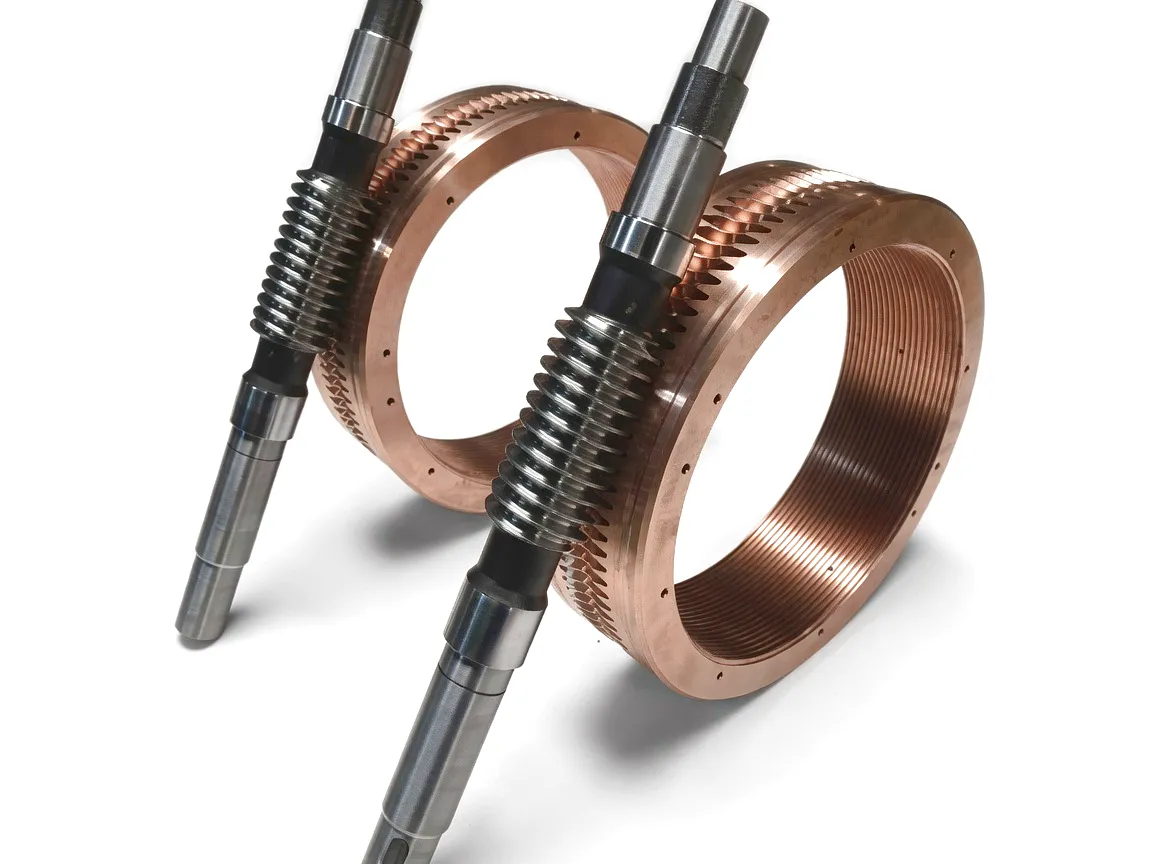
Custom Worm Gear Shaft Solutions — UK & Global Supply
How the Worm Gear Shaft Drives CNC Indexing Systems
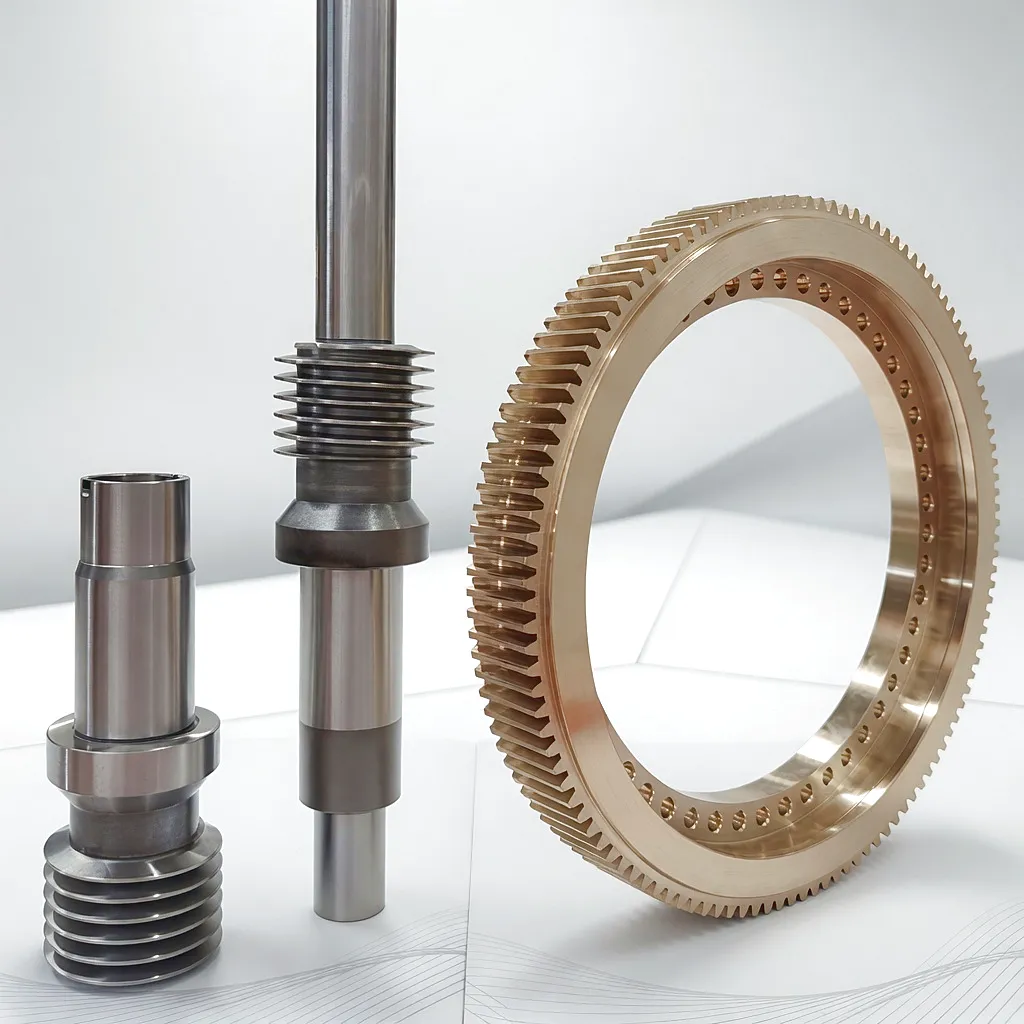
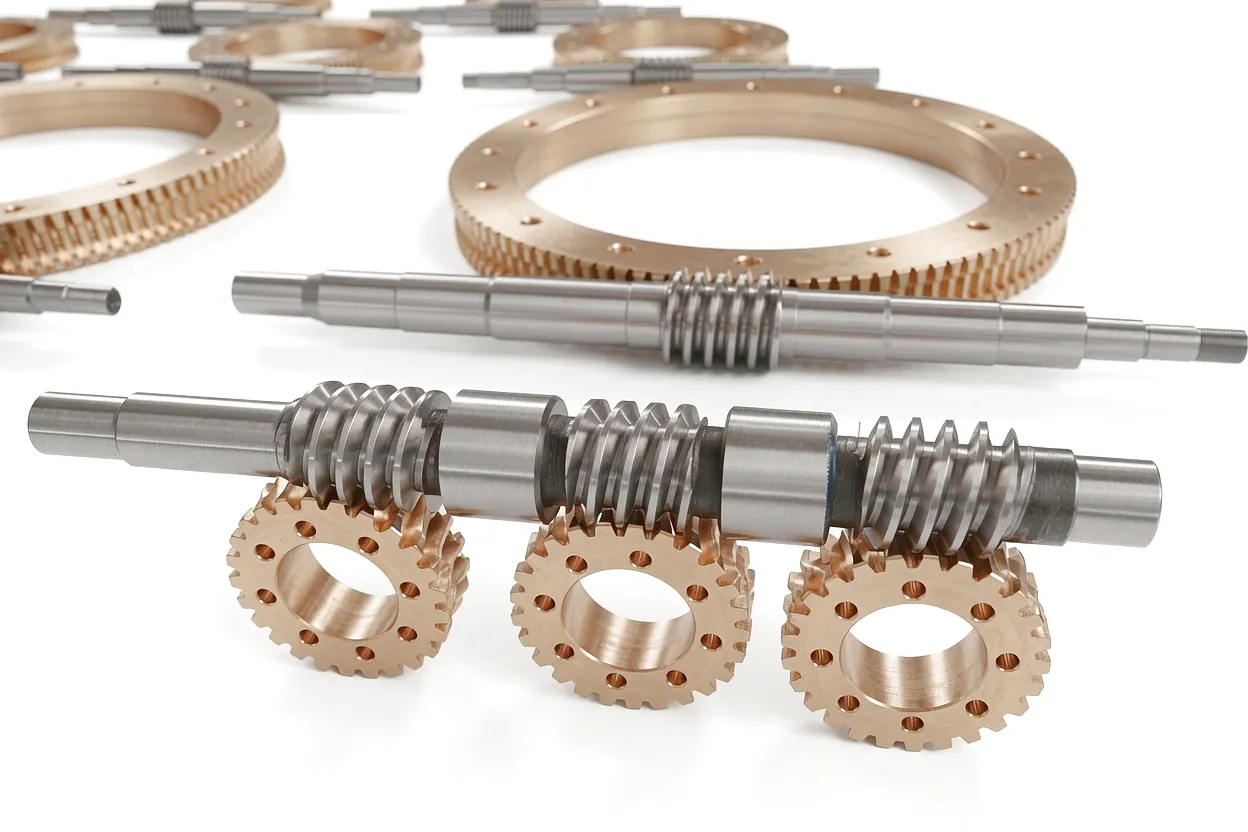
Modern high-precision CNC rotary tables invariably specify a dual lead worm gear shaft, also known as a variable lead worm. In this design, the two flanks of each thread carry different lead values — the left flank has one lead and the right flank a slightly different one. By making an axial adjustment to the worm shaft position (typically via a preload adjuster or shim arrangement), the tooth flank contact migrates progressively and the backlash between shaft and wheel is reduced to sub-arcsecond levels. This technique allows the same worm gear shaft to be re-adjusted in service after wear, extending the useful life of the assembly and preserving indexing accuracy well beyond what a conventional single-lead design could offer. Sheffield-based precision table manufacturers have adopted dual-lead shaft specifications as a baseline requirement for export-grade rotary heads destined for the aerospace sector.
The tilting head (B-axis or A-axis swivel) in five-axis machining centres uses an almost identical arrangement. The worm gear shaft drives a worm wheel that swings the spindle head through a range of typically ±90° or ±110°. Transmission ratios in these applications are commonly 60:1 to 72:1, and after gear reduction, fine angular interpolation by the CNC controller allows the head to reach and hold any arbitrary angle within that arc. The hydraulic clamp is engaged once the target angle is confirmed, and milling loads are borne structurally rather than by the gear mesh alone. This separation of the positioning function from the load-bearing function is what allows relatively compact worm gear shaft assemblies to survive decades of production service in demanding aerospace and automotive tooling environments.
Core Materials for Worm Gear Shaft Manufacturing
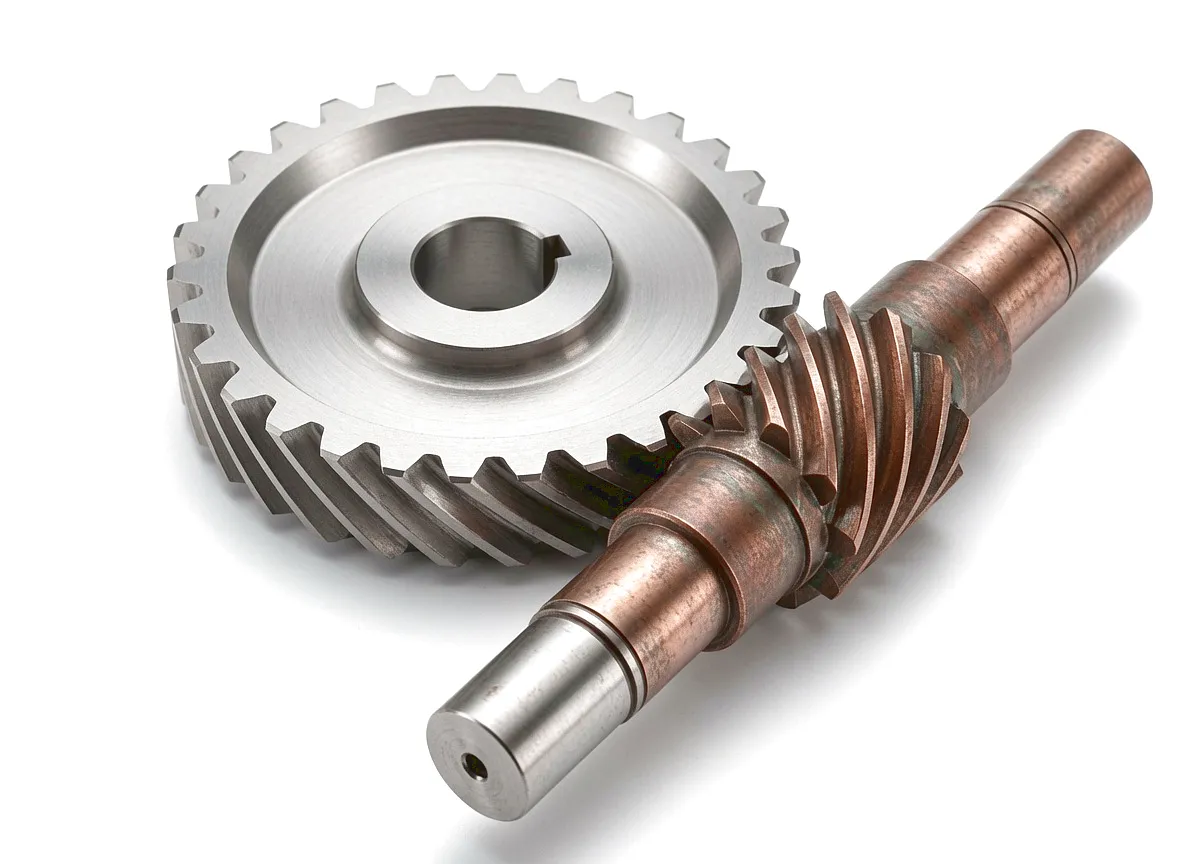
The worm shaft itself — the driving helix member — is almost universally produced from alloy steel grades that respond well to case-hardening. Grades such as 20CrMnTi (Chinese standard) or the European equivalent 18CrNiMo7-6 are carburised, quenched, and tempered to achieve a surface hardness of HRC 58–62 while retaining a tough, ductile core. This combination is critical: the hard surface resists wear and contact fatigue under the sliding contact that dominates worm mesh, while the tough core absorbs shock loads without brittle fracture. Thread flanks are subsequently precision-ground to achieve surface roughness values of Ra 0.4 µm or below, directly influencing transmission efficiency and service life.
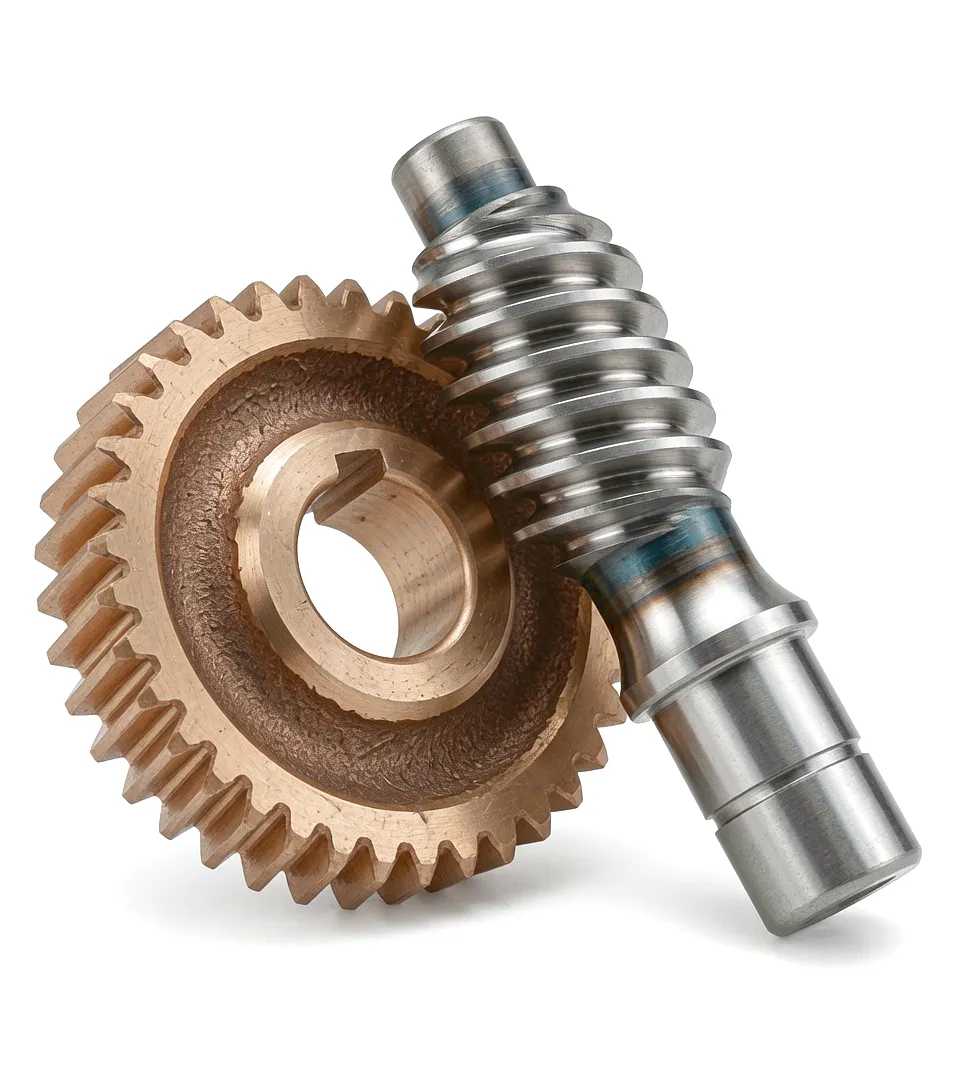
The mating worm wheel is typically cast or centrifugally cast from phosphor bronze or tin bronze. The deliberate mismatch of hardness between shaft (steel, HRC 58+) and wheel (bronze, HB 70–100) is a studied design choice. Bronze’s lower hardness means it sacrifices material preferentially during running-in, creating a conforming contact pattern that improves load distribution over time. Its inherent lubricity under boundary lubrication conditions reduces adhesive wear on the harder steel shaft thread flanks. For CNC rotary table applications where the worm gear shaft must maintain indexing accuracy over millions of cycles, this material pairing provides the optimal balance of longevity and precision retention.
In food processing machinery, pharmaceutical manufacturing, and marine-environment CNC equipment — all significant industries in UK coastal and port regions — the worm gear shaft may be produced from austenitic stainless steel 316L or precipitation-hardening grades such as 17-4PH. These alloys resist corrosion from washdown chemicals, saline atmospheres, and aggressive cleaning agents. While achievable surface hardness is lower than case-hardened alloy steel, special nitriding surface treatments can raise hardness to HV 900–1200 on the thread flanks, providing adequate wear resistance for moderate-duty worm gear shaft applications in hygiene-critical environments.
Why Engineers Choose the Worm Gear Shaft
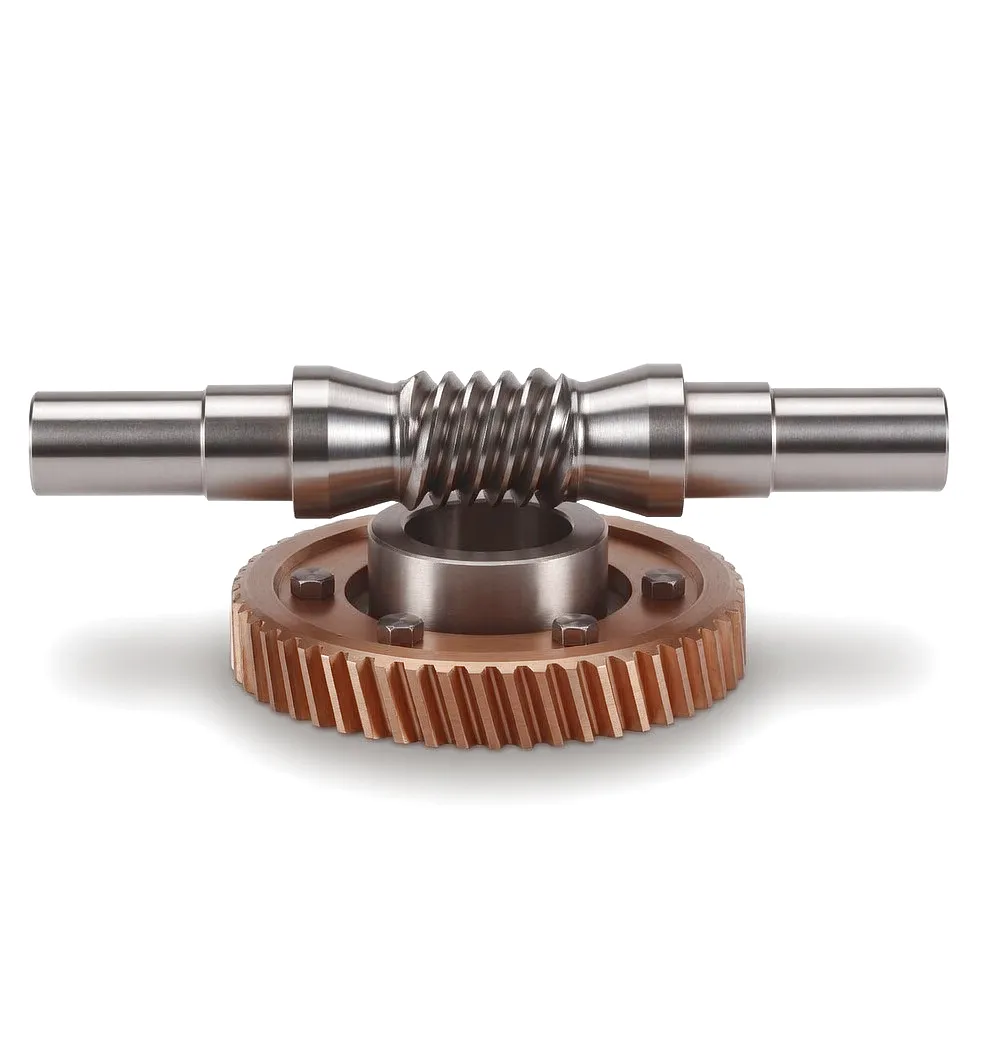
Transmission ratios from 5:1 to 100:1 achievable in one stage. Eliminates intermediate shafts, simplifies gearbox design, and reduces overall drive system weight — a significant benefit for machine tool frame and spindle head engineering where mass directly affects dynamic performance.
When lead angle is engineered below the friction angle, back-driving is impossible. The rotary table holds position without energised brakes or clutches, reducing electrical power consumption in multi-axis machining centres and improving system reliability through fewer active holding components.
The sliding action of worm gear shaft teeth produces far lower noise and vibration levels than spur or helical gears at comparable loads. This is particularly valued in precision metrology environments and optical lens grinding machines where vibration must be minimised to sub-micron levels.
The 90-degree axis crossing allows gearbox housings to be designed around the machine tool’s structural geometry rather than requiring the transmission architecture to dictate machine layout. This spatial flexibility is directly exploited in trunnion and nutating-table five-axis configurations.
The dual-lead worm gear shaft design allows in-situ backlash compensation through axial shaft adjustment. As the tooth faces wear over service life, the mesh can be re-tightened without replacement of either member, restoring original angular accuracy and extending the economic life of the rotary table by years.
Because the torque multiplication is direct and single-stage, the output torque relative to the physical size of the gear assembly is exceptionally high. This is why worm gear shaft assemblies driving large-diameter rotary tables can handle workpieces of several hundred kilograms without oversized housing or shaft diameters.
Worm Gear Shaft: Technical & Performance Parameters
The following table summarises the key technical specifications and typical performance ranges for worm gear shafts deployed in CNC machine tool indexing and feed systems. Values reflect standard industrial grades as well as the precision-grade specifications required for five-axis machining centres and aerospace-standard rotary tables.
| Parameter | Standard Grade | Precision Grade | Unit / Note |
|---|---|---|---|
| Transmission Ratio (i) | 5:1 – 60:1 | 40:1 – 90:1 | Single stage |
| Output Torque | 50 – 2,000 N·m | 200 – 5,000 N·m | Depends on centre distance |
| Shaft Material | 40Cr / C45E | 20CrMnTi / 18CrNiMo7-6 | Alloy steel, case-hardened |
| Surface Hardness (Shaft) | HRC 45 – 52 | HRC 58 – 62 | Rockwell hardness |
| Thread Surface Roughness | Ra 0.8 µm | Ra 0.2 – 0.4 µm | Ground & polished flanks |
| Backlash (Standard) | 3 – 8 arcmin | <30 arcsec (dual lead) | Adjustable in service |
| Lead Angle | 3° – 15° | 2.5° – 6° (self-locking range) | Affects efficiency & self-lock |
| Transmission Efficiency | 60% – 75% | 70% – 85% | Higher lead angle = higher eff. |
| Shaft Diameter Range | 20 – 100 mm | 25 – 160 mm (custom) | Matched to centre distance |
| Axis Crossing Angle | 90° | 90° (standard); custom angles available | Non-90° for special drives |
| Mounting Method | Flange / foot / hollow bore | Integrated or separate assembly | Per OEM drawing |
| Operating Temperature | -10°C – +80°C | -20°C – +100°C | Lubrication-dependent |
Where Worm Gear Shafts Are Deployed Across UK Industry
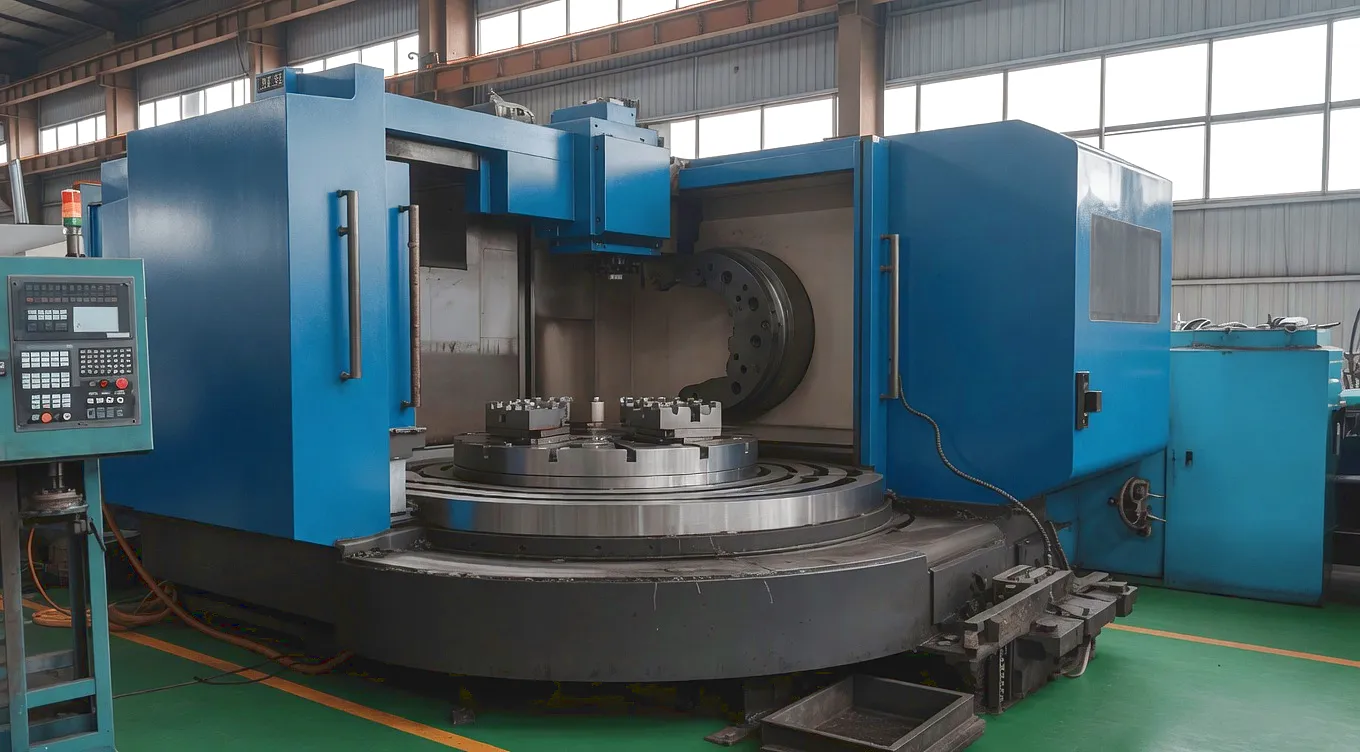
Ever Power — Precision Worm Gear Shaft Manufacturing & Custom Engineering
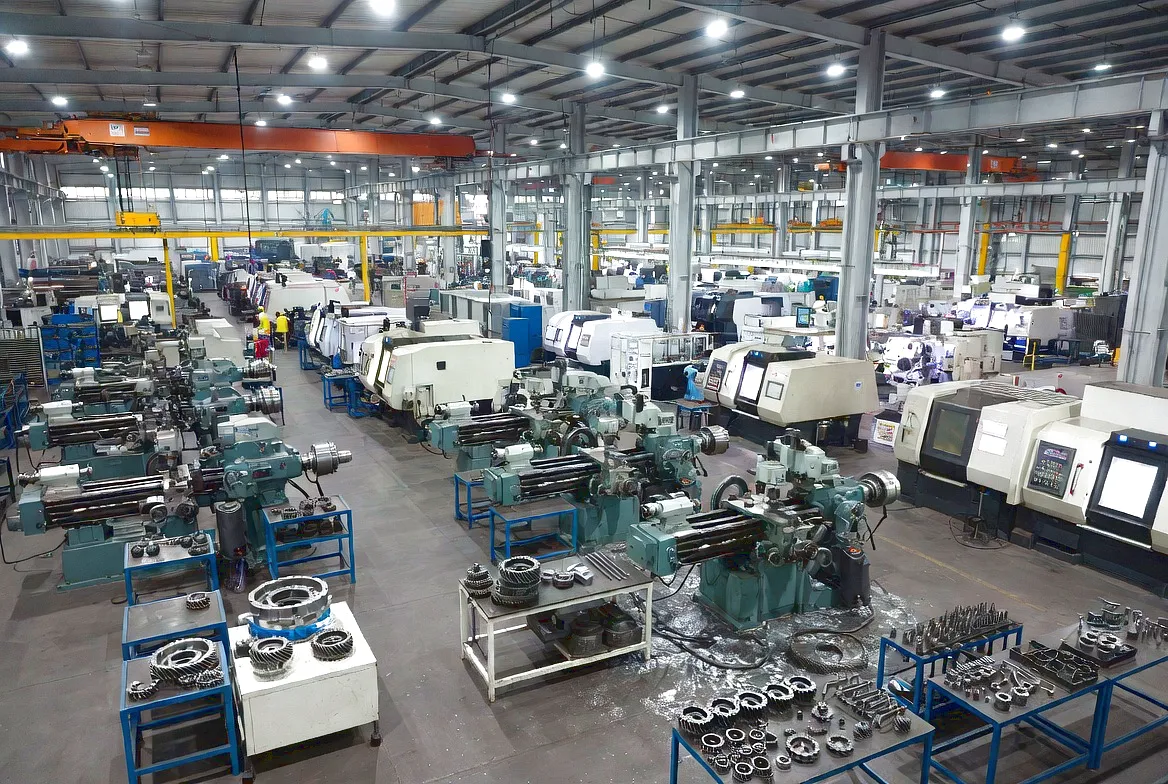
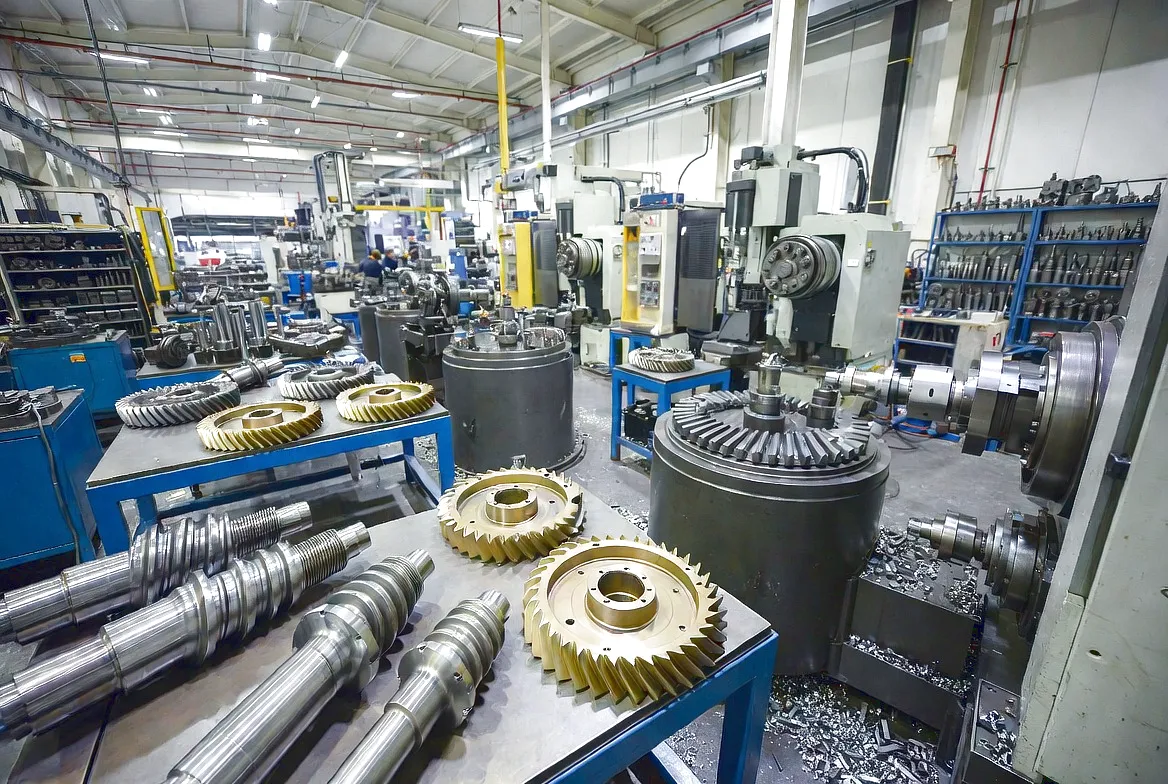
Ever Power has built its reputation as a specialist manufacturer of precision worm gear shafts and complete worm drive assemblies over more than two decades of continuous production. Our manufacturing facility operates a dedicated worm gear shaft production line encompassing all critical processing stages — raw material procurement to verified material certification, precision CNC turning of blank forgings, thread milling, carburising and hardening in atmosphere-controlled furnaces, precision cylindrical grinding of journals and thread flanks, final lapping and surface finish verification, and comprehensive quality inspection using CMM systems capable of thread helix error measurement to arcsecond resolution. This end-to-end capability under a single roof is what allows Ever Power to guarantee dimensional traceability and performance consistency that third-party-assembled supply chains cannot match.
Dual-lead, single-lead, hollow bore, special thread profiles, non-standard ratios — all engineered to your drawing or performance specification. DXF / STEP files accepted; reverse engineering from worn samples available.
Full batch material certificates (EN 10204 3.1 or 3.2), heat treatment records, and inspection reports supplied as standard for aerospace and defence supply chain orders requiring AS9100 aligned documentation.
Express air freight to UK ports including Felixstowe and Southampton for urgent replacement orders. Sea freight container consolidation for volume production supply. DDP terms available for hassle-free customs clearance.
Prototype quantities from 1 piece, series production from 10 pieces, and volume supply contracts with guaranteed annual pricing and scheduled delivery — all accommodated within a single supplier relationship with Ever Power.
Send your drawing, sample, or specification. Our engineering team responds within 24 hours with a detailed quote and technical review.
Sheffield Aerospace Subcontractor Achieves Sub-10-Arcsecond Repeatability with Ever Power Custom Worm Gear Shafts
 Precision Aerostructures Ltd (PAL), a first-tier aerospace subcontractor operating a 12,000 sq ft precision machining facility on the Shepcote Lane Industrial Estate in Sheffield, was commissioned in early 2024 to manufacture structural titanium brackets for a next-generation regional aircraft programme. The work required consistent angular positioning accuracy on a trunnion-style five-axis machining centre, with the specification demanding that B-axis repeatability remain within ±8 arcseconds over a production run of approximately 3,400 components. Their existing OEM worm gear shaft had developed measurable backlash after 18 months of two-shift operation, and the accumulated angular error was beginning to show up as statistical variation in hole-position tolerances during in-process inspection.
PAL’s engineering manager contacted Ever Power after a referral from a Birmingham-based machine tool retrofitter who had previously sourced replacement құрт тәрізді беріліс білігі components for robotic welding positioner upgrades. Ever Power’s technical team conducted a remote consultation, reviewing the worn shaft dimensions, the original OEM drawing, and the current backlash measurement data. The recommendation was a dual-lead worm gear shaft in 18CrNiMo7-6 carburised steel, thread-flanks ground and polished to Ra 0.3 µm, with a custom journal shoulder arrangement to suit the existing bearing housing without machine modification.
Sample shafts were delivered to Sheffield within 14 working days of drawing confirmation. After installation and axial preload adjustment using the dual-lead feature, PAL’s metrology team measured B-axis bidirectional repeatability at ±4.7 arcseconds — well within the programme specification. The production run was completed without further angular accuracy concerns, and PAL subsequently placed a standing order with Ever Power for annual replacement shaft inventory to support planned maintenance schedules across their five-axis machining cell.
What Our Clients Say
“The dual-lead shaft Ever Power supplied dropped straight into our B-axis housing and took backlash from 22 arcminutes down to under 5 arcseconds after adjustment. We went from worrying about angular variation failing our first article inspection to shipping all 3,400 brackets without a single positional rejection. That kind of performance difference makes the choice of shaft supplier extremely straightforward for our next programme.”
“We had been using a domestic UK supplier for our rotary table worm shafts, but lead times stretched to 16 weeks during post-pandemic supply disruptions. Ever Power quoted us a full custom specification, matched our existing OEM drawing tolerances exactly, and delivered within 12 working days. The surface quality on the thread flanks was noticeably better than what we had been receiving — our assembly team commented on it immediately.”
“We rebuild and retrofit older Deckel and TOS horizontal boring mills for the UK engineering job shop market, and sourcing non-standard worm gear shafts with obsolete thread geometry is always the hardest part of any project. Ever Power reverse-engineered two worn samples for us — both in different materials — provided CMM inspection reports with the final components, and delivered DDP to our workshop in Coventry. The price was competitive, the documentation was complete, and the lead time beat every other supplier we had approached.”
Frequently Asked Questions about Worm Gear Shafts
Custom engineering · Rapid prototyping · Full documentation · DDP delivery to Birmingham, Sheffield, Coventry and across the UK
✉ Get a Quote → [email protected]